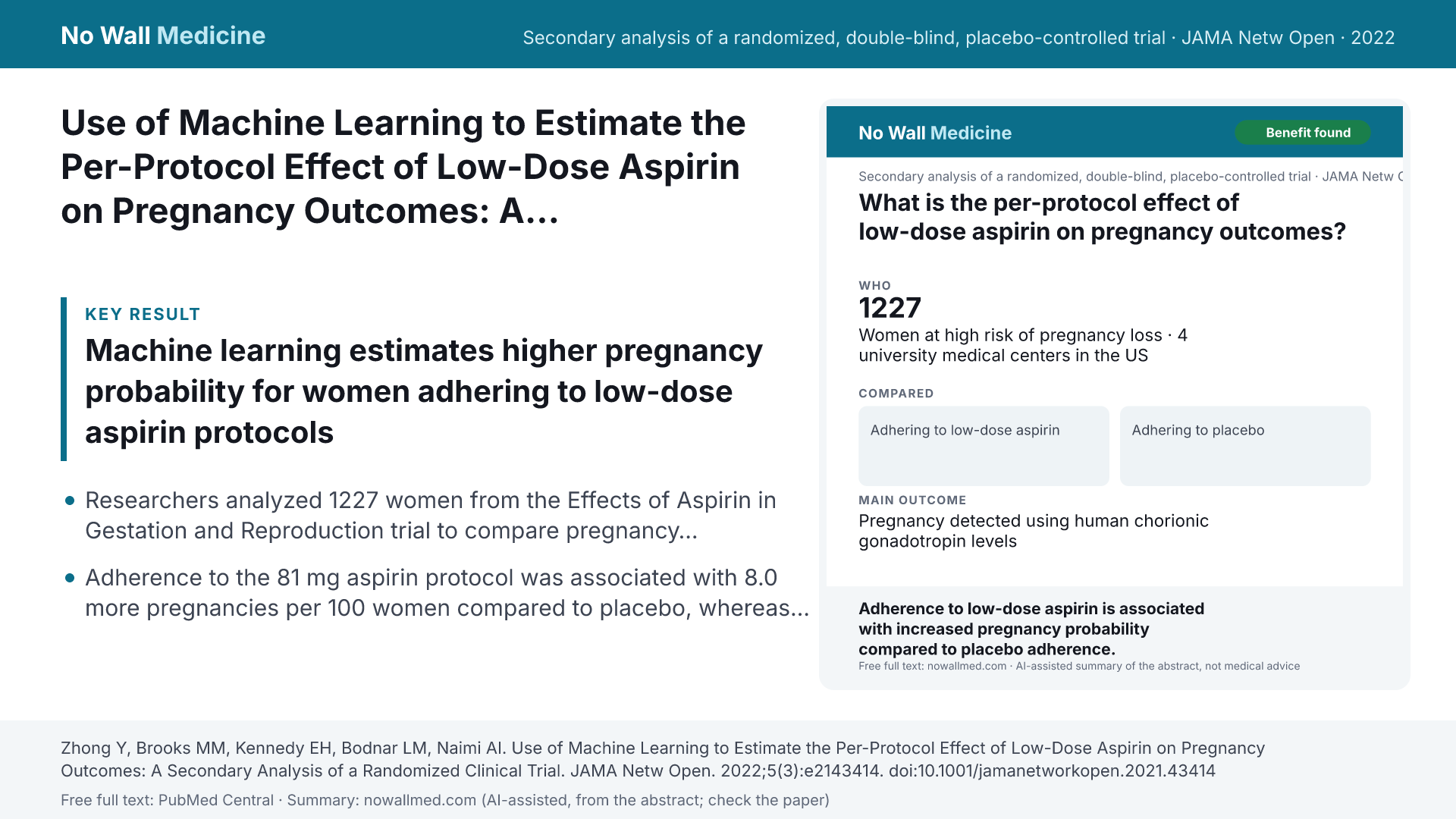
Machine learning estimates higher pregnancy probability for women adhering to low-dose aspirin protocols
Use of Machine Learning to Estimate the Per-Protocol Effect of Low-Dose Aspirin on Pregnancy Outcomes: A Secondary Analysis of a Randomized Clinical Trial
Secondary analysis of a randomized, double-blind, placebo-controlled trialBenefit found
What is the per-protocol effect of low-dose aspirin on pregnancy outcomes?
Who
1227
Women at high risk of pregnancy loss · 4 university medical centers in the US
Compared
Adhering to low-dose aspirin
Adhering to placebo
Main outcome
Pregnancy detected using human chorionic gonadotropin levels
Result: 8.0 (95% CI, 2.5-13.6) more hCG-detected pregnancies per 100 women
Bottom line: Adherence to low-dose aspirin is associated with increased pregnancy probability compared to placebo adherence.
JAMA Netw Open · 2022-03-01Download image
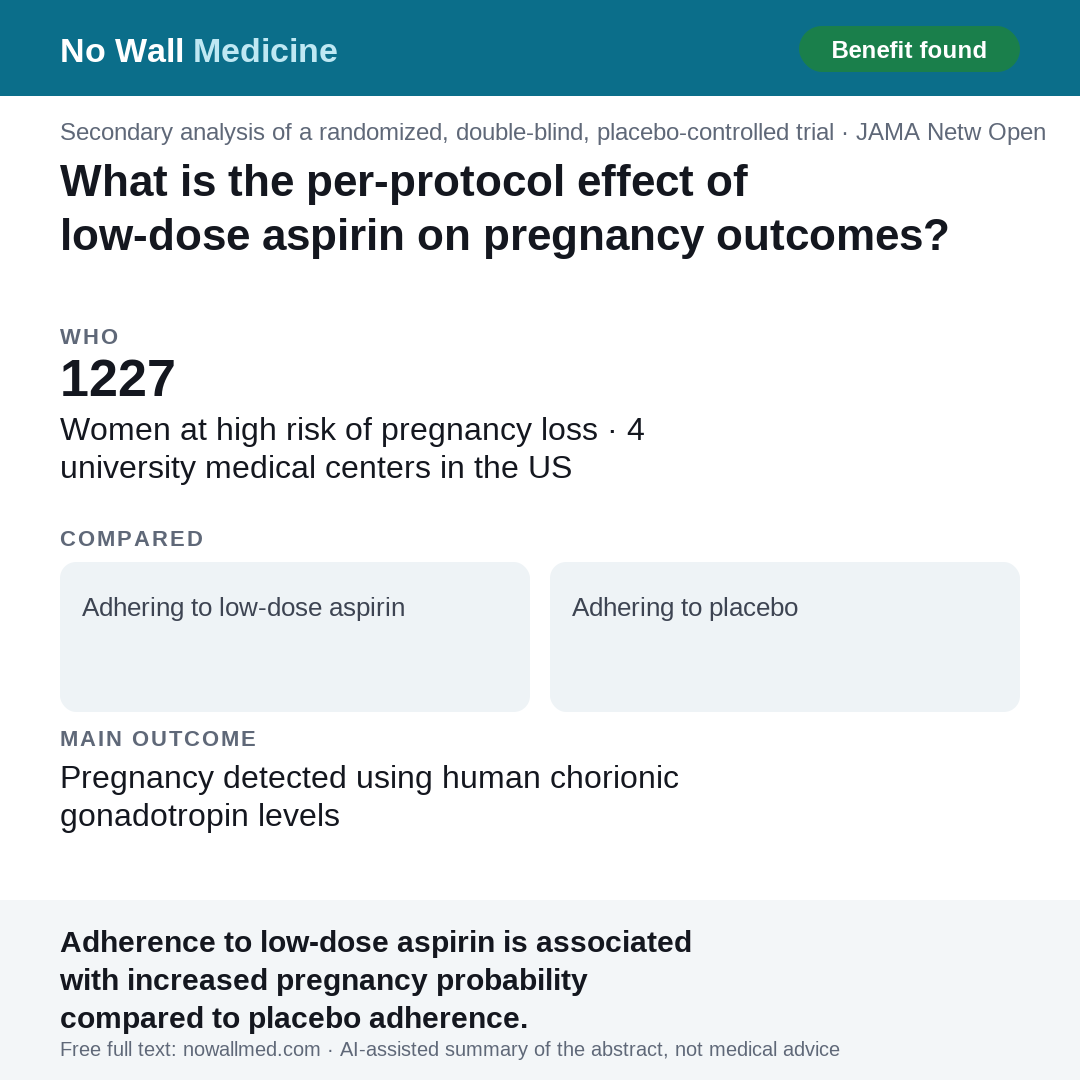
Clinical question: What is the per-protocol effect of low-dose aspirin on pregnancy outcomes?
Why it matters: Standard methods for estimating treatment effects in the presence of nonadherence may suffer from model misspecification due to strong parametric assumptions.
Key points
- Researchers analyzed 1227 women from the Effects of Aspirin in Gestation and Reproduction trial to compare pregnancy outcomes between those adhering to aspirin and those taking a placebo.
- Adherence to the 81 mg aspirin protocol was associated with 8.0 more pregnancies per 100 women compared to placebo, whereas the intention-to-treat estimate was 4.3 more pregnancies per 100 women.
- Of the 1227 women studied, 858 (69.9%) adhered to the protocol of taking aspirin at least 5 of 7 days per week.
Headline and key points written with AI from the paper’s abstract, with every number checked against it. Read the paper before relying on them.
Was this summary helpful?
Subject terms
Cite this article
Zhong Y, Brooks MM, Kennedy EH, Bodnar LM, Naimi AI. Use of Machine Learning to Estimate the Per-Protocol Effect of Low-Dose Aspirin on Pregnancy Outcomes: A Secondary Analysis of a Randomized Clinical Trial. JAMA Netw Open. 2022. doi:10.1001/jamanetworkopen.2021.43414
Spotted a mistake? Suggest a correction