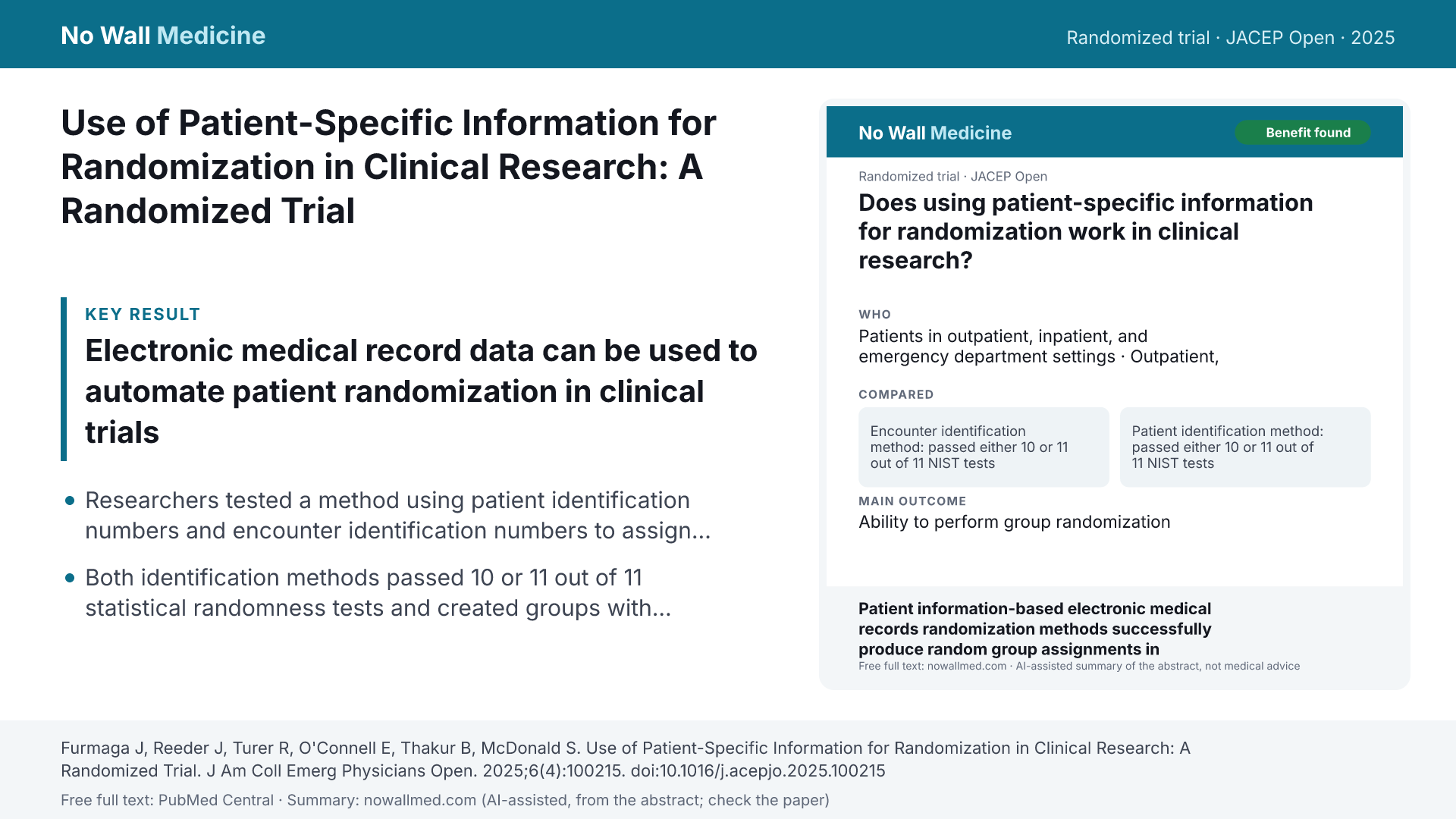
Electronic medical record data can be used to automate patient randomization in clinical trials
Use of Patient-Specific Information for Randomization in Clinical Research: A Randomized Trial
Randomized trialBenefit found
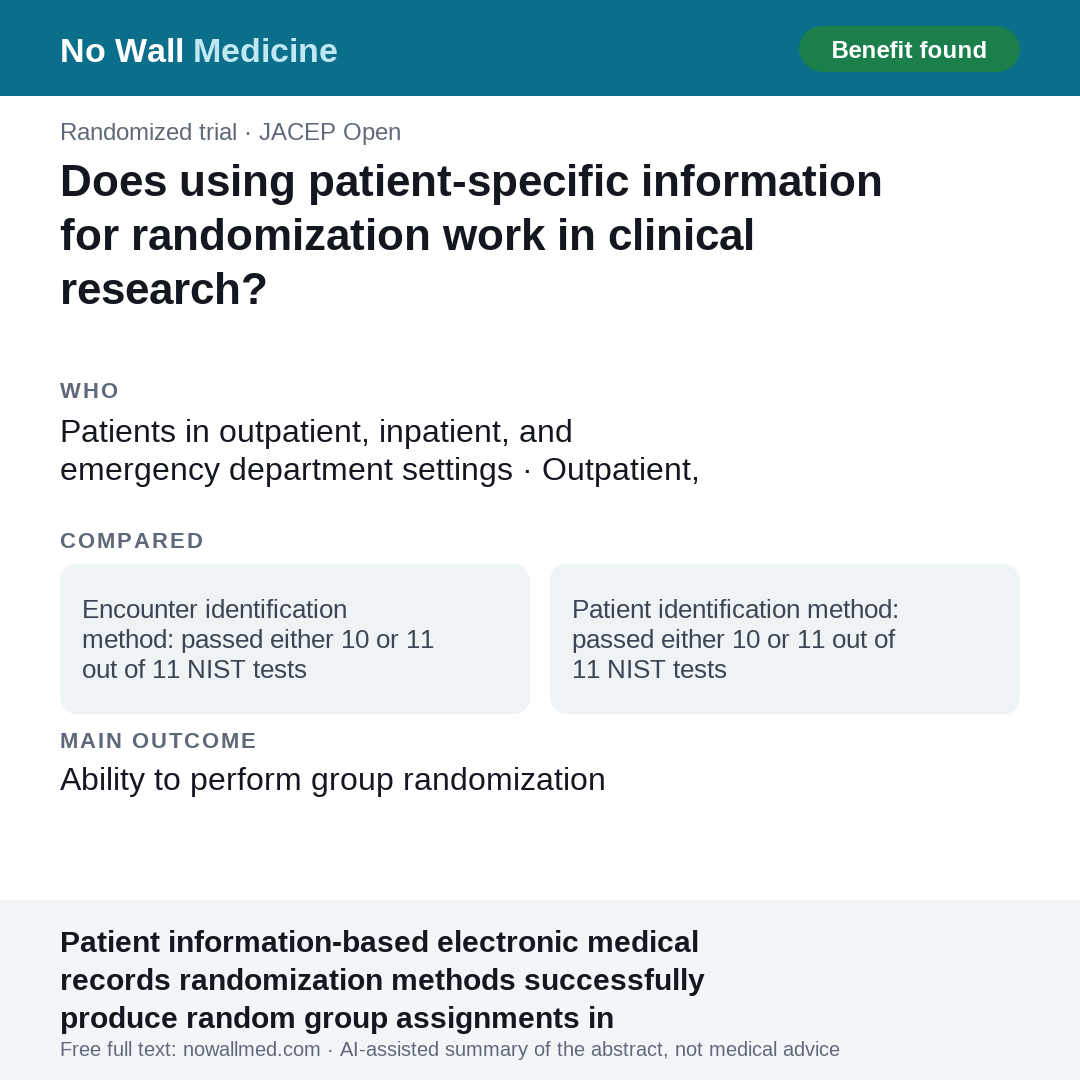
Does using patient-specific information for randomization work in clinical research?
Who
Patients in outpatient, inpatient, and emergency department settings · Outpatient, inpatient, and emergency department settings
Compared
Encounter identification method: passed either 10 or 11 out of 11 NIST tests
Patient identification method: passed either 10 or 11 out of 11 NIST tests
Main outcome
Ability to perform group randomization
Bottom line: Patient information-based electronic medical records randomization methods successfully produce random group assignments in pragmatic trials.
JACEP Open · 2025-06-30Download image
Clinical question: Does using patient-specific information for randomization work in clinical research?
Why it matters: It is unknown if using specific patient information from electronic medical records can effectively automate the process of assigning participants to groups in pragmatic clinical trials.
Key points
- Researchers tested a method using patient identification numbers and encounter identification numbers to assign patients to two random groups in outpatient, inpatient, and emergency settings.
- Both identification methods passed 10 or 11 out of 11 statistical randomness tests and created groups with similar demographics, laboratory tests, and hospital admission rates.
- The methods successfully randomized patients into groups with equivalent lengths of stay.
Headline and key points written with AI from the paper’s abstract, with every number checked against it. Read the paper before relying on them.
Was this summary helpful?
Cite this article
Furmaga J, Reeder J, Turer R, O'Connell E, Thakur B, McDonald S. Use of Patient-Specific Information for Randomization in Clinical Research: A Randomized Trial. JACEP Open. 2025. doi:10.1016/j.acepjo.2025.100215
Spotted a mistake? Suggest a correction