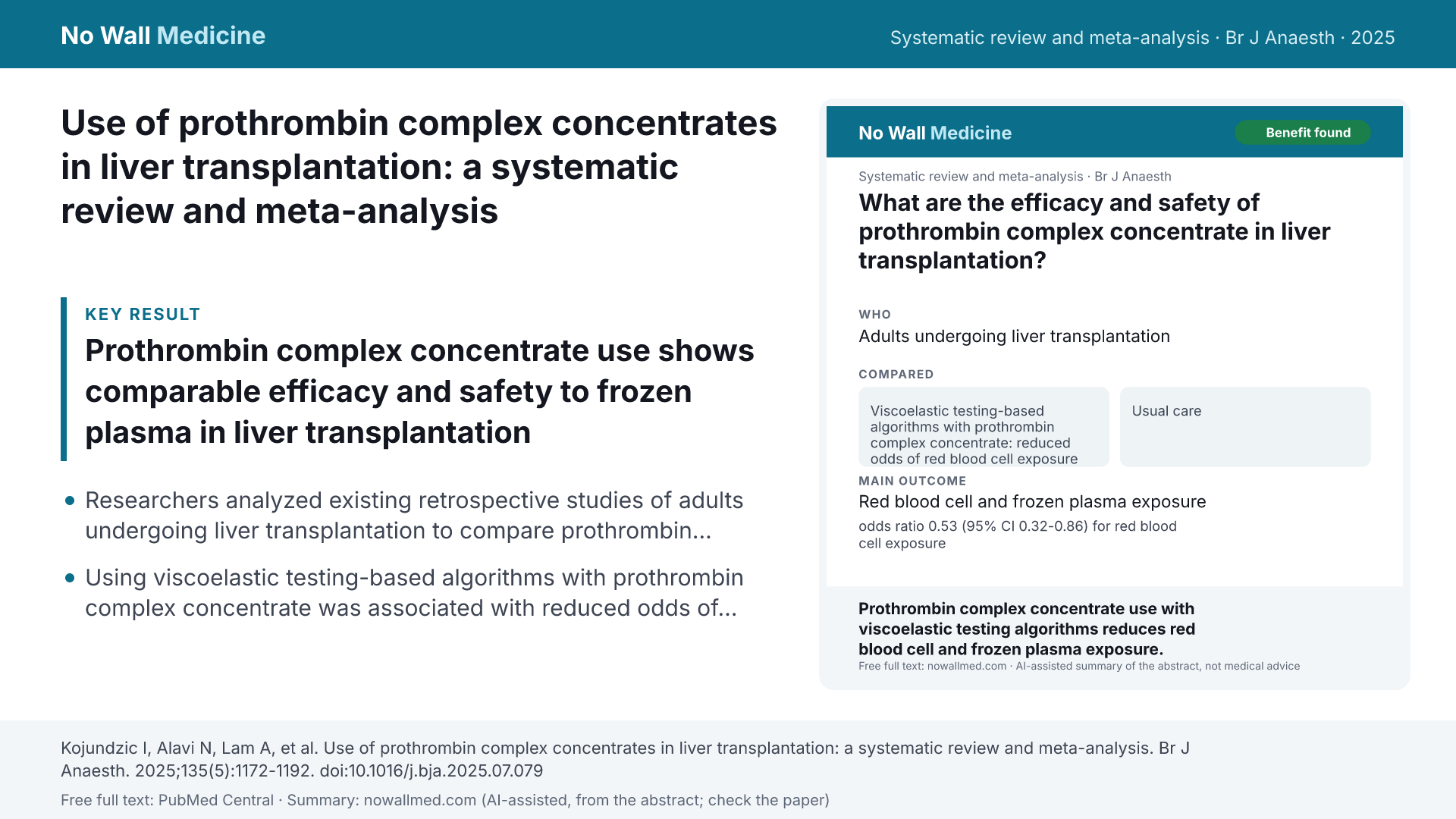
Prothrombin complex concentrate use shows comparable efficacy and safety to frozen plasma in liver transplantation
Use of prothrombin complex concentrates in liver transplantation: a systematic review and meta-analysis
Systematic review and meta-analysisBenefit found
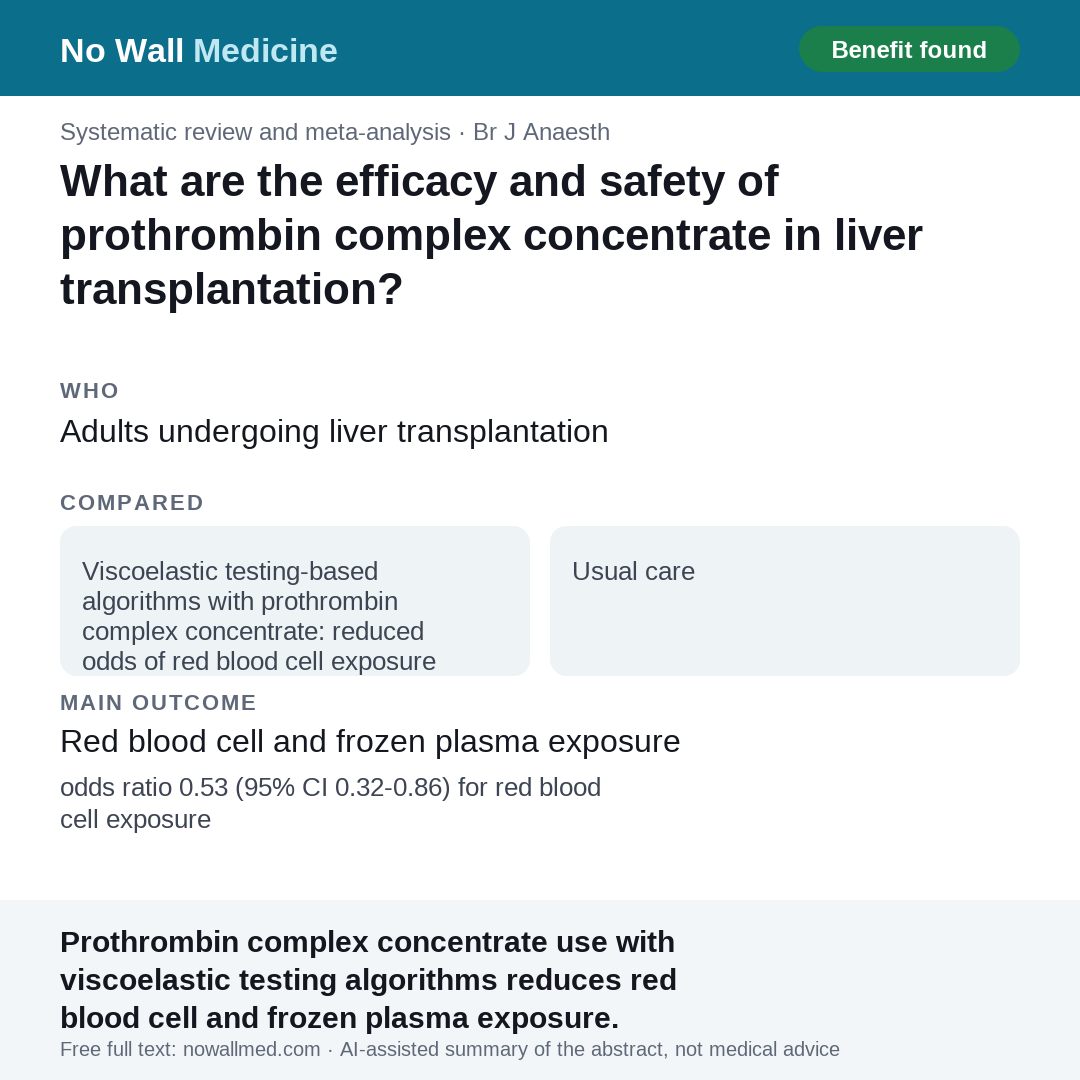
What are the efficacy and safety of prothrombin complex concentrate in liver transplantation?
Who
Adults undergoing liver transplantation
Compared
Viscoelastic testing-based algorithms with prothrombin complex concentrate: reduced odds of red blood cell exposure
Usual care
Main outcome
Red blood cell and frozen plasma exposure
Result: odds ratio 0.53 (95% CI 0.32-0.86) for red blood cell exposure
Bottom line: Prothrombin complex concentrate use with viscoelastic testing algorithms reduces red blood cell and frozen plasma exposure.
Br J Anaesth · 2025-09-12Download image
Clinical question: What are the efficacy and safety of prothrombin complex concentrate in liver transplantation?
Why it matters: Clinicians use frozen plasma widely for liver transplantation despite mixed data regarding its efficacy and safety compared to prothrombin complex concentrate.
Key points
- Researchers analyzed existing retrospective studies of adults undergoing liver transplantation to compare prothrombin complex concentrate, a concentrated clotting factor product, with frozen plasma.
- Using viscoelastic testing-based algorithms with prothrombin complex concentrate was associated with reduced odds of red blood cell exposure (OR: 0.53, 95% CI: 0.32-0.86) and frozen plasma exposure (OR: 0.35, 95% CI: 0.13-0.92).
- Patients receiving prothrombin complex concentrate had worse preoperative coagulopathy, higher model for end-stage liver disease scores, and more comorbidities.
Limitation the authors note: All included studies were retrospective and there are no randomized trials comparing prothrombin complex concentrate to frozen plasma in liver transplantation.
Headline and key points written with AI from the paper’s abstract, with every number checked against it. Read the paper before relying on them.
Was this summary helpful?
Subject terms
Cite this article
Kojundzic I, Alavi N, Lam A, et al. Use of prothrombin complex concentrates in liver transplantation: a systematic review and meta-analysis. Br J Anaesth. 2025. doi:10.1016/j.bja.2025.07.079
Spotted a mistake? Suggest a correction