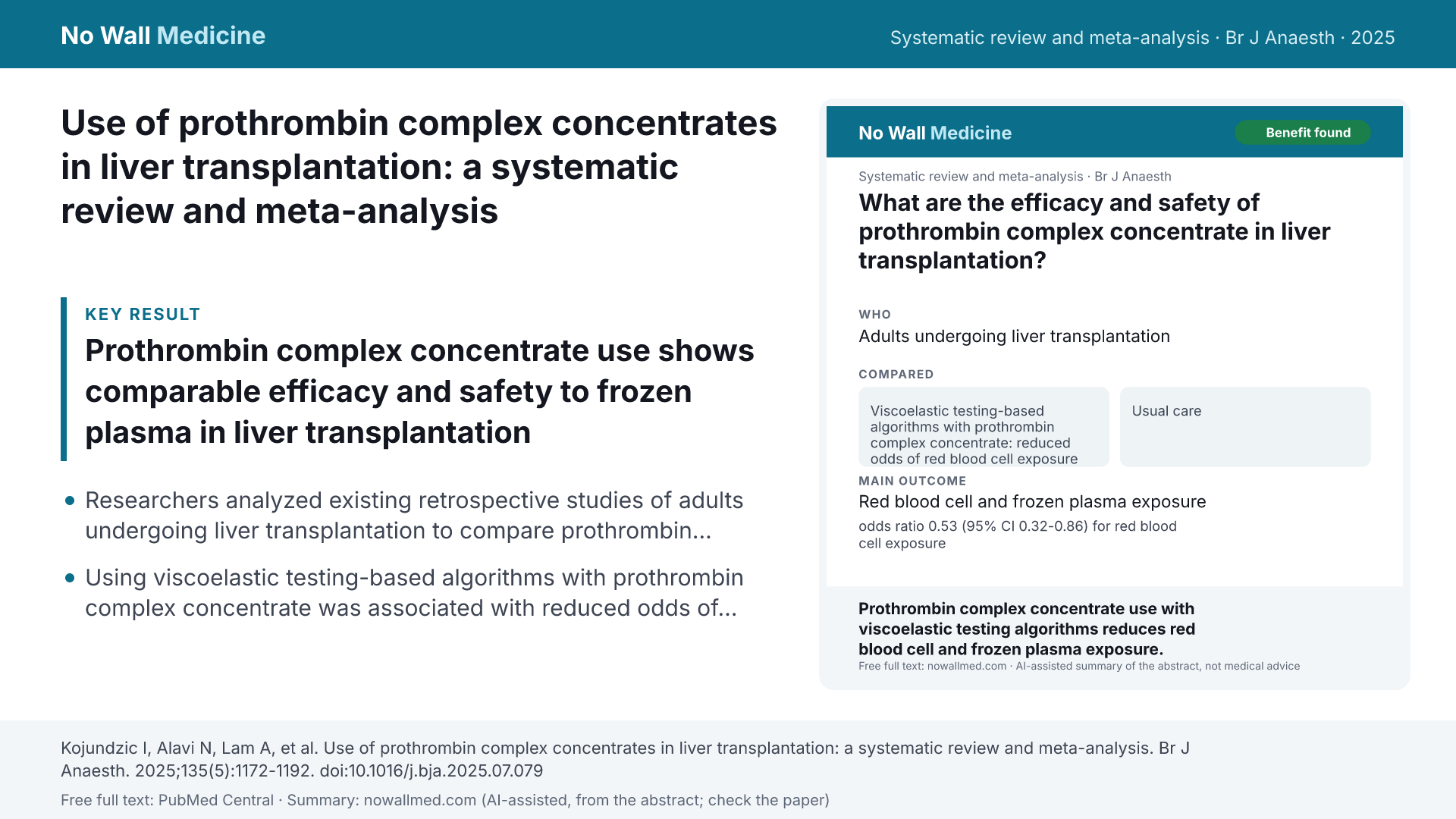
Use of prothrombin complex concentrates in liver transplantation: a systematic review and meta-analysis
Key result: Prothrombin complex concentrate use shows comparable efficacy and safety to frozen plasma in liver transplantation
Key points
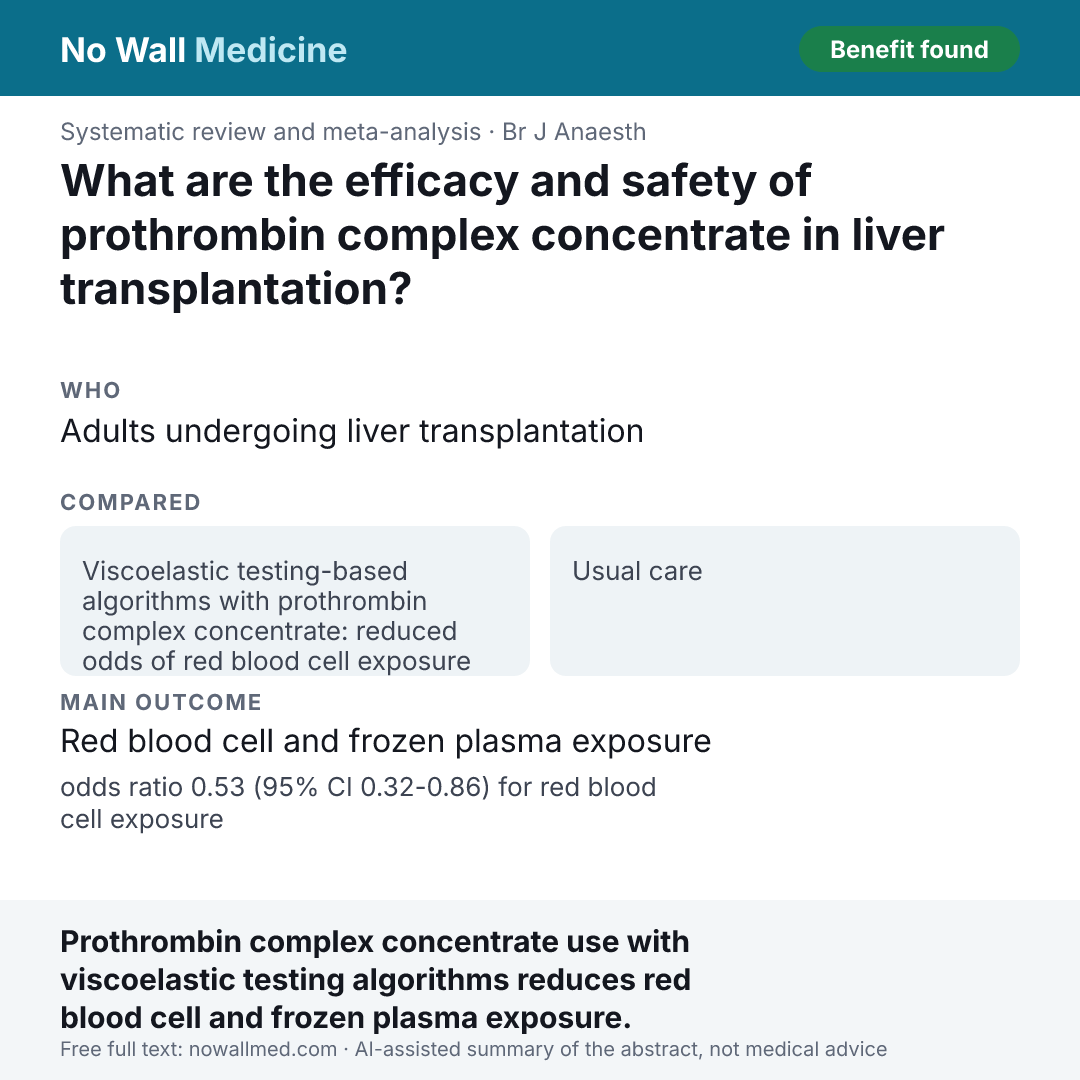
- Researchers analyzed existing retrospective studies of adults undergoing liver transplantation to compare prothrombin complex concentrate, a concentrated clotting factor product, with frozen plasma.
- Using viscoelastic testing-based algorithms with prothrombin complex concentrate was associated with reduced odds of red blood cell exposure (OR: 0.53, 95% CI: 0.32-0.86) and frozen plasma exposure (OR: 0.35, 95% CI: 0.13-0.92).
- Patients receiving prothrombin complex concentrate had worse preoperative coagulopathy, higher model for end-stage liver disease scores, and more comorbidities.
Why it matters: Clinicians use frozen plasma widely for liver transplantation despite mixed data regarding its efficacy and safety compared to prothrombin complex concentrate.
Limitation the authors note: All included studies were retrospective and there are no randomized trials comparing prothrombin complex concentrate to frozen plasma in liver transplantation.
Discussion prompts
- Would these patients look like yours? Who was left out?
- Is the main outcome one that matters to patients?
- Is the difference large enough to change what you do?
Cite: Kojundzic I, Alavi N, Lam A, et al. Use of prothrombin complex concentrates in liver transplantation: a systematic review and meta-analysis. Br J Anaesth. 2025;135(5):1172-1192. doi:10.1016/j.bja.2025.07.079
Free full text: PubMed Central · Summary and visual abstract: nowallmed.com/a/use-of-prothrombin-complex-concentrates-in-liver-transplantation-a-zn7e7u/ (AI-assisted from the abstract; check the paper before relying on it).