Use of Robots in Critical Care: Systematic Review
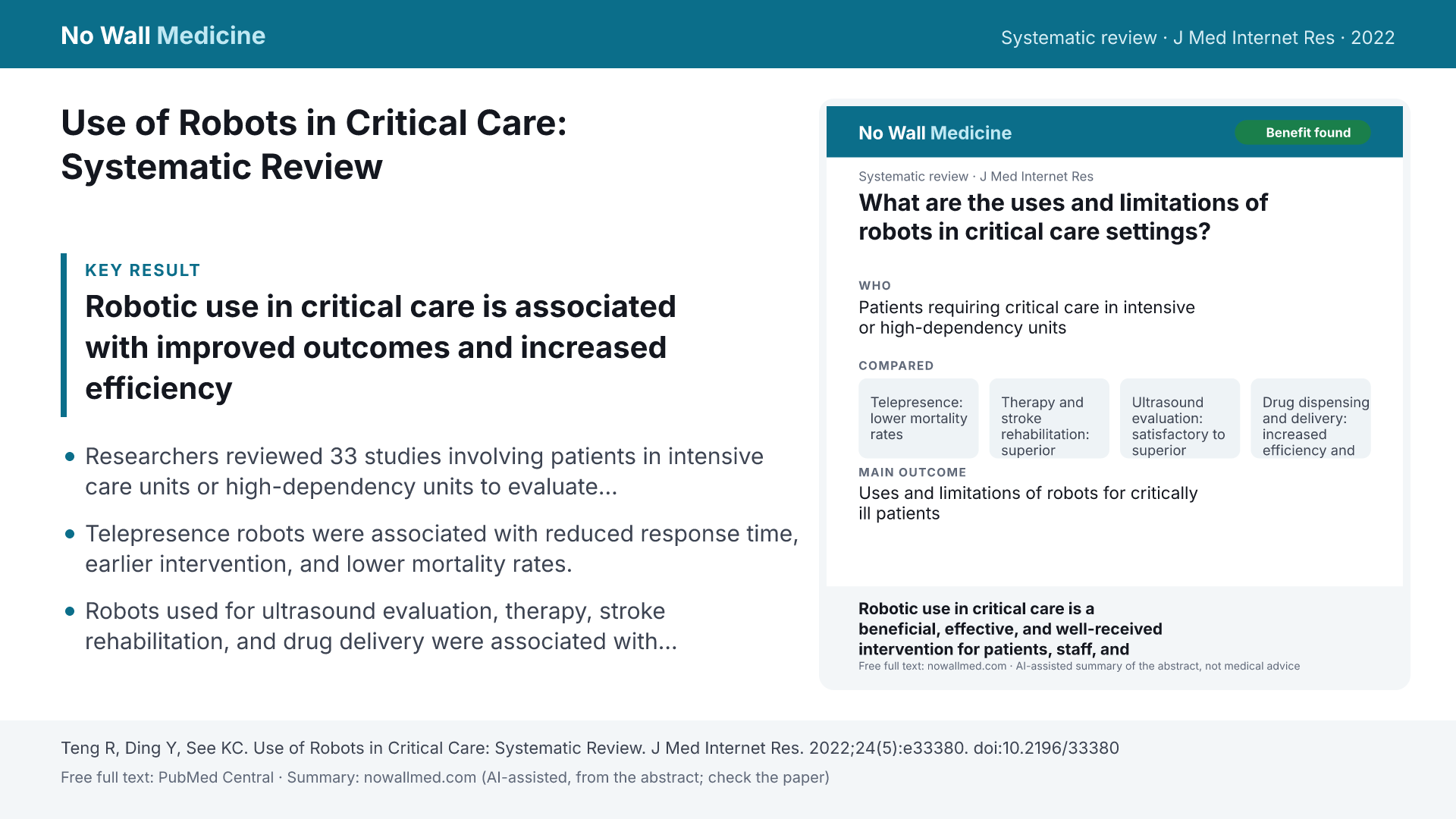
Key result: Robotic use in critical care is associated with improved outcomes and increased efficiency
Systematic reviewBenefit found
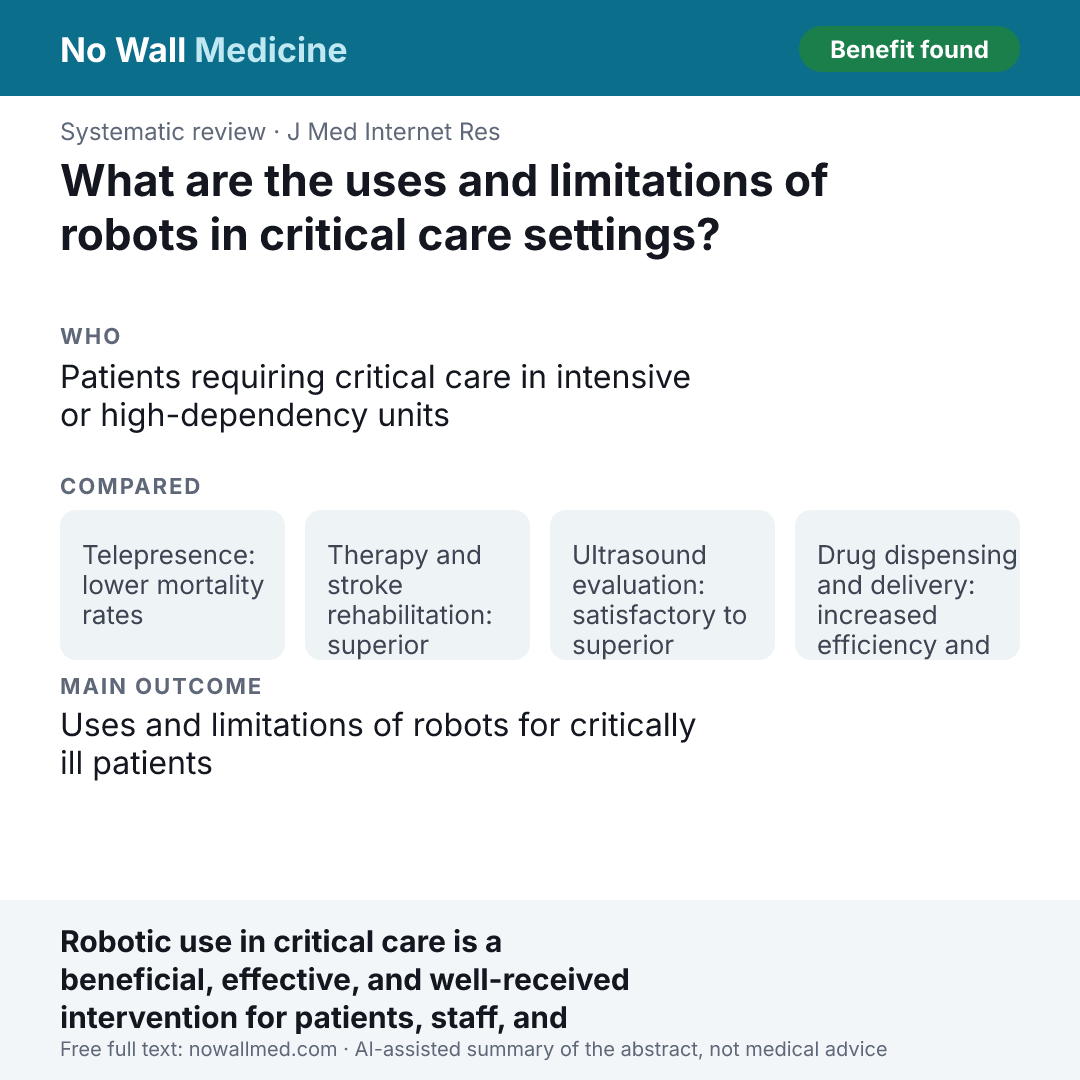
What are the uses and limitations of robots in critical care settings?
Who
Patients requiring critical care in intensive or high-dependency units
Compared
Telepresence: lower mortality rates
Therapy and stroke rehabilitation: superior clinical outcomes safely
Ultrasound evaluation: satisfactory to superior results
Drug dispensing and delivery: increased efficiency and generated cost savings
Main outcome
Uses and limitations of robots for critically ill patients
Bottom line: Robotic use in critical care is a beneficial, effective, and well-received intervention for patients, staff, and hospitals.
Limitation: Technological limitations, hidden costs, and regulatory and financial barriers exist.
J Med Internet Res · 2022-05-16 · Save PNG
Key points
- Researchers reviewed 33 studies involving patients in intensive care units or high-dependency units to evaluate robotic applications.
- Telepresence robots were associated with reduced response time, earlier intervention, and lower mortality rates.
- Robots used for ultrasound evaluation, therapy, stroke rehabilitation, and drug delivery were associated with improved clinical outcomes and efficiency.
Why it matters: The role of robots for patients who are critically ill has not been well established.
Discussion prompts
- Would these patients look like yours? Who was left out?
- Is the main outcome one that matters to patients?
- Is the difference large enough to change what you do?
Cite: Teng R, Ding Y, See KC. Use of Robots in Critical Care: Systematic Review. J Med Internet Res. 2022;24(5):e33380. doi:10.2196/33380
Free full text: PubMed Central · Summary and visual abstract: nowallmed.com/a/use-of-robots-in-critical-care-systematic-1y60tis/ (AI-assisted from the abstract; check the paper before relying on it).