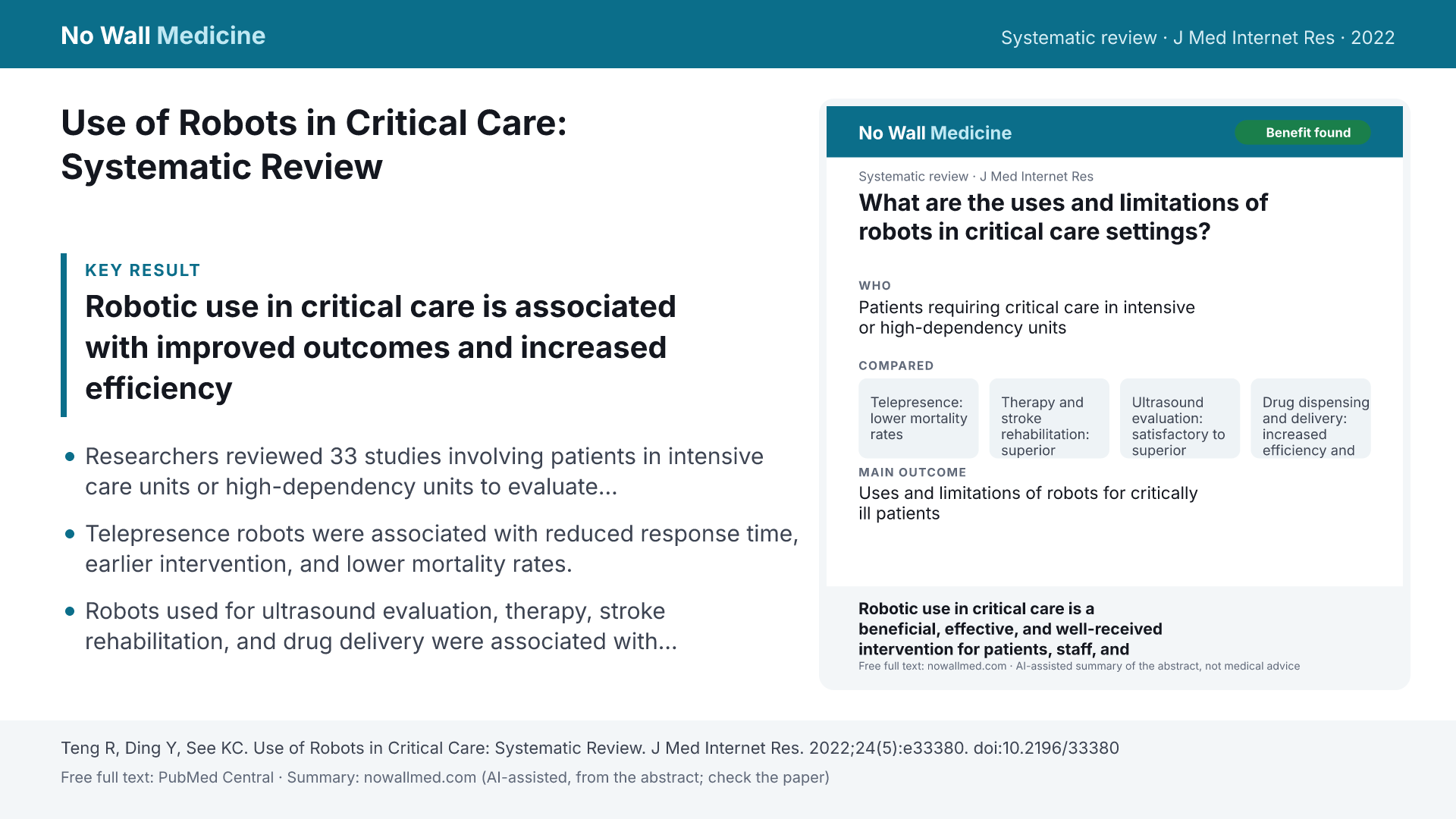
Robotic use in critical care is associated with improved outcomes and increased efficiency
Use of Robots in Critical Care: Systematic Review
Systematic reviewBenefit found
What are the uses and limitations of robots in critical care settings?
Who
33
Patients requiring critical care in intensive or high-dependency units
Compared
Telepresence: lower mortality rates
Therapy and stroke rehabilitation: superior clinical outcomes safely
Ultrasound evaluation: satisfactory to superior results
Drug dispensing and delivery: increased efficiency and generated cost savings
Main outcome
Uses and limitations of robots for critically ill patients
Bottom line: Robotic use in critical care is a beneficial, effective, and well-received intervention for patients, staff, and hospitals.
Limitation: Technological limitations, hidden costs, and regulatory and financial barriers exist.
J Med Internet Res · 2022-05-16Download image
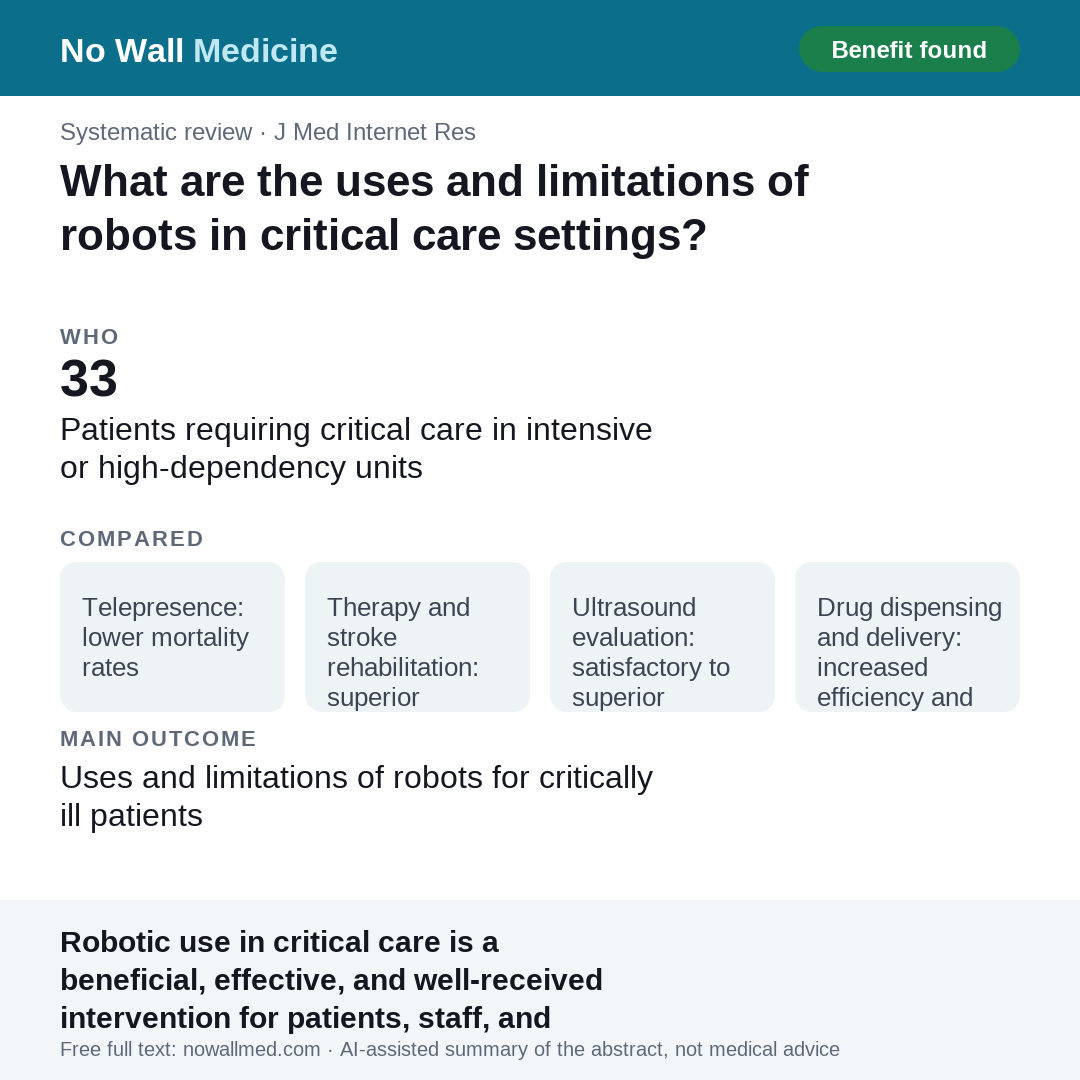
Clinical question: What are the uses and limitations of robots in critical care settings?
Why it matters: The role of robots for patients who are critically ill has not been well established.
Key points
- Researchers reviewed 33 studies involving patients in intensive care units or high-dependency units to evaluate robotic applications.
- Telepresence robots were associated with reduced response time, earlier intervention, and lower mortality rates.
- Robots used for ultrasound evaluation, therapy, stroke rehabilitation, and drug delivery were associated with improved clinical outcomes and efficiency.
Headline and key points written with AI from the paper’s abstract, with every number checked against it. Read the paper before relying on them.
Was this summary helpful?
Subject terms
Cite this article
Teng R, Ding Y, See KC. Use of Robots in Critical Care: Systematic Review. J Med Internet Res. 2022. doi:10.2196/33380
Spotted a mistake? Suggest a correction