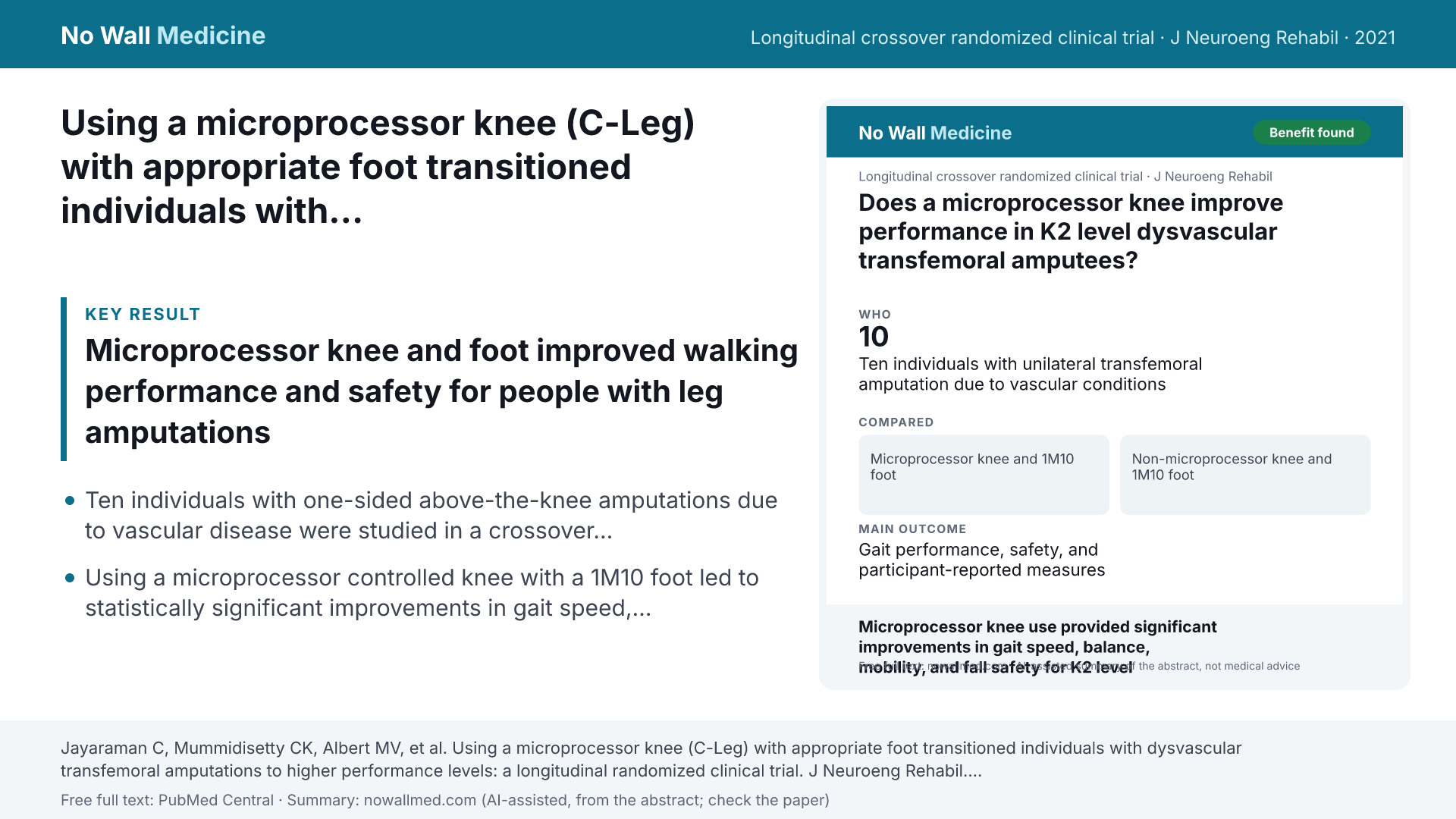
Using a microprocessor knee (C-Leg) with appropriate foot transitioned individuals with dysvascular transfemoral amputations to higher performance levels: a longitudinal randomized clinical trial
Key result: Microprocessor knee and foot improved walking performance and safety for people with leg amputations
Key points
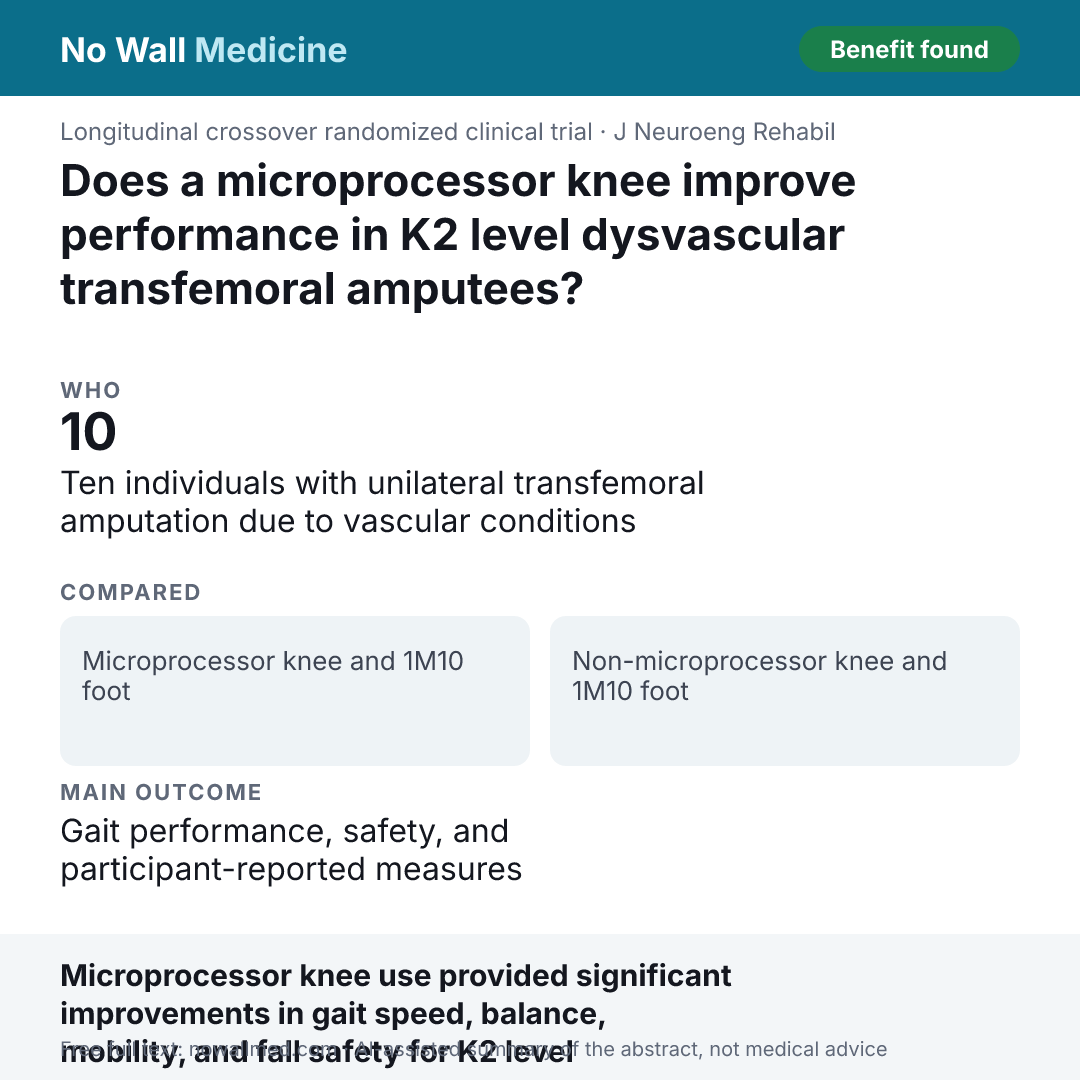
- Ten individuals with one-sided above-the-knee amputations due to vascular disease were studied in a crossover randomized clinical trial.
- Using a microprocessor controlled knee with a 1M10 foot led to statistically significant improvements in gait speed, balance, mobility, and fall safety compared to a non-microprocessor knee.
- The improvements in clinical scores were within the range reported in previous studies for individuals with a higher functional classification level.
Why it matters: Insurance policy restrictions often prevent individuals with limited walking ability from accessing advanced microprocessor controlled knees despite potential benefits.
Discussion prompts
- Would these patients look like yours? Who was left out?
- Is the main outcome one that matters to patients?
- Is the difference large enough to change what you do?
Cite: Jayaraman C, Mummidisetty CK, Albert MV, et al. Using a microprocessor knee (C-Leg) with appropriate foot transitioned individuals with dysvascular transfemoral amputations to higher performance levels: a longitudinal randomized clinical trial. J Neuroeng Rehabil. 2021. doi:10.1186/s12984-021-00879-3
Free full text: PubMed Central · Summary and visual abstract: nowallmed.com/a/using-a-microprocessor-knee-c-leg-with-appropriate-foot-transitioned-16hbvmr/ (AI-assisted from the abstract; check the paper before relying on it).