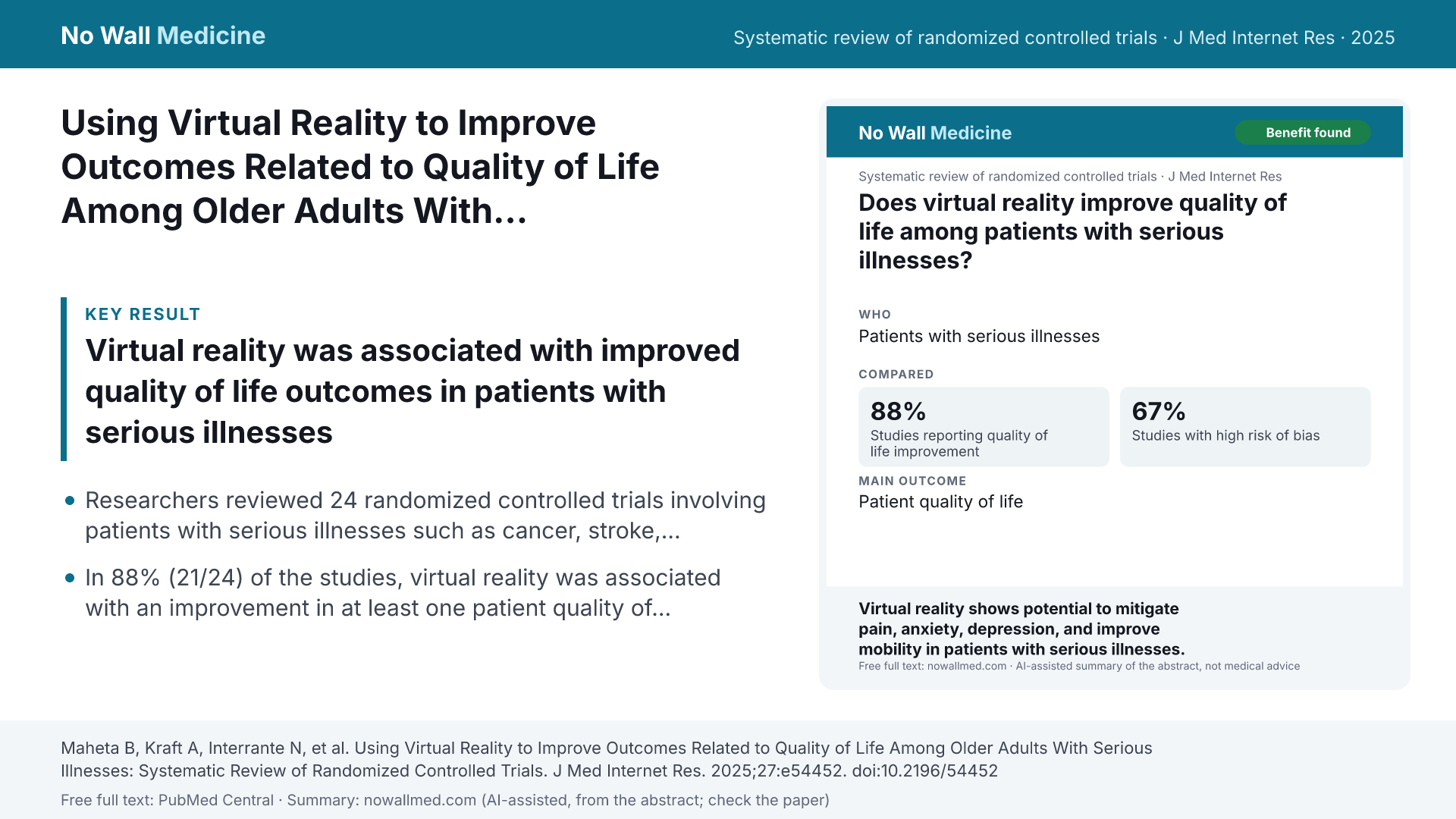
Virtual reality was associated with improved quality of life outcomes in patients with serious illnesses
Using Virtual Reality to Improve Outcomes Related to Quality of Life Among Older Adults With Serious Illnesses: Systematic Review of Randomized Controlled Trials
Systematic review of randomized controlled trialsBenefit found
Does virtual reality improve quality of life among patients with serious illnesses?
Who
Patients with serious illnesses
Compared
88%Studies reporting quality of life improvement (21/24)
67%Studies with high risk of bias (16/24)
Main outcome
Patient quality of life
Bottom line: Virtual reality shows potential to mitigate pain, anxiety, depression, and improve mobility in patients with serious illnesses.
Limitation: Most studies did not provide detailed information about unassisted or assisted use.
J Med Internet Res · 2025-02-26 · Save PNG
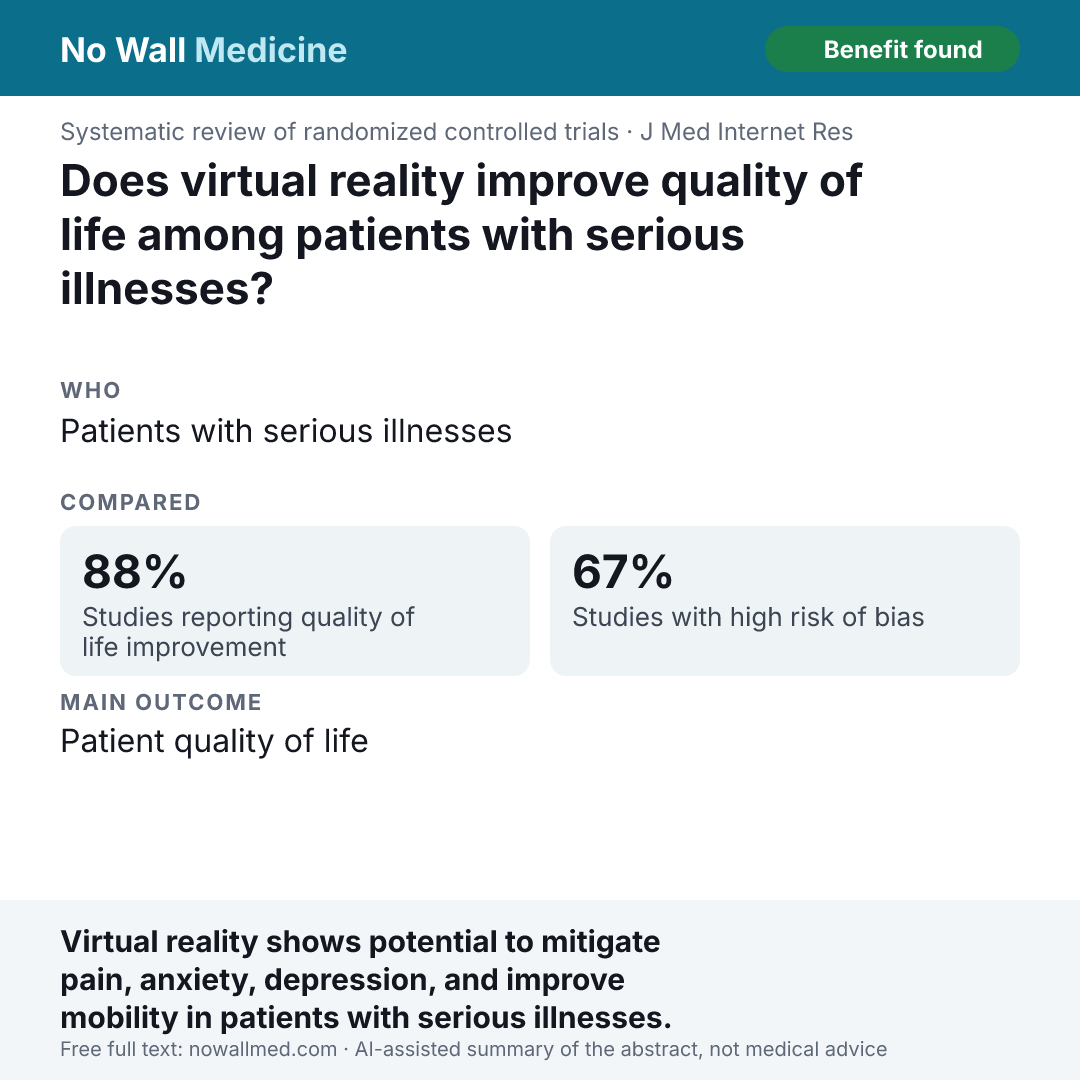
Clinical question: Does virtual reality improve quality of life among patients with serious illnesses?
Key points
- Researchers reviewed 24 randomized controlled trials involving patients with serious illnesses such as cancer, stroke, and cardiovascular disease.
- In 88% (21/24) of the studies, virtual reality was associated with an improvement in at least one patient quality of life outcome.
- While 29% (7/24) of studies met all eight consensus standards for virtual reality research, 67% (16/24) had a high risk of bias.
Limitation the authors note: Most studies did not provide detailed information about unassisted or assisted use of the technology.
Headline and key points written with AI from the paper’s abstract, with every number checked against it. Read the paper before relying on them.
Was this summary helpful?
Subject terms
Headline, design, result, key points, caveat and citation as plain text.
Cite this article
Maheta B, Kraft A, Interrante N, et al. Using Virtual Reality to Improve Outcomes Related to Quality of Life Among Older Adults With Serious Illnesses: Systematic Review of Randomized Controlled Trials. J Med Internet Res. 2025;27:e54452. doi:10.2196/54452
Spotted a mistake? Suggest a correction