Vaginal oestrogen cream improved symptom relief and quality of life after pelvic organ prolapse surgery
Vaginal Oestrogen Therapy for Postmenopausal Women Undergoing Prolapse Surgery: A Multicentre Double-Blind Randomised Placebo-Controlled Clinical Trial
Double-blind, randomised, placebo-controlled trialBenefit found
Does vaginal oestrogen therapy improve outcomes after prolapse surgery in postmenopausal women?
Who
293
Postmenopausal women with pelvic organ prolapse stage 2 or higher · 22 hospitals in the Netherlands
Compared
92%Vaginal oestriol cream
80%Placebo
Main outcome
Subjective improvement in prolapse symptoms at 12 months
Bottom line: Perioperative vaginal oestrogen improved patient-reported outcomes and pelvic floor-related quality of life after prolapse surgery.
BJOG · 2026-08-28Download image
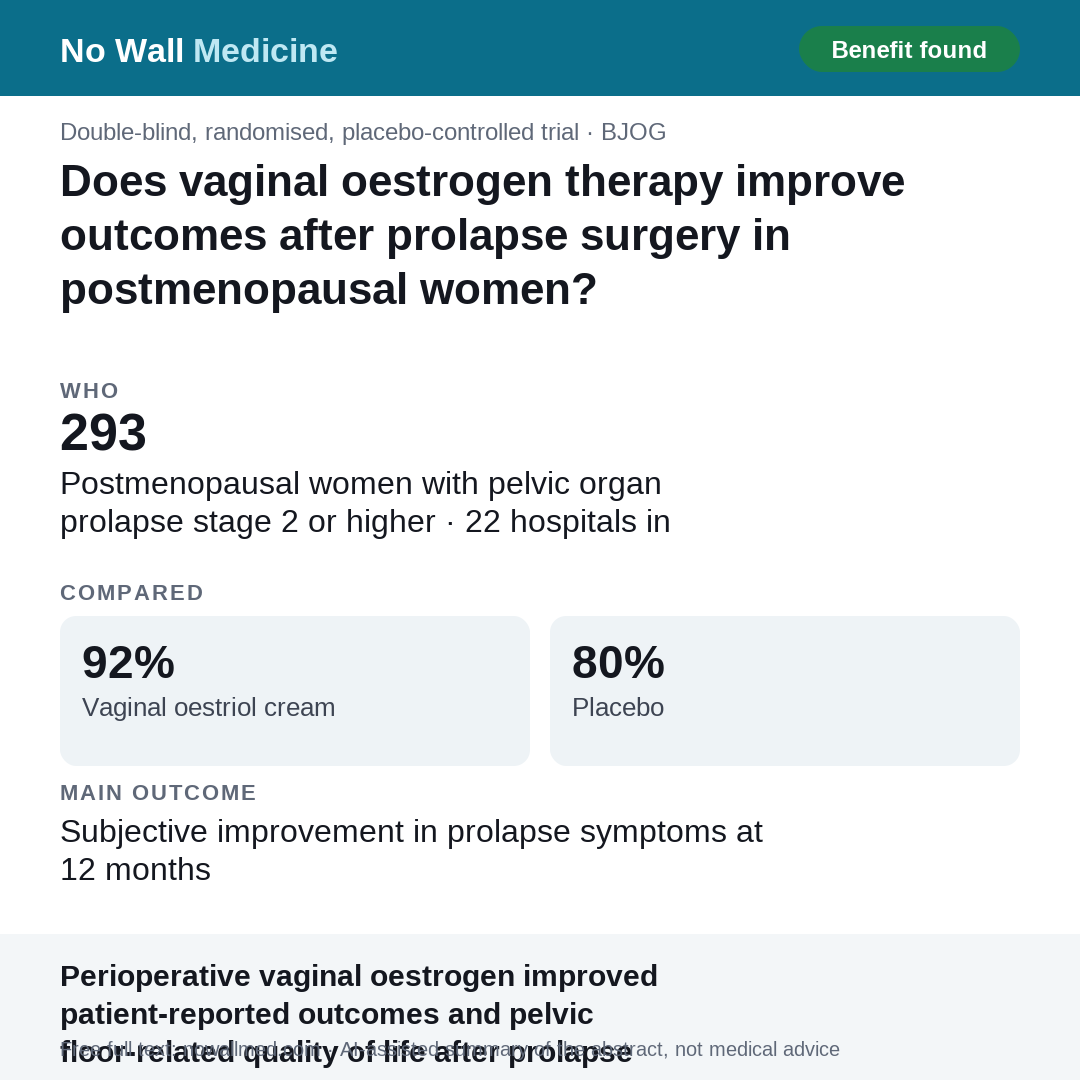
Clinical question: Does vaginal oestrogen therapy improve outcomes after prolapse surgery in postmenopausal women?
Why it matters: It was unknown whether adding vaginal oestrogen therapy to standard care improves patient-reported outcomes for women undergoing surgery to repair pelvic organ prolapse.
Key points
- Researchers studied 293 postmenopausal women across 22 hospitals who were randomized to receive either vaginal oestriol cream or a placebo before and after surgery.
- At 12 months, 92% of women using oestrogen reported significant symptom improvement compared to 80% in the placebo group.
- While quality of life and pain levels improved with oestrogen, there were no differences in anatomical outcomes, surgical success, or rates of repeat surgery.
Headline and key points written with AI from the paper’s abstract, with every number checked against it. Read the paper before relying on them.
Topics
Spotted a mistake? Suggest a correction