International experts reach consensus on diagnosis and management of vasa previa in singleton pregnancies
Vasa previa in singleton pregnancies: diagnosis and clinical management based on an international expert consensus
Why it matters: Limited data from case reports and cohort studies currently exist to guide the diagnosis and clinical management of vasa previa.
Key points
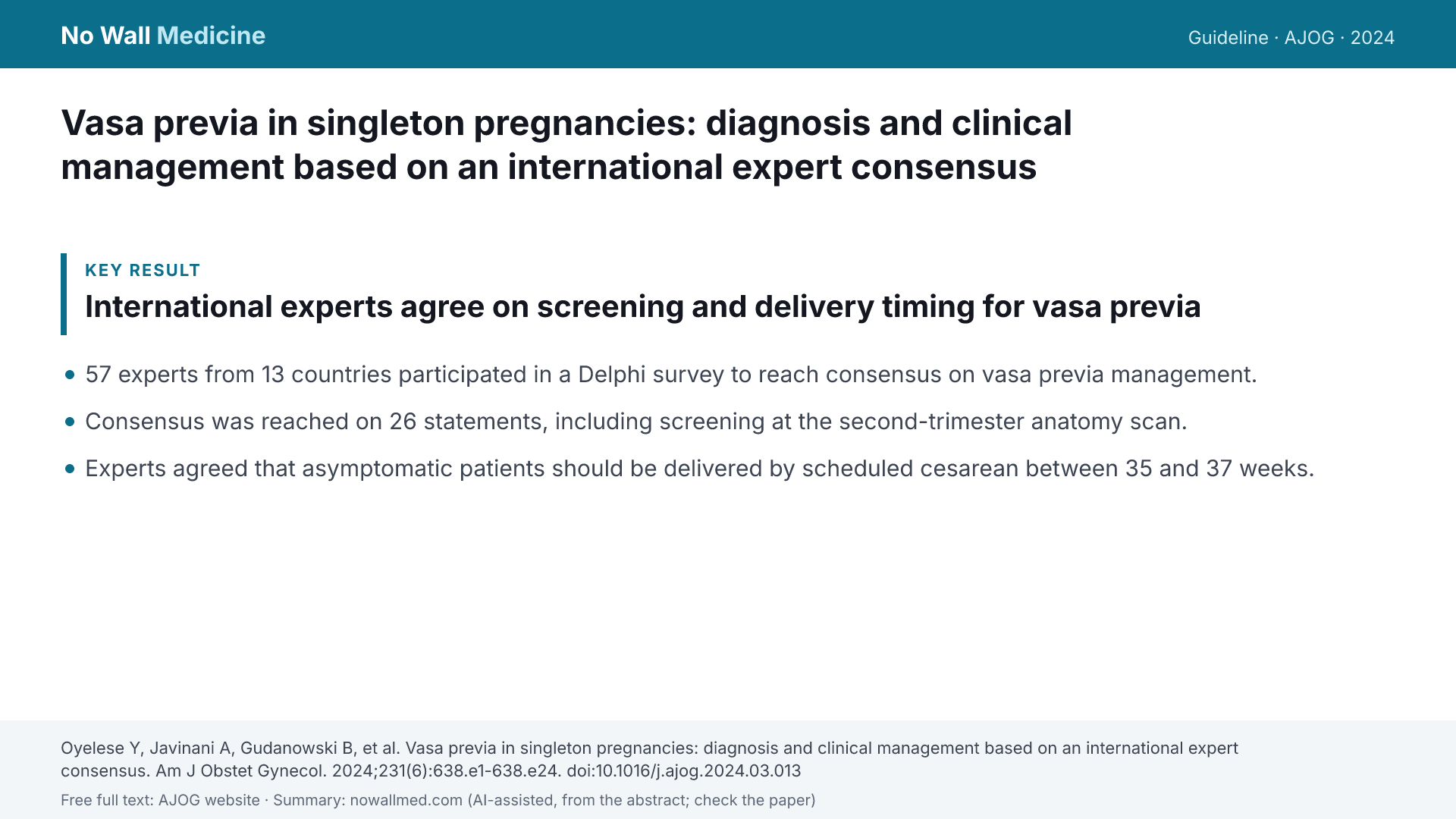
- A panel of 57 international experts participated in focus groups and surveys to establish consensus on managing vasa previa, a condition where fetal blood vessels cross the cervix.
- Experts agreed that asymptomatic patients should undergo scheduled cesarean delivery, which is surgery to deliver a baby through an incision in the abdomen, between 35 and 37 weeks of gestation.
- The panel reached consensus on 26 statements, including screening with color Doppler ultrasound during the second-trimester anatomy scan and performing follow-up ultrasound at approximately 32 weeks if a low-lying placenta is found.
Headline and key points written with AI from the paper’s abstract, with every number checked against it. Read the paper before relying on them.
Was this summary helpful?
Subject terms
Cite this article
Oyelese Y, Javinani A, Gudanowski B, Krispin E, Rebarber A, Akolekar R. Vasa previa in singleton pregnancies: diagnosis and clinical management based on an international expert consensus. AJOG. 2024. doi:10.1016/j.ajog.2024.03.013
Spotted a mistake? Suggest a correction