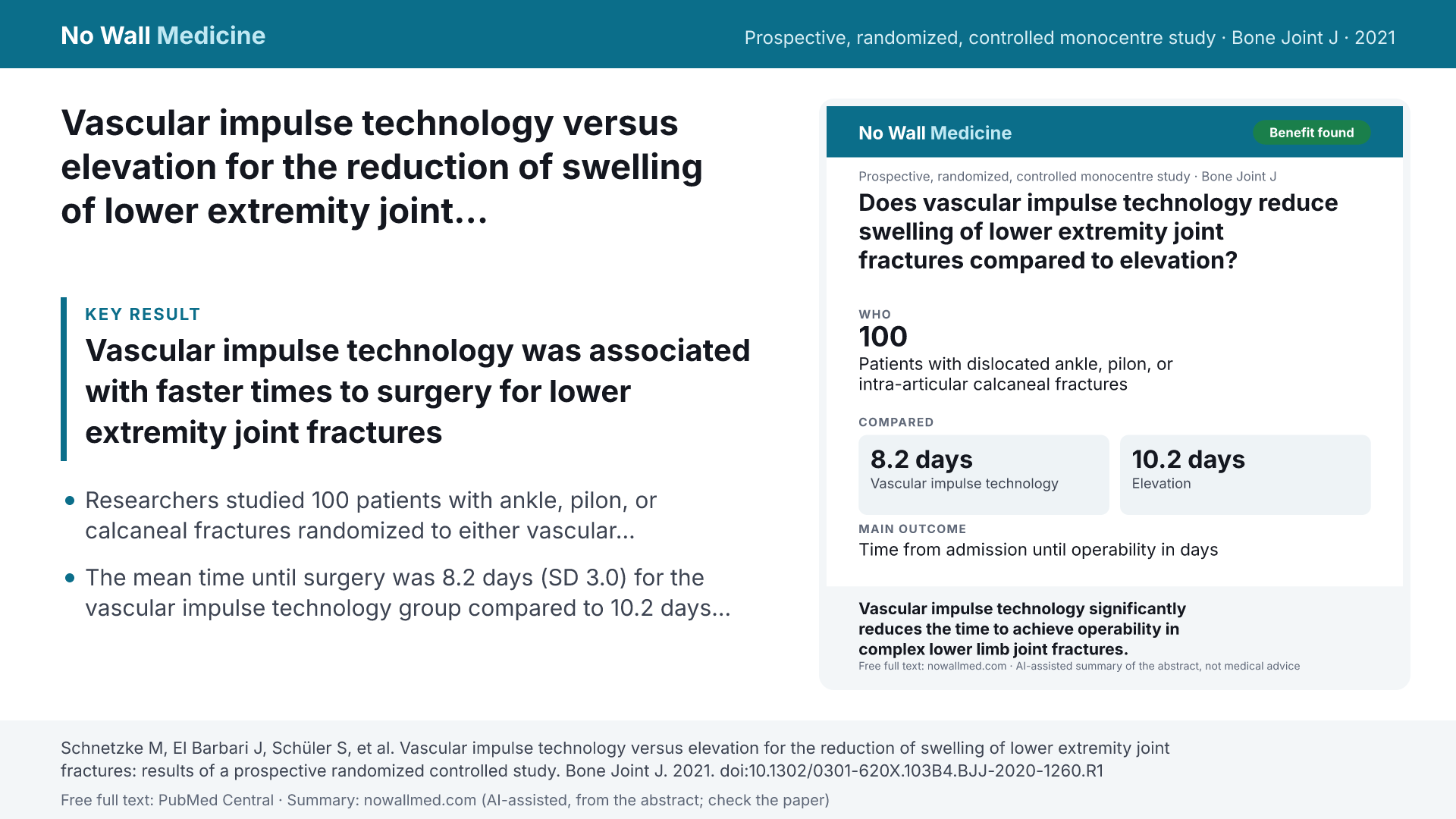
Vascular impulse technology versus elevation for the reduction of swelling of lower extremity joint fractures: results of a prospective randomized controlled study
Key result: Vascular impulse technology was associated with faster times to surgery for lower extremity joint fractures
Key points
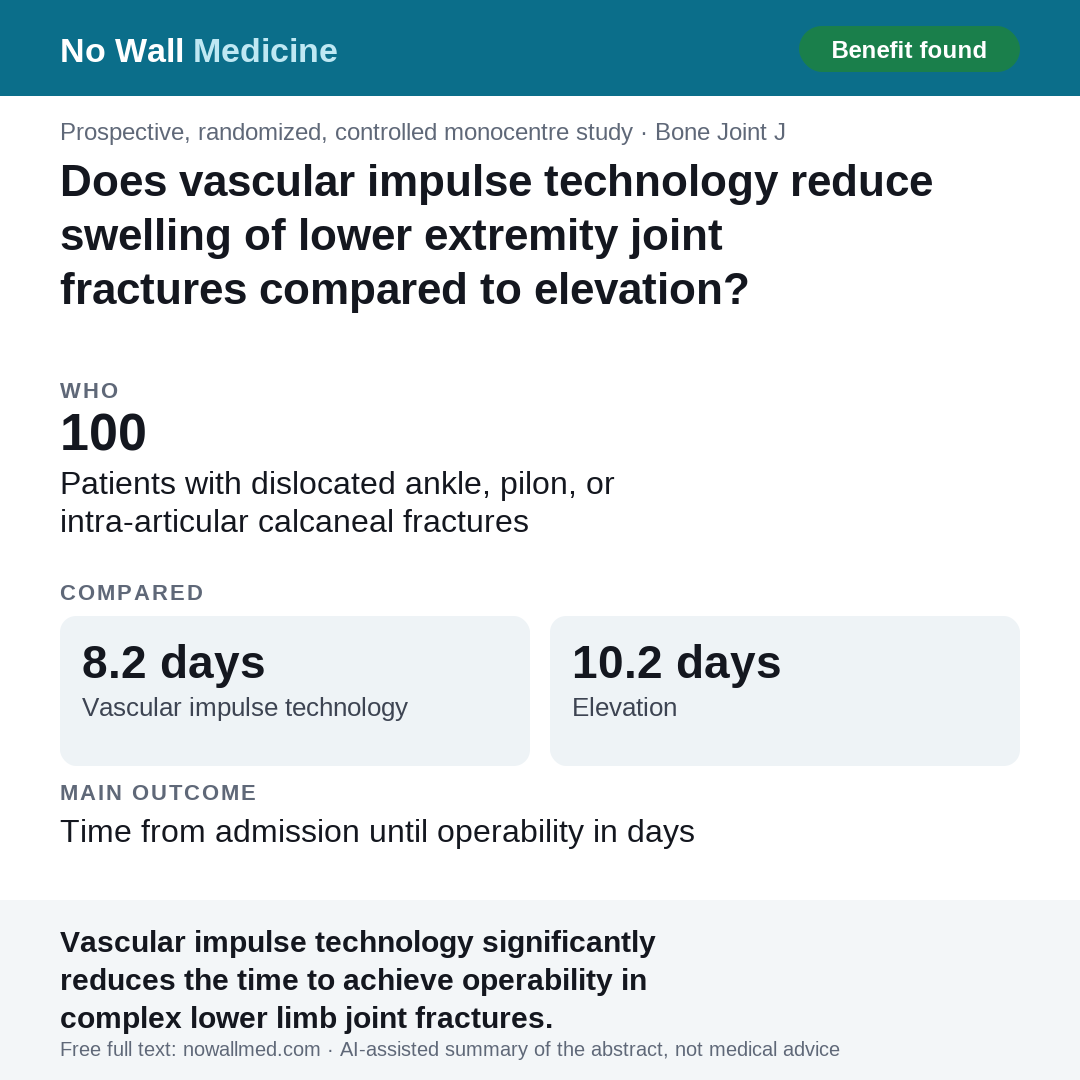
- Researchers studied 100 patients with ankle, pilon, or calcaneal fractures randomized to either vascular impulse technology or conventional elevation.
- The mean time until surgery was 8.2 days (SD 3.0) for the vascular impulse technology group compared to 10.2 days (SD 3.7) for the elevation group.
- Vascular impulse technology was associated with a lower length of stay, increased reduction in swelling, and a lower revision rate.
Why it matters: Soft-tissue swelling in complex lower extremity joint fractures is associated with prolonged hospitalization and soft-tissue complications.
Discussion prompts
- Would these patients look like yours? Who was left out?
- Is the main outcome one that matters to patients?
- Is the difference large enough to change what you do?
Cite: Schnetzke M, El Barbari J, Schüler S, et al. Vascular impulse technology versus elevation for the reduction of swelling of lower extremity joint fractures: results of a prospective randomized controlled study. Bone Joint J. 2021. doi:10.1302/0301-620X.103B4.BJJ-2020-1260.R1
Free full text: PubMed Central · Summary and visual abstract: nowallmed.com/a/vascular-impulse-technology-versus-elevation-for-the-reduction-of-1uihvvm/ (AI-assisted from the abstract; check the paper before relying on it).