Antibodies against vaccine vector components can accurately identify individuals who received the Ebola vaccine
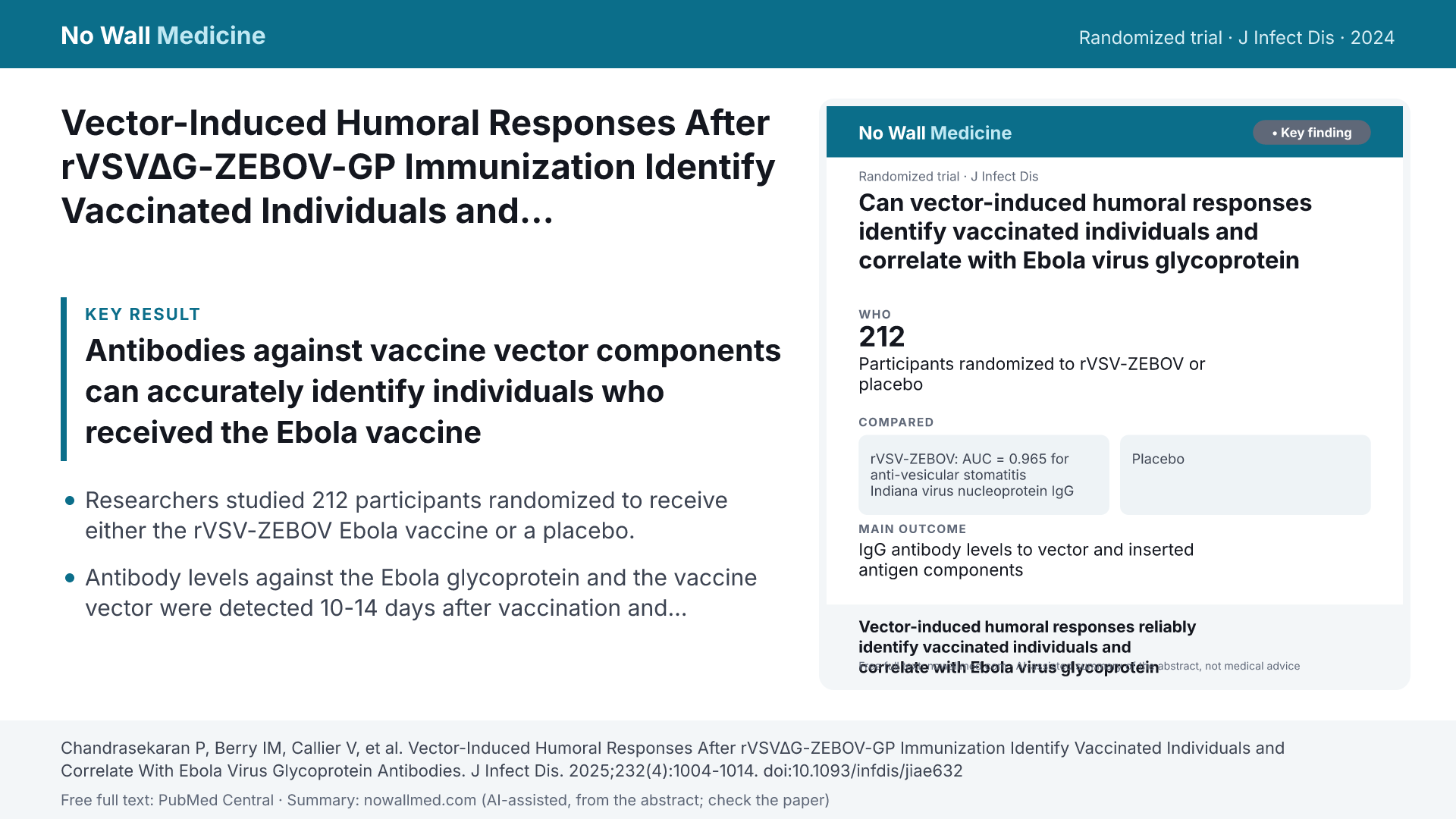
Vector-Induced Humoral Responses After rVSVΔG-ZEBOV-GP Immunization Identify Vaccinated Individuals and Correlate With Ebola Virus Glycoprotein Antibodies
Randomized trialBenefit found
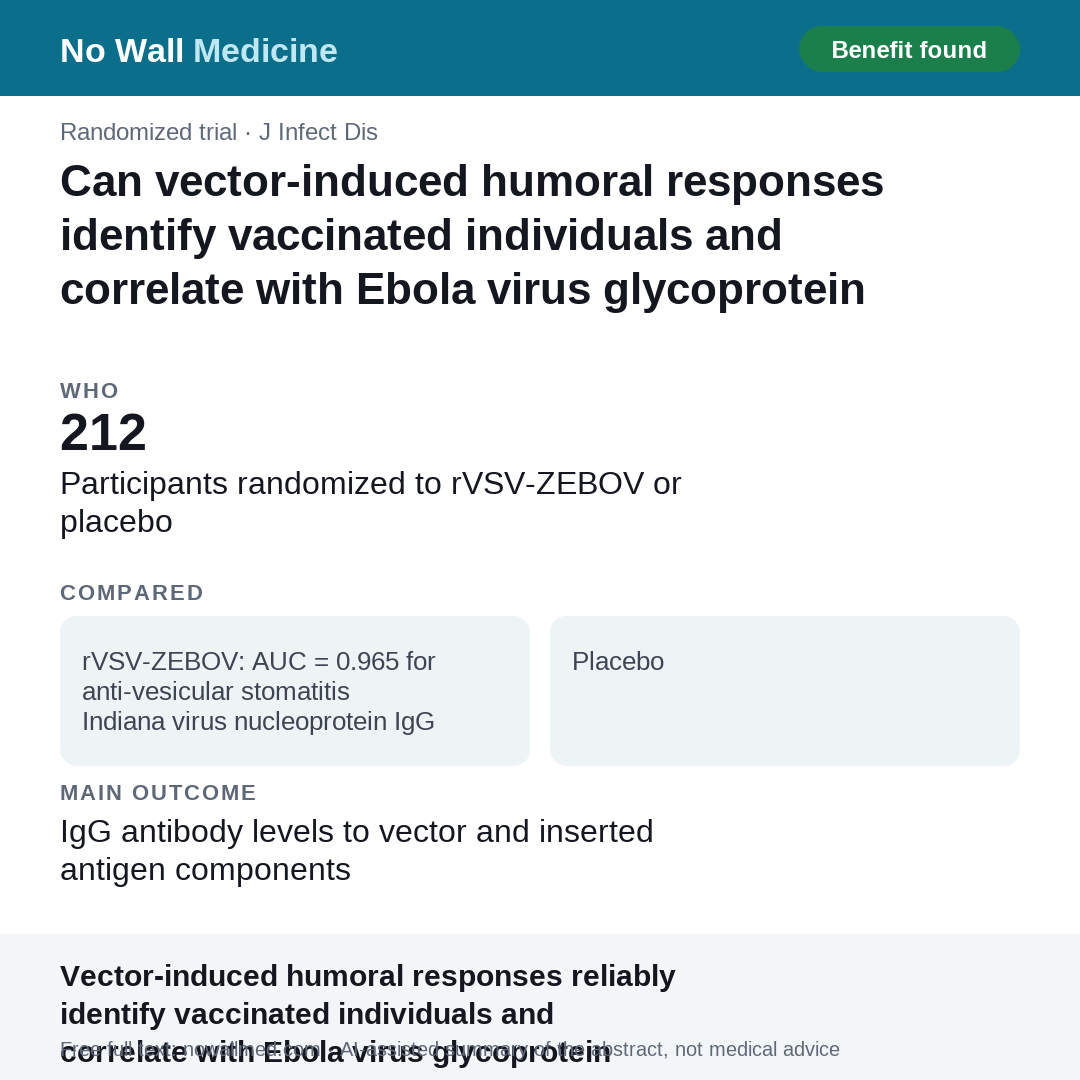
Can vector-induced humoral responses identify vaccinated individuals and correlate with Ebola virus glycoprotein antibodies?
Who
212
Participants randomized to rVSV-ZEBOV or placebo
Compared
rVSV-ZEBOV: AUC = 0.965 for anti-vesicular stomatitis Indiana virus nucleoprotein IgG
Placebo
Main outcome
IgG antibody levels to vector and inserted antigen components
Result: AUC = 0.965 for anti-vesicular stomatitis Indiana virus nucleoprotein IgG; AUC = 0.945 for anti-Ebola virus glycoprotein IgG
Bottom line: Vector-induced humoral responses reliably identify vaccinated individuals and correlate with Ebola virus glycoprotein antibodies.
J Infect Dis · 2024-12-24Download image
Clinical question: Can vector-induced humoral responses identify vaccinated individuals and correlate with Ebola virus glycoprotein antibodies?
Why it matters: It is unclear how immune responses to the vaccine vector itself behave or if they can serve as biomarkers to confirm vaccination status.
Key points
- Researchers studied 212 participants randomized to receive either the rVSV-ZEBOV Ebola vaccine or a placebo.
- Antibody levels against the Ebola glycoprotein and the vaccine vector were detected 10-14 days after vaccination and remained stable through 360 days.
- At 28 days, measuring antibodies against the vaccine vector (AUC = 0.965) and the Ebola glycoprotein (AUC = 0.945) accurately distinguished vaccinated people from those who received a placebo.
Headline and key points written with AI from the paper’s abstract, with every number checked against it. Read the paper before relying on them.
Was this summary helpful?
Subject terms
Cite this article
Chandrasekaran P, Berry IM, Callier V, et al. Vector-Induced Humoral Responses After rVSVΔG-ZEBOV-GP Immunization Identify Vaccinated Individuals and Correlate With Ebola Virus Glycoprotein Antibodies. J Infect Dis. 2024. doi:10.1093/infdis/jiae632
Spotted a mistake? Suggest a correction