Venoarterial extracorporeal membrane oxygenation as mechanical circulatory support in adult septic shock: a systematic review and meta-analysis with individual participant data meta-regression analysis
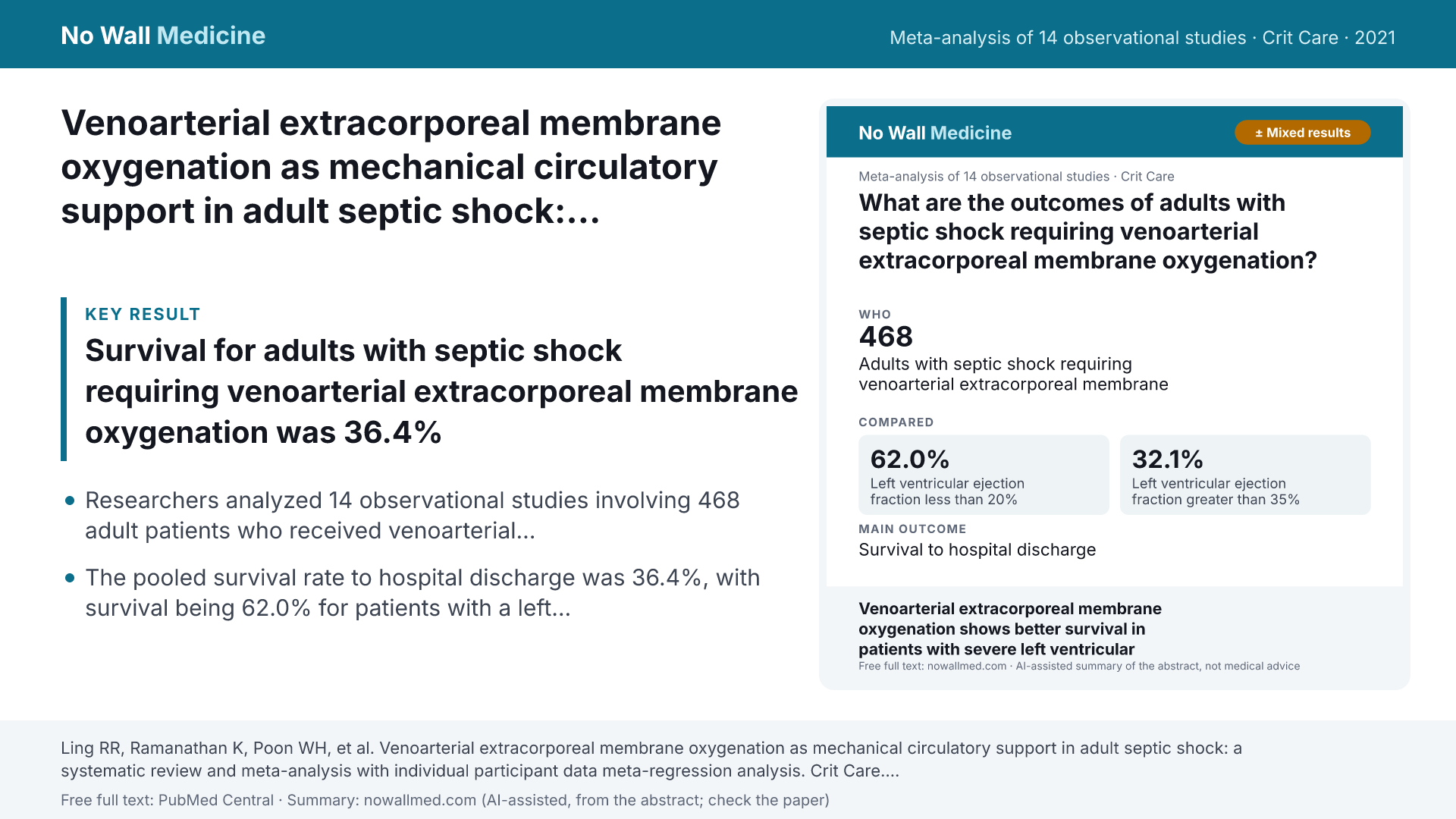
Key result: Survival for adults with septic shock requiring venoarterial extracorporeal membrane oxygenation was 36.4%
Key points
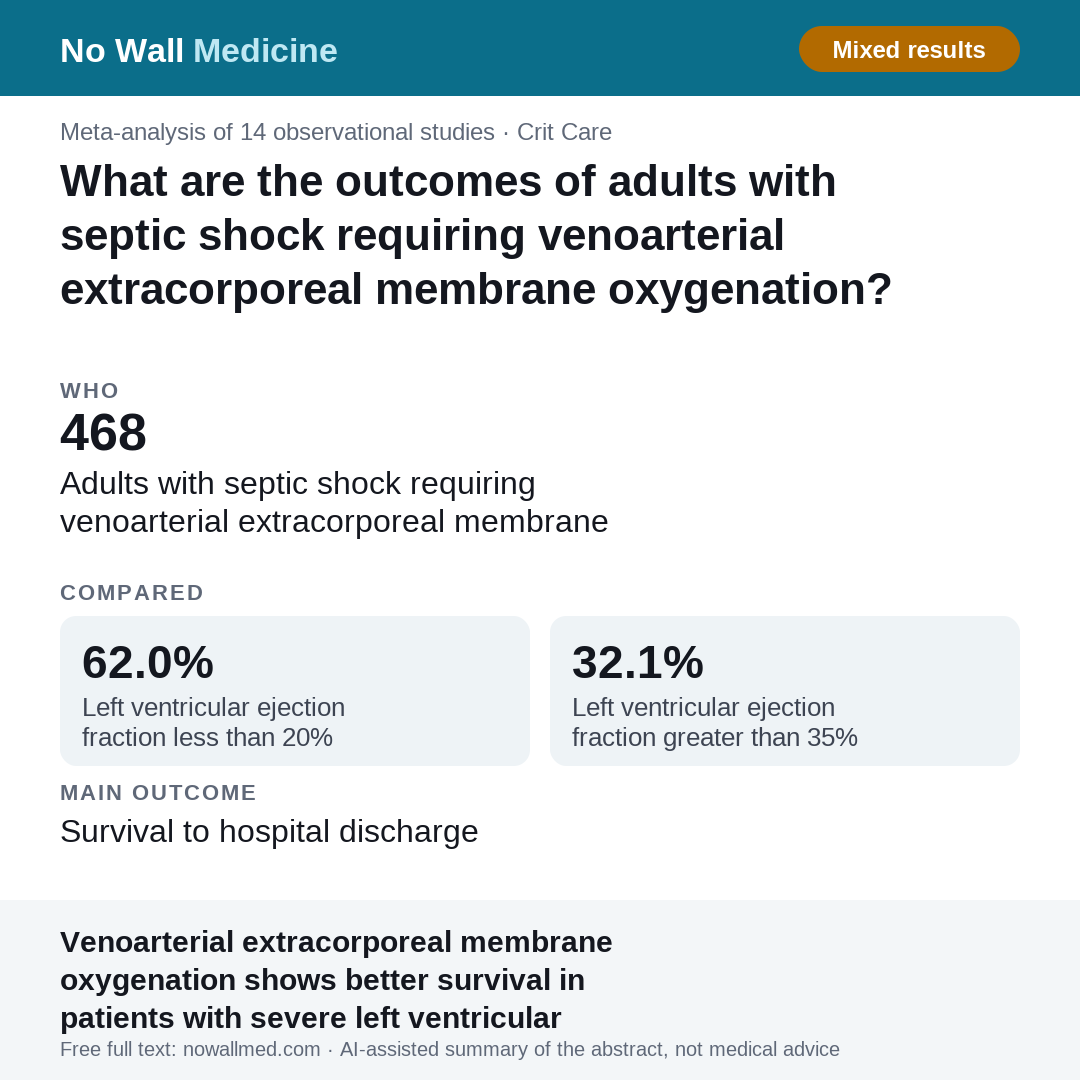
- Researchers analyzed 14 observational studies involving 468 adult patients who received venoarterial extracorporeal membrane oxygenation, a machine that provides heart and lung support, for septic shock.
- The pooled survival rate to hospital discharge was 36.4%, with survival being 62.0% for patients with a left ventricular ejection fraction—a measure of heart pumping strength—under 20%.
- Survival was 32.1% for patients with a left ventricular ejection fraction greater than 35%, and survival rates in Asian studies were 19.5% compared to 61.0% in European studies.
Why it matters: The use of venoarterial extracorporeal membrane oxygenation for adult septic shock is controversial despite being recommended for children.
Discussion prompts
- Would these patients look like yours? Who was left out?
- Is the main outcome one that matters to patients?
- Is the difference large enough to change what you do?
Cite: Ling RR, Ramanathan K, Poon WH, et al. Venoarterial extracorporeal membrane oxygenation as mechanical circulatory support in adult septic shock: a systematic review and meta-analysis with individual participant data meta-regression analysis. Crit Care. 2021. doi:10.1186/s13054-021-03668-5
Free full text: PubMed Central · Summary and visual abstract: nowallmed.com/a/venoarterial-extracorporeal-membrane-oxygenation-as-mechanical-j2n3vt/ (AI-assisted from the abstract; check the paper before relying on it).