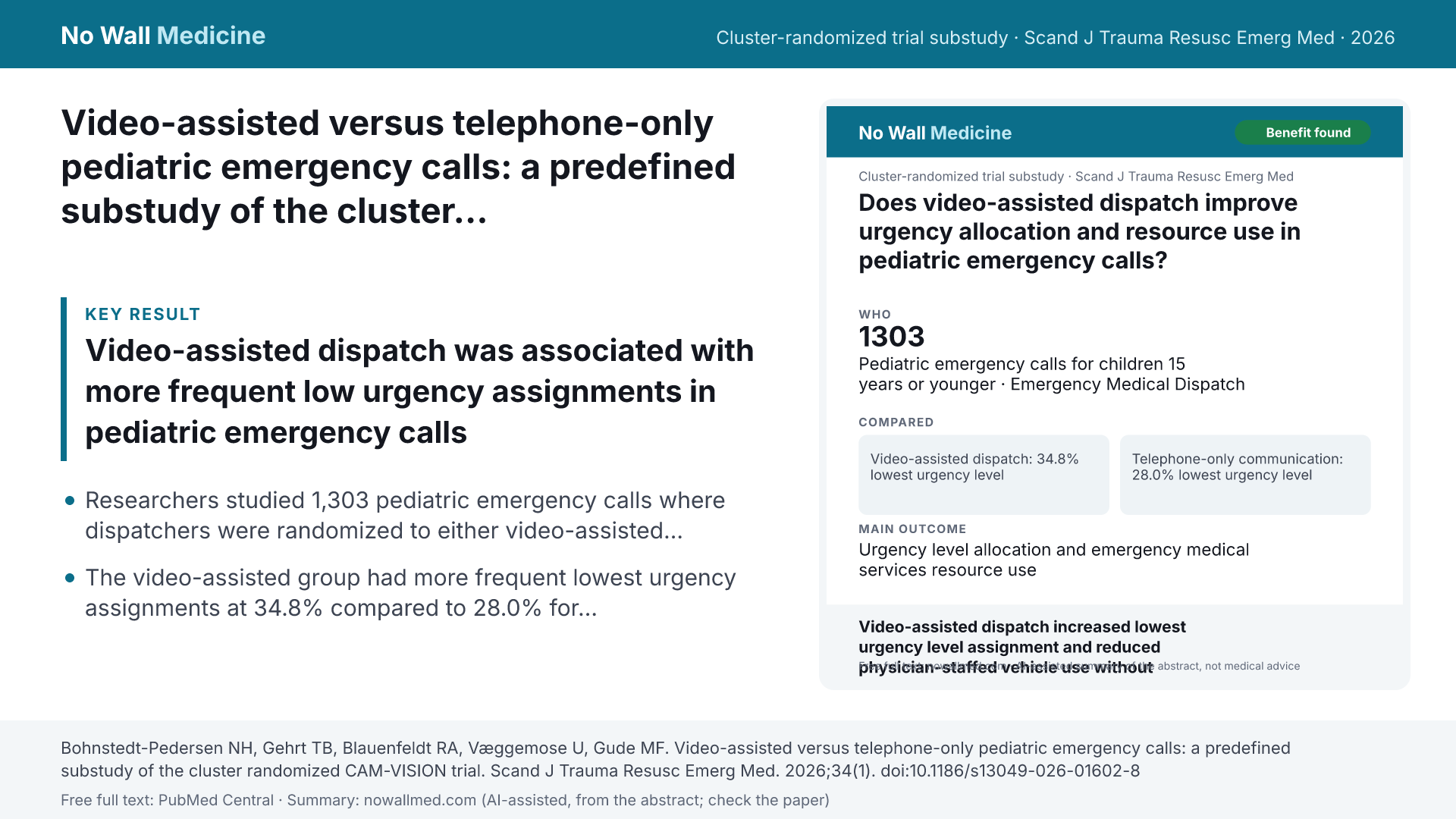
Video-assisted dispatch was associated with more frequent low urgency assignments in pediatric emergency calls
Video-assisted versus telephone-only pediatric emergency calls: a predefined substudy of the cluster randomized CAM-VISION trial
Cluster-randomized trial substudyBenefit found
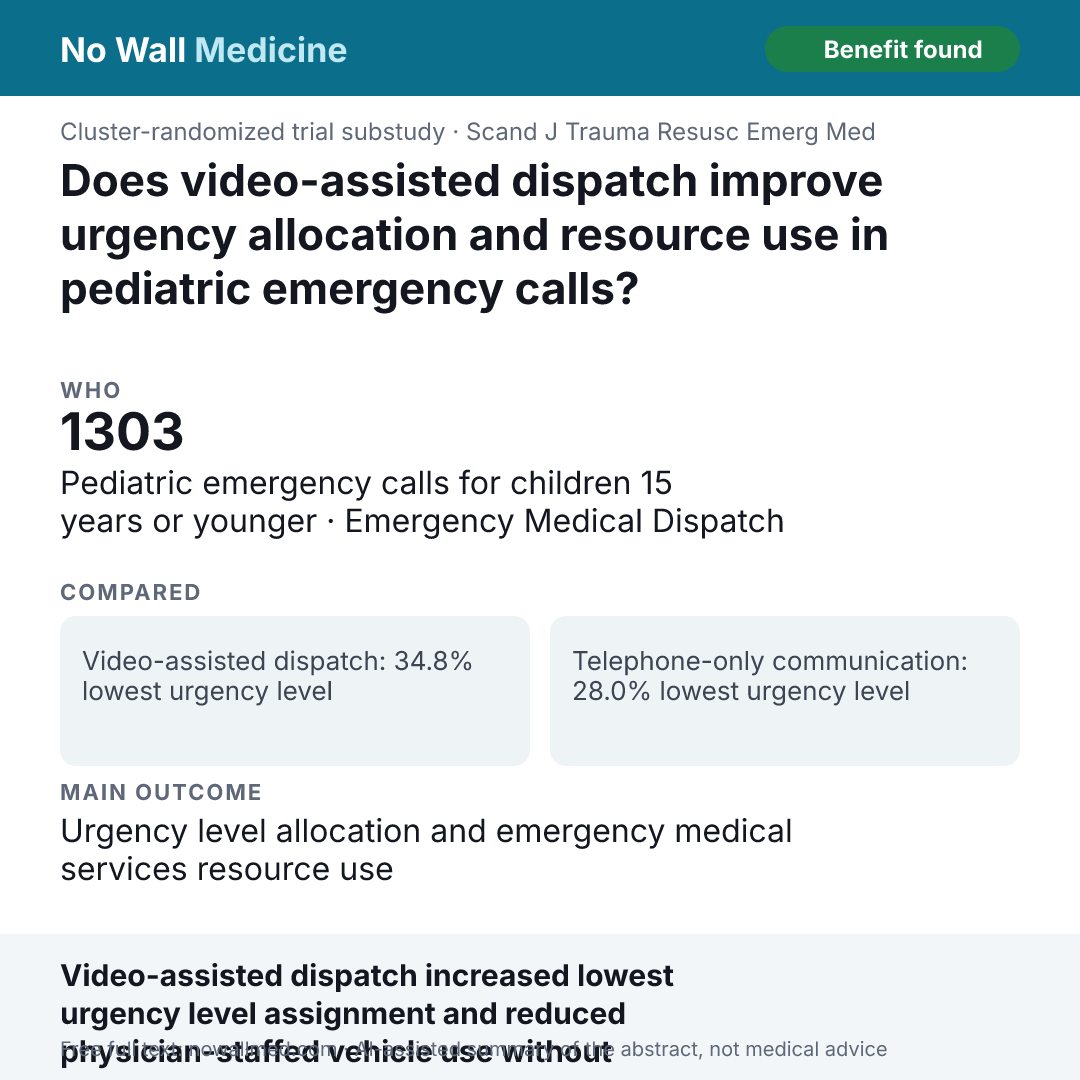
Does video-assisted dispatch improve urgency allocation and resource use in pediatric emergency calls?
Who
1303
Pediatric emergency calls for children 15 years or younger · Emergency Medical Dispatch Center, Central Denmark Region
Compared
Video-assisted dispatch: 34.8% lowest urgency level
Telephone-only communication: 28.0% lowest urgency level
Main outcome
Urgency level allocation and emergency medical services resource use
Result: absolute difference 6.8 percentage points, 95% CI 0.1 to 13.4
Bottom line: Video-assisted dispatch increased lowest urgency level assignment and reduced physician-staffed vehicle use without compromising patient safety.
Scand J Trauma Resusc Emerg Med · 2026-03-26 · Save PNG
Same trial (NCT05742412)
Papers we list that report this registered trial, oldest first. Read a secondary analysis alongside the main results.
- Main results Benefit found
Video streaming during emergency calls was associated with fewer high-urgency ambulance dispatches JAMA Netw Open 2025-07 - Secondary analysis Benefit found
This paper Scand J Trauma Resusc Emerg Med 2026-03
Headline and visual abstract written with AI from the paper’s abstract, with every number checked against it. Read the paper before relying on them.
Was this summary helpful?
Subject terms
Headline, design, result, bottom line, caveat and citation as plain text.
Cite this article
Bohnstedt-Pedersen NH, Gehrt TB, Blauenfeldt RA, Væggemose U, Gude MF. Video-assisted versus telephone-only pediatric emergency calls: a predefined substudy of the cluster randomized CAM-VISION trial. Scand J Trauma Resusc Emerg Med. 2026;34(1). doi:10.1186/s13049-026-01602-8
Spotted a mistake? Suggest a correction