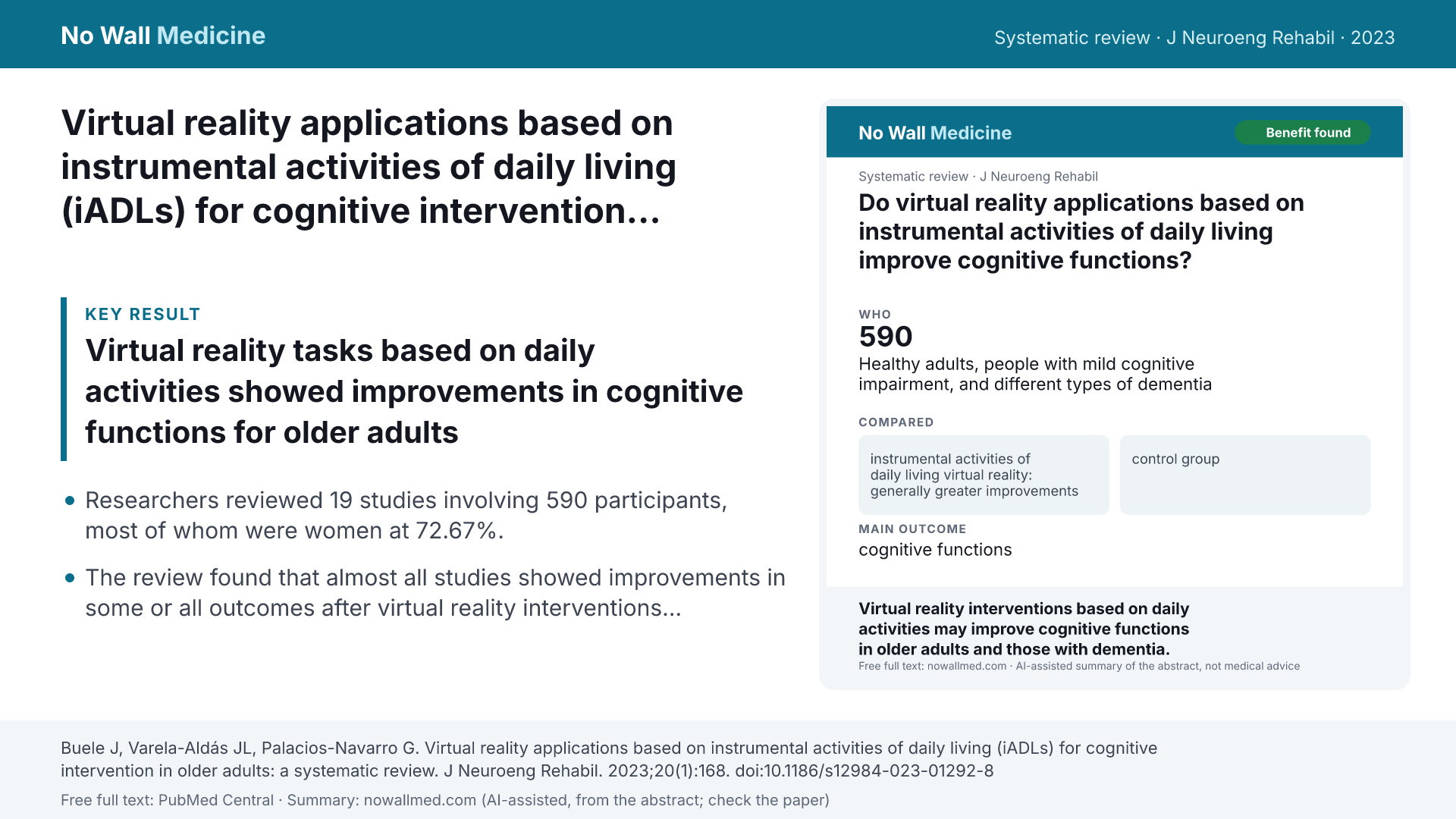
Virtual reality applications based on instrumental activities of daily living (iADLs) for cognitive intervention in older adults: a systematic review
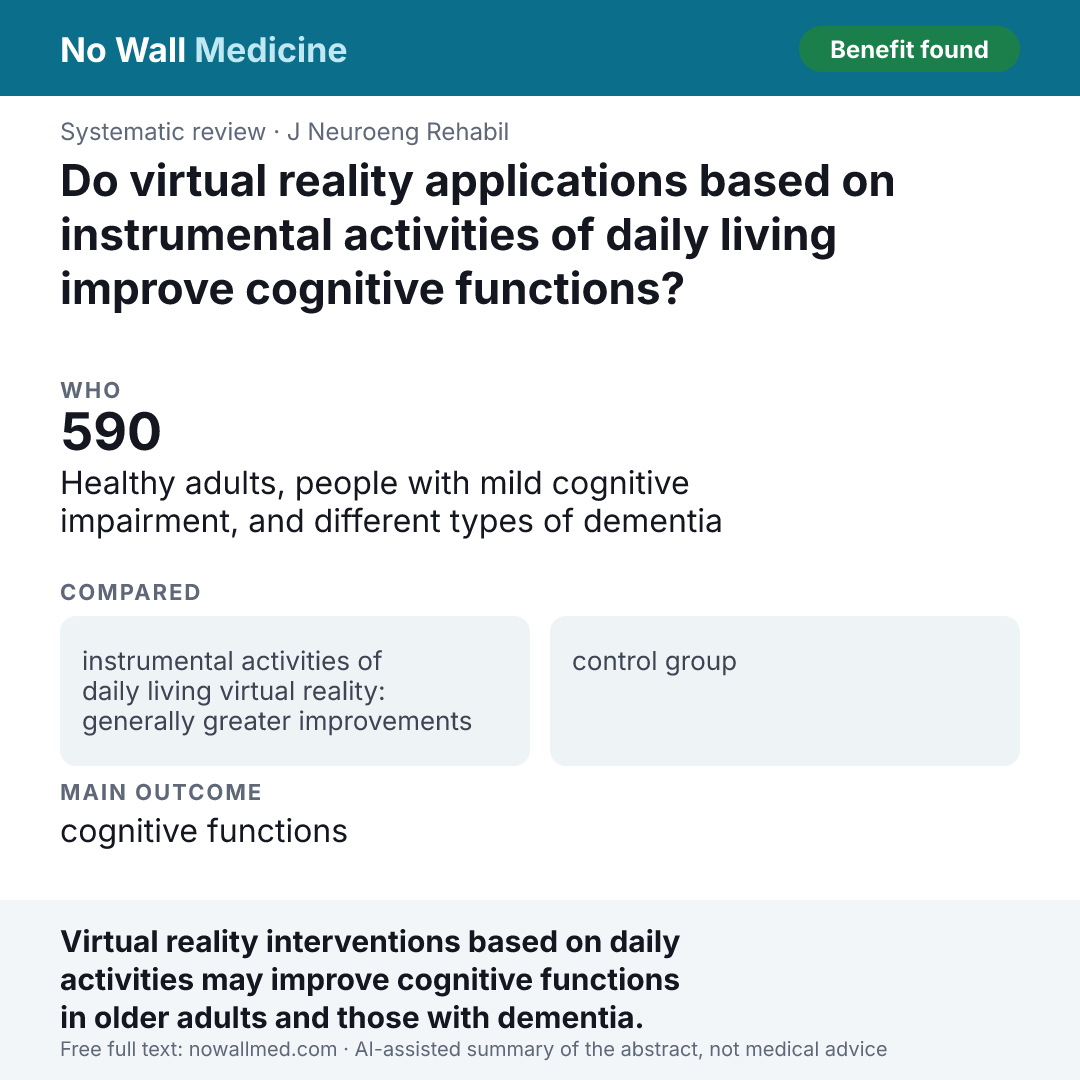
Key result: Virtual reality tasks based on daily activities showed improvements in cognitive functions for older adults
Key points
- Researchers reviewed 19 studies involving 590 participants, most of whom were women at 72.67%.
- The review found that almost all studies showed improvements in some or all outcomes after virtual reality interventions based on daily tasks.
- Participants included people with mild cognitive impairment, which is early memory loss, and various types of dementia.
Why it matters: The effectiveness of using virtual reality based on instrumental activities of daily living for cognitive rehabilitation remains debated.
Discussion prompts
- Would these patients look like yours? Who was left out?
- Is the main outcome one that matters to patients?
- Is the difference large enough to change what you do?
Cite: Buele J, Varela-Aldás JL, Palacios-Navarro G. Virtual reality applications based on instrumental activities of daily living (iADLs) for cognitive intervention in older adults: a systematic review. J Neuroeng Rehabil. 2023;20(1):168. doi:10.1186/s12984-023-01292-8
Free full text: PubMed Central · Summary and visual abstract: nowallmed.com/a/virtual-reality-applications-based-on-instrumental-activities-of-1x750r4/ (AI-assisted from the abstract; check the paper before relying on it).