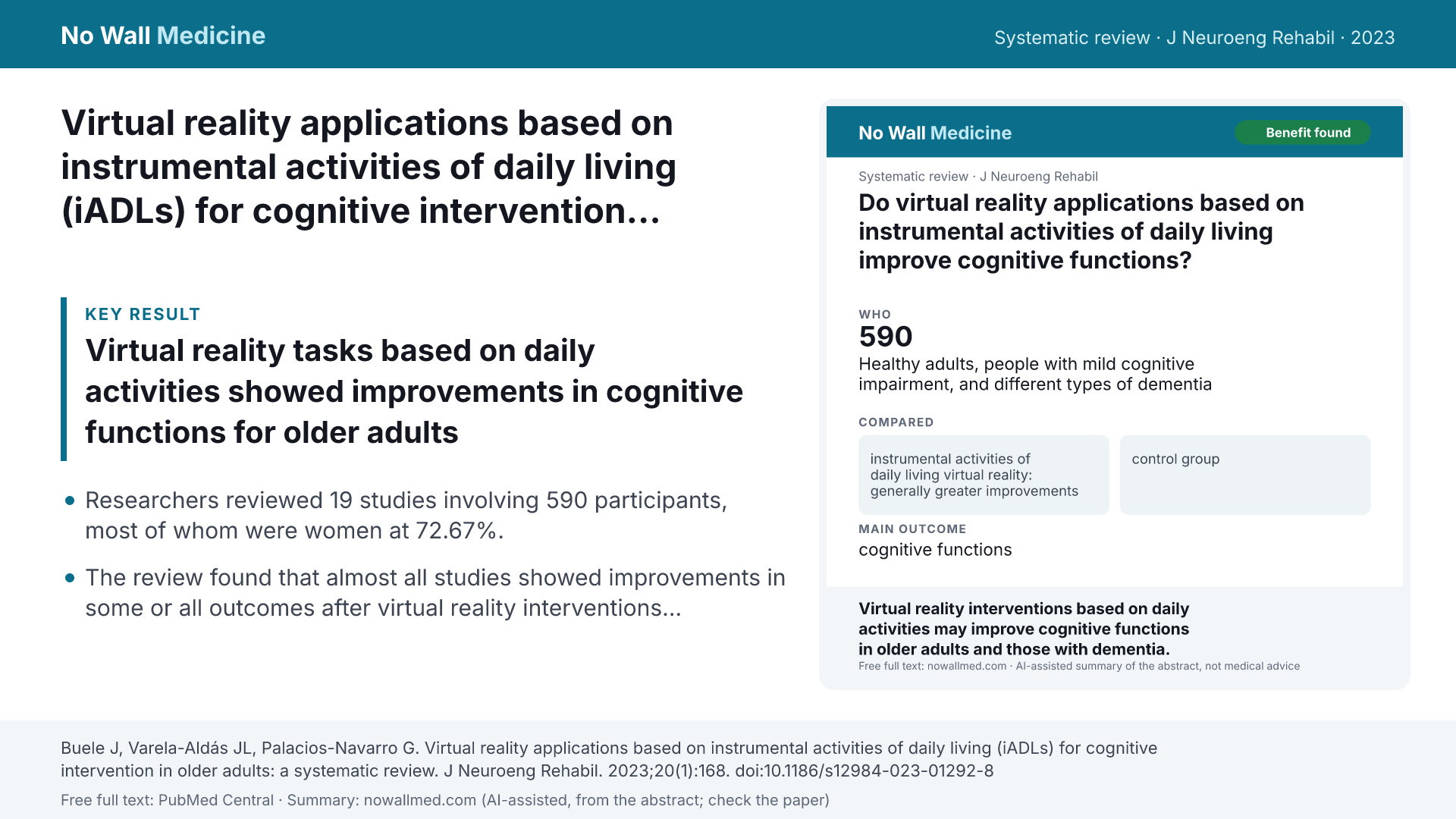
Virtual reality tasks based on daily activities showed improvements in cognitive functions for older adults
Virtual reality applications based on instrumental activities of daily living (iADLs) for cognitive intervention in older adults: a systematic review
Systematic reviewBenefit found
Do virtual reality applications based on instrumental activities of daily living improve cognitive functions?
Who
590
Healthy adults, people with mild cognitive impairment, and different types of dementia
Compared
instrumental activities of daily living virtual reality: generally greater improvements
control group
Main outcome
cognitive functions
Bottom line: Virtual reality interventions based on daily activities may improve cognitive functions in older adults and those with dementia.
Limitation: Transfer to the real world needs confirmation with larger, homogeneous samples and longer follow-up.
J Neuroeng Rehabil · 2023-12-19Download image
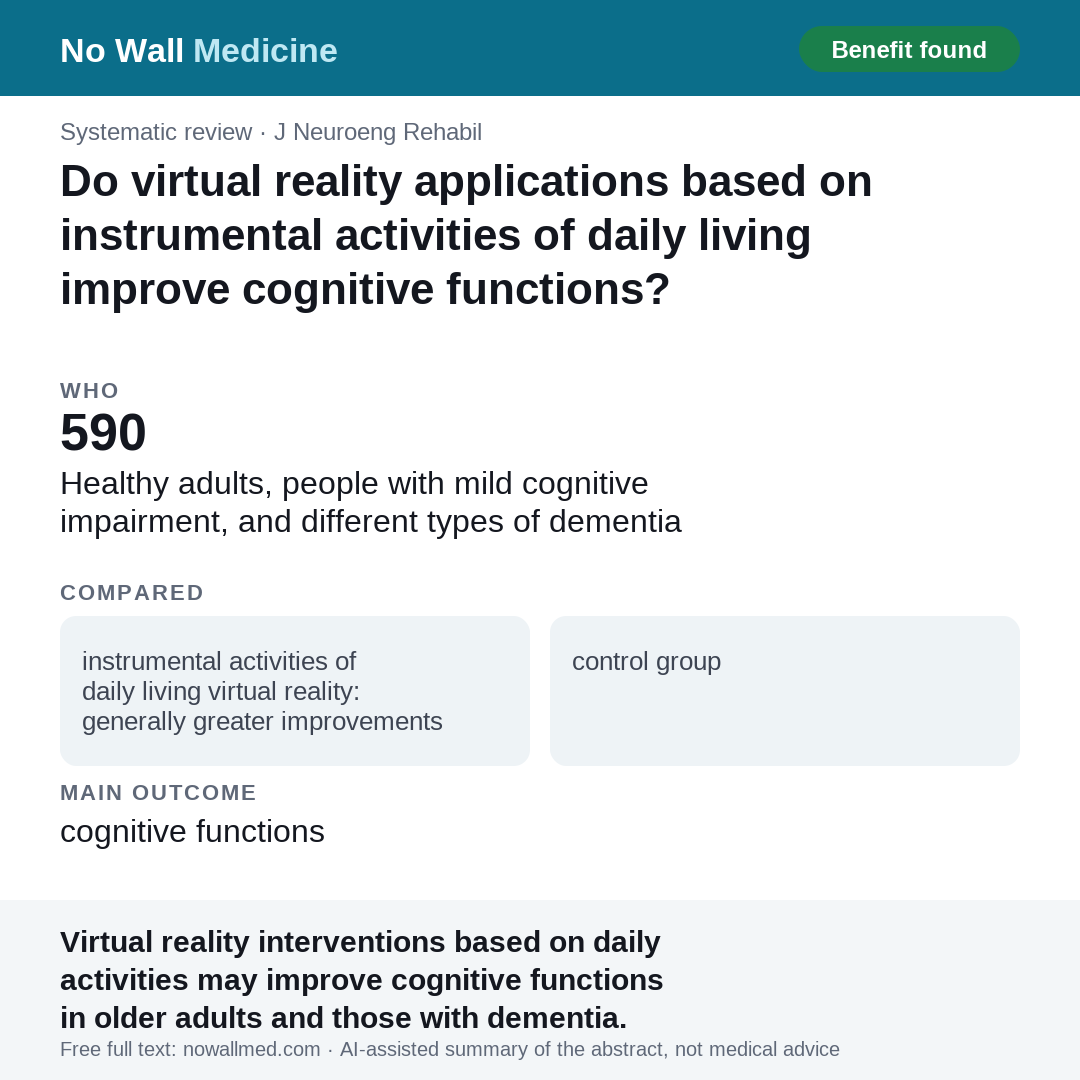
Clinical question: Do virtual reality applications based on instrumental activities of daily living improve cognitive functions?
Why it matters: The effectiveness of using virtual reality based on instrumental activities of daily living for cognitive rehabilitation remains debated.
Key points
- Researchers reviewed 19 studies involving 590 participants, most of whom were women at 72.67%.
- The review found that almost all studies showed improvements in some or all outcomes after virtual reality interventions based on daily tasks.
- Participants included people with mild cognitive impairment, which is early memory loss, and various types of dementia.
Headline and key points written with AI from the paper’s abstract, with every number checked against it. Read the paper before relying on them.
Was this summary helpful?
Subject terms
Cite this article
Buele J, Varela-Aldás JL, Palacios-Navarro G. Virtual reality applications based on instrumental activities of daily living (iADLs) for cognitive intervention in older adults: a systematic review. J Neuroeng Rehabil. 2023. doi:10.1186/s12984-023-01292-8
Spotted a mistake? Suggest a correction