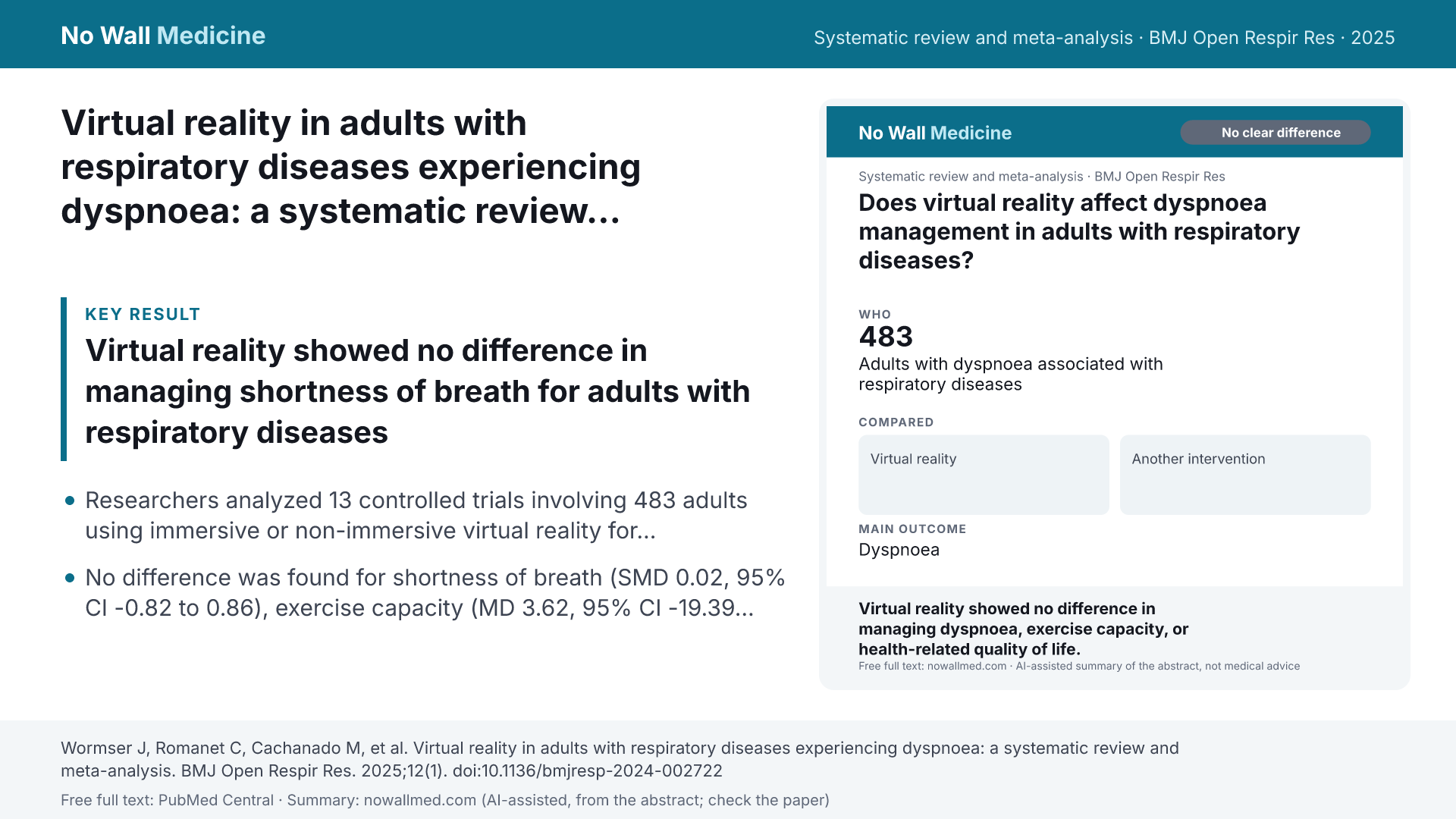
Virtual reality in adults with respiratory diseases experiencing dyspnoea: a systematic review and meta-analysis
Key result: Virtual reality showed no difference in managing shortness of breath for adults with respiratory diseases
Key points
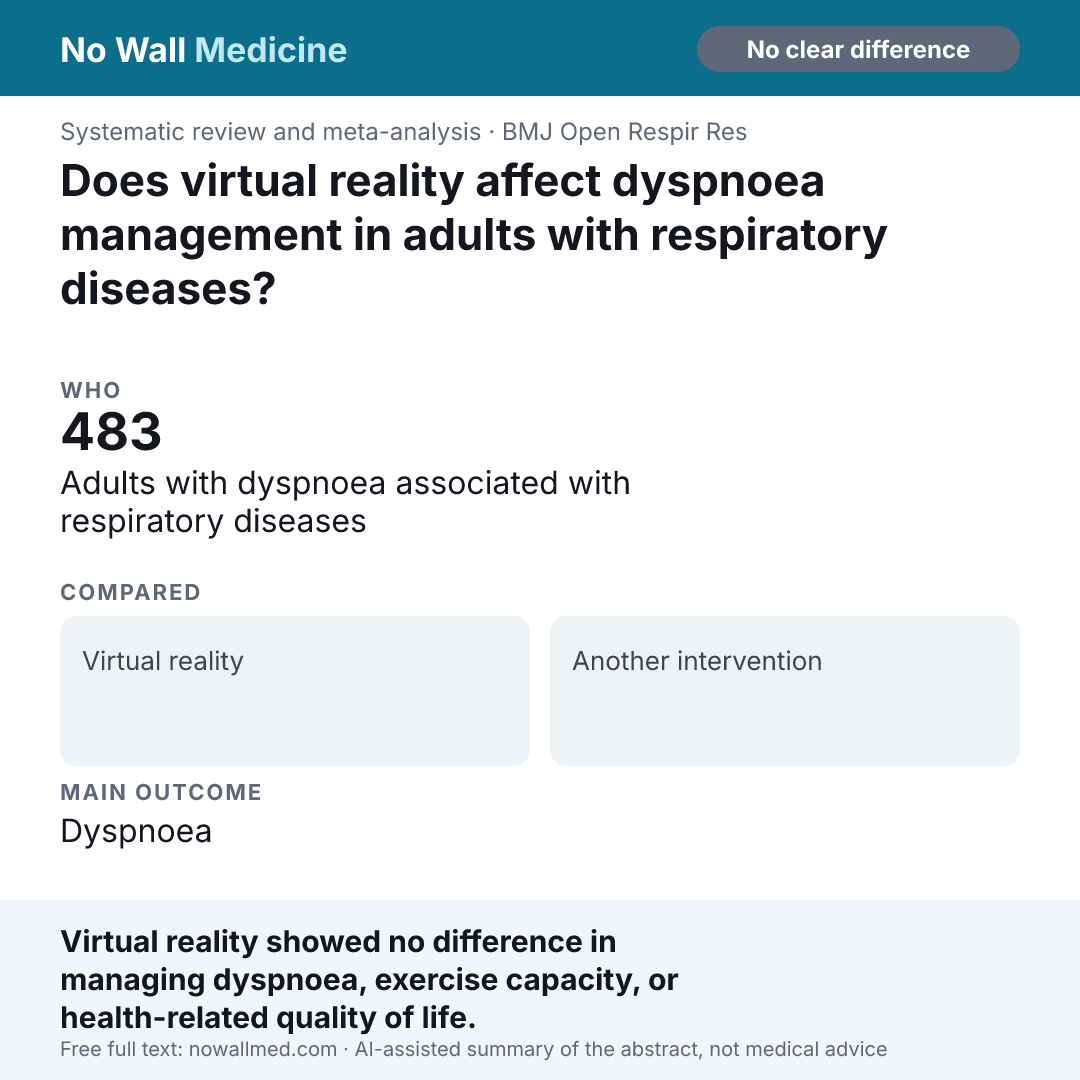
- Researchers analyzed 13 controlled trials involving 483 adults using immersive or non-immersive virtual reality for shortness of breath.
- No difference was found for shortness of breath (SMD 0.02, 95% CI -0.82 to 0.86), exercise capacity (MD 3.62, 95% CI -19.39 to 26.63), or health-related quality of life (MD -11.81, 95% CI -42.95 to 19.33).
- The data available were insufficient to conduct a pooled analysis for muscle function.
Why it matters: The effects of virtual reality on managing shortness of breath in adults with respiratory diseases are not clearly established.
Limitation the authors note: The evidence is very uncertain due to risk of bias, imprecision, and heterogeneity.
Discussion prompts
- Would these patients look like yours? Who was left out?
- Is the main outcome one that matters to patients?
- Is the difference large enough to change what you do?
Cite: Wormser J, Romanet C, Cachanado M, et al. Virtual reality in adults with respiratory diseases experiencing dyspnoea: a systematic review and meta-analysis. BMJ Open Respir Res. 2025;12(1). doi:10.1136/bmjresp-2024-002722
Free full text: PubMed Central · Summary and visual abstract: nowallmed.com/a/virtual-reality-in-adults-with-respiratory-diseases-experiencing-1mxs68o/ (AI-assisted from the abstract; check the paper before relying on it).