Wearable Intervention for Alcohol Use Risk and Sleep in Young Adults: A Randomized Clinical Trial
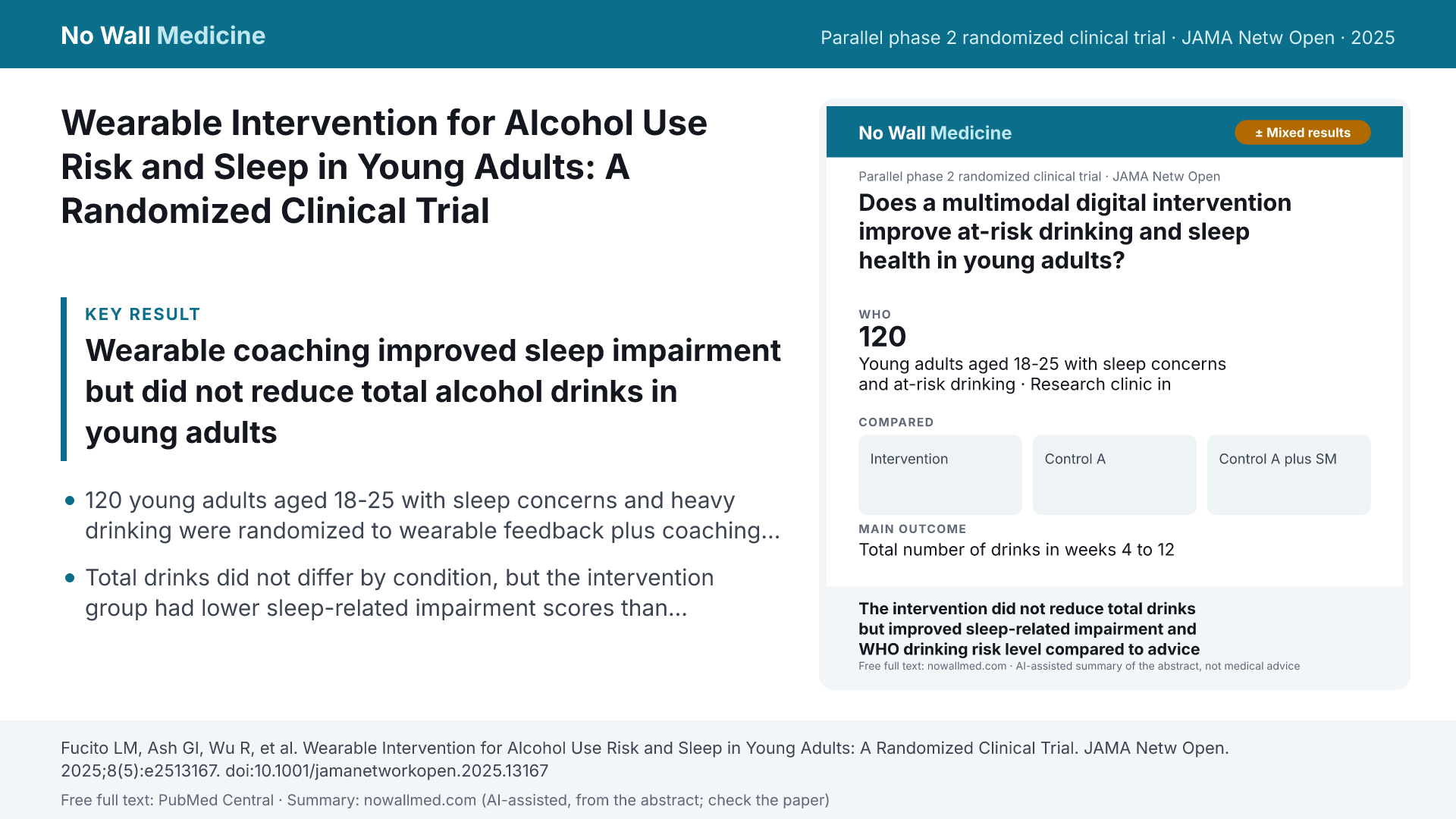
Key result: Wearable coaching improved sleep impairment but did not reduce total alcohol drinks in young adults
Parallel phase 2 randomized clinical trialMixed results
Does a multimodal digital intervention improve at-risk drinking and sleep health in young adults?
Who
120
Young adults aged 18-25 with sleep concerns and at-risk drinking · Research clinic in Connecticut
Compared
Intervention
Control A
Control A plus SM
Main outcome
Total number of drinks in weeks 4 to 12
Result: no significant difference in total drinks
Bottom line: The intervention did not reduce total drinks but improved sleep-related impairment and WHO drinking risk level compared to advice alone.
JAMA Netw Open · 2025-05-01
Key points
- 120 young adults aged 18-25 with sleep concerns and heavy drinking were randomized to wearable feedback plus coaching or two control groups.
- Total drinks did not differ by condition, but the intervention group had lower sleep-related impairment scores than the advice-only control.
- Participants in the intervention group were more than 3 times more likely to reduce their World Health Organization drinking risk level.
Discussion prompts
- Would these patients look like yours? Who was left out?
- Is the main outcome one that matters to patients?
- Is the difference large enough to change what you do?
Cite: Fucito LM, Ash GI, Wu R, et al. Wearable Intervention for Alcohol Use Risk and Sleep in Young Adults: A Randomized Clinical Trial. JAMA Netw Open. 2025;8(5):e2513167. doi:10.1001/jamanetworkopen.2025.13167
Free full text: PubMed Central · Summary and visual abstract: nowallmed.com/a/wearable-intervention-for-alcohol-use-risk-and-sleep-in-young-adults-16rolln/ (AI-assisted from the abstract; check the paper before relying on it).