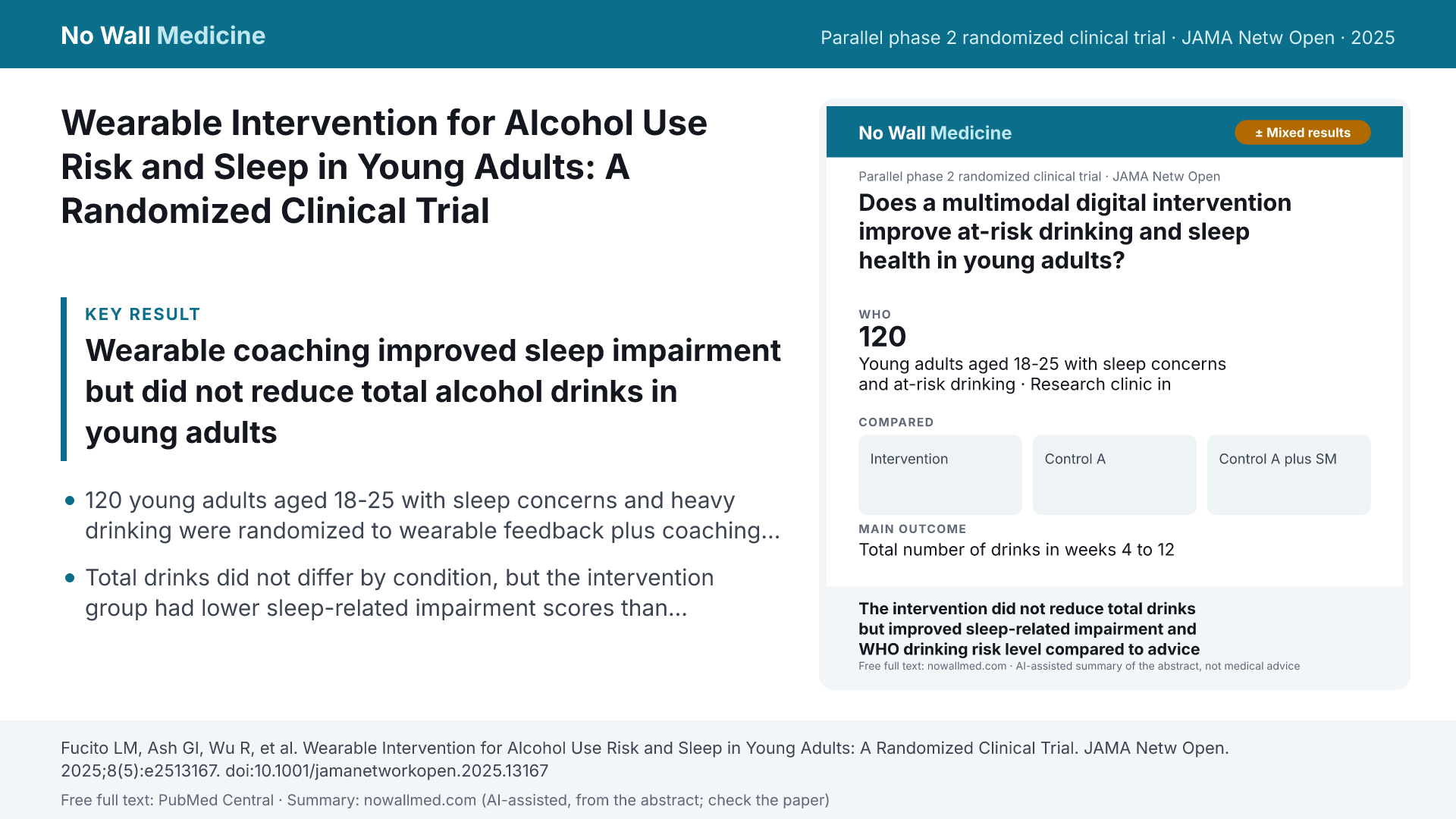
Wearable coaching improved sleep impairment but did not reduce total alcohol drinks in young adults
Wearable Intervention for Alcohol Use Risk and Sleep in Young Adults: A Randomized Clinical Trial
Parallel phase 2 randomized clinical trialMixed results
Does a multimodal digital intervention improve at-risk drinking and sleep health in young adults?
Who
120
Young adults aged 18-25 with sleep concerns and at-risk drinking · Research clinic in Connecticut
Compared
Intervention
Control A
Control A plus SM
Main outcome
Total number of drinks in weeks 4 to 12
Result: no significant difference in total drinks
Bottom line: The intervention did not reduce total drinks but improved sleep-related impairment and WHO drinking risk level compared to advice alone.
JAMA Netw Open · 2025-05-01Download image
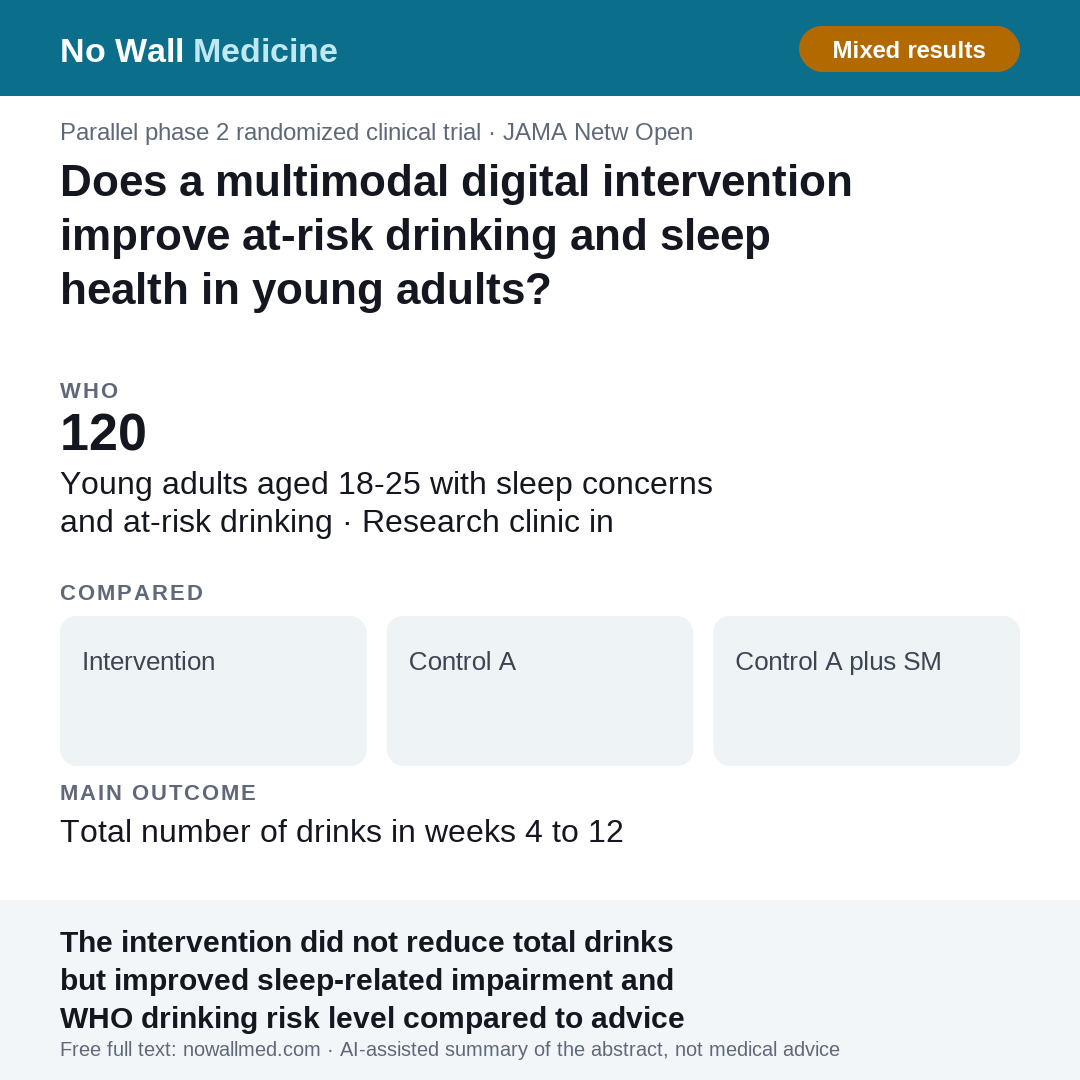
Clinical question: Does a multimodal digital intervention improve at-risk drinking and sleep health in young adults?
Key points
- 120 young adults aged 18-25 with sleep concerns and heavy drinking were randomized to wearable feedback plus coaching or two control groups.
- Total drinks did not differ by condition, but the intervention group had lower sleep-related impairment scores than the advice-only control.
- Participants in the intervention group were more than 3 times more likely to reduce their World Health Organization drinking risk level.
Headline and key points written with AI from the paper’s abstract, with every number checked against it. Read the paper before relying on them.
Was this summary helpful?
Subject terms
Headline, design, result, key points, caveat and citation as plain text.
Cite this article
Fucito LM, Ash GI, Wu R, et al. Wearable Intervention for Alcohol Use Risk and Sleep in Young Adults: A Randomized Clinical Trial. JAMA Netw Open. 2025. doi:10.1001/jamanetworkopen.2025.13167
Spotted a mistake? Suggest a correction