Visual abstracts
New randomized trials and meta-analyses from leading journals at a glance: who was studied, what was compared, and what was found. Every paper is free to read in full.
All specialtiesCardiology 4877Oncology 4138Gastroenterology & Hepatology 1942Infectious Disease 3837Neurology 1905Psychiatry & Mental Health 2273Pulmonology 2143Critical Care 1365Endocrinology & Diabetes 2580Pediatrics 2980Surgery 2559Orthopedics & Sports Medicine 931Neurosurgery 537Cardiothoracic & Vascular Surgery 674Plastic & Reconstructive Surgery 591Nephrology 1133Rheumatology 823Hematology 1109Dermatology 621Ophthalmology 543Obstetrics & Gynecology 1686Public & Global Health 1058Radiology & Imaging 648Anesthesiology 986Urology 764ENT (Otolaryngology) 503Emergency Medicine 511Allergy & Immunology 313Geriatrics 981Family Medicine & Primary Care 562Medical Genetics & Genomics 676Pathology & Laboratory Medicine 159Physical Medicine & Rehabilitation 757Palliative Care 444Nutrition 1588Digital Health & AI 2201General Medicine 321
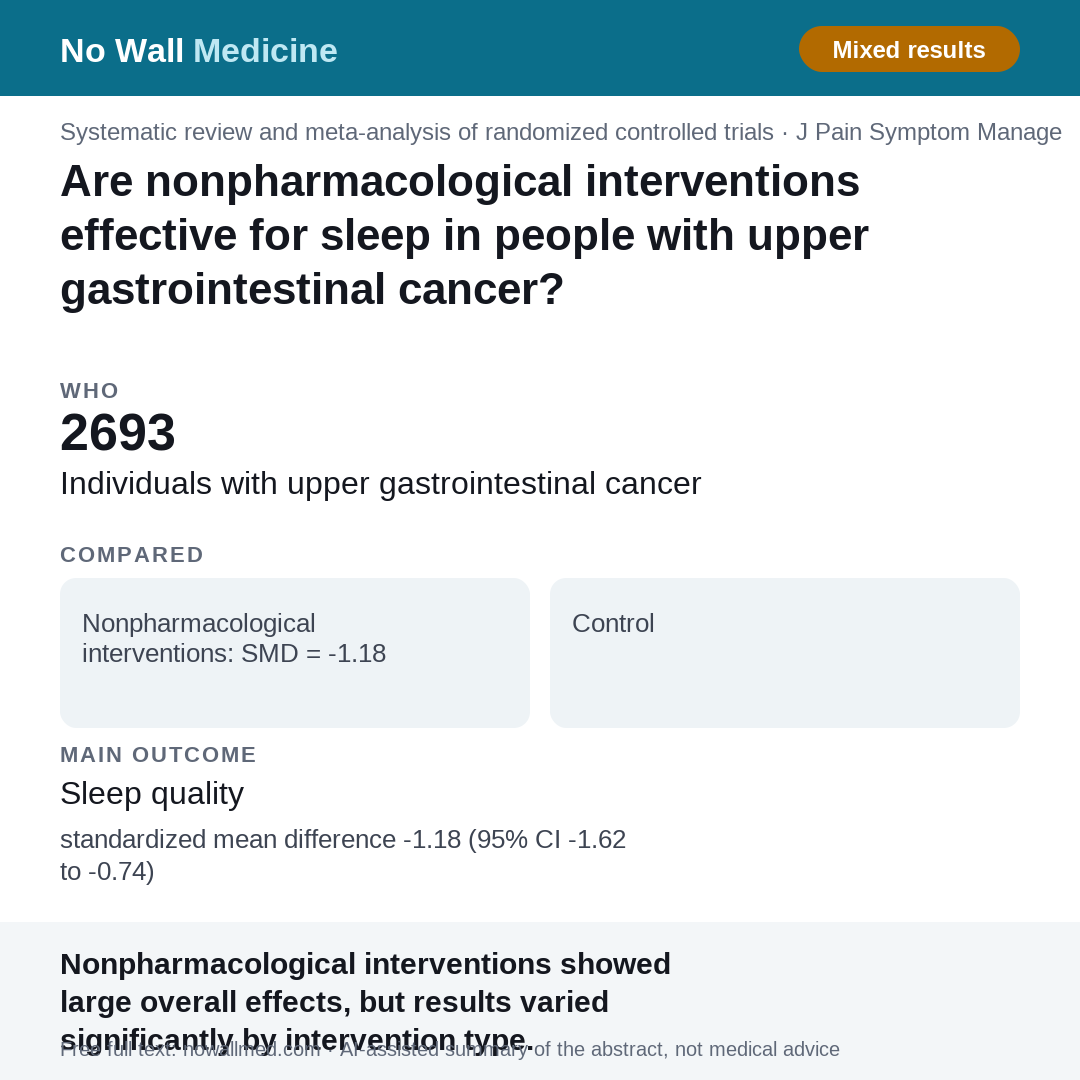
Nonpharmacological Interventions for Sleep in People With Upper Gastrointestinal Cancer: A Systematic Review and Meta-Analysis
Systematic review and meta-analysis of randomized controlled trialsMixed results
Are nonpharmacological interventions effective for sleep in people with upper gastrointestinal cancer?
Who
2693
Individuals with upper gastrointestinal cancer
Compared
Nonpharmacological interventions: SMD = -1.18
Control
Main outcome
Sleep quality
Result: standardized mean difference -1.18 (95% CI -1.62 to -0.74)
Bottom line: Nonpharmacological interventions showed large overall effects, but results varied significantly by intervention type.
Limitation: High heterogeneity and limited number of trials prevent definitive recommendations.
J Pain Symptom Manage · 2025-09-02Download image
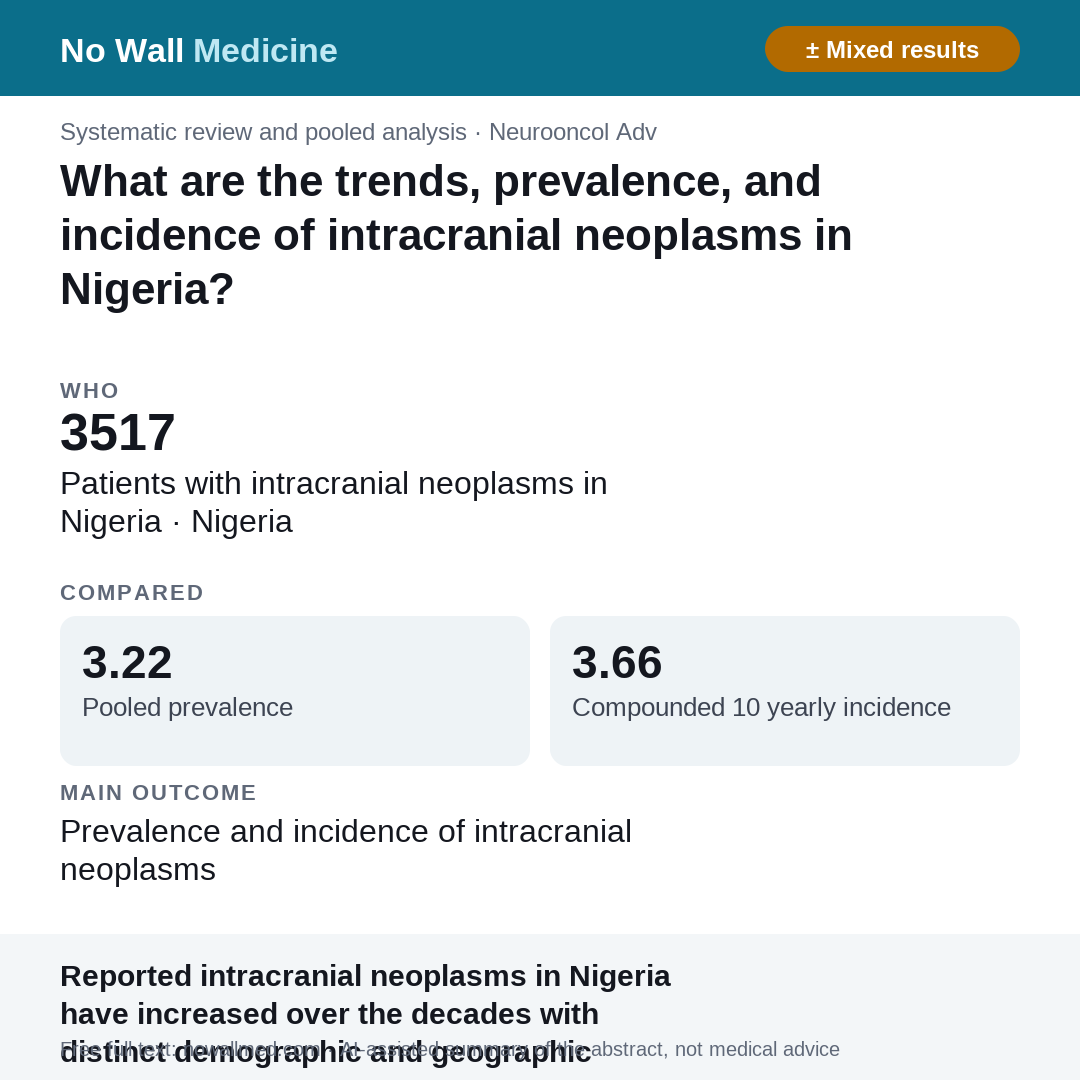
Trends of hospital-based reporting of intracranial neoplasms in Nigeria from 1960 to 2024: A systematic review and pooled analysis of literatures
Systematic review and pooled analysisMixed results
What are the trends, prevalence, and incidence of intracranial neoplasms in Nigeria?
Who
3517
Patients with intracranial neoplasms in Nigeria · Nigeria
Compared
3.22Pooled prevalence (95% CI: 1.66-5.22)
3.66Compounded 10 yearly incidence (95% CI: 1.67-6.32)
Main outcome
Prevalence and incidence of intracranial neoplasms
Bottom line: Reported intracranial neoplasms in Nigeria have increased over the decades with distinct demographic and geographic patterns.
Neurooncol Adv · 2025-09-02Download image
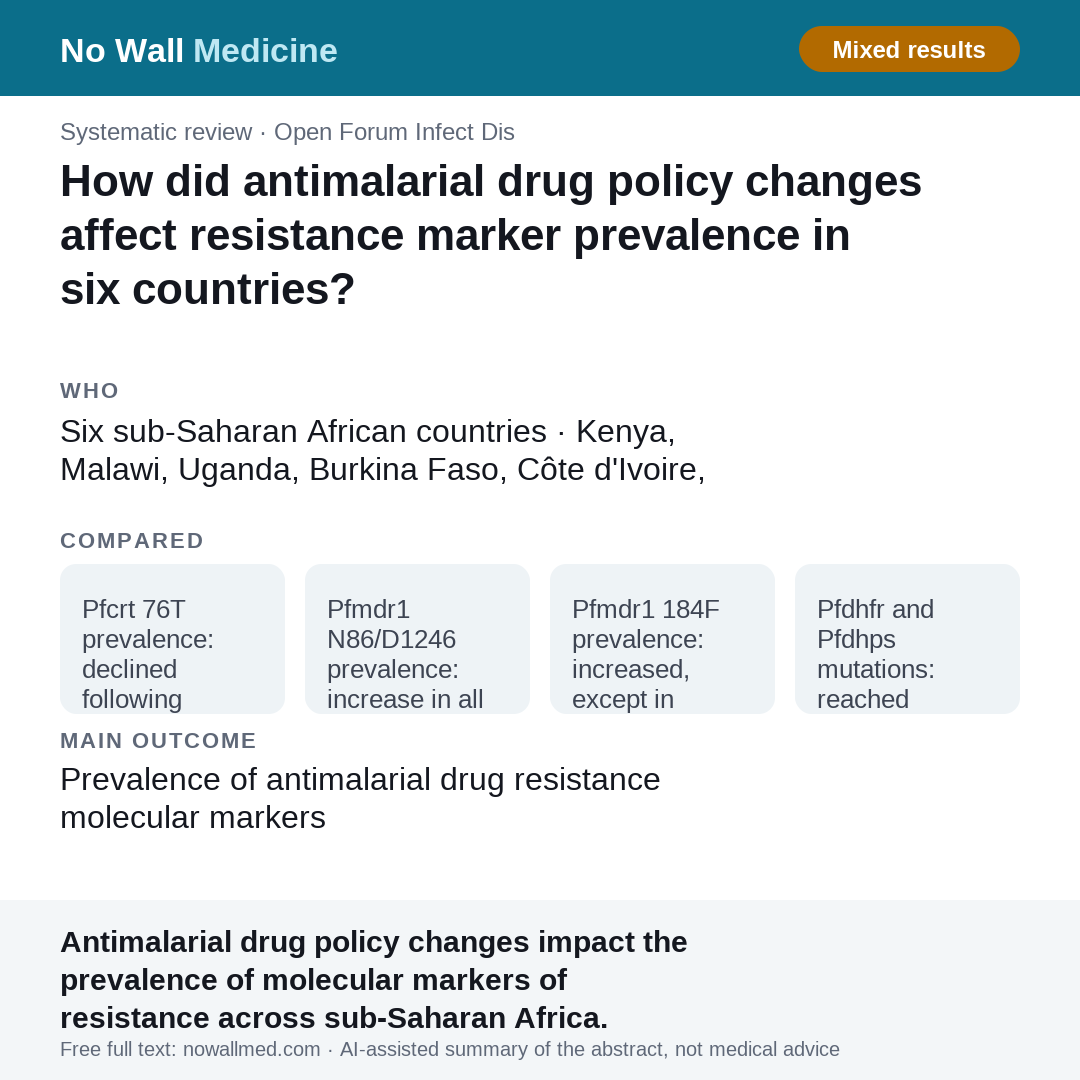
Changes in the Prevalence of Antimalarial Partner Drug Resistance Markers and Policy in 6 Sub-Saharan African Countries From 2000 to 2021: A Systematic Review
Systematic reviewMixed results
How did antimalarial drug policy changes affect resistance marker prevalence in six countries?
Who
Six sub-Saharan African countries · Kenya, Malawi, Uganda, Burkina Faso, Côte d'Ivoire, and Nigeria
Compared
Pfcrt 76T prevalence: declined following cessation of chloroquine
Pfmdr1 N86/D1246 prevalence: increase in all countries
Pfmdr1 184F prevalence: increased, except in Burkina Faso
Pfdhfr and Pfdhps mutations: reached fixation levels in most countries
Main outcome
Prevalence of antimalarial drug resistance molecular markers
Bottom line: Antimalarial drug policy changes impact the prevalence of molecular markers of resistance across sub-Saharan Africa.
Open Forum Infect Dis · 2025-09-02Download image
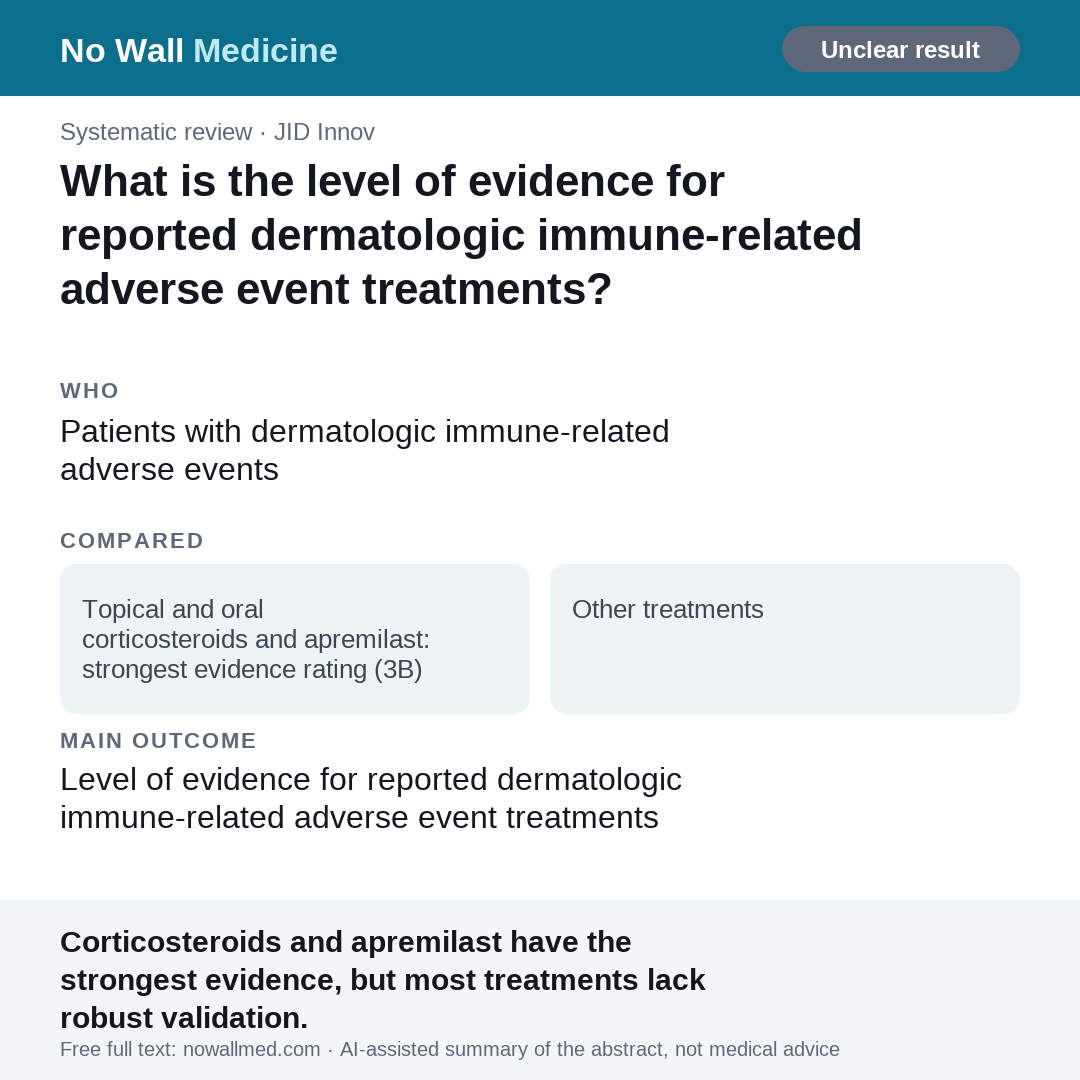
Assessing Treatment Efficacy for Dermatologic Immune-Related Adverse Events: A Systematic Review
Systematic reviewUnclear result
What is the level of evidence for reported dermatologic immune-related adverse event treatments?
Who
Patients with dermatologic immune-related adverse events
Compared
Topical and oral corticosteroids and apremilast: strongest evidence rating (3B)
Other treatments
Main outcome
Level of evidence for reported dermatologic immune-related adverse event treatments
Bottom line: Corticosteroids and apremilast have the strongest evidence, but most treatments lack robust validation.
Limitation: Lack of randomized control trials and prospective cohort studies
JID Innov · 2025-09-02Download image
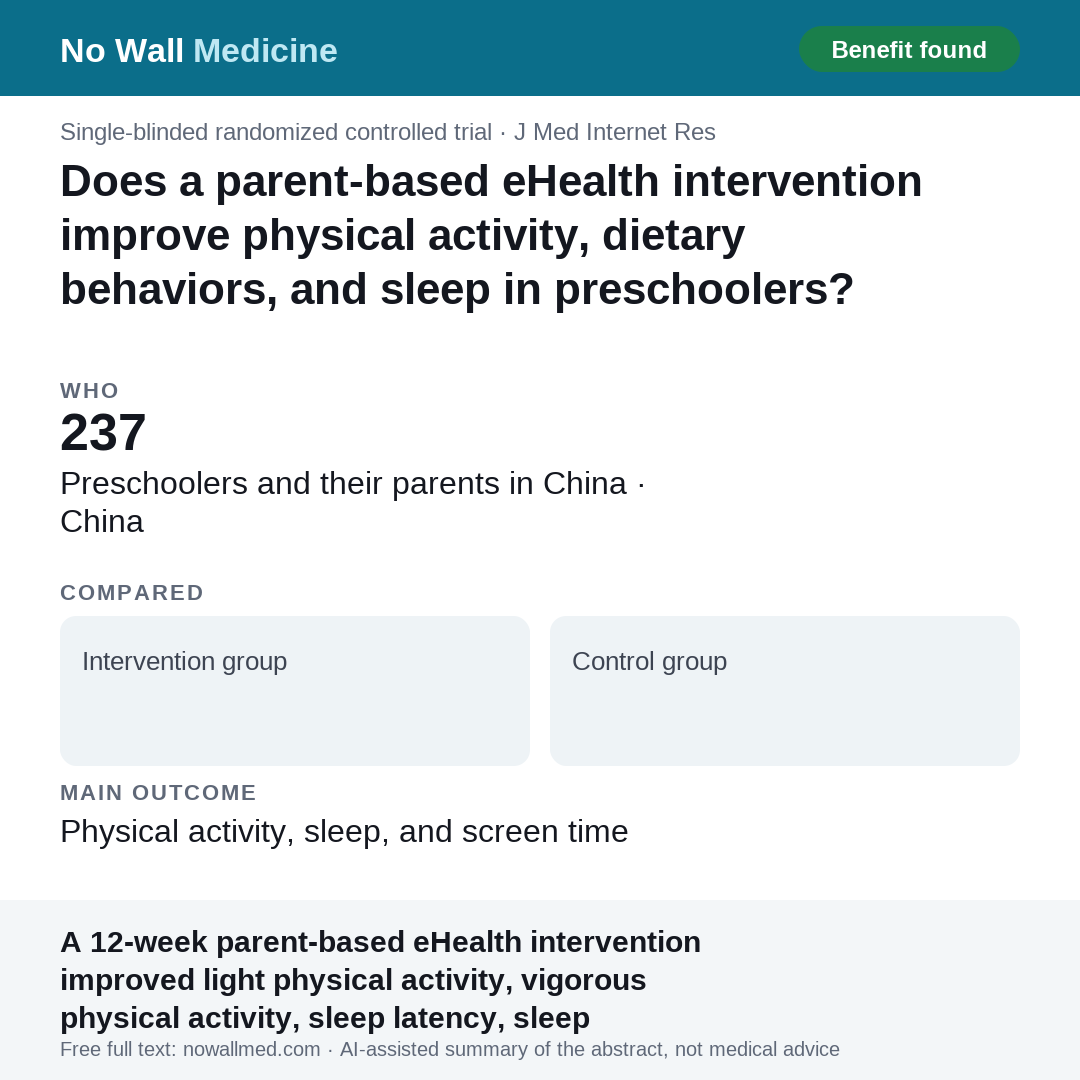
Effectiveness of a Parent-Based eHealth Intervention on Physical Activity, Dietary Behaviors, and Sleep in Preschoolers: Randomized Controlled Trial
Single-blinded randomized controlled trialBenefit found
Does a parent-based eHealth intervention improve physical activity, dietary behaviors, and sleep in preschoolers?
Who
237
Preschoolers and their parents in China · China
Compared
Intervention group
Control group
Main outcome
Physical activity, sleep, and screen time
Result: adjusted mean difference -151.61 minutes/7 days (95% CI -418.18 to -96.67) for light physical activity
Bottom line: A 12-week parent-based eHealth intervention improved light physical activity, vigorous physical activity, sleep latency, sleep efficiency, and screen time.
Limitation: Results cannot be generalized to other regions.
J Med Internet Res · 2025-09-02Download image
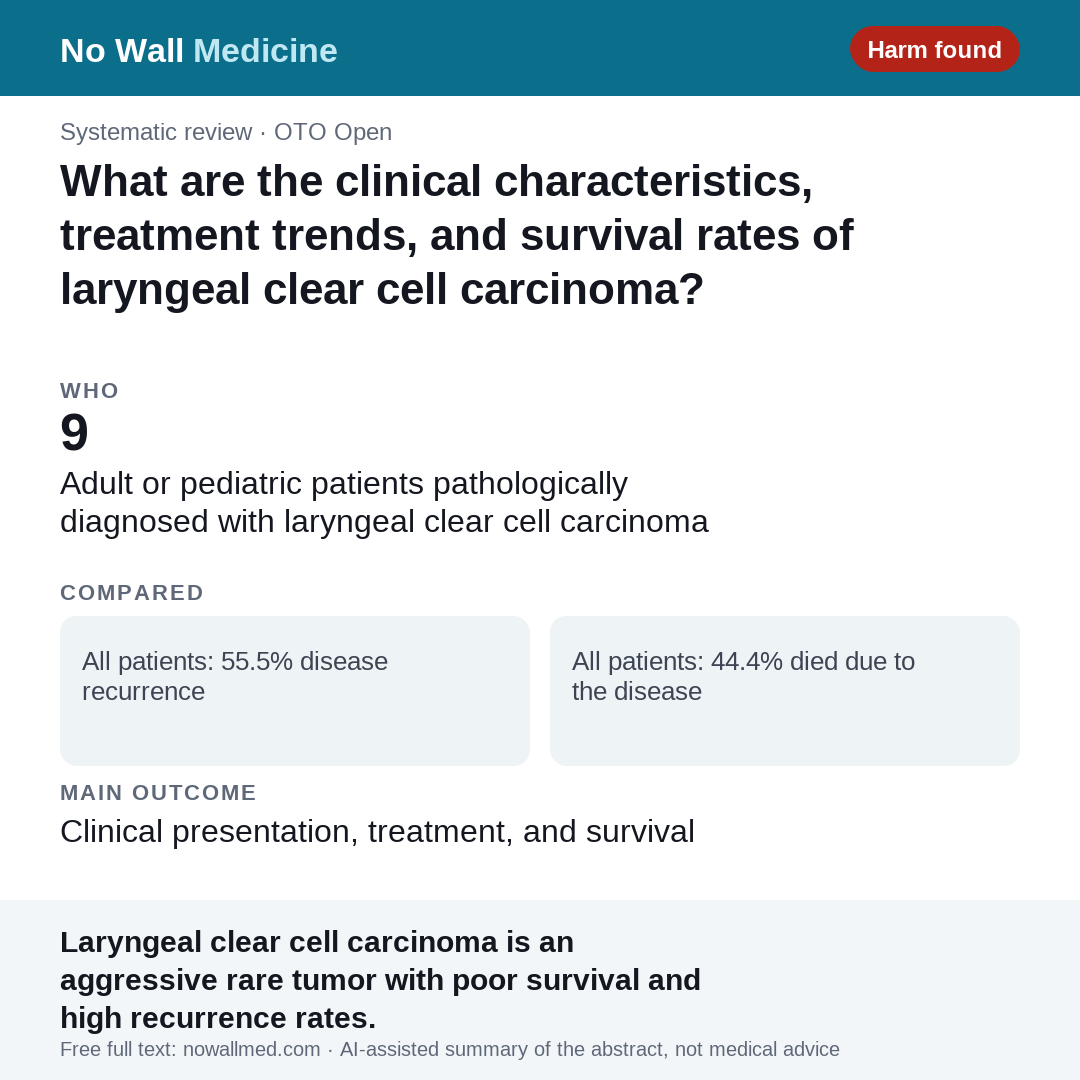
Laryngeal Clear Cell Carcinoma: A Systematic Review
Systematic reviewHarm found
What are the clinical characteristics, treatment trends, and survival rates of laryngeal clear cell carcinoma?
Who
9
Adult or pediatric patients pathologically diagnosed with laryngeal clear cell carcinoma
Compared
All patients: 55.5% disease recurrence
All patients: 44.4% died due to the disease
Main outcome
Clinical presentation, treatment, and survival
Bottom line: Laryngeal clear cell carcinoma is an aggressive rare tumor with poor survival and high recurrence rates.
Limitation: Current literature is limited to case reports with little comprehensive data available.
OTO Open · 2025-09-02Download image
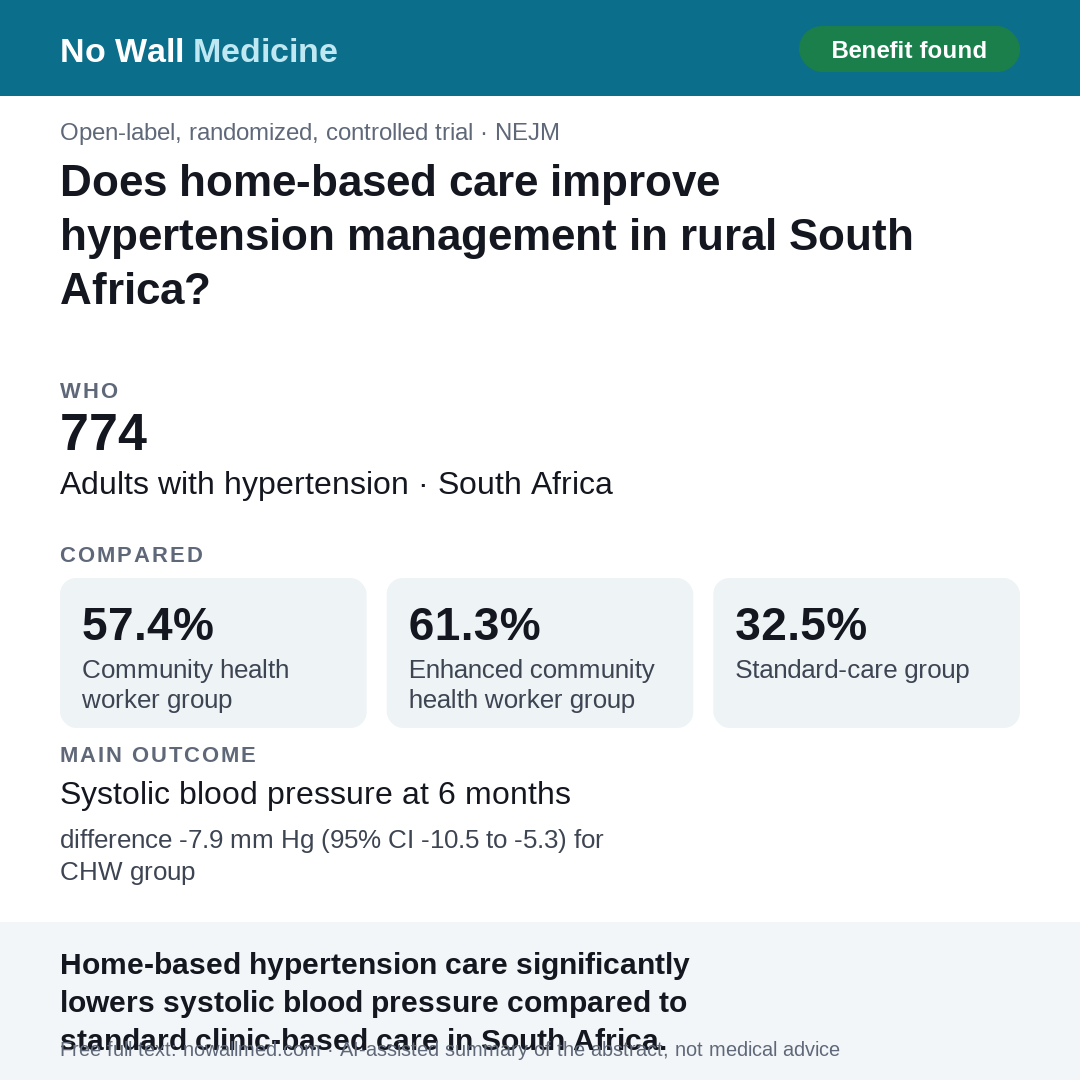
Home-Based Care for Hypertension in Rural South Africa
Open-label, randomized, controlled trialBenefit found
Does home-based care improve hypertension management in rural South Africa?
Who
774
Adults with hypertension · South Africa
Compared
57.4%Community health worker group
61.3%Enhanced community health worker group
32.5%Standard-care group
Main outcome
Systolic blood pressure at 6 months
Result: difference -7.9 mm Hg (95% CI -10.5 to -5.3) for CHW group
Bottom line: Home-based hypertension care significantly lowers systolic blood pressure compared to standard clinic-based care in South Africa.
Funded by: National Institutes of Health and others
NEJM · 2025-09-01Download image
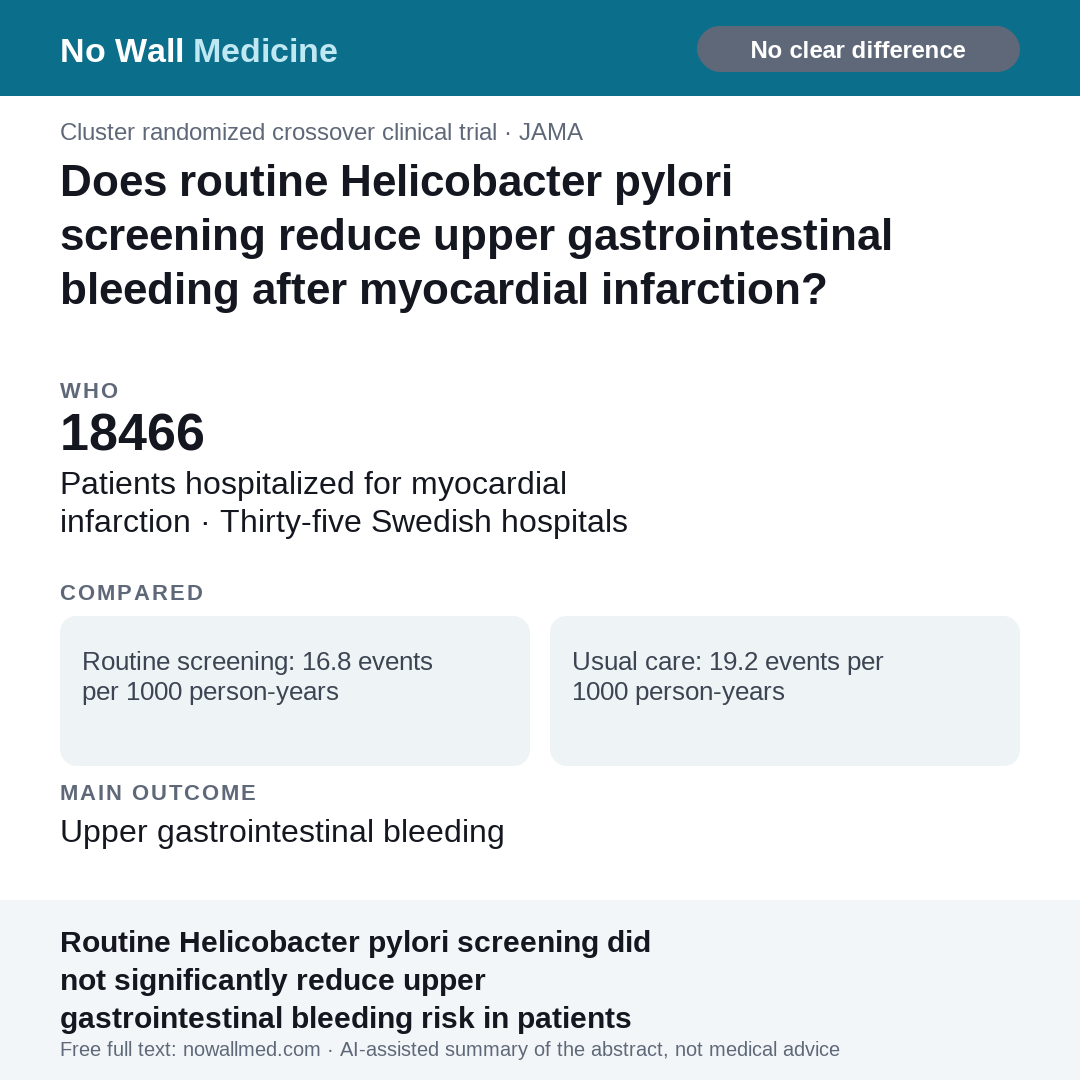
Helicobacter pylori Screening After Acute Myocardial Infarction: The Cluster Randomized Crossover HELP-MI SWEDEHEART Trial
Cluster randomized crossover clinical trialNo clear difference
Does routine Helicobacter pylori screening reduce upper gastrointestinal bleeding after myocardial infarction?
Who
18466
Patients hospitalized for myocardial infarction · Thirty-five Swedish hospitals
Compared
Routine screening: 16.8 events per 1000 person-years
Usual care: 19.2 events per 1000 person-years
Main outcome
Upper gastrointestinal bleeding
Result: rate ratio 0.90 (95% CI, 0.77-1.05)
Bottom line: Routine Helicobacter pylori screening did not significantly reduce upper gastrointestinal bleeding risk in patients with acute myocardial infarction.
JAMA · 2025-09-01Download image
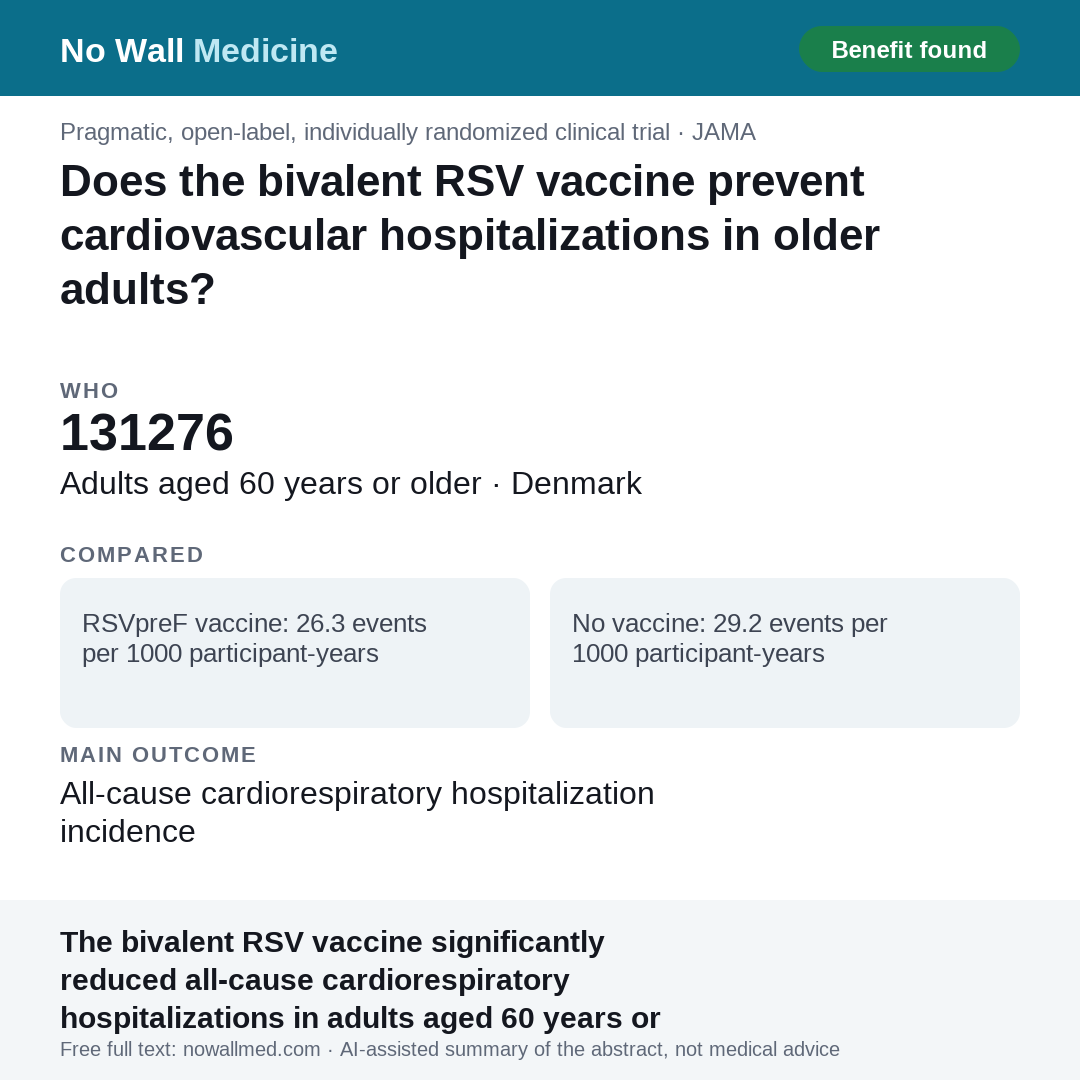
Bivalent RSV Prefusion F Protein-Based Vaccine for Preventing Cardiovascular Hospitalizations in Older Adults: A Prespecified Analysis of the DAN-RSV Trial
Pragmatic, open-label, individually randomized clinical trialBenefit found
Does the bivalent RSV vaccine prevent cardiovascular hospitalizations in older adults?
Who
131276
Adults aged 60 years or older · Denmark
Compared
RSVpreF vaccine: 26.3 events per 1000 participant-years
No vaccine: 29.2 events per 1000 participant-years
Main outcome
All-cause cardiorespiratory hospitalization incidence
Result: vaccine effectiveness, 9.9% (95% CI, 0.3%-18.7%)
Bottom line: The bivalent RSV vaccine significantly reduced all-cause cardiorespiratory hospitalizations in adults aged 60 years or older.
JAMA · 2025-09-01Download image
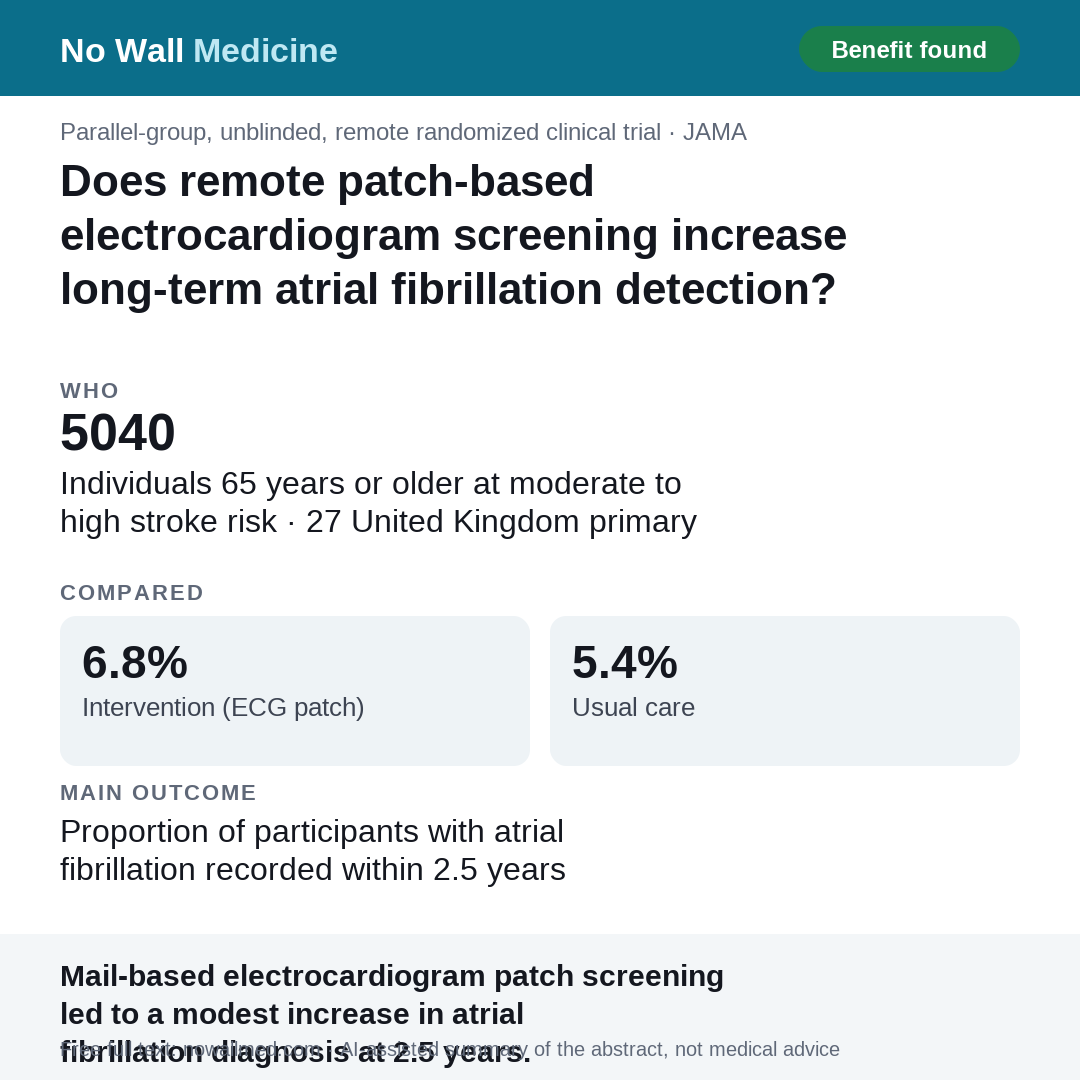
Remote Screening for Asymptomatic Atrial Fibrillation: The AMALFI Randomized Clinical Trial
Parallel-group, unblinded, remote randomized clinical trialBenefit found
Does remote patch-based electrocardiogram screening increase long-term atrial fibrillation detection?
Who
5040
Individuals 65 years or older at moderate to high stroke risk · 27 United Kingdom primary care practices
Compared
6.8%Intervention (ECG patch)
5.4%Usual care
Main outcome
Proportion of participants with atrial fibrillation recorded within 2.5 years
Result: ratio of proportions 1.26 (95% CI 1.02-1.57)
Bottom line: Mail-based electrocardiogram patch screening led to a modest increase in atrial fibrillation diagnosis at 2.5 years.
JAMA · 2025-09-01Download image
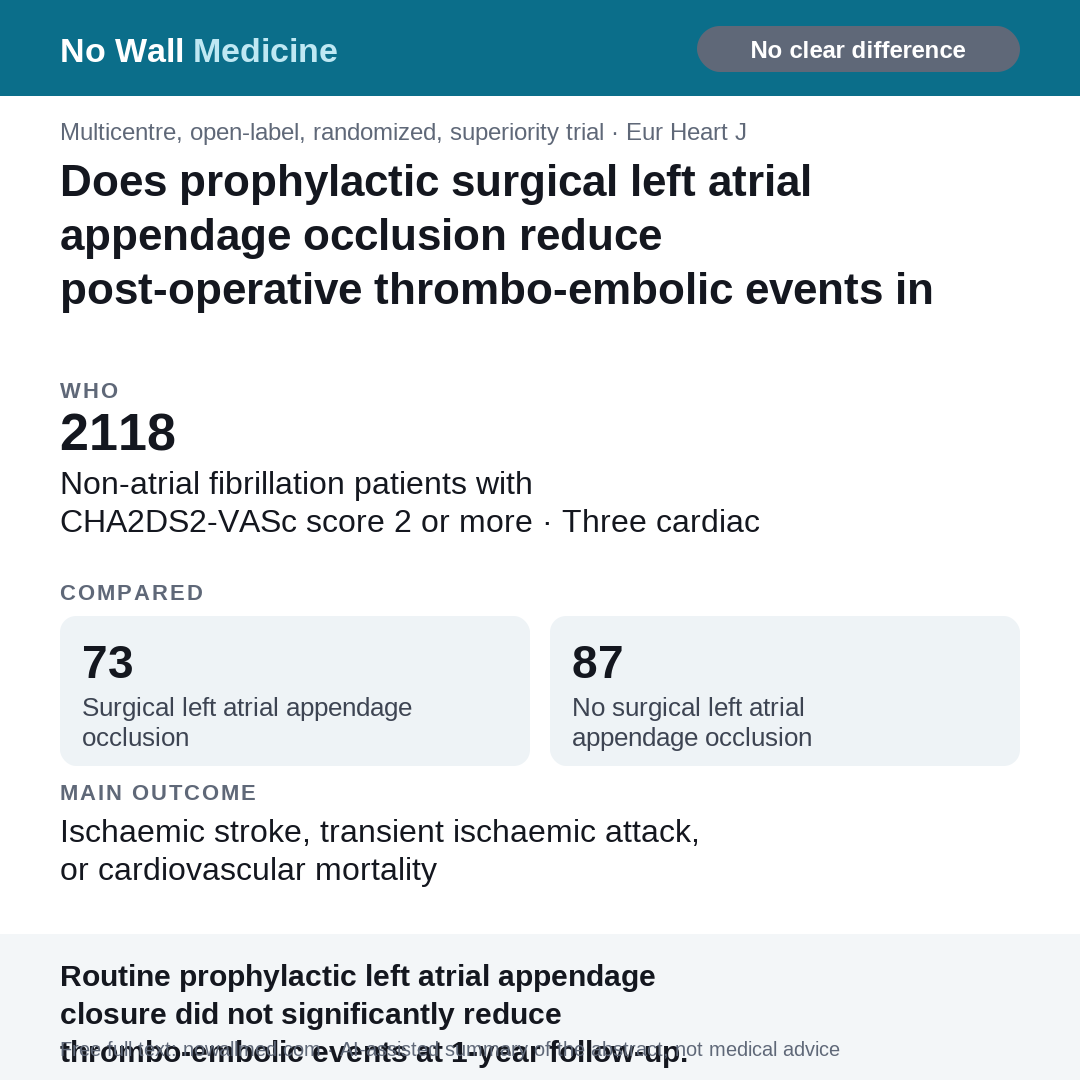
Surgical left atrial appendage occlusion in valvular heart disease without atrial fibrillation: the OPINION trial
Multicentre, open-label, randomized, superiority trialNo clear difference
Does prophylactic surgical left atrial appendage occlusion reduce post-operative thrombo-embolic events in valvular surgery patients?
Who
2118
Non-atrial fibrillation patients with CHA2DS2-VASc score 2 or more · Three cardiac surgery centres in China
Compared
73Surgical left atrial appendage occlusion (6.9%)
87No surgical left atrial appendage occlusion (8.2%)
Main outcome
Ischaemic stroke, transient ischaemic attack, or cardiovascular mortality
Result: hazard ratio 0.83 (95% confidence interval 0.61-1.14)
Bottom line: Routine prophylactic left atrial appendage closure did not significantly reduce thrombo-embolic events at 1-year follow-up.
Eur Heart J · 2025-09-01Download image
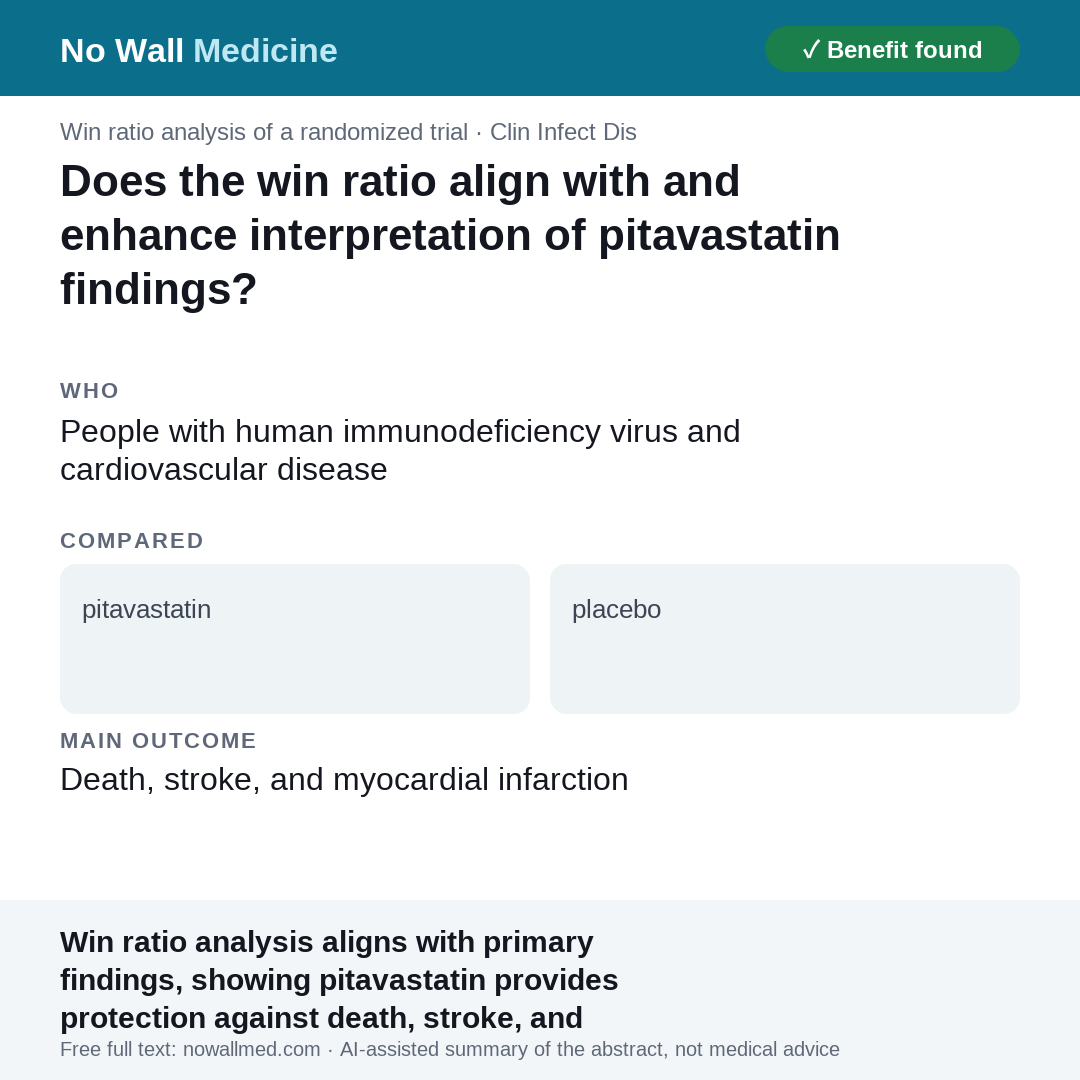
Win Ratio Aligns With and Enhances Interpretation of REPRIEVE's Primary Findings
Win ratio analysis of a randomized trialBenefit found
Does the win ratio align with and enhance interpretation of pitavastatin findings?
Who
People with human immunodeficiency virus and cardiovascular disease
Compared
pitavastatin
placebo
Main outcome
Death, stroke, and myocardial infarction
Bottom line: Win ratio analysis aligns with primary findings, showing pitavastatin provides protection against death, stroke, and myocardial infarction.
Clin Infect Dis · 2025-09-01Download image
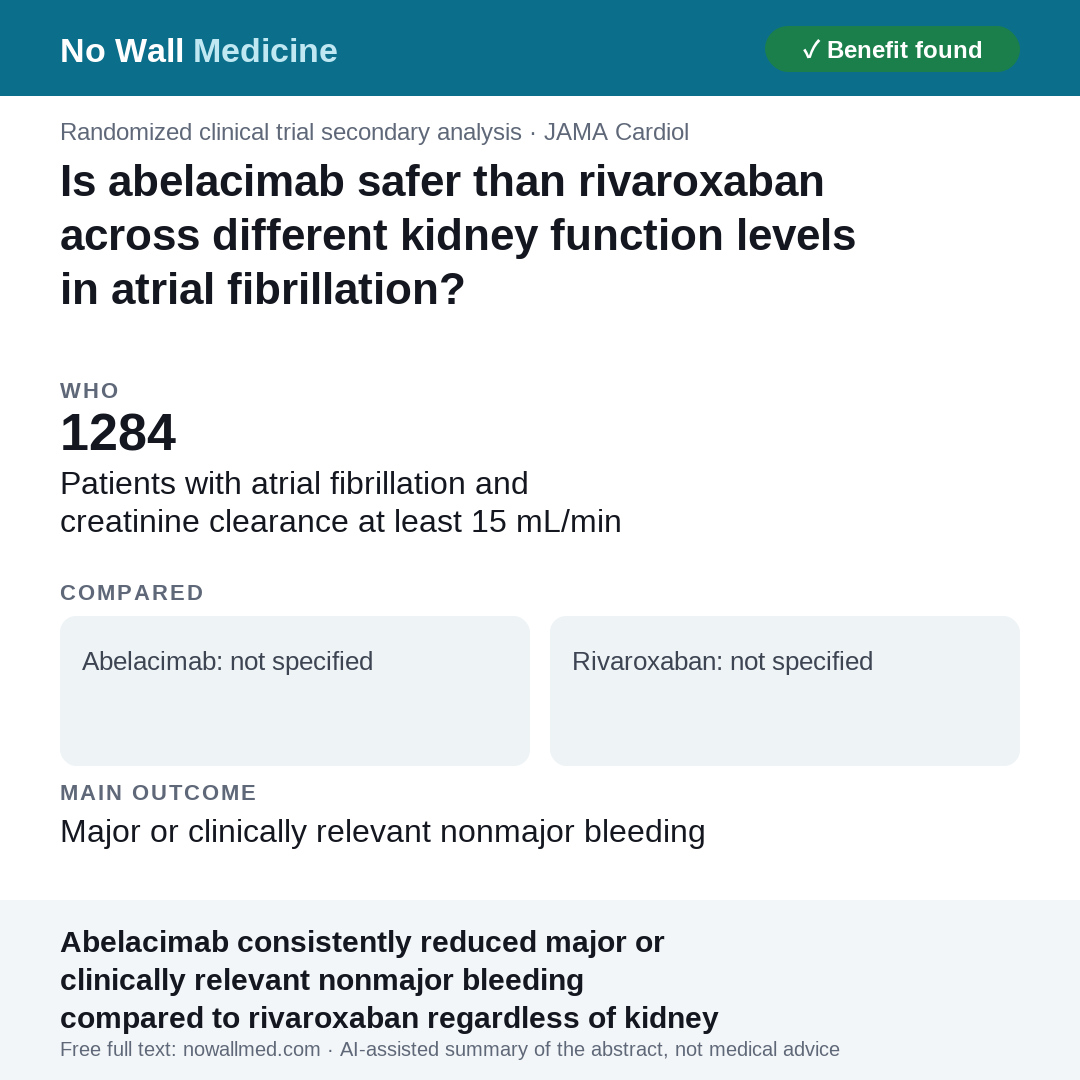
Safety of Factor XI Inhibition With Abelacimab in Atrial Fibrillation by Kidney Function: A Prespecified Analysis of the AZALEA-TIMI 71 Randomized Clinical Trial
Randomized clinical trial secondary analysisBenefit found
Is abelacimab safer than rivaroxaban across different kidney function levels in atrial fibrillation?
Who
1284
Patients with atrial fibrillation and creatinine clearance at least 15 mL/min
Compared
Abelacimab: not specified
Rivaroxaban: not specified
Main outcome
Major or clinically relevant nonmajor bleeding
Result: hazard ratio 0.26 (95% CI, 0.12-0.54) for CrCl ≤50 mL/min; hazard ratio 0.40 (95% CI, 0.26-0.62) for CrCl >50 mL/min
Bottom line: Abelacimab consistently reduced major or clinically relevant nonmajor bleeding compared to rivaroxaban regardless of kidney function.
Limitation: Larger studies are necessary to characterize the efficacy of abelacimab for stroke prevention in atrial fibrillation.
JAMA Cardiol · 2025-09-01Download image
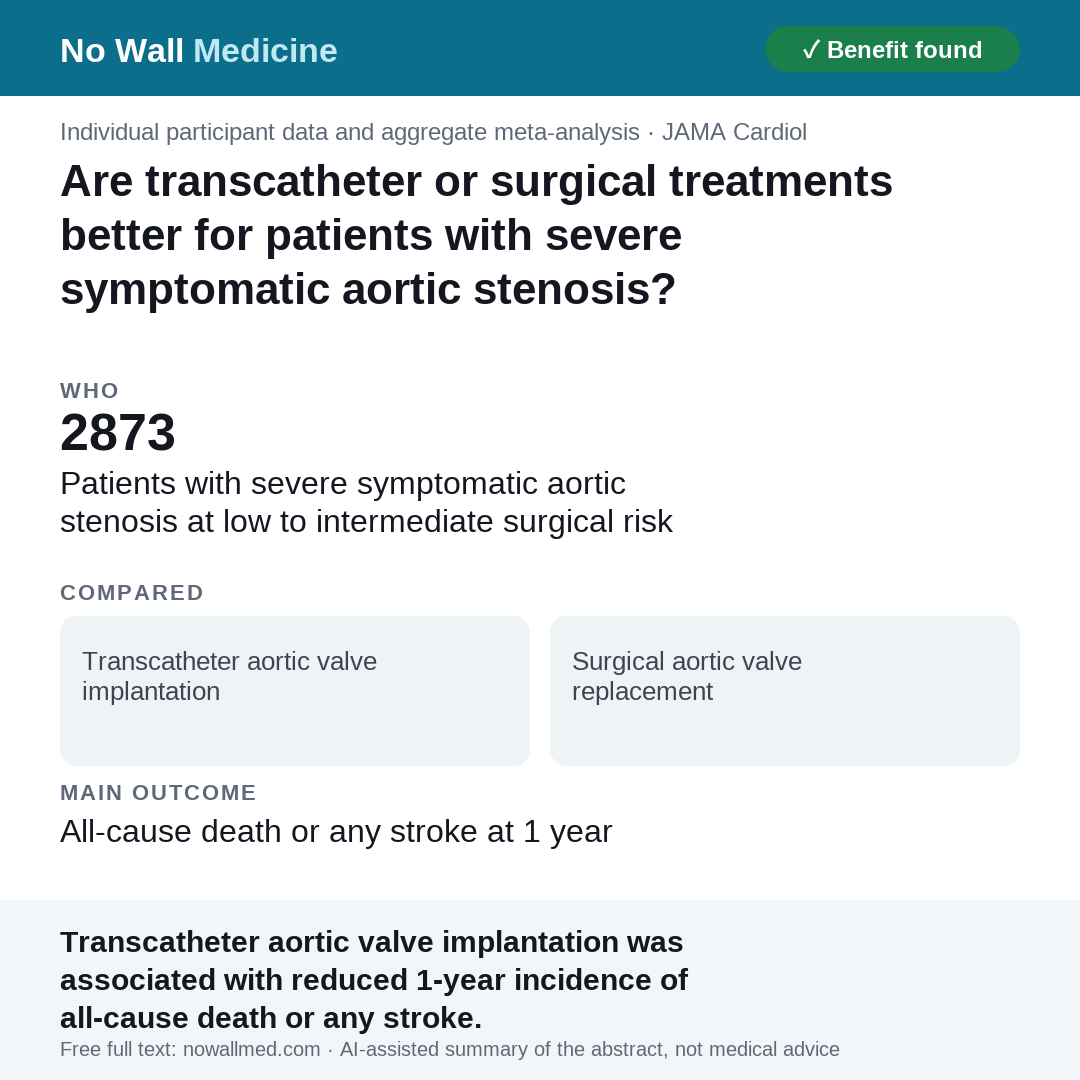
Transcatheter or Surgical Treatment of Patients With Aortic Stenosis at Low to Intermediate Risk: An Individual Participant Data Meta-Analysis
Individual participant data and aggregate meta-analysisBenefit found
Are transcatheter or surgical treatments better for patients with severe symptomatic aortic stenosis?
Who
2873
Patients with severe symptomatic aortic stenosis at low to intermediate surgical risk
Compared
Transcatheter aortic valve implantation
Surgical aortic valve replacement
Main outcome
All-cause death or any stroke at 1 year
Result: hazard ratio 0.76 (95% CI, 0.60-0.97)
Bottom line: Transcatheter aortic valve implantation was associated with reduced 1-year incidence of all-cause death or any stroke.
Limitation: Long-term follow-up is warranted to evaluate sustainability of these findings.
JAMA Cardiol · 2025-09-01Download image
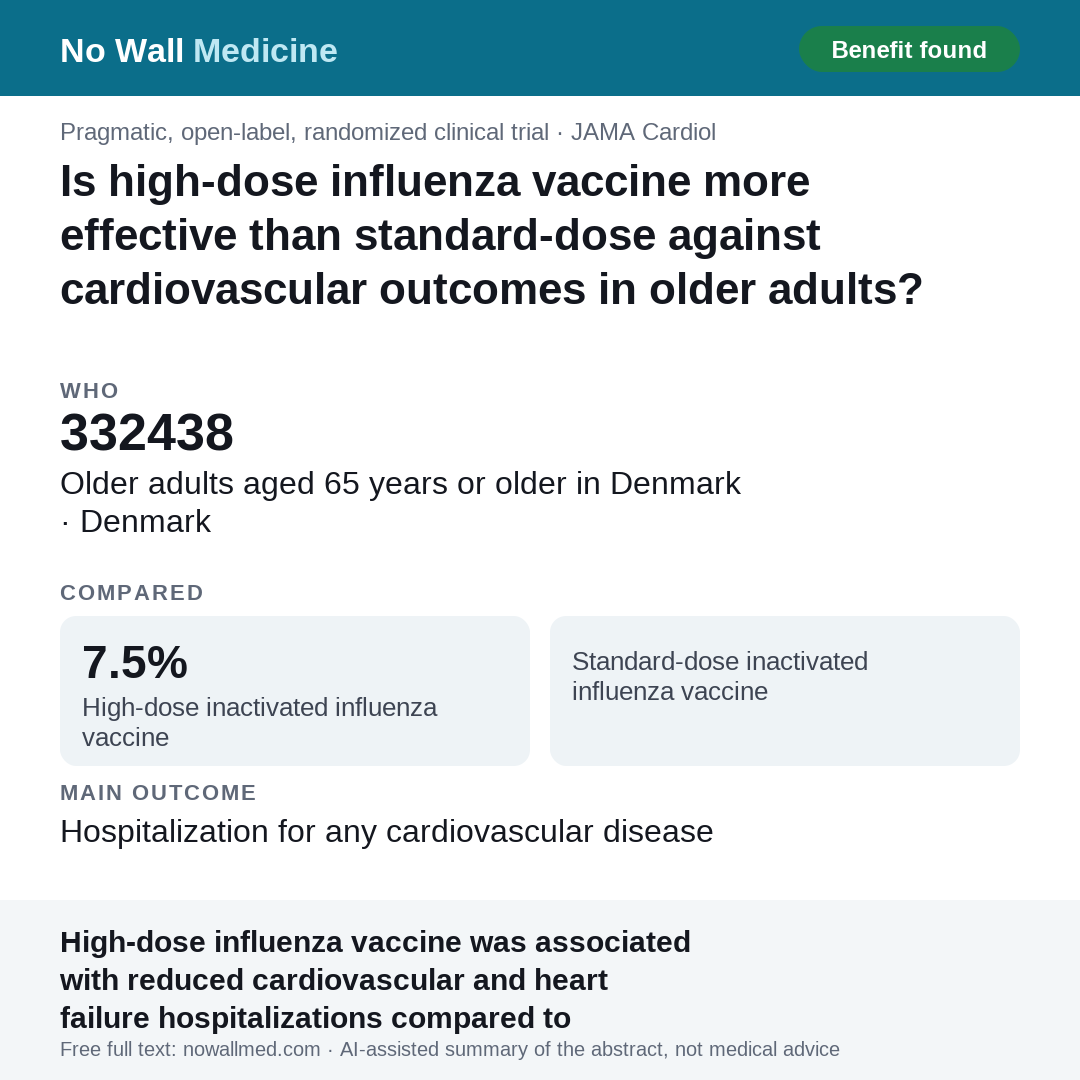
High-Dose vs Standard-Dose Influenza Vaccine and Cardiovascular Outcomes in Older Adults: A Prespecified Secondary Analysis of the DANFLU-2 Randomized Clinical Trial
Pragmatic, open-label, randomized clinical trialBenefit found
Is high-dose influenza vaccine more effective than standard-dose against cardiovascular outcomes in older adults?
Who
332438
Older adults aged 65 years or older in Denmark · Denmark
Compared
7.5%High-dose inactivated influenza vaccine (rVE for cardiovascular disease hospitalization)
Standard-dose inactivated influenza vaccine
Main outcome
Hospitalization for any cardiovascular disease
Result: relative vaccine effectiveness 7.5% (95% CI 1.5% to 12.5%)
Bottom line: High-dose influenza vaccine was associated with reduced cardiovascular and heart failure hospitalizations compared to standard-dose vaccine.
Limitation: Findings are exploratory because the primary end point of influenza-related hospitalization was neutral.
JAMA Cardiol · 2025-09-01Download image
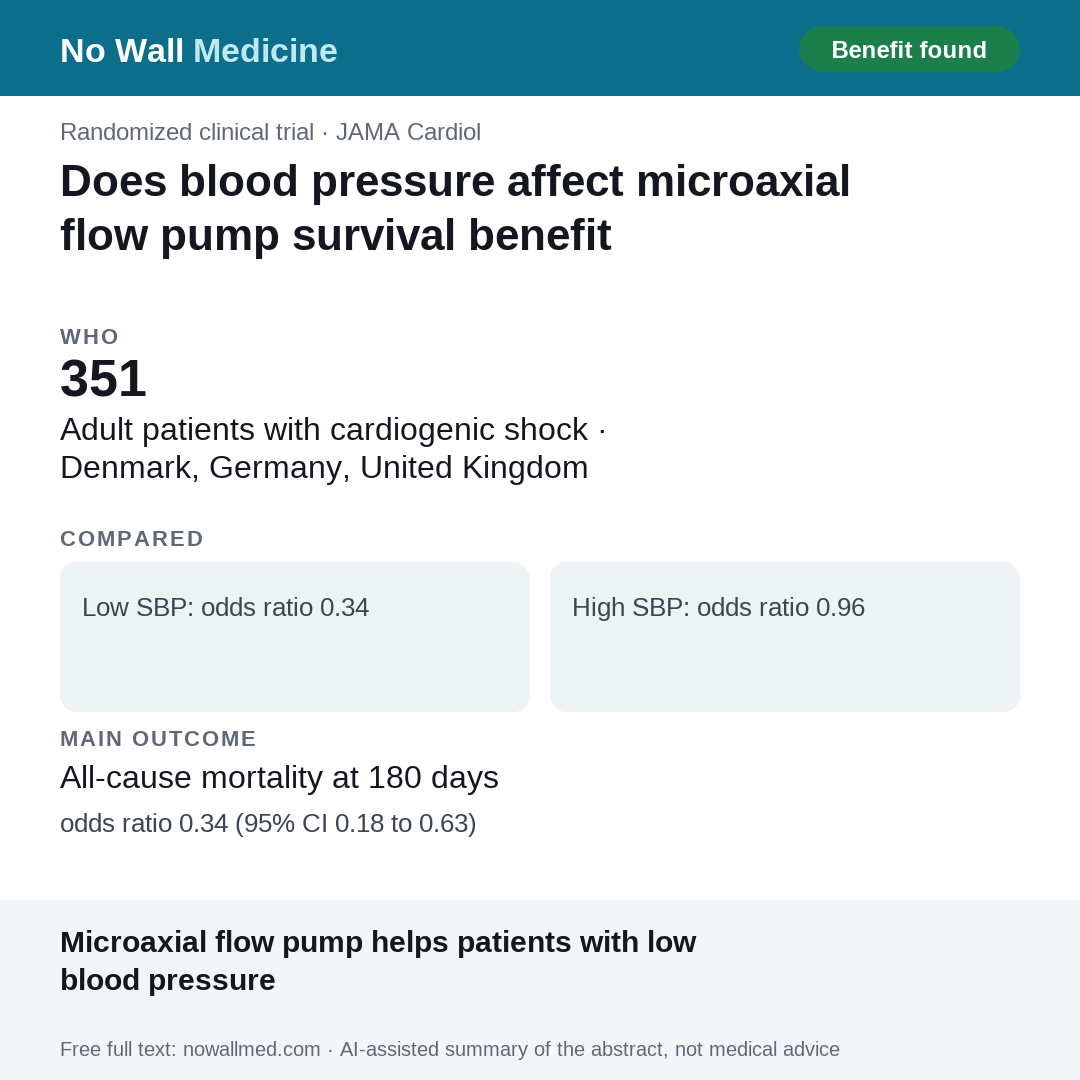
Systolic Blood Pressure and Microaxial Flow Pump-Associated Survival in Infarct-Related Cardiogenic Shock: A Post Hoc Analysis of the DanGer Shock Randomized Clinical Trial
Randomized clinical trialBenefit found
Does blood pressure affect microaxial flow pump survival benefit
Who
351
Adult patients with cardiogenic shock · Denmark, Germany, United Kingdom
Compared
Low SBP: odds ratio 0.34
High SBP: odds ratio 0.96
Main outcome
All-cause mortality at 180 days
Result: odds ratio 0.34 (95% CI 0.18 to 0.63)
Bottom line: Microaxial flow pump helps patients with low blood pressure
Limitation: post hoc analysis
JAMA Cardiol · 2025-09-01Download image
Multi-ancestry meta-analysis identifies genetic modifiers of age-at-onset of Alzheimer's disease at known and novel loci
Meta-analysisUnclear result
Genetic modifiers of Alzheimer's age-at-onset
Who
people with diverse ancestry
Compared
with APOE adjustment
without APOE adjustment
Main outcome
age at onset of Alzheimer's
Bottom line: Genetic modifiers of Alzheimer's found
Limitation: relatively small sample
Alzheimers Dement · 2025-09-01Download image

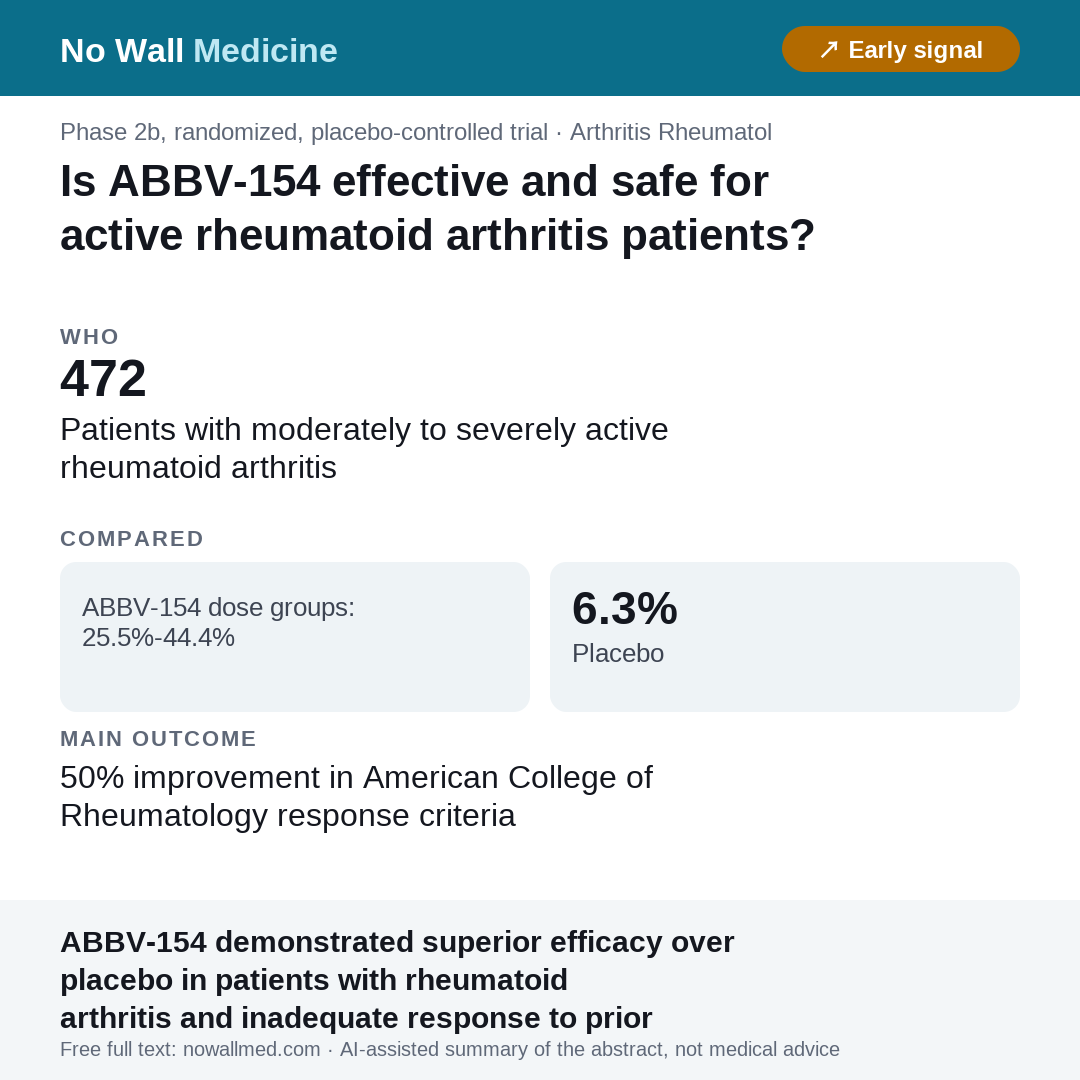
Efficacy and Safety of ABBV-154 for the Treatment of Active Rheumatoid Arthritis: A Phase 2b, Randomized, Placebo-Controlled Trial
Phase 2b, randomized, placebo-controlled trialBenefit found
Is ABBV-154 effective and safe for active rheumatoid arthritis patients?
Who
472
Patients with moderately to severely active rheumatoid arthritis
Compared
ABBV-154 dose groups: 25.5%-44.4%
6.3%Placebo
Main outcome
50% improvement in American College of Rheumatology response criteria
Bottom line: ABBV-154 demonstrated superior efficacy over placebo in patients with rheumatoid arthritis and inadequate response to prior treatments.
Arthritis Rheumatol · 2025-09-01Download image
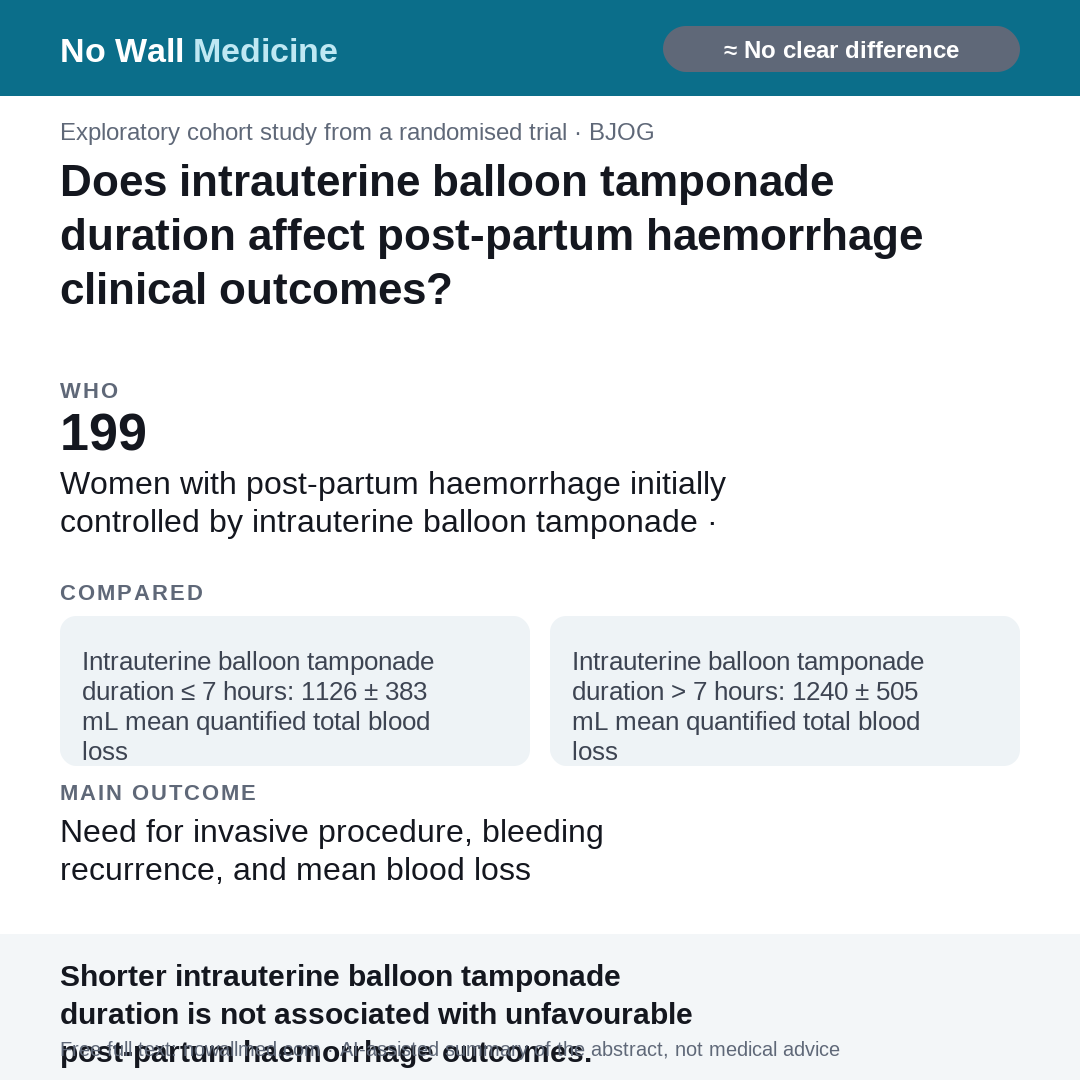
Duration of Intrauterine Balloon Tamponade in Post-Partum Haemorrhage Management After Vaginal Delivery: A Secondary Cohort Analysis From the French TUB Trial
Exploratory cohort study from a randomised trialNo clear difference
Does intrauterine balloon tamponade duration affect post-partum haemorrhage clinical outcomes?
Who
199
Women with post-partum haemorrhage initially controlled by intrauterine balloon tamponade · Eighteen hospitals in France
Compared
Intrauterine balloon tamponade duration ≤ 7 hours: 1126 ± 383 mL mean quantified total blood loss
Intrauterine balloon tamponade duration > 7 hours: 1240 ± 505 mL mean quantified total blood loss
Main outcome
Need for invasive procedure, bleeding recurrence, and mean blood loss
Bottom line: Shorter intrauterine balloon tamponade duration is not associated with unfavourable post-partum haemorrhage outcomes.
Limitation: Imbalance in clinical indication between groups.
BJOG · 2025-09-01Download image
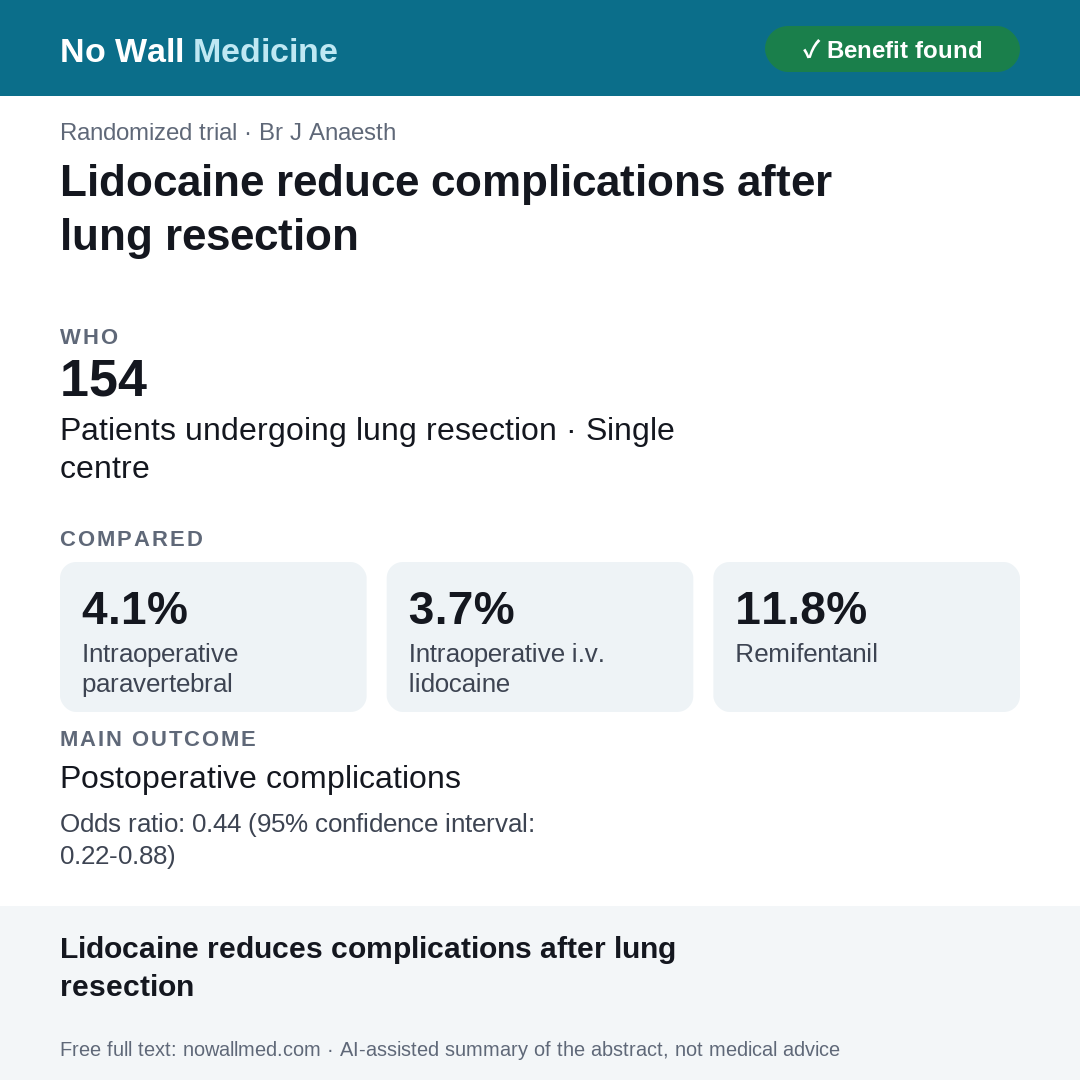
Effect of intraoperative paravertebral or intravenous lidocaine infusion on postoperative complications and inflammation after lung resection surgery: a randomised controlled trial
Randomized trialBenefit found
Lidocaine reduce complications after lung resection
Who
154
Patients undergoing lung resection · Single centre
Compared
4.1%Intraoperative paravertebral lidocaine
3.7%Intraoperative i.v. lidocaine
11.8%Remifentanil
Main outcome
Postoperative complications
Result: Odds ratio: 0.44 (95% confidence interval: 0.22-0.88)
Bottom line: Lidocaine reduces complications after lung resection
Br J Anaesth · 2025-09-01Download image