Visual abstracts
New randomized trials and meta-analyses from leading journals at a glance: who was studied, what was compared, and what was found. Every paper is free to read in full.
All specialtiesCardiology 4877Oncology 4138Gastroenterology & Hepatology 1942Infectious Disease 3837Neurology 1905Psychiatry & Mental Health 2273Pulmonology 2143Critical Care 1365Endocrinology & Diabetes 2580Pediatrics 2980Surgery 2559Orthopedics & Sports Medicine 931Neurosurgery 537Cardiothoracic & Vascular Surgery 674Plastic & Reconstructive Surgery 591Nephrology 1133Rheumatology 823Hematology 1109Dermatology 621Ophthalmology 543Obstetrics & Gynecology 1686Public & Global Health 1058Radiology & Imaging 648Anesthesiology 986Urology 764ENT (Otolaryngology) 503Emergency Medicine 511Allergy & Immunology 313Geriatrics 981Family Medicine & Primary Care 562Medical Genetics & Genomics 676Pathology & Laboratory Medicine 159Physical Medicine & Rehabilitation 757Palliative Care 444Nutrition 1588Digital Health & AI 2201General Medicine 321
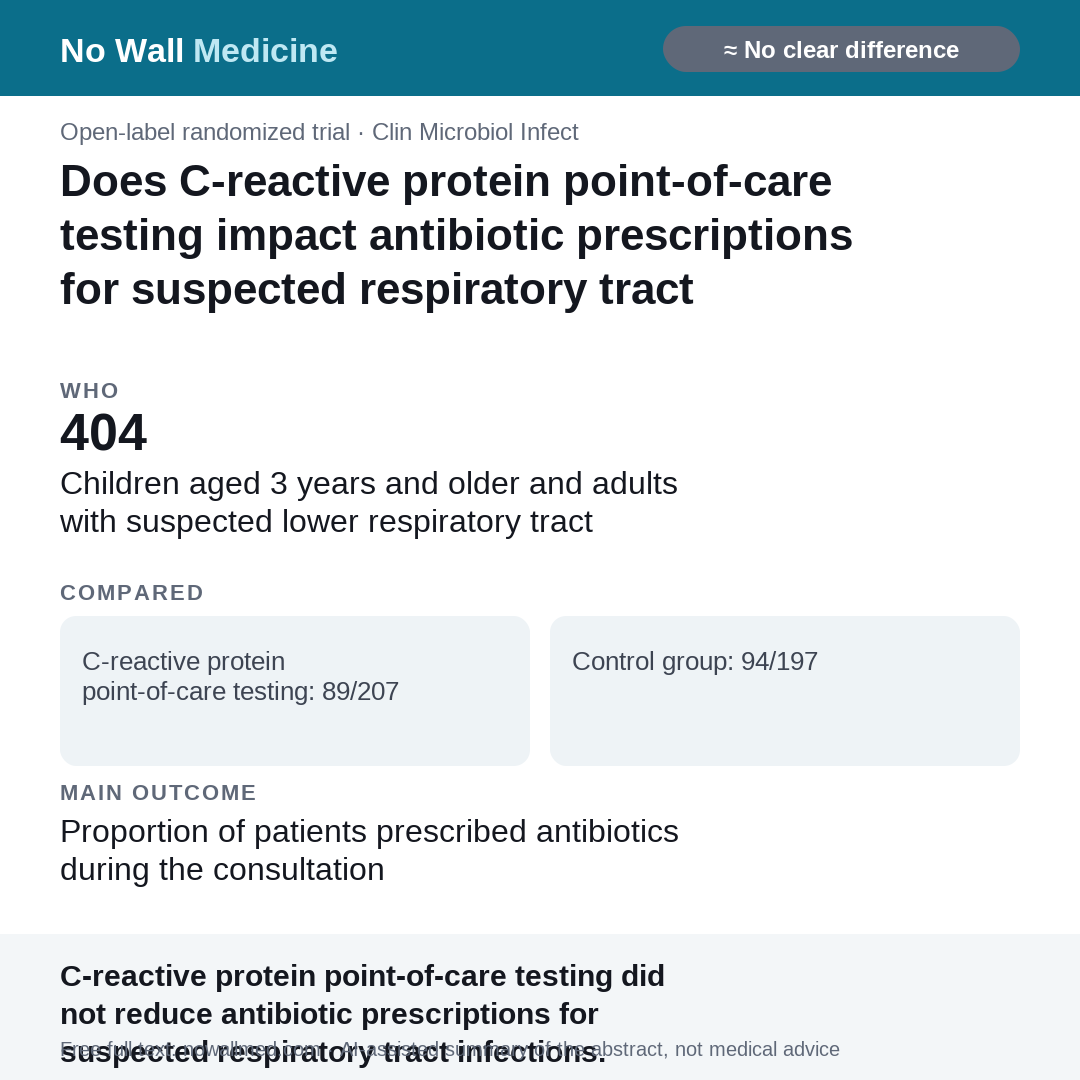
Impact of C-reactive protein point-of-care testing on antibiotic prescriptions for children and adults with suspected respiratory tract infections in primary care: a French patient-level randomized controlled superiority trial
Open-label randomized trialNo clear difference
Does C-reactive protein point-of-care testing impact antibiotic prescriptions for suspected respiratory tract infections?
Who
404
Children aged 3 years and older and adults with suspected lower respiratory tract infections · 26 general practitioners in France
Compared
C-reactive protein point-of-care testing: 89/207
Control group: 94/197
Main outcome
Proportion of patients prescribed antibiotics during the consultation
Result: -4.7 CI: -14.4, 5.0
Bottom line: C-reactive protein point-of-care testing did not reduce antibiotic prescriptions for suspected respiratory tract infections.
Clin Microbiol Infect · 2024-07-26Download image
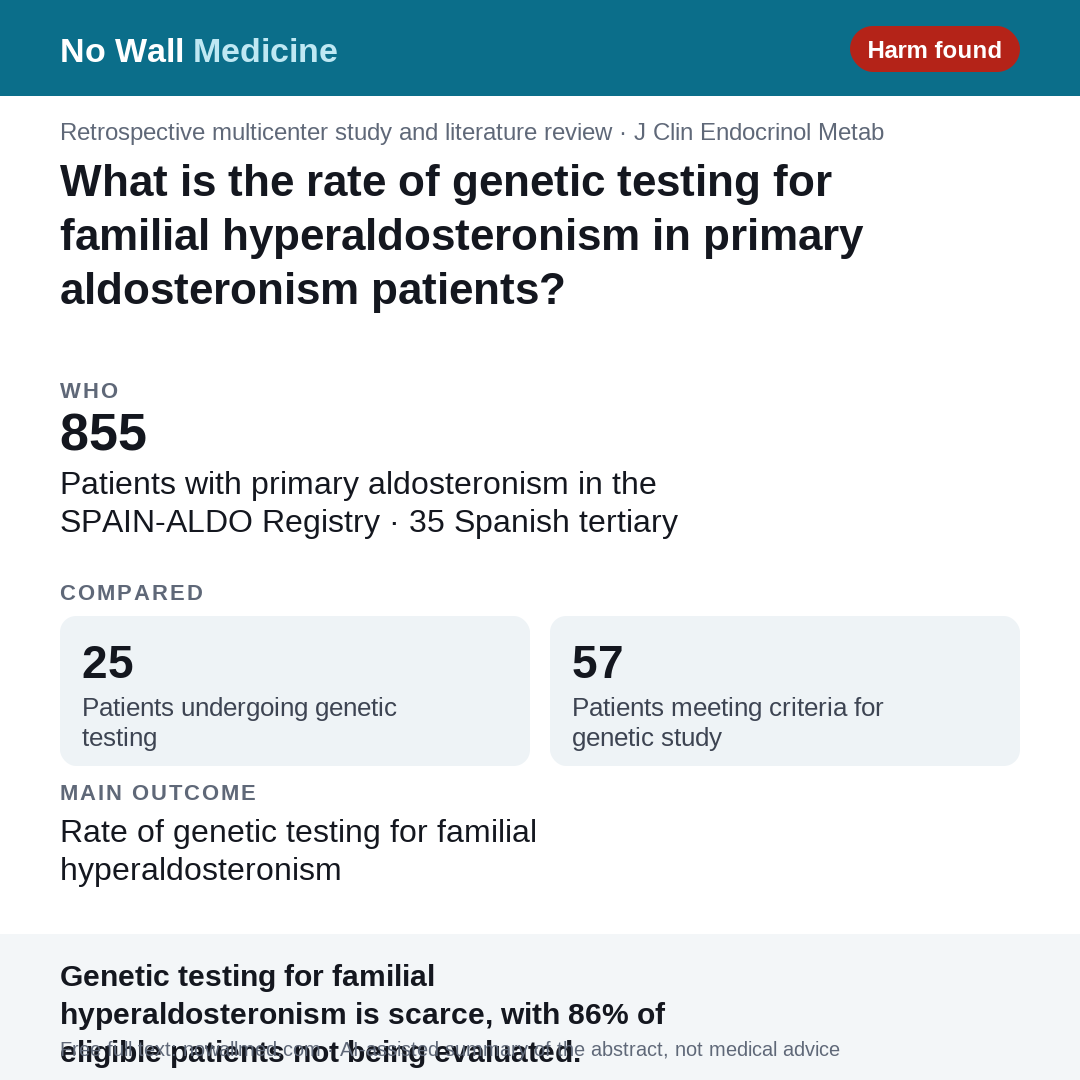
Genetic Testing for Primary Aldosteronism in SPAIN: Results From the SPAIN-ALDO Registry and Review of the Literature
Retrospective multicenter study and literature reviewHarm found
What is the rate of genetic testing for familial hyperaldosteronism in primary aldosteronism patients?
Who
855
Patients with primary aldosteronism in the SPAIN-ALDO Registry · 35 Spanish tertiary hospitals
Compared
25Patients undergoing genetic testing (3%)
57Patients meeting criteria for genetic study
Main outcome
Rate of genetic testing for familial hyperaldosteronism
Bottom line: Genetic testing for familial hyperaldosteronism is scarce, with 86% of eligible patients not being evaluated.
Limitation: The study is a retrospective multicenter registry analysis.
J Clin Endocrinol Metab · 2024-07-26Download image
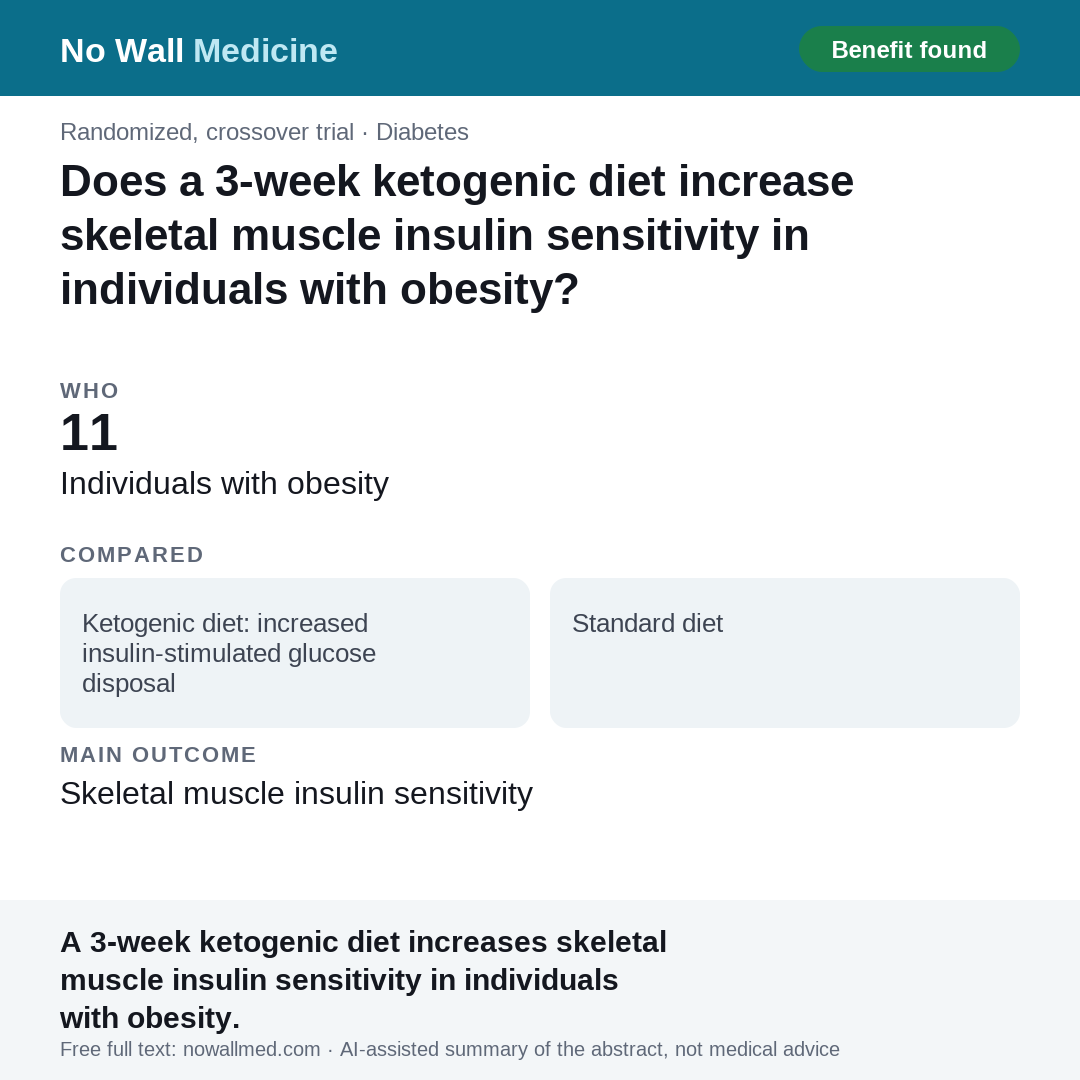
A 3-Week Ketogenic Diet Increases Skeletal Muscle Insulin Sensitivity in Individuals With Obesity: A Randomized Controlled Crossover Trial
Randomized, crossover trialBenefit found
Does a 3-week ketogenic diet increase skeletal muscle insulin sensitivity in individuals with obesity?
Who
11
Individuals with obesity
Compared
Ketogenic diet: increased insulin-stimulated glucose disposal
Standard diet
Main outcome
Skeletal muscle insulin sensitivity
Bottom line: A 3-week ketogenic diet increases skeletal muscle insulin sensitivity in individuals with obesity.
Diabetes · 2024-07-26Download image
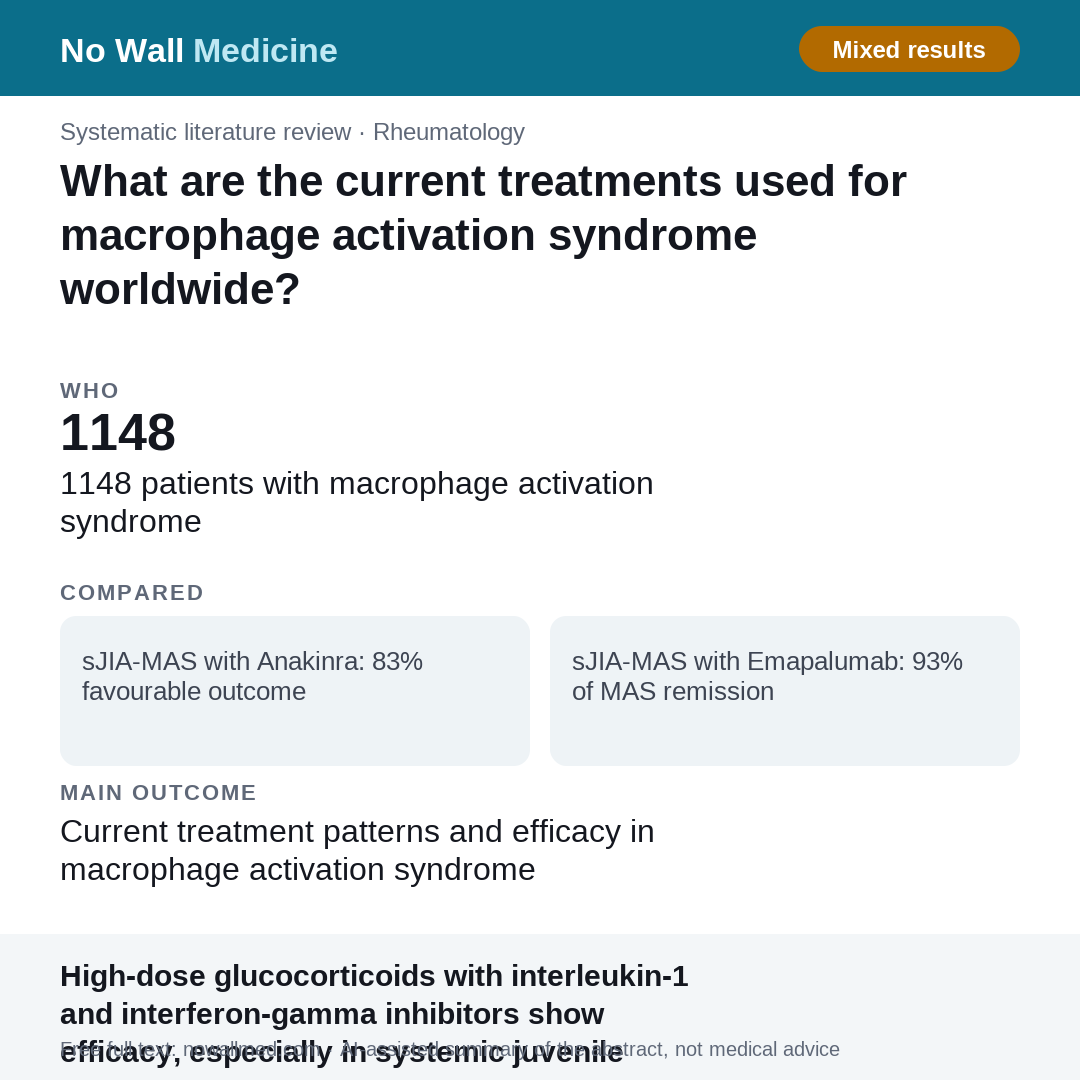
Current treatment in macrophage activation syndrome worldwide: a systematic literature review to inform the METAPHOR project
Systematic literature reviewMixed results
What are the current treatments used for macrophage activation syndrome worldwide?
Who
1148
1148 patients with macrophage activation syndrome
Compared
sJIA-MAS with Anakinra: 83% favourable outcome
sJIA-MAS with Emapalumab: 93% of MAS remission
Main outcome
Current treatment patterns and efficacy in macrophage activation syndrome
Bottom line: High-dose glucocorticoids with interleukin-1 and interferon-gamma inhibitors show efficacy, especially in systemic juvenile idiopathic arthritis-associated macrophage activation syndrome.
Limitation: Global level of evidence is poor and requires standardized studies to be confirmed.
Rheumatology · 2024-07-26Download image
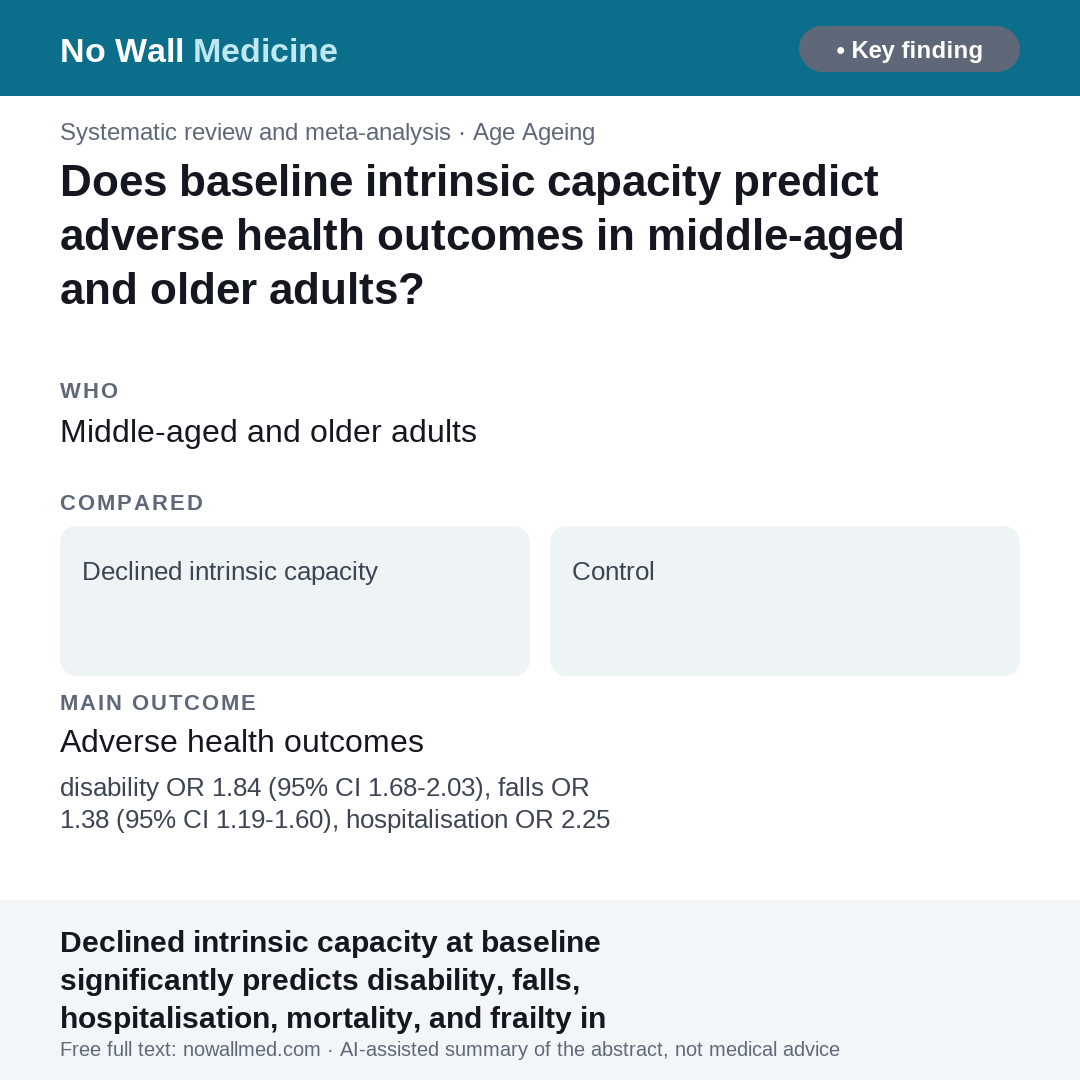
Adverse health effects of declined intrinsic capacity in middle-aged and older adults: a systematic review and meta-analysis
Systematic review and meta-analysisBenefit found
Does baseline intrinsic capacity predict adverse health outcomes in middle-aged and older adults?
Who
Middle-aged and older adults
Compared
Declined intrinsic capacity
Control
Main outcome
Adverse health outcomes
Result: disability OR 1.84 (95% CI 1.68-2.03), falls OR 1.38 (95% CI 1.19-1.60), hospitalisation OR 2.25 (95% CI 1.17-4.3), mortality OR 1.72 (95% CI 1.54-1.91), frailty OR 1.57 (95% CI 1.45-1.70)
Bottom line: Declined intrinsic capacity at baseline significantly predicts disability, falls, hospitalisation, mortality, and frailty in middle-aged and older adults.
Age Ageing · 2024-07-26Download image
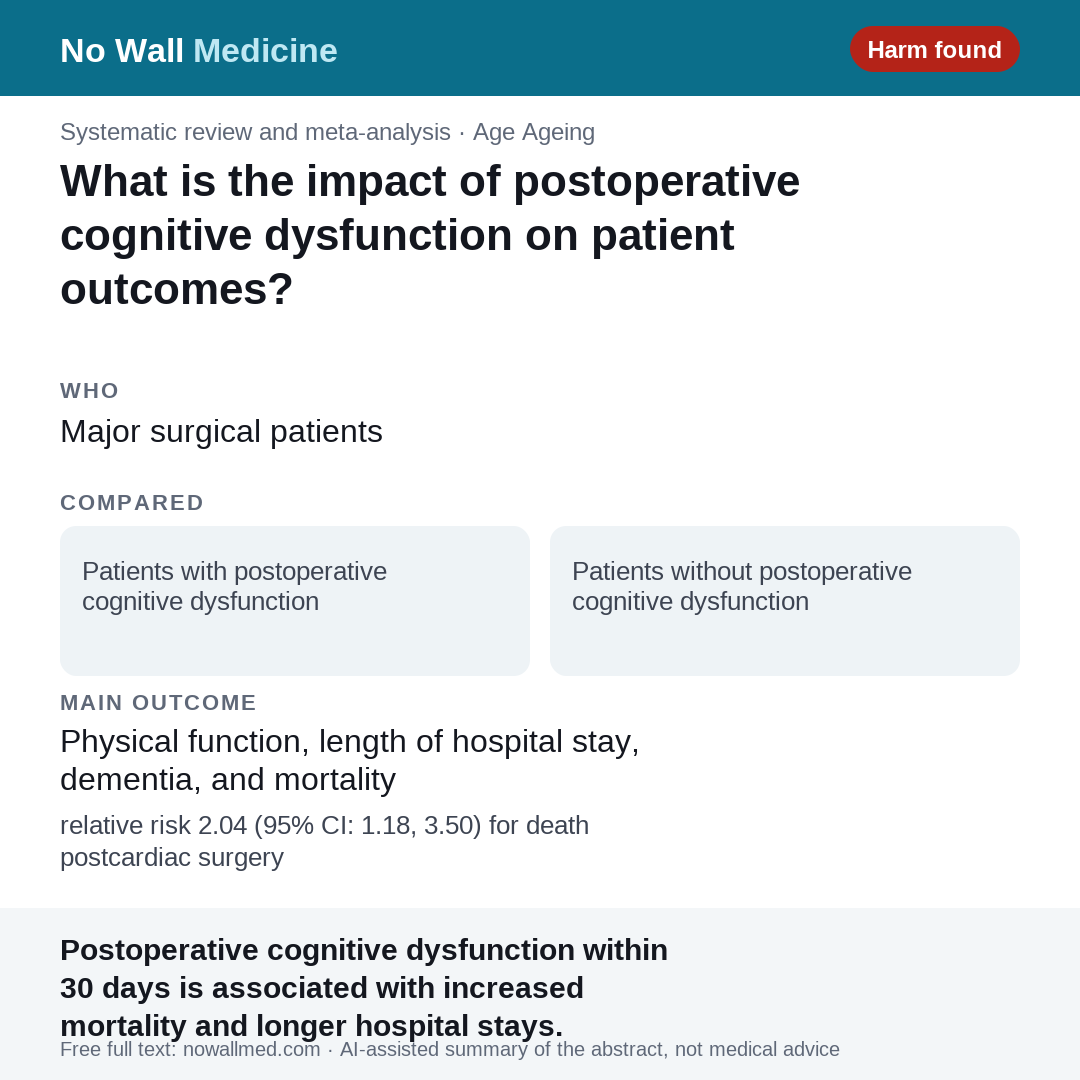
Outcomes associated with postoperative cognitive dysfunction: a systematic review and meta-analysis
Systematic review and meta-analysisHarm found
What is the impact of postoperative cognitive dysfunction on patient outcomes?
Who
Major surgical patients
Compared
Patients with postoperative cognitive dysfunction
Patients without postoperative cognitive dysfunction
Main outcome
Physical function, length of hospital stay, dementia, and mortality
Result: relative risk 2.04 (95% CI: 1.18, 3.50) for death postcardiac surgery
Bottom line: Postoperative cognitive dysfunction within 30 days is associated with increased mortality and longer hospital stays.
Limitation: Postoperative delirium may confound findings and contribute to observed heterogeneity.
Age Ageing · 2024-07-26Download image
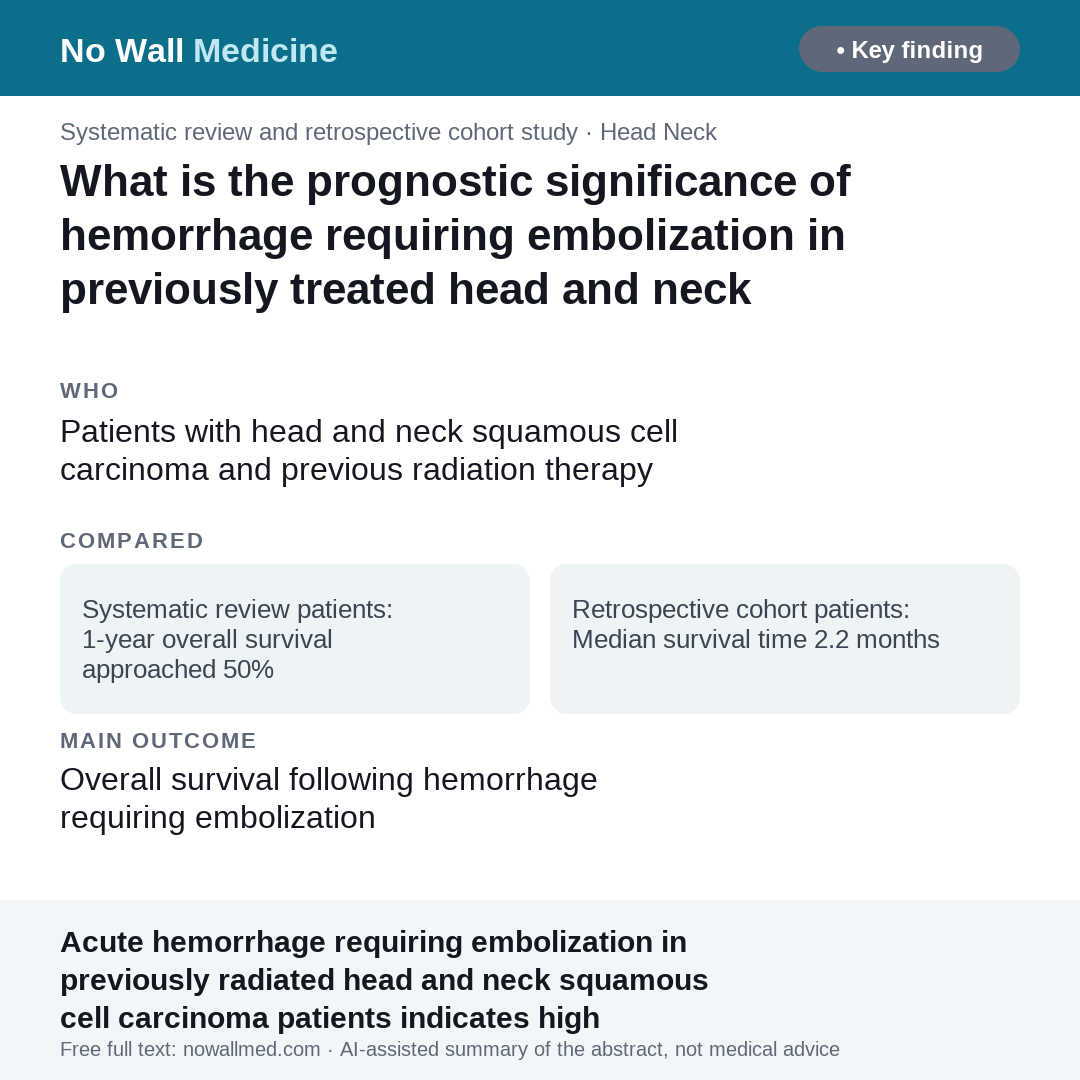
Prognostic significance of hemorrhage requiring embolization in the setting of previously treated head and neck squamous cell carcinoma: Systematic review and retrospective cohort
Systematic review and retrospective cohort studyHarm found
What is the prognostic significance of hemorrhage requiring embolization in previously treated head and neck squamous cell carcinoma?
Who
Patients with head and neck squamous cell carcinoma and previous radiation therapy
Compared
Systematic review patients: 1-year overall survival approached 50%
Retrospective cohort patients: Median survival time 2.2 months
Main outcome
Overall survival following hemorrhage requiring embolization
Bottom line: Acute hemorrhage requiring embolization in previously radiated head and neck squamous cell carcinoma patients indicates high mortality risk.
Head Neck · 2024-07-26Download image
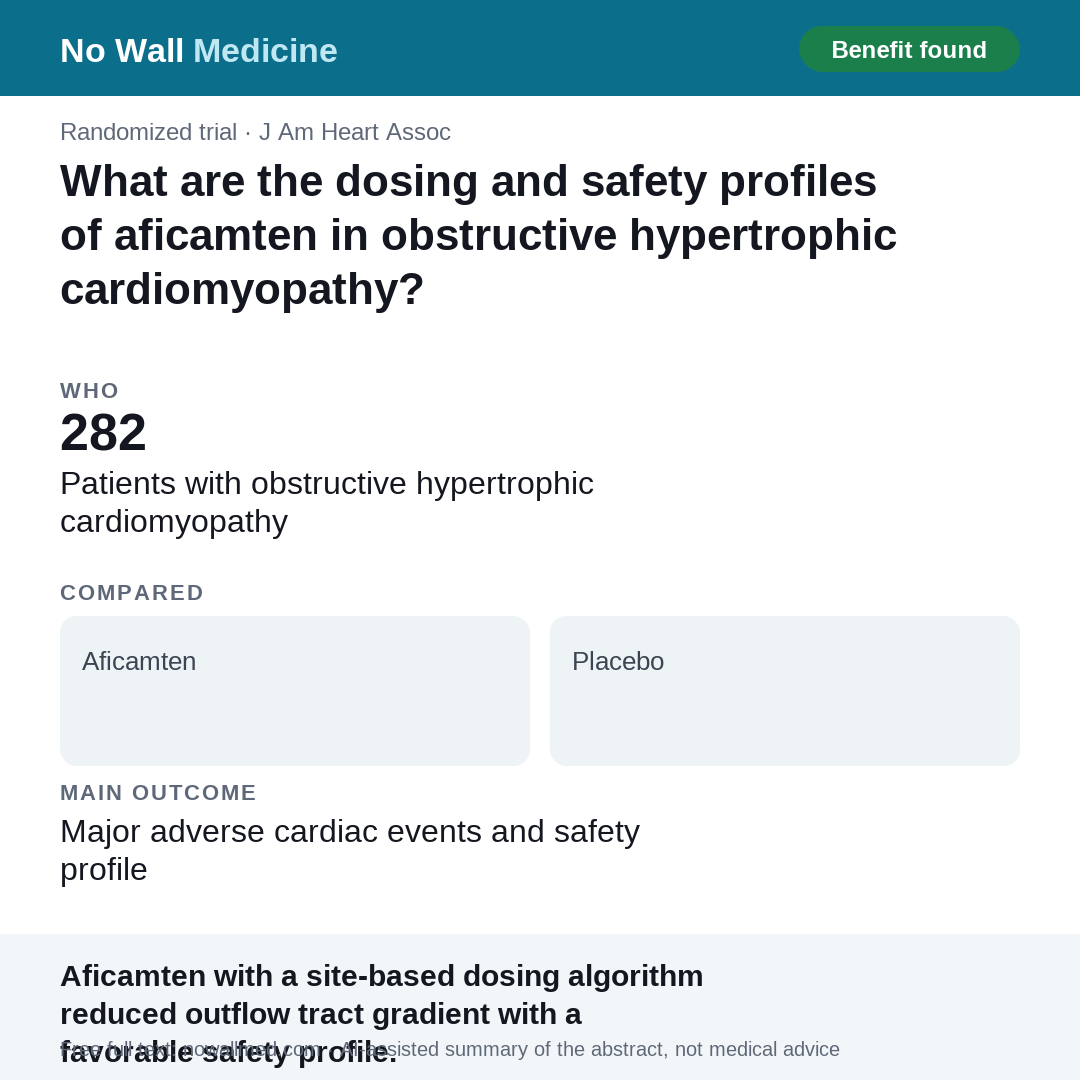
Dosing and Safety Profile of Aficamten in Symptomatic Obstructive Hypertrophic Cardiomyopathy: Results From SEQUOIA-HCM
Randomized trialBenefit found
What are the dosing and safety profiles of aficamten in obstructive hypertrophic cardiomyopathy?
Who
282
Patients with obstructive hypertrophic cardiomyopathy
Compared
Aficamten
Placebo
Main outcome
Major adverse cardiac events and safety profile
Bottom line: Aficamten with a site-based dosing algorithm reduced outflow tract gradient with a favorable safety profile.
J Am Heart Assoc · 2024-07-26Download image
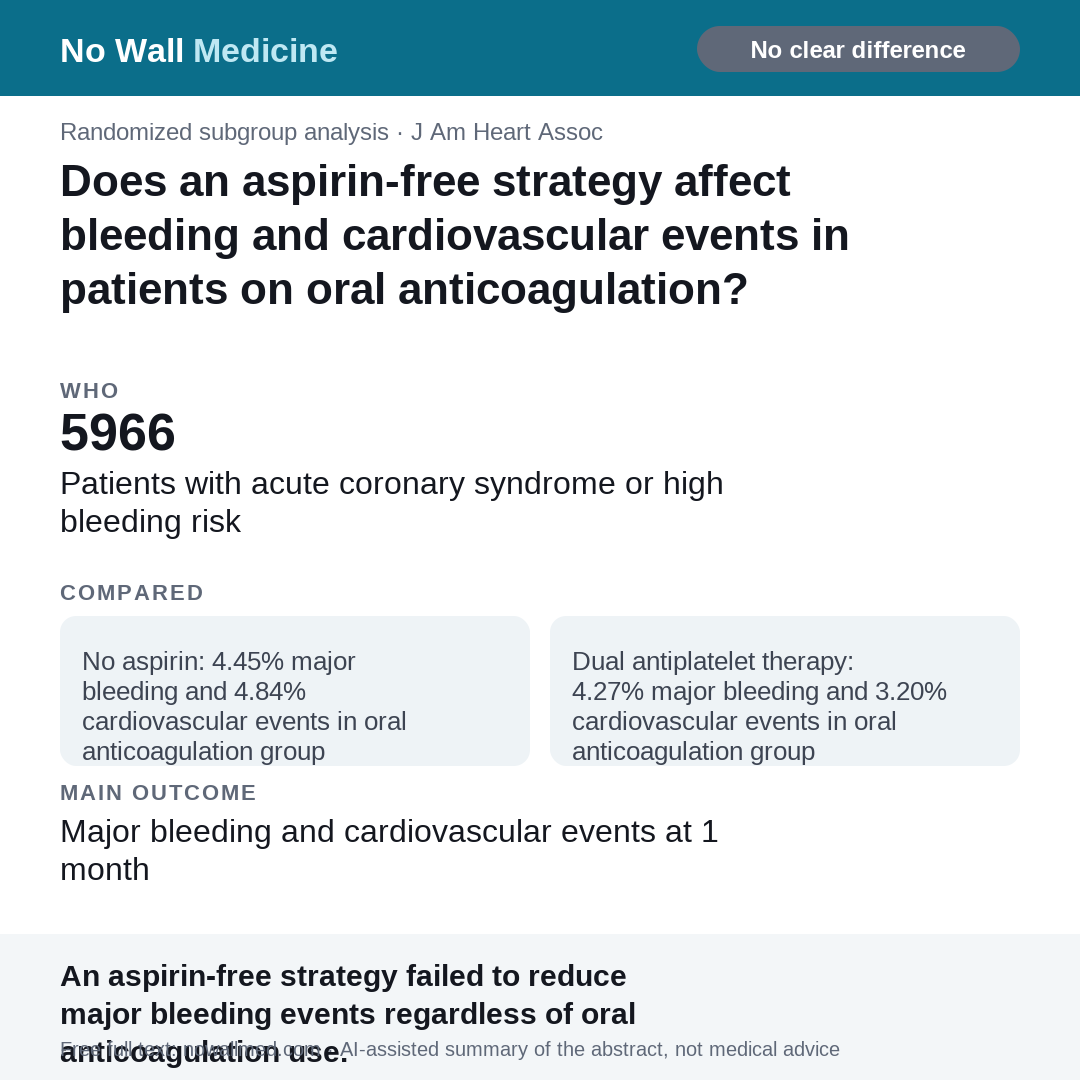
Aspirin-Free Strategy for Percutaneous Coronary Intervention in Patients With Oral Anticoagulation: Prespecified Subgroup Analysis From the STOPDAPT-3 Trial
Randomized subgroup analysisNo clear difference
Does an aspirin-free strategy affect bleeding and cardiovascular events in patients on oral anticoagulation?
Who
5966
Patients with acute coronary syndrome or high bleeding risk
Compared
No aspirin: 4.45% major bleeding and 4.84% cardiovascular events in oral anticoagulation group
Dual antiplatelet therapy: 4.27% major bleeding and 3.20% cardiovascular events in oral anticoagulation group
Main outcome
Major bleeding and cardiovascular events at 1 month
Result: hazard ratio 1.04 (95% CI 0.46-2.35) for bleeding; hazard ratio 1.53 (95% CI 0.64-3.62) for cardiovascular events
Bottom line: An aspirin-free strategy failed to reduce major bleeding events regardless of oral anticoagulation use.
J Am Heart Assoc · 2024-07-26Download image
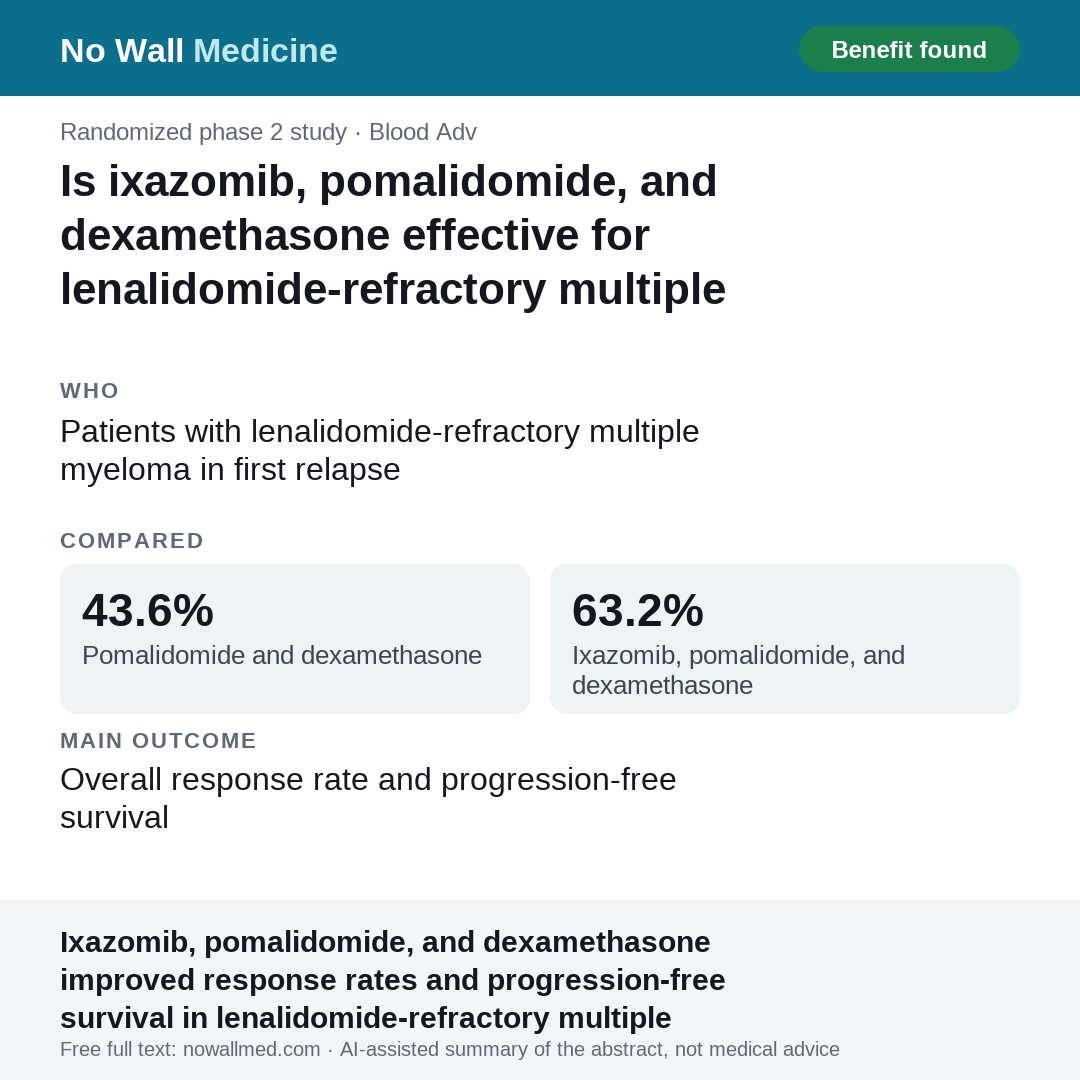
Alliance A061202: ixazomib, pomalidomide, and dexamethasone for patients with lenalidomide-refractory MM in first relapse
Randomized phase 2 studyBenefit found
Is ixazomib, pomalidomide, and dexamethasone effective for lenalidomide-refractory multiple myeloma?
Who
Patients with lenalidomide-refractory multiple myeloma in first relapse
Compared
43.6%Pomalidomide and dexamethasone
63.2%Ixazomib, pomalidomide, and dexamethasone
Main outcome
Overall response rate and progression-free survival
Result: hazard ratio 0.437; upper 90% bound = 0.657
Bottom line: Ixazomib, pomalidomide, and dexamethasone improved response rates and progression-free survival in lenalidomide-refractory multiple myeloma.
Blood Adv · 2024-07-26Download image
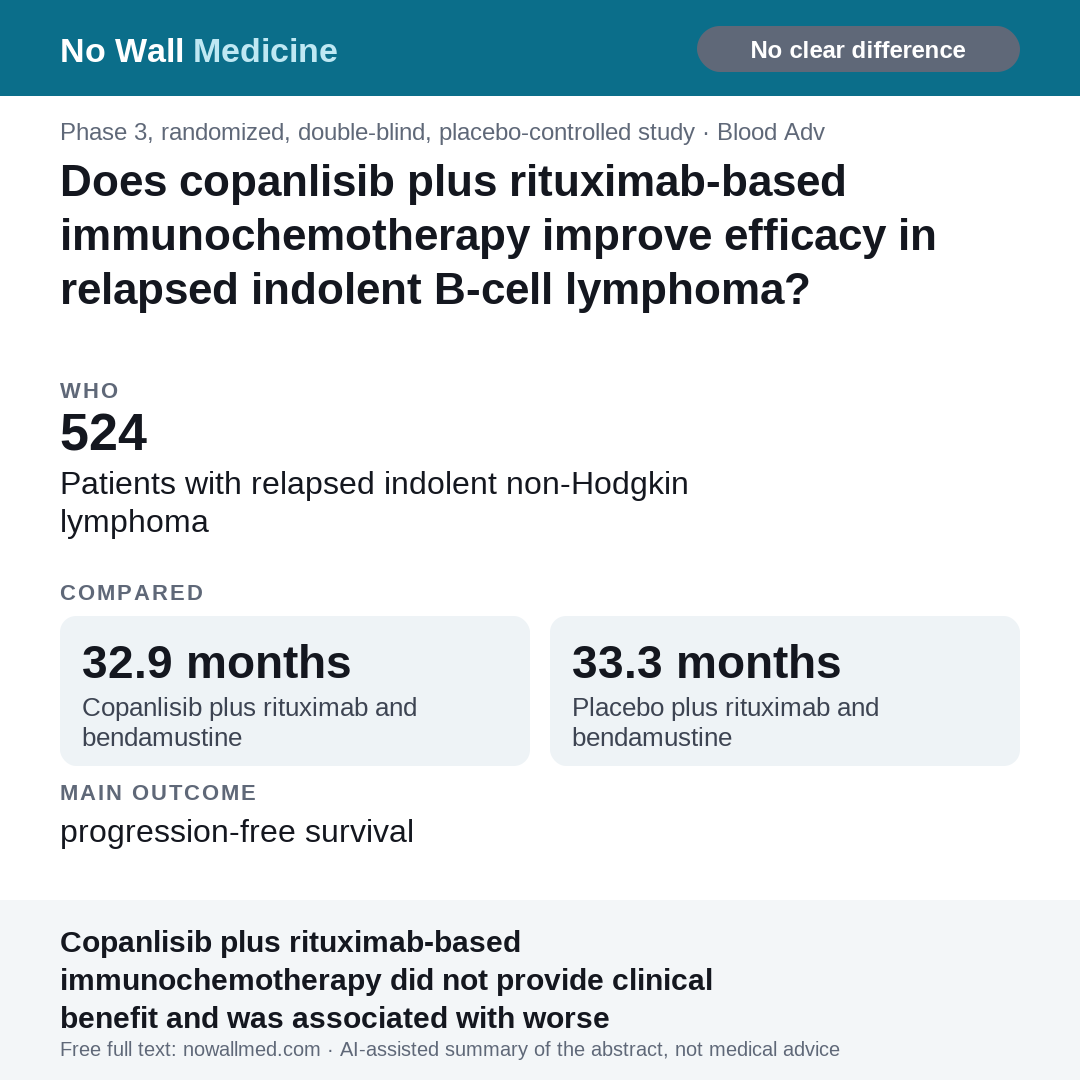
CHRONOS-4: phase 3 study of copanlisib plus rituximab-based immunochemotherapy in relapsed indolent B-cell lymphoma
Phase 3, randomized, double-blind, placebo-controlled studyNo clear difference
Does copanlisib plus rituximab-based immunochemotherapy improve efficacy in relapsed indolent B-cell lymphoma?
Who
524
Patients with relapsed indolent non-Hodgkin lymphoma
Compared
32.9 monthsCopanlisib plus rituximab and bendamustine (95% CI, 24.4-38.6)
33.3 monthsPlacebo plus rituximab and bendamustine (95% CI, 27.8-42.8)
Main outcome
progression-free survival
Result: hazard ratio 1.13 (95% CI 0.88-1.44)
Bottom line: Copanlisib plus rituximab-based immunochemotherapy did not provide clinical benefit and was associated with worse tolerability.
Blood Adv · 2024-07-26Download image
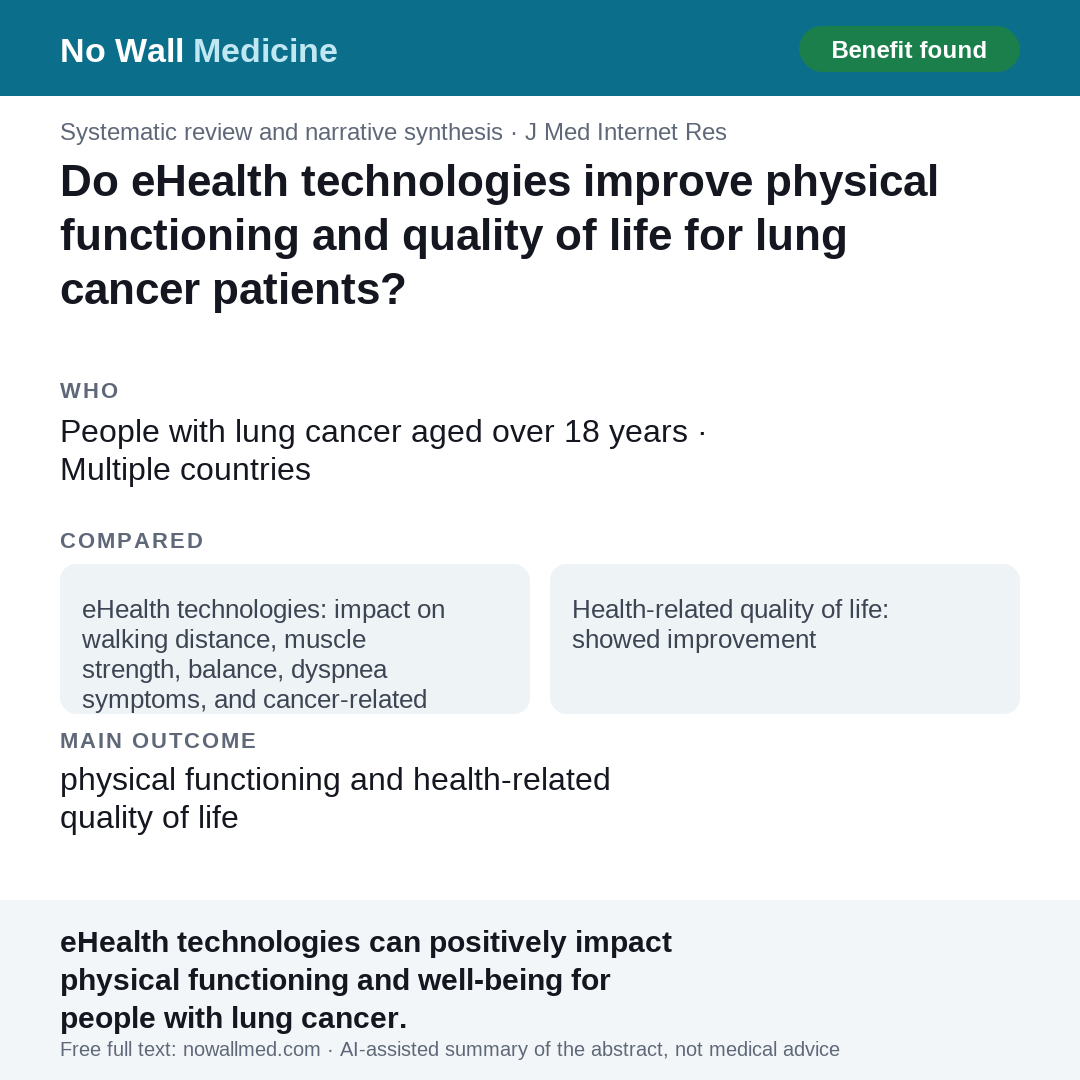
Supportive eHealth Technologies and Their Effects on Physical Functioning and Quality of Life for People With Lung Cancer: Systematic Review
Systematic review and narrative synthesisBenefit found
Do eHealth technologies improve physical functioning and quality of life for lung cancer patients?
Who
People with lung cancer aged over 18 years · Multiple countries
Compared
eHealth technologies: impact on walking distance, muscle strength, balance, dyspnea symptoms, and cancer-related fatigue
Health-related quality of life: showed improvement
Main outcome
physical functioning and health-related quality of life
Bottom line: eHealth technologies can positively impact physical functioning and well-being for people with lung cancer.
Limitation: limited studies demonstrate impact over longer periods and none reported on routine clinical practice implementation.
J Med Internet Res · 2024-07-26Download image
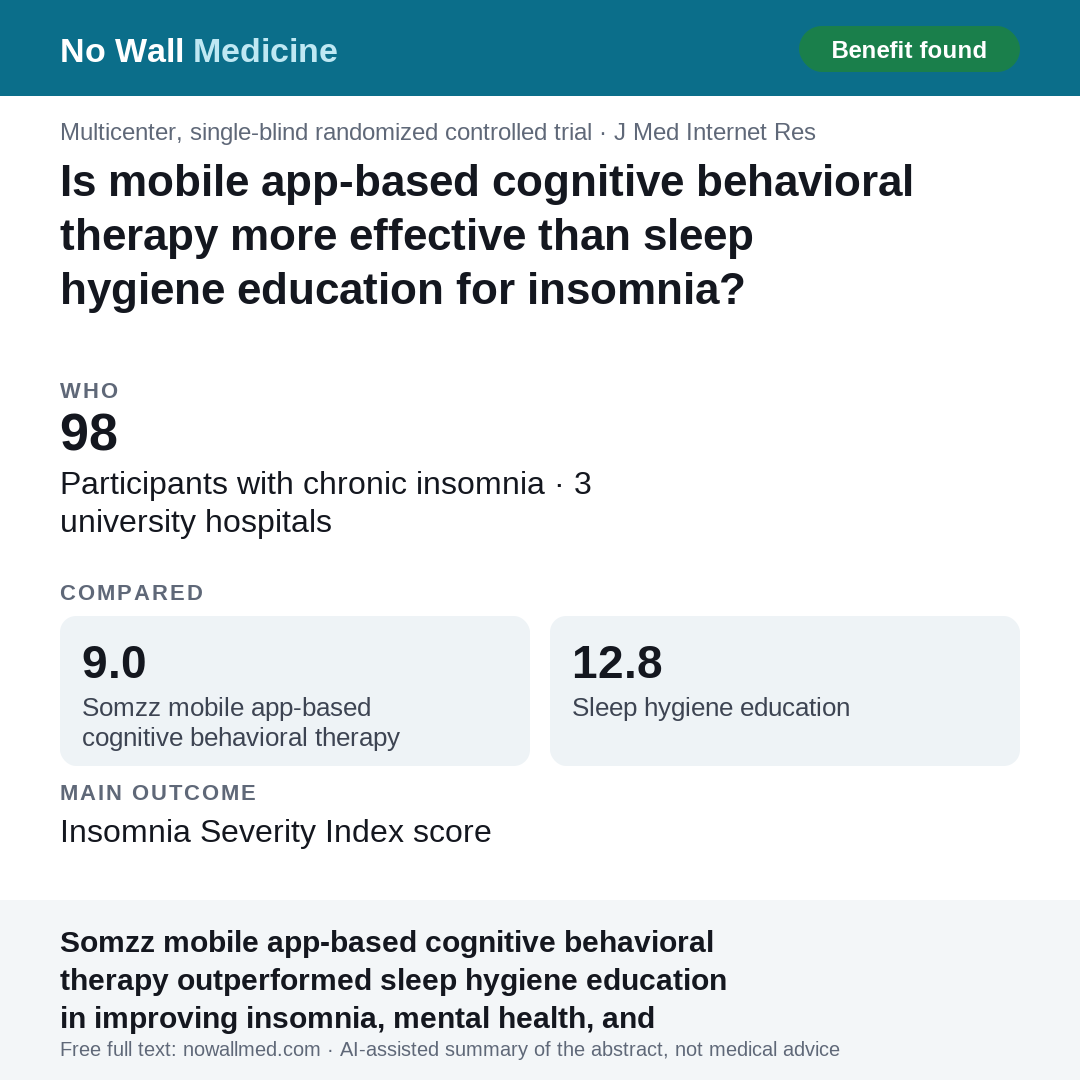
Efficacy of Mobile App-Based Cognitive Behavioral Therapy for Insomnia: Multicenter, Single-Blind Randomized Clinical Trial
Multicenter, single-blind randomized controlled trialBenefit found
Is mobile app-based cognitive behavioral therapy more effective than sleep hygiene education for insomnia?
Who
98
Participants with chronic insomnia · 3 university hospitals
Compared
9.0Somzz mobile app-based cognitive behavioral therapy
12.8Sleep hygiene education
Main outcome
Insomnia Severity Index score
Bottom line: Somzz mobile app-based cognitive behavioral therapy outperformed sleep hygiene education in improving insomnia, mental health, and quality of life.
J Med Internet Res · 2024-07-26Download image
Synthetic Simulators for Microsurgery Training: A Systematic Review
Systematic reviewBenefit found
Do synthetic simulators improve microsurgery training
Who
microsurgery trainees
Compared
synthetic simulators
traditional training
Main outcome
microsurgical skills
Bottom line: Synthetic simulators improve microsurgery training
Plast Reconstr Surg Glob Open · 2024-07-26Download image

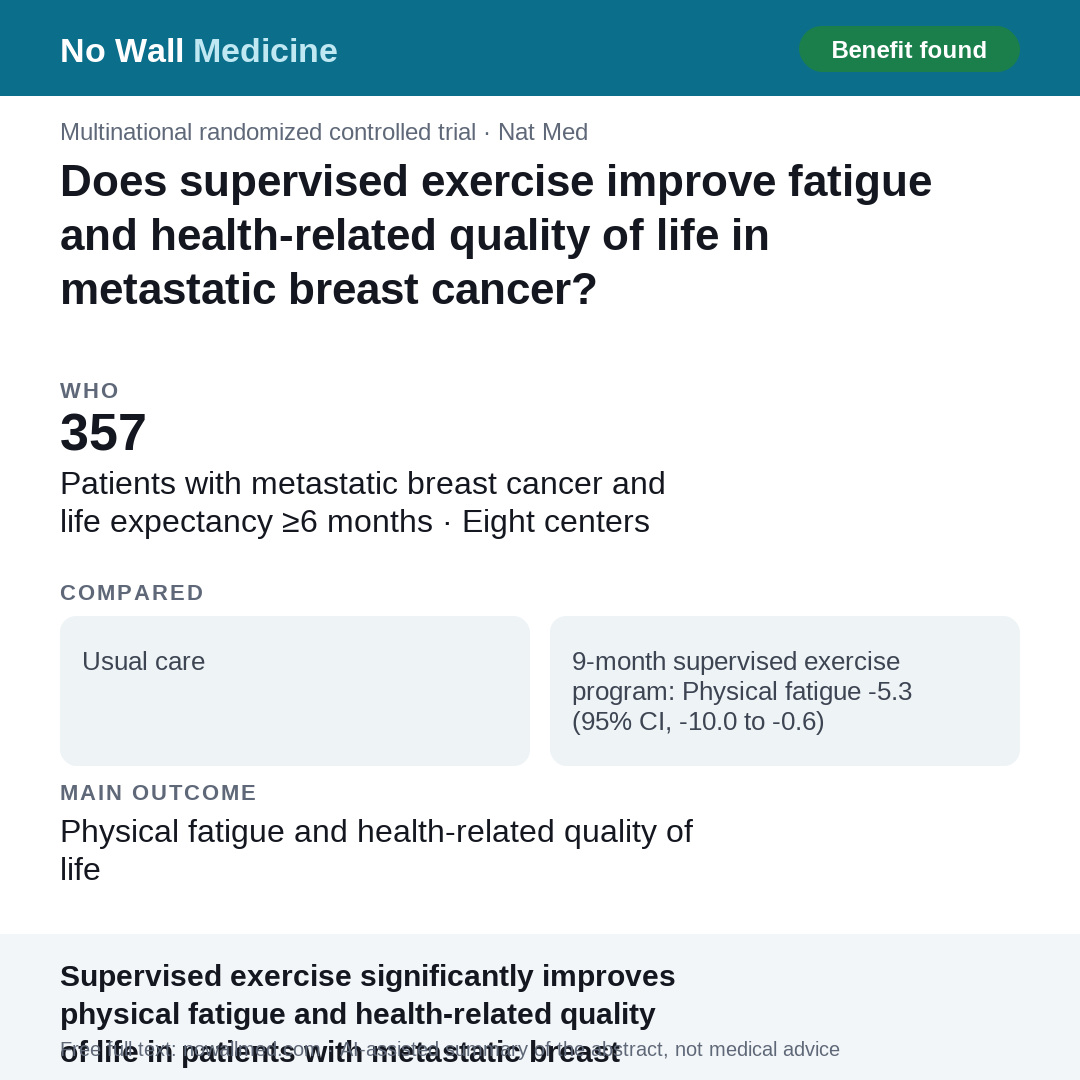
Supervised, structured and individualized exercise in metastatic breast cancer: a randomized controlled trial
Multinational randomized controlled trialBenefit found
Does supervised exercise improve fatigue and health-related quality of life in metastatic breast cancer?
Who
357
Patients with metastatic breast cancer and life expectancy ≥6 months · Eight centers across five European countries and Australia
Compared
Usual care
9-month supervised exercise program: Physical fatigue -5.3 (95% CI, -10.0 to -0.6)
Main outcome
Physical fatigue and health-related quality of life
Result: Physical fatigue -5.3 (95% CI, -10.0 to -0.6); HRQOL 4.8 (95% CI, 2.2-7.4)
Bottom line: Supervised exercise significantly improves physical fatigue and health-related quality of life in patients with metastatic breast cancer.
Nat Med · 2024-07-25Download image
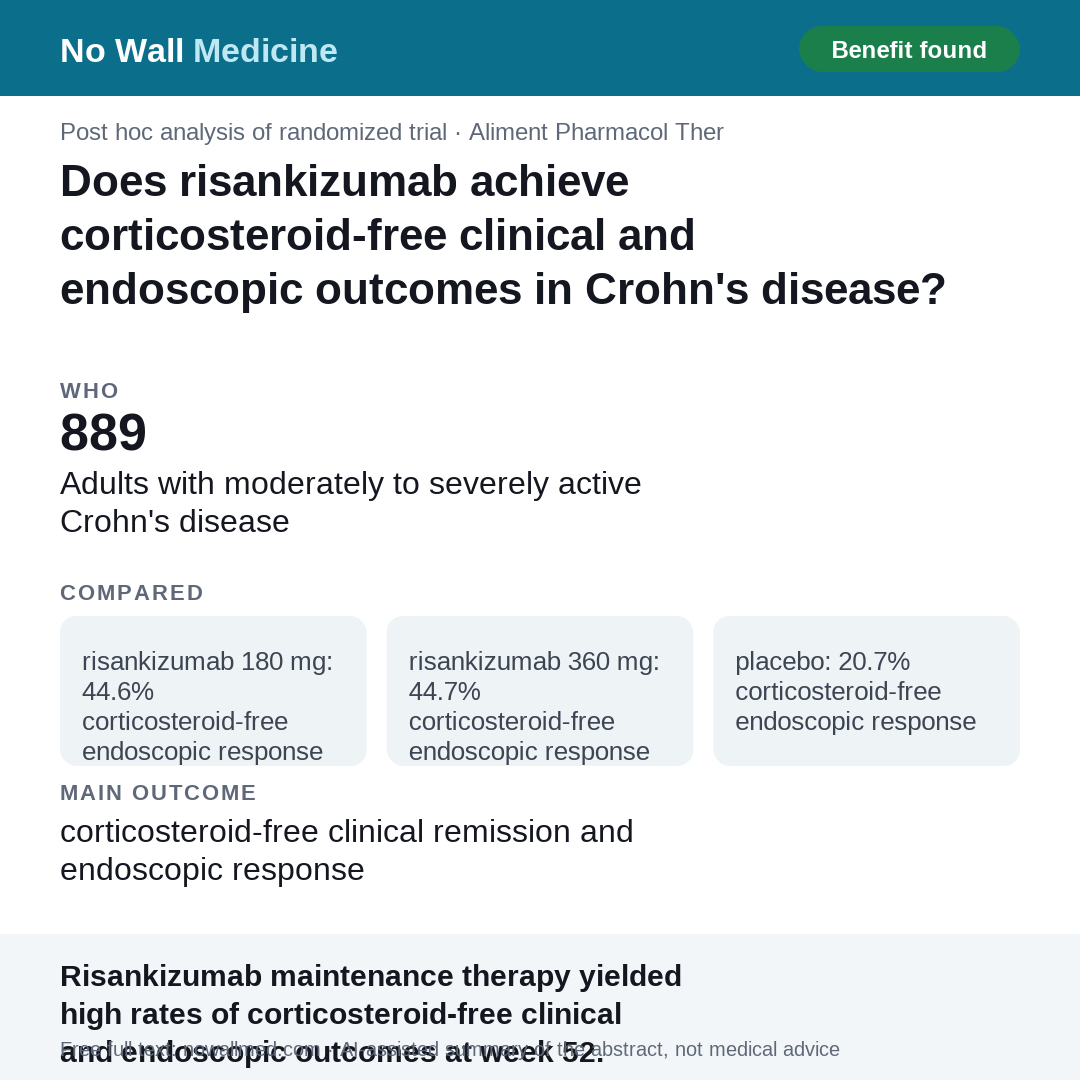
Efficacy and safety of risankizumab by baseline corticosteroid use and achievement of corticosteroid-free clinical and endoscopic outcomes in patients with moderately to severely active Crohn's disease
Post hoc analysis of randomized trialBenefit found
Does risankizumab achieve corticosteroid-free clinical and endoscopic outcomes in Crohn's disease?
Who
889
Adults with moderately to severely active Crohn's disease
Compared
risankizumab 180 mg: 44.6% corticosteroid-free endoscopic response
risankizumab 360 mg: 44.7% corticosteroid-free endoscopic response
placebo: 20.7% corticosteroid-free endoscopic response
Main outcome
corticosteroid-free clinical remission and endoscopic response
Bottom line: Risankizumab maintenance therapy yielded high rates of corticosteroid-free clinical and endoscopic outcomes at week 52.
Aliment Pharmacol Ther · 2024-07-25Download image
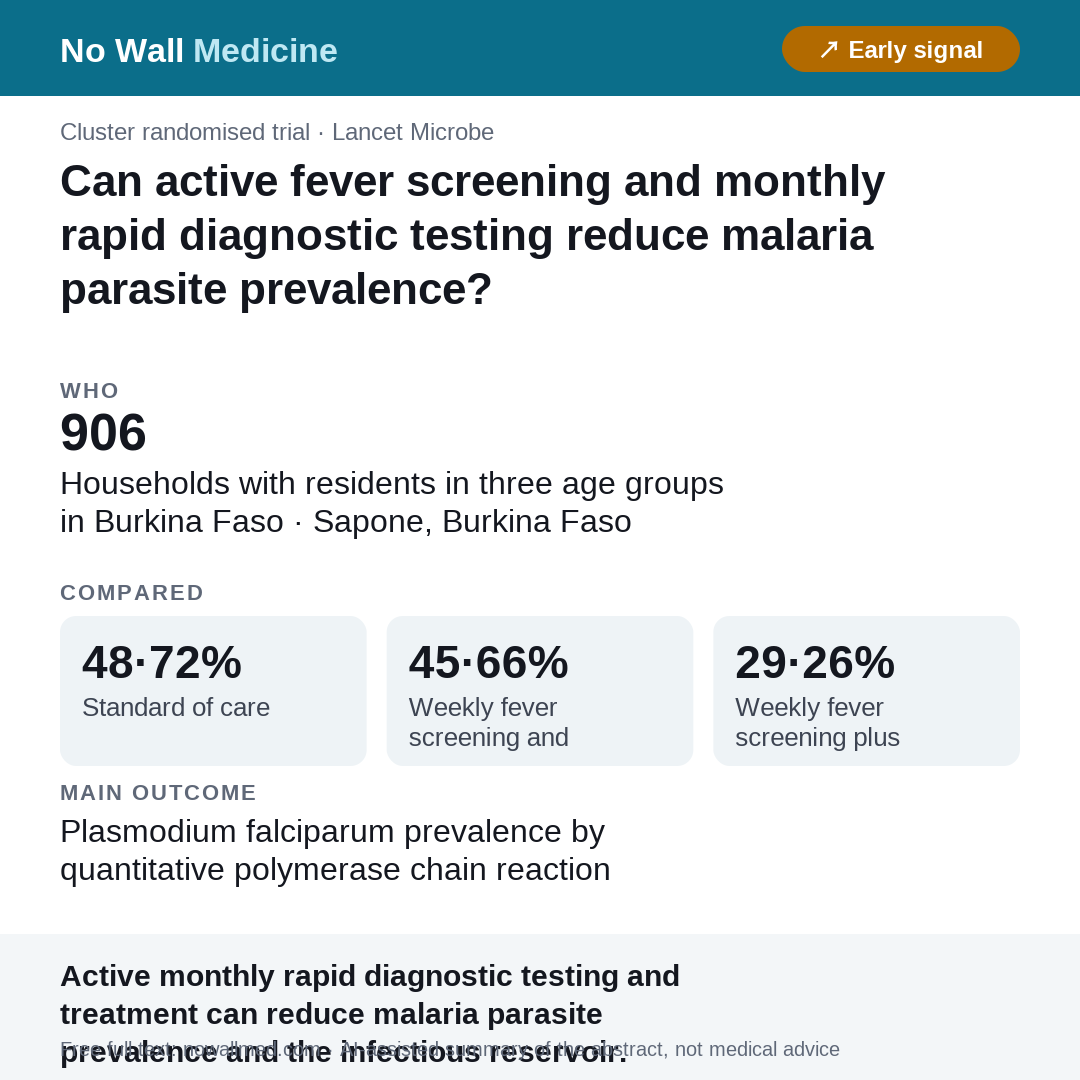
Effect of weekly fever-screening and treatment and monthly RDT testing and treatment on the infectious reservoir of malaria parasites in Burkina Faso: a cluster-randomised trial
Cluster randomised trialBenefit found
Can active fever screening and monthly rapid diagnostic testing reduce malaria parasite prevalence?
Who
906
Households with residents in three age groups in Burkina Faso · Sapone, Burkina Faso
Compared
48·72%Standard of care (133/273)
45·66%Weekly fever screening and treatment (121/265)
29·26%Weekly fever screening plus monthly rapid diagnostic testing (79/270)
Main outcome
Plasmodium falciparum prevalence by quantitative polymerase chain reaction
Result: risk ratio 0·65 (95% CI 0·52-0·81)
Bottom line: Active monthly rapid diagnostic testing and treatment can reduce malaria parasite prevalence and the infectious reservoir.
Lancet Microbe · 2024-07-25Download image
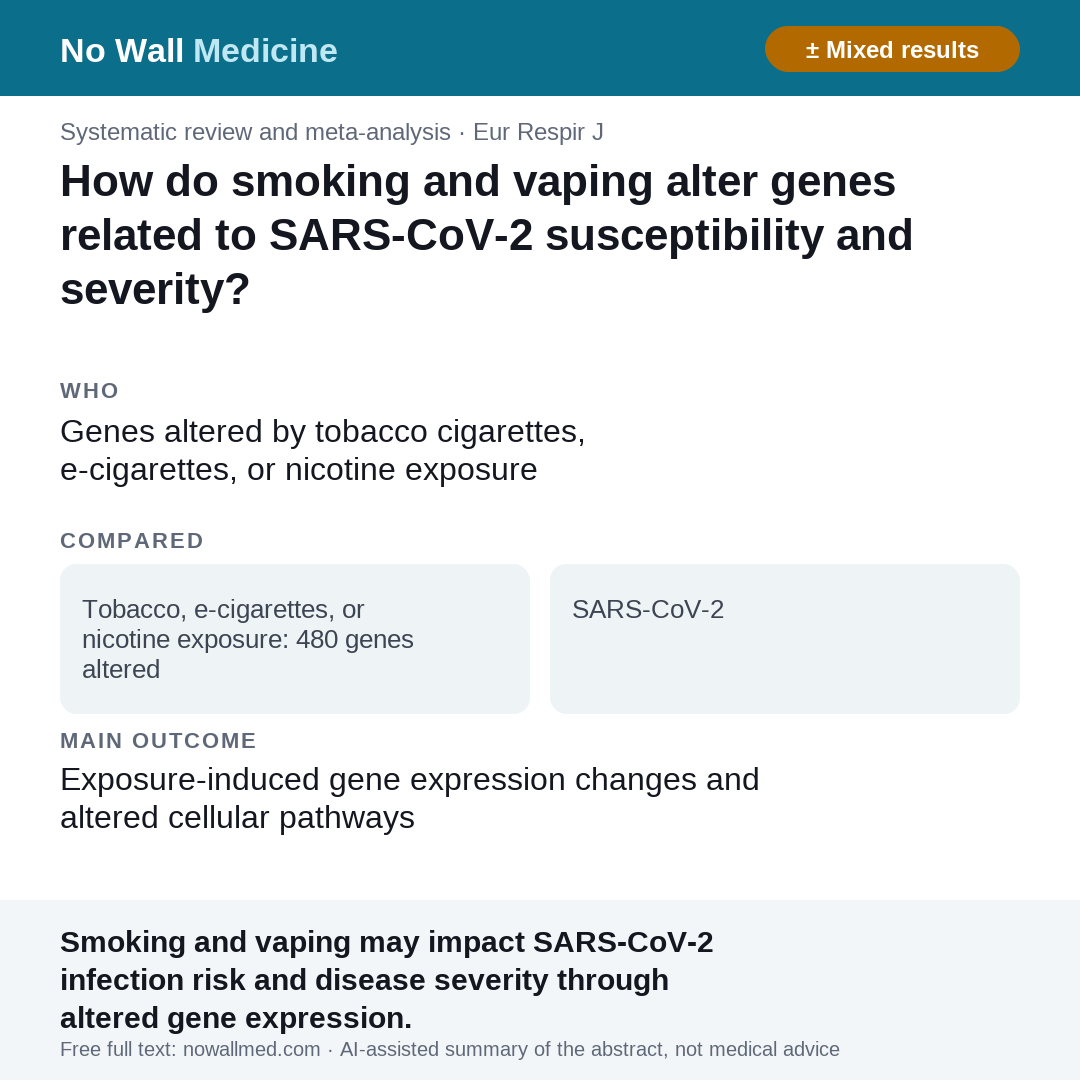
Smoking and vaping alter genes related to mechanisms of SARS-CoV-2 susceptibility and severity: a systematic review and meta-analysis
Systematic review and meta-analysisMixed results
How do smoking and vaping alter genes related to SARS-CoV-2 susceptibility and severity?
Who
125
Genes altered by tobacco cigarettes, e-cigarettes, or nicotine exposure
Compared
Tobacco, e-cigarettes, or nicotine exposure: 480 genes altered
SARS-CoV-2
Main outcome
Exposure-induced gene expression changes and altered cellular pathways
Bottom line: Smoking and vaping may impact SARS-CoV-2 infection risk and disease severity through altered gene expression.
Limitation: Further research is required, particularly on e-cigarettes, to determine biological mechanisms.
Eur Respir J · 2024-07-25Download image
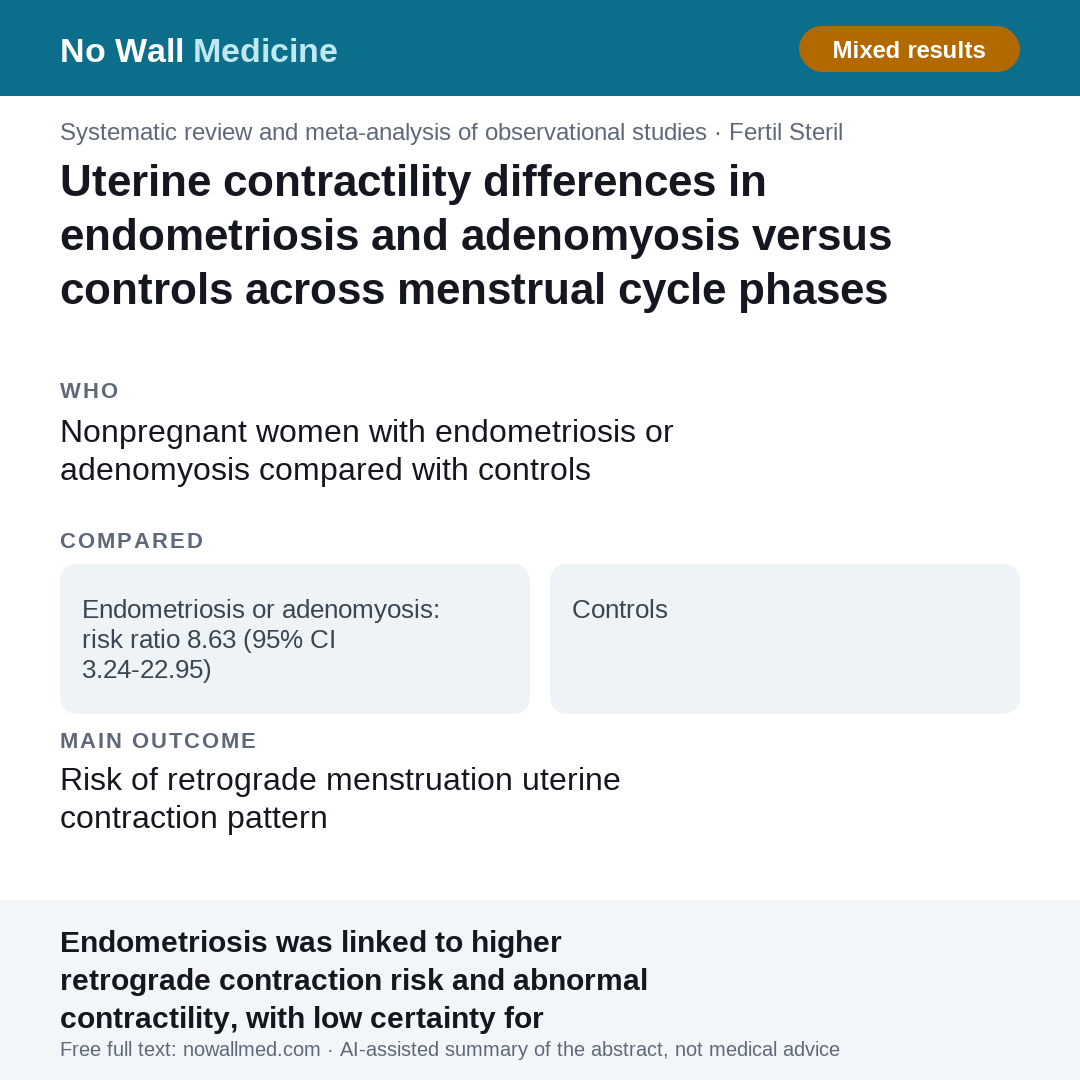
Functional determinants of uterine contractility in endometriosis and adenomyosis: a systematic review and meta-analysis
Systematic review and meta-analysisBenefit found
How does uterine contractility differ in women with endometriosis and adenomyosis across menstrual phases?
Who
Women with endometriosis or adenomyosis and controls
Compared
Endometriosis or adenomyosis: risk ratio 8.63 (95% CI 3.24-22.95)
Controls
Main outcome
Retrograde menstruation uterine contraction pattern and continuous contractility measures
Result: risk ratio 8.63 (95% CI 3.24-22.95)
Bottom line: Women with endometriosis have an eightfold increased risk of retrograde uterine contractions during menstruation.
Limitation: Evidence certainty was graded as low due to paucity of data, especially for adenomyosis.
Fertil Steril · 2024-07-25Download image
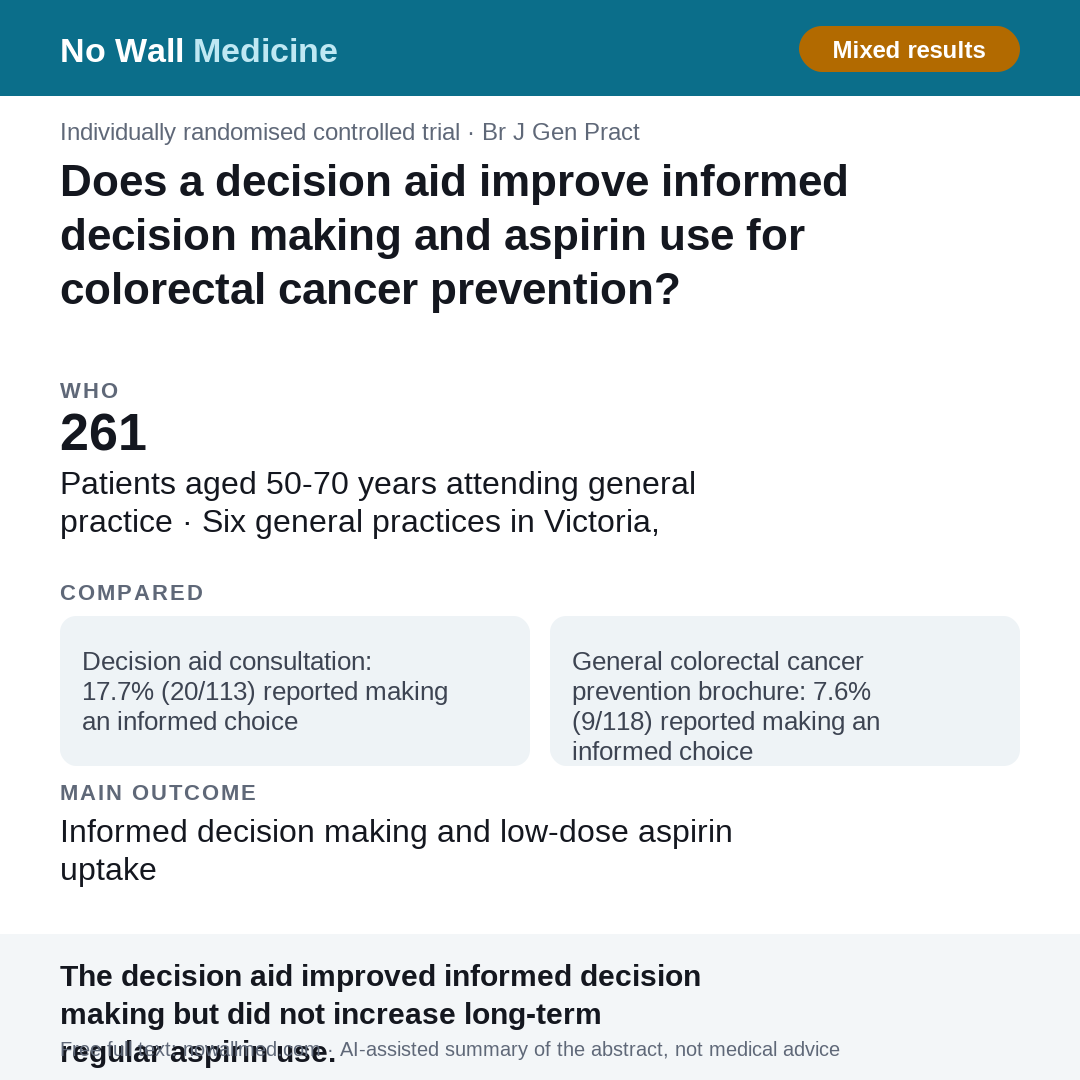
Should I Take Aspirin? (SITA): randomised controlled trial of a decision aid for cancer chemoprevention
Individually randomised controlled trialMixed results
Does a decision aid improve informed decision making and aspirin use for colorectal cancer prevention?
Who
261
Patients aged 50-70 years attending general practice · Six general practices in Victoria, Australia
Compared
Decision aid consultation: 17.7% (20/113) reported making an informed choice
General colorectal cancer prevention brochure: 7.6% (9/118) reported making an informed choice
Main outcome
Informed decision making and low-dose aspirin uptake
Result: odds ratio 2.47 (97.5% CI 0.94 to 6.52)
Bottom line: The decision aid improved informed decision making but did not increase long-term regular aspirin use.
Br J Gen Pract · 2024-07-25Download image