Visual abstracts
New randomized trials and meta-analyses from leading journals at a glance: who was studied, what was compared, and what was found. Every paper is free to read in full.
All specialtiesCardiology 4759Oncology 4060Gastroenterology & Hepatology 1906Infectious Disease 3752Neurology 1877Psychiatry & Mental Health 2227Pulmonology 2043Critical Care 1327Endocrinology & Diabetes 2534Pediatrics 2894Surgery 2489Orthopedics & Sports Medicine 917Neurosurgery 527Cardiothoracic & Vascular Surgery 658Plastic & Reconstructive Surgery 581Nephrology 1103Rheumatology 810Hematology 1090Dermatology 615Ophthalmology 534Obstetrics & Gynecology 1643Public & Global Health 1034Radiology & Imaging 634Anesthesiology 957Urology 746ENT (Otolaryngology) 491Emergency Medicine 480Allergy & Immunology 309Geriatrics 970Family Medicine & Primary Care 537Medical Genetics & Genomics 651Pathology & Laboratory Medicine 156Physical Medicine & Rehabilitation 741Palliative Care 422Nutrition 1549Digital Health & AI 2180General Medicine 317
Apical Suspension Repair for Vaginal Vault Prolapse: A Randomized Clinical Trial
Multisite, 3-arm, superiority and noninferiority randomized clinical trialBenefit found
Which surgical approach is most effective for vaginal vault prolapse after hysterectomy?
Who
376
Women with symptomatic vaginal vault prolapse after hysterectomy · 9 clinical sites in the US National Institute of Child Health and Human Development Pelvic Floor Disorders Network
Compared
28%Sacrocolpopexy (95% CI, 20%-37%)
29%Transvaginal mesh (95% CI, 21%-38%)
43%Native tissue repair (95% CI, 35%-53%)
Main outcome
Time until composite treatment failure
Result: adjusted hazard ratio 0.57 (99% CI, 0.33-0.98)
Bottom line: Sacrocolpopexy and transvaginal mesh had lower failure rates than native tissue repair for vaginal vault prolapse.
JAMA Surg · 2024-05-22Download image

Changes in the Term Neonatal Electroencephalogram with General Anesthesia: A Systematic Review with Narrative Synthesis
Systematic review with narrative synthesisMixed results
How does general anesthesia affect electroencephalography in term neonates?
Who
140
Term neonates (37 to 44 weeks postmenstrual age)
Compared
General anesthesia: 94 of 119 neonates
Hypothermia: 23 of 23 neonates
Main outcome
Occurrence of discontinuity in electroencephalography
Bottom line: Increasing sevoflurane concentration and decreasing temperature are associated with increasing electroencephalography discontinuity in term neonates.
Limitation: Data were limited and study quality was very low.
Anesthesiology · 2024-05-22Download image

An Adaptive Pragmatic Randomized Controlled Trial of Emergency Department Acupuncture for Acute Musculoskeletal Pain Management
Two-stage adaptive open-label randomized clinical trialBenefit found
Is adding emergency department acupuncture effective for acute musculoskeletal pain management?
Who
236
Emergency department patients with acute musculoskeletal pain · Emergency department
Compared
Auricular acupuncture plus usual care: 1.6 (95% confidence interval [CI]: 0.7 to 2.6) points greater
Peripheral acupuncture plus usual care: 1.2 (95% CI: 0.3 to 2.1) points greater
Usual care only
Main outcome
One-hour change in 11-point pain numeric rating scale
Bottom line: Adding auricular or peripheral acupuncture to usual care reduces acute musculoskeletal pain in the emergency department.
Ann Emerg Med · 2024-05-22Download image

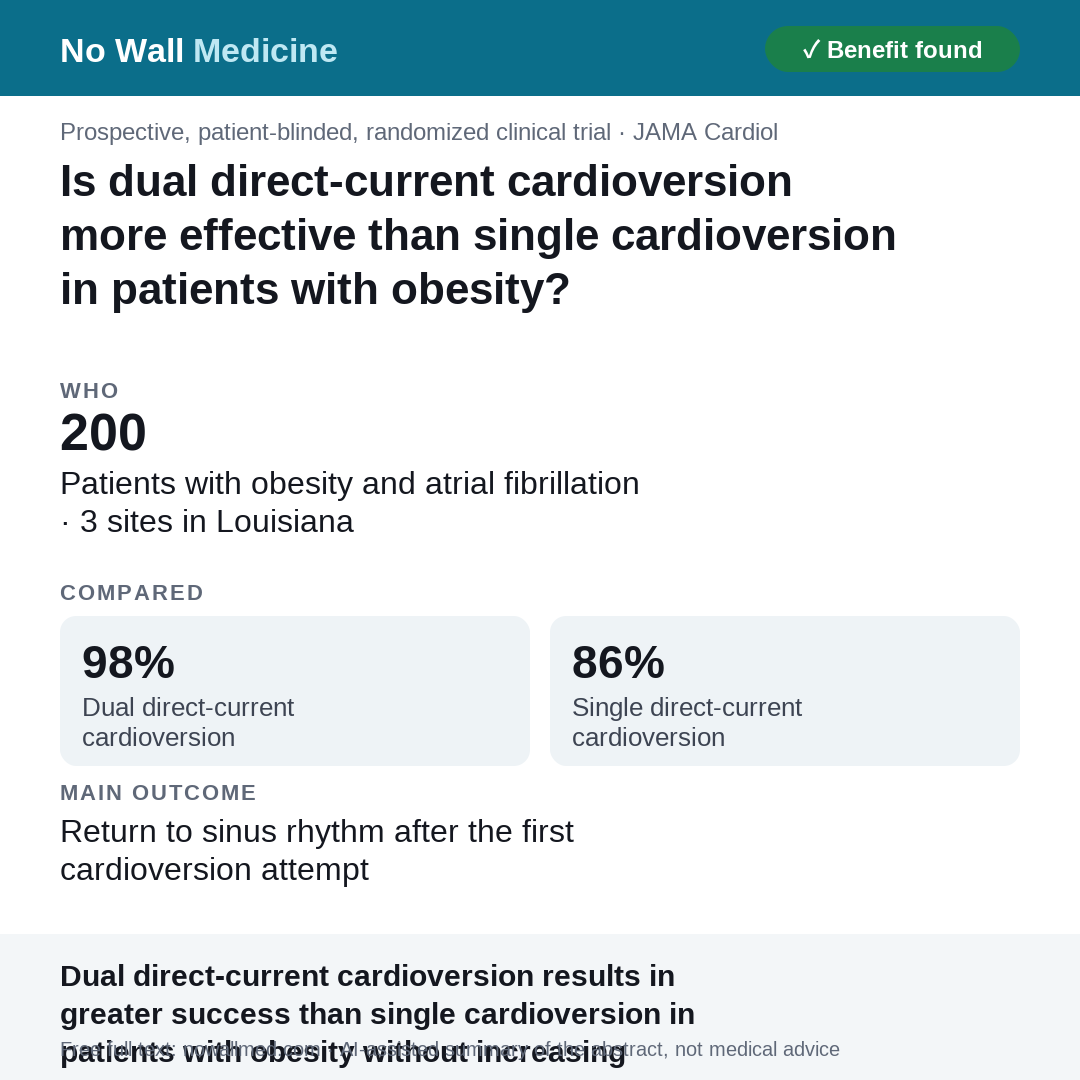
Dual vs Single Cardioversion of Atrial Fibrillation in Patients With Obesity: A Randomized Clinical Trial
Prospective, patient-blinded, randomized clinical trialBenefit found
Is dual direct-current cardioversion more effective than single cardioversion in patients with obesity?
Who
200
Patients with obesity and atrial fibrillation · 3 sites in Louisiana
Compared
98%Dual direct-current cardioversion (97 of 99 patients)
86%Single direct-current cardioversion (87 of 101 patients)
Main outcome
Return to sinus rhythm after the first cardioversion attempt
Result: odds ratio 6.7 (95% CI 3.3-13.6)
Bottom line: Dual direct-current cardioversion results in greater success than single cardioversion in patients with obesity without increasing complications.
JAMA Cardiol · 2024-05-22Download image
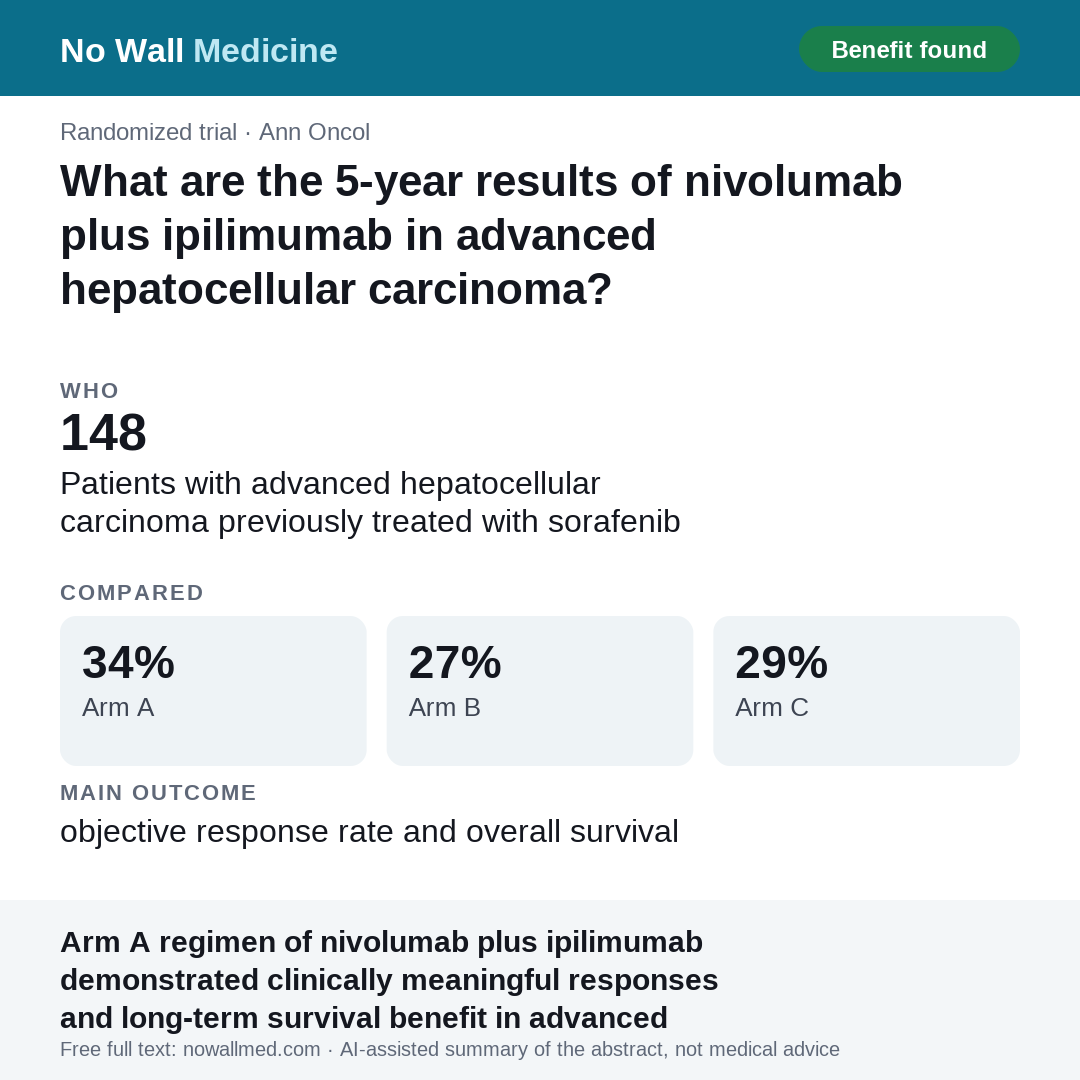
Nivolumab plus ipilimumab combination therapy in patients with advanced hepatocellular carcinoma previously treated with sorafenib: 5-year results from CheckMate 040
Randomized trialBenefit found
What are the 5-year results of nivolumab plus ipilimumab in advanced hepatocellular carcinoma?
Who
148
Patients with advanced hepatocellular carcinoma previously treated with sorafenib
Compared
34%Arm A (n = 17)
27%Arm B (n = 13)
29%Arm C (n = 14)
Main outcome
objective response rate and overall survival
Bottom line: Arm A regimen of nivolumab plus ipilimumab demonstrated clinically meaningful responses and long-term survival benefit in advanced hepatocellular carcinoma.
Ann Oncol · 2024-05-22Download image
Combining antivascular endothelial growth factor and anti-epidermal growth factor receptor antibodies: randomized phase II study of irinotecan and cetuximab with/without ramucirumab in second-line colorectal cancer (ECOG-ACRIN E7208)
Randomized trialBenefit found
Irinotecan and cetuximab with or without ramucirumab
Who
102
Patients with KRAS wild-type colorectal cancer · Multicenter
Compared
6.0 monthsIrinotecan-cetuximab
9.2 monthsIrinotecan-cetuximab-ramucirumab
Main outcome
Progression-free survival
Result: hazard ratio = 0.75
Bottom line: Adding ramucirumab improved progression-free survival
J Natl Cancer Inst · 2024-05-22Download image

Pharmacoeconomic study of anti-influenza virus drugs in Japan based on a network meta-analysis
Network meta-analysis and decision tree modelBenefit found
Which neuraminidase inhibitor is most cost-effective for treating influenza in Japan?
Who
Adult patients with a history of influenza virus infections · Japan
Compared
Oseltamivir: most cost-effective
Laninamivir, zanamivir and peramivir: outperformed by oseltamivir
Main outcome
Cost-effectiveness based on medical costs and drug prices
Bottom line: Oseltamivir is the most cost-effective neuraminidase inhibitor for treating influenza in Japan.
Limitation: The study reanalysed findings from a previous study with specific limitations.
J Antimicrob Chemother · 2024-05-22Download image

Efficacy and safety of biologic drugs in Still's disease: a systematic review and network meta-analysis of randomized controlled trials
Systematic review and network meta-analysisBenefit found
Are biologic drugs effective and safe for Still's disease management?
Who
430
Patients with systemic juvenile idiopathic arthritis or adult-onset Still's disease
Compared
Biologic drugs: greater odds of ACR50 response
Placebo
Main outcome
Achievement of ACR50 response and serious adverse events
Bottom line: Biologic drugs are effective in achieving ACR50 response and have a low serious adverse event profile.
Rheumatology · 2024-05-22Download image

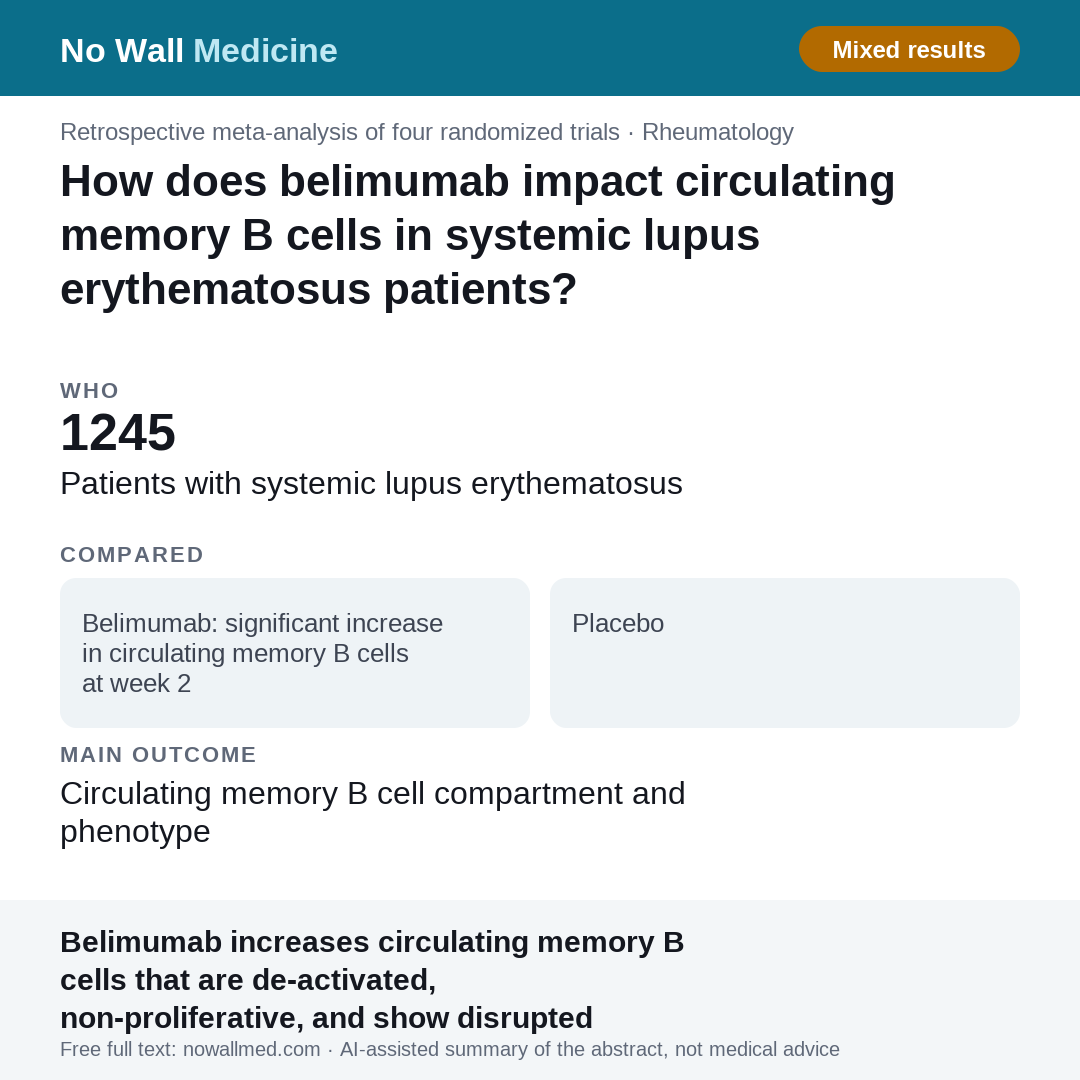
Disruption of memory B-cell trafficking by belimumab in patients with systemic lupus erythematosus
Retrospective meta-analysis of four randomized trialsMixed results
How does belimumab impact circulating memory B cells in systemic lupus erythematosus patients?
Who
1245
Patients with systemic lupus erythematosus
Compared
Belimumab: significant increase in circulating memory B cells at week 2
Placebo
Main outcome
Circulating memory B cell compartment and phenotype
Bottom line: Belimumab increases circulating memory B cells that are de-activated, non-proliferative, and show disrupted lymphocyte trafficking.
Rheumatology · 2024-05-22Download image
Standalone deep learning versus experts for diagnosis lung cancer on chest computed tomography: a systematic review
Systematic reviewBenefit found
How do deep learning algorithms compare to experts for lung cancer diagnosis on chest computed tomography?
Who
20
Adult lung cancer patients
Compared
Deep learning algorithms: sensitivity 82% and specificity 75%
Human experts: sensitivity 81% and specificity 69%
Main outcome
Diagnostic performance in malignancy and invasiveness classification
Bottom line: Deep learning algorithms showed improved accuracy over human experts, specifically matching sensitivity and surpassing specificity in lung cancer diagnosis.
Limitation: Performance varies across different imaging modalities, requiring tailored optimization.
Eur Radiol · 2024-05-22Download image

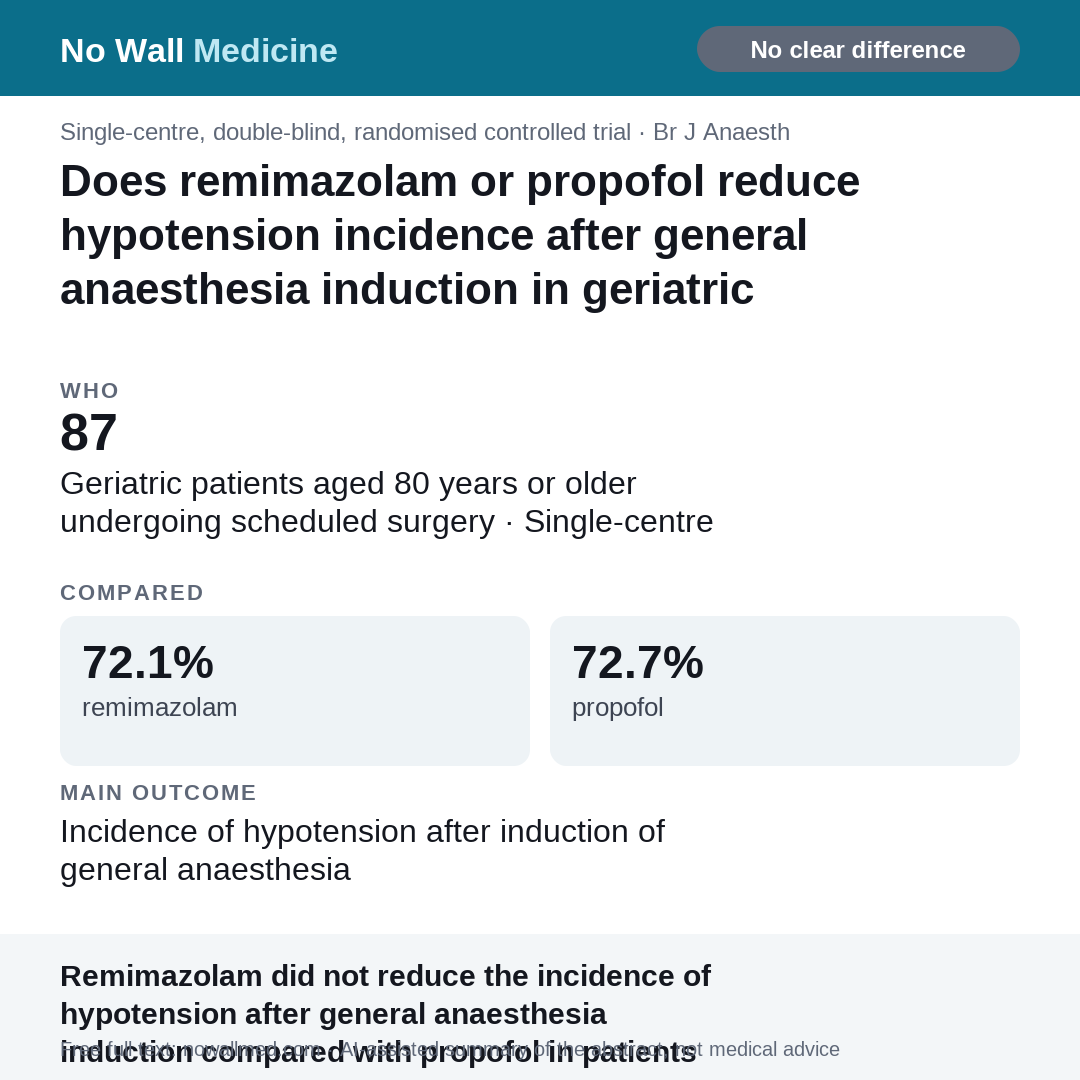
Hypotension after general anaesthesia induction using remimazolam or propofol in geriatric patients undergoing sevoflurane anaesthesia with remifentanil: a single-centre, double-blind, randomised controlled trial
Single-centre, double-blind, randomised controlled trialNo clear difference
Does remimazolam or propofol reduce hypotension incidence after general anaesthesia induction in geriatric patients?
Who
87
Geriatric patients aged 80 years or older undergoing scheduled surgery · Single-centre
Compared
72.1%remimazolam (31/43)
72.7%propofol (32/44)
Main outcome
Incidence of hypotension after induction of general anaesthesia
Result: adjusted odds ratio 0.96 (95% confidence interval 0.37-2.46)
Bottom line: Remimazolam did not reduce the incidence of hypotension after general anaesthesia induction compared with propofol in patients aged 80 years or older.
Br J Anaesth · 2024-05-22Download image
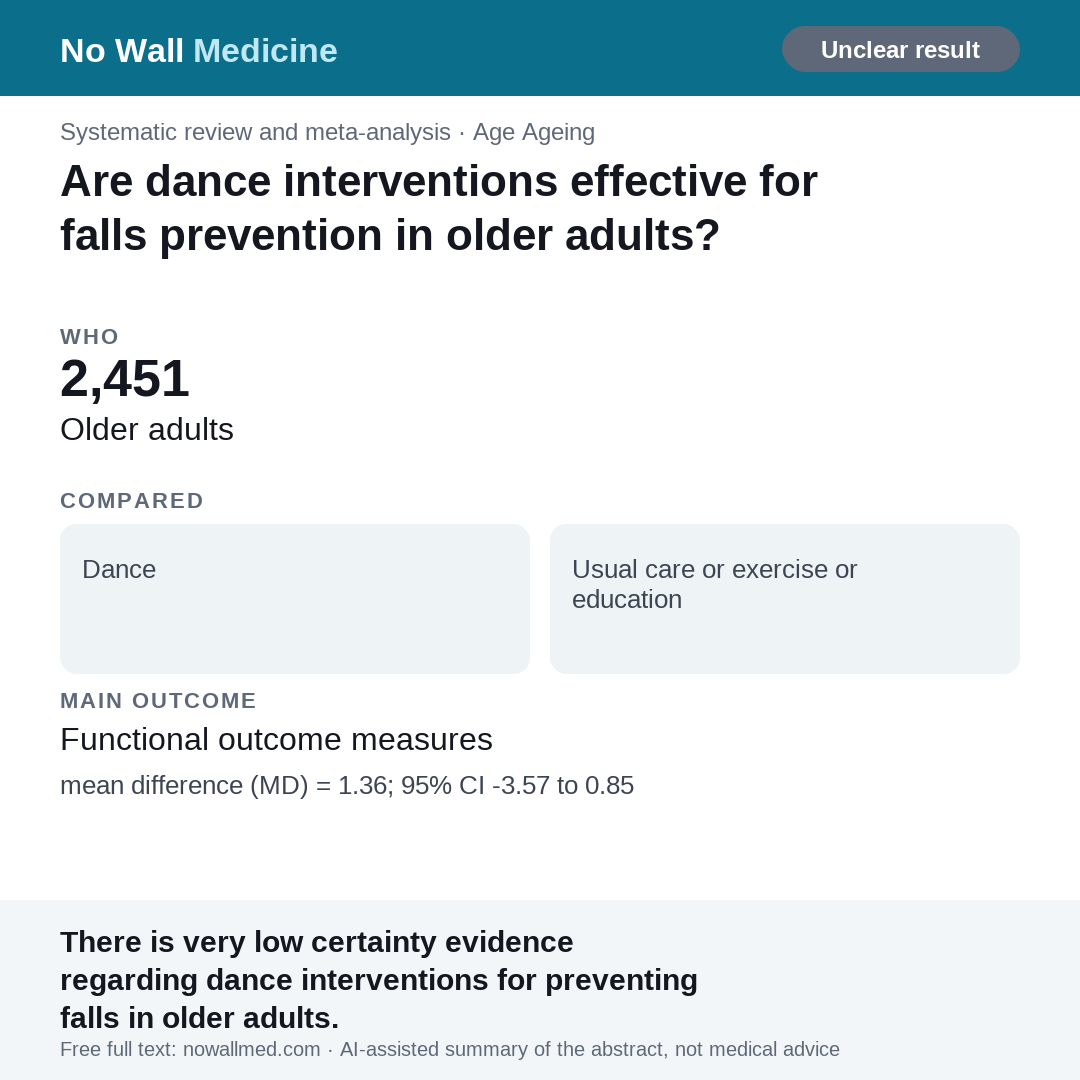
Effectiveness of dance interventions for falls prevention in older adults: systematic review and meta-analysis
Systematic review and meta-analysisUnclear result
Are dance interventions effective for falls prevention in older adults?
Who
2,451
Older adults
Compared
Dance
Usual care or exercise or education
Main outcome
Functional outcome measures
Result: mean difference (MD) = 1.36; 95% CI -3.57 to 0.85
Bottom line: There is very low certainty evidence regarding dance interventions for preventing falls in older adults.
Limitation: Overall certainty of evidence was very low and there was unexplained variance in effects.
Age Ageing · 2024-05-22Download image
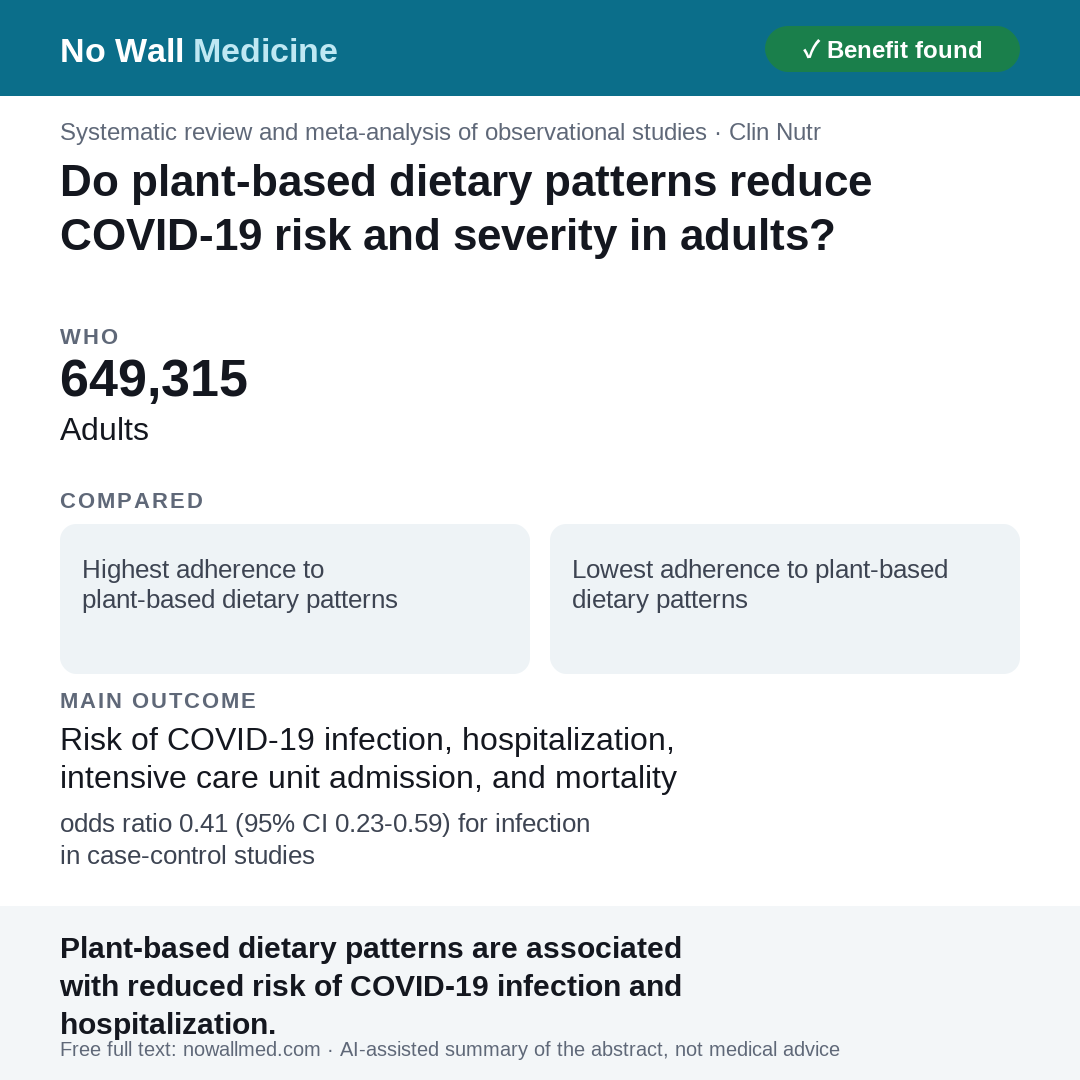
The role of plant-based dietary patterns in reducing COVID-19 risk and/or severity in adults: A systematic review and meta-analysis of observational studies
Systematic review and meta-analysis of observational studiesBenefit found
Do plant-based dietary patterns reduce COVID-19 risk and severity in adults?
Who
649,315
Adults
Compared
Highest adherence to plant-based dietary patterns
Lowest adherence to plant-based dietary patterns
Main outcome
Risk of COVID-19 infection, hospitalization, intensive care unit admission, and mortality
Result: odds ratio 0.41 (95% CI 0.23-0.59) for infection in case-control studies
Bottom line: Plant-based dietary patterns are associated with reduced risk of COVID-19 infection and hospitalization.
Limitation: More studies are needed to establish association with intensive care unit admission and mortality.
Clin Nutr · 2024-05-22Download image
Cardiac Damage Staging Predicts Outcomes in Aortic Valve Stenosis After Aortic Valve Replacement: Meta-Analysis
Meta-analysis of 16 studiesBenefit found
Does cardiac damage staging predict mortality after aortic valve replacement?
Who
14499
Patients with symptomatic or asymptomatic moderate to severe aortic stenosis
Compared
Cardiac damage stage 0: 24.0% (symptomatic) or 19.3% (asymptomatic)
Higher cardiac damage stages: up to 57.3% (symptomatic) or 67.8% (asymptomatic)
Main outcome
All-cause mortality
Result: hazard ratio 3.51 (95% CI 2.79 to 4.41) for stage 4
Bottom line: Higher baseline cardiac damage staging predicts increased mortality after aortic valve replacement in patients with aortic stenosis.
JACC Adv · 2024-05-22Download image

Assessing the impact of early progressive mobilization on moderate-to-severe traumatic brain injury: a randomized controlled trial
Randomized controlled trialBenefit found
Does early progressive mobilization improve functional outcomes in moderate-to-severe traumatic brain injury?
Who
65
Intensive care unit admitted patients with moderate to severe traumatic brain injury · Trauma intensive care unit of a medical center
Compared
Early progressive mobilization: significantly outperformed the early progressive upright positioning group
Early progressive upright positioning
Main outcome
Perme ICU Mobility Score
Bottom line: Early progressive out-of-bed mobilization enhances mobility, functional outcomes, and shortens intensive care unit stay and ventilation duration.
Limitation: Results support further investigation through larger, randomized clinical trials.
Crit Care · 2024-05-22Download image

Systematic review and narrative description of the outcomes of group preoperative education before elective major surgery
Systematic review and meta-analysisBenefit found
Does group preoperative education improve patient outcomes before elective major surgery?
Who
Patients undergoing elective major surgery
Compared
Group preoperative education
Control arm
Main outcome
Patient outcomes including length of stay and complications
Result: odds ratio 0.56 (95% confidence interval 0.36-0.85)
Bottom line: Group preoperative education may reduce length of stay and postoperative complications after abdominal surgery.
BJA Open · 2024-05-22Download image

The use of probiotics and prebiotics in decolonizing pathogenic bacteria from the gut; a systematic review and meta-analysis of clinical outcomes
Meta-analysis of 29 randomized controlled trialsBenefit found
Do probiotics and prebiotics decolonize antimicrobial resistant pathogenic bacteria from the gut?
Who
2871
Subjects undergoing treatment to decolonize antimicrobial resistant pathogens
Compared
22%probiotics
30.8%placebo
Main outcome
persistence of pathogenic bacteria after treatment
Result: odds ratio 0.59 (95% CI 0.43-0.81)
Bottom line: Probiotics and prebiotics may decolonize antimicrobial resistant pathogens by modulating gut diversity.
Limitation: more clinical outcomes are required on particular strains to confirm decolonization.
Gut Microbes · 2024-05-22Download image

AI Quality Standards in Health Care: Rapid Umbrella Review
Rapid umbrella reviewHarm found
How are artificial intelligence quality standards used in health care systematic reviews?
Who
33
English-language health care artificial intelligence systematic reviews · MEDLINE and Google Scholar
Compared
39%Reviews applying quality standards (13/33)
14%Original studies applying quality standards (25/178)
Main outcome
Use of artificial intelligence quality standards
Bottom line: Artificial intelligence quality standards are seldom applied in practice within health care systematic reviews.
J Med Internet Res · 2024-05-22Download image

Final Results of RIGHT Choice: Ribociclib Plus Endocrine Therapy Versus Combination Chemotherapy in Premenopausal Women With Clinically Aggressive Hormone Receptor-Positive/Human Epidermal Growth Factor Receptor 2-Negative Advanced Breast Cancer
Open-label, multicenter, randomized phase II trialEarly signal
Is ribociclib plus endocrine therapy better than combination chemotherapy for aggressive hormone receptor-positive breast cancer?
Who
222
Premenopausal women with aggressive hormone receptor-positive, human epidermal growth factor receptor 2-negative advanced breast cancer · multicenter
Compared
21.8 monthsribociclib plus endocrine therapy
12.8 monthscombination chemotherapy
Main outcome
progression-free survival
Result: hazard ratio 0.61 (95% CI 0.43 to 0.87)
Bottom line: Ribociclib plus endocrine therapy significantly improved progression-free survival compared to combination chemotherapy in premenopausal women with aggressive breast cancer.
J Clin Oncol · 2024-05-21Download image

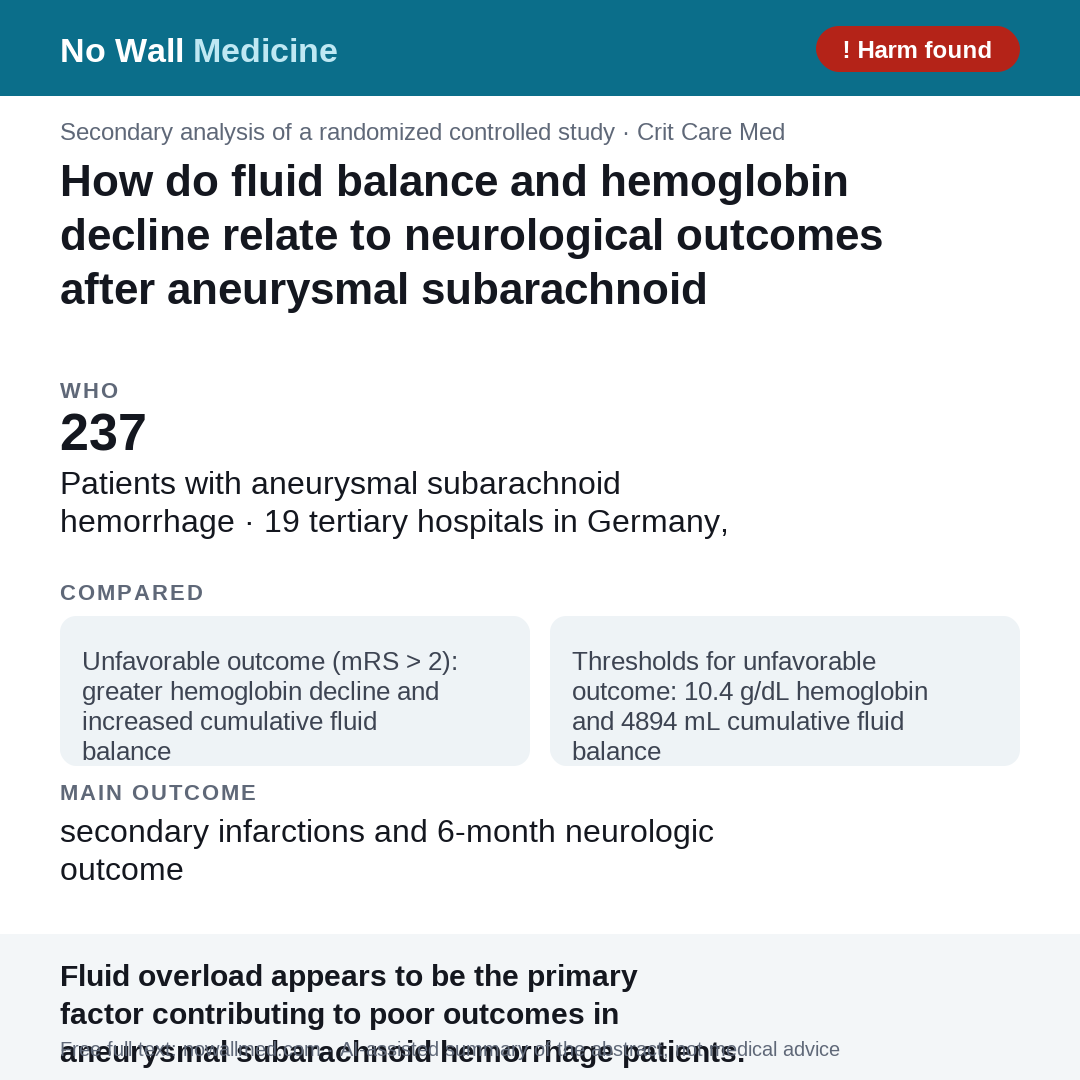
Association of Fluid Balance and Hemoglobin Decline With Neurological Outcome After Aneurysmal Subarachnoid Hemorrhage
Secondary analysis of a randomized controlled studyHarm found
How do fluid balance and hemoglobin decline relate to neurological outcomes after aneurysmal subarachnoid hemorrhage?
Who
237
Patients with aneurysmal subarachnoid hemorrhage · 19 tertiary hospitals in Germany, Switzerland, and Canada
Compared
Unfavorable outcome (mRS > 2): greater hemoglobin decline and increased cumulative fluid balance
Thresholds for unfavorable outcome: 10.4 g/dL hemoglobin and 4894 mL cumulative fluid balance
Main outcome
secondary infarctions and 6-month neurologic outcome
Bottom line: Fluid overload appears to be the primary factor contributing to poor outcomes in aneurysmal subarachnoid hemorrhage patients.
Crit Care Med · 2024-05-21Download image