Visual abstracts
New randomized trials and meta-analyses from leading journals at a glance: who was studied, what was compared, and what was found. Every paper is free to read in full.
All specialtiesCardiology 1870Oncology 1616Gastroenterology & Hepatology 714Infectious Disease 1189Neurology 773Psychiatry & Mental Health 916Pulmonology 805Critical Care 544Endocrinology & Diabetes 1010Pediatrics 1114Surgery 946Orthopedics & Sports Medicine 349Neurosurgery 233Cardiothoracic & Vascular Surgery 205Plastic & Reconstructive Surgery 292Nephrology 382Rheumatology 264Hematology 406Dermatology 205Ophthalmology 222Obstetrics & Gynecology 614Public & Global Health 364Radiology & Imaging 259Anesthesiology 375Urology 323ENT (Otolaryngology) 252Emergency Medicine 211Allergy & Immunology 121Geriatrics 400Family Medicine & Primary Care 222Medical Genetics & Genomics 205Pathology & Laboratory Medicine 58Physical Medicine & Rehabilitation 329Palliative Care 168Nutrition 503Digital Health & AI 994General Medicine 144
Role of video review for sport-related concussion identification: a systematic review
Systematic reviewMixed results
What is the frequency and diagnostic utility of visible signs in video review for concussion?
Who
3281
Sport-related concussions · Professional competitions
Compared
Visible signs: slow to get up 37.6%
Visible signs: motor incoordination 26.7%
Main outcome
Diagnostic utility of visible signs and injury mechanism
Bottom line: Video review identifies visible signs with high specificity but low sensitivity, requiring multimodal assessment for diagnosis.
Limitation: Only eight studies had a low risk of bias.
Br J Sports Med · 2025-12-29Download image

Sirtuins and regulatory miRNAs as epigenetic determinants of empagliflozin-mediated recovery after acute myocardial infarction
Clinical study with baseline and 26-week follow-upBenefit found
How do empagliflozin and placebo affect sirtuin and microRNA expression after acute myocardial infarction?
Who
227
Patients with acute myocardial infarction
Compared
Empagliflozin: higher SIRT6 (p < 0.001) and lower SIRT4 (p = 0.018)
Placebo: reduction in SIRT6 expression (p = 0.006)
Main outcome
Sirtuin and microRNA expression and left ventricular ejection fraction change
Bottom line: Empagliflozin modulates sirtuin and microRNA expression and baseline markers can predict left ventricular ejection fraction improvement.
Cardiovasc Diabetol · 2025-12-29Download image

Patterns of Postictal Abnormalities in Relation to Status Epilepticus in Adults
Systematic review and individual participant data meta-analysisMixed results
What are the patterns of postictal diffusion-weighted magnetic resonance imaging abnormalities in status epilepticus?
Who
531
Adult patients with first-time non-anoxic status epilepticus
Compared
Pure hippocampal patterns: low mortality
Additional thalamic involvement: independent predictor of poor functional outcome
Cerebellar involvement: independently associated with poor functional outcome
Main outcome
Patterns of diffusion-weighted magnetic resonance imaging abnormalities and prognostic impact
Bottom line: Thalamic, cerebellar, and widespread diffusion-weighted magnetic resonance imaging abnormalities are associated with worse outcomes in status epilepticus.
Ann Clin Transl Neurol · 2025-12-29Download image

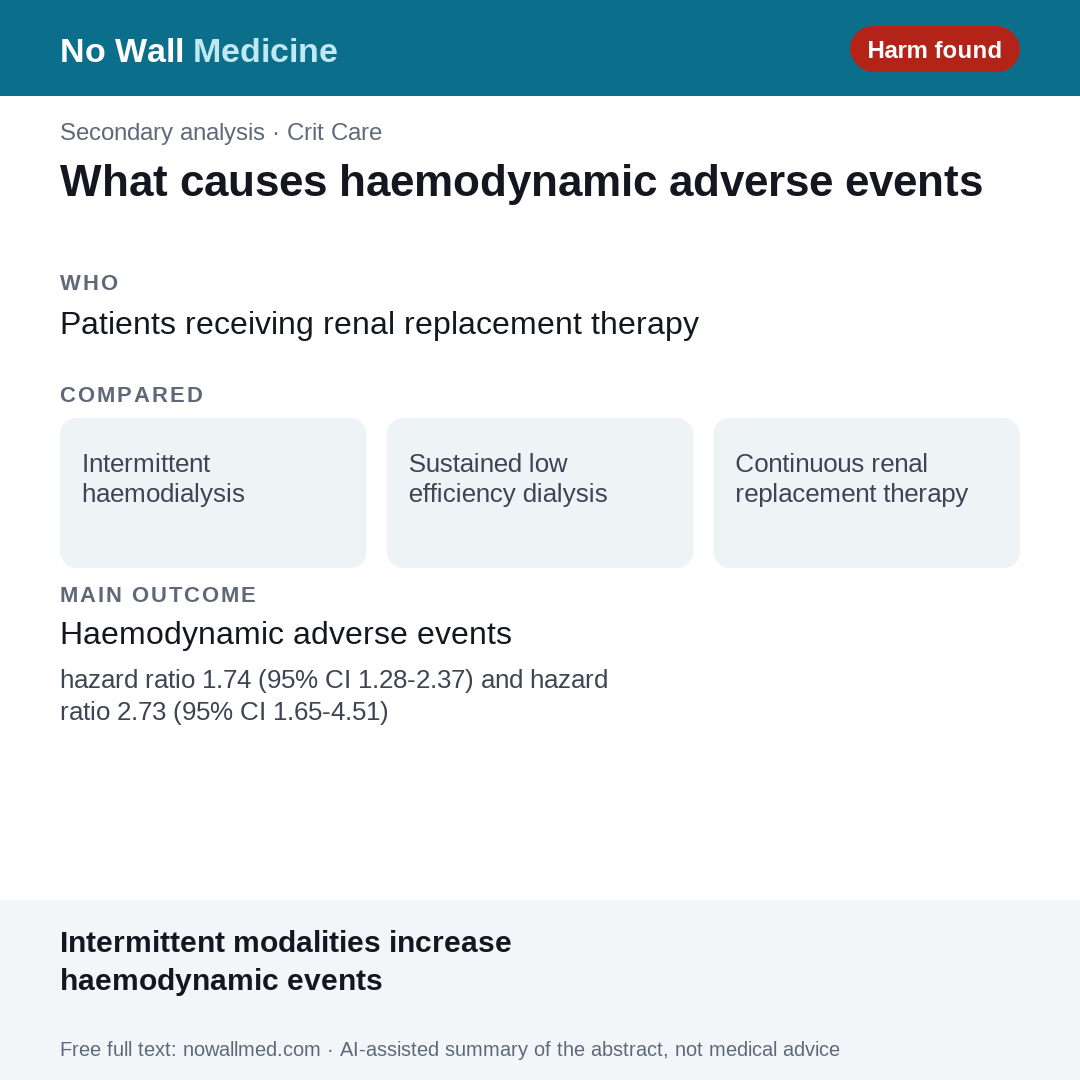
Factors associated with adverse haemodynamic events during the STARRT-AKI trial: a post-hoc secondary analysis
Secondary analysisHarm found
What causes haemodynamic adverse events
Who
Patients receiving renal replacement therapy
Compared
Intermittent haemodialysis
Sustained low efficiency dialysis
Continuous renal replacement therapy
Main outcome
Haemodynamic adverse events
Result: hazard ratio 1.74 (95% CI 1.28-2.37) and hazard ratio 2.73 (95% CI 1.65-4.51)
Bottom line: Intermittent modalities increase haemodynamic events
Crit Care · 2025-12-29Download image
Facilitators and barriers primary care physicians face in providing palliative care in low- and middle-income countries: a mixed methods systematic review
Mixed methods systematic reviewUnclear result
Barriers to palliative care in low income countries
Who
primary care physicians · low- and middle-income countries
Compared
barriers
facilitators
Main outcome
palliative care delivery
Bottom line: Barriers hinder palliative care delivery
BMC Prim Care · 2025-12-29Download image

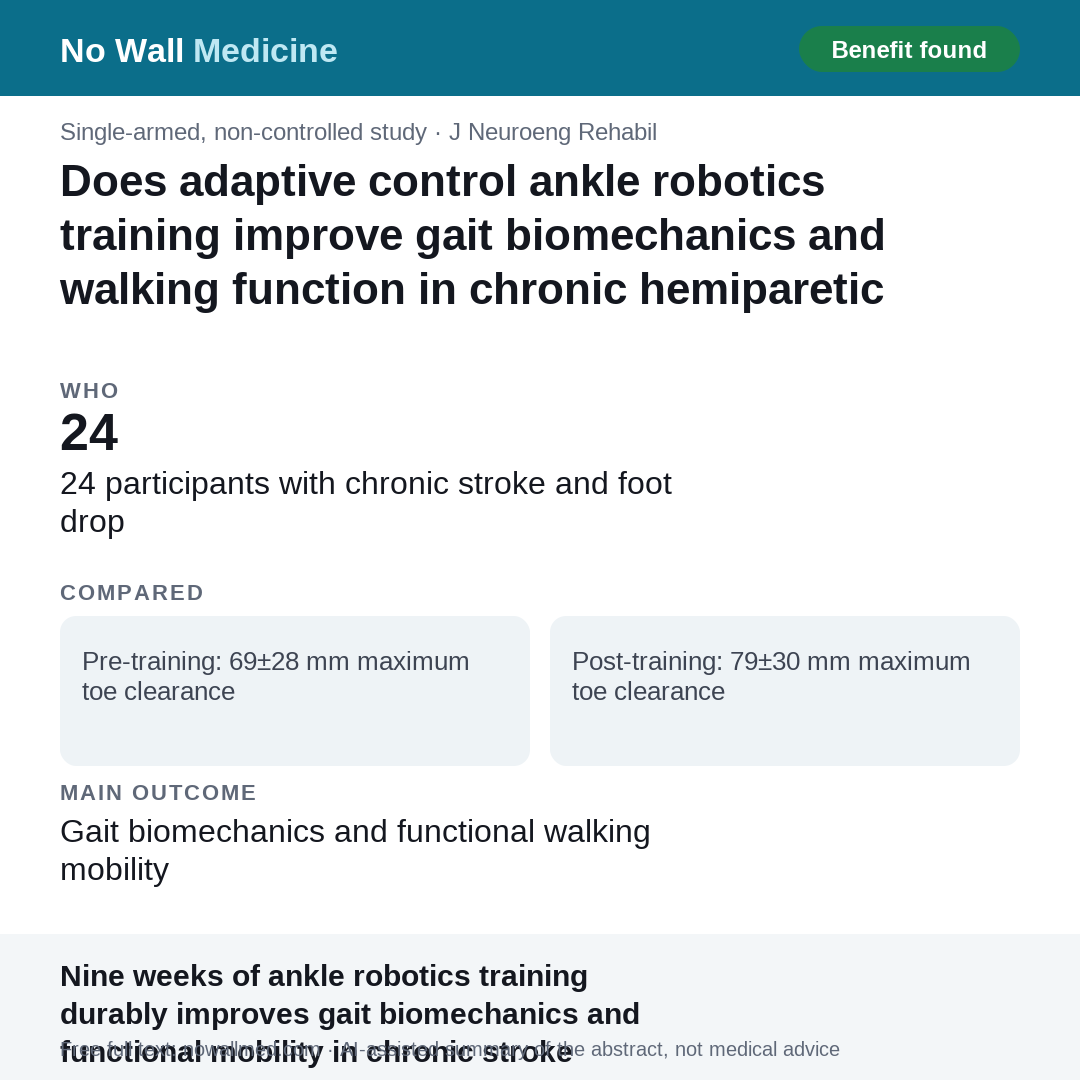
Adaptive control ankle robotics training durably improves gait biomechanics in chronic hemiparetic stroke and footdrop
Single-armed, non-controlled studyBenefit found
Does adaptive control ankle robotics training improve gait biomechanics and walking function in chronic hemiparetic stroke?
Who
24
24 participants with chronic stroke and foot drop
Compared
Pre-training: 69±28 mm maximum toe clearance
Post-training: 79±30 mm maximum toe clearance
Main outcome
Gait biomechanics and functional walking mobility
Bottom line: Nine weeks of ankle robotics training durably improves gait biomechanics and functional mobility in chronic stroke patients.
J Neuroeng Rehabil · 2025-12-29Download image
Short-term efficacy of biologics in moderate-to-severe hidradenitis suppurativa: A systematic review and NMA
Systematic literature review and network meta-analysisBenefit found
What is the comparative short-term efficacy of approved biologic therapies in moderate-to-severe hidradenitis suppurativa?
Who
Patients with moderate-to-severe hidradenitis suppurativa
Compared
Bimekizumab
Secukinumab or Adalimumab
Main outcome
Hidradenitis Suppurativa Clinical Response and severity scores
Result: HiSCR75 odds ratio 1.85 (bimekizumab vs secukinumab Q4W)
Bottom line: Bimekizumab demonstrated the most efficacious short-term results across all predefined outcomes compared to secukinumab and adalimumab.
J Eur Acad Dermatol Venereol · 2025-12-28Download image

Cangrelor in critically ill patients with cardiogenic shock or post-cardiac arrest undergoing percutaneous coronary intervention: a systematic review and meta-analysis
Systematic review and meta-analysis of 12 studiesBenefit found
Does intravenous cangrelor improve efficacy and safety in critically ill patients undergoing percutaneous coronary intervention?
Who
4537
Critically ill patients with cardiogenic shock or post-cardiac arrest
Compared
Adjunctive cangrelor
Oral P2Y12 inhibitor
Main outcome
All-cause mortality, cardiovascular mortality, stent thrombosis, myocardial infarction, stroke, and TIMI 3 flow
Result: RR, 0.90; 95% CI, 0.82–0.98
Bottom line: Intravenous cangrelor reduced all-cause mortality and improved coronary flow in hemodynamically unstable patients undergoing percutaneous coronary intervention.
Limitation: Pending confirmation of overall clinical benefit in large-scale randomized trials.
Crit Care · 2025-12-28Download image

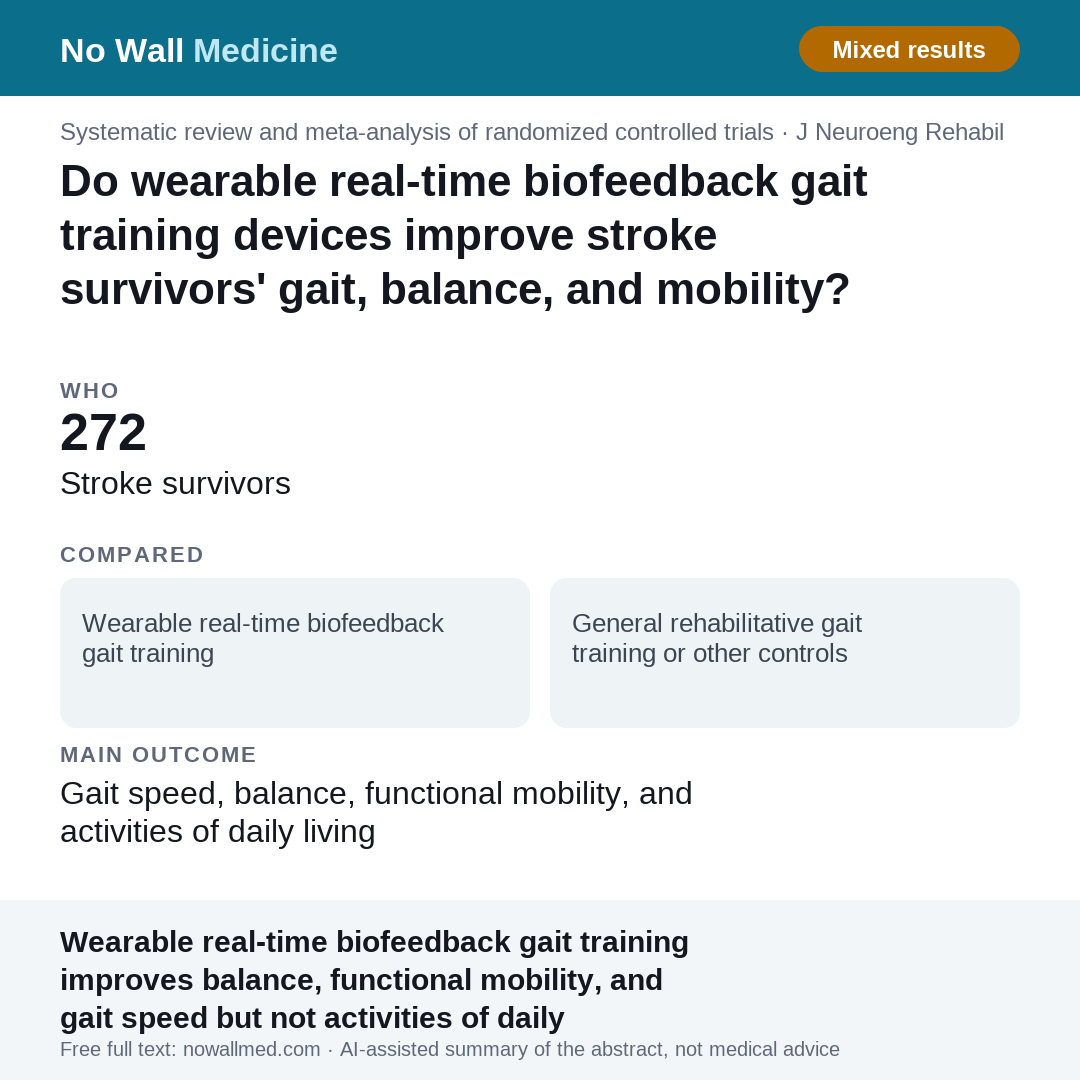
Can wearable real-time biofeedback gait training devices improve gait speed, balance, functional mobility and activities of daily living (ADL) in individuals post-stroke? A systematic review and meta-analysis of randomized controlled trials
Systematic review and meta-analysis of randomized controlled trialsMixed results
Do wearable real-time biofeedback gait training devices improve stroke survivors' gait, balance, and mobility?
Who
272
Stroke survivors
Compared
Wearable real-time biofeedback gait training
General rehabilitative gait training or other controls
Main outcome
Gait speed, balance, functional mobility, and activities of daily living
Result: SMD 0.41 (P=0.02) for gait speed; SMD 0.44 (P=0.03) for Berg Balance Scale; SMD -0.36 (P=0.01) for Timed Up and Go Test
Bottom line: Wearable real-time biofeedback gait training improves balance, functional mobility, and gait speed but not activities of daily living.
J Neuroeng Rehabil · 2025-12-28Download image
Efficacy of bilateral soft exoskeleton training for people with subacute stroke: a randomized controlled trial
Single-blind randomized controlled trialBenefit found
Does bilateral soft exoskeleton training improve gait and motor function in subacute stroke?
Who
60
Participants with subacute stroke
Compared
Bilateral soft exoskeleton group: adjusted mean difference 0.37 for Functional Ambulation Category
Conventional training group
Main outcome
Functional Ambulation Category
Result: adjusted mean difference 0.37 (p=0.022)
Bottom line: Bilateral soft exoskeleton-assisted gait training improves motor function and gait performance in subacute stroke patients.
Limitation: Further studies with larger cohorts and longer follow-up are needed.
J Neuroeng Rehabil · 2025-12-28Download image

Pneumocystis jirovecii pneumonia prophylaxis in patients with glioma receiving concurrent chemoradiation: a systematic review and meta-analysis
Systematic review and meta-analysisNo clear difference
What is the incidence of pneumocystis jirovecii pneumonia in glioma patients receiving concurrent chemoradiation?
Who
12301
Glioma patients treated with temozolomide and radiotherapy
Compared
0.8%With prophylaxis (14/1765)
0.3%Without prophylaxis (9/2719)
Main outcome
Pneumocystis jirovecii pneumonia incidence
Result: 0.74% (95% CI, 0.59-0.93%)
Bottom line: The pooled incidence of pneumocystis jirovecii pneumonia is 0.74%, which is lower than the 3.5% prophylaxis threshold.
Limitation: Heterogeneity in study populations, lack of standardized diagnostic confirmation, and incomplete reporting of steroid administration.
Funded by: Qassim University
eClinicalMedicine · 2025-12-27Download image

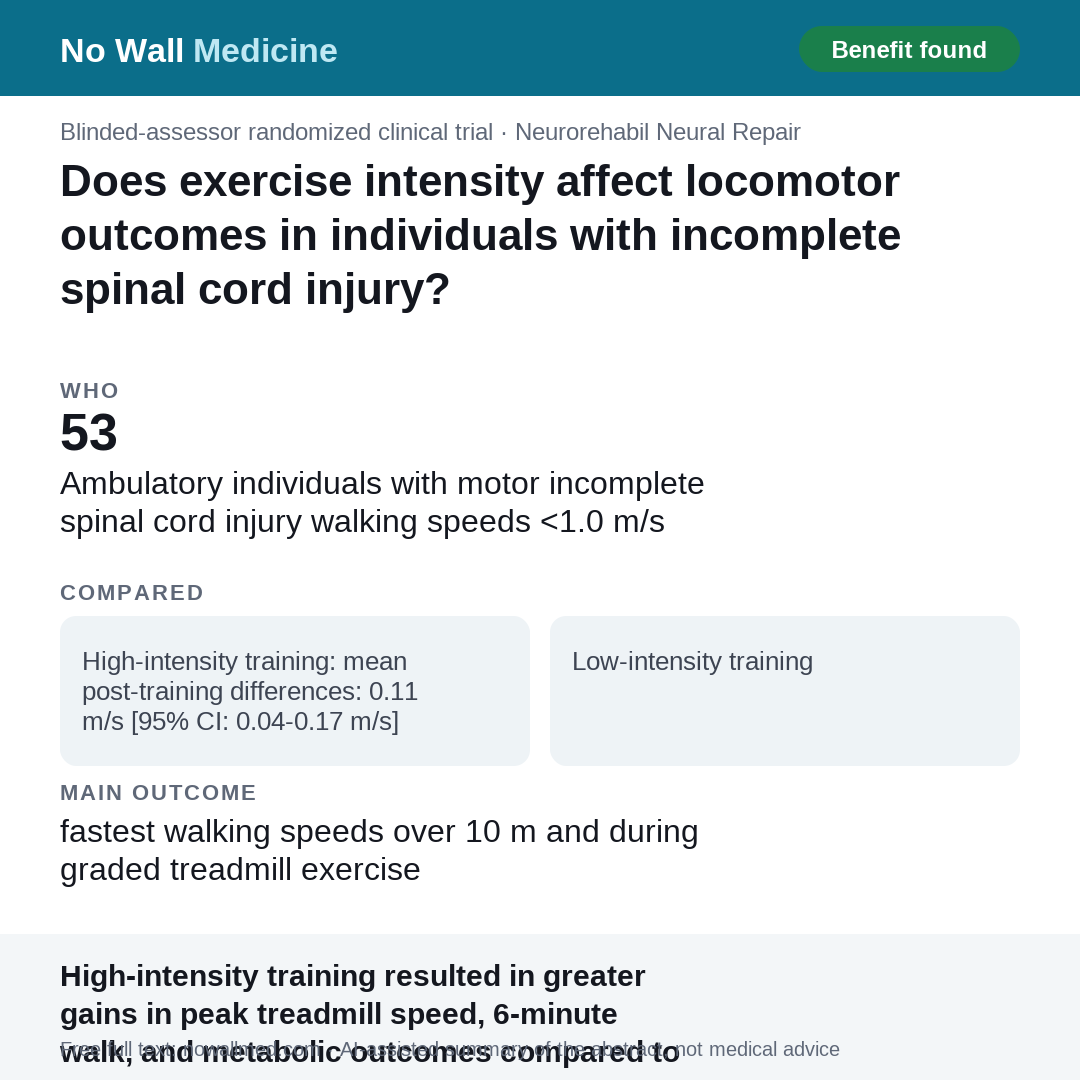
Higher Intensity Walking Training in Individuals With Chronic Motor Incomplete Spinal Cord Injury: A Randomized Clinical Trial
Blinded-assessor randomized clinical trialBenefit found
Does exercise intensity affect locomotor outcomes in individuals with incomplete spinal cord injury?
Who
53
Ambulatory individuals with motor incomplete spinal cord injury walking speeds <1.0 m/s
Compared
High-intensity training: mean post-training differences: 0.11 m/s [95% CI: 0.04-0.17 m/s]
Low-intensity training
Main outcome
fastest walking speeds over 10 m and during graded treadmill exercise
Result: mean differences: 0.25 m/s [0.15-0.34 m/s]
Bottom line: High-intensity training resulted in greater gains in peak treadmill speed, 6-minute walk, and metabolic outcomes compared to low-intensity training.
Neurorehabil Neural Repair · 2025-12-27Download image
Systematic review and meta-analysis of digital interventions for mental health in cancer patients and survivors
Systematic review and meta-analysis of 139 trialsBenefit found
Are digital health interventions effective for mental health in cancer patients and survivors?
Who
19,233
Cancer patients and survivors · 25 countries
Compared
Digital health interventions
Control
Main outcome
Mental health outcomes including anxiety, depression, distress, insomnia, and sleep quality
Bottom line: Digital health interventions significantly reduce anxiety, depression, psychological distress, insomnia, and improve sleep quality in cancer populations.
NPJ Digit Med · 2025-12-27Download image

Community and Academic Synergy for Cancer Survivorship Care Delivery Enhancement (Project CASCADE): a study protocol for a pragmatic, stepped-wedge, cluster-randomized trial in Texas primary care community health centers
Stepped-wedge, cluster-randomized trialUnclear result
Does a multi-component primary care intervention improve cancer survivorship care delivery?
Who
Cancer survivors in Texas community health centers · 8 Texas community health center sites
Compared
Intervention
Control
Main outcome
Screening for second primary cancers and clinician knowledge
Bottom line: This study protocol describes a trial to test a primary care-based survivorship care delivery intervention.
BMC Prim Care · 2025-12-27Download image

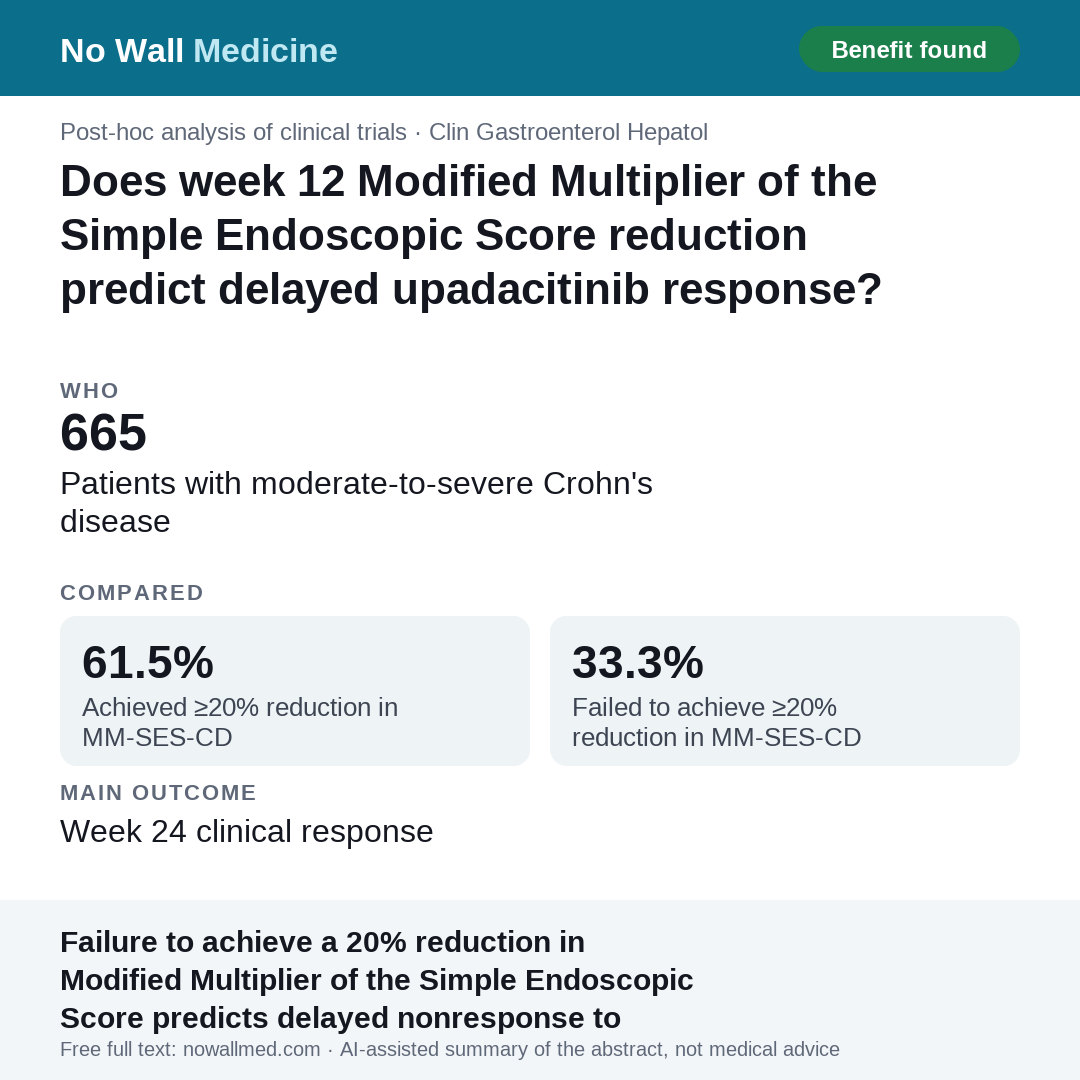
Week 12 Reduction in Modified Multiplier of the Simple Endoscopic Score for Crohn's Disease Is Predictive of Delayed Response to Upadacitinib in Crohn's Disease
Post-hoc analysis of clinical trialsBenefit found
Does week 12 Modified Multiplier of the Simple Endoscopic Score reduction predict delayed upadacitinib response?
Who
665
Patients with moderate-to-severe Crohn's disease
Compared
61.5%Achieved ≥20% reduction in MM-SES-CD
33.3%Failed to achieve ≥20% reduction in MM-SES-CD
Main outcome
Week 24 clinical response
Result: adjusted odds ratio 0.22 (95% confidence interval 0.09-0.53)
Bottom line: Failure to achieve a 20% reduction in Modified Multiplier of the Simple Endoscopic Score predicts delayed nonresponse to upadacitinib.
Clin Gastroenterol Hepatol · 2025-12-26Download image
Editor's Choice - The Prevalence of Abdominal Aortic Aneurysm in First Degree Relatives: A Systematic Review and Meta-analysis
Systematic review and meta-analysisBenefit found
What is the prevalence and risk of abdominal aortic aneurysm in first degree relatives?
Who
First degree relatives of patients with abdominal aortic aneurysm
Compared
First degree relatives
General population
Main outcome
Prevalence and risk of abdominal aortic aneurysm development
Result: odds ratio 3.19 (95% CI 1.90 - 5.37)
Bottom line: First degree relatives are three times more likely to develop abdominal aortic aneurysm, supporting targeted screening.
Eur J Vasc Endovasc Surg · 2025-12-26Download image

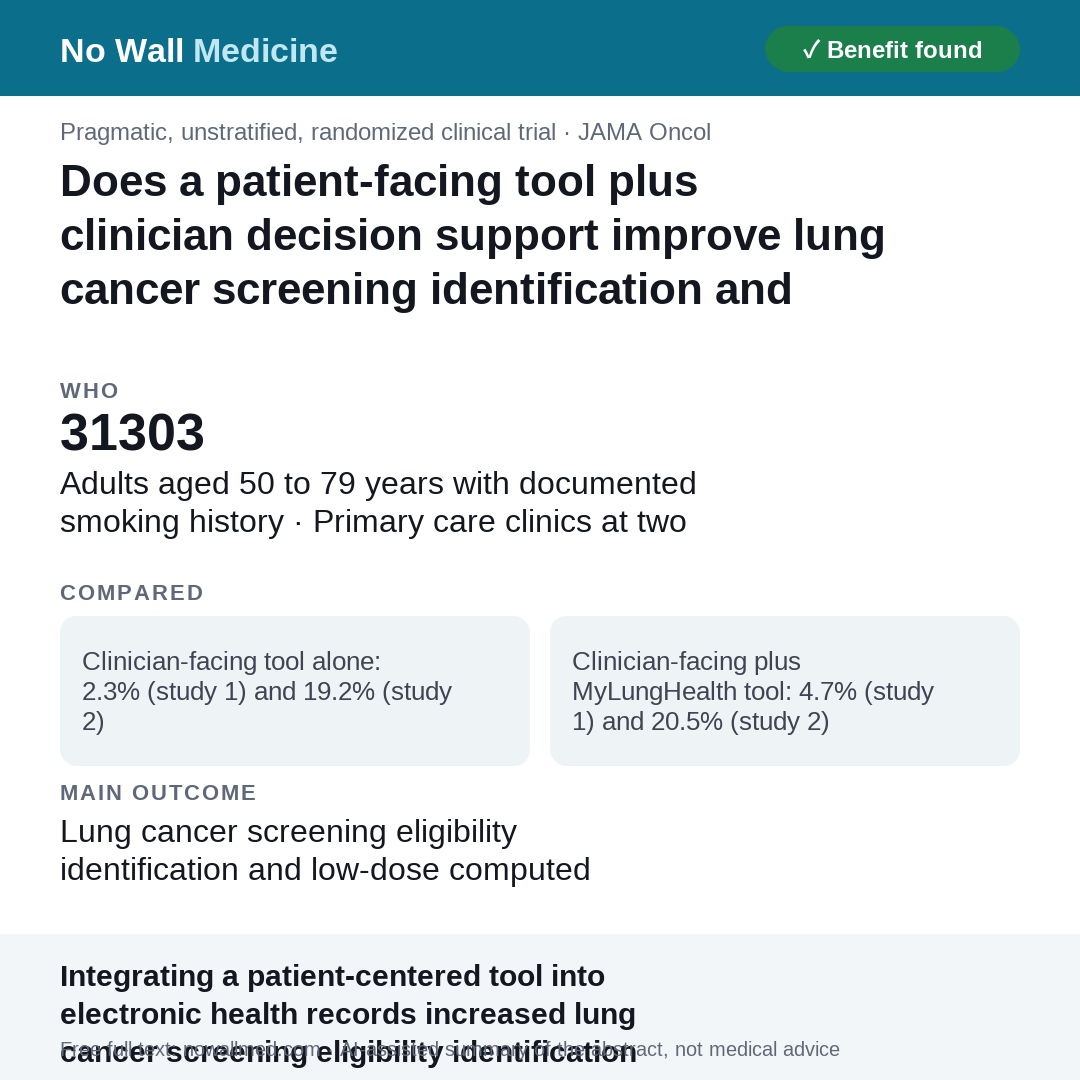
Enhancement of Patient-Centered Lung Cancer Screening: The MyLungHealth Randomized Clinical Trial
Pragmatic, unstratified, randomized clinical trialBenefit found
Does a patient-facing tool plus clinician decision support improve lung cancer screening identification and ordering?
Who
31303
Adults aged 50 to 79 years with documented smoking history · Primary care clinics at two US health systems
Compared
Clinician-facing tool alone: 2.3% (study 1) and 19.2% (study 2)
Clinician-facing plus MyLungHealth tool: 4.7% (study 1) and 20.5% (study 2)
Main outcome
Lung cancer screening eligibility identification and low-dose computed tomography ordering
Result: adjusted odds ratio 2.19 (95% CI 1.99-2.42) and 1.16 (95% CI 1.04-1.30)
Bottom line: Integrating a patient-centered tool into electronic health records increased lung cancer screening eligibility identification and low-dose computed tomography ordering.
Limitation: Absolute increases in the primary outcomes were more modest.
JAMA Oncol · 2025-12-26Download image
Effect of a lifestyle intervention during chemotherapy for breast cancer on quality of life
Randomized trialNo clear difference
Does a lifestyle intervention during chemotherapy improve quality of life in breast cancer?
Who
173
Women diagnosed with stage I-III breast cancer initiating chemotherapy
Compared
nutrition and exercise intervention: No between-arm differences were observed
usual care: No between-arm differences were observed
Main outcome
Patient-Reported Outcomes Measurement Information System quality of life scores
Bottom line: A yearlong nutrition and exercise intervention did not attenuate quality of life declines during chemotherapy.
JNCI Cancer Spectr · 2025-12-26Download image

A novel cloud-based artificial intelligence for real-time detection of colorectal neoplasia - a randomized controlled trial (EAGLE)
Parallel-group randomized controlled trialBenefit found
Does a real-time cloud-based computer-aided detection system improve colorectal neoplasia detection?
Who
841
Patients undergoing colonoscopy · Eight centers across four European countries
Compared
Standard colonoscopy: 0.62 adenomas per colonoscopy
Computer-aided detection-assisted colonoscopy: 0.82 adenomas per colonoscopy
Main outcome
Adenomas per colonoscopy and positive percent-agreement
Result: Ratio 1.33 (95% CI 1.06-1.67)
Bottom line: Cloud-based computer-aided detection improved adenoma detection rates and clinically significant polyp detection during colonoscopy.
Limitation: Future research should explore optimizing computer-aided detection systems' performance.
NPJ Digit Med · 2025-12-26Download image

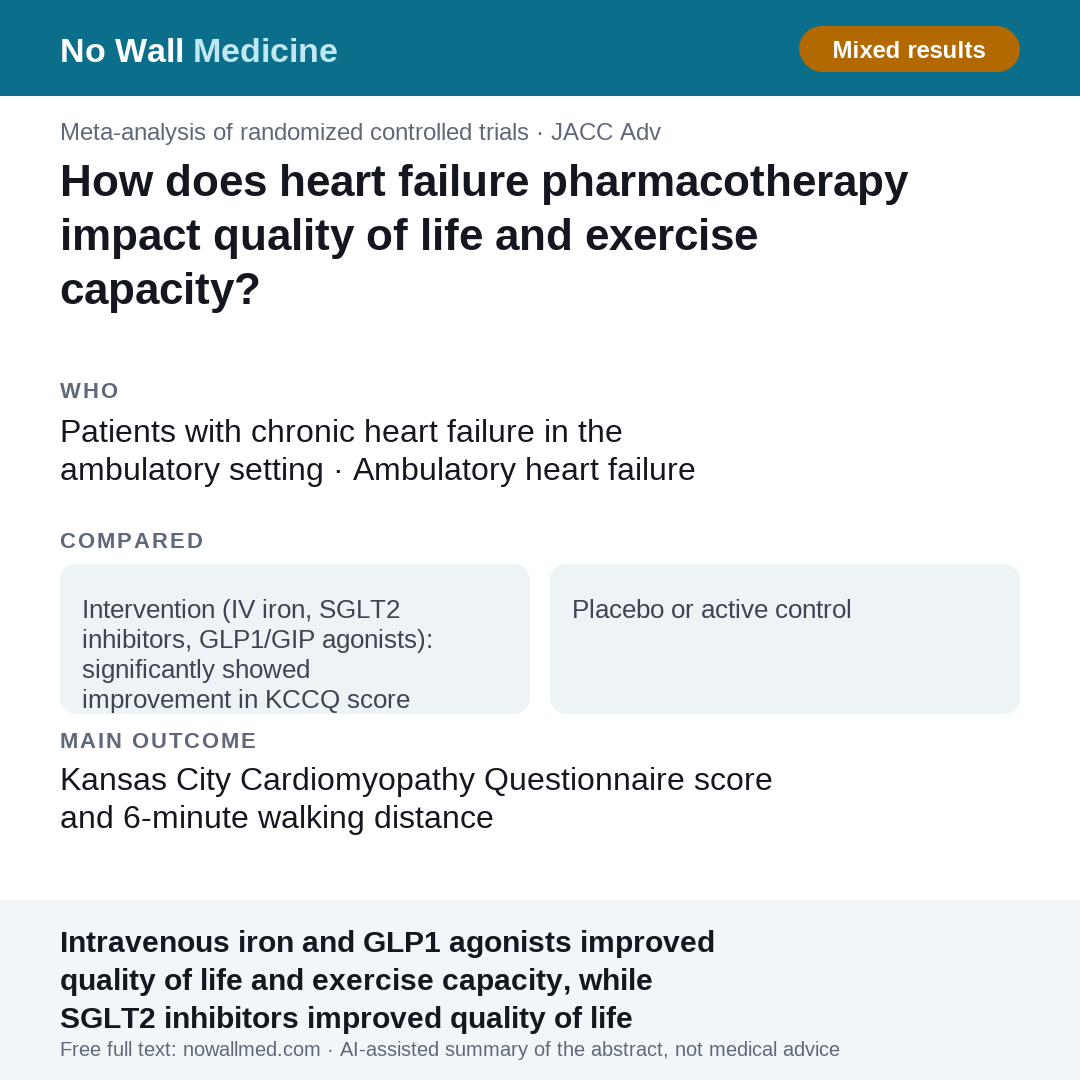
Patient-Centered Outcomes in Heart Failure Pharmacotherapy: A Meta-Analysis of Randomized Controlled Trials
Meta-analysis of randomized controlled trialsMixed results
How does heart failure pharmacotherapy impact quality of life and exercise capacity?
Who
Patients with chronic heart failure in the ambulatory setting · Ambulatory heart failure setting
Compared
Intervention (IV iron, SGLT2 inhibitors, GLP1/GIP agonists): significantly showed improvement in KCCQ score
Placebo or active control
Main outcome
Kansas City Cardiomyopathy Questionnaire score and 6-minute walking distance
Bottom line: Intravenous iron and GLP1 agonists improved quality of life and exercise capacity, while SGLT2 inhibitors improved quality of life only.
JACC Adv · 2025-12-25Download image