Visual abstracts
New randomized trials and meta-analyses from leading journals at a glance: who was studied, what was compared, and what was found. Every paper is free to read in full.
All specialtiesCardiology 4877Oncology 4138Gastroenterology & Hepatology 1942Infectious Disease 3837Neurology 1905Psychiatry & Mental Health 2273Pulmonology 2143Critical Care 1365Endocrinology & Diabetes 2580Pediatrics 2980Surgery 2559Orthopedics & Sports Medicine 931Neurosurgery 537Cardiothoracic & Vascular Surgery 674Plastic & Reconstructive Surgery 591Nephrology 1133Rheumatology 823Hematology 1109Dermatology 621Ophthalmology 543Obstetrics & Gynecology 1686Public & Global Health 1058Radiology & Imaging 648Anesthesiology 986Urology 764ENT (Otolaryngology) 503Emergency Medicine 511Allergy & Immunology 313Geriatrics 981Family Medicine & Primary Care 562Medical Genetics & Genomics 676Pathology & Laboratory Medicine 159Physical Medicine & Rehabilitation 757Palliative Care 444Nutrition 1588Digital Health & AI 2201General Medicine 321
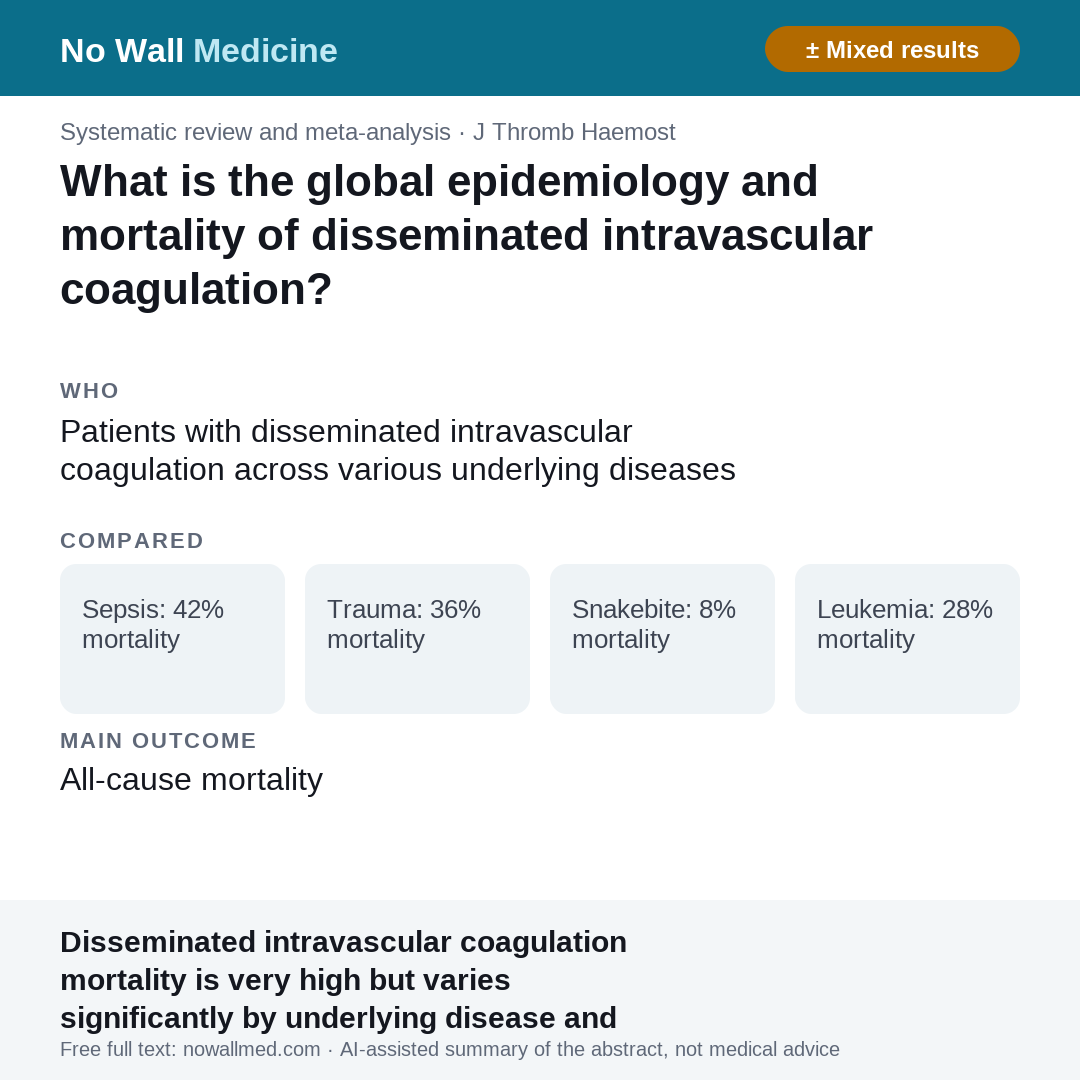
Mortality, diagnosis, and etiology of disseminated intravascular coagulation-a systematic review and meta-analysis: communication from the ISTH SSC subcommittee on disseminated intravascular coagulation
Systematic review and meta-analysisMixed results
What is the global epidemiology and mortality of disseminated intravascular coagulation?
Who
Patients with disseminated intravascular coagulation across various underlying diseases · Global
Compared
Sepsis: 42% mortality
Trauma: 36% mortality
Snakebite: 8% mortality
Leukemia: 28% mortality
Main outcome
All-cause mortality
Bottom line: Disseminated intravascular coagulation mortality is very high but varies significantly by underlying disease and diagnostic criteria.
Limitation: Mortality and odds ratio varied widely by underlying disease and diagnostic criteria.
J Thromb Haemost · 2025-05-16Download image
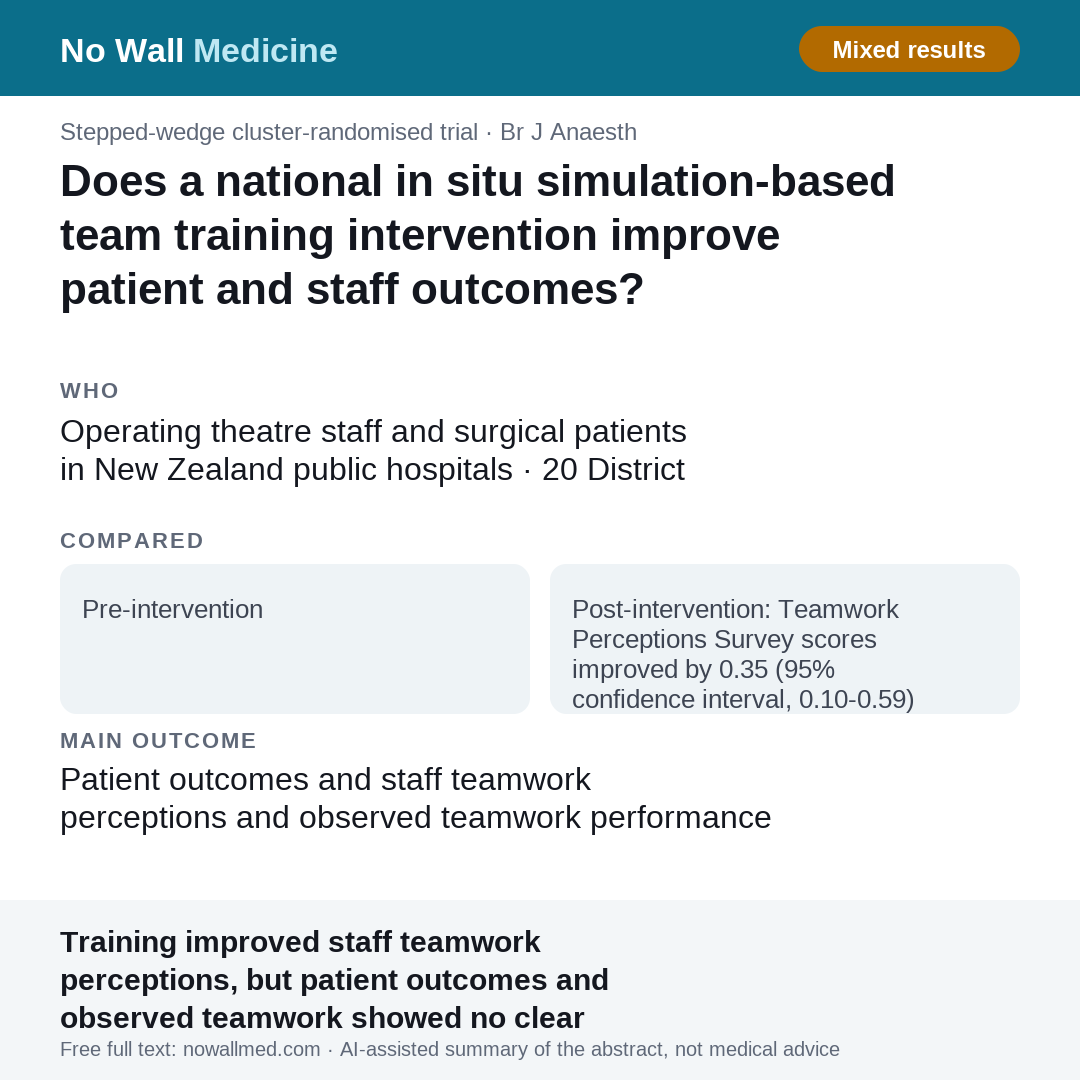
Effects of a national team training intervention for operating theatre teams on patient and staff outcomes: a stepped-wedge cluster-randomised trial and mixed-methods study
Stepped-wedge cluster-randomised trialMixed results
Does a national in situ simulation-based team training intervention improve patient and staff outcomes?
Who
Operating theatre staff and surgical patients in New Zealand public hospitals · 20 District Health Boards in New Zealand
Compared
Pre-intervention
Post-intervention: Teamwork Perceptions Survey scores improved by 0.35 (95% confidence interval, 0.10-0.59)
Main outcome
Patient outcomes and staff teamwork perceptions and observed teamwork performance
Bottom line: Training improved staff teamwork perceptions, but patient outcomes and observed teamwork showed no clear improvement.
Limitation: Could not separate intervention effect from temporal factors like the COVID-19 pandemic.
Br J Anaesth · 2025-05-16Download image
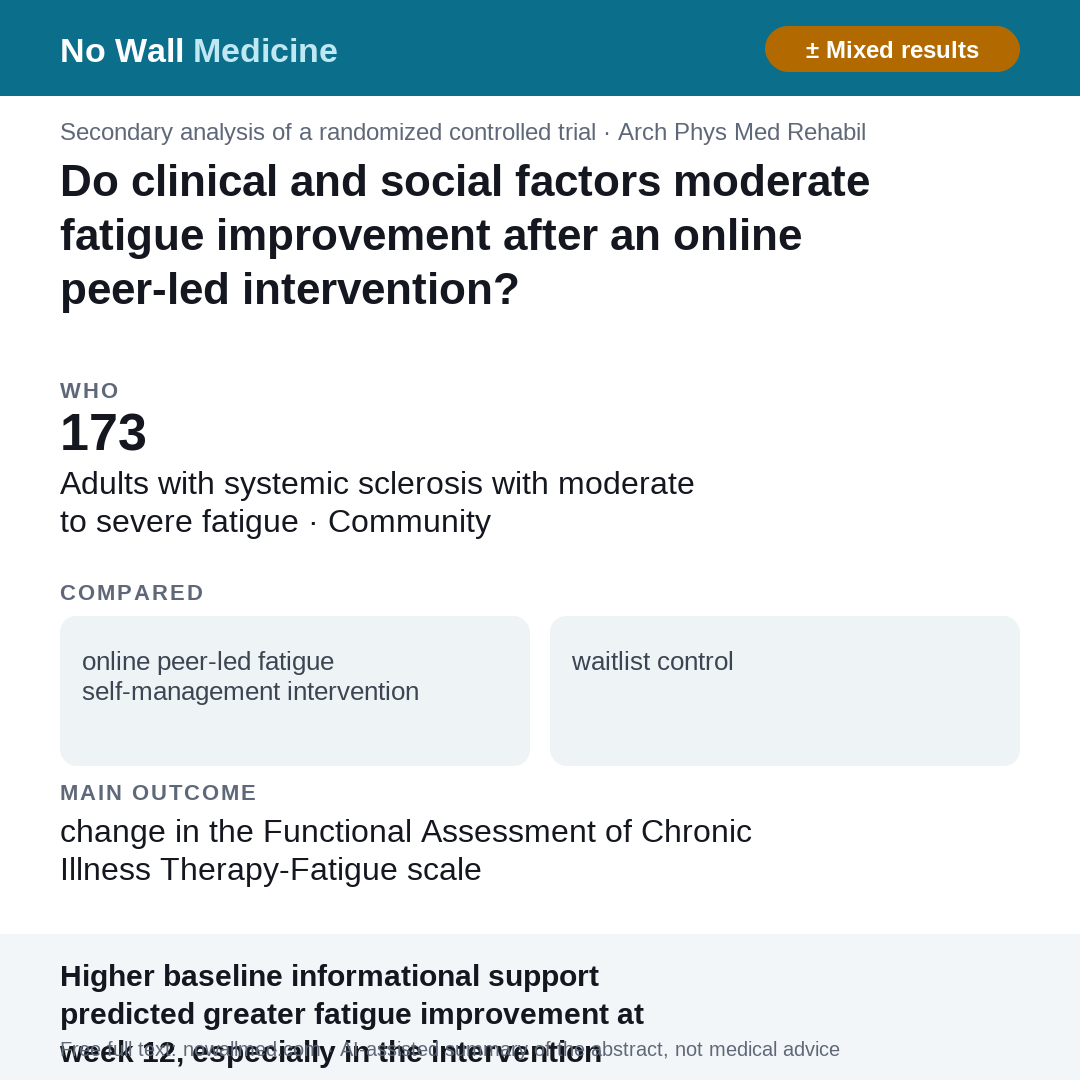
Moderating Effects of Clinical and Social Factors on Fatigue Improvement After an Online Peer-Led Fatigue Self-management Intervention in People With Systemic Sclerosis: A Secondary Analysis of a Randomized Controlled Trial
Secondary analysis of a randomized controlled trialMixed results
Do clinical and social factors moderate fatigue improvement after an online peer-led intervention?
Who
173
Adults with systemic sclerosis with moderate to severe fatigue · Community
Compared
online peer-led fatigue self-management intervention
waitlist control
Main outcome
change in the Functional Assessment of Chronic Illness Therapy-Fatigue scale
Bottom line: Higher baseline informational support predicted greater fatigue improvement at week 12, especially in the intervention group.
Arch Phys Med Rehabil · 2025-05-16Download image
The Medicolegal Challenges of Facial Plastic Surgery: A Systematic Review
Systematic reviewUnclear result
Medicolegal challenges in facial plastic surgery
Who
27
facial plastic surgery patients · over 10 countries
Compared
litigation cases
non-litigation cases
Main outcome
medicolegal challenges
Bottom line: Informed consent and precision mitigate risks
Aesthet Surg J · 2025-05-16Download image

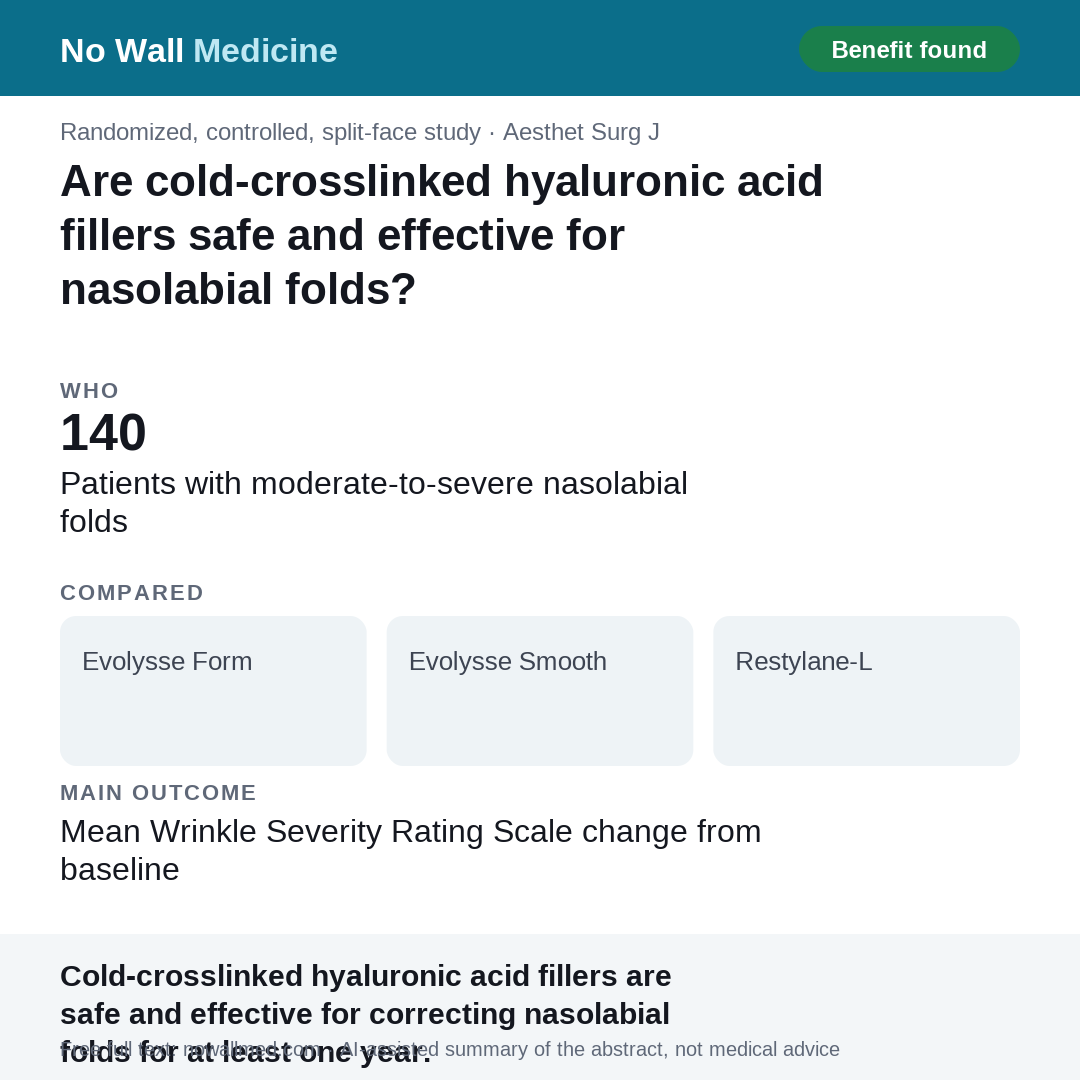
Long-term Safety and Effectiveness of Cold-Crosslinked Hyaluronic Acid Fillers: Multicenter, Randomized, Controlled, Double-Blind Study
Randomized, controlled, split-face studyBenefit found
Are cold-crosslinked hyaluronic acid fillers safe and effective for nasolabial folds?
Who
140
Patients with moderate-to-severe nasolabial folds
Compared
Evolysse Form
Evolysse Smooth
Restylane-L
Main outcome
Mean Wrinkle Severity Rating Scale change from baseline
Bottom line: Cold-crosslinked hyaluronic acid fillers are safe and effective for correcting nasolabial folds for at least one year.
Aesthet Surg J · 2025-05-16Download image
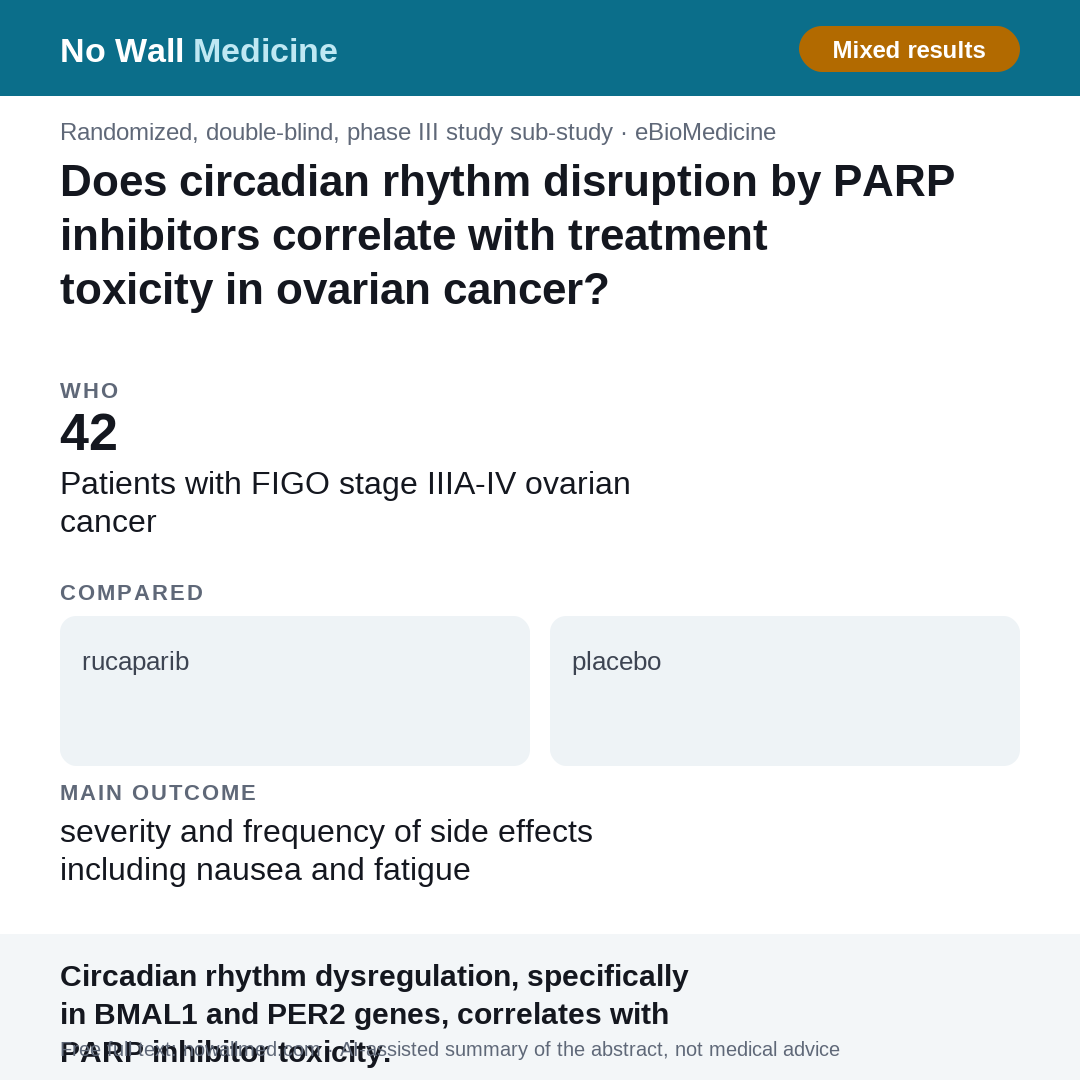
Circadian rhythm disruption by PARP inhibitors correlates with treatment toxicity in patients with ovarian cancer and is a predictor of side effects
Randomized, double-blind, phase III study sub-studyMixed results
Does circadian rhythm disruption by PARP inhibitors correlate with treatment toxicity in ovarian cancer?
Who
42
Patients with FIGO stage IIIA-IV ovarian cancer
Compared
rucaparib
placebo
Main outcome
severity and frequency of side effects including nausea and fatigue
Bottom line: Circadian rhythm dysregulation, specifically in BMAL1 and PER2 genes, correlates with PARP inhibitor toxicity.
Funded by: Dr. Rolf Schwiete Stiftung, MSH Medical School Hamburg, and Clovis Oncology
eBioMedicine · 2025-05-16Download image
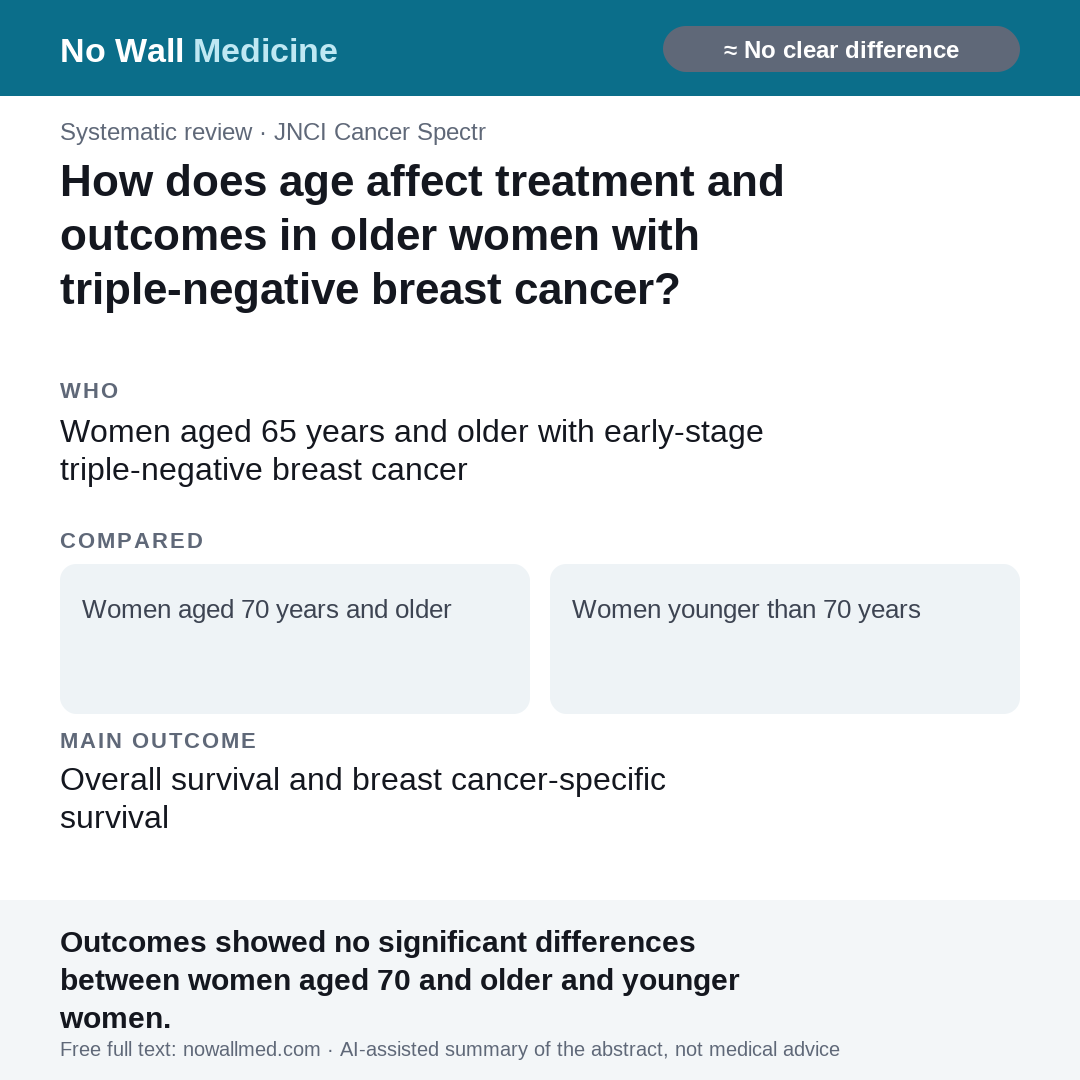
Treatment strategies for triple-negative primary breast cancer in older women: a systematic review
Systematic reviewNo clear difference
How does age affect treatment and outcomes in older women with triple-negative breast cancer?
Who
Women aged 65 years and older with early-stage triple-negative breast cancer
Compared
Women aged 70 years and older
Women younger than 70 years
Main outcome
Overall survival and breast cancer-specific survival
Bottom line: Outcomes showed no significant differences between women aged 70 and older and younger women.
JNCI Cancer Spectr · 2025-05-16Download image
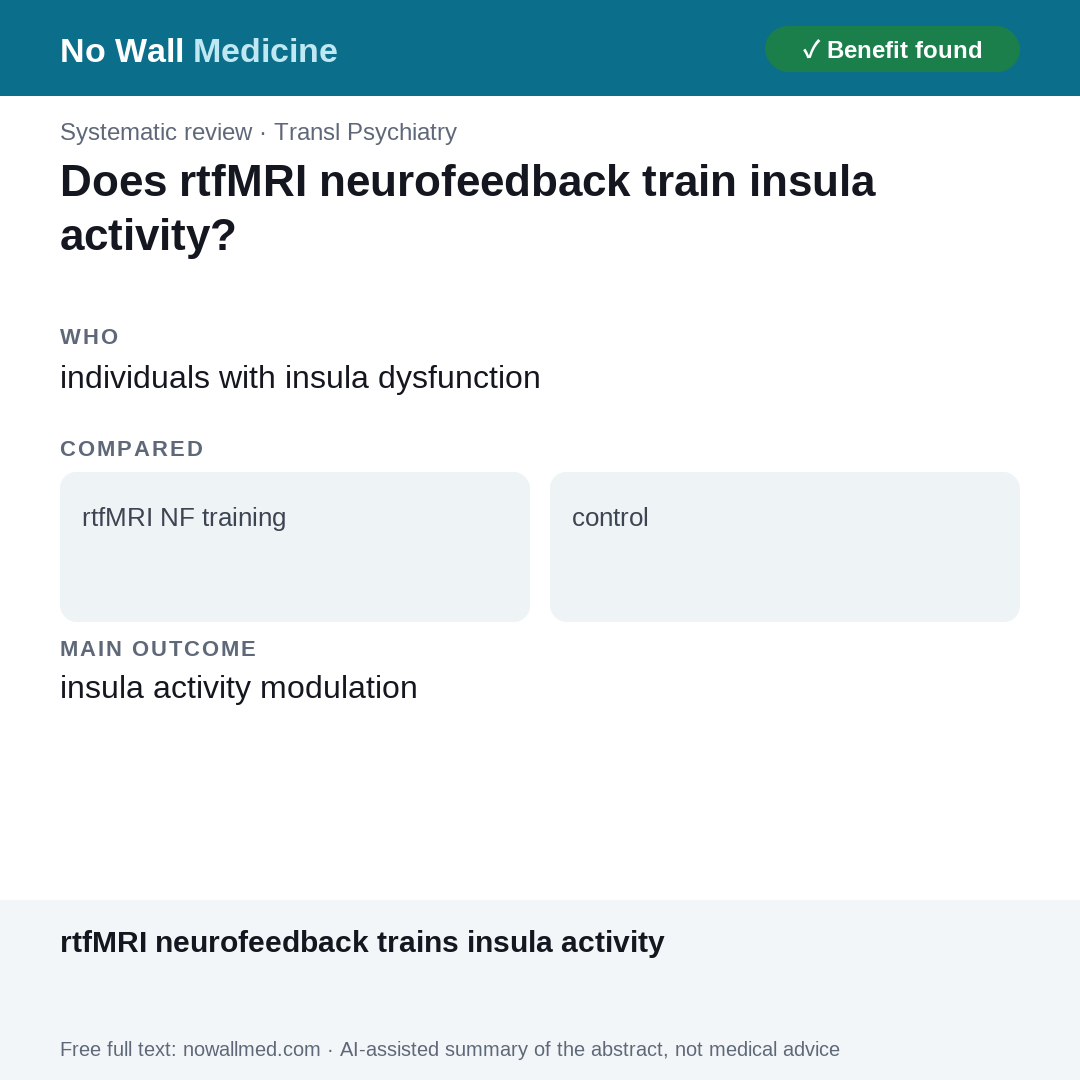
Self-navigating the "Island of Reil": a systematic review of real-time fMRI neurofeedback training of insula activity
Systematic reviewBenefit found
Does rtfMRI neurofeedback train insula activity?
Who
individuals with insula dysfunction
Compared
rtfMRI NF training
control
Main outcome
insula activity modulation
Bottom line: rtfMRI neurofeedback trains insula activity
Limitation: inconsistent behavioral changes
Transl Psychiatry · 2025-05-16Download image
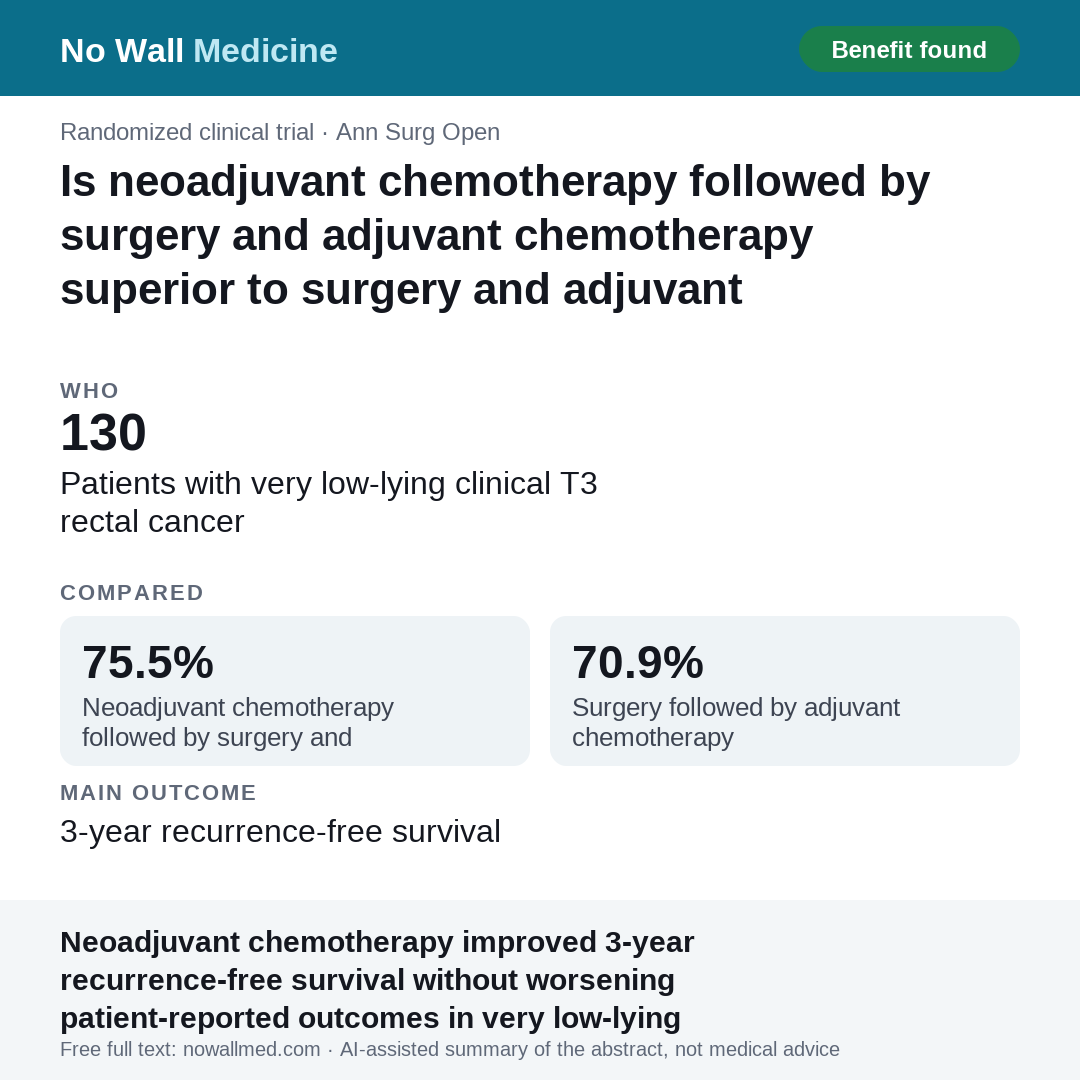
Neoadjuvant Chemotherapy Versus Adjuvant Chemotherapy for Very Low-Lying Clinical T3 Rectal Cancer: The NAIR Phase 2/3 Randomized Clinical Trial
Randomized clinical trialBenefit found
Is neoadjuvant chemotherapy followed by surgery and adjuvant chemotherapy superior to surgery and adjuvant chemotherapy?
Who
130
Patients with very low-lying clinical T3 rectal cancer
Compared
75.5%Neoadjuvant chemotherapy followed by surgery and adjuvant chemotherapy
70.9%Surgery followed by adjuvant chemotherapy
Main outcome
3-year recurrence-free survival
Result: hazard ratio 0.67, 60% confidence interval 0.48-0.86, 95% confidence interval 0.34-1.32
Bottom line: Neoadjuvant chemotherapy improved 3-year recurrence-free survival without worsening patient-reported outcomes in very low-lying clinical T3 rectal cancer.
Limitation: Local recurrence rate remained high.
Ann Surg Open · 2025-05-16Download image
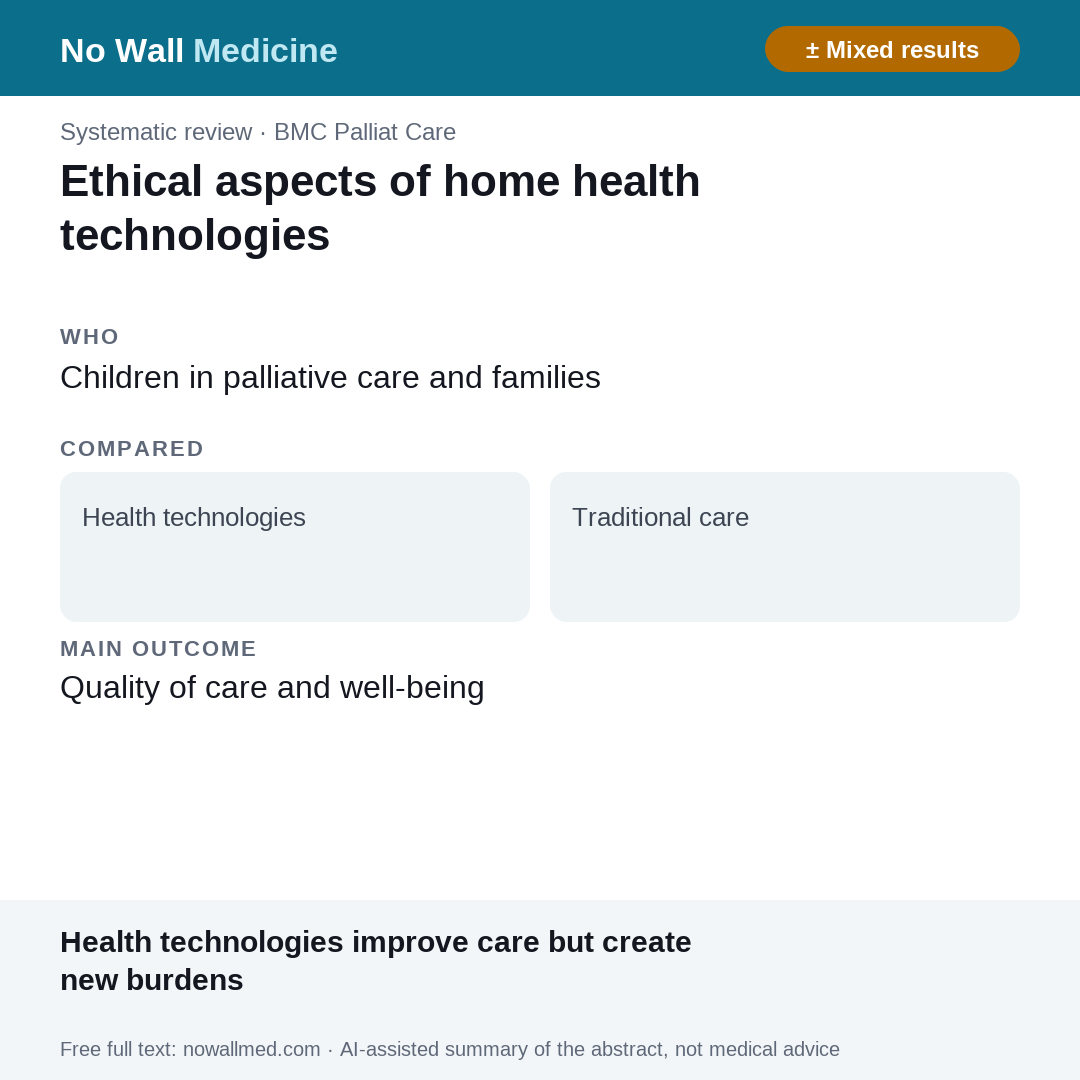
Ethical, legal, and social aspects of health technologies for home-based paediatric palliative care - a systematic review
Systematic reviewMixed results
Ethical aspects of home health technologies
Who
Children in palliative care and families
Compared
Health technologies
Traditional care
Main outcome
Quality of care and well-being
Bottom line: Health technologies improve care but create new burdens
BMC Palliat Care · 2025-05-16Download image
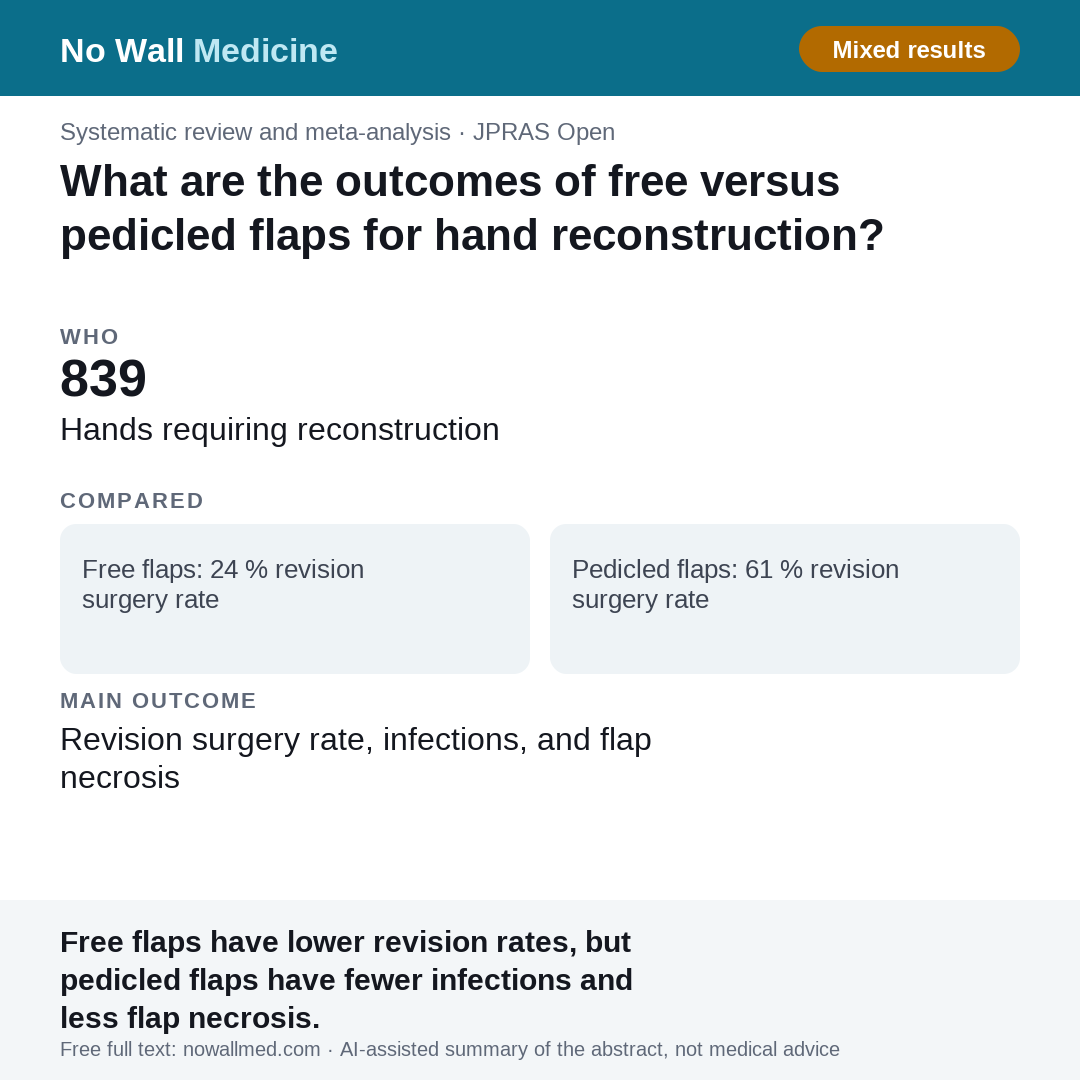
Free versus pedicled flaps for hand reconstruction: A systematic review and meta-analysis
Systematic review and meta-analysisMixed results
What are the outcomes of free versus pedicled flaps for hand reconstruction?
Who
839
Hands requiring reconstruction
Compared
Free flaps: 24 % revision surgery rate
Pedicled flaps: 61 % revision surgery rate
Main outcome
Revision surgery rate, infections, and flap necrosis
Bottom line: Free flaps have lower revision rates, but pedicled flaps have fewer infections and less flap necrosis.
JPRAS Open · 2025-05-16Download image
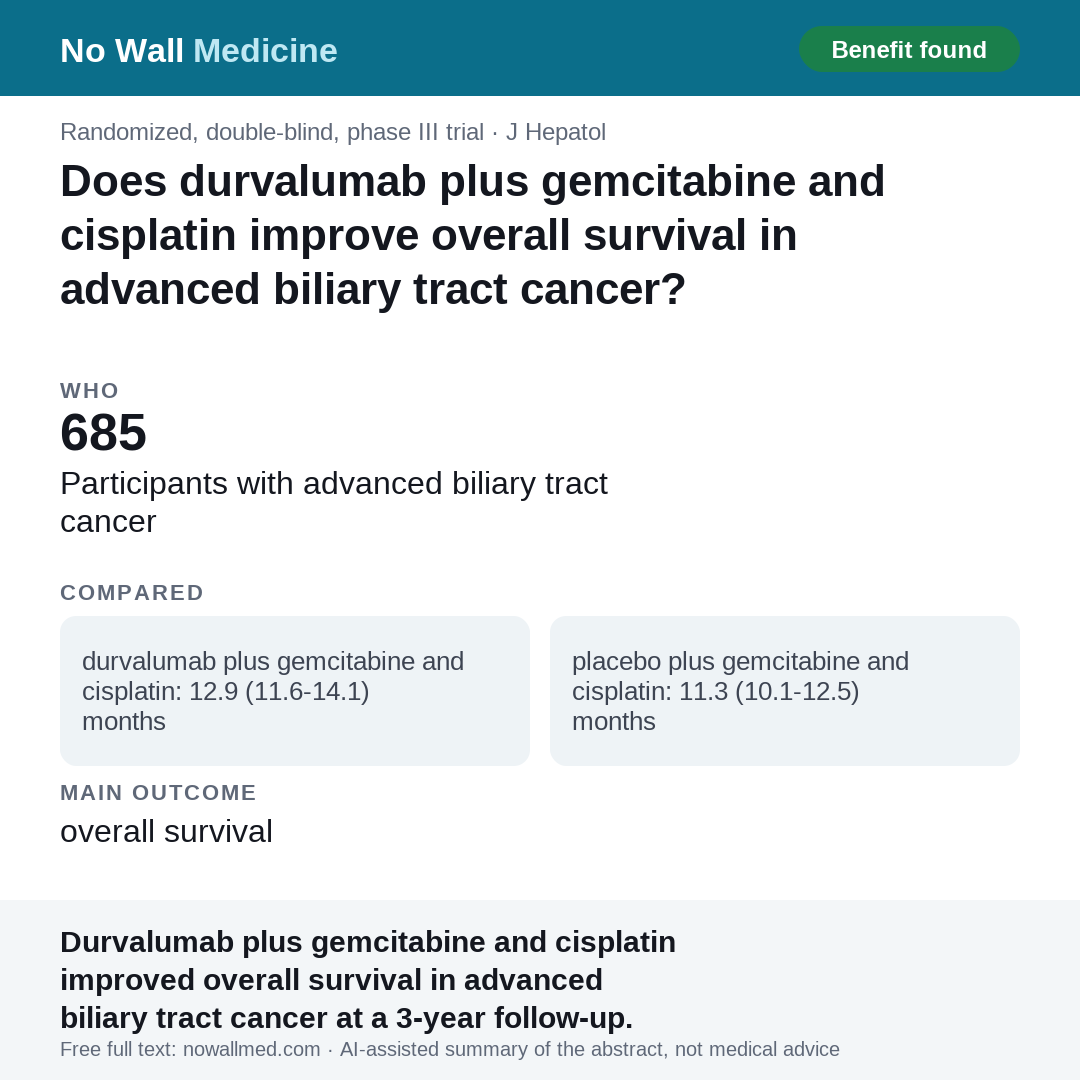
Durvalumab plus chemotherapy in advanced biliary tract cancer: 3-year overall survival update from the phase III TOPAZ-1 study
Randomized, double-blind, phase III trialBenefit found
Does durvalumab plus gemcitabine and cisplatin improve overall survival in advanced biliary tract cancer?
Who
685
Participants with advanced biliary tract cancer
Compared
durvalumab plus gemcitabine and cisplatin: 12.9 (11.6-14.1) months
placebo plus gemcitabine and cisplatin: 11.3 (10.1-12.5) months
Main outcome
overall survival
Result: hazard ratio 0.74 (95% CI 0.63-0.87)
Bottom line: Durvalumab plus gemcitabine and cisplatin improved overall survival in advanced biliary tract cancer at a 3-year follow-up.
J Hepatol · 2025-05-15Download image
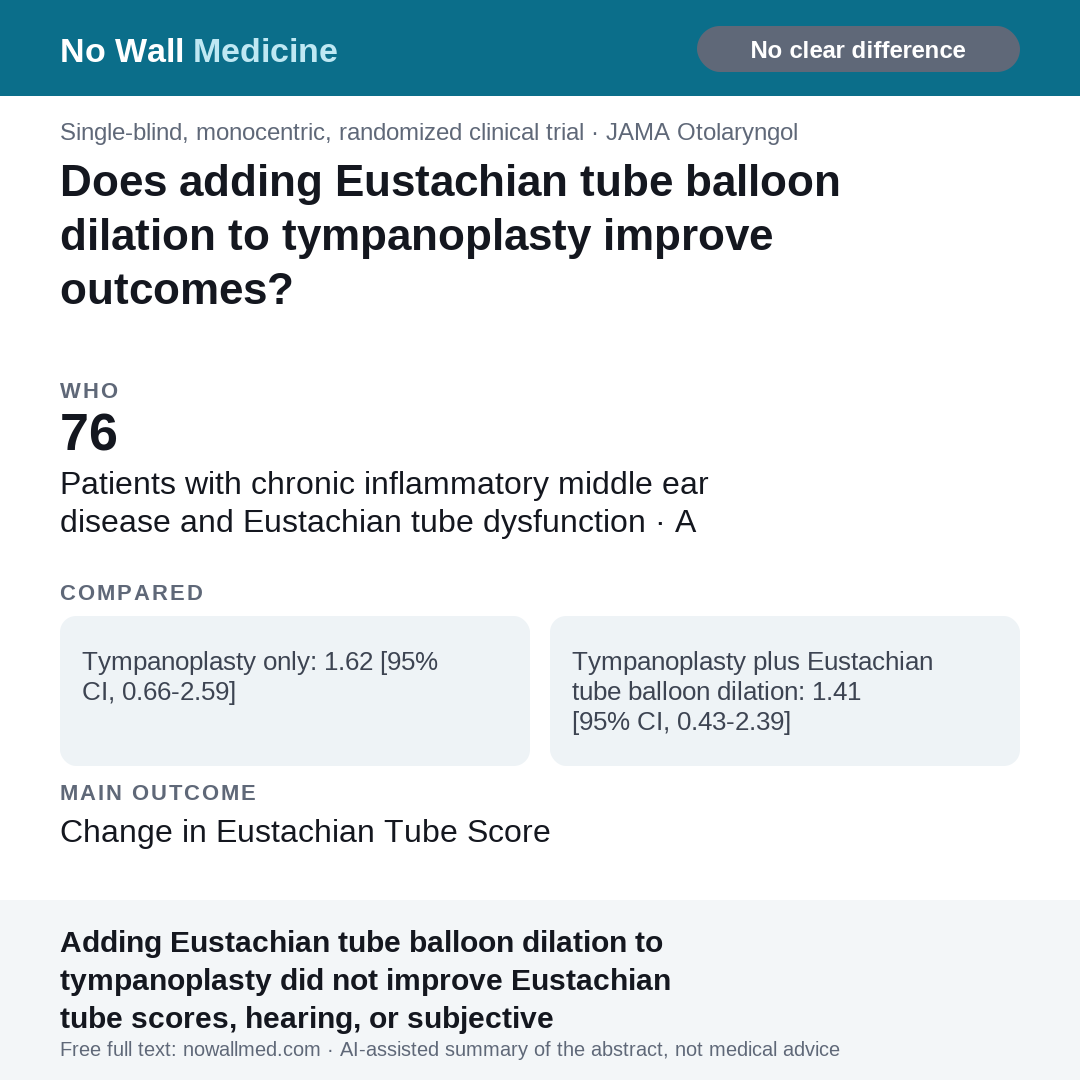
Tympanoplasty With Eustachian Tube Balloon Dilation for Chronic Inflammatory Middle Ear Disease: A Randomized Clinical Trial
Single-blind, monocentric, randomized clinical trialNo clear difference
Does adding Eustachian tube balloon dilation to tympanoplasty improve outcomes?
Who
76
Patients with chronic inflammatory middle ear disease and Eustachian tube dysfunction · A tertiary referral center
Compared
Tympanoplasty only: 1.62 [95% CI, 0.66-2.59]
Tympanoplasty plus Eustachian tube balloon dilation: 1.41 [95% CI, 0.43-2.39]
Main outcome
Change in Eustachian Tube Score
Result: 0.21 (95% CI, -1.17 to 1.59)
Bottom line: Adding Eustachian tube balloon dilation to tympanoplasty did not improve Eustachian tube scores, hearing, or subjective function.
JAMA Otolaryngol · 2025-05-15Download image
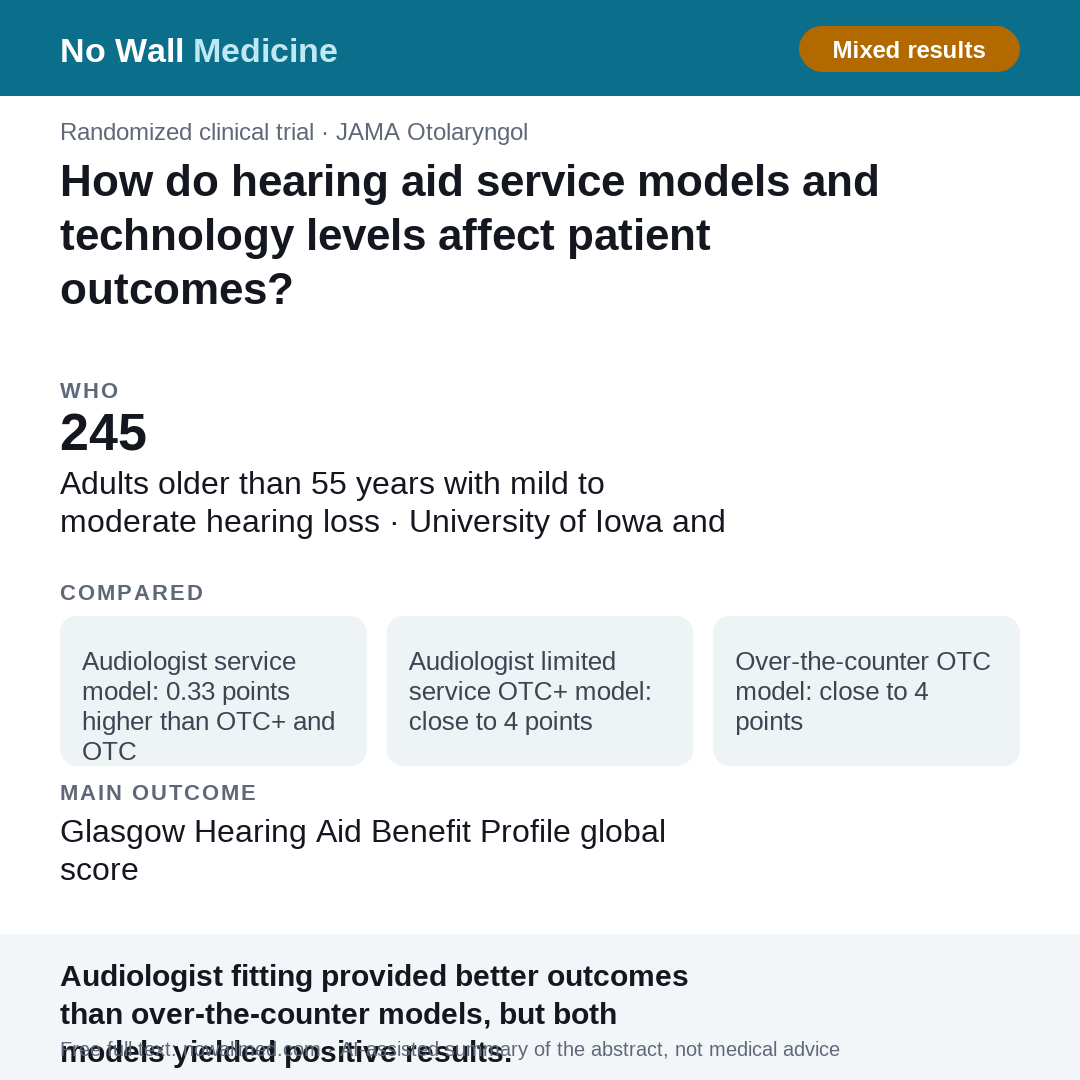
Hearing Aid Service Models, Technology, and Patient Outcomes: A Randomized Clinical Trial
Randomized clinical trialMixed results
How do hearing aid service models and technology levels affect patient outcomes?
Who
245
Adults older than 55 years with mild to moderate hearing loss · University of Iowa and Vanderbilt University Medical Center
Compared
Audiologist service model: 0.33 points higher than OTC+ and OTC
Audiologist limited service OTC+ model: close to 4 points
Over-the-counter OTC model: close to 4 points
Main outcome
Glasgow Hearing Aid Benefit Profile global score
Result: 0.33 points (95% CI, 0.14-0.52) vs OTC+
Bottom line: Audiologist fitting provided better outcomes than over-the-counter models, but both models yielded positive results.
JAMA Otolaryngol · 2025-05-15Download image
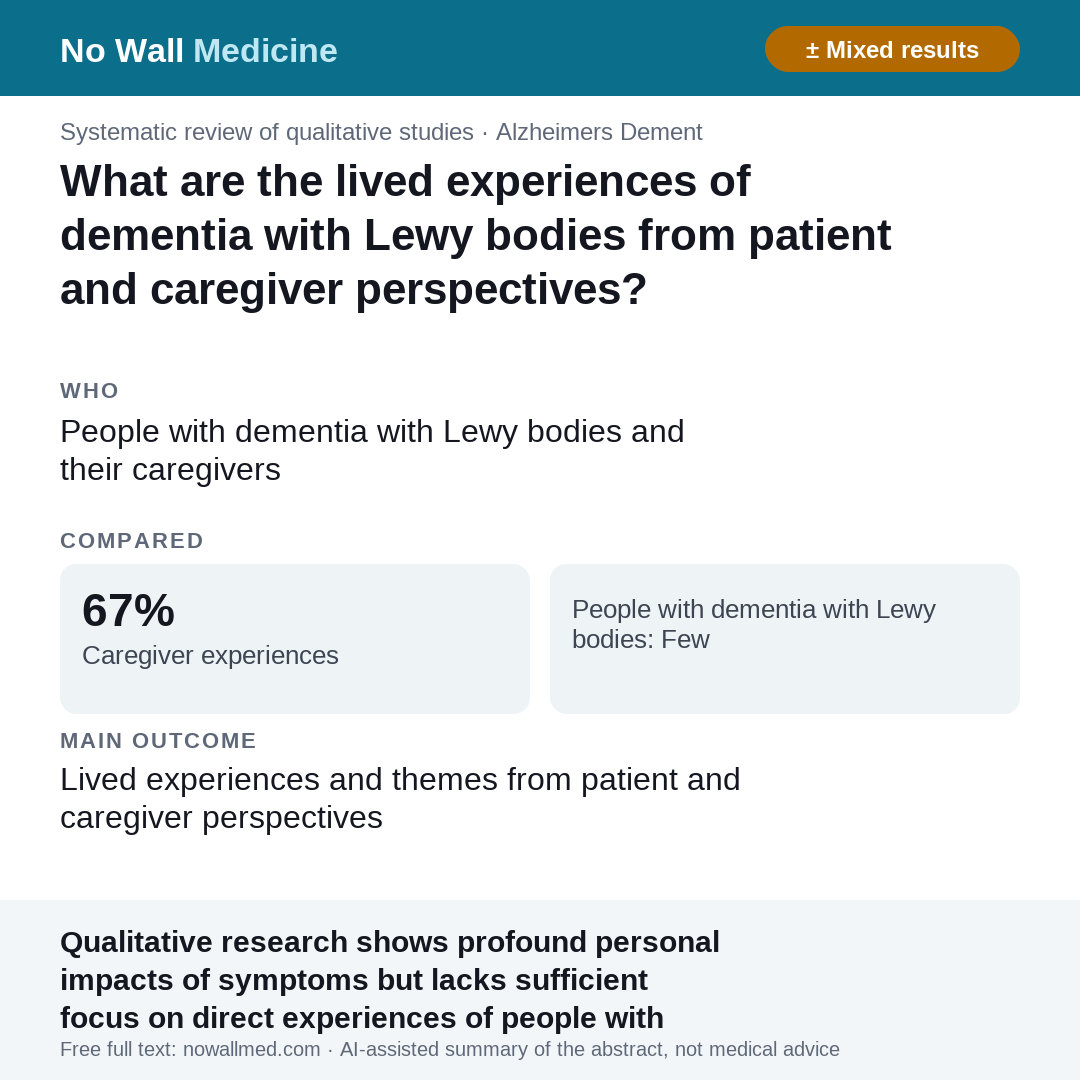
Examining the lived experience of dementia with Lewy bodies through qualitative research: A systematic review
Systematic review of qualitative studiesMixed results
What are the lived experiences of dementia with Lewy bodies from patient and caregiver perspectives?
Who
27
People with dementia with Lewy bodies and their caregivers
Compared
67%Caregiver experiences
People with dementia with Lewy bodies: Few
Main outcome
Lived experiences and themes from patient and caregiver perspectives
Bottom line: Qualitative research shows profound personal impacts of symptoms but lacks sufficient focus on direct experiences of people with dementia with Lewy bodies.
Limitation: Small sample sizes, inconsistent diagnostic criteria, and under-representation of diverse groups.
Alzheimers Dement · 2025-05-15Download image
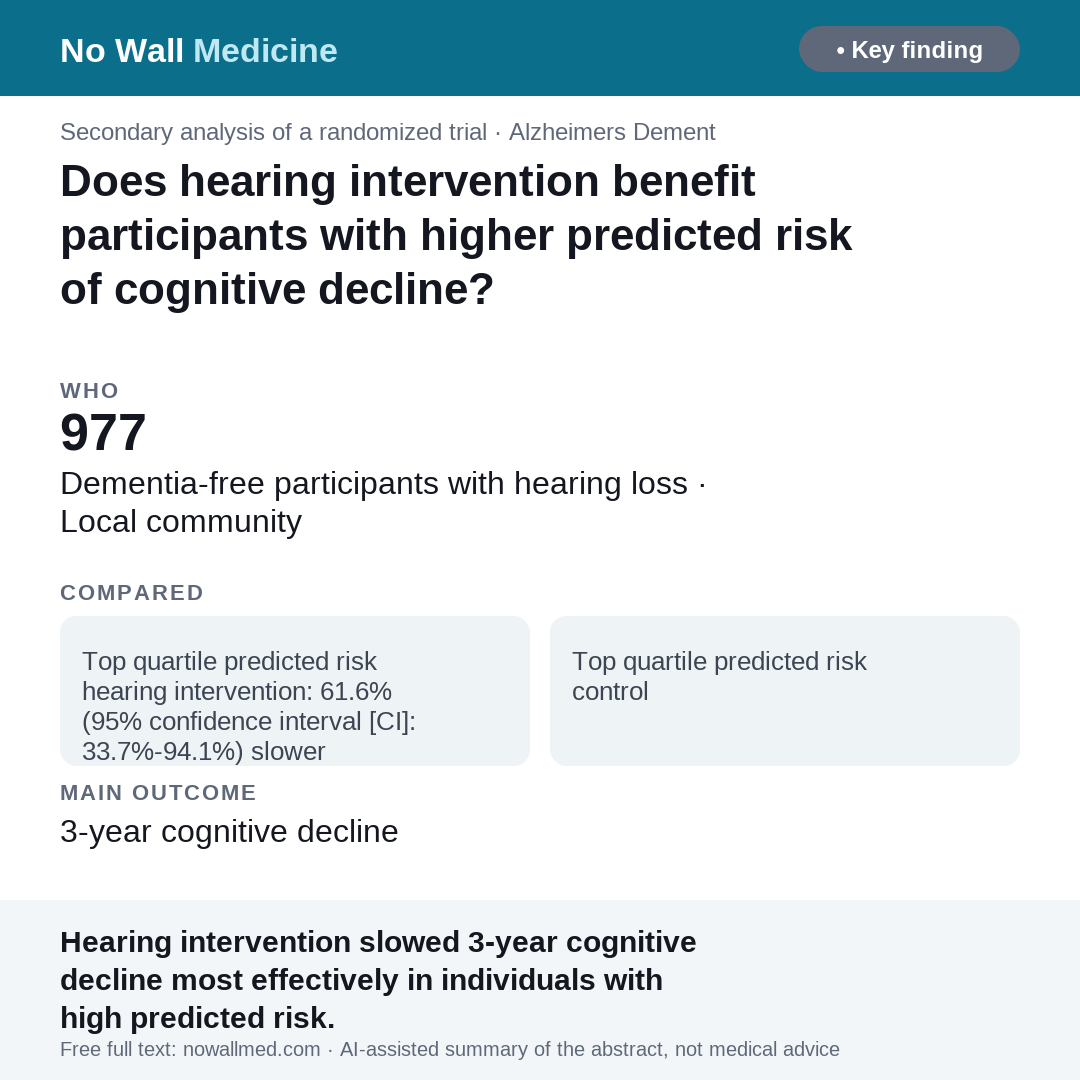
Cognitive benefits of hearing intervention vary by risk of cognitive decline: A secondary analysis of the ACHIEVE trial
Secondary analysis of a randomized trialBenefit found
Does hearing intervention benefit participants with higher predicted risk of cognitive decline?
Who
977
Dementia-free participants with hearing loss · Local community
Compared
Top quartile predicted risk hearing intervention: 61.6% (95% confidence interval [CI]: 33.7%-94.1%) slower
Top quartile predicted risk control
Main outcome
3-year cognitive decline
Result: 61.6% (95% confidence interval [CI]: 33.7%-94.1%) slower
Bottom line: Hearing intervention slowed 3-year cognitive decline most effectively in individuals with high predicted risk.
Alzheimers Dement · 2025-05-15Download image
Effectiveness of clozapine augmentation with specific doses of other antipsychotics in schizophrenia: a meta-analysis from two nationwide cohorts
Meta-analysis of two cohortsBenefit found
Clozapine augmentation effectiveness
Who
23000
Patients with schizophrenia or schizoaffective disorder · Finland and Sweden
Compared
Aripiprazole medium dose: 20-30% decreased risk
Aripiprazole high dose: increased risk
Main outcome
Hospitalization due to psychotic episode
Result: hazard ratio 0.68 (95% CI 0.62 to 0.75)
Bottom line: Aripiprazole medium dose reduces relapse risk
World Psychiatry · 2025-05-15Download image

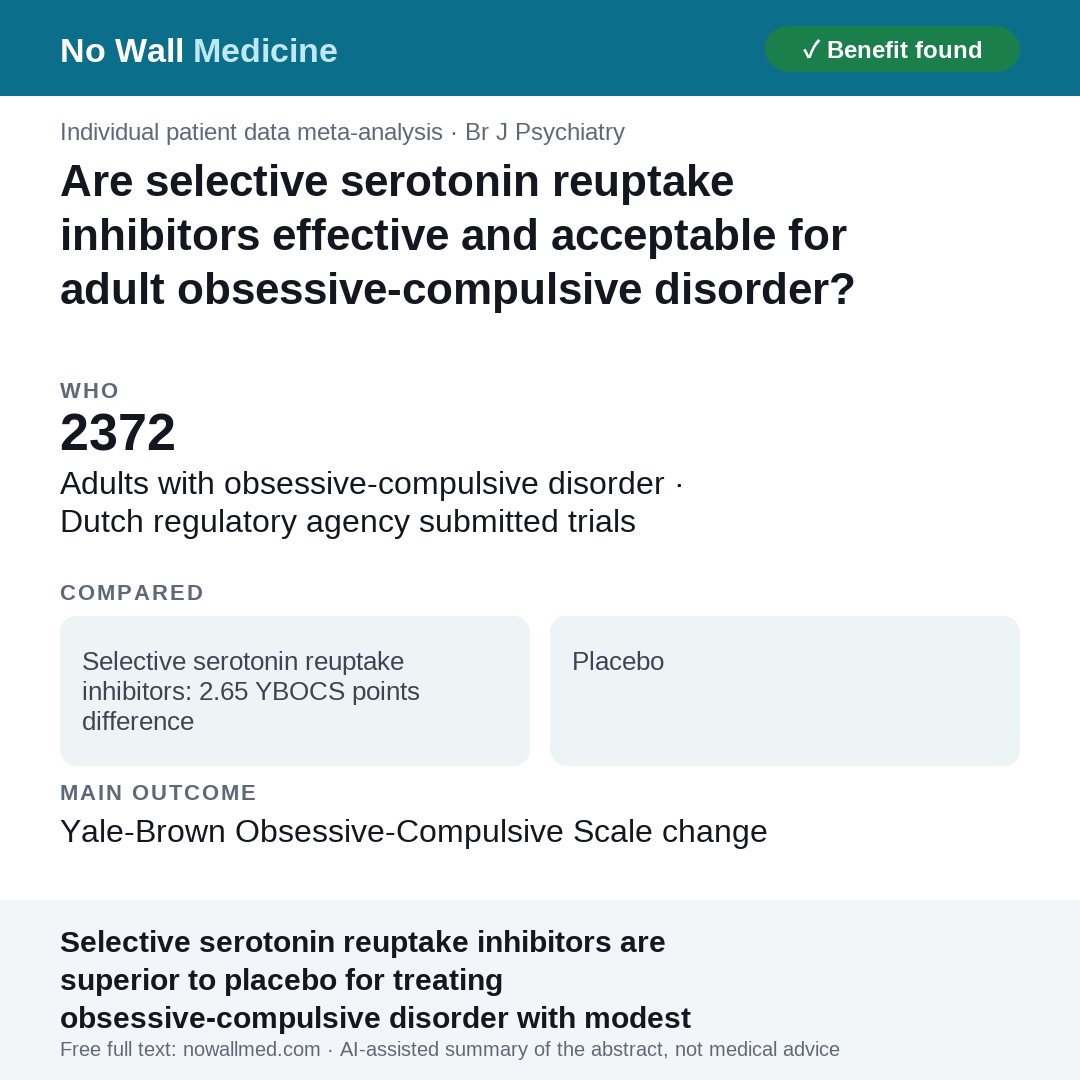
Individual patient data meta-analysis of placebo-controlled trials of selective serotonin reuptake inhibitors submitted for regulatory approval in adult obsessive-compulsive disorder
Individual patient data meta-analysisBenefit found
Are selective serotonin reuptake inhibitors effective and acceptable for adult obsessive-compulsive disorder?
Who
2372
Adults with obsessive-compulsive disorder · Dutch regulatory agency submitted trials
Compared
Selective serotonin reuptake inhibitors: 2.65 YBOCS points difference
Placebo
Main outcome
Yale-Brown Obsessive-Compulsive Scale change
Result: mean difference 2.65 (95% CI 1.85-3.46)
Bottom line: Selective serotonin reuptake inhibitors are superior to placebo for treating obsessive-compulsive disorder with modest effects.
Limitation: Three trials were excluded because of missing data
Br J Psychiatry · 2025-05-15Download image
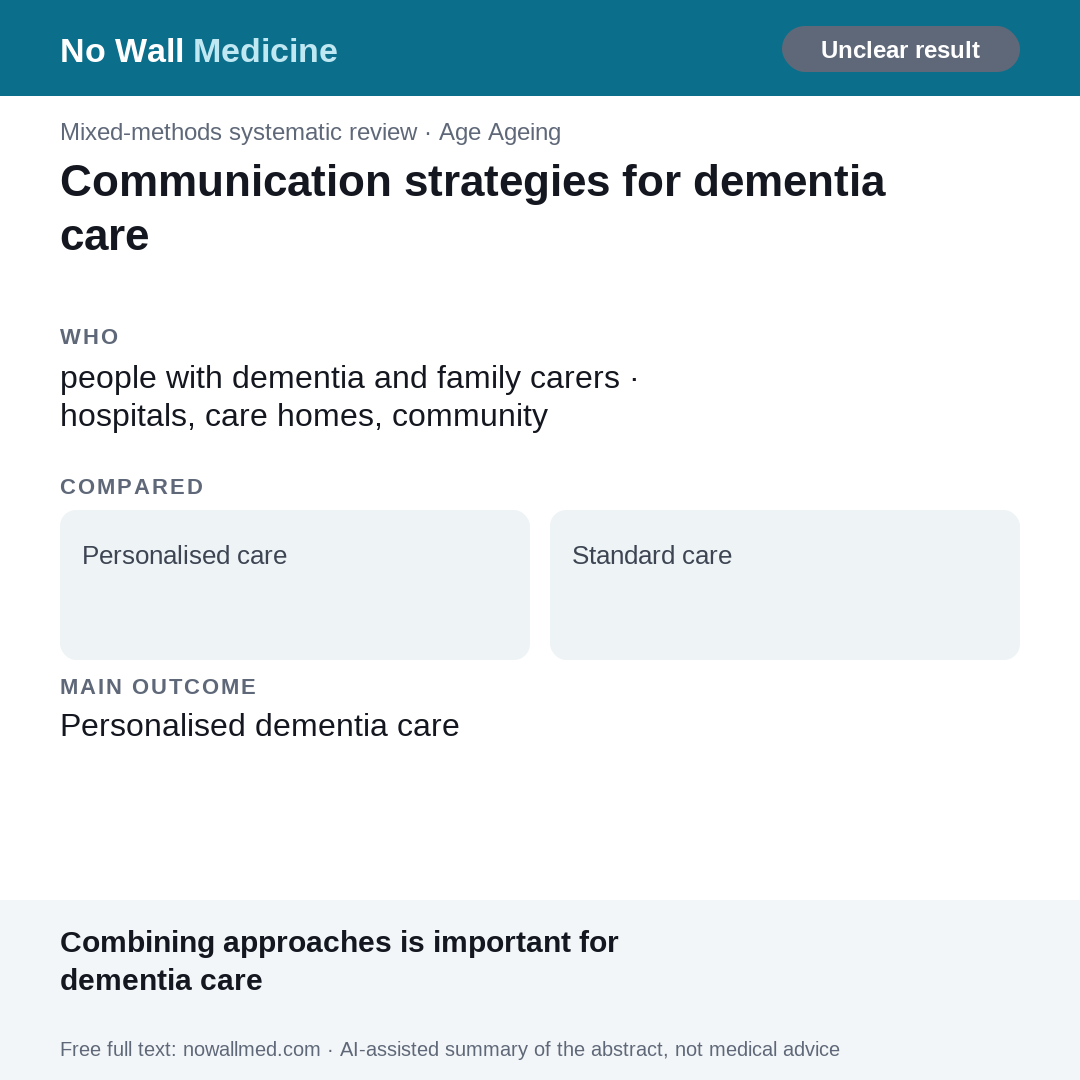
Communication strategies for delivering personalised dementia care and support: a mixed-methods systematic review and narrative synthesis
Mixed-methods systematic reviewUnclear result
Communication strategies for dementia care
Who
people with dementia and family carers · hospitals, care homes, community
Compared
Personalised care
Standard care
Main outcome
Personalised dementia care
Bottom line: Combining approaches is important for dementia care
Age Ageing · 2025-05-15Download image
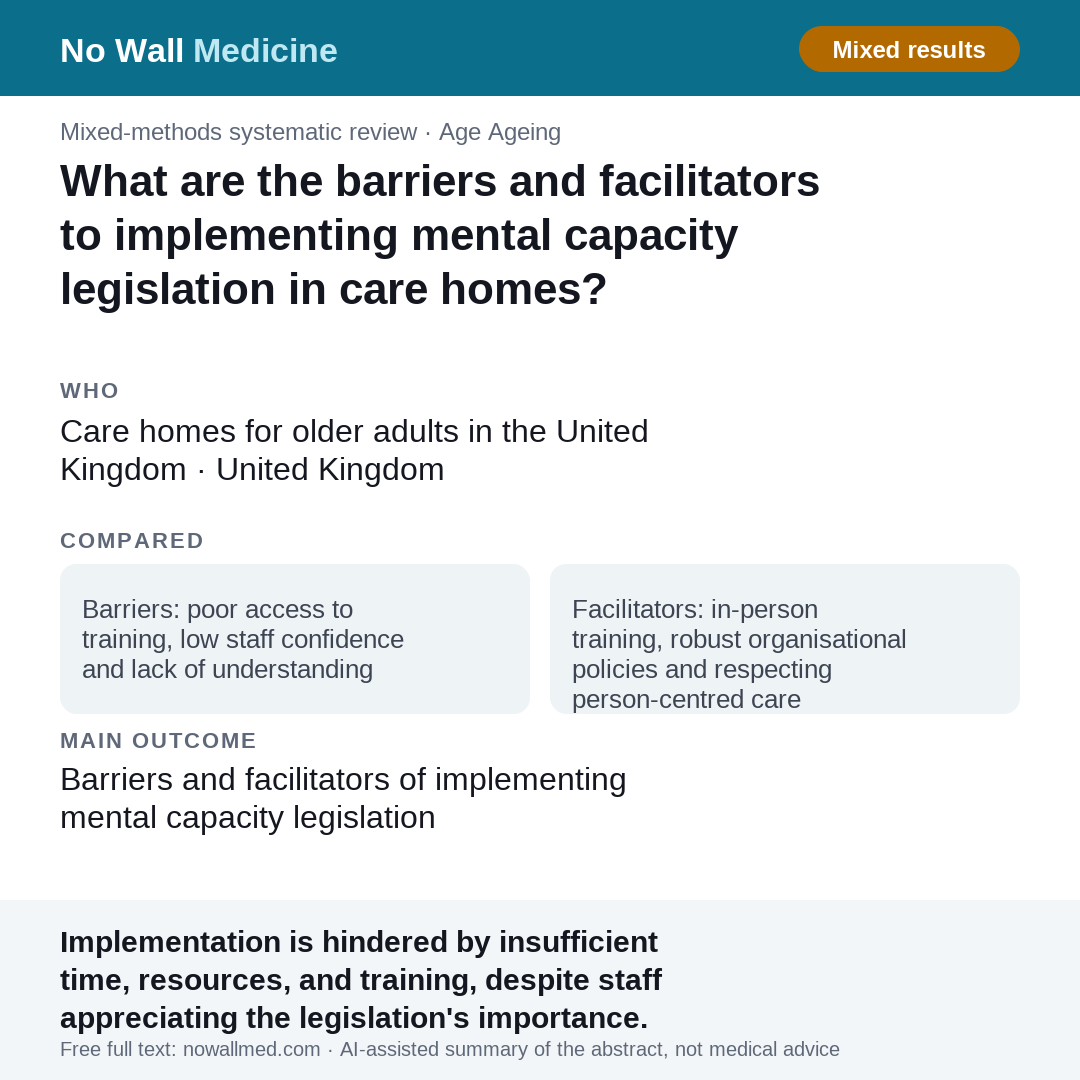
Barriers and facilitators to implementation of mental capacity legislation in care homes for older adults in the United Kingdom: a mixed-methods systematic review
Mixed-methods systematic reviewMixed results
What are the barriers and facilitators to implementing mental capacity legislation in care homes?
Who
Care homes for older adults in the United Kingdom · United Kingdom
Compared
Barriers: poor access to training, low staff confidence and lack of understanding
Facilitators: in-person training, robust organisational policies and respecting person-centred care
Main outcome
Barriers and facilitators of implementing mental capacity legislation
Bottom line: Implementation is hindered by insufficient time, resources, and training, despite staff appreciating the legislation's importance.
Age Ageing · 2025-05-15Download image