Visual abstracts
New randomized trials and meta-analyses from leading journals at a glance: who was studied, what was compared, and what was found. Every paper is free to read in full.
All specialtiesCardiology 4780Oncology 4080Gastroenterology & Hepatology 1914Infectious Disease 3775Neurology 1883Psychiatry & Mental Health 2238Pulmonology 2058Critical Care 1331Endocrinology & Diabetes 2550Pediatrics 2908Surgery 2496Orthopedics & Sports Medicine 922Neurosurgery 532Cardiothoracic & Vascular Surgery 662Plastic & Reconstructive Surgery 584Nephrology 1111Rheumatology 812Hematology 1095Dermatology 617Ophthalmology 537Obstetrics & Gynecology 1656Public & Global Health 1041Radiology & Imaging 637Anesthesiology 958Urology 751ENT (Otolaryngology) 497Emergency Medicine 484Allergy & Immunology 310Geriatrics 973Family Medicine & Primary Care 538Medical Genetics & Genomics 662Pathology & Laboratory Medicine 156Physical Medicine & Rehabilitation 744Palliative Care 422Nutrition 1564Digital Health & AI 2188General Medicine 318
Does transcranial direct current stimulation enhance sensorimotor recovery in chronic ankle instability? A systematic review and meta-analysis
Systematic review and meta-analysisBenefit found
Does transcranial direct current stimulation enhance sensorimotor recovery in chronic ankle instability?
Who
310
Participants with chronic ankle instability
Compared
Transcranial direct current stimulation
Control
Main outcome
Balance control and sensorimotor functional performance
Result: balance control g = 0.27, sensorimotor functional performance g = 0.16
Bottom line: Transcranial direct current stimulation improves balance control and sensorimotor function in chronic ankle instability.
Limitation: The underlying neurophysiological mechanisms should be more explicitly characterized.
J Neuroeng Rehabil · 2026-02-27Download image

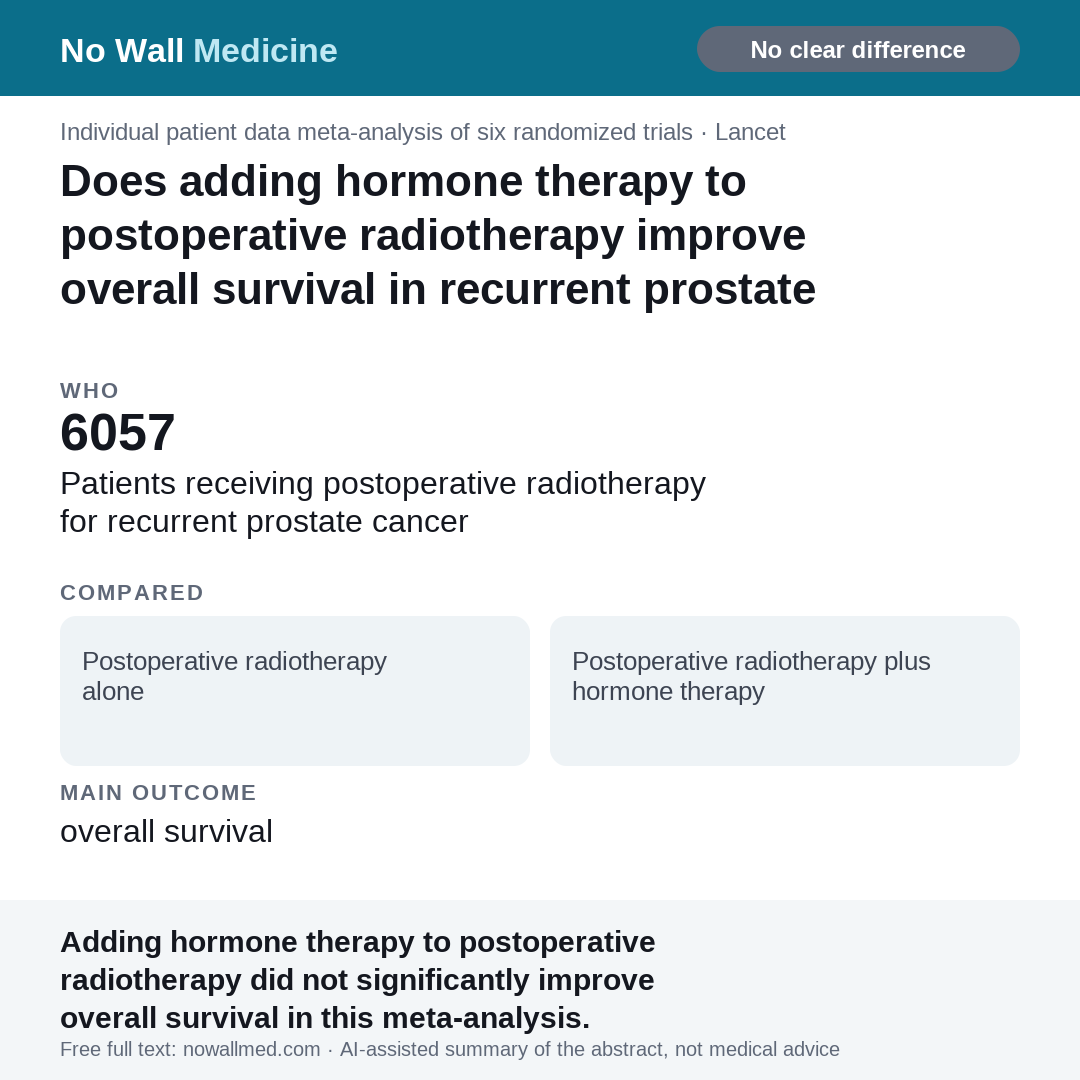
Hormone therapy use and duration with postoperative radiotherapy for recurrent prostate cancer: an individual patient data meta-analysis
Individual patient data meta-analysis of six randomized trialsNo clear difference
Does adding hormone therapy to postoperative radiotherapy improve overall survival in recurrent prostate cancer?
Who
6057
Patients receiving postoperative radiotherapy for recurrent prostate cancer
Compared
Postoperative radiotherapy alone
Postoperative radiotherapy plus hormone therapy
Main outcome
overall survival
Result: hazard ratio 0.87 (95% CI 0.76 to 1.01)
Bottom line: Adding hormone therapy to postoperative radiotherapy did not significantly improve overall survival in this meta-analysis.
Funded by: National Institutes of Health
Lancet · 2026-02-26Download image
Effectiveness of a digital clinical decision support algorithm for guiding antibiotic prescribing in pediatric outpatient care in Rwanda: A pragmatic cluster non-randomized controlled trial
Pragmatic, open-label cluster non-randomized controlled trialBenefit found
Does a digital clinical decision support algorithm reduce antibiotic prescribing in pediatric outpatient care?
Who
47822
Acutely ill children aged 14 years or below · 32 Rwandan health centers
Compared
24.5%ePOCT+ digital algorithm
70.5%Standard care
Main outcome
Antibiotic prescriptions
Result: absolute difference -46.0, 95% CI [-52.5, -39.5]
Bottom line: The ePOCT+ algorithm substantially reduced antibiotic prescribing in Rwandan pediatric primary care without compromising clinical recovery.
Limitation: Non-randomized design and self-reported outcomes.
PLOS Med · 2026-02-26Download image

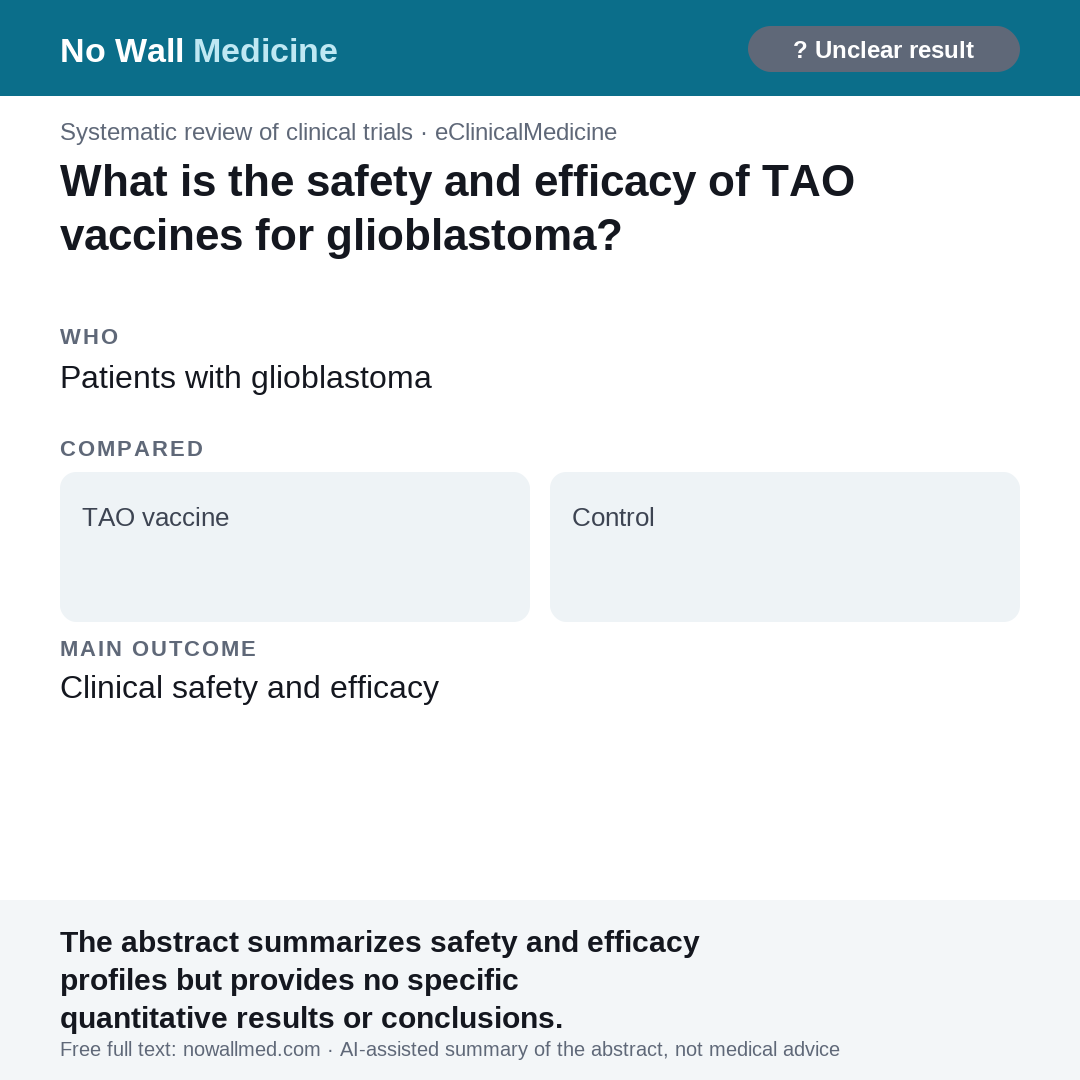
Tumor antigen only (TAO) vaccine platforms for glioblastoma therapeutics: a systematic review of evidence from clinical trials
Systematic reviewUnclear result
TAO vaccine for glioblastoma
Who
adults with glioblastoma
Compared
TAO vaccine
standard care
Main outcome
clinical safety and efficacy
Bottom line: TAO vaccine is a promising strategy
eClinicalMedicine · 2026-02-26Download image
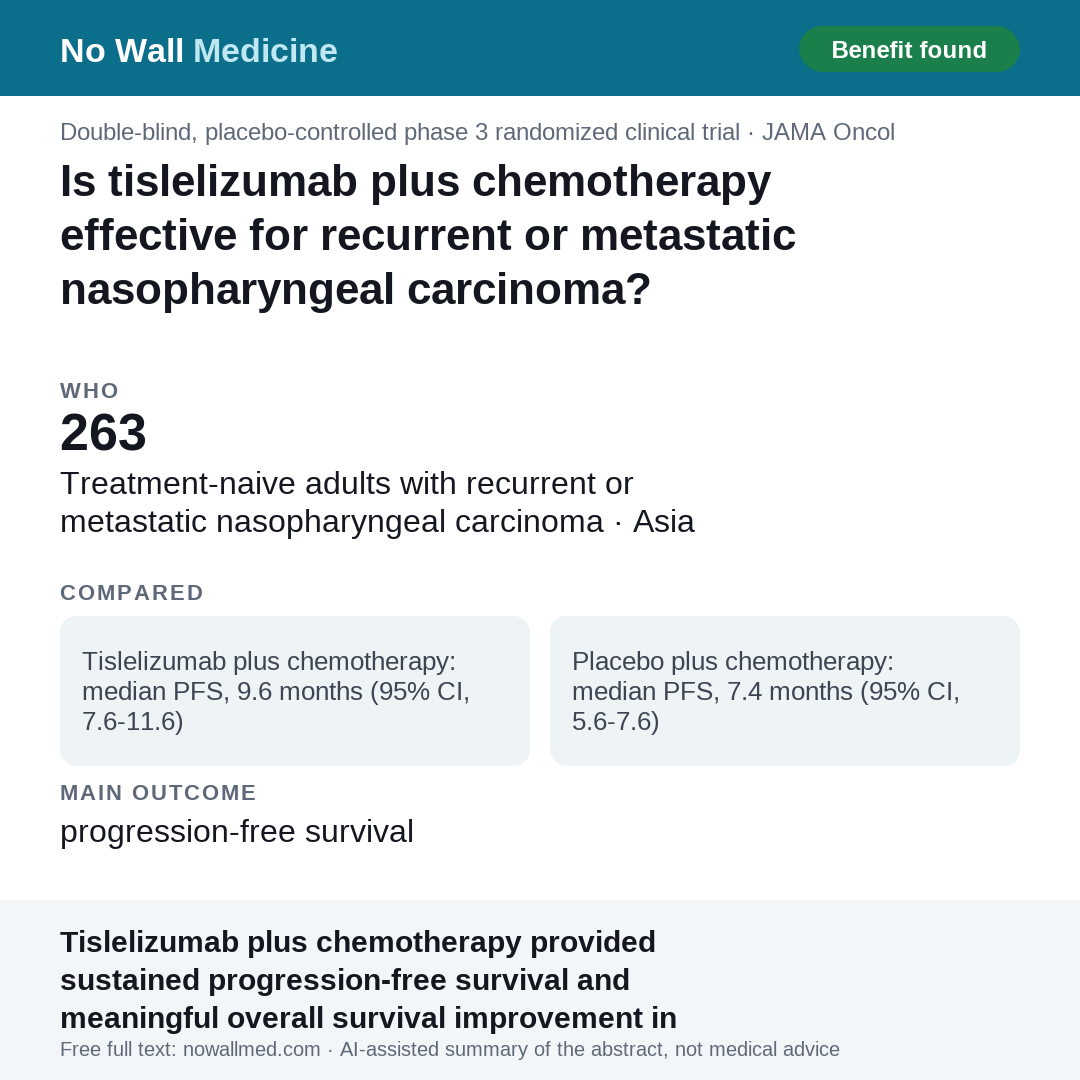
First-Line Tislelizumab Plus Chemotherapy for Recurrent or Metastatic Nasopharyngeal Cancer: Three-Year Follow-Up of the Phase 3 RATIONALE-309 Randomized Clinical Trial
Double-blind, placebo-controlled phase 3 randomized clinical trialBenefit found
Is tislelizumab plus chemotherapy effective for recurrent or metastatic nasopharyngeal carcinoma?
Who
263
Treatment-naive adults with recurrent or metastatic nasopharyngeal carcinoma · Asia
Compared
Tislelizumab plus chemotherapy: median PFS, 9.6 months (95% CI, 7.6-11.6)
Placebo plus chemotherapy: median PFS, 7.4 months (95% CI, 5.6-7.6)
Main outcome
progression-free survival
Result: hazard ratio 0.53 (95% CI, 0.39-0.71)
Bottom line: Tislelizumab plus chemotherapy provided sustained progression-free survival and meaningful overall survival improvement in recurrent or metastatic nasopharyngeal carcinoma.
JAMA Oncol · 2026-02-26Download image
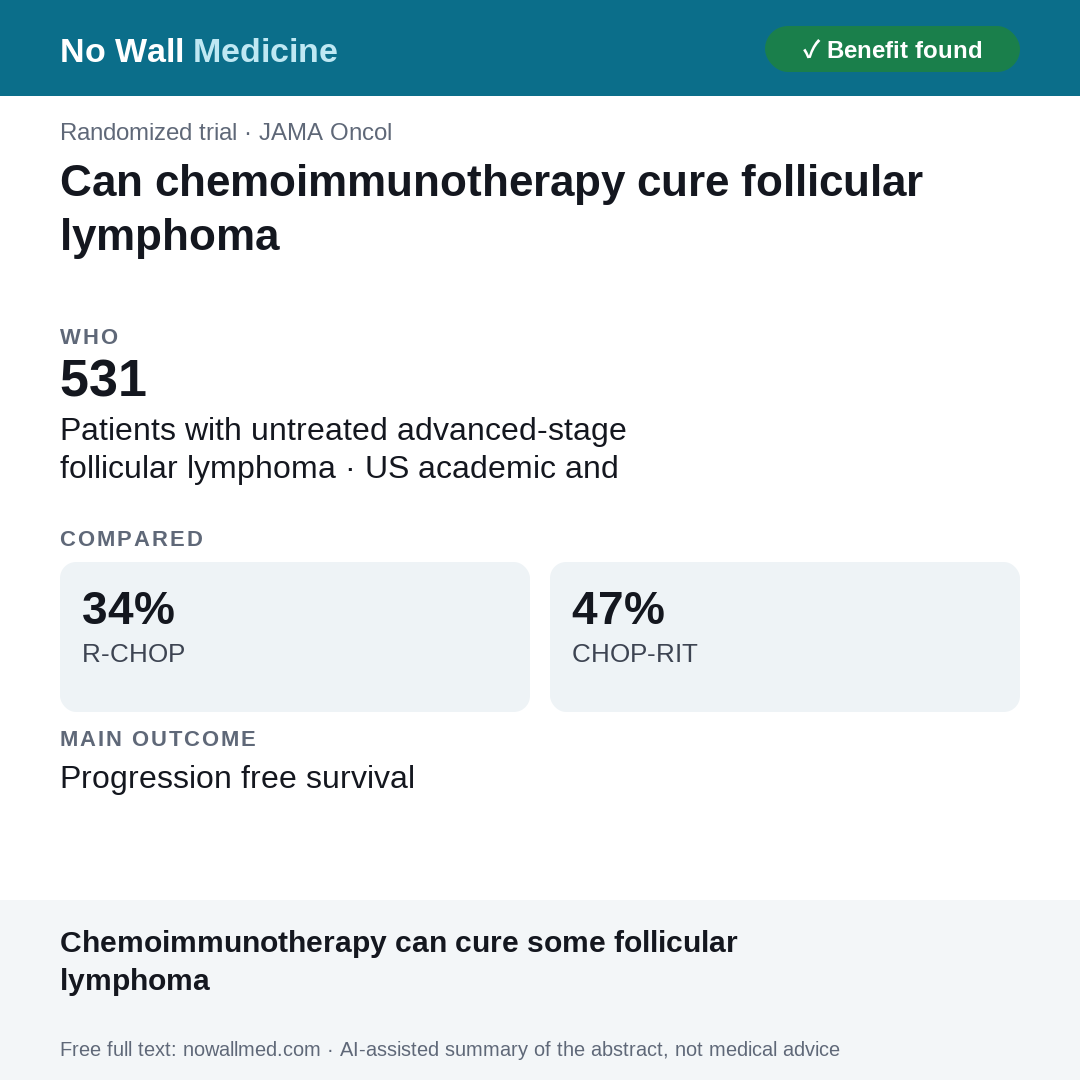
Treatment of Follicular Lymphoma With CHOP and Anti-CD20 Therapy: 15-Year Follow-Up of the SWOG S0016 Trial
Randomized trialBenefit found
Can chemoimmunotherapy cure follicular lymphoma
Who
531
Patients with untreated advanced-stage follicular lymphoma · US academic and community locations
Compared
34%R-CHOP
47%CHOP-RIT
Main outcome
Progression free survival
Bottom line: Chemoimmunotherapy can cure some follicular lymphoma
JAMA Oncol · 2026-02-26Download image
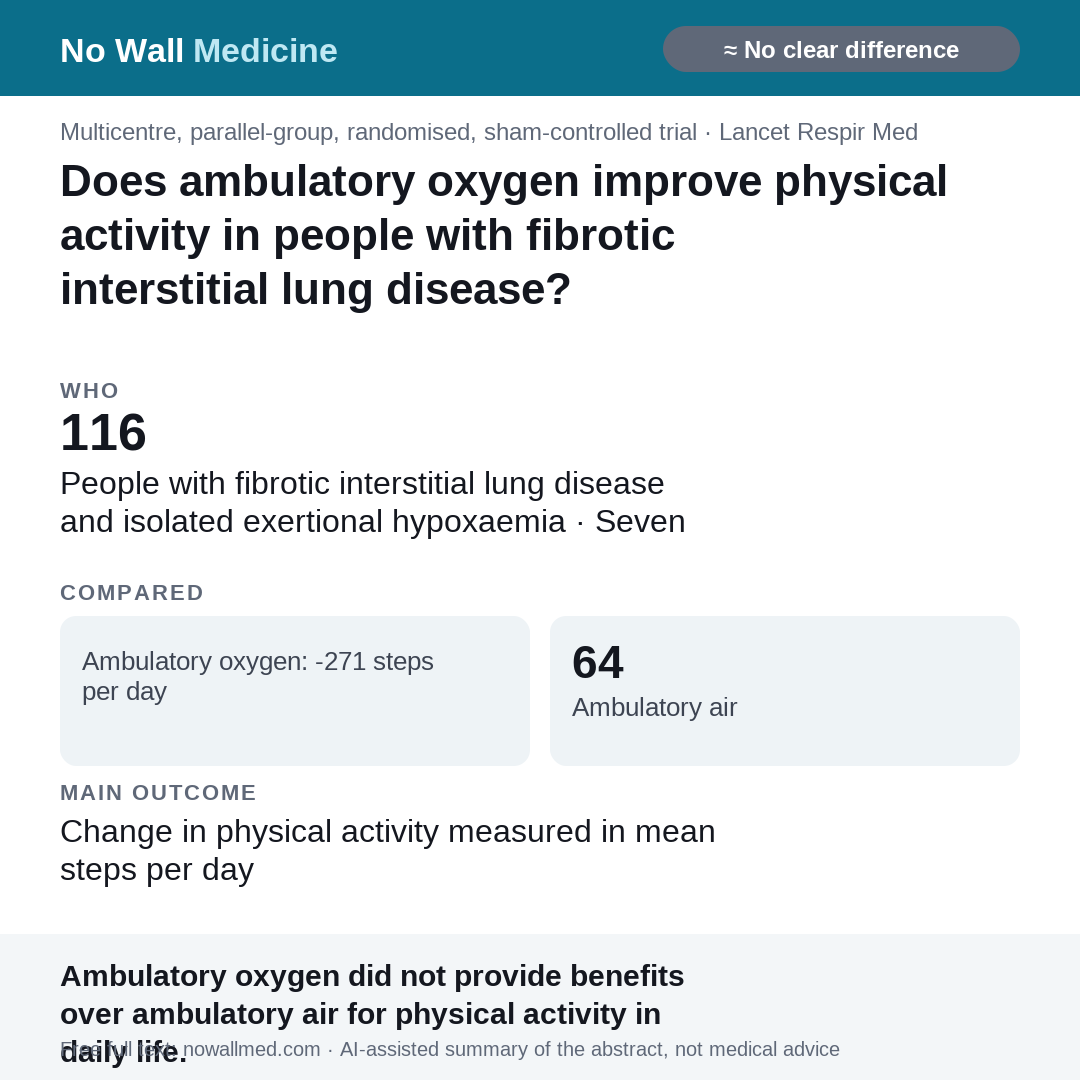
Ambulatory oxygen for treatment of exertional hypoxaemia in pulmonary fibrosis (PFOX): a multicentre, randomised, sham-controlled trial
Multicentre, parallel-group, randomised, sham-controlled trialNo clear difference
Does ambulatory oxygen improve physical activity in people with fibrotic interstitial lung disease?
Who
116
People with fibrotic interstitial lung disease and isolated exertional hypoxaemia · Seven hospital sites in Australia and Sweden
Compared
Ambulatory oxygen: -271 steps per day
64Ambulatory air
Main outcome
Change in physical activity measured in mean steps per day
Result: -334, -803 to 134
Bottom line: Ambulatory oxygen did not provide benefits over ambulatory air for physical activity in daily life.
Funded by: National Health and Medical Research Council and Swedish Society of Medicine
Lancet Respir Med · 2026-02-26Download image
Effect of the Support, Educate, Empower Personalized Glaucoma Coaching Program on Medication Adherence: The SEE Program Randomized Clinical Trial
Randomized, nonmasked, parallel clinical trialBenefit found
Does SEE coaching improve glaucoma medication adherence compared with standard written education?
Who
235
Adults with glaucoma taking eye drops with self-reported adherence 85% or lower · University of Michigan and Henry Ford Health System
Compared
77.6%SEE intervention (19.7%)
58.0%Control (25.2%)
Main outcome
Medication adherence over 6 months
Result: difference, 19.7%; 95% CI, 13.7 to 25.6
Bottom line: The SEE glaucoma coaching program improved medication adherence and reduced glaucoma-related distress compared with standard written education.
JAMA Ophthalmol · 2026-02-26Download image

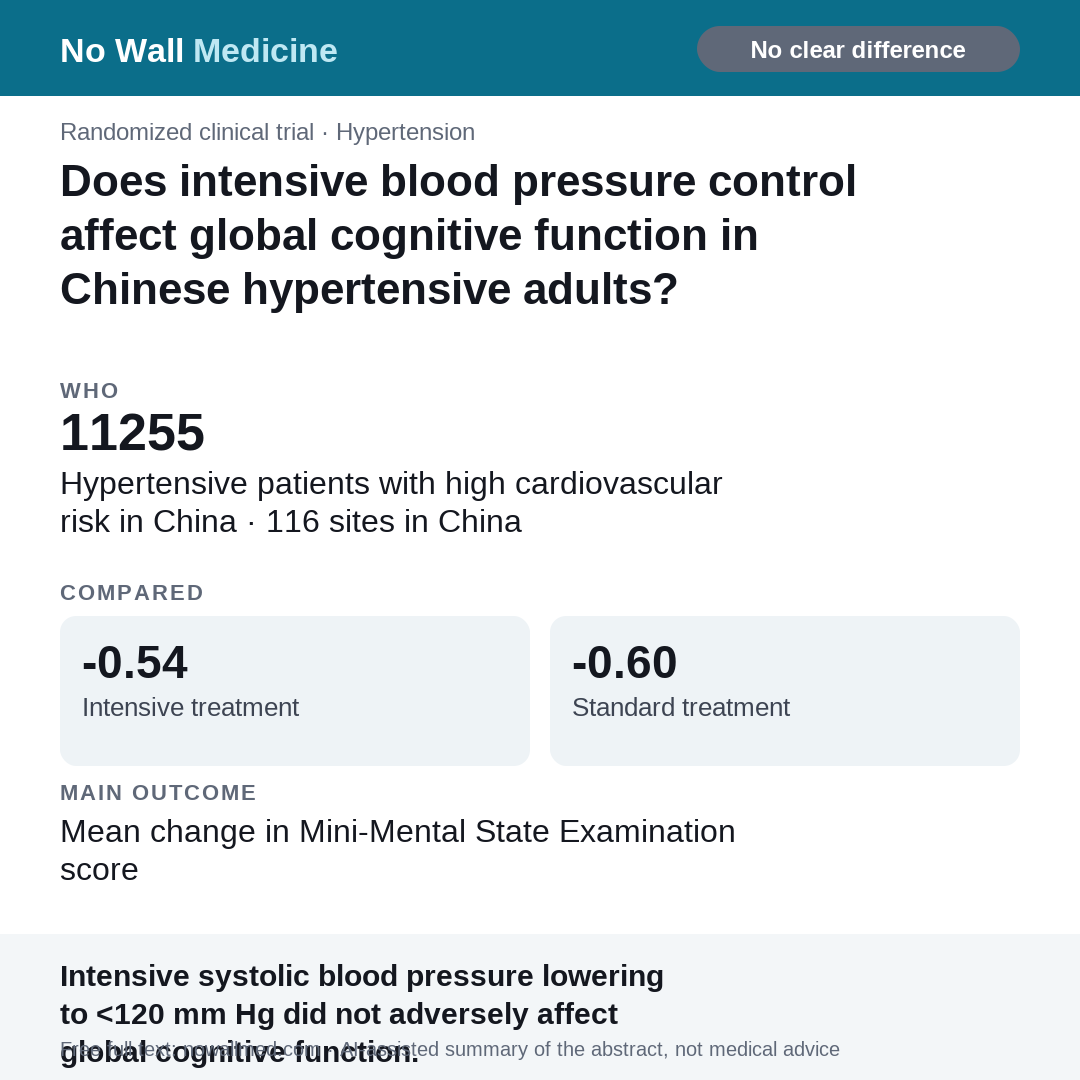
Intensive BP Control and Cognitive Function: A Randomized Clinical Trial
Randomized clinical trialNo clear difference
Does intensive blood pressure control affect global cognitive function in Chinese hypertensive adults?
Who
11255
Hypertensive patients with high cardiovascular risk in China · 116 sites in China
Compared
-0.54Intensive treatment (95% CI, -0.63 to -0.46)
-0.60Standard treatment (95% CI, -0.68 to -0.51)
Main outcome
Mean change in Mini-Mental State Examination score
Result: difference, 0.05 (95% CI, -0.07 to 0.17)
Bottom line: Intensive systolic blood pressure lowering to <120 mm Hg did not adversely affect global cognitive function.
Hypertension · 2026-02-26Download image
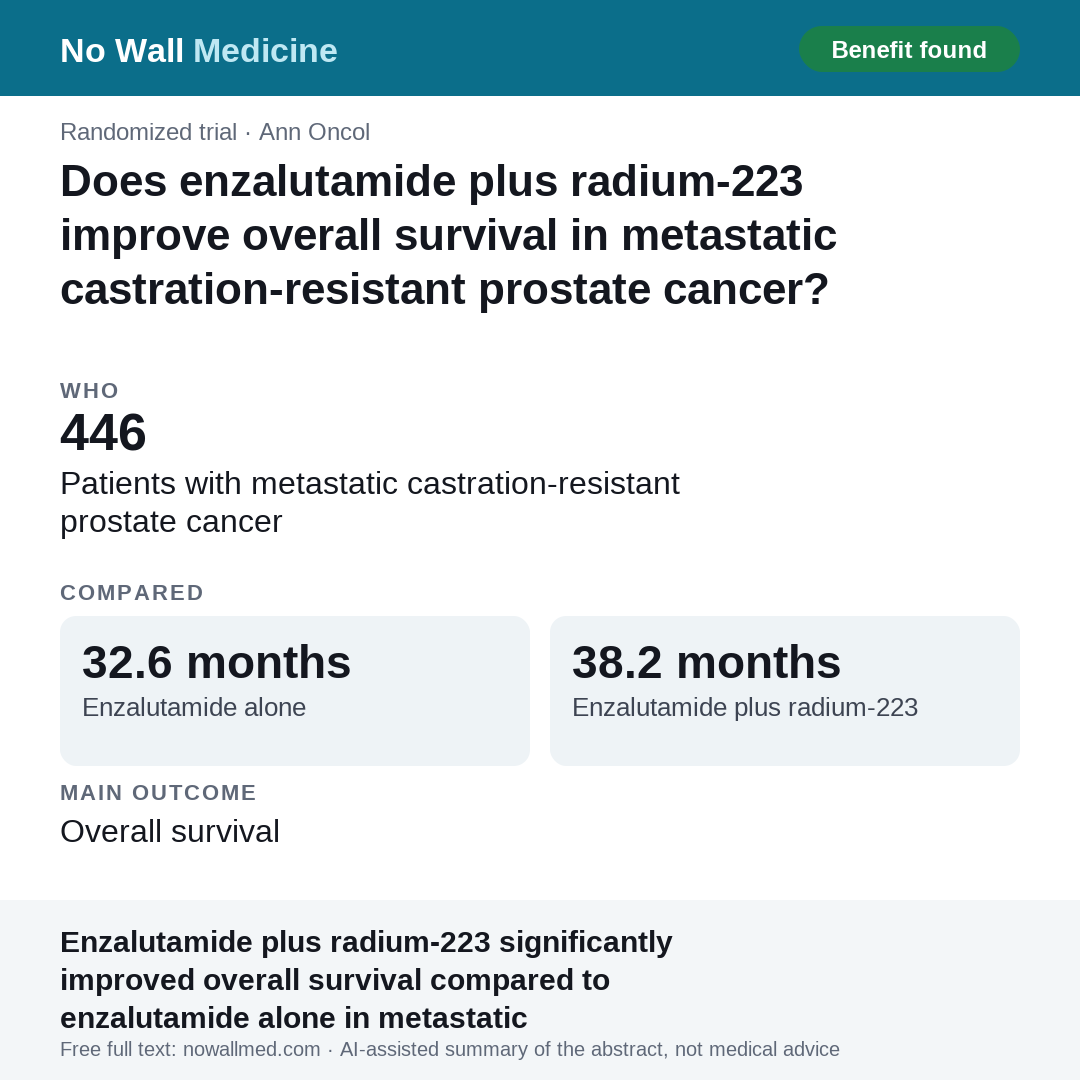
Final overall survival results from EORTC 1333/PEACE-3 trial of enzalutamide plus radium-223 in metastatic castration-resistant prostate cancer
Randomized trialBenefit found
Does enzalutamide plus radium-223 improve overall survival in metastatic castration-resistant prostate cancer?
Who
446
Patients with metastatic castration-resistant prostate cancer
Compared
32.6 monthsEnzalutamide alone (95% CI 29.3-38.2 months)
38.2 monthsEnzalutamide plus radium-223 (95% CI 33.1-44.8 months)
Main outcome
Overall survival
Result: hazard ratio 0.76 (95% CI 0.60-0.96)
Bottom line: Enzalutamide plus radium-223 significantly improved overall survival compared to enzalutamide alone in metastatic castration-resistant prostate cancer.
Ann Oncol · 2026-02-26Download image
Rethinking immune studies: population-level immune variations and the path forward
Meta-analysis of cohort studiesMixed results
Immune variations with demographics
Who
people of different ages, sexes, and backgrounds
Compared
women
men
Main outcome
immune cell proportions
Bottom line: Immune variations associated with demographics
Limitation: small sample sizes and biases
J Gerontol A · 2026-02-26Download image

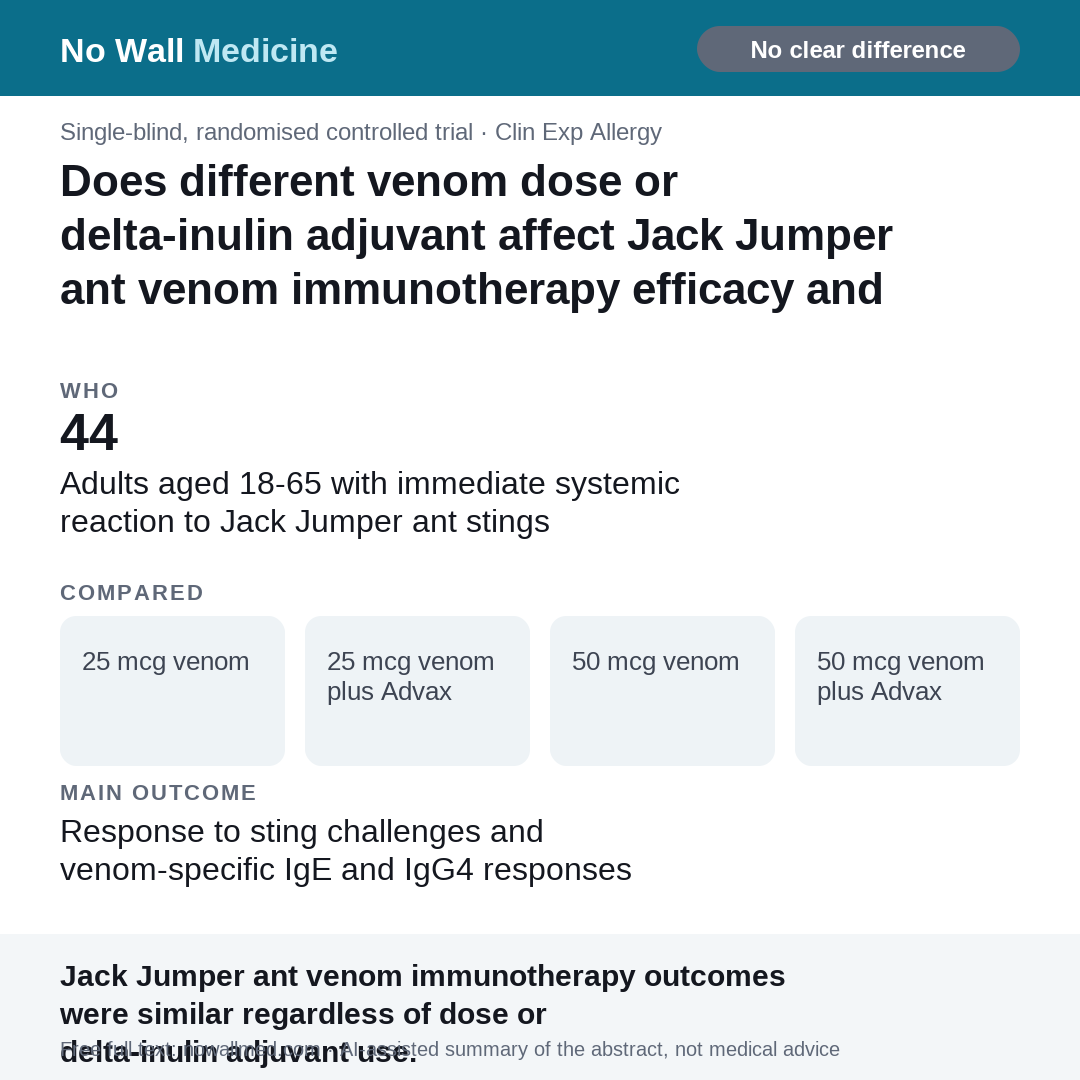
A Pilot Randomised Controlled Dose-Ranging Trial of Ant Venom Immunotherapy With and Without Delta-Inulin Adjuvant
Single-blind, randomised controlled trialNo clear difference
Does different venom dose or delta-inulin adjuvant affect Jack Jumper ant venom immunotherapy efficacy and safety?
Who
44
Adults aged 18-65 with immediate systemic reaction to Jack Jumper ant stings
Compared
25 mcg venom
25 mcg venom plus Advax
50 mcg venom
50 mcg venom plus Advax
Main outcome
Response to sting challenges and venom-specific IgE and IgG4 responses
Bottom line: Jack Jumper ant venom immunotherapy outcomes were similar regardless of dose or delta-inulin adjuvant use.
Clin Exp Allergy · 2026-02-26Download image
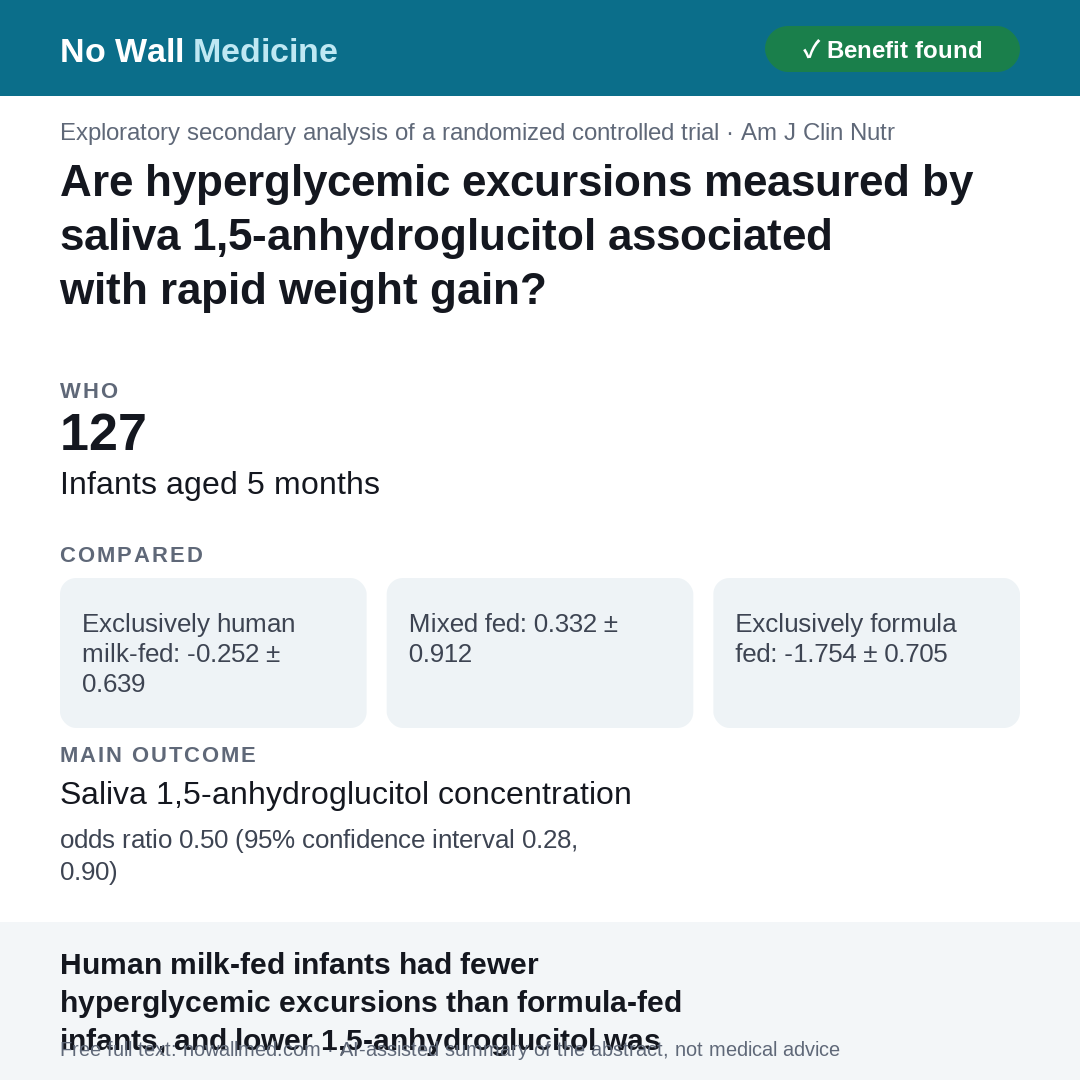
Infant hyperglycemic excursions by saliva 1,5-anhydroglucitol varied by weight status, rapid weight gain, and mode of feeding: an exploratory secondary analysis
Exploratory secondary analysis of a randomized controlled trialBenefit found
Are hyperglycemic excursions measured by saliva 1,5-anhydroglucitol associated with rapid weight gain?
Who
127
Infants aged 5 months
Compared
Exclusively human milk-fed: -0.252 ± 0.639
Mixed fed: 0.332 ± 0.912
Exclusively formula fed: -1.754 ± 0.705
Main outcome
Saliva 1,5-anhydroglucitol concentration
Result: odds ratio 0.50 (95% confidence interval 0.28, 0.90)
Bottom line: Human milk-fed infants had fewer hyperglycemic excursions than formula-fed infants, and lower 1,5-anhydroglucitol was associated with rapid weight gain.
Am J Clin Nutr · 2026-02-26Download image
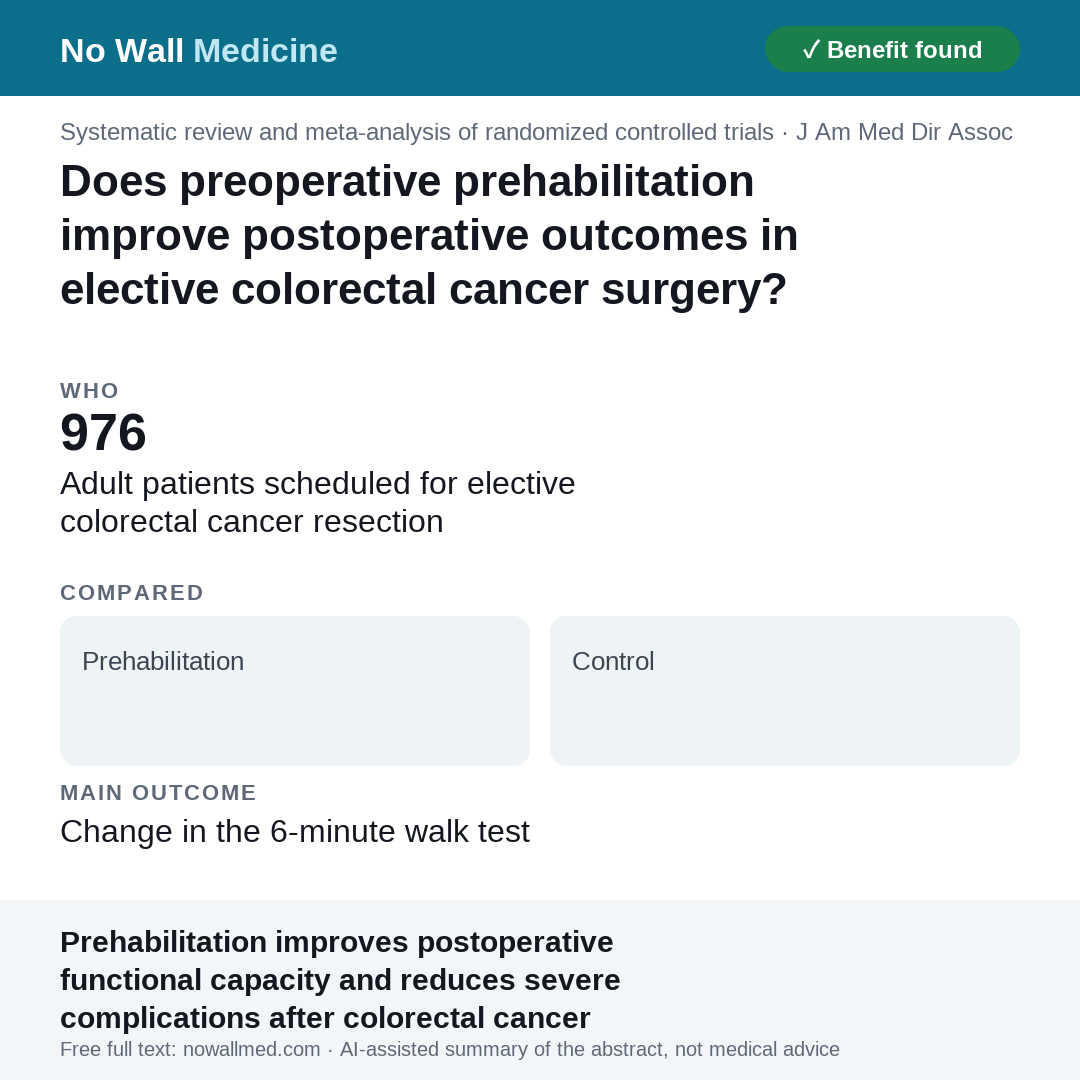
The Impact of Prehabilitation on Postoperative Outcomes in Colorectal Cancer: A Meta-Analysis of Randomized Controlled Trials
Systematic review and meta-analysis of randomized controlled trialsBenefit found
Does preoperative prehabilitation improve postoperative outcomes in elective colorectal cancer surgery?
Who
976
Adult patients scheduled for elective colorectal cancer resection
Compared
Prehabilitation
Control
Main outcome
Change in the 6-minute walk test
Result: mean difference = 32.95 meters, 95% CI, 15.34-50.57
Bottom line: Prehabilitation improves postoperative functional capacity and reduces severe complications after colorectal cancer surgery.
J Am Med Dir Assoc · 2026-02-26Download image
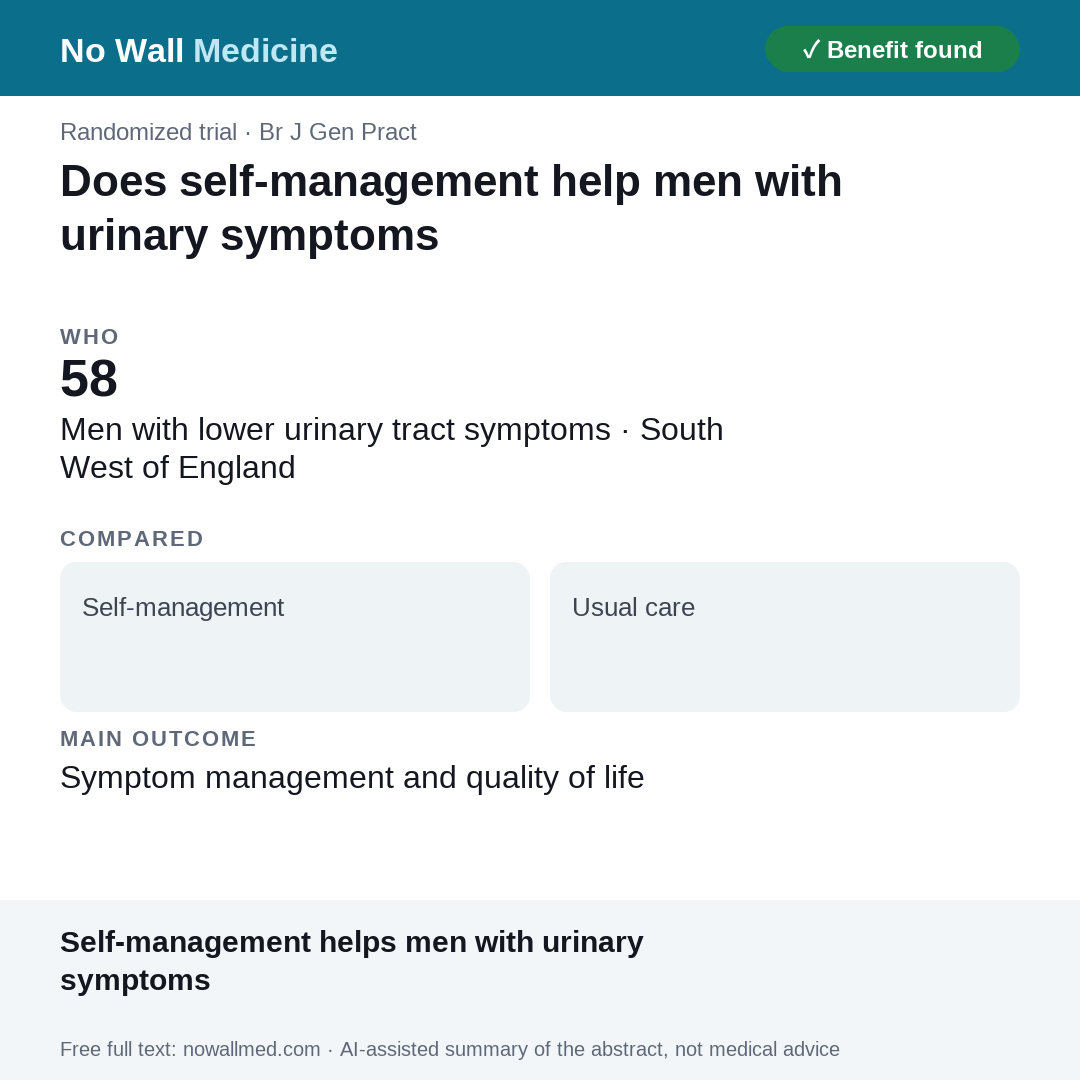
Self-management of male urinary symptoms: qualitative findings from a primary care trial
Randomized trialBenefit found
Does self-management help men with urinary symptoms
Who
58
Men with lower urinary tract symptoms · South West of England
Compared
Self-management
Usual care
Main outcome
Symptom management and quality of life
Bottom line: Self-management helps men with urinary symptoms
Br J Gen Pract · 2026-02-26Download image
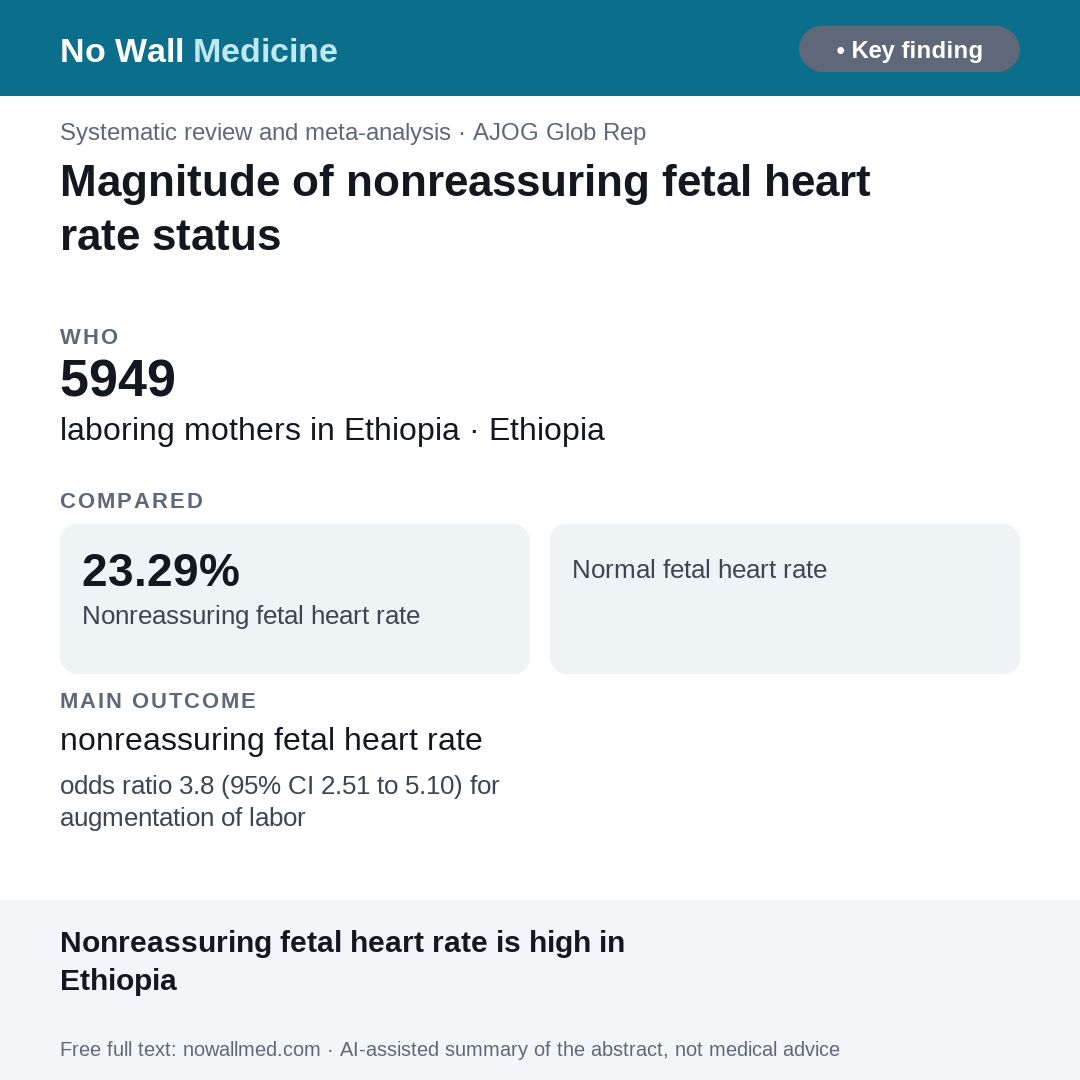
Magnitude, associated factors, and immediate outcomes of nonreassuring fetal heart rate status among laboring mothers in Ethiopia: a systematic review and meta-analysis
Systematic review and meta-analysisHarm found
Magnitude of nonreassuring fetal heart rate status
Who
5949
laboring mothers in Ethiopia · Ethiopia
Compared
23.29%Nonreassuring fetal heart rate (14.89, 31.69)
Normal fetal heart rate
Main outcome
nonreassuring fetal heart rate
Result: odds ratio 3.8 (95% CI 2.51 to 5.10) for augmentation of labor
Bottom line: Nonreassuring fetal heart rate is high in Ethiopia
Limitation: heterogeneity across studies
AJOG Glob Rep · 2026-02-26Download image
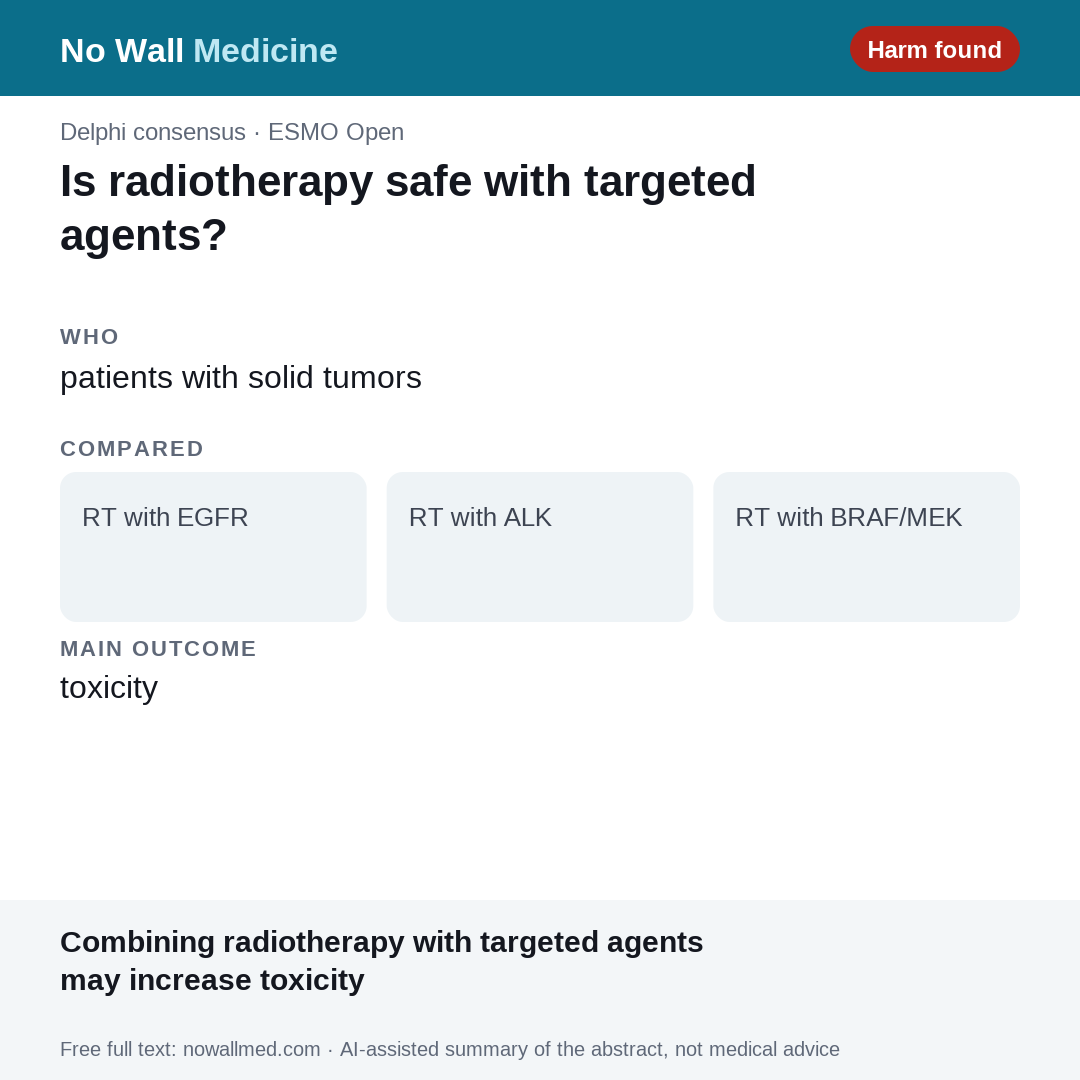
ESMO-ESTRO consensus statements on the safety of combining radiotherapy with EGFR, ALK, or BRAF/MEK inhibitors
Delphi consensusHarm found
Is radiotherapy safe with targeted agents?
Who
patients with solid tumors
Compared
RT with EGFR
RT with ALK
RT with BRAF/MEK
Main outcome
toxicity
Bottom line: Combining radiotherapy with targeted agents may increase toxicity
Limitation: scarce high-quality toxicity data
ESMO Open · 2026-02-26Download image
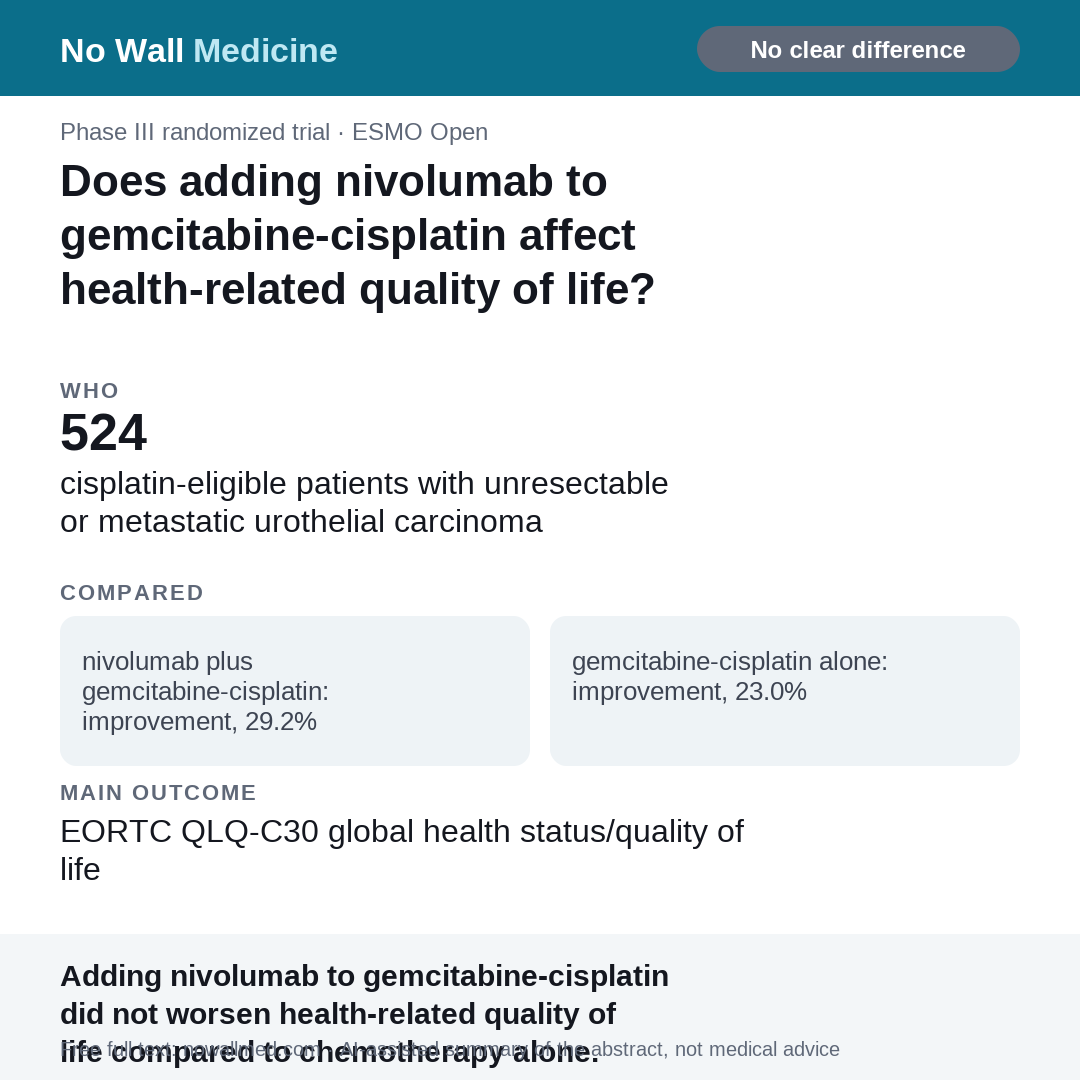
Nivolumab plus gemcitabine-cisplatin for unresectable or metastatic urothelial carcinoma: health-related quality-of-life analyses from the phase III CheckMate 901 trial
Phase III randomized trialNo clear difference
Does adding nivolumab to gemcitabine-cisplatin affect health-related quality of life?
Who
524
cisplatin-eligible patients with unresectable or metastatic urothelial carcinoma
Compared
nivolumab plus gemcitabine-cisplatin: improvement, 29.2%
gemcitabine-cisplatin alone: improvement, 23.0%
Main outcome
EORTC QLQ-C30 global health status/quality of life
Bottom line: Adding nivolumab to gemcitabine-cisplatin did not worsen health-related quality of life compared to chemotherapy alone.
ESMO Open · 2026-02-26Download image
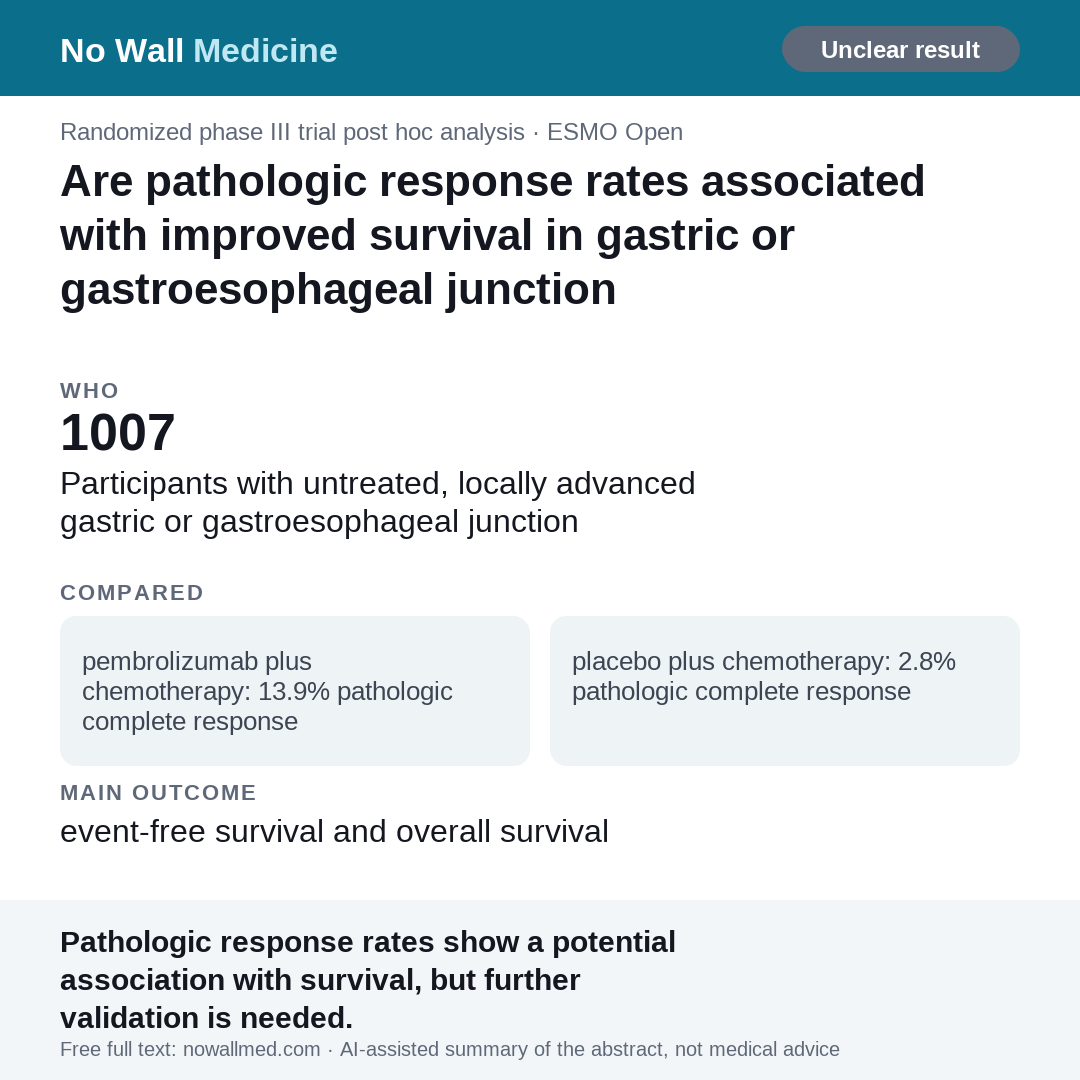
Surrogate endpoints for survival in KEYNOTE-585: neoadjuvant/adjuvant pembrolizumab plus chemotherapy versus placebo plus chemotherapy for gastric or gastroesophageal junction adenocarcinoma
Randomized phase III trial post hoc analysisUnclear result
Are pathologic response rates associated with improved survival in gastric or gastroesophageal junction adenocarcinoma?
Who
1007
Participants with untreated, locally advanced gastric or gastroesophageal junction adenocarcinoma
Compared
pembrolizumab plus chemotherapy: 13.9% pathologic complete response
placebo plus chemotherapy: 2.8% pathologic complete response
Main outcome
event-free survival and overall survival
Result: hazard ratio 0.6 (95% CI 0.4-1.0) for event-free survival
Bottom line: Pathologic response rates show a potential association with survival, but further validation is needed.
Limitation: This was a post hoc analysis and further validation is needed.
ESMO Open · 2026-02-26Download image
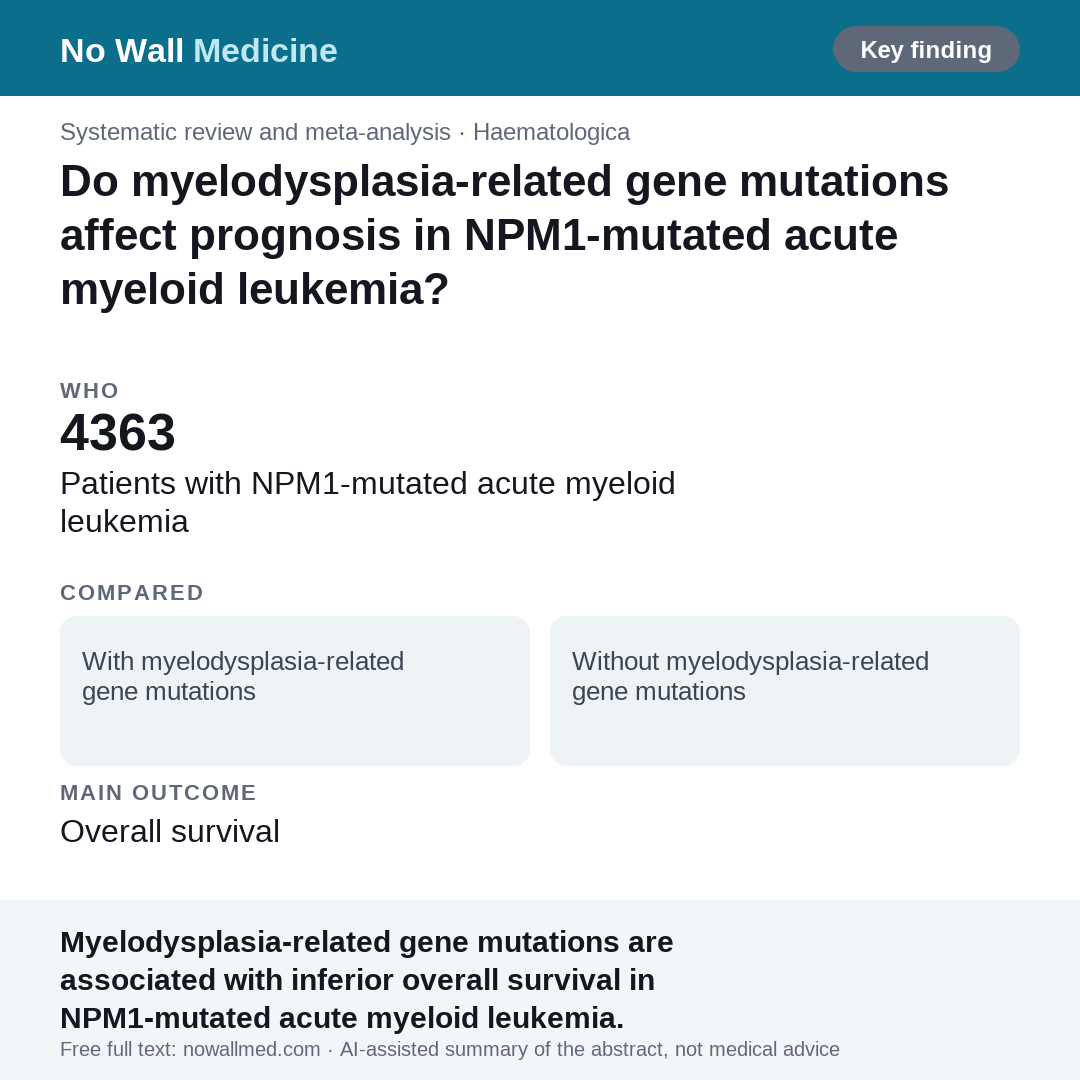
Prognostic implications of myelodysplasia-related gene mutations in NPM1-mutated acute myeloid leukemia: a systematic review and meta-analysis
Systematic review and meta-analysisKey finding
Do myelodysplasia-related gene mutations affect prognosis in NPM1-mutated acute myeloid leukemia?
Who
4363
Patients with NPM1-mutated acute myeloid leukemia
Compared
With myelodysplasia-related gene mutations
Without myelodysplasia-related gene mutations
Main outcome
Overall survival
Result: hazard ratio 1.30 (95% CI 1.11-1.51)
Bottom line: Myelodysplasia-related gene mutations are associated with inferior overall survival in NPM1-mutated acute myeloid leukemia.
Haematologica · 2026-02-26Download image