Visual abstracts
New randomized trials and meta-analyses from leading journals at a glance: who was studied, what was compared, and what was found. Every paper is free to read in full.
All specialtiesCardiology 4758Oncology 4009Gastroenterology & Hepatology 1888Infectious Disease 3723Neurology 1846Psychiatry & Mental Health 2207Pulmonology 2093Critical Care 1333Endocrinology & Diabetes 2483Pediatrics 2874Surgery 2487Orthopedics & Sports Medicine 896Neurosurgery 516Cardiothoracic & Vascular Surgery 649Plastic & Reconstructive Surgery 584Nephrology 1073Rheumatology 799Hematology 1081Dermatology 611Ophthalmology 527Obstetrics & Gynecology 1647Public & Global Health 1011Radiology & Imaging 629Anesthesiology 954Urology 746ENT (Otolaryngology) 495Emergency Medicine 494Allergy & Immunology 304Geriatrics 955Family Medicine & Primary Care 549Medical Genetics & Genomics 655Pathology & Laboratory Medicine 154Physical Medicine & Rehabilitation 735Palliative Care 432Nutrition 1529Digital Health & AI 2135General Medicine 312
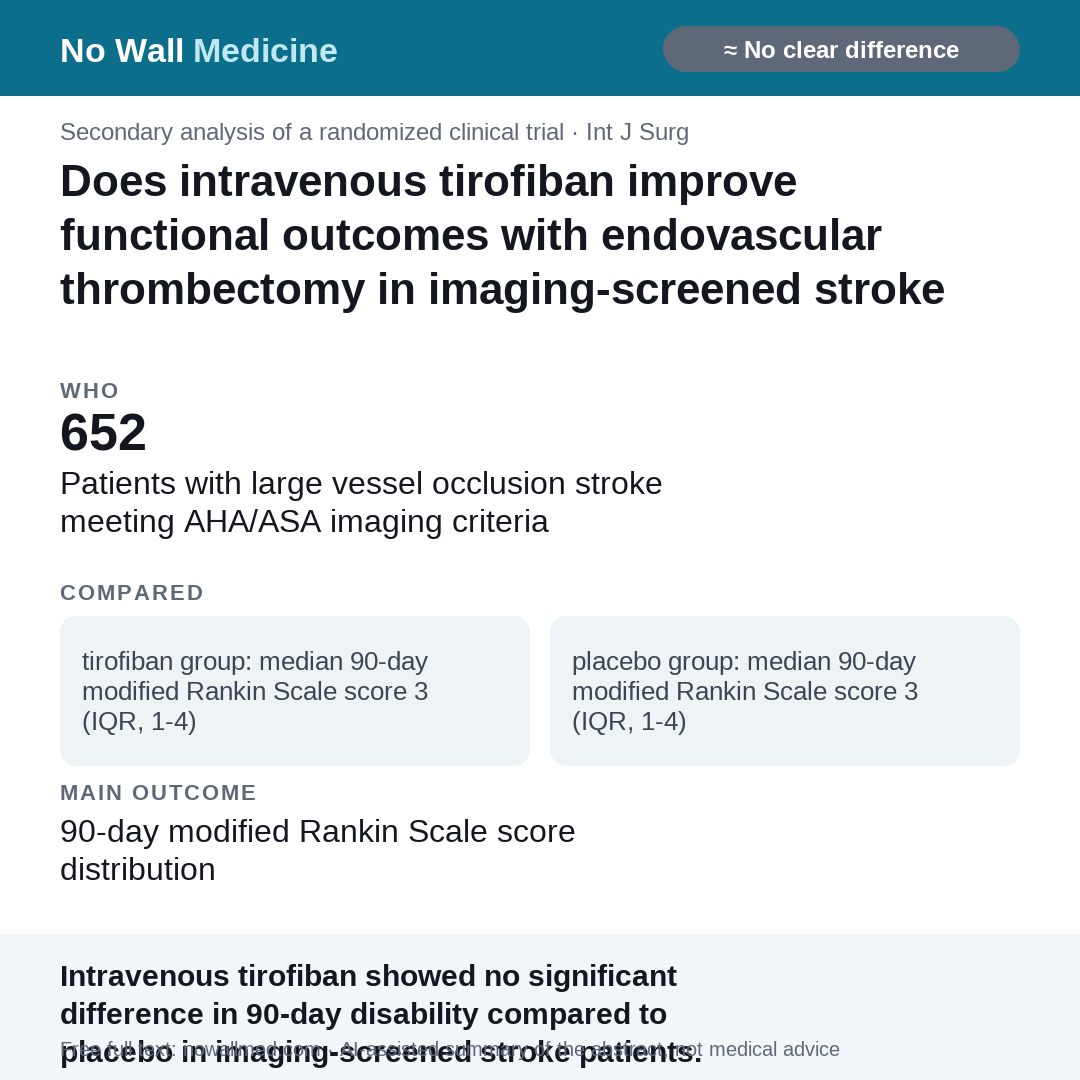
Association of functional outcomes between intravenous tirofiban and endovascular thrombectomy in imaging-screened patients with large vessel occlusion stroke: a secondary analysis of randomized clinical trial
Secondary analysis of a randomized clinical trialNo clear difference
Does intravenous tirofiban improve functional outcomes with endovascular thrombectomy in imaging-screened stroke patients?
Who
652
Patients with large vessel occlusion stroke meeting AHA/ASA imaging criteria
Compared
tirofiban group: median 90-day modified Rankin Scale score 3 (IQR, 1-4)
placebo group: median 90-day modified Rankin Scale score 3 (IQR, 1-4)
Main outcome
90-day modified Rankin Scale score distribution
Result: adjusted common odds ratio 1.08 (95% CI: 0.83-1.42)
Bottom line: Intravenous tirofiban showed no significant difference in 90-day disability compared to placebo in imaging-screened stroke patients.
Limitation: Potential increased risk of symptomatic intracranial hemorrhage in patients with cardioembolism stroke.
Int J Surg · 2024-09-01Download image
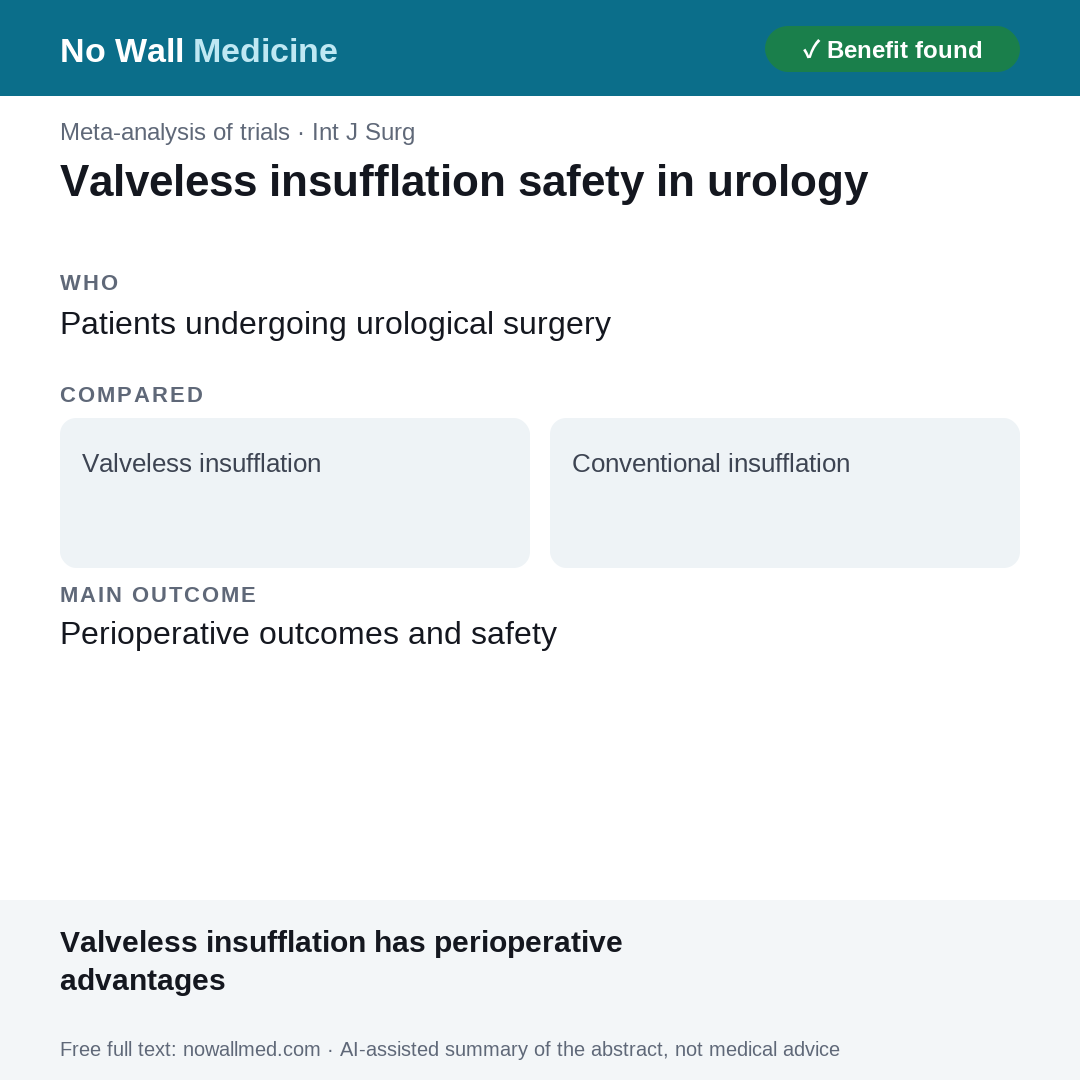
Perioperative outcomes and safety of valveless insufflation system in minimally invasive urological surgery: a systematic review and meta-analysis
Meta-analysis of trialsBenefit found
Valveless insufflation safety in urology
Who
Patients undergoing urological surgery
Compared
Valveless insufflation
Conventional insufflation
Main outcome
Perioperative outcomes and safety
Bottom line: Valveless insufflation has perioperative advantages
Limitation: High heterogeneity of results
Int J Surg · 2024-09-01Download image
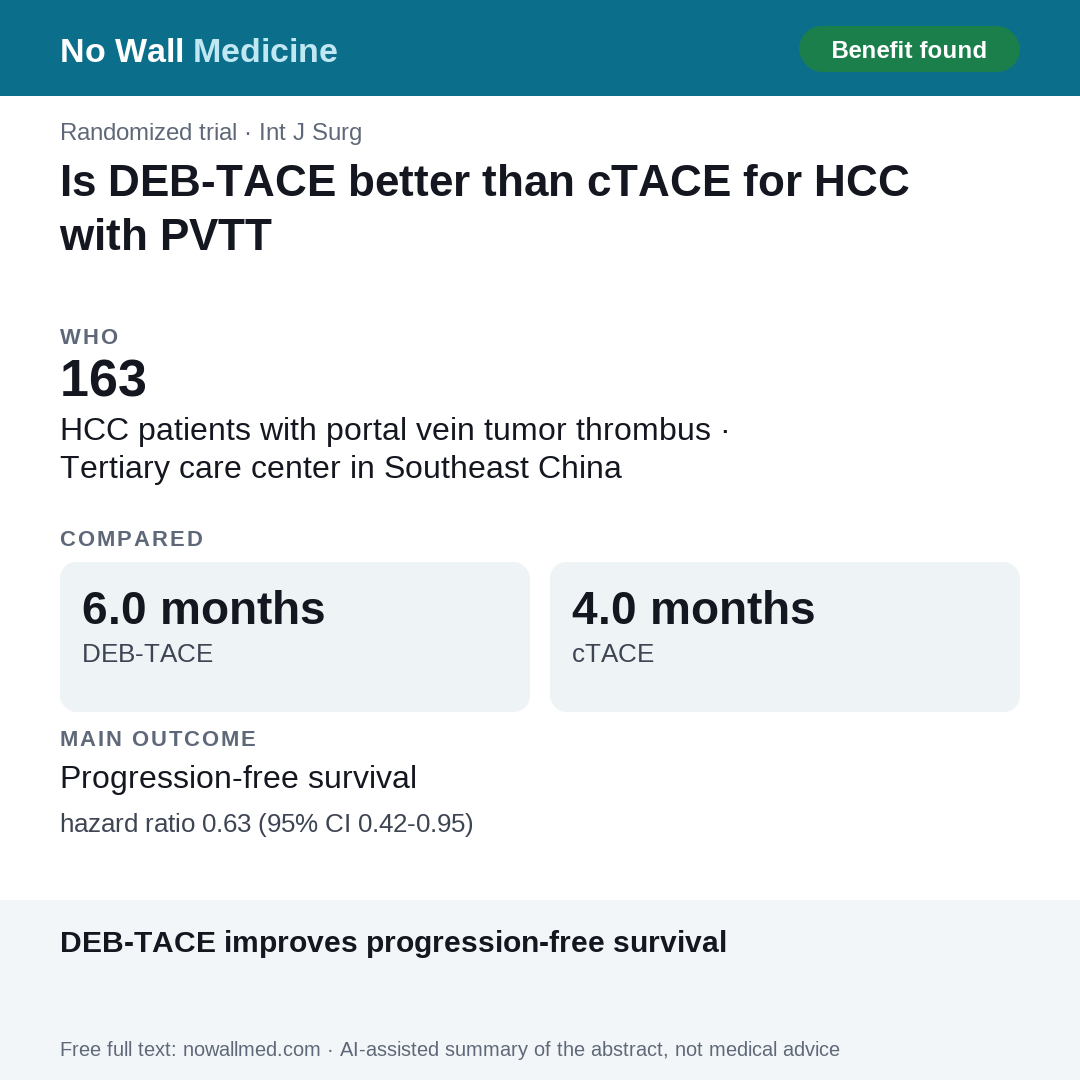
Comparison of drug-eluting bead with conventional transcatheter arterial chemoembolization for hepatocellular carcinoma with portal vein tumor thrombus: a randomized clinical trial
Randomized trialBenefit found
Is DEB-TACE better than cTACE for HCC with PVTT
Who
163
HCC patients with portal vein tumor thrombus · Tertiary care center in Southeast China
Compared
6.0 monthsDEB-TACE (95% CI, 5.0-10.0)
4.0 monthscTACE (95% CI, 3.0-5.0)
Main outcome
Progression-free survival
Result: hazard ratio 0.63 (95% CI 0.42-0.95)
Bottom line: DEB-TACE improves progression-free survival
Int J Surg · 2024-09-01Download image
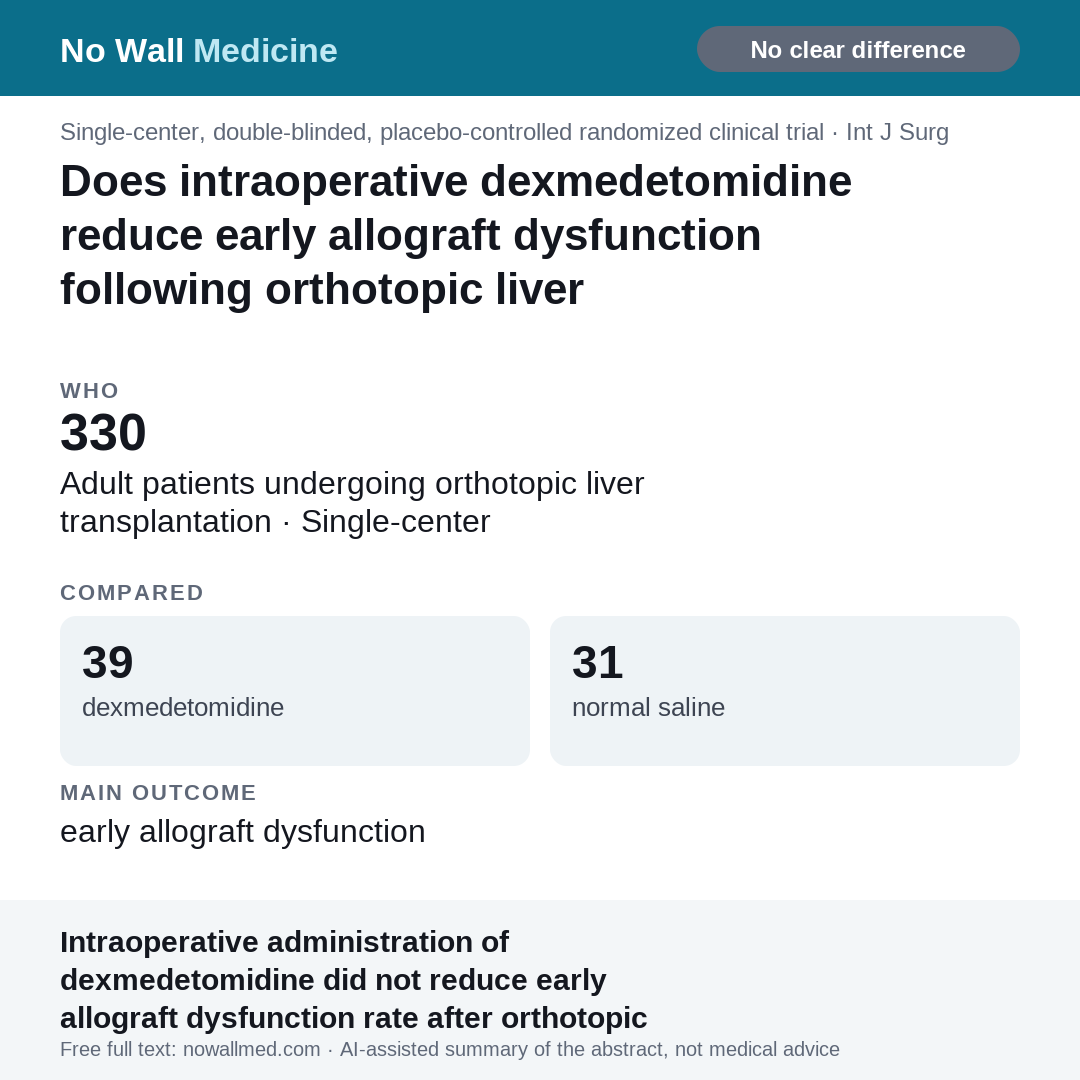
Dexmedetomidine use during orthotopic liver transplantation surgery on early allograft dysfunction: a randomized controlled trial
Single-center, double-blinded, placebo-controlled randomized clinical trialNo clear difference
Does intraoperative dexmedetomidine reduce early allograft dysfunction following orthotopic liver transplantation?
Who
330
Adult patients undergoing orthotopic liver transplantation · Single-center
Compared
39dexmedetomidine (24.4%)
31normal saline (19.4%)
Main outcome
early allograft dysfunction
Bottom line: Intraoperative administration of dexmedetomidine did not reduce early allograft dysfunction rate after orthotopic liver transplantation.
Int J Surg · 2024-09-01Download image
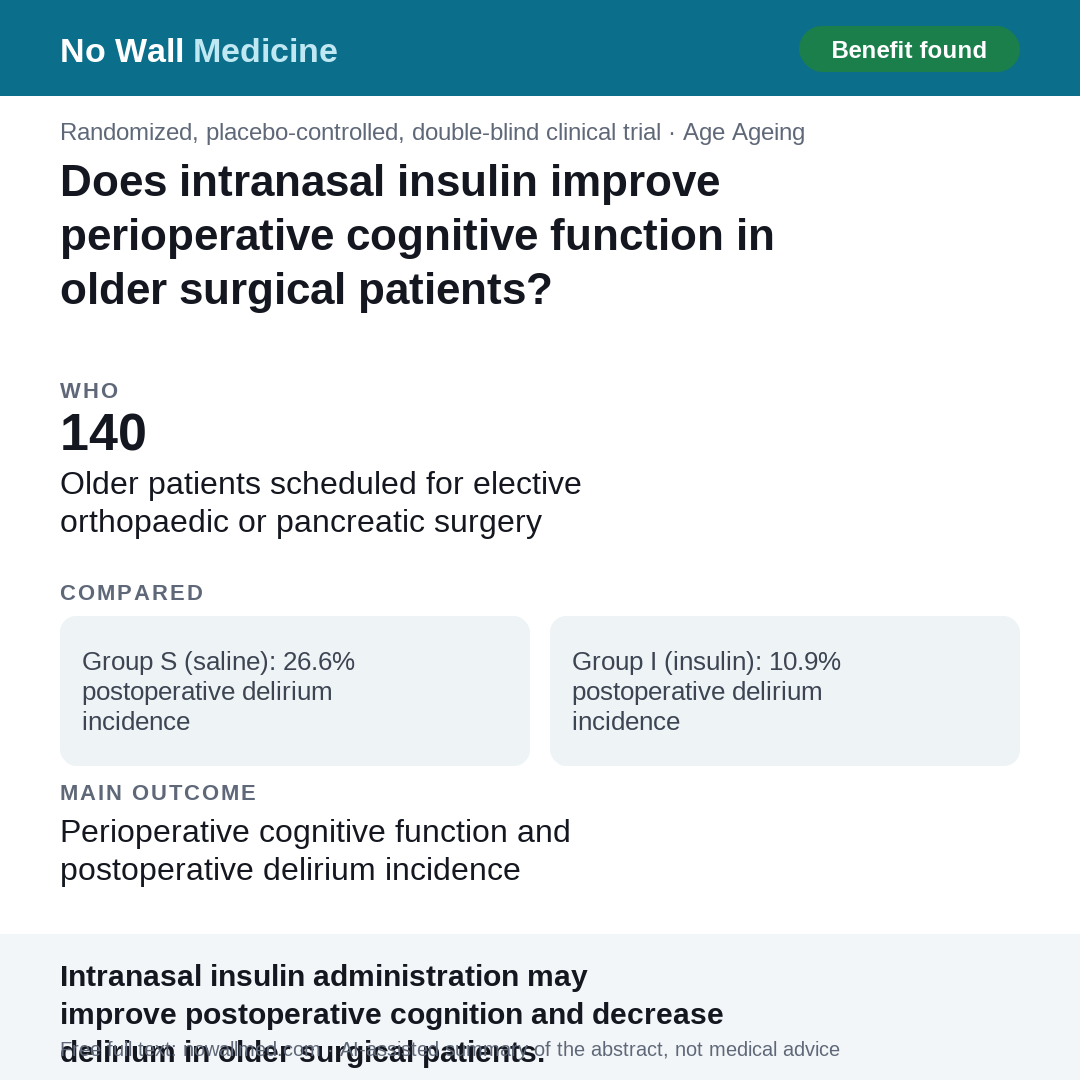
Effect of intranasal insulin on perioperative cognitive function in older adults: a randomized, placebo-controlled, double-blind clinical trial
Randomized, placebo-controlled, double-blind clinical trialBenefit found
Does intranasal insulin improve perioperative cognitive function in older surgical patients?
Who
140
Older patients scheduled for elective orthopaedic or pancreatic surgery
Compared
Group S (saline): 26.6% postoperative delirium incidence
Group I (insulin): 10.9% postoperative delirium incidence
Main outcome
Perioperative cognitive function and postoperative delirium incidence
Bottom line: Intranasal insulin administration may improve postoperative cognition and decrease delirium in older surgical patients.
Limitation: A more standardized multi-centre, large-sample study is needed to validate results.
Age Ageing · 2024-09-01Download image
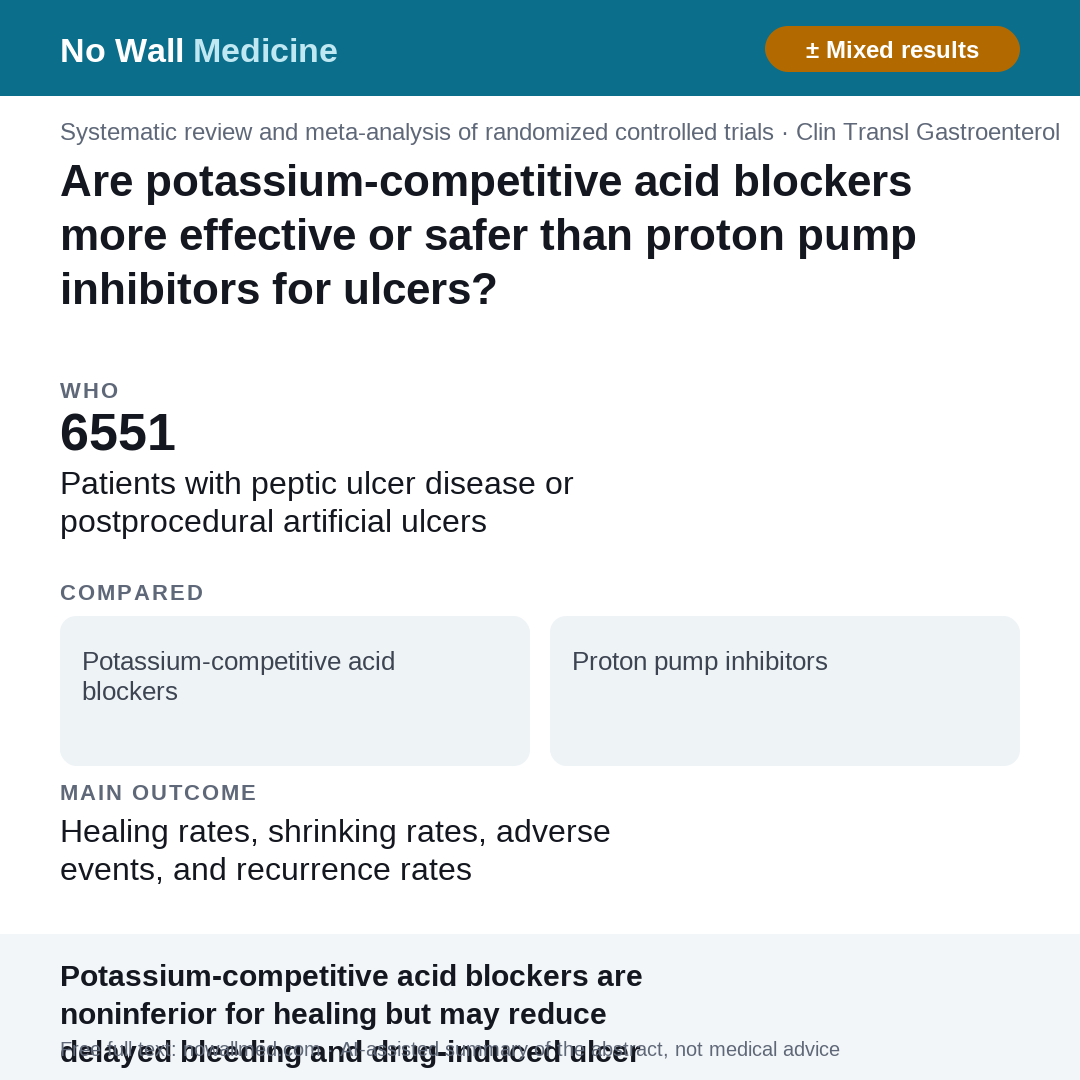
Efficacy and Safety of Potassium-Competitive Acid Blockers vs Proton Pump Inhibitors for Peptic Ulcer Disease or Postprocedural Artificial Ulcers: A Systematic Review and Meta-analysis
Systematic review and meta-analysis of randomized controlled trialsMixed results
Are potassium-competitive acid blockers more effective or safer than proton pump inhibitors for ulcers?
Who
6551
Patients with peptic ulcer disease or postprocedural artificial ulcers
Compared
Potassium-competitive acid blockers
Proton pump inhibitors
Main outcome
Healing rates, shrinking rates, adverse events, and recurrence rates
Result: RR 1.01 (95% CI 0.98-1.04) for PUD healing rate
Bottom line: Potassium-competitive acid blockers are noninferior for healing but may reduce delayed bleeding and drug-induced ulcer recurrence.
Limitation: More standardized experiments are needed for further applications and more precise conclusions.
Clin Transl Gastroenterol · 2024-09-01Download image
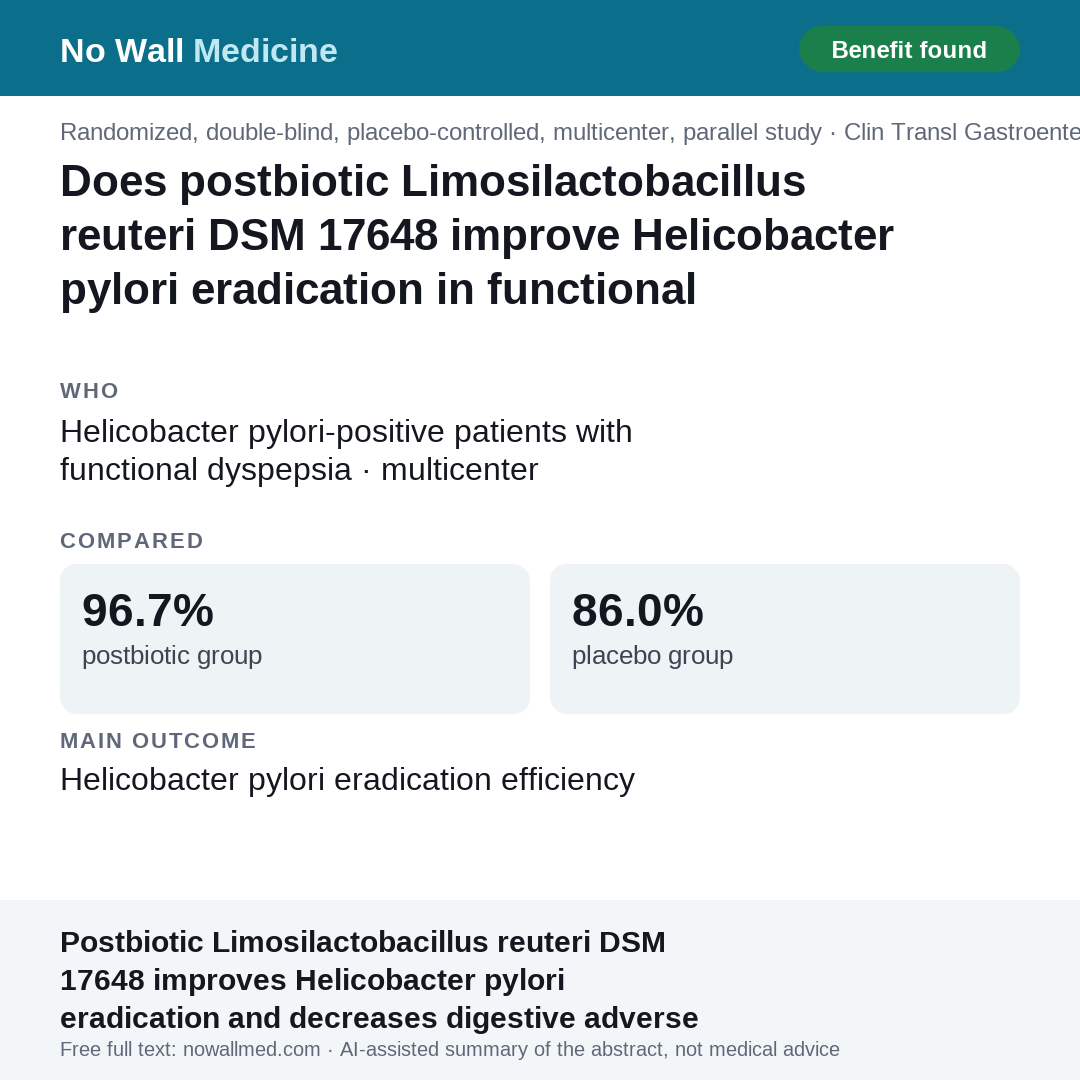
Efficacy and Safety of Postbiotic Contained Inactivated Lactobacillus reuteri ( Limosilactobacillus reuteri ) DSM 17648 as Adjuvant Therapy in the Eradication of Helicobacter pylori in Adults With Functional Dyspepsia: A Randomized Double-Blind Placebo-Controlled Trial
Randomized, double-blind, placebo-controlled, multicenter, parallel studyBenefit found
Does postbiotic Limosilactobacillus reuteri DSM 17648 improve Helicobacter pylori eradication in functional dyspepsia?
Who
Helicobacter pylori-positive patients with functional dyspepsia · multicenter
Compared
96.7%postbiotic group
86.0%placebo group
Main outcome
Helicobacter pylori eradication efficiency
Bottom line: Postbiotic Limosilactobacillus reuteri DSM 17648 improves Helicobacter pylori eradication and decreases digestive adverse effects.
Clin Transl Gastroenterol · 2024-09-01Download image
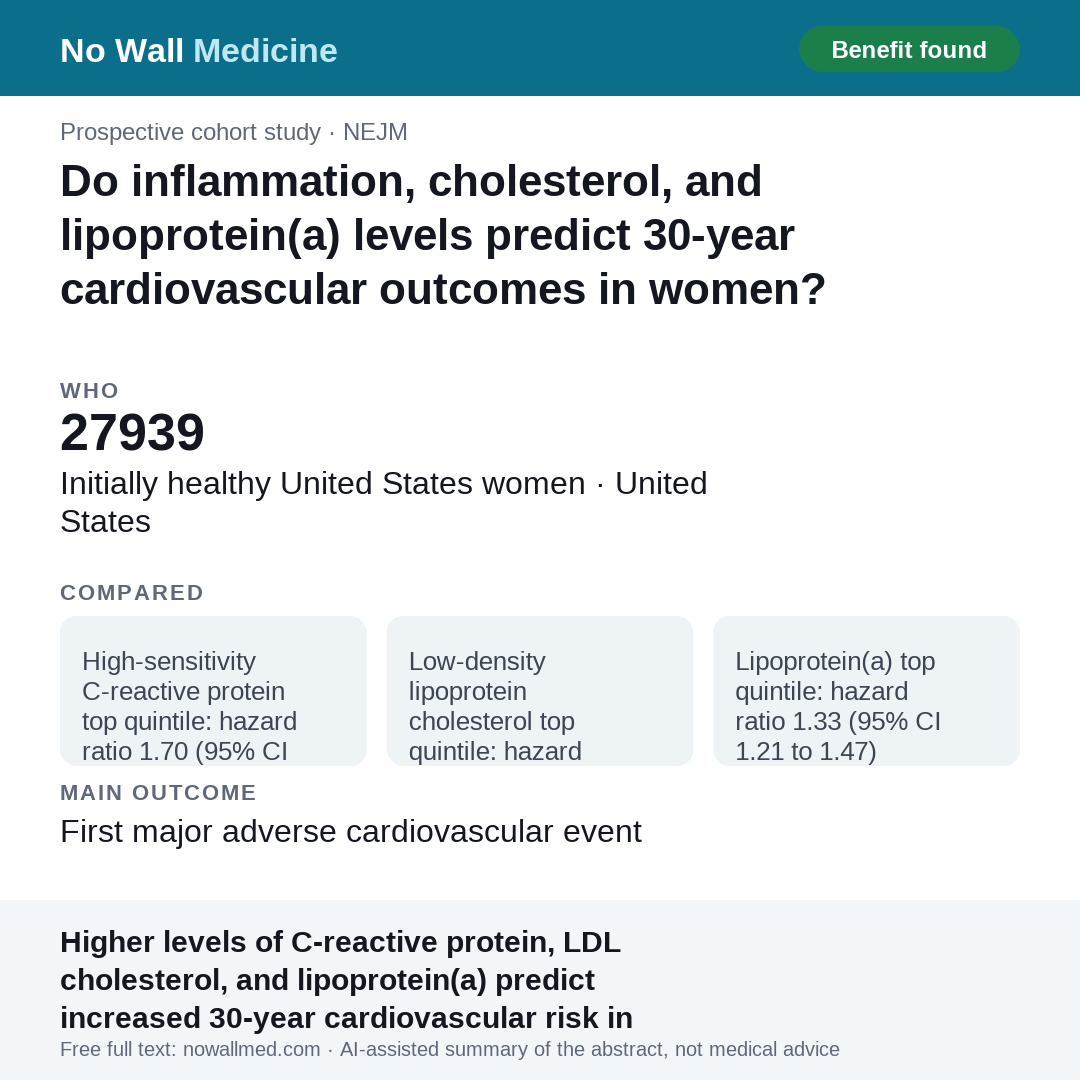
Inflammation, Cholesterol, Lipoprotein(a), and 30-Year Cardiovascular Outcomes in Women
Prospective cohort studyBenefit found
Do inflammation, cholesterol, and lipoprotein(a) levels predict 30-year cardiovascular outcomes in women?
Who
27939
Initially healthy United States women · United States
Compared
High-sensitivity C-reactive protein top quintile: hazard ratio 1.70 (95% CI 1.52 to 1.90)
Low-density lipoprotein cholesterol top quintile: hazard ratio 1.36 (95% CI 1.23 to 1.52)
Lipoprotein(a) top quintile: hazard ratio 1.33 (95% CI 1.21 to 1.47)
Main outcome
First major adverse cardiovascular event
Bottom line: Higher levels of C-reactive protein, LDL cholesterol, and lipoprotein(a) predict increased 30-year cardiovascular risk in healthy women.
Funded by: National Institutes of Health
NEJM · 2024-08-31Download image
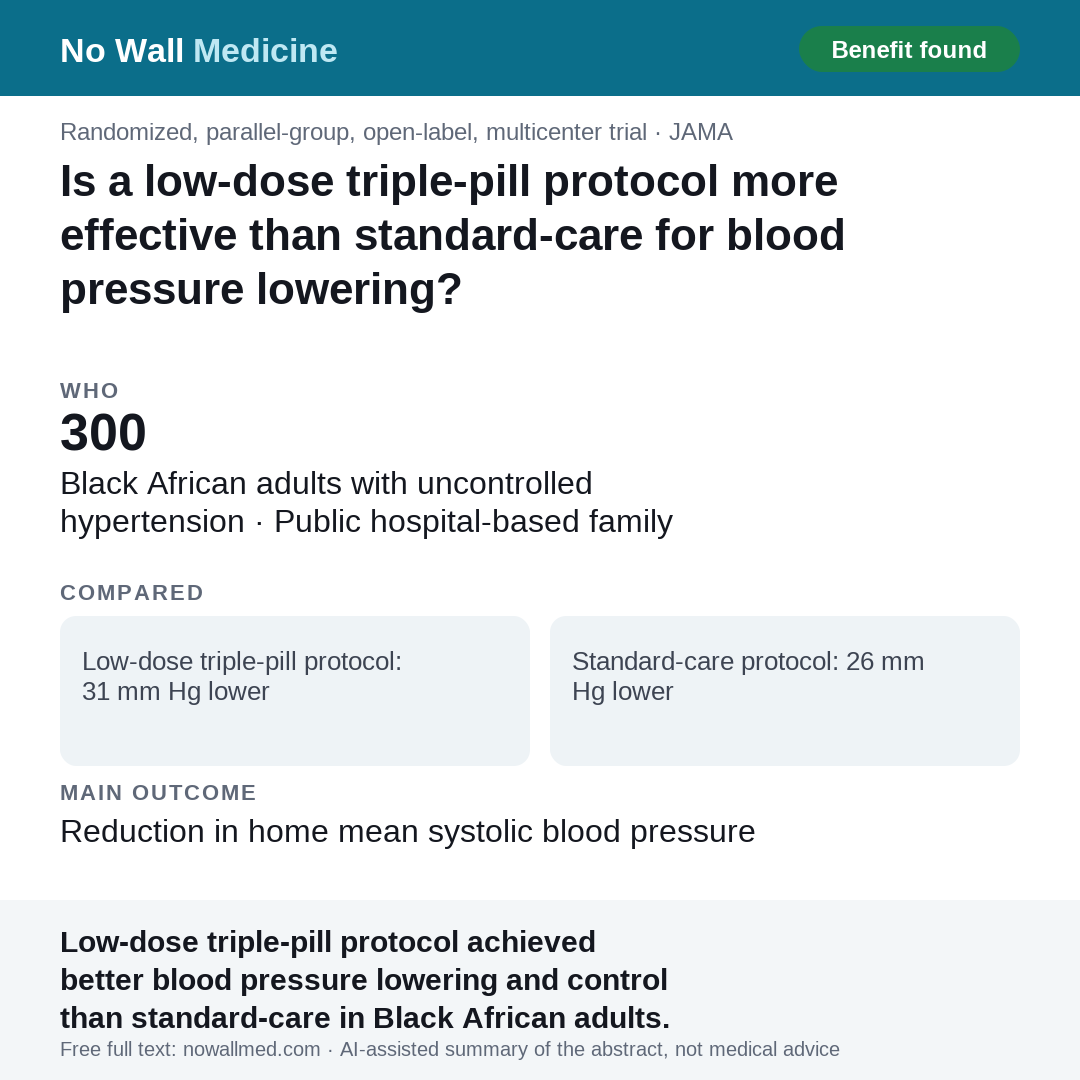
Low-Dose Triple-Pill vs Standard-Care Protocols for Hypertension Treatment in Nigeria: A Randomized Clinical Trial
Randomized, parallel-group, open-label, multicenter trialBenefit found
Is a low-dose triple-pill protocol more effective than standard-care for blood pressure lowering?
Who
300
Black African adults with uncontrolled hypertension · Public hospital-based family medicine clinics in Nigeria
Compared
Low-dose triple-pill protocol: 31 mm Hg lower
Standard-care protocol: 26 mm Hg lower
Main outcome
Reduction in home mean systolic blood pressure
Result: adjusted difference, -5.8 mm Hg (95% CI, -8.0 to -3.6)
Bottom line: Low-dose triple-pill protocol achieved better blood pressure lowering and control than standard-care in Black African adults.
JAMA · 2024-08-31Download image
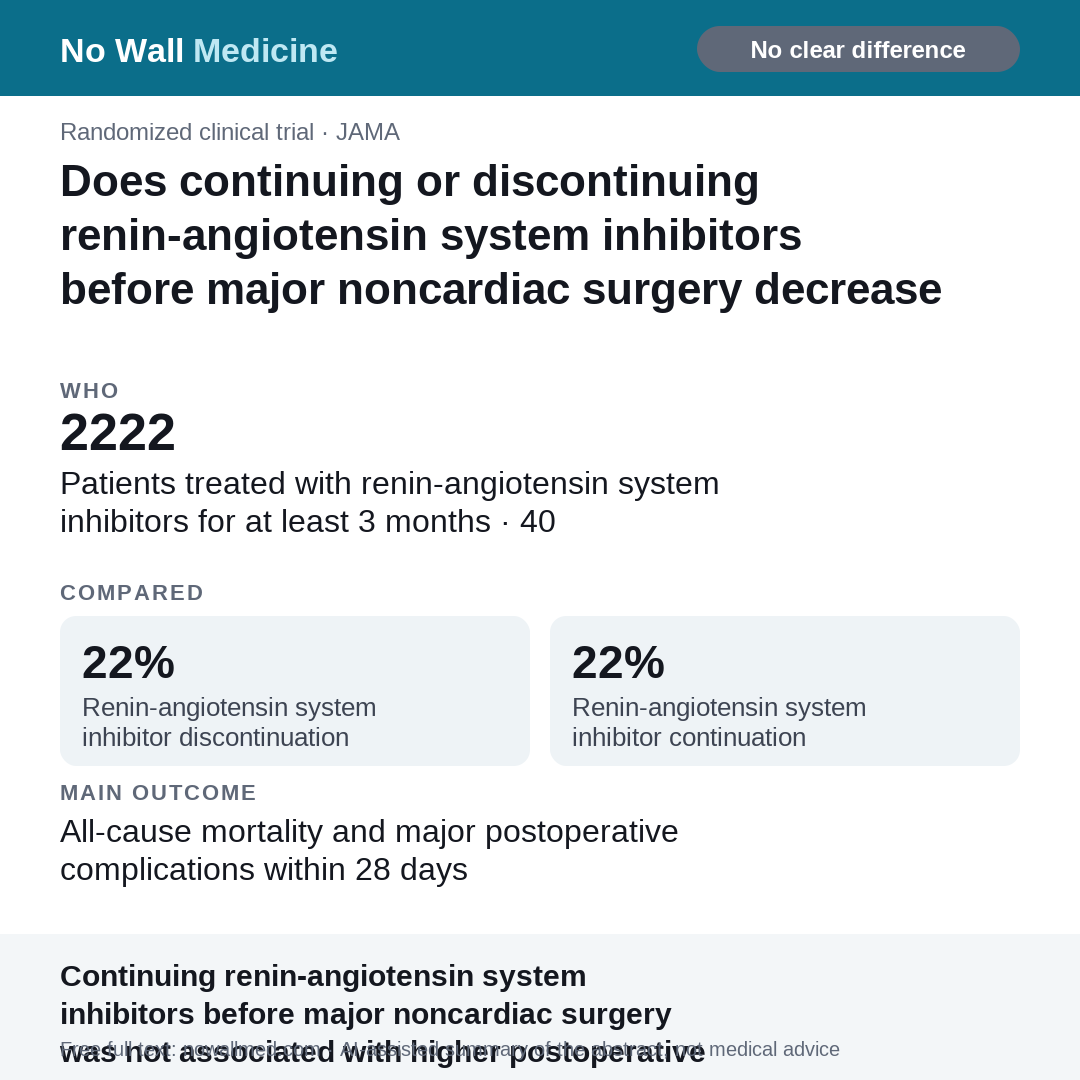
Continuation vs Discontinuation of Renin-Angiotensin System Inhibitors Before Major Noncardiac Surgery: The Stop-or-Not Randomized Clinical Trial
Randomized clinical trialNo clear difference
Does continuing or discontinuing renin-angiotensin system inhibitors before major noncardiac surgery decrease complications?
Who
2222
Patients treated with renin-angiotensin system inhibitors for at least 3 months · 40 hospitals in France
Compared
22%Renin-angiotensin system inhibitor discontinuation (245 of 1115 patients)
22%Renin-angiotensin system inhibitor continuation (247 of 1107 patients)
Main outcome
All-cause mortality and major postoperative complications within 28 days
Result: risk ratio 1.02 (95% CI 0.87-1.19)
Bottom line: Continuing renin-angiotensin system inhibitors before major noncardiac surgery was not associated with higher postoperative complications than discontinuation.
JAMA · 2024-08-31Download image
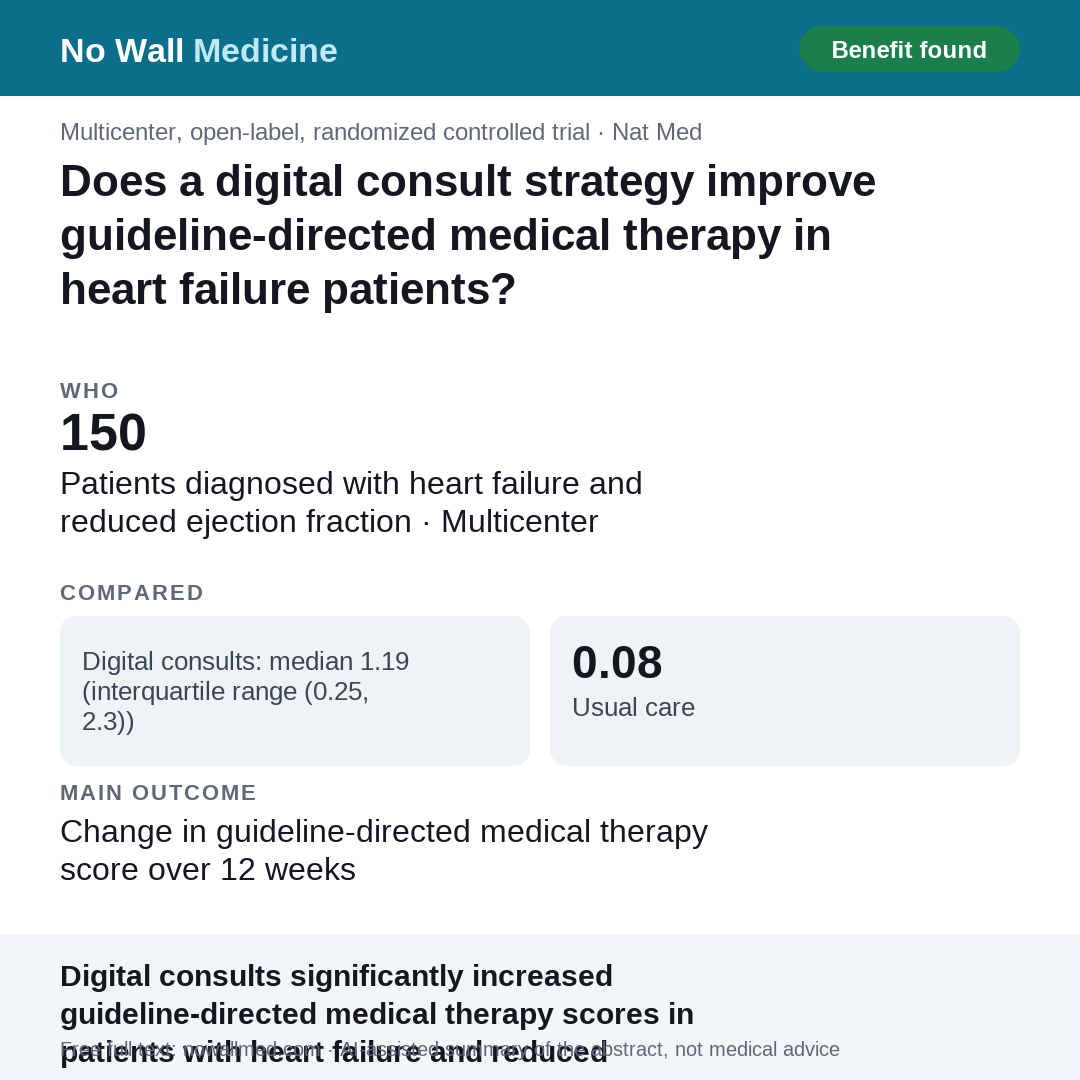
Digital consults in heart failure care: a randomized controlled trial
Multicenter, open-label, randomized controlled trialBenefit found
Does a digital consult strategy improve guideline-directed medical therapy in heart failure patients?
Who
150
Patients diagnosed with heart failure and reduced ejection fraction · Multicenter
Compared
Digital consults: median 1.19 (interquartile range (0.25, 2.3))
0.08Usual care (0.00, 1.00)
Main outcome
Change in guideline-directed medical therapy score over 12 weeks
Result: P < 0.001
Bottom line: Digital consults significantly increased guideline-directed medical therapy scores in patients with heart failure and reduced ejection fraction.
Nat Med · 2024-08-31Download image
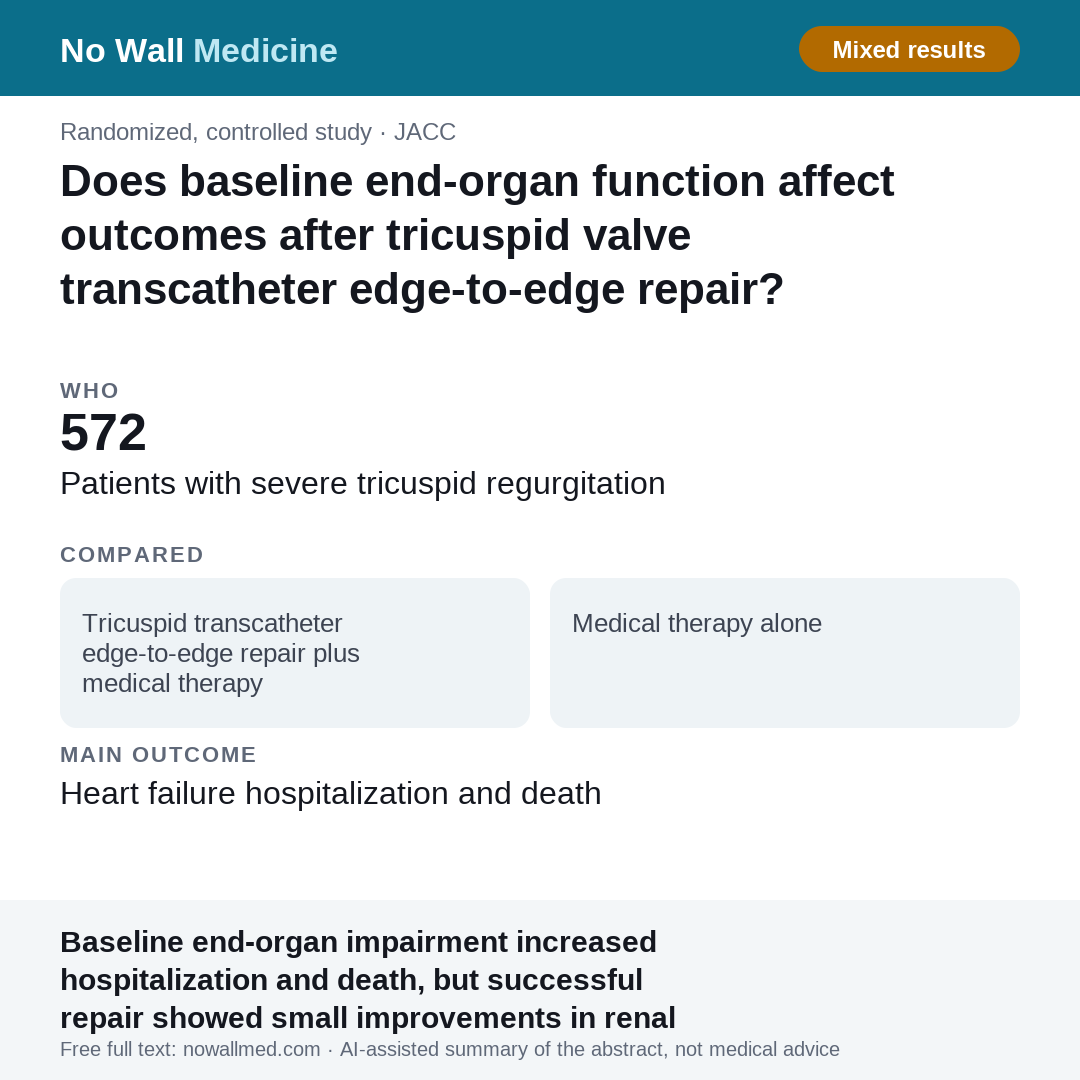
Impact of Renal and Liver Function on Clinical Outcomes Following Tricuspid Valve Transcatheter Edge-to-Edge Repair
Randomized, controlled studyMixed results
Does baseline end-organ function affect outcomes after tricuspid valve transcatheter edge-to-edge repair?
Who
572
Patients with severe tricuspid regurgitation
Compared
Tricuspid transcatheter edge-to-edge repair plus medical therapy
Medical therapy alone
Main outcome
Heart failure hospitalization and death
Bottom line: Baseline end-organ impairment increased hospitalization and death, but successful repair showed small improvements in renal and liver function.
JACC · 2024-08-31Download image
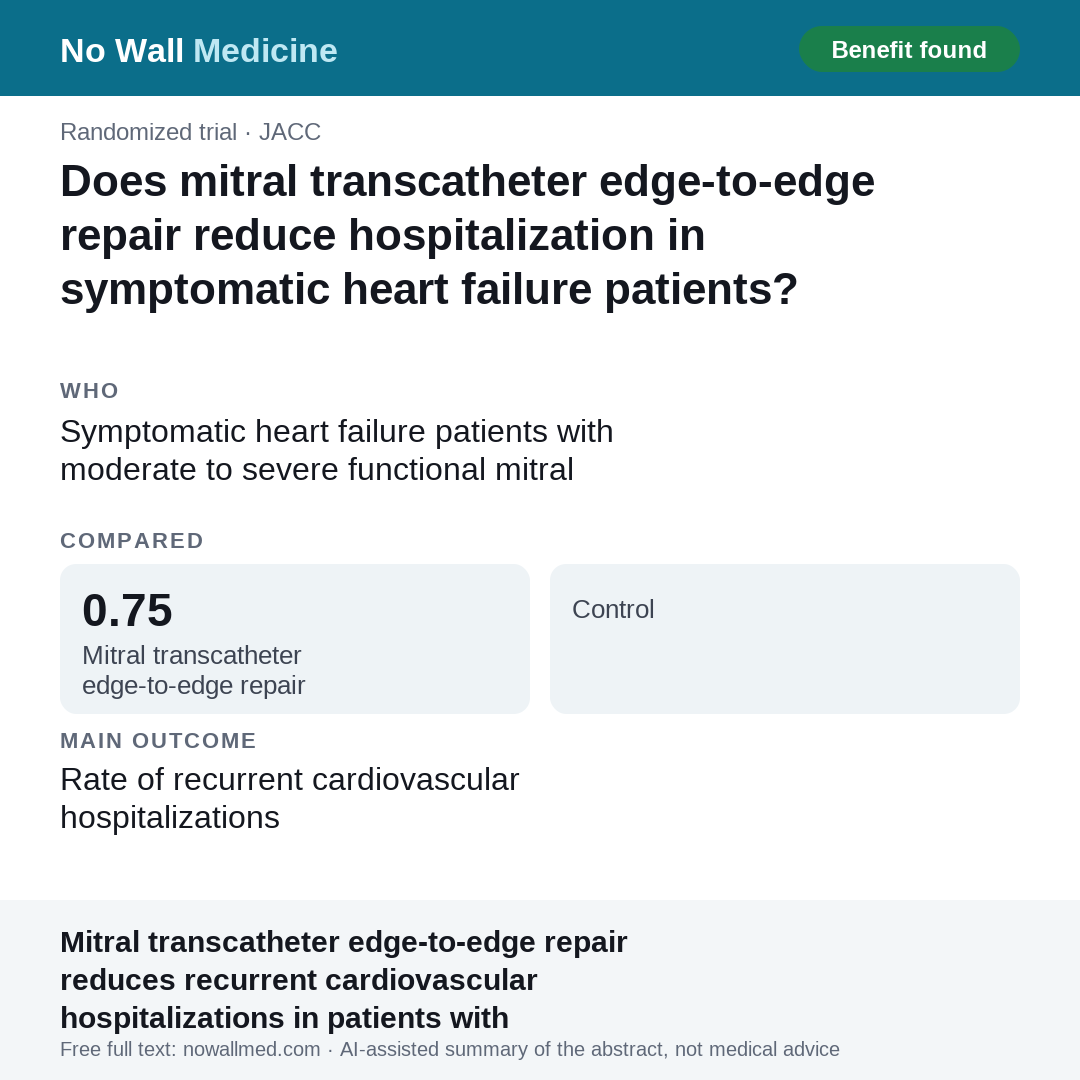
Hospitalization of Symptomatic Patients With Heart Failure and Moderate to Severe Functional Mitral Regurgitation Treated With MitraClip: Insights From RESHAPE-HF2
Randomized trialBenefit found
Does mitral transcatheter edge-to-edge repair reduce hospitalization in symptomatic heart failure patients?
Who
Symptomatic heart failure patients with moderate to severe functional mitral regurgitation
Compared
0.75Mitral transcatheter edge-to-edge repair (rate ratio)
Control
Main outcome
Rate of recurrent cardiovascular hospitalizations
Result: rate ratio 0.75 (95% CI 0.57 to 0.99)
Bottom line: Mitral transcatheter edge-to-edge repair reduces recurrent cardiovascular hospitalizations in patients with symptomatic heart failure.
JACC · 2024-08-31Download image
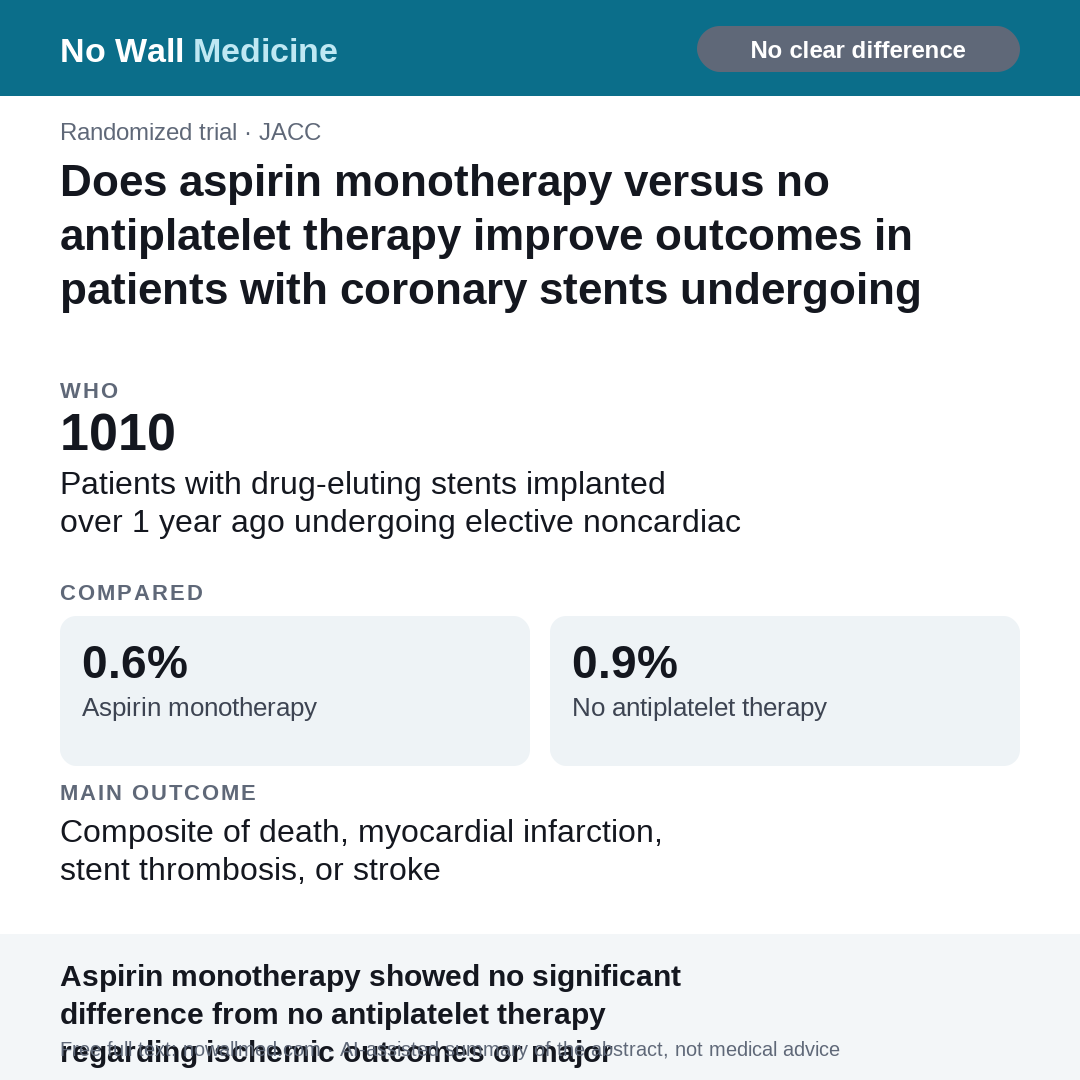
Aspirin Monotherapy vs No Antiplatelet Therapy in Stable Patients With Coronary Stents Undergoing Low-to-Intermediate Risk Noncardiac Surgery
Randomized trialNo clear difference
Does aspirin monotherapy versus no antiplatelet therapy improve outcomes in patients with coronary stents undergoing surgery?
Who
1010
Patients with drug-eluting stents implanted over 1 year ago undergoing elective noncardiac surgery
Compared
0.6%Aspirin monotherapy
0.9%No antiplatelet therapy
Main outcome
Composite of death, myocardial infarction, stent thrombosis, or stroke
Result: difference, -0.2 percentage points; 95% CI: -1.3 to 0.9
Bottom line: Aspirin monotherapy showed no significant difference from no antiplatelet therapy regarding ischemic outcomes or major bleeding.
Limitation: The study occurred in the setting of lower-than-expected event rates.
JACC · 2024-08-31Download image
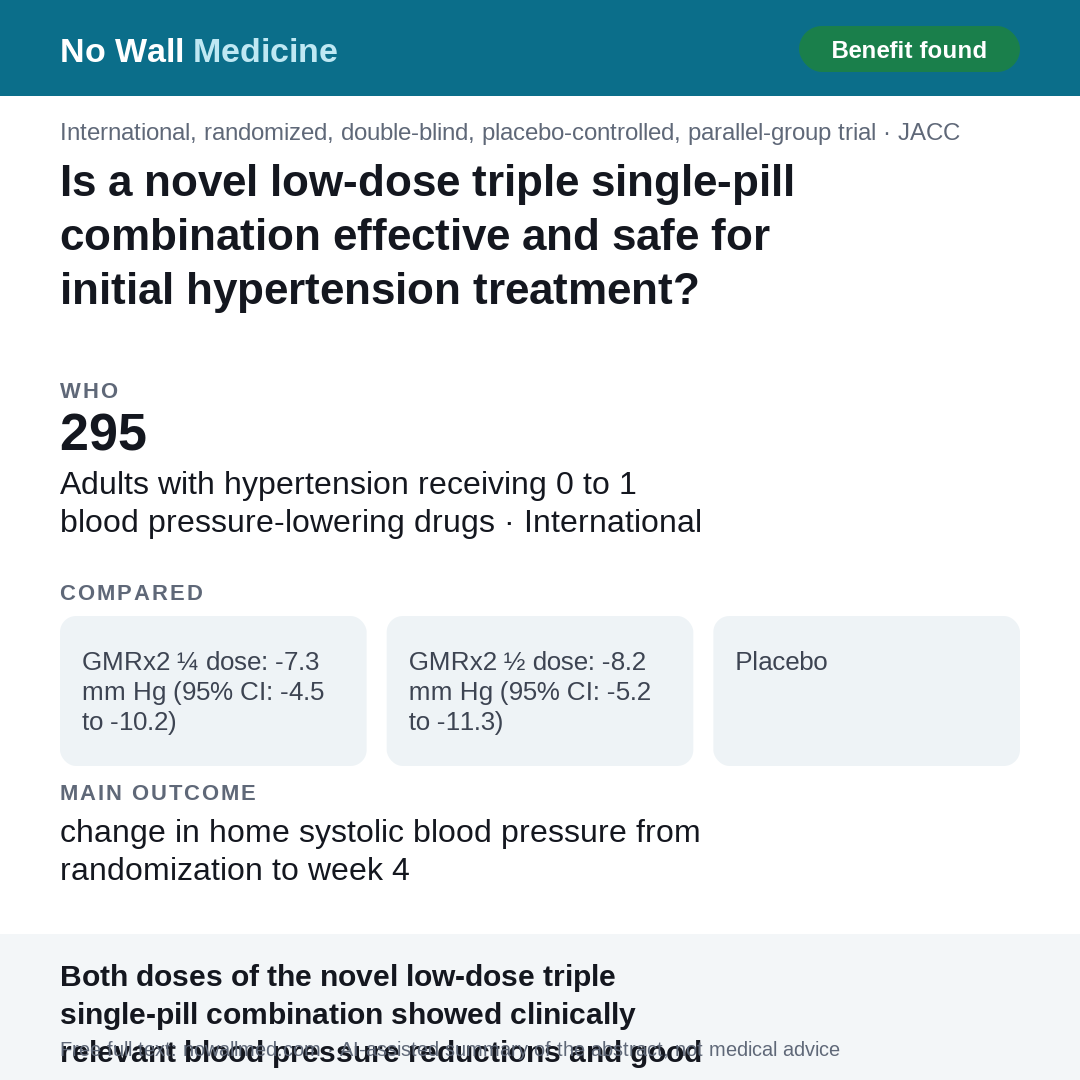
Efficacy and Safety of a Novel Low-Dose Triple Single-Pill Combination Compared With Placebo for Initial Treatment of Hypertension
International, randomized, double-blind, placebo-controlled, parallel-group trialBenefit found
Is a novel low-dose triple single-pill combination effective and safe for initial hypertension treatment?
Who
295
Adults with hypertension receiving 0 to 1 blood pressure-lowering drugs · International
Compared
GMRx2 ¼ dose: -7.3 mm Hg (95% CI: -4.5 to -10.2)
GMRx2 ½ dose: -8.2 mm Hg (95% CI: -5.2 to -11.3)
Placebo
Main outcome
change in home systolic blood pressure from randomization to week 4
Bottom line: Both doses of the novel low-dose triple single-pill combination showed clinically relevant blood pressure reductions and good tolerability.
JACC · 2024-08-31Download image
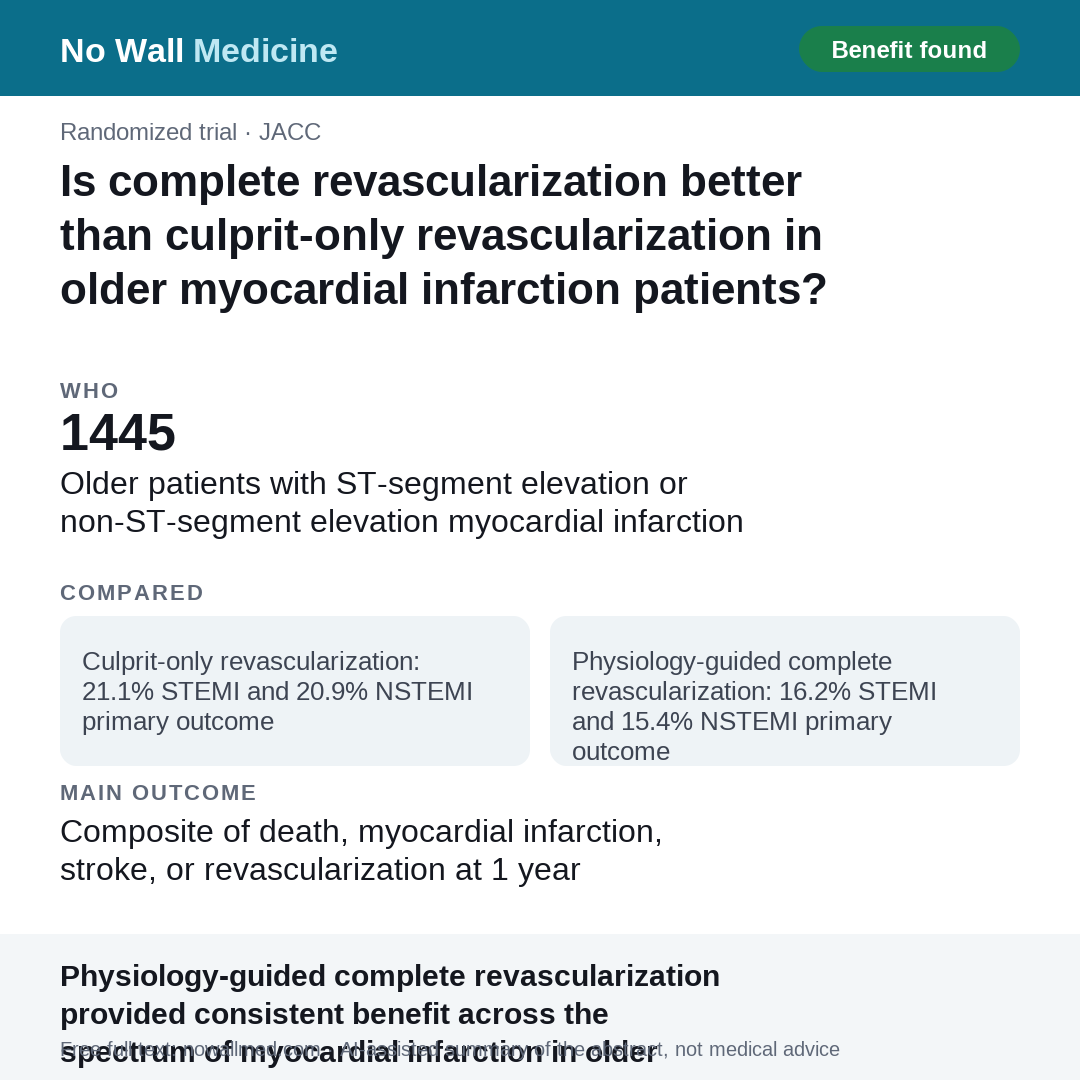
Complete vs Culprit-Only Revascularization in Older Patients With Myocardial Infarction With or Without ST-Segment Elevation
Randomized trialBenefit found
Is complete revascularization better than culprit-only revascularization in older myocardial infarction patients?
Who
1445
Older patients with ST-segment elevation or non-ST-segment elevation myocardial infarction
Compared
Culprit-only revascularization: 21.1% STEMI and 20.9% NSTEMI primary outcome
Physiology-guided complete revascularization: 16.2% STEMI and 15.4% NSTEMI primary outcome
Main outcome
Composite of death, myocardial infarction, stroke, or revascularization at 1 year
Result: hazard ratio 0.71 (95% CI 0.53 to 0.97) for NSTEMI
Bottom line: Physiology-guided complete revascularization provided consistent benefit across the spectrum of myocardial infarction in older patients.
JACC · 2024-08-31Download image
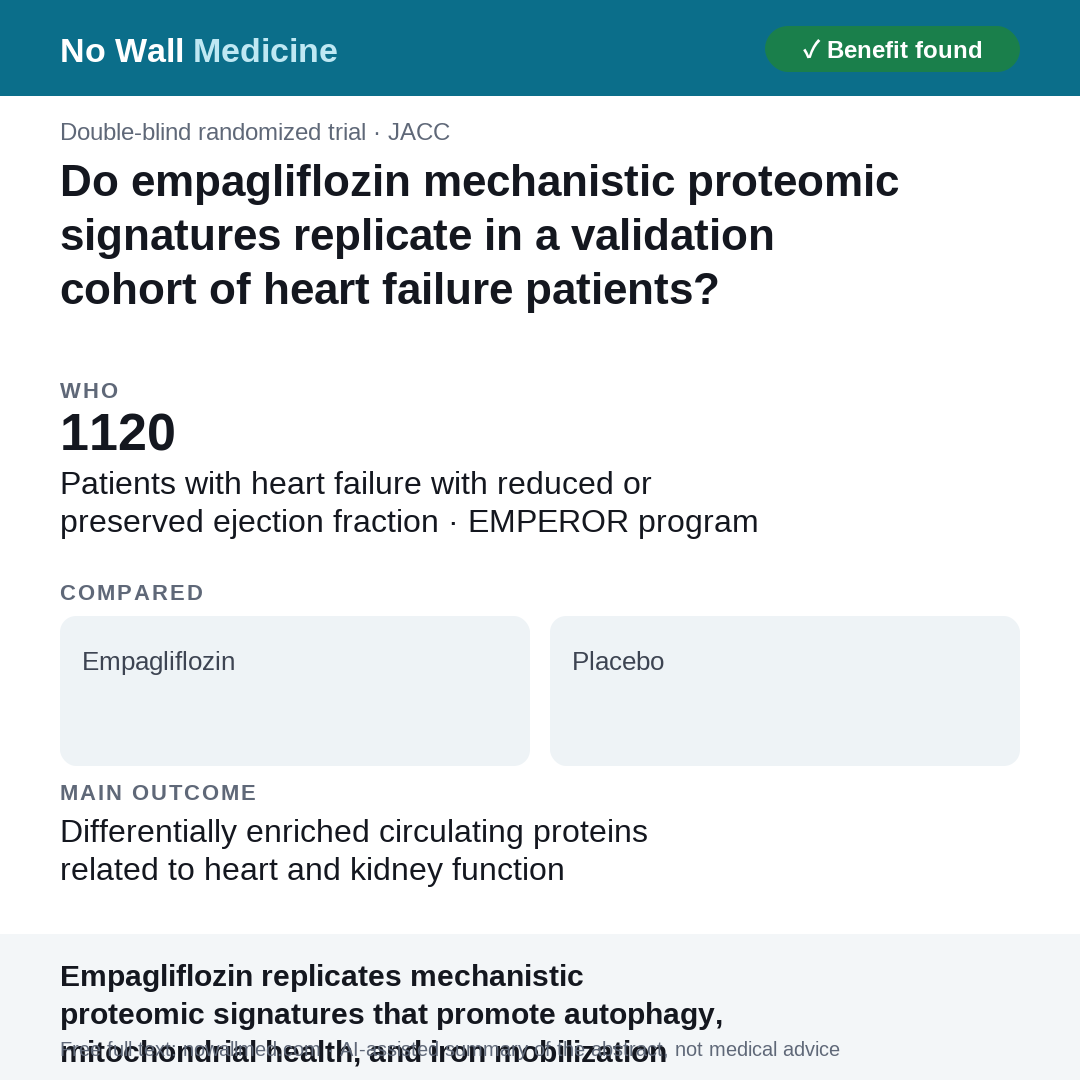
Reaffirmation of Mechanistic Proteomic Signatures Accompanying SGLT2 Inhibition in Patients With Heart Failure: A Validation Cohort of the EMPEROR Program
Double-blind randomized trialBenefit found
Do empagliflozin mechanistic proteomic signatures replicate in a validation cohort of heart failure patients?
Who
1120
Patients with heart failure with reduced or preserved ejection fraction · EMPEROR program
Compared
Empagliflozin
Placebo
Main outcome
Differentially enriched circulating proteins related to heart and kidney function
Bottom line: Empagliflozin replicates mechanistic proteomic signatures that promote autophagy, mitochondrial health, and iron mobilization in heart failure patients.
JACC · 2024-08-31Download image
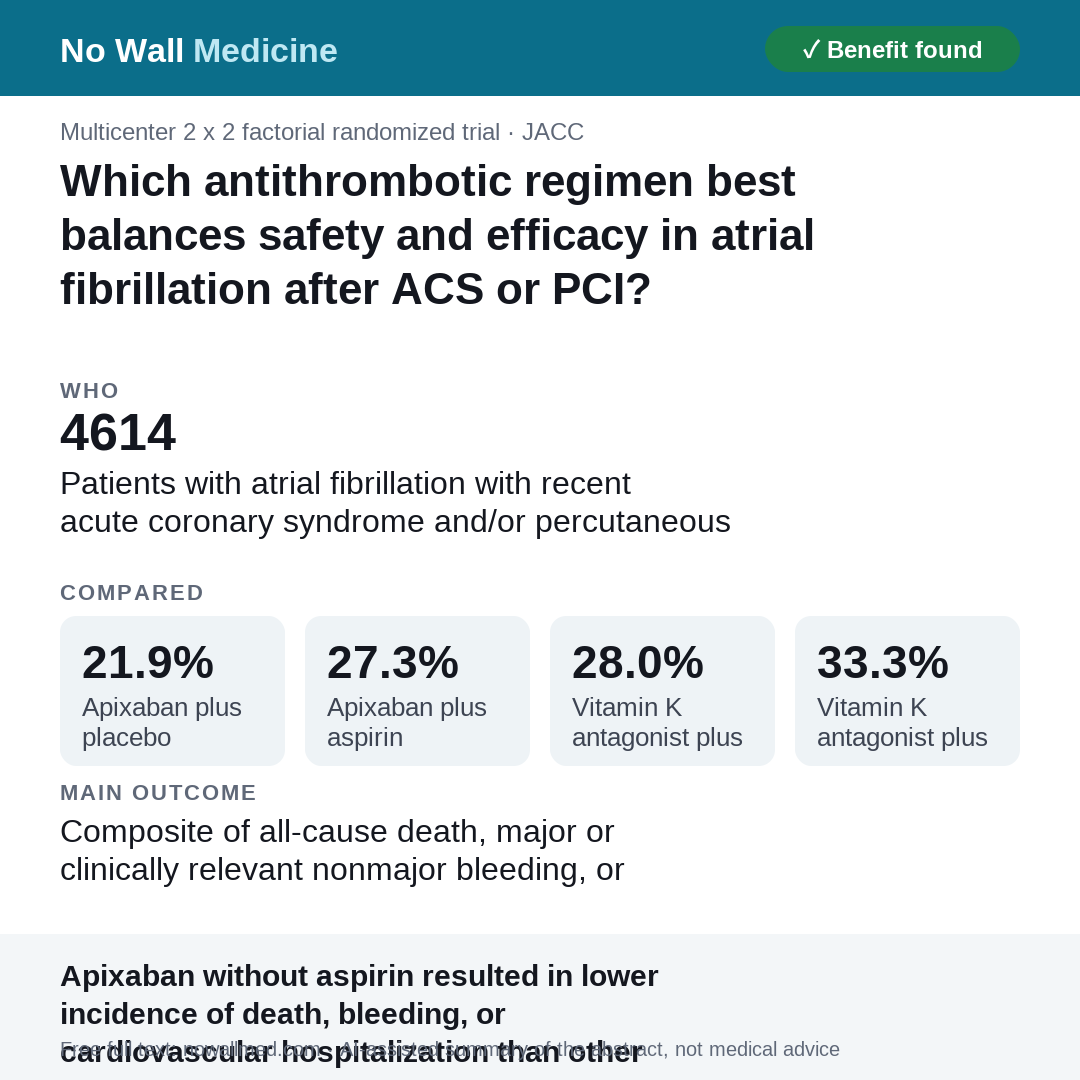
Antithrombotic Strategies in Atrial Fibrillation After ACS and/or PCI: A 4-Way Comparison From AUGUSTUS
Multicenter 2 x 2 factorial randomized trialBenefit found
Which antithrombotic regimen best balances safety and efficacy in atrial fibrillation after ACS or PCI?
Who
4614
Patients with atrial fibrillation with recent acute coronary syndrome and/or percutaneous coronary intervention · Multicenter
Compared
21.9%Apixaban plus placebo
27.3%Apixaban plus aspirin
28.0%Vitamin K antagonist plus placebo
33.3%Vitamin K antagonist plus aspirin
Main outcome
Composite of all-cause death, major or clinically relevant nonmajor bleeding, or cardiovascular hospitalization
Bottom line: Apixaban without aspirin resulted in lower incidence of death, bleeding, or cardiovascular hospitalization than other regimens.
JACC · 2024-08-31Download image
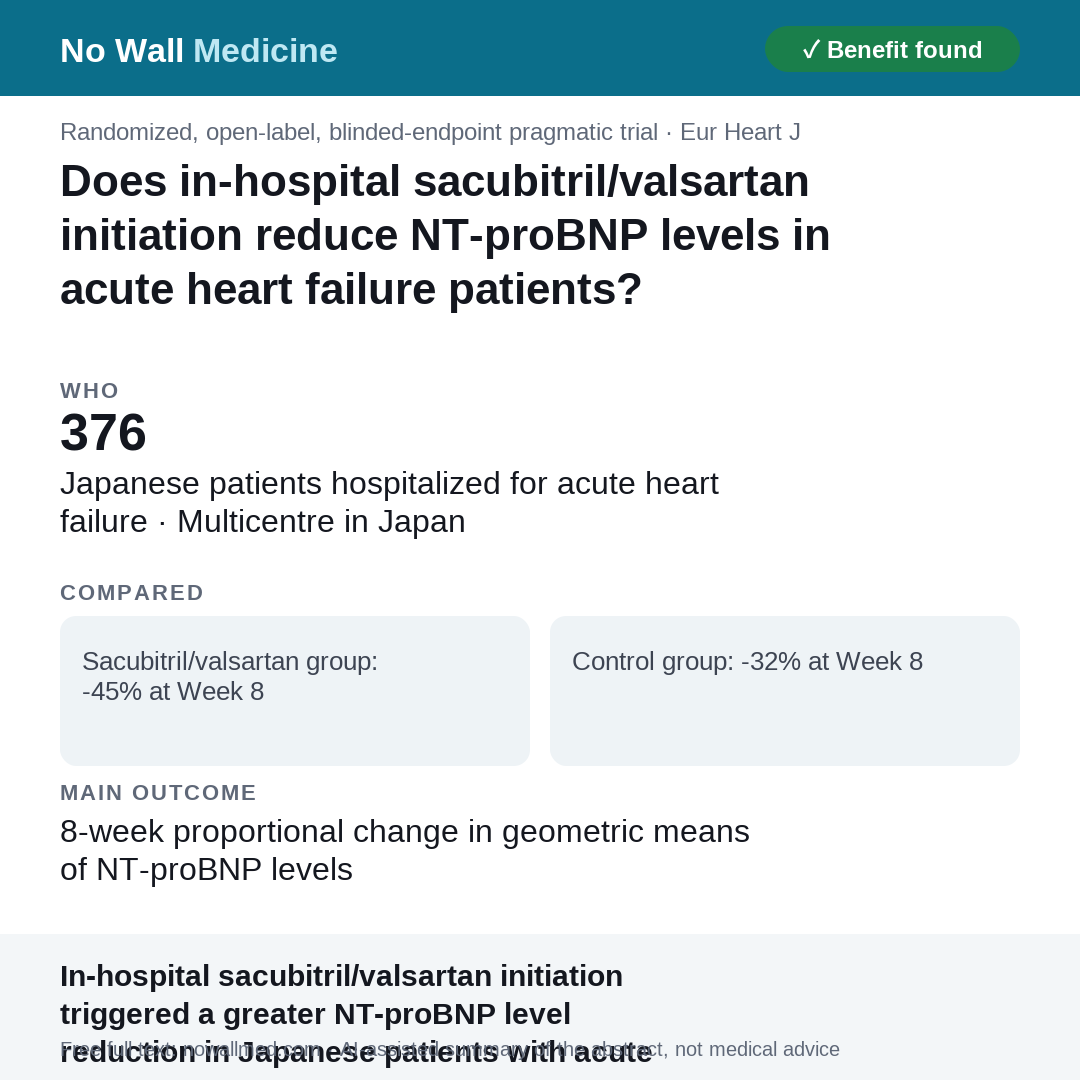
In-hospital initiation of angiotensin receptor-neprilysin inhibition in acute heart failure: the PREMIER trial
Randomized, open-label, blinded-endpoint pragmatic trialBenefit found
Does in-hospital sacubitril/valsartan initiation reduce NT-proBNP levels in acute heart failure patients?
Who
376
Japanese patients hospitalized for acute heart failure · Multicentre in Japan
Compared
Sacubitril/valsartan group: -45% at Week 8
Control group: -32% at Week 8
Main outcome
8-week proportional change in geometric means of NT-proBNP levels
Result: group ratio 0.81 (95% confidence interval 0.68-0.95)
Bottom line: In-hospital sacubitril/valsartan initiation triggered a greater NT-proBNP level reduction in Japanese patients with acute heart failure.
Eur Heart J · 2024-08-31Download image
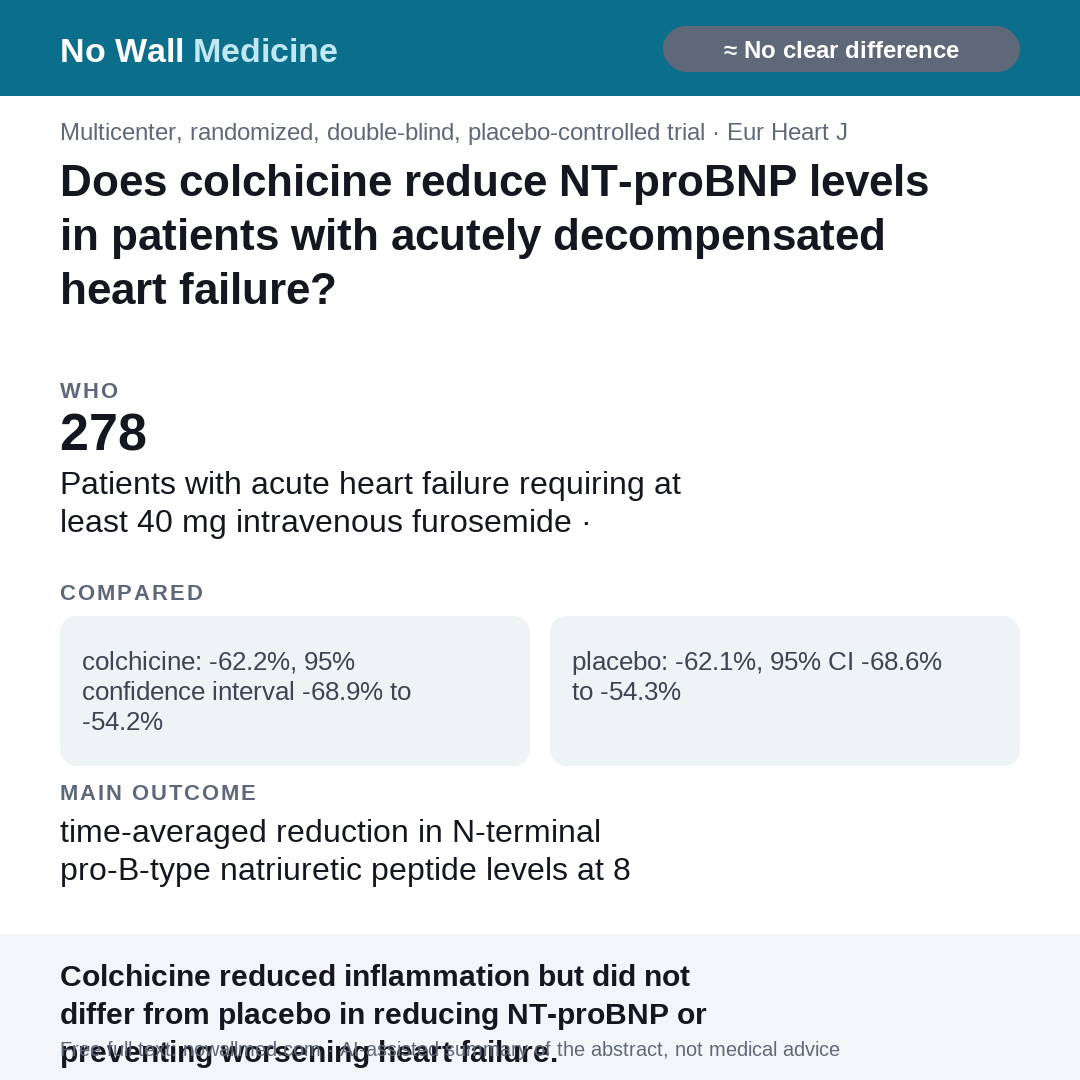
Colchicine in acutely decompensated heart failure: the COLICA trial
Multicenter, randomized, double-blind, placebo-controlled trialNo clear difference
Does colchicine reduce NT-proBNP levels in patients with acutely decompensated heart failure?
Who
278
Patients with acute heart failure requiring at least 40 mg intravenous furosemide · Multicenter
Compared
colchicine: -62.2%, 95% confidence interval -68.9% to -54.2%
placebo: -62.1%, 95% CI -68.6% to -54.3%
Main outcome
time-averaged reduction in N-terminal pro-B-type natriuretic peptide levels at 8 weeks
Result: ratio of change 1.0
Bottom line: Colchicine reduced inflammation but did not differ from placebo in reducing NT-proBNP or preventing worsening heart failure.
Eur Heart J · 2024-08-31Download image