Visual abstracts
New randomized trials and meta-analyses from leading journals at a glance: who was studied, what was compared, and what was found. Every paper is free to read in full.
All specialtiesCardiology 842Oncology 763Gastroenterology & Hepatology 307Infectious Disease 626Neurology 350Psychiatry & Mental Health 430Pulmonology 366Critical Care 245Endocrinology & Diabetes 480Pediatrics 536Surgery 324Orthopedics & Sports Medicine 162Neurosurgery 93Cardiothoracic & Vascular Surgery 87Plastic & Reconstructive Surgery 124Nephrology 197Rheumatology 108Hematology 182Dermatology 80Ophthalmology 97Obstetrics & Gynecology 261Public & Global Health 167Radiology & Imaging 98Anesthesiology 114Urology 162ENT (Otolaryngology) 91Emergency Medicine 73Allergy & Immunology 58Geriatrics 160Family Medicine & Primary Care 111Medical Genetics & Genomics 91Pathology & Laboratory Medicine 24Physical Medicine & Rehabilitation 148Palliative Care 81Nutrition 223Digital Health & AI 460General Medicine 101
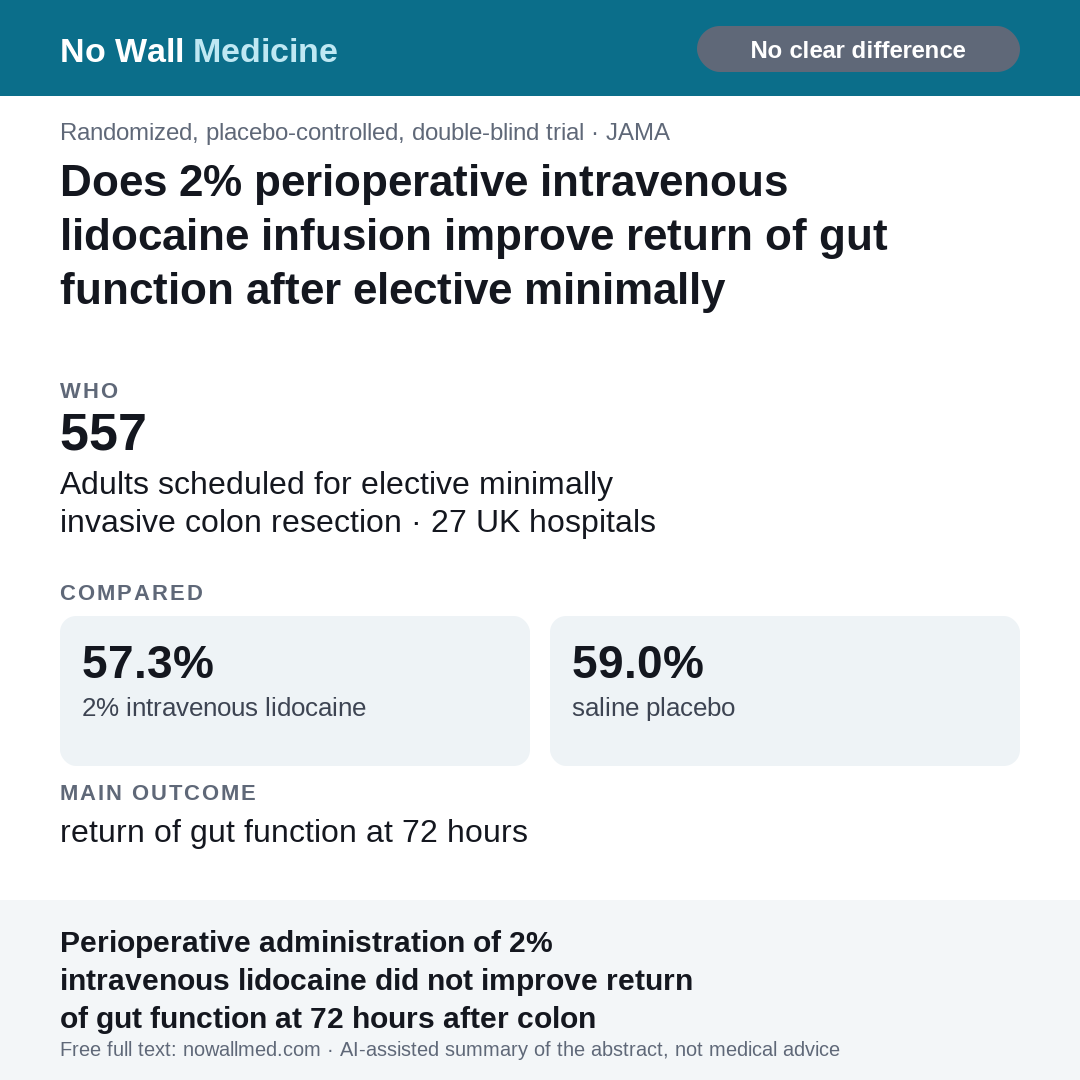
Intravenous Lidocaine for Gut Function Recovery in Colonic Surgery: A Randomized Clinical Trial
Randomized, placebo-controlled, double-blind trialNo clear difference
Does 2% perioperative intravenous lidocaine infusion improve return of gut function after elective minimally invasive colon resection?
Who
557
Adults scheduled for elective minimally invasive colon resection · 27 UK hospitals
Compared
57.3%2% intravenous lidocaine
59.0%saline placebo
Main outcome
return of gut function at 72 hours
Result: relative risk 0.97 (95% CI 0.88 to 1.07)
Bottom line: Perioperative administration of 2% intravenous lidocaine did not improve return of gut function at 72 hours after colon resection.
JAMA · 2024-11-27Download image
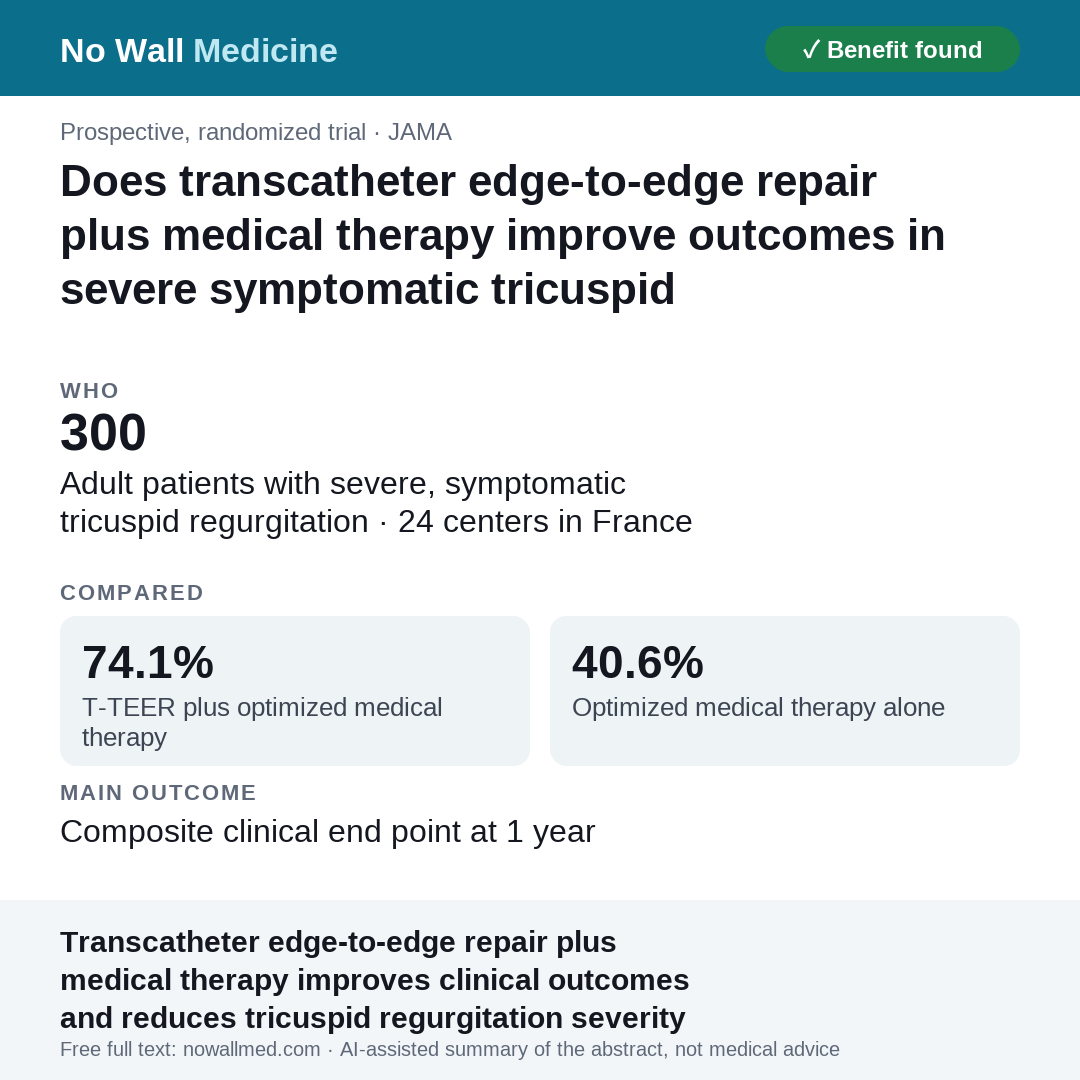
Transcatheter Edge-to-Edge Repair for Severe Isolated Tricuspid Regurgitation: The Tri.Fr Randomized Clinical Trial
Prospective, randomized trialBenefit found
Does transcatheter edge-to-edge repair plus medical therapy improve outcomes in severe symptomatic tricuspid regurgitation?
Who
300
Adult patients with severe, symptomatic tricuspid regurgitation · 24 centers in France and Belgium
Compared
74.1%T-TEER plus optimized medical therapy
40.6%Optimized medical therapy alone
Main outcome
Composite clinical end point at 1 year
Result: win ratio 2.06 (95% CI, 1.38-3.08)
Bottom line: Transcatheter edge-to-edge repair plus medical therapy improves clinical outcomes and reduces tricuspid regurgitation severity compared to medical therapy alone.
JAMA · 2024-11-27Download image
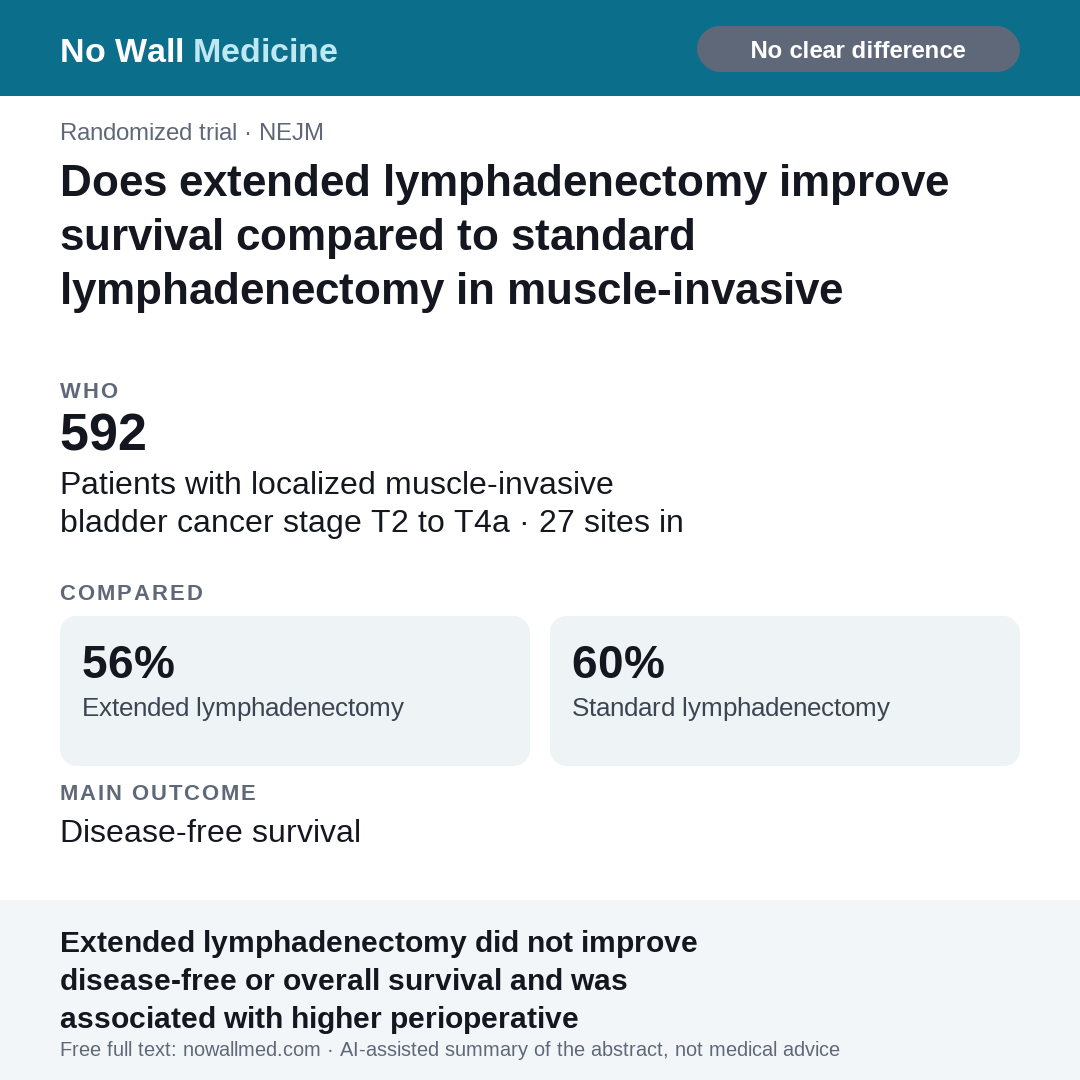
Standard or Extended Lymphadenectomy for Muscle-Invasive Bladder Cancer
Randomized trialNo clear difference
Does extended lymphadenectomy improve survival compared to standard lymphadenectomy in muscle-invasive bladder cancer?
Who
592
Patients with localized muscle-invasive bladder cancer stage T2 to T4a · 27 sites in the United States and Canada
Compared
56%Extended lymphadenectomy
60%Standard lymphadenectomy
Main outcome
Disease-free survival
Result: hazard ratio 1.10 (95% CI 0.86 to 1.40)
Bottom line: Extended lymphadenectomy did not improve disease-free or overall survival and was associated with higher perioperative morbidity and mortality.
Funded by: National Cancer Institute and the Canadian Cancer Society
NEJM · 2024-11-26Download image
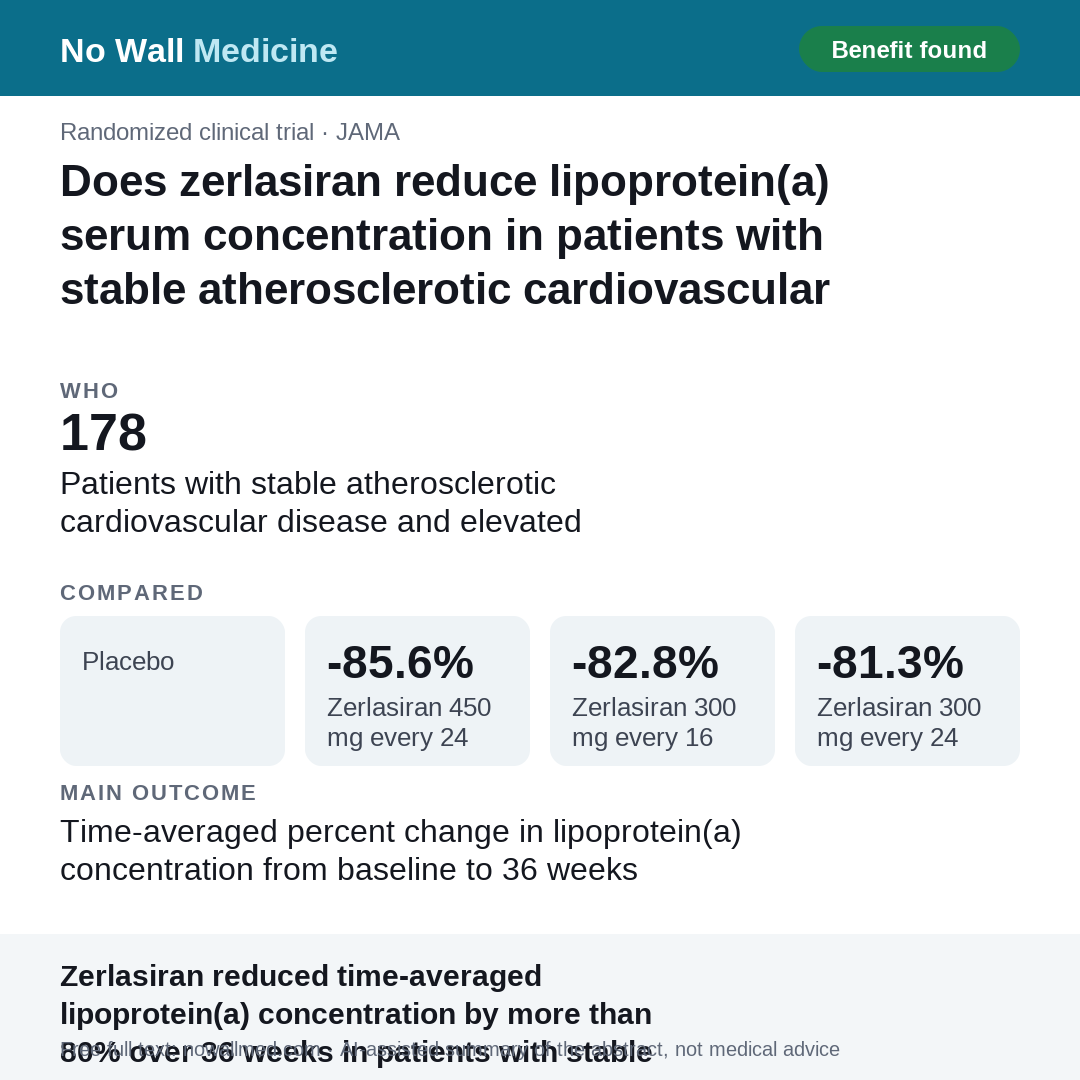
Zerlasiran-A Small-Interfering RNA Targeting Lipoprotein(a): A Phase 2 Randomized Clinical Trial
Randomized clinical trialBenefit found
Does zerlasiran reduce lipoprotein(a) serum concentration in patients with stable atherosclerotic cardiovascular disease?
Who
178
Patients with stable atherosclerotic cardiovascular disease and elevated lipoprotein(a) · 26 sites in Europe and South Africa
Compared
Placebo
-85.6%Zerlasiran 450 mg every 24 weeks (95% CI, -90.9% to -80.3%)
-82.8%Zerlasiran 300 mg every 16 weeks (95% CI, -88.2% to -77.4%)
-81.3%Zerlasiran 300 mg every 24 weeks (95% CI, -86.7% to -76.0%)
Main outcome
Time-averaged percent change in lipoprotein(a) concentration from baseline to 36 weeks
Result: -85.6% (95% CI, -90.9% to -80.3%)
Bottom line: Zerlasiran reduced time-averaged lipoprotein(a) concentration by more than 80% over 36 weeks in patients with stable atherosclerotic cardiovascular disease.
JAMA · 2024-11-18Download image
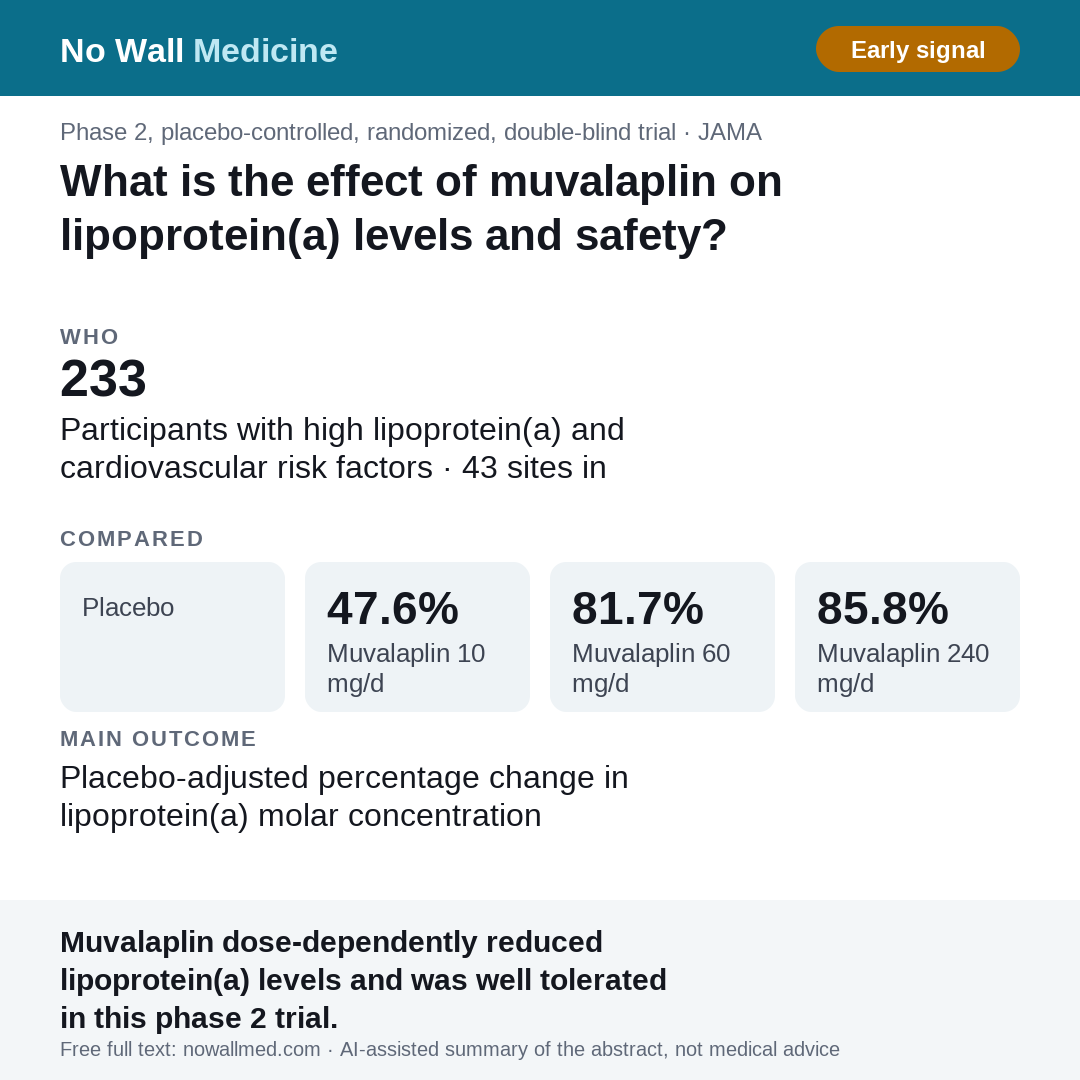
Oral Muvalaplin for Lowering of Lipoprotein(a): A Randomized Clinical Trial
Phase 2, placebo-controlled, randomized, double-blind trialBenefit found
What is the effect of muvalaplin on lipoprotein(a) levels and safety?
Who
233
Participants with high lipoprotein(a) and cardiovascular risk factors · 43 sites in Asia, Europe, Australia, Brazil, and United States
Compared
Placebo
47.6%Muvalaplin 10 mg/d (95% CI, 35.1%-57.7%)
81.7%Muvalaplin 60 mg/d (95% CI, 78.1%-84.6%)
85.8%Muvalaplin 240 mg/d (95% CI, 83.1%-88.0%)
Main outcome
Placebo-adjusted percentage change in lipoprotein(a) molar concentration
Result: 47.6% (95% CI, 35.1%-57.7%) to 85.8% (95% CI, 83.1%-88.0%)
Bottom line: Muvalaplin dose-dependently reduced lipoprotein(a) levels and was well tolerated in this phase 2 trial.
JAMA · 2024-11-18Download image
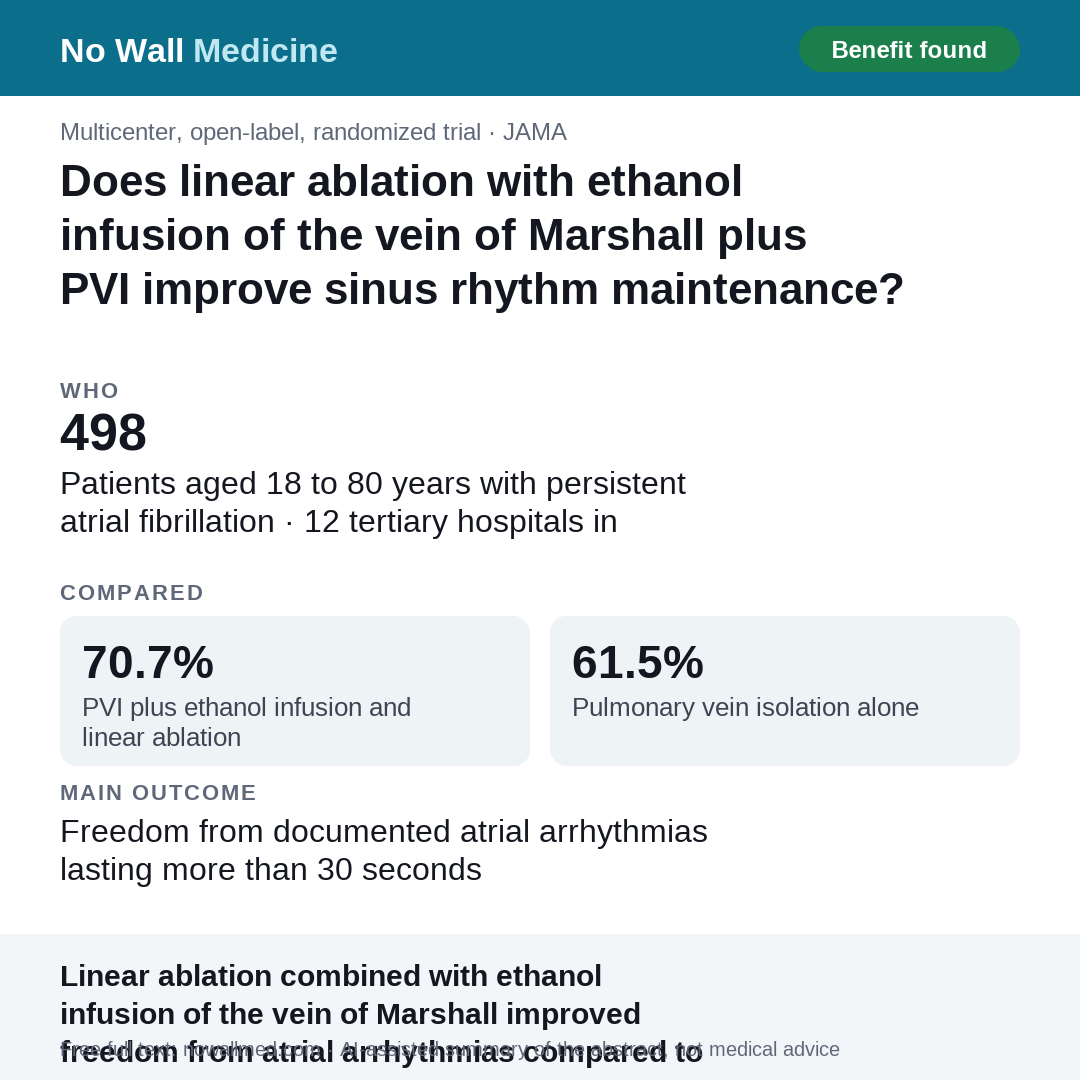
Pulmonary Vein Isolation With Optimized Linear Ablation vs Pulmonary Vein Isolation Alone for Persistent AF: The PROMPT-AF Randomized Clinical Trial
Multicenter, open-label, randomized trialBenefit found
Does linear ablation with ethanol infusion of the vein of Marshall plus PVI improve sinus rhythm maintenance?
Who
498
Patients aged 18 to 80 years with persistent atrial fibrillation · 12 tertiary hospitals in China
Compared
70.7%PVI plus ethanol infusion and linear ablation
61.5%Pulmonary vein isolation alone
Main outcome
Freedom from documented atrial arrhythmias lasting more than 30 seconds
Result: hazard ratio 0.73 (95% CI 0.54-0.99)
Bottom line: Linear ablation combined with ethanol infusion of the vein of Marshall improved freedom from atrial arrhythmias compared to PVI alone.
JAMA · 2024-11-18Download image
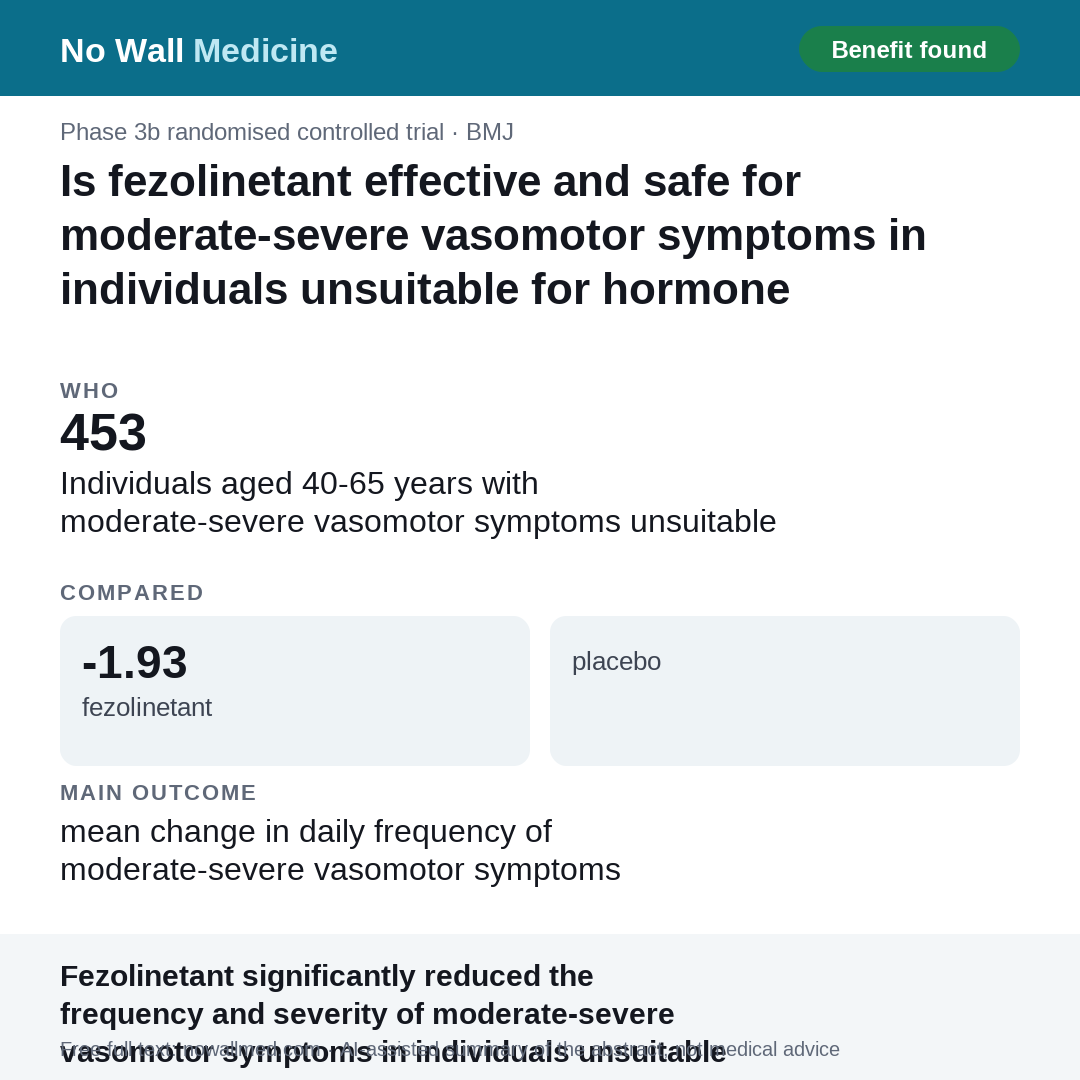
Efficacy and safety of fezolinetant for moderate-severe vasomotor symptoms associated with menopause in individuals unsuitable for hormone therapy: phase 3b randomised controlled trial
Phase 3b randomised controlled trialBenefit found
Is fezolinetant effective and safe for moderate-severe vasomotor symptoms in individuals unsuitable for hormone therapy?
Who
453
Individuals aged 40-65 years with moderate-severe vasomotor symptoms unsuitable for hormone therapy · 16 countries
Compared
-1.93fezolinetant
placebo
Main outcome
mean change in daily frequency of moderate-severe vasomotor symptoms
Result: least squares mean difference -1.93, 95% confidence interval -2.64 to -1.22
Bottom line: Fezolinetant significantly reduced the frequency and severity of moderate-severe vasomotor symptoms in individuals unsuitable for hormone therapy.
BMJ · 2024-11-18Download image
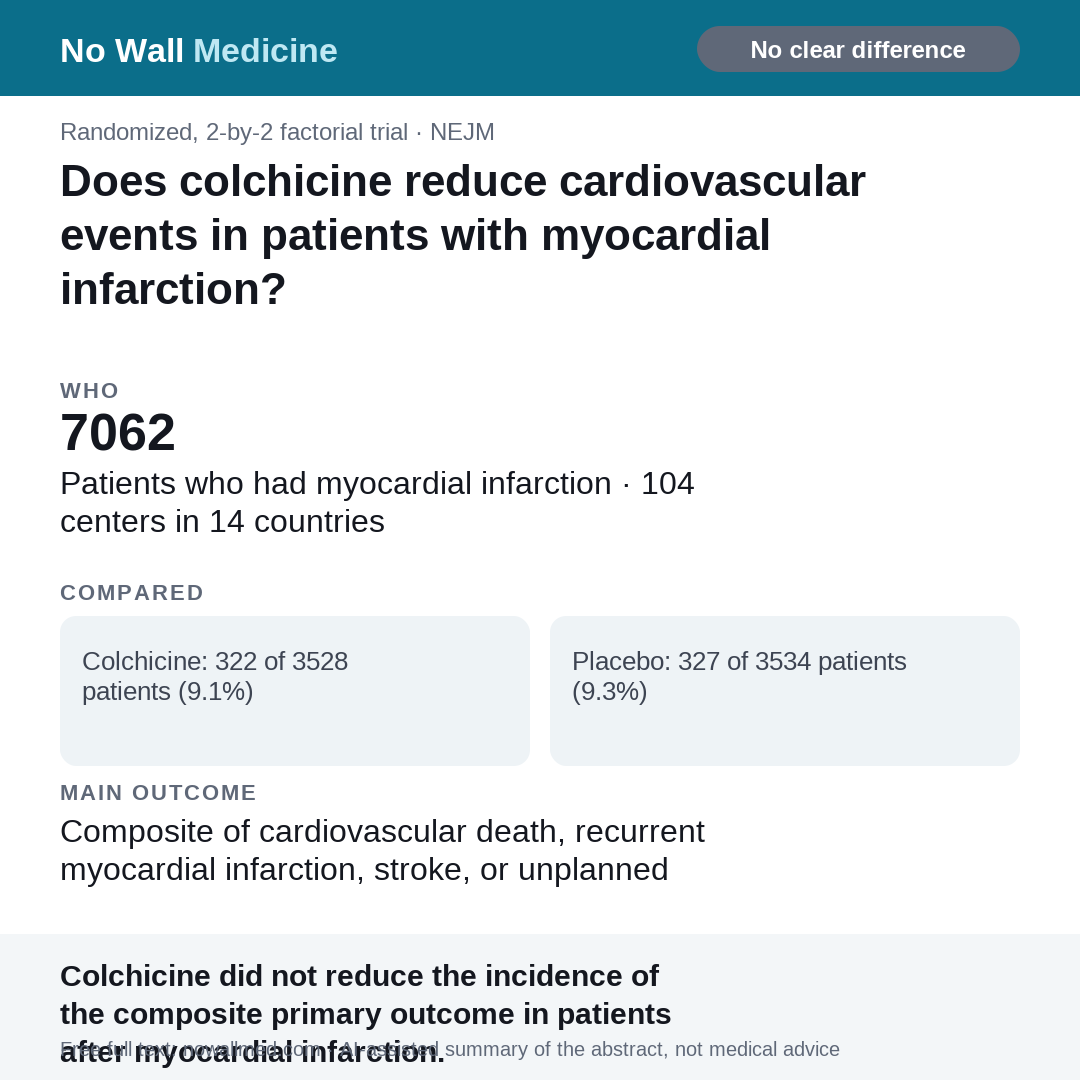
Colchicine in Acute Myocardial Infarction
Randomized, 2-by-2 factorial trialNo clear difference
Does colchicine reduce cardiovascular events in patients with myocardial infarction?
Who
7062
Patients who had myocardial infarction · 104 centers in 14 countries
Compared
Colchicine: 322 of 3528 patients (9.1%)
Placebo: 327 of 3534 patients (9.3%)
Main outcome
Composite of cardiovascular death, recurrent myocardial infarction, stroke, or unplanned revascularization
Result: hazard ratio 0.99 (95% CI 0.85 to 1.16)
Bottom line: Colchicine did not reduce the incidence of the composite primary outcome in patients after myocardial infarction.
Funded by: Canadian Institutes of Health Research and others
NEJM · 2024-11-17Download image
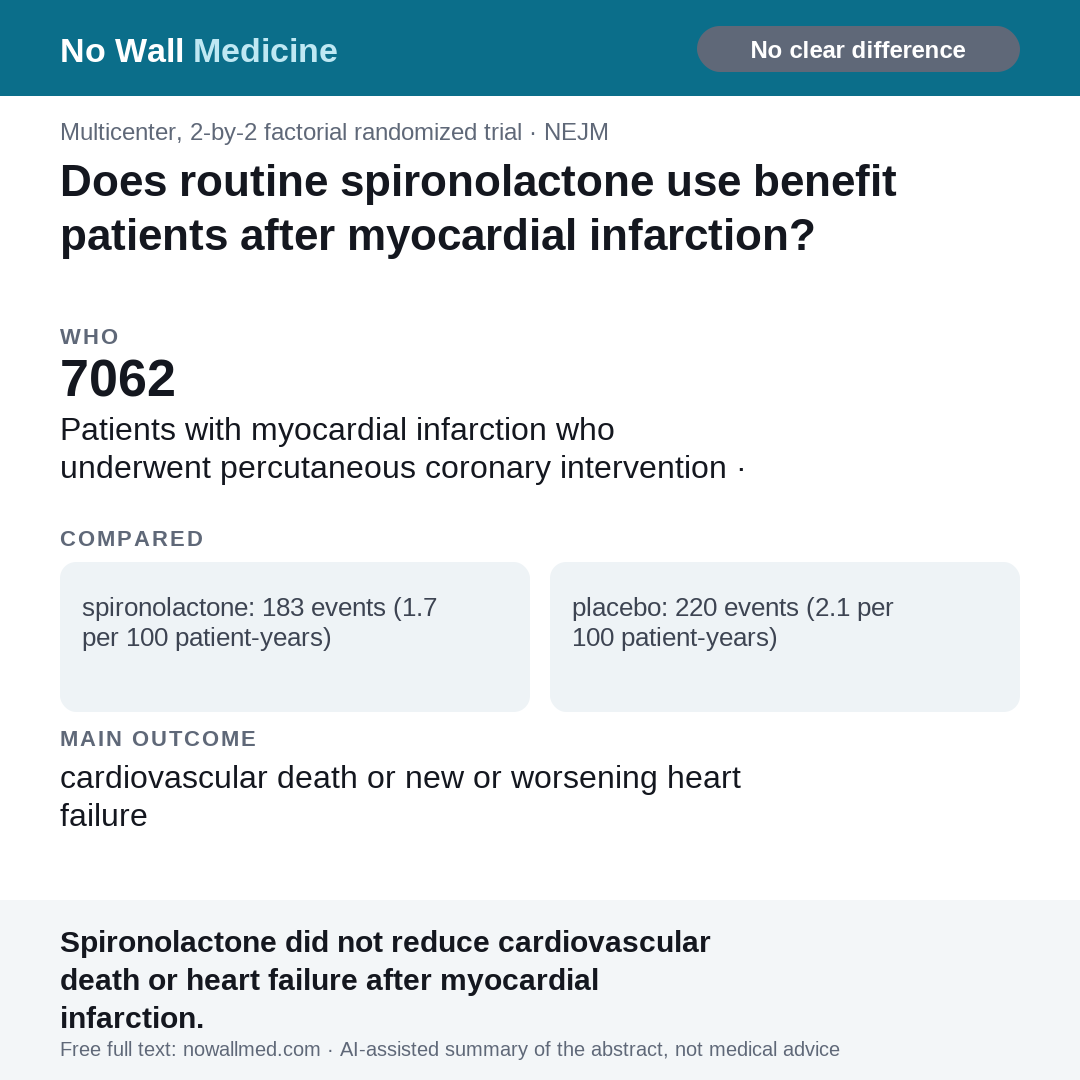
Routine Spironolactone in Acute Myocardial Infarction
Multicenter, 2-by-2 factorial randomized trialNo clear difference
Does routine spironolactone use benefit patients after myocardial infarction?
Who
7062
Patients with myocardial infarction who underwent percutaneous coronary intervention · 104 centers in 14 countries
Compared
spironolactone: 183 events (1.7 per 100 patient-years)
placebo: 220 events (2.1 per 100 patient-years)
Main outcome
cardiovascular death or new or worsening heart failure
Result: hazard ratio 0.91 (95% CI 0.69 to 1.21)
Bottom line: Spironolactone did not reduce cardiovascular death or heart failure after myocardial infarction.
Funded by: Canadian Institutes of Health Research and others
NEJM · 2024-11-17Download image
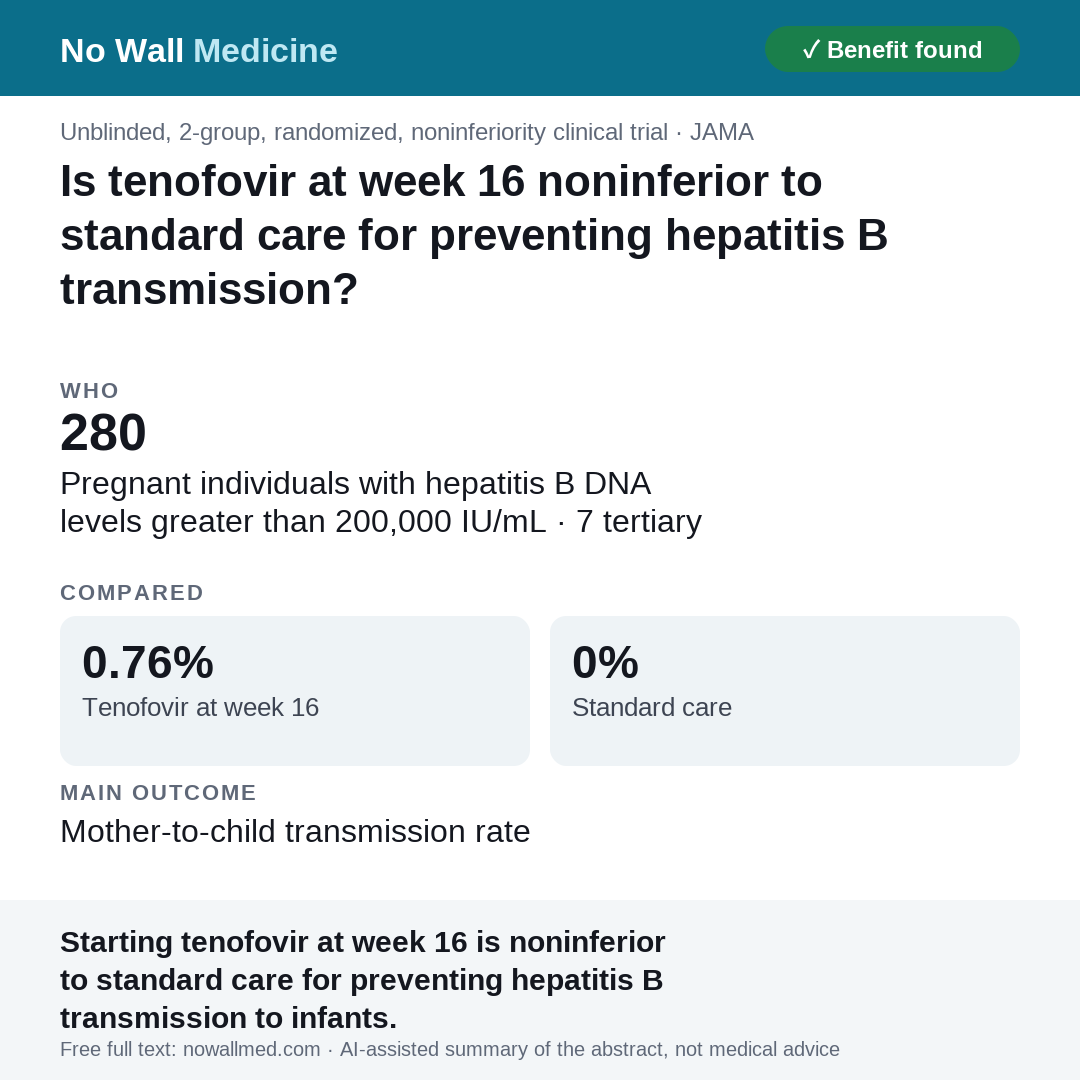
Tenofovir and Hepatitis B Virus Transmission During Pregnancy: A Randomized Clinical Trial
Unblinded, 2-group, randomized, noninferiority clinical trialBenefit found
Is tenofovir at week 16 noninferior to standard care for preventing hepatitis B transmission?
Who
280
Pregnant individuals with hepatitis B DNA levels greater than 200,000 IU/mL · 7 tertiary care hospitals in China
Compared
0.76%Tenofovir at week 16 (1/131)
0%Standard care (0/142)
Main outcome
Mother-to-child transmission rate
Result: difference 0.76% (upper limit of the 2-sided 90% CI, 1.74%)
Bottom line: Starting tenofovir at week 16 is noninferior to standard care for preventing hepatitis B transmission to infants.
JAMA · 2024-11-14Download image
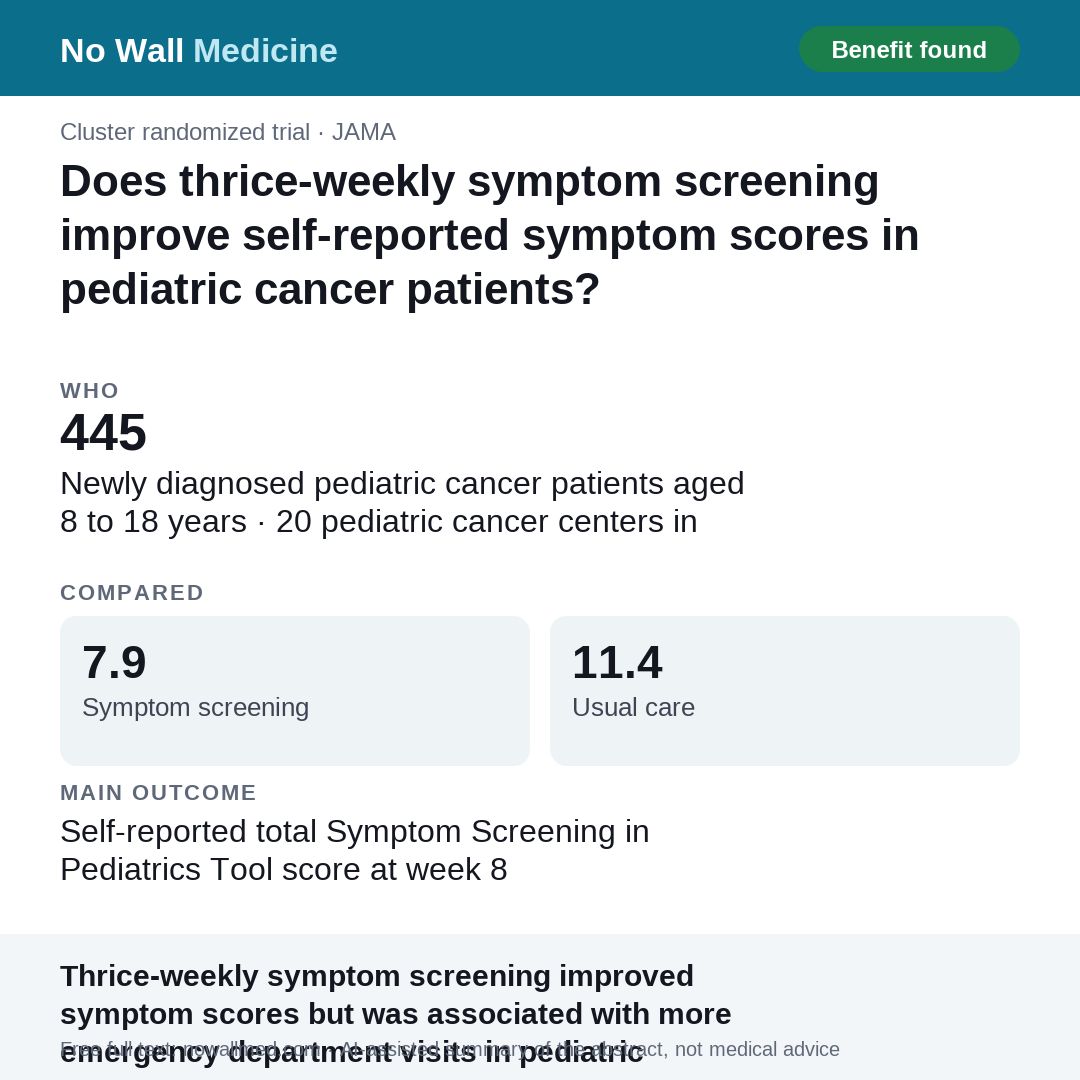
Symptom Screening Linked to Care Pathways for Pediatric Patients With Cancer: A Randomized Clinical Trial
Cluster randomized trialBenefit found
Does thrice-weekly symptom screening improve self-reported symptom scores in pediatric cancer patients?
Who
445
Newly diagnosed pediatric cancer patients aged 8 to 18 years · 20 pediatric cancer centers in the US
Compared
7.9Symptom screening (7.2)
11.4Usual care (8.7)
Main outcome
Self-reported total Symptom Screening in Pediatrics Tool score at week 8
Result: adjusted mean difference, -3.8 (95% CI, -6.4 to -1.2)
Bottom line: Thrice-weekly symptom screening improved symptom scores but was associated with more emergency department visits in pediatric cancer patients.
JAMA · 2024-11-13Download image
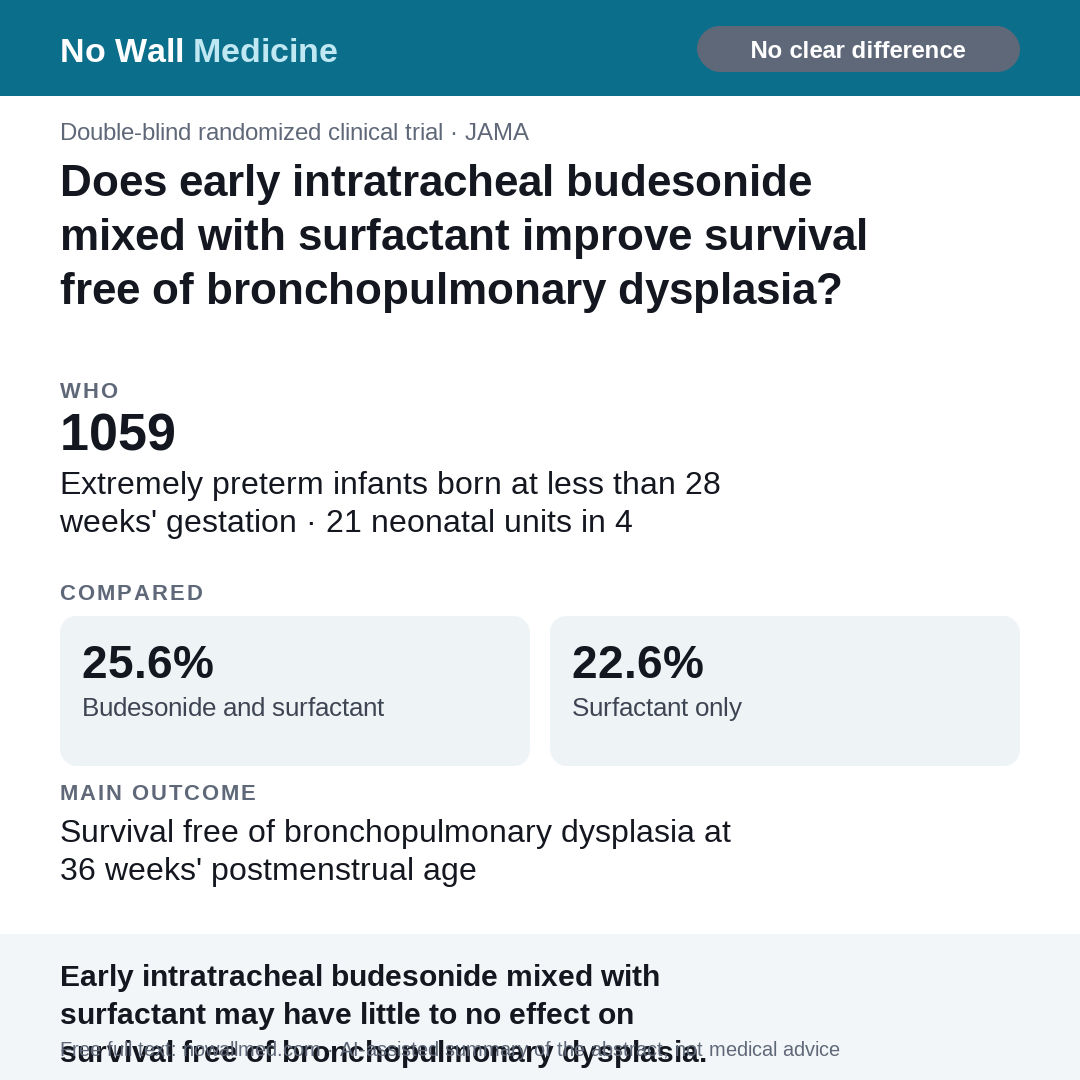
Intratracheal Budesonide Mixed With Surfactant for Extremely Preterm Infants: The PLUSS Randomized Clinical Trial
Double-blind randomized clinical trialNo clear difference
Does early intratracheal budesonide mixed with surfactant improve survival free of bronchopulmonary dysplasia?
Who
1059
Extremely preterm infants born at less than 28 weeks' gestation · 21 neonatal units in 4 countries
Compared
25.6%Budesonide and surfactant
22.6%Surfactant only
Main outcome
Survival free of bronchopulmonary dysplasia at 36 weeks' postmenstrual age
Result: adjusted risk difference, 2.7% (95% CI, -2.1% to 7.4%)
Bottom line: Early intratracheal budesonide mixed with surfactant may have little to no effect on survival free of bronchopulmonary dysplasia.
JAMA · 2024-11-13Download image
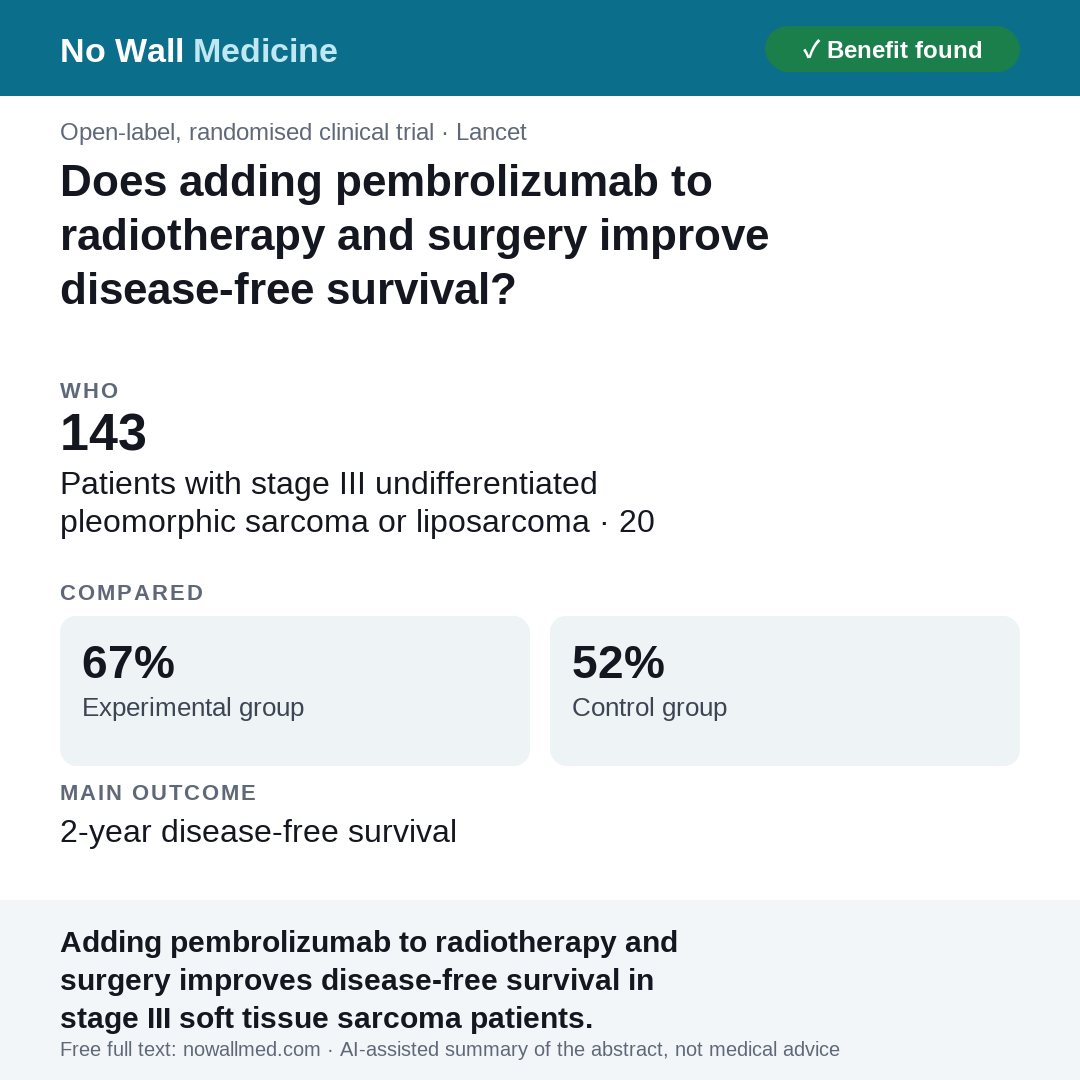
Safety and efficacy of pembrolizumab, radiation therapy, and surgery versus radiation therapy and surgery for stage III soft tissue sarcoma of the extremity (SU2C-SARC032): an open-label, randomised clinical trial
Open-label, randomised clinical trialBenefit found
Does adding pembrolizumab to radiotherapy and surgery improve disease-free survival?
Who
143
Patients with stage III undifferentiated pleomorphic sarcoma or liposarcoma · 20 academic institutions in Australia, Canada, Italy, and USA
Compared
67%Experimental group (90% CI 58-78)
52%Control group (90% CI 42-64)
Main outcome
2-year disease-free survival
Result: hazard ratio 0.61 (90% CI 0.39-0.96)
Bottom line: Adding pembrolizumab to radiotherapy and surgery improves disease-free survival in stage III soft tissue sarcoma patients.
Funded by: Stand Up to Cancer and Merck Sharp & Dohme
Lancet · 2024-11-12Download image
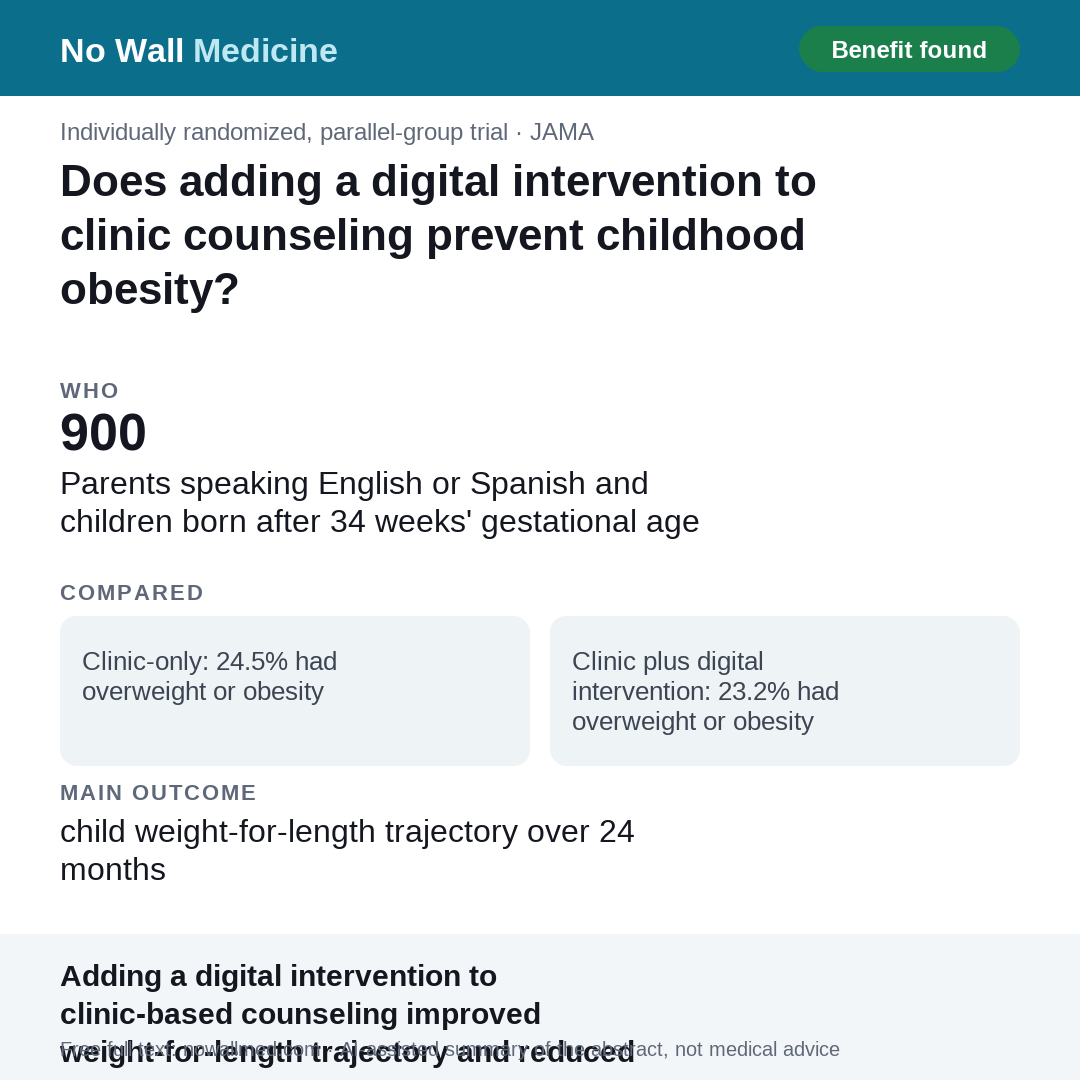
A Digital Health Behavior Intervention to Prevent Childhood Obesity: The Greenlight Plus Randomized Clinical Trial
Individually randomized, parallel-group trialBenefit found
Does adding a digital intervention to clinic counseling prevent childhood obesity?
Who
900
Parents speaking English or Spanish and children born after 34 weeks' gestational age · 6 US medical centers
Compared
Clinic-only: 24.5% had overweight or obesity
Clinic plus digital intervention: 23.2% had overweight or obesity
Main outcome
child weight-for-length trajectory over 24 months
Result: estimated reduction of 0.33 kg/m (95% CI, 0.09 to 0.57)
Bottom line: Adding a digital intervention to clinic-based counseling improved weight-for-length trajectory and reduced obesity at 24 months.
JAMA · 2024-11-04Download image
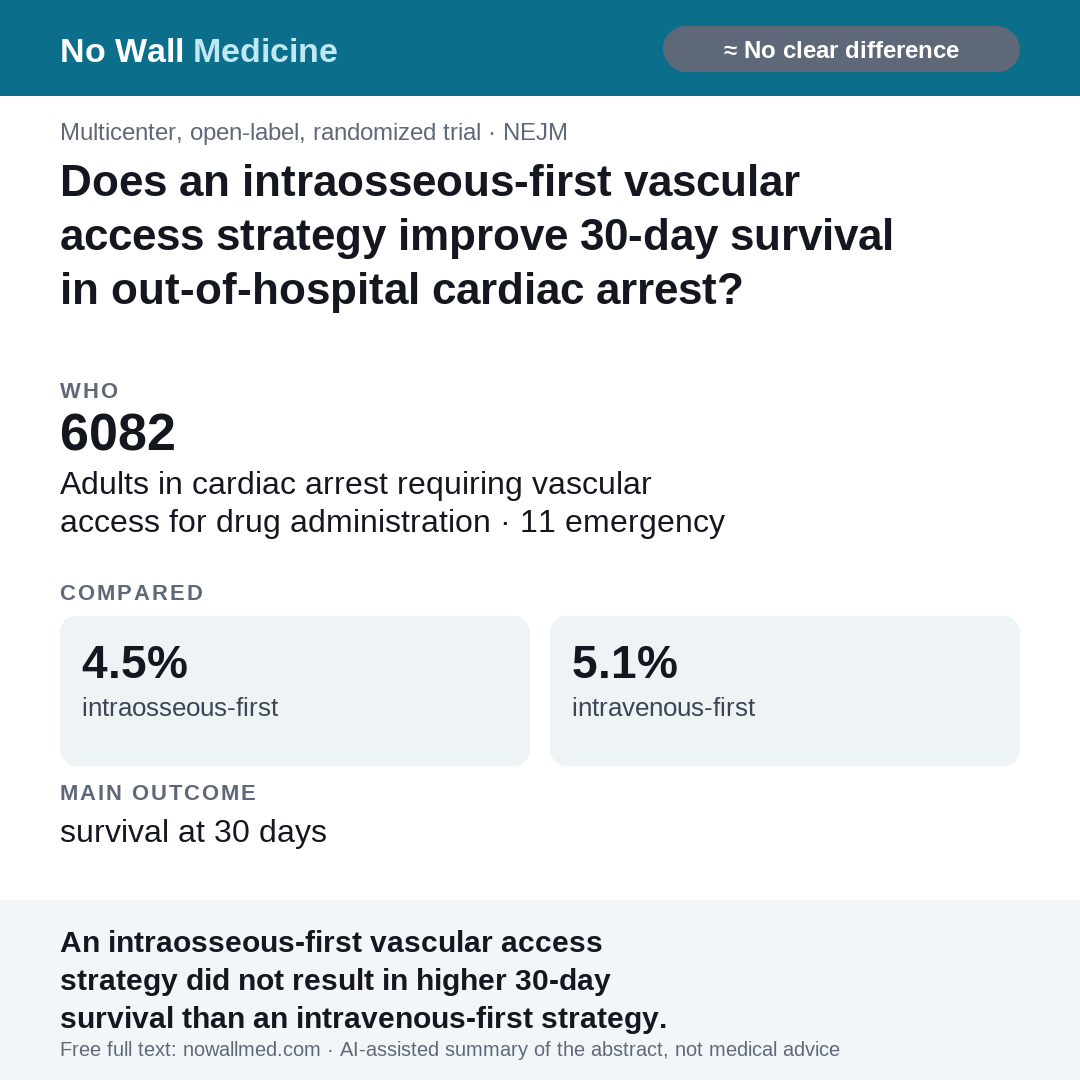
A Randomized Trial of Drug Route in Out-of-Hospital Cardiac Arrest
Multicenter, open-label, randomized trialNo clear difference
Does an intraosseous-first vascular access strategy improve 30-day survival in out-of-hospital cardiac arrest?
Who
6082
Adults in cardiac arrest requiring vascular access for drug administration · 11 emergency medical systems in the United Kingdom
Compared
4.5%intraosseous-first (137/3030)
5.1%intravenous-first (155/3034)
Main outcome
survival at 30 days
Result: adjusted odds ratio 0.94 (95% CI 0.68 to 1.32)
Bottom line: An intraosseous-first vascular access strategy did not result in higher 30-day survival than an intravenous-first strategy.
Limitation: No adjustment for multiplicity was made.
Funded by: National Institute for Health and Care Research
NEJM · 2024-10-31Download image
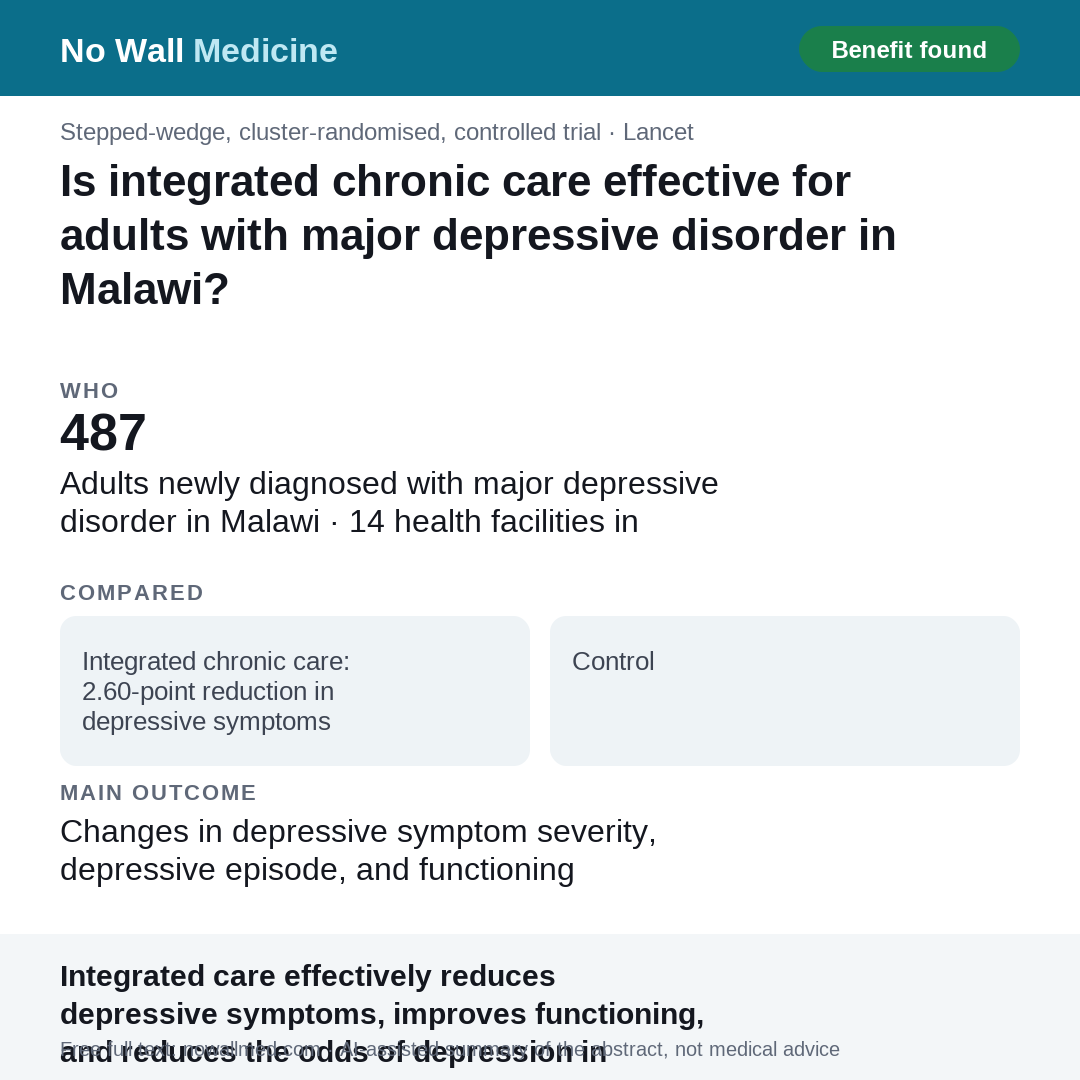
Effectiveness, cost-effectiveness, and positive externalities of integrated chronic care for adults with major depressive disorder in Malawi (IC3D): a stepped-wedge, cluster-randomised, controlled trial
Stepped-wedge, cluster-randomised, controlled trialBenefit found
Is integrated chronic care effective for adults with major depressive disorder in Malawi?
Who
487
Adults newly diagnosed with major depressive disorder in Malawi · 14 health facilities in Neno District, Malawi
Compared
Integrated chronic care: 2.60-point reduction in depressive symptoms
Control
Main outcome
Changes in depressive symptom severity, depressive episode, and functioning
Result: adjusted odds ratio 0.62 (95% CI 0.51 to 0.74)
Bottom line: Integrated care effectively reduces depressive symptoms, improves functioning, and reduces the odds of depression in Malawi.
Funded by: National Institute of Mental Health
Lancet · 2024-10-30Download image
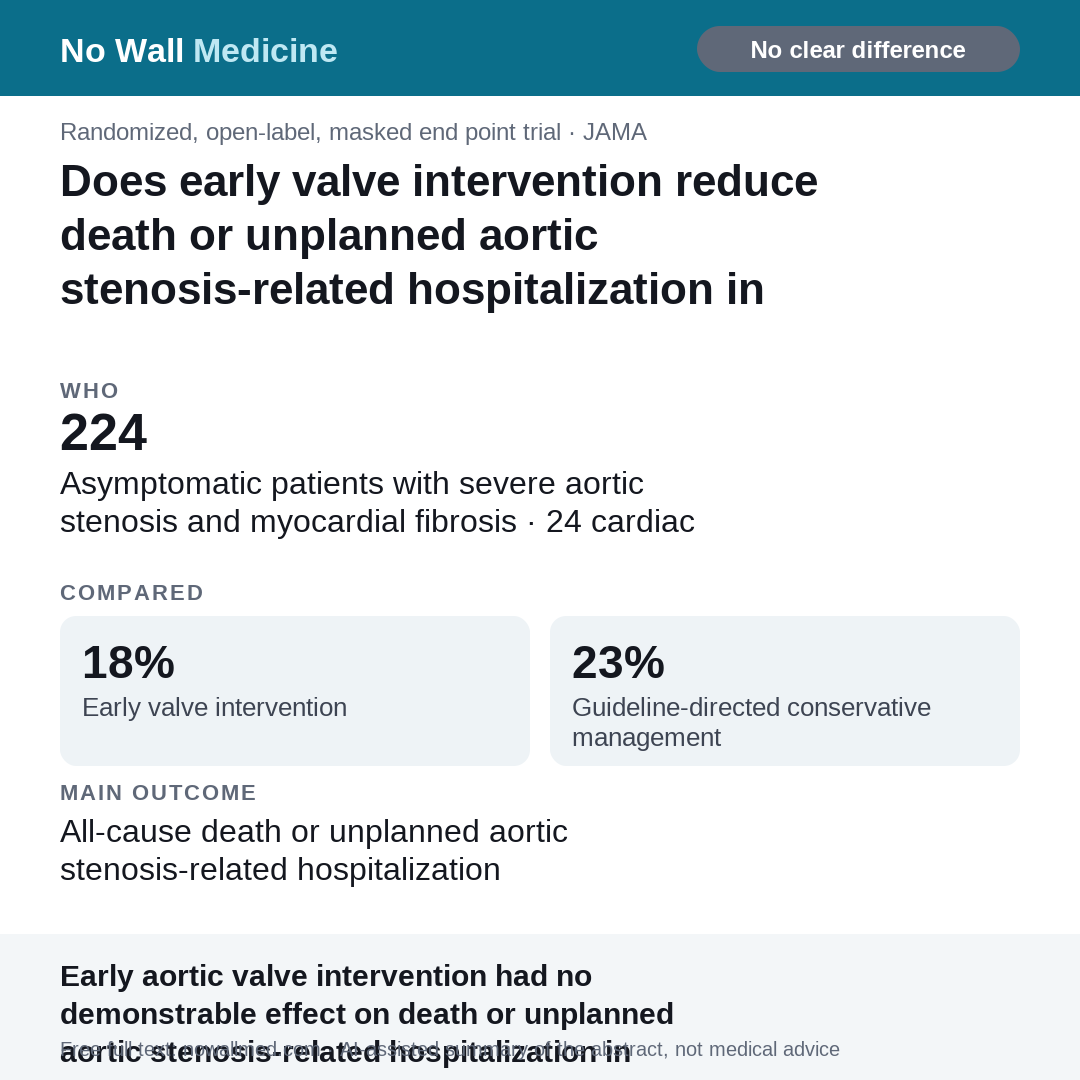
Early Intervention in Patients With Asymptomatic Severe Aortic Stenosis and Myocardial Fibrosis: The EVOLVED Randomized Clinical Trial
Randomized, open-label, masked end point trialNo clear difference
Does early valve intervention reduce death or unplanned aortic stenosis-related hospitalization in asymptomatic patients?
Who
224
Asymptomatic patients with severe aortic stenosis and myocardial fibrosis · 24 cardiac centers across the UK and Australia
Compared
18%Early valve intervention
23%Guideline-directed conservative management
Main outcome
All-cause death or unplanned aortic stenosis-related hospitalization
Result: hazard ratio 0.79 (95% CI 0.44-1.43)
Bottom line: Early aortic valve intervention had no demonstrable effect on death or unplanned aortic stenosis-related hospitalization in these patients.
JAMA · 2024-10-28Download image
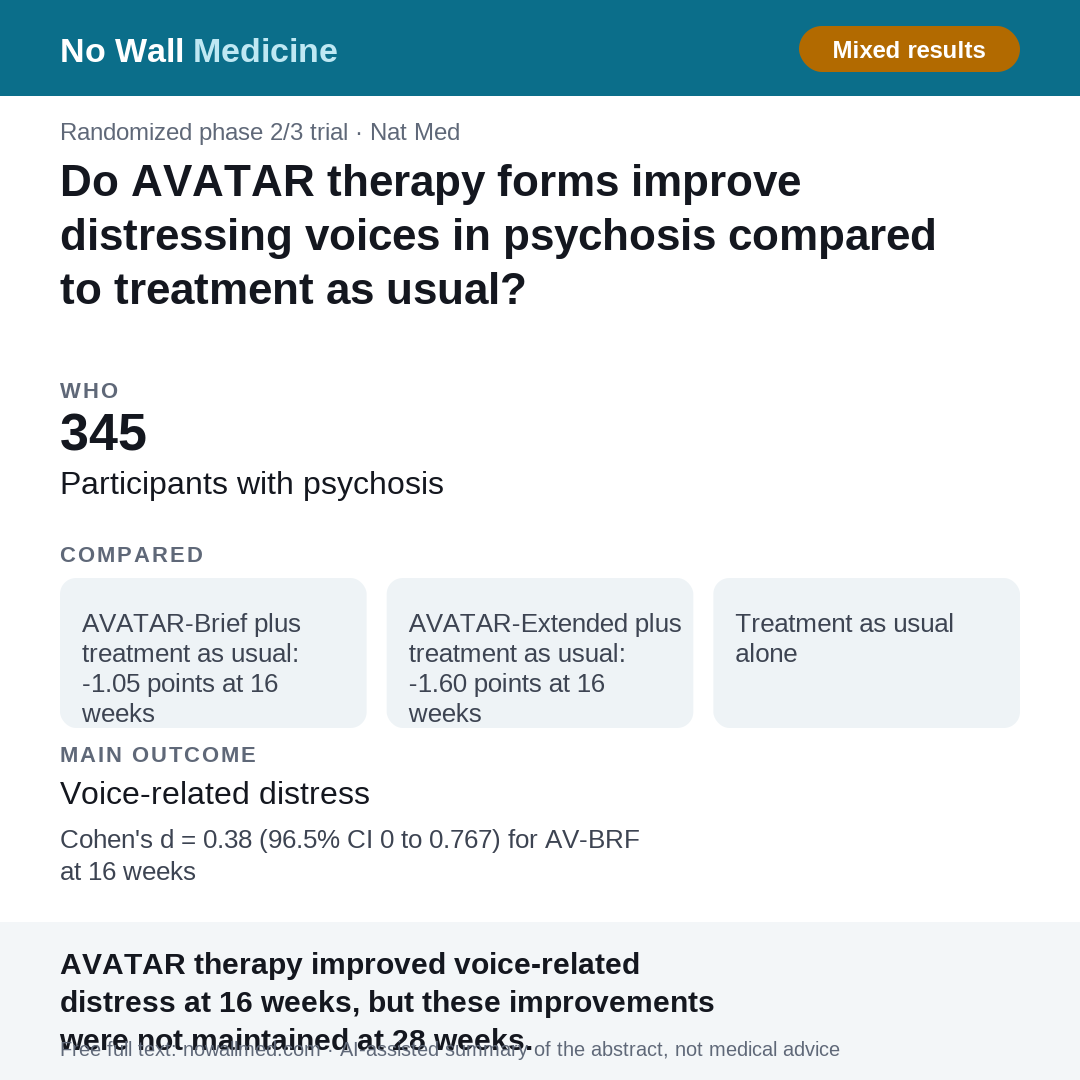
Digital AVATAR therapy for distressing voices in psychosis: the phase 2/3 AVATAR2 trial
Randomized phase 2/3 trialMixed results
Do AVATAR therapy forms improve distressing voices in psychosis compared to treatment as usual?
Who
345
Participants with psychosis
Compared
AVATAR-Brief plus treatment as usual: -1.05 points at 16 weeks
AVATAR-Extended plus treatment as usual: -1.60 points at 16 weeks
Treatment as usual alone
Main outcome
Voice-related distress
Result: Cohen's d = 0.38 (96.5% CI 0 to 0.767) for AV-BRF at 16 weeks
Bottom line: AVATAR therapy improved voice-related distress at 16 weeks, but these improvements were not maintained at 28 weeks.
Nat Med · 2024-10-28Download image
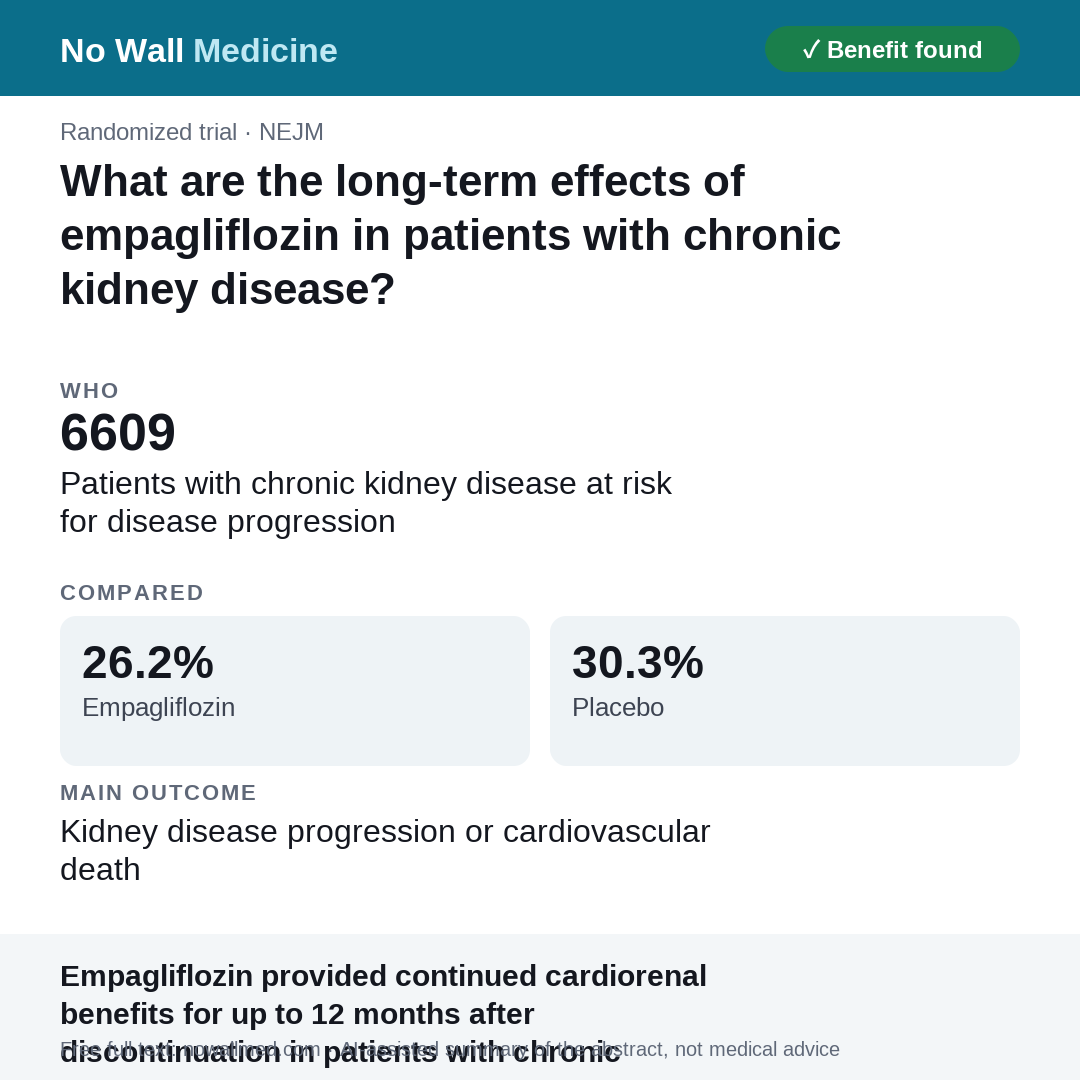
Long-Term Effects of Empagliflozin in Patients with Chronic Kidney Disease
Randomized trialBenefit found
What are the long-term effects of empagliflozin in patients with chronic kidney disease?
Who
6609
Patients with chronic kidney disease at risk for disease progression
Compared
26.2%Empagliflozin
30.3%Placebo
Main outcome
Kidney disease progression or cardiovascular death
Result: hazard ratio 0.79 (95% CI 0.72 to 0.87)
Bottom line: Empagliflozin provided continued cardiorenal benefits for up to 12 months after discontinuation in patients with chronic kidney disease.
Funded by: Boehringer Ingelheim and others
NEJM · 2024-10-25Download image
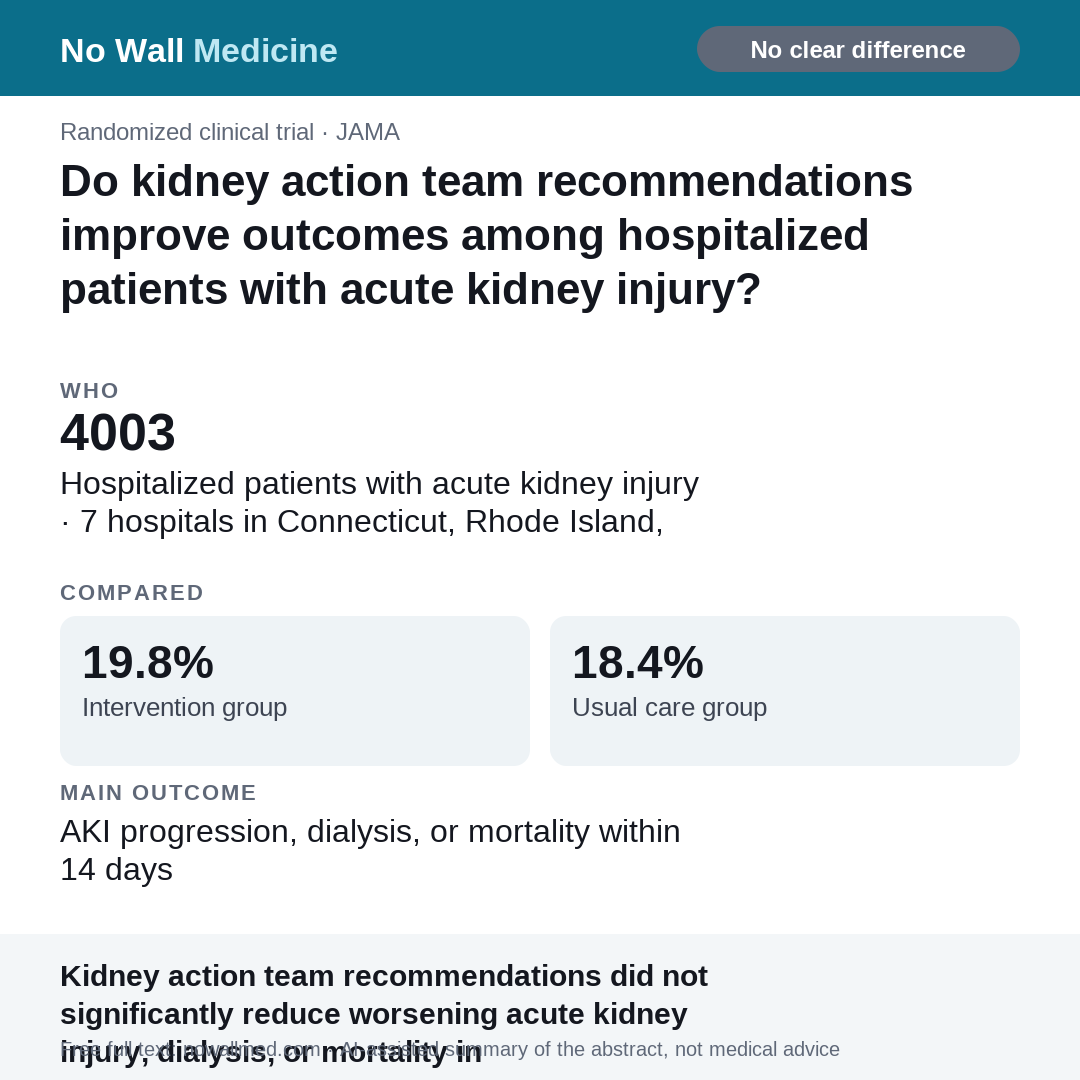
Early, Individualized Recommendations for Hospitalized Patients With Acute Kidney Injury: A Randomized Clinical Trial
Randomized clinical trialNo clear difference
Do kidney action team recommendations improve outcomes among hospitalized patients with acute kidney injury?
Who
4003
Hospitalized patients with acute kidney injury · 7 hospitals in Connecticut, Rhode Island, and Maryland
Compared
19.8%Intervention group
18.4%Usual care group
Main outcome
AKI progression, dialysis, or mortality within 14 days
Result: difference, 1.4%, 95% CI, -1.1% to 3.8%
Bottom line: Kidney action team recommendations did not significantly reduce worsening acute kidney injury, dialysis, or mortality in hospitalized patients.
JAMA · 2024-10-25Download image