Visual abstracts
New randomized trials and meta-analyses from leading journals at a glance: who was studied, what was compared, and what was found. Every paper is free to read in full.
All specialtiesCardiology 1027Oncology 925Gastroenterology & Hepatology 381Infectious Disease 710Neurology 440Psychiatry & Mental Health 542Pulmonology 455Critical Care 317Endocrinology & Diabetes 585Pediatrics 651Surgery 452Orthopedics & Sports Medicine 204Neurosurgery 149Cardiothoracic & Vascular Surgery 106Plastic & Reconstructive Surgery 169Nephrology 232Rheumatology 135Hematology 223Dermatology 99Ophthalmology 121Obstetrics & Gynecology 324Public & Global Health 197Radiology & Imaging 132Anesthesiology 190Urology 199ENT (Otolaryngology) 142Emergency Medicine 116Allergy & Immunology 70Geriatrics 212Family Medicine & Primary Care 135Medical Genetics & Genomics 109Pathology & Laboratory Medicine 31Physical Medicine & Rehabilitation 183Palliative Care 95Nutrition 273Digital Health & AI 542General Medicine 105
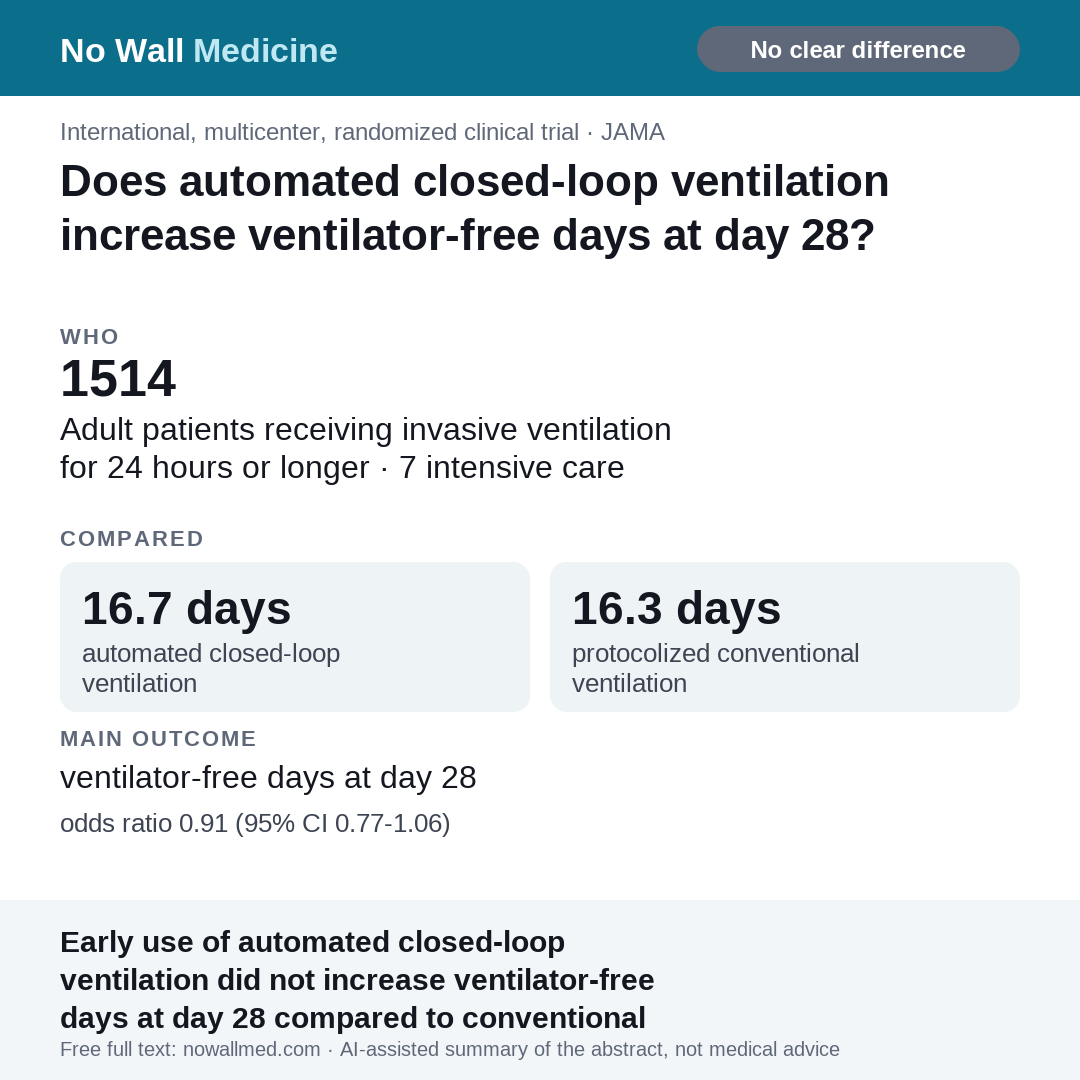
Effect of Automated Closed-Loop Ventilation vs Protocolized Conventional Ventilation on Ventilator-Free Days in Critically Ill Adults: A Randomized Clinical Trial
International, multicenter, randomized clinical trialNo clear difference
Does automated closed-loop ventilation increase ventilator-free days at day 28?
Who
1514
Adult patients receiving invasive ventilation for 24 hours or longer · 7 intensive care units in the Netherlands and Switzerland
Compared
16.7 daysautomated closed-loop ventilation (IQR, 0.0-26.1 days)
16.3 daysprotocolized conventional ventilation (IQR, 0.0-26.5 days)
Main outcome
ventilator-free days at day 28
Result: odds ratio 0.91 (95% CI 0.77-1.06)
Bottom line: Early use of automated closed-loop ventilation did not increase ventilator-free days at day 28 compared to conventional ventilation.
JAMA · 2025-12-09Download image
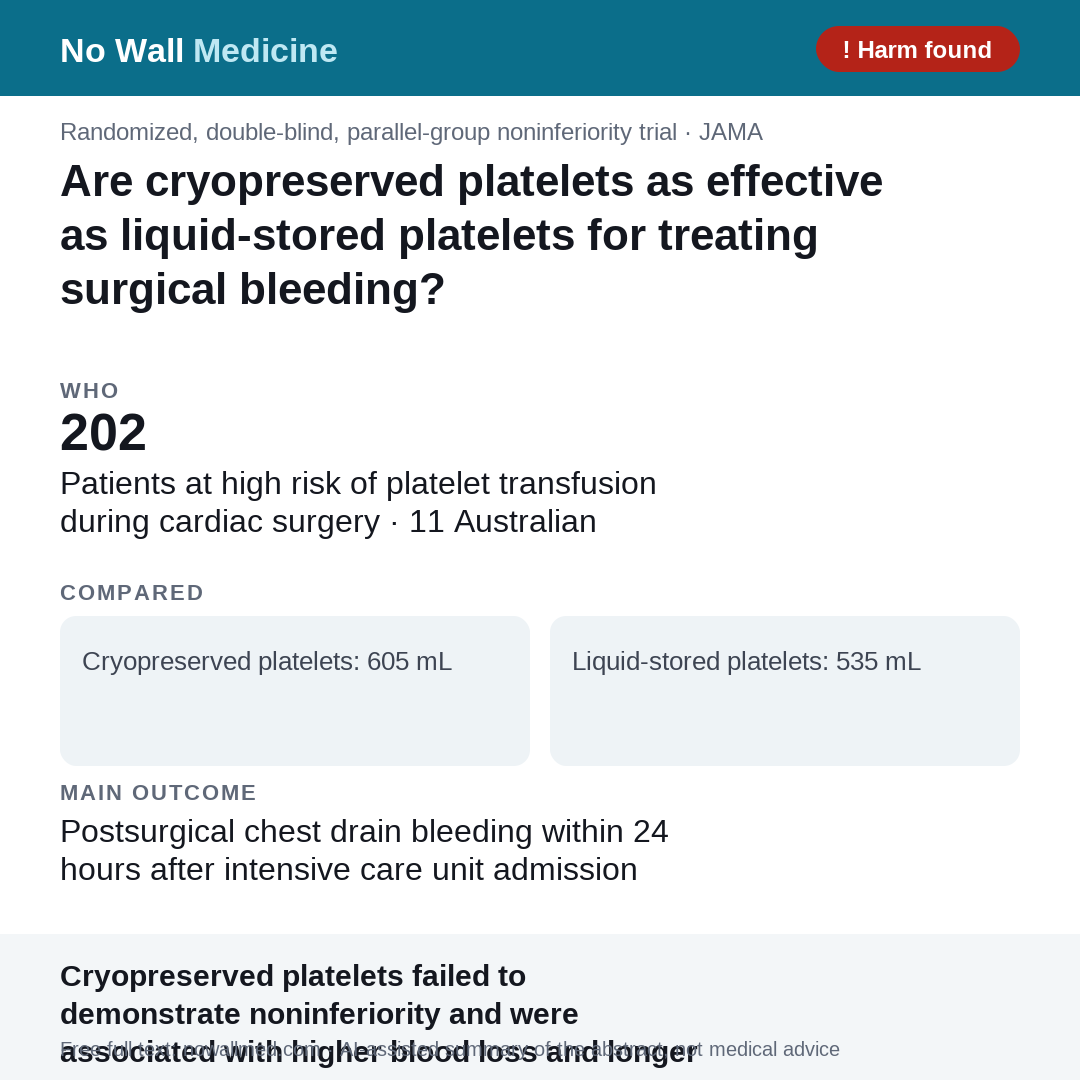
Cryopreserved vs Liquid-Stored Platelets for the Treatment of Surgical Bleeding: The CLIP-II Randomized Noninferiority Clinical Trial
Randomized, double-blind, parallel-group noninferiority trialHarm found
Are cryopreserved platelets as effective as liquid-stored platelets for treating surgical bleeding?
Who
202
Patients at high risk of platelet transfusion during cardiac surgery · 11 Australian tertiary hospitals
Compared
Cryopreserved platelets: 605 mL
Liquid-stored platelets: 535 mL
Main outcome
Postsurgical chest drain bleeding within 24 hours after intensive care unit admission
Result: ratio of geometric means 1.13 (95% CI 0.96 to 1.34)
Bottom line: Cryopreserved platelets failed to demonstrate noninferiority and were associated with higher blood loss and longer hospital stays.
JAMA · 2025-12-09Download image
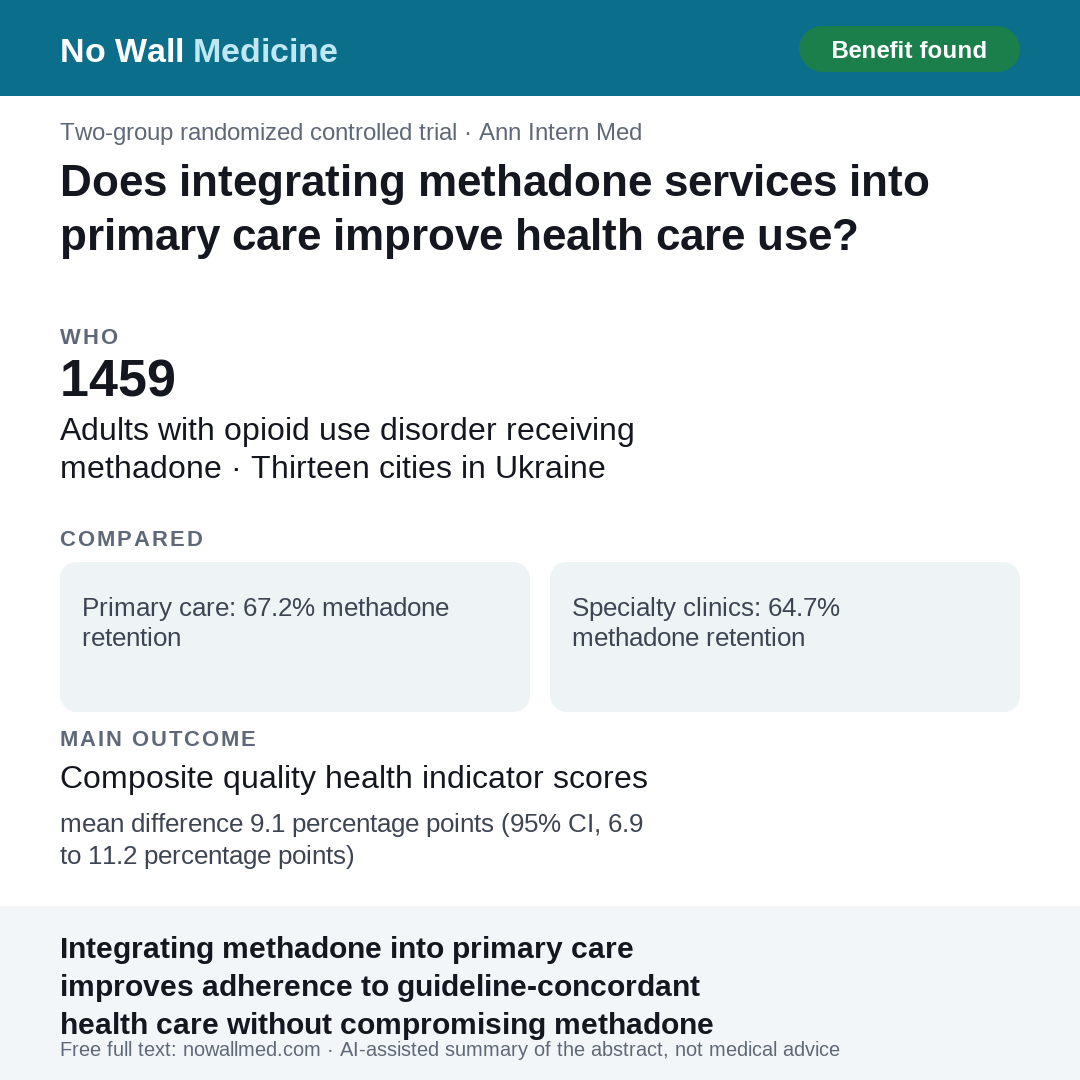
Integrating Methadone Services Into Primary Care in Ukraine: Two-Year Outcomes From a Randomized Trial
Two-group randomized controlled trialBenefit found
Does integrating methadone services into primary care improve health care use?
Who
1459
Adults with opioid use disorder receiving methadone · Thirteen cities in Ukraine
Compared
Primary care: 67.2% methadone retention
Specialty clinics: 64.7% methadone retention
Main outcome
Composite quality health indicator scores
Result: mean difference 9.1 percentage points (95% CI, 6.9 to 11.2 percentage points)
Bottom line: Integrating methadone into primary care improves adherence to guideline-concordant health care without compromising methadone retention.
Limitation: Indicators reflect health care use rather than health outcomes and weights were equal regardless of clinical significance.
Funded by: National Institute on Drug Abuse
Ann Intern Med · 2025-12-09Download image
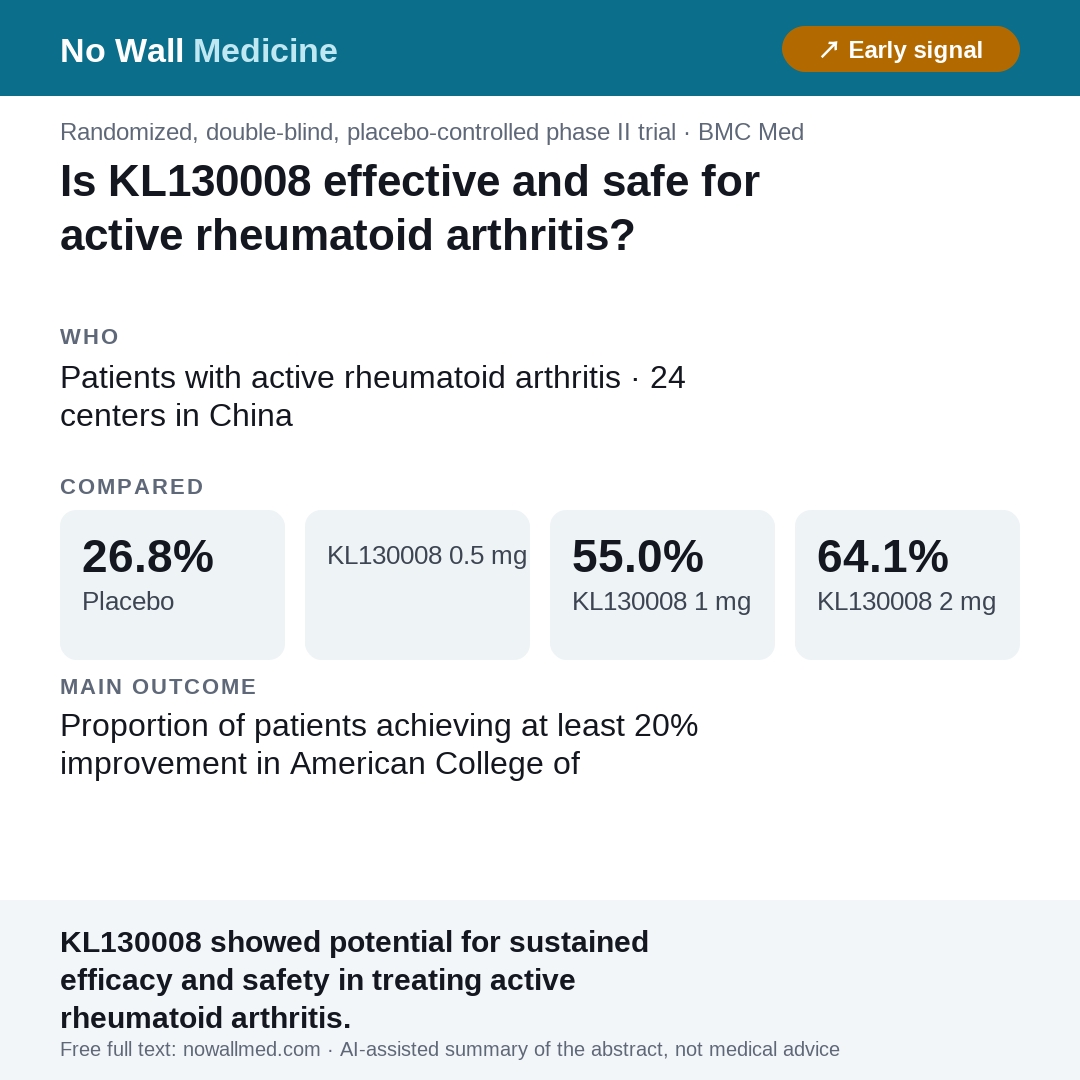
Efficacy and safety of Janus kinase 1/2 inhibitor KL130008 in active rheumatoid arthritis: a randomized, double-blind, placebo-controlled phase II trial
Randomized, double-blind, placebo-controlled phase II trialBenefit found
Is KL130008 effective and safe for active rheumatoid arthritis?
Who
Patients with active rheumatoid arthritis · 24 centers in China
Compared
26.8%Placebo
KL130008 0.5 mg
55.0%KL130008 1 mg
64.1%KL130008 2 mg
Main outcome
Proportion of patients achieving at least 20% improvement in American College of Rheumatology criteria
Bottom line: KL130008 showed potential for sustained efficacy and safety in treating active rheumatoid arthritis.
BMC Med · 2025-12-09Download image
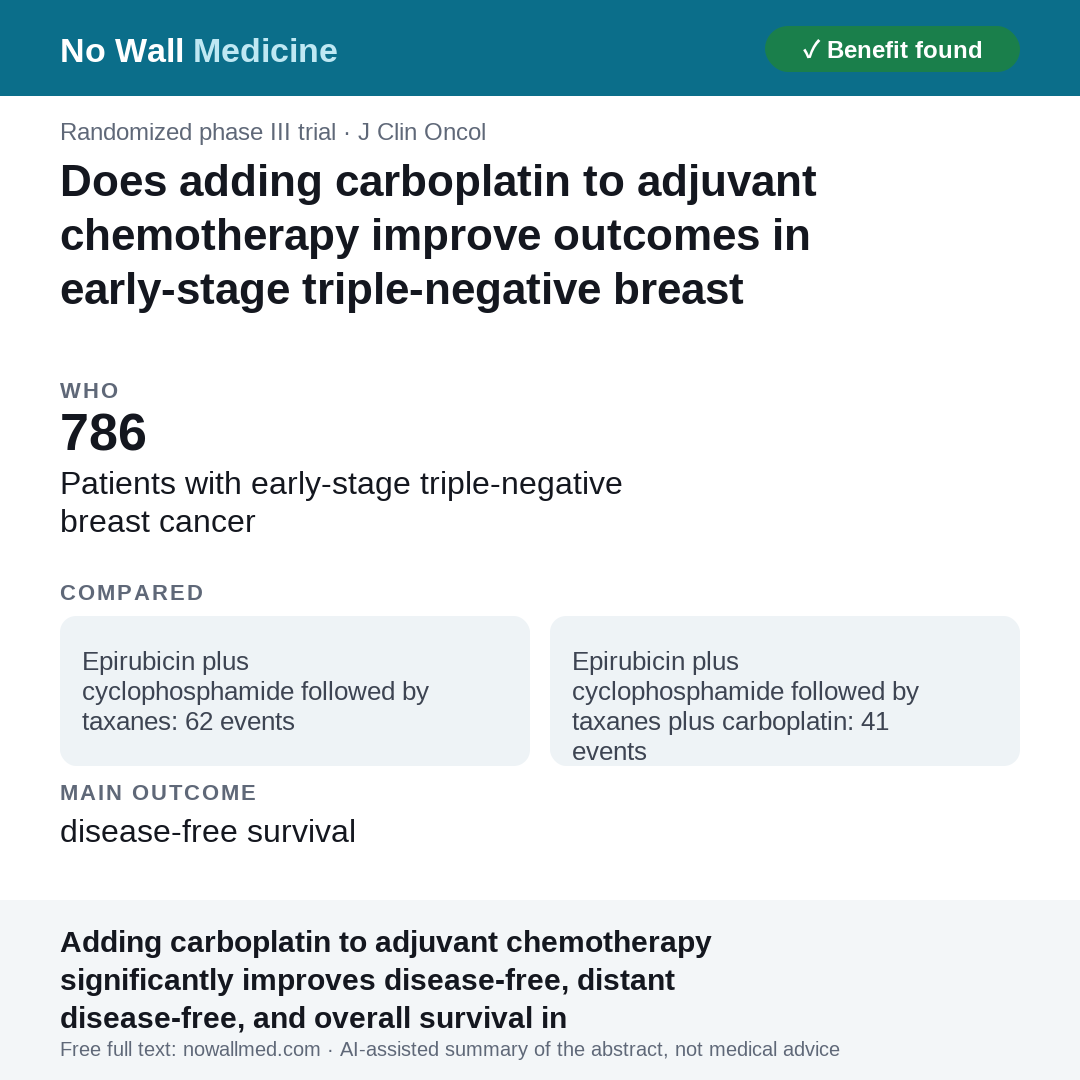
Adjuvant Epirubicin Plus Cyclophosphamide Followed by Taxanes With or Without Carboplatin in Early-Stage Triple-Negative Breast Cancer (RJBC 1501): A Randomized Phase III Trial
Randomized phase III trialBenefit found
Does adding carboplatin to adjuvant chemotherapy improve outcomes in early-stage triple-negative breast cancer?
Who
786
Patients with early-stage triple-negative breast cancer
Compared
Epirubicin plus cyclophosphamide followed by taxanes: 62 events
Epirubicin plus cyclophosphamide followed by taxanes plus carboplatin: 41 events
Main outcome
disease-free survival
Result: hazard ratio 0.66 (95% CI 0.44 to 0.97)
Bottom line: Adding carboplatin to adjuvant chemotherapy significantly improves disease-free, distant disease-free, and overall survival in early-stage triple-negative breast cancer.
J Clin Oncol · 2025-12-09Download image
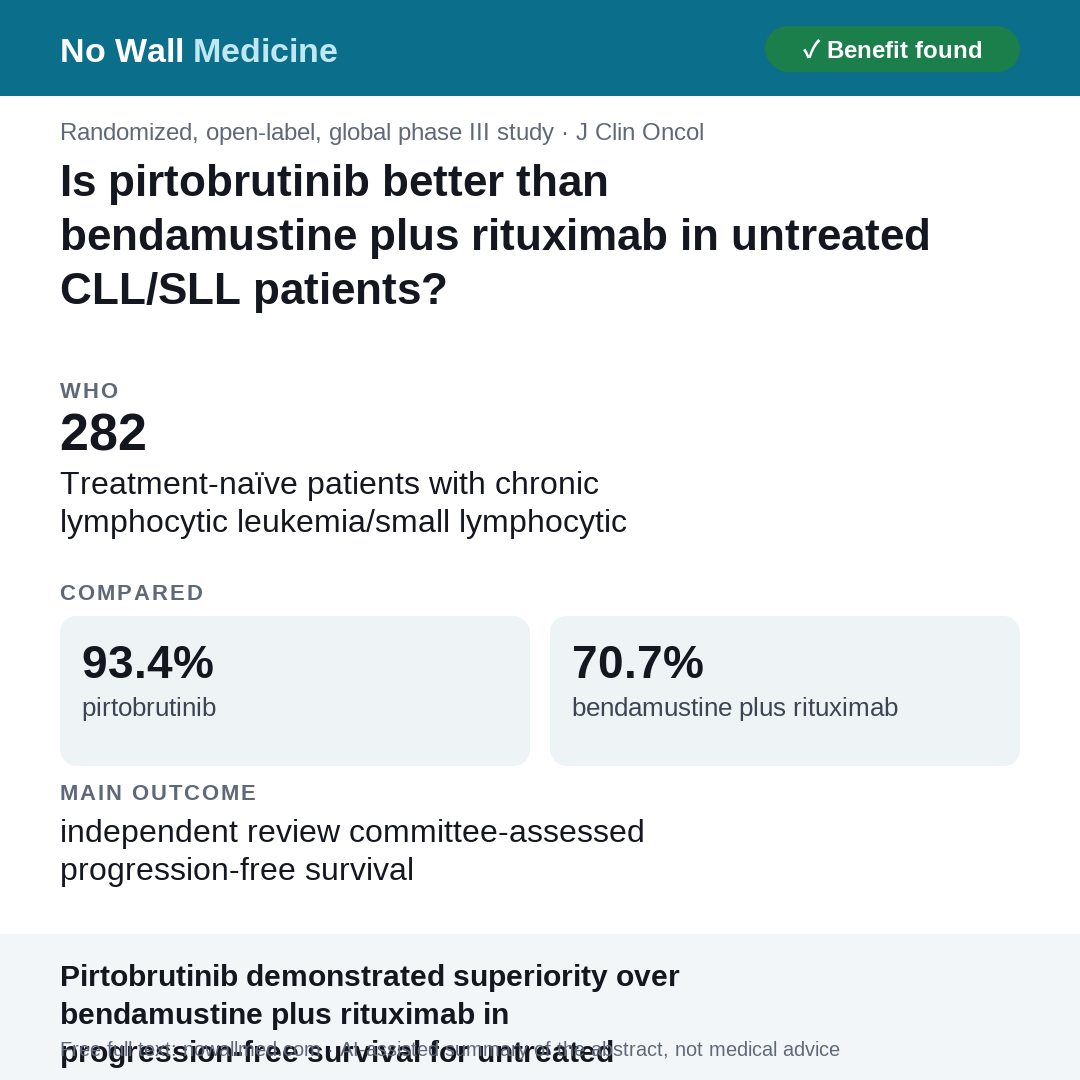
BRUIN CLL-313: Randomized Phase III Trial of Pirtobrutinib Versus Bendamustine Plus Rituximab in Untreated Patients With Chronic Lymphocytic Leukemia/Small Lymphocytic Lymphoma
Randomized, open-label, global phase III studyBenefit found
Is pirtobrutinib better than bendamustine plus rituximab in untreated CLL/SLL patients?
Who
282
Treatment-naïve patients with chronic lymphocytic leukemia/small lymphocytic lymphoma without del(17p) · Global
Compared
93.4%pirtobrutinib (95% CI, 87.6 to 96.5)
70.7%bendamustine plus rituximab (95% CI, 61.5 to 78.1)
Main outcome
independent review committee-assessed progression-free survival
Result: hazard ratio 0.199 (95% CI, 0.107 to 0.367)
Bottom line: Pirtobrutinib demonstrated superiority over bendamustine plus rituximab in progression-free survival for untreated CLL/SLL patients.
J Clin Oncol · 2025-12-09Download image
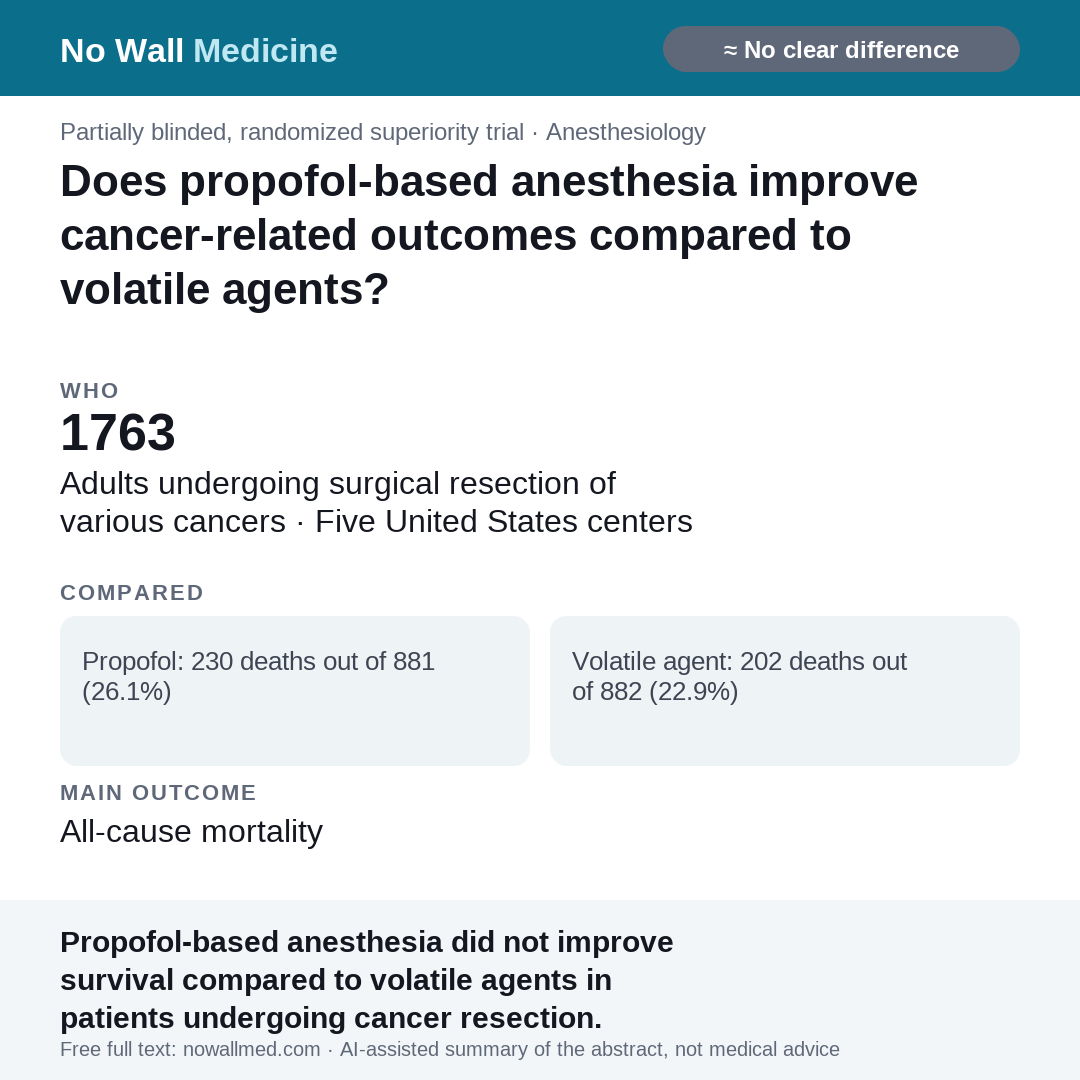
Anesthesia Type during Cancer Surgery: Results of the GA-CARES Randomized, Multicenter Trial
Partially blinded, randomized superiority trialNo clear difference
Does propofol-based anesthesia improve cancer-related outcomes compared to volatile agents?
Who
1763
Adults undergoing surgical resection of various cancers · Five United States centers
Compared
Propofol: 230 deaths out of 881 (26.1%)
Volatile agent: 202 deaths out of 882 (22.9%)
Main outcome
All-cause mortality
Result: hazard ratio 1.16 (95% CI 0.96 to 1.41)
Bottom line: Propofol-based anesthesia did not improve survival compared to volatile agents in patients undergoing cancer resection.
Anesthesiology · 2025-12-09Download image
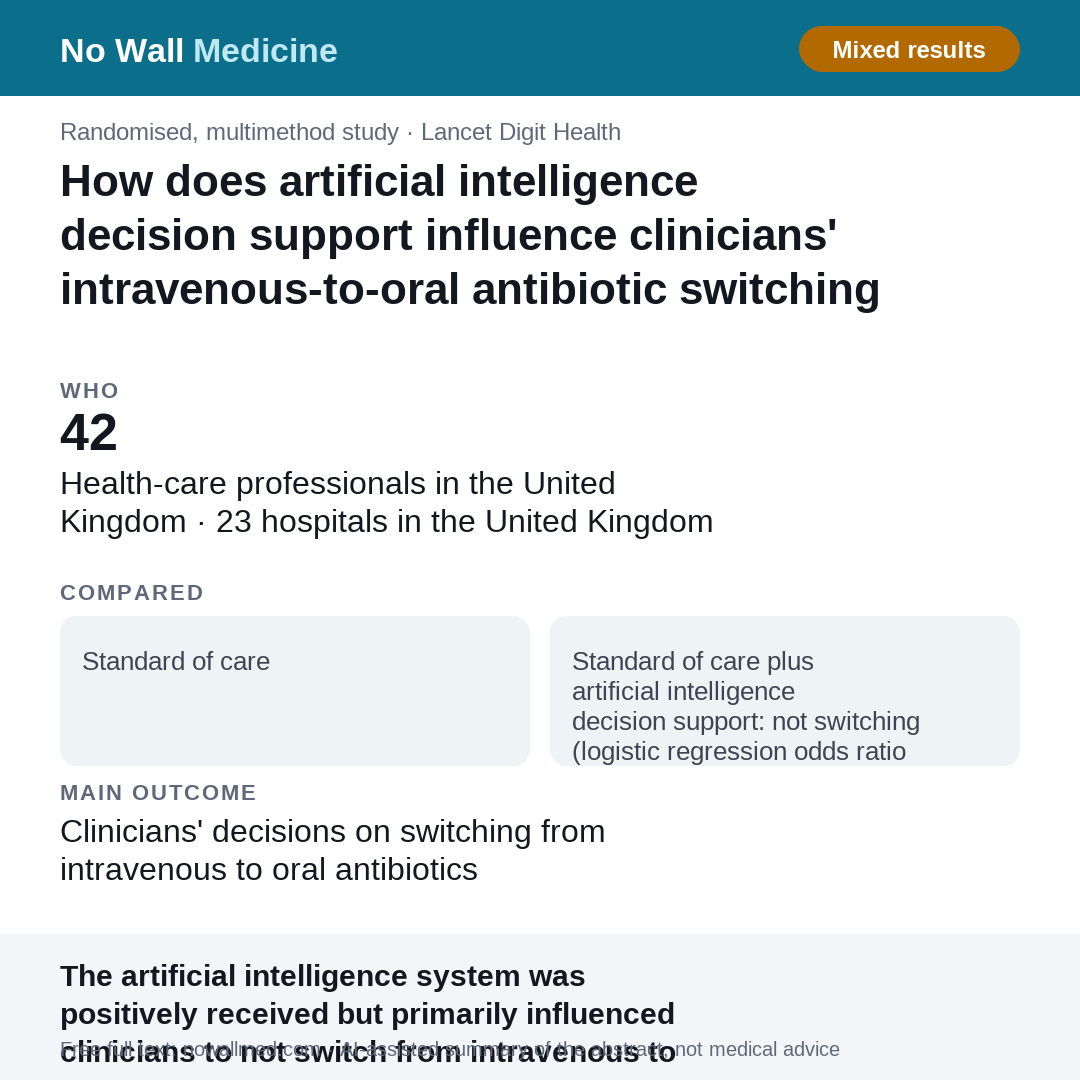
The impact of artificial intelligence-driven decision support on uncertain antimicrobial prescribing: a randomised, multimethod study
Randomised, multimethod studyMixed results
How does artificial intelligence decision support influence clinicians' intravenous-to-oral antibiotic switching decisions?
Who
42
Health-care professionals in the United Kingdom · 23 hospitals in the United Kingdom
Compared
Standard of care
Standard of care plus artificial intelligence decision support: not switching (logistic regression odds ratio 0·13 [95% CI 0·03-0·50])
Main outcome
Clinicians' decisions on switching from intravenous to oral antibiotics
Result: odds ratio 0·13 (95% CI 0·03-0·50)
Bottom line: The artificial intelligence system was positively received but primarily influenced clinicians to not switch from intravenous to oral antibiotics.
Limitation: Further prospective research is needed to gather safety and benefit data.
Funded by: UK Research and Innovation; National Institute for Health and Care Research
Lancet Digit Health · 2025-12-09Download image
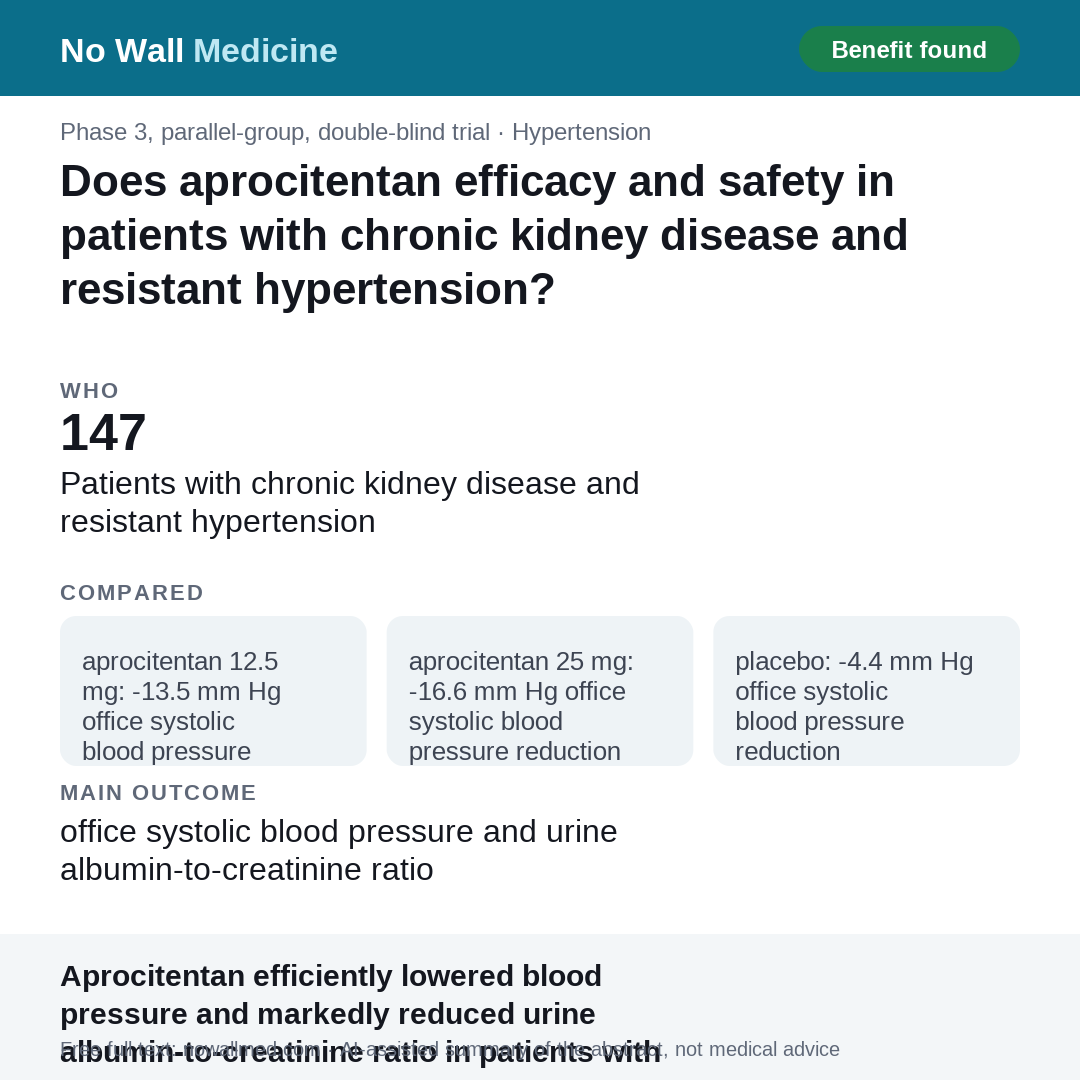
Aprocitentan in Patients With Chronic Kidney Disease and Resistant Hypertension
Phase 3, parallel-group, double-blind trialBenefit found
Does aprocitentan efficacy and safety in patients with chronic kidney disease and resistant hypertension?
Who
147
Patients with chronic kidney disease and resistant hypertension
Compared
aprocitentan 12.5 mg: -13.5 mm Hg office systolic blood pressure reduction
aprocitentan 25 mg: -16.6 mm Hg office systolic blood pressure reduction
placebo: -4.4 mm Hg office systolic blood pressure reduction
Main outcome
office systolic blood pressure and urine albumin-to-creatinine ratio
Bottom line: Aprocitentan efficiently lowered blood pressure and markedly reduced urine albumin-to-creatinine ratio in patients with chronic kidney disease.
Limitation: This was a post hoc analysis of the PRECISION study.
Hypertension · 2025-12-09Download image
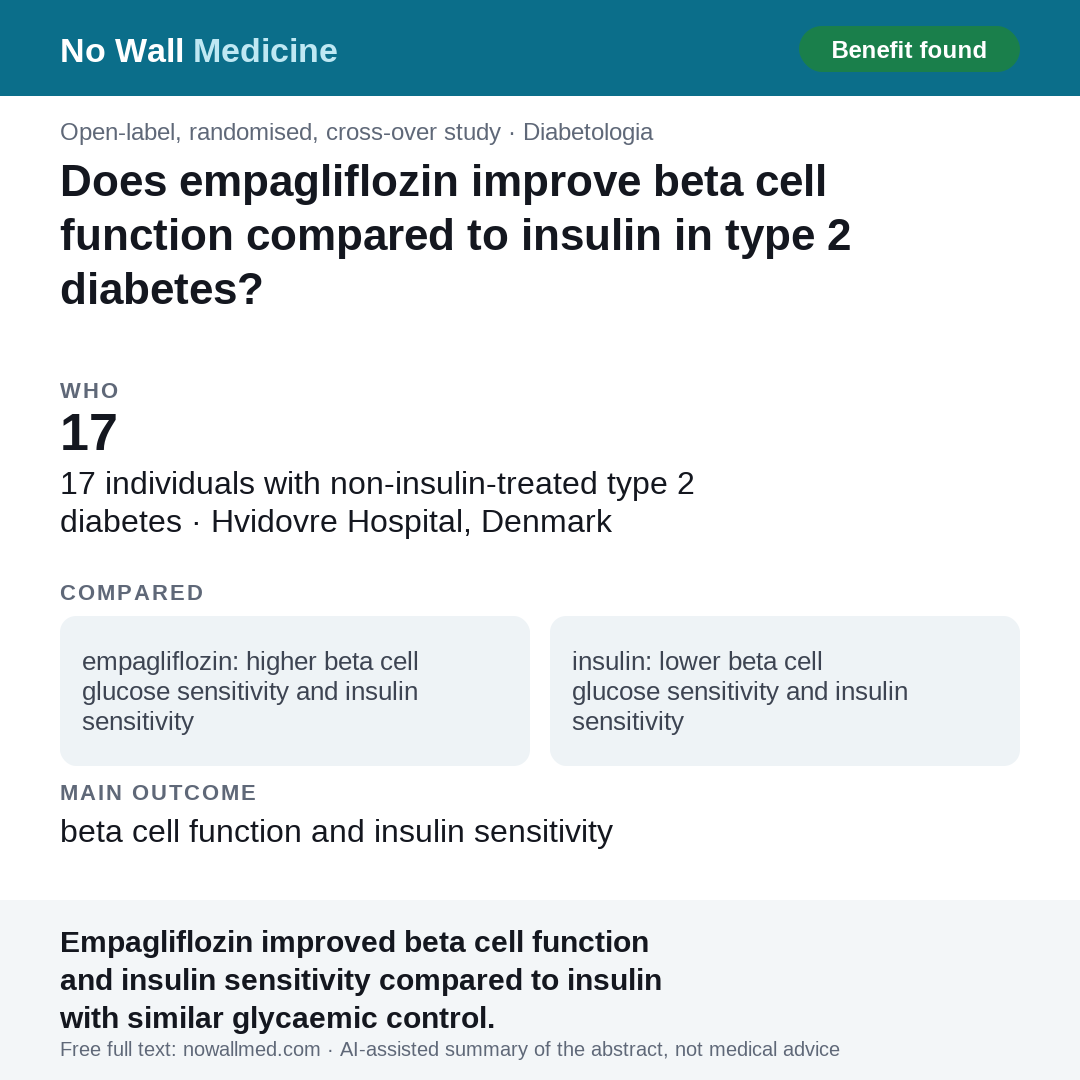
Empagliflozin improves beta cell function independently of relief of glucotoxicity in patients with type 2 diabetes: results from a randomised cross-over study with insulin as comparator
Open-label, randomised, cross-over studyBenefit found
Does empagliflozin improve beta cell function compared to insulin in type 2 diabetes?
Who
17
17 individuals with non-insulin-treated type 2 diabetes · Hvidovre Hospital, Denmark
Compared
empagliflozin: higher beta cell glucose sensitivity and insulin sensitivity
insulin: lower beta cell glucose sensitivity and insulin sensitivity
Main outcome
beta cell function and insulin sensitivity
Bottom line: Empagliflozin improved beta cell function and insulin sensitivity compared to insulin with similar glycaemic control.
Funded by: Boehringer Ingelheim and Grosserer L.F. Foghts Fond
Diabetologia · 2025-12-09Download image
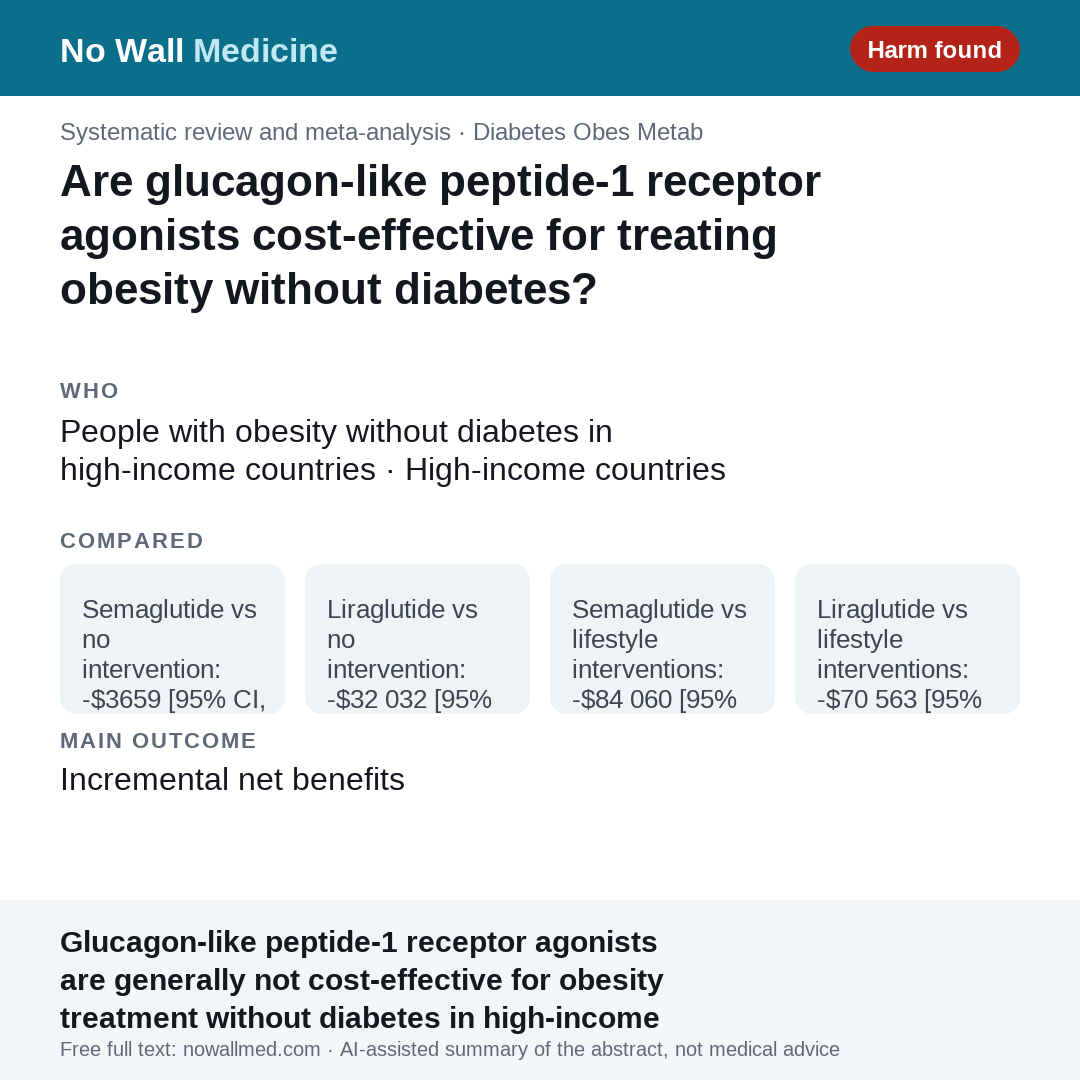
GLP-1 receptor agonists for treating obesity without diabetes: A systematic review and meta-analysis of economic evaluations
Systematic review and meta-analysisHarm found
Are glucagon-like peptide-1 receptor agonists cost-effective for treating obesity without diabetes?
Who
People with obesity without diabetes in high-income countries · High-income countries
Compared
Semaglutide vs no intervention: -$3659 [95% CI, -$74 379 to $67 062]
Liraglutide vs no intervention: -$32 032 [95% CI, -$101 534 to $37 488]
Semaglutide vs lifestyle interventions: -$84 060 [95% CI, -$152 645 to -$15 475]
Liraglutide vs lifestyle interventions: -$70 563 [95% CI, -$106 520 to -$34 605]
Main outcome
Incremental net benefits
Bottom line: Glucagon-like peptide-1 receptor agonists are generally not cost-effective for obesity treatment without diabetes in high-income countries.
Limitation: Most studies focused on weight-related outcomes, potentially underestimating broader economic value.
Diabetes Obes Metab · 2025-12-09Download image
Refractive Error Centile Curves for Asian and Western Children and Adolescents: An Individual Level Meta-Analysis
Individual level meta-analysisMixed results
What are the refractive error centile curves for Asian and Western children and adolescents?
Who
70022
Children and adolescents aged 6 to 20 years · 9 large population-based studies
Compared
East Asian
Western
Main outcome
Spherical equivalent refractive error centile curves
Bottom line: East Asians are more myopic than Western children and adolescents after age 8 years.
Invest Ophthalmol Vis Sci · 2025-12-09Download image

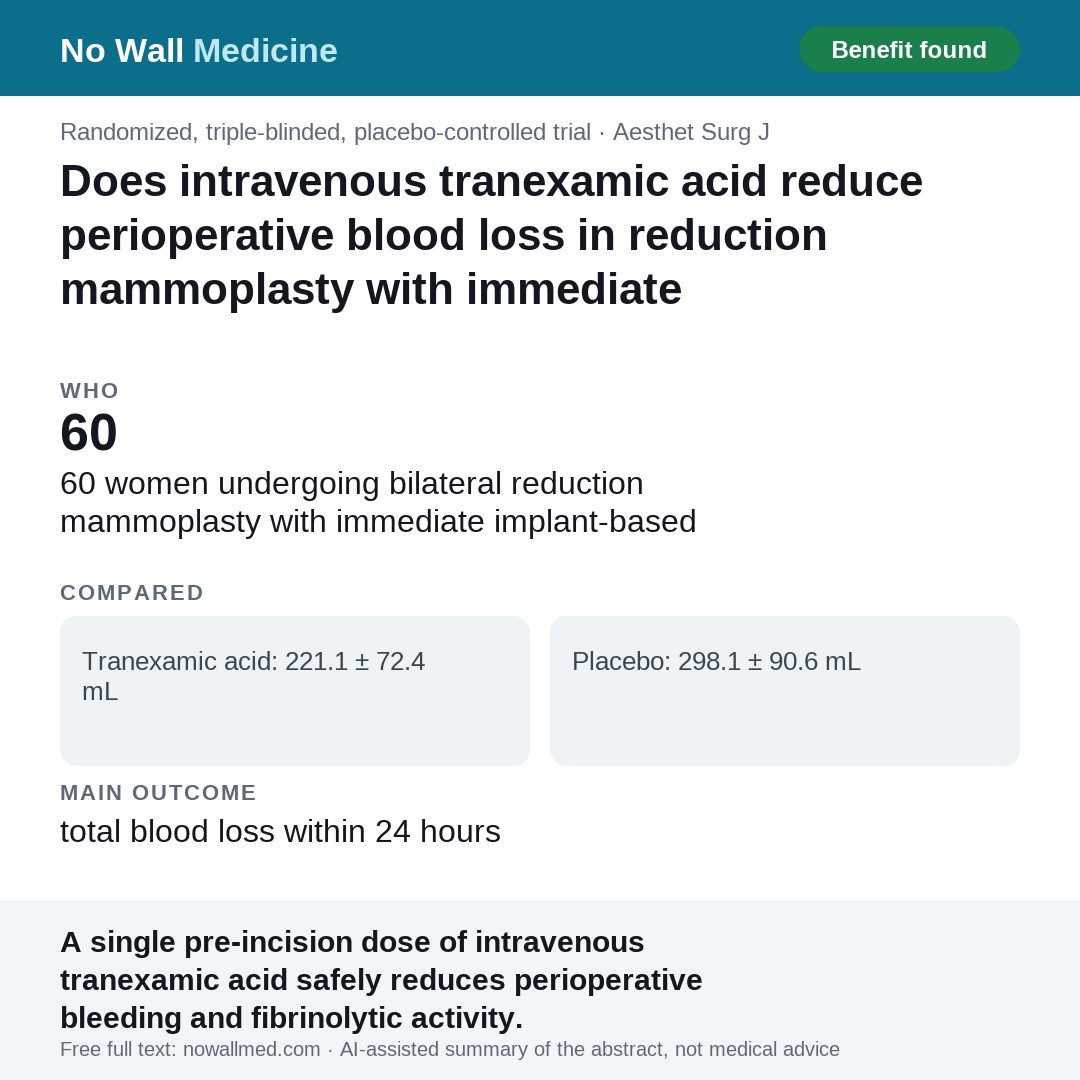
Intravenous Tranexamic Acid Reduces Perioperative Blood Loss in Reduction Mammoplasty With Immediate Implant-Based Reconstruction: A Randomized, Triple-Blinded, Placebo-Controlled Trial
Randomized, triple-blinded, placebo-controlled trialBenefit found
Does intravenous tranexamic acid reduce perioperative blood loss in reduction mammoplasty with immediate reconstruction?
Who
60
60 women undergoing bilateral reduction mammoplasty with immediate implant-based reconstruction
Compared
Tranexamic acid: 221.1 ± 72.4 mL
Placebo: 298.1 ± 90.6 mL
Main outcome
total blood loss within 24 hours
Result: mean difference -77.0 mL (95% CI, -122.4 to -31.6)
Bottom line: A single pre-incision dose of intravenous tranexamic acid safely reduces perioperative bleeding and fibrinolytic activity.
Aesthet Surg J · 2025-12-09Download image
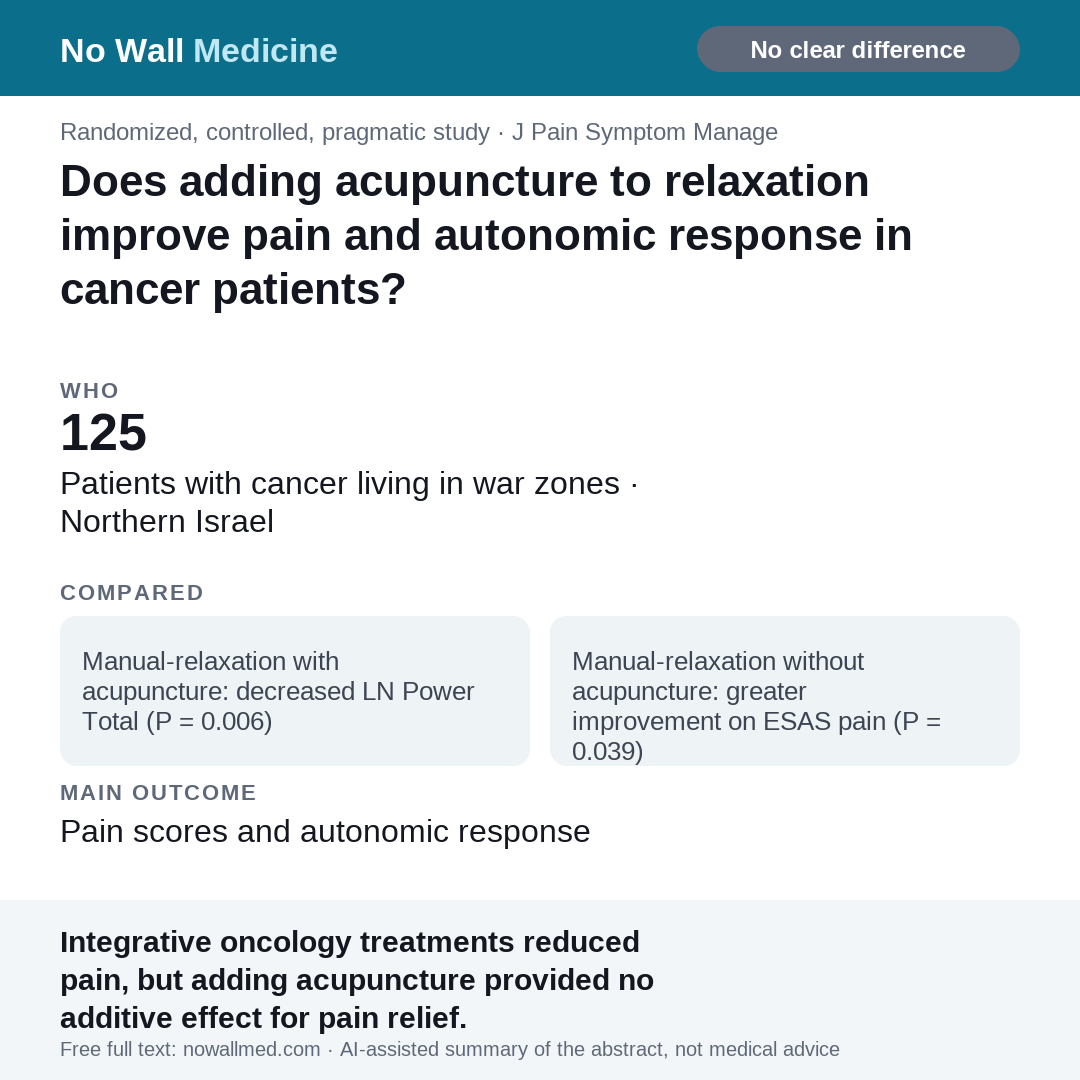
Adding Acupuncture to Touch/Relaxation for Pain in Wartime: A Randomized Controlled Trial
Randomized, controlled, pragmatic studyNo clear difference
Does adding acupuncture to relaxation improve pain and autonomic response in cancer patients?
Who
125
Patients with cancer living in war zones · Northern Israel
Compared
Manual-relaxation with acupuncture: decreased LN Power Total (P = 0.006)
Manual-relaxation without acupuncture: greater improvement on ESAS pain (P = 0.039)
Main outcome
Pain scores and autonomic response
Bottom line: Integrative oncology treatments reduced pain, but adding acupuncture provided no additive effect for pain relief.
J Pain Symptom Manage · 2025-12-09Download image
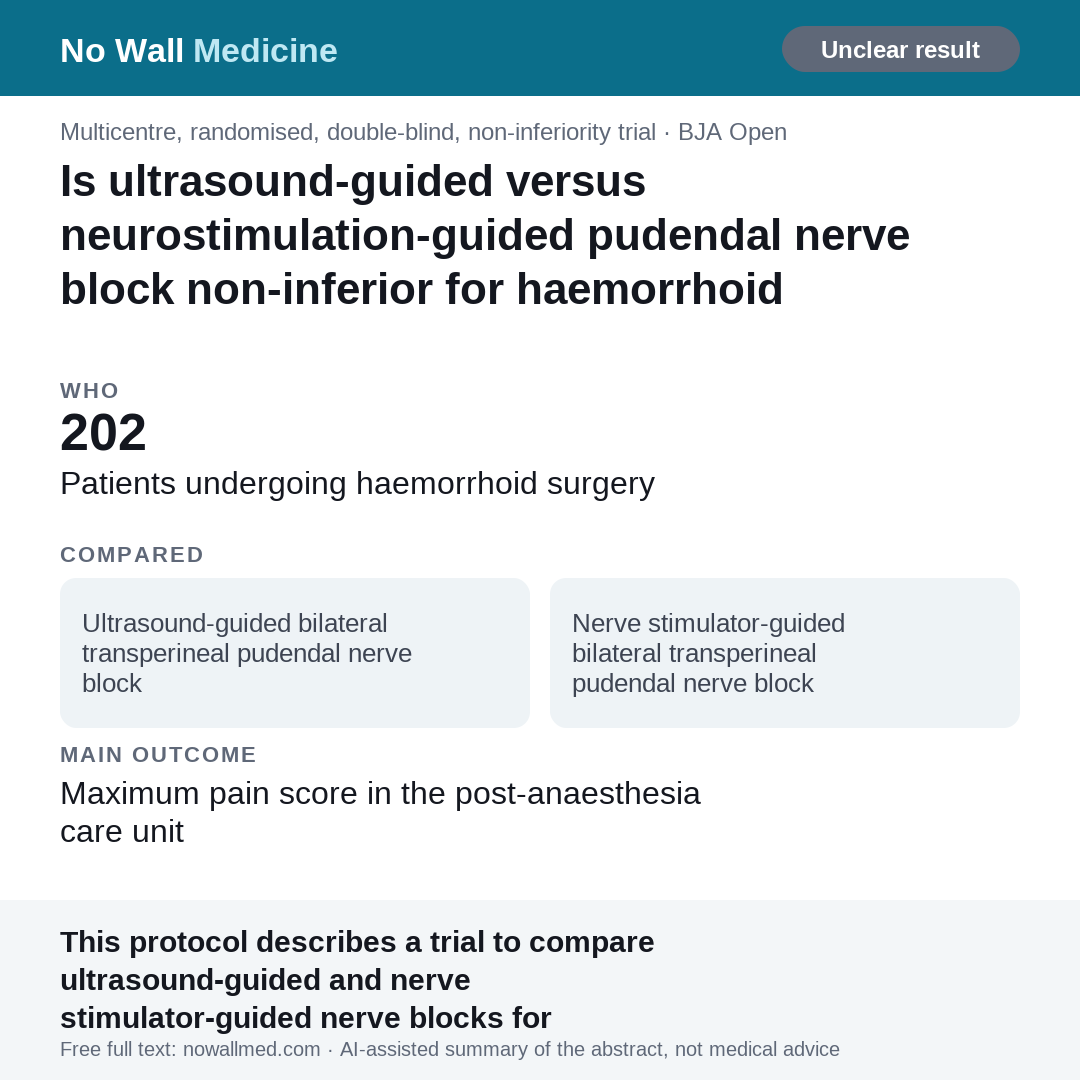
Ultrasound-guided versus neurostimulation-guided bilateral transperineal pudendal nerve block for analgesia in outpatient haemorrhoid surgery: protocol for a multicentre, randomised, double-blind, non-inferiority trial
Multicentre, randomised, double-blind, non-inferiority trialUnclear result
Is ultrasound-guided versus neurostimulation-guided pudendal nerve block non-inferior for haemorrhoid surgery analgesia?
Who
202
Patients undergoing haemorrhoid surgery
Compared
Ultrasound-guided bilateral transperineal pudendal nerve block
Nerve stimulator-guided bilateral transperineal pudendal nerve block
Main outcome
Maximum pain score in the post-anaesthesia care unit
Bottom line: This protocol describes a trial to compare ultrasound-guided and nerve stimulator-guided nerve blocks for haemorrhoid surgery analgesia.
BJA Open · 2025-12-09Download image
Evaluating the efficacy of the WHO QualityRights e-training in promoting the rights of persons with mental health conditions and psychosocial disabilities: a cluster randomised controlled trial in Ghana
Cluster randomised controlled trialBenefit found
Does WHO QualityRights e-training improve rights knowledge and attitudes of mental health professionals?
Who
252
Mental health professionals in psychiatric hospitals · Three psychiatric hospitals in Ghana
Compared
WHO QualityRights e-training: mean difference: 4.61 [95% CI 3.49 to 5.72] for knowledge
COVID-19 e-training
Main outcome
Knowledge and attitudes regarding rights of persons with mental health conditions
Result: mean difference 4.61 (95% CI 3.49 to 5.72) for knowledge
Bottom line: WHO QualityRights e-training effectively improves mental health professionals' knowledge, attitudes, and reduces use of coercion and substitute decision-making.
BMJ Glob Health · 2025-12-09Download image

Benefits of virtual reality rehabilitation on neurodegenerative diseases: a systematic review
Systematic review of 99 studiesBenefit found
Is virtual reality rehabilitation effective for neurodegenerative diseases?
Who
99
Patients with neurodegenerative diseases
Compared
Virtual reality interventions
Control
Main outcome
Motor function, cognitive function, and quality of life
Bottom line: Virtual reality rehabilitation shows potential in improving motor function, cognitive function, and quality of life.
NPJ Digit Med · 2025-12-09Download image

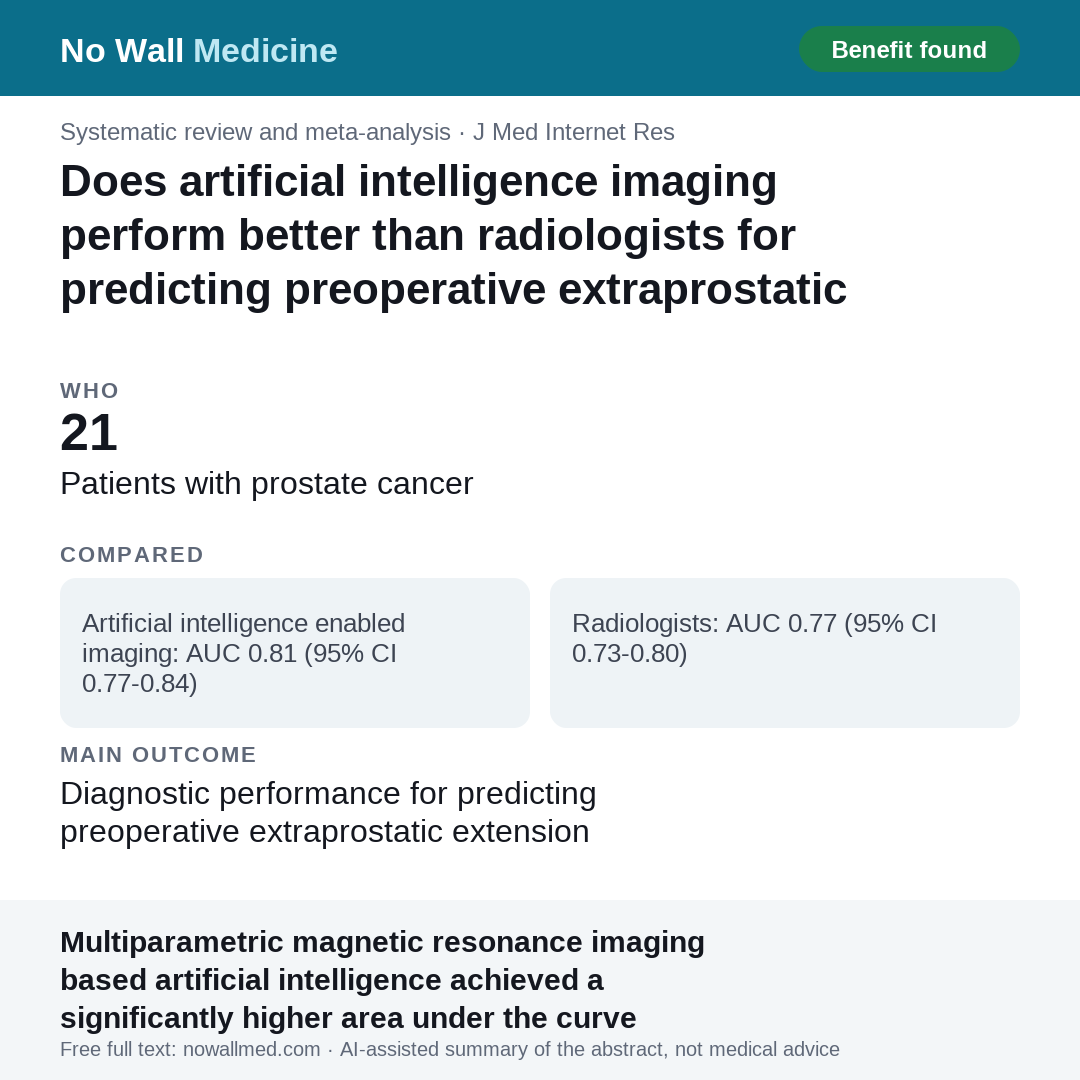
Artificial Intelligence-Enabled Imaging for Predicting Preoperative Extraprostatic Extension in Prostate Cancer: Systematic Review and Meta-Analysis
Systematic review and meta-analysisBenefit found
Does artificial intelligence imaging perform better than radiologists for predicting preoperative extraprostatic extension?
Who
21
Patients with prostate cancer
Compared
Artificial intelligence enabled imaging: AUC 0.81 (95% CI 0.77-0.84)
Radiologists: AUC 0.77 (95% CI 0.73-0.80)
Main outcome
Diagnostic performance for predicting preoperative extraprostatic extension
Result: AUC 0.81 (95% CI 0.77-0.84) vs 0.77 (95% CI 0.73-0.80)
Bottom line: Multiparametric magnetic resonance imaging based artificial intelligence achieved a significantly higher area under the curve than radiologists.
Limitation: Retrospective design and high heterogeneity may introduce bias and affect generalizability.
J Med Internet Res · 2025-12-09Download image
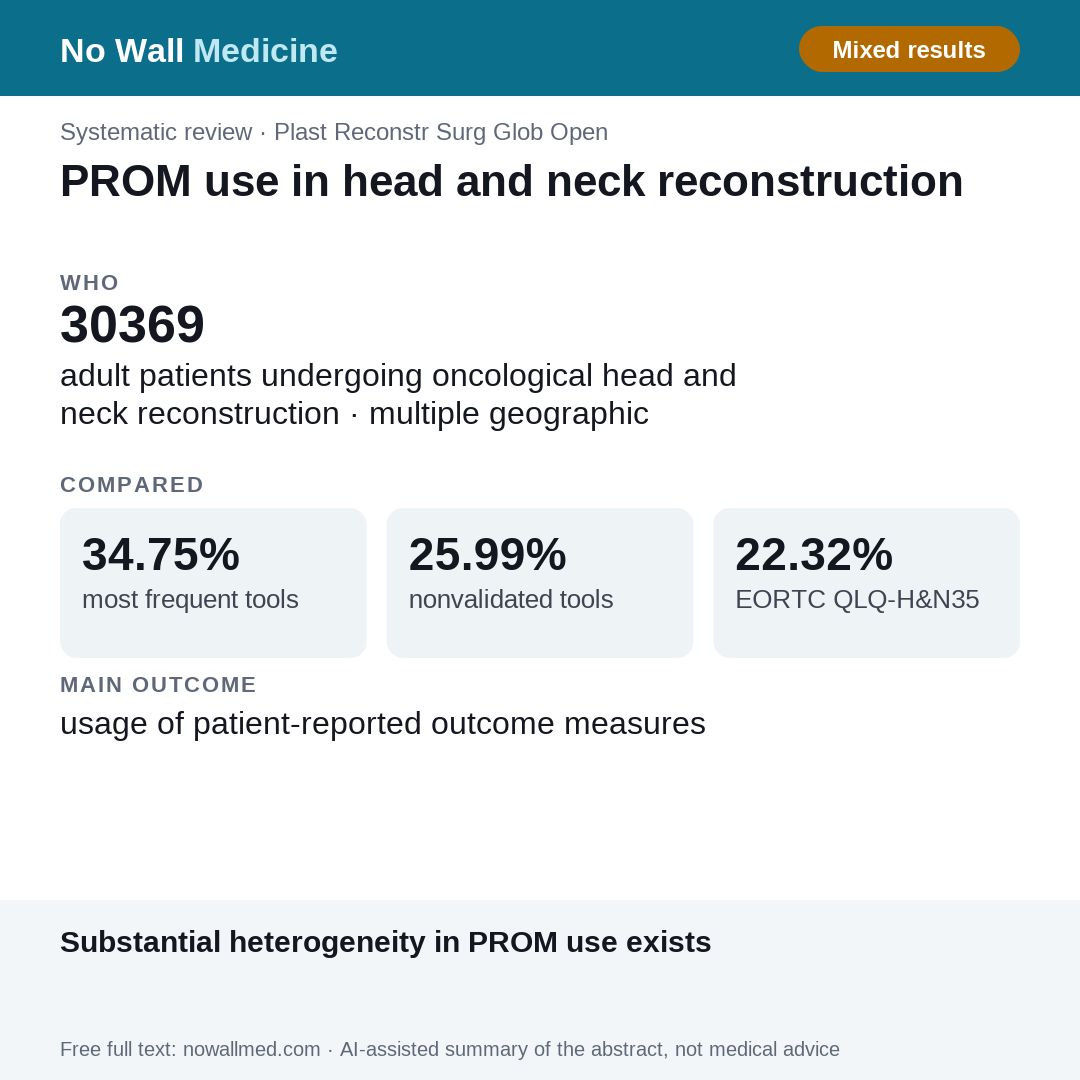
Patient-reported Outcome Measures in Head and Neck Reconstruction: A Systematic Review Across Disciplines and Geographical Locations
Systematic reviewMixed results
PROM use in head and neck reconstruction
Who
30369
adult patients undergoing oncological head and neck reconstruction · multiple geographic regions
Compared
34.75%most frequent tools
25.99%nonvalidated tools
22.32%EORTC QLQ-H&N35
Main outcome
usage of patient-reported outcome measures
Bottom line: Substantial heterogeneity in PROM use exists
Plast Reconstr Surg Glob Open · 2025-12-09Download image
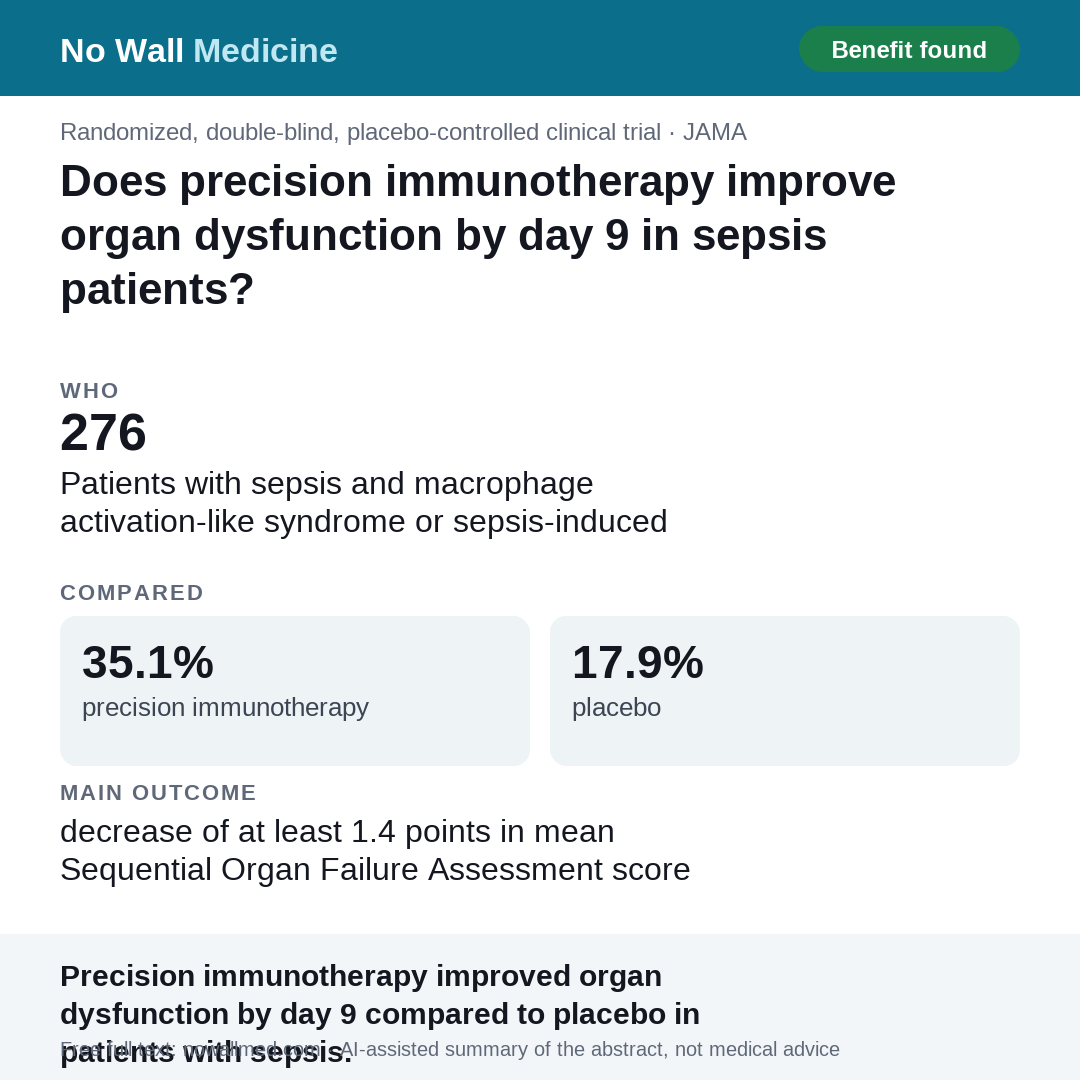
Precision Immunotherapy to Improve Sepsis Outcomes: The ImmunoSep Randomized Clinical Trial
Randomized, double-blind, placebo-controlled clinical trialBenefit found
Does precision immunotherapy improve organ dysfunction by day 9 in sepsis patients?
Who
276
Patients with sepsis and macrophage activation-like syndrome or sepsis-induced immunoparalysis · 6 countries
Compared
35.1%precision immunotherapy (46/131)
17.9%placebo (26/145)
Main outcome
decrease of at least 1.4 points in mean Sequential Organ Failure Assessment score
Result: difference, 17.2% (95% CI, 6.8% to 27.2%)
Bottom line: Precision immunotherapy improved organ dysfunction by day 9 compared to placebo in patients with sepsis.
JAMA · 2025-12-08Download image