Visual abstracts
New randomized trials and meta-analyses from leading journals at a glance: who was studied, what was compared, and what was found. Every paper is free to read in full.
All specialtiesCardiology 834Oncology 758Gastroenterology & Hepatology 306Infectious Disease 626Neurology 348Psychiatry & Mental Health 430Pulmonology 363Critical Care 240Endocrinology & Diabetes 480Pediatrics 533Surgery 317Orthopedics & Sports Medicine 160Neurosurgery 80Cardiothoracic & Vascular Surgery 86Plastic & Reconstructive Surgery 107Nephrology 197Rheumatology 108Hematology 181Dermatology 74Ophthalmology 97Obstetrics & Gynecology 261Public & Global Health 167Radiology & Imaging 93Anesthesiology 107Urology 162ENT (Otolaryngology) 82Emergency Medicine 64Allergy & Immunology 58Geriatrics 160Family Medicine & Primary Care 111Medical Genetics & Genomics 91Pathology & Laboratory Medicine 23Physical Medicine & Rehabilitation 147Palliative Care 81Nutrition 223Digital Health & AI 459General Medicine 101
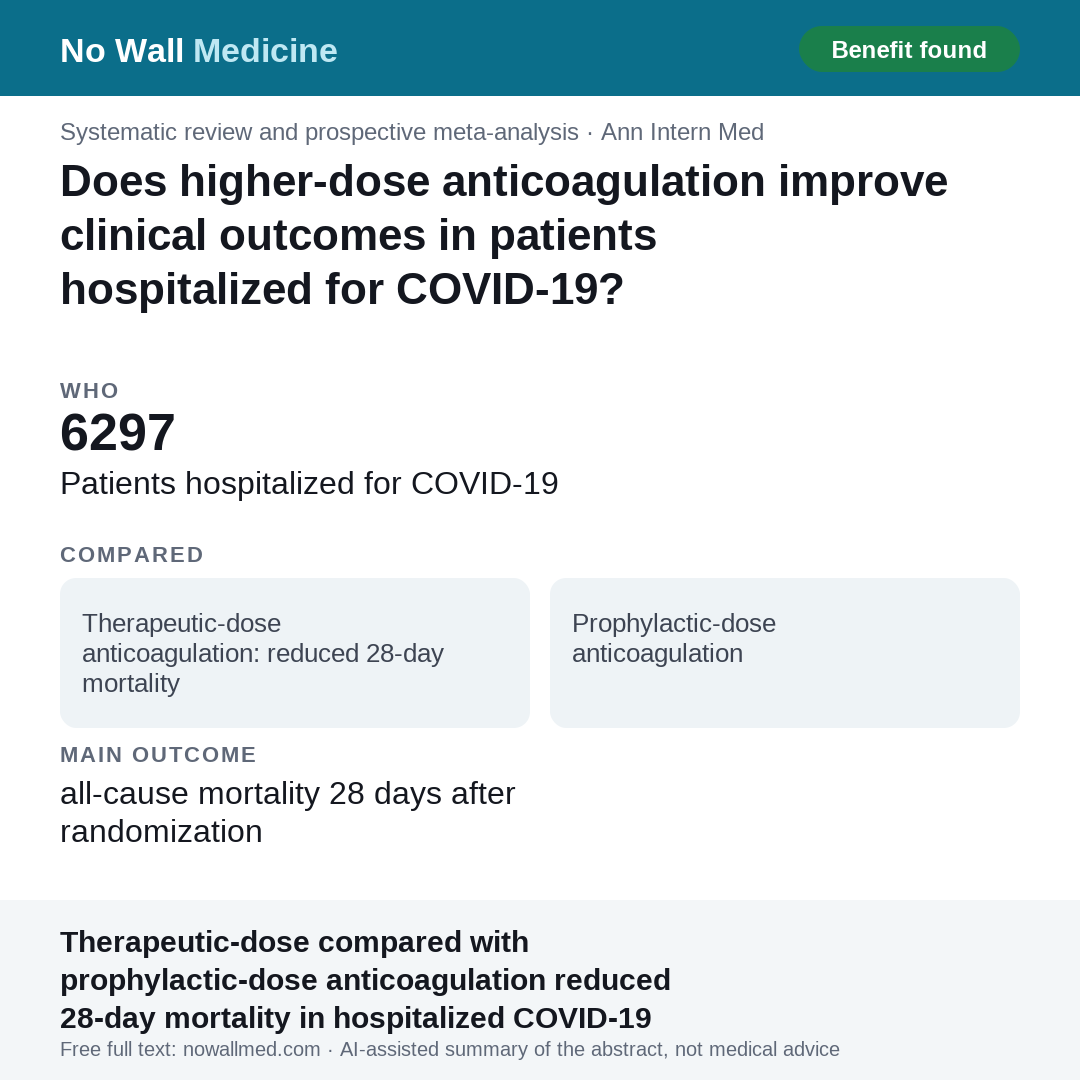
Anticoagulation Among Patients Hospitalized for COVID-19 : A Systematic Review and Prospective Meta-analysis
Systematic review and prospective meta-analysisBenefit found
Does higher-dose anticoagulation improve clinical outcomes in patients hospitalized for COVID-19?
Who
6297
Patients hospitalized for COVID-19
Compared
Therapeutic-dose anticoagulation: reduced 28-day mortality
Prophylactic-dose anticoagulation
Main outcome
all-cause mortality 28 days after randomization
Result: OR, 0.77 (95% CI, 0.64 to 0.93)
Bottom line: Therapeutic-dose compared with prophylactic-dose anticoagulation reduced 28-day mortality in hospitalized COVID-19 patients.
Limitation: some analyses were limited in power
Ann Intern Med · 2024-12-24Download image
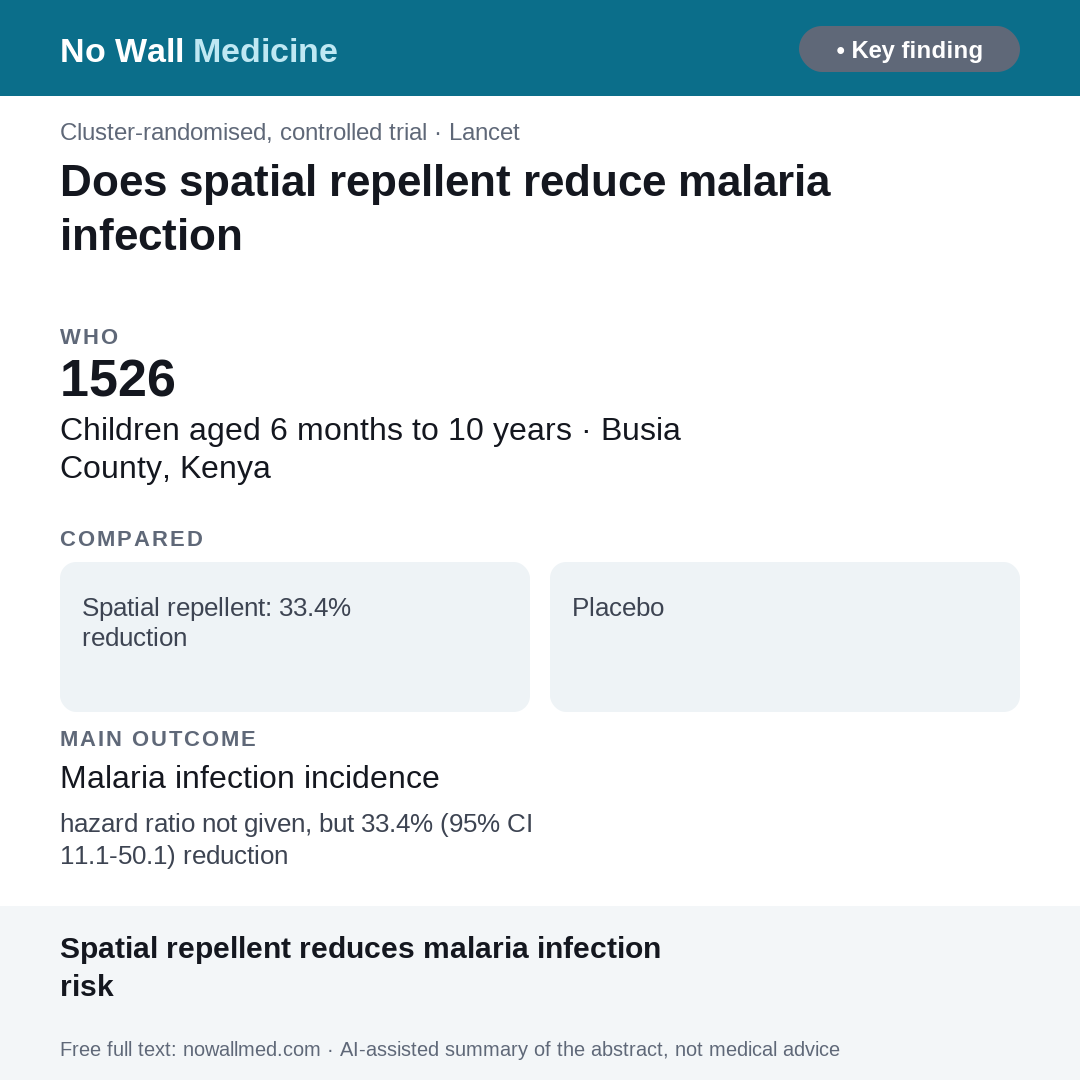
Effect of a spatial repellent on malaria incidence in an area of western Kenya characterised by high malaria transmission, insecticide resistance, and universal coverage of insecticide treated nets (part of the AEGIS Consortium): a cluster-randomised, controlled trial
Cluster-randomised, controlled trialBenefit found
Does spatial repellent reduce malaria infection
Who
1526
Children aged 6 months to 10 years · Busia County, Kenya
Compared
Spatial repellent: 33.4% reduction
Placebo
Main outcome
Malaria infection incidence
Result: hazard ratio not given, but 33.4% (95% CI 11.1-50.1) reduction
Bottom line: Spatial repellent reduces malaria infection risk
Funded by: Unitaid to University of Notre Dame
Lancet · 2024-12-19Download image
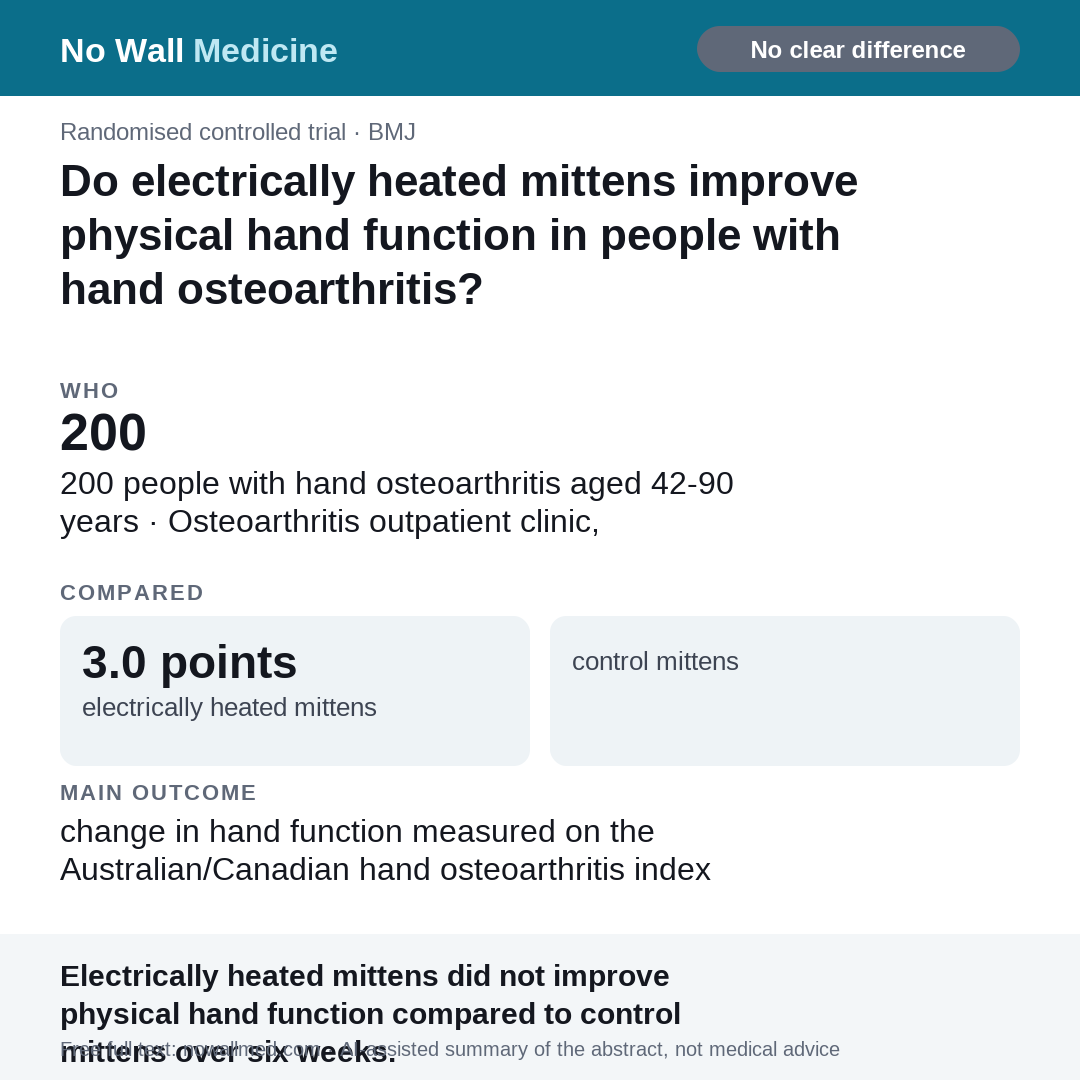
Effect of heated mittens on physical hand function in people with hand osteoarthritis: randomised controlled trial
Randomised controlled trialNo clear difference
Do electrically heated mittens improve physical hand function in people with hand osteoarthritis?
Who
200
200 people with hand osteoarthritis aged 42-90 years · Osteoarthritis outpatient clinic, Copenhagen, Denmark
Compared
3.0 pointselectrically heated mittens (95% confidence interval -0.4 to 6.3)
control mittens
Main outcome
change in hand function measured on the Australian/Canadian hand osteoarthritis index
Result: 3.0 points (95% confidence interval -0.4 to 6.3)
Bottom line: Electrically heated mittens did not improve physical hand function compared to control mittens over six weeks.
BMJ · 2024-12-17Download image
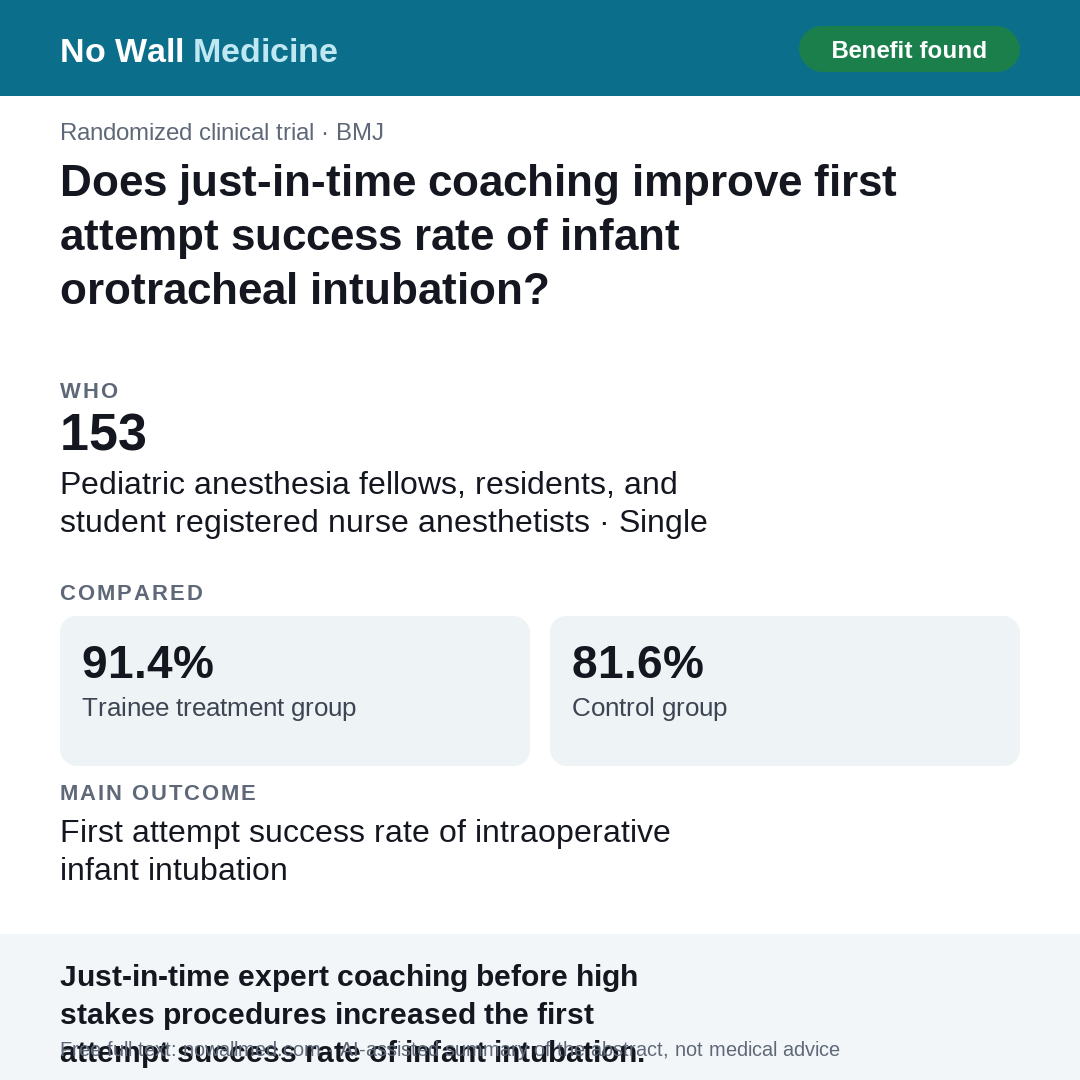
Coaching inexperienced clinicians before a high stakes medical procedure: randomized clinical trial
Randomized clinical trialBenefit found
Does just-in-time coaching improve first attempt success rate of infant orotracheal intubation?
Who
153
Pediatric anesthesia fellows, residents, and student registered nurse anesthetists · Single center quaternary children's hospital in Boston, MA, USA
Compared
91.4%Trainee treatment group (212/232)
81.6%Control group (231/283)
Main outcome
First attempt success rate of intraoperative infant intubation
Result: odds ratio 2.42 (95% confidence interval 1.45 to 4.04)
Bottom line: Just-in-time expert coaching before high stakes procedures increased the first attempt success rate of infant intubation.
Limitation: Randomized evaluation in other settings is warranted.
BMJ · 2024-12-16Download image
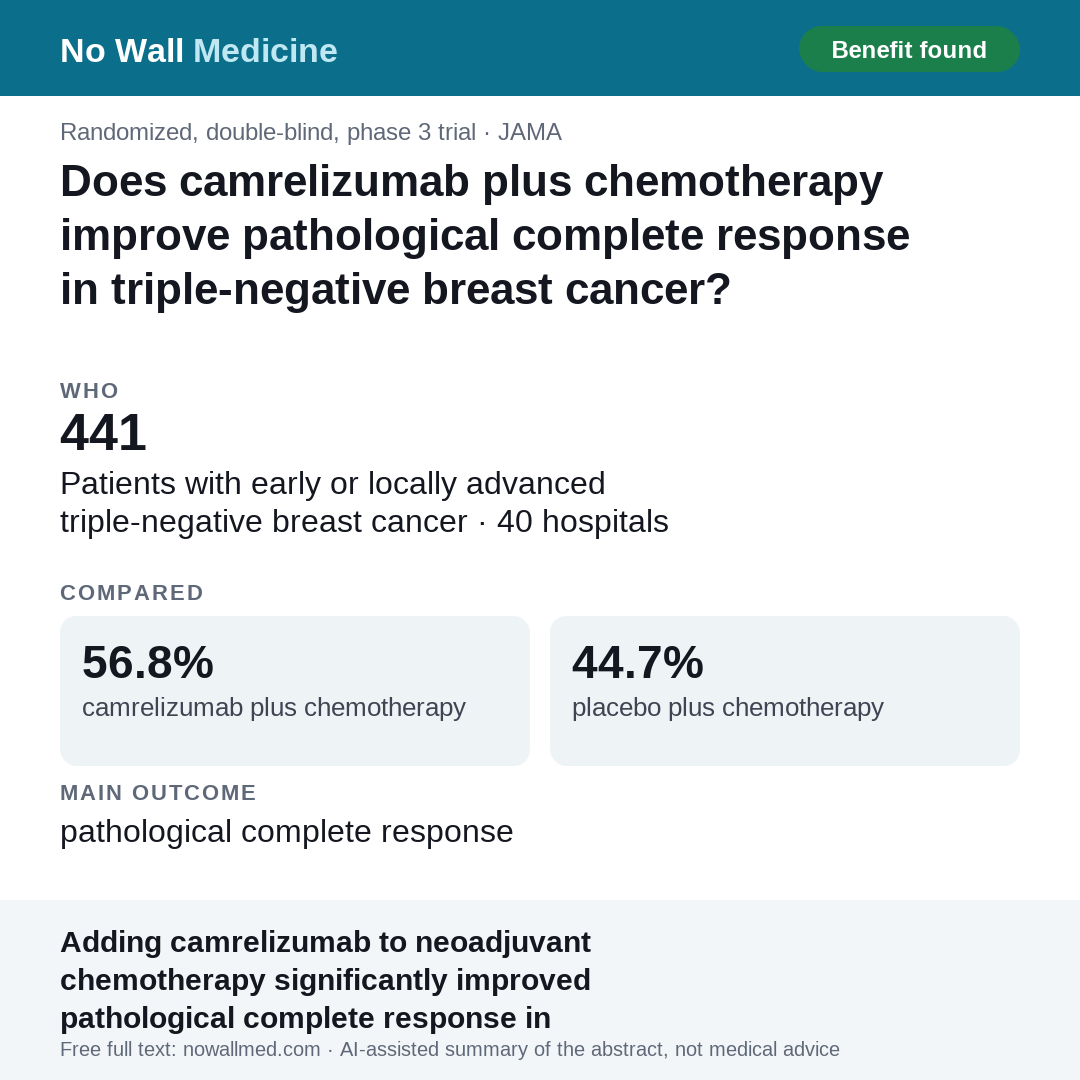
Camrelizumab vs Placebo in Combination With Chemotherapy as Neoadjuvant Treatment in Patients With Early or Locally Advanced Triple-Negative Breast Cancer: The CamRelief Randomized Clinical Trial
Randomized, double-blind, phase 3 trialBenefit found
Does camrelizumab plus chemotherapy improve pathological complete response in triple-negative breast cancer?
Who
441
Patients with early or locally advanced triple-negative breast cancer · 40 hospitals in China
Compared
56.8%camrelizumab plus chemotherapy (126/222)
44.7%placebo plus chemotherapy (98/219)
Main outcome
pathological complete response
Result: rate difference 12.2% (95% CI 3.3% to 21.2%)
Bottom line: Adding camrelizumab to neoadjuvant chemotherapy significantly improved pathological complete response in triple-negative breast cancer patients.
JAMA · 2024-12-13Download image
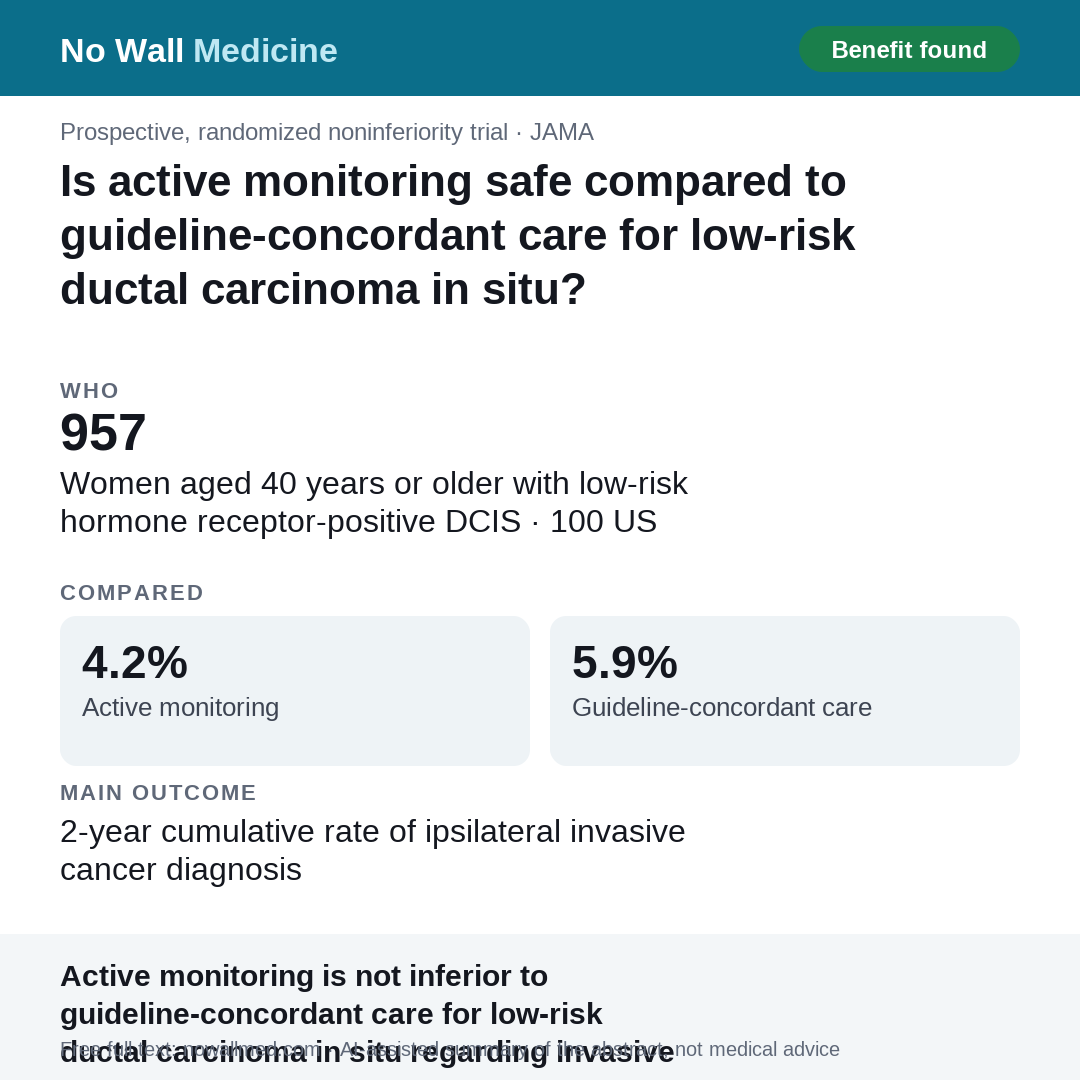
Active Monitoring With or Without Endocrine Therapy for Low-Risk Ductal Carcinoma In Situ: The COMET Randomized Clinical Trial
Prospective, randomized noninferiority trialBenefit found
Is active monitoring safe compared to guideline-concordant care for low-risk ductal carcinoma in situ?
Who
957
Women aged 40 years or older with low-risk hormone receptor-positive DCIS · 100 US Alliance Cancer Cooperative Group clinical trial sites
Compared
4.2%Active monitoring
5.9%Guideline-concordant care
Main outcome
2-year cumulative rate of ipsilateral invasive cancer diagnosis
Result: difference of -1.7% (upper limit of the 95% CI, 0.95%)
Bottom line: Active monitoring is not inferior to guideline-concordant care for low-risk ductal carcinoma in situ regarding invasive cancer risk.
JAMA · 2024-12-12Download image
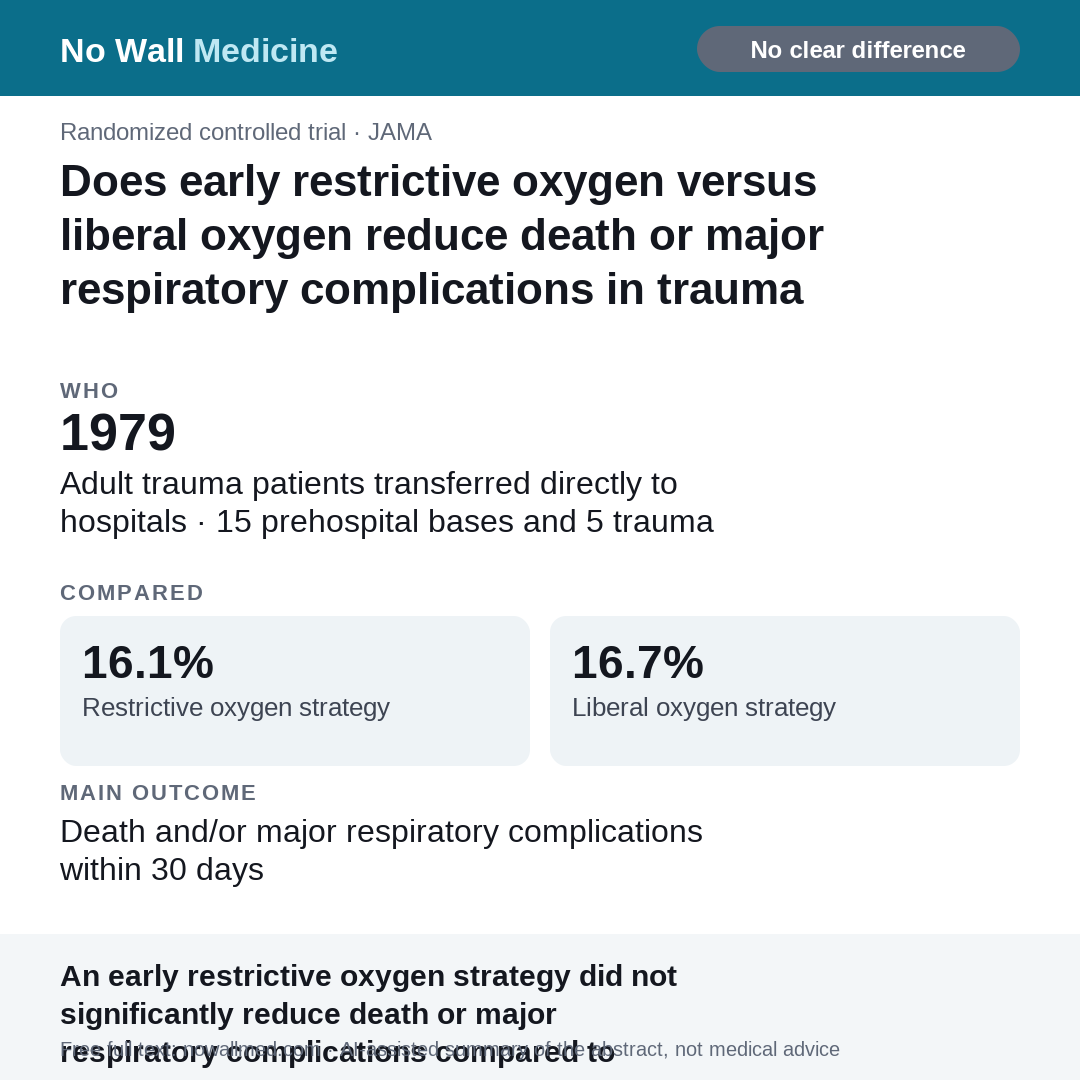
Early Restrictive vs Liberal Oxygen for Trauma Patients: The TRAUMOX2 Randomized Clinical Trial
Randomized controlled trialNo clear difference
Does early restrictive oxygen versus liberal oxygen reduce death or major respiratory complications in trauma patients?
Who
1979
Adult trauma patients transferred directly to hospitals · 15 prehospital bases and 5 trauma centers in three countries
Compared
16.1%Restrictive oxygen strategy (118/733)
16.7%Liberal oxygen strategy (121/724)
Main outcome
Death and/or major respiratory complications within 30 days
Result: odds ratio 1.01 (95% CI 0.75 to 1.37)
Bottom line: An early restrictive oxygen strategy did not significantly reduce death or major respiratory complications compared to liberal oxygen in adult trauma patients.
JAMA · 2024-12-12Download image
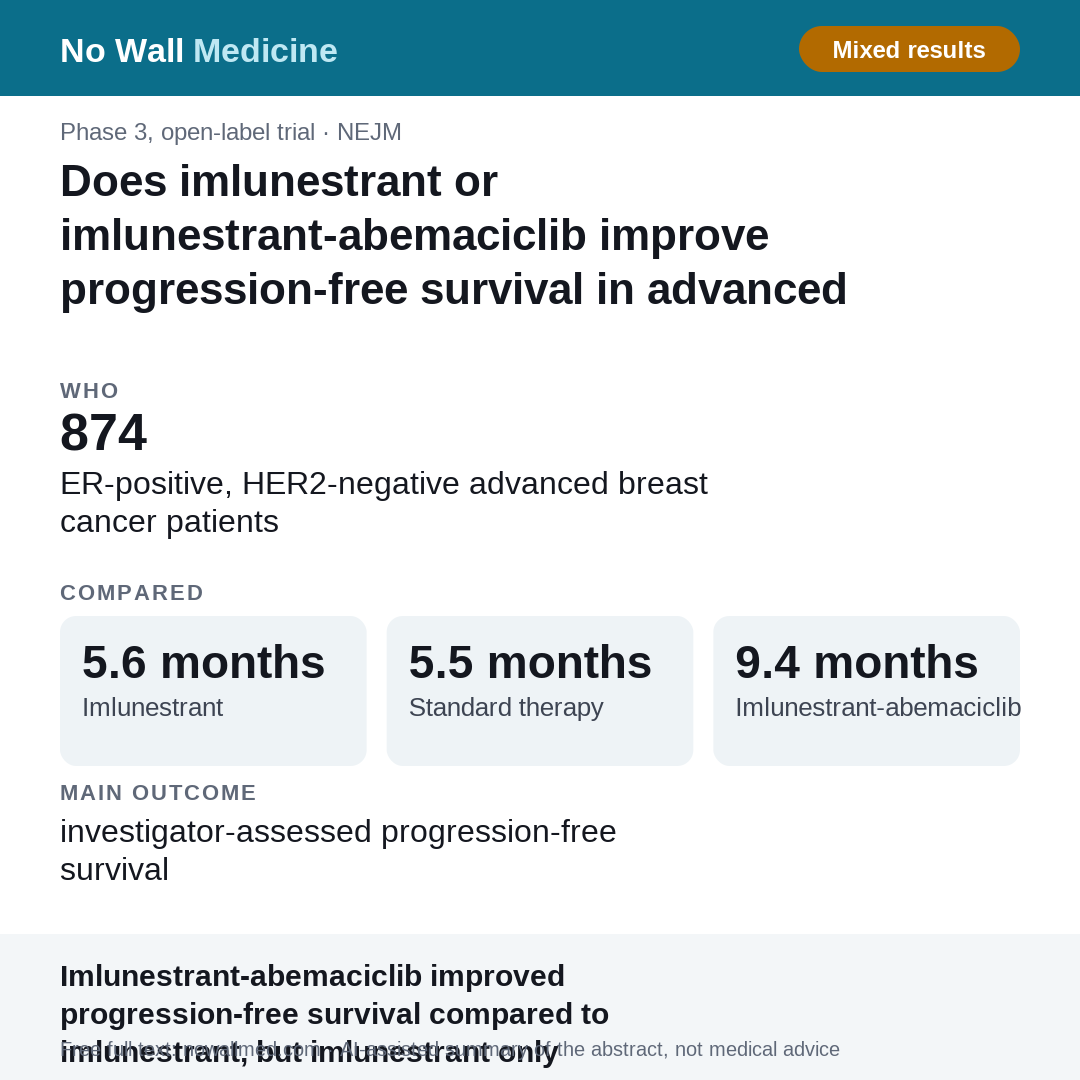
Imlunestrant with or without Abemaciclib in Advanced Breast Cancer
Phase 3, open-label trialMixed results
Does imlunestrant or imlunestrant-abemaciclib improve progression-free survival in advanced breast cancer?
Who
874
ER-positive, HER2-negative advanced breast cancer patients
Compared
5.6 monthsImlunestrant
5.5 monthsStandard therapy
9.4 monthsImlunestrant-abemaciclib
Main outcome
investigator-assessed progression-free survival
Result: hazard ratio 0.57 (95% CI 0.44 to 0.73)
Bottom line: Imlunestrant-abemaciclib improved progression-free survival compared to imlunestrant, but imlunestrant only outperformed standard therapy in patients with ESR1 mutations.
Funded by: Eli Lilly
NEJM · 2024-12-11Download image
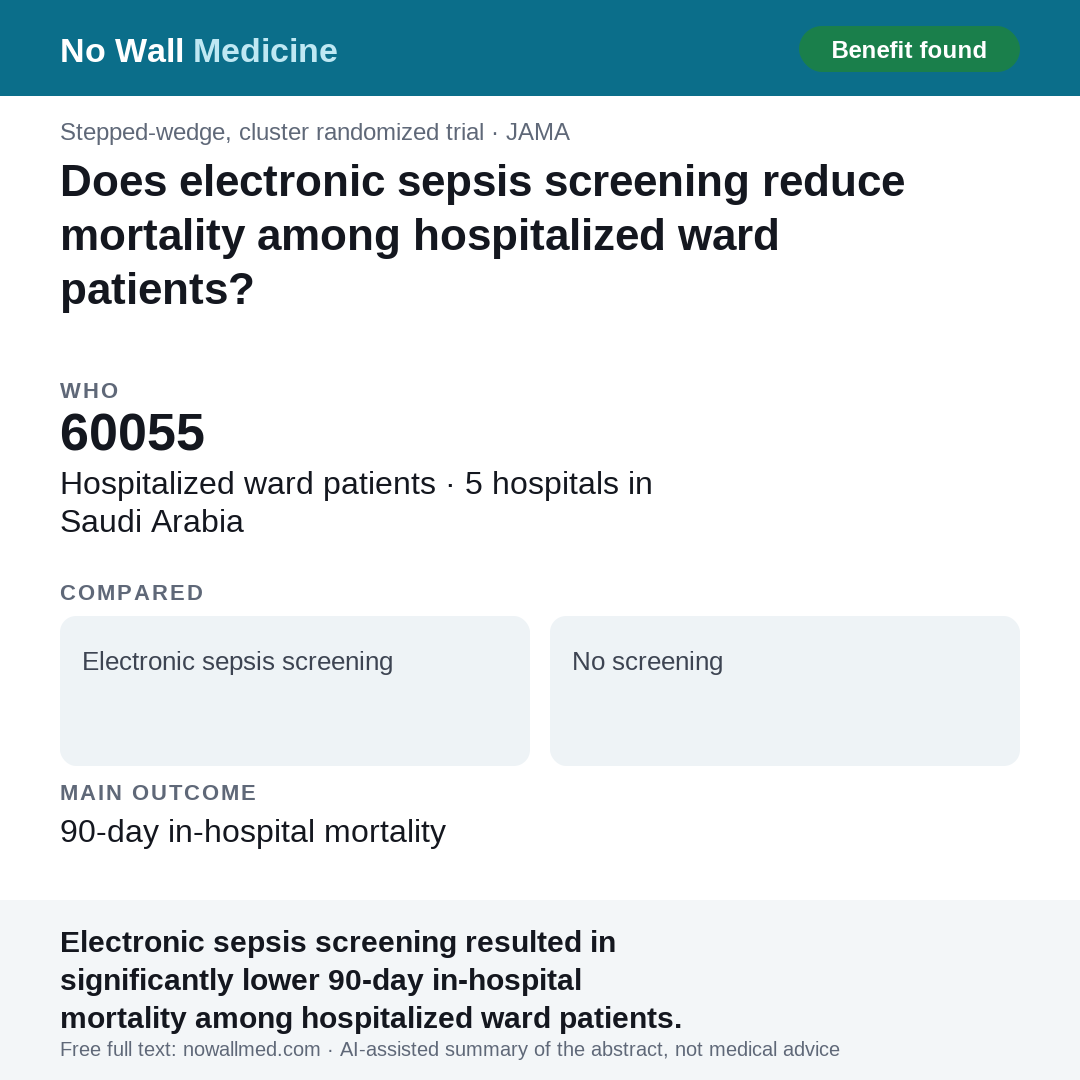
Electronic Sepsis Screening Among Patients Admitted to Hospital Wards: A Stepped-Wedge Cluster Randomized Trial
Stepped-wedge, cluster randomized trialBenefit found
Does electronic sepsis screening reduce mortality among hospitalized ward patients?
Who
60055
Hospitalized ward patients · 5 hospitals in Saudi Arabia
Compared
Electronic sepsis screening
No screening
Main outcome
90-day in-hospital mortality
Result: adjusted relative risk 0.85 (95% CI, 0.77-0.93)
Bottom line: Electronic sepsis screening resulted in significantly lower 90-day in-hospital mortality among hospitalized ward patients.
JAMA · 2024-12-11Download image
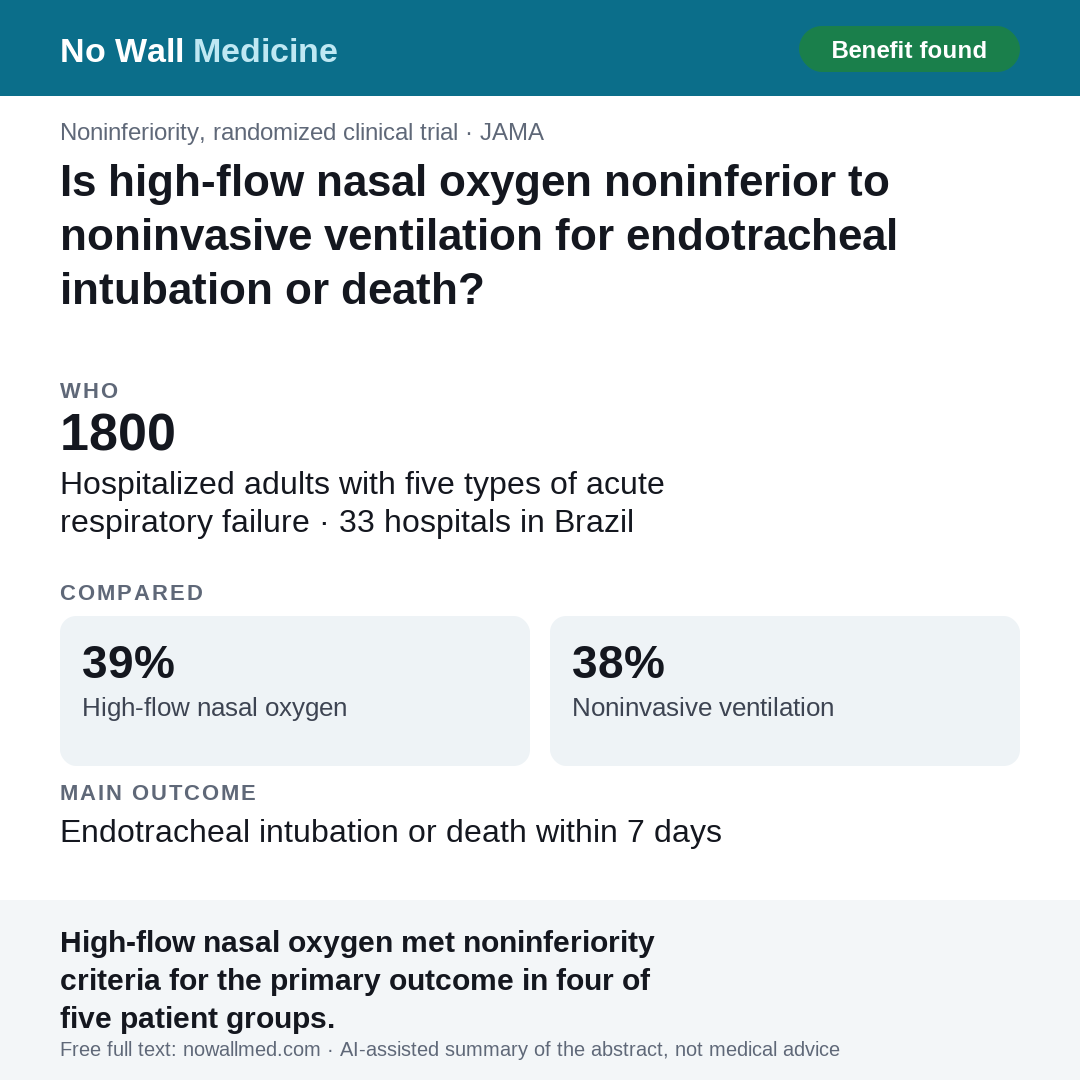
High-Flow Nasal Oxygen vs Noninvasive Ventilation in Patients With Acute Respiratory Failure: The RENOVATE Randomized Clinical Trial
Noninferiority, randomized clinical trialBenefit found
Is high-flow nasal oxygen noninferior to noninvasive ventilation for endotracheal intubation or death?
Who
1800
Hospitalized adults with five types of acute respiratory failure · 33 hospitals in Brazil
Compared
39%High-flow nasal oxygen (344/883)
38%Noninvasive ventilation (336/883)
Main outcome
Endotracheal intubation or death within 7 days
Bottom line: High-flow nasal oxygen met noninferiority criteria for the primary outcome in four of five patient groups.
Limitation: Small sample sizes in some groups and sensitivity to the choice of analysis model.
JAMA · 2024-12-11Download image
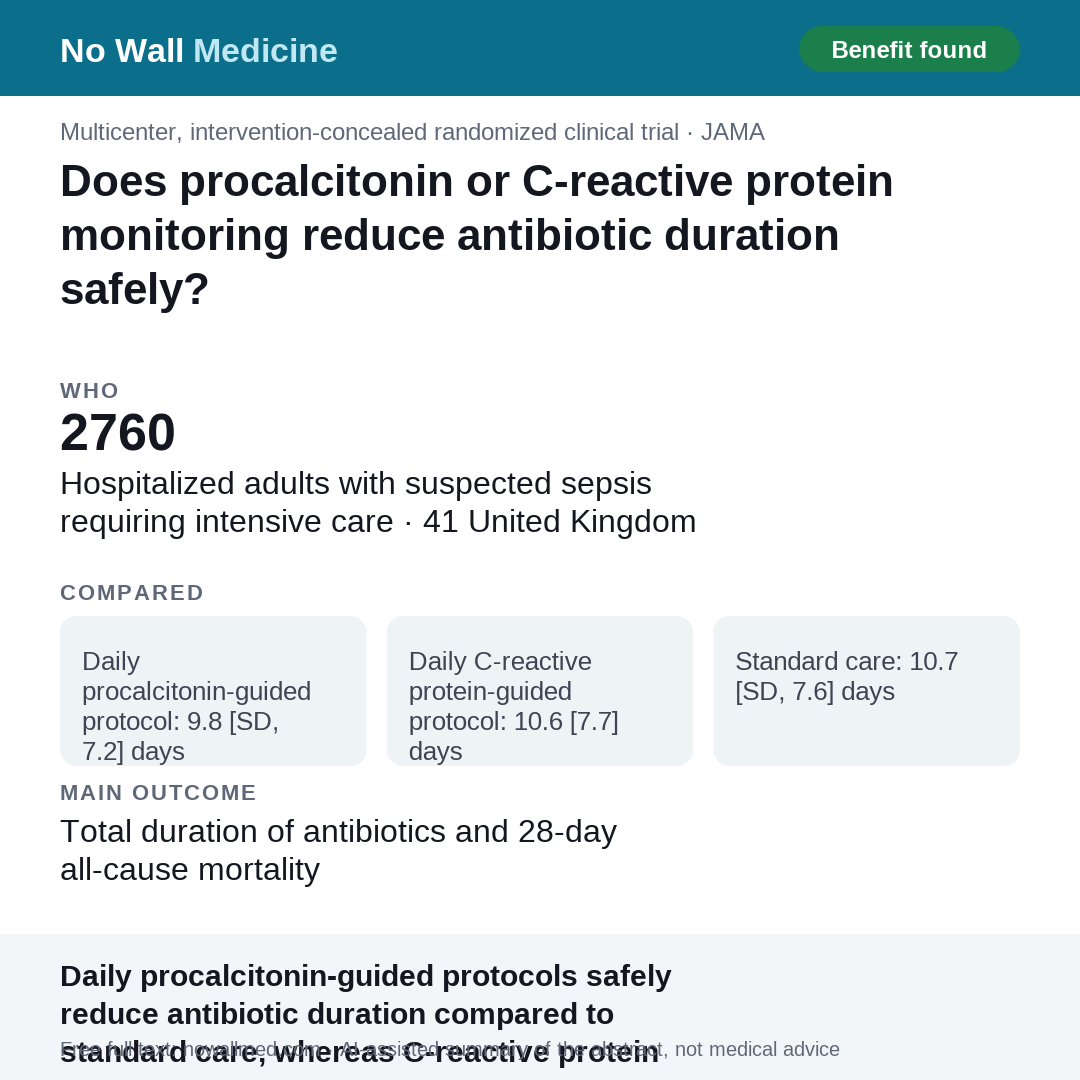
Biomarker-Guided Antibiotic Duration for Hospitalized Patients With Suspected Sepsis: The ADAPT-Sepsis Randomized Clinical Trial
Multicenter, intervention-concealed randomized clinical trialBenefit found
Does procalcitonin or C-reactive protein monitoring reduce antibiotic duration safely?
Who
2760
Hospitalized adults with suspected sepsis requiring intensive care · 41 United Kingdom National Health Service intensive care units
Compared
Daily procalcitonin-guided protocol: 9.8 [SD, 7.2] days
Daily C-reactive protein-guided protocol: 10.6 [7.7] days
Standard care: 10.7 [SD, 7.6] days
Main outcome
Total duration of antibiotics and 28-day all-cause mortality
Result: mean difference 0.88 days (95% CI, 0.19 to 1.58)
Bottom line: Daily procalcitonin-guided protocols safely reduce antibiotic duration compared to standard care, whereas C-reactive protein guidance does not.
JAMA · 2024-12-09Download image
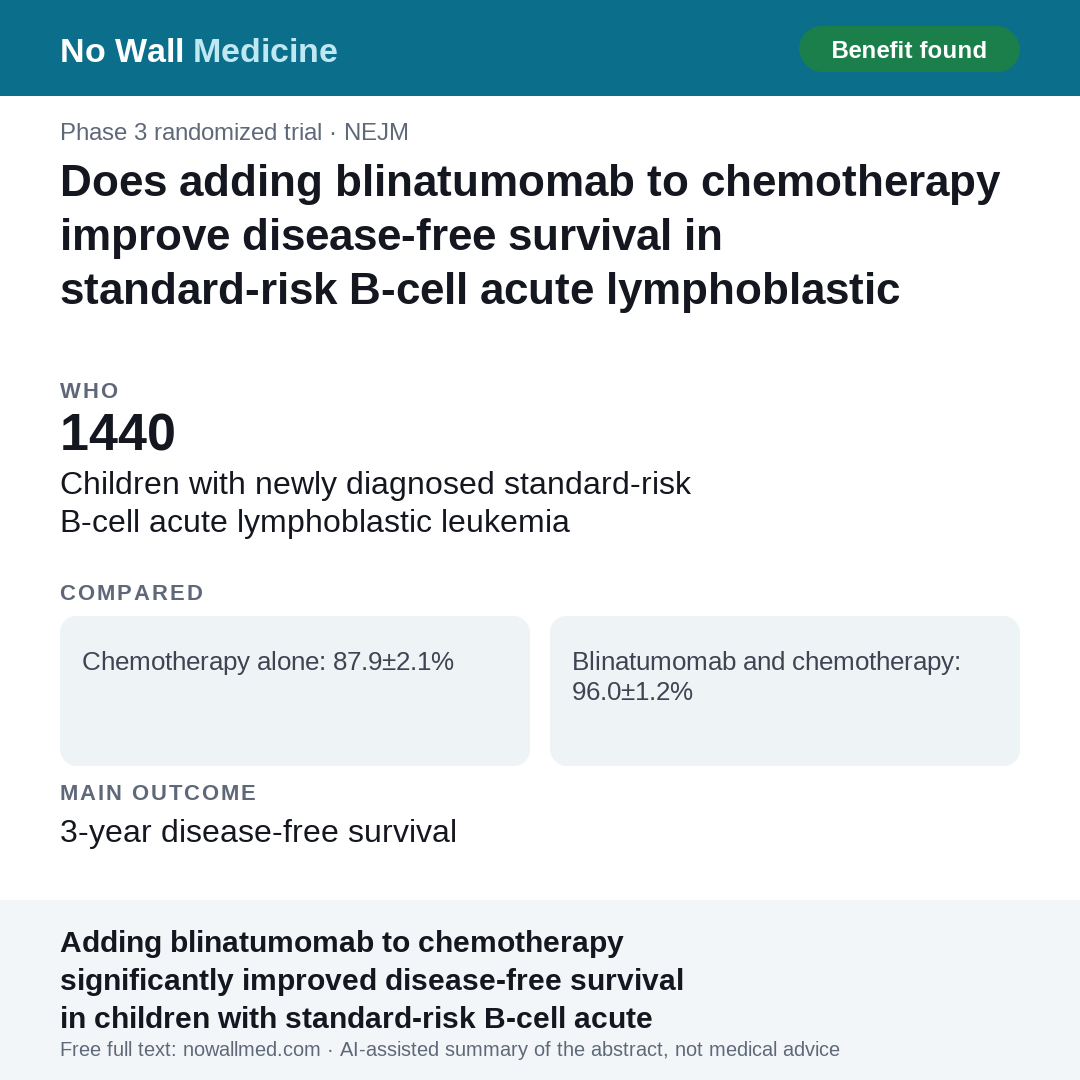
Blinatumomab in Standard-Risk B-Cell Acute Lymphoblastic Leukemia in Children
Phase 3 randomized trialBenefit found
Does adding blinatumomab to chemotherapy improve disease-free survival in standard-risk B-cell acute lymphoblastic leukemia?
Who
1440
Children with newly diagnosed standard-risk B-cell acute lymphoblastic leukemia
Compared
Chemotherapy alone: 87.9±2.1%
Blinatumomab and chemotherapy: 96.0±1.2%
Main outcome
3-year disease-free survival
Result: difference in restricted mean survival time, 72 days (95% CI 36 to 108)
Bottom line: Adding blinatumomab to chemotherapy significantly improved disease-free survival in children with standard-risk B-cell acute lymphoblastic leukemia.
Funded by: National Institutes of Health and others
NEJM · 2024-12-07Download image
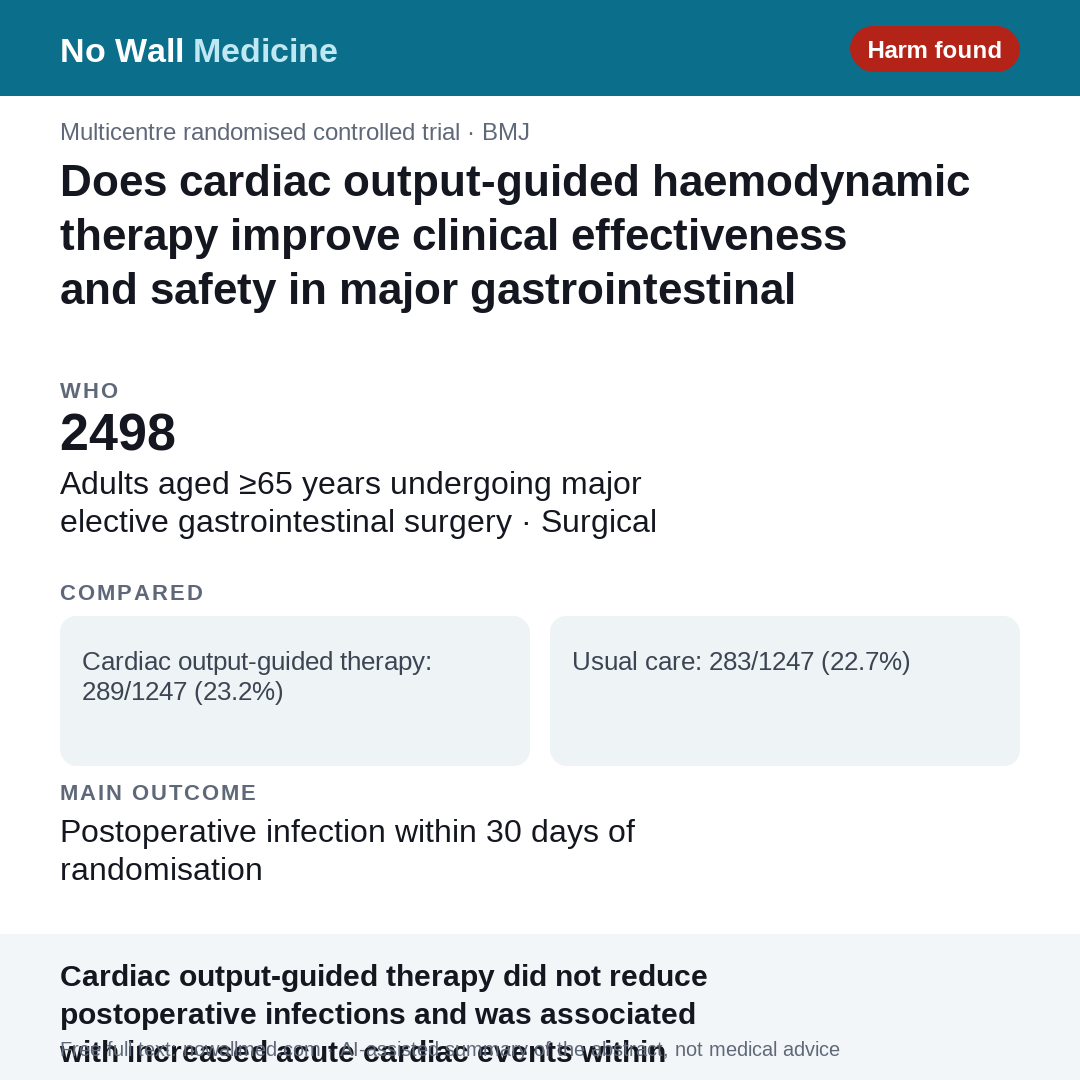
Cardiac output-guided haemodynamic therapy for patients undergoing major gastrointestinal surgery: OPTIMISE II randomised clinical trial
Multicentre randomised controlled trialHarm found
Does cardiac output-guided haemodynamic therapy improve clinical effectiveness and safety in major gastrointestinal surgery?
Who
2498
Adults aged ≥65 years undergoing major elective gastrointestinal surgery · Surgical services of 55 hospitals worldwide
Compared
Cardiac output-guided therapy: 289/1247 (23.2%)
Usual care: 283/1247 (22.7%)
Main outcome
Postoperative infection within 30 days of randomisation
Result: adjusted odds ratio 1.03 (95% confidence interval 0.84 to 1.25)
Bottom line: Cardiac output-guided therapy did not reduce postoperative infections and was associated with increased acute cardiac events within 24 hours.
BMJ · 2024-12-03Download image
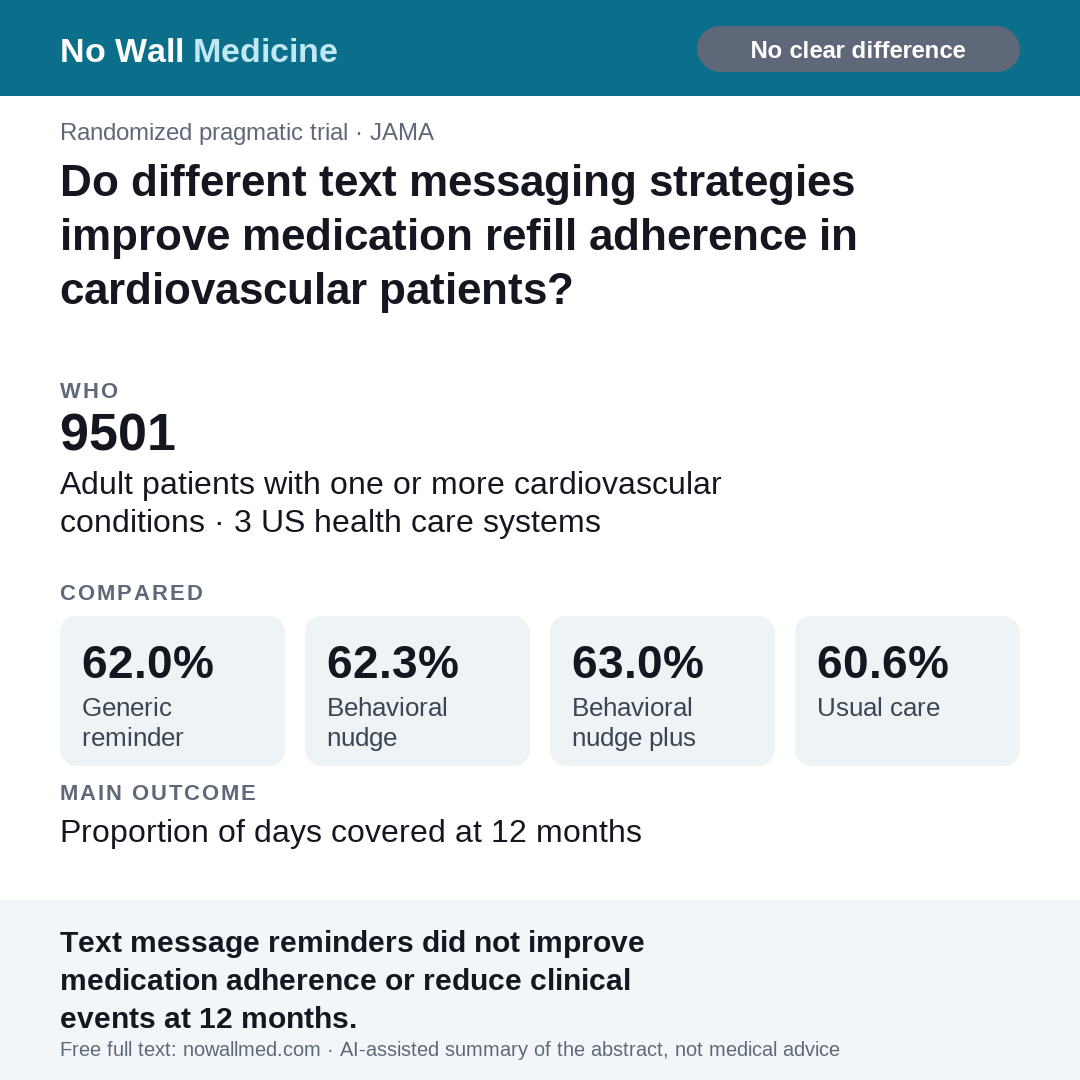
Personalized Patient Data and Behavioral Nudges to Improve Adherence to Chronic Cardiovascular Medications: A Randomized Pragmatic Trial
Randomized pragmatic trialNo clear difference
Do different text messaging strategies improve medication refill adherence in cardiovascular patients?
Who
9501
Adult patients with one or more cardiovascular conditions · 3 US health care systems
Compared
62.0%Generic reminder
62.3%Behavioral nudge
63.0%Behavioral nudge plus chatbot
60.6%Usual care
Main outcome
Proportion of days covered at 12 months
Bottom line: Text message reminders did not improve medication adherence or reduce clinical events at 12 months.
JAMA · 2024-12-02Download image
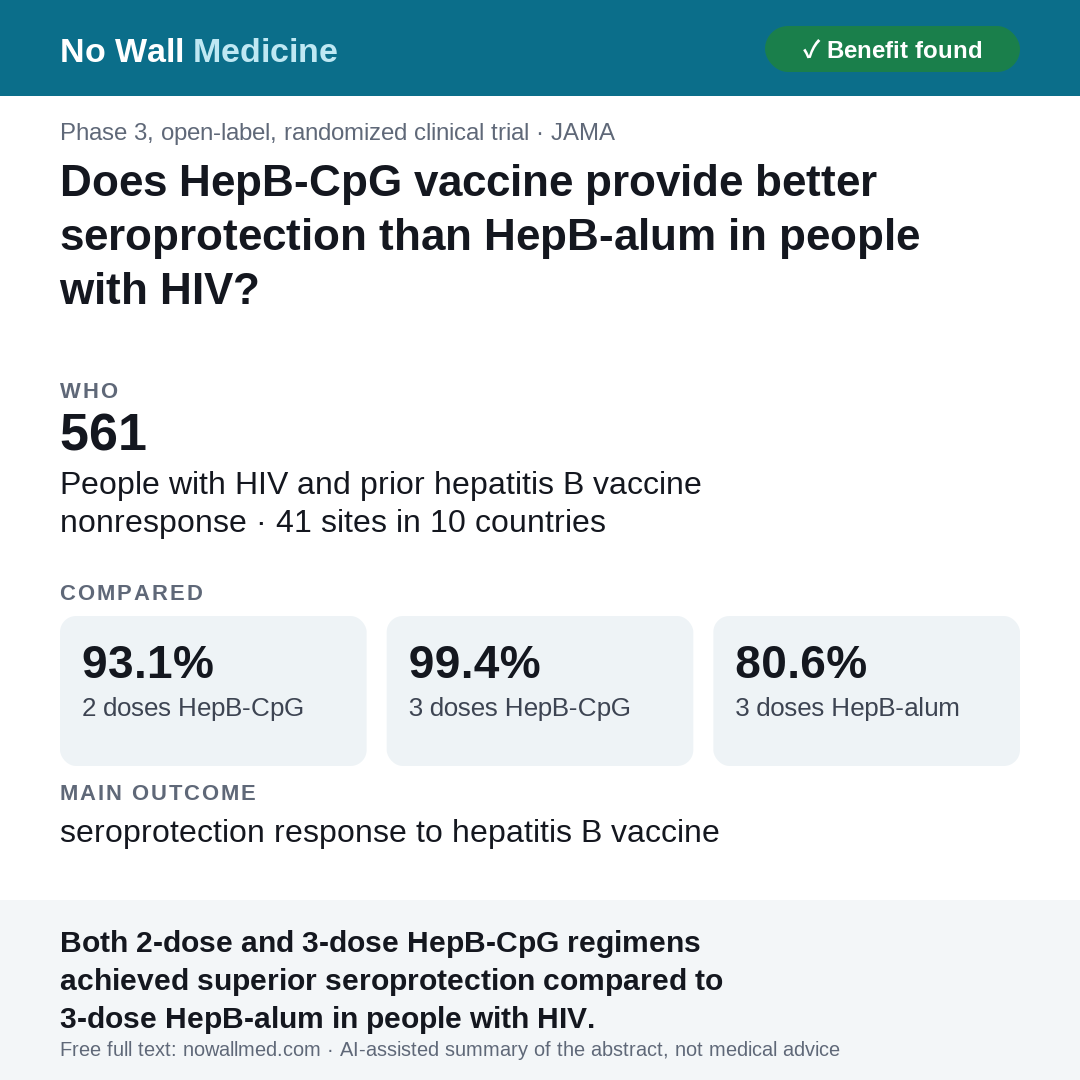
HepB-CpG vs HepB-Alum Vaccine in People With HIV and Prior Vaccine Nonresponse: The BEe-HIVe Randomized Clinical Trial
Phase 3, open-label, randomized clinical trialBenefit found
Does HepB-CpG vaccine provide better seroprotection than HepB-alum in people with HIV?
Who
561
People with HIV and prior hepatitis B vaccine nonresponse · 41 sites in 10 countries
Compared
93.1%2 doses HepB-CpG
99.4%3 doses HepB-CpG
80.6%3 doses HepB-alum
Main outcome
seroprotection response to hepatitis B vaccine
Result: stratified difference 12.5% (97.5% CI, 4.1%-20.9%)
Bottom line: Both 2-dose and 3-dose HepB-CpG regimens achieved superior seroprotection compared to 3-dose HepB-alum in people with HIV.
JAMA · 2024-12-01Download image
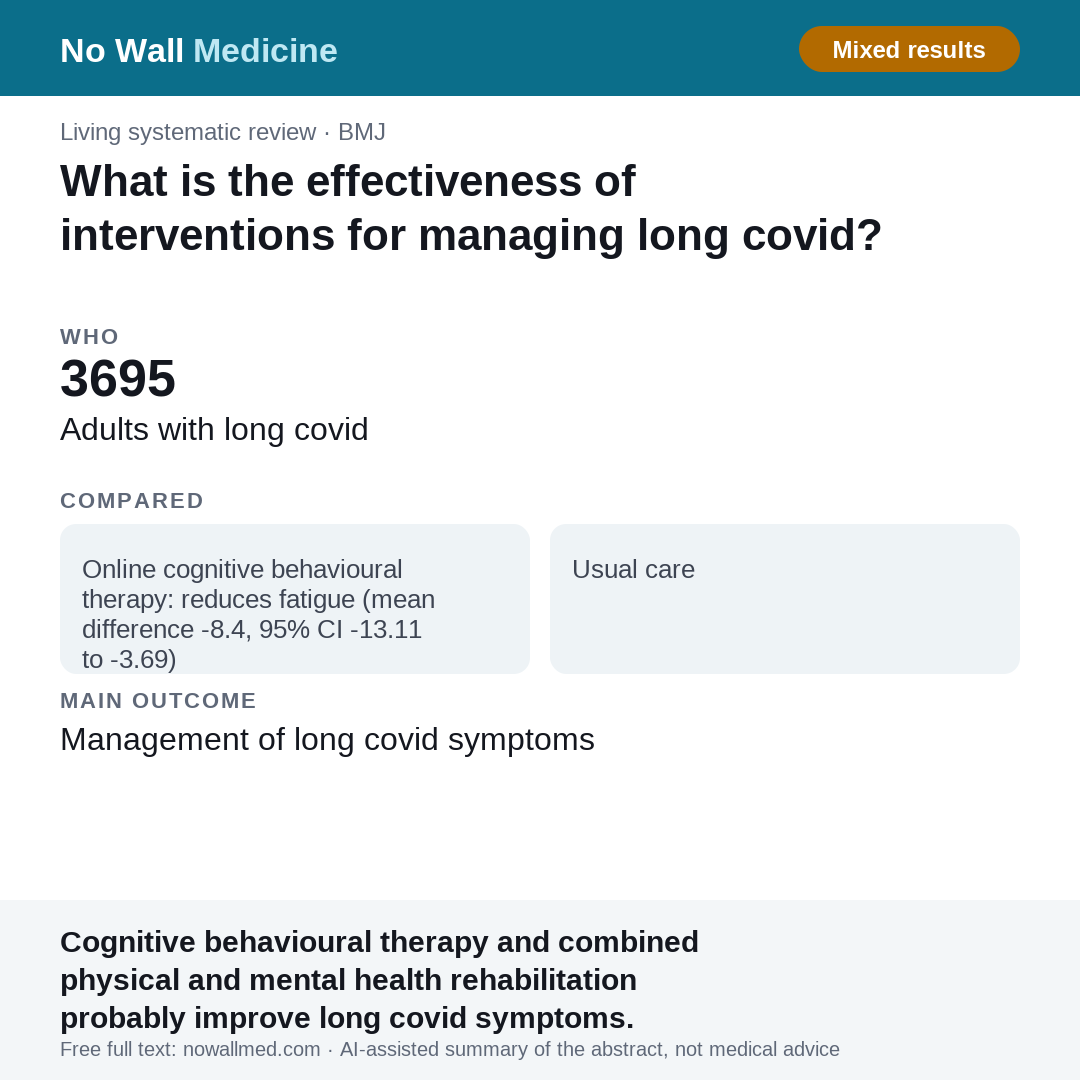
Interventions for the management of long covid (post-covid condition): living systematic review
Living systematic reviewMixed results
What is the effectiveness of interventions for managing long covid?
Who
3695
Adults with long covid
Compared
Online cognitive behavioural therapy: reduces fatigue (mean difference -8.4, 95% CI -13.11 to -3.69)
Usual care
Main outcome
Management of long covid symptoms
Bottom line: Cognitive behavioural therapy and combined physical and mental health rehabilitation probably improve long covid symptoms.
BMJ · 2024-11-27Download image
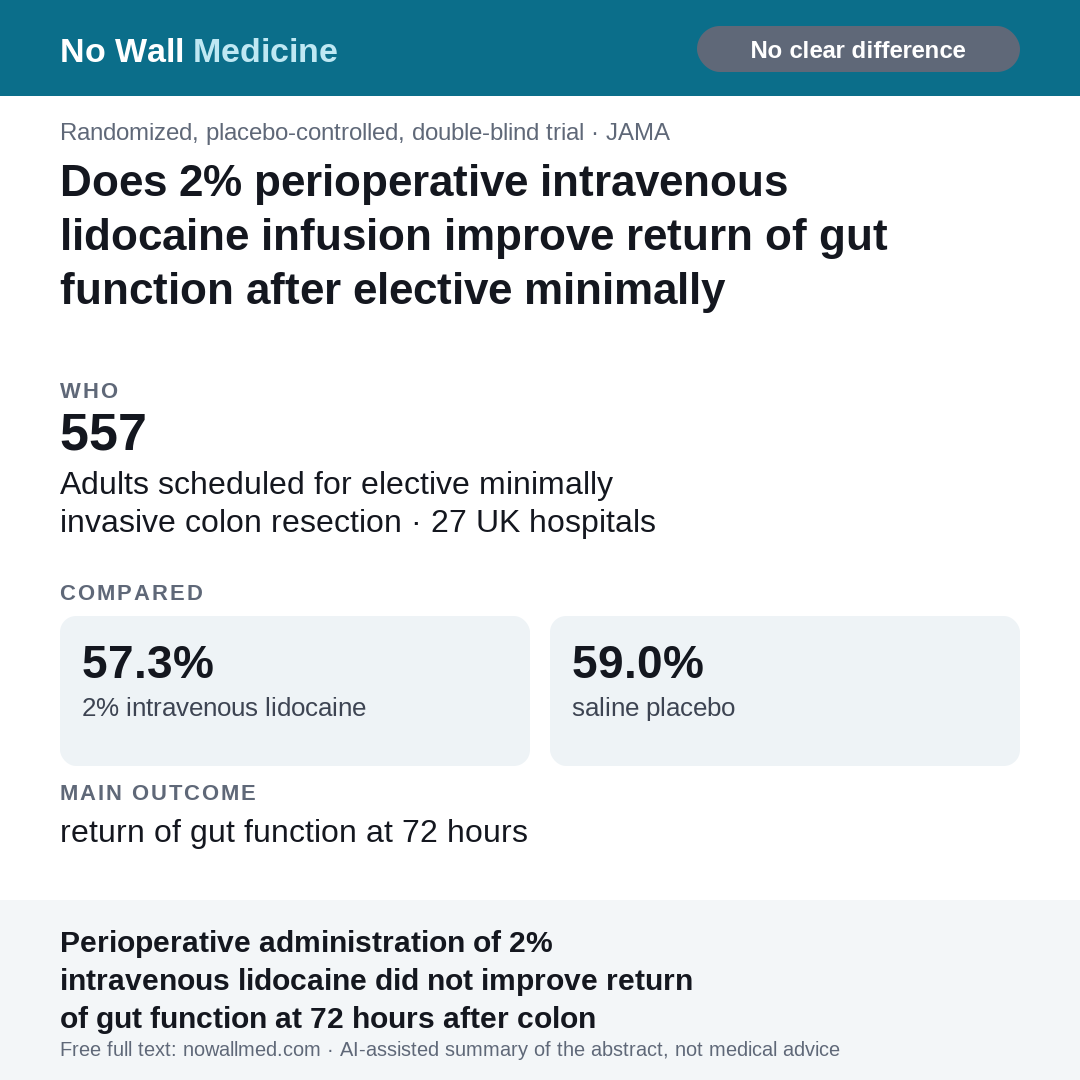
Intravenous Lidocaine for Gut Function Recovery in Colonic Surgery: A Randomized Clinical Trial
Randomized, placebo-controlled, double-blind trialNo clear difference
Does 2% perioperative intravenous lidocaine infusion improve return of gut function after elective minimally invasive colon resection?
Who
557
Adults scheduled for elective minimally invasive colon resection · 27 UK hospitals
Compared
57.3%2% intravenous lidocaine
59.0%saline placebo
Main outcome
return of gut function at 72 hours
Result: relative risk 0.97 (95% CI 0.88 to 1.07)
Bottom line: Perioperative administration of 2% intravenous lidocaine did not improve return of gut function at 72 hours after colon resection.
JAMA · 2024-11-27Download image
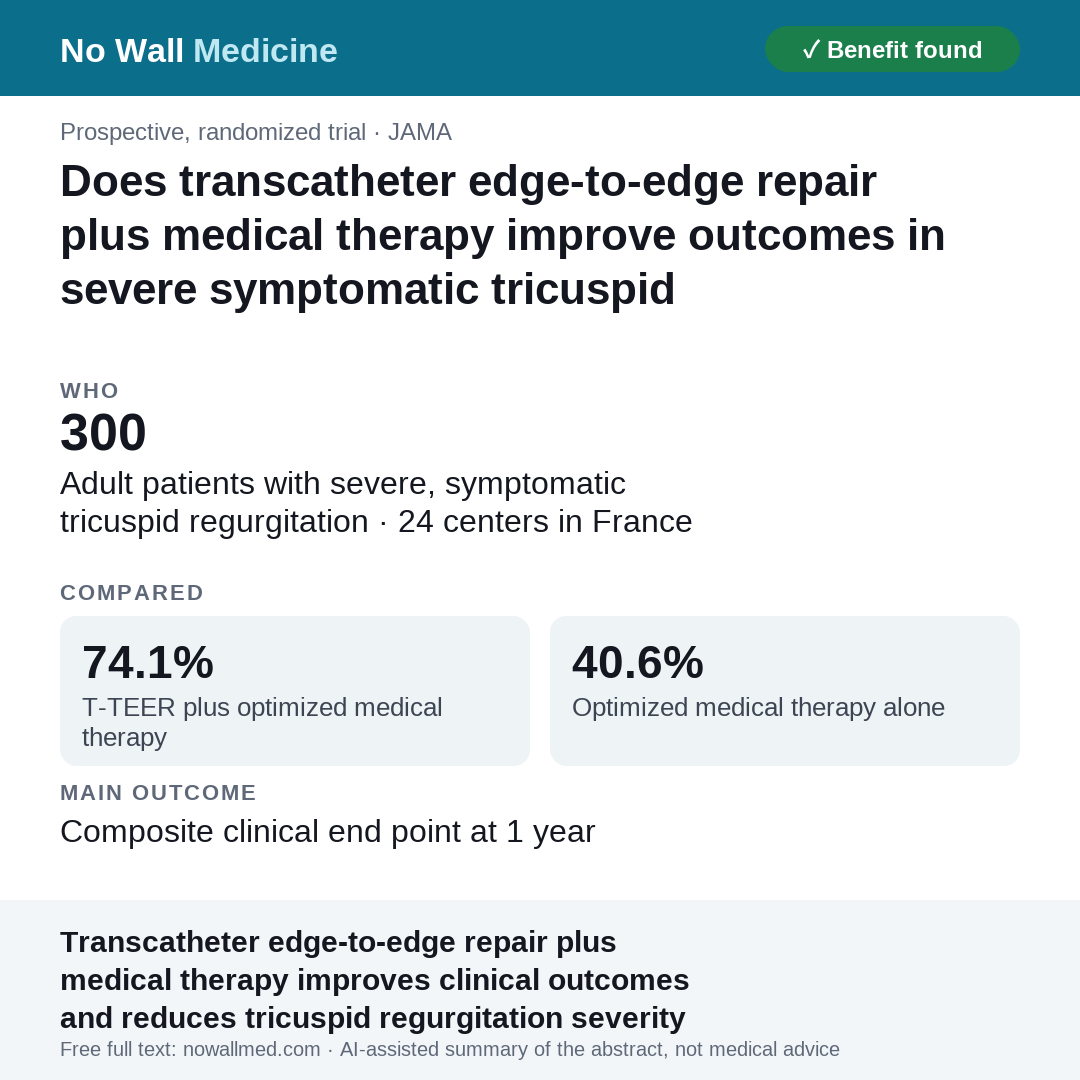
Transcatheter Edge-to-Edge Repair for Severe Isolated Tricuspid Regurgitation: The Tri.Fr Randomized Clinical Trial
Prospective, randomized trialBenefit found
Does transcatheter edge-to-edge repair plus medical therapy improve outcomes in severe symptomatic tricuspid regurgitation?
Who
300
Adult patients with severe, symptomatic tricuspid regurgitation · 24 centers in France and Belgium
Compared
74.1%T-TEER plus optimized medical therapy
40.6%Optimized medical therapy alone
Main outcome
Composite clinical end point at 1 year
Result: win ratio 2.06 (95% CI, 1.38-3.08)
Bottom line: Transcatheter edge-to-edge repair plus medical therapy improves clinical outcomes and reduces tricuspid regurgitation severity compared to medical therapy alone.
JAMA · 2024-11-27Download image
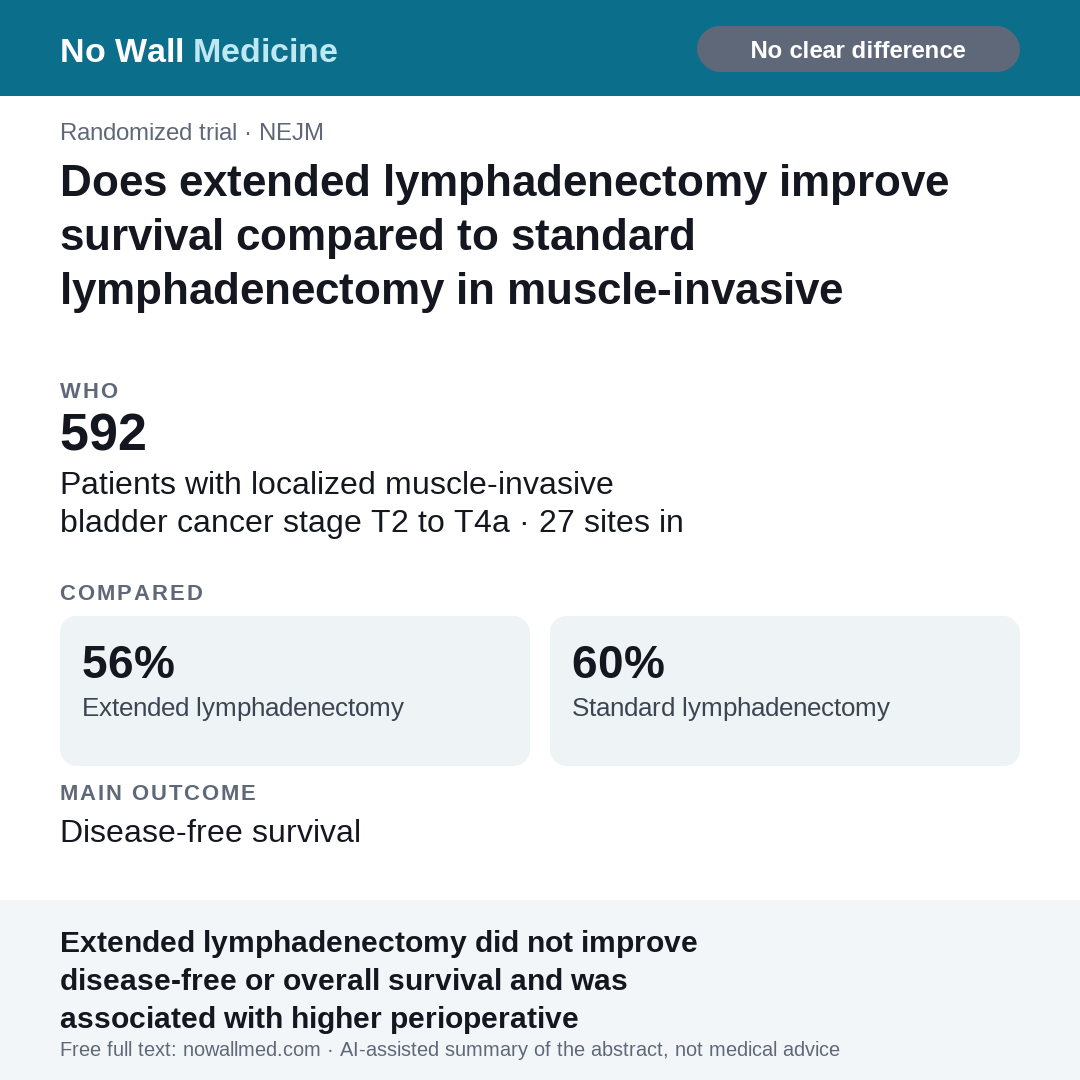
Standard or Extended Lymphadenectomy for Muscle-Invasive Bladder Cancer
Randomized trialNo clear difference
Does extended lymphadenectomy improve survival compared to standard lymphadenectomy in muscle-invasive bladder cancer?
Who
592
Patients with localized muscle-invasive bladder cancer stage T2 to T4a · 27 sites in the United States and Canada
Compared
56%Extended lymphadenectomy
60%Standard lymphadenectomy
Main outcome
Disease-free survival
Result: hazard ratio 1.10 (95% CI 0.86 to 1.40)
Bottom line: Extended lymphadenectomy did not improve disease-free or overall survival and was associated with higher perioperative morbidity and mortality.
Funded by: National Cancer Institute and the Canadian Cancer Society
NEJM · 2024-11-26Download image
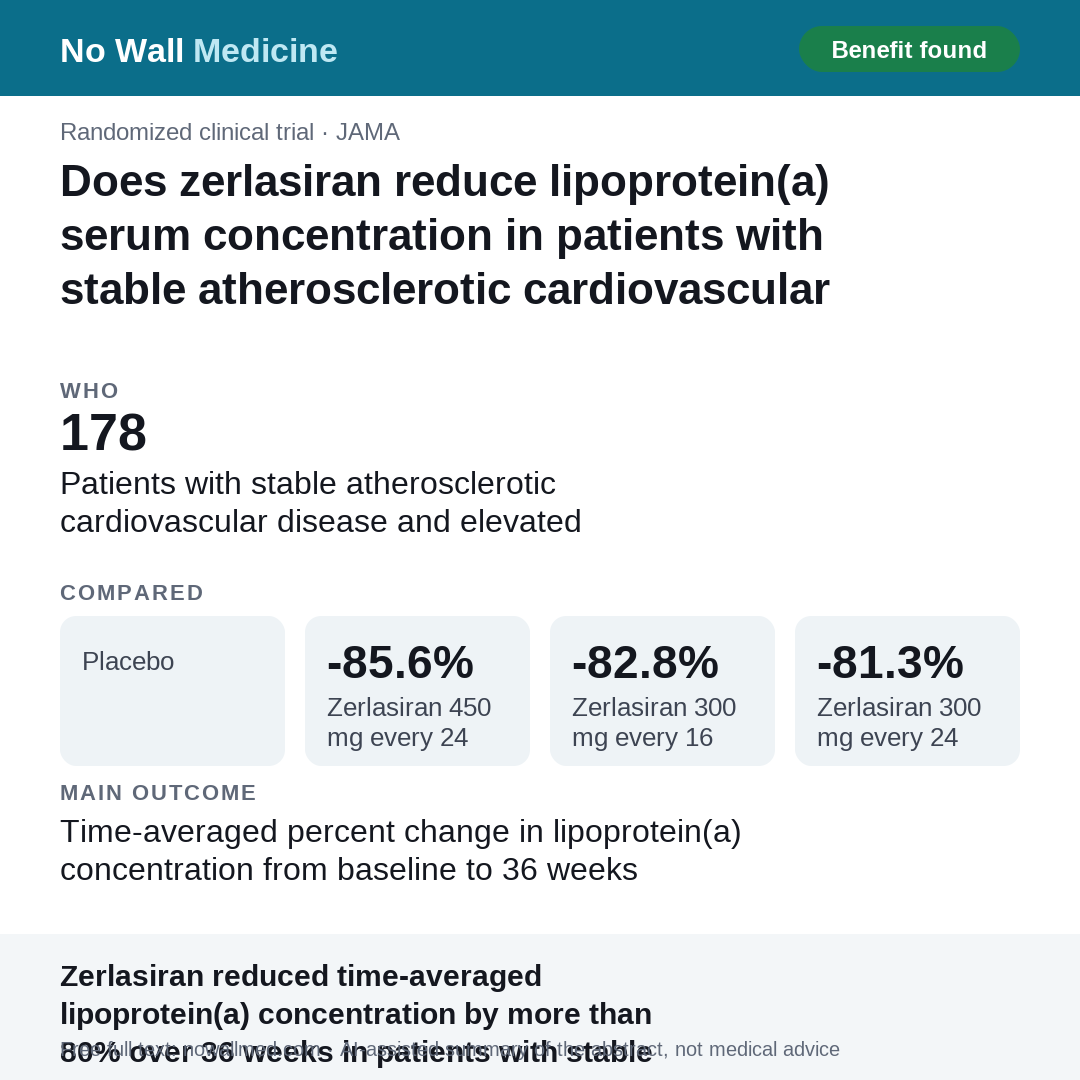
Zerlasiran-A Small-Interfering RNA Targeting Lipoprotein(a): A Phase 2 Randomized Clinical Trial
Randomized clinical trialBenefit found
Does zerlasiran reduce lipoprotein(a) serum concentration in patients with stable atherosclerotic cardiovascular disease?
Who
178
Patients with stable atherosclerotic cardiovascular disease and elevated lipoprotein(a) · 26 sites in Europe and South Africa
Compared
Placebo
-85.6%Zerlasiran 450 mg every 24 weeks (95% CI, -90.9% to -80.3%)
-82.8%Zerlasiran 300 mg every 16 weeks (95% CI, -88.2% to -77.4%)
-81.3%Zerlasiran 300 mg every 24 weeks (95% CI, -86.7% to -76.0%)
Main outcome
Time-averaged percent change in lipoprotein(a) concentration from baseline to 36 weeks
Result: -85.6% (95% CI, -90.9% to -80.3%)
Bottom line: Zerlasiran reduced time-averaged lipoprotein(a) concentration by more than 80% over 36 weeks in patients with stable atherosclerotic cardiovascular disease.
JAMA · 2024-11-18Download image