Visual abstracts
New randomized trials and meta-analyses from leading journals at a glance: who was studied, what was compared, and what was found. Every paper is free to read in full.
All specialtiesCardiology 840Oncology 760Gastroenterology & Hepatology 306Infectious Disease 626Neurology 350Psychiatry & Mental Health 430Pulmonology 365Critical Care 243Endocrinology & Diabetes 480Pediatrics 534Surgery 319Orthopedics & Sports Medicine 161Neurosurgery 89Cardiothoracic & Vascular Surgery 87Plastic & Reconstructive Surgery 118Nephrology 197Rheumatology 108Hematology 181Dermatology 78Ophthalmology 97Obstetrics & Gynecology 261Public & Global Health 167Radiology & Imaging 96Anesthesiology 107Urology 162ENT (Otolaryngology) 86Emergency Medicine 68Allergy & Immunology 58Geriatrics 160Family Medicine & Primary Care 111Medical Genetics & Genomics 91Pathology & Laboratory Medicine 24Physical Medicine & Rehabilitation 148Palliative Care 81Nutrition 223Digital Health & AI 460General Medicine 101
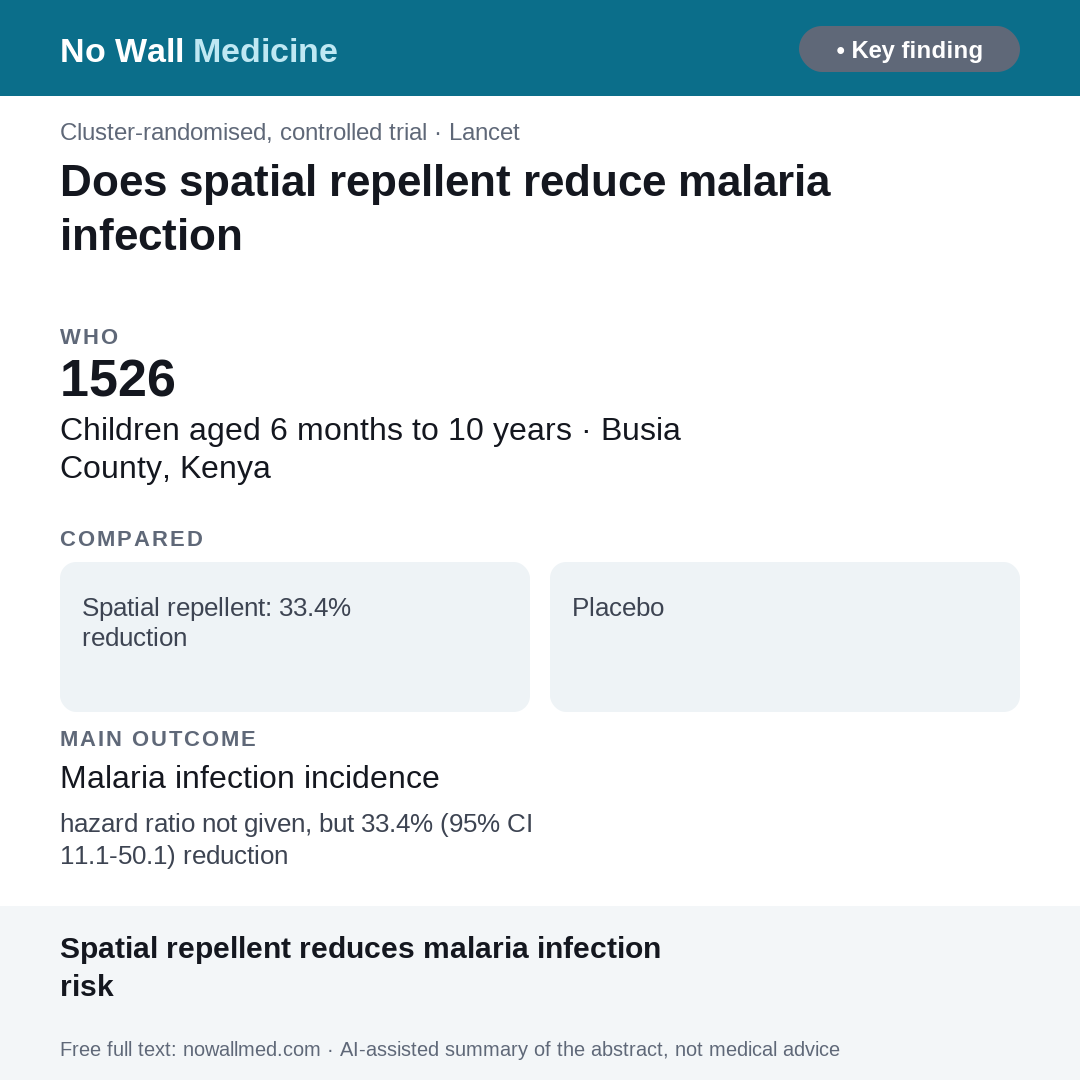
Effect of a spatial repellent on malaria incidence in an area of western Kenya characterised by high malaria transmission, insecticide resistance, and universal coverage of insecticide treated nets (part of the AEGIS Consortium): a cluster-randomised, controlled trial
Cluster-randomised, controlled trialBenefit found
Does spatial repellent reduce malaria infection
Who
1526
Children aged 6 months to 10 years · Busia County, Kenya
Compared
Spatial repellent: 33.4% reduction
Placebo
Main outcome
Malaria infection incidence
Result: hazard ratio not given, but 33.4% (95% CI 11.1-50.1) reduction
Bottom line: Spatial repellent reduces malaria infection risk
Funded by: Unitaid to University of Notre Dame
Lancet · 2024-12-19Download image
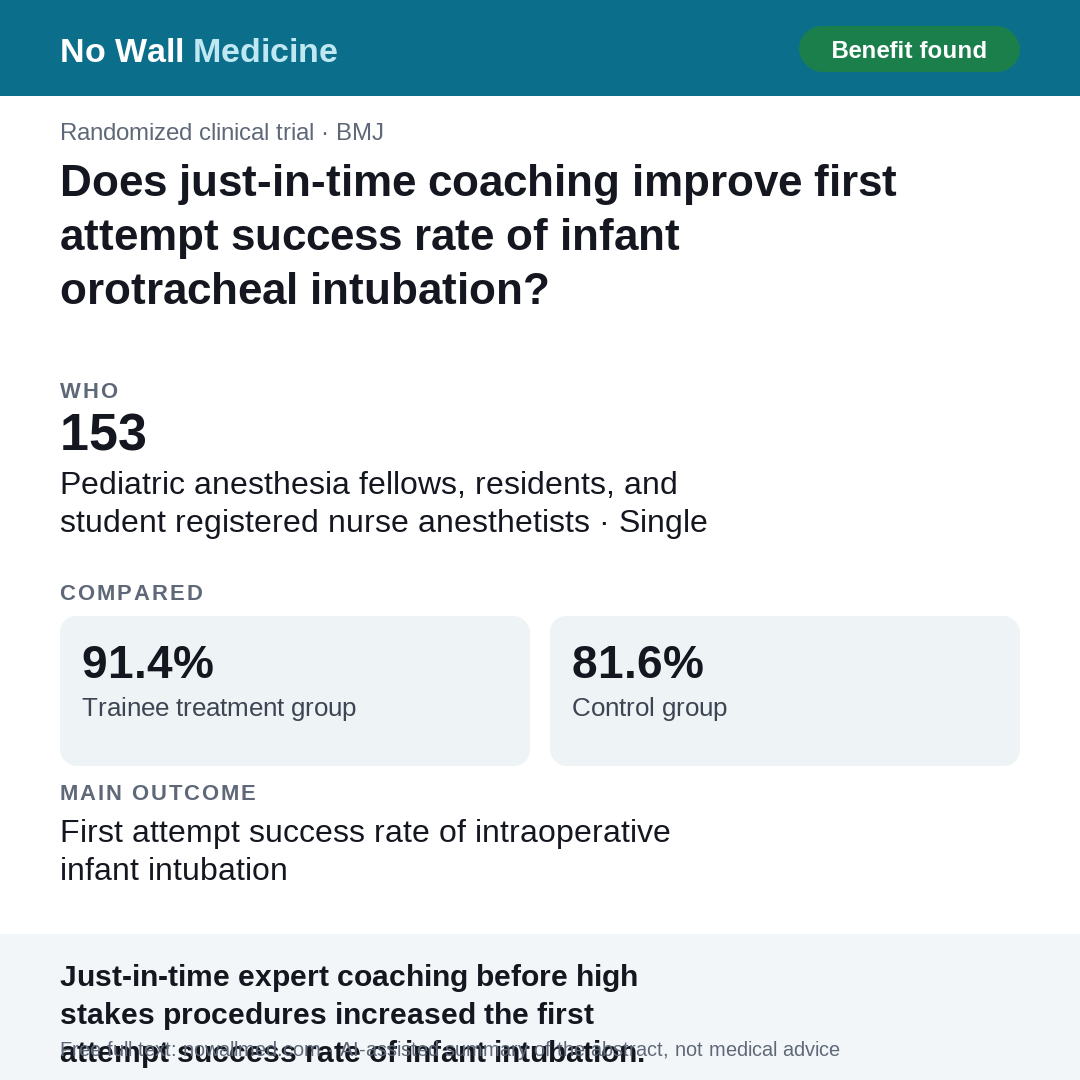
Coaching inexperienced clinicians before a high stakes medical procedure: randomized clinical trial
Randomized clinical trialBenefit found
Does just-in-time coaching improve first attempt success rate of infant orotracheal intubation?
Who
153
Pediatric anesthesia fellows, residents, and student registered nurse anesthetists · Single center quaternary children's hospital in Boston, MA, USA
Compared
91.4%Trainee treatment group (212/232)
81.6%Control group (231/283)
Main outcome
First attempt success rate of intraoperative infant intubation
Result: odds ratio 2.42 (95% confidence interval 1.45 to 4.04)
Bottom line: Just-in-time expert coaching before high stakes procedures increased the first attempt success rate of infant intubation.
Limitation: Randomized evaluation in other settings is warranted.
BMJ · 2024-12-16Download image
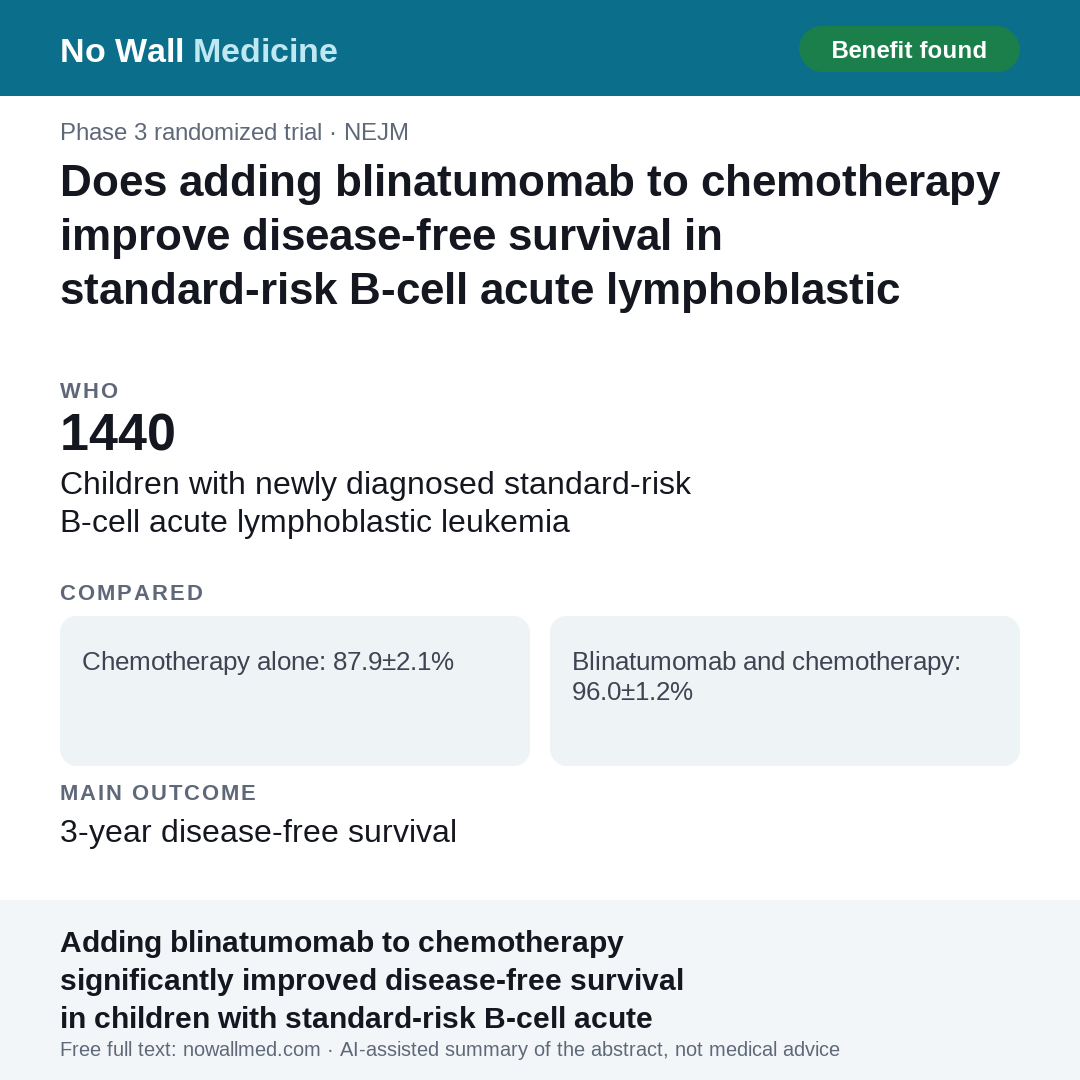
Blinatumomab in Standard-Risk B-Cell Acute Lymphoblastic Leukemia in Children
Phase 3 randomized trialBenefit found
Does adding blinatumomab to chemotherapy improve disease-free survival in standard-risk B-cell acute lymphoblastic leukemia?
Who
1440
Children with newly diagnosed standard-risk B-cell acute lymphoblastic leukemia
Compared
Chemotherapy alone: 87.9±2.1%
Blinatumomab and chemotherapy: 96.0±1.2%
Main outcome
3-year disease-free survival
Result: difference in restricted mean survival time, 72 days (95% CI 36 to 108)
Bottom line: Adding blinatumomab to chemotherapy significantly improved disease-free survival in children with standard-risk B-cell acute lymphoblastic leukemia.
Funded by: National Institutes of Health and others
NEJM · 2024-12-07Download image
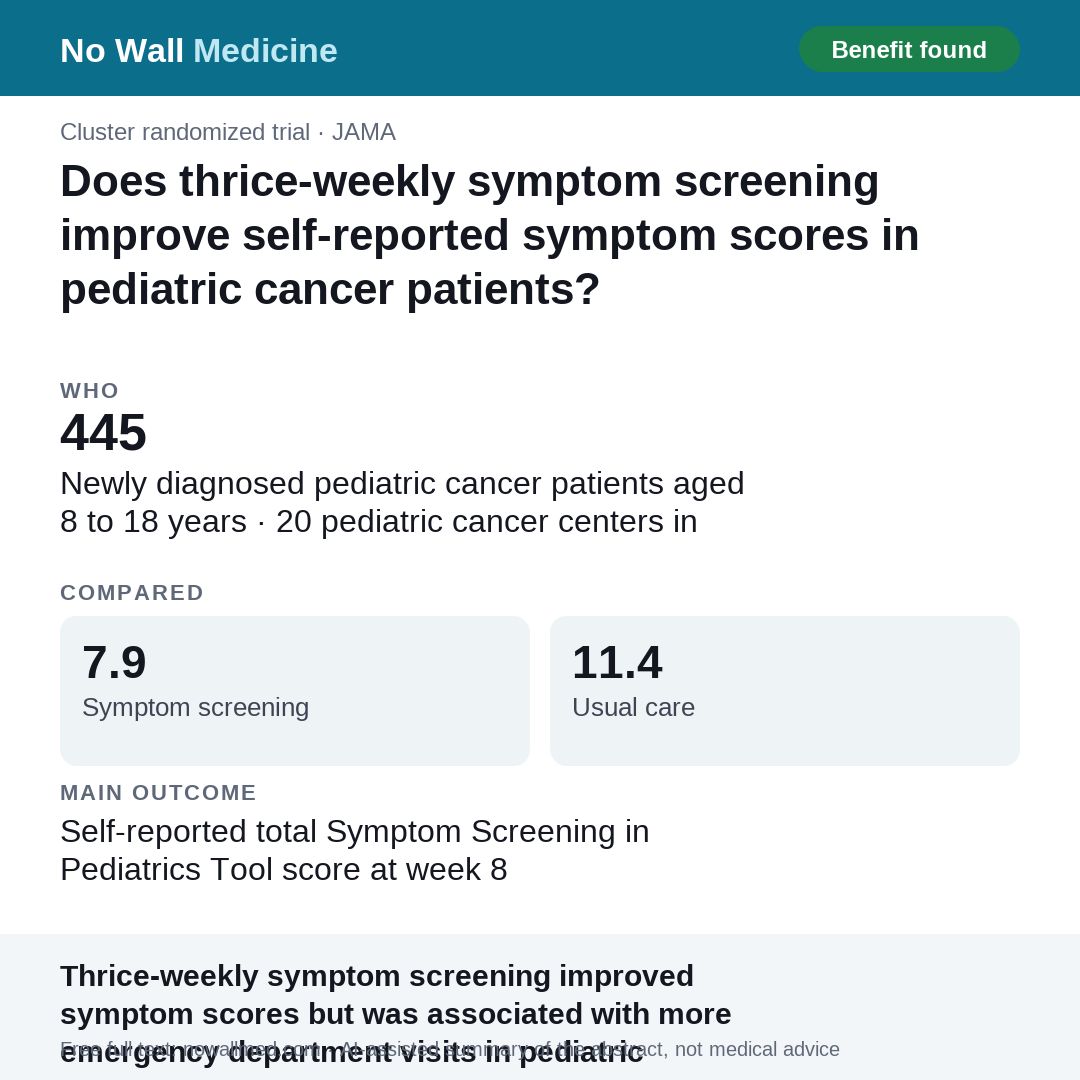
Symptom Screening Linked to Care Pathways for Pediatric Patients With Cancer: A Randomized Clinical Trial
Cluster randomized trialBenefit found
Does thrice-weekly symptom screening improve self-reported symptom scores in pediatric cancer patients?
Who
445
Newly diagnosed pediatric cancer patients aged 8 to 18 years · 20 pediatric cancer centers in the US
Compared
7.9Symptom screening (7.2)
11.4Usual care (8.7)
Main outcome
Self-reported total Symptom Screening in Pediatrics Tool score at week 8
Result: adjusted mean difference, -3.8 (95% CI, -6.4 to -1.2)
Bottom line: Thrice-weekly symptom screening improved symptom scores but was associated with more emergency department visits in pediatric cancer patients.
JAMA · 2024-11-13Download image
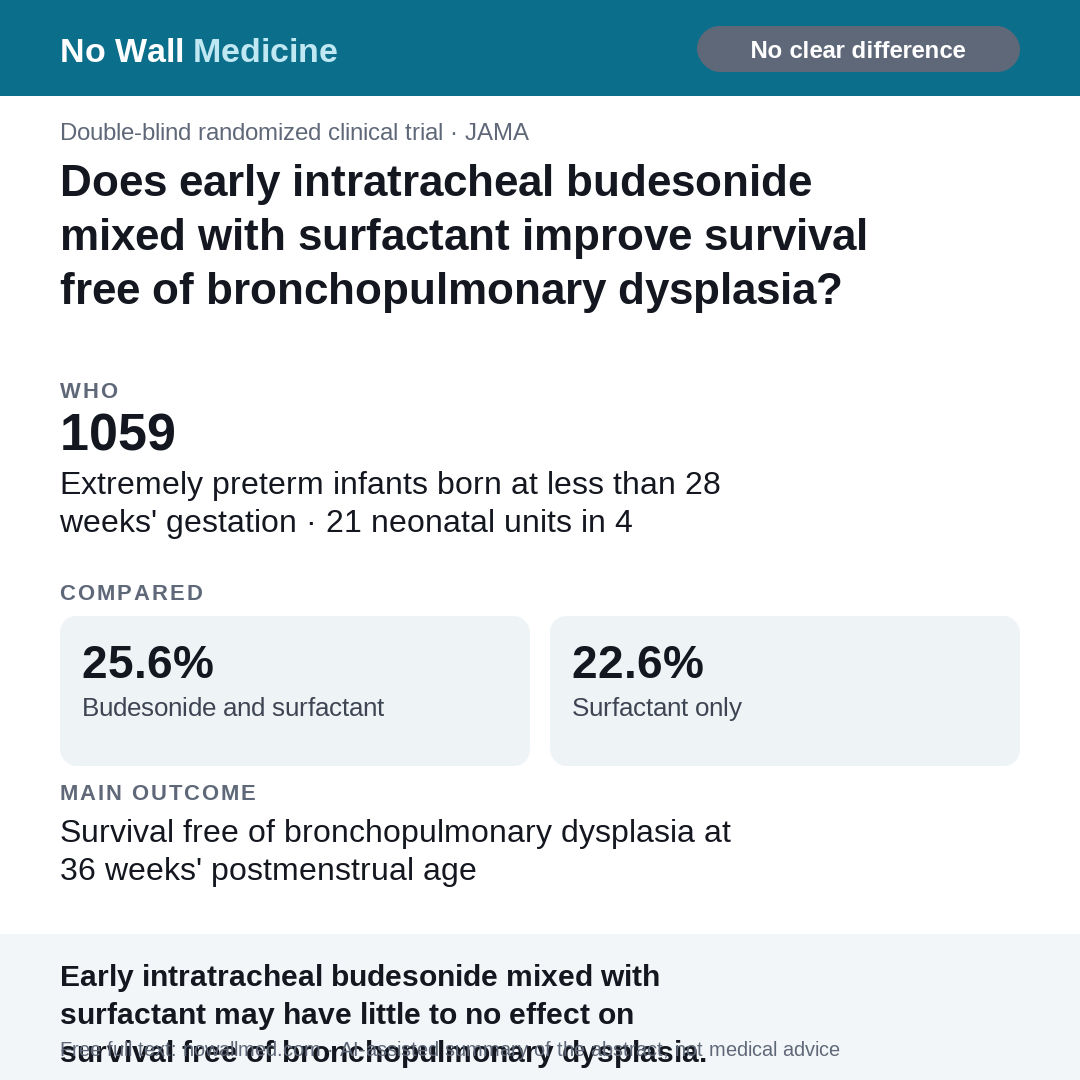
Intratracheal Budesonide Mixed With Surfactant for Extremely Preterm Infants: The PLUSS Randomized Clinical Trial
Double-blind randomized clinical trialNo clear difference
Does early intratracheal budesonide mixed with surfactant improve survival free of bronchopulmonary dysplasia?
Who
1059
Extremely preterm infants born at less than 28 weeks' gestation · 21 neonatal units in 4 countries
Compared
25.6%Budesonide and surfactant
22.6%Surfactant only
Main outcome
Survival free of bronchopulmonary dysplasia at 36 weeks' postmenstrual age
Result: adjusted risk difference, 2.7% (95% CI, -2.1% to 7.4%)
Bottom line: Early intratracheal budesonide mixed with surfactant may have little to no effect on survival free of bronchopulmonary dysplasia.
JAMA · 2024-11-13Download image
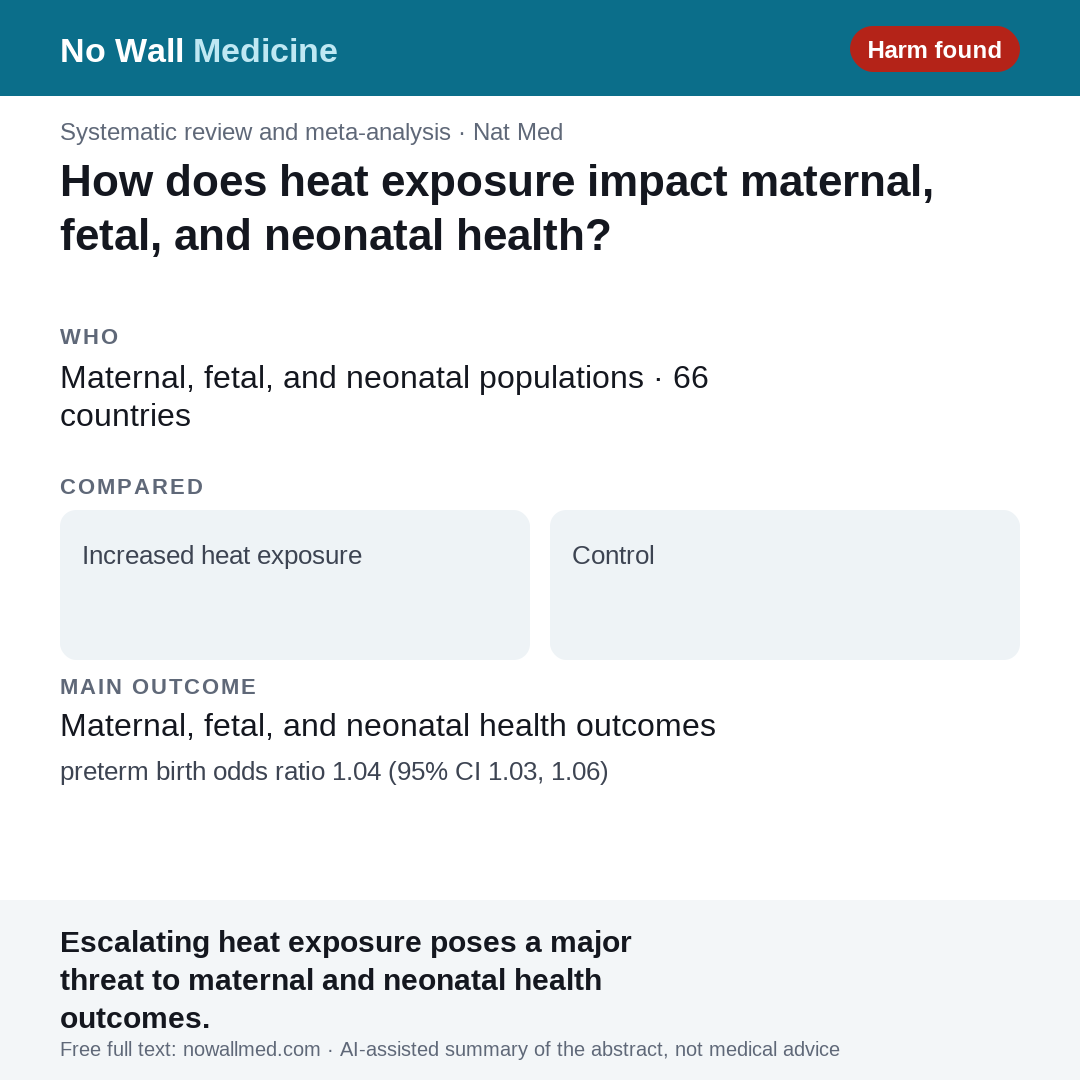
A systematic review and meta-analysis of heat exposure impacts on maternal, fetal and neonatal health
Systematic review and meta-analysisHarm found
How does heat exposure impact maternal, fetal, and neonatal health?
Who
Maternal, fetal, and neonatal populations · 66 countries
Compared
Increased heat exposure
Control
Main outcome
Maternal, fetal, and neonatal health outcomes
Result: preterm birth odds ratio 1.04 (95% CI 1.03, 1.06)
Bottom line: Escalating heat exposure poses a major threat to maternal and neonatal health outcomes.
Limitation: Heterogeneity in exposure metrics and study designs.
Nat Med · 2024-11-05Download image
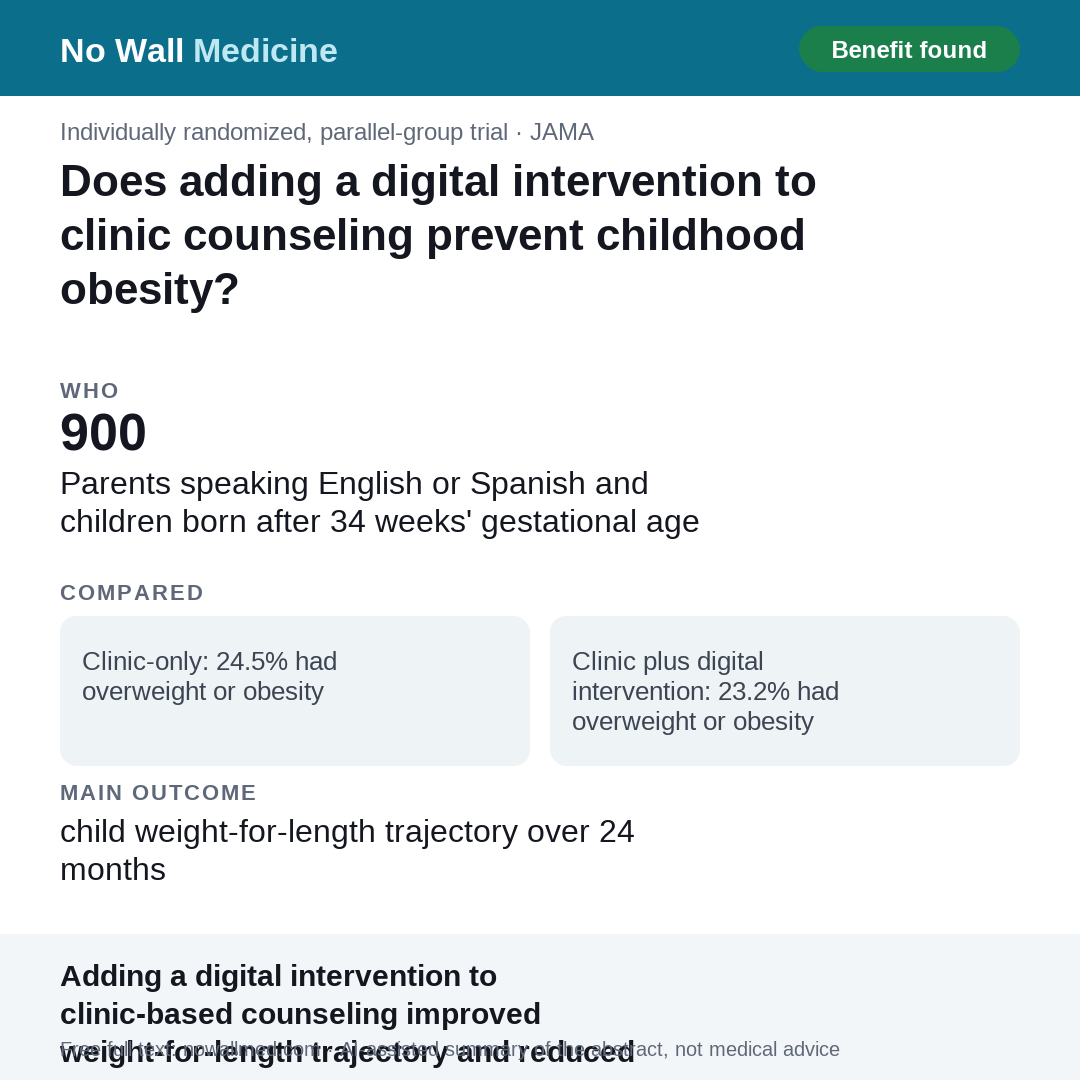
A Digital Health Behavior Intervention to Prevent Childhood Obesity: The Greenlight Plus Randomized Clinical Trial
Individually randomized, parallel-group trialBenefit found
Does adding a digital intervention to clinic counseling prevent childhood obesity?
Who
900
Parents speaking English or Spanish and children born after 34 weeks' gestational age · 6 US medical centers
Compared
Clinic-only: 24.5% had overweight or obesity
Clinic plus digital intervention: 23.2% had overweight or obesity
Main outcome
child weight-for-length trajectory over 24 months
Result: estimated reduction of 0.33 kg/m (95% CI, 0.09 to 0.57)
Bottom line: Adding a digital intervention to clinic-based counseling improved weight-for-length trajectory and reduced obesity at 24 months.
JAMA · 2024-11-04Download image
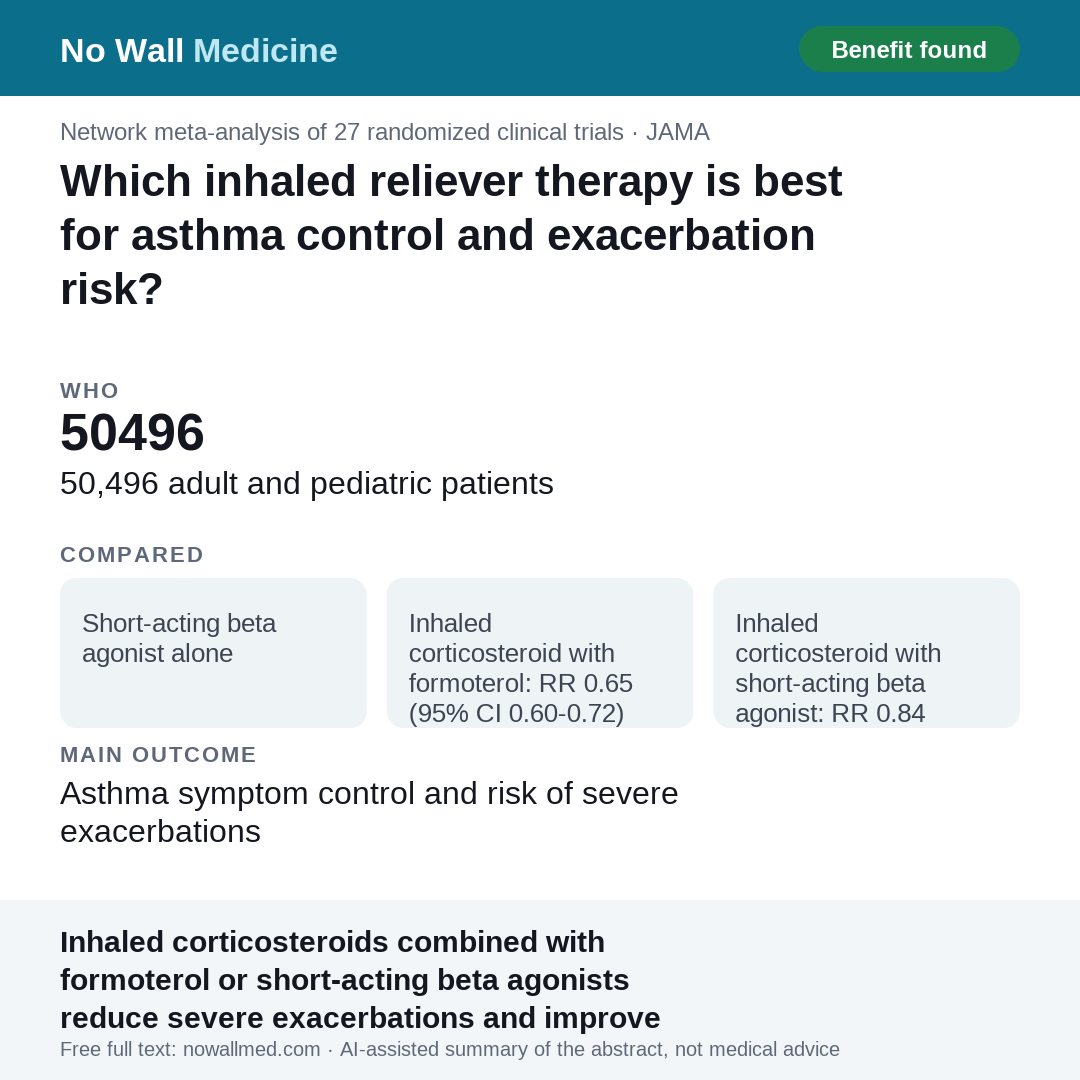
Inhaled Reliever Therapies for Asthma: A Systematic Review and Meta-Analysis
Network meta-analysis of 27 randomized clinical trialsBenefit found
Which inhaled reliever therapy is best for asthma control and exacerbation risk?
Who
50496
50,496 adult and pediatric patients
Compared
Short-acting beta agonist alone
Inhaled corticosteroid with formoterol: RR 0.65 (95% CI 0.60-0.72) for severe exacerbations
Inhaled corticosteroid with short-acting beta agonist: RR 0.84 (95% CI 0.73-0.95) for severe exacerbations
Main outcome
Asthma symptom control and risk of severe exacerbations
Result: ICS-formoterol RR 0.65 (95% CI 0.60-0.72) for severe exacerbations
Bottom line: Inhaled corticosteroids combined with formoterol or short-acting beta agonists reduce severe exacerbations and improve asthma control compared to short-acting beta agonists alone.
JAMA · 2024-10-28Download image
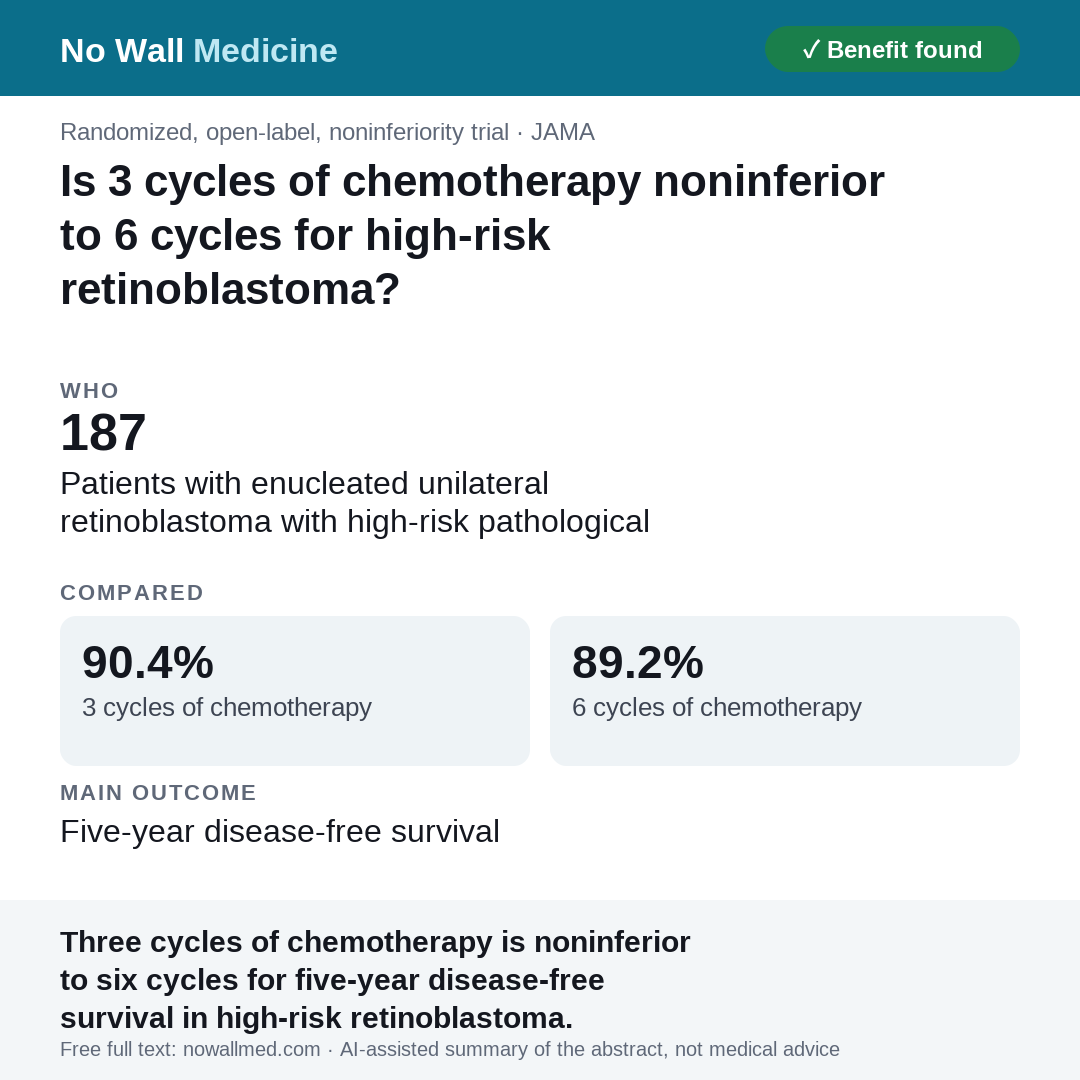
Three vs 6 Cycles of Chemotherapy for High-Risk Retinoblastoma: A Randomized Clinical Trial
Randomized, open-label, noninferiority trialBenefit found
Is 3 cycles of chemotherapy noninferior to 6 cycles for high-risk retinoblastoma?
Who
187
Patients with enucleated unilateral retinoblastoma with high-risk pathological features · 2 premier eye centers in China
Compared
90.4%3 cycles of chemotherapy
89.2%6 cycles of chemotherapy
Main outcome
Five-year disease-free survival
Result: difference, 1.2% (95% CI, -7.5% to 9.8%)
Bottom line: Three cycles of chemotherapy is noninferior to six cycles for five-year disease-free survival in high-risk retinoblastoma.
JAMA · 2024-10-21Download image
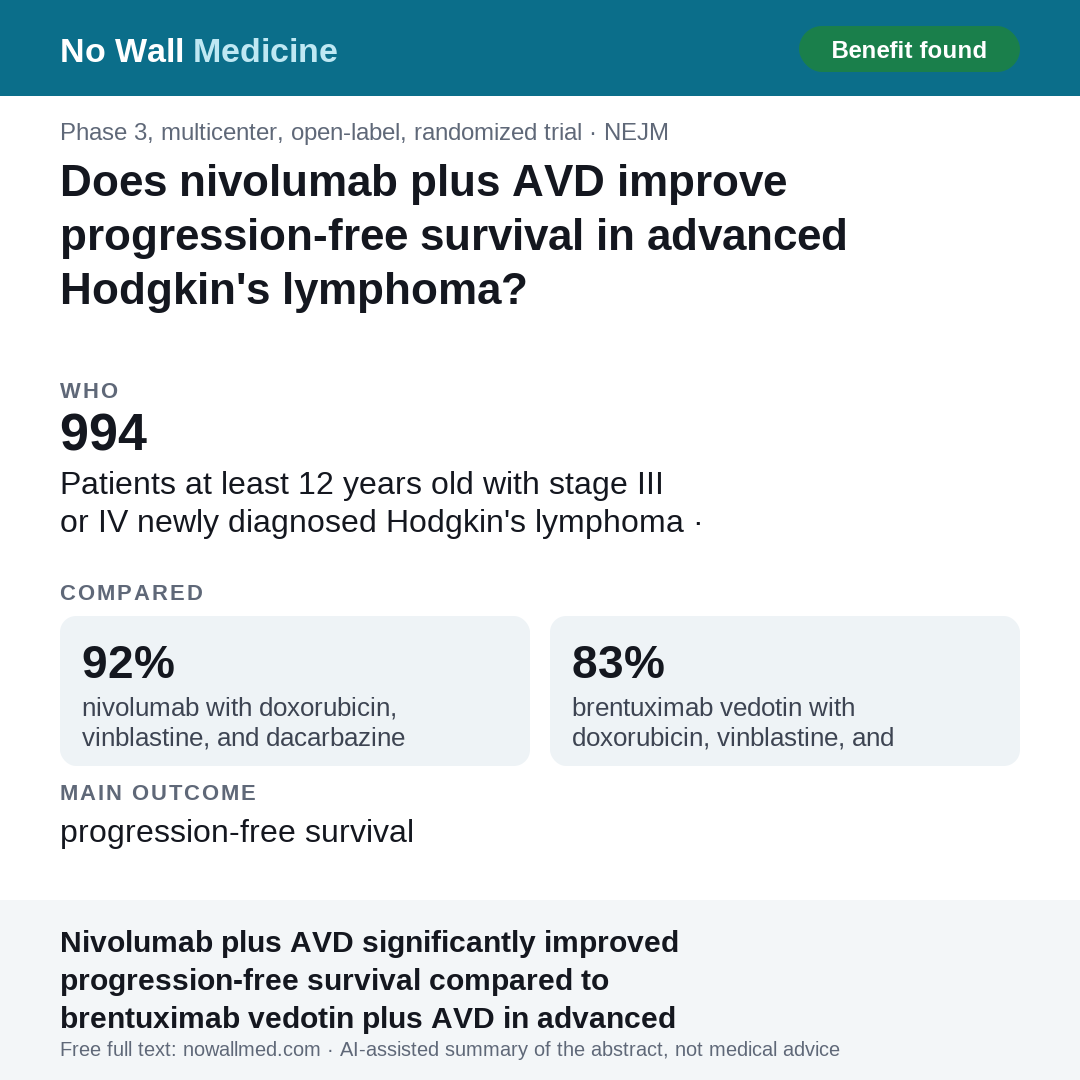
Nivolumab+AVD in Advanced-Stage Classic Hodgkin's Lymphoma
Phase 3, multicenter, open-label, randomized trialBenefit found
Does nivolumab plus AVD improve progression-free survival in advanced Hodgkin's lymphoma?
Who
994
Patients at least 12 years old with stage III or IV newly diagnosed Hodgkin's lymphoma · multicenter
Compared
92%nivolumab with doxorubicin, vinblastine, and dacarbazine (95% CI, 89 to 94)
83%brentuximab vedotin with doxorubicin, vinblastine, and dacarbazine (95% CI, 79 to 86)
Main outcome
progression-free survival
Result: hazard ratio 0.45 (95% CI, 0.30 to 0.65)
Bottom line: Nivolumab plus AVD significantly improved progression-free survival compared to brentuximab vedotin plus AVD in advanced Hodgkin's lymphoma.
Limitation: short follow-up time
Funded by: National Cancer Institute of the National Institutes of Health
NEJM · 2024-10-16Download image
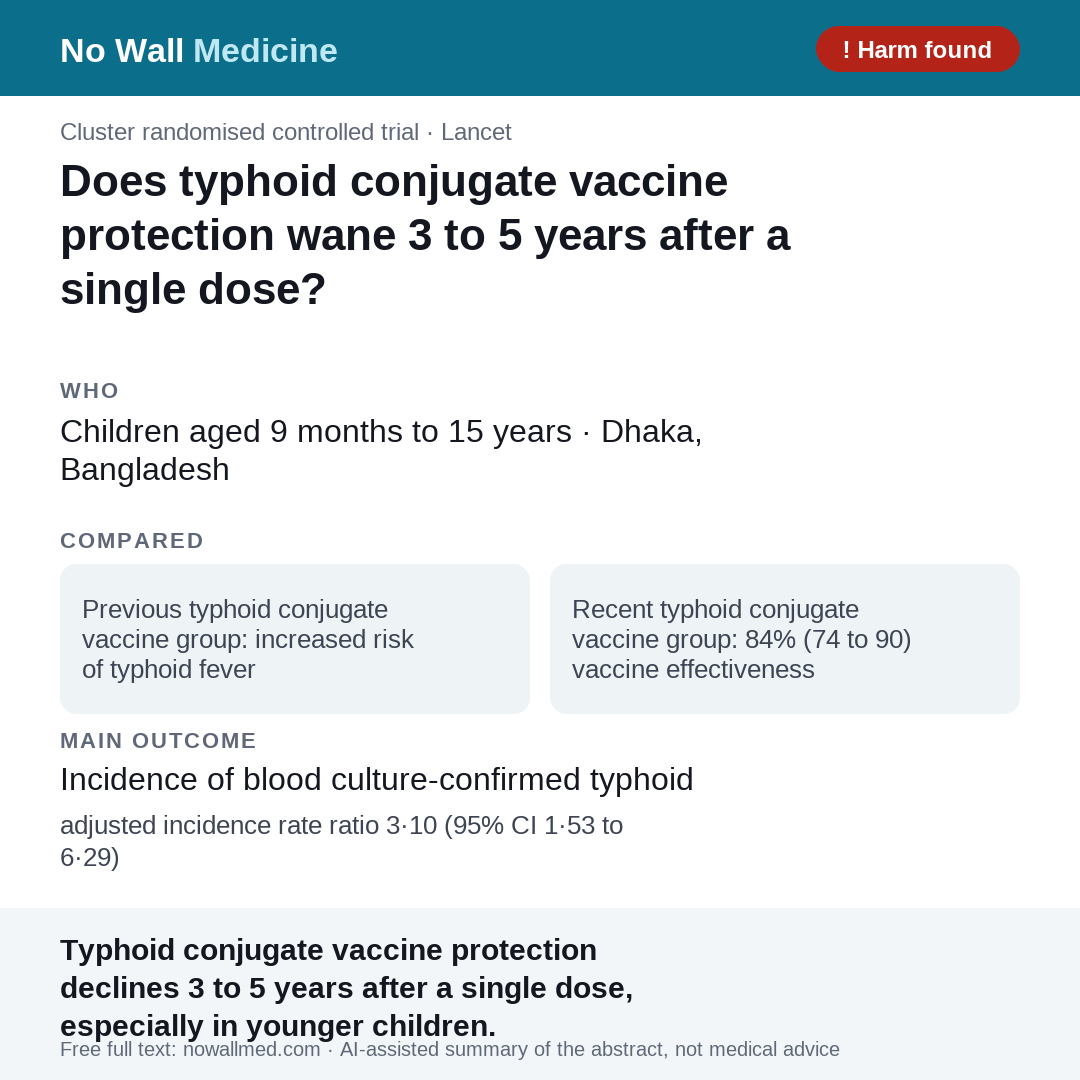
5-year vaccine protection following a single dose of Vi-tetanus toxoid conjugate vaccine in Bangladeshi children (TyVOID): a cluster randomised trial
Cluster randomised controlled trialHarm found
Does typhoid conjugate vaccine protection wane 3 to 5 years after a single dose?
Who
Children aged 9 months to 15 years · Dhaka, Bangladesh
Compared
Previous typhoid conjugate vaccine group: increased risk of typhoid fever
Recent typhoid conjugate vaccine group: 84% (74 to 90) vaccine effectiveness
Main outcome
Incidence of blood culture-confirmed typhoid
Result: adjusted incidence rate ratio 3·10 (95% CI 1·53 to 6·29)
Bottom line: Typhoid conjugate vaccine protection declines 3 to 5 years after a single dose, especially in younger children.
Funded by: Bill & Melinda Gates Foundation
Lancet · 2024-10-13Download image
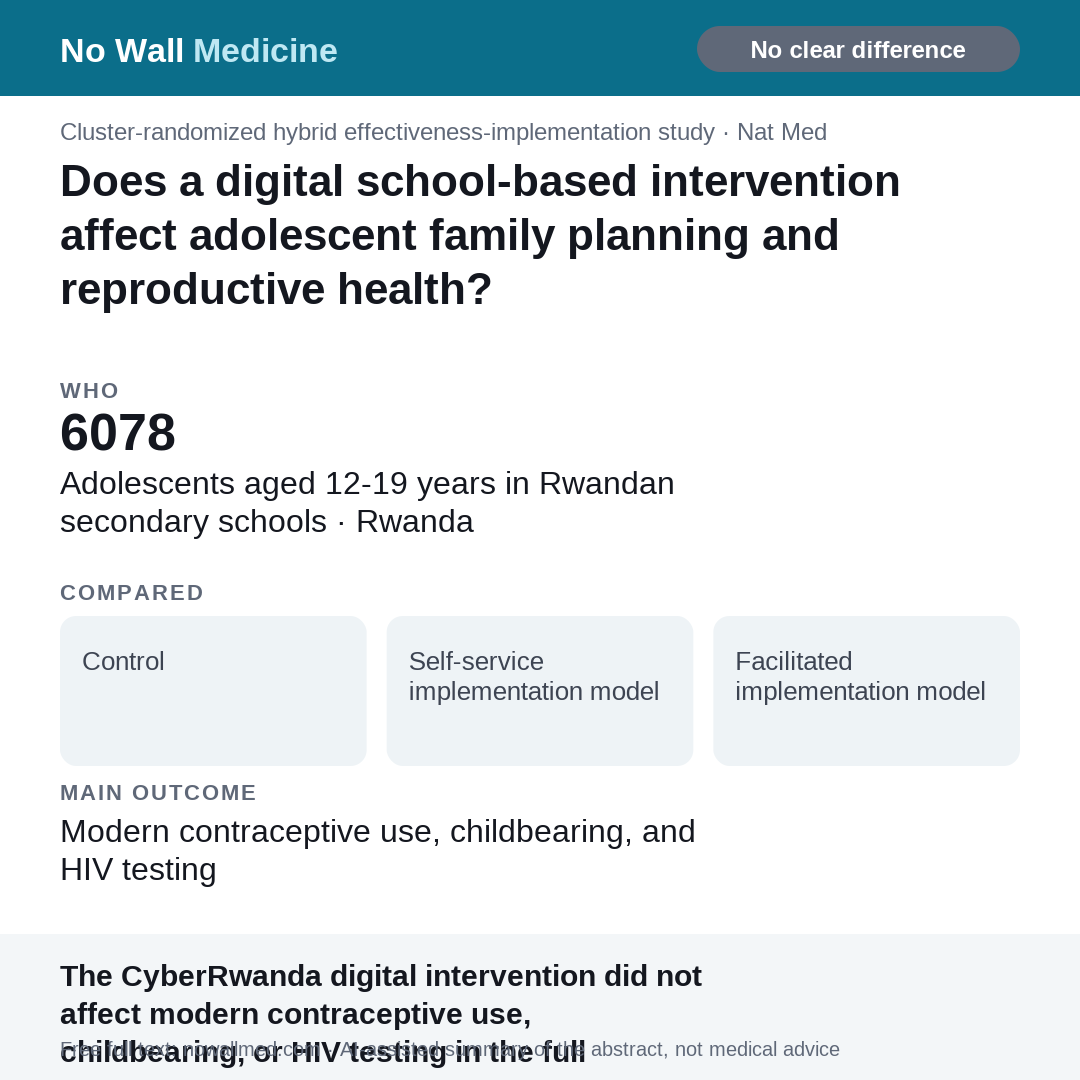
Effect of a digital school-based intervention on adolescent family planning and reproductive health in Rwanda: a cluster-randomized trial
Cluster-randomized hybrid effectiveness-implementation studyNo clear difference
Does a digital school-based intervention affect adolescent family planning and reproductive health?
Who
6078
Adolescents aged 12-19 years in Rwandan secondary schools · Rwanda
Compared
Control
Self-service implementation model
Facilitated implementation model
Main outcome
Modern contraceptive use, childbearing, and HIV testing
Result: prevalence ratio 1.04 (95% CI 0.76, 1.42)
Bottom line: The CyberRwanda digital intervention did not affect modern contraceptive use, childbearing, or HIV testing in the full sample.
Nat Med · 2024-08-23Download image
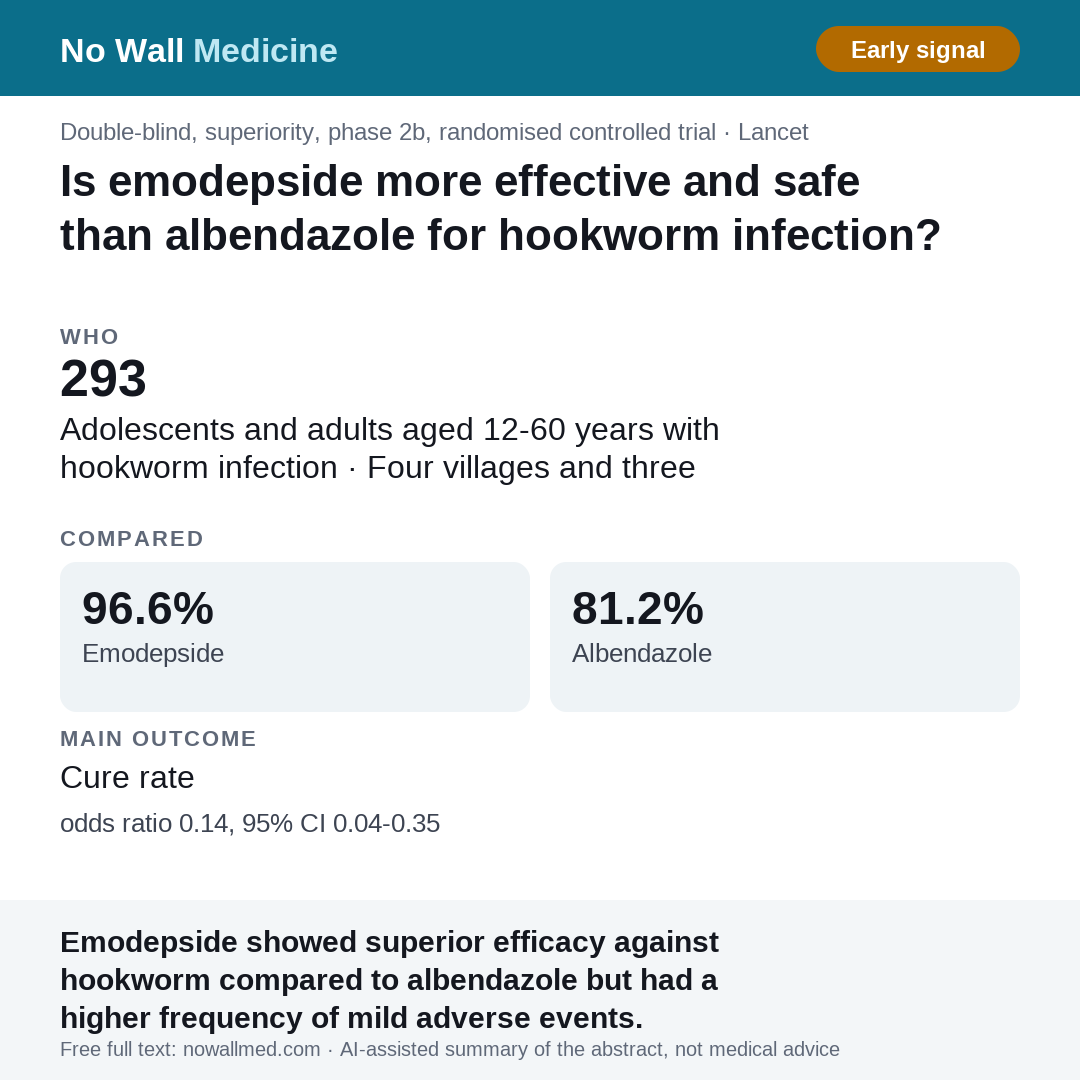
Efficacy and safety of emodepside compared with albendazole in adolescents and adults with hookworm infection in Pemba Island, Tanzania: a double-blind, superiority, phase 2b, randomised controlled trial
Double-blind, superiority, phase 2b, randomised controlled trialBenefit found
Is emodepside more effective and safe than albendazole for hookworm infection?
Who
293
Adolescents and adults aged 12-60 years with hookworm infection · Four villages and three schools, Pemba Island, Tanzania
Compared
96.6%Emodepside
81.2%Albendazole
Main outcome
Cure rate
Result: odds ratio 0.14, 95% CI 0.04-0.35
Bottom line: Emodepside showed superior efficacy against hookworm compared to albendazole but had a higher frequency of mild adverse events.
Limitation: Increased frequency of adverse events compared with albendazole must be balanced against efficacy.
Funded by: European Research Council
Lancet · 2024-08-18Download image
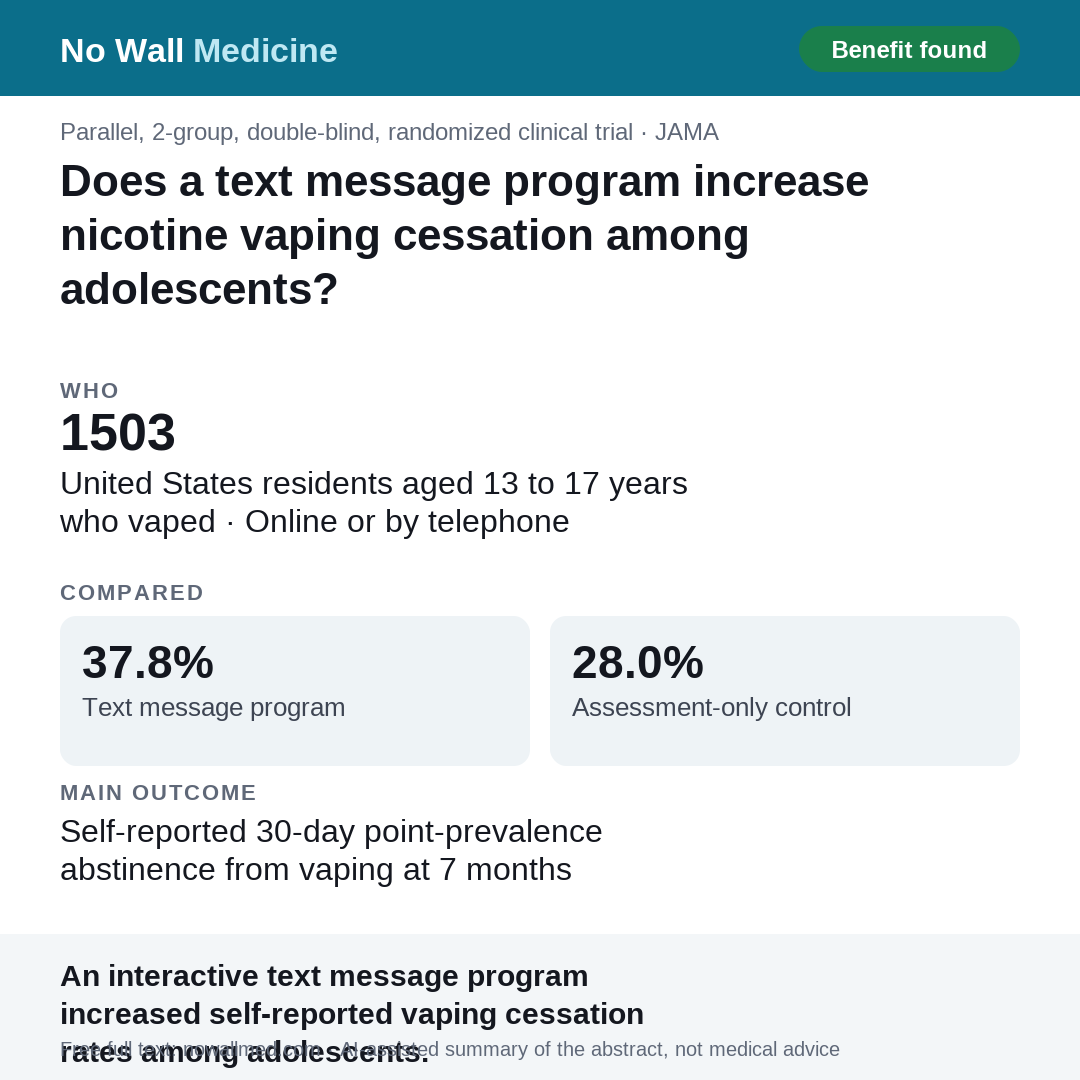
A Vaping Cessation Text Message Program for Adolescent E-Cigarette Users: A Randomized Clinical Trial
Parallel, 2-group, double-blind, randomized clinical trialBenefit found
Does a text message program increase nicotine vaping cessation among adolescents?
Who
1503
United States residents aged 13 to 17 years who vaped · Online or by telephone
Compared
37.8%Text message program (95% CI, 34.4%-41.3%)
28.0%Assessment-only control (95% CI, 24.9%-31.3%)
Main outcome
Self-reported 30-day point-prevalence abstinence from vaping at 7 months
Result: relative risk, 1.35 (95% CI, 1.17-1.57)
Bottom line: An interactive text message program increased self-reported vaping cessation rates among adolescents.
JAMA · 2024-08-07Download image
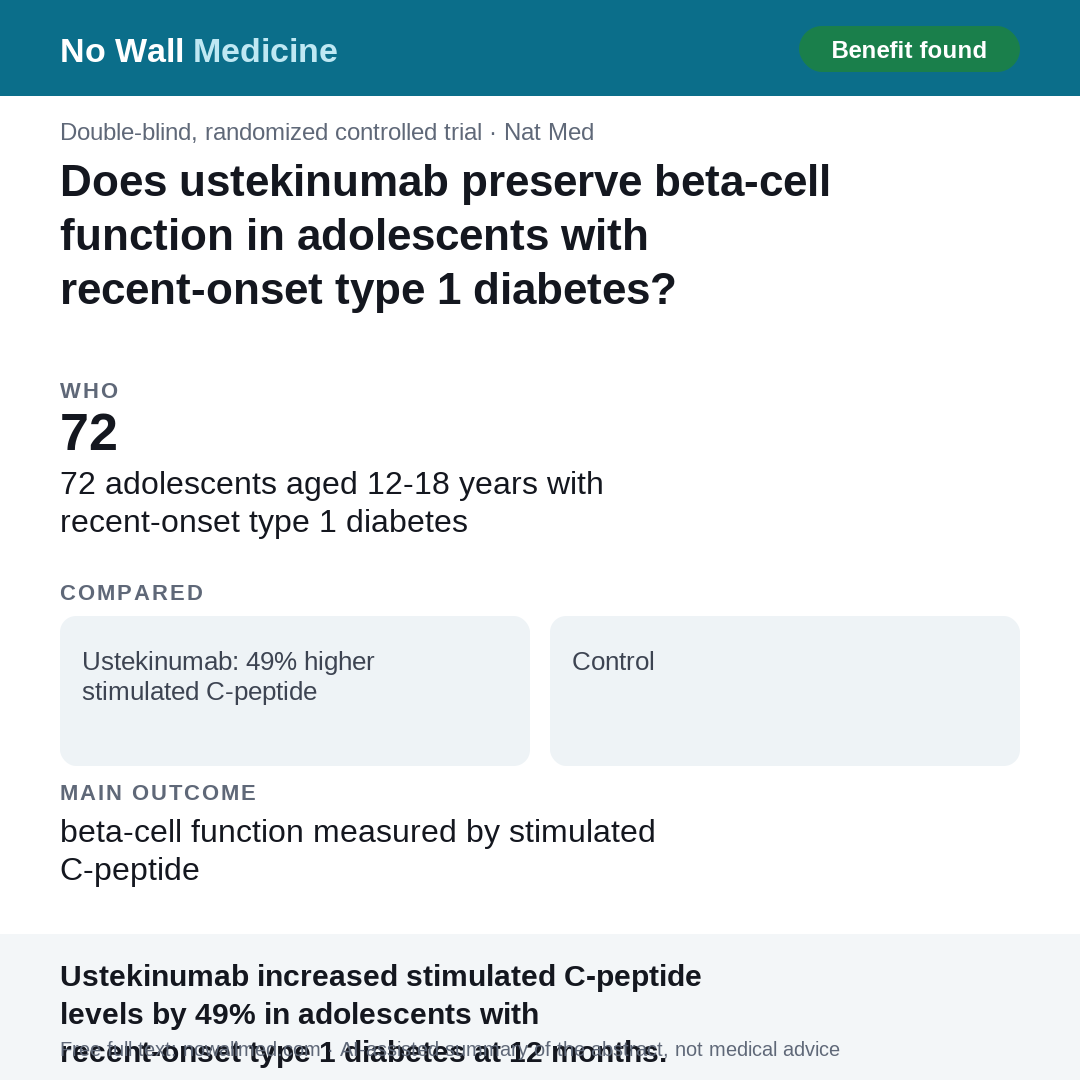
Ustekinumab for type 1 diabetes in adolescents: a multicenter, double-blind, randomized phase 2 trial
Double-blind, randomized controlled trialBenefit found
Does ustekinumab preserve beta-cell function in adolescents with recent-onset type 1 diabetes?
Who
72
72 adolescents aged 12-18 years with recent-onset type 1 diabetes
Compared
Ustekinumab: 49% higher stimulated C-peptide
Control
Main outcome
beta-cell function measured by stimulated C-peptide
Bottom line: Ustekinumab increased stimulated C-peptide levels by 49% in adolescents with recent-onset type 1 diabetes at 12 months.
Nat Med · 2024-07-30Download image
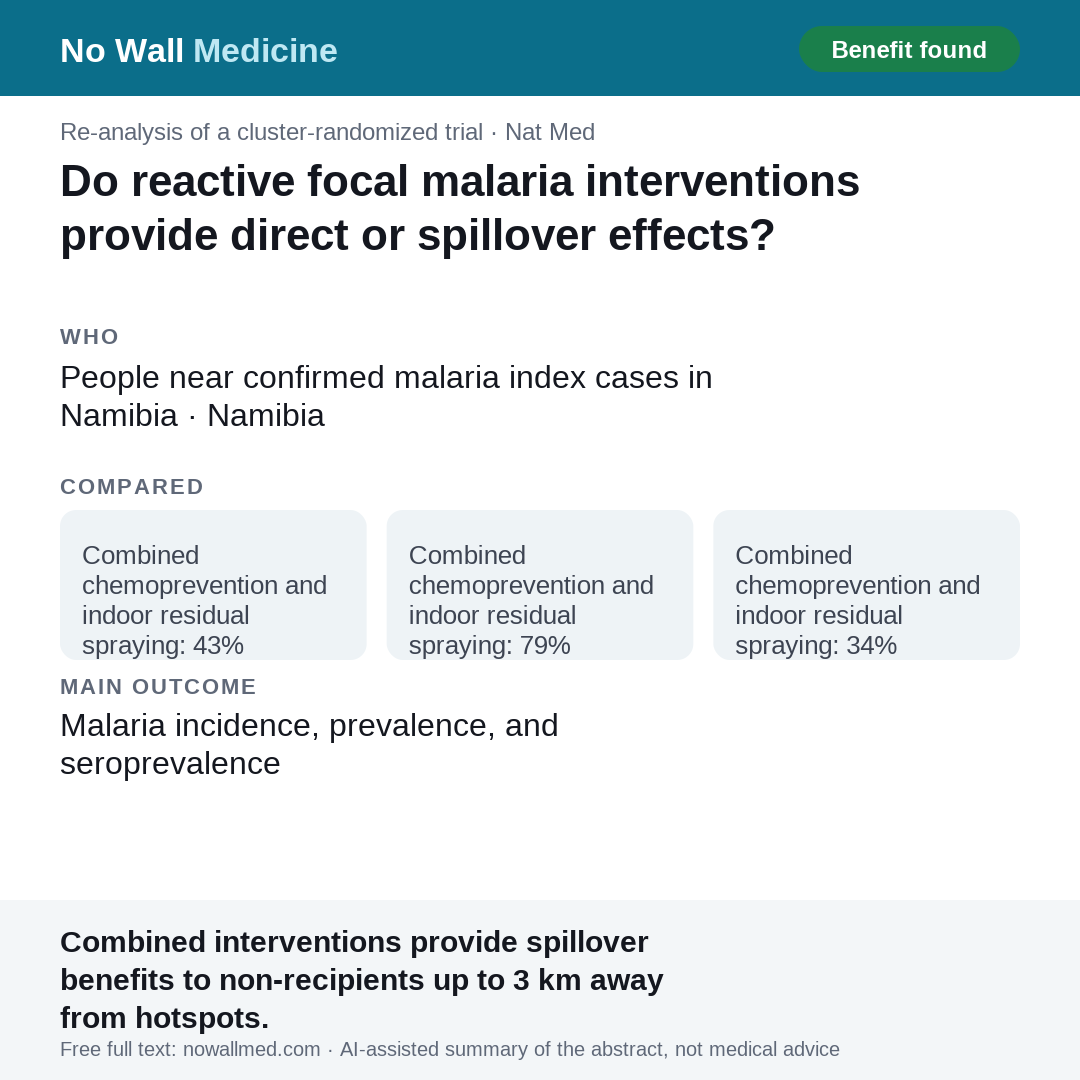
Extension of efficacy range for targeted malaria-elimination interventions due to spillover effects
Re-analysis of a cluster-randomized trialBenefit found
Do reactive focal malaria interventions provide direct or spillover effects?
Who
People near confirmed malaria index cases in Namibia · Namibia
Compared
Combined chemoprevention and indoor residual spraying: 43% reduction in incidence among non-recipients within 1 km
Combined chemoprevention and indoor residual spraying: 79% reduction in infection prevalence among non-recipients within 3 km
Combined chemoprevention and indoor residual spraying: 34% reduction in seroprevalence among non-recipients within 3 km
Main outcome
Malaria incidence, prevalence, and seroprevalence
Bottom line: Combined interventions provide spillover benefits to non-recipients up to 3 km away from hotspots.
Nat Med · 2024-07-04Download image
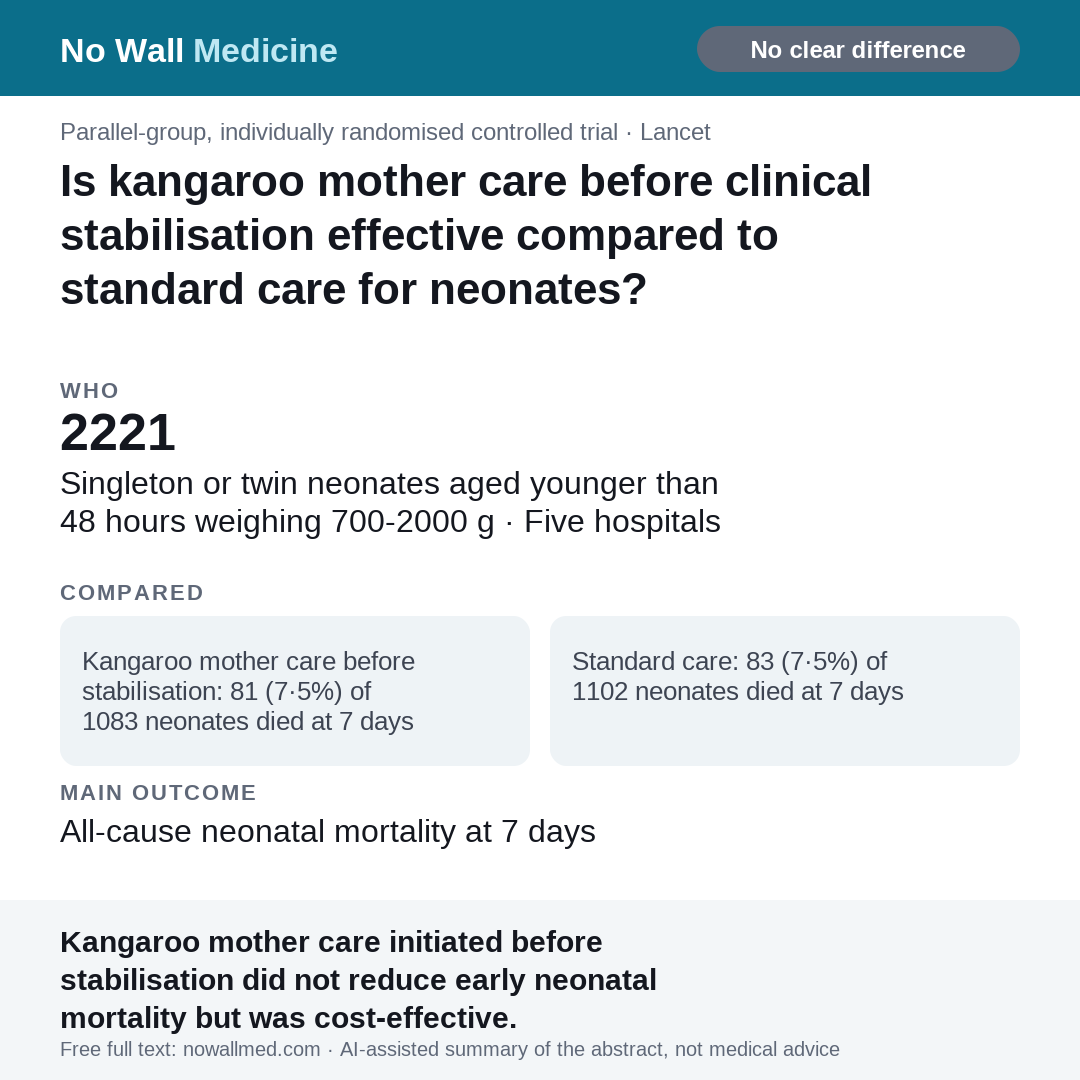
Effectiveness of kangaroo mother care before clinical stabilisation versus standard care among neonates at five hospitals in Uganda (OMWaNA): a parallel-group, individually randomised controlled trial and economic evaluation
Parallel-group, individually randomised controlled trialNo clear difference
Is kangaroo mother care before clinical stabilisation effective compared to standard care for neonates?
Who
2221
Singleton or twin neonates aged younger than 48 hours weighing 700-2000 g · Five hospitals in Uganda
Compared
Kangaroo mother care before stabilisation: 81 (7·5%) of 1083 neonates died at 7 days
Standard care: 83 (7·5%) of 1102 neonates died at 7 days
Main outcome
All-cause neonatal mortality at 7 days
Result: relative risk 0·97 (95% CI 0·74-1·28)
Bottom line: Kangaroo mother care initiated before stabilisation did not reduce early neonatal mortality but was cost-effective.
Funded by: Joint Global Health Trials scheme, UKRI Medical Research Council, Wellcome Trust, and NIH
Lancet · 2024-05-13Download image
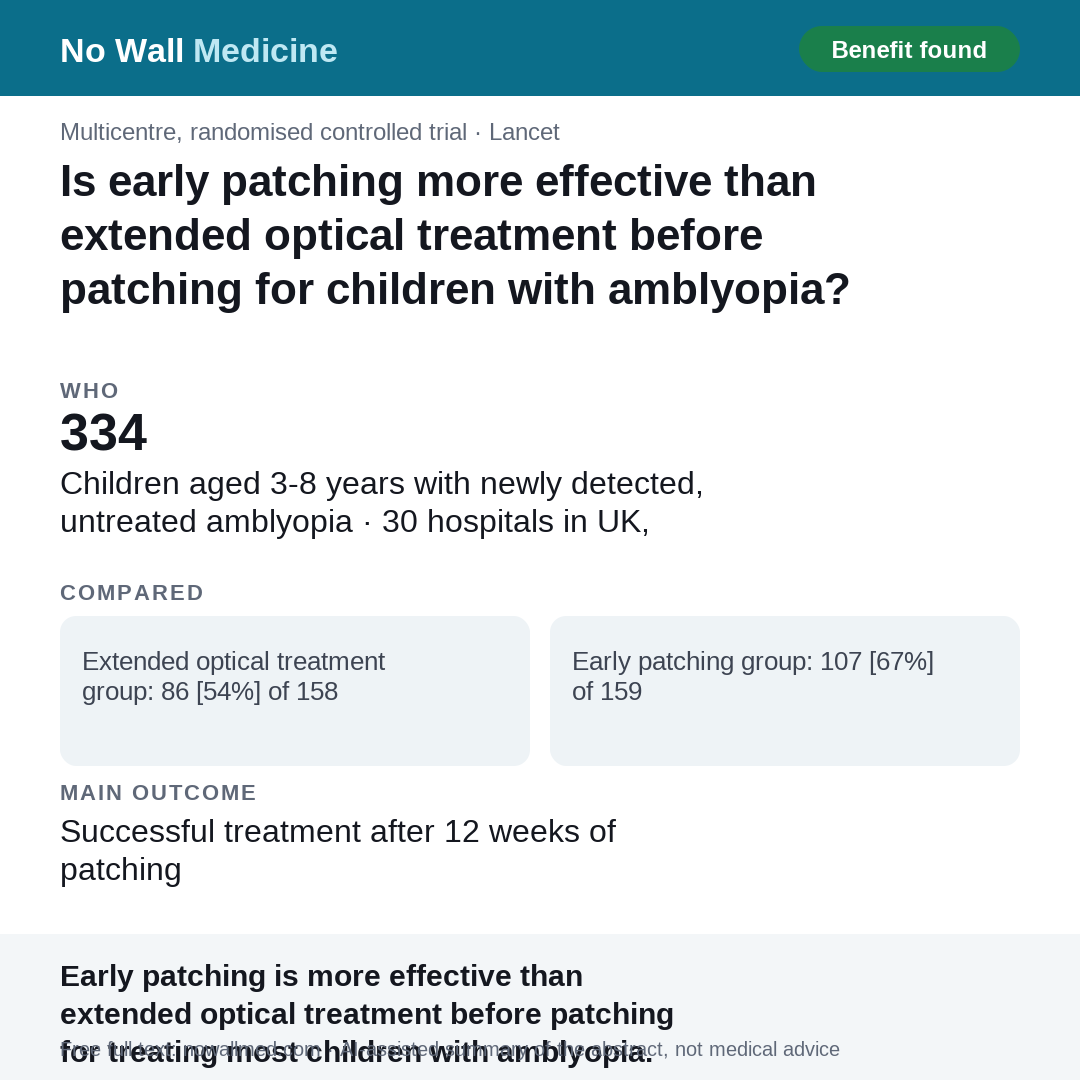
Extended optical treatment versus early patching with an intensive patching regimen in children with amblyopia in Europe (EuPatch): a multicentre, randomised controlled trial
Multicentre, randomised controlled trialBenefit found
Is early patching more effective than extended optical treatment before patching for children with amblyopia?
Who
334
Children aged 3-8 years with newly detected, untreated amblyopia · 30 hospitals in UK, Greece, Austria, Germany, and Switzerland
Compared
Extended optical treatment group: 86 [54%] of 158
Early patching group: 107 [67%] of 159
Main outcome
Successful treatment after 12 weeks of patching
Result: 13% difference; p=0·019
Bottom line: Early patching is more effective than extended optical treatment before patching for treating most children with amblyopia.
Funded by: Action Medical Research, NIHR Clinical Research Network, and Ulverscroft Foundation
Lancet · 2024-05-05Download image
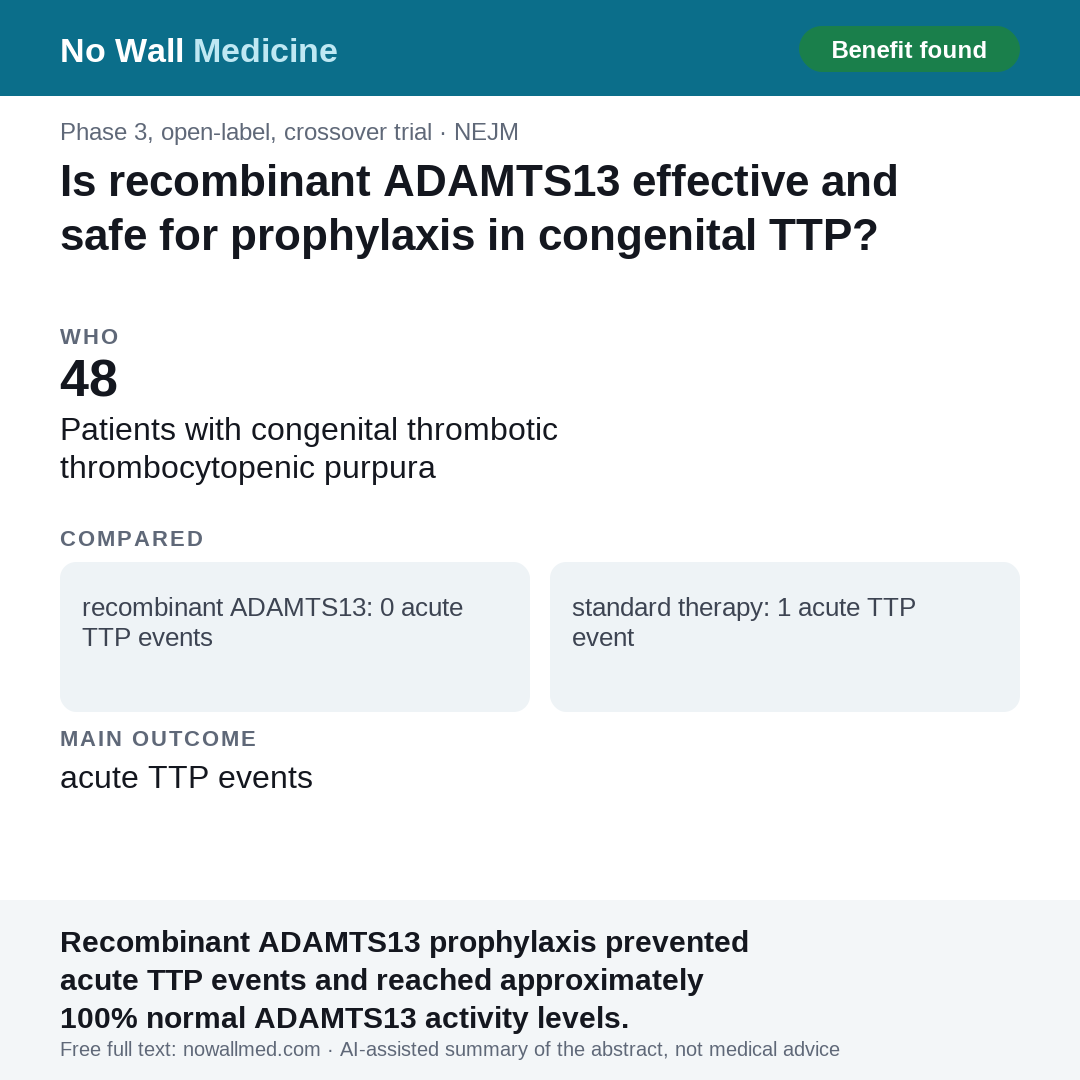
Recombinant ADAMTS13 in Congenital Thrombotic Thrombocytopenic Purpura
Phase 3, open-label, crossover trialBenefit found
Is recombinant ADAMTS13 effective and safe for prophylaxis in congenital TTP?
Who
48
Patients with congenital thrombotic thrombocytopenic purpura
Compared
recombinant ADAMTS13: 0 acute TTP events
standard therapy: 1 acute TTP event
Main outcome
acute TTP events
Bottom line: Recombinant ADAMTS13 prophylaxis prevented acute TTP events and reached approximately 100% normal ADAMTS13 activity levels.
Funded by: Takeda Development Center Americas and Baxalta Innovations
NEJM · 2024-05-02Download image
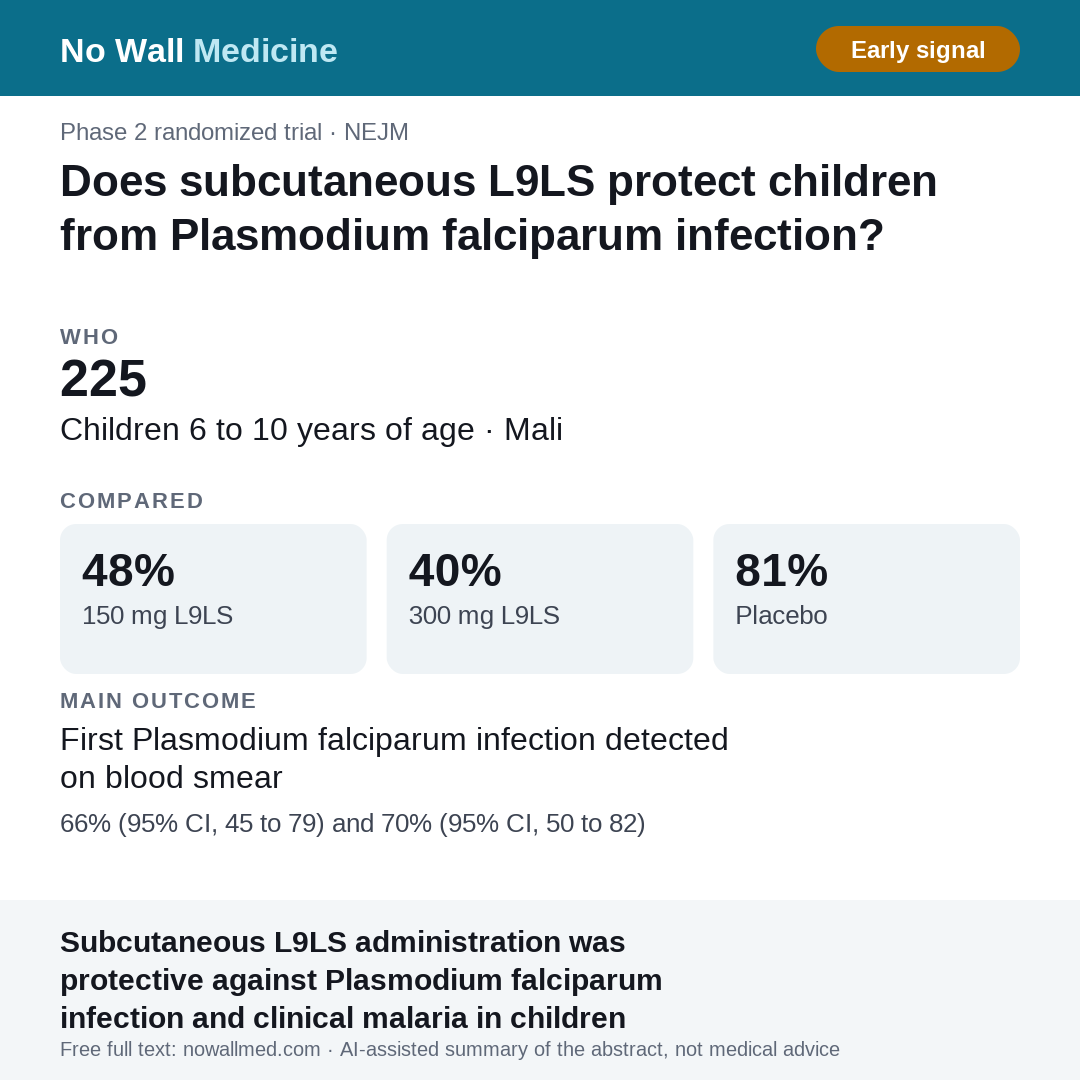
Subcutaneous Administration of a Monoclonal Antibody to Prevent Malaria
Phase 2 randomized trialBenefit found
Does subcutaneous L9LS protect children from Plasmodium falciparum infection?
Who
225
Children 6 to 10 years of age · Mali
Compared
48%150 mg L9LS
40%300 mg L9LS
81%Placebo
Main outcome
First Plasmodium falciparum infection detected on blood smear
Result: 66% (95% CI, 45 to 79) and 70% (95% CI, 50 to 82)
Bottom line: Subcutaneous L9LS administration was protective against Plasmodium falciparum infection and clinical malaria in children over 6 months.
Funded by: National Institute of Allergy and Infectious Diseases
NEJM · 2024-04-26Download image