Visual abstracts
New randomized trials and meta-analyses from leading journals at a glance: who was studied, what was compared, and what was found. Every paper is free to read in full.
All specialtiesCardiology 4877Oncology 4138Gastroenterology & Hepatology 1942Infectious Disease 3837Neurology 1905Psychiatry & Mental Health 2273Pulmonology 2143Critical Care 1365Endocrinology & Diabetes 2580Pediatrics 2980Surgery 2559Orthopedics & Sports Medicine 931Neurosurgery 537Cardiothoracic & Vascular Surgery 674Plastic & Reconstructive Surgery 591Nephrology 1133Rheumatology 823Hematology 1109Dermatology 621Ophthalmology 543Obstetrics & Gynecology 1686Public & Global Health 1058Radiology & Imaging 648Anesthesiology 986Urology 764ENT (Otolaryngology) 503Emergency Medicine 511Allergy & Immunology 313Geriatrics 981Family Medicine & Primary Care 562Medical Genetics & Genomics 676Pathology & Laboratory Medicine 159Physical Medicine & Rehabilitation 757Palliative Care 444Nutrition 1588Digital Health & AI 2201General Medicine 321
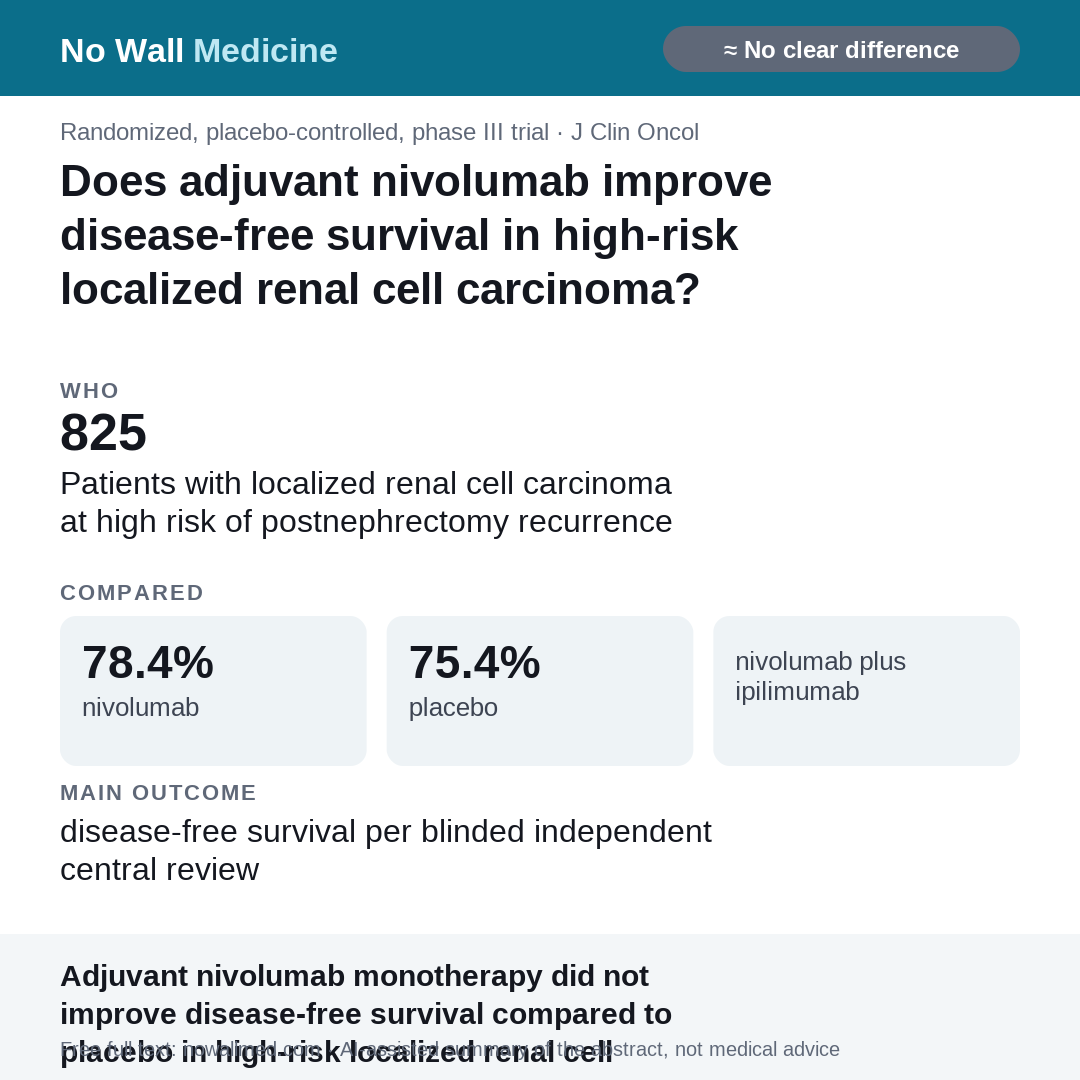
Adjuvant Nivolumab for Localized Renal Cell Carcinoma at High Risk of Recurrence After Nephrectomy: Part B of the Randomized, Placebo-Controlled, Phase III CheckMate 914 Trial
Randomized, placebo-controlled, phase III trialNo clear difference
Does adjuvant nivolumab improve disease-free survival in high-risk localized renal cell carcinoma?
Who
825
Patients with localized renal cell carcinoma at high risk of postnephrectomy recurrence
Compared
78.4%nivolumab
75.4%placebo
nivolumab plus ipilimumab
Main outcome
disease-free survival per blinded independent central review
Result: hazard ratio 0.87 (95% CI 0.62 to 1.21)
Bottom line: Adjuvant nivolumab monotherapy did not improve disease-free survival compared to placebo in high-risk localized renal cell carcinoma.
J Clin Oncol · 2024-09-20Download image
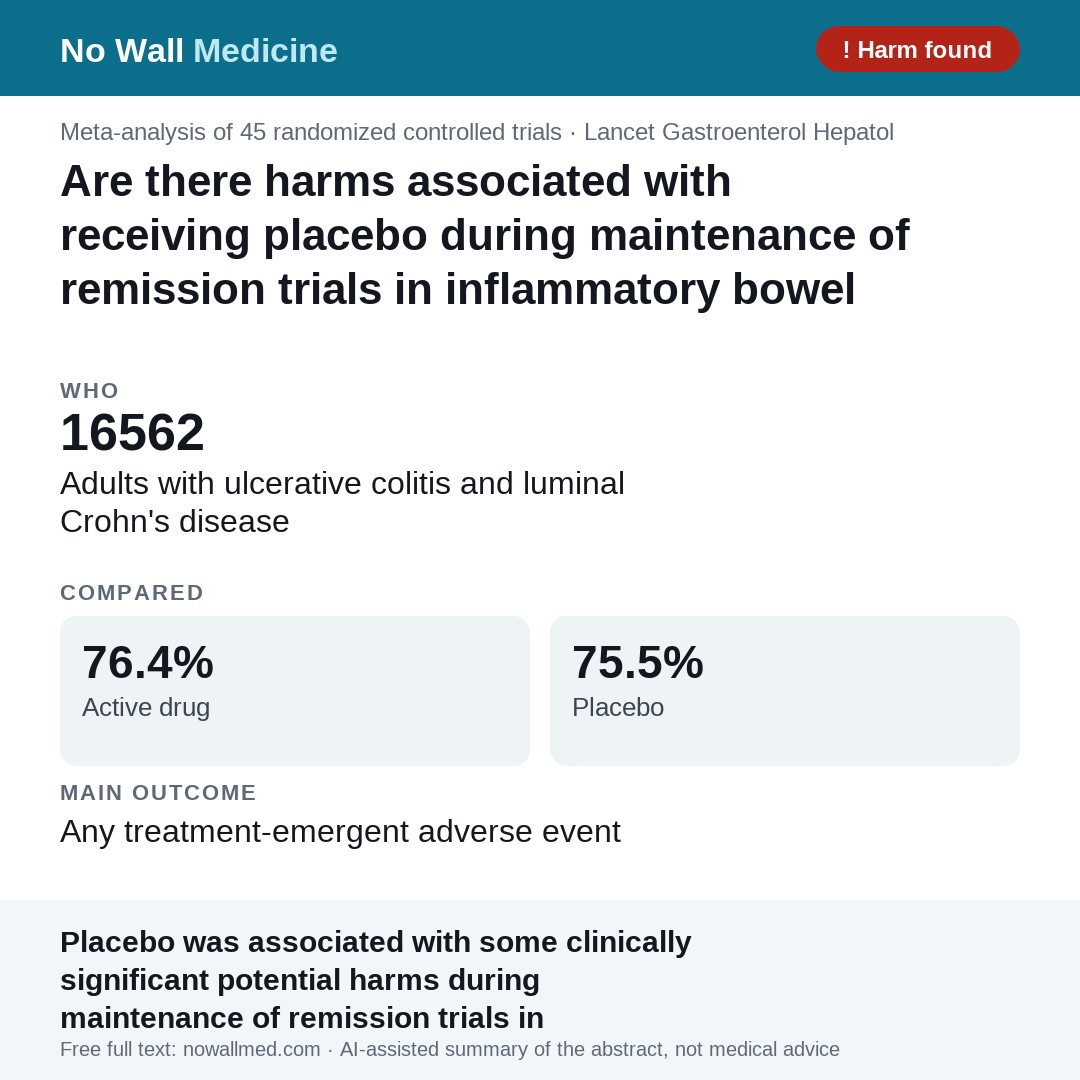
Harms with placebo in trials of biological therapies and small molecules as maintenance therapy in inflammatory bowel disease: a systematic review and meta-analysis
Meta-analysis of 45 randomized controlled trialsHarm found
Are there harms associated with receiving placebo during maintenance of remission trials in inflammatory bowel disease?
Who
16562
Adults with ulcerative colitis and luminal Crohn's disease
Compared
76.4%Active drug
75.5%Placebo
Main outcome
Any treatment-emergent adverse event
Result: RR 1.01, 95% CI 0.99-1.04
Bottom line: Placebo was associated with some clinically significant potential harms during maintenance of remission trials in inflammatory bowel disease.
Lancet Gastroenterol Hepatol · 2024-09-20Download image
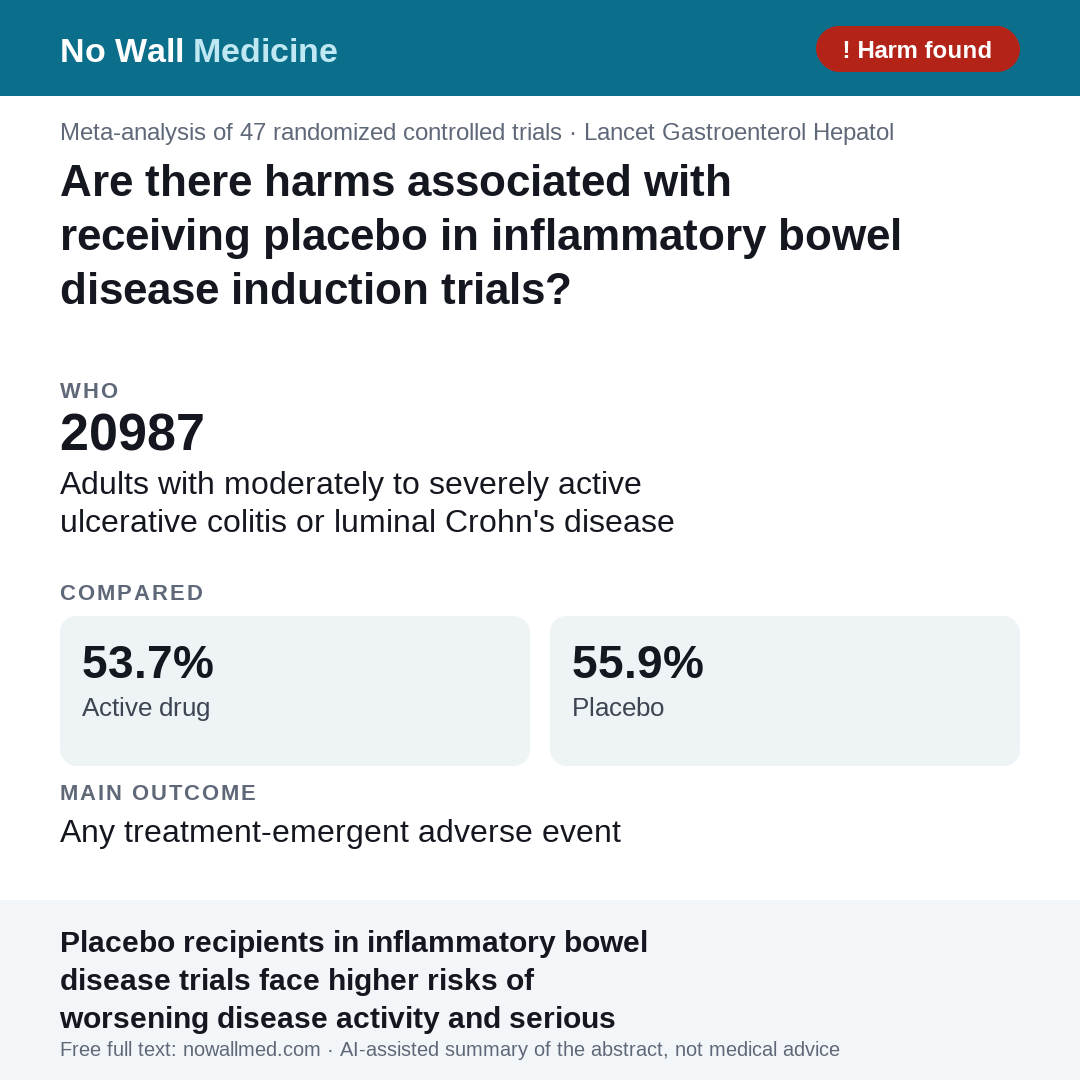
Harms with placebo in trials of biological therapies and small molecules as induction therapy in inflammatory bowel disease: a systematic review and meta-analysis
Meta-analysis of 47 randomized controlled trialsHarm found
Are there harms associated with receiving placebo in inflammatory bowel disease induction trials?
Who
20987
Adults with moderately to severely active ulcerative colitis or luminal Crohn's disease
Compared
53.7%Active drug
55.9%Placebo
Main outcome
Any treatment-emergent adverse event
Result: relative risk 0.97 (95% CI 0.94-1.00)
Bottom line: Placebo recipients in inflammatory bowel disease trials face higher risks of worsening disease activity and serious adverse events.
Lancet Gastroenterol Hepatol · 2024-09-20Download image
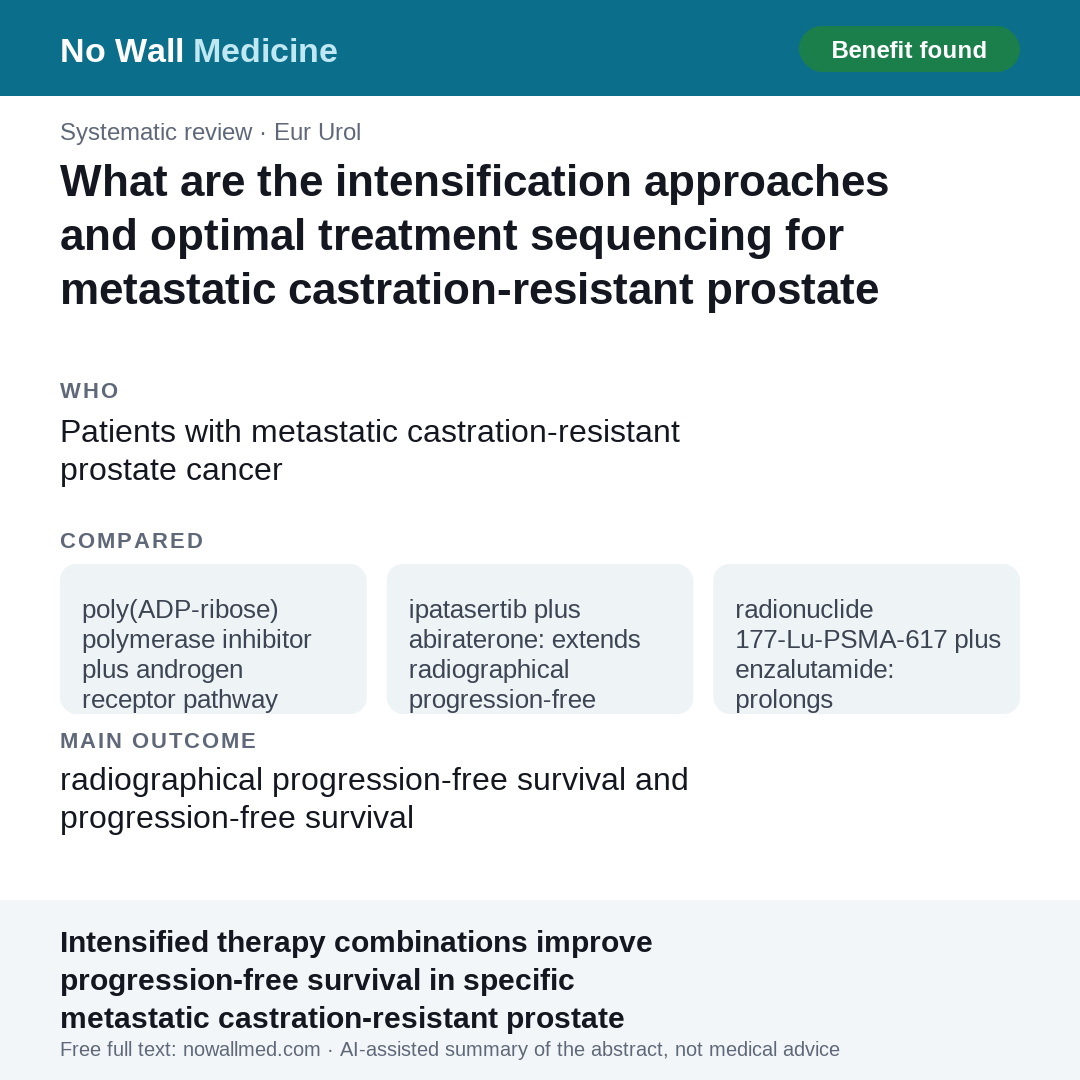
Intensification Approaches and Treatment Sequencing in Metastatic Castration-resistant Prostate Cancer: A Systematic Review
Systematic reviewBenefit found
What are the intensification approaches and optimal treatment sequencing for metastatic castration-resistant prostate cancer?
Who
Patients with metastatic castration-resistant prostate cancer
Compared
poly(ADP-ribose) polymerase inhibitor plus androgen receptor pathway inhibitor: improves radiographical progression-free survival
ipatasertib plus abiraterone: extends radiographical progression-free survival
radionuclide 177-Lu-PSMA-617 plus enzalutamide: prolongs progression-free survival
Main outcome
radiographical progression-free survival and progression-free survival
Bottom line: Intensified therapy combinations improve progression-free survival in specific metastatic castration-resistant prostate cancer subgroups.
Eur Urol · 2024-09-20Download image
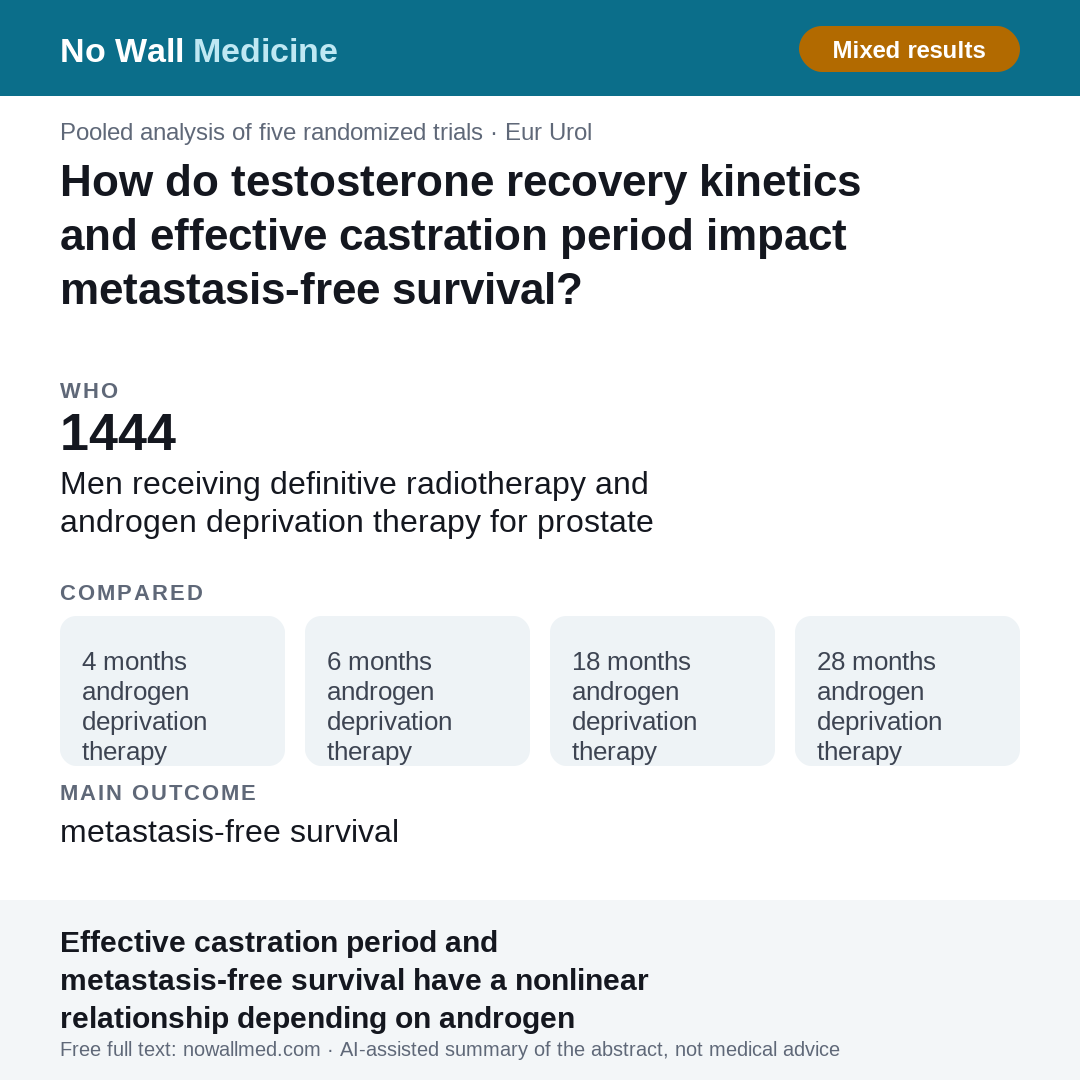
Testosterone Recovery Following Androgen Suppression and Prostate Radiotherapy (TRANSPORT): A Pooled Analysis of Five Randomized Trials from the Meta-Analysis of Randomized Trials in Cancer of the Prostate (MARCAP) Consortium
Pooled analysis of five randomized trialsMixed results
How do testosterone recovery kinetics and effective castration period impact metastasis-free survival?
Who
1444
Men receiving definitive radiotherapy and androgen deprivation therapy for prostate cancer
Compared
4 months androgen deprivation therapy
6 months androgen deprivation therapy
18 months androgen deprivation therapy
28 months androgen deprivation therapy
Main outcome
metastasis-free survival
Bottom line: Effective castration period and metastasis-free survival have a nonlinear relationship depending on androgen deprivation therapy duration.
Eur Urol · 2024-09-20Download image
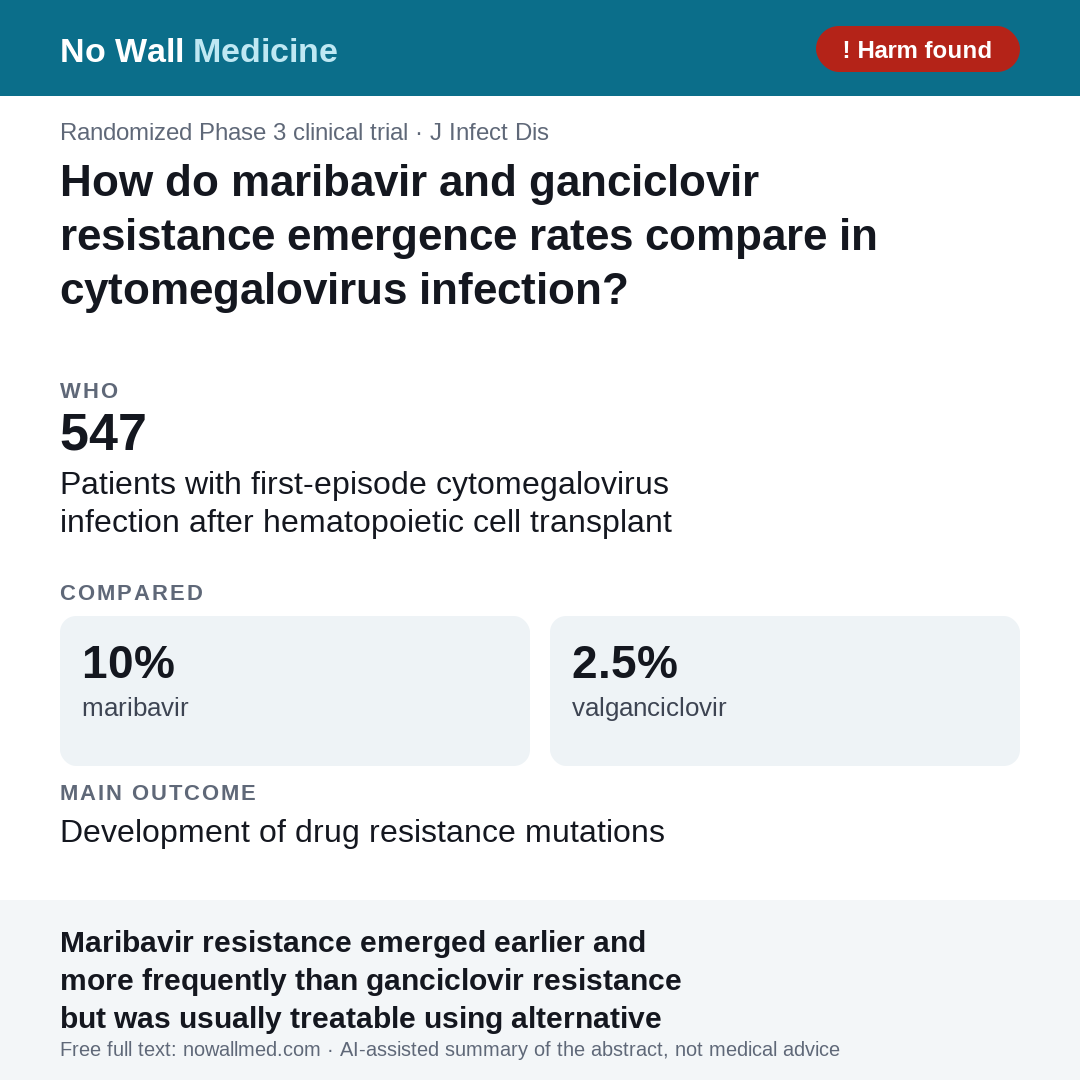
Comparative Emergence of Maribavir and Ganciclovir Resistance in a Randomized Phase 3 Clinical Trial for Treatment of Cytomegalovirus Infection
Randomized Phase 3 clinical trialHarm found
How do maribavir and ganciclovir resistance emergence rates compare in cytomegalovirus infection?
Who
547
Patients with first-episode cytomegalovirus infection after hematopoietic cell transplant
Compared
10%maribavir
2.5%valganciclovir
Main outcome
Development of drug resistance mutations
Bottom line: Maribavir resistance emerged earlier and more frequently than ganciclovir resistance but was usually treatable using alternative therapy.
J Infect Dis · 2024-09-20Download image
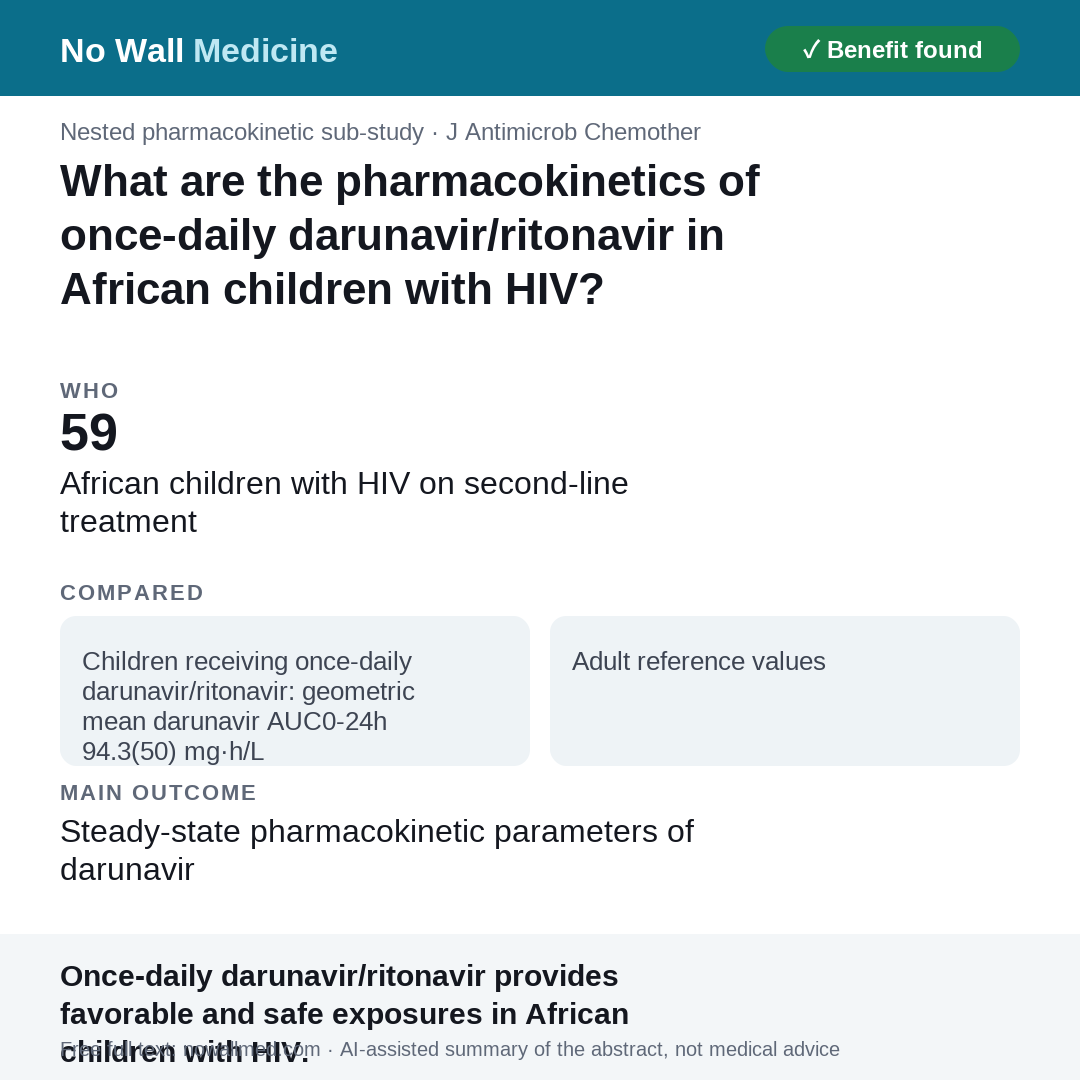
Pharmacokinetics of once-daily darunavir/ritonavir in second-line treatment in African children with HIV
Nested pharmacokinetic sub-studyBenefit found
What are the pharmacokinetics of once-daily darunavir/ritonavir in African children with HIV?
Who
59
African children with HIV on second-line treatment
Compared
Children receiving once-daily darunavir/ritonavir: geometric mean darunavir AUC0-24h 94.3(50) mg·h/L
Adult reference values
Main outcome
Steady-state pharmacokinetic parameters of darunavir
Bottom line: Once-daily darunavir/ritonavir provides favorable and safe exposures in African children with HIV.
J Antimicrob Chemother · 2024-09-20Download image
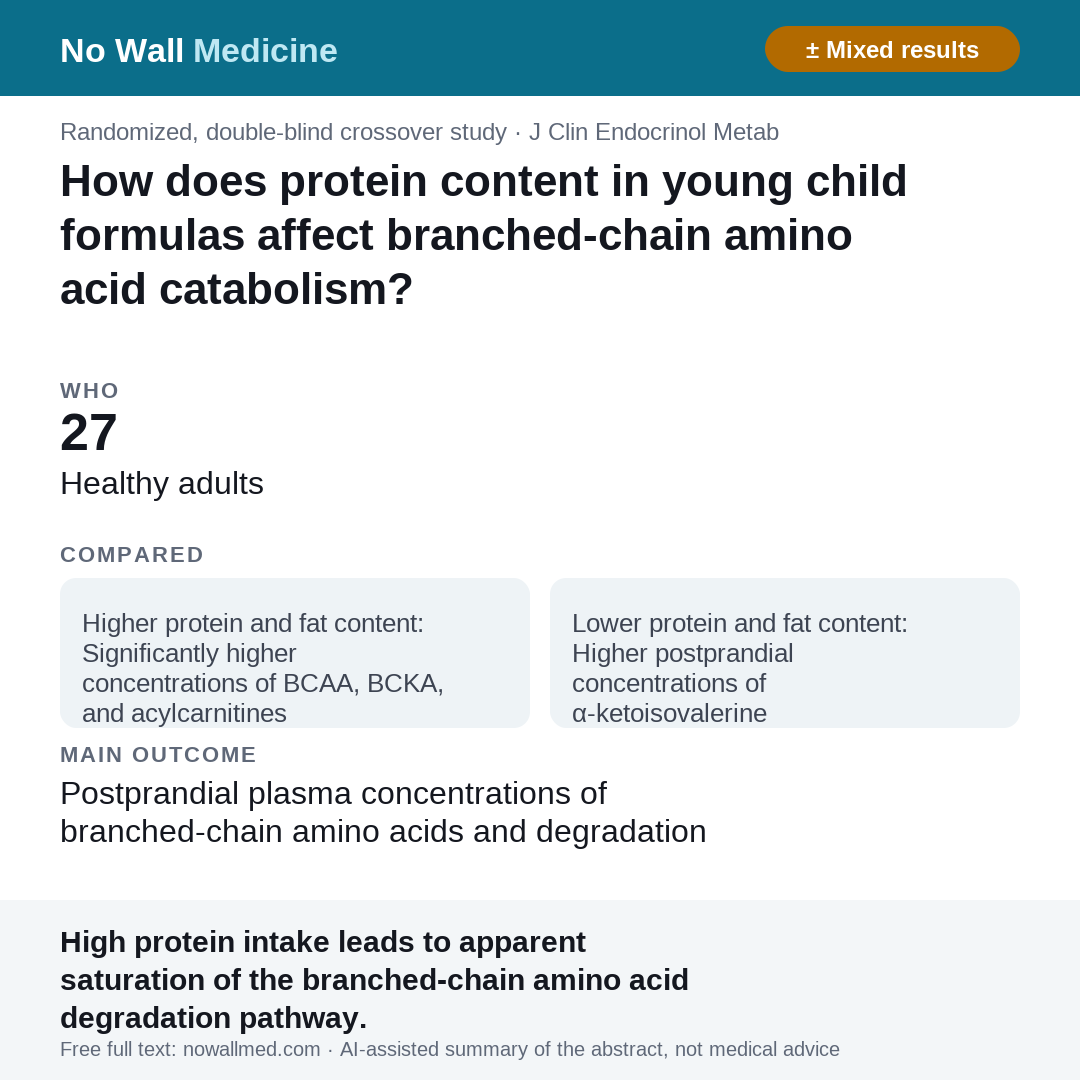
Apparent Saturation of Branched-Chain Amino Acid Catabolism After High Dietary Milk Protein Intake in Healthy Adults
Randomized, double-blind crossover studyMixed results
How does protein content in young child formulas affect branched-chain amino acid catabolism?
Who
27
Healthy adults
Compared
Higher protein and fat content: Significantly higher concentrations of BCAA, BCKA, and acylcarnitines
Lower protein and fat content: Higher postprandial concentrations of α-ketoisovalerine
Main outcome
Postprandial plasma concentrations of branched-chain amino acids and degradation products
Bottom line: High protein intake leads to apparent saturation of the branched-chain amino acid degradation pathway.
J Clin Endocrinol Metab · 2024-09-20Download image
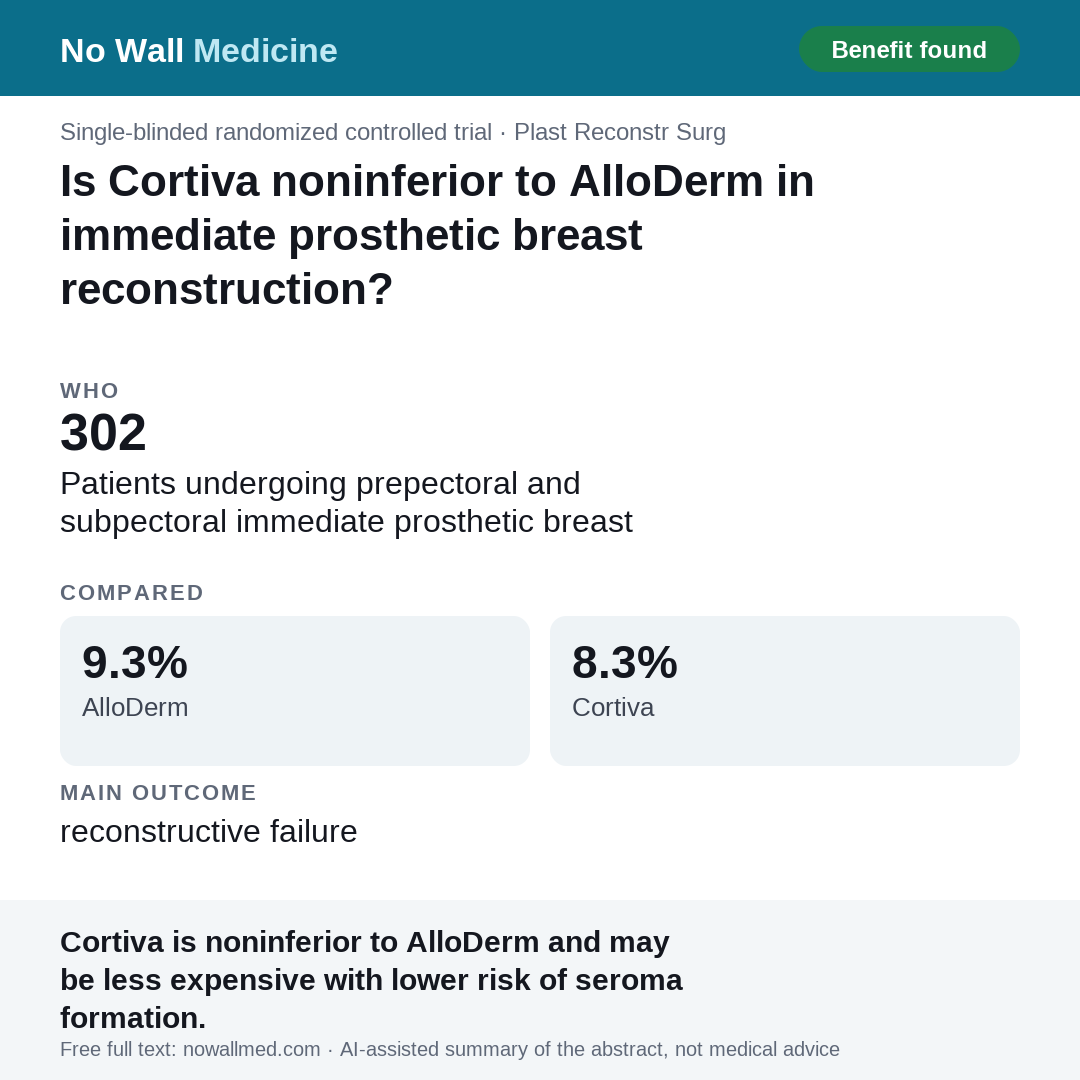
Cortiva versus AlloDerm in Prepectoral and Partial Submuscular Implant-Based Breast Reconstruction: A Randomized Clinical Trial
Single-blinded randomized controlled trialBenefit found
Is Cortiva noninferior to AlloDerm in immediate prosthetic breast reconstruction?
Who
302
Patients undergoing prepectoral and subpectoral immediate prosthetic breast reconstruction · 2 academic hospitals
Compared
9.3%AlloDerm
8.3%Cortiva
Main outcome
reconstructive failure
Result: odds ratio 1.93 (95% CI 1.01 to 3.67) for seroma
Bottom line: Cortiva is noninferior to AlloDerm and may be less expensive with lower risk of seroma formation.
Plast Reconstr Surg · 2024-09-20Download image
Neural correlates of harm avoidance: a multimodal meta-analysis of brain structural and resting-state functional neuroimaging studies
Multimodal meta-analysisBenefit found
What are the structural and functional brain correlates of harm avoidance?
Who
3053
3053 healthy participants without psychiatric or neurological disorders
Compared
Structural neuroimaging: parietal and temporal cortices
Functional neuroimaging: prefrontal, temporal and parietal gray matter
Main outcome
Brain structural and resting-state functional neuroimaging correlates
Bottom line: Harm avoidance correlates with brain volume in parietal and temporal cortices and functional activity in prefrontal, temporal, and parietal areas.
Transl Psychiatry · 2024-09-20Download image

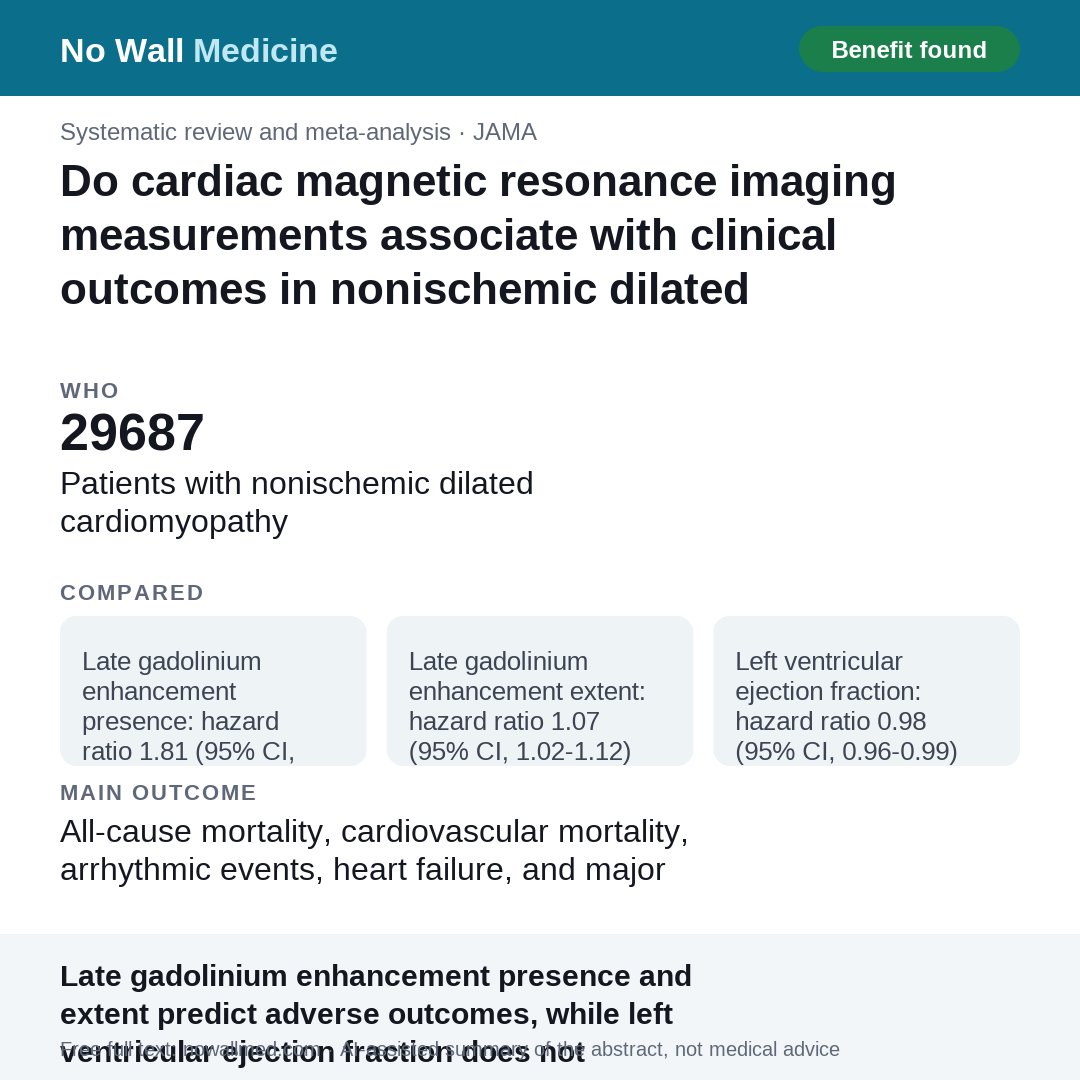
Risk Stratification in Nonischemic Dilated Cardiomyopathy Using CMR Imaging: A Systematic Review and Meta-Analysis
Systematic review and meta-analysisBenefit found
Do cardiac magnetic resonance imaging measurements associate with clinical outcomes in nonischemic dilated cardiomyopathy?
Who
29687
Patients with nonischemic dilated cardiomyopathy
Compared
Late gadolinium enhancement presence: hazard ratio 1.81 (95% CI, 1.60-2.04) for all-cause mortality
Late gadolinium enhancement extent: hazard ratio 1.07 (95% CI, 1.02-1.12) for all-cause mortality
Left ventricular ejection fraction: hazard ratio 0.98 (95% CI, 0.96-0.99) for major adverse cardiac events
Main outcome
All-cause mortality, cardiovascular mortality, arrhythmic events, heart failure, and major adverse cardiac events
Bottom line: Late gadolinium enhancement presence and extent predict adverse outcomes, while left ventricular ejection fraction does not predict mortality.
Limitation: Limited data precluded definitive analysis for native T1 relaxation times, global longitudinal strain, and extracellular volume fraction mortality.
JAMA · 2024-09-19Download image
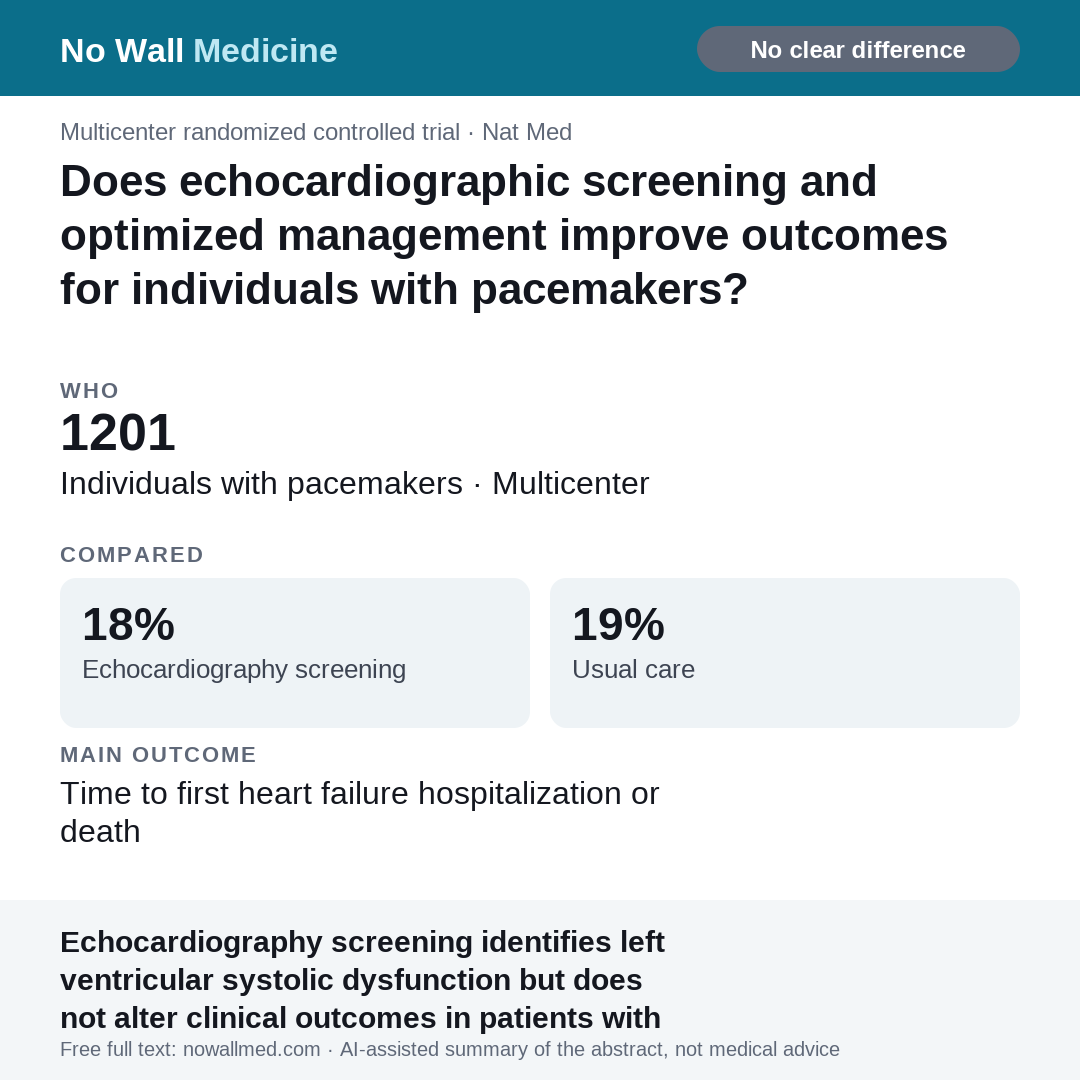
Echocardiographic screening for heart failure and optimization of the care pathway for individuals with pacemakers: a randomized controlled trial
Multicenter randomized controlled trialNo clear difference
Does echocardiographic screening and optimized management improve outcomes for individuals with pacemakers?
Who
1201
Individuals with pacemakers · Multicenter
Compared
18%Echocardiography screening (106/600)
19%Usual care (115/601)
Main outcome
Time to first heart failure hospitalization or death
Result: hazard ratio 0.89 (95% confidence interval 0.69, 1.17)
Bottom line: Echocardiography screening identifies left ventricular systolic dysfunction but does not alter clinical outcomes in patients with pacemakers.
Nat Med · 2024-09-19Download image
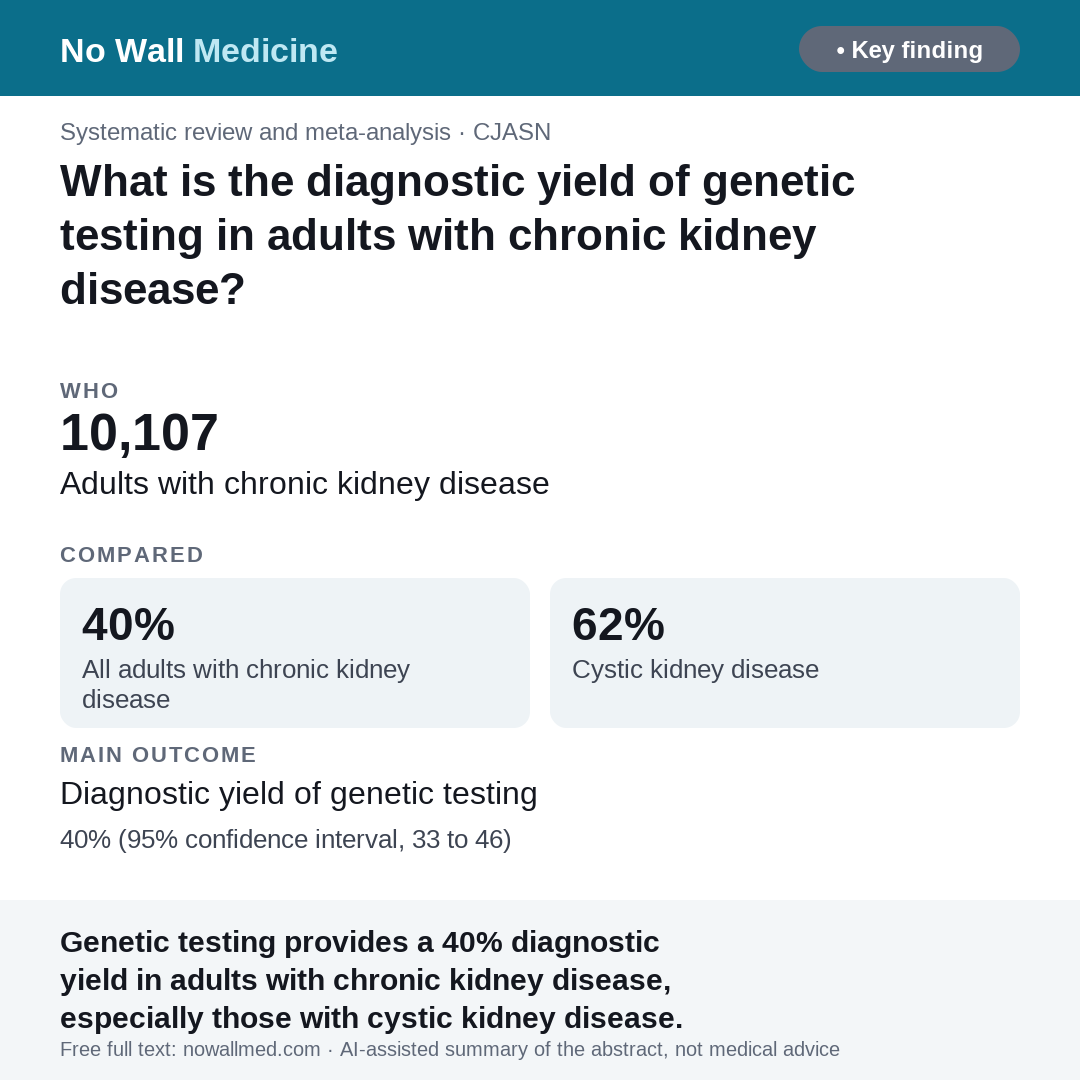
Utility of Genetic Testing in Adults with CKD: A Systematic Review and Meta-Analysis
Systematic review and meta-analysisBenefit found
What is the diagnostic yield of genetic testing in adults with chronic kidney disease?
Who
10,107
Adults with chronic kidney disease
Compared
40%All adults with chronic kidney disease (95% confidence interval, 33 to 46)
62%Cystic kidney disease (95% confidence interval, 57 to 68)
Main outcome
Diagnostic yield of genetic testing
Result: 40% (95% confidence interval, 33 to 46)
Bottom line: Genetic testing provides a 40% diagnostic yield in adults with chronic kidney disease, especially those with cystic kidney disease.
Limitation: Heterogeneity in reporting, testing technologies, and cohort characteristics.
CJASN · 2024-09-19Download image
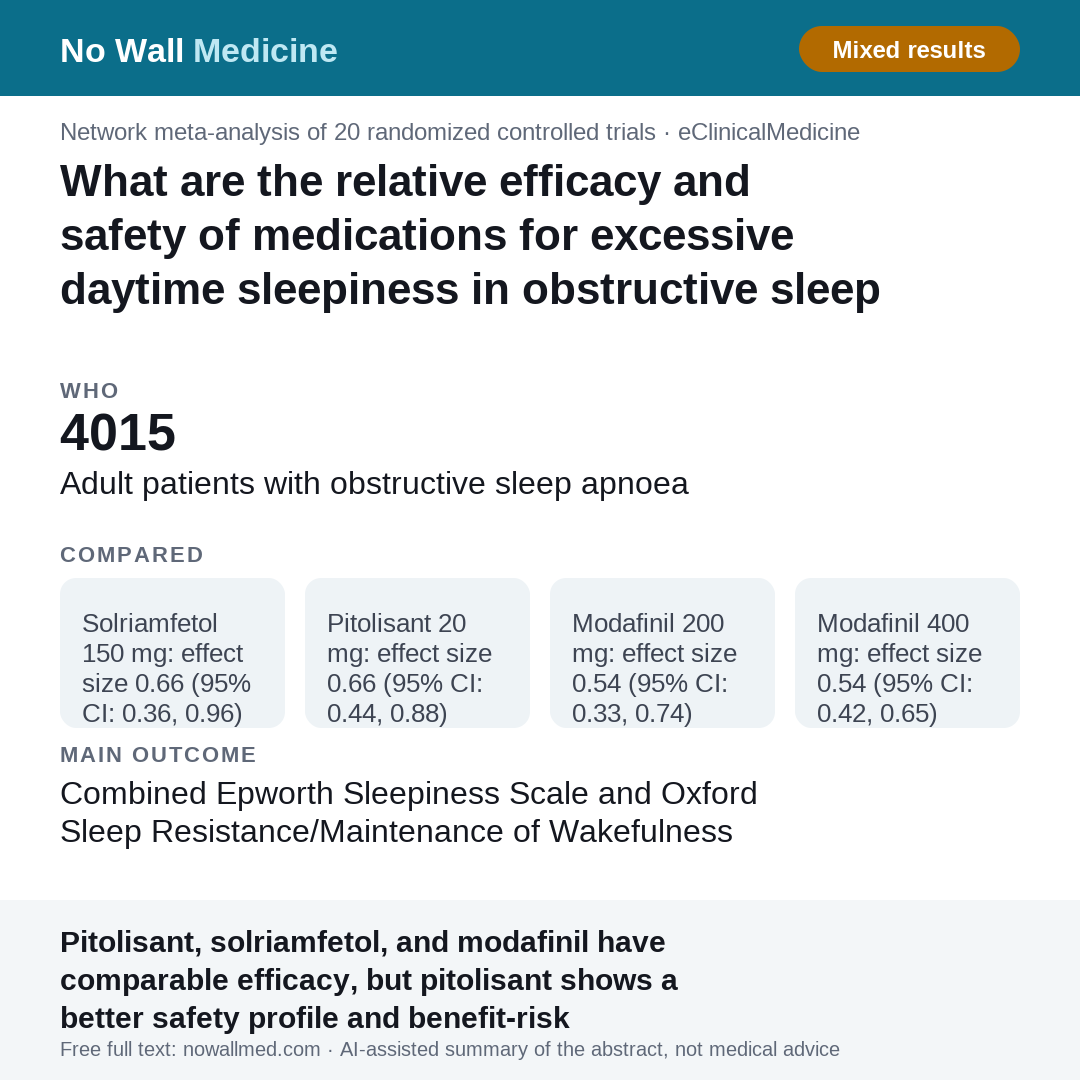
Comparative efficacy, safety and benefit/risk of alerting agents for excessive daytime sleepiness in patients with obstructive sleep apnoea: a network meta-analysis
Network meta-analysis of 20 randomized controlled trialsMixed results
What are the relative efficacy and safety of medications for excessive daytime sleepiness in obstructive sleep apnoea?
Who
4015
Adult patients with obstructive sleep apnoea
Compared
Solriamfetol 150 mg: effect size 0.66 (95% CI: 0.36, 0.96)
Pitolisant 20 mg: effect size 0.66 (95% CI: 0.44, 0.88)
Modafinil 200 mg: effect size 0.54 (95% CI: 0.33, 0.74)
Modafinil 400 mg: effect size 0.54 (95% CI: 0.42, 0.65)
Main outcome
Combined Epworth Sleepiness Scale and Oxford Sleep Resistance/Maintenance of Wakefulness Test Z-scores
Bottom line: Pitolisant, solriamfetol, and modafinil have comparable efficacy, but pitolisant shows a better safety profile and benefit-risk ratio.
Funded by: Bioprojet
eClinicalMedicine · 2024-09-19Download image
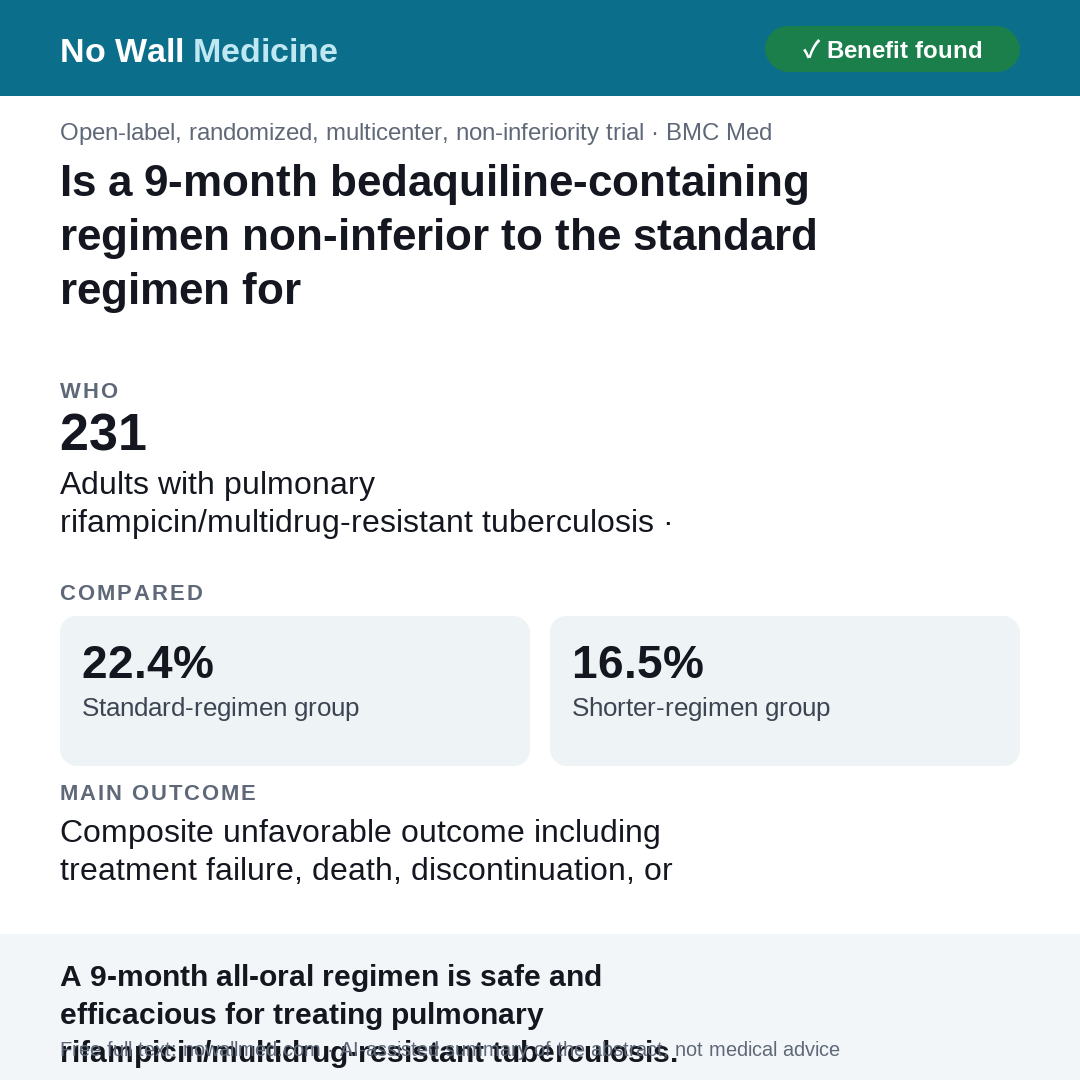
Nine months of bedaquiline, linezolid, levofloxacin, clofazimine, and cycloserine chemotherapy for rifampicin/multidrug-resistant tuberculosis: a multicenter, randomized, open-label non-inferiority trial in China
Open-label, randomized, multicenter, non-inferiority trialBenefit found
Is a 9-month bedaquiline-containing regimen non-inferior to the standard regimen for rifampicin/multidrug-resistant tuberculosis?
Who
231
Adults with pulmonary rifampicin/multidrug-resistant tuberculosis · Sixteen hospitals in China
Compared
22.4%Standard-regimen group
16.5%Shorter-regimen group
Main outcome
Composite unfavorable outcome including treatment failure, death, discontinuation, or loss to follow-up
Result: risk difference 5.9 percentage points (97.5% CI -5.8 to 17.5)
Bottom line: A 9-month all-oral regimen is safe and efficacious for treating pulmonary rifampicin/multidrug-resistant tuberculosis.
BMC Med · 2024-09-19Download image
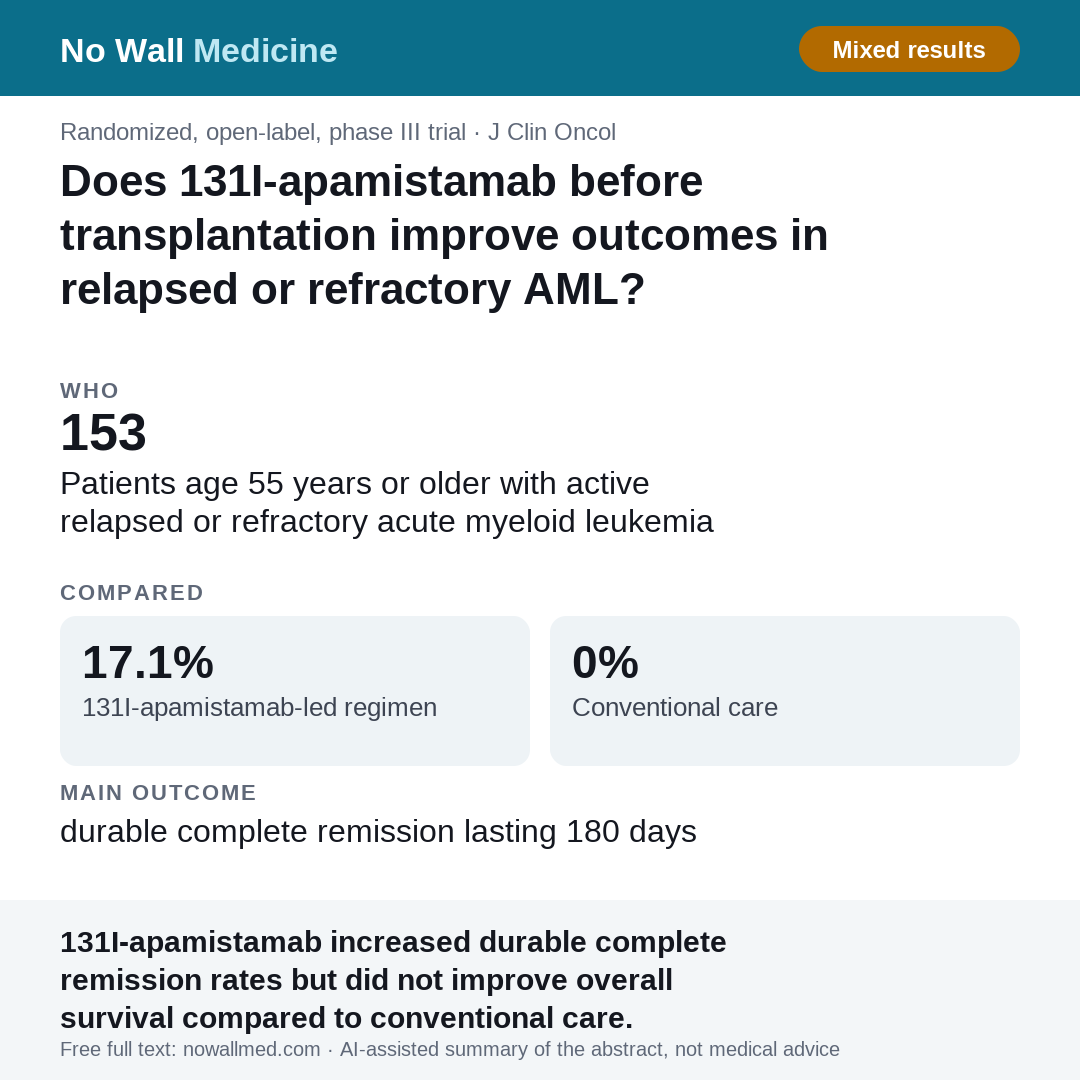
Randomized Phase III SIERRA Trial of 131I-Apamistamab Before Allogeneic Hematopoietic Cell Transplantation Versus Conventional Care for Relapsed/Refractory AML
Randomized, open-label, phase III trialMixed results
Does 131I-apamistamab before transplantation improve outcomes in relapsed or refractory AML?
Who
153
Patients age 55 years or older with active relapsed or refractory acute myeloid leukemia
Compared
17.1%131I-apamistamab-led regimen (95% CI, 9.4 to 27.5)
0%Conventional care (95% CI, 0 to 4.7)
Main outcome
durable complete remission lasting 180 days
Result: hazard ratio 0.23 (95% CI 0.15 to 0.34) for event-free survival
Bottom line: 131I-apamistamab increased durable complete remission rates but did not improve overall survival compared to conventional care.
J Clin Oncol · 2024-09-19Download image
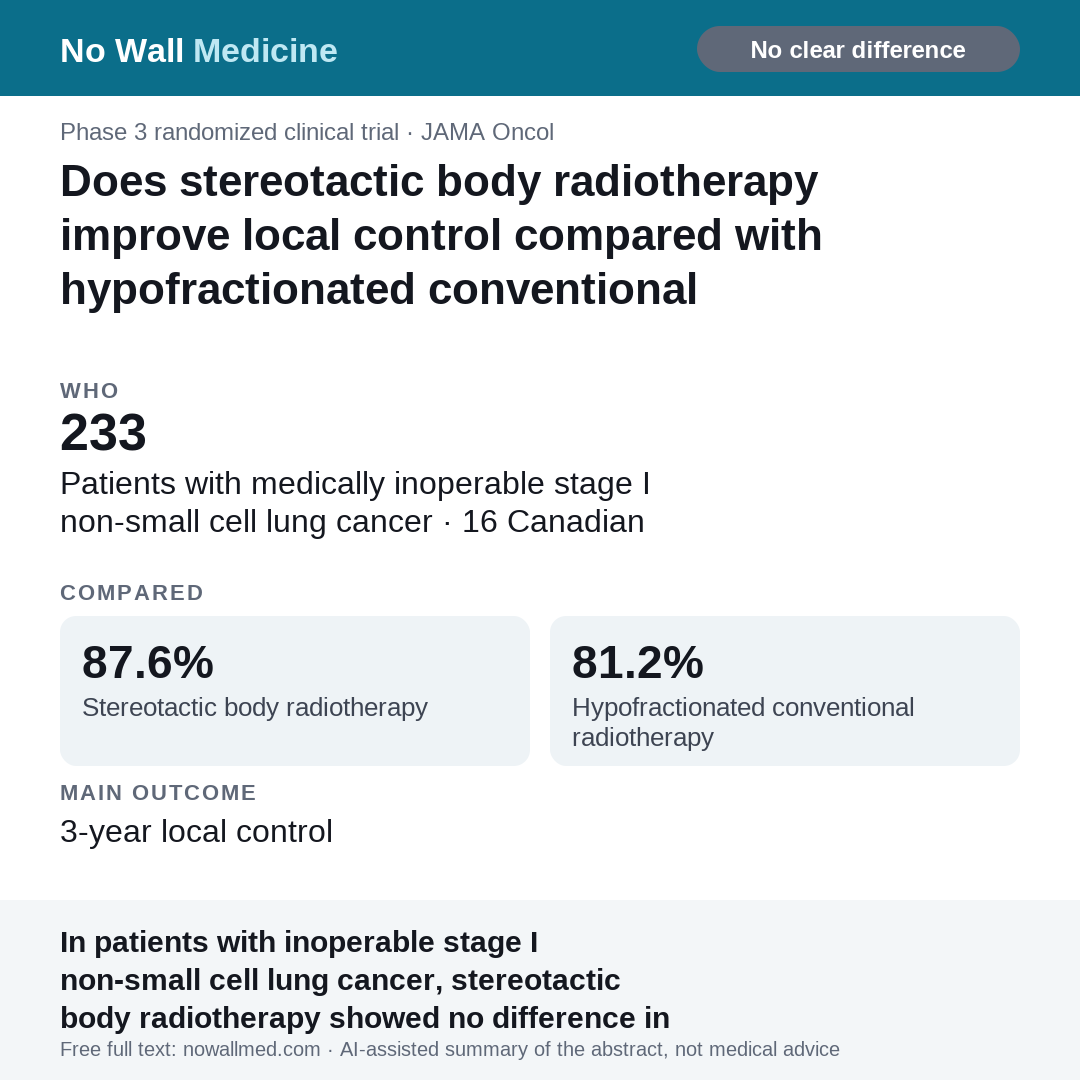
Stereotactic vs Hypofractionated Radiotherapy for Inoperable Stage I Non-Small Cell Lung Cancer: The LUSTRE Phase 3 Randomized Clinical Trial
Phase 3 randomized clinical trialNo clear difference
Does stereotactic body radiotherapy improve local control compared with hypofractionated conventional radiotherapy?
Who
233
Patients with medically inoperable stage I non-small cell lung cancer · 16 Canadian centers
Compared
87.6%Stereotactic body radiotherapy (95% CI, 81.9%-93.4%)
81.2%Hypofractionated conventional radiotherapy (95% CI, 71.9%-90.5%)
Main outcome
3-year local control
Result: hazard ratio 0.61 (95% CI, 0.31-1.20)
Bottom line: In patients with inoperable stage I non-small cell lung cancer, stereotactic body radiotherapy showed no difference in local control compared with conventional radiotherapy.
Limitation: further research is necessary to determine if SBRT is more effective for peripheral and central non-small cell lung cancer
JAMA Oncol · 2024-09-19Download image
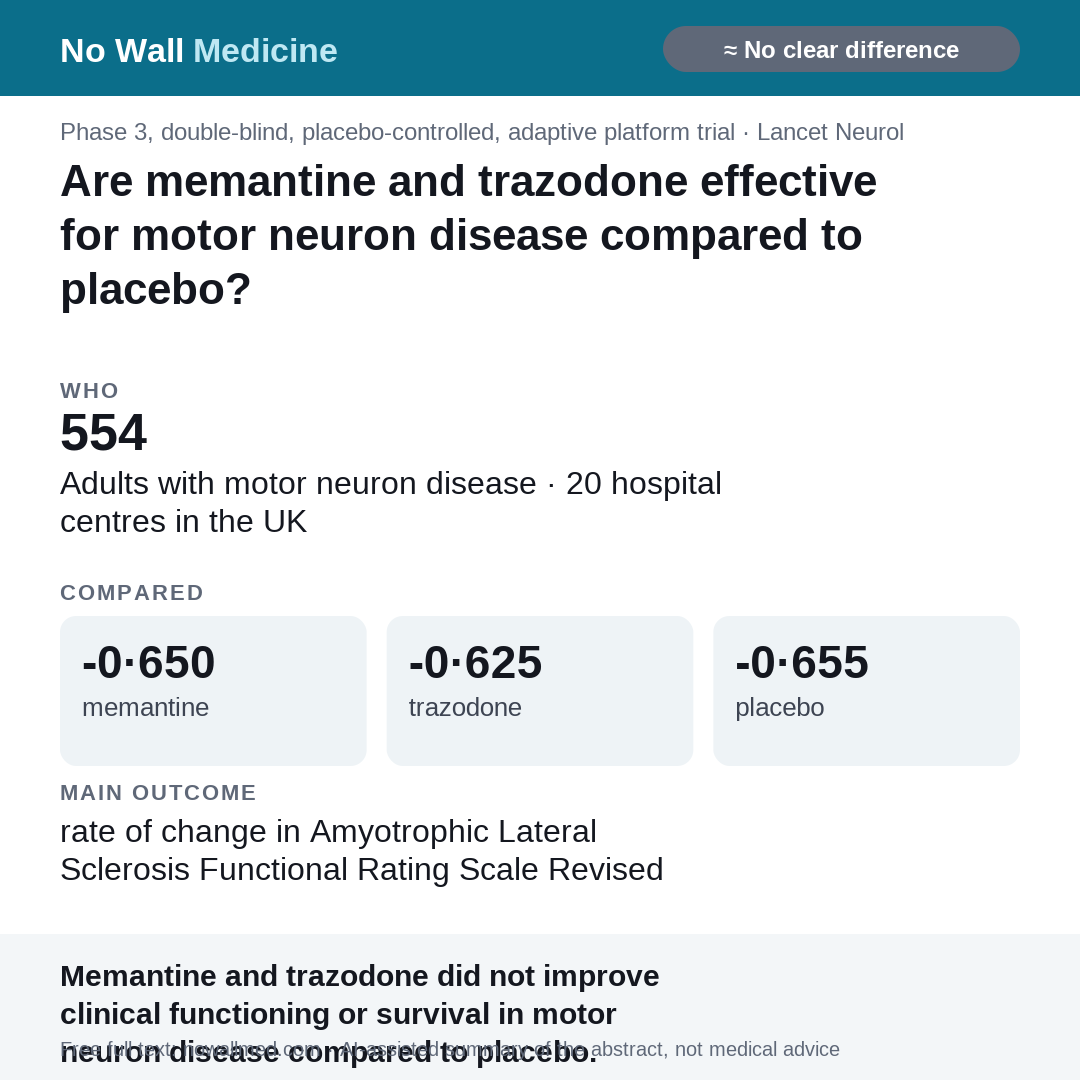
Safety and efficacy of memantine and trazodone versus placebo for motor neuron disease (MND SMART): stage two interim analysis from the first cycle of a phase 3, multiarm, multistage, randomised, adaptive platform trial
Phase 3, double-blind, placebo-controlled, adaptive platform trialNo clear difference
Are memantine and trazodone effective for motor neuron disease compared to placebo?
Who
554
Adults with motor neuron disease · 20 hospital centres in the UK
Compared
-0·650memantine
-0·625trazodone
-0·655placebo
Main outcome
rate of change in Amyotrophic Lateral Sclerosis Functional Rating Scale Revised
Result: memantine versus placebo estimated mean difference 0·033, one-sided 90% CI lower level -0·085
Bottom line: Memantine and trazodone did not improve clinical functioning or survival in motor neuron disease compared to placebo.
Funded by: Euan MacDonald Centre, MND Scotland, My Name'5 Doddie Foundation, Baillie Gifford
Lancet Neurol · 2024-09-19Download image
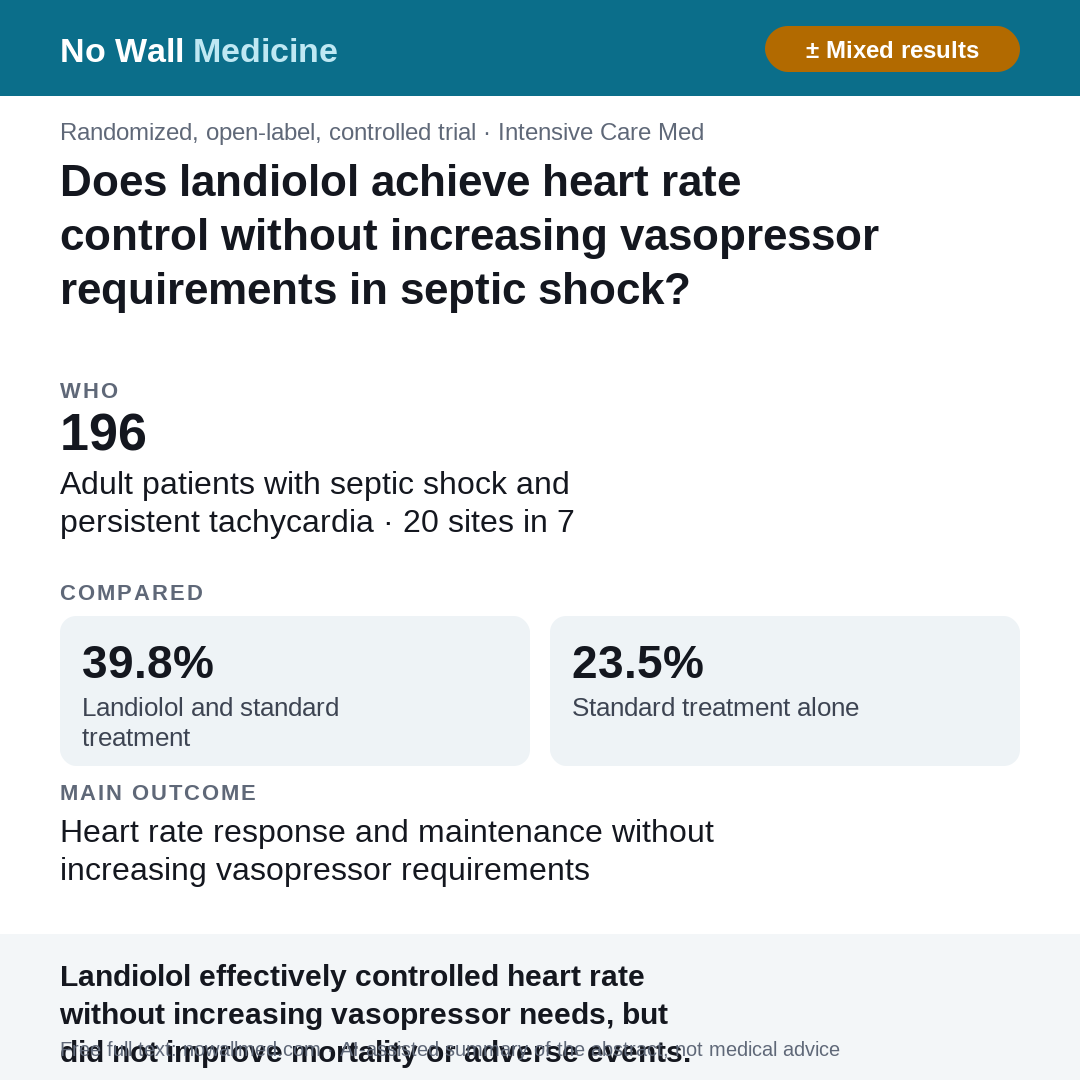
Landiolol for heart rate control in patients with septic shock and persistent tachycardia. A multicenter randomized clinical trial (Landi-SEP)
Randomized, open-label, controlled trialMixed results
Does landiolol achieve heart rate control without increasing vasopressor requirements in septic shock?
Who
196
Adult patients with septic shock and persistent tachycardia · 20 sites in 7 European countries
Compared
39.8%Landiolol and standard treatment (39/98)
23.5%Standard treatment alone (23/98)
Main outcome
Heart rate response and maintenance without increasing vasopressor requirements
Result: between-group difference of 16.5% (95% CI 3.4-28.8%; p = 0.013)
Bottom line: Landiolol effectively controlled heart rate without increasing vasopressor needs, but did not improve mortality or adverse events.
Intensive Care Med · 2024-09-19Download image
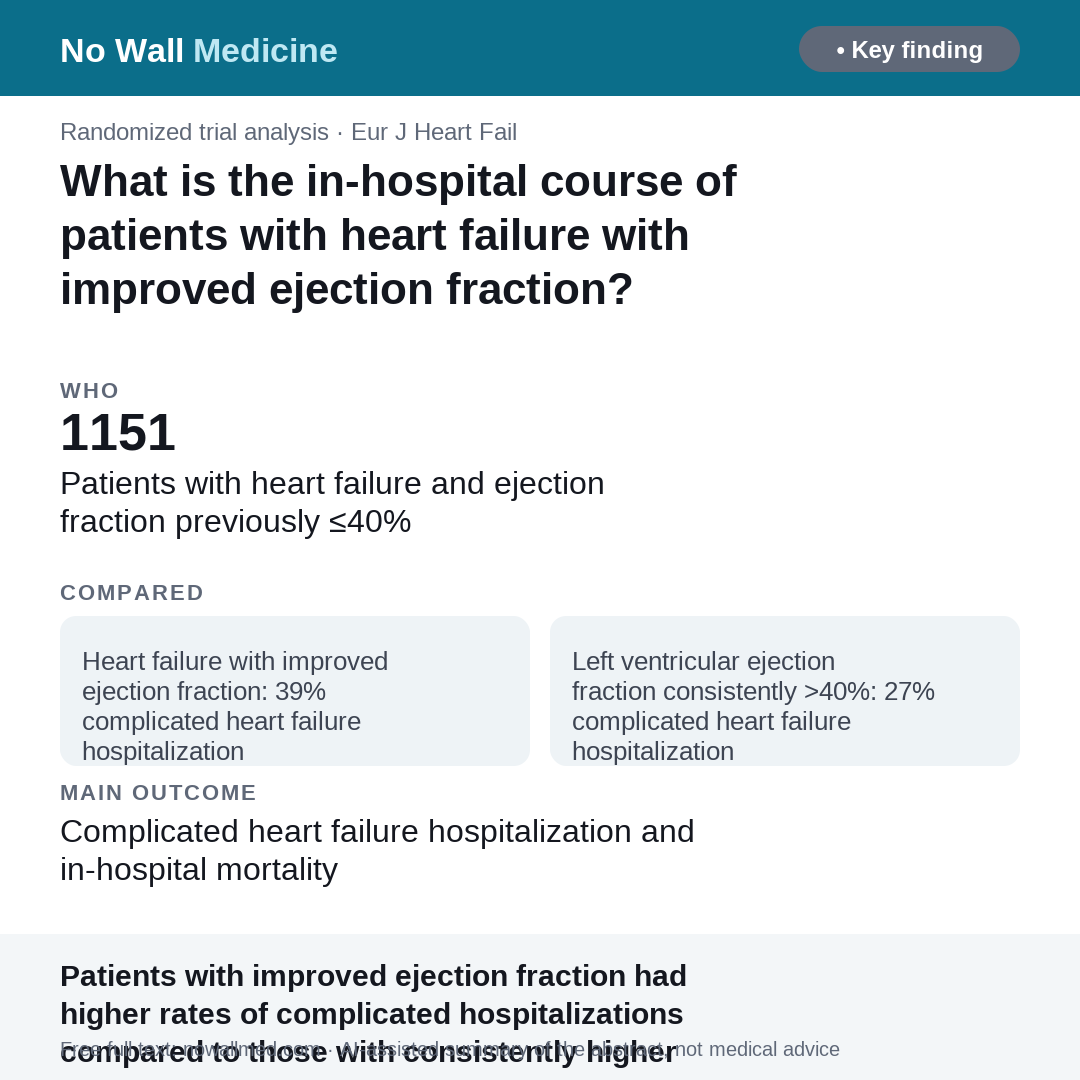
In-hospital course of patients with heart failure with improved ejection fraction in the DELIVER trial
Randomized trial analysisHarm found
What is the in-hospital course of patients with heart failure with improved ejection fraction?
Who
1151
Patients with heart failure and ejection fraction previously ≤40%
Compared
Heart failure with improved ejection fraction: 39% complicated heart failure hospitalization
Left ventricular ejection fraction consistently >40%: 27% complicated heart failure hospitalization
Main outcome
Complicated heart failure hospitalization and in-hospital mortality
Bottom line: Patients with improved ejection fraction had higher rates of complicated hospitalizations compared to those with consistently higher ejection fraction.
Eur J Heart Fail · 2024-09-19Download image