Visual abstracts
New randomized trials and meta-analyses from leading journals at a glance: who was studied, what was compared, and what was found. Every paper is free to read in full.
All specialtiesCardiology 840Oncology 760Gastroenterology & Hepatology 306Infectious Disease 626Neurology 350Psychiatry & Mental Health 430Pulmonology 365Critical Care 243Endocrinology & Diabetes 480Pediatrics 534Surgery 319Orthopedics & Sports Medicine 161Neurosurgery 89Cardiothoracic & Vascular Surgery 87Plastic & Reconstructive Surgery 118Nephrology 197Rheumatology 108Hematology 181Dermatology 78Ophthalmology 97Obstetrics & Gynecology 261Public & Global Health 167Radiology & Imaging 96Anesthesiology 107Urology 162ENT (Otolaryngology) 86Emergency Medicine 68Allergy & Immunology 58Geriatrics 160Family Medicine & Primary Care 111Medical Genetics & Genomics 91Pathology & Laboratory Medicine 24Physical Medicine & Rehabilitation 148Palliative Care 81Nutrition 223Digital Health & AI 460General Medicine 101
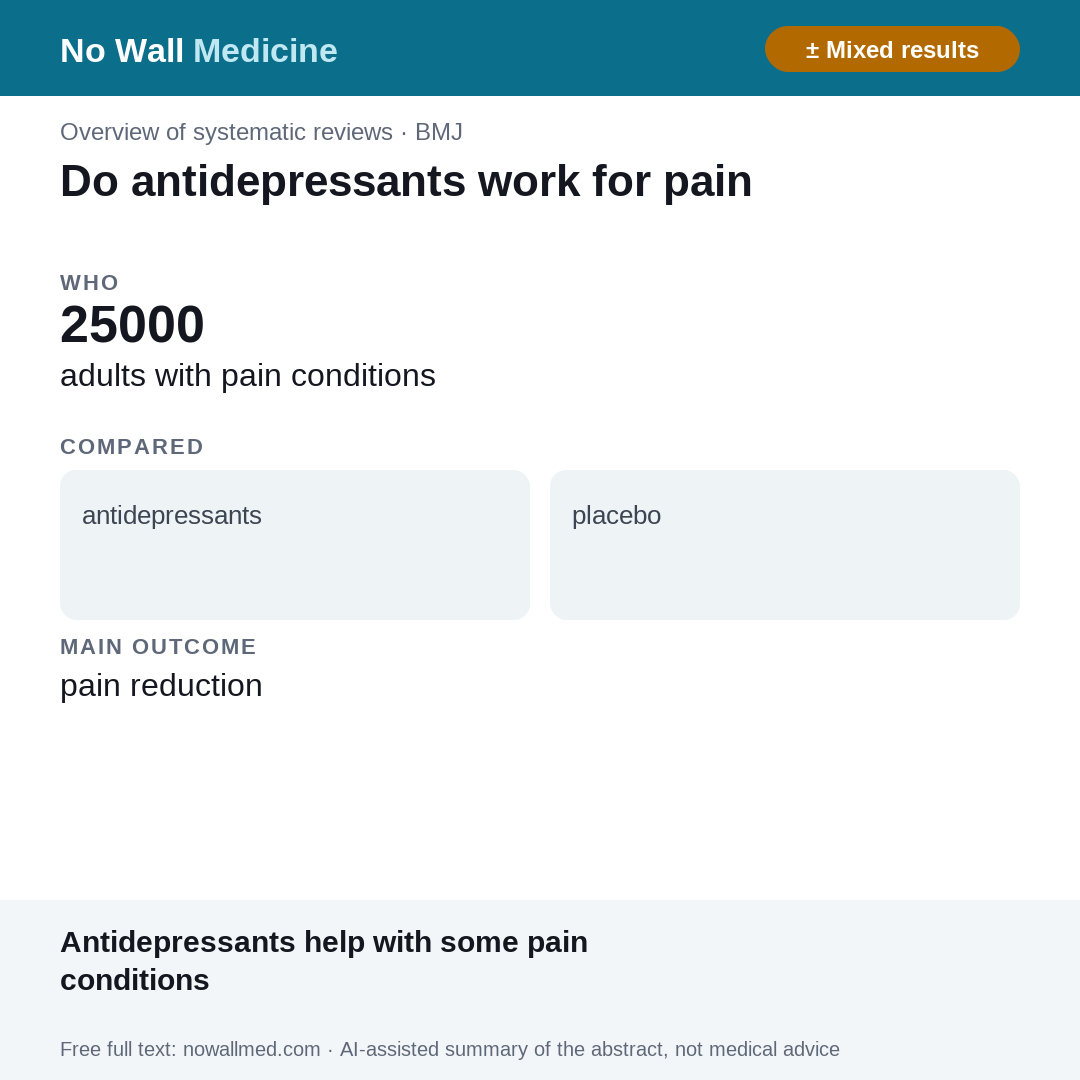
Efficacy, safety, and tolerability of antidepressants for pain in adults: overview of systematic reviews
Overview of systematic reviewsMixed results
Do antidepressants work for pain
Who
25000
adults with pain conditions
Compared
antidepressants
placebo
Main outcome
pain reduction
Bottom line: Antidepressants help with some pain conditions
BMJ · 2023-02-01Download image
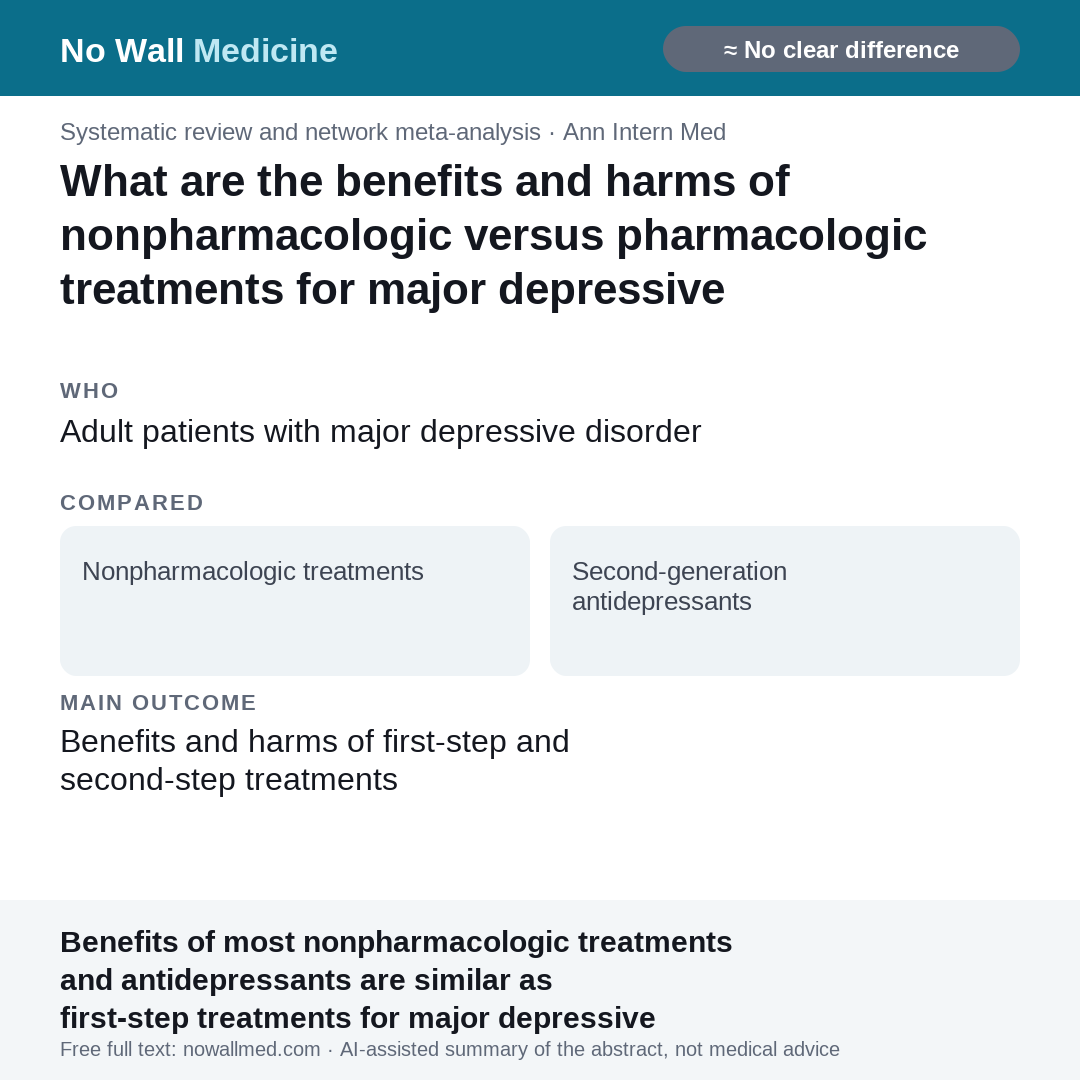
Nonpharmacologic and Pharmacologic Treatments of Adult Patients With Major Depressive Disorder: A Systematic Review and Network Meta-analysis for a Clinical Guideline by the American College of Physicians
Systematic review and network meta-analysisNo clear difference
What are the benefits and harms of nonpharmacologic versus pharmacologic treatments for major depressive disorder?
Who
65
Adult patients with major depressive disorder
Compared
Nonpharmacologic treatments
Second-generation antidepressants
Main outcome
Benefits and harms of first-step and second-step treatments
Bottom line: Benefits of most nonpharmacologic treatments and antidepressants are similar as first-step treatments for major depressive disorder.
Limitation: Low certainty of evidence, methodological limitations, dosing inequalities, and potential publication bias.
Funded by: American College of Physicians
Ann Intern Med · 2023-01-24Download image
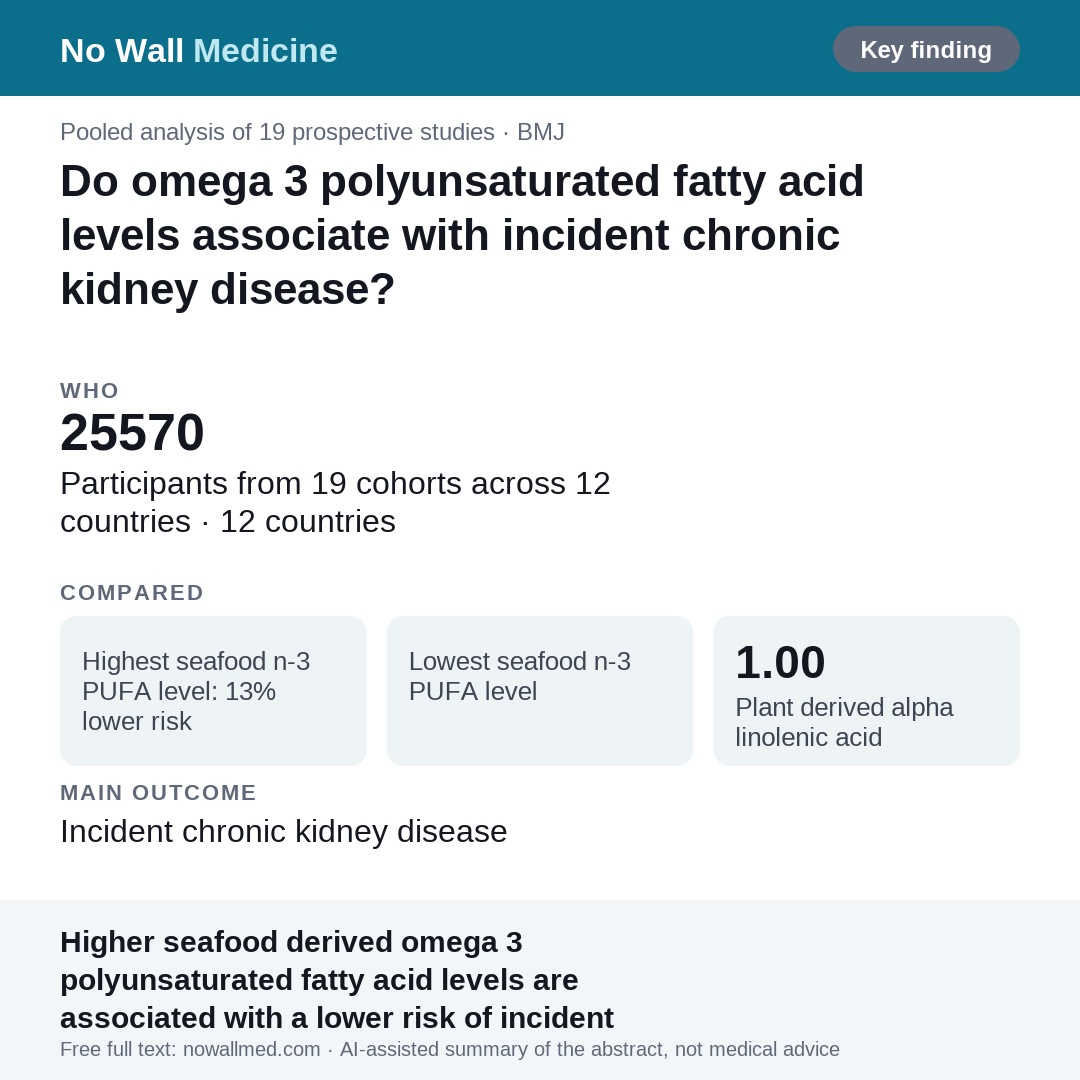
Association of omega 3 polyunsaturated fatty acids with incident chronic kidney disease: pooled analysis of 19 cohorts
Pooled analysis of 19 prospective studiesBenefit found
Do omega 3 polyunsaturated fatty acid levels associate with incident chronic kidney disease?
Who
25570
Participants from 19 cohorts across 12 countries · 12 countries
Compared
Highest seafood n-3 PUFA level: 13% lower risk
Lowest seafood n-3 PUFA level
1.00Plant derived alpha linolenic acid (95% CI 0.94 to 1.06)
Main outcome
Incident chronic kidney disease
Result: relative risk per interquintile range 0.92 (95% CI 0.86 to 0.98)
Bottom line: Higher seafood derived omega 3 polyunsaturated fatty acid levels are associated with a lower risk of incident chronic kidney disease.
BMJ · 2023-01-18Download image
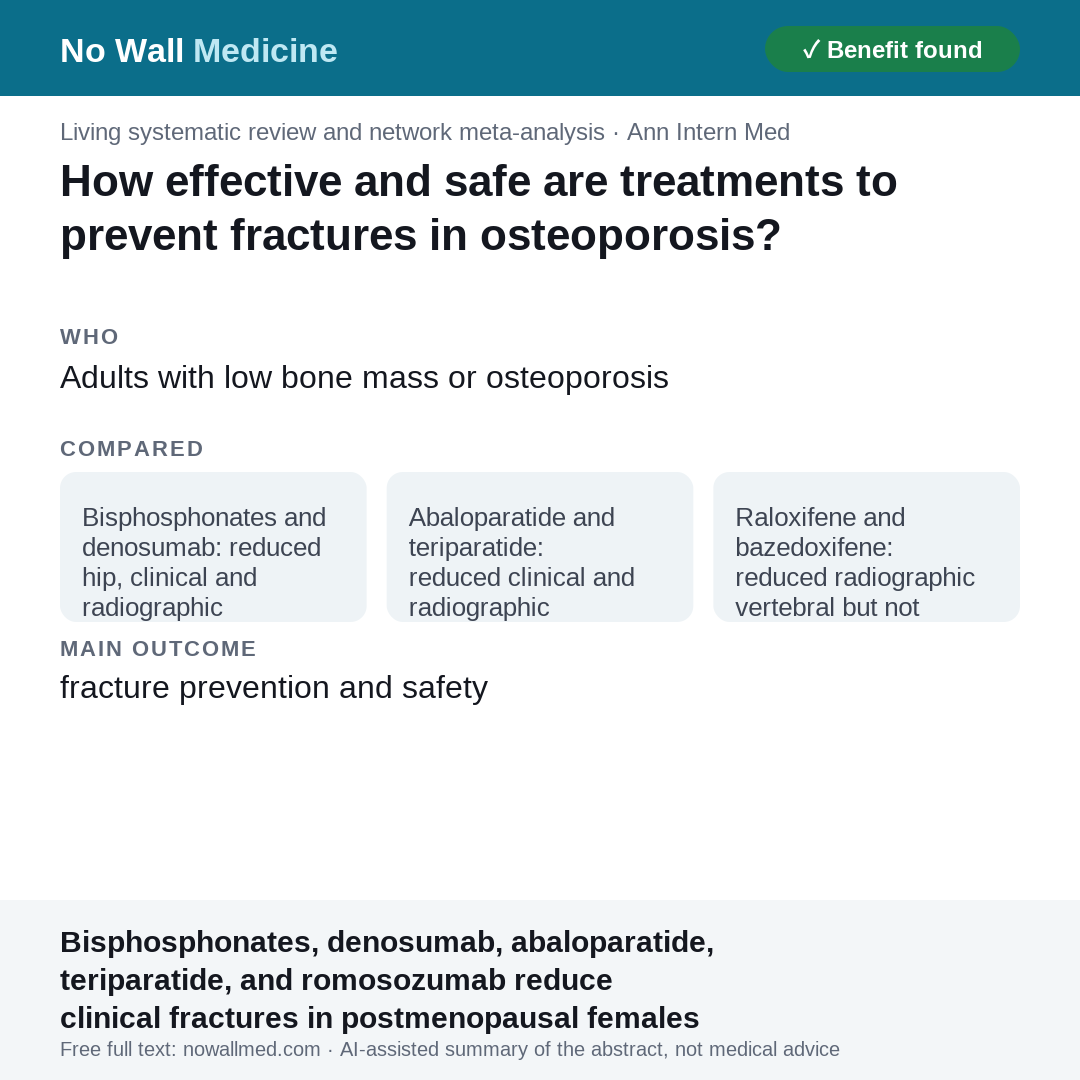
Effectiveness and Safety of Treatments to Prevent Fractures in People With Low Bone Mass or Primary Osteoporosis: A Living Systematic Review and Network Meta-analysis for the American College of Physicians
Living systematic review and network meta-analysisBenefit found
How effective and safe are treatments to prevent fractures in osteoporosis?
Who
Adults with low bone mass or osteoporosis
Compared
Bisphosphonates and denosumab: reduced hip, clinical and radiographic vertebral, and other clinical fractures
Abaloparatide and teriparatide: reduced clinical and radiographic vertebral fractures
Raloxifene and bazedoxifene: reduced radiographic vertebral but not clinical fractures
Main outcome
fracture prevention and safety
Bottom line: Bisphosphonates, denosumab, abaloparatide, teriparatide, and romosozumab reduce clinical fractures in postmenopausal females with osteoporosis.
Limitation: Few studies examined low bone mass, males, Black-identifying persons, or sequential therapy.
Funded by: American College of Physicians
Ann Intern Med · 2023-01-03Download image
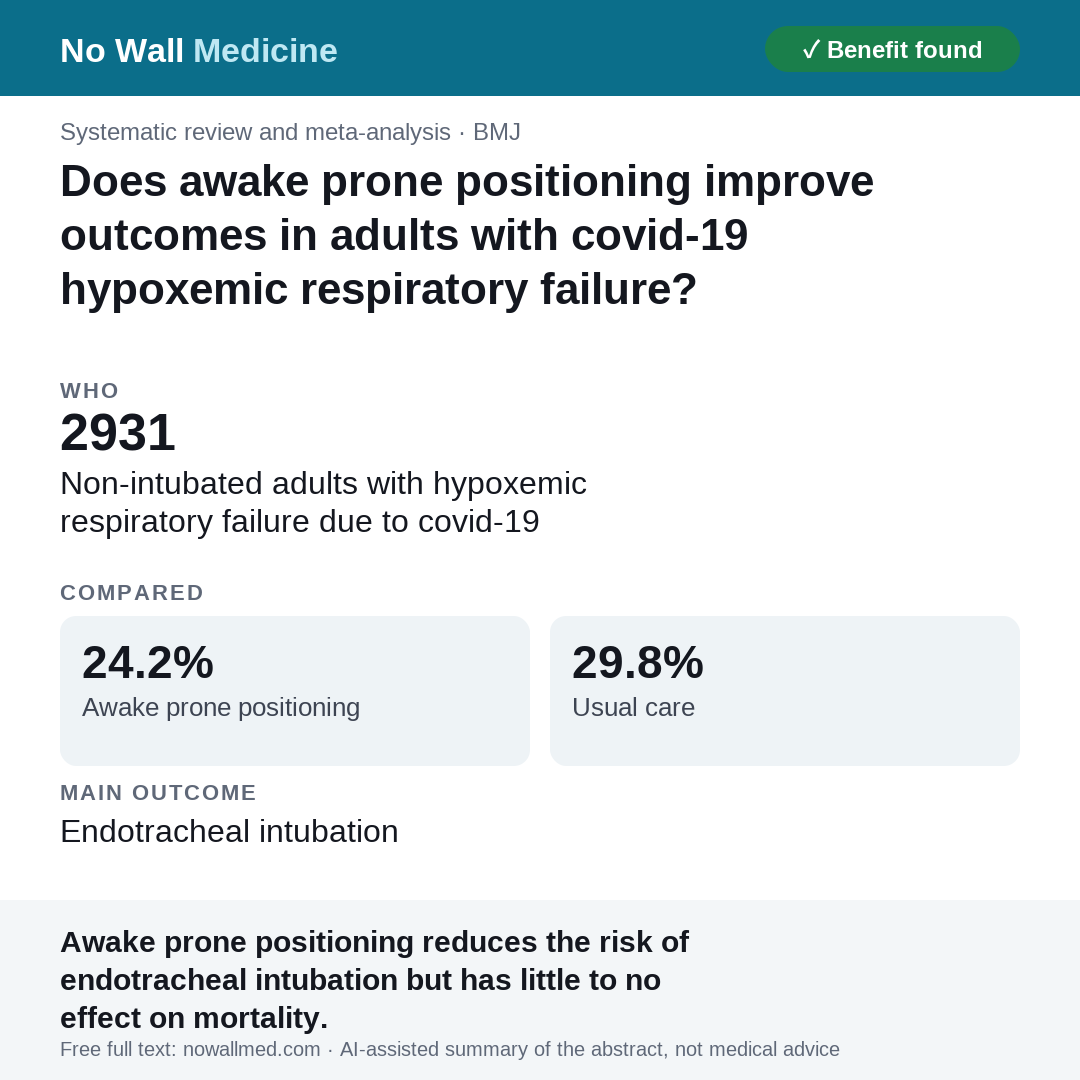
Efficacy of awake prone positioning in patients with covid-19 related hypoxemic respiratory failure: systematic review and meta-analysis of randomized trials
Systematic review and meta-analysisBenefit found
Does awake prone positioning improve outcomes in adults with covid-19 hypoxemic respiratory failure?
Who
2931
Non-intubated adults with hypoxemic respiratory failure due to covid-19
Compared
24.2%Awake prone positioning
29.8%Usual care
Main outcome
Endotracheal intubation
Result: relative risk 0.83 (95% confidence interval 0.73 to 0.94)
Bottom line: Awake prone positioning reduces the risk of endotracheal intubation but has little to no effect on mortality.
BMJ · 2022-12-07Download image
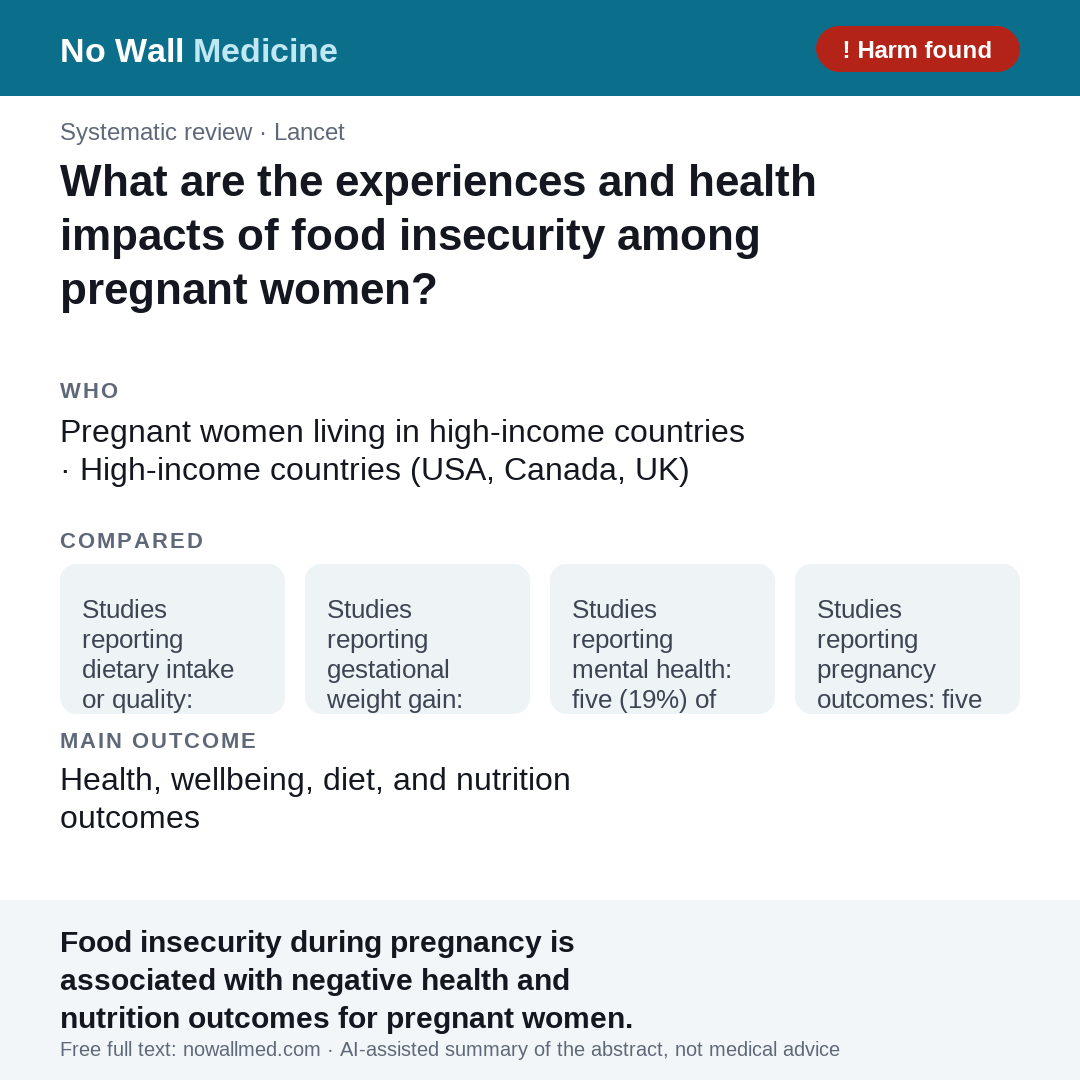
Food insecurity among pregnant women living in high-income countries: a systematic review
Systematic reviewHarm found
What are the experiences and health impacts of food insecurity among pregnant women?
Who
27
Pregnant women living in high-income countries · High-income countries (USA, Canada, UK)
Compared
Studies reporting dietary intake or quality: seven (26%) of 27
Studies reporting gestational weight gain: seven (26%) of 27
Studies reporting mental health: five (19%) of 27
Studies reporting pregnancy outcomes: five (19%) of 27
Main outcome
Health, wellbeing, diet, and nutrition outcomes
Bottom line: Food insecurity during pregnancy is associated with negative health and nutrition outcomes for pregnant women.
Limitation: The review had a restricted focus on studies conducted from 2008 onward.
Lancet · 2022-11-24Download image