Visual abstracts
New randomized trials and meta-analyses from leading journals at a glance: who was studied, what was compared, and what was found. Every paper is free to read in full.
All specialtiesCardiology 840Oncology 760Gastroenterology & Hepatology 306Infectious Disease 626Neurology 350Psychiatry & Mental Health 430Pulmonology 365Critical Care 243Endocrinology & Diabetes 480Pediatrics 534Surgery 319Orthopedics & Sports Medicine 161Neurosurgery 89Cardiothoracic & Vascular Surgery 87Plastic & Reconstructive Surgery 118Nephrology 197Rheumatology 108Hematology 181Dermatology 78Ophthalmology 97Obstetrics & Gynecology 261Public & Global Health 167Radiology & Imaging 96Anesthesiology 107Urology 162ENT (Otolaryngology) 86Emergency Medicine 68Allergy & Immunology 58Geriatrics 160Family Medicine & Primary Care 111Medical Genetics & Genomics 91Pathology & Laboratory Medicine 24Physical Medicine & Rehabilitation 148Palliative Care 81Nutrition 223Digital Health & AI 460General Medicine 101
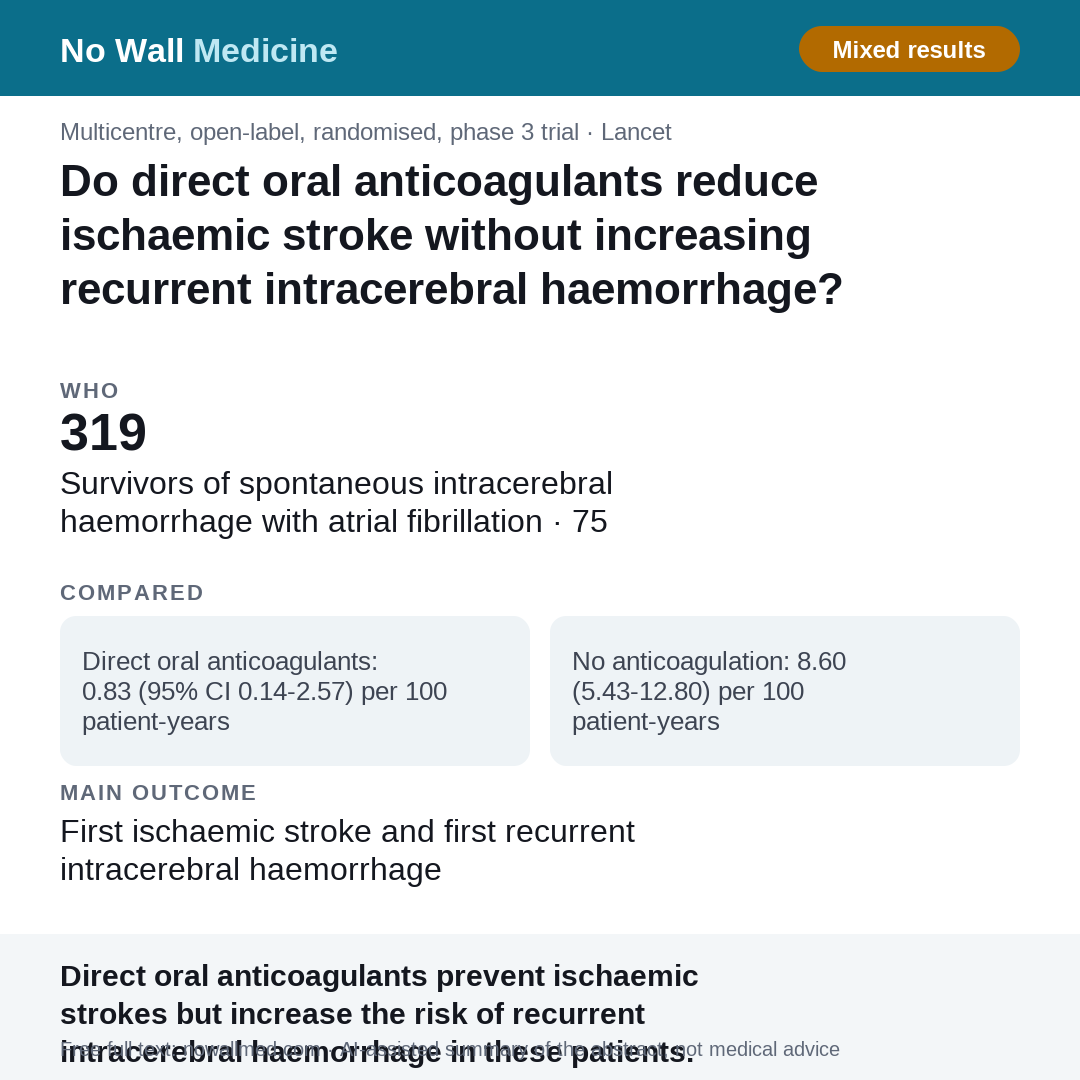
Direct oral anticoagulants versus no anticoagulation for the prevention of stroke in survivors of intracerebral haemorrhage with atrial fibrillation (PRESTIGE-AF): a multicentre, open-label, randomised, phase 3 trial
Multicentre, open-label, randomised, phase 3 trialMixed results
Do direct oral anticoagulants reduce ischaemic stroke without increasing recurrent intracerebral haemorrhage?
Who
319
Survivors of spontaneous intracerebral haemorrhage with atrial fibrillation · 75 hospitals in six European countries
Compared
Direct oral anticoagulants: 0.83 (95% CI 0.14-2.57) per 100 patient-years
No anticoagulation: 8.60 (5.43-12.80) per 100 patient-years
Main outcome
First ischaemic stroke and first recurrent intracerebral haemorrhage
Result: hazard ratio 0.05 (95% CI 0.01-0.36)
Bottom line: Direct oral anticoagulants prevent ischaemic strokes but increase the risk of recurrent intracerebral haemorrhage in these patients.
Funded by: European Commission
Lancet · 2025-02-26Download image
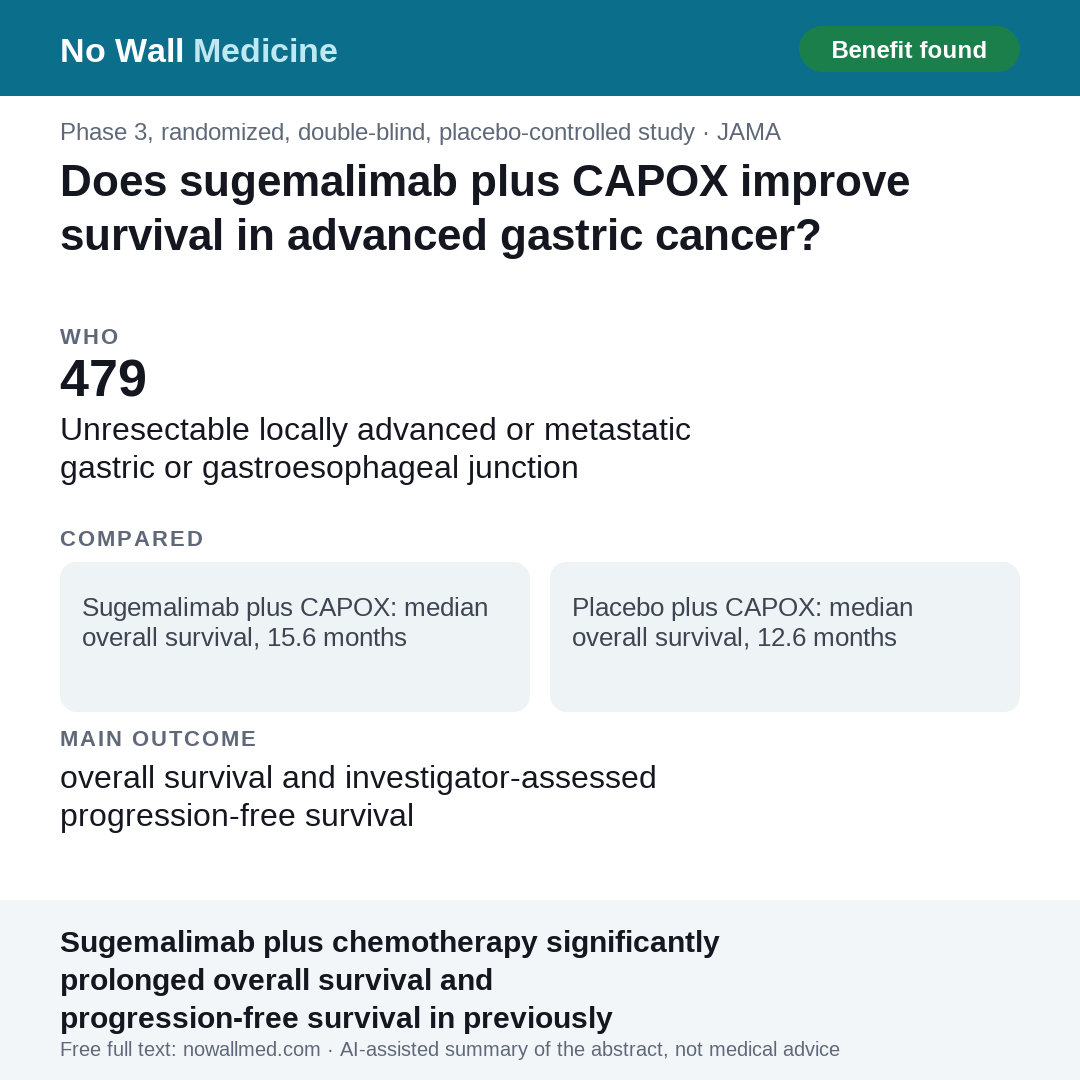
First-Line Sugemalimab Plus Chemotherapy for Advanced Gastric Cancer: The GEMSTONE-303 Randomized Clinical Trial
Phase 3, randomized, double-blind, placebo-controlled studyBenefit found
Does sugemalimab plus CAPOX improve survival in advanced gastric cancer?
Who
479
Unresectable locally advanced or metastatic gastric or gastroesophageal junction adenocarcinoma with PD-L1 CPS 5 or greater · 54 sites in China
Compared
Sugemalimab plus CAPOX: median overall survival, 15.6 months
Placebo plus CAPOX: median overall survival, 12.6 months
Main outcome
overall survival and investigator-assessed progression-free survival
Result: hazard ratio, 0.75 (95% CI, 0.61-0.92)
Bottom line: Sugemalimab plus chemotherapy significantly prolonged overall survival and progression-free survival in previously untreated advanced gastric cancer patients.
JAMA · 2025-02-24Download image
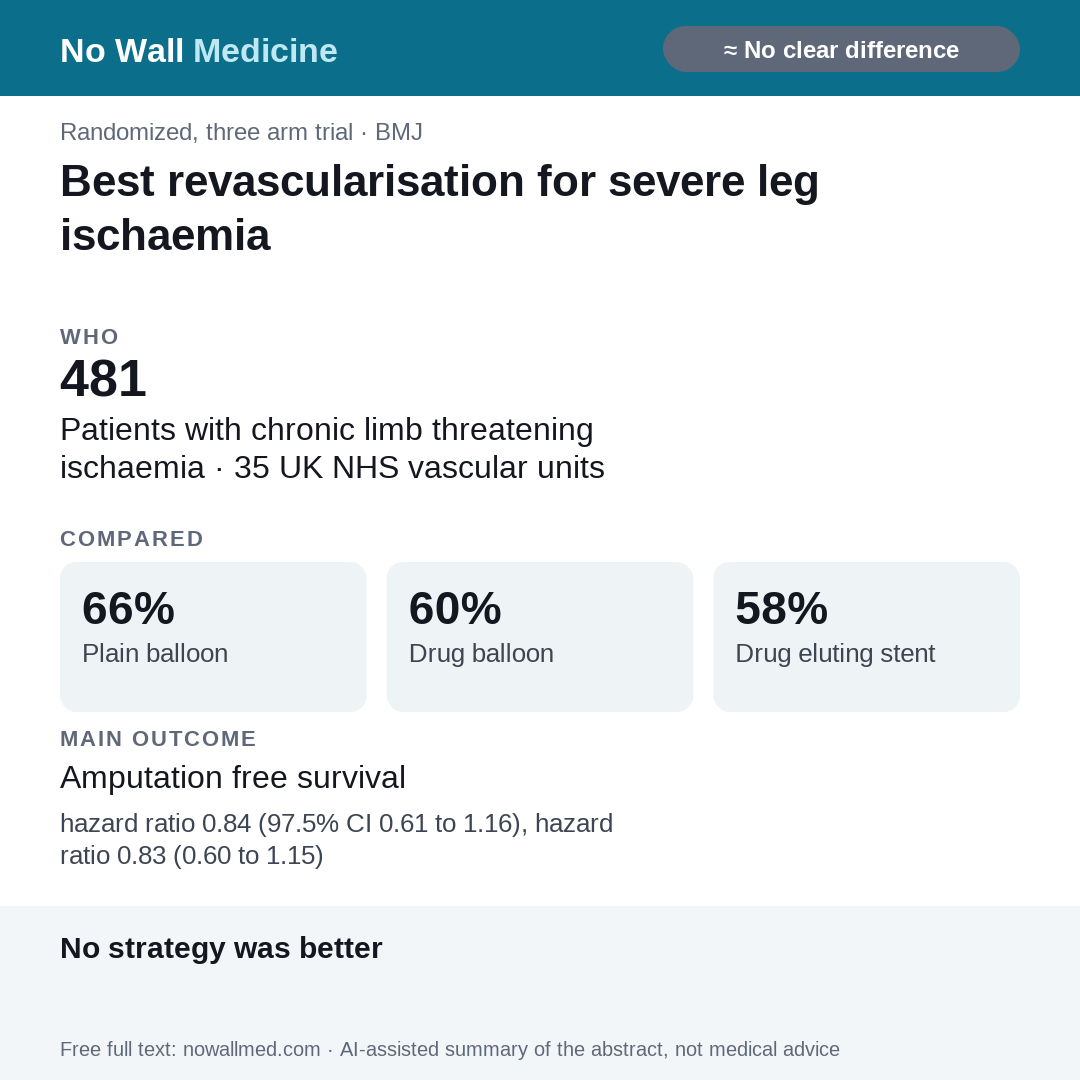
Plain versus drug balloon and stenting in severe ischaemia of the leg (BASIL-3): open label, three arm, randomised, multicentre, phase 3 trial
Randomized, three arm trialNo clear difference
Best revascularisation for severe leg ischaemia
Who
481
Patients with chronic limb threatening ischaemia · 35 UK NHS vascular units
Compared
66%Plain balloon (106/160)
60%Drug balloon (97/161)
58%Drug eluting stent (93/159)
Main outcome
Amputation free survival
Result: hazard ratio 0.84 (97.5% CI 0.61 to 1.16), hazard ratio 0.83 (0.60 to 1.15)
Bottom line: No strategy was better
BMJ · 2025-02-24Download image
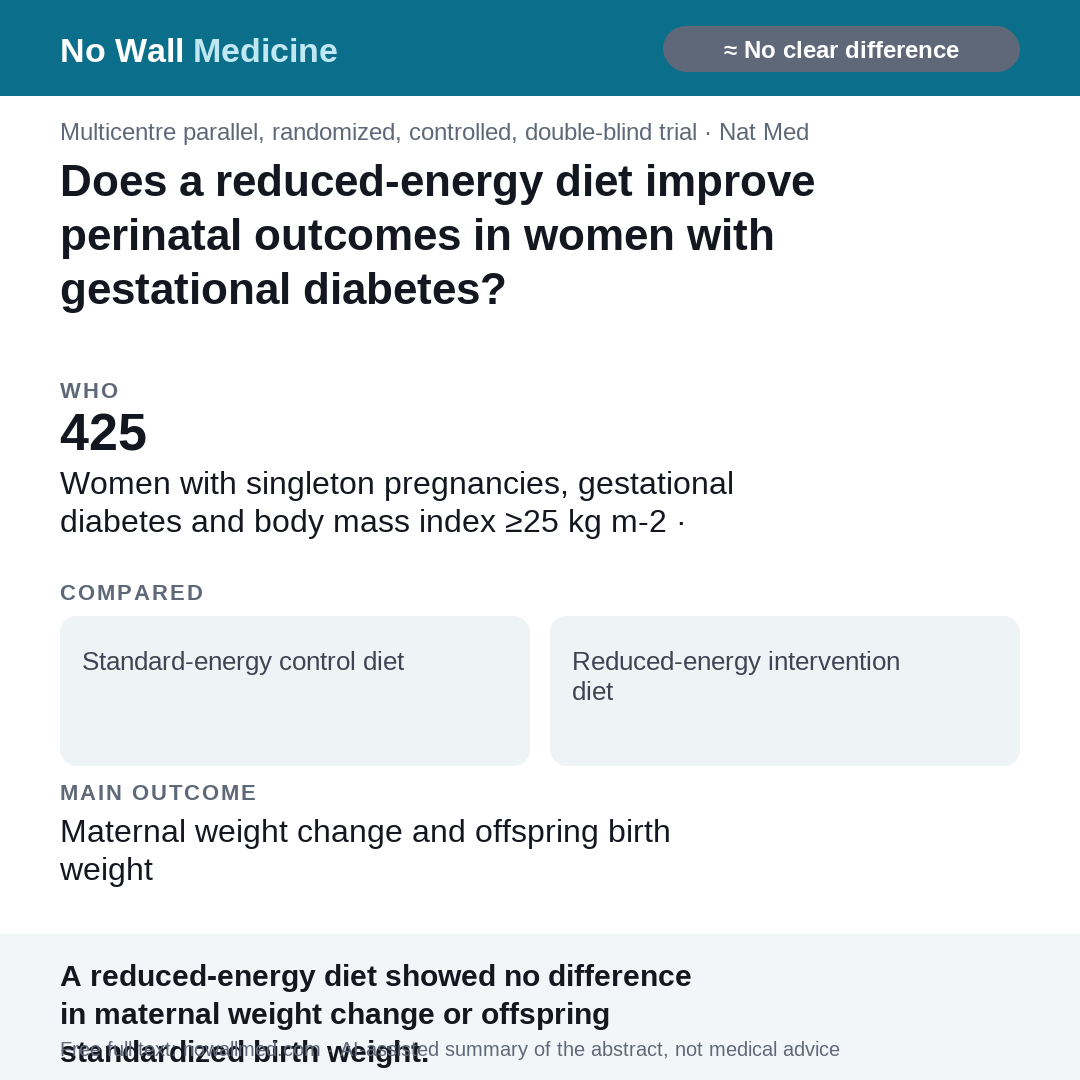
Reduced-energy diet in women with gestational diabetes: the dietary intervention in gestational diabetes DiGest randomized clinical trial
Multicentre parallel, randomized, controlled, double-blind trialNo clear difference
Does a reduced-energy diet improve perinatal outcomes in women with gestational diabetes?
Who
425
Women with singleton pregnancies, gestational diabetes and body mass index ≥25 kg m-2 · Multicentre
Compared
Standard-energy control diet
Reduced-energy intervention diet
Main outcome
Maternal weight change and offspring birth weight
Result: intervention effect -0.20 (95% confidence interval -1.01, 0.61)
Bottom line: A reduced-energy diet showed no difference in maternal weight change or offspring standardized birth weight.
Nat Med · 2025-02-19Download image
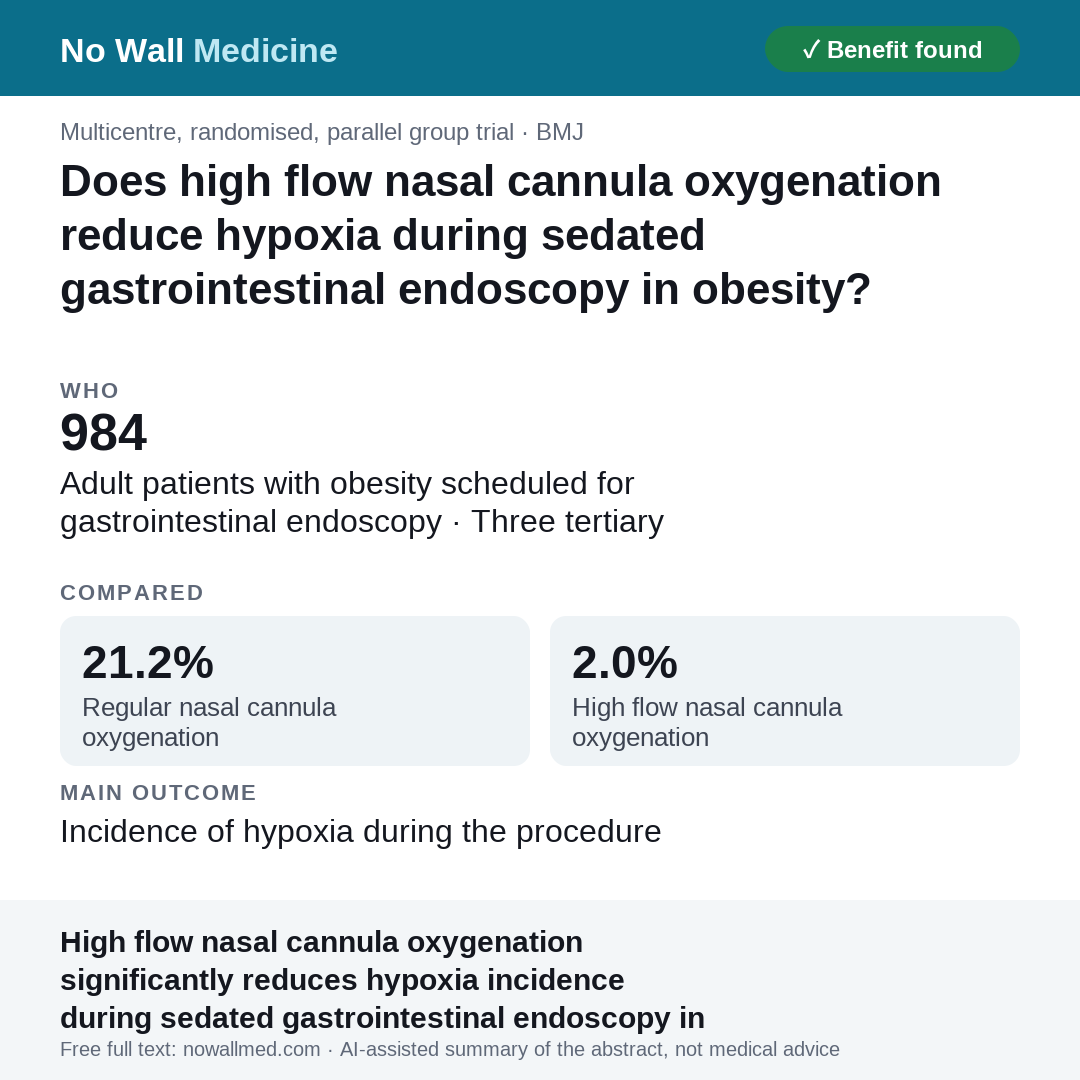
Effect of high flow nasal cannula oxygenation on incidence of hypoxia during sedated gastrointestinal endoscopy in patients with obesity: multicentre randomised controlled trial
Multicentre, randomised, parallel group trialBenefit found
Does high flow nasal cannula oxygenation reduce hypoxia during sedated gastrointestinal endoscopy in obesity?
Who
984
Adult patients with obesity scheduled for gastrointestinal endoscopy · Three tertiary hospitals in Shanghai, China
Compared
21.2%Regular nasal cannula oxygenation (103/487)
2.0%High flow nasal cannula oxygenation (10/497)
Main outcome
Incidence of hypoxia during the procedure
Result: difference -19.14, 95% confidence interval -23.09 to -15.36
Bottom line: High flow nasal cannula oxygenation significantly reduces hypoxia incidence during sedated gastrointestinal endoscopy in patients with obesity.
BMJ · 2025-02-11Download image
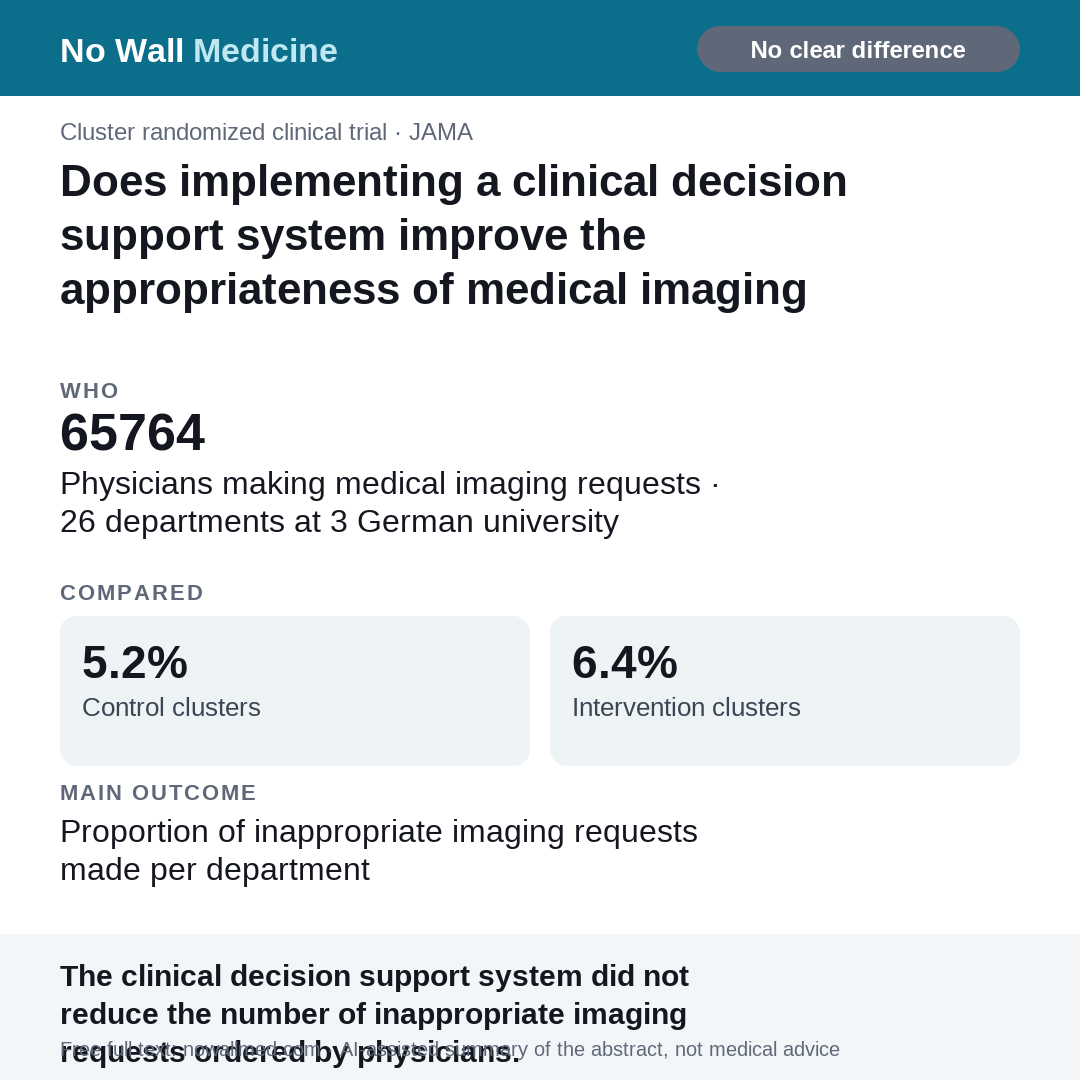
Evaluation of a Clinical Decision Support System for Imaging Requests: A Cluster Randomized Clinical Trial
Cluster randomized clinical trialNo clear difference
Does implementing a clinical decision support system improve the appropriateness of medical imaging ordering behavior?
Who
65764
Physicians making medical imaging requests · 26 departments at 3 German university hospitals
Compared
5.2%Control clusters
6.4%Intervention clusters
Main outcome
Proportion of inappropriate imaging requests made per department
Result: difference-in-differences 1.3 percentage points (99% CI, -2.0 to 1.8 percentage points)
Bottom line: The clinical decision support system did not reduce the number of inappropriate imaging requests ordered by physicians.
JAMA · 2025-02-10Download image
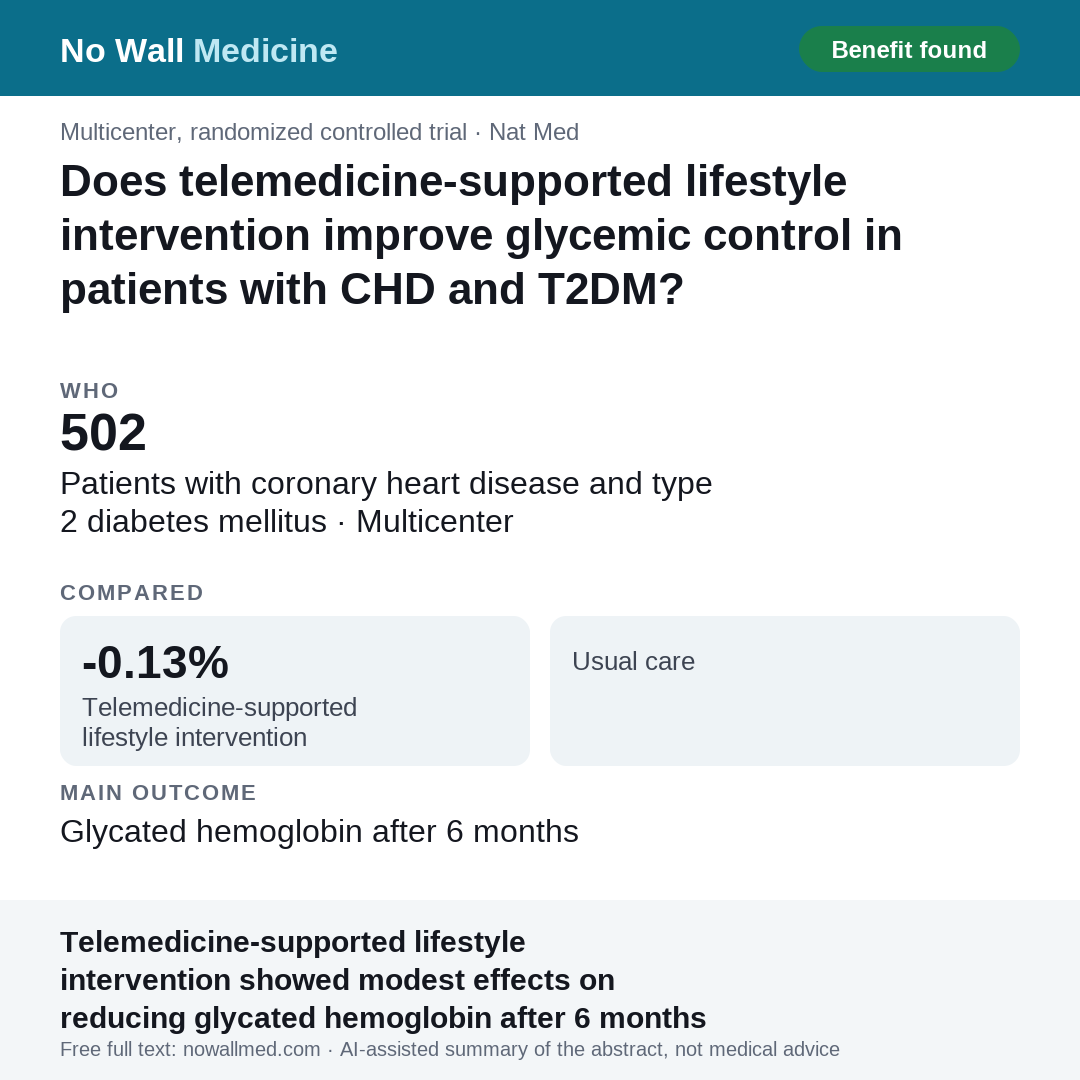
Telemedicine-supported lifestyle intervention for glycemic control in patients with CHD and T2DM: multicenter, randomized controlled trial
Multicenter, randomized controlled trialBenefit found
Does telemedicine-supported lifestyle intervention improve glycemic control in patients with CHD and T2DM?
Who
502
Patients with coronary heart disease and type 2 diabetes mellitus · Multicenter
Compared
-0.13%Telemedicine-supported lifestyle intervention (95% confidence interval, -0.25 to -0.01)
Usual care
Main outcome
Glycated hemoglobin after 6 months
Result: -0.13% (95% confidence interval, -0.25 to -0.01)
Bottom line: Telemedicine-supported lifestyle intervention showed modest effects on reducing glycated hemoglobin after 6 months in patients.
Limitation: No statistically significant between-group differences were observed at 12 months.
Nat Med · 2025-02-07Download image
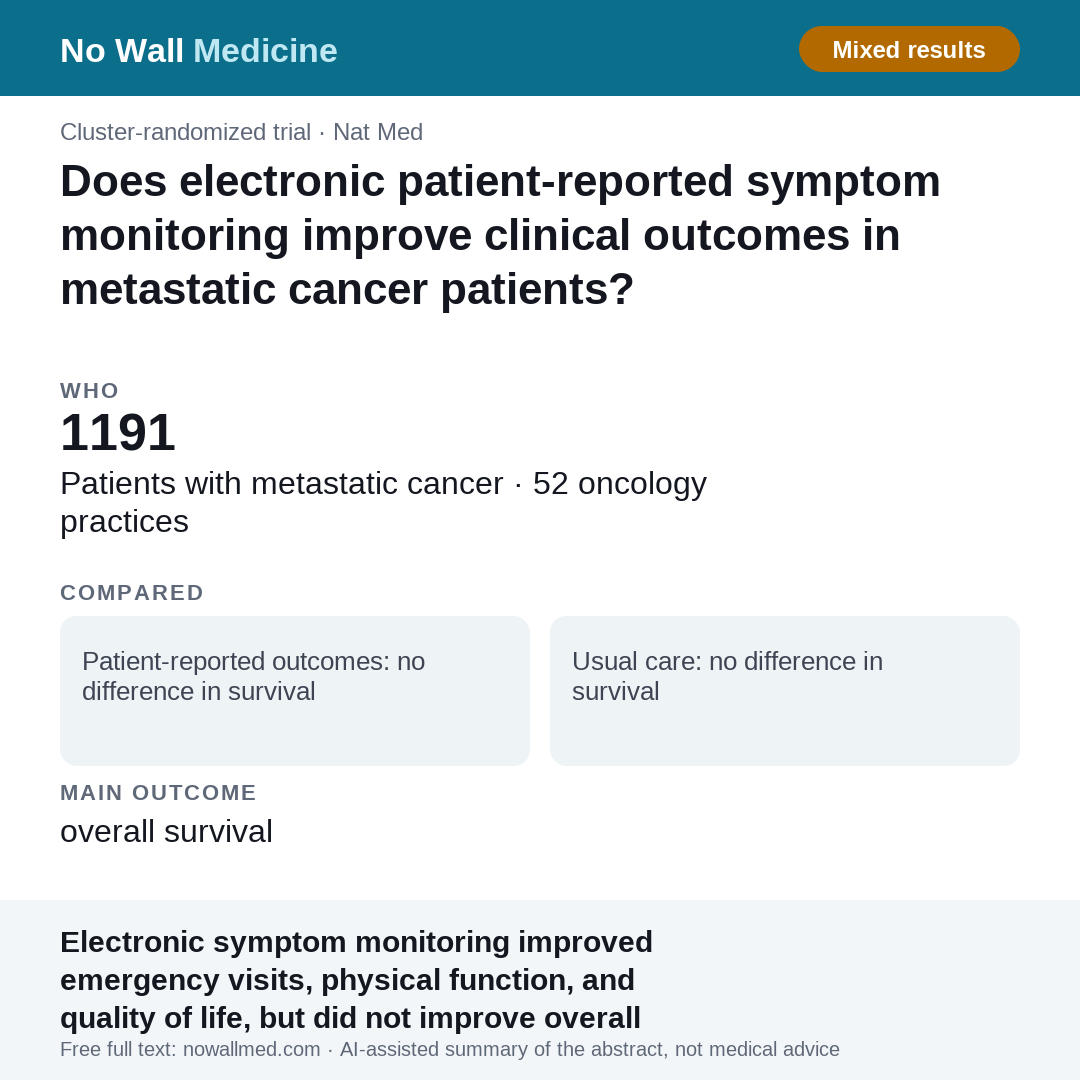
Symptom monitoring with electronic patient-reported outcomes during cancer treatment: final results of the PRO-TECT cluster-randomized trial
Cluster-randomized trialMixed results
Does electronic patient-reported symptom monitoring improve clinical outcomes in metastatic cancer patients?
Who
1191
Patients with metastatic cancer · 52 oncology practices
Compared
Patient-reported outcomes: no difference in survival
Usual care: no difference in survival
Main outcome
overall survival
Result: hazard ratio 0.99 (95% confidence interval 0.83-1.17)
Bottom line: Electronic symptom monitoring improved emergency visits, physical function, and quality of life, but did not improve overall survival.
Nat Med · 2025-02-07Download image
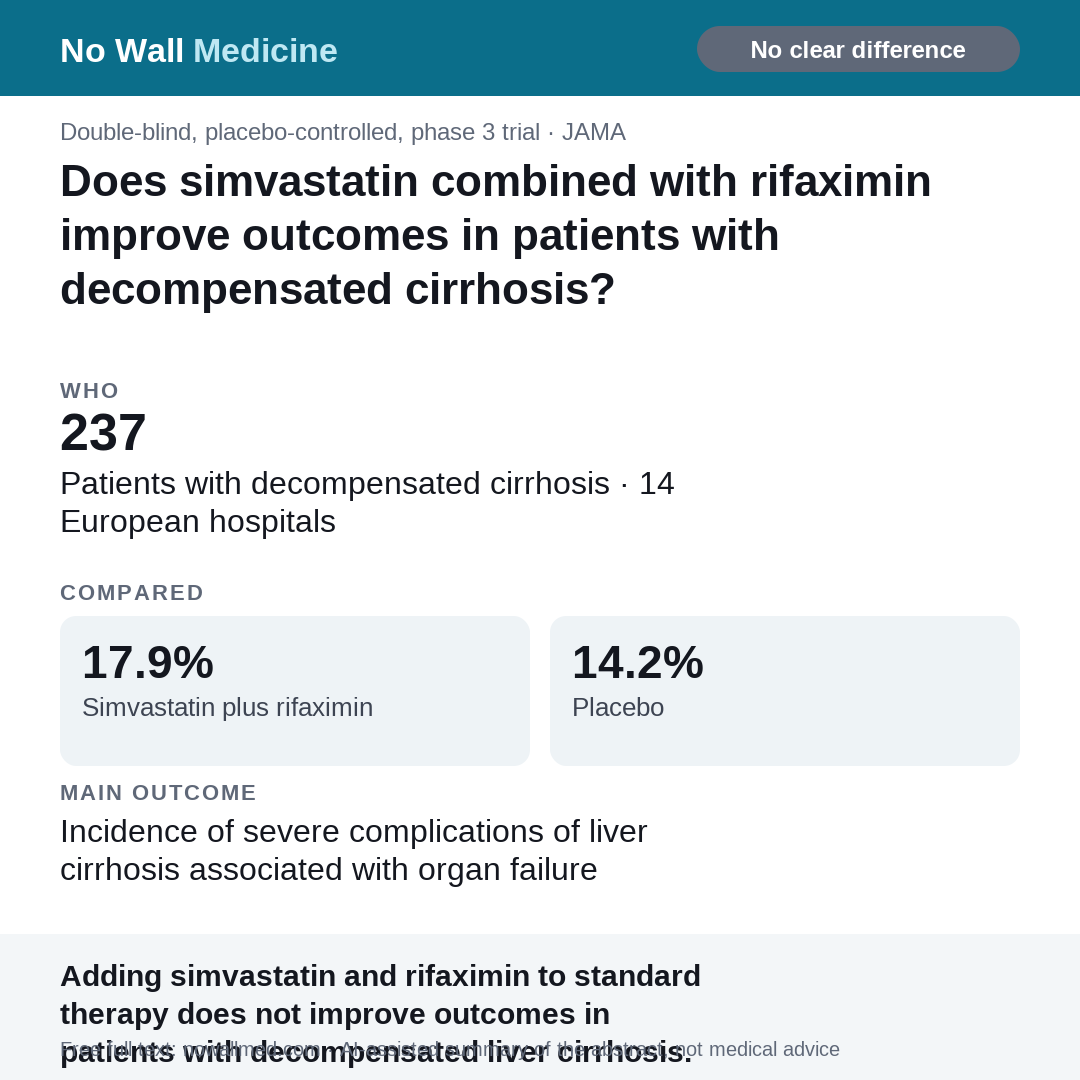
Simvastatin and Rifaximin in Decompensated Cirrhosis: A Randomized Clinical Trial
Double-blind, placebo-controlled, phase 3 trialNo clear difference
Does simvastatin combined with rifaximin improve outcomes in patients with decompensated cirrhosis?
Who
237
Patients with decompensated cirrhosis · 14 European hospitals
Compared
17.9%Simvastatin plus rifaximin
14.2%Placebo
Main outcome
Incidence of severe complications of liver cirrhosis associated with organ failure
Result: hazard ratio 1.23 (95% CI 0.65-2.34)
Bottom line: Adding simvastatin and rifaximin to standard therapy does not improve outcomes in patients with decompensated liver cirrhosis.
JAMA · 2025-02-05Download image
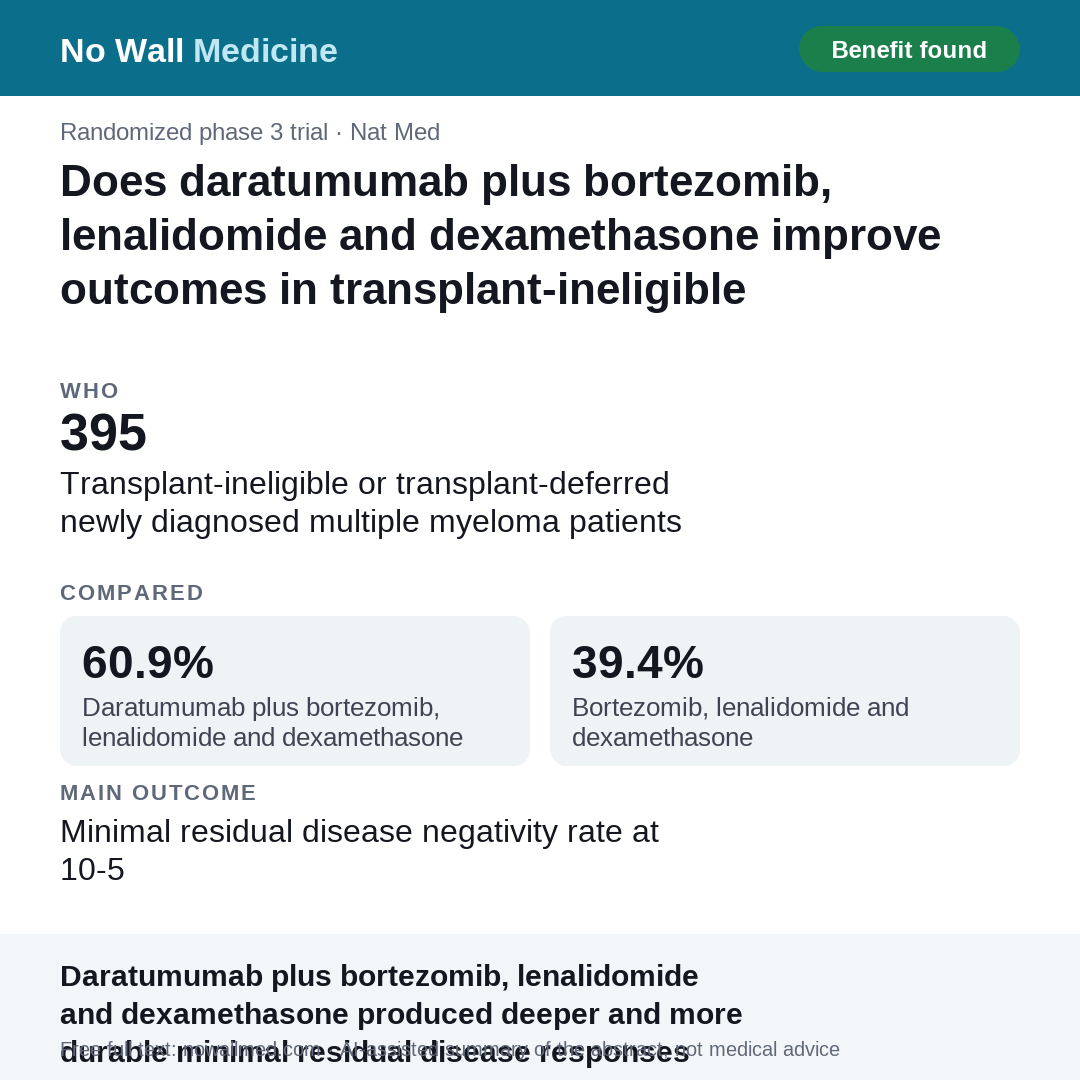
Daratumumab plus bortezomib, lenalidomide and dexamethasone for transplant-ineligible or transplant-deferred newly diagnosed multiple myeloma: the randomized phase 3 CEPHEUS trial
Randomized phase 3 trialBenefit found
Does daratumumab plus bortezomib, lenalidomide and dexamethasone improve outcomes in transplant-ineligible multiple myeloma?
Who
395
Transplant-ineligible or transplant-deferred newly diagnosed multiple myeloma patients
Compared
60.9%Daratumumab plus bortezomib, lenalidomide and dexamethasone
39.4%Bortezomib, lenalidomide and dexamethasone
Main outcome
Minimal residual disease negativity rate at 10-5
Result: odds ratio 2.37 (95% CI 1.58-3.55)
Bottom line: Daratumumab plus bortezomib, lenalidomide and dexamethasone produced deeper and more durable minimal residual disease responses than bortezomib, lenalidomide and dexamethasone.
Nat Med · 2025-02-05Download image
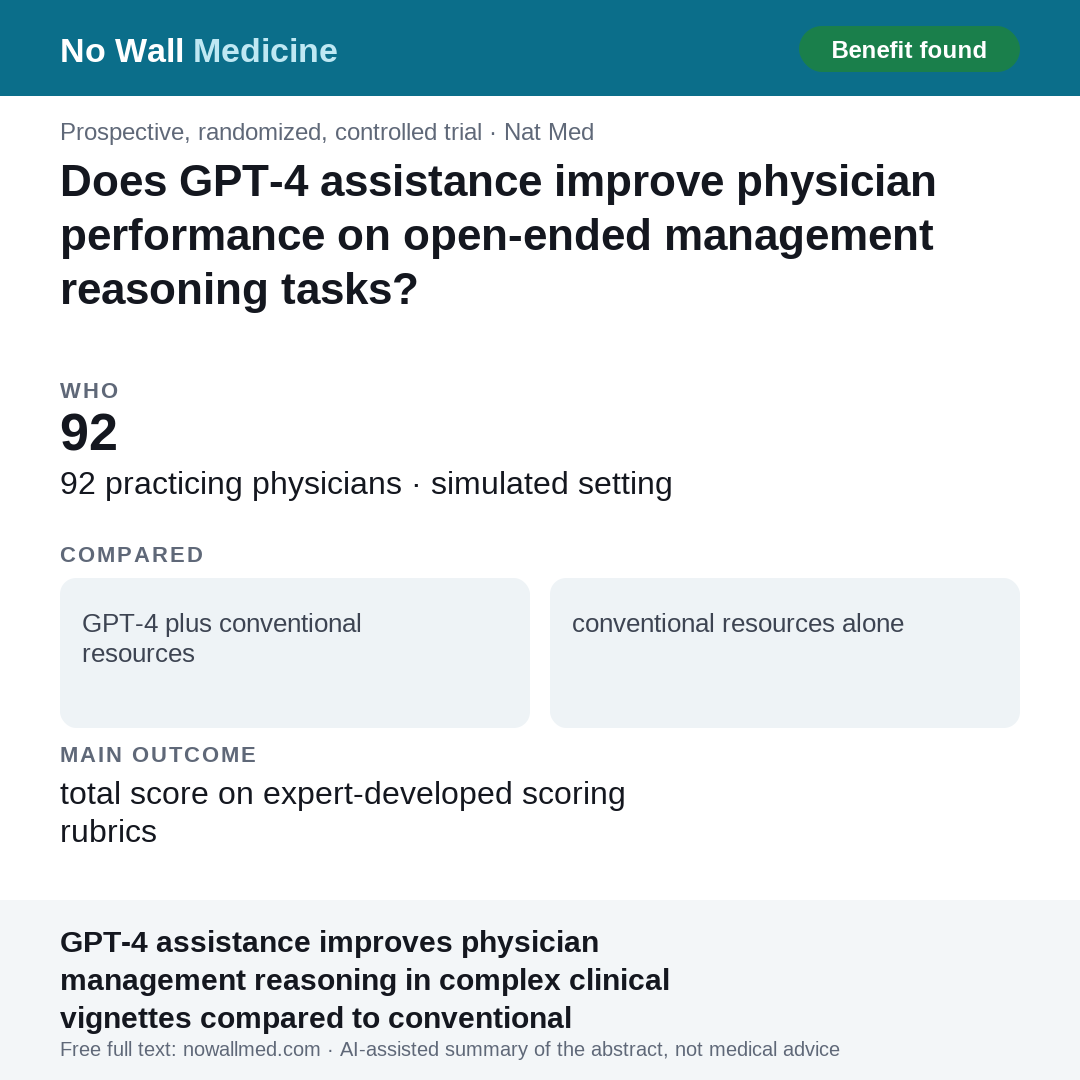
GPT-4 assistance for improvement of physician performance on patient care tasks: a randomized controlled trial
Prospective, randomized, controlled trialBenefit found
Does GPT-4 assistance improve physician performance on open-ended management reasoning tasks?
Who
92
92 practicing physicians · simulated setting
Compared
GPT-4 plus conventional resources
conventional resources alone
Main outcome
total score on expert-developed scoring rubrics
Result: mean difference 6.5% (95% CI 2.7 to 10.2)
Bottom line: GPT-4 assistance improves physician management reasoning in complex clinical vignettes compared to conventional resources.
Nat Med · 2025-02-05Download image
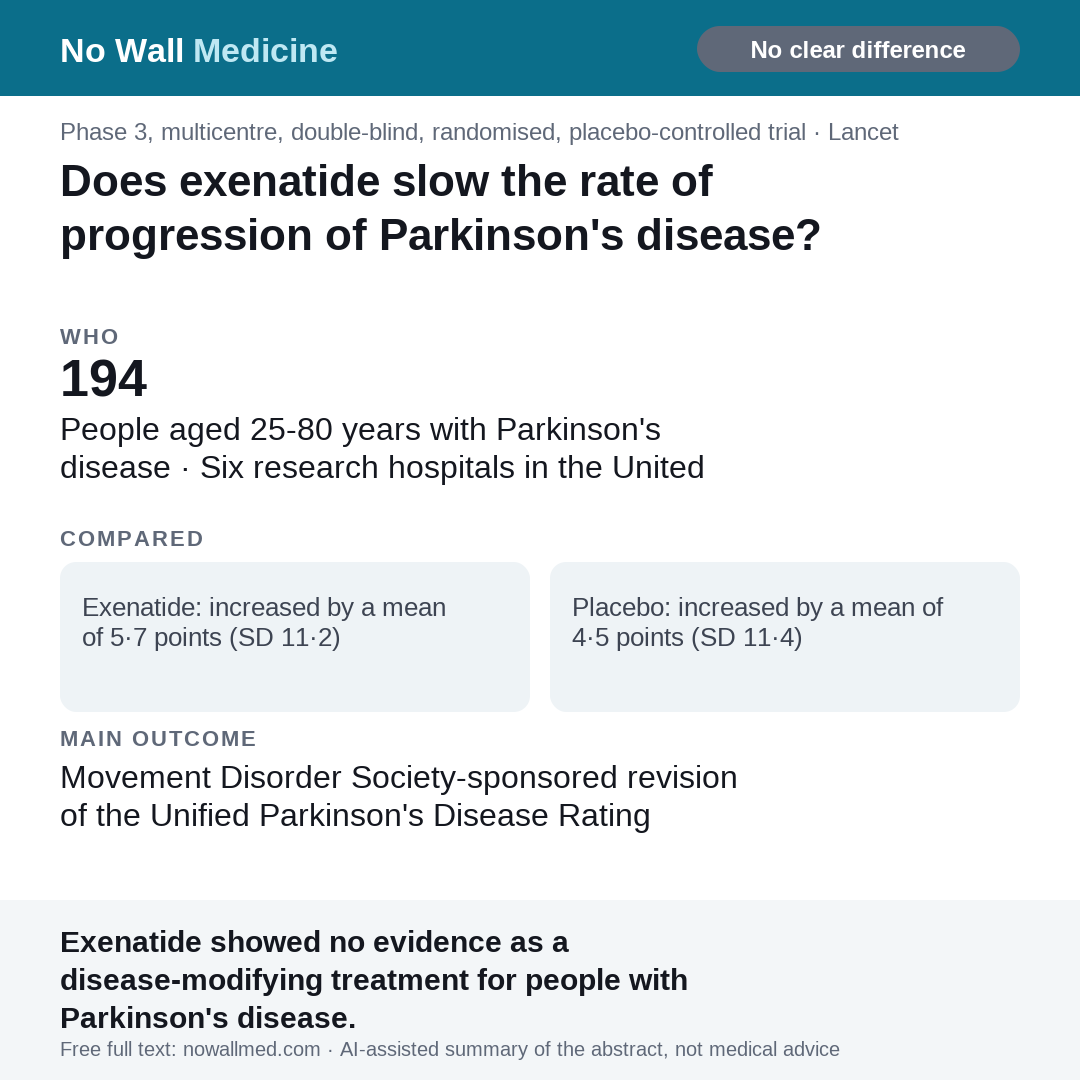
Exenatide once a week versus placebo as a potential disease-modifying treatment for people with Parkinson's disease in the UK: a phase 3, multicentre, double-blind, parallel-group, randomised, placebo-controlled trial
Phase 3, multicentre, double-blind, randomised, placebo-controlled trialNo clear difference
Does exenatide slow the rate of progression of Parkinson's disease?
Who
194
People aged 25-80 years with Parkinson's disease · Six research hospitals in the United Kingdom
Compared
Exenatide: increased by a mean of 5·7 points (SD 11·2)
Placebo: increased by a mean of 4·5 points (SD 11·4)
Main outcome
Movement Disorder Society-sponsored revision of the Unified Parkinson's Disease Rating Scale part III score
Result: adjusted coefficient 0·92 (95% CI -1·56 to 3·39)
Bottom line: Exenatide showed no evidence as a disease-modifying treatment for people with Parkinson's disease.
Funded by: National Institute for Health and Care Research and Cure Parkinson's
Lancet · 2025-02-04Download image
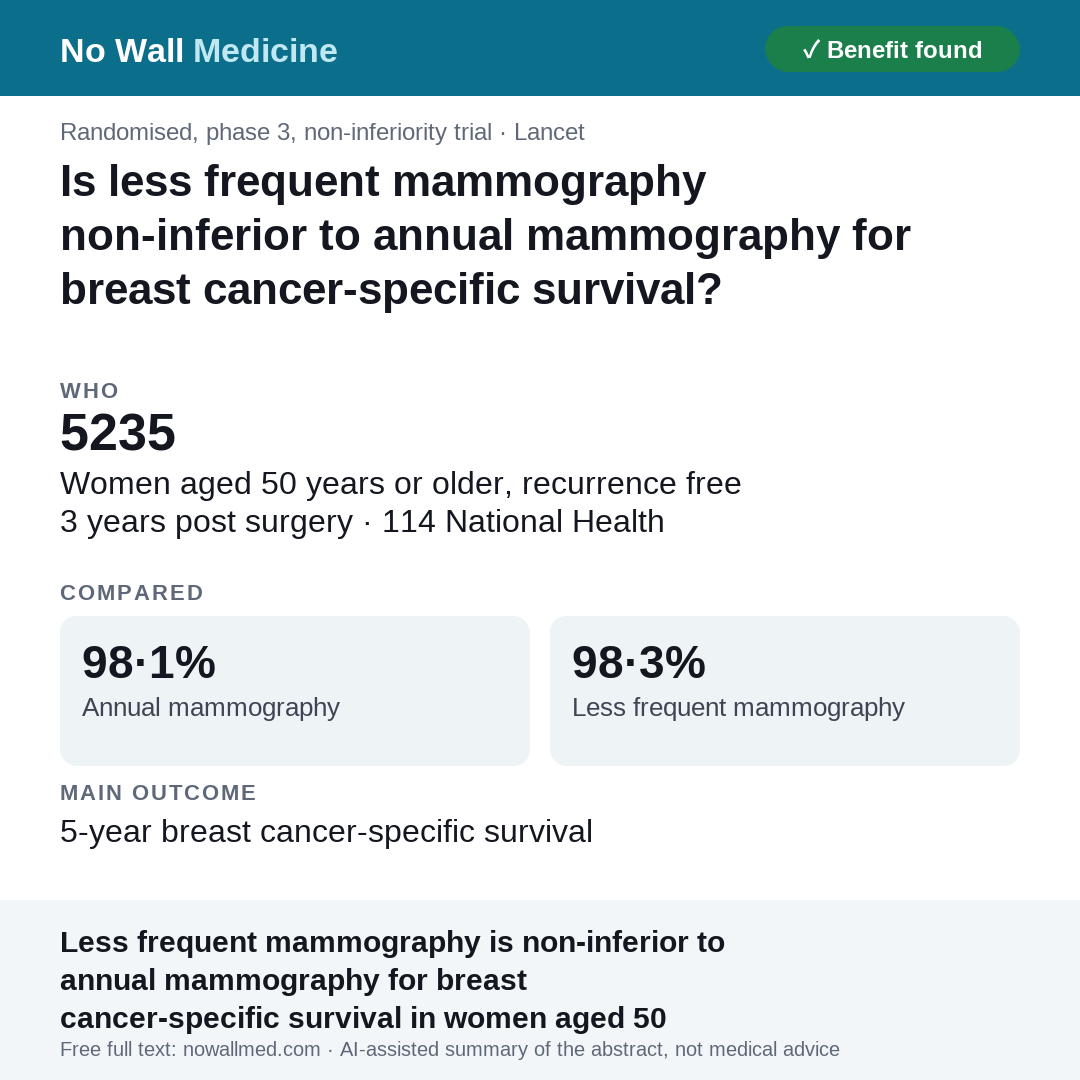
Annual versus less frequent mammographic surveillance in people with breast cancer aged 50 years and older in the UK (Mammo-50): a multicentre, randomised, phase 3, non-inferiority trial
Randomised, phase 3, non-inferiority trialBenefit found
Is less frequent mammography non-inferior to annual mammography for breast cancer-specific survival?
Who
5235
Women aged 50 years or older, recurrence free 3 years post surgery · 114 National Health Service hospitals in the UK
Compared
98·1%Annual mammography (95% CI 97·5-98·6)
98·3%Less frequent mammography (97·8-98·8)
Main outcome
5-year breast cancer-specific survival
Result: hazard ratio 0·92, 95% CI 0·64-1·32
Bottom line: Less frequent mammography is non-inferior to annual mammography for breast cancer-specific survival in women aged 50 years or older.
Funded by: National Institute for Health Research Health Technology Assessment programme
Lancet · 2025-02-02Download image
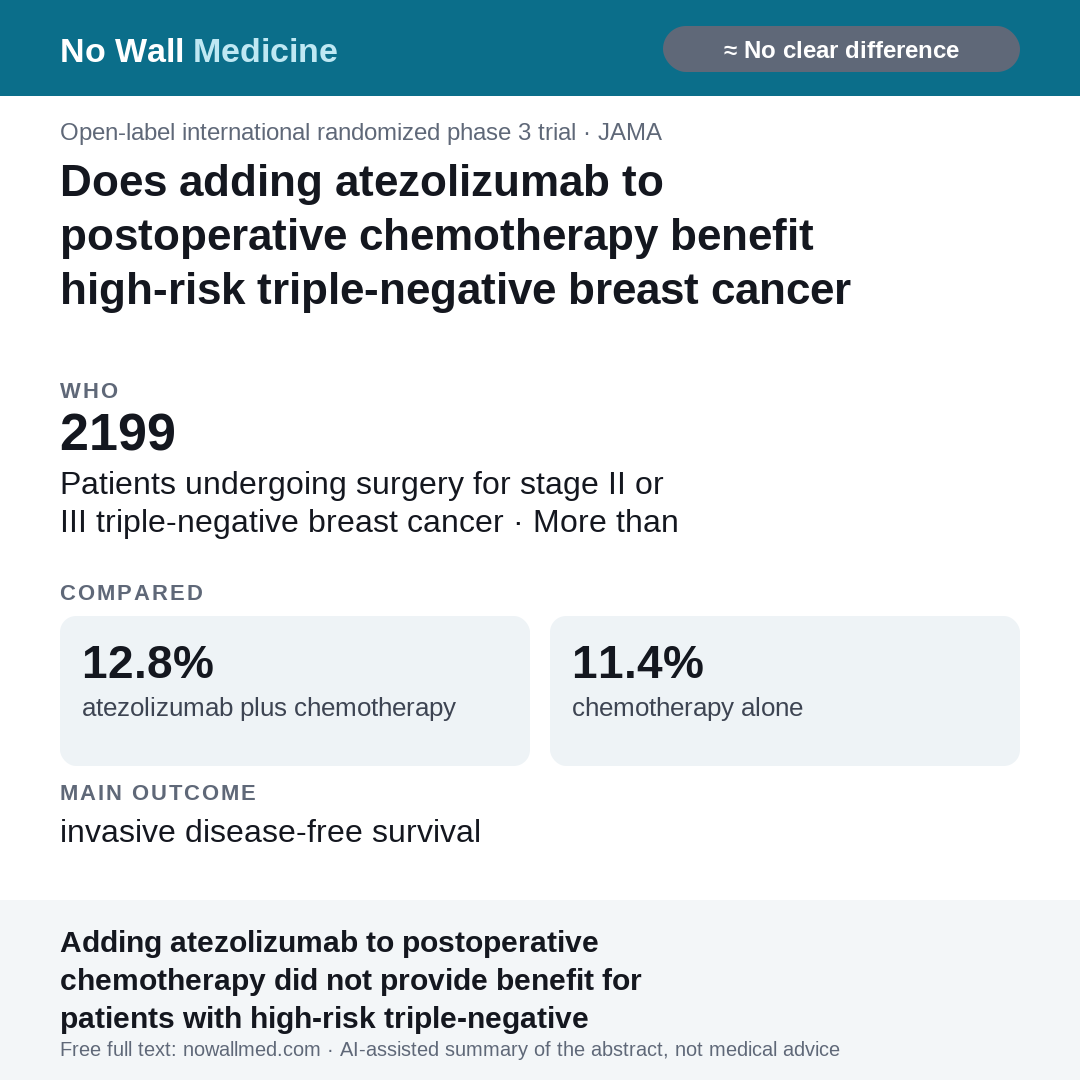
Adjuvant Atezolizumab for Early Triple-Negative Breast Cancer: The ALEXANDRA/IMpassion030 Randomized Clinical Trial
Open-label international randomized phase 3 trialNo clear difference
Does adding atezolizumab to postoperative chemotherapy benefit high-risk triple-negative breast cancer patients?
Who
2199
Patients undergoing surgery for stage II or III triple-negative breast cancer · More than 330 centers in 31 countries
Compared
12.8%atezolizumab plus chemotherapy
11.4%chemotherapy alone
Main outcome
invasive disease-free survival
Result: hazard ratio 1.11 (95% CI, 0.87-1.42)
Bottom line: Adding atezolizumab to postoperative chemotherapy did not provide benefit for patients with high-risk triple-negative breast cancer.
Limitation: The trial continued to a premature final analysis.
JAMA · 2025-01-30Download image
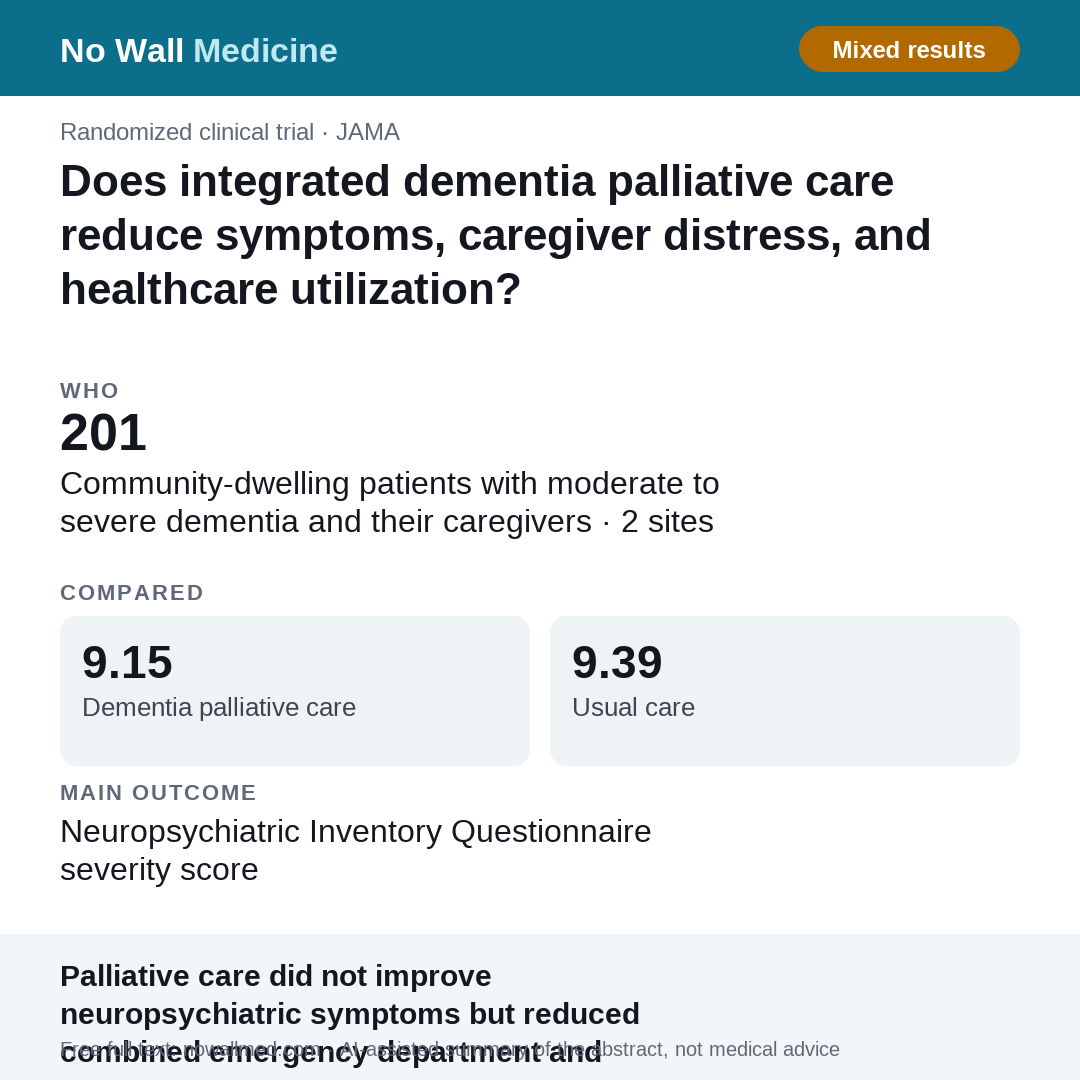
Palliative Care Program for Community-Dwelling Individuals With Dementia and Caregivers: The IN-PEACE Randomized Clinical Trial
Randomized clinical trialMixed results
Does integrated dementia palliative care reduce symptoms, caregiver distress, and healthcare utilization?
Who
201
Community-dwelling patients with moderate to severe dementia and their caregivers · 2 sites in central Indiana
Compared
9.15Dementia palliative care
9.39Usual care
Main outcome
Neuropsychiatric Inventory Questionnaire severity score
Result: -0.24 (95% CI, -2.33 to 1.84)
Bottom line: Palliative care did not improve neuropsychiatric symptoms but reduced combined emergency department and hospitalization events.
JAMA · 2025-01-29Download image
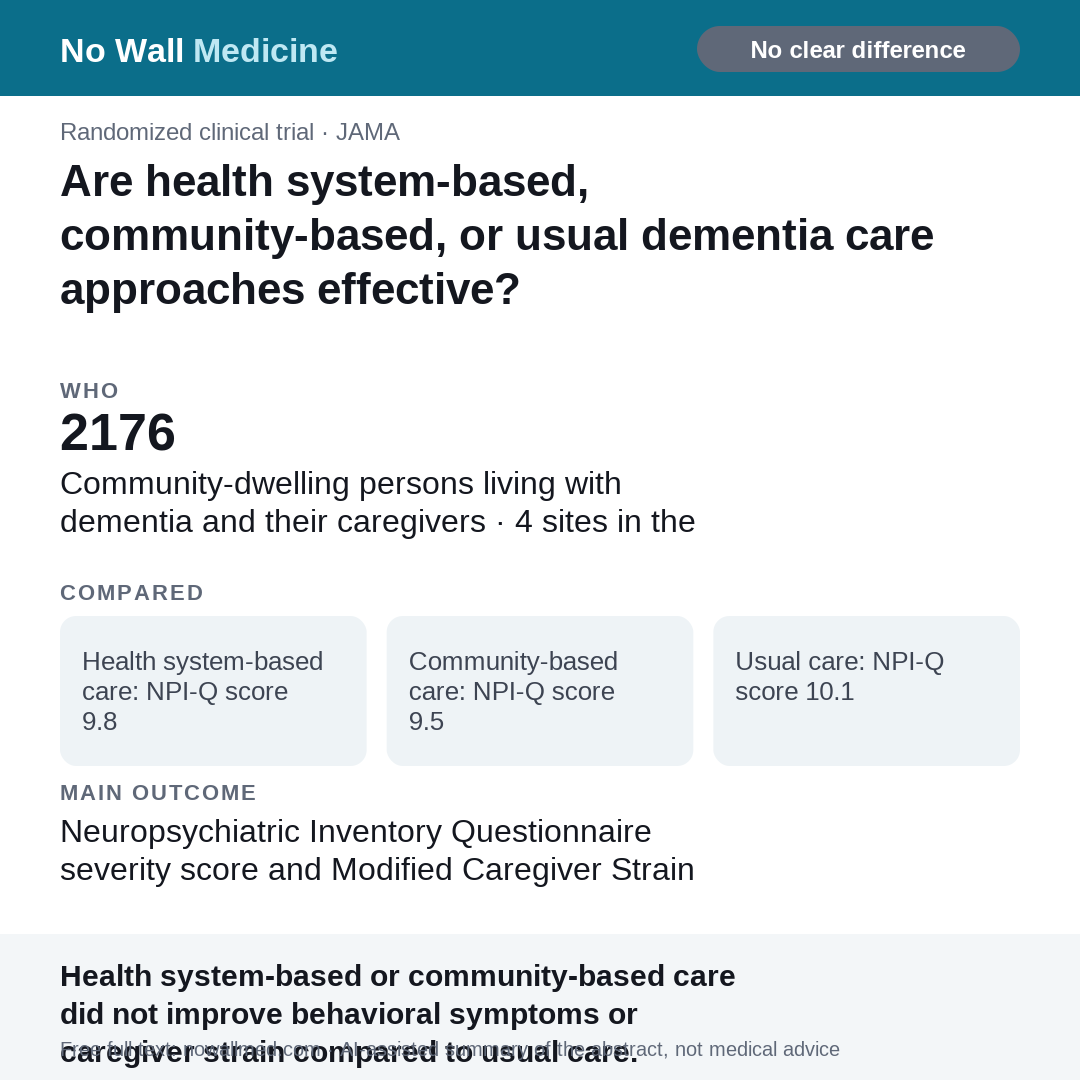
Health System, Community-Based, or Usual Dementia Care for Persons With Dementia and Caregivers: The D-CARE Randomized Clinical Trial
Randomized clinical trialNo clear difference
Are health system-based, community-based, or usual dementia care approaches effective?
Who
2176
Community-dwelling persons living with dementia and their caregivers · 4 sites in the US
Compared
Health system-based care: NPI-Q score 9.8
Community-based care: NPI-Q score 9.5
Usual care: NPI-Q score 10.1
Main outcome
Neuropsychiatric Inventory Questionnaire severity score and Modified Caregiver Strain Index
Result: difference between health system vs usual care, -0.33 (97.5% CI, -1.32 to 0.67)
Bottom line: Health system-based or community-based care did not improve behavioral symptoms or caregiver strain compared to usual care.
JAMA · 2025-01-29Download image
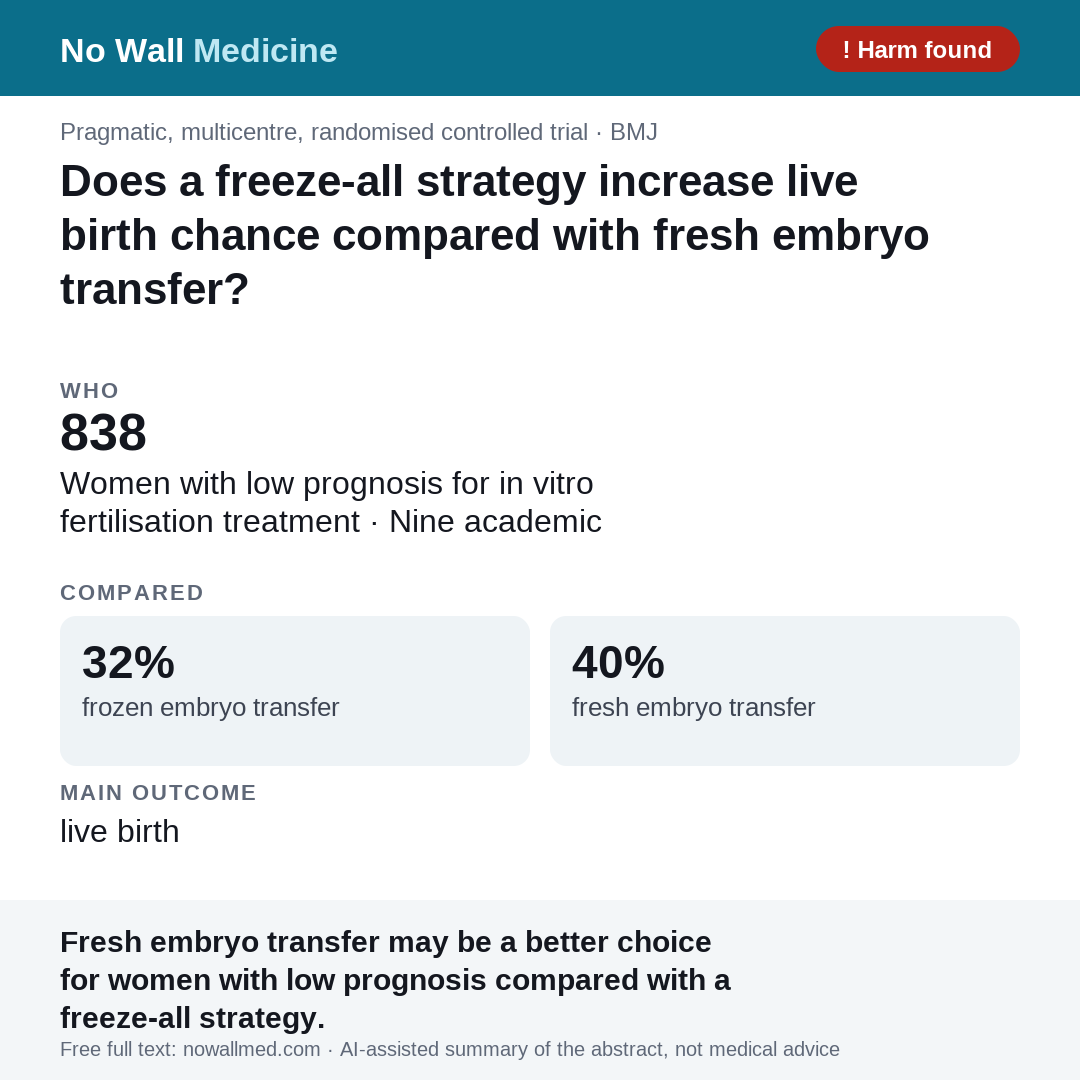
Frozen versus fresh embryo transfer in women with low prognosis for in vitro fertilisation treatment: pragmatic, multicentre, randomised controlled trial
Pragmatic, multicentre, randomised controlled trialHarm found
Does a freeze-all strategy increase live birth chance compared with fresh embryo transfer?
Who
838
Women with low prognosis for in vitro fertilisation treatment · Nine academic fertility centres in China
Compared
32%frozen embryo transfer (132 of 419)
40%fresh embryo transfer (168 of 419)
Main outcome
live birth
Result: relative ratio 0.79 (95% confidence interval 0.65 to 0.94)
Bottom line: Fresh embryo transfer may be a better choice for women with low prognosis compared with a freeze-all strategy.
BMJ · 2025-01-29Download image
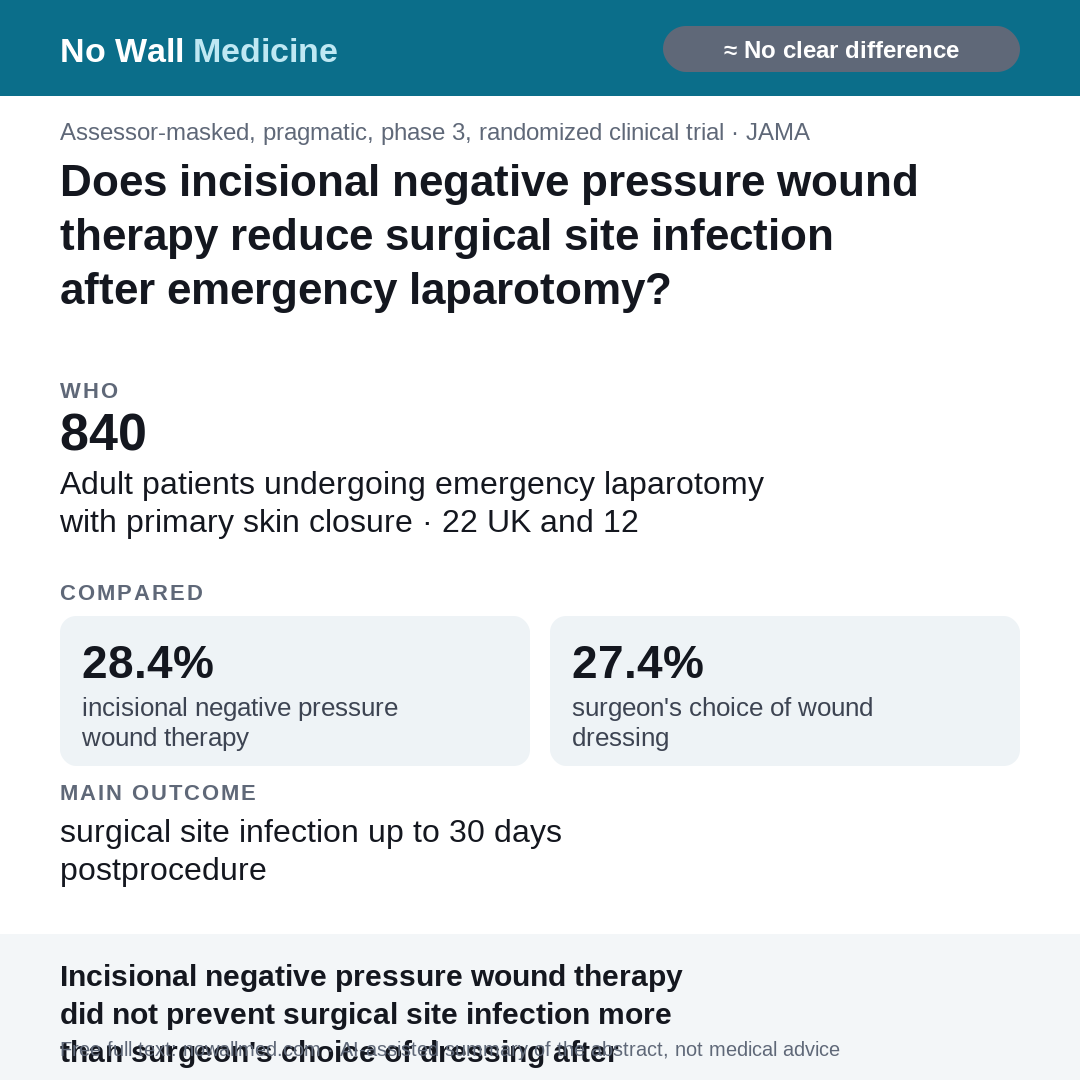
Negative Pressure Dressings to Prevent Surgical Site Infection After Emergency Laparotomy: The SUNRRISE Randomized Clinical Trial
Assessor-masked, pragmatic, phase 3, randomized clinical trialNo clear difference
Does incisional negative pressure wound therapy reduce surgical site infection after emergency laparotomy?
Who
840
Adult patients undergoing emergency laparotomy with primary skin closure · 22 UK and 12 Australian hospitals
Compared
28.4%incisional negative pressure wound therapy (112/394)
27.4%surgeon's choice of wound dressing (108/394)
Main outcome
surgical site infection up to 30 days postprocedure
Result: relative risk 1.03 (95% CI 0.83-1.28)
Bottom line: Incisional negative pressure wound therapy did not prevent surgical site infection more than surgeon's choice of dressing after emergency laparotomy.
JAMA · 2025-01-27Download image
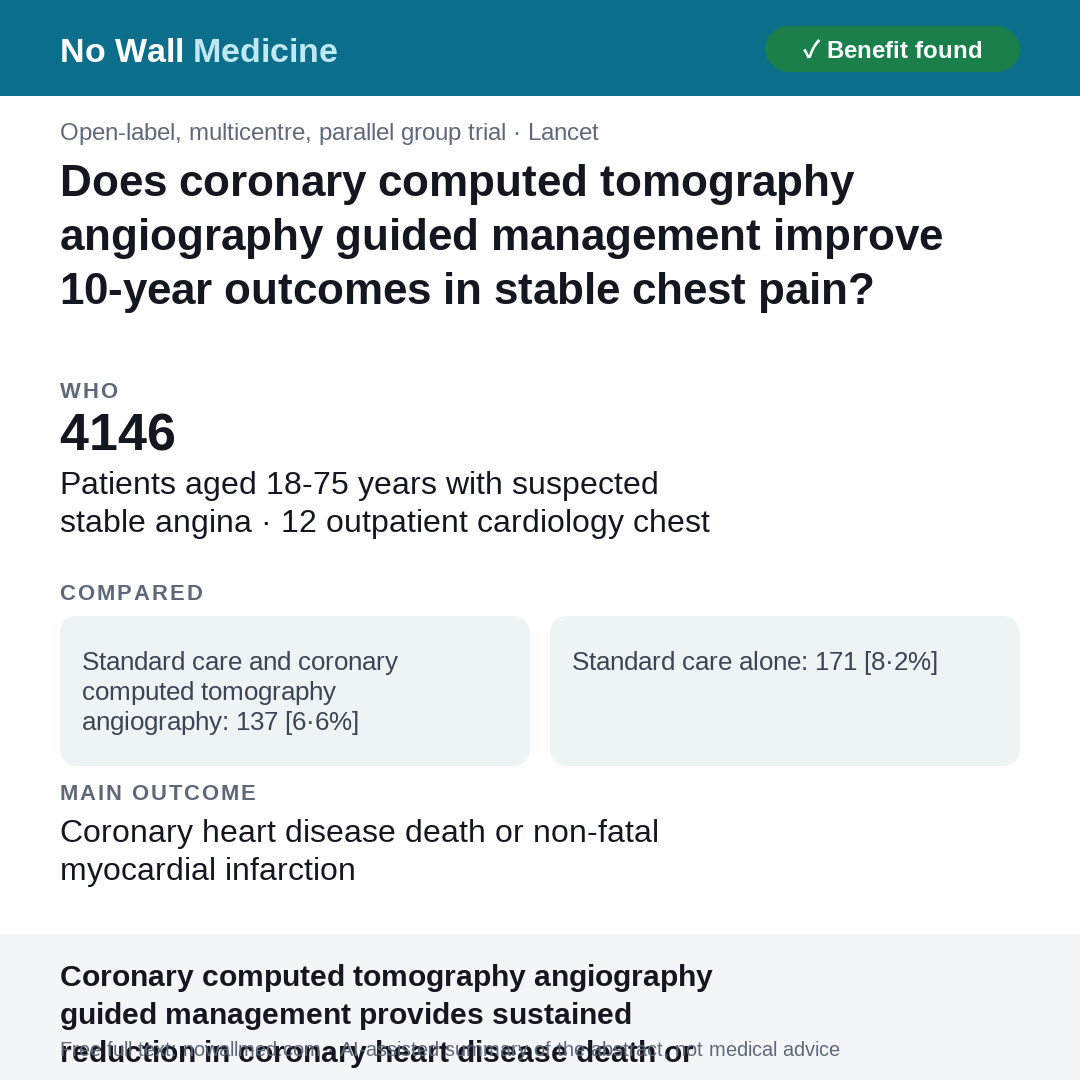
Coronary CT angiography-guided management of patients with stable chest pain: 10-year outcomes from the SCOT-HEART randomised controlled trial in Scotland
Open-label, multicentre, parallel group trialBenefit found
Does coronary computed tomography angiography guided management improve 10-year outcomes in stable chest pain?
Who
4146
Patients aged 18-75 years with suspected stable angina · 12 outpatient cardiology chest pain clinics in Scotland
Compared
Standard care and coronary computed tomography angiography: 137 [6·6%]
Standard care alone: 171 [8·2%]
Main outcome
Coronary heart disease death or non-fatal myocardial infarction
Result: hazard ratio 0·79 (95% CI 0·63-0·99)
Bottom line: Coronary computed tomography angiography guided management provides sustained reduction in coronary heart disease death or non-fatal myocardial infarction after 10 years.
Funded by: Scottish Government, Lothian's Health Foundation Trust, British Heart Foundation
Lancet · 2025-01-26Download image
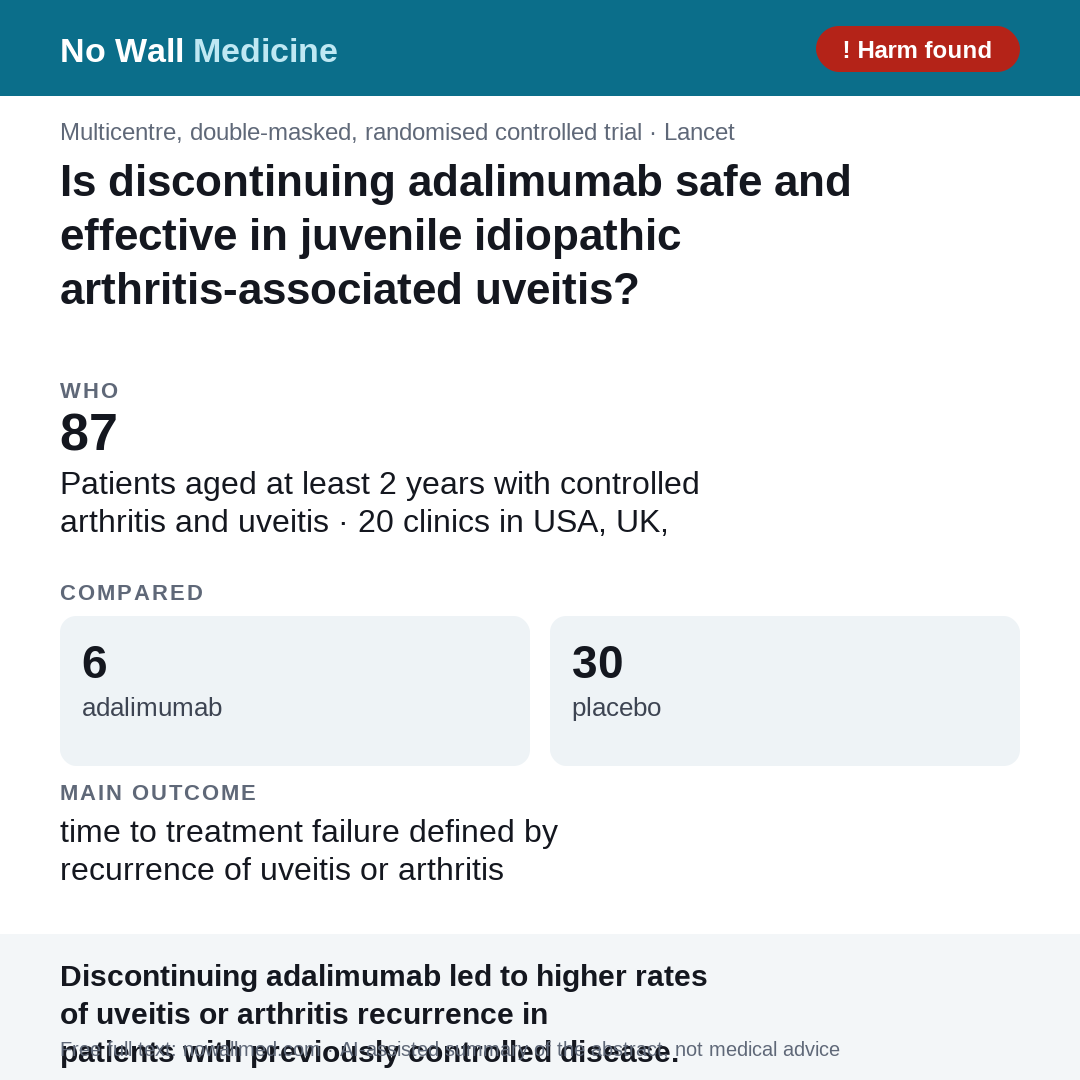
Stopping of adalimumab in juvenile idiopathic arthritis-associated uveitis (ADJUST): a multicentre, double-masked, randomised controlled trial
Multicentre, double-masked, randomised controlled trialHarm found
Is discontinuing adalimumab safe and effective in juvenile idiopathic arthritis-associated uveitis?
Who
87
Patients aged at least 2 years with controlled arthritis and uveitis · 20 clinics in USA, UK, and Australia
Compared
6adalimumab (14%)
30placebo (68%)
Main outcome
time to treatment failure defined by recurrence of uveitis or arthritis
Result: hazard ratio 8·7 (95% CI 3·6-21·2)
Bottom line: Discontinuing adalimumab led to higher rates of uveitis or arthritis recurrence in patients with previously controlled disease.
Funded by: US National Institutes of Health (National Eye Institute)
Lancet · 2025-01-26Download image