Visual abstracts
New randomized trials and meta-analyses from leading journals at a glance: who was studied, what was compared, and what was found. Every paper is free to read in full.
All specialtiesCardiology 4765Oncology 4048Gastroenterology & Hepatology 1906Infectious Disease 3759Neurology 1874Psychiatry & Mental Health 2217Pulmonology 2046Critical Care 1323Endocrinology & Diabetes 2545Pediatrics 2891Surgery 2482Orthopedics & Sports Medicine 917Neurosurgery 526Cardiothoracic & Vascular Surgery 657Plastic & Reconstructive Surgery 574Nephrology 1108Rheumatology 810Hematology 1090Dermatology 611Ophthalmology 532Obstetrics & Gynecology 1646Public & Global Health 1037Radiology & Imaging 620Anesthesiology 958Urology 745ENT (Otolaryngology) 494Emergency Medicine 481Allergy & Immunology 309Geriatrics 973Family Medicine & Primary Care 534Medical Genetics & Genomics 659Pathology & Laboratory Medicine 156Physical Medicine & Rehabilitation 736Palliative Care 421Nutrition 1561Digital Health & AI 2136General Medicine 316
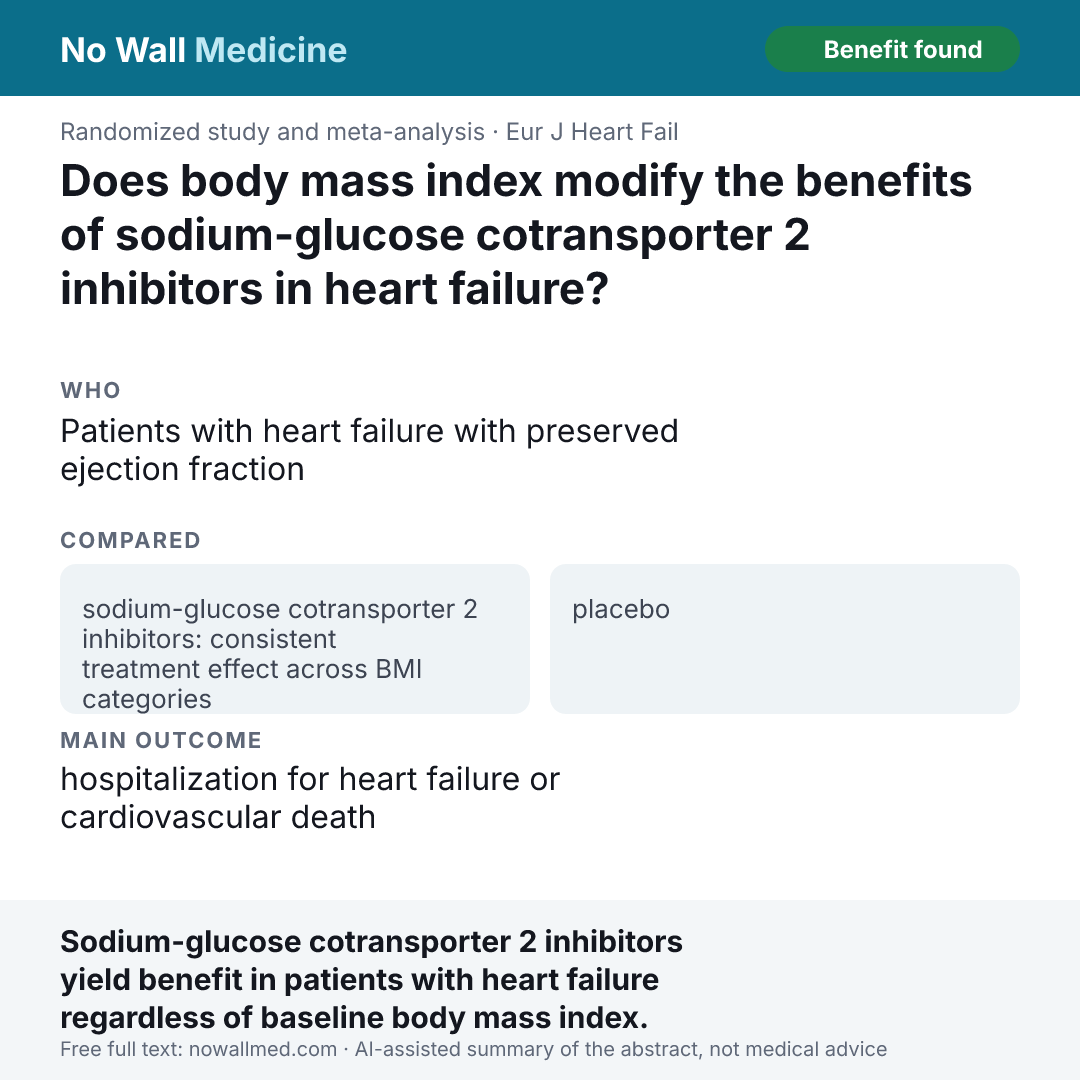
Body mass index and cardiorenal outcomes in the EMPEROR-Preserved trial: Principal findings and meta-analysis with the DELIVER trial
Randomized study and meta-analysisBenefit found
Does body mass index modify the benefits of sodium-glucose cotransporter 2 inhibitors in heart failure?
Who
Patients with heart failure with preserved ejection fraction
Compared
sodium-glucose cotransporter 2 inhibitors: consistent treatment effect across BMI categories
placebo
Main outcome
hospitalization for heart failure or cardiovascular death
Bottom line: Sodium-glucose cotransporter 2 inhibitors yield benefit in patients with heart failure regardless of baseline body mass index.
Eur J Heart Fail · 2024-04-01 · Save PNG
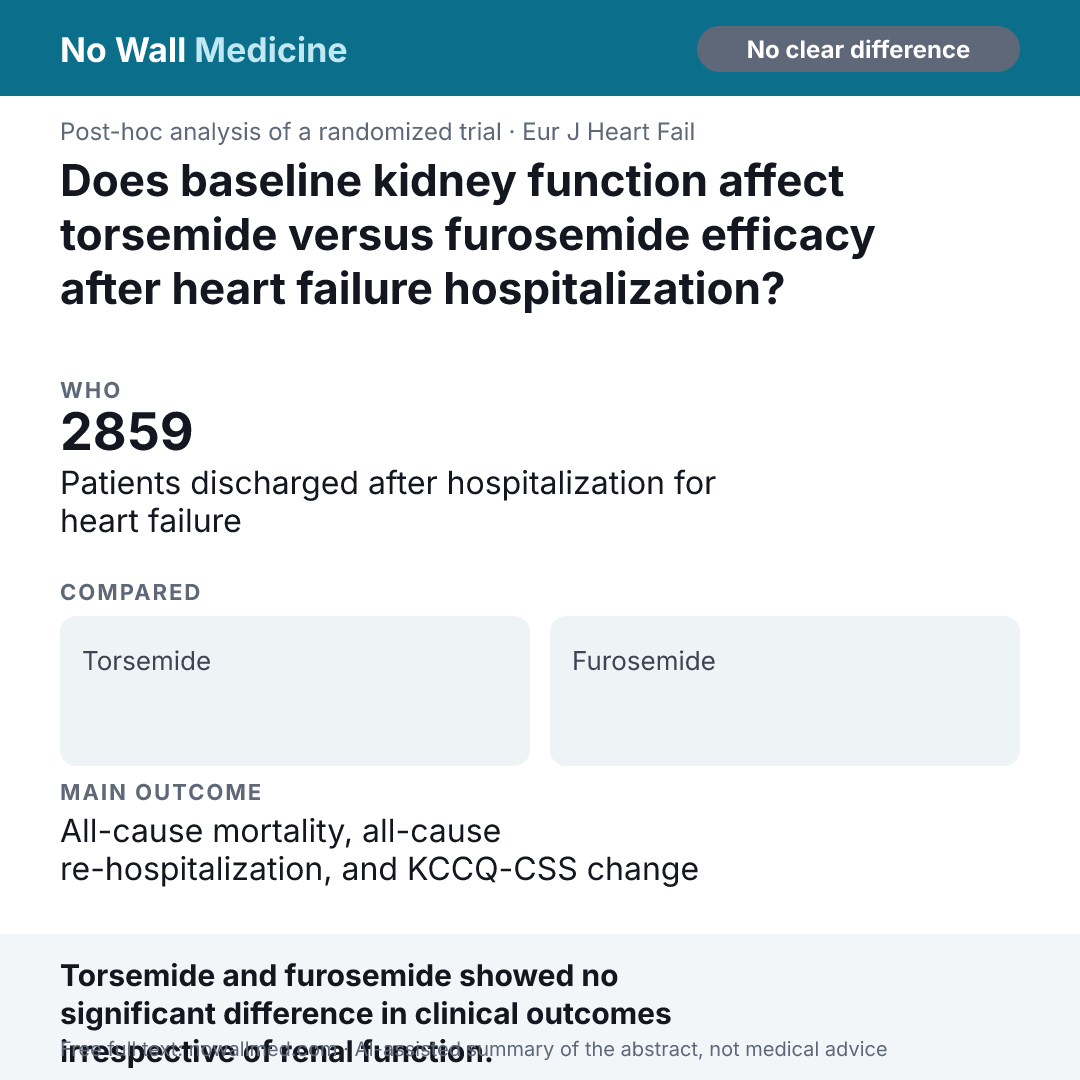
Impact of baseline kidney dysfunction on oral diuretic efficacy following hospitalization for heart failure - insights from TRANSFORM-HF
Post-hoc analysis of a randomized trialNo clear difference
Does baseline kidney function affect torsemide versus furosemide efficacy after heart failure hospitalization?
Who
2859
Patients discharged after hospitalization for heart failure
Compared
Torsemide
Furosemide
Main outcome
All-cause mortality, all-cause re-hospitalization, and KCCQ-CSS change
Bottom line: Torsemide and furosemide showed no significant difference in clinical outcomes irrespective of renal function.
Eur J Heart Fail · 2024-04-01 · Save PNG
Minimal clinically important difference in Alzheimer's disease: Rapid review
Rapid systematic reviewUnclear result
What are the minimal clinically important differences for Alzheimer's disease trial endpoints?
Who
Patients with mild cognitive impairment, mild, or moderate to severe Alzheimer's disease
Compared
Mild cognitive impairment: ADAS-Cog +2 to +3, CDR-SB +1, iADRS -5, or MMSE -1 to -2
Mild Alzheimer's disease: ADAS-Cog +3, CDR-SB +2, iADRS -9, or MMSE -2
Moderate to severe Alzheimer's disease: CDR-SB +2 or MMSE -1.4 to -3
Main outcome
Minimal clinically important differences for Alzheimer's disease trial endpoints
Bottom line: This review identified thresholds for minimal clinically important differences across various stages of Alzheimer's disease.
Alzheimers Dement · 2024-04-01 · Save PNG

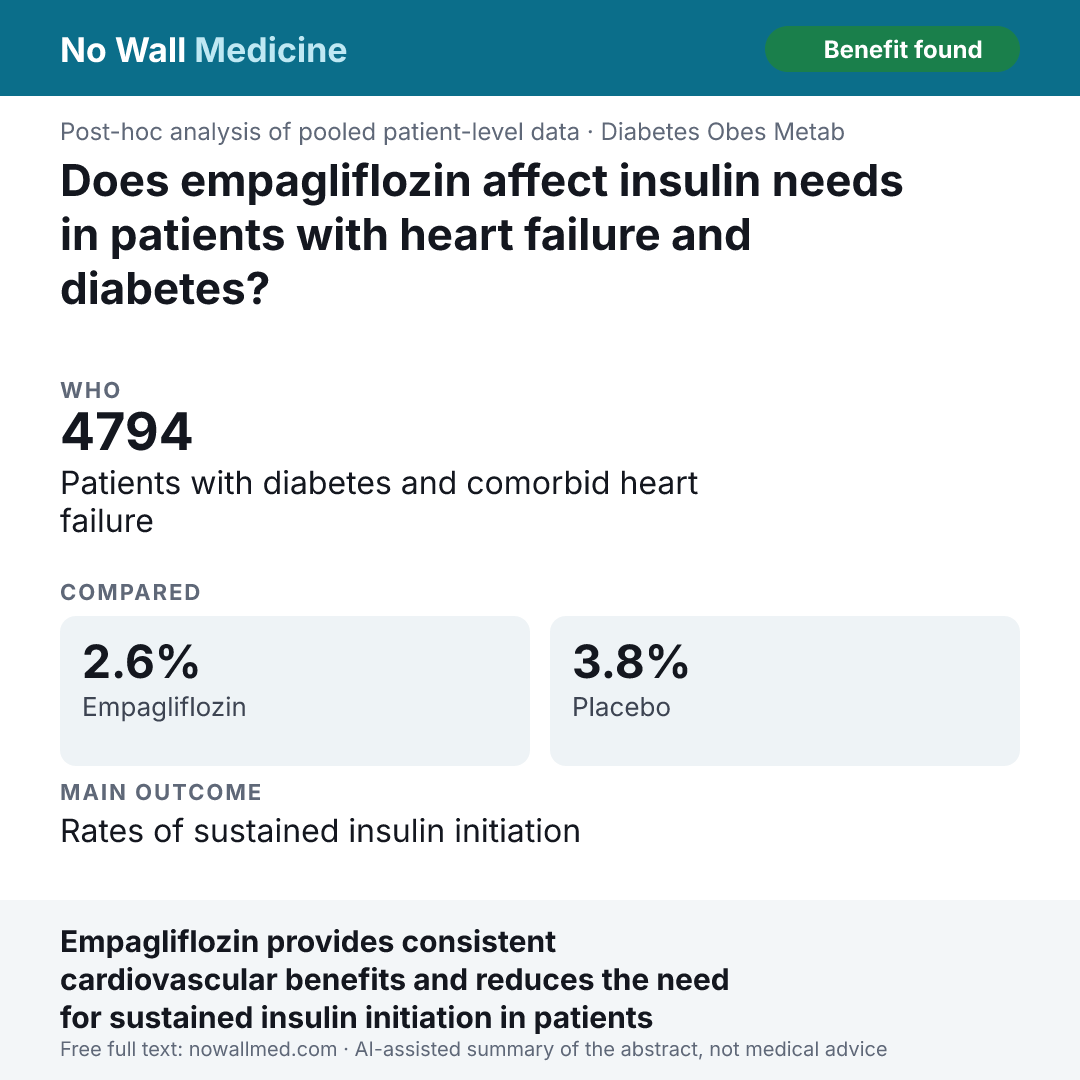
Impact of empagliflozin on insulin needs in patients with heart failure and diabetes: An EMPEROR-Pooled analysis
Post-hoc analysis of pooled patient-level dataBenefit found
Does empagliflozin affect insulin needs in patients with heart failure and diabetes?
Who
4794
Patients with diabetes and comorbid heart failure
Compared
2.6%Empagliflozin (for insulin initiation in those not using insulin at baseline)
3.8%Placebo (for insulin initiation in those not using insulin at baseline)
Main outcome
Rates of sustained insulin initiation
Result: odds ratio 0.66 (95% CI 0.50-0.88)
Bottom line: Empagliflozin provides consistent cardiovascular benefits and reduces the need for sustained insulin initiation in patients without baseline insulin use.
Diabetes Obes Metab · 2024-04-01 · Save PNG
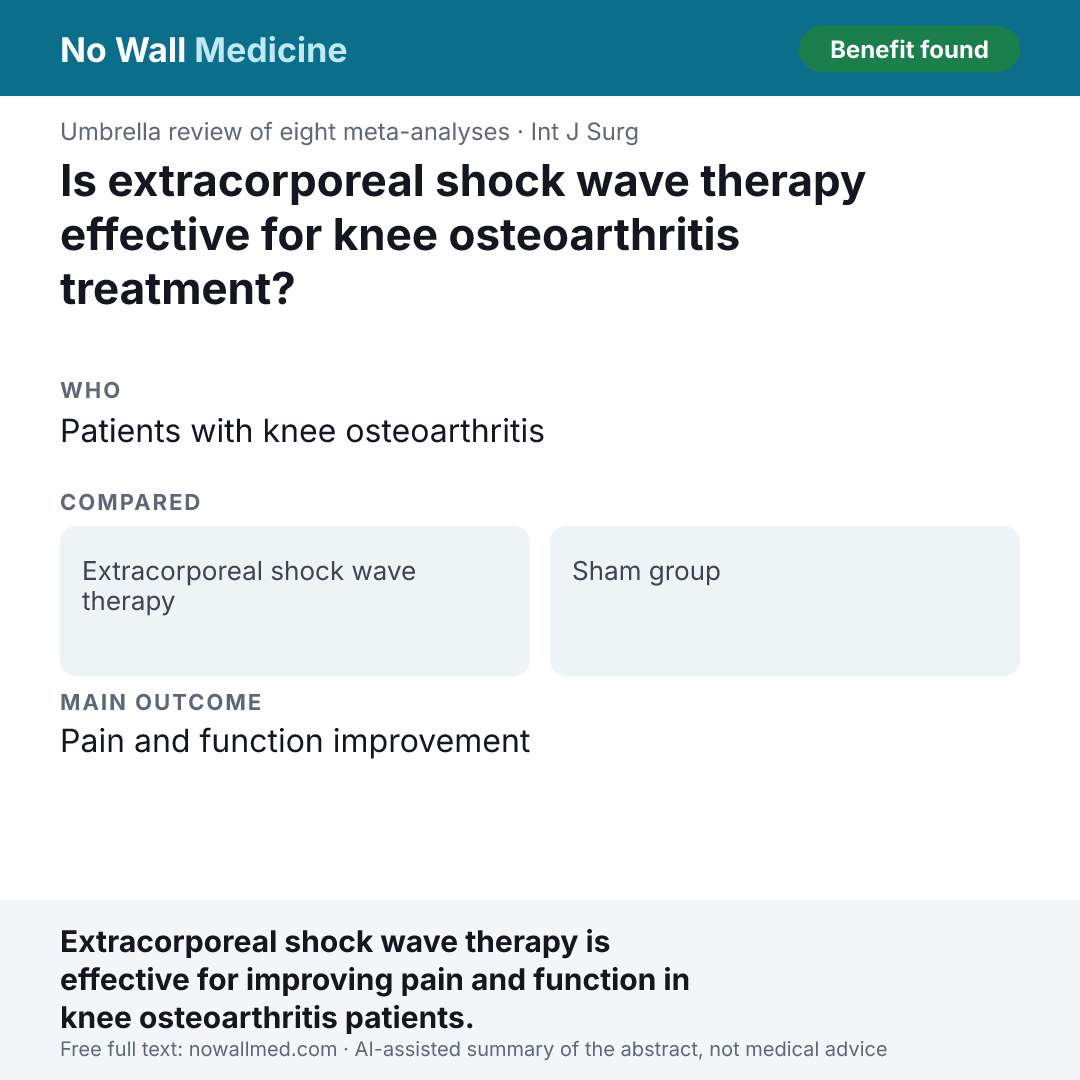
The efficacy of extracorporeal shock wave therapy for knee osteoarthritis : an umbrella review
Umbrella review of eight meta-analysesBenefit found
Is extracorporeal shock wave therapy effective for knee osteoarthritis treatment?
Who
Patients with knee osteoarthritis
Compared
Extracorporeal shock wave therapy
Sham group
Main outcome
Pain and function improvement
Bottom line: Extracorporeal shock wave therapy is effective for improving pain and function in knee osteoarthritis patients.
Int J Surg · 2024-04-01 · Save PNG
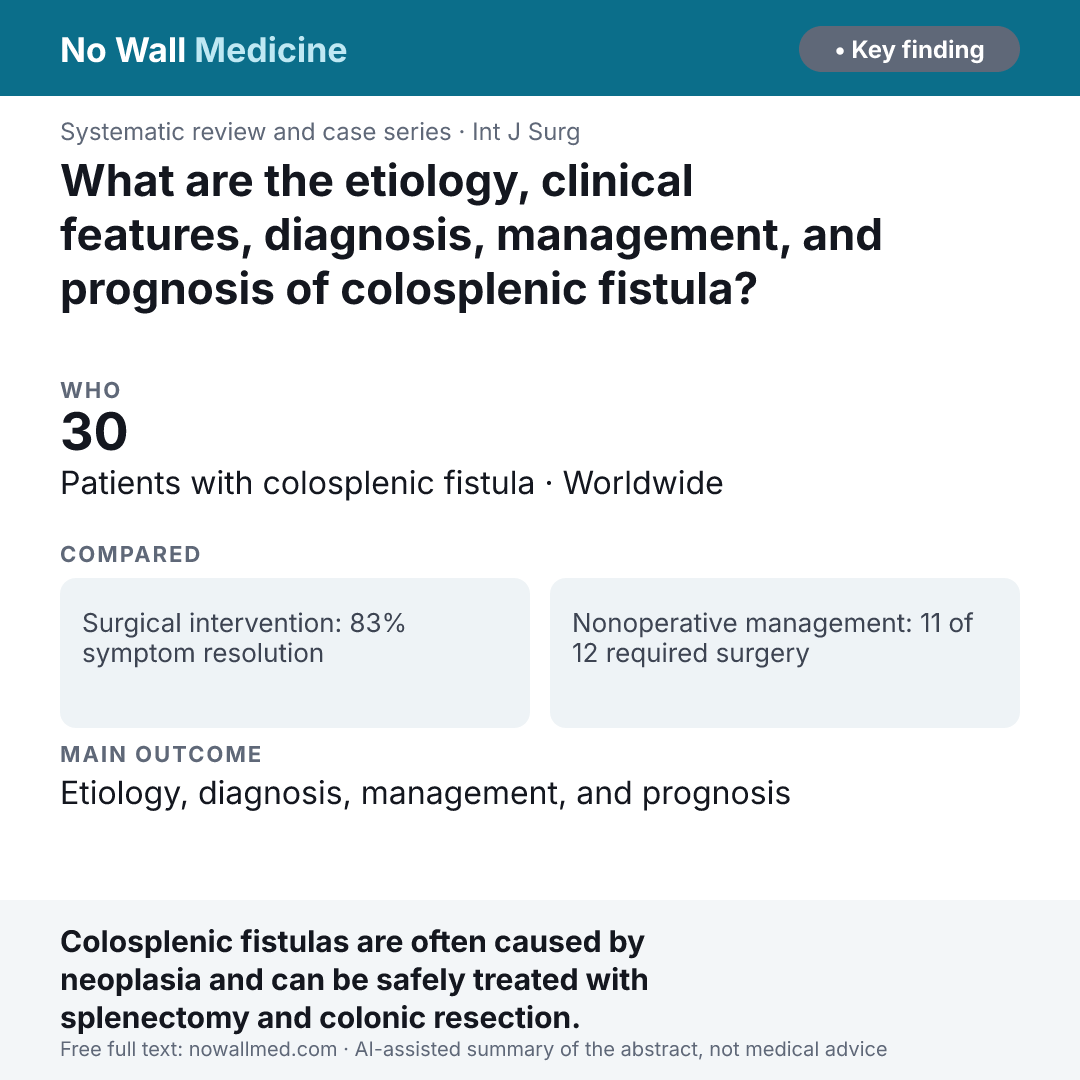
Colosplenic fistula diagnosis and management: a case series and review of literature
Systematic review and case seriesKey finding
What are the etiology, clinical features, diagnosis, management, and prognosis of colosplenic fistula?
Who
30
Patients with colosplenic fistula · Worldwide
Compared
Surgical intervention: 83% symptom resolution
Nonoperative management: 11 of 12 required surgery
Main outcome
Etiology, diagnosis, management, and prognosis
Bottom line: Colosplenic fistulas are often caused by neoplasia and can be safely treated with splenectomy and colonic resection.
Limitation: Extremely rare complication with infrequent incidence
Int J Surg · 2024-04-01 · Save PNG
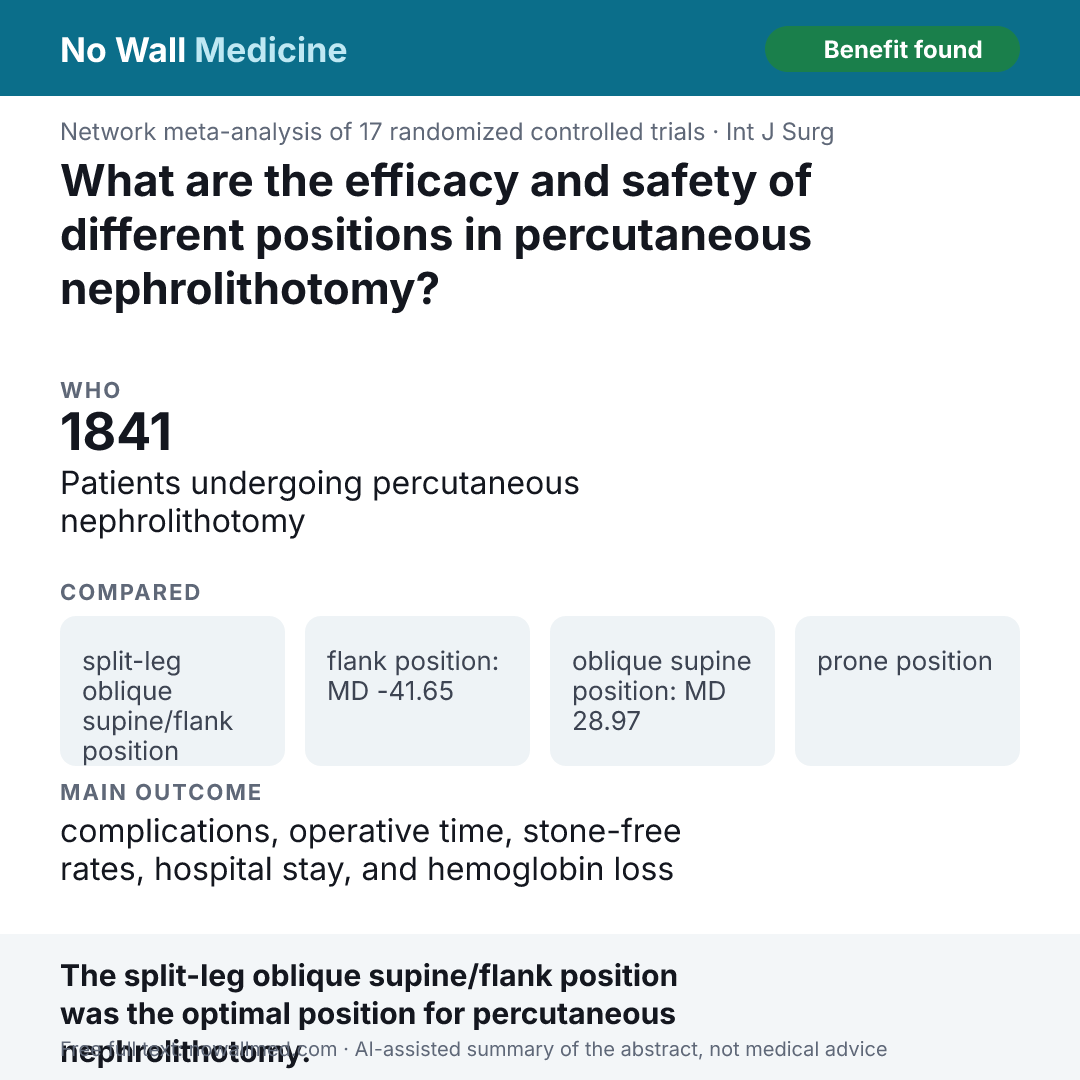
Comparison of safety and efficacy of different positions in percutaneous nephrolithotomy: a network meta-analysis
Network meta-analysis of 17 randomized controlled trialsBenefit found
What are the efficacy and safety of different positions in percutaneous nephrolithotomy?
Who
1841
Patients undergoing percutaneous nephrolithotomy
Compared
split-leg oblique supine/flank position
flank position: MD -41.65
oblique supine position: MD 28.97
prone position
Main outcome
complications, operative time, stone-free rates, hospital stay, and hemoglobin loss
Bottom line: The split-leg oblique supine/flank position was the optimal position for percutaneous nephrolithotomy.
Limitation: Further randomized controlled trials are necessary to confirm the outstanding safety and efficacy of split-leg position.
Int J Surg · 2024-04-01 · Save PNG
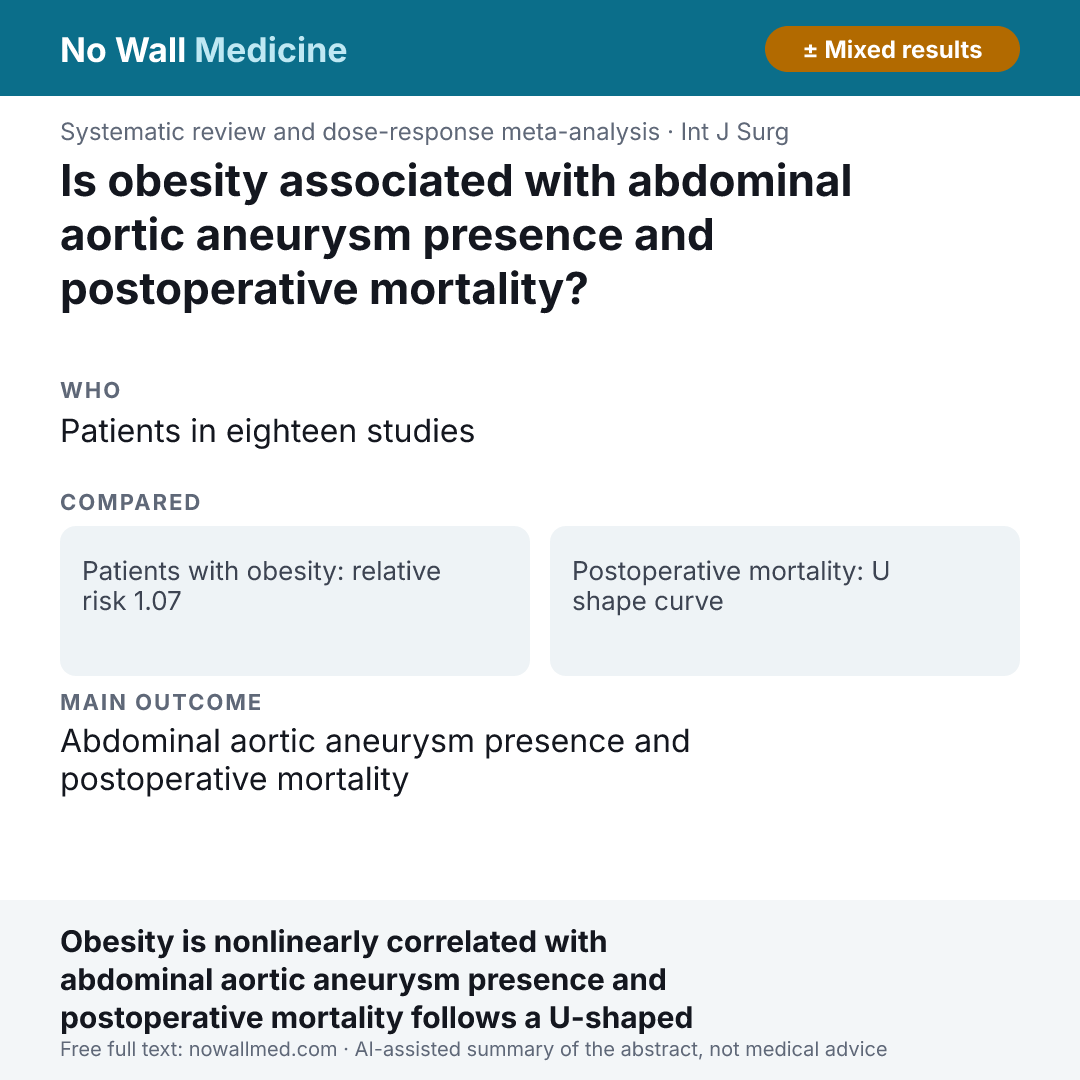
Body mass index and the risk of abdominal aortic aneurysm presence and postoperative mortality: a systematic review and dose-response meta-analysis
Systematic review and dose-response meta-analysisMixed results
Is obesity associated with abdominal aortic aneurysm presence and postoperative mortality?
Who
Patients in eighteen studies
Compared
Patients with obesity: relative risk 1.07
Postoperative mortality: U shape curve
Main outcome
Abdominal aortic aneurysm presence and postoperative mortality
Bottom line: Obesity is nonlinearly correlated with abdominal aortic aneurysm presence and postoperative mortality follows a U-shaped curve.
Int J Surg · 2024-04-01 · Save PNG
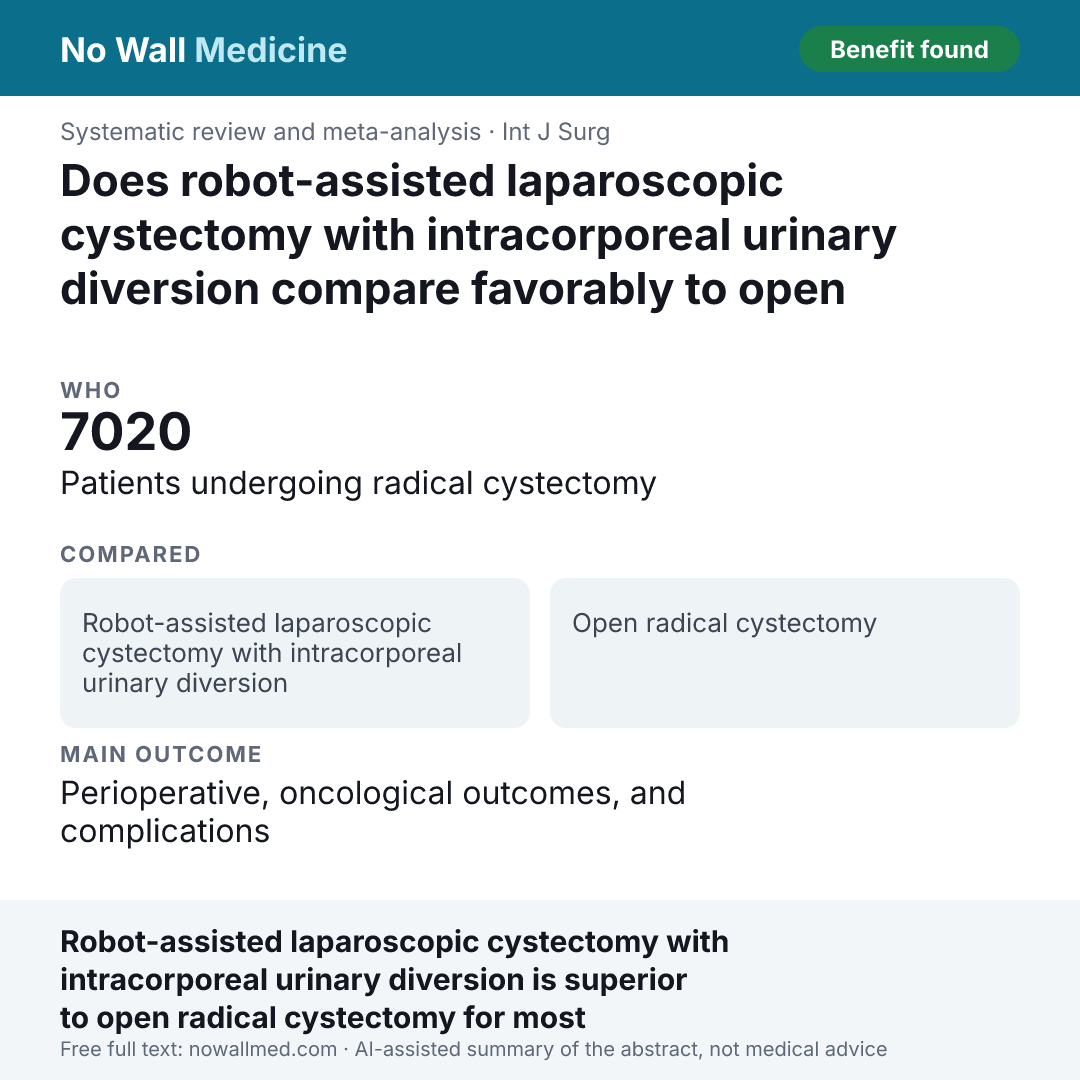
Robot-assisted radical cystectomy with intracorporeal urinary diversion: an updated systematic review and meta-analysis of its differential effect on effectiveness and safety
Systematic review and meta-analysisBenefit found
Does robot-assisted laparoscopic cystectomy with intracorporeal urinary diversion compare favorably to open radical cystectomy?
Who
7020
Patients undergoing radical cystectomy
Compared
Robot-assisted laparoscopic cystectomy with intracorporeal urinary diversion
Open radical cystectomy
Main outcome
Perioperative, oncological outcomes, and complications
Result: blood loss WMD -555.52 (95% CI -681.64 to -429.39); transfusion OR 0.16 (95% CI 0.09-0.28); hospital stay WMD -2.05 (95% CI -2.93 to -1.17); grade III complications 30 days OR 0.57 (95% CI 0.44-0.75); positive surgical margin OR 0.65 (95% CI 0.49-0.85); operative time WMD 68.54 (95% CI 47.41-89.67); ureteroenteric stricture OR 1.56 (95% CI 1.16-2.11)
Bottom line: Robot-assisted laparoscopic cystectomy with intracorporeal urinary diversion is superior to open radical cystectomy for most outcomes, despite longer operative time and higher stricture rates.
Int J Surg · 2024-04-01 · Save PNG
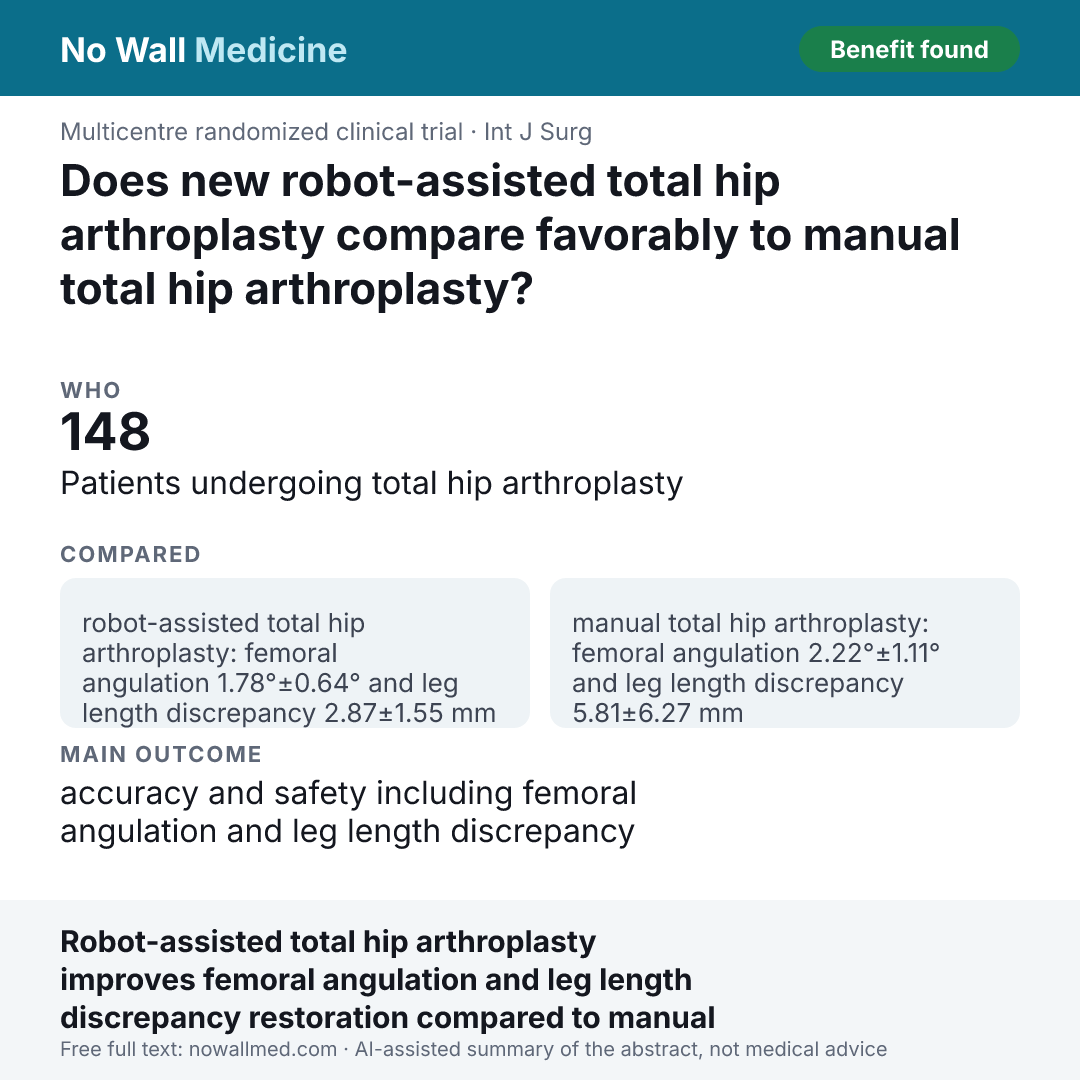
A new designed full process coverage robot-assisted total hip arthroplasty: a multicentre randomized clinical trial
Multicentre randomized clinical trialBenefit found
Does new robot-assisted total hip arthroplasty compare favorably to manual total hip arthroplasty?
Who
148
Patients undergoing total hip arthroplasty
Compared
robot-assisted total hip arthroplasty: femoral angulation 1.78°±0.64° and leg length discrepancy 2.87±1.55 mm
manual total hip arthroplasty: femoral angulation 2.22°±1.11° and leg length discrepancy 5.81±6.27 mm
Main outcome
accuracy and safety including femoral angulation and leg length discrepancy
Bottom line: Robot-assisted total hip arthroplasty improves femoral angulation and leg length discrepancy restoration compared to manual procedures.
Int J Surg · 2024-04-01 · Save PNG
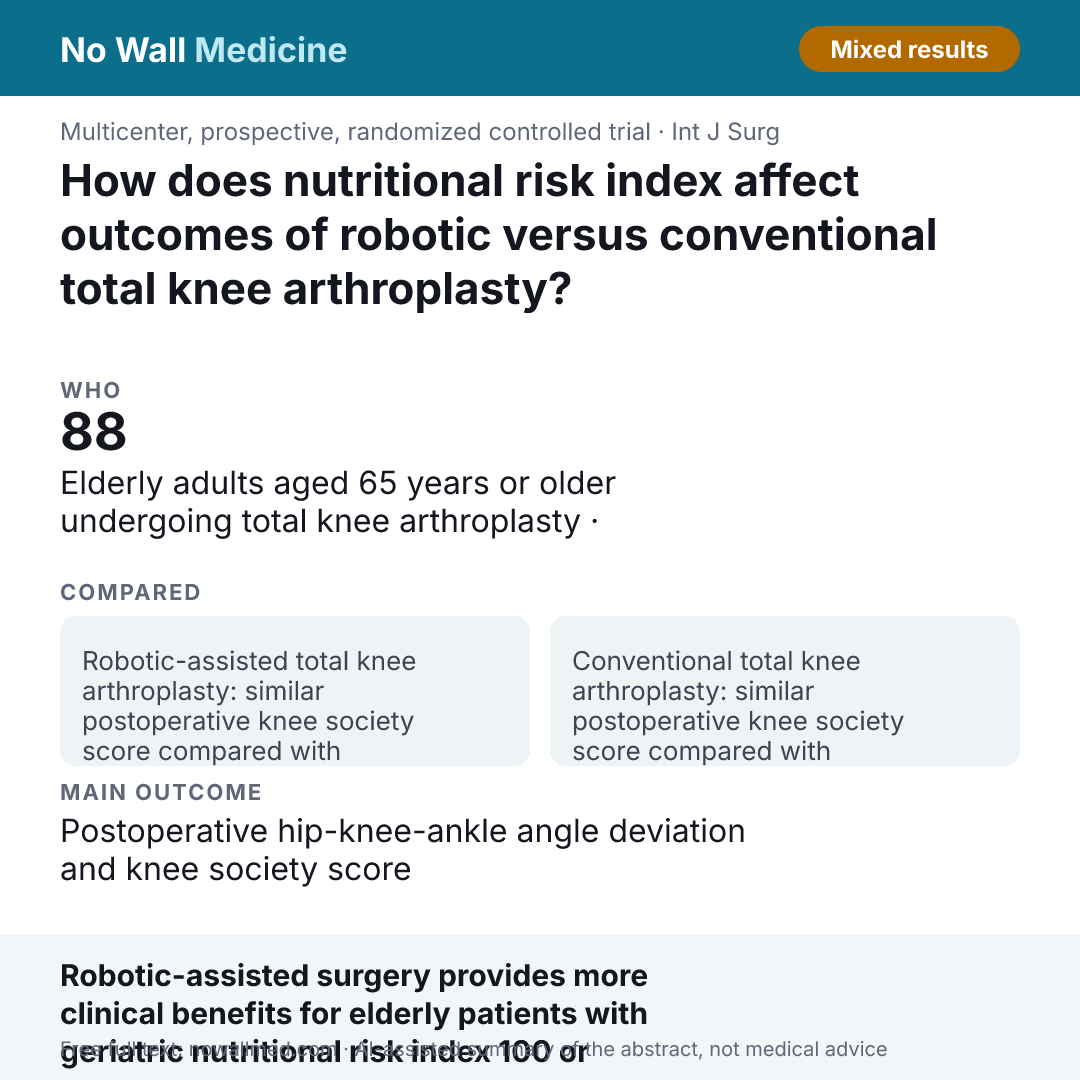
Associations of postoperative outcomes with geriatric nutritional risk index after conventional and robotic-assisted total knee arthroplasty: a randomized controlled trial
Multicenter, prospective, randomized controlled trialMixed results
How does nutritional risk index affect outcomes of robotic versus conventional total knee arthroplasty?
Who
88
Elderly adults aged 65 years or older undergoing total knee arthroplasty · Multicenter
Compared
Robotic-assisted total knee arthroplasty: similar postoperative knee society score compared with conventional
Conventional total knee arthroplasty: similar postoperative knee society score compared with robotic-assisted
Main outcome
Postoperative hip-knee-ankle angle deviation and knee society score
Bottom line: Robotic-assisted surgery provides more clinical benefits for elderly patients with geriatric nutritional risk index 100 or less.
Int J Surg · 2024-04-01 · Save PNG
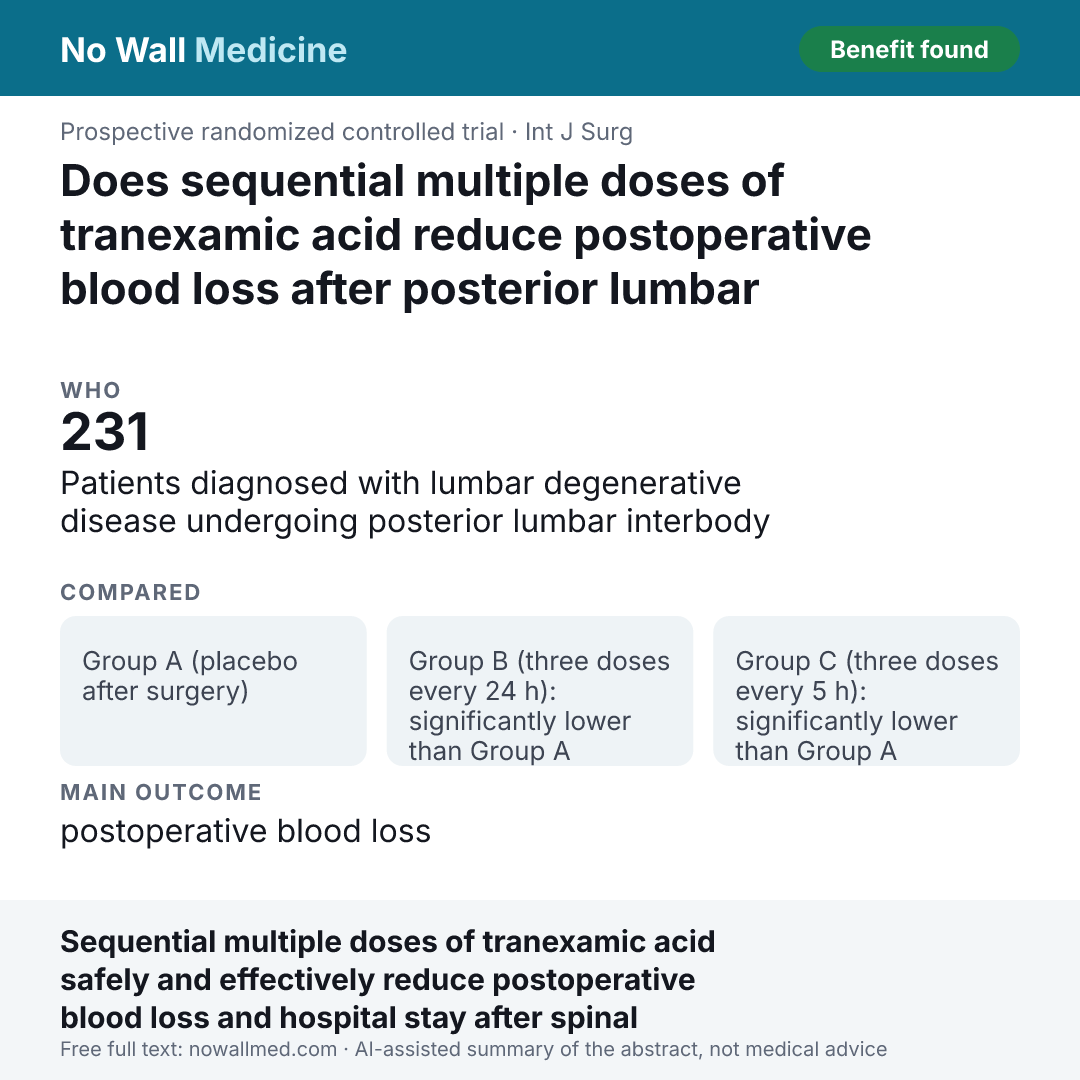
The effect of perioperative sequential application of multiple doses of tranexamic acid on postoperative blood loss after PLIF: a prospective randomized controlled trial
Prospective randomized controlled trialBenefit found
Does sequential multiple doses of tranexamic acid reduce postoperative blood loss after posterior lumbar interbody fusion?
Who
231
Patients diagnosed with lumbar degenerative disease undergoing posterior lumbar interbody fusion
Compared
Group A (placebo after surgery)
Group B (three doses every 24 h): significantly lower than Group A
Group C (three doses every 5 h): significantly lower than Group A
Main outcome
postoperative blood loss
Bottom line: Sequential multiple doses of tranexamic acid safely and effectively reduce postoperative blood loss and hospital stay after spinal surgery.
Int J Surg · 2024-04-01 · Save PNG
Building evidence to advance health equity: a systematic review on care-related outcomes for older, minoritised populations in long-term care homes
Systematic reviewMixed results
Are there care-related outcome disparities for minoritised residents in long-term care homes?
Who
Residents of 24-hour long-term care homes
Compared
Minoritised populations
Dominant population
Main outcome
Care-related outcomes
Bottom line: Twenty-one of 34 included studies demonstrated disparities in care outcomes for minoritised groups compared to majority groups.
Limitation: Absence of literature on provider information and intersecting minority identities.
Age Ageing · 2024-04-01 · Save PNG

Group schema therapy combined with psychomotor therapy for older adults with a personality disorder: an open-label, multicentre, randomised controlled trial
Open-label, multicentre, randomised controlled trialBenefit found
Is group schema therapy plus psychomotor therapy effective for older adults with personality disorder?
Who
102
Adults aged 60 years or older with personality disorder · Eight outpatient clinics for geriatric psychiatry in the Netherlands
Compared
Group schema therapy plus psychomotor therapy
Treatment as usual
Main outcome
Psychological distress measured with the Brief Symptom Inventory
Result: Cohen's d 0·42 (95% CI 0·16 to 0·68)
Bottom line: Group schema therapy combined with psychomotor therapy improves psychological distress faster than treatment as usual in older adults.
Funded by: Netherlands Organization for Health Research and Development
Lancet Healthy Longev · 2024-04-01 · Save PNG

Genetically guided precision medicine clinical decision support tools: a systematic review
Systematic reviewUnclear result
Do genetics guided tools improve patient care
Who
patients and healthcare providers
Compared
genetics guided
standard care
Main outcome
patient care and outcomes
Bottom line: Genetics guided tools have limitations
Limitation: inconsistent methodologies
J Am Med Inform Assoc · 2024-04-01 · Save PNG

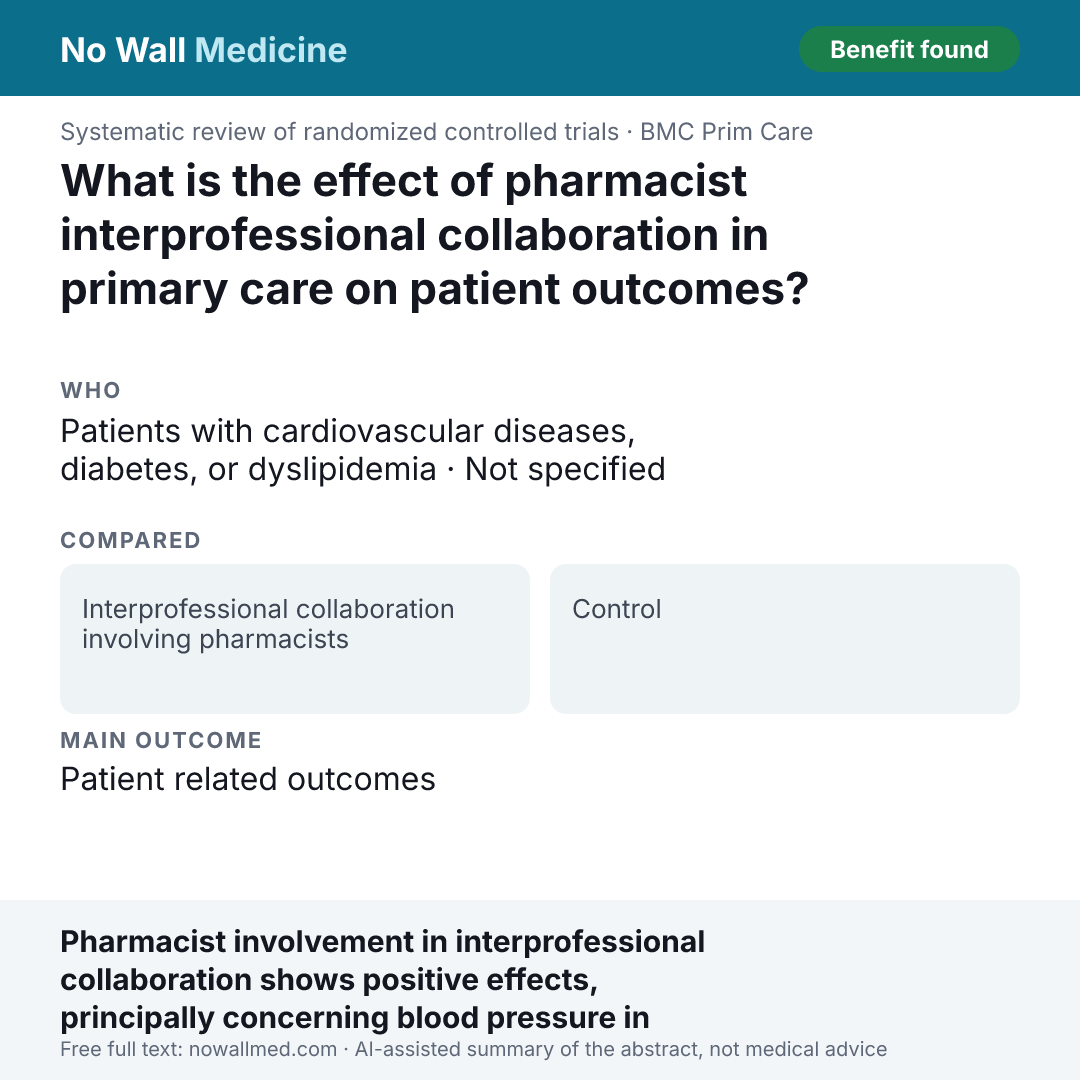
Involving community pharmacists in interprofessional collaboration in primary care: a systematic review
Systematic review of randomized controlled trialsBenefit found
What is the effect of pharmacist interprofessional collaboration in primary care on patient outcomes?
Who
Patients with cardiovascular diseases, diabetes, or dyslipidemia · Not specified
Compared
Interprofessional collaboration involving pharmacists
Control
Main outcome
Patient related outcomes
Bottom line: Pharmacist involvement in interprofessional collaboration shows positive effects, principally concerning blood pressure in cardiovascular diseases.
BMC Prim Care · 2024-04-01 · Save PNG
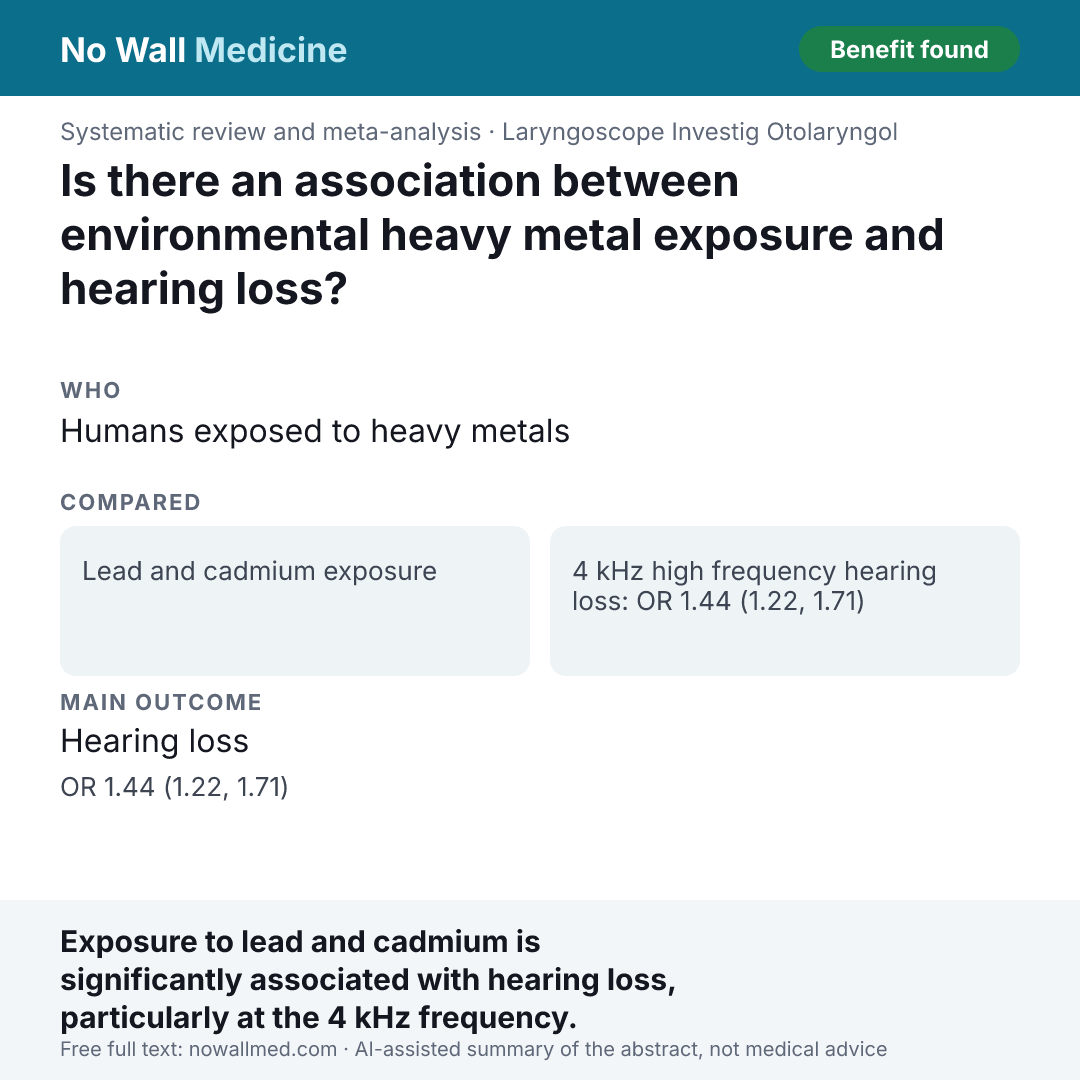
Population-based study of environmental heavy metal exposure and hearing loss: A systematic review and meta-analysis
Systematic review and meta-analysisBenefit found
Is there an association between environmental heavy metal exposure and hearing loss?
Who
Humans exposed to heavy metals
Compared
Lead and cadmium exposure
4 kHz high frequency hearing loss: OR 1.44 (1.22, 1.71)
Main outcome
Hearing loss
Result: OR 1.44 (1.22, 1.71)
Bottom line: Exposure to lead and cadmium is significantly associated with hearing loss, particularly at the 4 kHz frequency.
Laryngoscope Investig Otolaryngol · 2024-04-01 · Save PNG
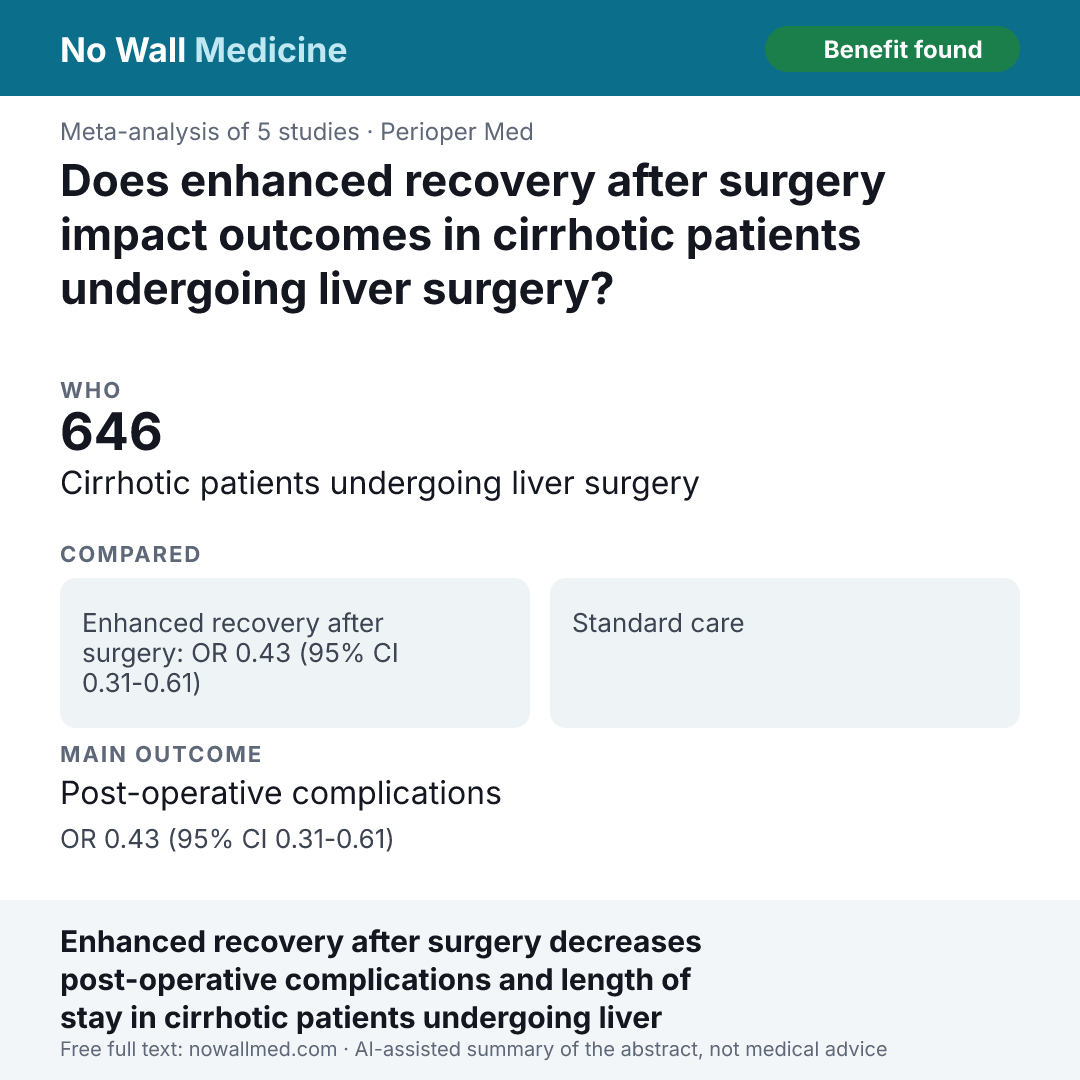
Enhanced recovery after liver surgery in cirrhotic patients: a systematic review and meta-analysis
Meta-analysis of 5 studiesBenefit found
Does enhanced recovery after surgery impact outcomes in cirrhotic patients undergoing liver surgery?
Who
646
Cirrhotic patients undergoing liver surgery
Compared
Enhanced recovery after surgery: OR 0.43 (95% CI 0.31-0.61)
Standard care
Main outcome
Post-operative complications
Result: OR 0.43 (95% CI 0.31-0.61)
Bottom line: Enhanced recovery after surgery decreases post-operative complications and length of stay in cirrhotic patients undergoing liver surgery.
Perioper Med · 2024-04-01 · Save PNG
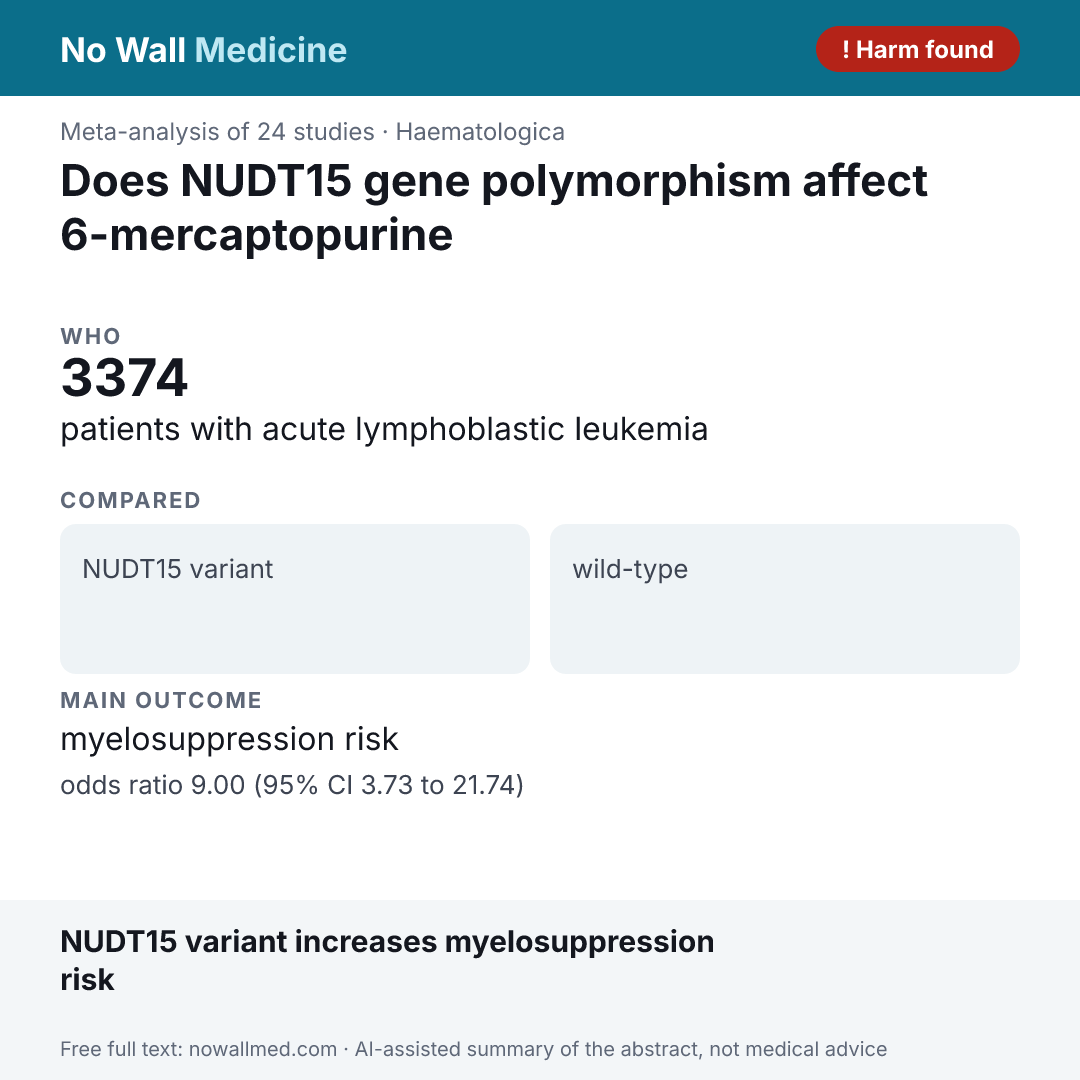
Association of NUDT15 gene polymorphism with adverse reaction, treatment efficacy, and dose of 6-mercaptopurine in patients with acute lymphoblastic leukemia: a systematic review and meta-analysis
Meta-analysis of 24 studiesHarm found
Does NUDT15 gene polymorphism affect 6-mercaptopurine
Who
3374
patients with acute lymphoblastic leukemia
Compared
NUDT15 variant
wild-type
Main outcome
myelosuppression risk
Result: odds ratio 9.00 (95% CI 3.73 to 21.74)
Bottom line: NUDT15 variant increases myelosuppression risk
Haematologica · 2024-04-01 · Save PNG
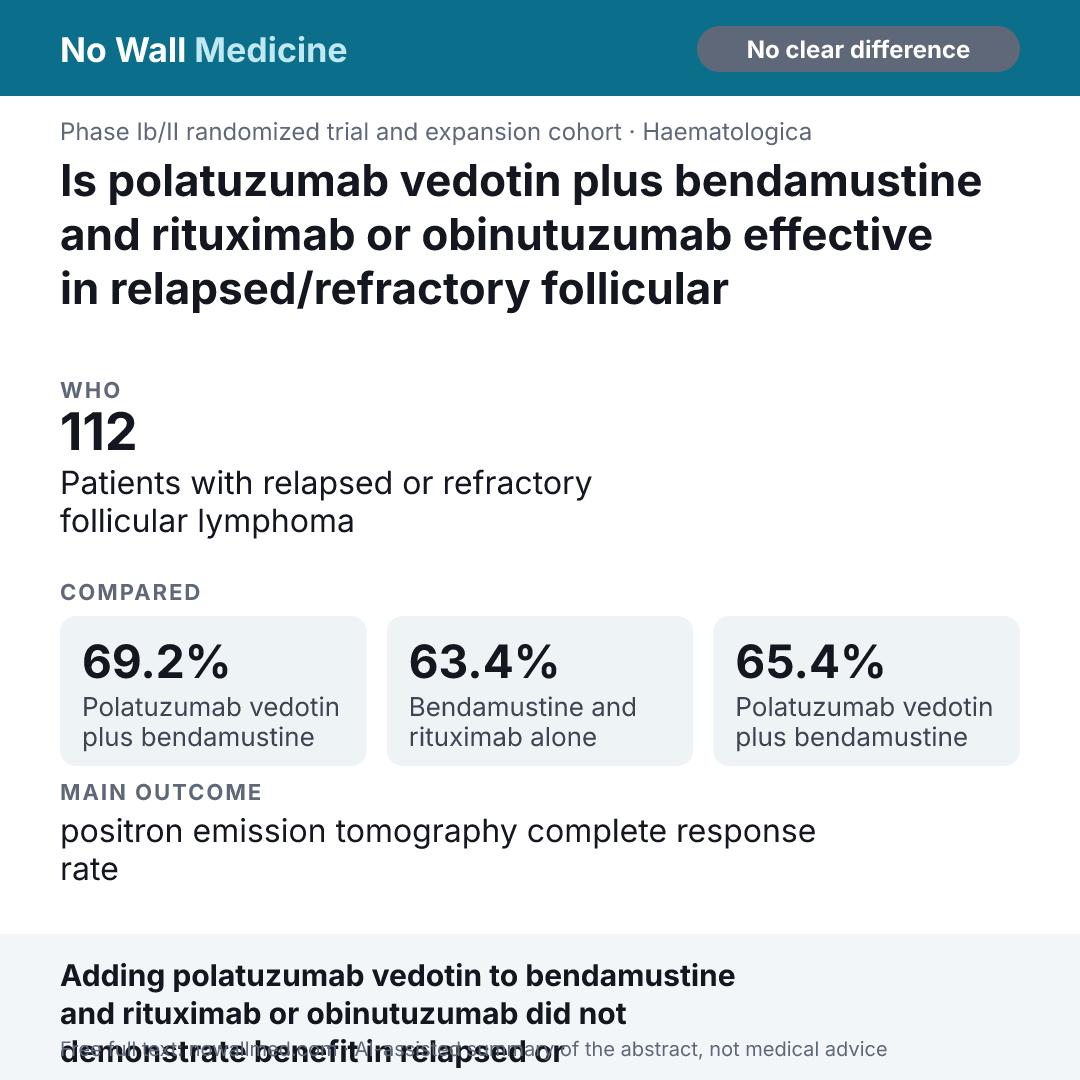
Polatuzumab vedotin plus bendamustine and rituximab or obinutuzumab in relapsed/refractory follicular lymphoma: a phase Ib/II study
Phase Ib/II randomized trial and expansion cohortNo clear difference
Is polatuzumab vedotin plus bendamustine and rituximab or obinutuzumab effective in relapsed/refractory follicular lymphoma?
Who
112
Patients with relapsed or refractory follicular lymphoma
Compared
69.2%Polatuzumab vedotin plus bendamustine and rituximab (phase II randomized)
63.4%Bendamustine and rituximab alone (phase II randomized)
65.4%Polatuzumab vedotin plus bendamustine and obinutuzumab (phase Ib/II expansion)
Main outcome
positron emission tomography complete response rate
Bottom line: Adding polatuzumab vedotin to bendamustine and rituximab or obinutuzumab did not demonstrate benefit in relapsed or refractory follicular lymphoma.
Haematologica · 2024-04-01 · Save PNG