Visual abstracts
New randomized trials and meta-analyses from leading journals at a glance: who was studied, what was compared, and what was found. Every paper is free to read in full.
All specialtiesCardiology 4832Oncology 4114Gastroenterology & Hepatology 1934Infectious Disease 3824Neurology 1899Psychiatry & Mental Health 2256Pulmonology 2082Critical Care 1345Endocrinology & Diabetes 2572Pediatrics 2940Surgery 2525Orthopedics & Sports Medicine 926Neurosurgery 534Cardiothoracic & Vascular Surgery 671Plastic & Reconstructive Surgery 591Nephrology 1124Rheumatology 823Hematology 1104Dermatology 620Ophthalmology 543Obstetrics & Gynecology 1684Public & Global Health 1056Radiology & Imaging 641Anesthesiology 962Urology 754ENT (Otolaryngology) 503Emergency Medicine 489Allergy & Immunology 313Geriatrics 981Family Medicine & Primary Care 541Medical Genetics & Genomics 675Pathology & Laboratory Medicine 157Physical Medicine & Rehabilitation 751Palliative Care 424Nutrition 1580Digital Health & AI 2195General Medicine 321
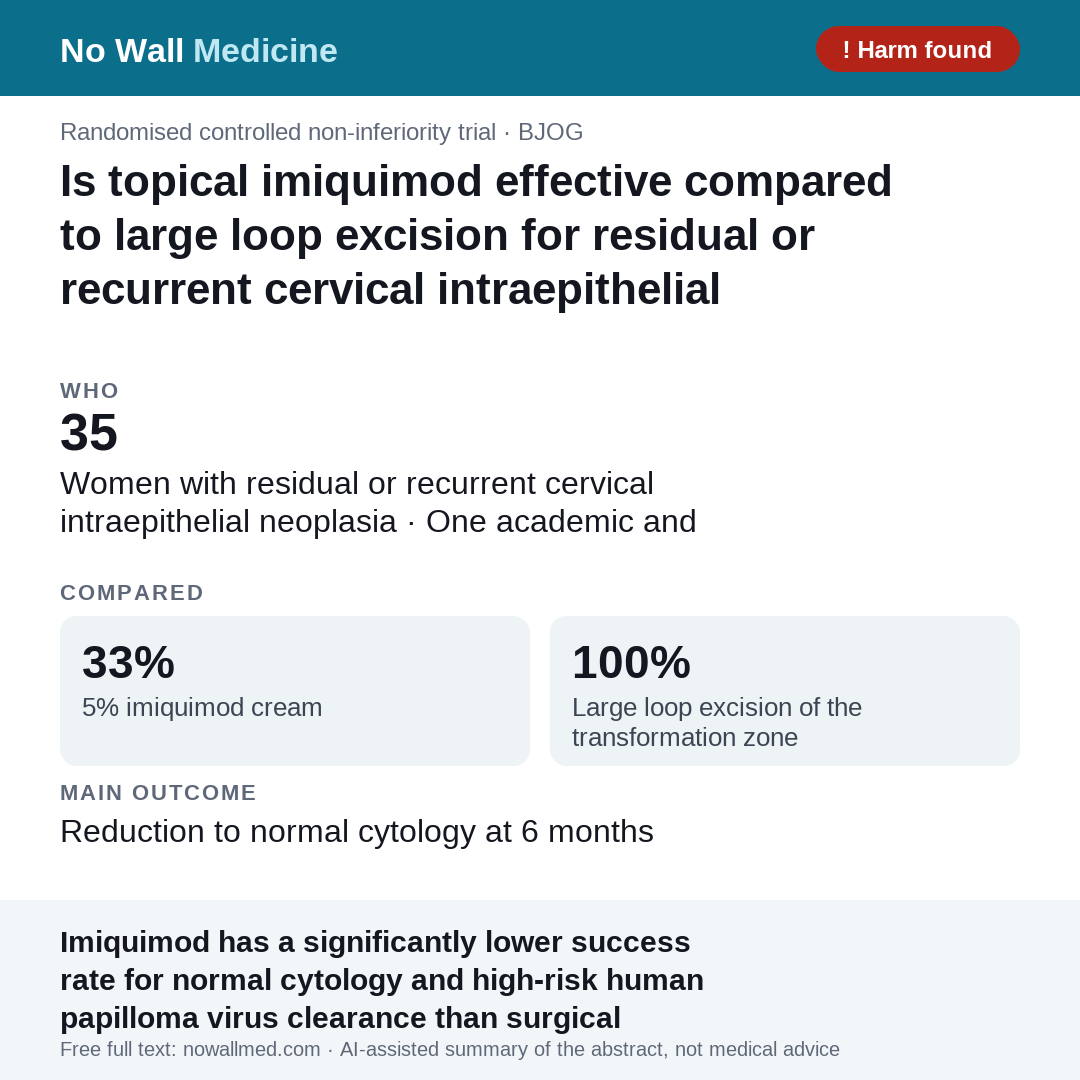
Topical imiquimod treatment of residual or recurrent cervical intraepithelial neoplasia lesions (TOPIC-2): A randomised controlled trial
Randomised controlled non-inferiority trialHarm found
Is topical imiquimod effective compared to large loop excision for residual or recurrent cervical intraepithelial neoplasia?
Who
35
Women with residual or recurrent cervical intraepithelial neoplasia · One academic and one regional hospital in the Netherlands
Compared
33%5% imiquimod cream (6/18)
100%Large loop excision of the transformation zone (16/16)
Main outcome
Reduction to normal cytology at 6 months
Bottom line: Imiquimod has a significantly lower success rate for normal cytology and high-risk human papilloma virus clearance than surgical excision.
BJOG · 2024-03-31Download image
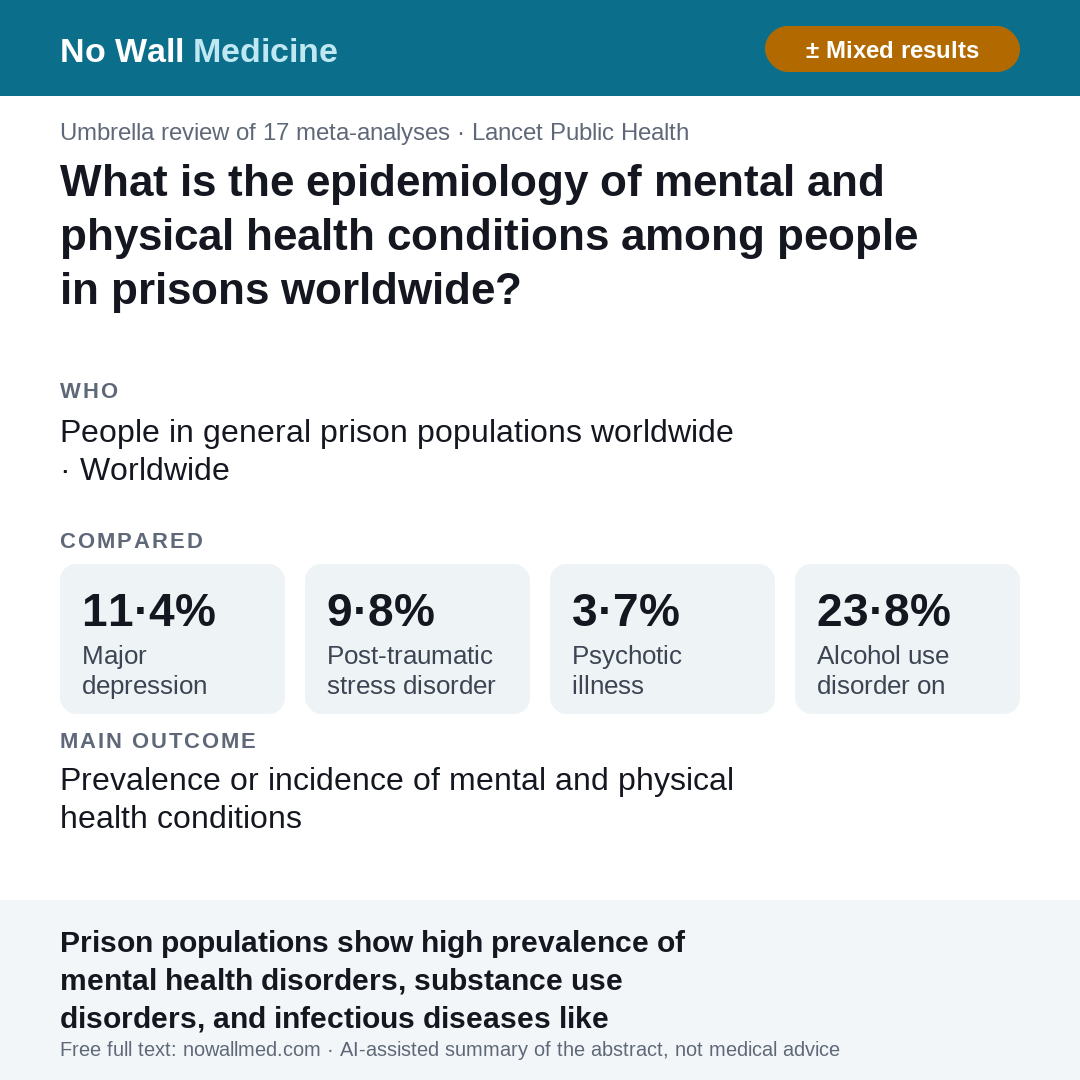
Mental and physical health morbidity among people in prisons: an umbrella review
Umbrella review of 17 meta-analysesMixed results
What is the epidemiology of mental and physical health conditions among people in prisons worldwide?
Who
People in general prison populations worldwide · Worldwide
Compared
11·4%Major depression (95% CI 9·9-12·8)
9·8%Post-traumatic stress disorder (6·8-13·2)
3·7%Psychotic illness (3·2-4·1)
23·8%Alcohol use disorder on arrival (95% CI 21·0-26·7)
Main outcome
Prevalence or incidence of mental and physical health conditions
Bottom line: Prison populations show high prevalence of mental health disorders, substance use disorders, and infectious diseases like hepatitis C.
Limitation: The quality of the evidence was limited by high heterogeneity and small-study effects.
Funded by: Research Foundation-Flanders, Wellcome Trust, National Institutes of Health
Lancet Public Health · 2024-03-30Download image
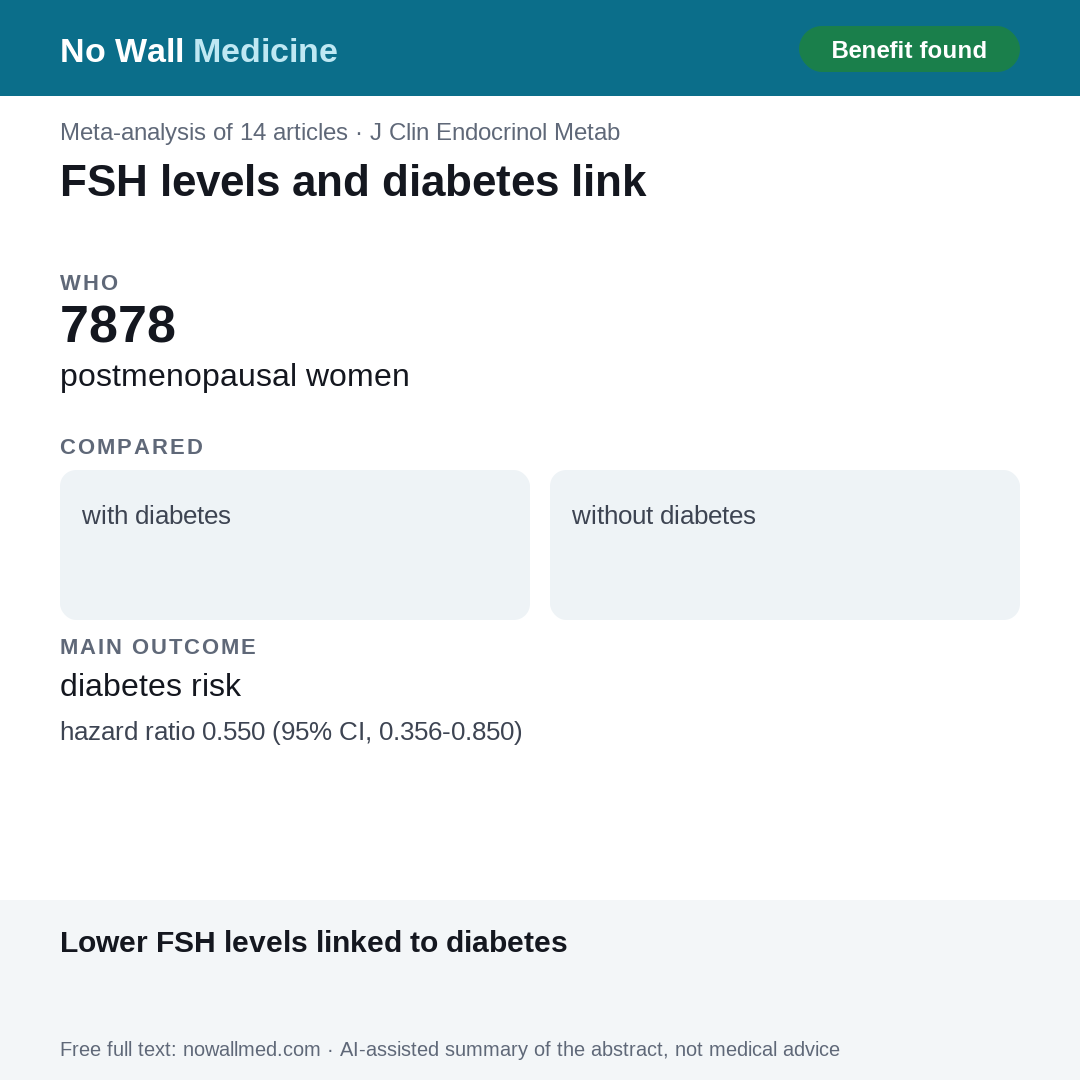
Follicle-Stimulating Hormone and Diabetes in Postmenopausal Women: A Systematic Review and Meta-Analysis
Meta-analysis of 14 articlesBenefit found
FSH levels and diabetes link
Who
7878
postmenopausal women
Compared
with diabetes
without diabetes
Main outcome
diabetes risk
Result: hazard ratio 0.550 (95% CI, 0.356-0.850)
Bottom line: Lower FSH levels linked to diabetes
Limitation: heterogeneity among included studies
J Clin Endocrinol Metab · 2024-03-30Download image
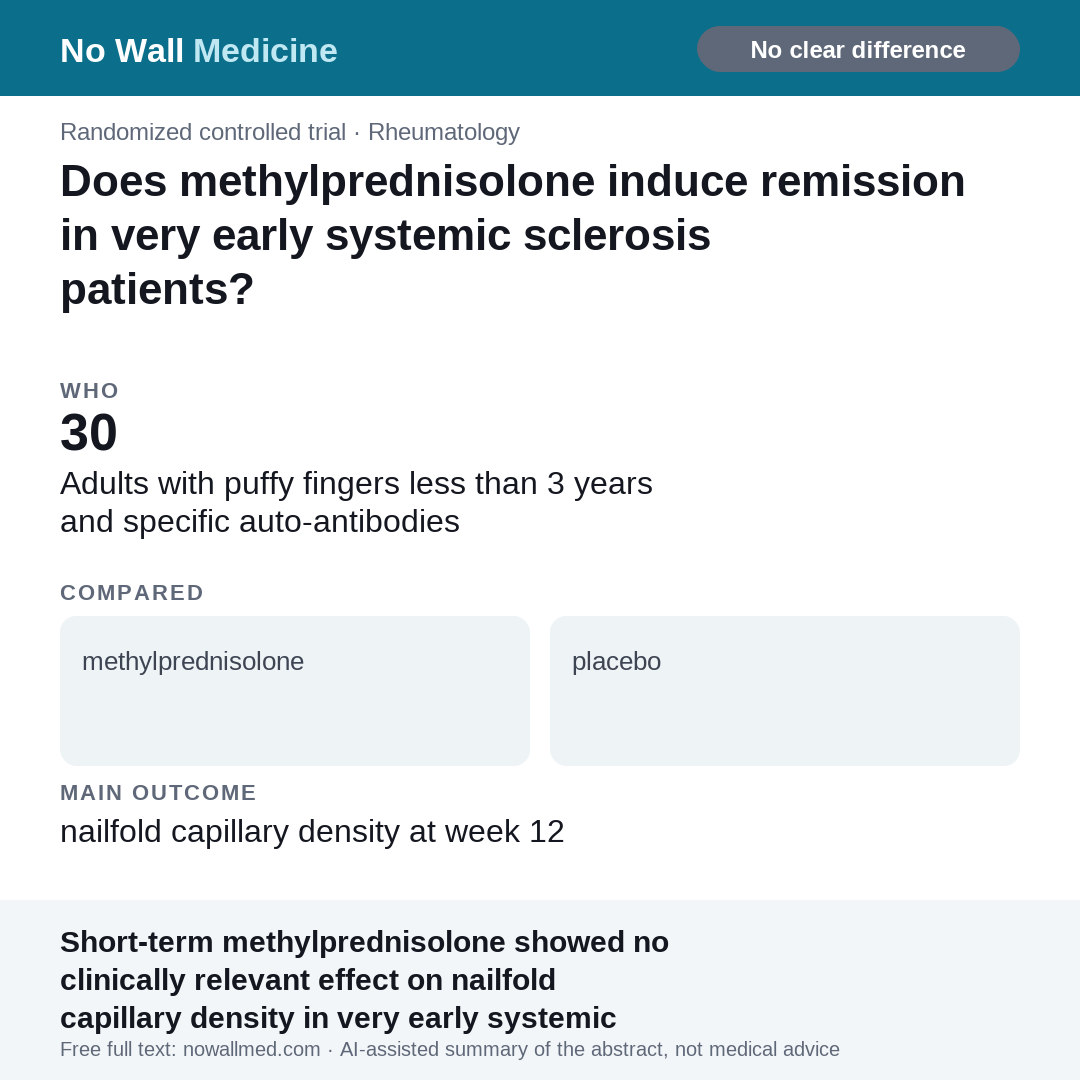
Efficacy of methylprednisolone in very early systemic sclerosis: results of the 'Hit Hard and Early' randomized controlled trial
Randomized controlled trialNo clear difference
Does methylprednisolone induce remission in very early systemic sclerosis patients?
Who
30
Adults with puffy fingers less than 3 years and specific auto-antibodies
Compared
methylprednisolone
placebo
Main outcome
nailfold capillary density at week 12
Result: -0.5 (95% CI: -1.1, 0.2)
Bottom line: Short-term methylprednisolone showed no clinically relevant effect on nailfold capillary density in very early systemic sclerosis.
Rheumatology · 2024-03-30Download image
Risk of diabetes mellitus in systemic lupus erythematosus: systematic review and meta-analysis
Systematic review and meta-analysisNo clear difference
What is the risk of diabetes mellitus in systemic lupus erythematosus patients?
Who
266537
Patients with systemic lupus erythematosus
Compared
Systemic lupus erythematosus: OR 1.05 (95% CI 0.87-1.27)
Controls
Main outcome
Risk of diabetes mellitus
Result: OR 1.05 (95% CI 0.87-1.27)
Bottom line: Systemic lupus erythematosus patients have no increased risk of diabetes, though glucocorticoids increase risk and antimalarials decrease it.
Rheumatology · 2024-03-30Download image

Evidence that tirzepatide protects against diabetes-related cardiac damages
Meta-analysis and cell line studyBenefit found
Does tirzepatide protect against major adverse cardiovascular events and cardiac damage?
Who
Patients in major randomized clinical trials and human AC16 cardiac cells
Compared
Tirzepatide therapy
Control
Main outcome
major adverse cardiovascular events occurrence
Result: hazard ratio 0.59 (95% CI 0.40-0.79)
Bottom line: Tirzepatide reduces major adverse cardiovascular events and protects cardiac cells from high glucose damage.
Cardiovasc Diabetol · 2024-03-30Download image

Genetic and phenotypic similarity across major psychiatric disorders: a systematic review and quantitative assessment
Systematic review and meta-analysisMixed results
Genetic and phenotypic similarity across psychiatric disorders
Who
28
Patients with psychiatric disorders
Compared
Schizophrenia vs others
Bipolar Disorder vs others
Main outcome
Degree of similarity across disorders
Result: 88.6% positive correlations
Bottom line: Genetic and brain factors underlie diagnostic overlaps
Transl Psychiatry · 2024-03-30Download image

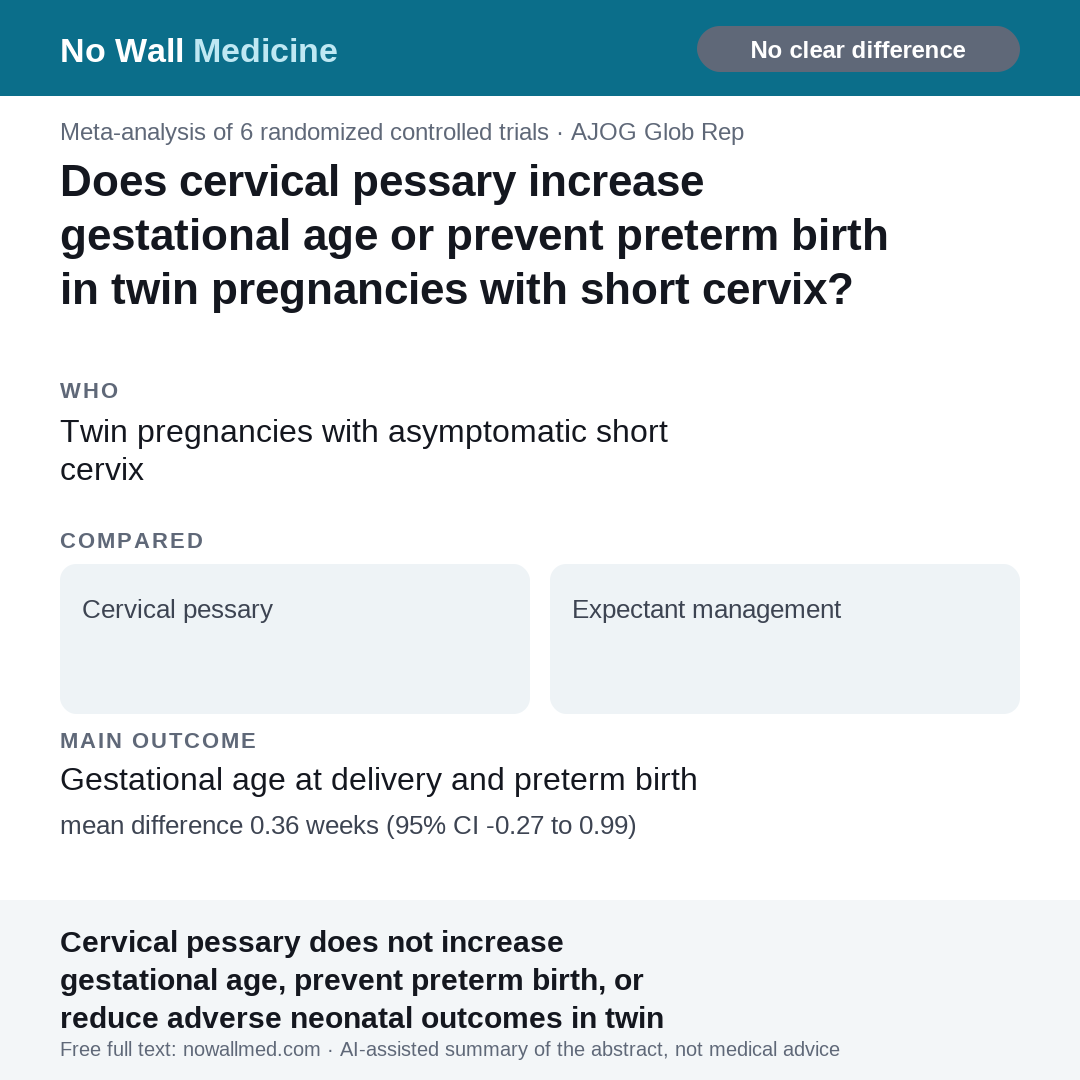
The effect of cervical pessary on increasing gestational age at delivery in twin pregnancies with asymptomatic short cervix: a systematic review and meta-analysis of randomized controlled trials
Meta-analysis of 6 randomized controlled trialsNo clear difference
Does cervical pessary increase gestational age or prevent preterm birth in twin pregnancies with short cervix?
Who
Twin pregnancies with asymptomatic short cervix
Compared
Cervical pessary
Expectant management
Main outcome
Gestational age at delivery and preterm birth
Result: mean difference 0.36 weeks (95% CI -0.27 to 0.99)
Bottom line: Cervical pessary does not increase gestational age, prevent preterm birth, or reduce adverse neonatal outcomes in twin pregnancies.
AJOG Glob Rep · 2024-03-30Download image
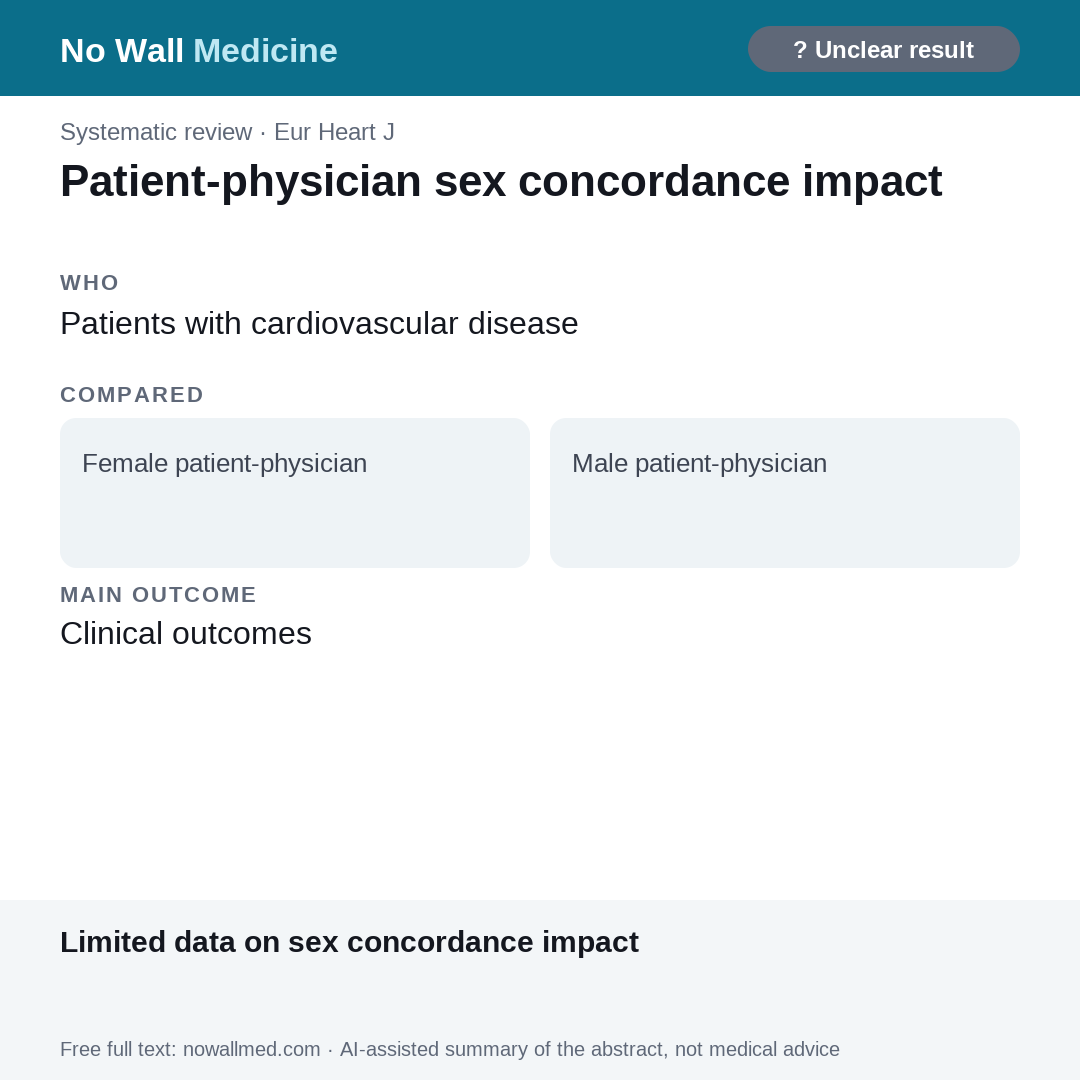
Patient-physician sex concordance and outcomes in cardiovascular disease: a systematic review
Systematic reviewUnclear result
Patient-physician sex concordance impact
Who
Patients with cardiovascular disease
Compared
Female patient-physician
Male patient-physician
Main outcome
Clinical outcomes
Bottom line: Limited data on sex concordance impact
Limitation: Limited data available
Eur Heart J · 2024-03-29Download image
The impact of armed conflict on the development and global spread of antibiotic resistance: a systematic review
Systematic reviewHarm found
Armed conflict impact on antibiotic resistance
Who
Patients or soldiers in conflict zones
Compared
Conflict zones
Non-conflict zones
Main outcome
Antibiotic resistance
Bottom line: Wars increase multidrug-resistant infections
Clin Microbiol Infect · 2024-03-29Download image

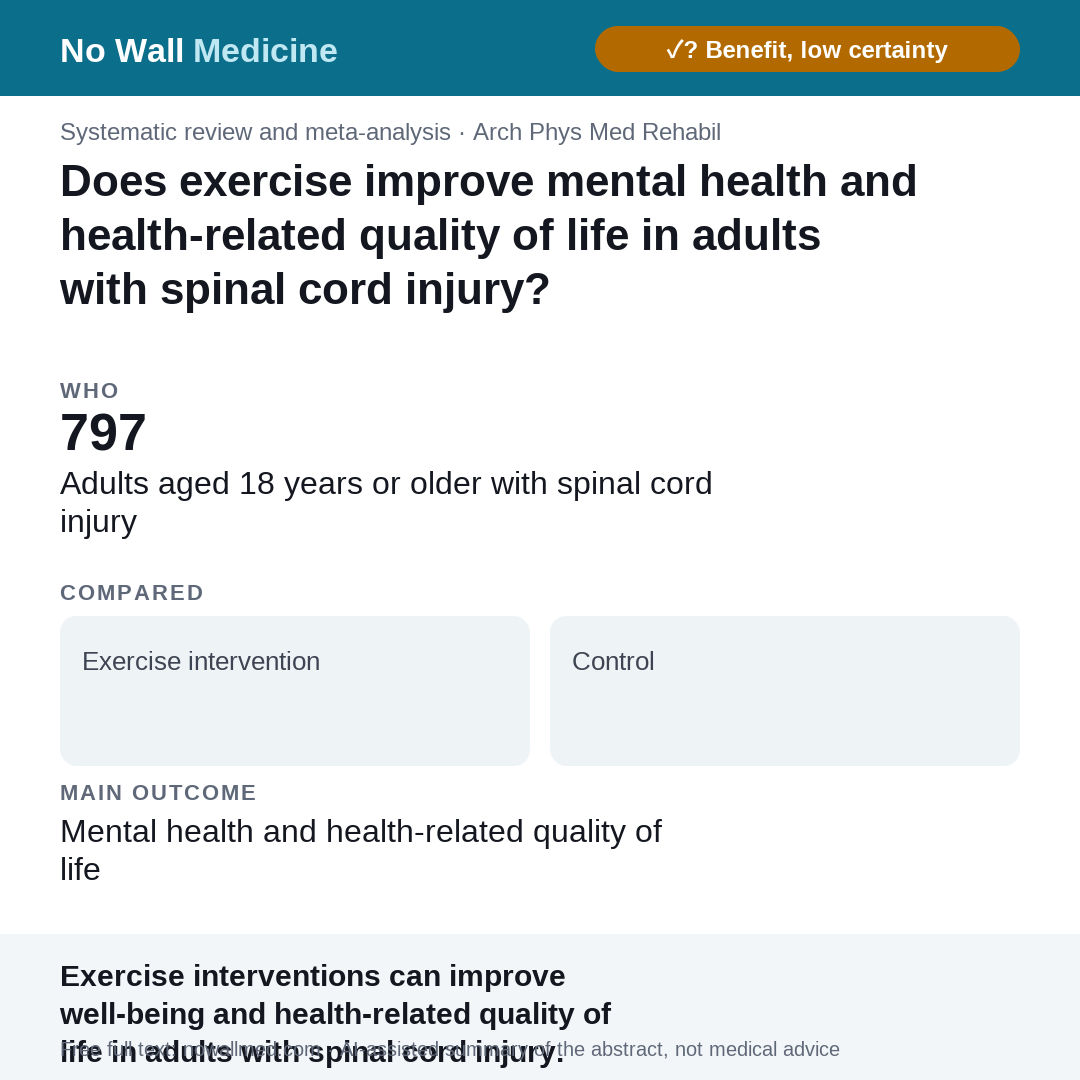
Effect of Exercise on Mental Health and Health-related Quality of Life in Adults With Spinal Cord Injury: A Systematic Review and Meta-analysis
Systematic review and meta-analysisBenefit found
Does exercise improve mental health and health-related quality of life in adults with spinal cord injury?
Who
797
Adults aged 18 years or older with spinal cord injury
Compared
Exercise intervention
Control
Main outcome
Mental health and health-related quality of life
Result: standardized mean difference 0.494 (95% CI 0.268, 0.720)
Bottom line: Exercise interventions can improve well-being and health-related quality of life in adults with spinal cord injury.
Limitation: Additional research is needed to determine effectiveness in adults aged 65 years or older.
Arch Phys Med Rehabil · 2024-03-29Download image
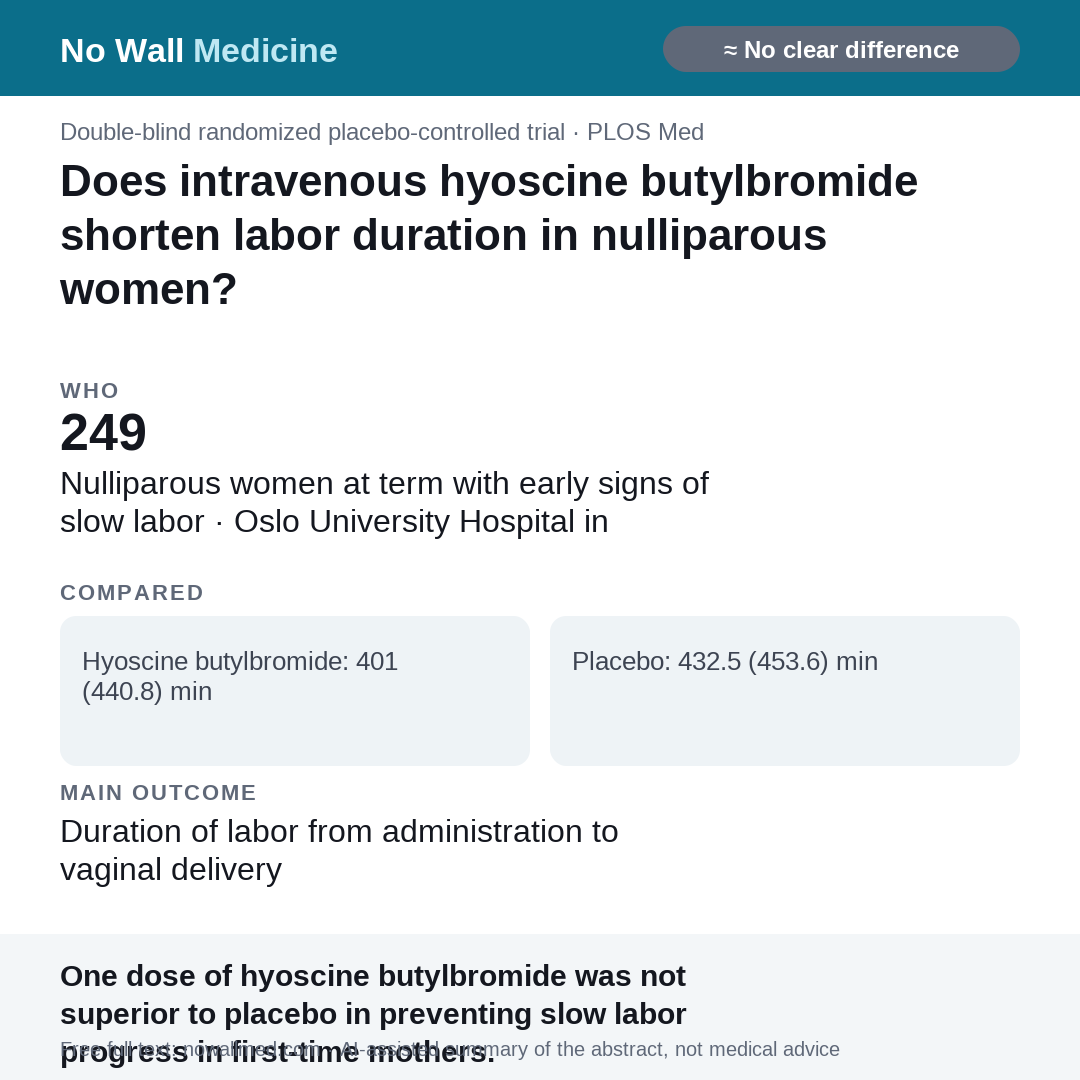
The effect of intravenous hyoscine butylbromide on slow progress in labor (BUSCLAB): A double-blind randomized placebo-controlled trial
Double-blind randomized placebo-controlled trialNo clear difference
Does intravenous hyoscine butylbromide shorten labor duration in nulliparous women?
Who
249
Nulliparous women at term with early signs of slow labor · Oslo University Hospital in Norway
Compared
Hyoscine butylbromide: 401 (440.8) min
Placebo: 432.5 (453.6) min
Main outcome
Duration of labor from administration to vaginal delivery
Result: cause-specific hazard ratio 1.00 (95% CI 0.77 to 1.29)
Bottom line: One dose of hyoscine butylbromide was not superior to placebo in preventing slow labor progress in first-time mothers.
Limitation: Participants might have represented a selected group, reducing external validity.
PLOS Med · 2024-03-28Download image
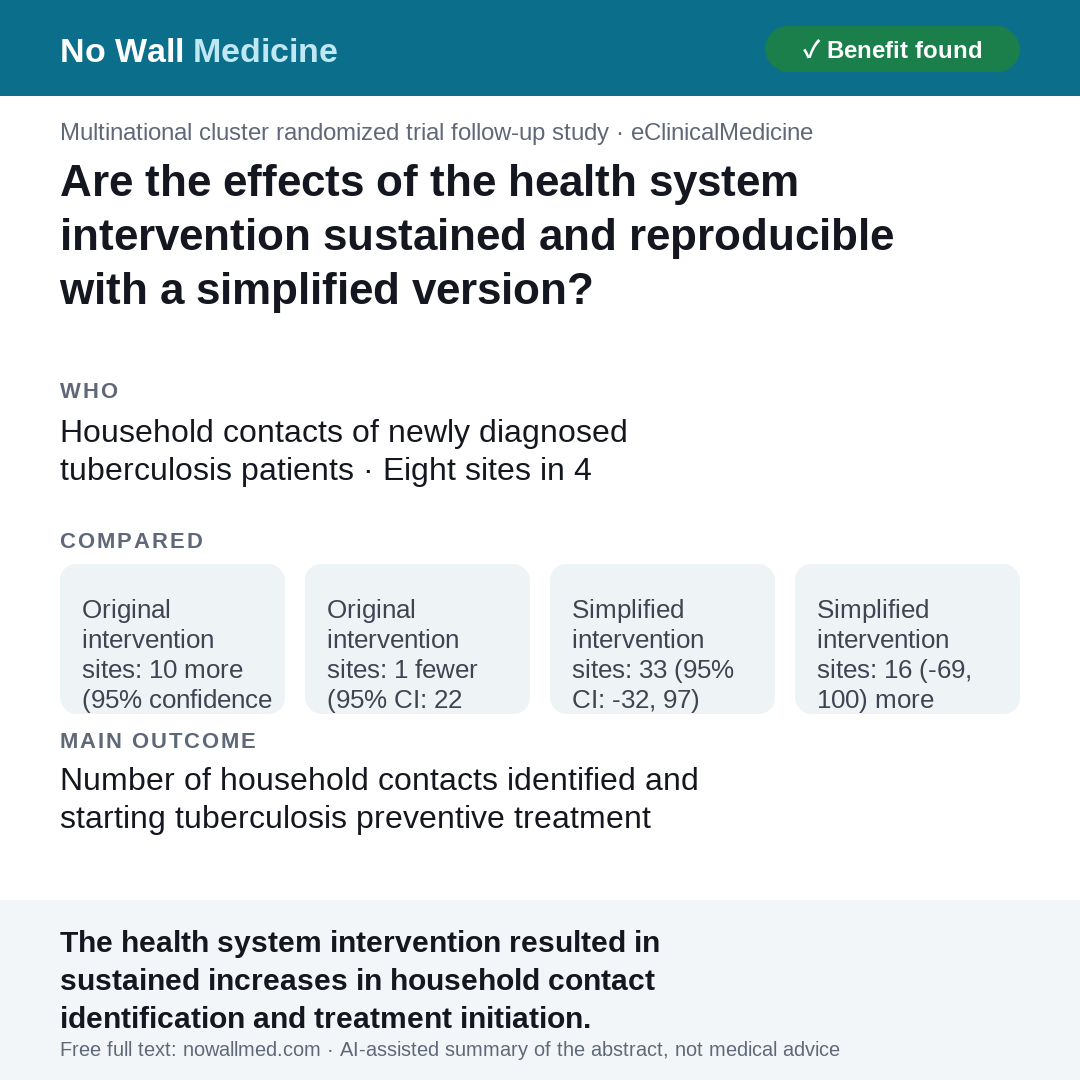
Sustainability and impact of an intervention to improve initiation of tuberculosis preventive treatment: results from a follow-up study of the ACT4 randomized trial
Multinational cluster randomized trial follow-up studyBenefit found
Are the effects of the health system intervention sustained and reproducible with a simplified version?
Who
Household contacts of newly diagnosed tuberculosis patients · Eight sites in 4 countries
Compared
Original intervention sites: 10 more (95% confidence interval: 84 fewer to 105 more) identified
Original intervention sites: 1 fewer (95% CI: 22 fewer to 20 more) treated
Simplified intervention sites: 33 (95% CI: -32, 97) more identified
Simplified intervention sites: 16 (-69, 100) more treated
Main outcome
Number of household contacts identified and starting tuberculosis preventive treatment
Bottom line: The health system intervention resulted in sustained increases in household contact identification and treatment initiation.
Limitation: Inferences are limited by potential bias due to other temporal effects and small number of study sites.
Funded by: Canadian Institutes of Health Research
eClinicalMedicine · 2024-03-28Download image
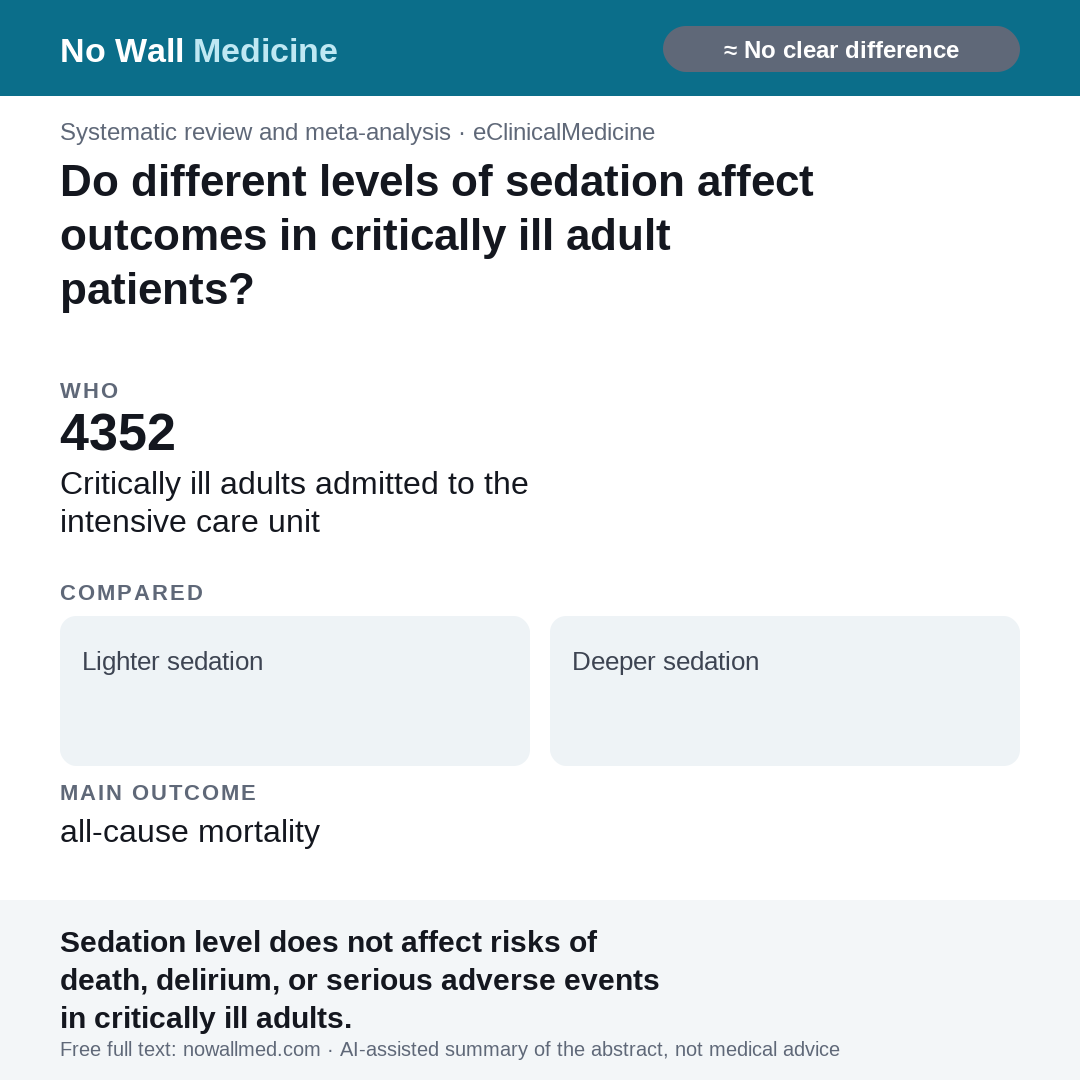
Effect of level of sedation on outcomes in critically ill adult patients: a systematic review of clinical trials with meta-analysis and trial sequential analysis
Systematic review and meta-analysisNo clear difference
Do different levels of sedation affect outcomes in critically ill adult patients?
Who
4352
Critically ill adults admitted to the intensive care unit
Compared
Lighter sedation
Deeper sedation
Main outcome
all-cause mortality
Result: risk ratio 0.94 (95% CI 0.83-1.06)
Bottom line: Sedation level does not affect risks of death, delirium, or serious adverse events in critically ill adults.
Limitation: Thirteen trials were assessed as having a high risk of bias.
eClinicalMedicine · 2024-03-28Download image
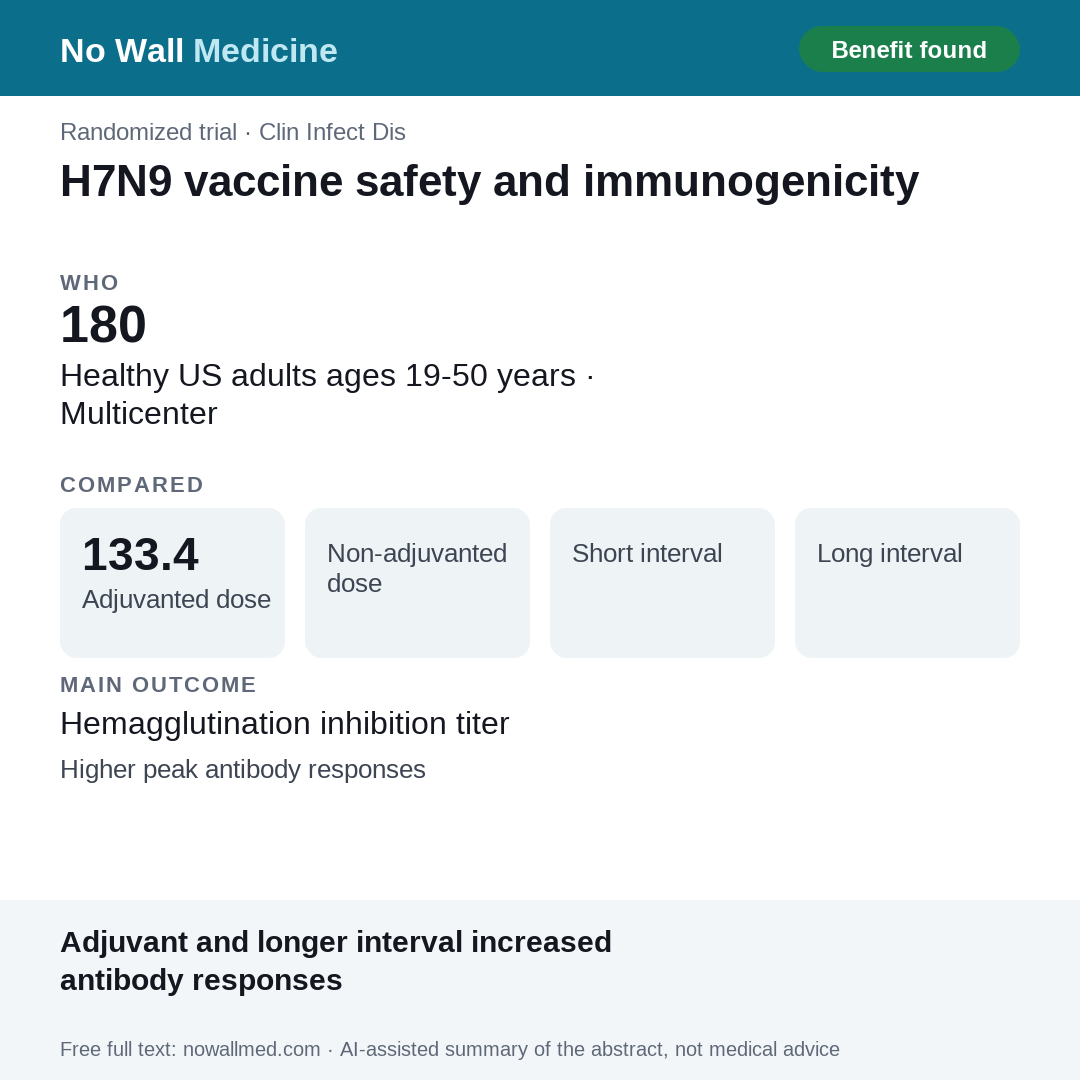
A Phase 2 Clinical Trial to Evaluate the Safety, Reactogenicity, and Immunogenicity of Different Prime-Boost Vaccination Schedules of 2013 and 2017 A(H7N9) Inactivated Influenza Virus Vaccines Administered With and Without AS03 Adjuvant in Healthy US Adults
Randomized trialEarly signal
H7N9 vaccine safety and immunogenicity
Who
180
Healthy US adults ages 19-50 years · Multicenter
Compared
133.4Adjuvanted dose (83.6-212.6)
Non-adjuvanted dose
Short interval
Long interval
Main outcome
Hemagglutination inhibition titer
Result: Higher peak antibody responses
Bottom line: Adjuvant and longer interval increased antibody responses
Clin Infect Dis · 2024-03-28Download image
Characterizing barriers and facilitators of metabolic bariatric surgery tourism: a systematic review
Systematic reviewUnclear result
What influences metabolic bariatric surgery tourism
Who
individuals undergoing metabolic bariatric surgery
Compared
barriers
facilitators
Main outcome
decision to undertake surgery tourism
Bottom line: Cost and accessibility influence surgery tourism
Limitation: limited literature available
Br J Surg · 2024-03-28Download image

Genetic Associations of Primary Angle-Closure Disease: A Systematic Review and Meta-Analysis
Systematic review and meta-analysisMixed results
What are the genetic associations of common single-nucleotide variants and rare coding variants with primary angle-closure disease?
Who
Individuals with primary angle-closure disease and its subtypes · PubMed, Embase, and Web of Science
Compared
Primary angle-closure disease
Primary angle-closure glaucoma
Main outcome
Associations of single-nucleotide variants and rare coding variants
Bottom line: The study revealed genetic complexity involving common single-nucleotide variants and rare coding variants in more than 30 genes or loci.
JAMA Ophthalmol · 2024-03-28Download image

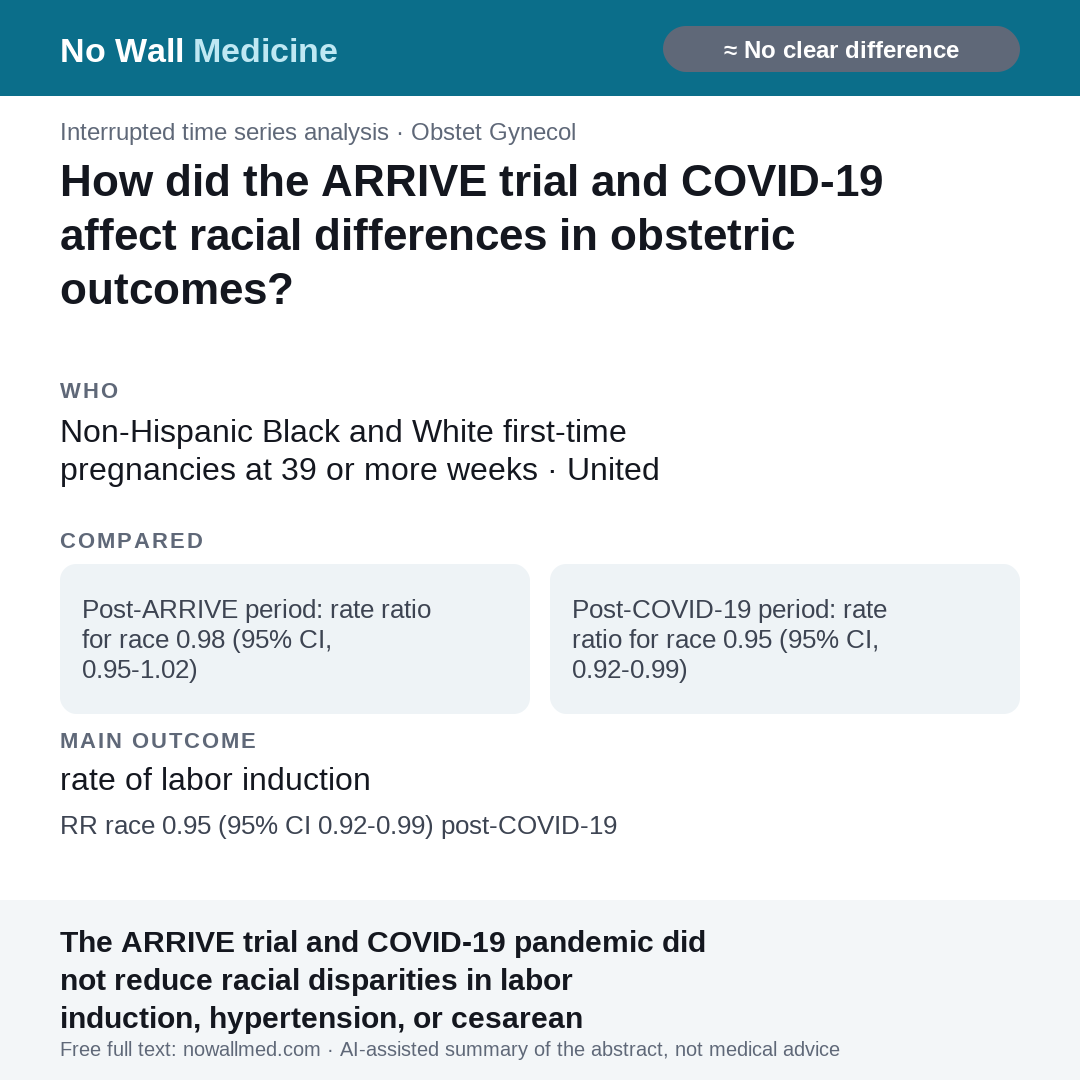
Obstetric Racial Disparities in the Era of the ARRIVE (A Randomized Trial of Induction Versus Expectant Management) Trial and the Coronavirus Disease 2019 (COVID-19) Pandemic
Interrupted time series analysisNo clear difference
How did the ARRIVE trial and COVID-19 affect racial differences in obstetric outcomes?
Who
Non-Hispanic Black and White first-time pregnancies at 39 or more weeks · United States
Compared
Post-ARRIVE period: rate ratio for race 0.98 (95% CI, 0.95-1.02)
Post-COVID-19 period: rate ratio for race 0.95 (95% CI, 0.92-0.99)
Main outcome
rate of labor induction
Result: RR race 0.95 (95% CI 0.92-0.99) post-COVID-19
Bottom line: The ARRIVE trial and COVID-19 pandemic did not reduce racial disparities in labor induction, hypertension, or cesarean delivery.
Obstet Gynecol · 2024-03-28Download image
Intradermal delivery of the third dose of the mRNA-1273 SARS-CoV-2 vaccine: safety and immunogenicity of a fractional booster dose
Randomized trialBenefit found
Is a fractional intradermal booster dose of mRNA-1273 safe and immunogenic?
Who
129
COVID-19 naive adults aged 18-40 years
Compared
Intramuscular standard-of-care booster (IM-IM): 9106 (95% CI, 7150-11 597) BAU/mL
Intramuscular booster after intradermal primary (ID-IM): 4357 (3003-6322) BAU/mL
Intradermal booster after intradermal primary (ID-ID): 6629 (4913-8946) BAU/mL
Intradermal booster after intramuscular primary (IM-ID): 5264 (4032-6873) BAU/mL
Main outcome
anti-spike S1 IgG geometric mean concentrations
Bottom line: Fractional intradermal boosting is safe and provides robust immune responses compared to intramuscular boosting.
Clin Microbiol Infect · 2024-03-28Download image

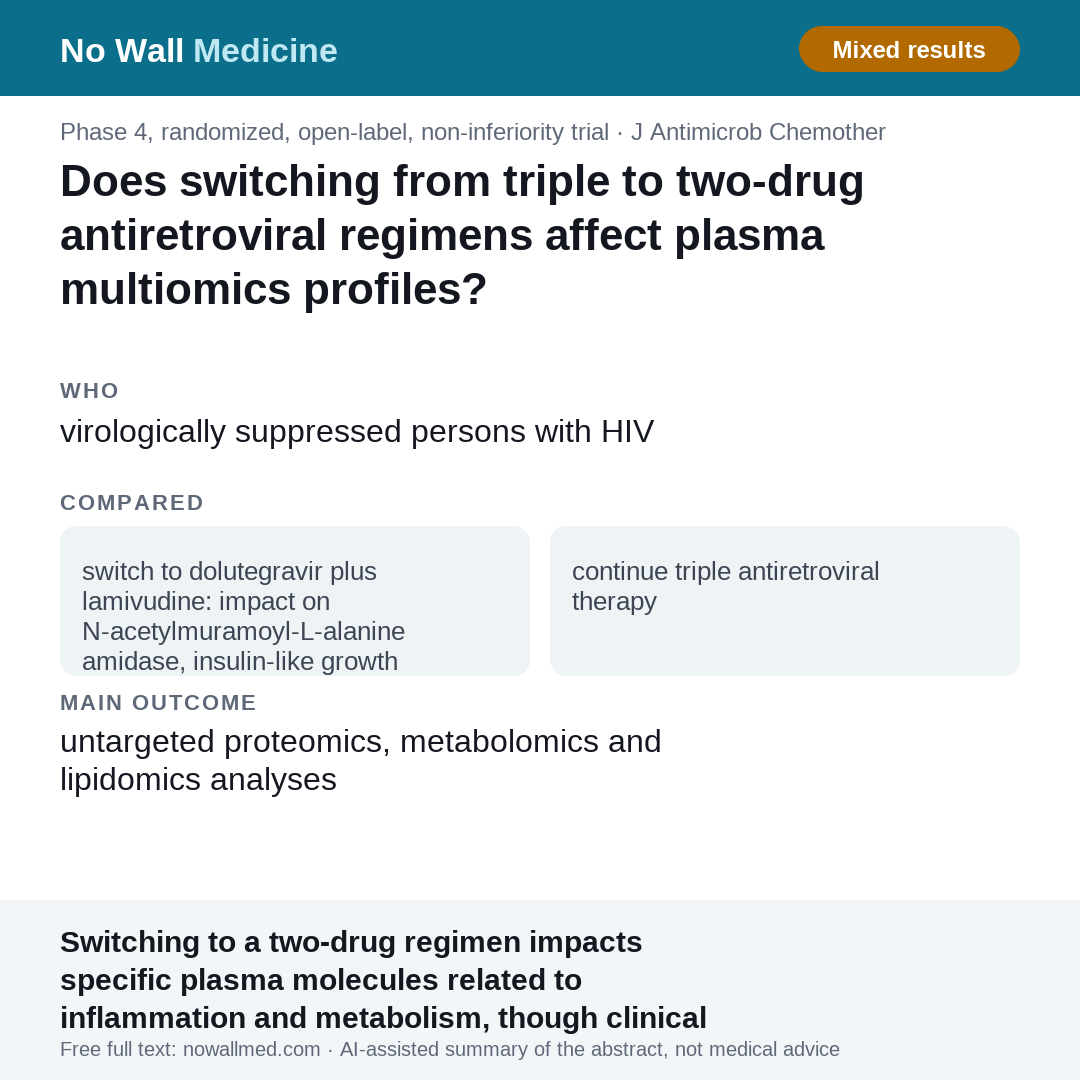
Multiomics plasma effects of switching from triple antiretroviral regimens to dolutegravir plus lamivudine
Phase 4, randomized, open-label, non-inferiority trialMixed results
Does switching from triple to two-drug antiretroviral regimens affect plasma multiomics profiles?
Who
virologically suppressed persons with HIV
Compared
switch to dolutegravir plus lamivudine: impact on N-acetylmuramoyl-L-alanine amidase, insulin-like growth factor-binding protein 3, alanine and triglyceride
continue triple antiretroviral therapy
Main outcome
untargeted proteomics, metabolomics and lipidomics analyses
Bottom line: Switching to a two-drug regimen impacts specific plasma molecules related to inflammation and metabolism, though clinical significance is uncertain.
J Antimicrob Chemother · 2024-03-28Download image