Visual abstracts
New randomized trials and meta-analyses from leading journals at a glance: who was studied, what was compared, and what was found. Every paper is free to read in full.
All specialtiesCardiology 4877Oncology 4138Gastroenterology & Hepatology 1942Infectious Disease 3837Neurology 1905Psychiatry & Mental Health 2273Pulmonology 2143Critical Care 1365Endocrinology & Diabetes 2580Pediatrics 2980Surgery 2559Orthopedics & Sports Medicine 931Neurosurgery 537Cardiothoracic & Vascular Surgery 674Plastic & Reconstructive Surgery 591Nephrology 1133Rheumatology 823Hematology 1109Dermatology 621Ophthalmology 543Obstetrics & Gynecology 1686Public & Global Health 1058Radiology & Imaging 648Anesthesiology 986Urology 764ENT (Otolaryngology) 503Emergency Medicine 511Allergy & Immunology 313Geriatrics 981Family Medicine & Primary Care 562Medical Genetics & Genomics 676Pathology & Laboratory Medicine 159Physical Medicine & Rehabilitation 757Palliative Care 444Nutrition 1588Digital Health & AI 2201General Medicine 321
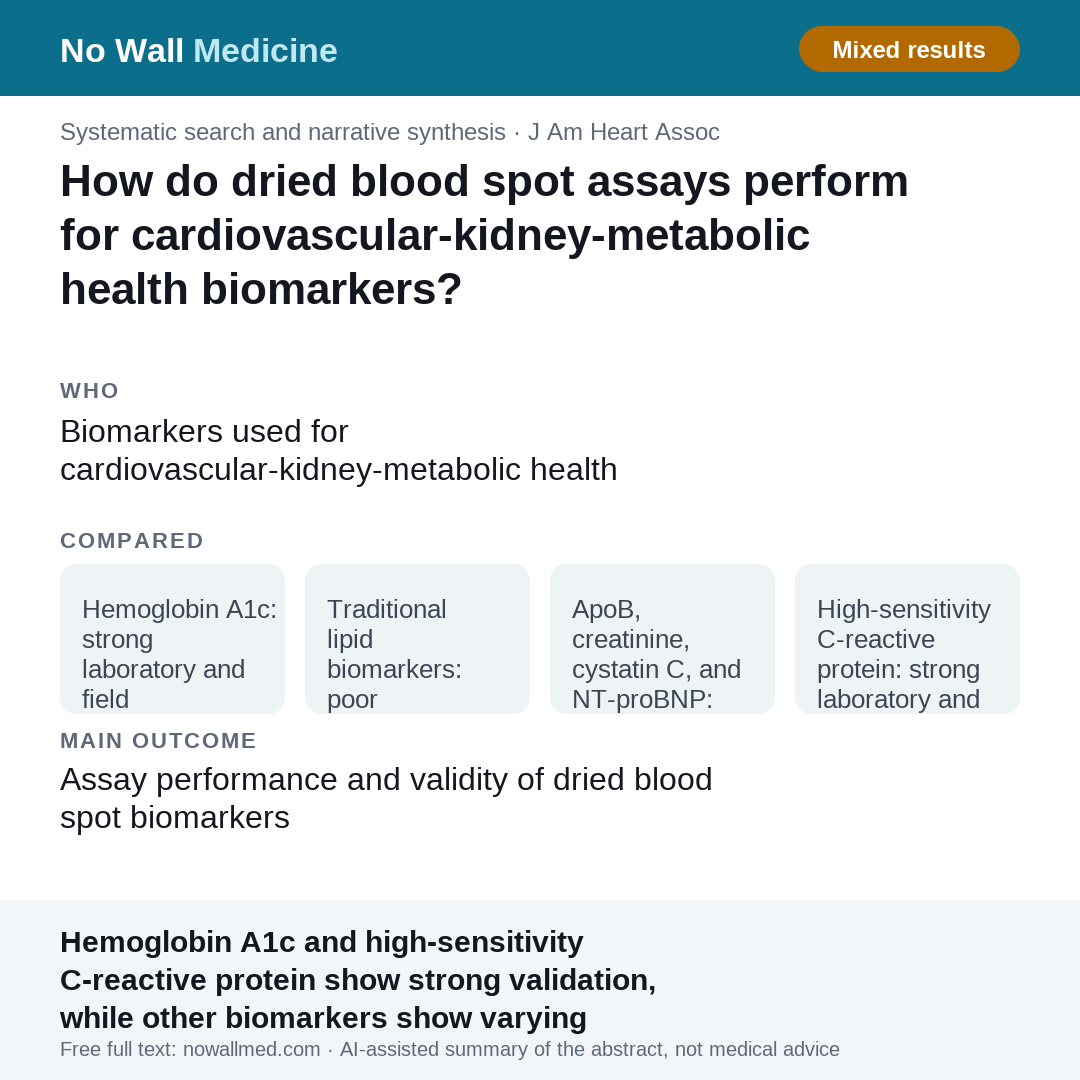
Dried Blood Spots to Assess Cardiovascular-Kidney-Metabolic Health
Systematic search and narrative synthesisMixed results
How do dried blood spot assays perform for cardiovascular-kidney-metabolic health biomarkers?
Who
Biomarkers used for cardiovascular-kidney-metabolic health assessment · Literature search through April 2024
Compared
Hemoglobin A1c: strong laboratory and field validation
Traditional lipid biomarkers: poor performance in field validation studies
ApoB, creatinine, cystatin C, and NT-proBNP: promising initial laboratory validation results
High-sensitivity C-reactive protein: strong laboratory and field validation
Main outcome
Assay performance and validity of dried blood spot biomarkers
Bottom line: Hemoglobin A1c and high-sensitivity C-reactive protein show strong validation, while other biomarkers show varying performance levels.
J Am Heart Assoc · 2025-03-13Download image
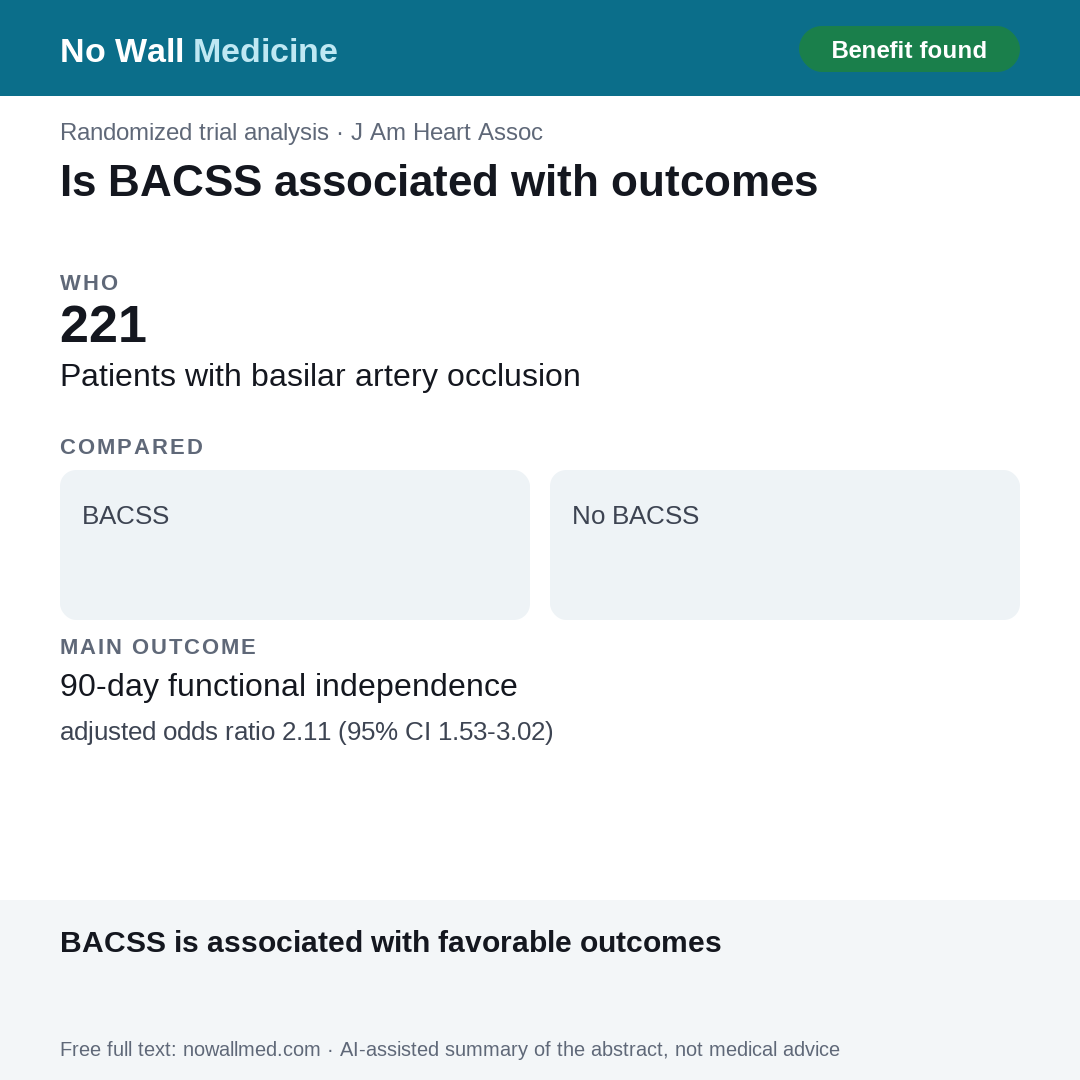
The Basilar Artery Collateral Simplified Score: a Novel Collateral Circulation Score Associated With Outcomes in Patients With Basilar Artery Occlusion: Results From the ATTENTION Study
Randomized trial analysisBenefit found
Is BACSS associated with outcomes
Who
221
Patients with basilar artery occlusion
Compared
BACSS
No BACSS
Main outcome
90-day functional independence
Result: adjusted odds ratio 2.11 (95% CI 1.53-3.02)
Bottom line: BACSS is associated with favorable outcomes
J Am Heart Assoc · 2025-03-13Download image
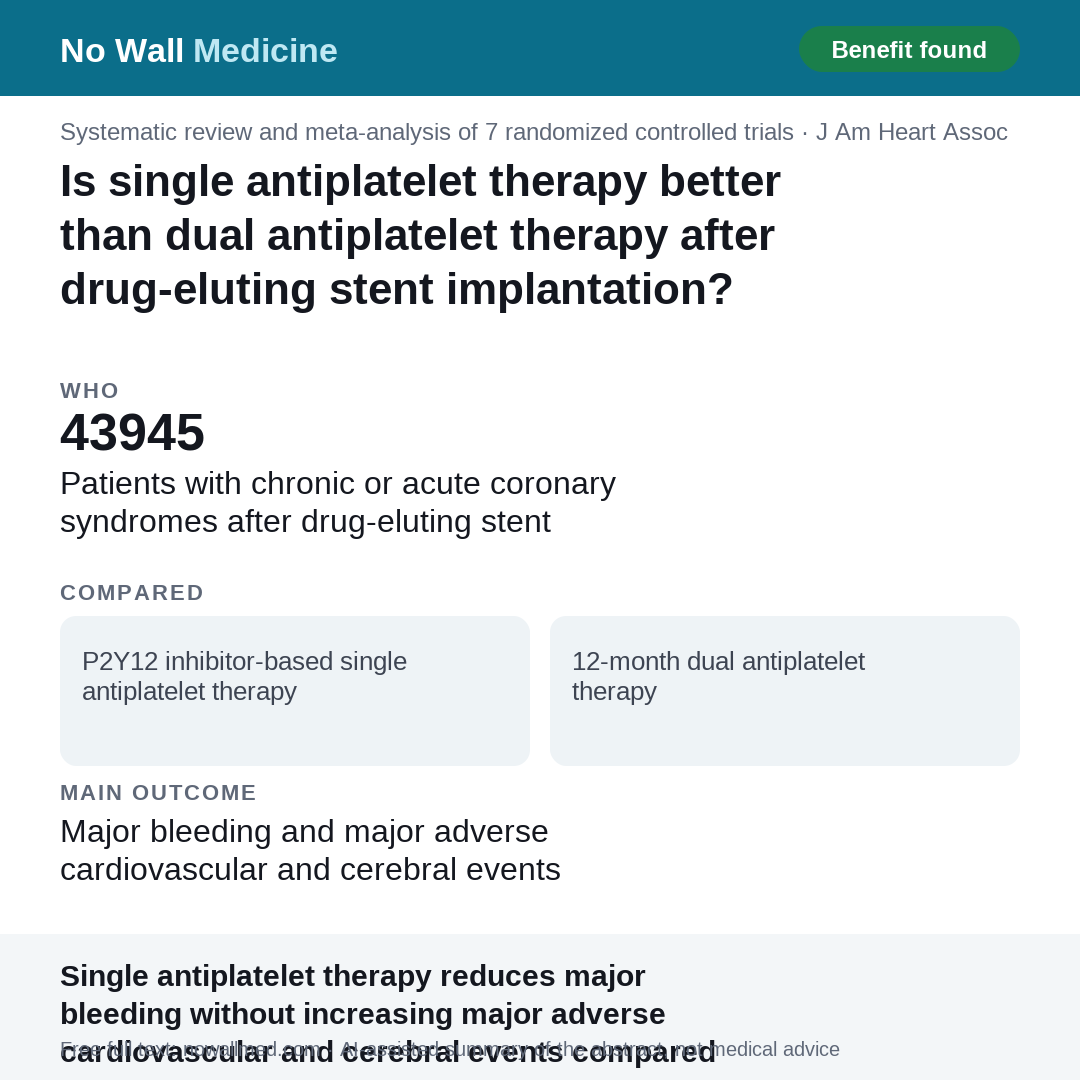
P2Y12 Inhibitor-Based Single Antiplatelet Therapy Versus Conventional Dual Antiplatelet Therapy After Newer-Generation Drug-Eluting Stent Implantation in Chronic and Acute Coronary Syndromes: A Systematic Review and Meta-Analysis of Randomized Clinical Trials
Systematic review and meta-analysis of 7 randomized controlled trialsBenefit found
Is single antiplatelet therapy better than dual antiplatelet therapy after drug-eluting stent implantation?
Who
43945
Patients with chronic or acute coronary syndromes after drug-eluting stent implantation
Compared
P2Y12 inhibitor-based single antiplatelet therapy
12-month dual antiplatelet therapy
Main outcome
Major bleeding and major adverse cardiovascular and cerebral events
Result: risk ratio 0.63 (95% CI 0.48-0.82) for major bleeding
Bottom line: Single antiplatelet therapy reduces major bleeding without increasing major adverse cardiovascular and cerebral events compared to 12-month dual antiplatelet therapy.
J Am Heart Assoc · 2025-03-13Download image
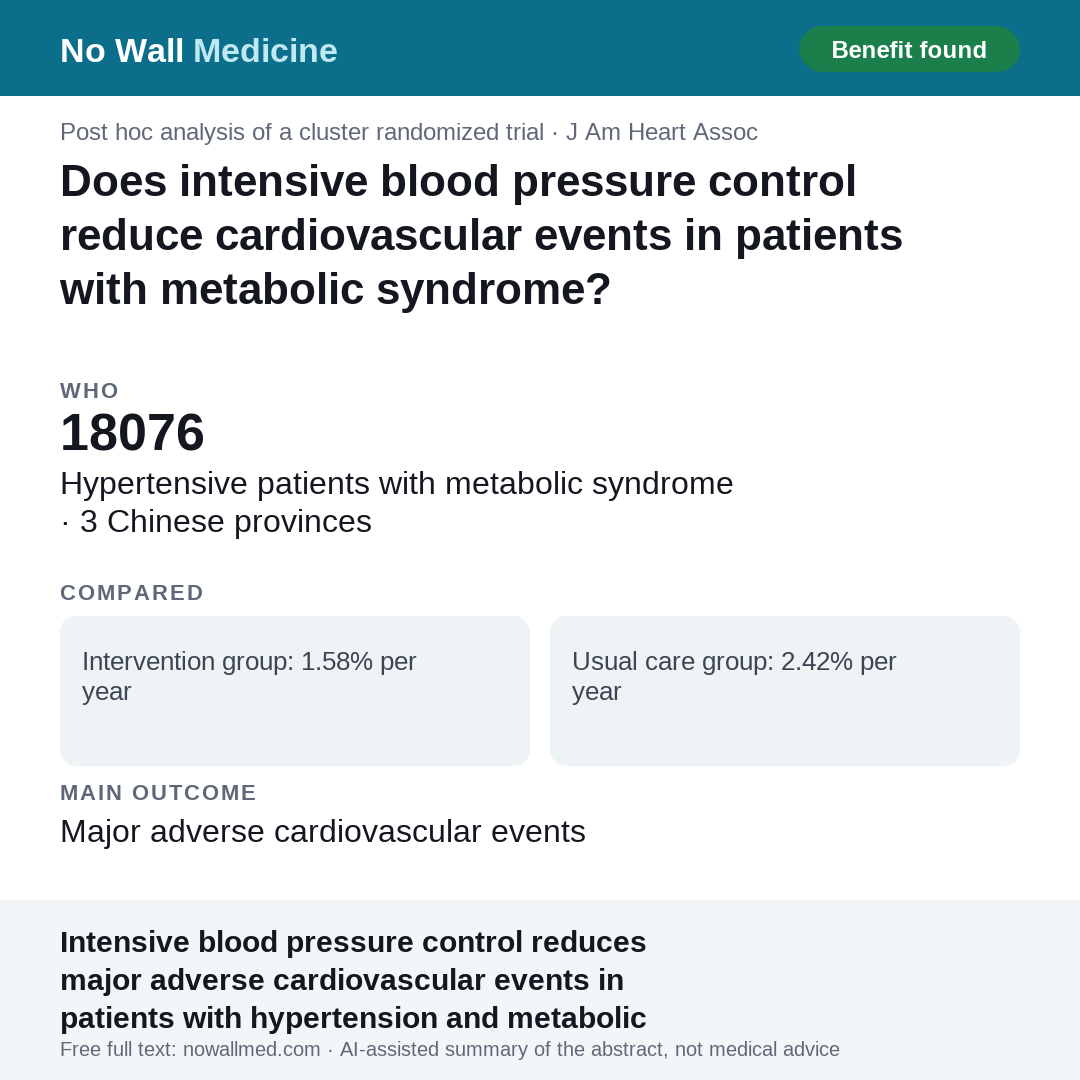
Intensive Blood Pressure Strategy on Cardiovascular Diseases in Patients With Metabolic Syndrome: Post Hoc Analysis of a Clinical Trial
Post hoc analysis of a cluster randomized trialBenefit found
Does intensive blood pressure control reduce cardiovascular events in patients with metabolic syndrome?
Who
18076
Hypertensive patients with metabolic syndrome · 3 Chinese provinces
Compared
Intervention group: 1.58% per year
Usual care group: 2.42% per year
Main outcome
Major adverse cardiovascular events
Result: hazard ratio 0.65 (95% CI, 0.57-0.74)
Bottom line: Intensive blood pressure control reduces major adverse cardiovascular events in patients with hypertension and metabolic syndrome.
J Am Heart Assoc · 2025-03-13Download image
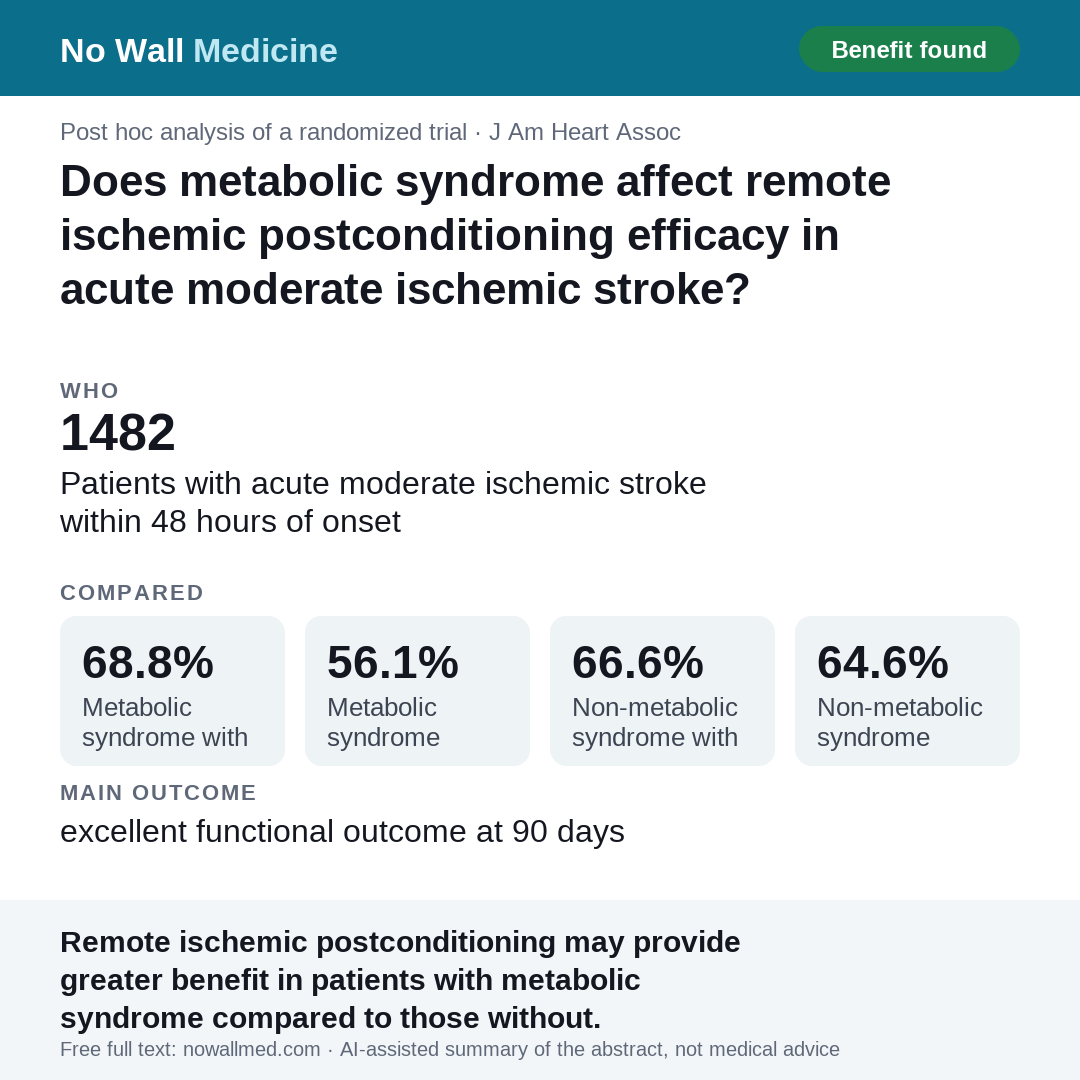
Metabolic Syndrome and Efficacy of Remote Ischemic Postconditioning in Acute Moderate Ischemic Stroke: A Post Hoc Analysis of the RICAMIS Trial
Post hoc analysis of a randomized trialBenefit found
Does metabolic syndrome affect remote ischemic postconditioning efficacy in acute moderate ischemic stroke?
Who
1482
Patients with acute moderate ischemic stroke within 48 hours of onset
Compared
68.8%Metabolic syndrome with remote ischemic postconditioning
56.1%Metabolic syndrome control
66.6%Non-metabolic syndrome with remote ischemic postconditioning
64.6%Non-metabolic syndrome control
Main outcome
excellent functional outcome at 90 days
Result: odds ratio 1.751 (95% CI 1.248-2.456) for metabolic syndrome patients
Bottom line: Remote ischemic postconditioning may provide greater benefit in patients with metabolic syndrome compared to those without.
J Am Heart Assoc · 2025-03-13Download image
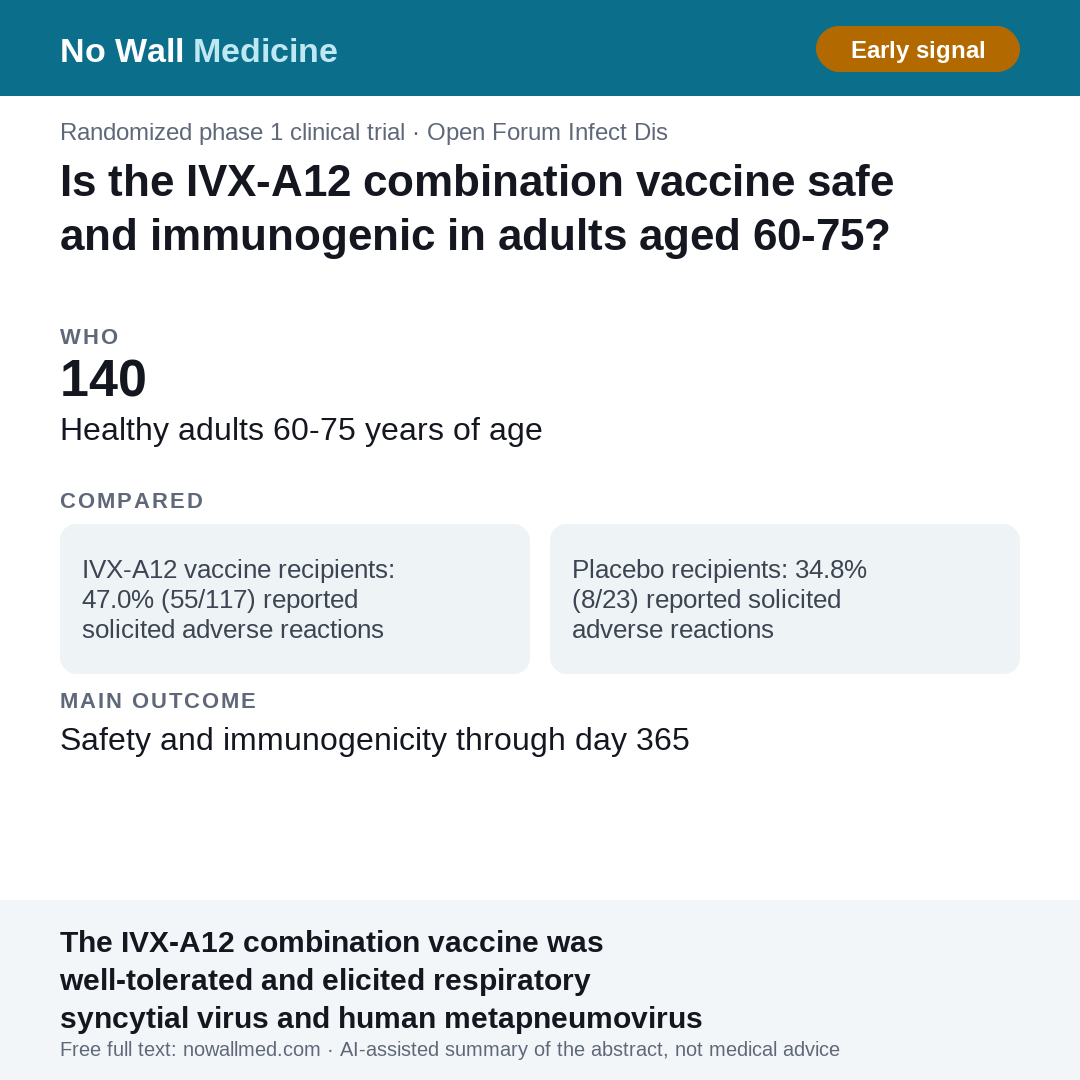
A Randomized Phase 1 Clinical Trial of a Respiratory Syncytial Virus and Human Metapneumovirus Combination Protein-Based Virus-like Particle Vaccine in Adults 60-75 Years of Age
Randomized phase 1 clinical trialBenefit found
Is the IVX-A12 combination vaccine safe and immunogenic in adults aged 60-75?
Who
140
Healthy adults 60-75 years of age
Compared
IVX-A12 vaccine recipients: 47.0% (55/117) reported solicited adverse reactions
Placebo recipients: 34.8% (8/23) reported solicited adverse reactions
Main outcome
Safety and immunogenicity through day 365
Bottom line: The IVX-A12 combination vaccine was well-tolerated and elicited respiratory syncytial virus and human metapneumovirus specific antibody responses.
Open Forum Infect Dis · 2025-03-13Download image
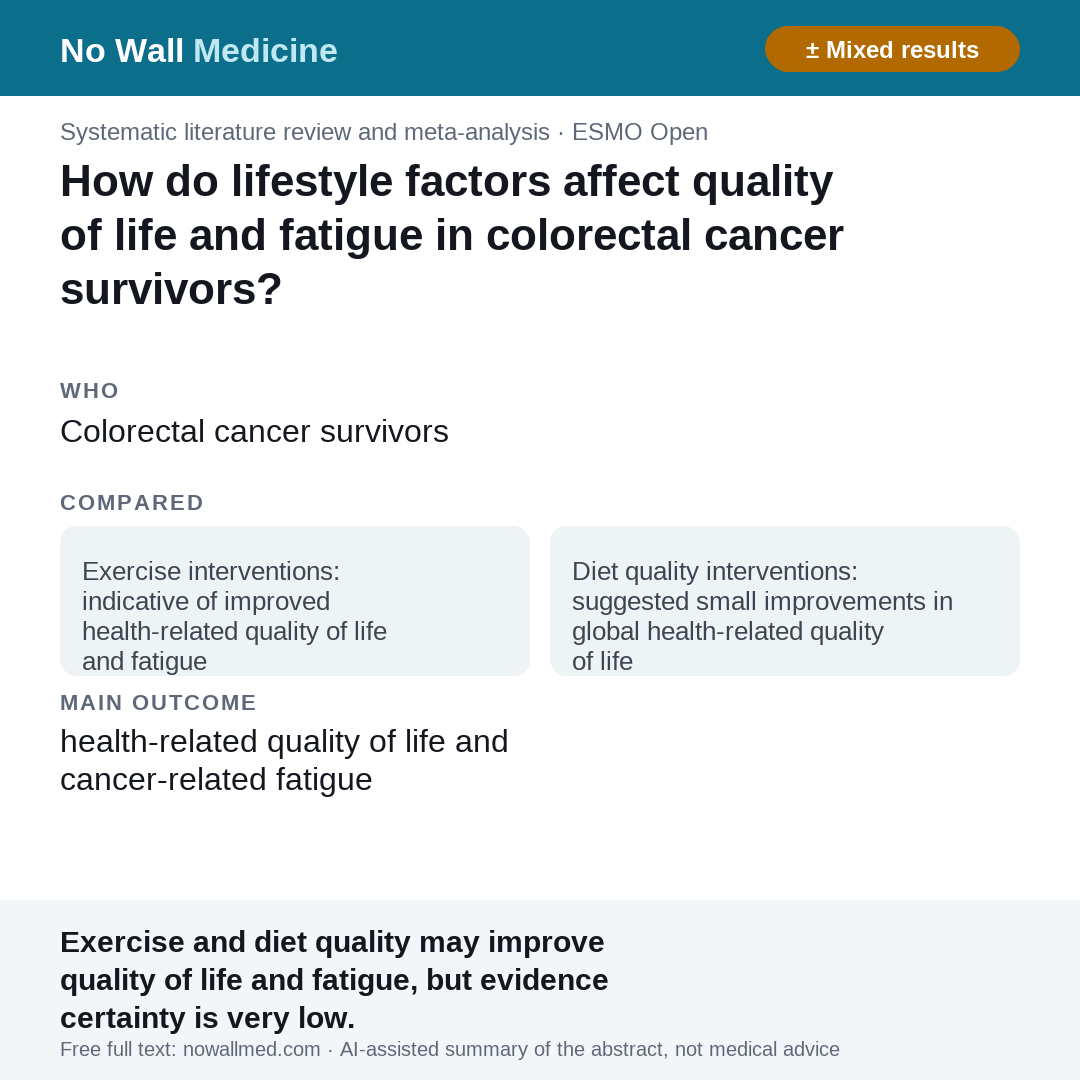
The role of physical activity, sedentary behaviour, diet, adiposity and body composition on health-related quality of life and cancer-related fatigue after diagnosis of colorectal cancer: a Global Cancer Update Programme (CUP Global) systematic literature review and meta-analysis
Systematic literature review and meta-analysisMixed results
How do lifestyle factors affect quality of life and fatigue in colorectal cancer survivors?
Who
Colorectal cancer survivors
Compared
Exercise interventions: indicative of improved health-related quality of life and fatigue
Diet quality interventions: suggested small improvements in global health-related quality of life
Main outcome
health-related quality of life and cancer-related fatigue
Bottom line: Exercise and diet quality may improve quality of life and fatigue, but evidence certainty is very low.
Limitation: High risk of bias and very low certainty of effect due to limited evidence.
ESMO Open · 2025-03-13Download image
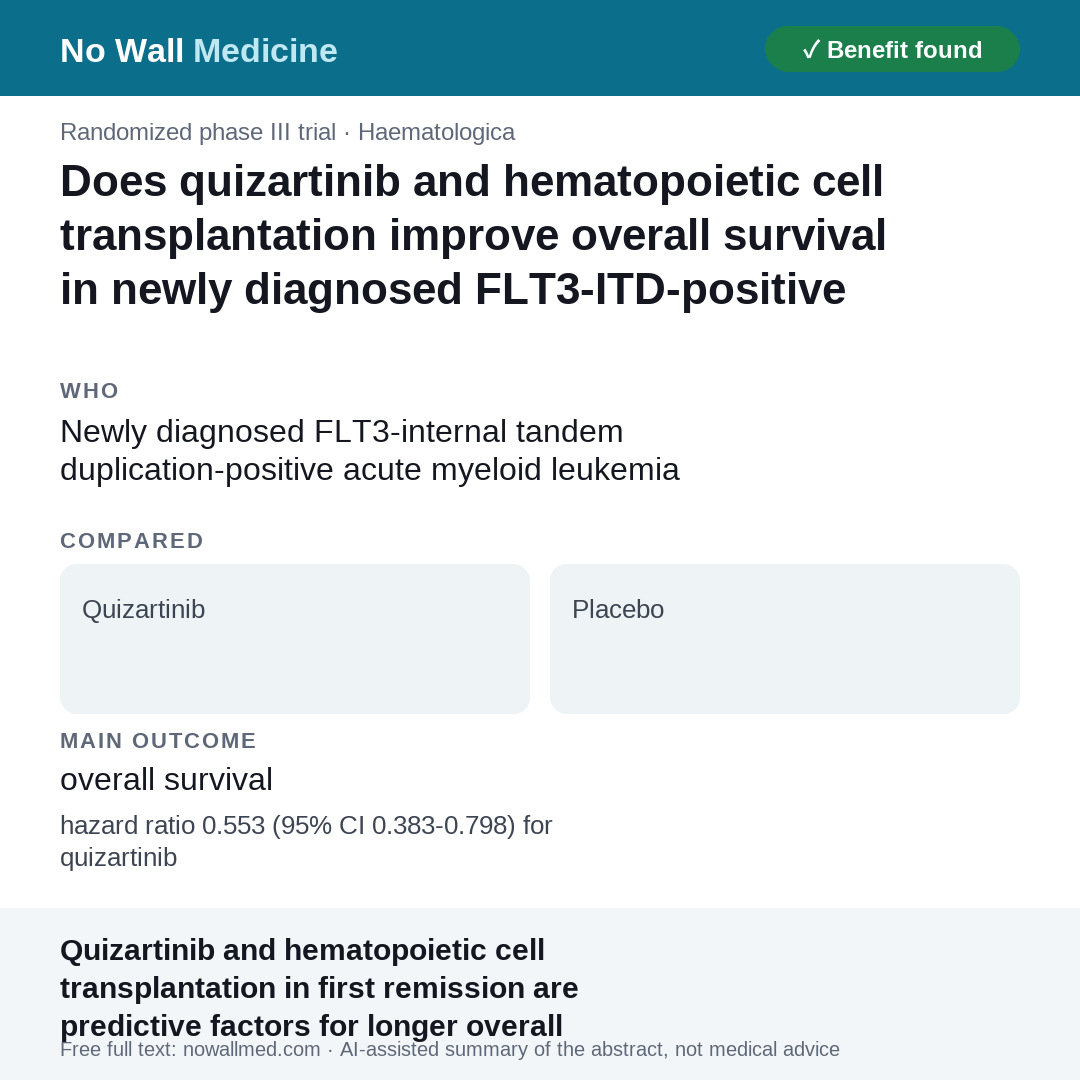
Impact of hematopoietic cell transplantation and quizartinib in newly diagnosed patients with acute myeloid leukemia and FMS-like tyrosine kinase 3-internal tandem duplications in the QuANTUM-First trial
Randomized phase III trialBenefit found
Does quizartinib and hematopoietic cell transplantation improve overall survival in newly diagnosed FLT3-ITD-positive AML?
Who
Newly diagnosed FLT3-internal tandem duplication-positive acute myeloid leukemia patients
Compared
Quizartinib
Placebo
Main outcome
overall survival
Result: hazard ratio 0.553 (95% CI 0.383-0.798) for quizartinib
Bottom line: Quizartinib and hematopoietic cell transplantation in first remission are predictive factors for longer overall survival.
Haematologica · 2025-03-13Download image
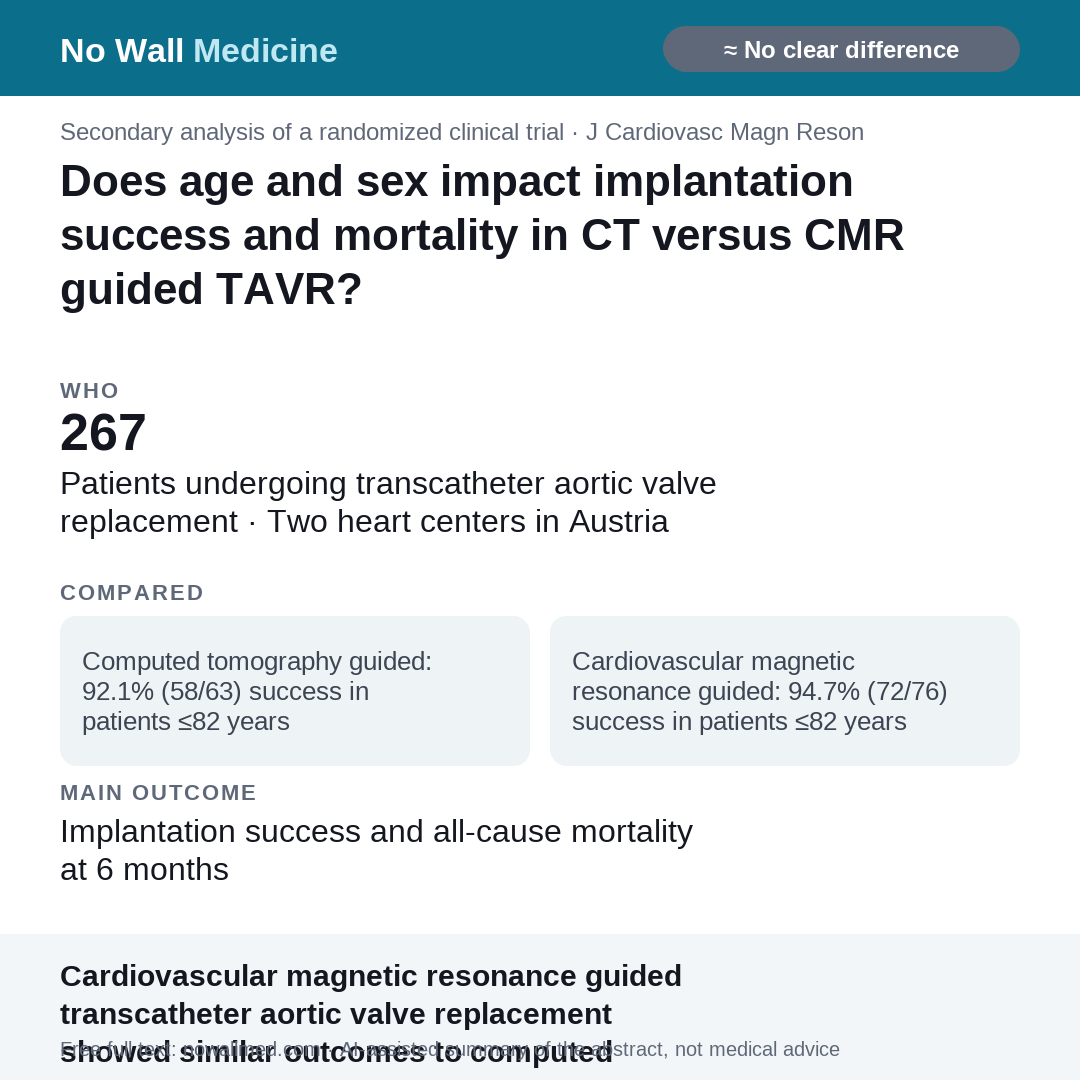
Age and sex-related outcomes in cardiovascular magnetic resonance versus computed tomography-guided transcatheter aortic valve replacement: a secondary analysis of a randomized clinical trial
Secondary analysis of a randomized clinical trialNo clear difference
Does age and sex impact implantation success and mortality in CT versus CMR guided TAVR?
Who
267
Patients undergoing transcatheter aortic valve replacement · Two heart centers in Austria
Compared
Computed tomography guided: 92.1% (58/63) success in patients ≤82 years
Cardiovascular magnetic resonance guided: 94.7% (72/76) success in patients ≤82 years
Main outcome
Implantation success and all-cause mortality at 6 months
Bottom line: Cardiovascular magnetic resonance guided transcatheter aortic valve replacement showed similar outcomes to computed tomography regardless of age and sex.
J Cardiovasc Magn Reson · 2025-03-13Download image
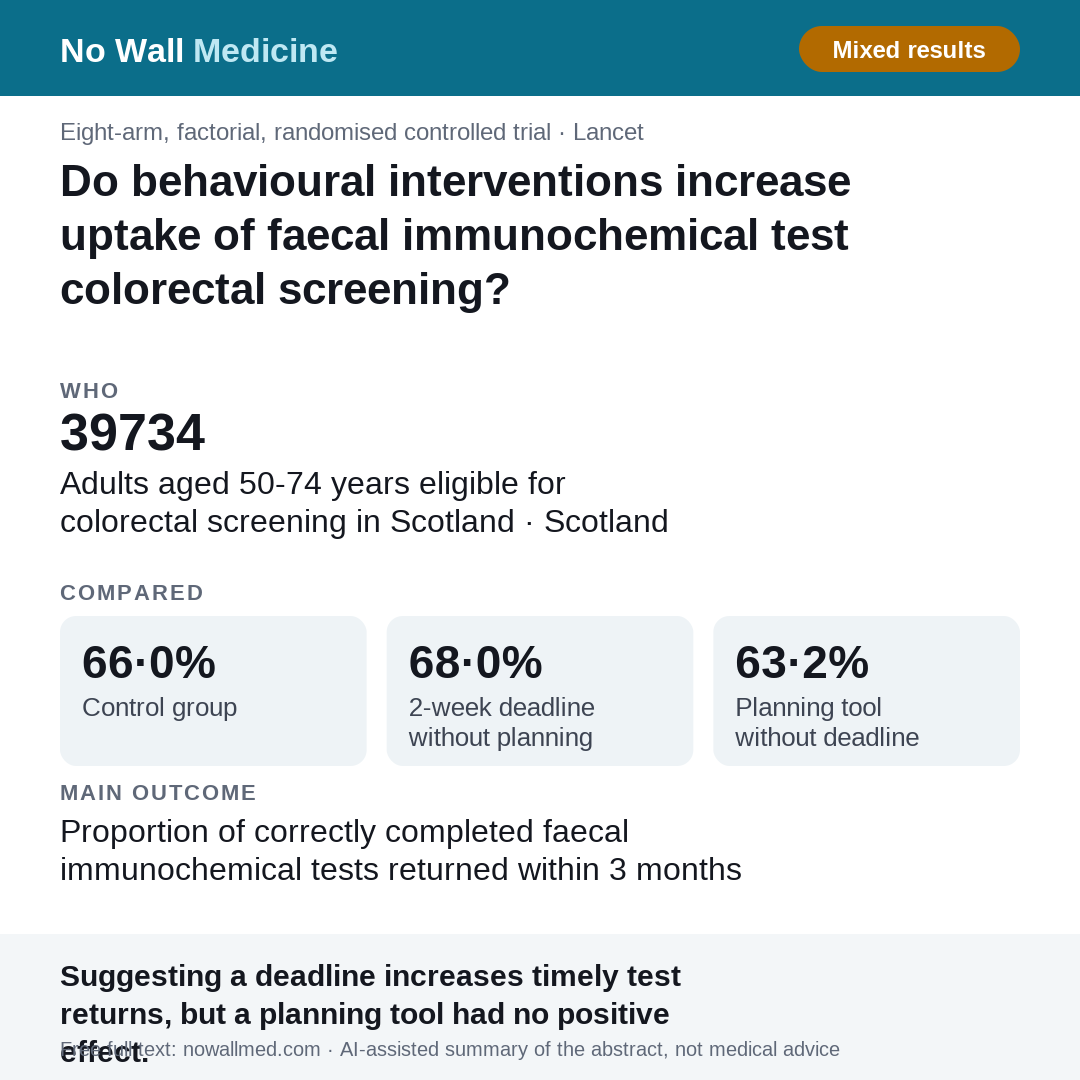
Behavioural interventions to increase uptake of FIT colorectal screening in Scotland (TEMPO): a nationwide, eight-arm, factorial, randomised controlled trial
Eight-arm, factorial, randomised controlled trialMixed results
Do behavioural interventions increase uptake of faecal immunochemical test colorectal screening?
Who
39734
Adults aged 50-74 years eligible for colorectal screening in Scotland · Scotland
Compared
66·0%Control group (3275 of 4965)
68·0%2-week deadline without planning tool (3376 of 4964)
63·2%Planning tool without deadline (3134 of 4958)
Main outcome
Proportion of correctly completed faecal immunochemical tests returned within 3 months
Result: adjusted odds ratio 1·13 (95% CI 1·08 to 1·19) for deadline
Bottom line: Suggesting a deadline increases timely test returns, but a planning tool had no positive effect.
Limitation: The analysis was complicated by an interaction between the two interventions
Funded by: Scottish Government and Cancer Research UK
Lancet · 2025-03-12Download image
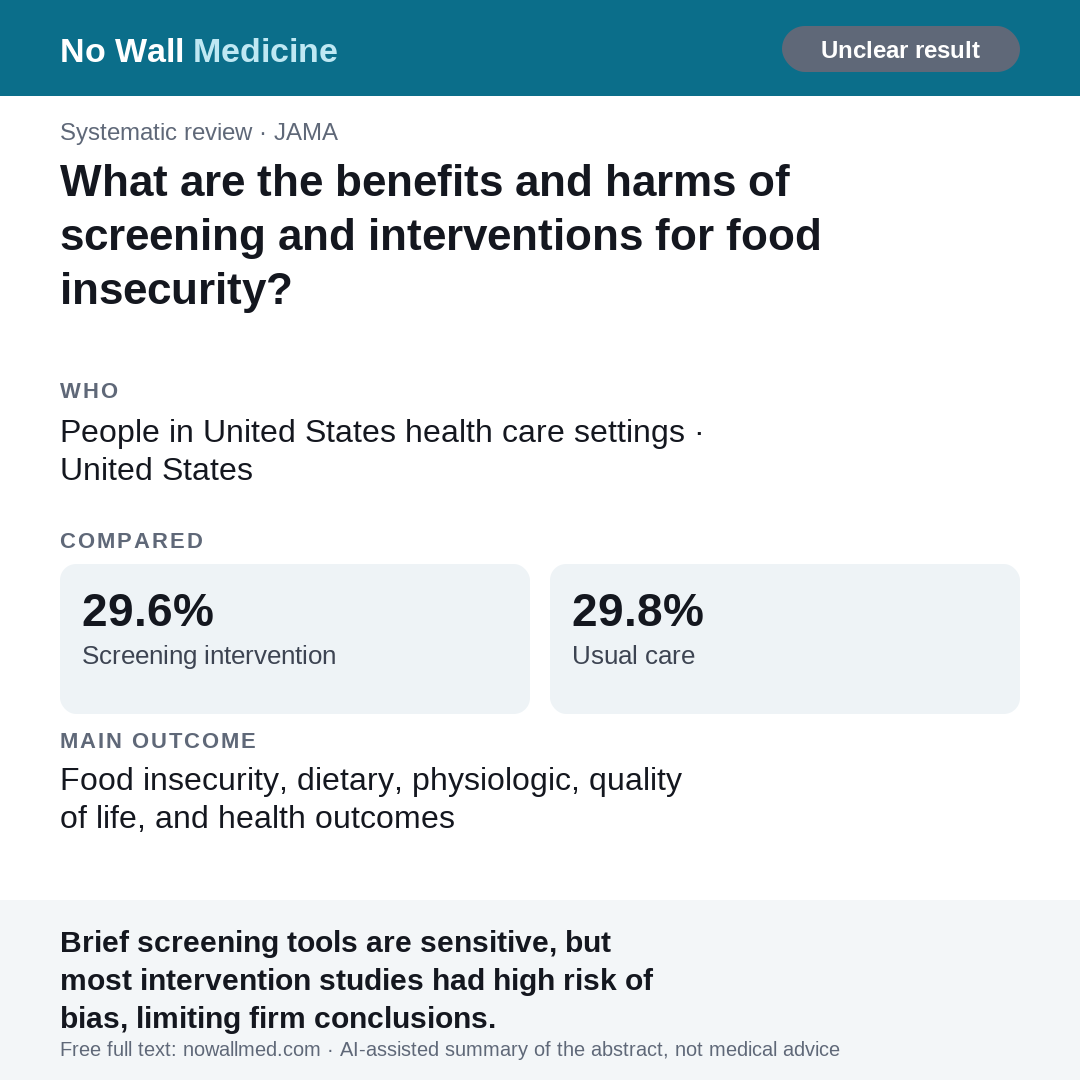
Preventive Services for Food Insecurity: Evidence Report and Systematic Review for the US Preventive Services Task Force
Systematic reviewUnclear result
What are the benefits and harms of screening and interventions for food insecurity?
Who
People in United States health care settings · United States
Compared
29.6%Screening intervention
29.8%Usual care
Main outcome
Food insecurity, dietary, physiologic, quality of life, and health outcomes
Bottom line: Brief screening tools are sensitive, but most intervention studies had high risk of bias, limiting firm conclusions.
Limitation: Most studies of interventions to improve food insecurity had high risk of bias.
JAMA · 2025-03-12Download image
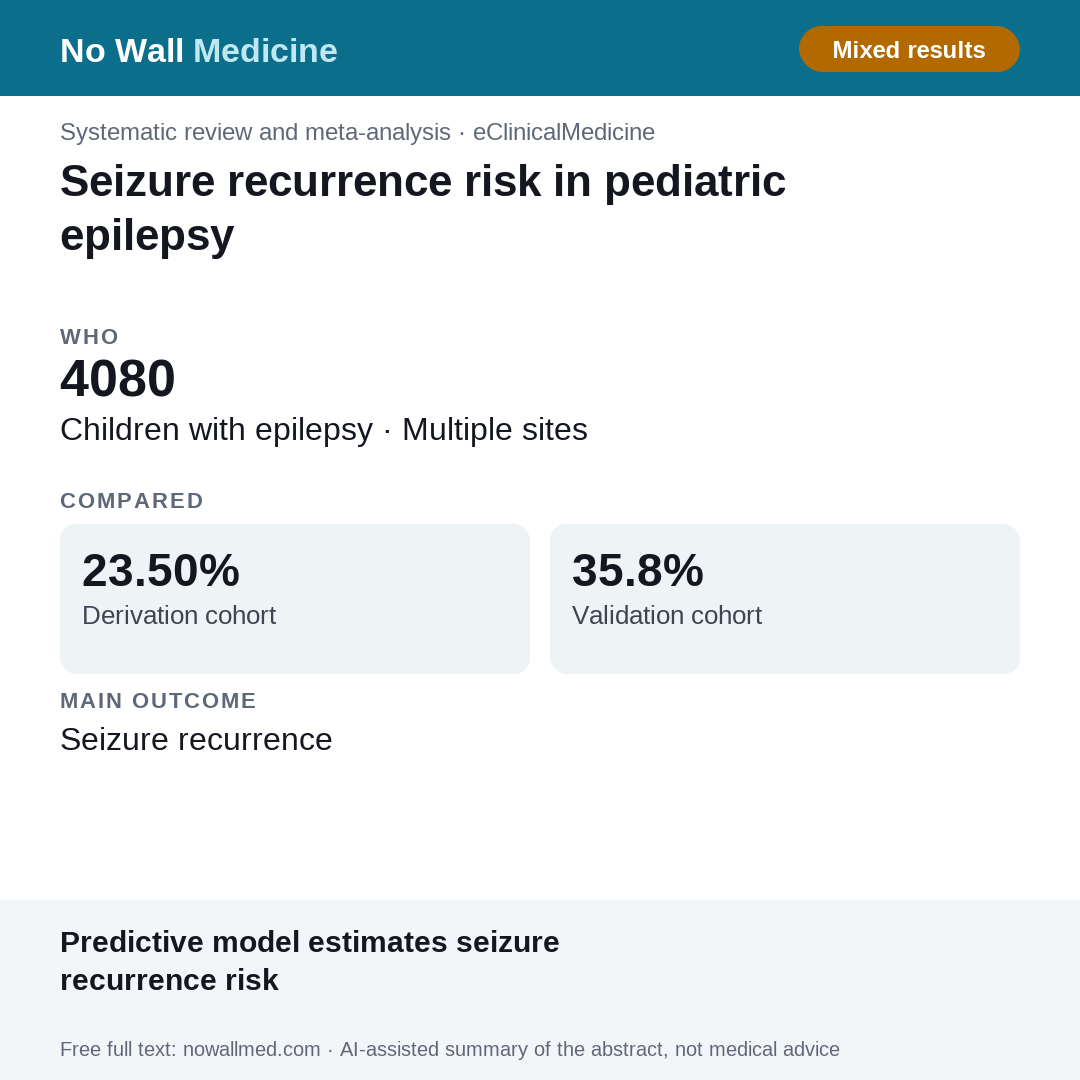
Development and validation of a predictive model for seizure recurrence following discontinuation of antiseizure medication in children with epilepsy: a systematic review and meta-analysis, and prospective cohort study
Systematic review and meta-analysisMixed results
Seizure recurrence risk in pediatric epilepsy
Who
4080
Children with epilepsy · Multiple sites
Compared
23.50%Derivation cohort (959/4080)
35.8%Validation cohort (122/341)
Main outcome
Seizure recurrence
Bottom line: Predictive model estimates seizure recurrence risk
Funded by: Chongqing Medical University
eClinicalMedicine · 2025-03-12Download image
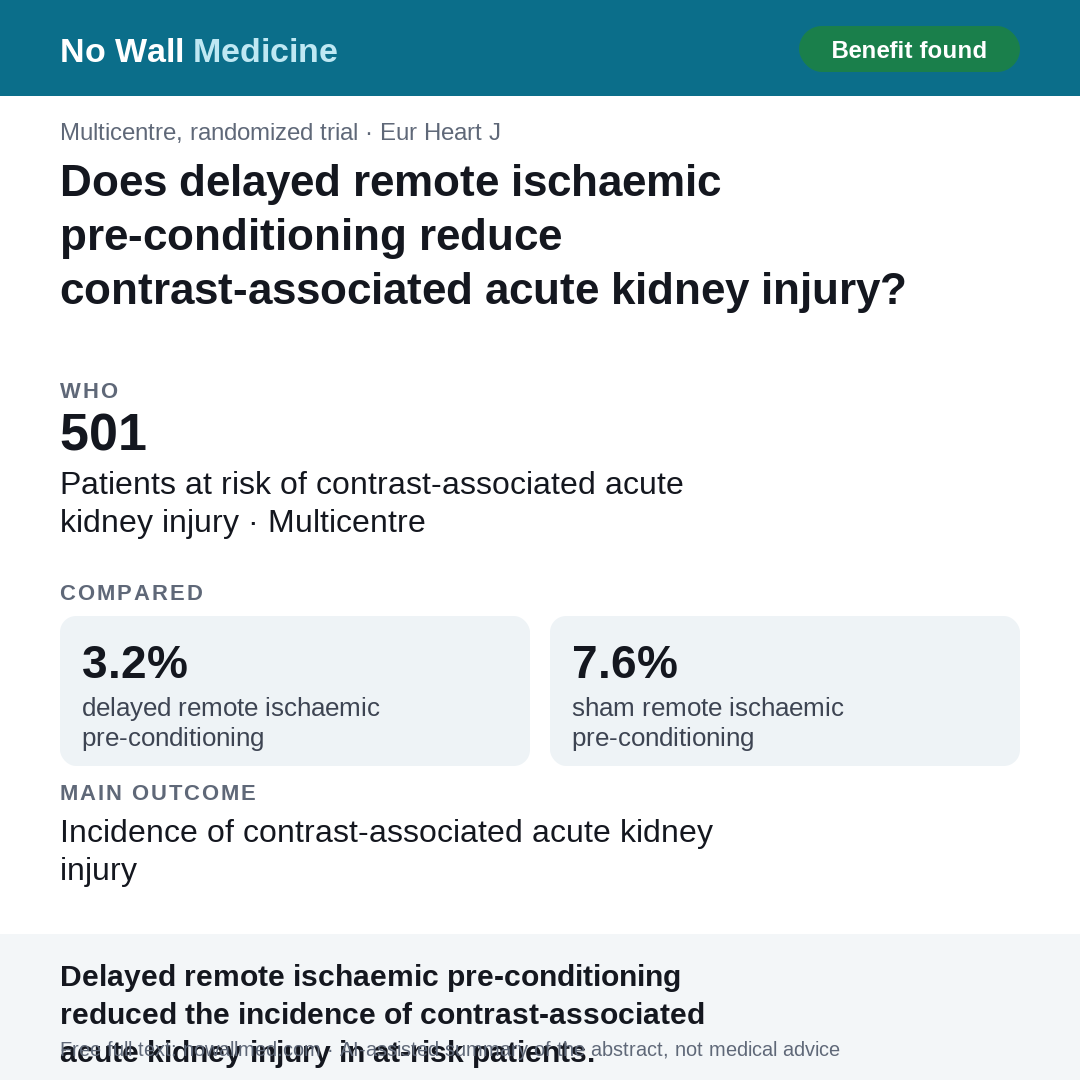
Remote ischaemic pre-conditioning, kidney injury, and outcomes after coronary angiography and intervention: a randomized trial
Multicentre, randomized trialBenefit found
Does delayed remote ischaemic pre-conditioning reduce contrast-associated acute kidney injury?
Who
501
Patients at risk of contrast-associated acute kidney injury · Multicentre
Compared
3.2%delayed remote ischaemic pre-conditioning
7.6%sham remote ischaemic pre-conditioning
Main outcome
Incidence of contrast-associated acute kidney injury
Result: odds ratio 0.4 (95% confidence interval 0.17-0.94)
Bottom line: Delayed remote ischaemic pre-conditioning reduced the incidence of contrast-associated acute kidney injury in at-risk patients.
Eur Heart J · 2025-03-12Download image
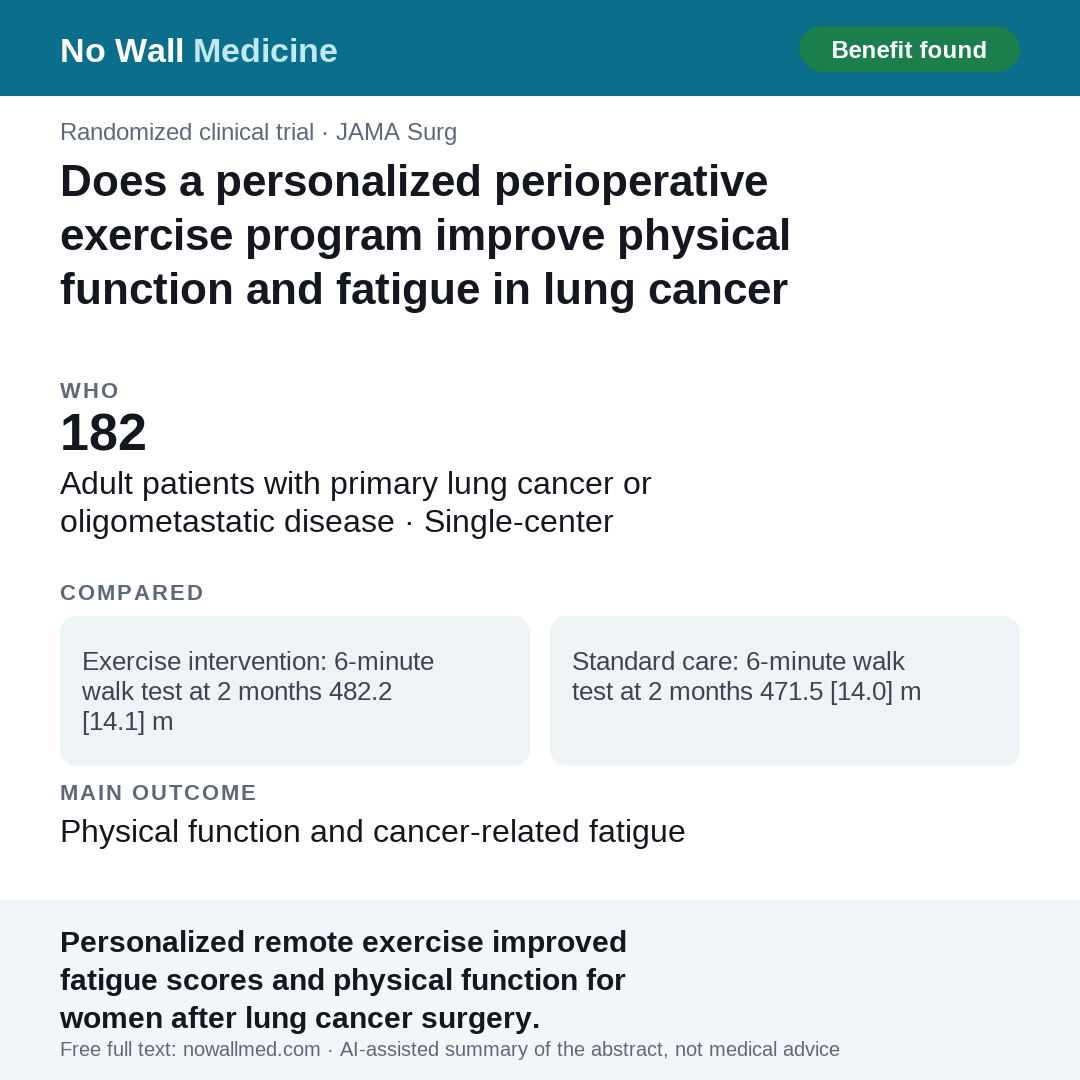
Precision Exercise Effect on Fatigue and Function in Lung Cancer Surgery: A Randomized Clinical Trial
Randomized clinical trialBenefit found
Does a personalized perioperative exercise program improve physical function and fatigue in lung cancer surgery patients?
Who
182
Adult patients with primary lung cancer or oligometastatic disease · Single-center
Compared
Exercise intervention: 6-minute walk test at 2 months 482.2 [14.1] m
Standard care: 6-minute walk test at 2 months 471.5 [14.0] m
Main outcome
Physical function and cancer-related fatigue
Bottom line: Personalized remote exercise improved fatigue scores and physical function for women after lung cancer surgery.
JAMA Surg · 2025-03-12Download image
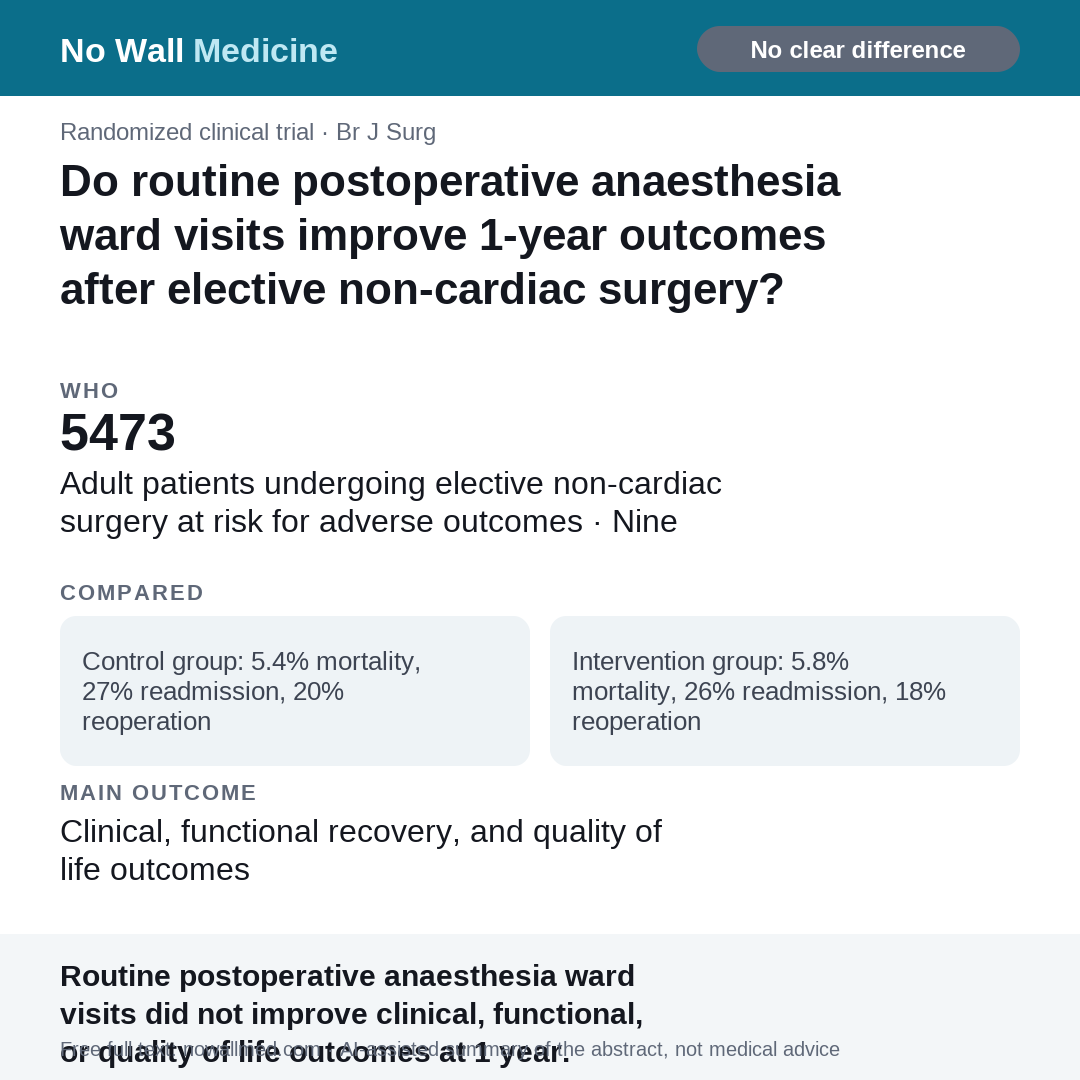
Routine anaesthesia ward-based patient visits in surgery: 1-year outcomes of the TRACE randomized clinical trial
Randomized clinical trialNo clear difference
Do routine postoperative anaesthesia ward visits improve 1-year outcomes after elective non-cardiac surgery?
Who
5473
Adult patients undergoing elective non-cardiac surgery at risk for adverse outcomes · Nine hospitals in the Netherlands
Compared
Control group: 5.4% mortality, 27% readmission, 20% reoperation
Intervention group: 5.8% mortality, 26% readmission, 18% reoperation
Main outcome
Clinical, functional recovery, and quality of life outcomes
Bottom line: Routine postoperative anaesthesia ward visits did not improve clinical, functional, or quality of life outcomes at 1 year.
Br J Surg · 2025-03-12Download image
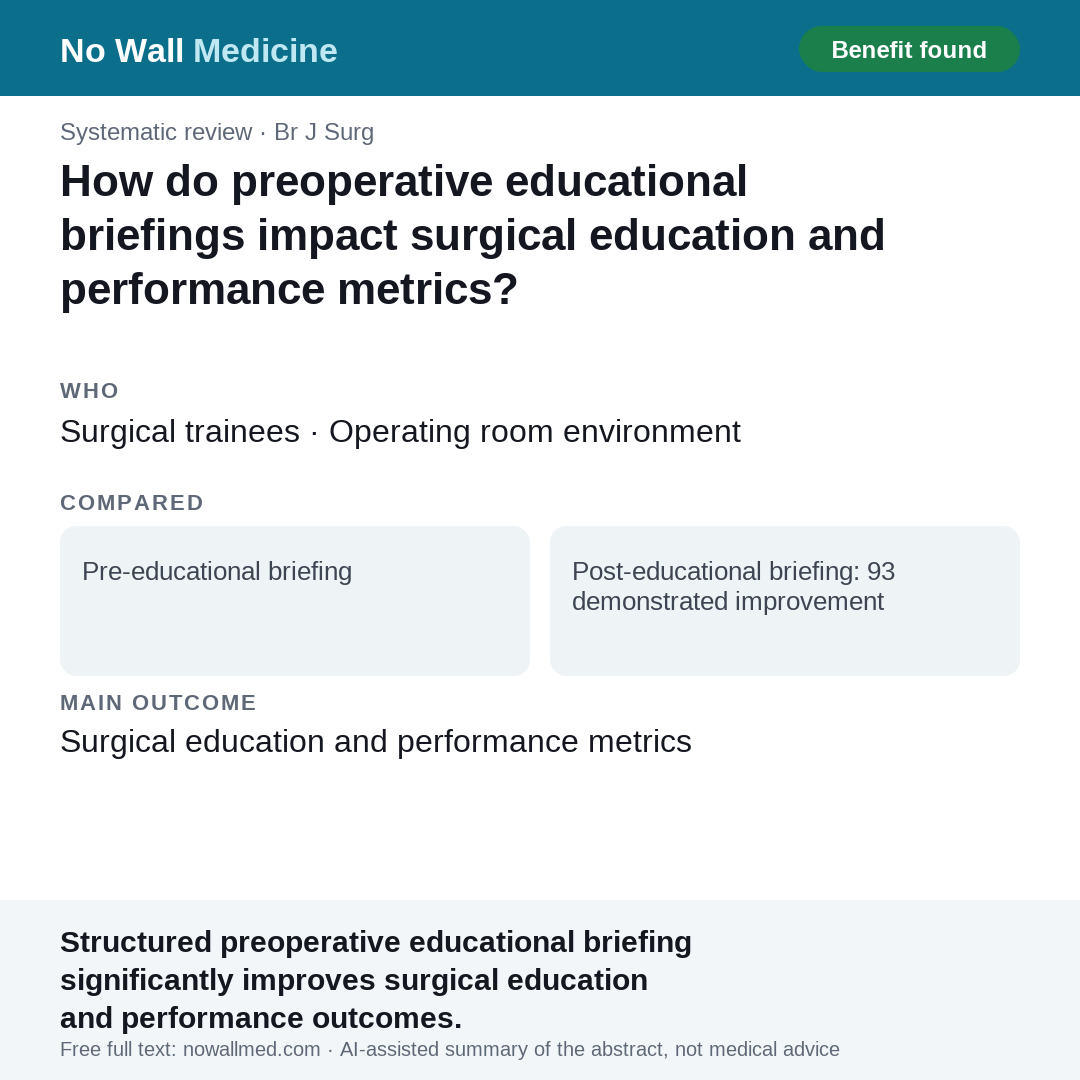
Preoperative educational briefings: systematic review and novel evidence-based framework
Systematic reviewBenefit found
How do preoperative educational briefings impact surgical education and performance metrics?
Who
Surgical trainees · Operating room environment
Compared
Pre-educational briefing
Post-educational briefing: 93 demonstrated improvement
Main outcome
Surgical education and performance metrics
Bottom line: Structured preoperative educational briefing significantly improves surgical education and performance outcomes.
Br J Surg · 2025-03-12Download image
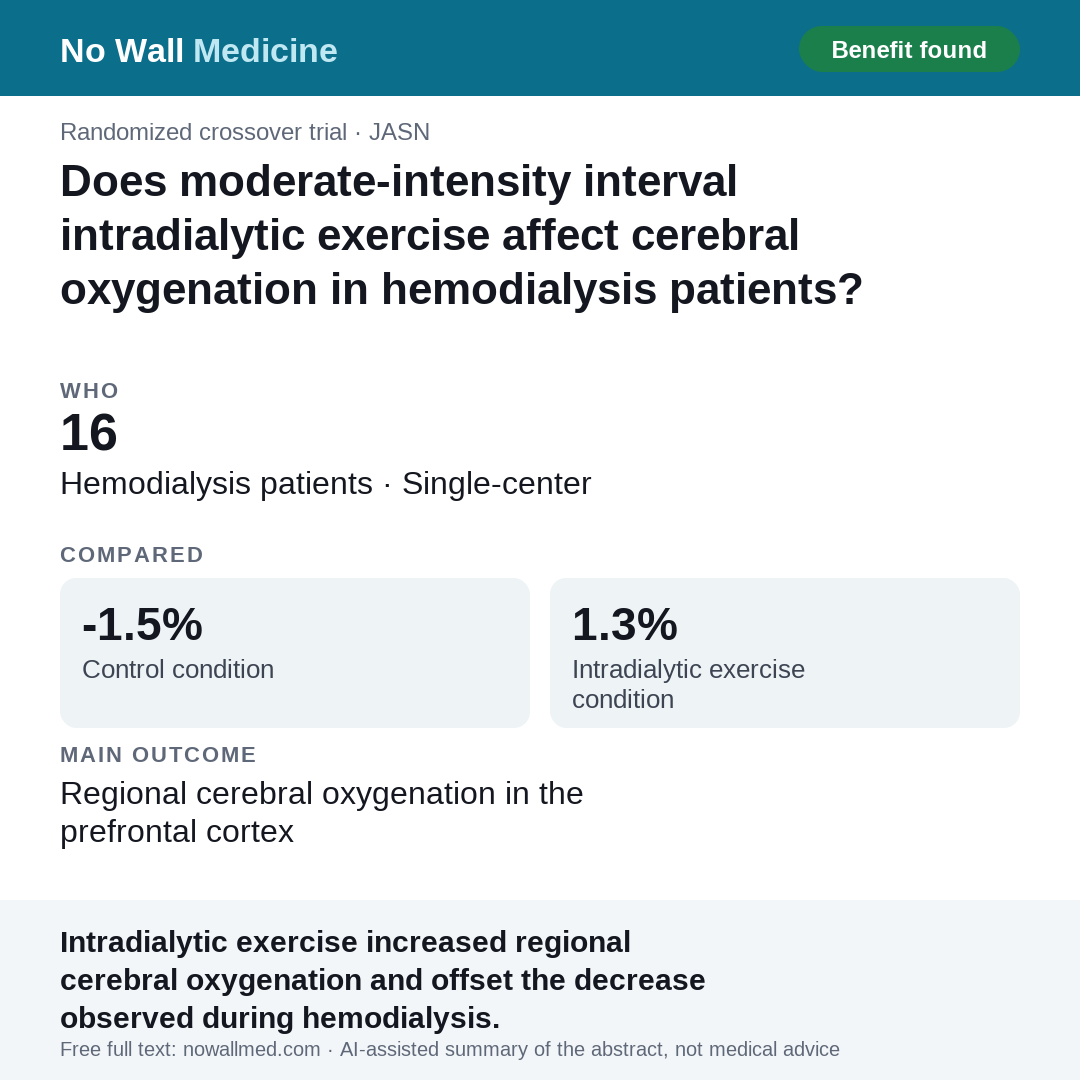
Acute Effect of Moderate-Intensity Interval Intradialytic Exercise on Cerebral Oxygenation in Hemodialysis Patients: A Randomized Crossover Trial
Randomized crossover trialBenefit found
Does moderate-intensity interval intradialytic exercise affect cerebral oxygenation in hemodialysis patients?
Who
16
Hemodialysis patients · Single-center
Compared
-1.5%Control condition (95% CI -2.7 to -0.3)
1.3%Intradialytic exercise condition (95% CI 0.5 to 2.1)
Main outcome
Regional cerebral oxygenation in the prefrontal cortex
Result: rSO2 1.3% (95% CI 0.5 to 2.1)
Bottom line: Intradialytic exercise increased regional cerebral oxygenation and offset the decrease observed during hemodialysis.
JASN · 2025-03-12Download image
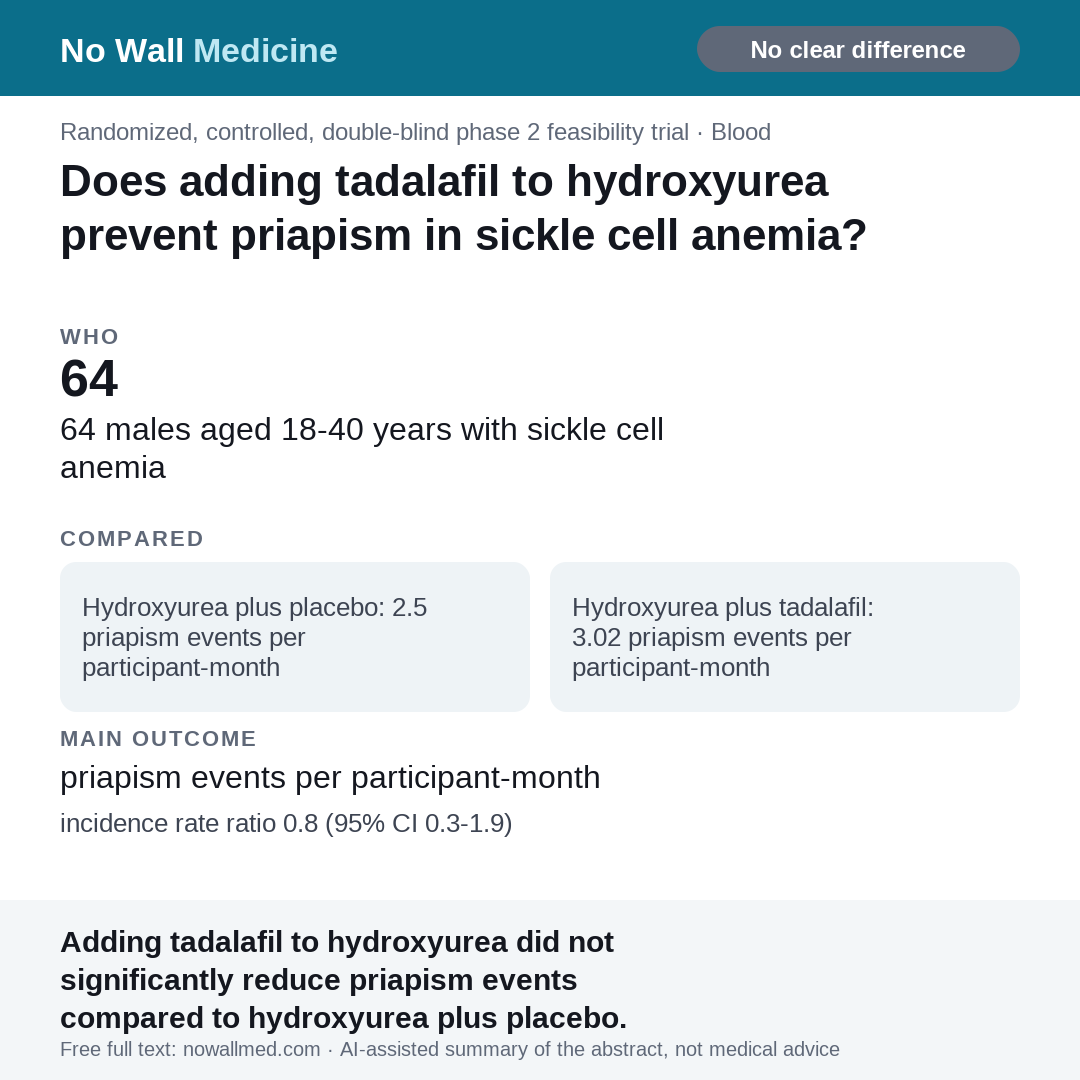
A controlled trial for preventing priapism in sickle cell anemia: hydroxyurea plus placebo vs hydroxyurea plus tadalafil
Randomized, controlled, double-blind phase 2 feasibility trialNo clear difference
Does adding tadalafil to hydroxyurea prevent priapism in sickle cell anemia?
Who
64
64 males aged 18-40 years with sickle cell anemia
Compared
Hydroxyurea plus placebo: 2.5 priapism events per participant-month
Hydroxyurea plus tadalafil: 3.02 priapism events per participant-month
Main outcome
priapism events per participant-month
Result: incidence rate ratio 0.8 (95% CI 0.3-1.9)
Bottom line: Adding tadalafil to hydroxyurea did not significantly reduce priapism events compared to hydroxyurea plus placebo.
Blood · 2025-03-12Download image
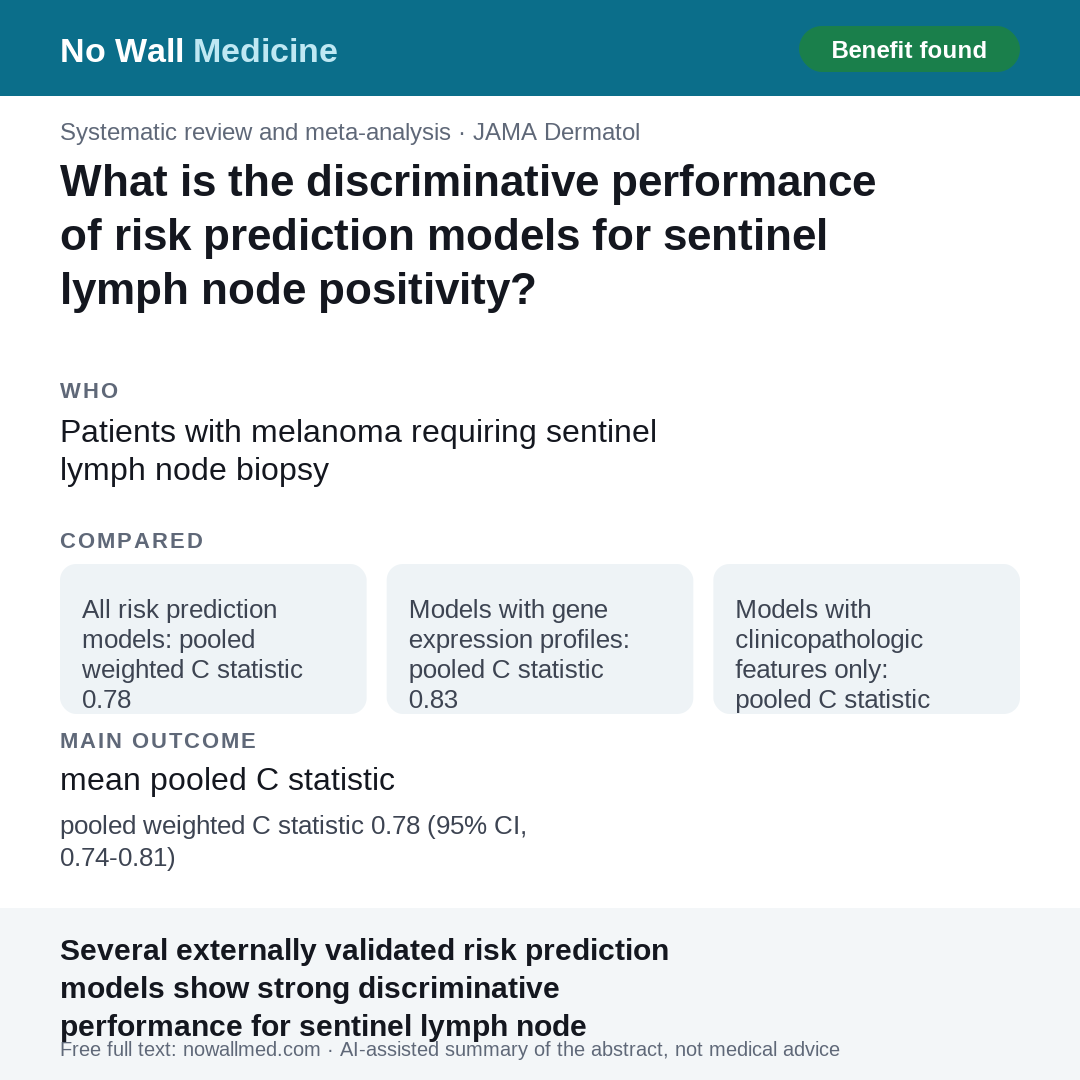
Risk Prediction Models for Sentinel Node Positivity in Melanoma: A Systematic Review and Meta-Analysis
Systematic review and meta-analysisBenefit found
What is the discriminative performance of risk prediction models for sentinel lymph node positivity?
Who
Patients with melanoma requiring sentinel lymph node biopsy
Compared
All risk prediction models: pooled weighted C statistic 0.78
Models with gene expression profiles: pooled C statistic 0.83
Models with clinicopathologic features only: pooled C statistic 0.77
Main outcome
mean pooled C statistic
Result: pooled weighted C statistic 0.78 (95% CI, 0.74-0.81)
Bottom line: Several externally validated risk prediction models show strong discriminative performance for sentinel lymph node positivity in melanoma.
JAMA Dermatol · 2025-03-12Download image
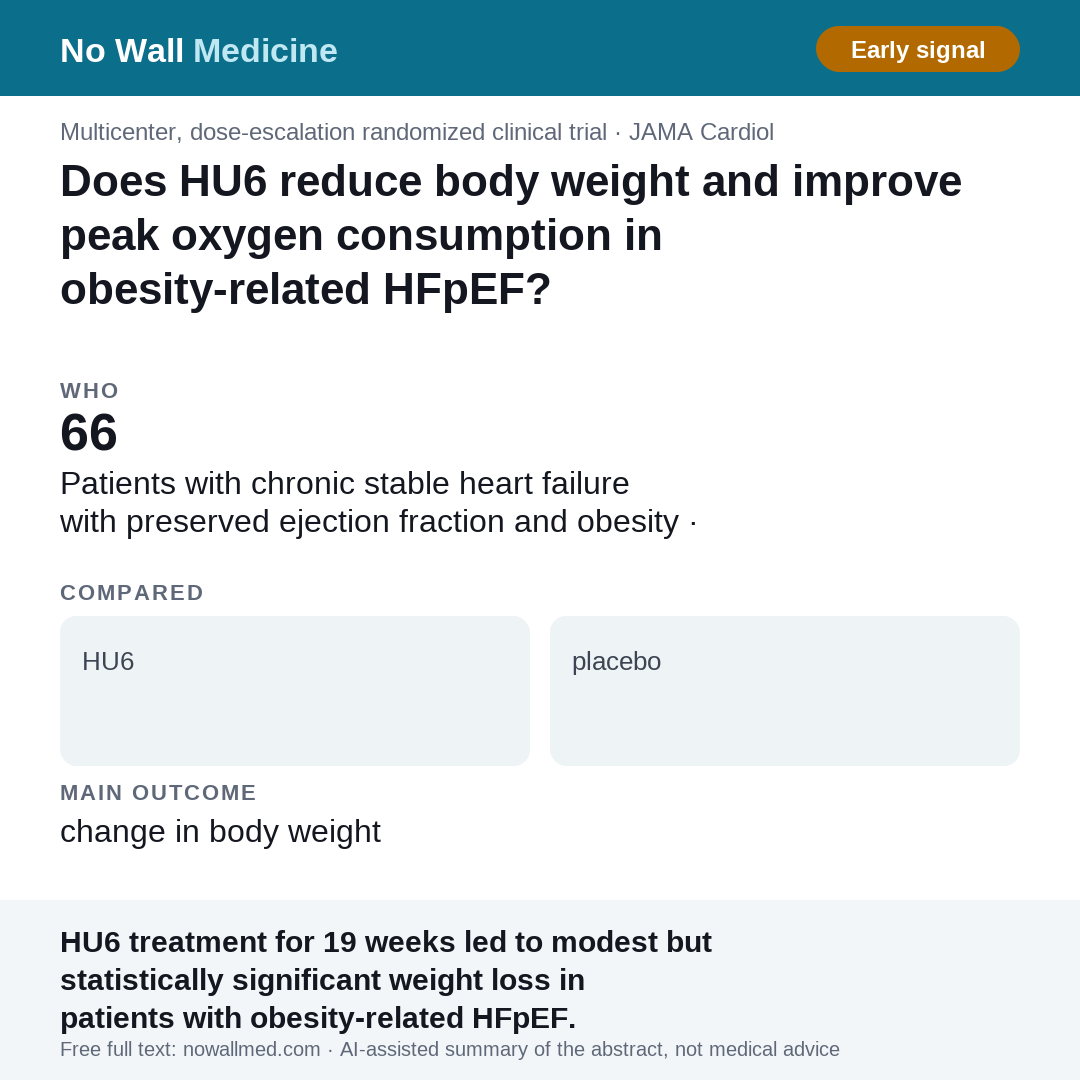
Novel Controlled Metabolic Accelerator for Obesity-Related HFpEF: The HuMAIN-HFpEF Randomized Clinical Trial
Multicenter, dose-escalation randomized clinical trialBenefit found
Does HU6 reduce body weight and improve peak oxygen consumption in obesity-related HFpEF?
Who
66
Patients with chronic stable heart failure with preserved ejection fraction and obesity · Multicenter
Compared
HU6
placebo
Main outcome
change in body weight
Result: between-group difference, -2.86 kg; 95% CI, -4.68 to -1.04 kg
Bottom line: HU6 treatment for 19 weeks led to modest but statistically significant weight loss in patients with obesity-related HFpEF.
JAMA Cardiol · 2025-03-12Download image