Visual abstracts
New randomized trials and meta-analyses from leading journals at a glance: who was studied, what was compared, and what was found. Every paper is free to read in full.
All specialtiesCardiology 4763Oncology 4043Gastroenterology & Hepatology 1903Infectious Disease 3756Neurology 1872Psychiatry & Mental Health 2216Pulmonology 2044Critical Care 1319Endocrinology & Diabetes 2544Pediatrics 2889Surgery 2480Orthopedics & Sports Medicine 917Neurosurgery 525Cardiothoracic & Vascular Surgery 656Plastic & Reconstructive Surgery 574Nephrology 1107Rheumatology 810Hematology 1090Dermatology 611Ophthalmology 532Obstetrics & Gynecology 1645Public & Global Health 1037Radiology & Imaging 619Anesthesiology 958Urology 745ENT (Otolaryngology) 494Emergency Medicine 481Allergy & Immunology 309Geriatrics 972Family Medicine & Primary Care 534Medical Genetics & Genomics 659Pathology & Laboratory Medicine 156Physical Medicine & Rehabilitation 734Palliative Care 421Nutrition 1560Digital Health & AI 2137General Medicine 318
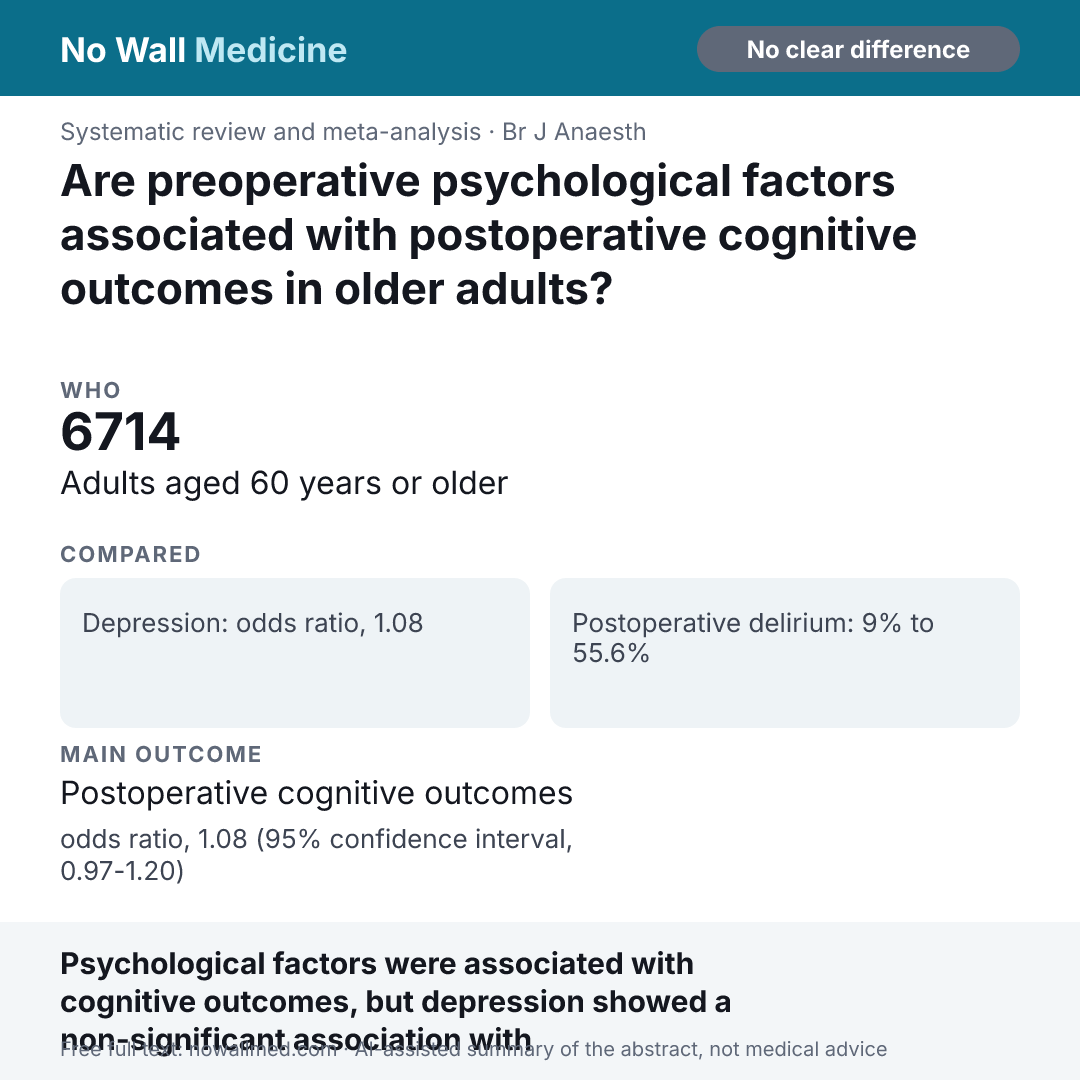
Psychological factors associated with postoperative cognitive outcomes in older adults: a systematic review and meta-analysis
Systematic review and meta-analysisNo clear difference
Are preoperative psychological factors associated with postoperative cognitive outcomes in older adults?
Who
6714
Adults aged 60 years or older
Compared
Depression: odds ratio, 1.08
Postoperative delirium: 9% to 55.6%
Main outcome
Postoperative cognitive outcomes
Result: odds ratio, 1.08 (95% confidence interval, 0.97-1.20)
Bottom line: Psychological factors were associated with cognitive outcomes, but depression showed a non-significant association with postoperative delirium.
Limitation: Evidence for anxiety, personality traits, and stress is limited.
Br J Anaesth · 2026-02-27 · Save PNG
Promoting genetic and genomic practices among allied healthcare professionals and nurses: a systematic review
Systematic reviewUnclear result
genetic practices among healthcare professionals
Who
allied health professionals and nurses
Compared
workshops
online learning
Main outcome
genetic integration into practice
Bottom line: strategies support genetic integration
Limitation: lack evaluation and focus
Eur J Hum Genet · 2026-02-27 · Save PNG

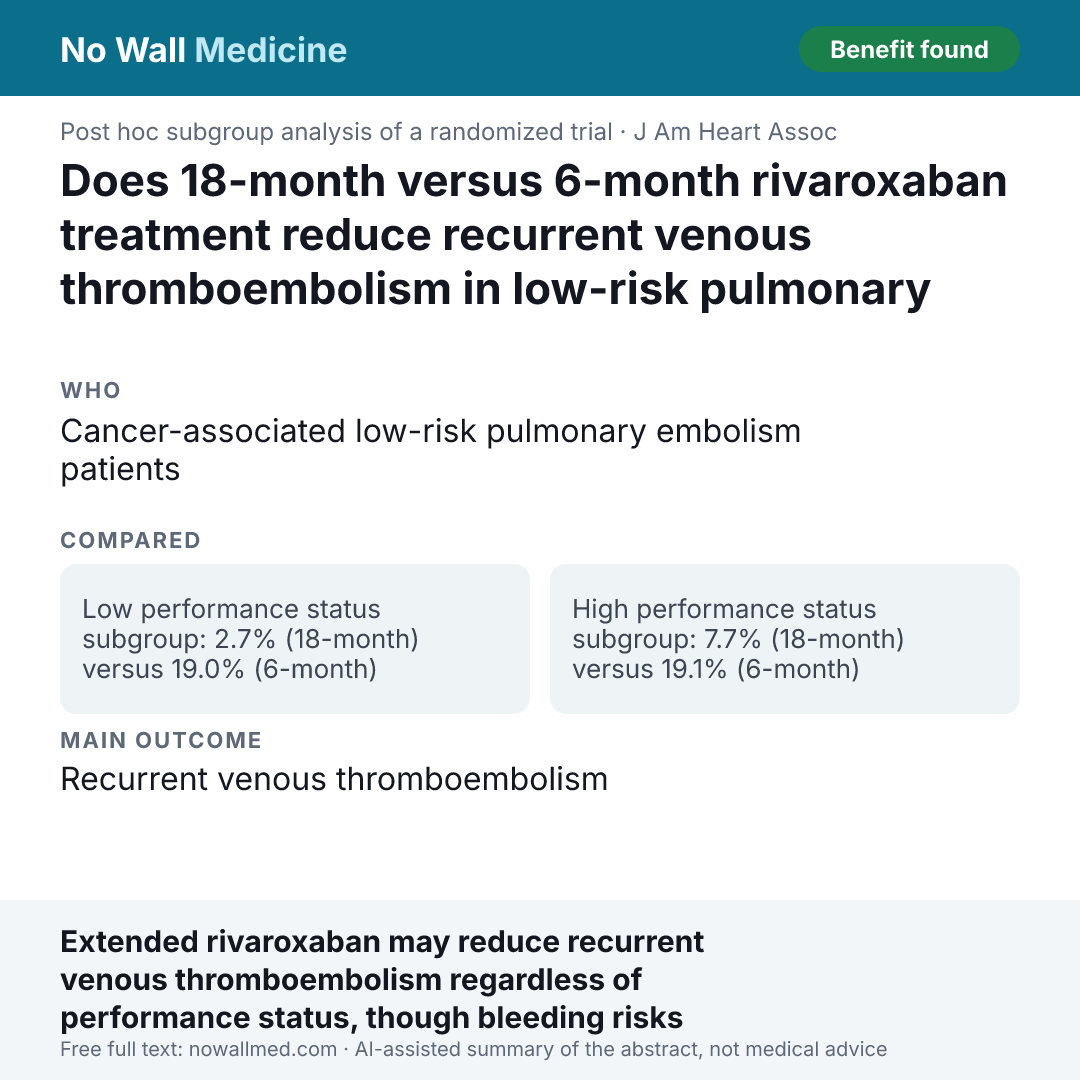
Extended Anticoagulation Therapy With Rivaroxaban for Cancer-Associated Low-Risk Pulmonary Embolism According to Different Performance Status Scores: Insights From the ONCO PE Randomized Trial
Post hoc subgroup analysis of a randomized trialBenefit found
Does 18-month versus 6-month rivaroxaban treatment reduce recurrent venous thromboembolism in low-risk pulmonary embolism?
Who
Cancer-associated low-risk pulmonary embolism patients
Compared
Low performance status subgroup: 2.7% (18-month) versus 19.0% (6-month)
High performance status subgroup: 7.7% (18-month) versus 19.1% (6-month)
Main outcome
Recurrent venous thromboembolism
Bottom line: Extended rivaroxaban may reduce recurrent venous thromboembolism regardless of performance status, though bleeding risks may increase in high performance status patients.
Limitation: This was a post hoc subgroup analysis
J Am Heart Assoc · 2026-02-27 · Save PNG
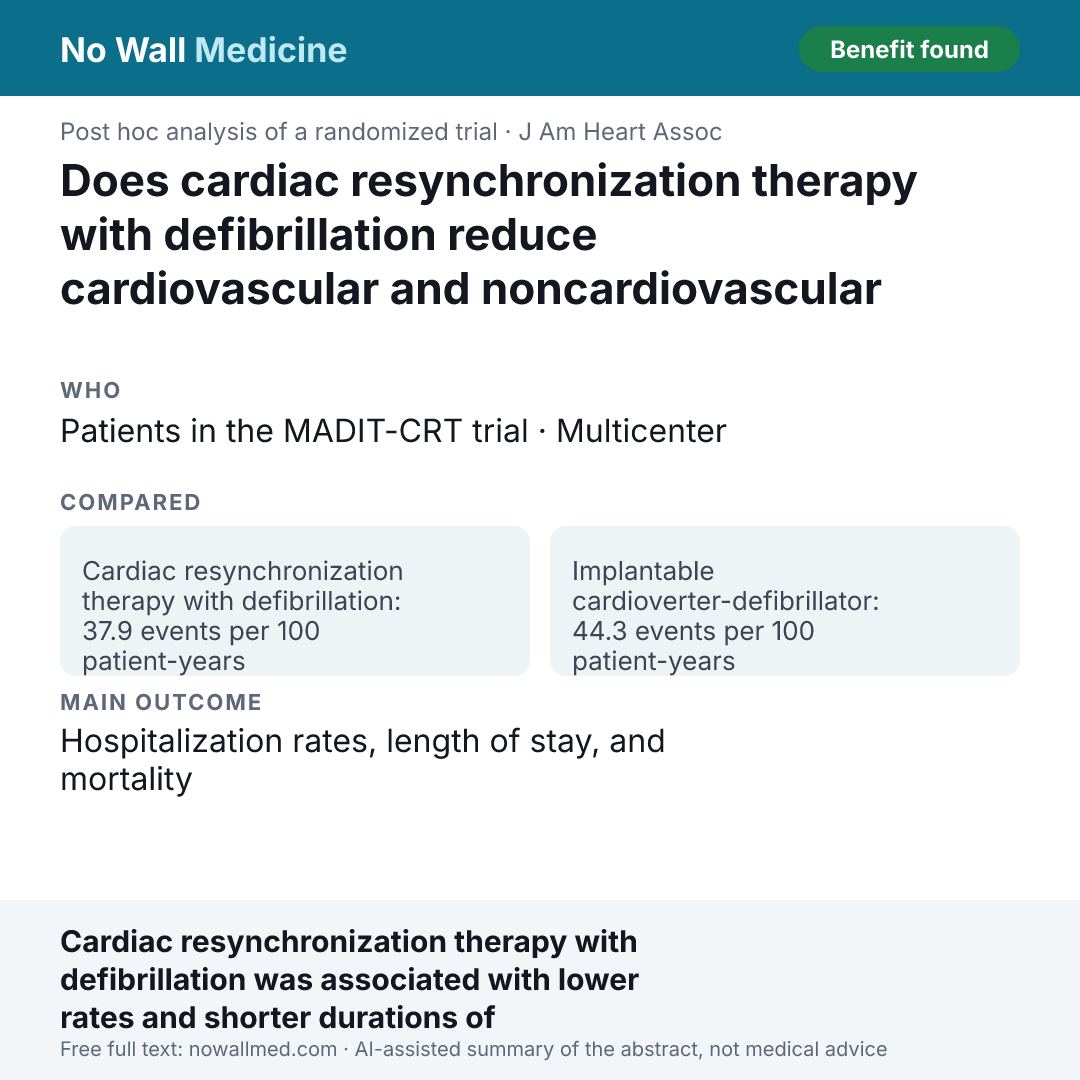
Effects of Cardiac Resynchronization Therapy on Cardiovascular and Noncardiovascular Hospitalization: A MADIT-CRT Long-Term Follow-Up
Post hoc analysis of a randomized trialBenefit found
Does cardiac resynchronization therapy with defibrillation reduce cardiovascular and noncardiovascular hospitalizations?
Who
Patients in the MADIT-CRT trial · Multicenter
Compared
Cardiac resynchronization therapy with defibrillation: 37.9 events per 100 patient-years
Implantable cardioverter-defibrillator: 44.3 events per 100 patient-years
Main outcome
Hospitalization rates, length of stay, and mortality
Bottom line: Cardiac resynchronization therapy with defibrillation was associated with lower rates and shorter durations of cardiovascular hospitalizations.
J Am Heart Assoc · 2026-02-27 · Save PNG
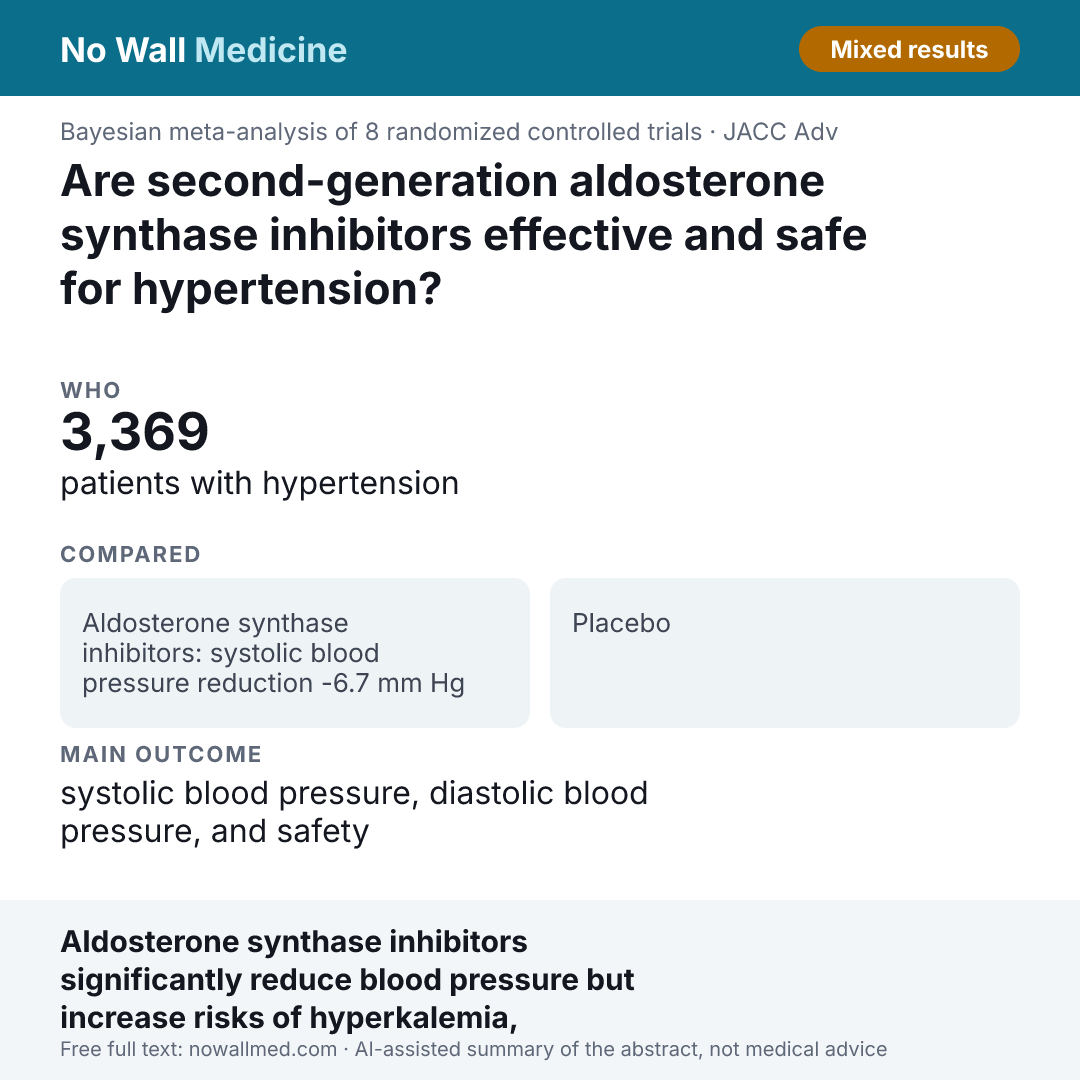
Second-Generation Aldosterone Synthase Inhibitors for Hypertension: A Bayesian Meta-Analysis of Randomized Trials
Bayesian meta-analysis of 8 randomized controlled trialsMixed results
Are second-generation aldosterone synthase inhibitors effective and safe for hypertension?
Who
3,369
patients with hypertension
Compared
Aldosterone synthase inhibitors: systolic blood pressure reduction -6.7 mm Hg
Placebo
Main outcome
systolic blood pressure, diastolic blood pressure, and safety
Result: mean difference -6.7 mm Hg (95% CrI -8.78, -4.59)
Bottom line: Aldosterone synthase inhibitors significantly reduce blood pressure but increase risks of hyperkalemia, hyponatremia, and hypotension.
JACC Adv · 2026-02-27 · Save PNG
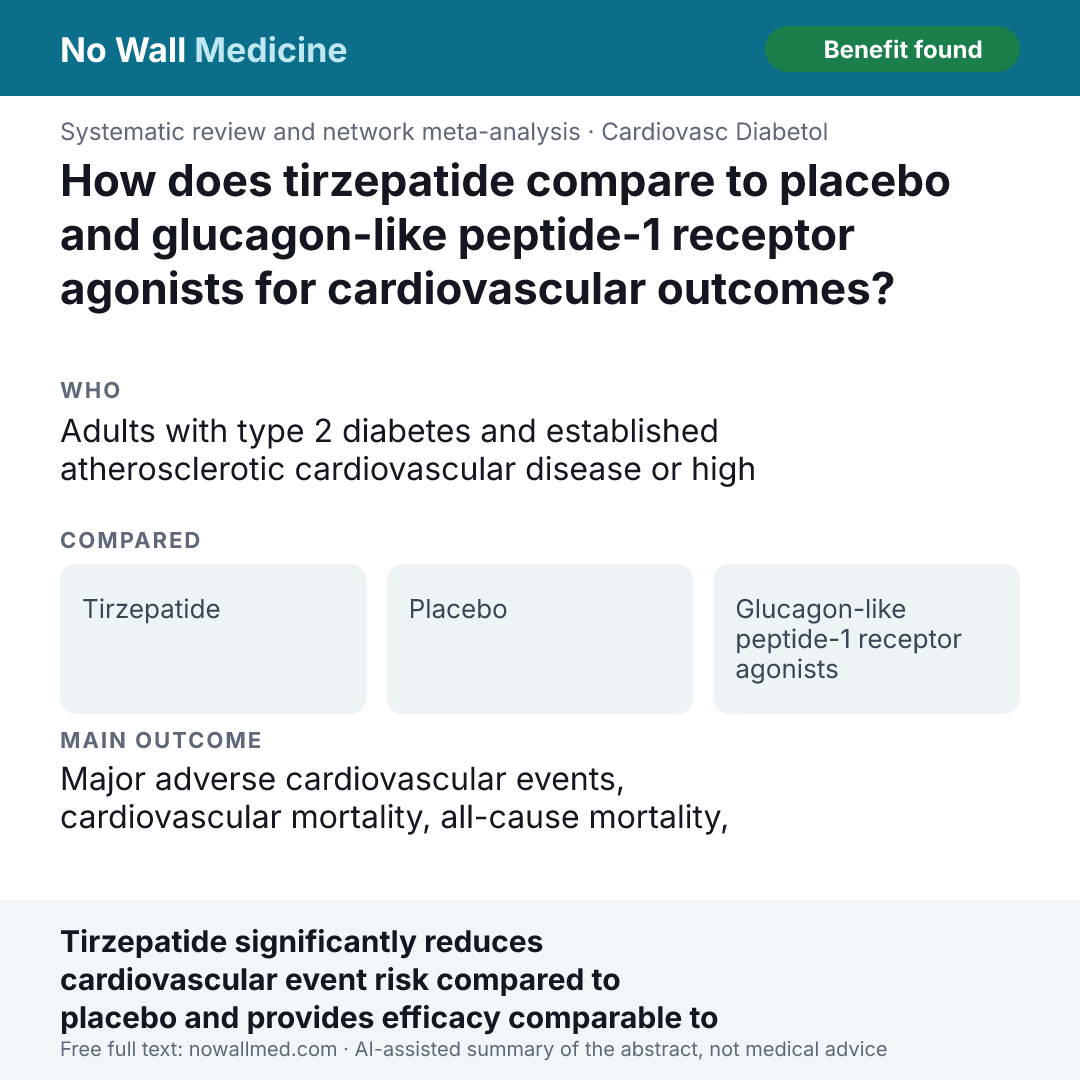
Comparative efficacy of tirzepatide and glucagon-like peptide-1 receptor agonists on cardiovascular outcomes in patients with type 2 diabetes: a systematic review and network meta-analysis
Systematic review and network meta-analysisBenefit found
How does tirzepatide compare to placebo and glucagon-like peptide-1 receptor agonists for cardiovascular outcomes?
Who
Adults with type 2 diabetes and established atherosclerotic cardiovascular disease or high cardiovascular risk
Compared
Tirzepatide
Placebo
Glucagon-like peptide-1 receptor agonists
Main outcome
Major adverse cardiovascular events, cardiovascular mortality, all-cause mortality, non-fatal myocardial infarction, or non-fatal stroke
Result: hazard ratio 0.79 (95% CI 0.69-0.91) for MACE (tirzepatide vs placebo)
Bottom line: Tirzepatide significantly reduces cardiovascular event risk compared to placebo and provides efficacy comparable to glucagon-like peptide-1 receptor agonists.
Limitation: Formal statistical comparisons between tirzepatide and the glucagon-like peptide-1 receptor agonist class could not be performed
Cardiovasc Diabetol · 2026-02-27 · Save PNG
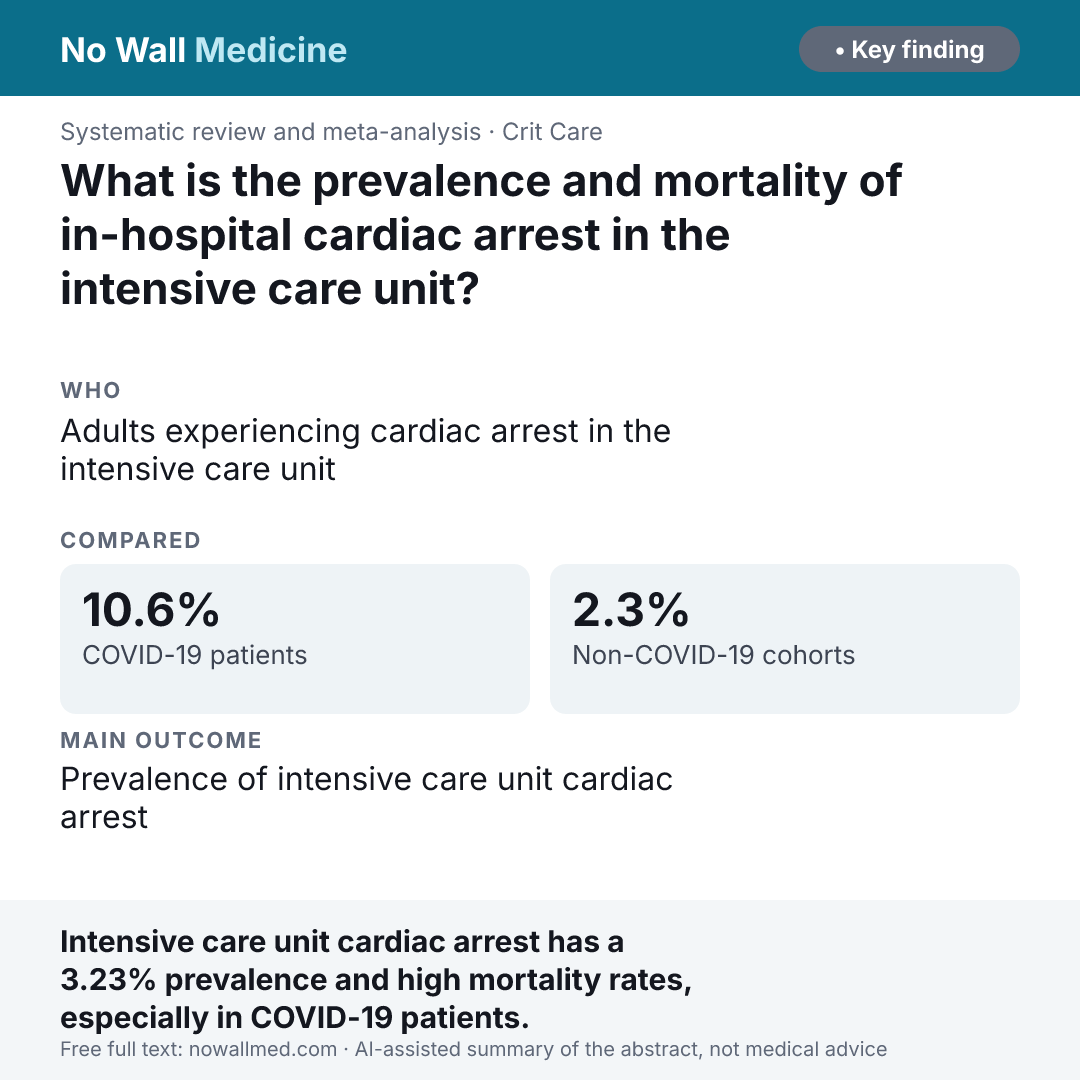
Prevalence and outcomes of in-hospital cardiac arrest in the intensive care unit: a systematic review and meta-analysis
Systematic review and meta-analysisKey finding
What is the prevalence and mortality of in-hospital cardiac arrest in the intensive care unit?
Who
Adults experiencing cardiac arrest in the intensive care unit
Compared
10.6%COVID-19 patients (95%-CI: 5.4–19.7)
2.3%Non-COVID-19 cohorts (95%-CI: 1.5–3.5)
Main outcome
Prevalence of intensive care unit cardiac arrest
Result: pooled proportion 3.23% (95% CI: 2.08–4.98)
Bottom line: Intensive care unit cardiac arrest has a 3.23% prevalence and high mortality rates, especially in COVID-19 patients.
Crit Care · 2026-02-27 · Save PNG
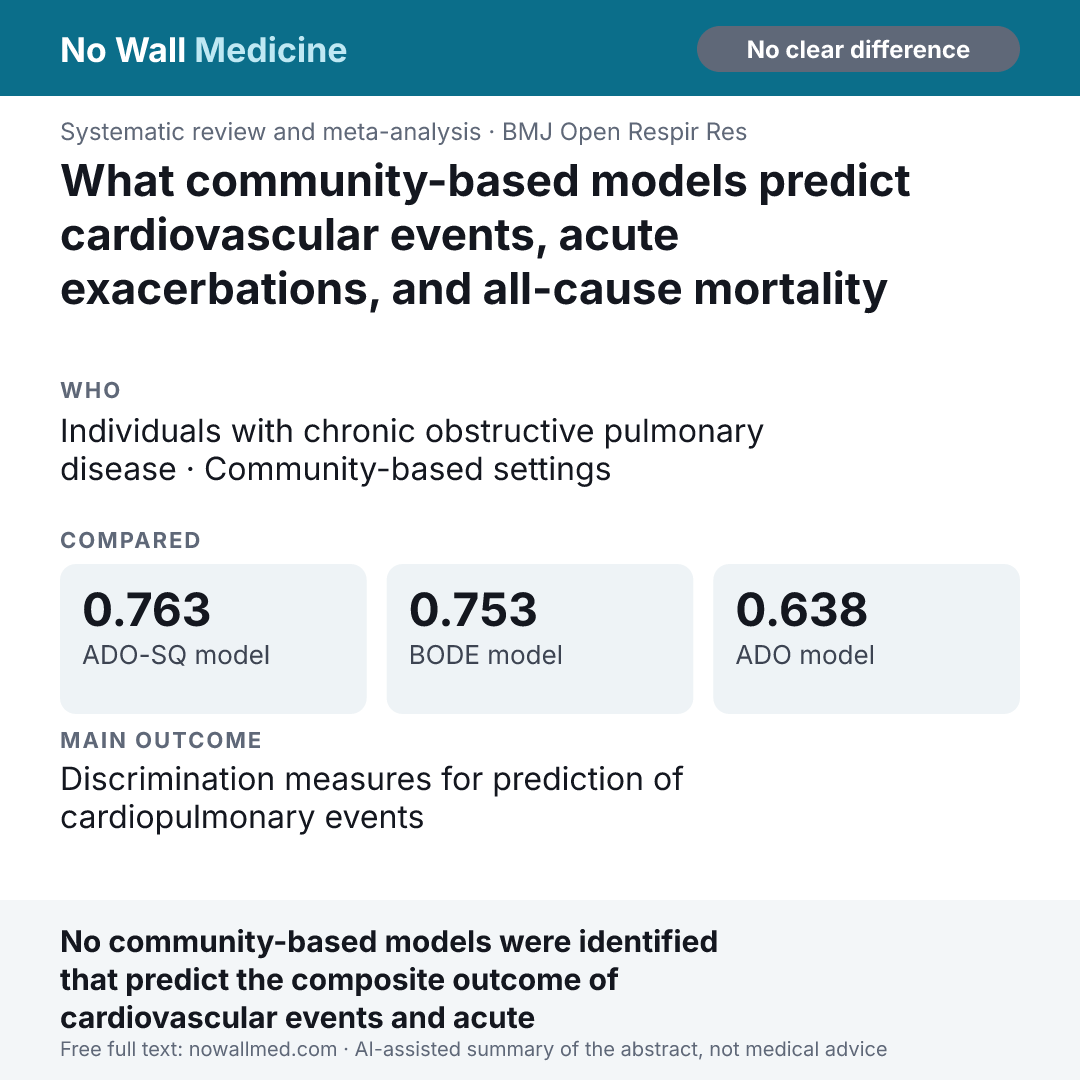
Community-based prediction models of cardiovascular events, acute exacerbations and all-cause mortality in individuals with chronic obstructive pulmonary disease: a systematic review and meta-analysis on behalf of the International Cardiovascular and Respiratory Alliance
Systematic review and meta-analysisNo clear difference
What community-based models predict cardiovascular events, acute exacerbations, and all-cause mortality in COPD?
Who
Individuals with chronic obstructive pulmonary disease · Community-based settings
Compared
0.763ADO-SQ model (95% CI 0.533 to 0.942)
0.753BODE model (95% CI 0.583 to 0.907)
0.638ADO model (95% CI 0.443 to 0.827)
Main outcome
Discrimination measures for prediction of cardiopulmonary events
Bottom line: No community-based models were identified that predict the composite outcome of cardiovascular events and acute exacerbations in COPD.
Limitation: Risk of bias was high for 57.9% of studies and none evaluated clinical utility.
BMJ Open Respir Res · 2026-02-27 · Save PNG
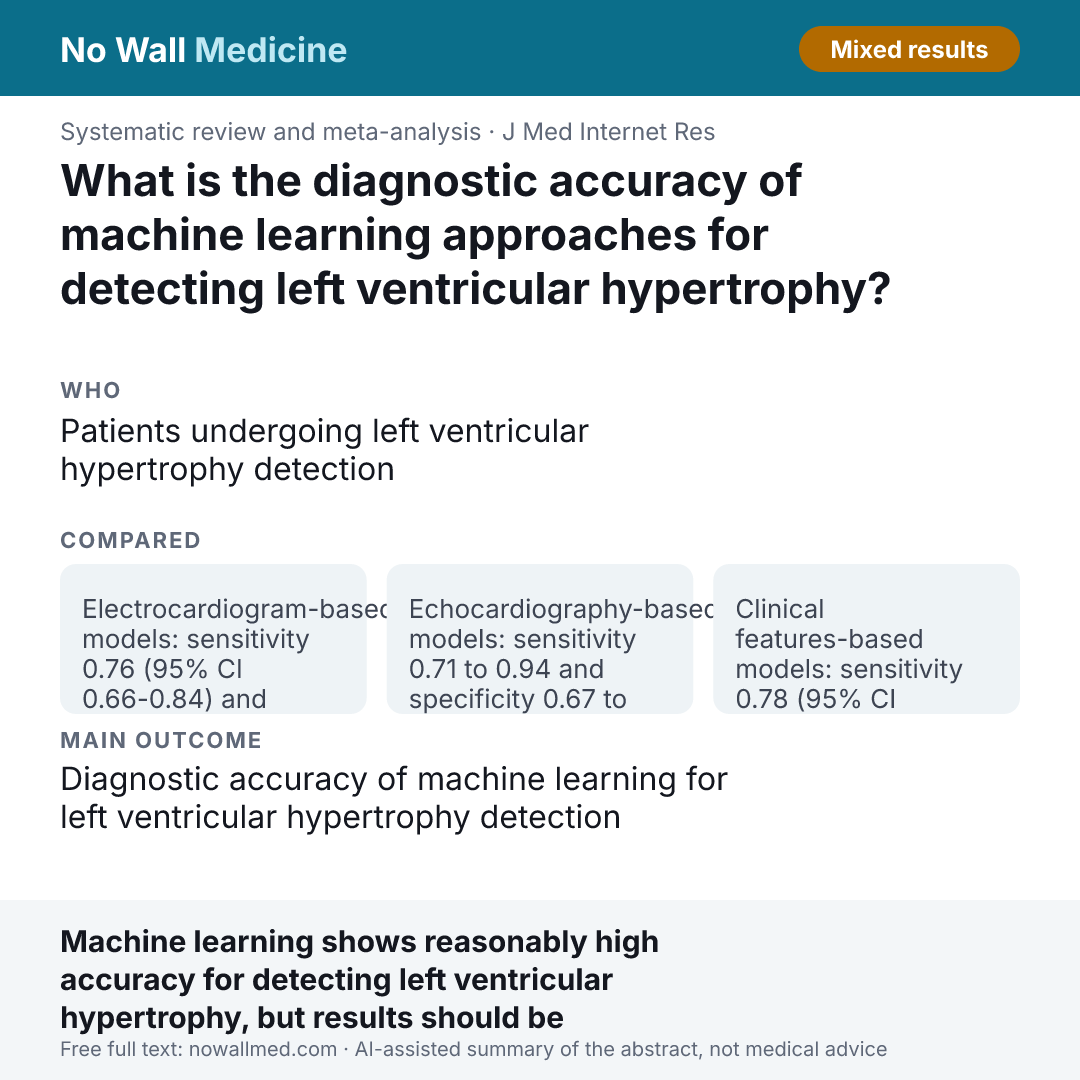
Machine Learning in Left Ventricular Hypertrophy Detection: Systematic Review and Meta-Analysis
Systematic review and meta-analysisMixed results
What is the diagnostic accuracy of machine learning approaches for detecting left ventricular hypertrophy?
Who
Patients undergoing left ventricular hypertrophy detection
Compared
Electrocardiogram-based models: sensitivity 0.76 (95% CI 0.66-0.84) and specificity 0.84 (95% CI 0.78-0.89)
Echocardiography-based models: sensitivity 0.71 to 0.94 and specificity 0.67 to 0.96
Clinical features-based models: sensitivity 0.78 (95% CI 0.69-0.85) and specificity 0.71 (95% CI 0.65-0.76)
Main outcome
Diagnostic accuracy of machine learning for left ventricular hypertrophy detection
Bottom line: Machine learning shows reasonably high accuracy for detecting left ventricular hypertrophy, but results should be interpreted with caution.
Limitation: Extreme heterogeneity reported in the meta-analysis and limited evidence.
J Med Internet Res · 2026-02-27 · Save PNG
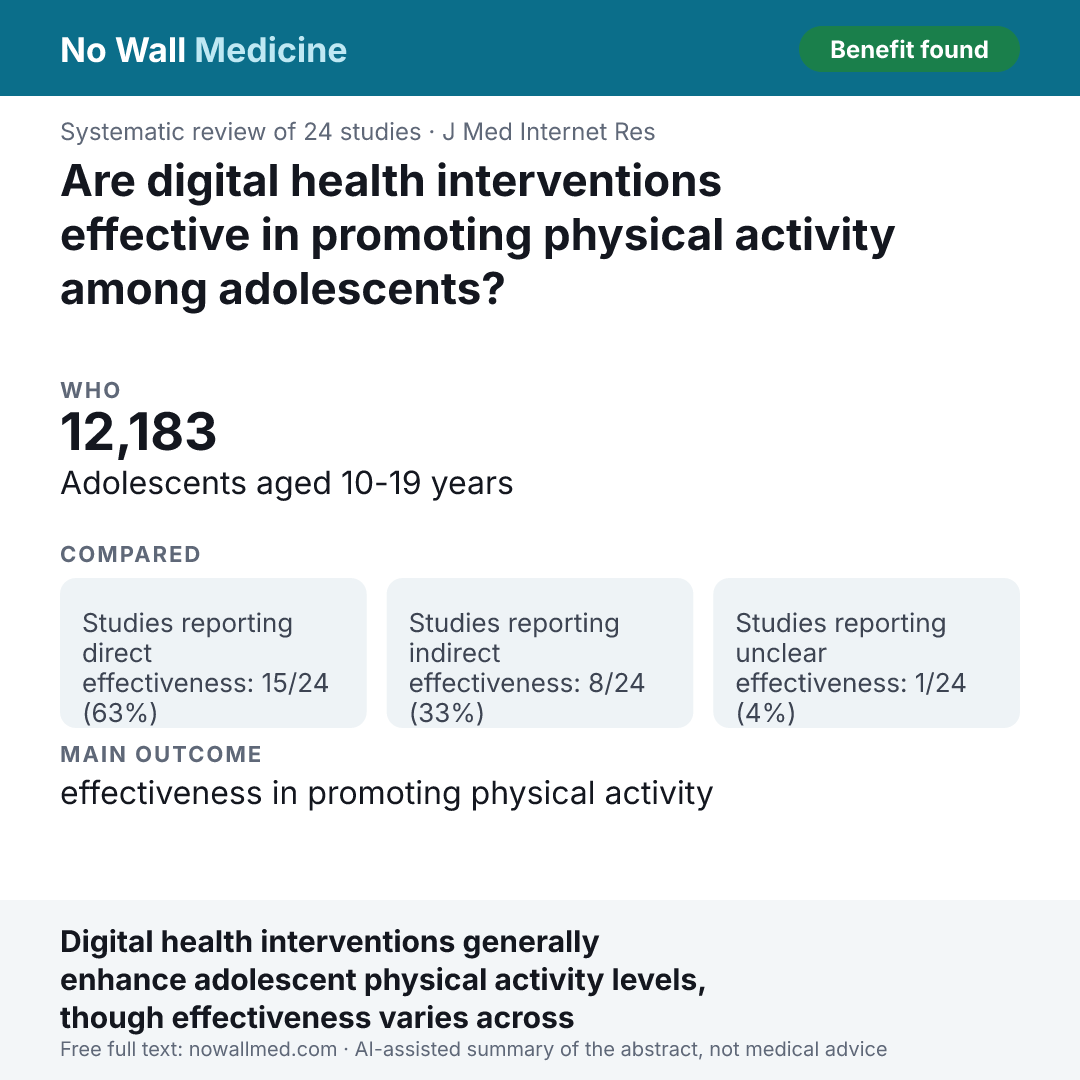
Digital Health Interventions to Promote Physical Activity Among Adolescents: Systematic Review
Systematic review of 24 studiesBenefit found
Are digital health interventions effective in promoting physical activity among adolescents?
Who
12,183
Adolescents aged 10-19 years
Compared
Studies reporting direct effectiveness: 15/24 (63%)
Studies reporting indirect effectiveness: 8/24 (33%)
Studies reporting unclear effectiveness: 1/24 (4%)
Main outcome
effectiveness in promoting physical activity
Bottom line: Digital health interventions generally enhance adolescent physical activity levels, though effectiveness varies across intervention types and study designs.
Limitation: methodological quality and insufficient follow-up
J Med Internet Res · 2026-02-27 · Save PNG
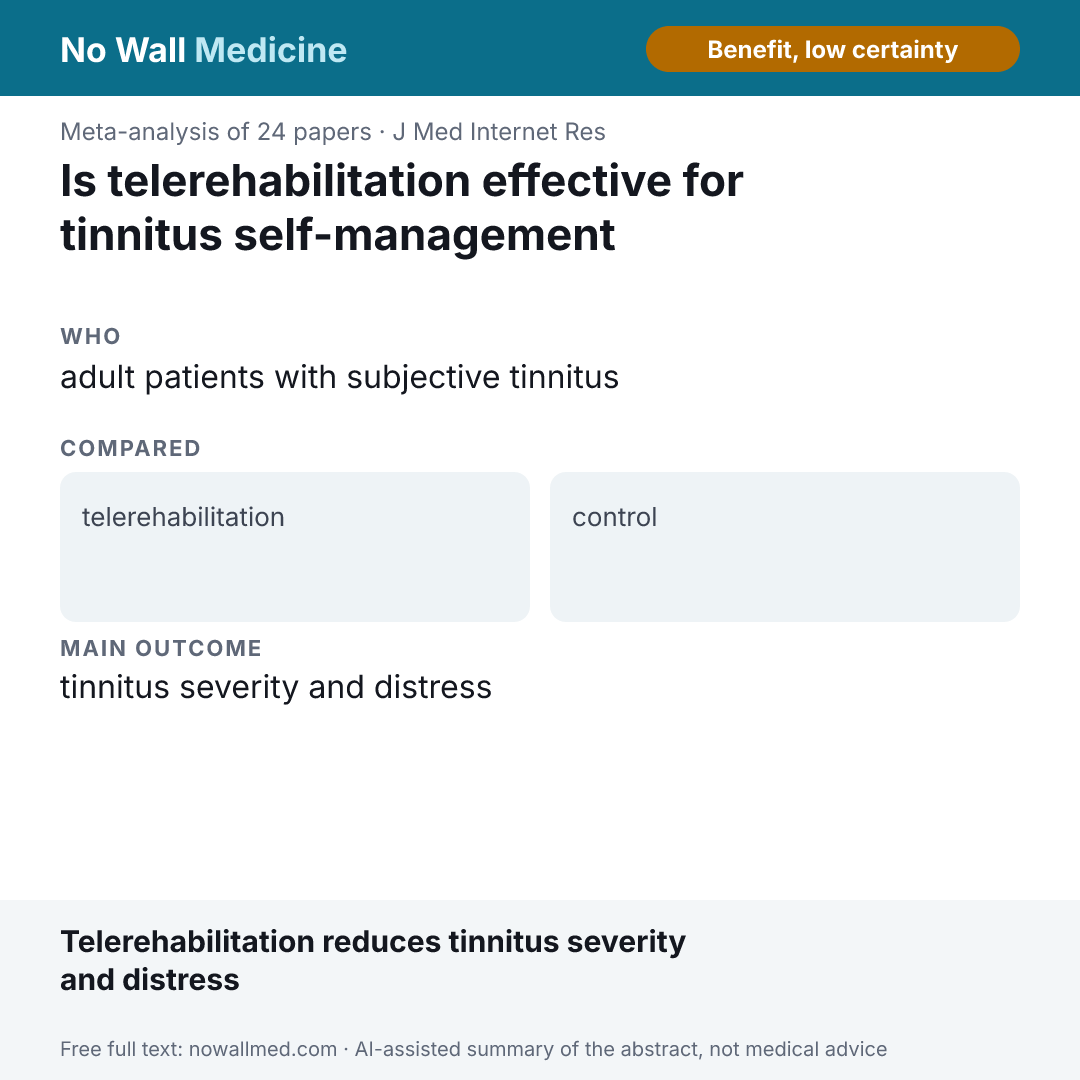
Effectiveness of Telerehabilitation Interventions for Self-Management of Tinnitus: Update of a Systematic Review
Meta-analysis of 24 papersBenefit, low certainty
Is telerehabilitation effective for tinnitus self-management
Who
adult patients with subjective tinnitus
Compared
telerehabilitation
control
Main outcome
tinnitus severity and distress
Bottom line: Telerehabilitation reduces tinnitus severity and distress
Limitation: risk of bias and low to moderate certainty
J Med Internet Res · 2026-02-27 · Save PNG
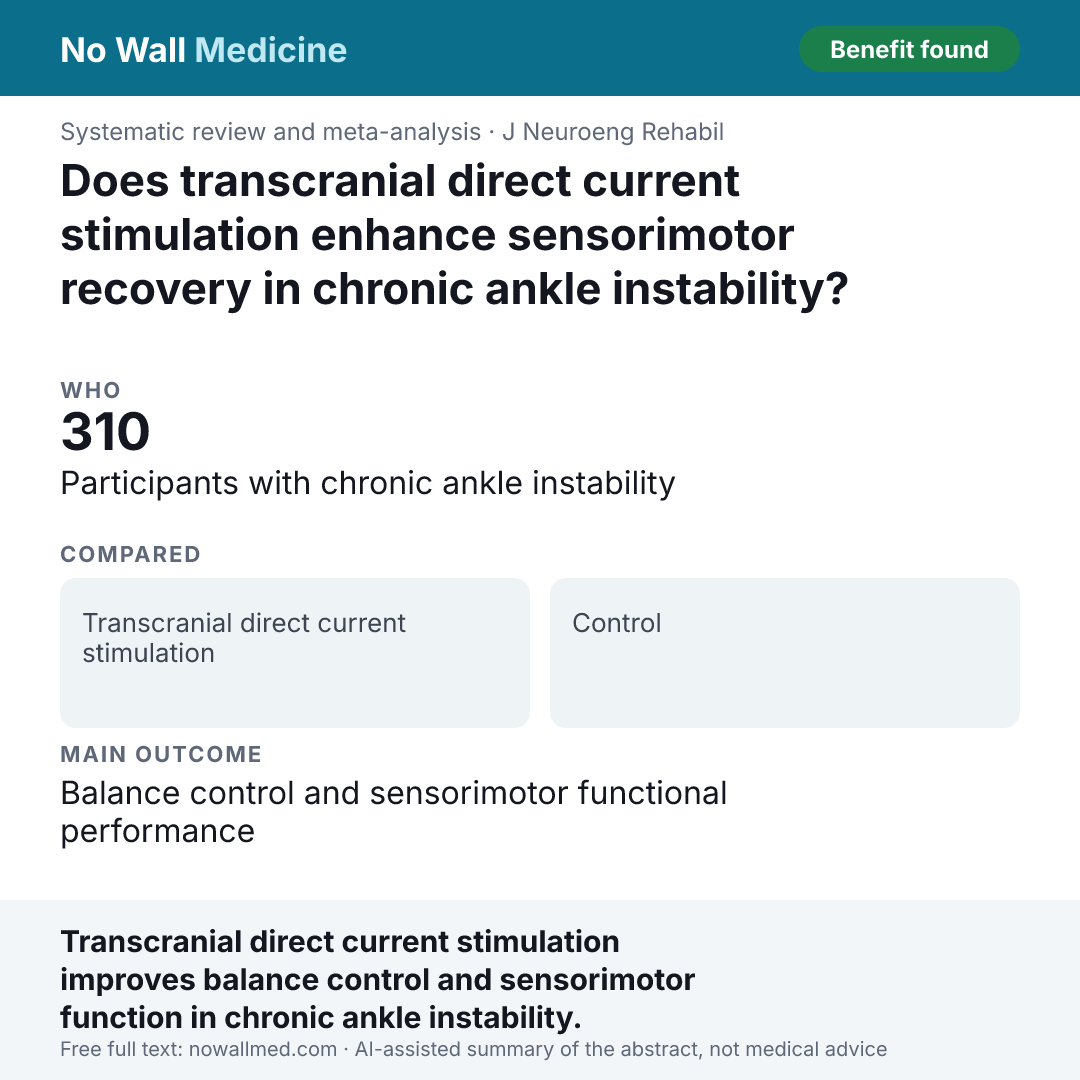
Does transcranial direct current stimulation enhance sensorimotor recovery in chronic ankle instability? A systematic review and meta-analysis
Systematic review and meta-analysisBenefit found
Does transcranial direct current stimulation enhance sensorimotor recovery in chronic ankle instability?
Who
310
Participants with chronic ankle instability
Compared
Transcranial direct current stimulation
Control
Main outcome
Balance control and sensorimotor functional performance
Result: balance control g = 0.27, sensorimotor functional performance g = 0.16
Bottom line: Transcranial direct current stimulation improves balance control and sensorimotor function in chronic ankle instability.
Limitation: The underlying neurophysiological mechanisms should be more explicitly characterized.
J Neuroeng Rehabil · 2026-02-27 · Save PNG
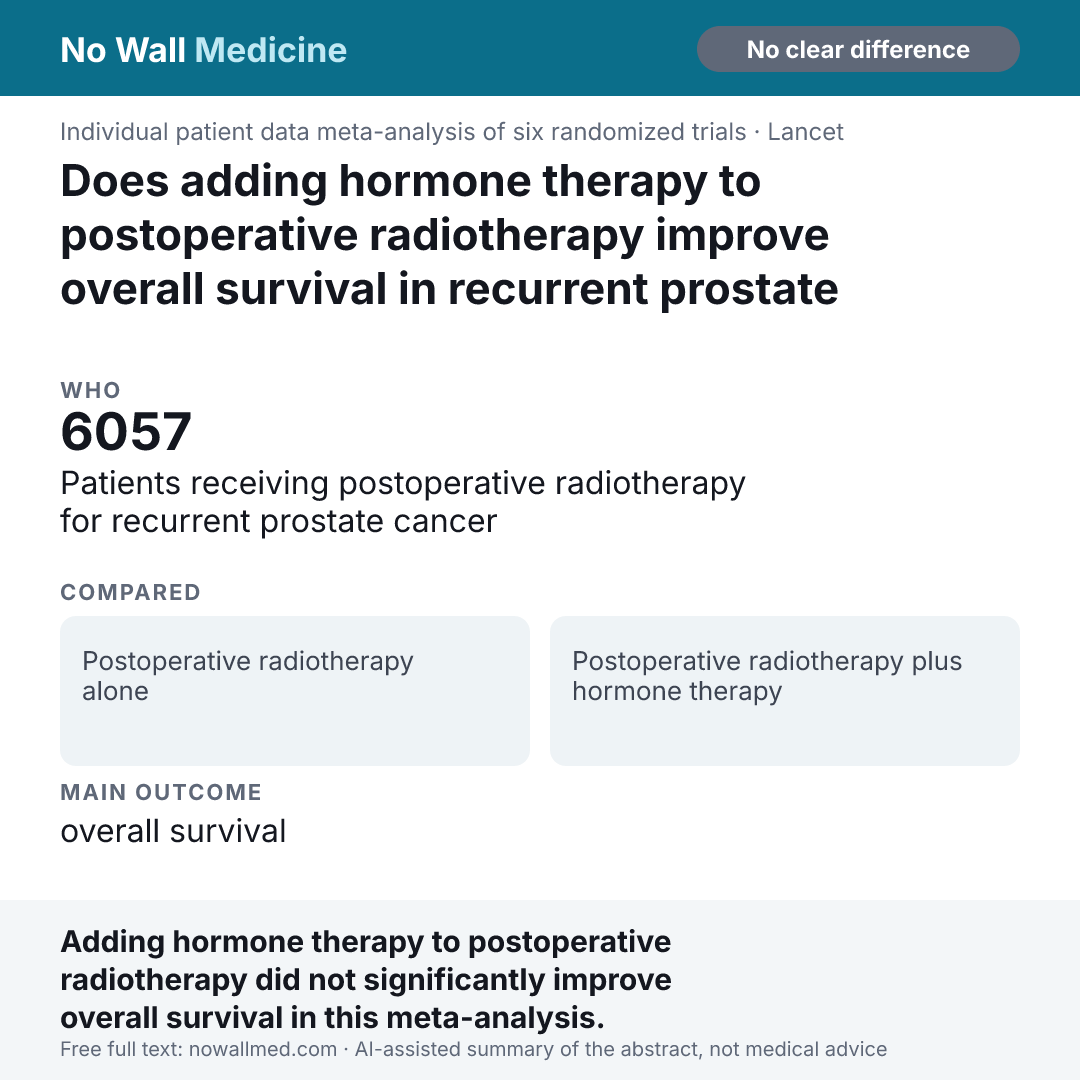
Hormone therapy use and duration with postoperative radiotherapy for recurrent prostate cancer: an individual patient data meta-analysis
Individual patient data meta-analysis of six randomized trialsNo clear difference
Does adding hormone therapy to postoperative radiotherapy improve overall survival in recurrent prostate cancer?
Who
6057
Patients receiving postoperative radiotherapy for recurrent prostate cancer
Compared
Postoperative radiotherapy alone
Postoperative radiotherapy plus hormone therapy
Main outcome
overall survival
Result: hazard ratio 0.87 (95% CI 0.76 to 1.01)
Bottom line: Adding hormone therapy to postoperative radiotherapy did not significantly improve overall survival in this meta-analysis.
Funded by: National Institutes of Health
Lancet · 2026-02-26 · Save PNG
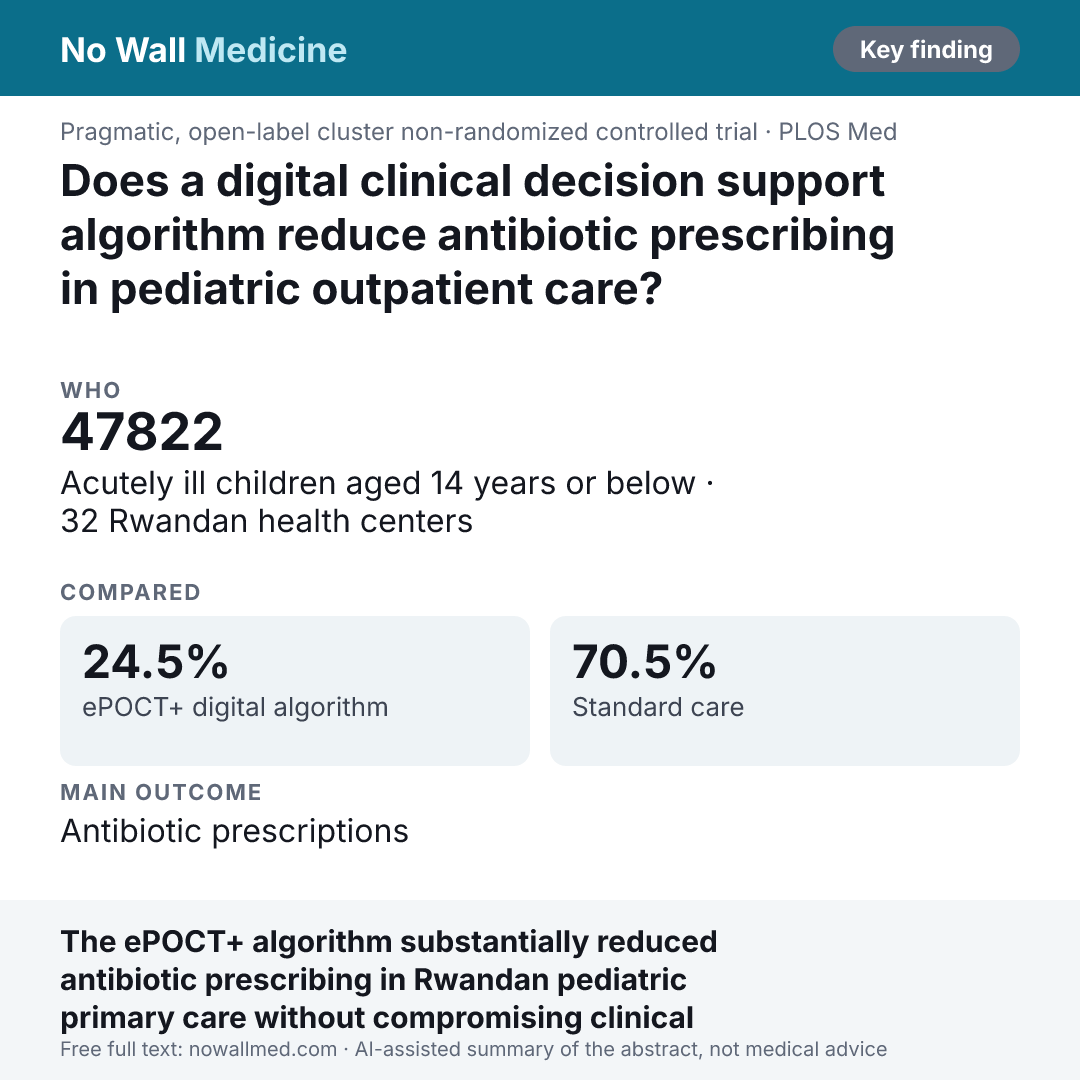
Effectiveness of a digital clinical decision support algorithm for guiding antibiotic prescribing in pediatric outpatient care in Rwanda: A pragmatic cluster non-randomized controlled trial
Pragmatic, open-label cluster non-randomized controlled trialKey finding
Does a digital clinical decision support algorithm reduce antibiotic prescribing in pediatric outpatient care?
Who
47822
Acutely ill children aged 14 years or below · 32 Rwandan health centers
Compared
24.5%ePOCT+ digital algorithm
70.5%Standard care
Main outcome
Antibiotic prescriptions
Result: absolute difference -46.0, 95% CI [-52.5, -39.5]
Bottom line: The ePOCT+ algorithm substantially reduced antibiotic prescribing in Rwandan pediatric primary care without compromising clinical recovery.
Limitation: Non-randomized design and self-reported outcomes.
PLOS Med · 2026-02-26 · Save PNG
Tumor antigen only (TAO) vaccine platforms for glioblastoma therapeutics: a systematic review of evidence from clinical trials
Systematic review of clinical trialsUnclear result
What is the safety and efficacy of TAO vaccines for glioblastoma?
Who
Patients with glioblastoma
Compared
TAO vaccine
Control
Main outcome
Clinical safety and efficacy
Bottom line: The abstract summarizes safety and efficacy profiles but provides no specific quantitative results or conclusions.
eClinicalMedicine · 2026-02-26 · Save PNG
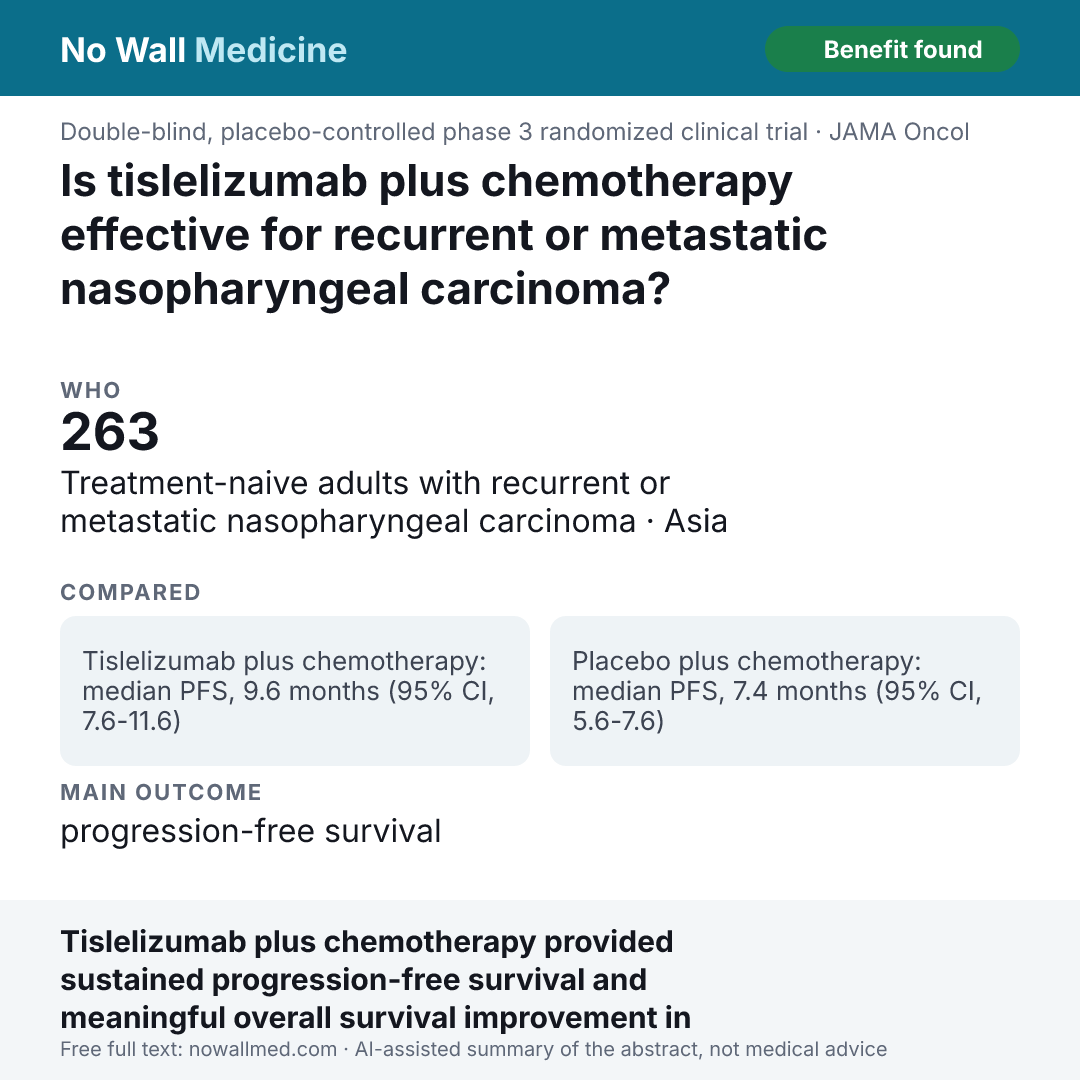
First-Line Tislelizumab Plus Chemotherapy for Recurrent or Metastatic Nasopharyngeal Cancer: Three-Year Follow-Up of the Phase 3 RATIONALE-309 Randomized Clinical Trial
Double-blind, placebo-controlled phase 3 randomized clinical trialBenefit found
Is tislelizumab plus chemotherapy effective for recurrent or metastatic nasopharyngeal carcinoma?
Who
263
Treatment-naive adults with recurrent or metastatic nasopharyngeal carcinoma · Asia
Compared
Tislelizumab plus chemotherapy: median PFS, 9.6 months (95% CI, 7.6-11.6)
Placebo plus chemotherapy: median PFS, 7.4 months (95% CI, 5.6-7.6)
Main outcome
progression-free survival
Result: hazard ratio 0.53 (95% CI, 0.39-0.71)
Bottom line: Tislelizumab plus chemotherapy provided sustained progression-free survival and meaningful overall survival improvement in recurrent or metastatic nasopharyngeal carcinoma.
JAMA Oncol · 2026-02-26 · Save PNG
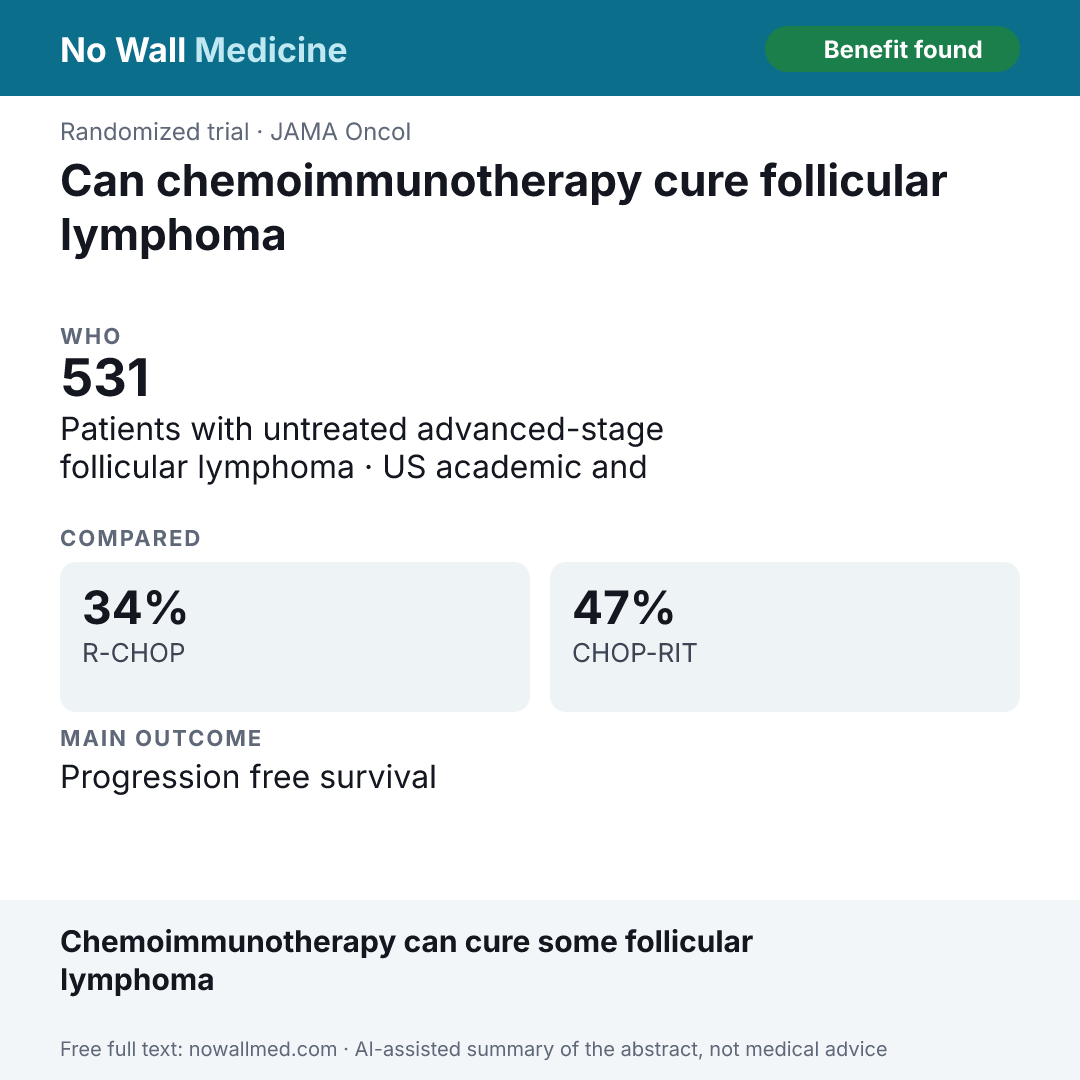
Treatment of Follicular Lymphoma With CHOP and Anti-CD20 Therapy: 15-Year Follow-Up of the SWOG S0016 Trial
Randomized trialBenefit found
Can chemoimmunotherapy cure follicular lymphoma
Who
531
Patients with untreated advanced-stage follicular lymphoma · US academic and community locations
Compared
34%R-CHOP
47%CHOP-RIT
Main outcome
Progression free survival
Bottom line: Chemoimmunotherapy can cure some follicular lymphoma
JAMA Oncol · 2026-02-26 · Save PNG
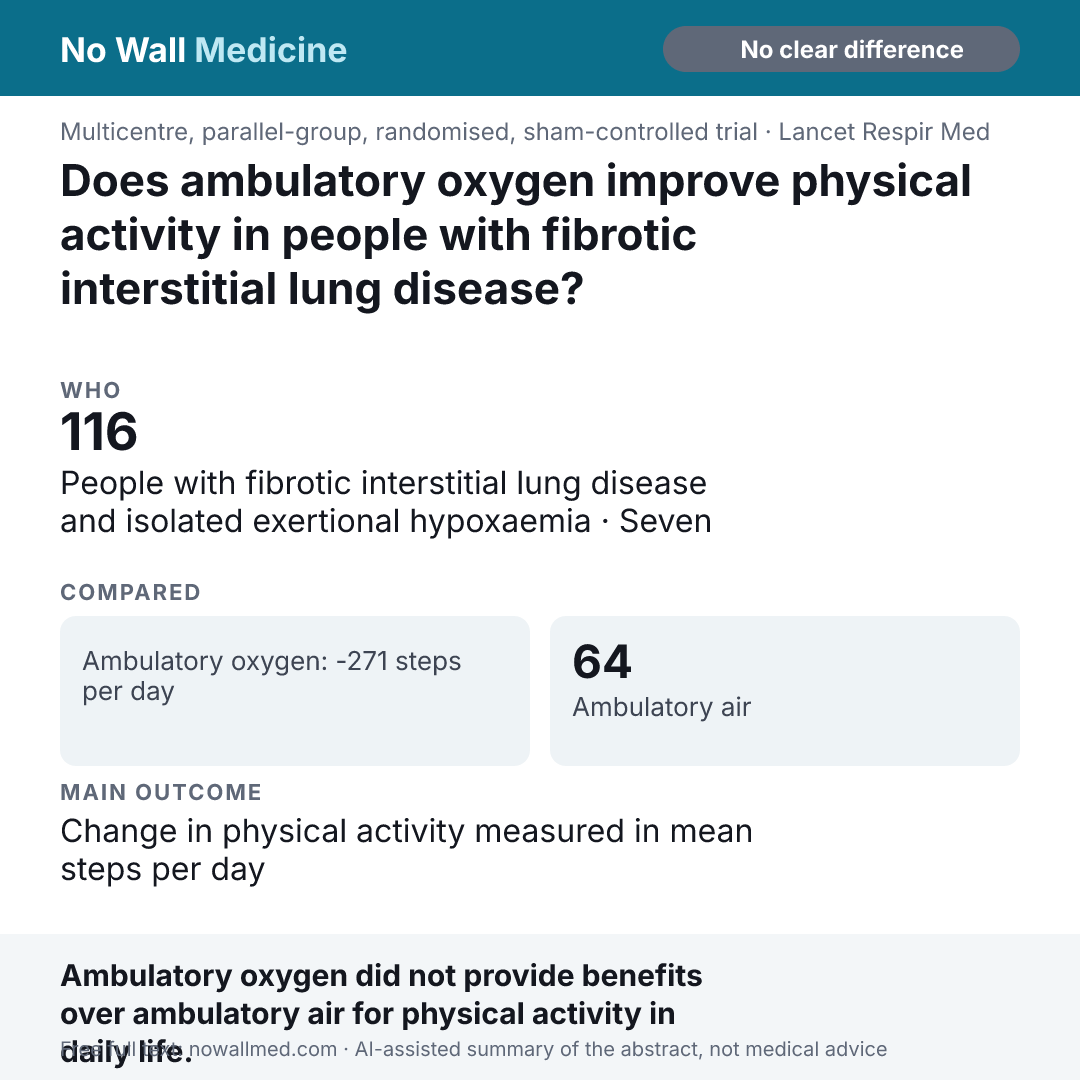
Ambulatory oxygen for treatment of exertional hypoxaemia in pulmonary fibrosis (PFOX): a multicentre, randomised, sham-controlled trial
Multicentre, parallel-group, randomised, sham-controlled trialNo clear difference
Does ambulatory oxygen improve physical activity in people with fibrotic interstitial lung disease?
Who
116
People with fibrotic interstitial lung disease and isolated exertional hypoxaemia · Seven hospital sites in Australia and Sweden
Compared
Ambulatory oxygen: -271 steps per day
64Ambulatory air
Main outcome
Change in physical activity measured in mean steps per day
Result: -334, -803 to 134
Bottom line: Ambulatory oxygen did not provide benefits over ambulatory air for physical activity in daily life.
Funded by: National Health and Medical Research Council and Swedish Society of Medicine
Lancet Respir Med · 2026-02-26 · Save PNG
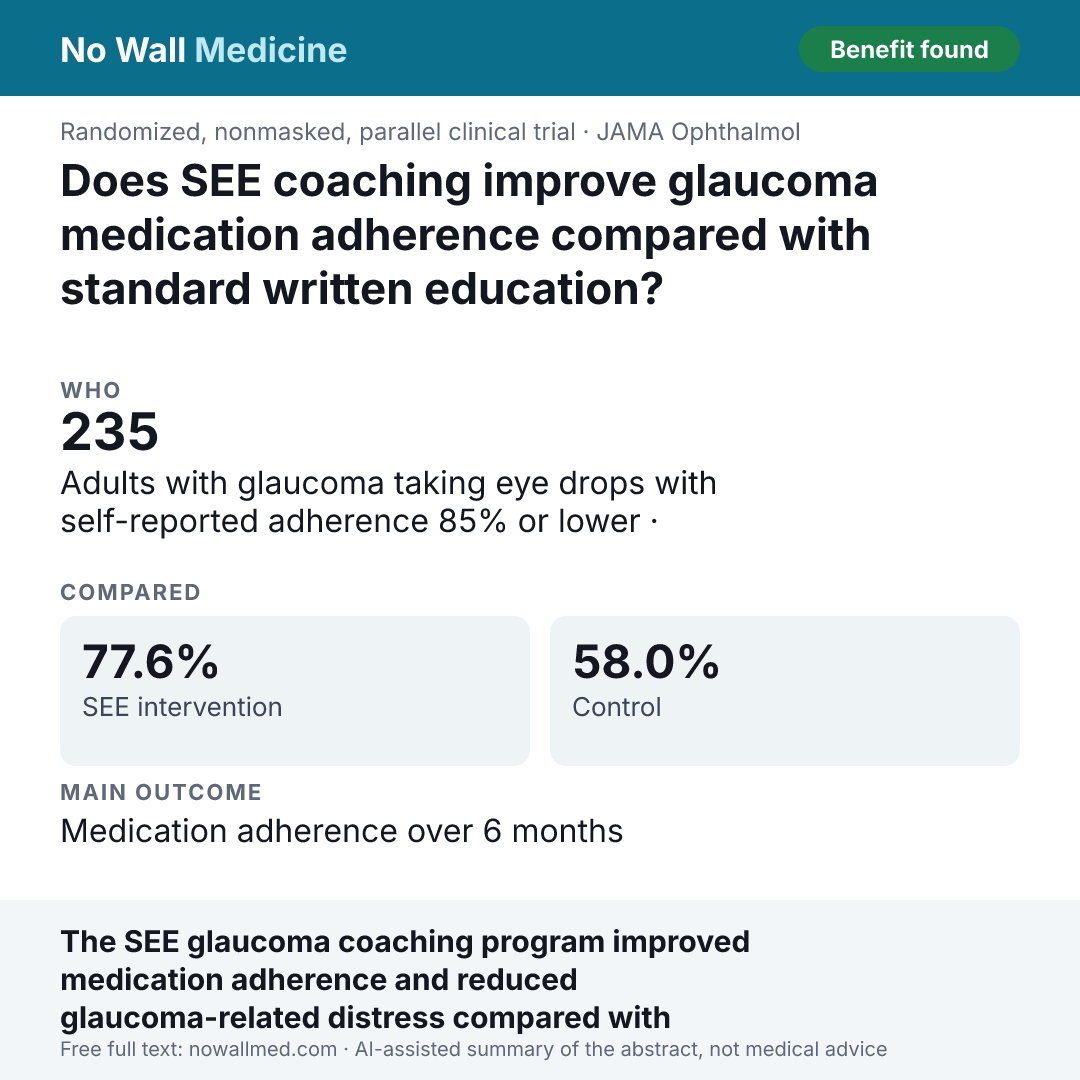
Effect of the Support, Educate, Empower Personalized Glaucoma Coaching Program on Medication Adherence: The SEE Program Randomized Clinical Trial
Randomized, nonmasked, parallel clinical trialBenefit found
Does SEE coaching improve glaucoma medication adherence compared with standard written education?
Who
235
Adults with glaucoma taking eye drops with self-reported adherence 85% or lower · University of Michigan and Henry Ford Health System
Compared
77.6%SEE intervention (19.7%)
58.0%Control (25.2%)
Main outcome
Medication adherence over 6 months
Result: difference, 19.7%; 95% CI, 13.7 to 25.6
Bottom line: The SEE glaucoma coaching program improved medication adherence and reduced glaucoma-related distress compared with standard written education.
JAMA Ophthalmol · 2026-02-26 · Save PNG
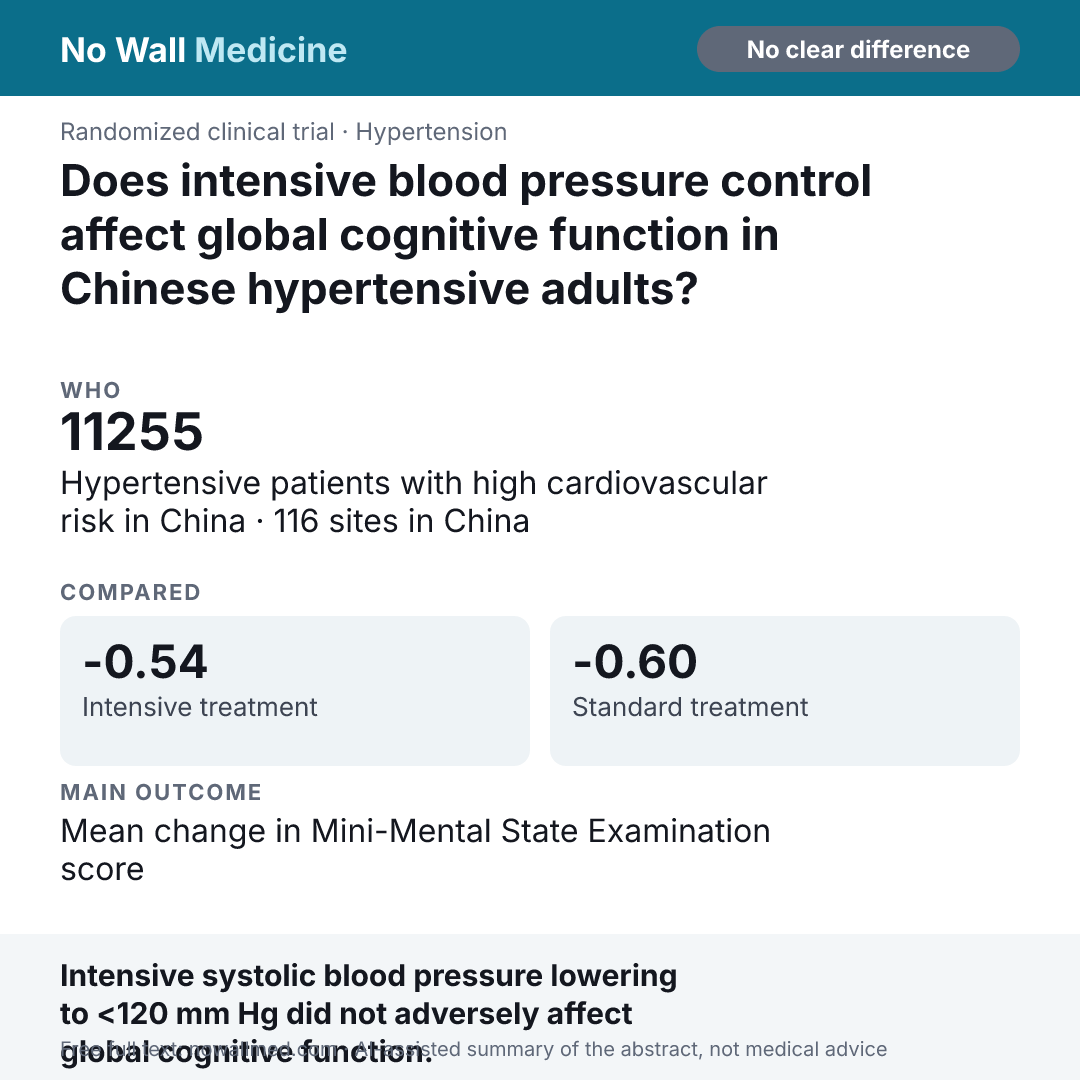
Intensive BP Control and Cognitive Function: A Randomized Clinical Trial
Randomized clinical trialNo clear difference
Does intensive blood pressure control affect global cognitive function in Chinese hypertensive adults?
Who
11255
Hypertensive patients with high cardiovascular risk in China · 116 sites in China
Compared
-0.54Intensive treatment (95% CI, -0.63 to -0.46)
-0.60Standard treatment (95% CI, -0.68 to -0.51)
Main outcome
Mean change in Mini-Mental State Examination score
Result: difference, 0.05 (95% CI, -0.07 to 0.17)
Bottom line: Intensive systolic blood pressure lowering to <120 mm Hg did not adversely affect global cognitive function.
Hypertension · 2026-02-26 · Save PNG