Visual abstracts
New randomized trials and meta-analyses from leading journals at a glance: who was studied, what was compared, and what was found. Every paper is free to read in full.
All specialtiesCardiology 4763Oncology 4043Gastroenterology & Hepatology 1903Infectious Disease 3756Neurology 1872Psychiatry & Mental Health 2216Pulmonology 2044Critical Care 1319Endocrinology & Diabetes 2544Pediatrics 2889Surgery 2480Orthopedics & Sports Medicine 917Neurosurgery 525Cardiothoracic & Vascular Surgery 656Plastic & Reconstructive Surgery 574Nephrology 1107Rheumatology 810Hematology 1090Dermatology 611Ophthalmology 532Obstetrics & Gynecology 1645Public & Global Health 1037Radiology & Imaging 619Anesthesiology 958Urology 745ENT (Otolaryngology) 494Emergency Medicine 481Allergy & Immunology 309Geriatrics 972Family Medicine & Primary Care 534Medical Genetics & Genomics 659Pathology & Laboratory Medicine 156Physical Medicine & Rehabilitation 734Palliative Care 421Nutrition 1560Digital Health & AI 2137General Medicine 318
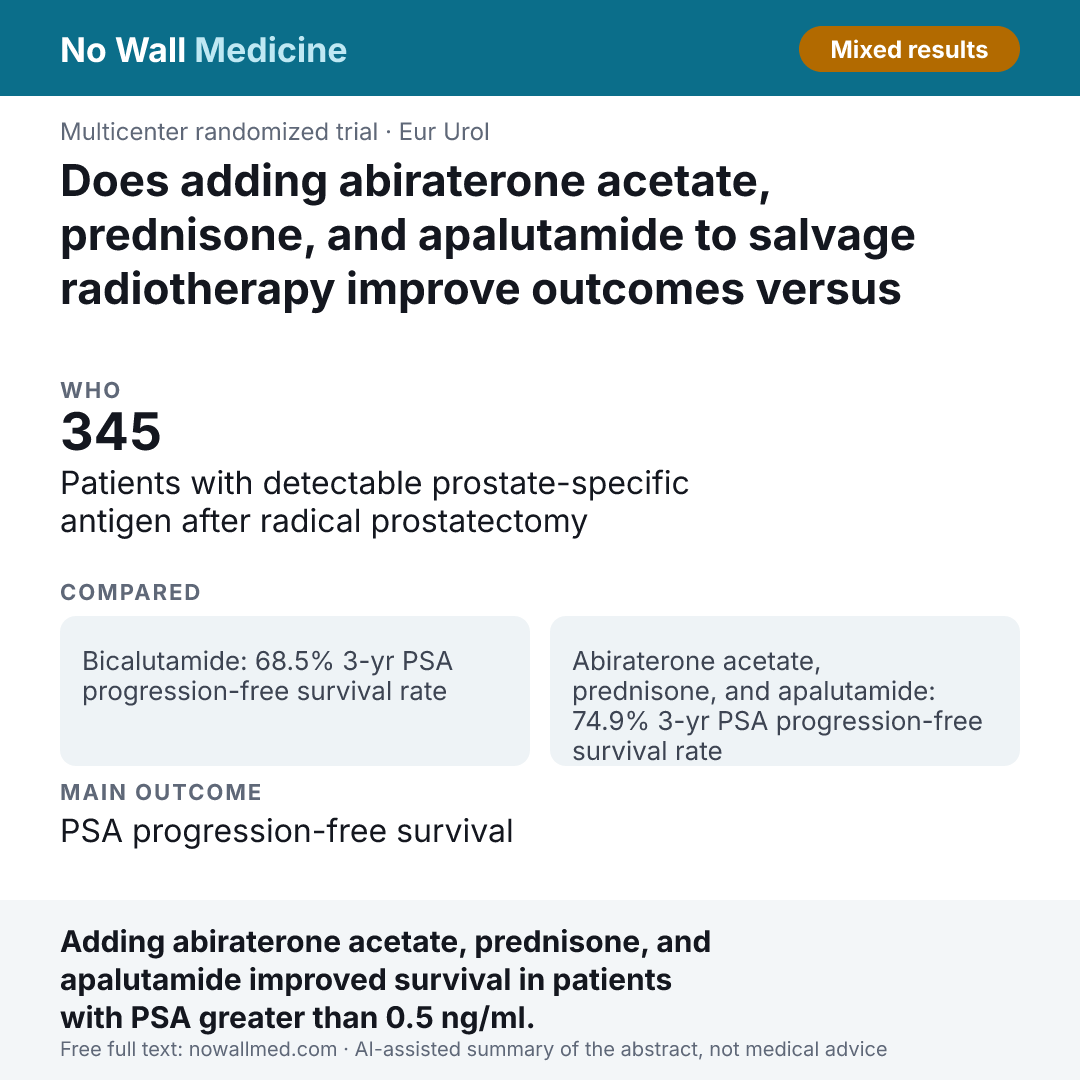
FORMULA-509: A Multicenter Randomized Trial of Postprostatectomy Salvage Radiotherapy and 6 months of a GNRH Agonist with Either Bicalutamide or Abiraterone Acetate plus Prednisone and Apalutamide
Multicenter randomized trialMixed results
Does adding abiraterone acetate, prednisone, and apalutamide to salvage radiotherapy improve outcomes versus bicalutamide?
Who
345
Patients with detectable prostate-specific antigen after radical prostatectomy
Compared
Bicalutamide: 68.5% 3-yr PSA progression-free survival rate
Abiraterone acetate, prednisone, and apalutamide: 74.9% 3-yr PSA progression-free survival rate
Main outcome
PSA progression-free survival
Result: hazard ratio 0.71 (90% CI 0.49-1.03)
Bottom line: Adding abiraterone acetate, prednisone, and apalutamide improved survival in patients with PSA greater than 0.5 ng/ml.
Limitation: The study did not reach the prespecified significance level for the overall population.
Eur Urol · 2026-02-10 · Save PNG
Safety, acceptability, and adherence to dapivirine vaginal ring and oral pre-exposure prophylaxis for HIV prevention in the second trimester of pregnancy: a multicountry, open-label, phase 3b randomised trial
Open-label, phase 3b randomised trialBenefit found
Are dapivirine vaginal ring and oral pre-exposure prophylaxis safe during pregnancy?
Who
251
Healthy HIV-negative pregnant women aged 18-40 years · Malawi, South Africa, Uganda, and Zimbabwe
Compared
monthly dapivirine vaginal ring
daily oral pre-exposure prophylaxis
Main outcome
composite of serious adverse events, grade 3 or higher adverse events, and pregnancy outcomes
Bottom line: Dapivirine vaginal ring and oral pre-exposure prophylaxis were safe and well tolerated during the second trimester of pregnancy.
Funded by: US National Institutes of Health
Lancet HIV · 2026-02-10 · Save PNG

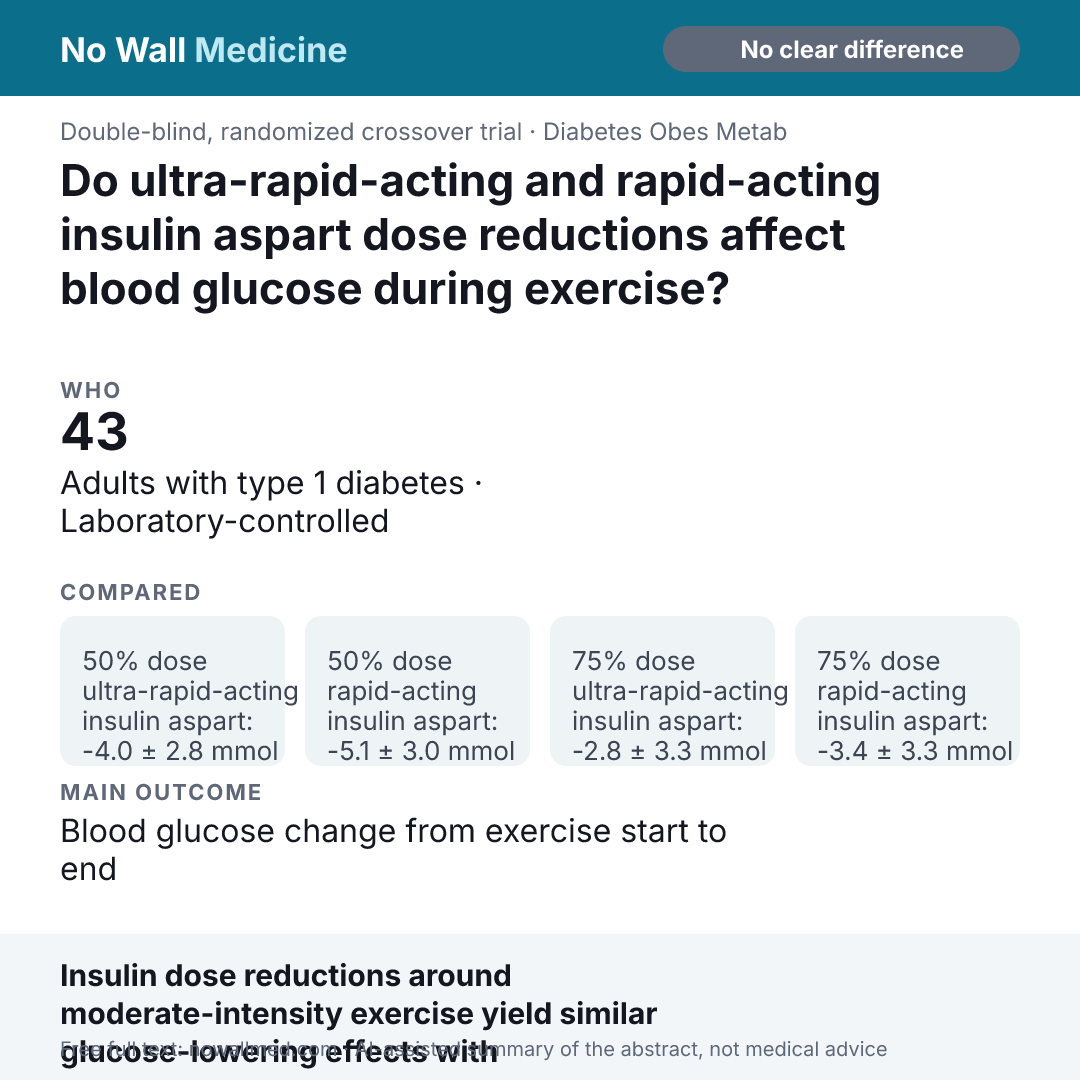
Comparison of pharmacodynamics and pharmacokinetics of ultra-rapid-acting insulin aspart and rapid-acting insulin aspart around continuous moderate intensity exercise in adults with type 1 diabetes: A randomised controlled trial
Double-blind, randomized crossover trialNo clear difference
Do ultra-rapid-acting and rapid-acting insulin aspart dose reductions affect blood glucose during exercise?
Who
43
Adults with type 1 diabetes · Laboratory-controlled
Compared
50% dose ultra-rapid-acting insulin aspart: -4.0 ± 2.8 mmol L-1
50% dose rapid-acting insulin aspart: -5.1 ± 3.0 mmol L-1
75% dose ultra-rapid-acting insulin aspart: -2.8 ± 3.3 mmol L-1
75% dose rapid-acting insulin aspart: -3.4 ± 3.3 mmol L-1
Main outcome
Blood glucose change from exercise start to end
Bottom line: Insulin dose reductions around moderate-intensity exercise yield similar glucose-lowering effects with ultra-rapid-acting and rapid-acting insulin aspart.
Diabetes Obes Metab · 2026-02-10 · Save PNG
Combined therapy with dutasteride and tadalafil vs dutasteride or tadalafil monotherapy in benign prostatic hyperplasia: a randomised phase III trial
Randomised phase III trialBenefit found
Is combined dutasteride and tadalafil more effective than monotherapy for benign prostatic hyperplasia?
Who
667
Patients with benign prostatic hyperplasia
Compared
-9.49Fixed-dose combination dutasteride 0.5mg/tadalafil 5mg (0.37)
-4.40Dutasteride 0.5mg (0.37)
-4.24Tadalafil 5mg (0.37)
Main outcome
Change in total International Prostate Symptom Score from baseline to Week 48
Result: LSMD -5.09, 95% CI -6.13 to -4.50; LSMD -5.29, 95% CI -6.30 to -4.27
Bottom line: Combined dutasteride and tadalafil therapy demonstrated superior efficacy compared to either monotherapy in patients with benign prostatic hyperplasia.
BJU Int · 2026-02-10 · Save PNG

Prognosis and Treatment Response in Aggressive-variant Prostate Cancer and Treatment-related Neuroendocrine Prostate Cancer: A Systematic Review and Meta-analysis
Systematic review and meta-analysisKey finding
What is the prognosis and treatment response of aggressive-variant prostate cancer?
Who
Patients with aggressive-variant prostate cancer
Compared
Aggressive-variant prostate cancer: 46% objective response rate
Non-aggressive-variant prostate cancer: 19% objective response rate
Main outcome
Progression-free survival, overall survival, and objective response rates
Result: hazard ratio 2.72 (95% CI 1.54-4.81) for progression-free survival
Bottom line: Platinum-based chemotherapy shows higher response rates and survival benefits in aggressive-variant prostate cancer subtypes.
Limitation: Data were insufficient for meta-analytic comparison of survival by platinum-based chemotherapy in treatment-related neuroendocrine prostate cancer.
Eur Urol Oncol · 2026-02-10 · Save PNG

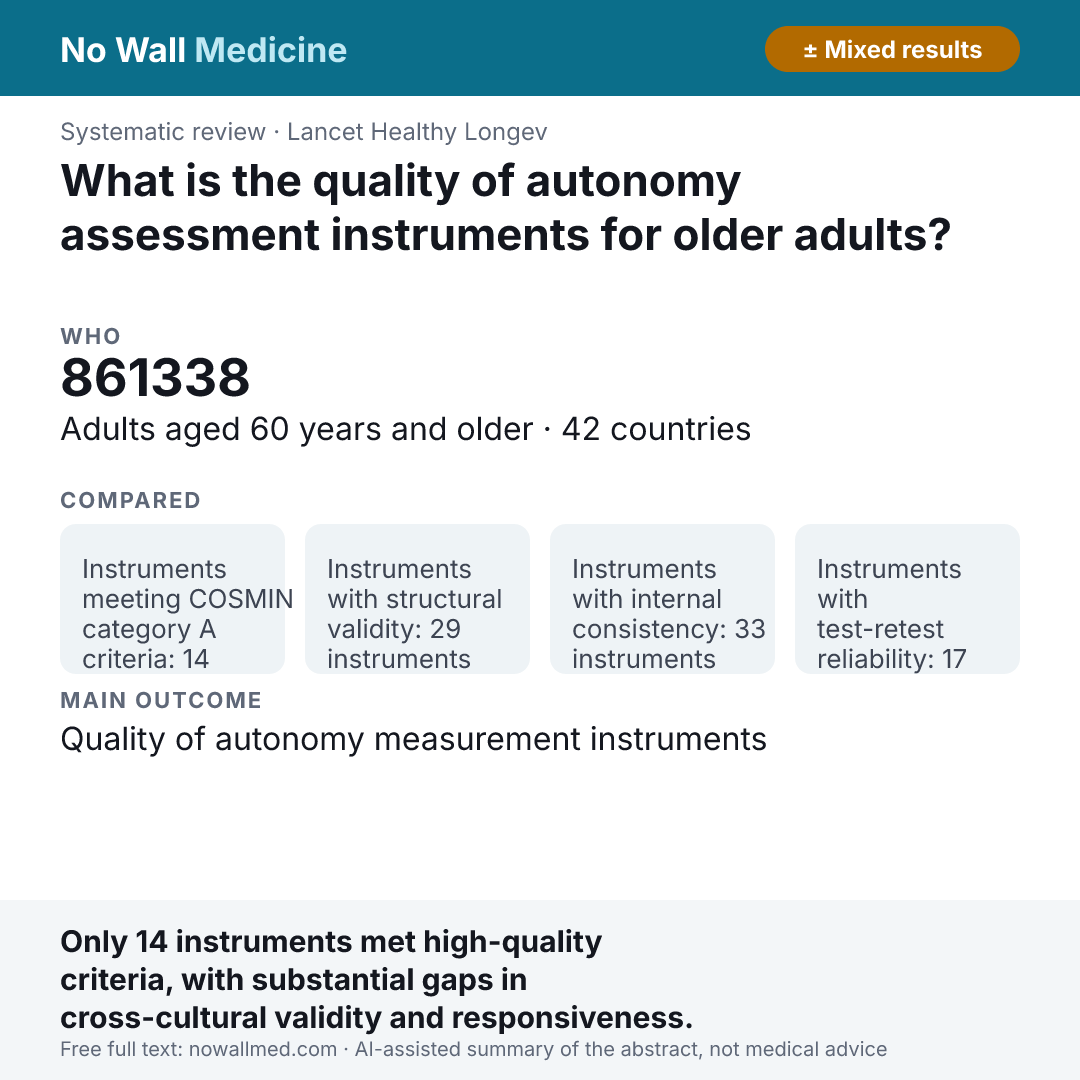
A global gap in autonomy assessment among older adults: a COSMIN systematic review
Systematic reviewMixed results
What is the quality of autonomy assessment instruments for older adults?
Who
861338
Adults aged 60 years and older · 42 countries
Compared
Instruments meeting COSMIN category A criteria: 14 instruments
Instruments with structural validity: 29 instruments
Instruments with internal consistency: 33 instruments
Instruments with test-retest reliability: 17 instruments
Main outcome
Quality of autonomy measurement instruments
Bottom line: Only 14 instruments met high-quality criteria, with substantial gaps in cross-cultural validity and responsiveness.
Limitation: Substantial gaps remain in cross-cultural validity and responsiveness of the tested instruments.
Lancet Healthy Longev · 2026-02-10 · Save PNG
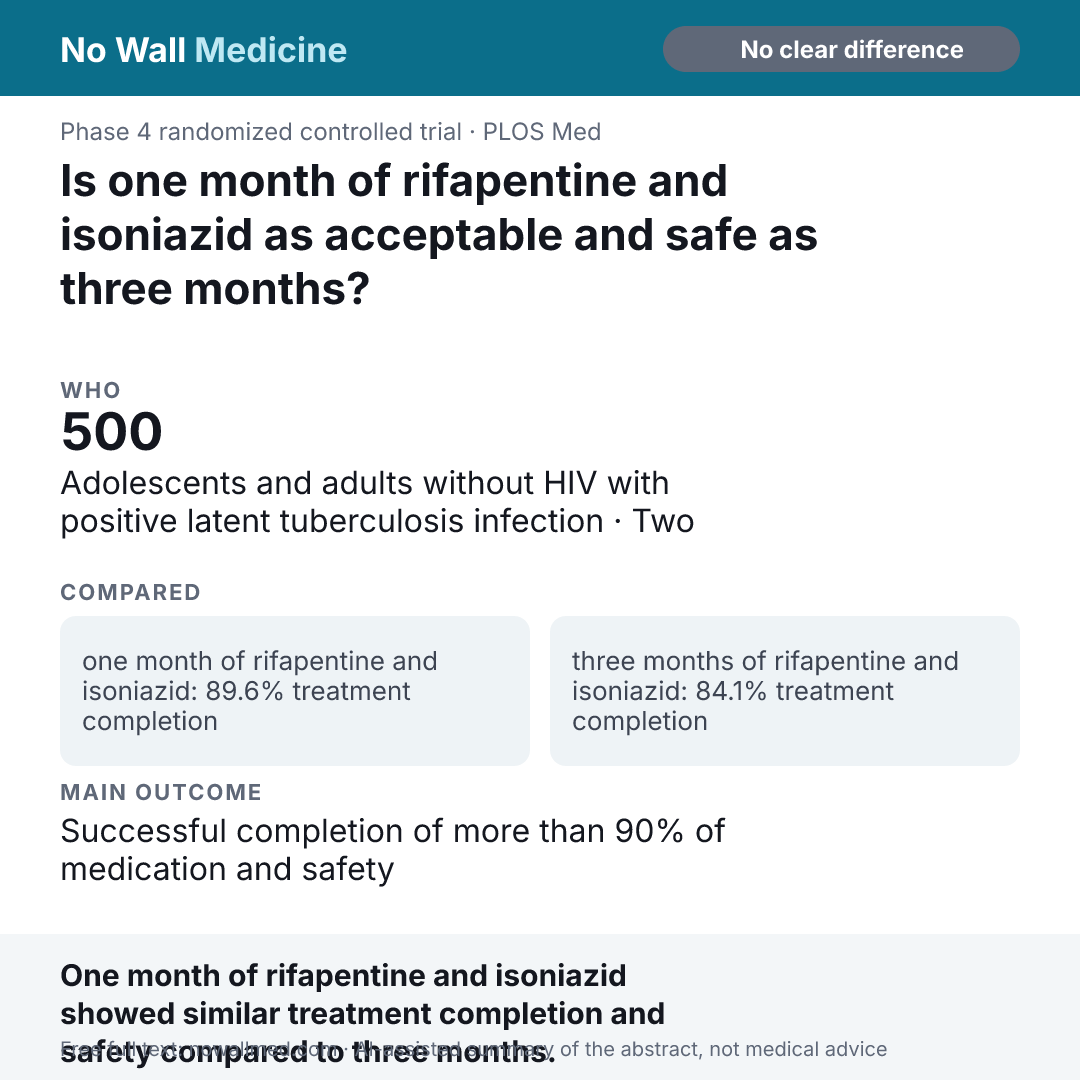
Acceptability and safety of one versus three months of rifapentine and isoniazid to prevent tuberculosis in people exposed in the household or workplace in Brazil: The Ultra-Curto randomized controlled trial
Phase 4 randomized controlled trialNo clear difference
Is one month of rifapentine and isoniazid as acceptable and safe as three months?
Who
500
Adolescents and adults without HIV with positive latent tuberculosis infection · Two sites in Brazil
Compared
one month of rifapentine and isoniazid: 89.6% treatment completion
three months of rifapentine and isoniazid: 84.1% treatment completion
Main outcome
Successful completion of more than 90% of medication and safety
Result: risk difference 5.2%, [95% CI: [-0.1%, 11.2%]
Bottom line: One month of rifapentine and isoniazid showed similar treatment completion and safety compared to three months.
PLOS Med · 2026-02-10 · Save PNG
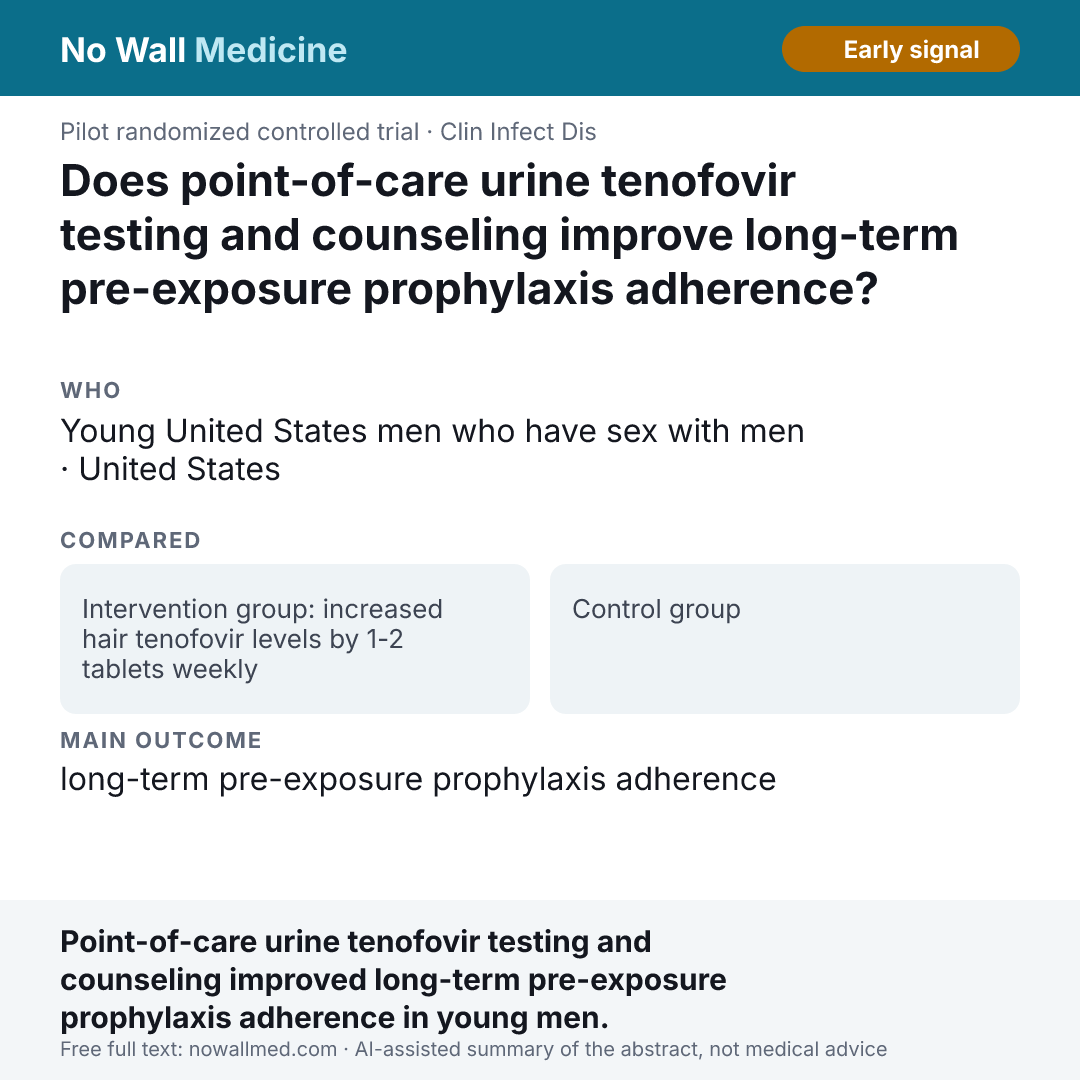
Point-of-Care Urine Tenofovir Drug-Level Feedback Counseling Improves Long-Term Pre-exposure Prophylaxis Adherence for US Men Who Have Sex With Men in Pilot RCT
Pilot randomized controlled trialEarly signal
Does point-of-care urine tenofovir testing and counseling improve long-term pre-exposure prophylaxis adherence?
Who
Young United States men who have sex with men · United States
Compared
Intervention group: increased hair tenofovir levels by 1-2 tablets weekly
Control group
Main outcome
long-term pre-exposure prophylaxis adherence
Bottom line: Point-of-care urine tenofovir testing and counseling improved long-term pre-exposure prophylaxis adherence in young men.
Clin Infect Dis · 2026-02-10 · Save PNG
Peripheral manifestations in spondyloarthritis: a systematic literature review on their assessment and the effect of biological/targeted synthetic DMARDs
Systematic literature reviewMixed results
How are peripheral manifestations assessed and how effective are biological or targeted synthetic disease-modifying antirheumatic drugs?
Who
Patients with axial spondyloarthritis and peripheral spondyloarthritis
Compared
Axial spondyloarthritis: standardized mean differences 0.26 to -1.18
Peripheral spondyloarthritis: standardized mean difference -0.10 to -1.22
Main outcome
Efficacy of biological or targeted synthetic disease-modifying antirheumatic drugs on peripheral manifestations
Bottom line: Biological or targeted synthetic disease-modifying antirheumatic drugs show small-to-moderate effects on peripheral manifestations in spondyloarthritis.
Rheumatology · 2026-02-10 · Save PNG

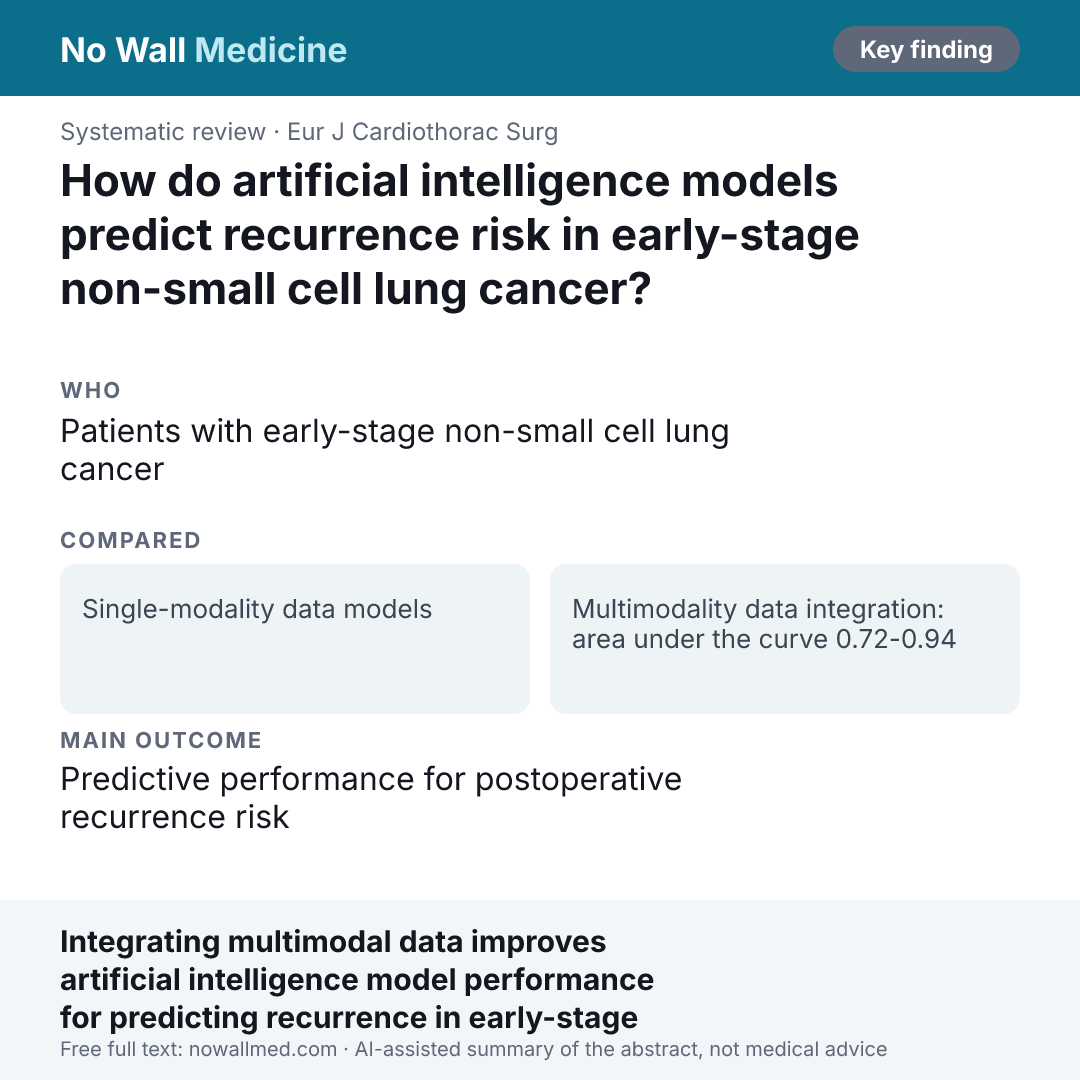
Artificial Intelligence Models to Predict Recurrence Risk Prediction in Early-Stage Non-Small Cell Lung Cancer: A Systematic Review
Systematic reviewKey finding
How do artificial intelligence models predict recurrence risk in early-stage non-small cell lung cancer?
Who
Patients with early-stage non-small cell lung cancer
Compared
Single-modality data models
Multimodality data integration: area under the curve 0.72-0.94
Main outcome
Predictive performance for postoperative recurrence risk
Bottom line: Integrating multimodal data improves artificial intelligence model performance for predicting recurrence in early-stage non-small cell lung cancer.
Limitation: Models face risk of overfitting and high bias risk during validation due to small test sets.
Eur J Cardiothorac Surg · 2026-02-10 · Save PNG
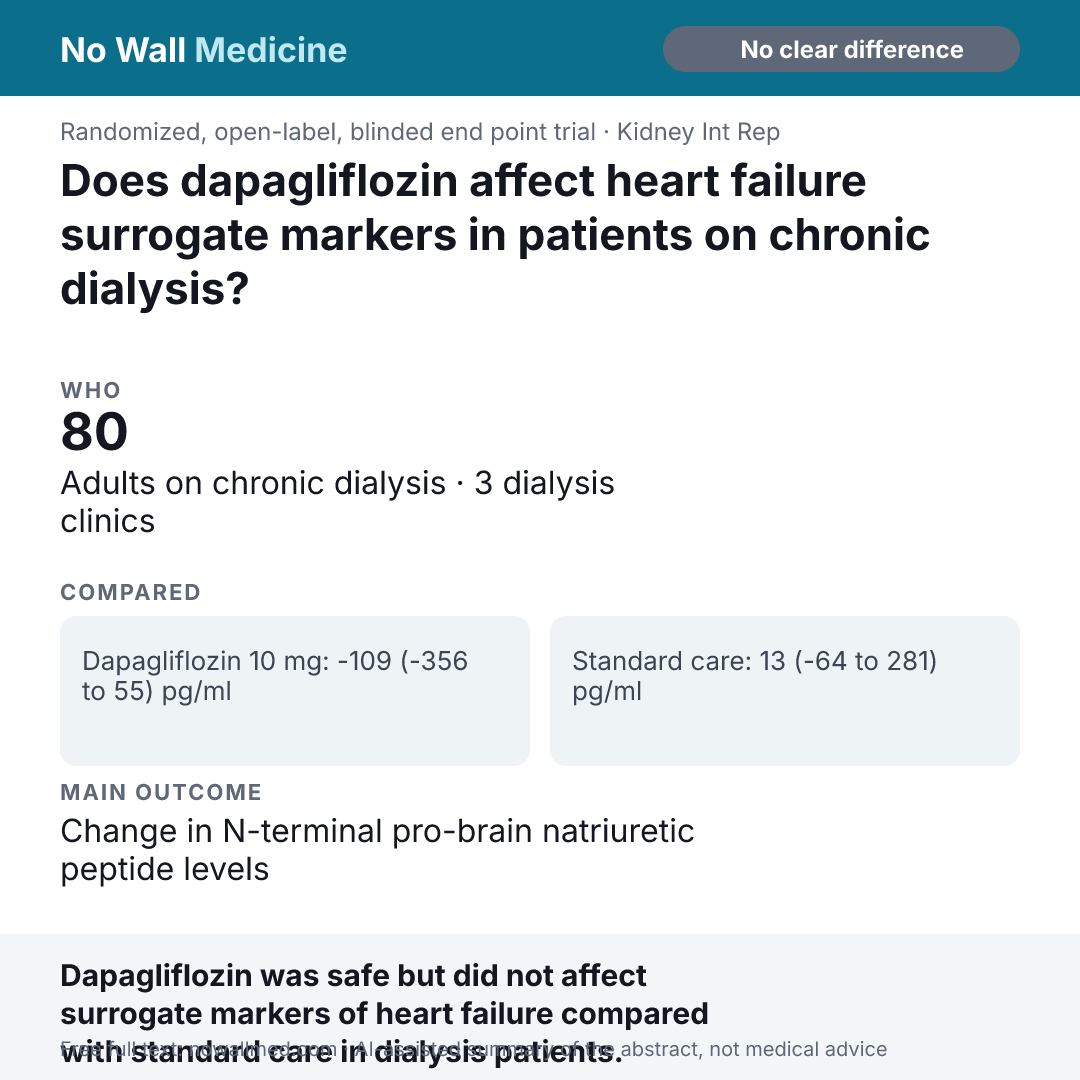
A Multicenter Randomized Clinical Trial of Dapagliflozin in Patients Receiving Chronic Dialysis (The DARE-ESKD-2 Trial)
Randomized, open-label, blinded end point trialNo clear difference
Does dapagliflozin affect heart failure surrogate markers in patients on chronic dialysis?
Who
80
Adults on chronic dialysis · 3 dialysis clinics
Compared
Dapagliflozin 10 mg: -109 (-356 to 55) pg/ml
Standard care: 13 (-64 to 281) pg/ml
Main outcome
Change in N-terminal pro-brain natriuretic peptide levels
Result: median difference -155 (-327 to -33) pg/ml
Bottom line: Dapagliflozin was safe but did not affect surrogate markers of heart failure compared with standard care in dialysis patients.
Kidney Int Rep · 2026-02-10 · Save PNG
Neuromuscular electrical stimulation for early rehabilitation in critically ill patients: a systematic review of applied protocols
Systematic reviewUnclear result
NMES for critically ill patients
Who
2553
Adult intensive care unit patients
Compared
NMES
Control
Main outcome
Rehabilitation outcomes
Bottom line: NMES protocols lack standardization
Limitation: Heterogeneous NMES protocols
Crit Care · 2026-02-10 · Save PNG

Telemonitoring modalities in heart failure: comparative effectiveness across the heart failure population-a meta-analysis
Meta-analysis of 79 randomised trialsBenefit found
Which remote monitoring modality is most effective for heart failure patients?
Who
31669
Patients with heart failure
Compared
Remote monitoring
Standard care
Main outcome
Total heart failure hospitalisations, first hospitalisations, and all-cause mortality
Result: incidence rate ratio 0.81 (95% CI 0.72-0.91) for total hospitalisations
Bottom line: Remote monitoring reduces total heart failure hospitalisations, first hospitalisations, and all-cause mortality in heart failure patients.
Limitation: Current evidence does not allow targeted remote monitoring implementation for specific patients.
NPJ Digit Med · 2026-02-10 · Save PNG

Effect of preoperative prehabilitation on the 6-minute walk distance and postoperative outcomes in adult patients: meta-analysis
Meta-analysis of 21 randomized clinical trialsBenefit found
Does preoperative prehabilitation improve 6-minute walk distance and postoperative outcomes?
Who
1649
Adult patients scheduled to undergo elective surgery
Compared
Prehabilitation
Control
Main outcome
Change in 6-minute walk distance
Result: mean difference 29 m (95% c.i. 14 to 42 m)
Bottom line: Prehabilitation with physical exercise improves preoperative cardiorespiratory fitness but does not affect hospital stay or mortality.
BJS Open · 2026-02-10 · Save PNG
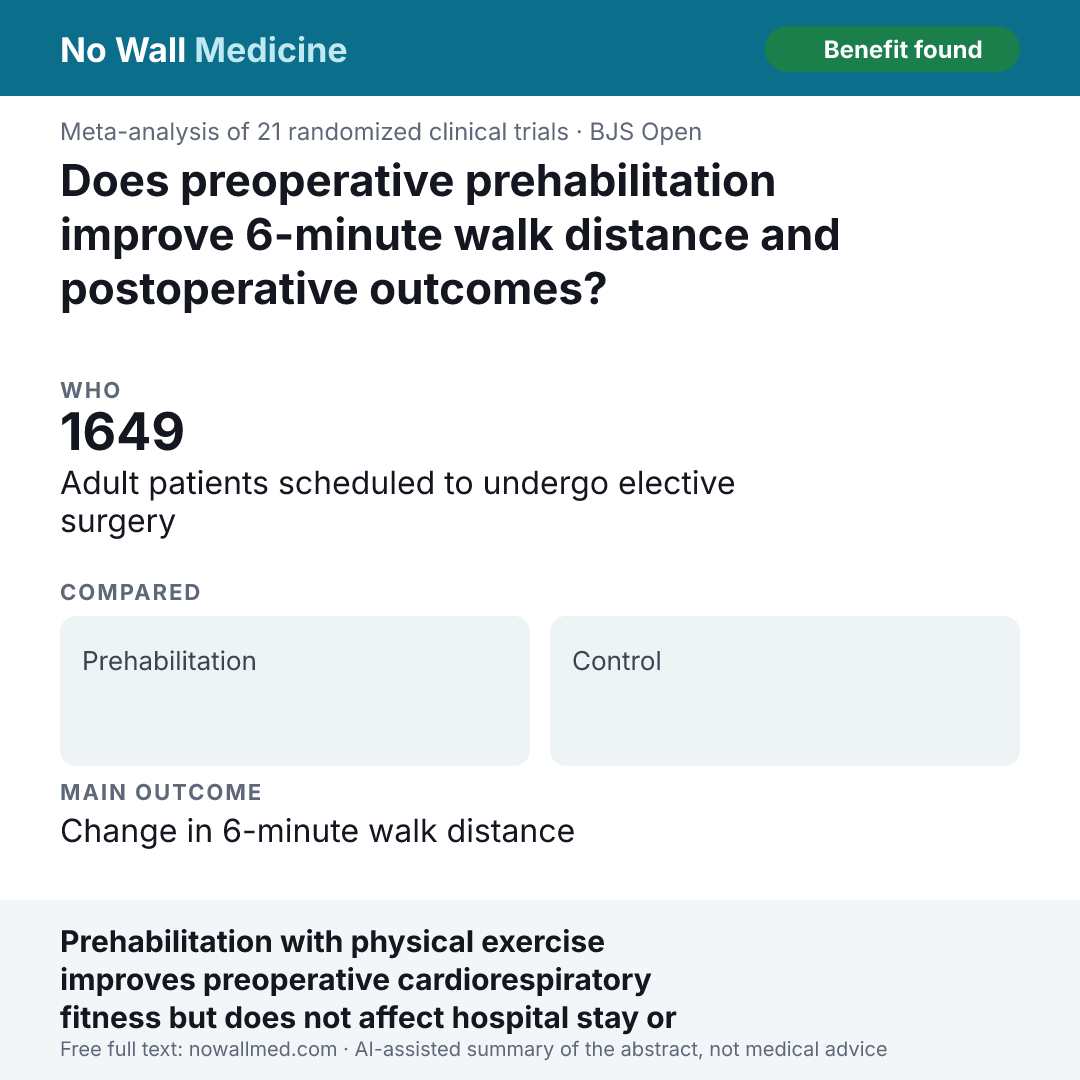
Reliability of LLMs as medical assistants for the general public: a randomized preregistered study
Randomized preregistered studyNo clear difference
Can large language models assist the public in identifying medical conditions and disposition?
Who
1298
Members of the public · Controlled study
Compared
Participants using large language models: fewer than 34.5% condition identification and fewer than 44.2% disposition
Control group: no better than the large language model group
Main outcome
Identifying underlying conditions and choosing a course of action
Bottom line: Large language models did not improve medical condition identification or disposition compared to a control group.
Limitation: Standard benchmarks for medical knowledge do not predict failures found with human participants.
Nat Med · 2026-02-09 · Save PNG
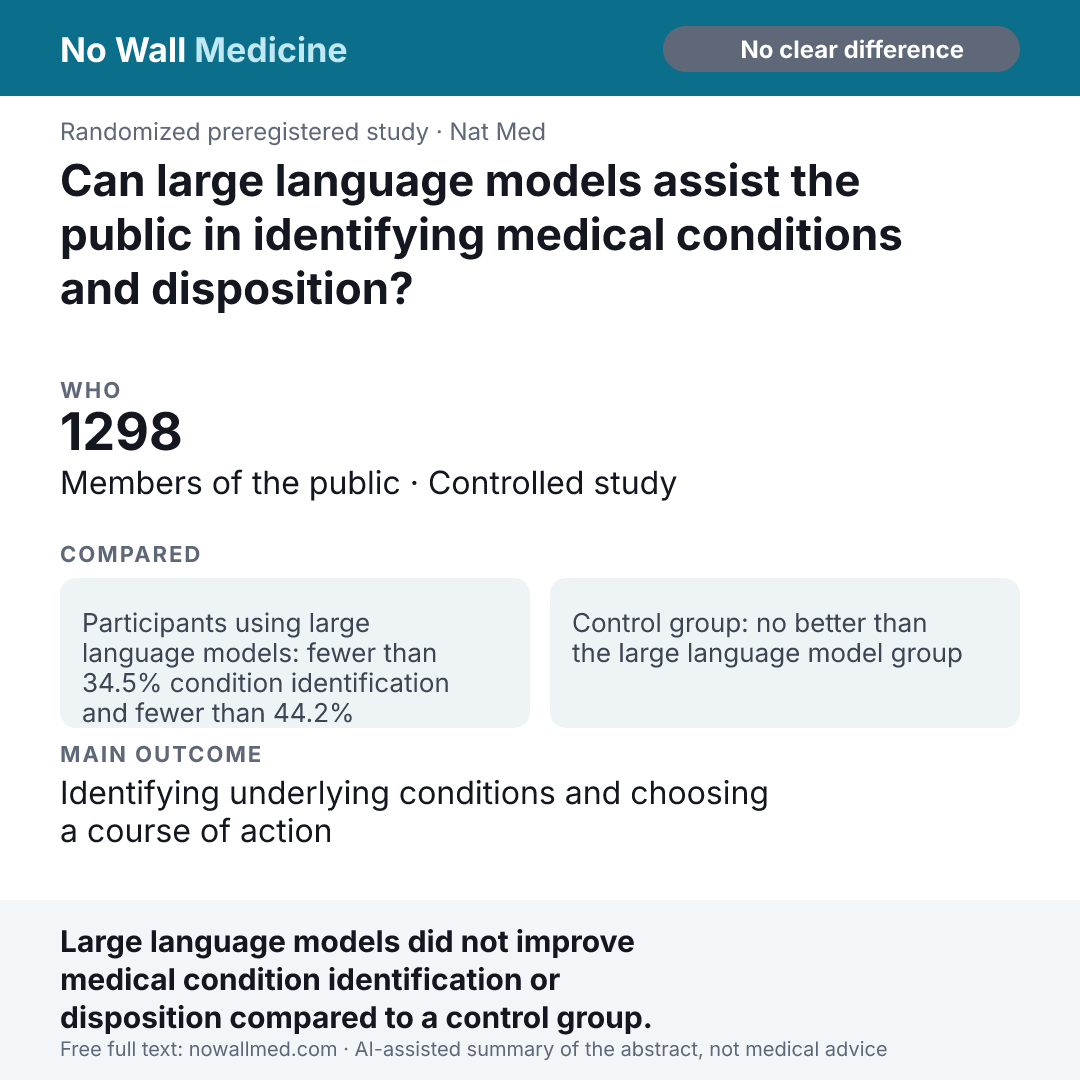
A randomized trial of iron- and zinc-biofortified pearl millet-based complementary feeding in children aged 12-18 months living in urban slums
Randomized controlled trialMixed results
Does iron- and zinc-biofortified pearl millet improve nutritional status in children?
Who
223
Children aged 12-18 months living in urban slums · Mumbai, India
Compared
Iron- and zinc-biofortified pearl millet: 0.10 g/dL (-0.60, 0.90)
Conventional pearl millet: -0.15 g/dL (-1.00, 0.40)
Main outcome
Hemoglobin, serum ferritin, plasma zinc, and growth
Bottom line: Biofortified pearl millet improved hemoglobin and reduced anemia prevalence but did not improve ferritin, zinc, or growth.
Limitation: The trial was not designed to detect differences in serum ferritin, plasma zinc, or growth.
Clin Nutr · 2026-02-09 · Save PNG
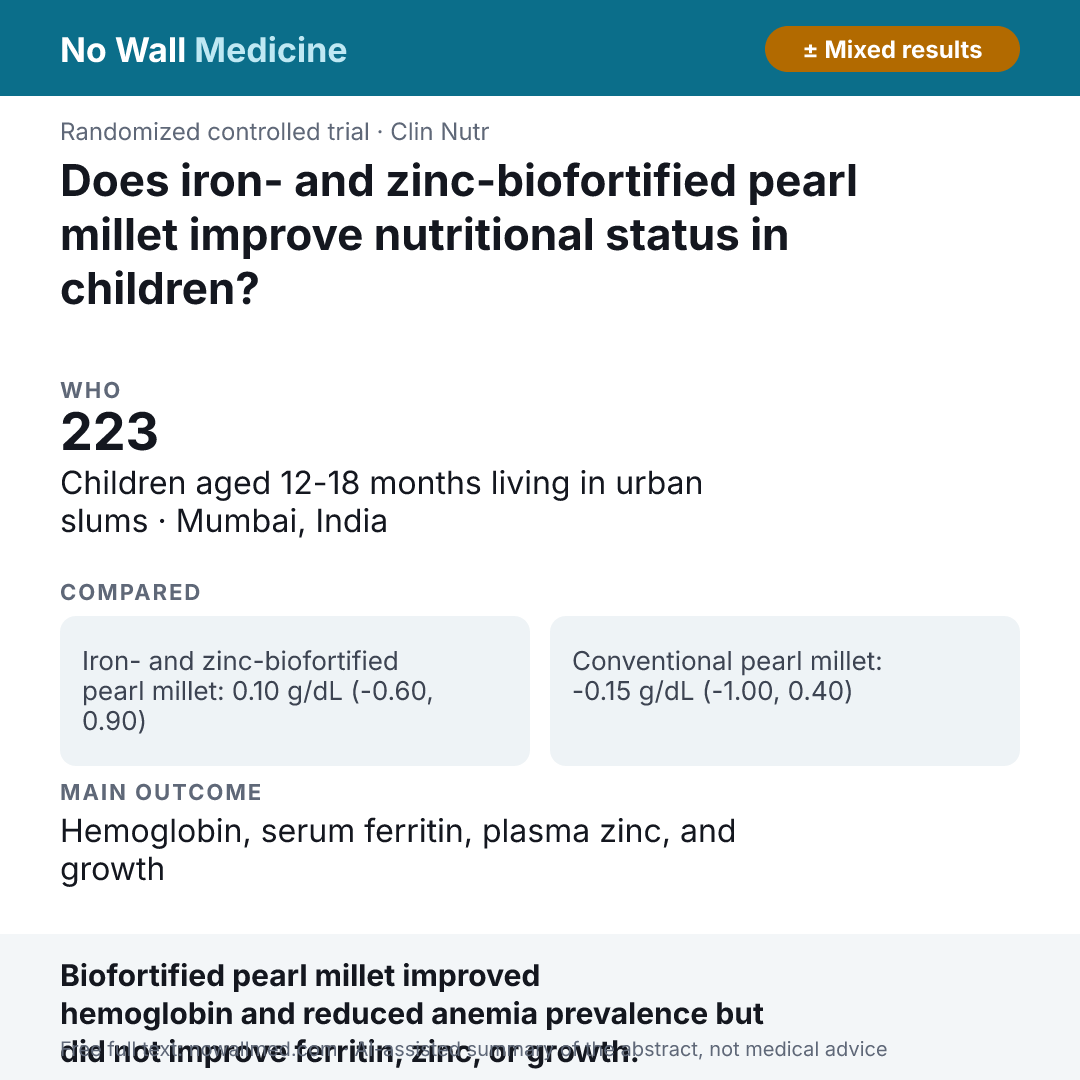
Early Supportive Versus Standard Care in Phase I Cancer Trials: A Randomized Controlled Trial
Randomized controlled trialEarly signal
Does early structured supportive care improve quality of life in Phase I cancer trials?
Who
186
Patients participating in Phase I clinical trials
Compared
Early supportive care: β = -14.44 (95% CI -18.13 to -10.75)
Standard care
Main outcome
Symptom burden assessed with Edmonton symptom assessment system
Result: group effect β = -14.44 (95% CI -18.13 to -10.75)
Bottom line: Early structured supportive care significantly improves symptom control and psychosocial well-being for patients in Phase I cancer trials.
J Pain Symptom Manage · 2026-02-09 · Save PNG
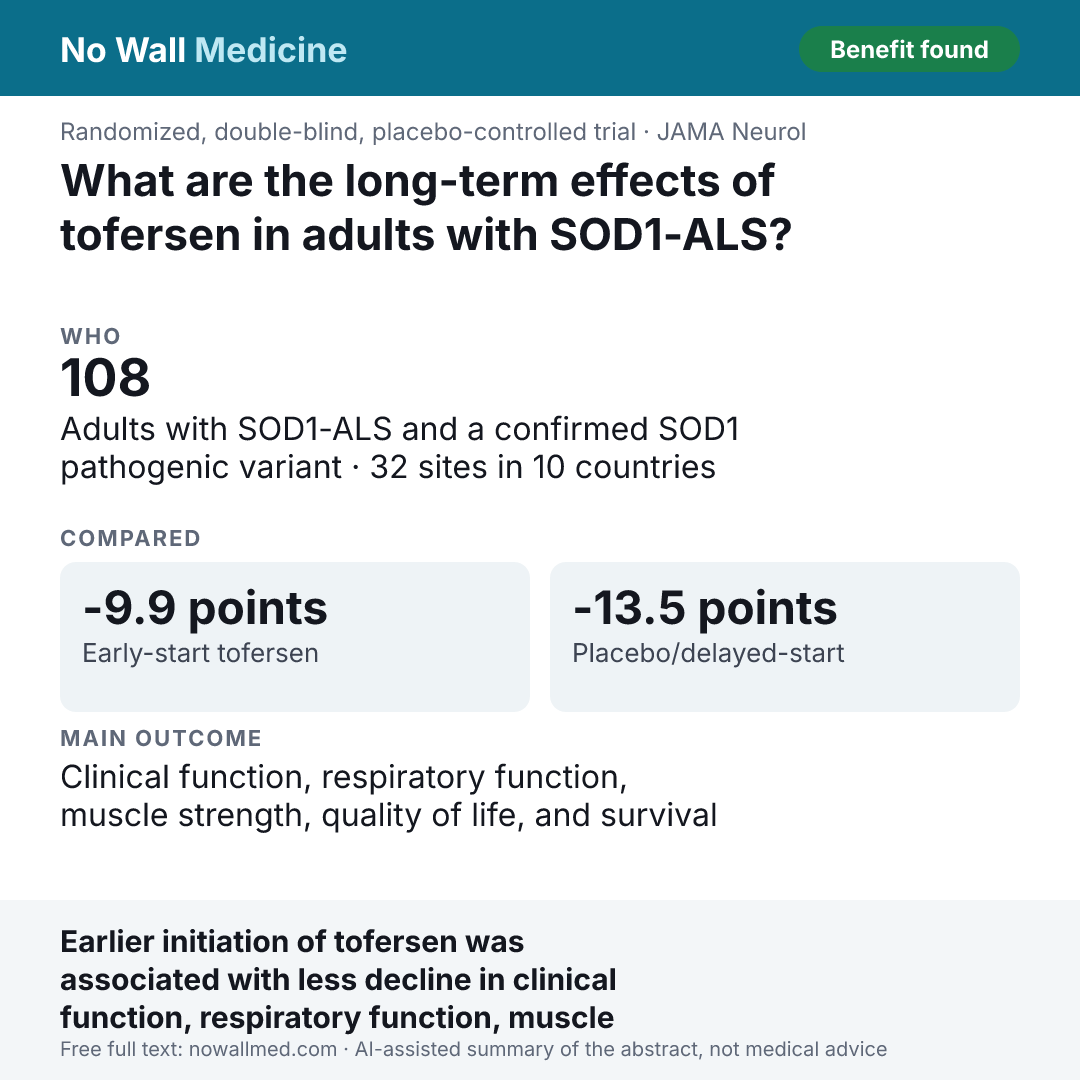
Long-Term Tofersen in SOD1 Amyotrophic Lateral Sclerosis
Randomized, double-blind, placebo-controlled trialBenefit found
What are the long-term effects of tofersen in adults with SOD1-ALS?
Who
108
Adults with SOD1-ALS and a confirmed SOD1 pathogenic variant · 32 sites in 10 countries
Compared
-9.9 pointsEarly-start tofersen (ALSFRS-R score)
-13.5 pointsPlacebo/delayed-start (ALSFRS-R score)
Main outcome
Clinical function, respiratory function, muscle strength, quality of life, and survival
Bottom line: Earlier initiation of tofersen was associated with less decline in clinical function, respiratory function, muscle strength, and quality of life.
JAMA Neurol · 2026-02-09 · Save PNG
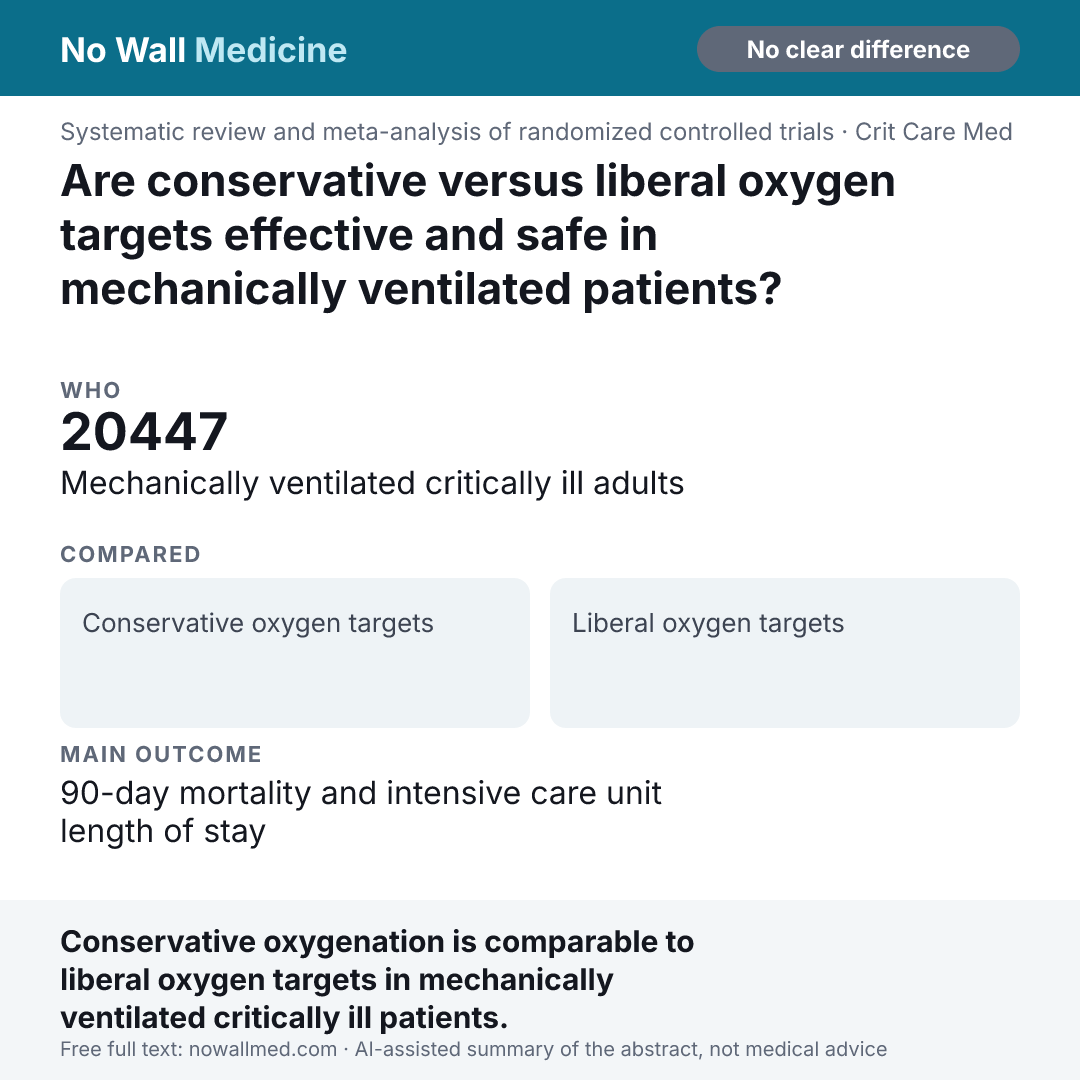
Conservative Oxygen Targets in Mechanically Ventilated Patients (OXY-BREATHES): A Systematic Review and Meta-Analysis of Randomized Controlled Trials
Systematic review and meta-analysis of randomized controlled trialsNo clear difference
Are conservative versus liberal oxygen targets effective and safe in mechanically ventilated patients?
Who
20447
Mechanically ventilated critically ill adults
Compared
Conservative oxygen targets
Liberal oxygen targets
Main outcome
90-day mortality and intensive care unit length of stay
Result: risk ratio 1.01 (95% CI 0.94-1.09)
Bottom line: Conservative oxygenation is comparable to liberal oxygen targets in mechanically ventilated critically ill patients.
Limitation: Imprecision and open-label trial designs in some studies.
Crit Care Med · 2026-02-09 · Save PNG
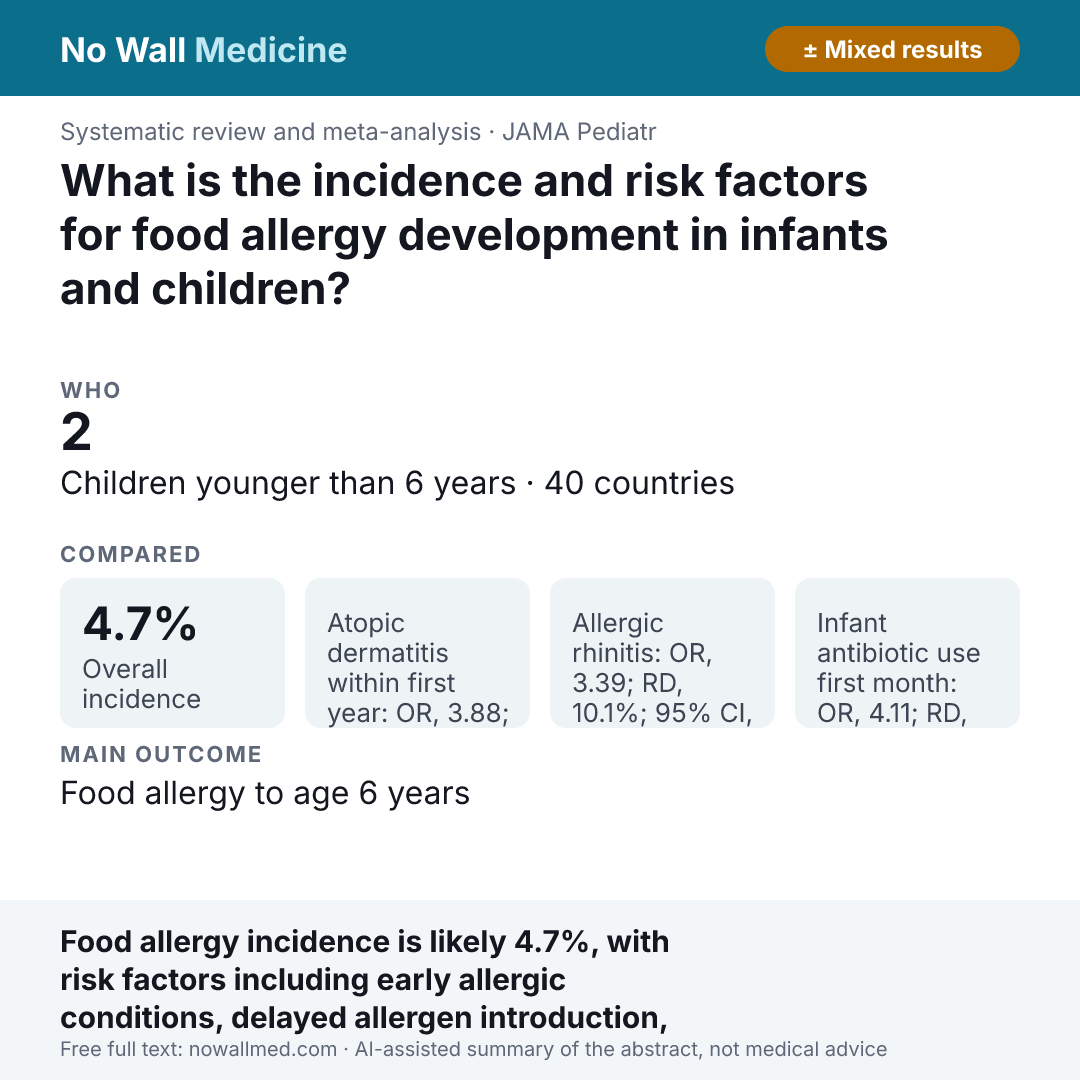
Risk Factors for the Development of Food Allergy in Infants and Children: A Systematic Review and Meta-Analysis
Systematic review and meta-analysisMixed results
What is the incidence and risk factors for food allergy development in infants and children?
Who
2
Children younger than 6 years · 40 countries
Compared
4.7%Overall incidence
Atopic dermatitis within first year: OR, 3.88; RD, 12.0%; 95% CI, 8.8%-15.7%
Allergic rhinitis: OR, 3.39; RD, 10.1%; 95% CI, 6.7%-14.4%
Infant antibiotic use first month: OR, 4.11; RD, 12.8%; 95% CI, 0.4%-40%
Main outcome
Food allergy to age 6 years
Bottom line: Food allergy incidence is likely 4.7%, with risk factors including early allergic conditions, delayed allergen introduction, genetics, and antibiotic exposure.
JAMA Pediatr · 2026-02-09 · Save PNG