Visual abstracts
New randomized trials and meta-analyses from leading journals at a glance: who was studied, what was compared, and what was found. Every paper is free to read in full.
All specialtiesCardiology 4877Oncology 4138Gastroenterology & Hepatology 1942Infectious Disease 3837Neurology 1905Psychiatry & Mental Health 2273Pulmonology 2143Critical Care 1365Endocrinology & Diabetes 2580Pediatrics 2980Surgery 2559Orthopedics & Sports Medicine 931Neurosurgery 537Cardiothoracic & Vascular Surgery 674Plastic & Reconstructive Surgery 591Nephrology 1133Rheumatology 823Hematology 1109Dermatology 621Ophthalmology 543Obstetrics & Gynecology 1686Public & Global Health 1058Radiology & Imaging 648Anesthesiology 986Urology 764ENT (Otolaryngology) 503Emergency Medicine 511Allergy & Immunology 313Geriatrics 981Family Medicine & Primary Care 562Medical Genetics & Genomics 676Pathology & Laboratory Medicine 159Physical Medicine & Rehabilitation 757Palliative Care 444Nutrition 1588Digital Health & AI 2201General Medicine 321
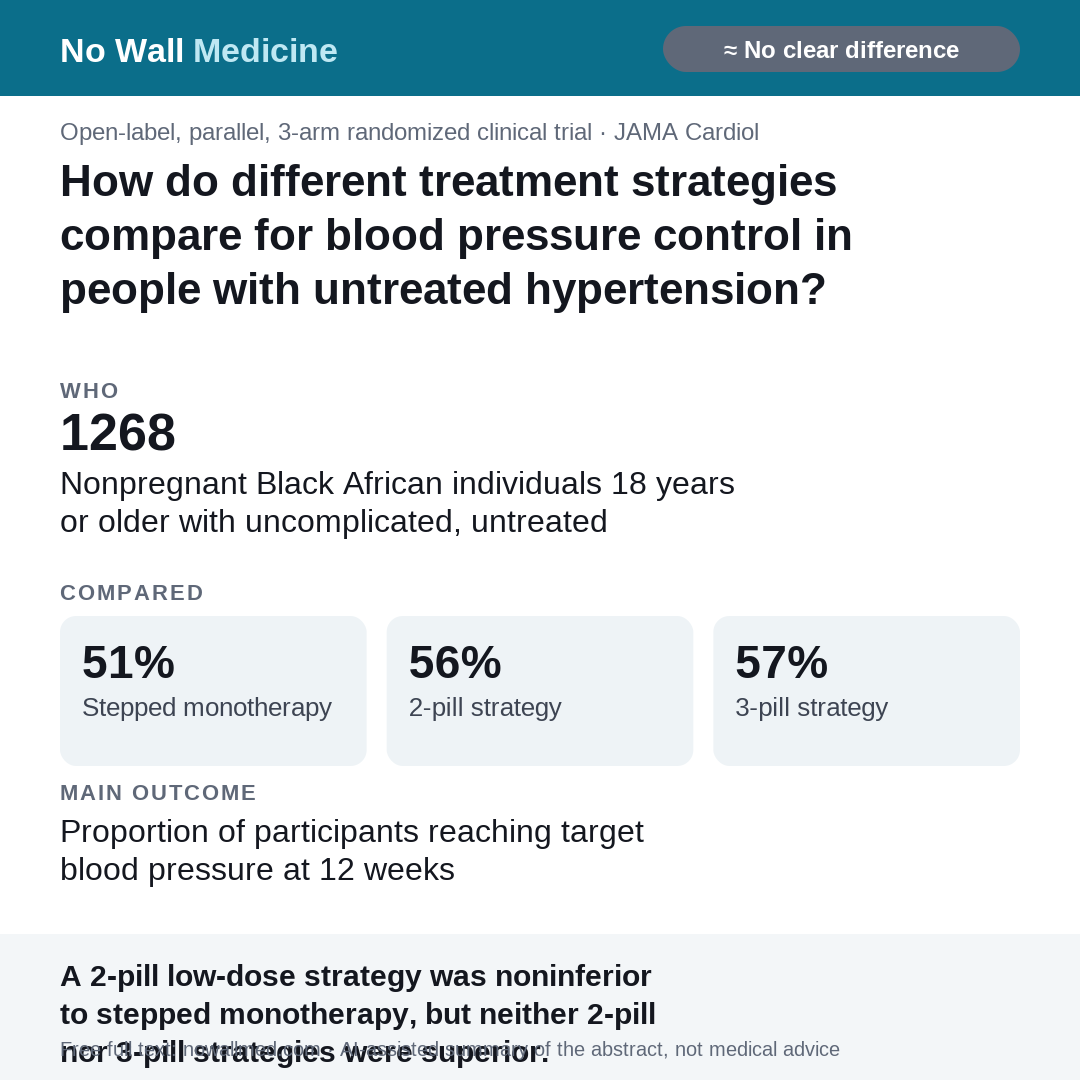
Treatment Strategies to Control Blood Pressure in People With Hypertension in Tanzania and Lesotho: A Randomized Clinical Trial
Open-label, parallel, 3-arm randomized clinical trialNo clear difference
How do different treatment strategies compare for blood pressure control in people with untreated hypertension?
Who
1268
Nonpregnant Black African individuals 18 years or older with uncomplicated, untreated hypertension · 2 hospitals in rural Lesotho and Tanzania
Compared
51%Stepped monotherapy
56%2-pill strategy
57%3-pill strategy
Main outcome
Proportion of participants reaching target blood pressure at 12 weeks
Result: adjusted odds ratio 1.18 (95% CI 0.87-1.61)
Bottom line: A 2-pill low-dose strategy was noninferior to stepped monotherapy, but neither 2-pill nor 3-pill strategies were superior.
JAMA Cardiol · 2025-01-29Download image
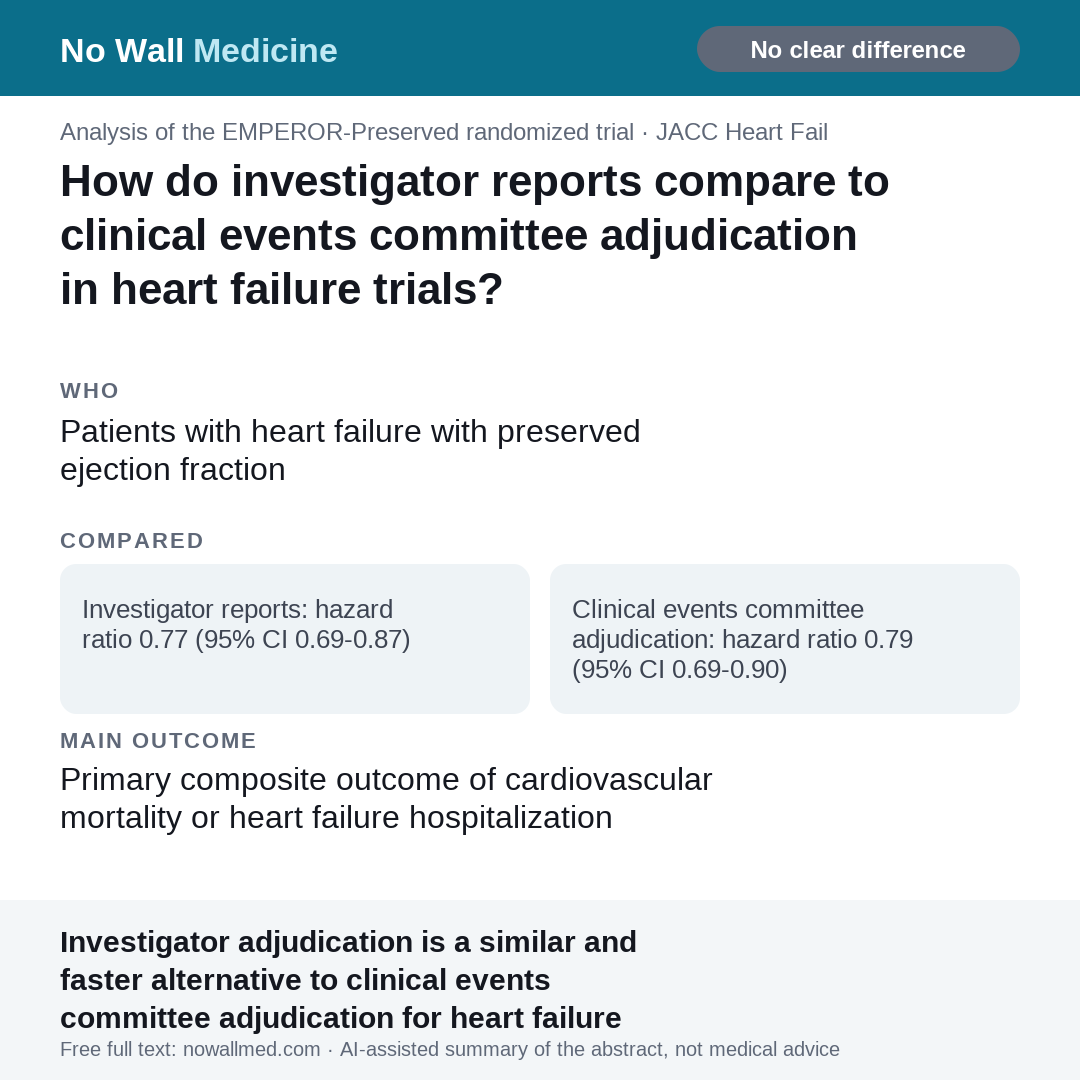
Comparison of Investigator-Reported and Centrally Adjudicated Heart Failure Outcomes in the EMPEROR-Preserved Trial
Analysis of the EMPEROR-Preserved randomized trialNo clear difference
How do investigator reports compare to clinical events committee adjudication in heart failure trials?
Who
Patients with heart failure with preserved ejection fraction
Compared
Investigator reports: hazard ratio 0.77 (95% CI 0.69-0.87)
Clinical events committee adjudication: hazard ratio 0.79 (95% CI 0.69-0.90)
Main outcome
Primary composite outcome of cardiovascular mortality or heart failure hospitalization
Result: hazard ratio 0.77 (95% CI 0.69-0.87) vs 0.79 (95% CI 0.69-0.90)
Bottom line: Investigator adjudication is a similar and faster alternative to clinical events committee adjudication for heart failure trials.
JACC Heart Fail · 2025-01-29Download image
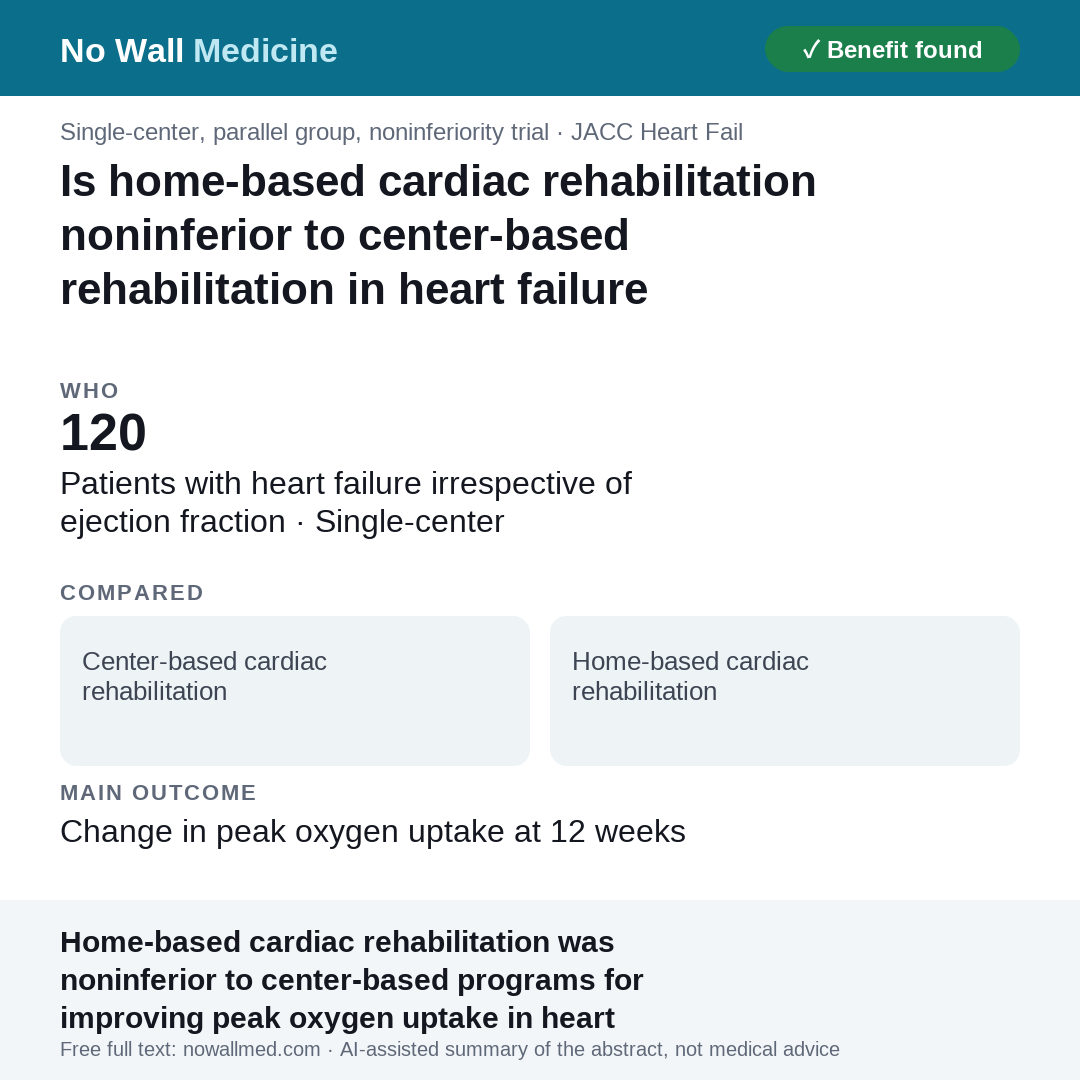
Center- vs Home-Based Cardiac Rehabilitation in Patients With Heart Failure: EXIT-HF Randomized Controlled Trial
Single-center, parallel group, noninferiority trialBenefit found
Is home-based cardiac rehabilitation noninferior to center-based rehabilitation in heart failure patients?
Who
120
Patients with heart failure irrespective of ejection fraction · Single-center
Compared
Center-based cardiac rehabilitation
Home-based cardiac rehabilitation
Main outcome
Change in peak oxygen uptake at 12 weeks
Result: 0.8 mL/kg/min (95% CI 1.8 to -0.16 mL/kg/min)
Bottom line: Home-based cardiac rehabilitation was noninferior to center-based programs for improving peak oxygen uptake in heart failure patients.
JACC Heart Fail · 2025-01-29Download image
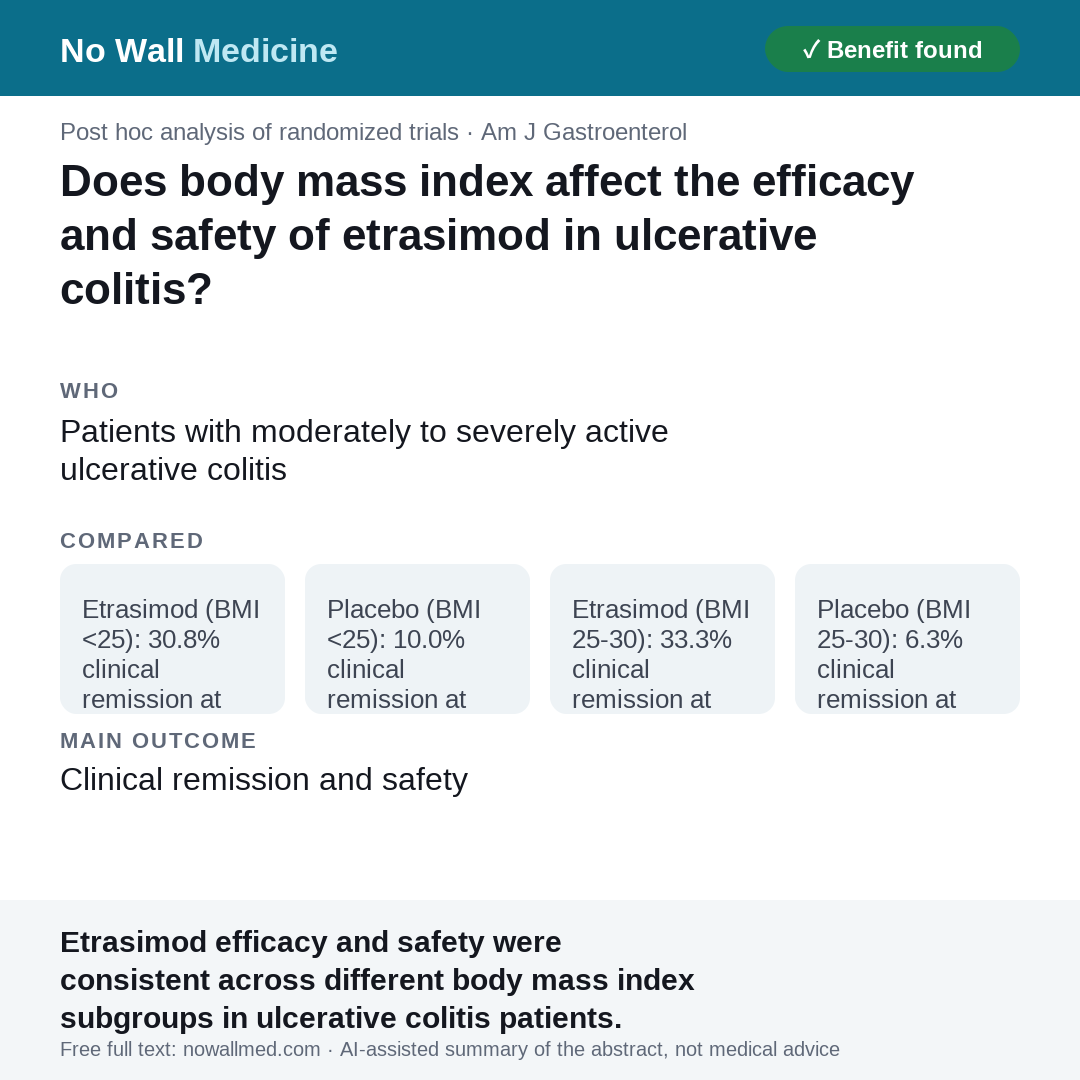
Body Mass Index Did Not Affect Efficacy and Safety of Etrasimod: A Post Hoc Analysis of the ELEVATE Ulcerative Colitis Clinical Program
Post hoc analysis of randomized trialsBenefit found
Does body mass index affect the efficacy and safety of etrasimod in ulcerative colitis?
Who
Patients with moderately to severely active ulcerative colitis
Compared
Etrasimod (BMI <25): 30.8% clinical remission at week 52
Placebo (BMI <25): 10.0% clinical remission at week 52
Etrasimod (BMI 25-30): 33.3% clinical remission at week 52
Placebo (BMI 25-30): 6.3% clinical remission at week 52
Main outcome
Clinical remission and safety
Bottom line: Etrasimod efficacy and safety were consistent across different body mass index subgroups in ulcerative colitis patients.
Am J Gastroenterol · 2025-01-29Download image
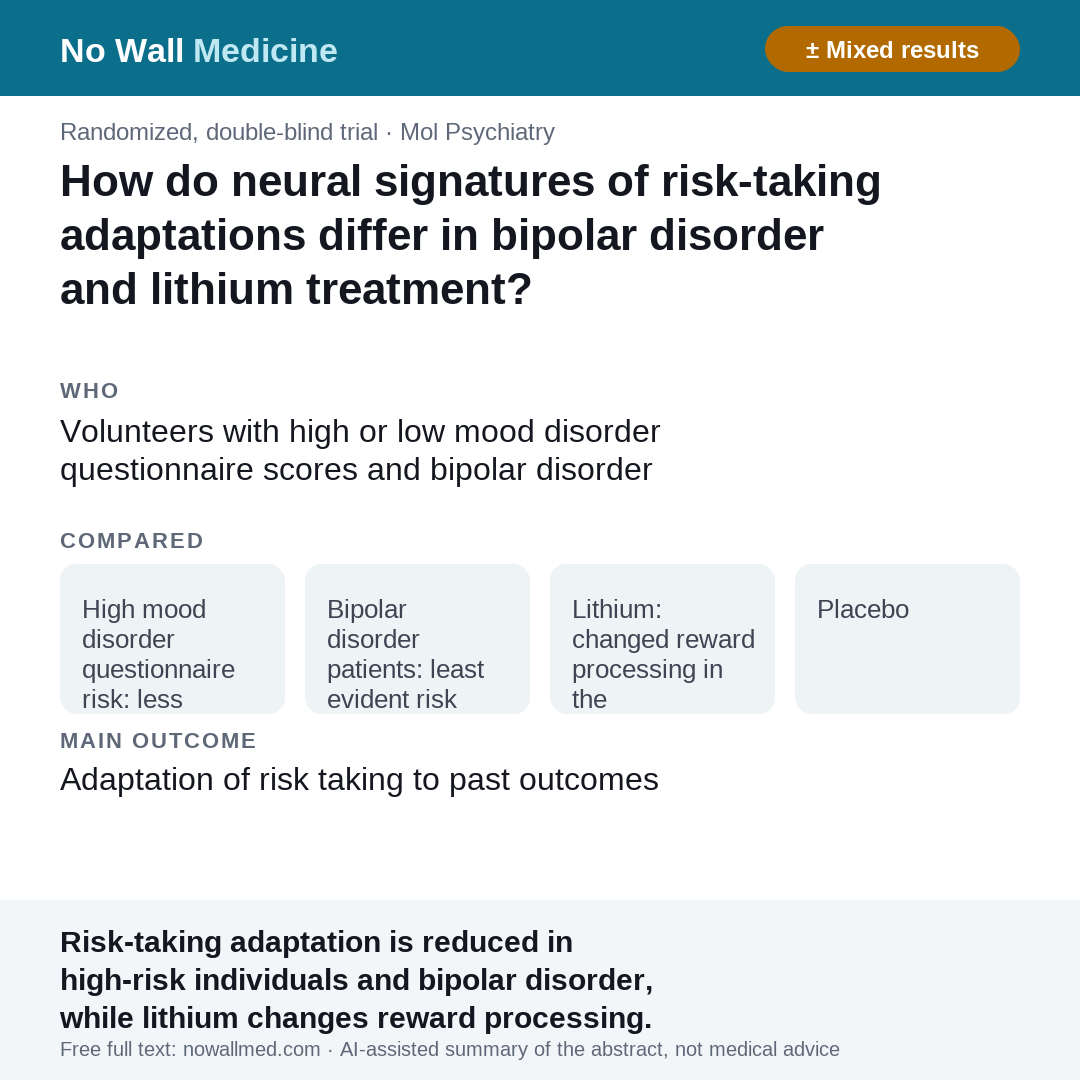
Neural signatures of risk-taking adaptions across health, bipolar disorder, and lithium treatment
Randomized, double-blind trialMixed results
How do neural signatures of risk-taking adaptations differ in bipolar disorder and lithium treatment?
Who
Volunteers with high or low mood disorder questionnaire scores and bipolar disorder patients
Compared
High mood disorder questionnaire risk: less evident risk aversion after a win
Bipolar disorder patients: least evident risk aversion after a win
Lithium: changed reward processing in the dorsolateral prefrontal cortex
Placebo
Main outcome
Adaptation of risk taking to past outcomes
Bottom line: Risk-taking adaptation is reduced in high-risk individuals and bipolar disorder, while lithium changes reward processing.
Mol Psychiatry · 2025-01-29Download image
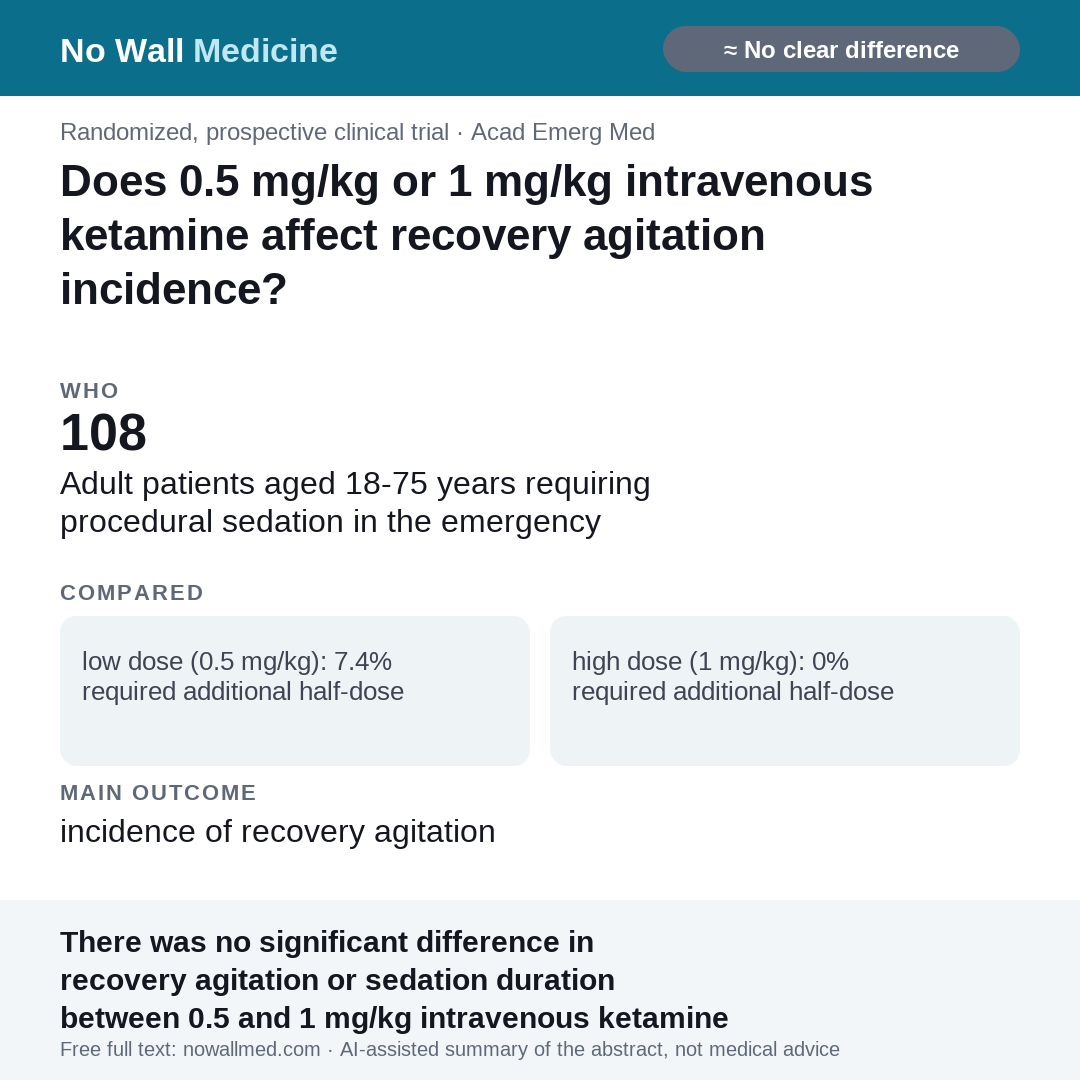
Comparison of the incidence of recovery agitation with two different doses of ketamine in procedural sedation: A randomized clinical trial
Randomized, prospective clinical trialNo clear difference
Does 0.5 mg/kg or 1 mg/kg intravenous ketamine affect recovery agitation incidence?
Who
108
Adult patients aged 18-75 years requiring procedural sedation in the emergency department · Emergency department
Compared
low dose (0.5 mg/kg): 7.4% required additional half-dose
high dose (1 mg/kg): 0% required additional half-dose
Main outcome
incidence of recovery agitation
Result: difference 1.9%, 95% confidence interval -14.8% to 18.4%
Bottom line: There was no significant difference in recovery agitation or sedation duration between 0.5 and 1 mg/kg intravenous ketamine doses.
Acad Emerg Med · 2025-01-29Download image
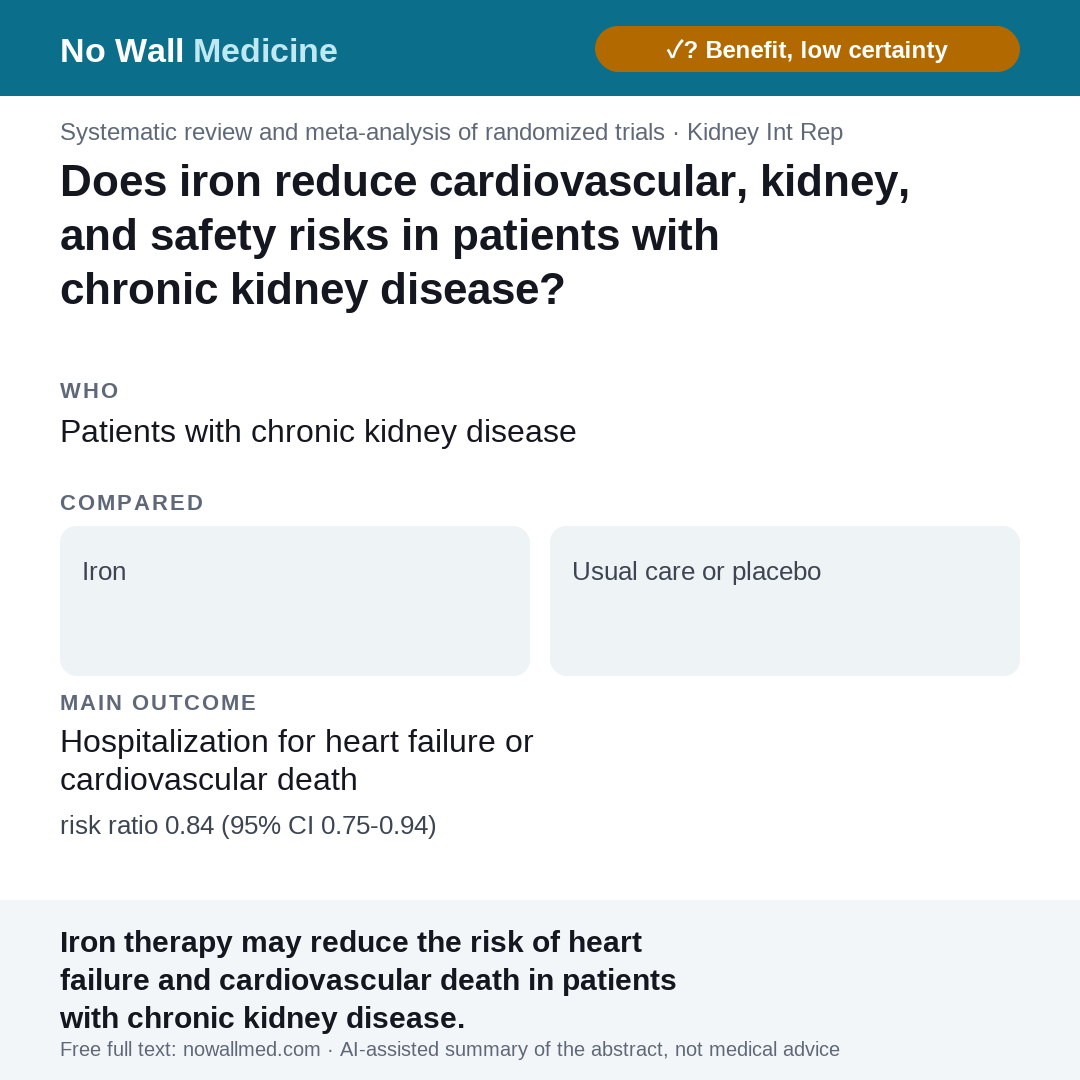
Systematic Review of the Effects of Iron on Cardiovascular, Kidney, and Safety Outcomes in Patients With CKD
Systematic review and meta-analysis of randomized trialsBenefit found
Does iron reduce cardiovascular, kidney, and safety risks in patients with chronic kidney disease?
Who
Patients with chronic kidney disease
Compared
Iron
Usual care or placebo
Main outcome
Hospitalization for heart failure or cardiovascular death
Result: risk ratio 0.84 (95% CI 0.75-0.94)
Bottom line: Iron therapy may reduce the risk of heart failure and cardiovascular death in patients with chronic kidney disease.
Limitation: Randomized trials evaluating iron on clinical outcomes are needed, especially in nondialysis patients.
Kidney Int Rep · 2025-01-29Download image
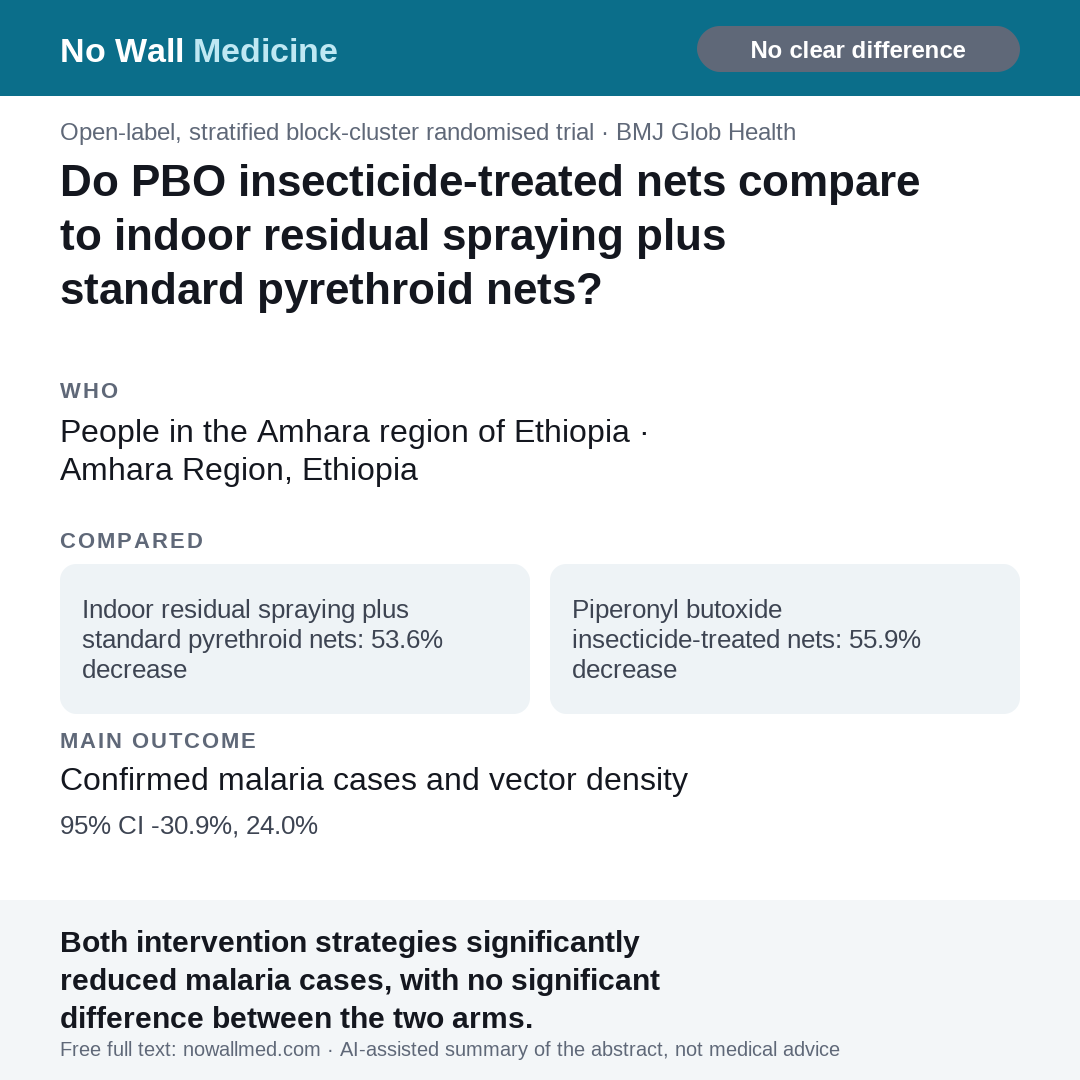
An observational study evaluating the epidemiological and entomological impacts of piperonyl butoxide insecticide-treated nets (ITNs) compared to a combination of indoor residual spraying (IRS) plus standard pyrethroid-only ITNs in Amhara Region, Ethiopia, 2019-2023
Open-label, stratified block-cluster randomised trialNo clear difference
Do PBO insecticide-treated nets compare to indoor residual spraying plus standard pyrethroid nets?
Who
People in the Amhara region of Ethiopia · Amhara Region, Ethiopia
Compared
Indoor residual spraying plus standard pyrethroid nets: 53.6% decrease
Piperonyl butoxide insecticide-treated nets: 55.9% decrease
Main outcome
Confirmed malaria cases and vector density
Result: 95% CI -30.9%, 24.0%
Bottom line: Both intervention strategies significantly reduced malaria cases, with no significant difference between the two arms.
BMJ Glob Health · 2025-01-29Download image
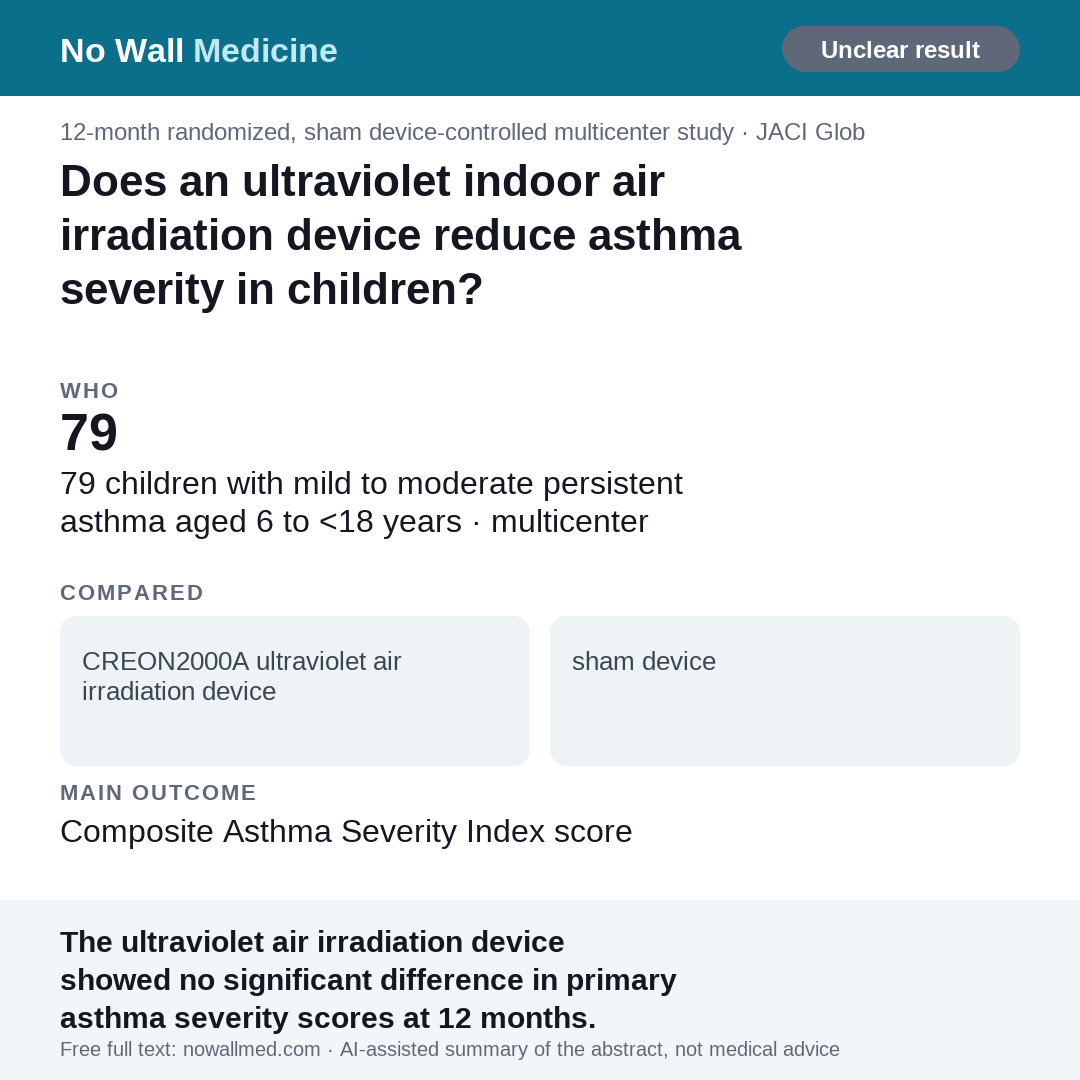
Randomized trial of ultraviolet irradiation units installed in homes of children and adolescents with asthma
12-month randomized, sham device-controlled multicenter studyUnclear result
Does an ultraviolet indoor air irradiation device reduce asthma severity in children?
Who
79
79 children with mild to moderate persistent asthma aged 6 to <18 years · multicenter
Compared
CREON2000A ultraviolet air irradiation device
sham device
Main outcome
Composite Asthma Severity Index score
Result: difference 0.53 (95% confidence interval, -0.576, 1.628)
Bottom line: The ultraviolet air irradiation device showed no significant difference in primary asthma severity scores at 12 months.
JACI Glob · 2025-01-29Download image
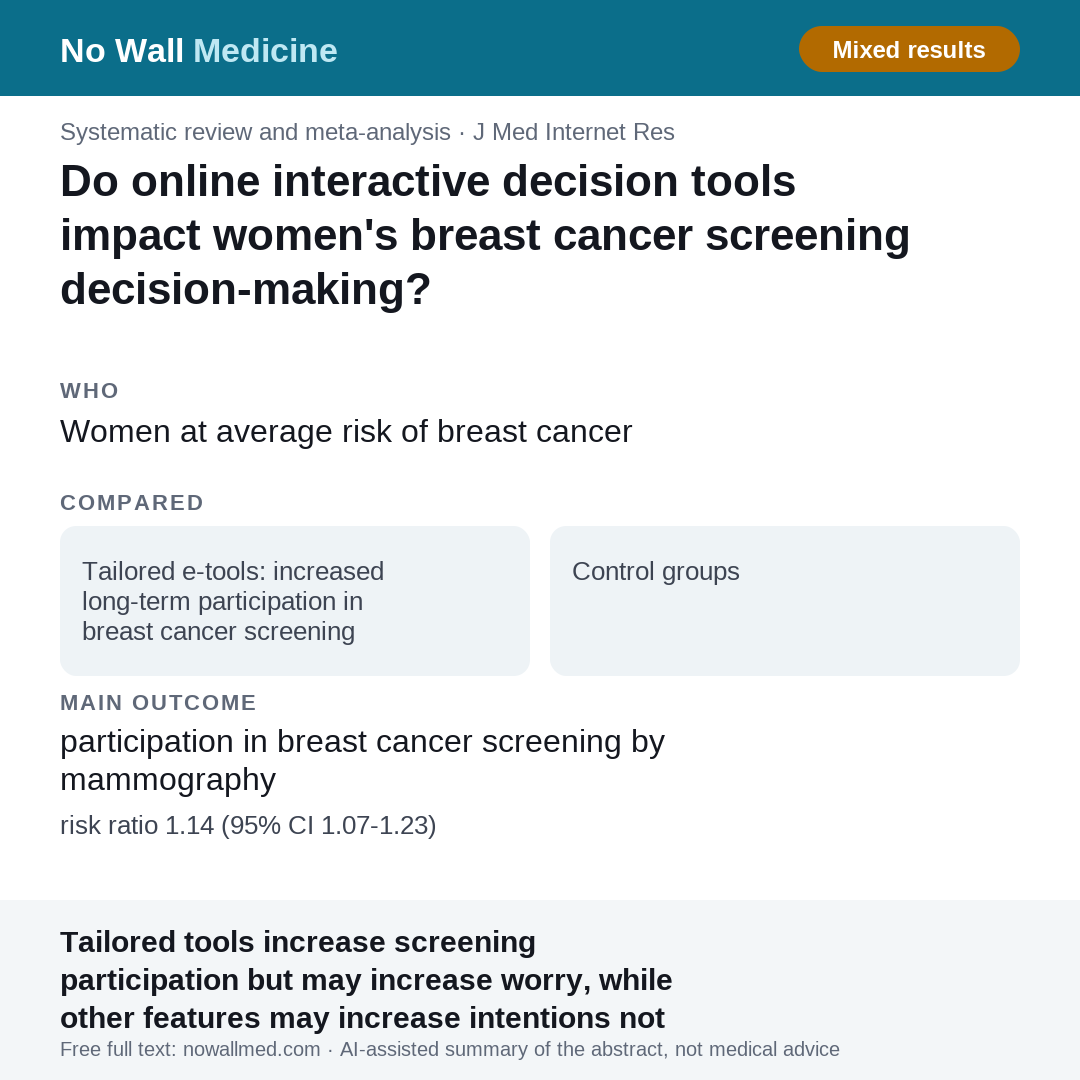
Impact of Online Interactive Decision Tools on Women's Decision-Making Regarding Breast Cancer Screening: Systematic Review and Meta-Analysis
Systematic review and meta-analysisMixed results
Do online interactive decision tools impact women's breast cancer screening decision-making?
Who
Women at average risk of breast cancer
Compared
Tailored e-tools: increased long-term participation in breast cancer screening
Control groups
Main outcome
participation in breast cancer screening by mammography
Result: risk ratio 1.14 (95% CI 1.07-1.23)
Bottom line: Tailored tools increase screening participation but may increase worry, while other features may increase intentions not to undergo screening.
Limitation: small sample sizes, few studies in meta-analysis, high risk of bias, and high heterogeneity
J Med Internet Res · 2025-01-29Download image
Real-Time fMRI Neurofeedback Modulation of Dopaminergic Midbrain Activity in Young Adults With Elevated Internet Gaming Disorder Risk: Randomized Controlled Trial
Randomized, single-blind trialBenefit found
Does neurofeedback help internet gaming disorder
Who
Young adults with elevated internet gaming disorder risk
Compared
Neurofeedback
Control
Main outcome
Brain responses to gaming cues
Bottom line: Neurofeedback helps downregulate gaming addiction
J Med Internet Res · 2025-01-29Download image

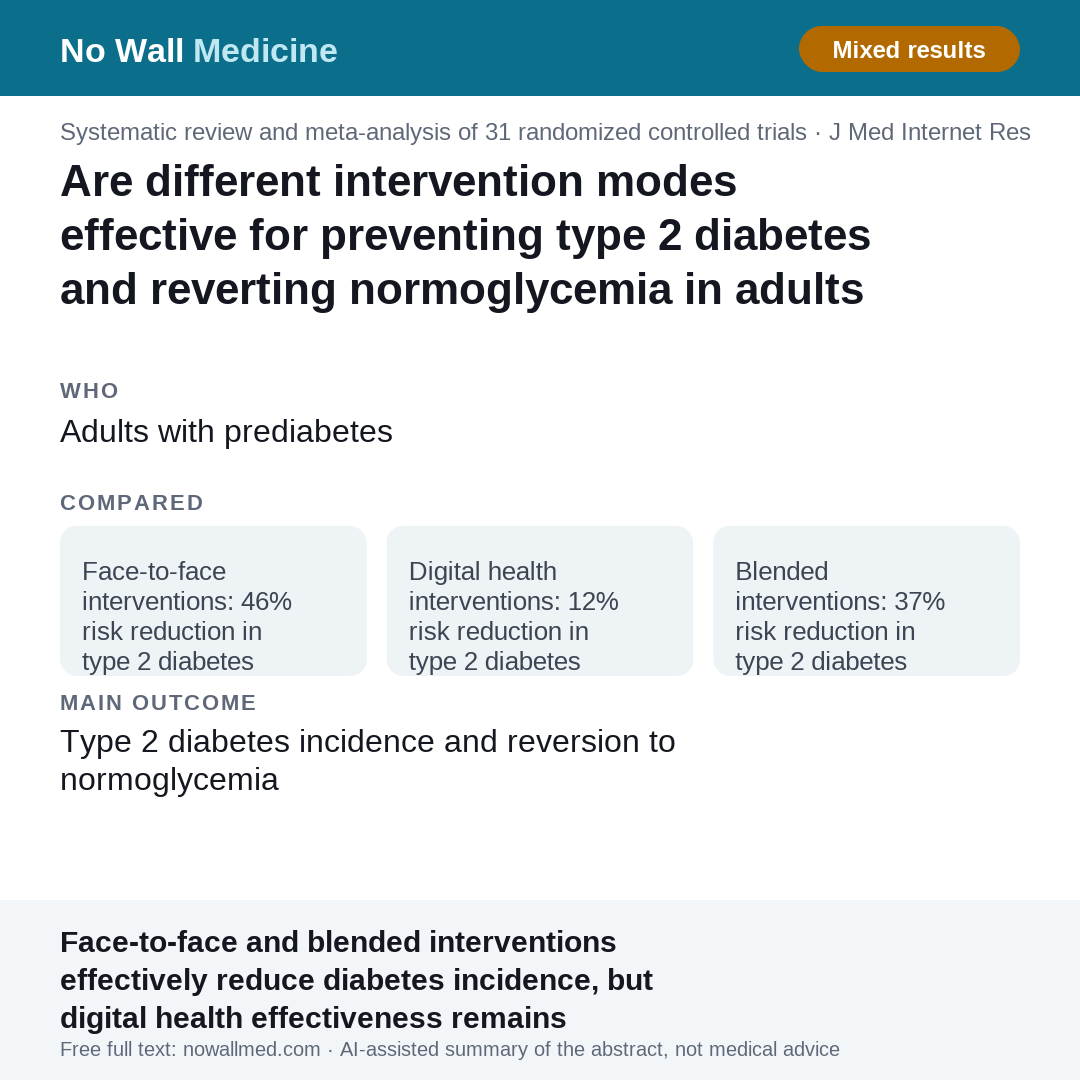
Effectiveness of Different Intervention Modes in Lifestyle Intervention for the Prevention of Type 2 Diabetes and the Reversion to Normoglycemia in Adults With Prediabetes: Systematic Review and Meta-Analysis of Randomized Controlled Trials
Systematic review and meta-analysis of 31 randomized controlled trialsMixed results
Are different intervention modes effective for preventing type 2 diabetes and reverting normoglycemia in adults with prediabetes?
Who
Adults with prediabetes
Compared
Face-to-face interventions: 46% risk reduction in type 2 diabetes incidence
Digital health interventions: 12% risk reduction in type 2 diabetes incidence
Blended interventions: 37% risk reduction in type 2 diabetes incidence
Main outcome
Type 2 diabetes incidence and reversion to normoglycemia
Bottom line: Face-to-face and blended interventions effectively reduce diabetes incidence, but digital health effectiveness remains insufficiently proven.
Limitation: The effectiveness of digital health interventions has not been sufficiently proven.
J Med Internet Res · 2025-01-29Download image
Mentorship in Plastic Surgery: A Systematic Review of the Current Literature and Elucidation of Recurring Themes
Systematic reviewUnclear result
Qualities of effective mentors in plastic surgery
Who
284
plastic surgeons and mentees
Compared
Effective mentors
Ineffective mentors
Main outcome
mentorship effectiveness
Bottom line: Accessible mentors invest time in mentees
Limitation: limited primary studies
Plast Reconstr Surg Glob Open · 2025-01-29Download image

Barriers to healthcare professionals screening, recognizing, and managing delirium in the adult patients receiving specialist palliative care: a mixed-methods systematic review
Mixed-methods systematic reviewMixed results
What are the barriers to delirium screening, recognition, and management in specialist palliative care?
Who
Healthcare professionals in specialist palliative care settings · Inpatient hospice, hospital, consultation teams, and community services
Compared
Individual level: knowledge and understanding gaps among healthcare professionals
Operational level: implementation challenges in clinical practice
Organizational level: structural and resource deficiencies
Contextual level: specific impacts of situational factors
Main outcome
Barriers to delirium screening, recognition, and management
Bottom line: Barriers to delirium care in palliative settings span individual, operational, organizational, and contextual levels.
BMC Palliat Care · 2025-01-29Download image

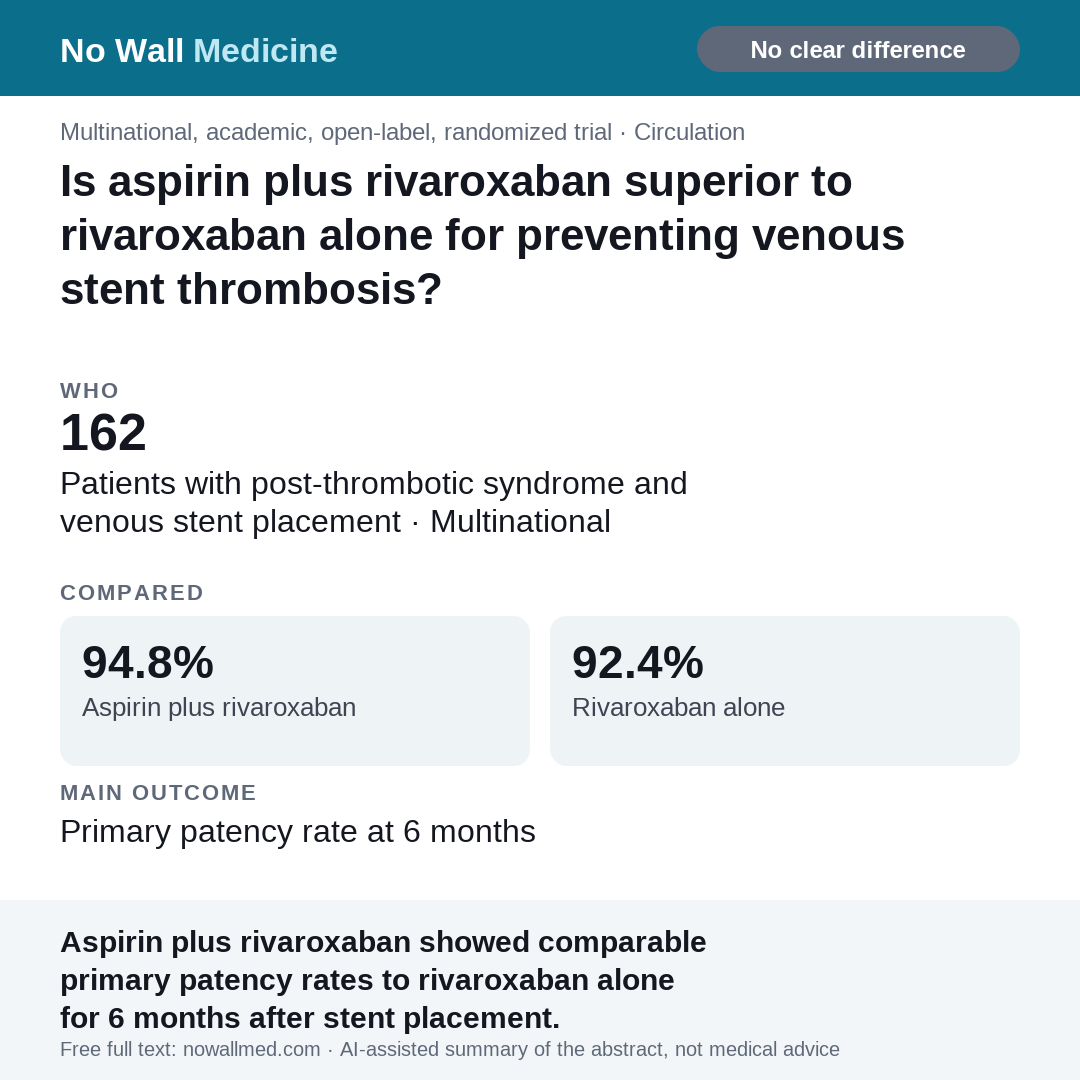
Aspirin Plus Rivaroxaban Versus Rivaroxaban Alone for the Prevention of Venous Stent Thrombosis Among Patients With Post-Thrombotic Syndrome: The Multicenter, Multinational, Randomized, Open-Label ARIVA Trial
Multinational, academic, open-label, randomized trialNo clear difference
Is aspirin plus rivaroxaban superior to rivaroxaban alone for preventing venous stent thrombosis?
Who
162
Patients with post-thrombotic syndrome and venous stent placement · Multinational
Compared
94.8%Aspirin plus rivaroxaban
92.4%Rivaroxaban alone
Main outcome
Primary patency rate at 6 months
Result: absolute risk difference, 2.4% (95% CI, -13.6 to 18.0)
Bottom line: Aspirin plus rivaroxaban showed comparable primary patency rates to rivaroxaban alone for 6 months after stent placement.
Circulation · 2025-01-28Download image
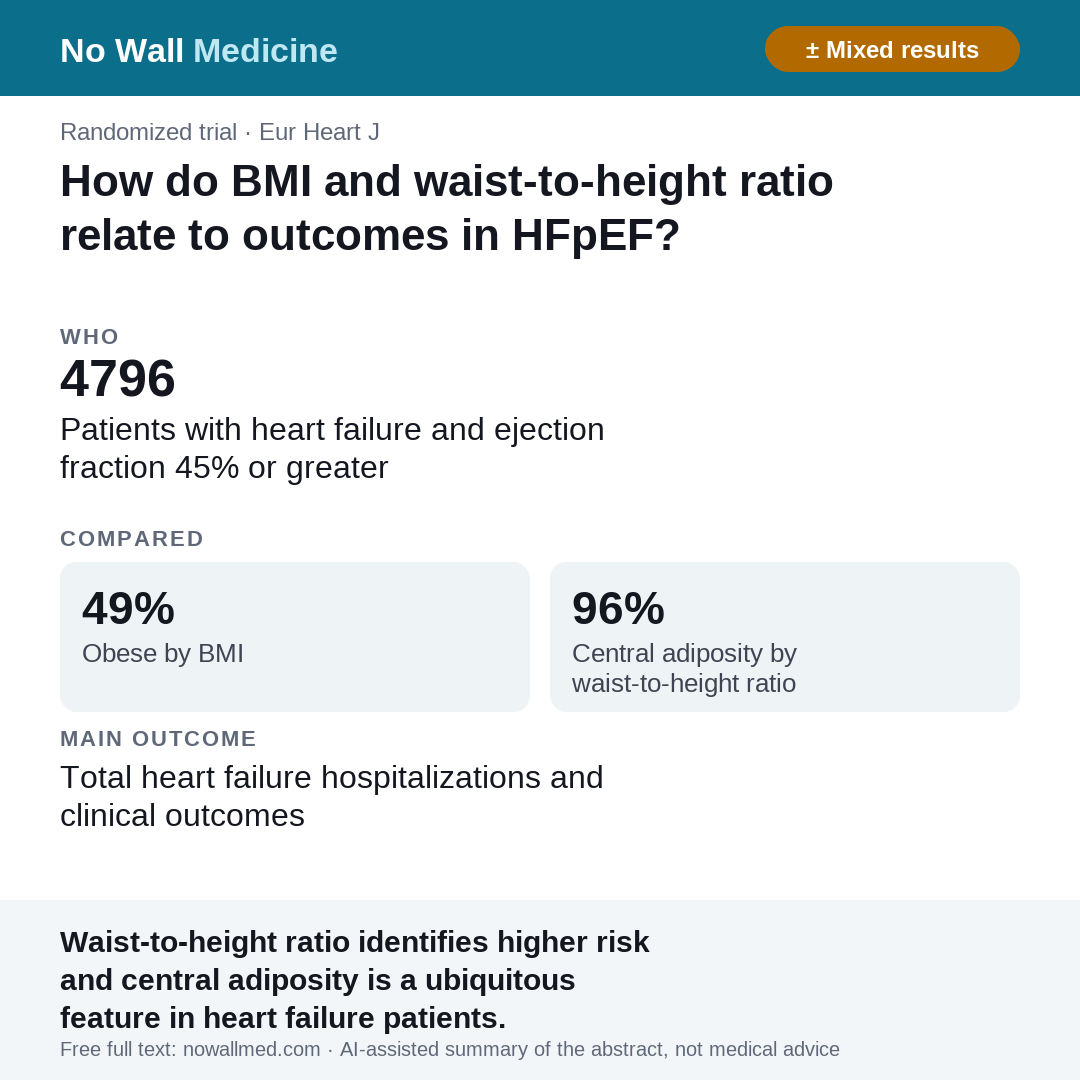
Near-universal prevalence of central adiposity in heart failure with preserved ejection fraction: the PARAGON-HF trial
Randomized trialMixed results
How do BMI and waist-to-height ratio relate to outcomes in HFpEF?
Who
4796
Patients with heart failure and ejection fraction 45% or greater
Compared
49%Obese by BMI
96%Central adiposity by waist-to-height ratio
Main outcome
Total heart failure hospitalizations and clinical outcomes
Bottom line: Waist-to-height ratio identifies higher risk and central adiposity is a ubiquitous feature in heart failure patients.
Eur Heart J · 2025-01-28Download image
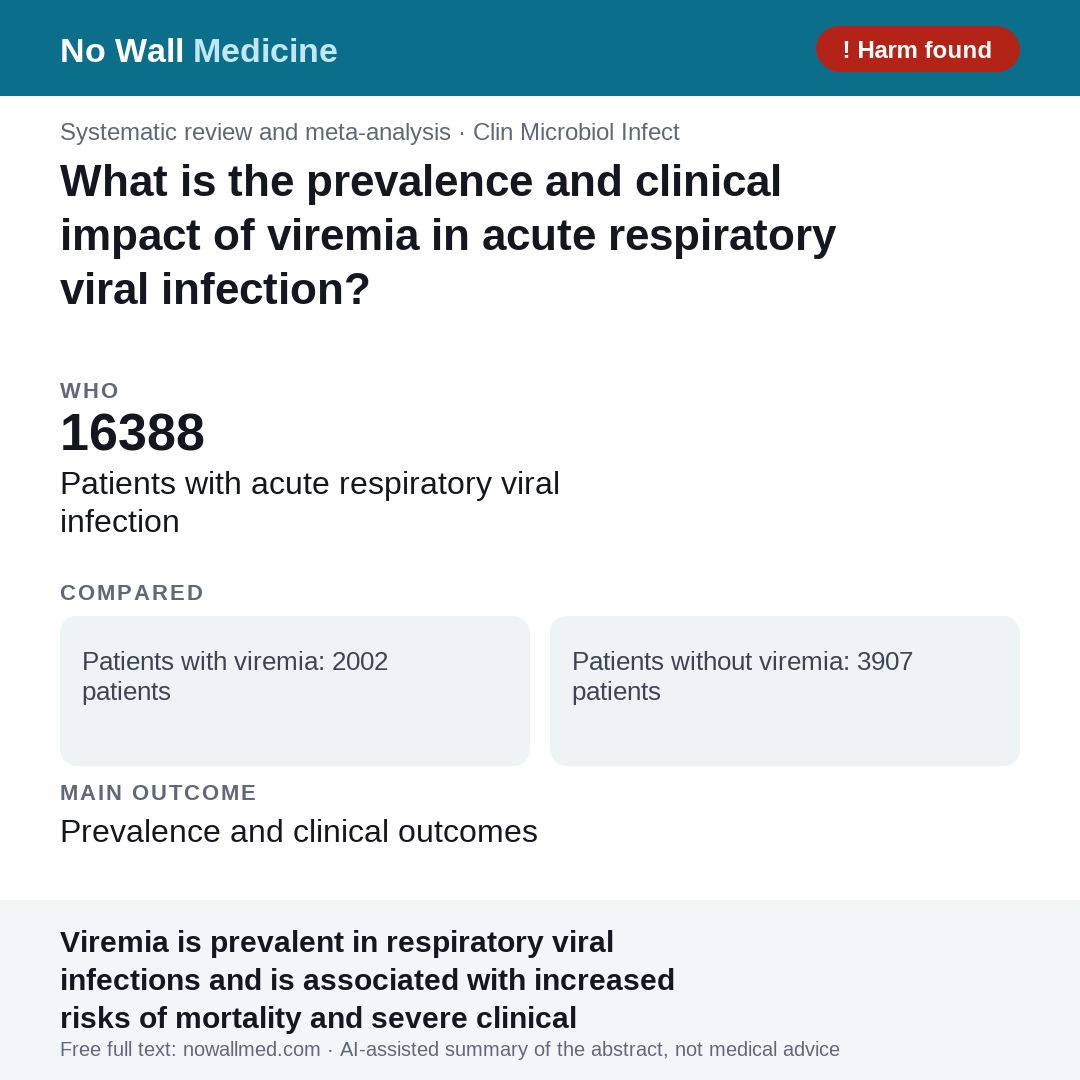
The prevalence and outcomes of viremia in patients with acute respiratory viral infection: a systematic review and meta-analysis
Systematic review and meta-analysisHarm found
What is the prevalence and clinical impact of viremia in acute respiratory viral infection?
Who
16388
Patients with acute respiratory viral infection
Compared
Patients with viremia: 2002 patients
Patients without viremia: 3907 patients
Main outcome
Prevalence and clinical outcomes
Result: adjusted OR 3.68 (95% CI 2.37-5.71) for mortality
Bottom line: Viremia is prevalent in respiratory viral infections and is associated with increased risks of mortality and severe clinical outcomes.
Clin Microbiol Infect · 2025-01-28Download image
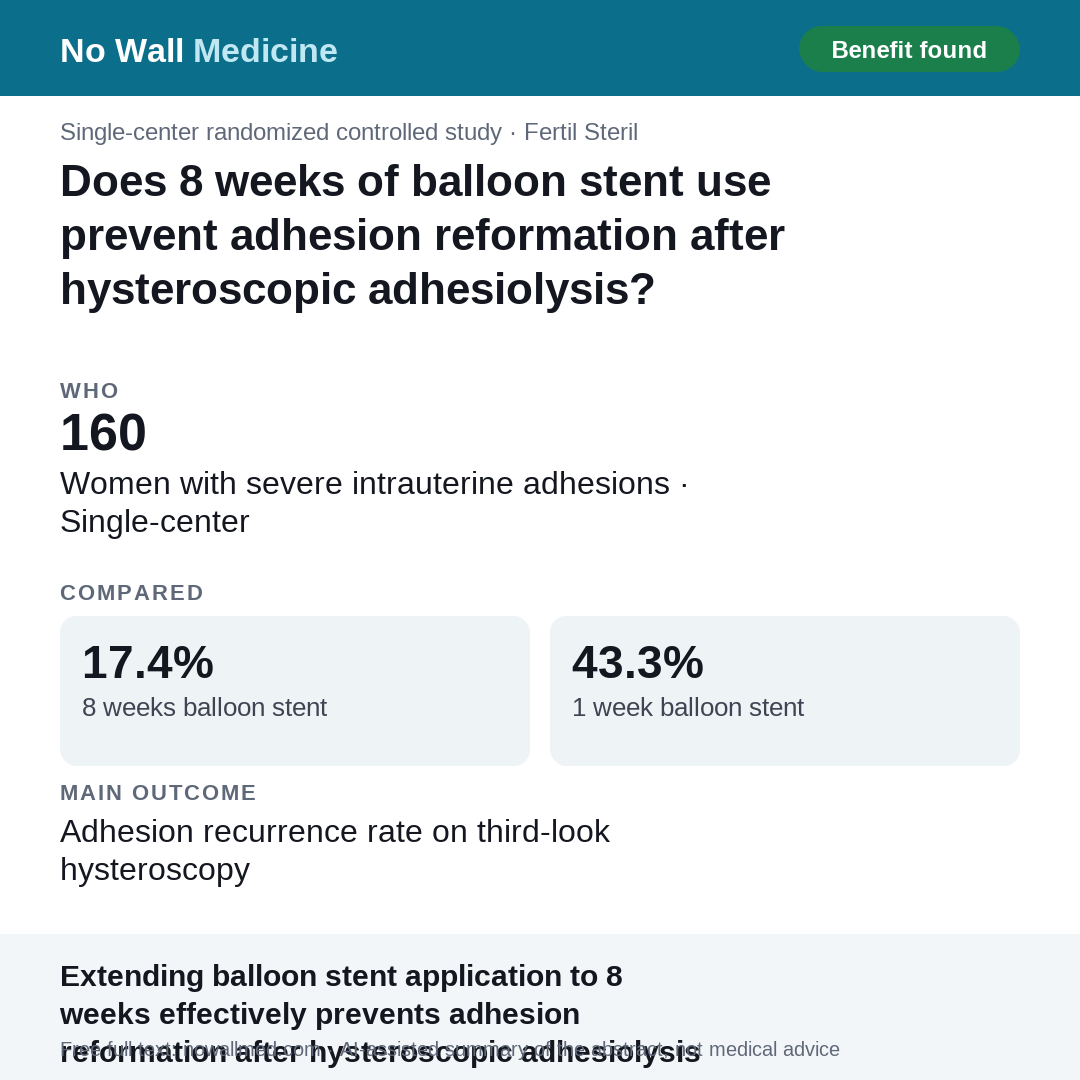
Extended intrauterine balloon stent use to prevent adhesion reformation after hysteroscopic adhesiolysis: a randomized trial
Single-center randomized controlled studyBenefit found
Does 8 weeks of balloon stent use prevent adhesion reformation after hysteroscopic adhesiolysis?
Who
160
Women with severe intrauterine adhesions · Single-center
Compared
17.4%8 weeks balloon stent
43.3%1 week balloon stent
Main outcome
Adhesion recurrence rate on third-look hysteroscopy
Result: relative risk 0.40 (95% confidence interval 0.22-0.72)
Bottom line: Extending balloon stent application to 8 weeks effectively prevents adhesion reformation after hysteroscopic adhesiolysis for severe intrauterine adhesions.
Fertil Steril · 2025-01-28Download image
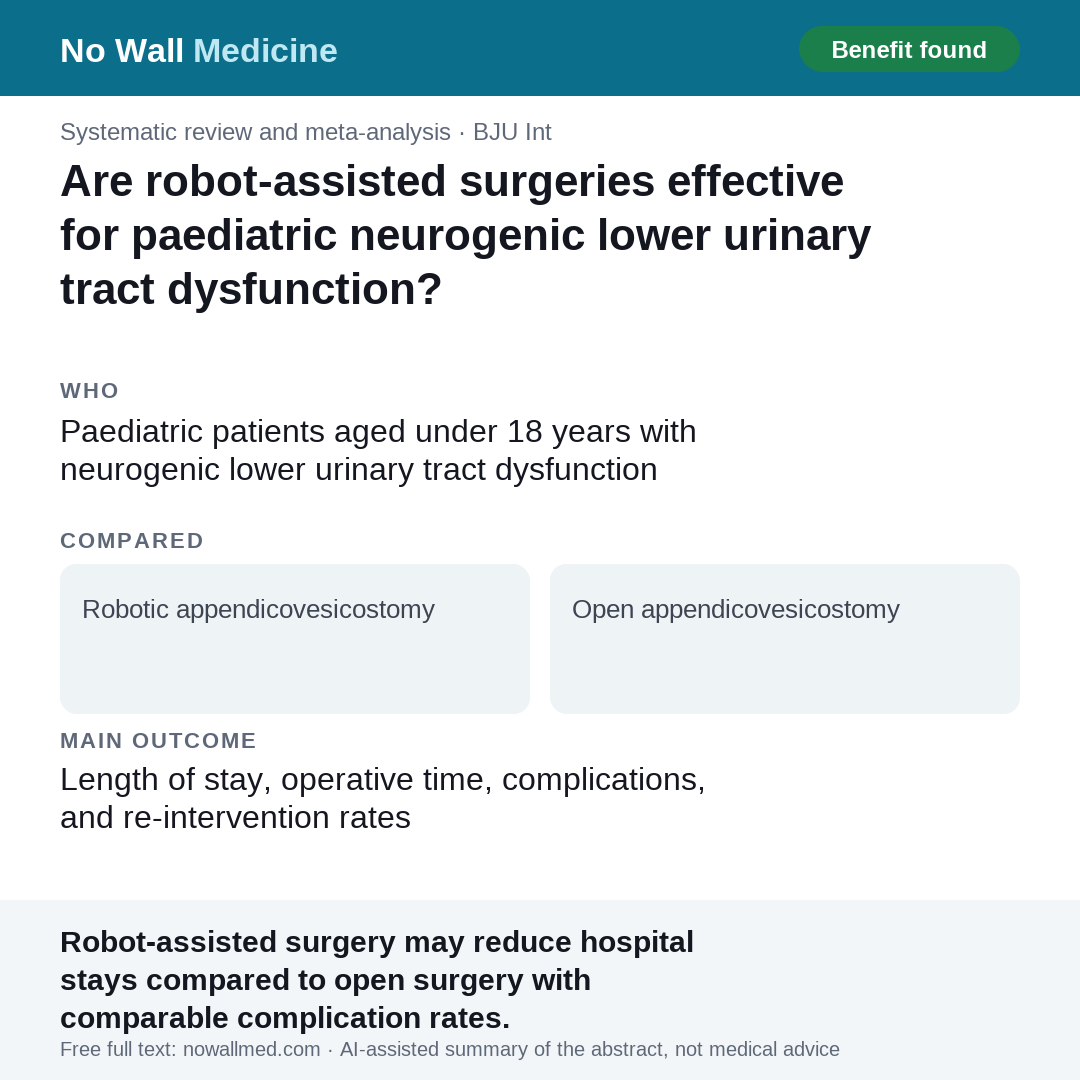
Robotic surgery for paediatric neurogenic lower urinary tract dysfunction: a systematic review
Systematic review and meta-analysisBenefit found
Are robot-assisted surgeries effective for paediatric neurogenic lower urinary tract dysfunction?
Who
Paediatric patients aged under 18 years with neurogenic lower urinary tract dysfunction
Compared
Robotic appendicovesicostomy
Open appendicovesicostomy
Main outcome
Length of stay, operative time, complications, and re-intervention rates
Bottom line: Robot-assisted surgery may reduce hospital stays compared to open surgery with comparable complication rates.
Limitation: Heterogeneity in study designs, small sample sizes, and single-centre experiences.
BJU Int · 2025-01-28Download image
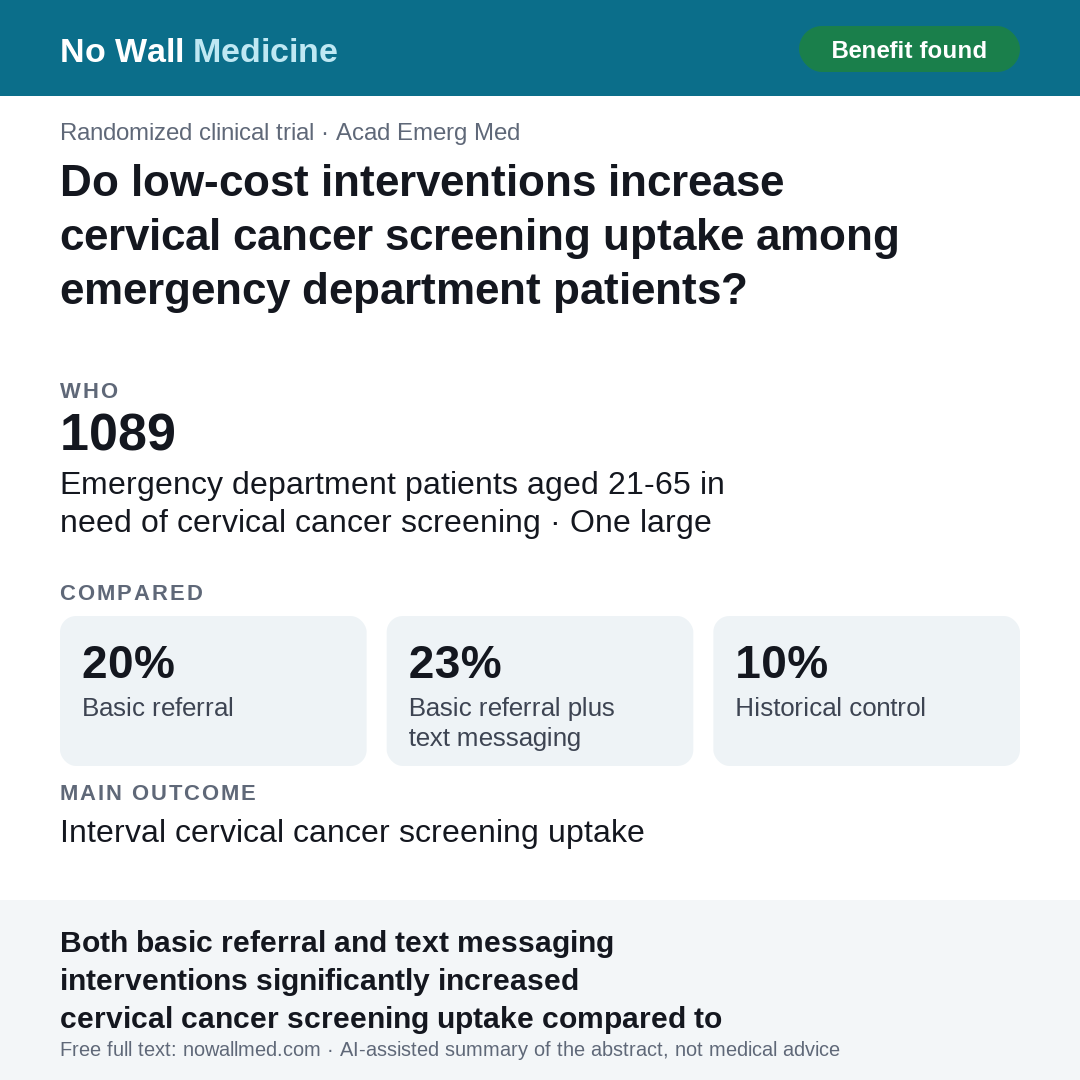
Low-cost interventions to increase uptake of cervical cancer screening among emergency department patients: Results of a randomized clinical trial
Randomized clinical trialBenefit found
Do low-cost interventions increase cervical cancer screening uptake among emergency department patients?
Who
1089
Emergency department patients aged 21-65 in need of cervical cancer screening · One large urban and one small rural emergency department
Compared
20%Basic referral
23%Basic referral plus text messaging
10%Historical control
Main outcome
Interval cervical cancer screening uptake
Bottom line: Both basic referral and text messaging interventions significantly increased cervical cancer screening uptake compared to historical controls.
Acad Emerg Med · 2025-01-28Download image