Visual abstracts
New randomized trials and meta-analyses from leading journals at a glance: who was studied, what was compared, and what was found. Every paper is free to read in full.
All specialtiesCardiology 4877Oncology 4138Gastroenterology & Hepatology 1942Infectious Disease 3837Neurology 1905Psychiatry & Mental Health 2273Pulmonology 2143Critical Care 1365Endocrinology & Diabetes 2580Pediatrics 2980Surgery 2559Orthopedics & Sports Medicine 931Neurosurgery 537Cardiothoracic & Vascular Surgery 674Plastic & Reconstructive Surgery 591Nephrology 1133Rheumatology 823Hematology 1109Dermatology 621Ophthalmology 543Obstetrics & Gynecology 1686Public & Global Health 1058Radiology & Imaging 648Anesthesiology 986Urology 764ENT (Otolaryngology) 503Emergency Medicine 511Allergy & Immunology 313Geriatrics 981Family Medicine & Primary Care 562Medical Genetics & Genomics 676Pathology & Laboratory Medicine 159Physical Medicine & Rehabilitation 757Palliative Care 444Nutrition 1588Digital Health & AI 2201General Medicine 321
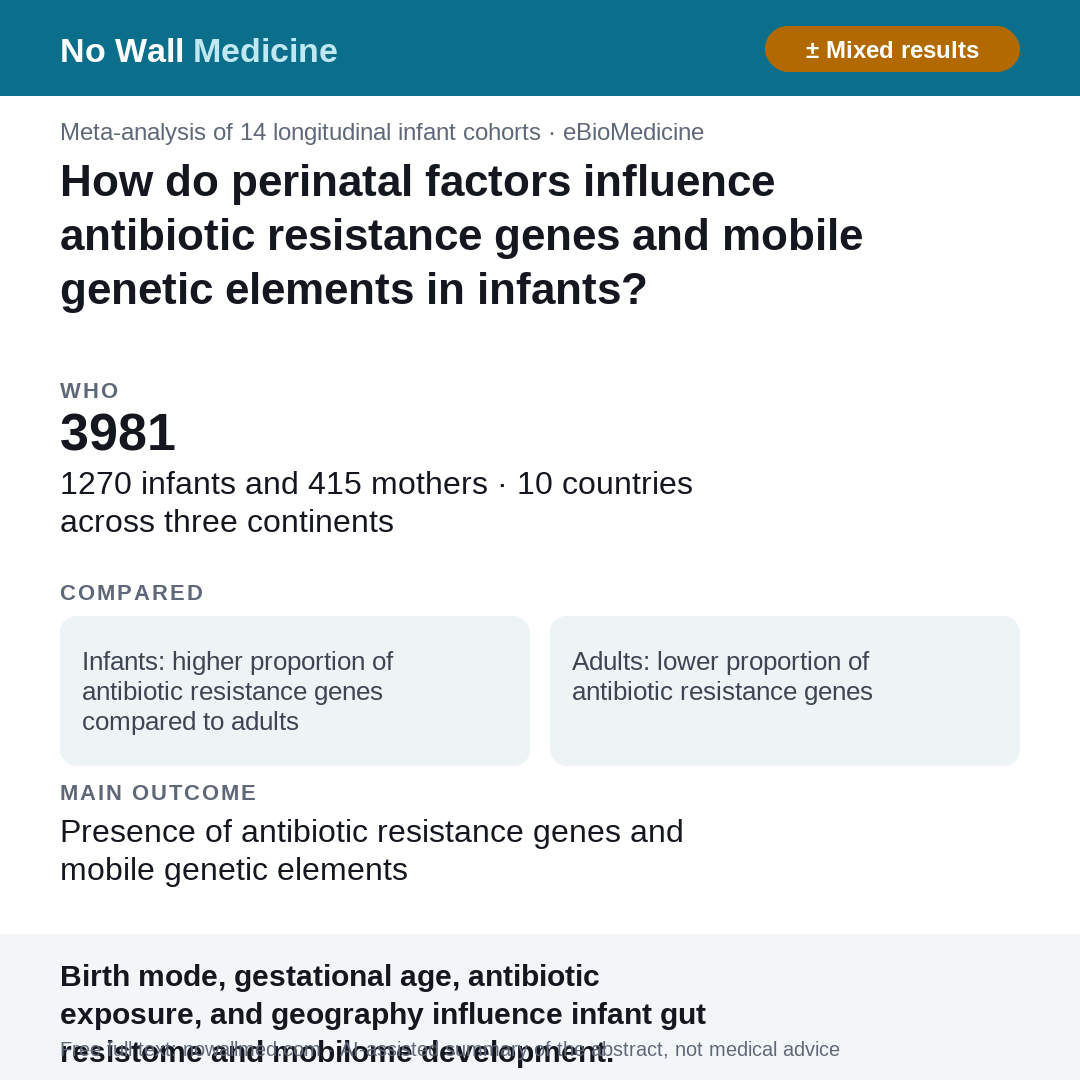
Dynamics of gut resistome and mobilome in early life: a meta-analysis
Meta-analysis of 14 longitudinal infant cohortsMixed results
How do perinatal factors influence antibiotic resistance genes and mobile genetic elements in infants?
Who
3981
1270 infants and 415 mothers · 10 countries across three continents
Compared
Infants: higher proportion of antibiotic resistance genes compared to adults
Adults: lower proportion of antibiotic resistance genes
Main outcome
Presence of antibiotic resistance genes and mobile genetic elements
Bottom line: Birth mode, gestational age, antibiotic exposure, and geography influence infant gut resistome and mobilome development.
Funded by: Centre for Advanced Study and Tromsø Research Foundation
eBioMedicine · 2025-03-05Download image
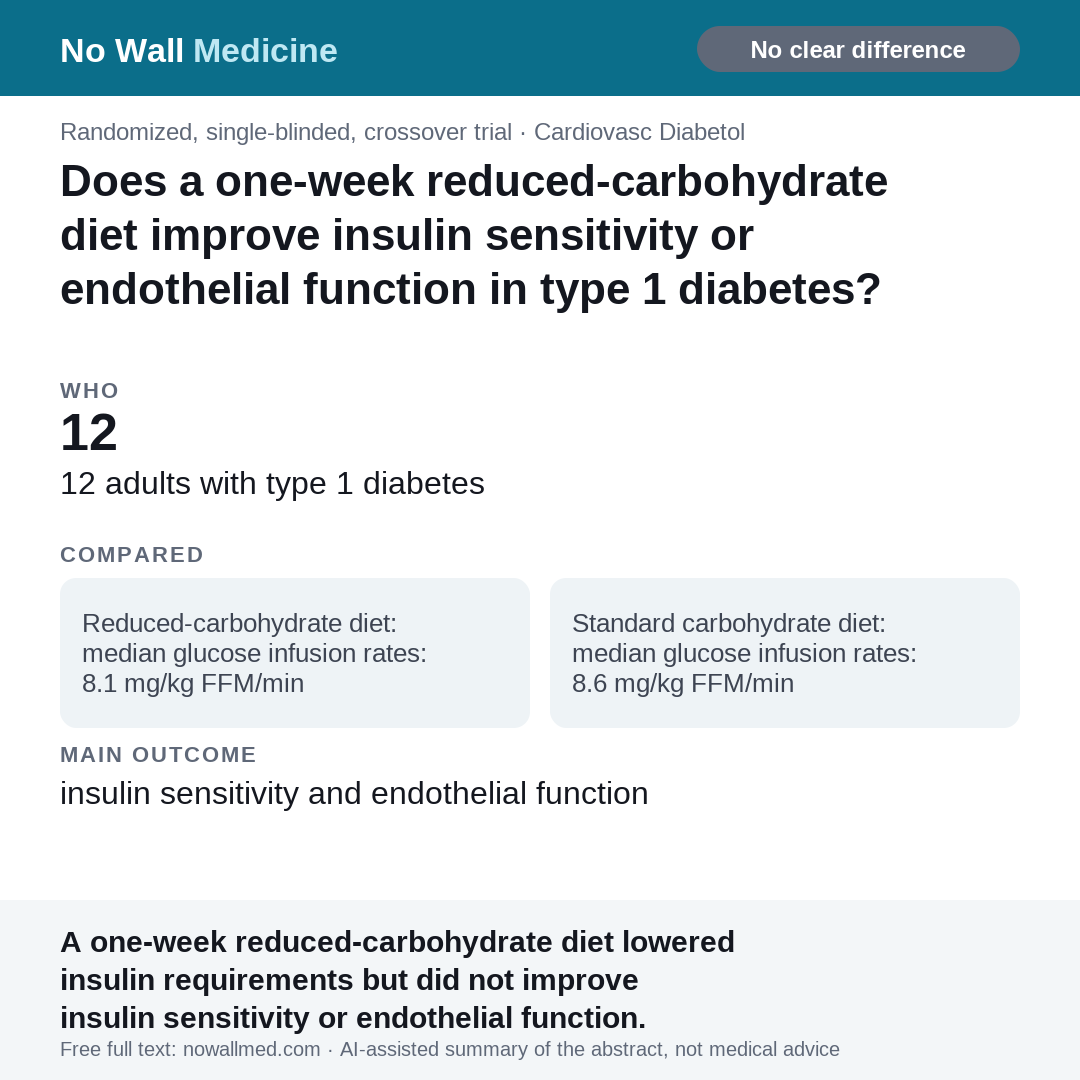
A one-week reduced-carbohydrate diet to mitigate iatrogenic peripheral hyperinsulinemia does not improve insulin sensitivity or endothelial function in a randomized, crossover trial in patients with type 1 diabetes
Randomized, single-blinded, crossover trialNo clear difference
Does a one-week reduced-carbohydrate diet improve insulin sensitivity or endothelial function in type 1 diabetes?
Who
12
12 adults with type 1 diabetes
Compared
Reduced-carbohydrate diet: median glucose infusion rates: 8.1 mg/kg FFM/min
Standard carbohydrate diet: median glucose infusion rates: 8.6 mg/kg FFM/min
Main outcome
insulin sensitivity and endothelial function
Bottom line: A one-week reduced-carbohydrate diet lowered insulin requirements but did not improve insulin sensitivity or endothelial function.
Cardiovasc Diabetol · 2025-03-05Download image
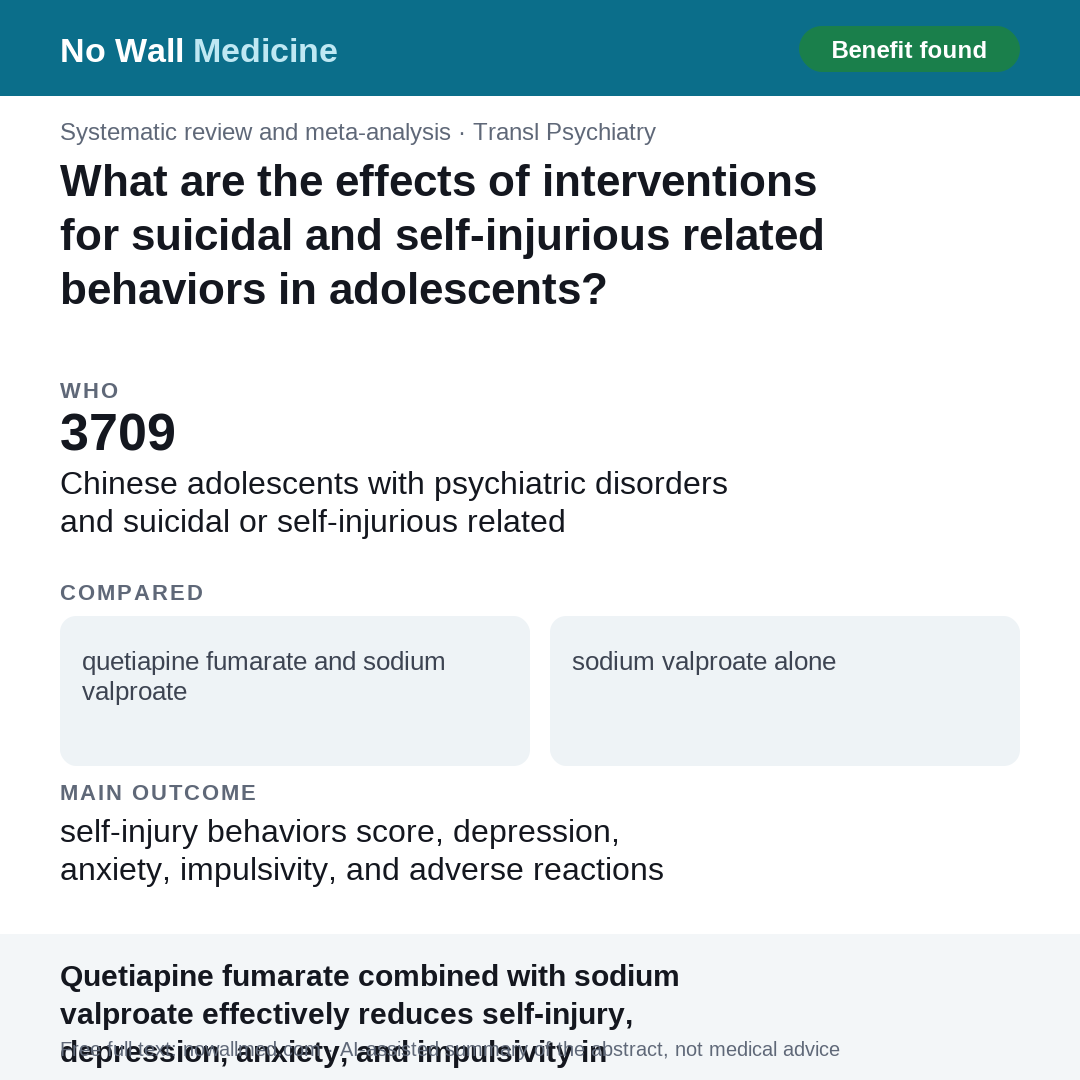
Interventions for suicidal and self-injurious related behaviors in adolescents with psychiatric disorders: a systematic review and meta-analysis
Systematic review and meta-analysisBenefit found
What are the effects of interventions for suicidal and self-injurious related behaviors in adolescents?
Who
3709
Chinese adolescents with psychiatric disorders and suicidal or self-injurious related behaviors
Compared
quetiapine fumarate and sodium valproate
sodium valproate alone
Main outcome
self-injury behaviors score, depression, anxiety, impulsivity, and adverse reactions
Result: SMD -2.466 (95% CI: -3.305, -1.628) for self-injury behaviors
Bottom line: Quetiapine fumarate combined with sodium valproate effectively reduces self-injury, depression, anxiety, and impulsivity in Chinese adolescents.
Transl Psychiatry · 2025-03-05Download image
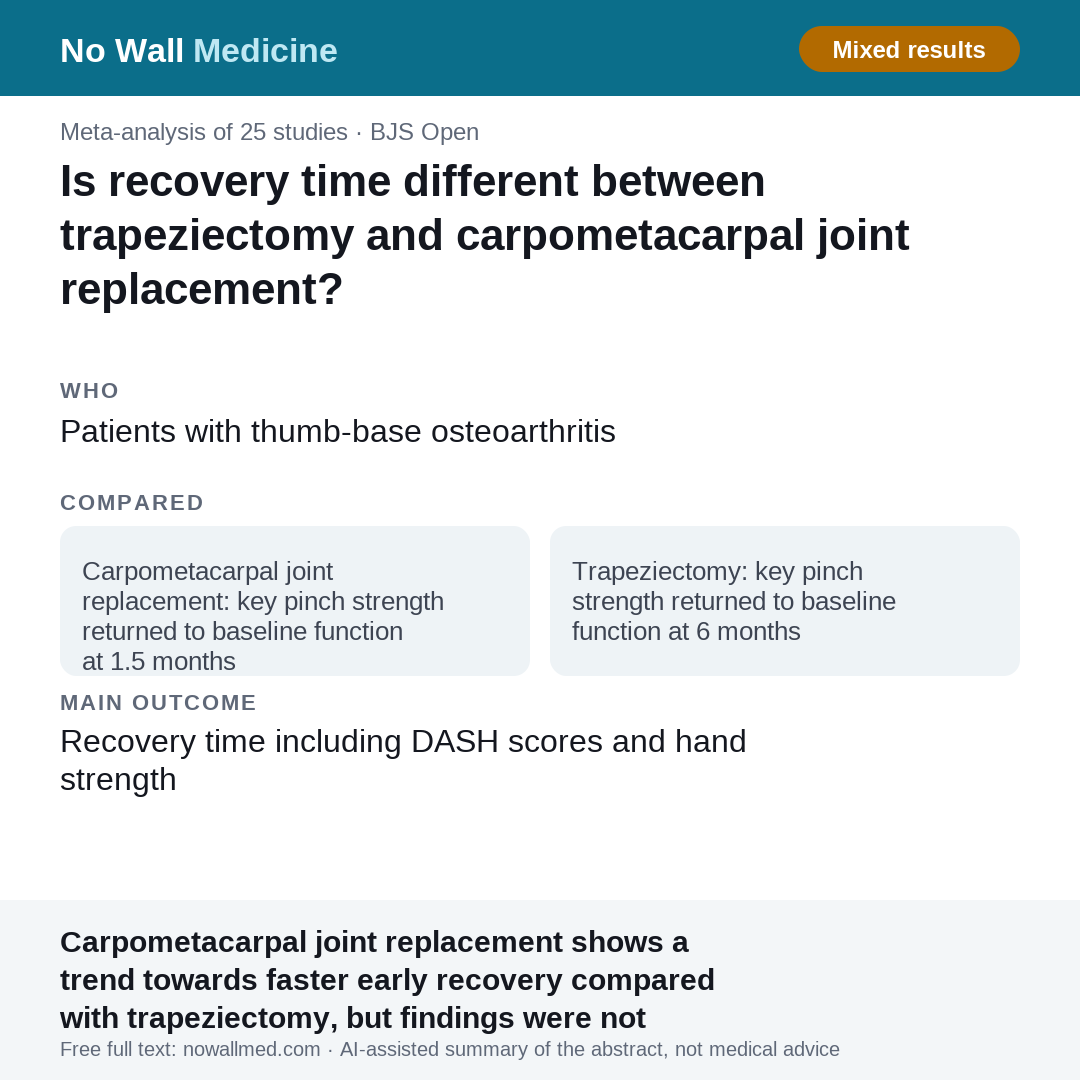
Differences in recovery time between trapeziectomy and carpometacarpal joint replacement: meta-analysis
Meta-analysis of 25 studiesMixed results
Is recovery time different between trapeziectomy and carpometacarpal joint replacement?
Who
Patients with thumb-base osteoarthritis
Compared
Carpometacarpal joint replacement: key pinch strength returned to baseline function at 1.5 months
Trapeziectomy: key pinch strength returned to baseline function at 6 months
Main outcome
Recovery time including DASH scores and hand strength
Bottom line: Carpometacarpal joint replacement shows a trend towards faster early recovery compared with trapeziectomy, but findings were not statistically significant.
Limitation: Most study arms had a high risk of bias and confidence intervals overlapped considerably.
BJS Open · 2025-03-05Download image
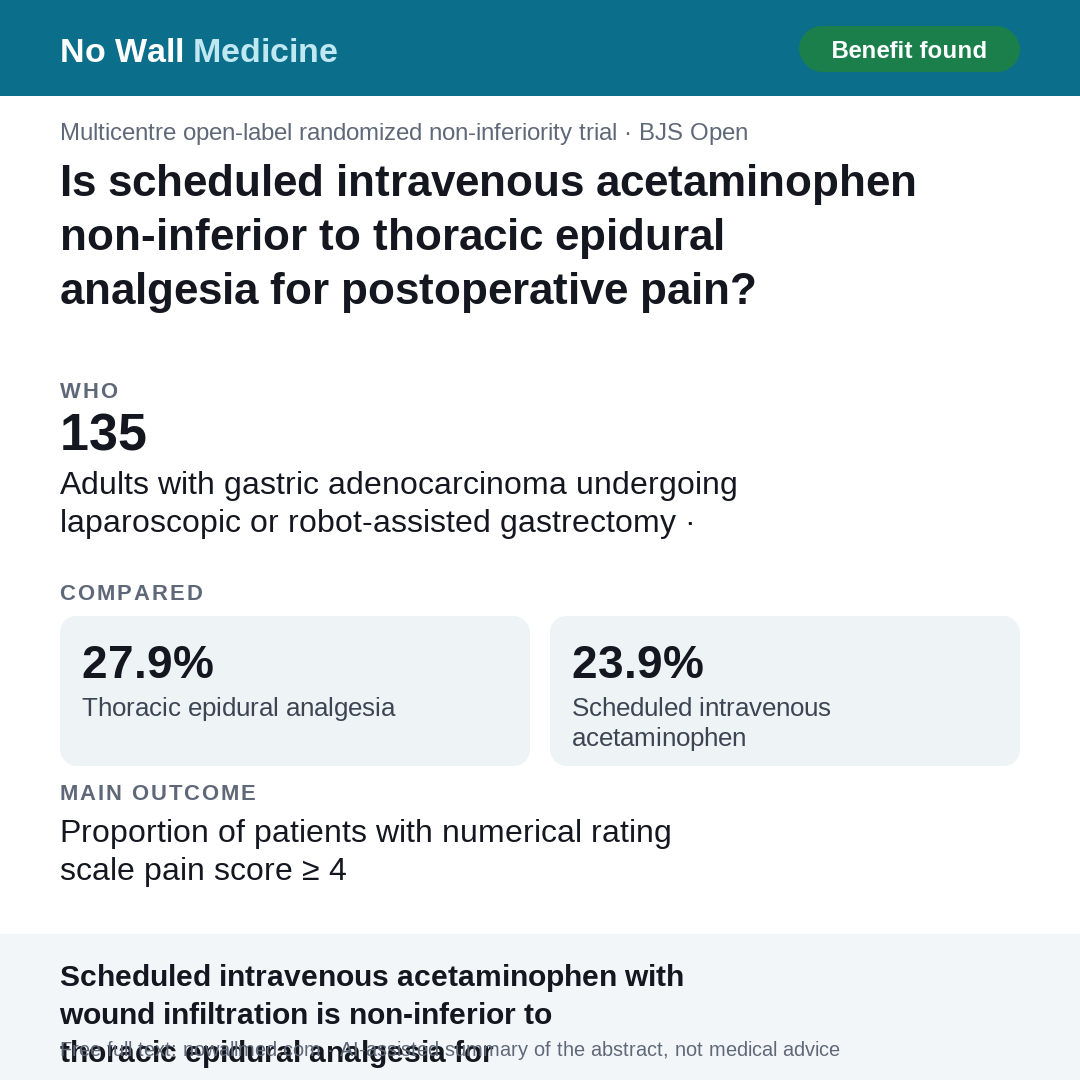
Scheduled intravenous acetaminophen versus thoracic epidural analgesia for postoperative pain control after minimally invasive gastrectomy: multicentre randomized non-inferiority trial
Multicentre open-label randomized non-inferiority trialBenefit found
Is scheduled intravenous acetaminophen non-inferior to thoracic epidural analgesia for postoperative pain?
Who
135
Adults with gastric adenocarcinoma undergoing laparoscopic or robot-assisted gastrectomy · Multicentre
Compared
27.9%Thoracic epidural analgesia
23.9%Scheduled intravenous acetaminophen
Main outcome
Proportion of patients with numerical rating scale pain score ≥ 4
Result: risk difference -4.1% (95% confidence interval -24.3 to 16.6)
Bottom line: Scheduled intravenous acetaminophen with wound infiltration is non-inferior to thoracic epidural analgesia for postoperative pain after minimally invasive gastrectomy.
BJS Open · 2025-03-05Download image
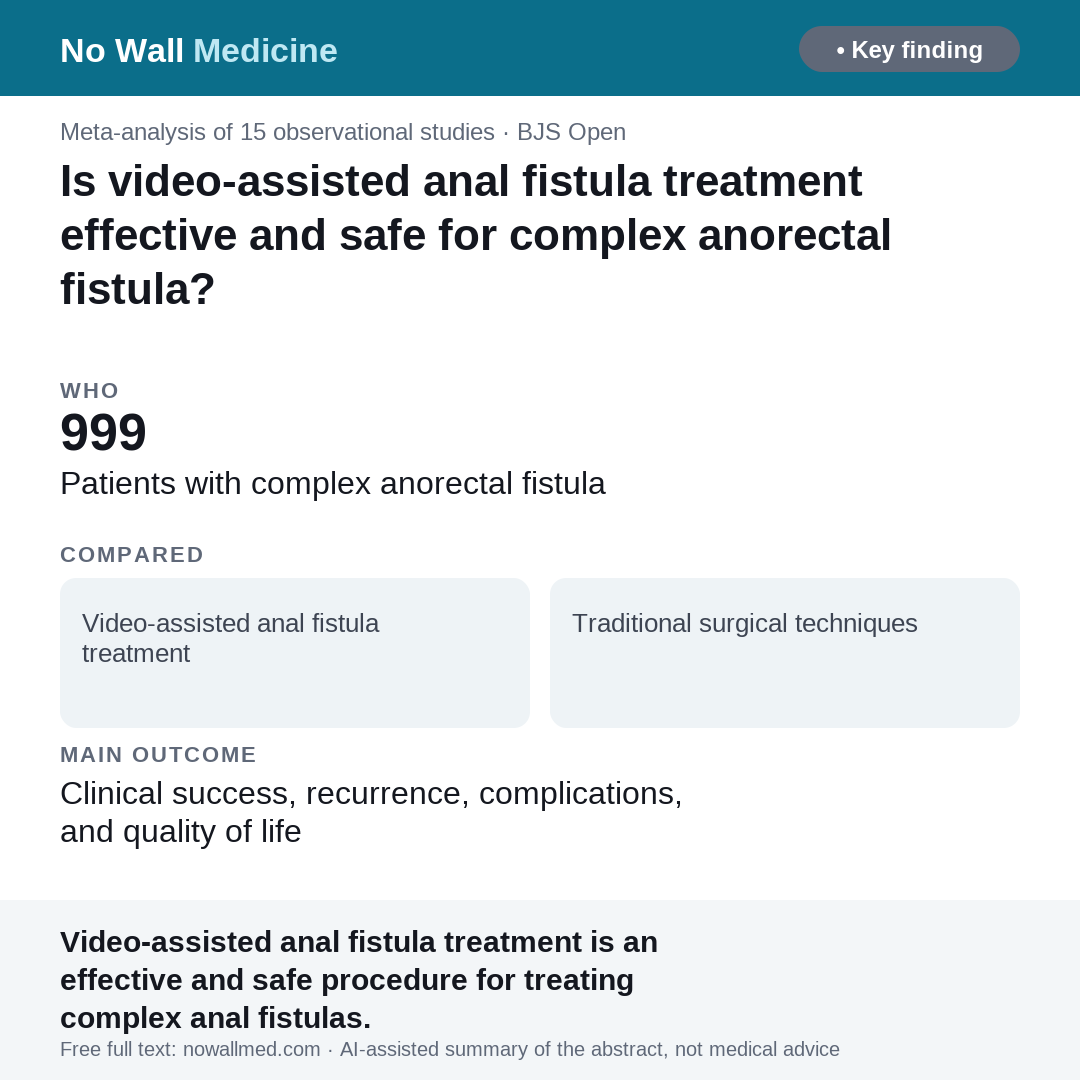
Video-assisted anal fistula treatment for complex anorectal fistula: meta-analysis
Meta-analysis of 15 observational studiesBenefit found
Is video-assisted anal fistula treatment effective and safe for complex anorectal fistula?
Who
999
Patients with complex anorectal fistula
Compared
Video-assisted anal fistula treatment
Traditional surgical techniques
Main outcome
Clinical success, recurrence, complications, and quality of life
Result: odds ratio 1.039 (95% confidence interval 1.026 to 1.054)
Bottom line: Video-assisted anal fistula treatment is an effective and safe procedure for treating complex anal fistulas.
Limitation: Included studies were observational studies
BJS Open · 2025-03-05Download image
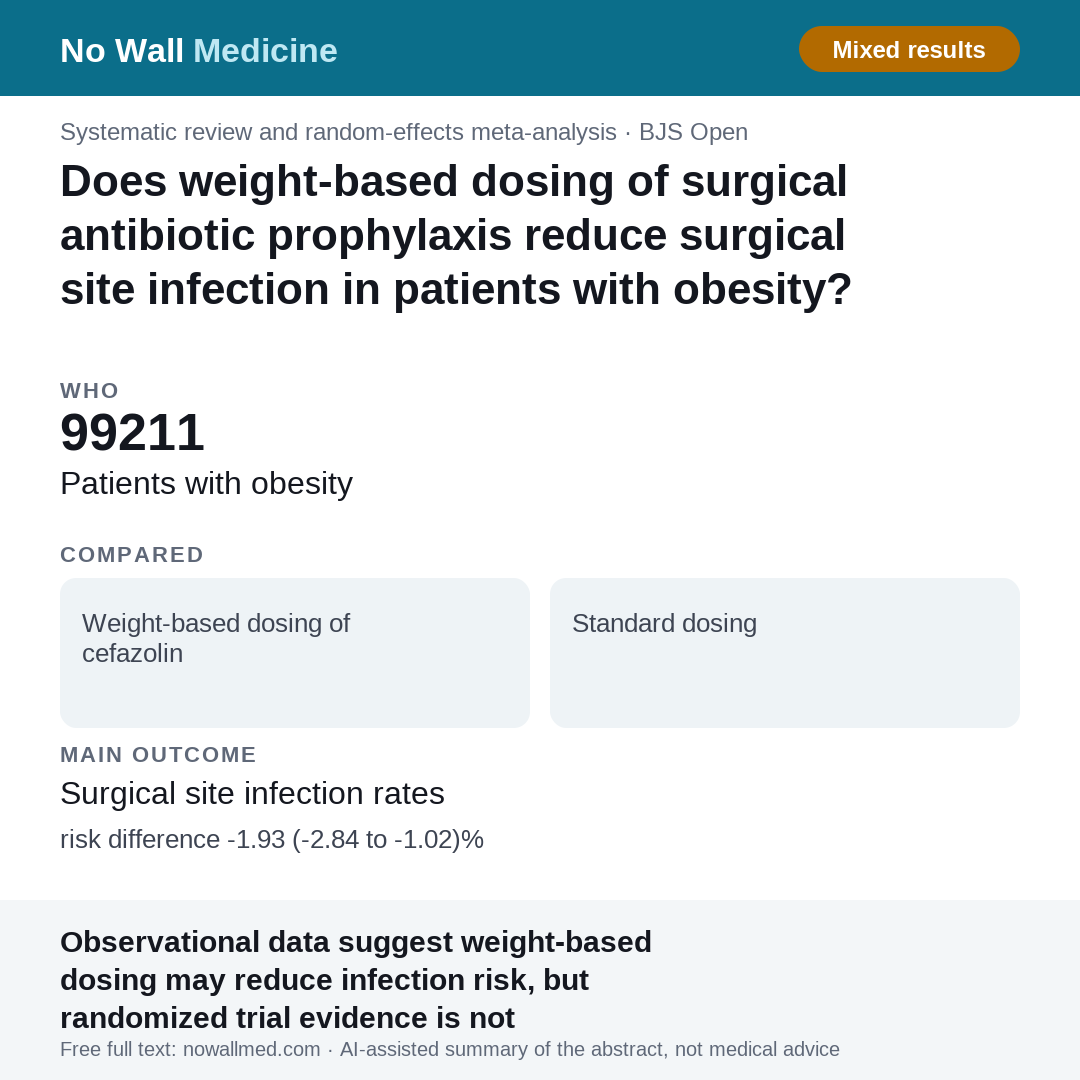
Weight-based dosing of surgical antibiotic prophylaxis in patients with obesity: meta-analysis
Systematic review and random-effects meta-analysisMixed results
Does weight-based dosing of surgical antibiotic prophylaxis reduce surgical site infection in patients with obesity?
Who
99211
Patients with obesity
Compared
Weight-based dosing of cefazolin
Standard dosing
Main outcome
Surgical site infection rates
Result: risk difference -1.93 (-2.84 to -1.02)%
Bottom line: Observational data suggest weight-based dosing may reduce infection risk, but randomized trial evidence is not significant.
Limitation: GRADE assessments showed very low certainty of evidence.
BJS Open · 2025-03-05Download image
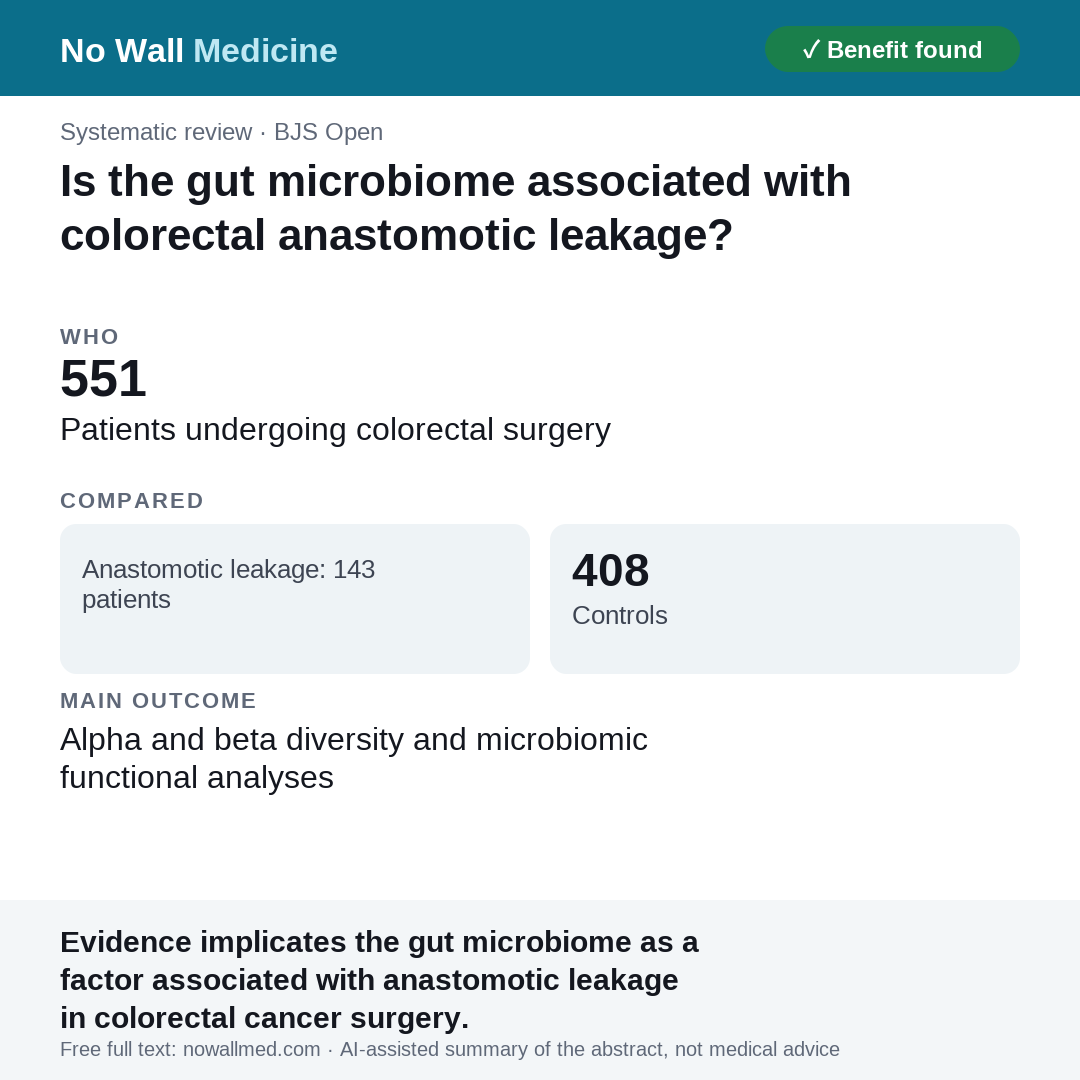
Association of the gut microbiome to colorectal anastomotic leakage: systematic review
Systematic reviewBenefit found
Is the gut microbiome associated with colorectal anastomotic leakage?
Who
551
Patients undergoing colorectal surgery
Compared
Anastomotic leakage: 143 patients
408Controls
Main outcome
Alpha and beta diversity and microbiomic functional analyses
Bottom line: Evidence implicates the gut microbiome as a factor associated with anastomotic leakage in colorectal cancer surgery.
BJS Open · 2025-03-05Download image
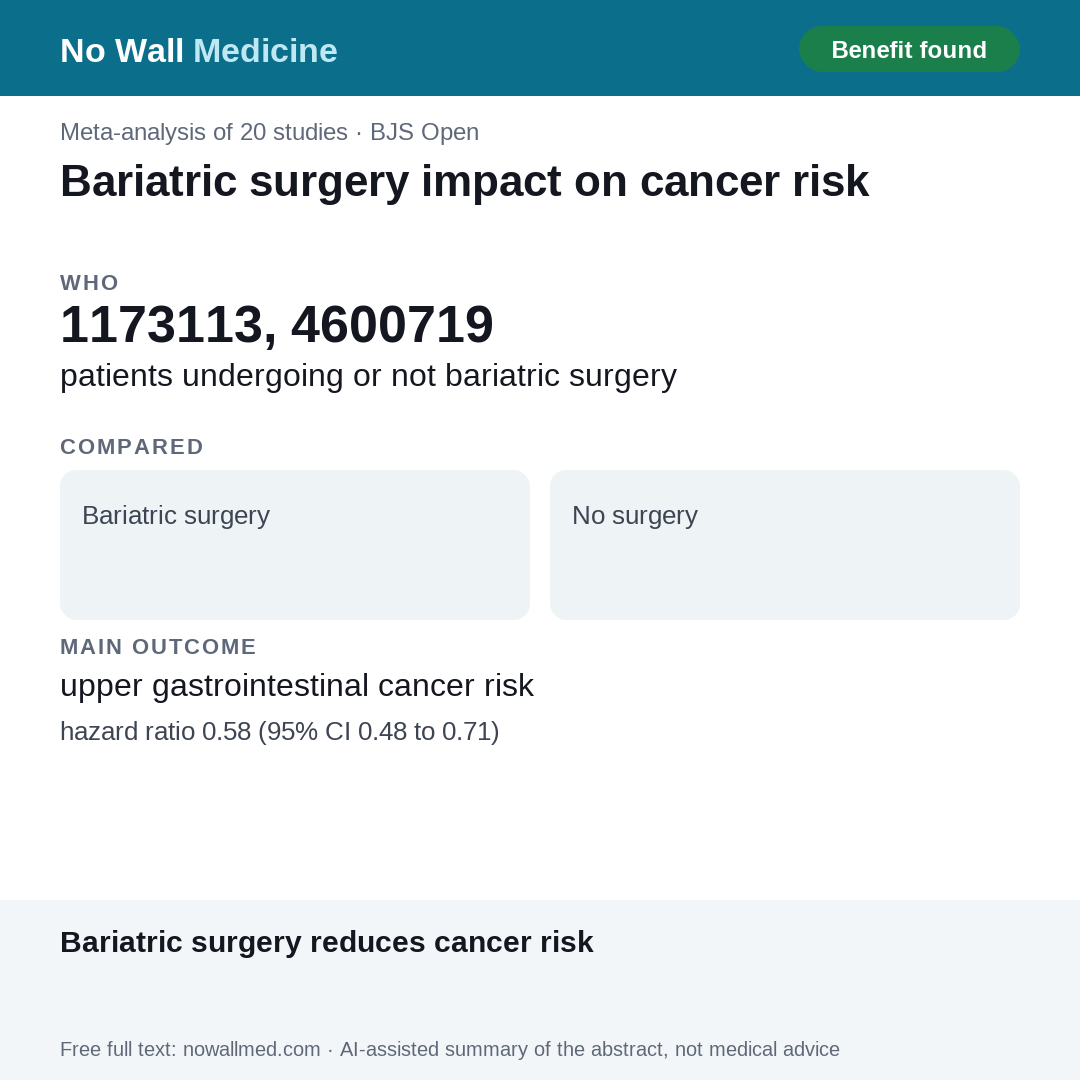
Upper gastrointestinal cancer risk following bariatric surgery: meta-analysis
Meta-analysis of 20 studiesBenefit found
Bariatric surgery impact on cancer risk
Who
1173113, 4600719
patients undergoing or not bariatric surgery
Compared
Bariatric surgery
No surgery
Main outcome
upper gastrointestinal cancer risk
Result: hazard ratio 0.58 (95% CI 0.48 to 0.71)
Bottom line: Bariatric surgery reduces cancer risk
BJS Open · 2025-03-05Download image
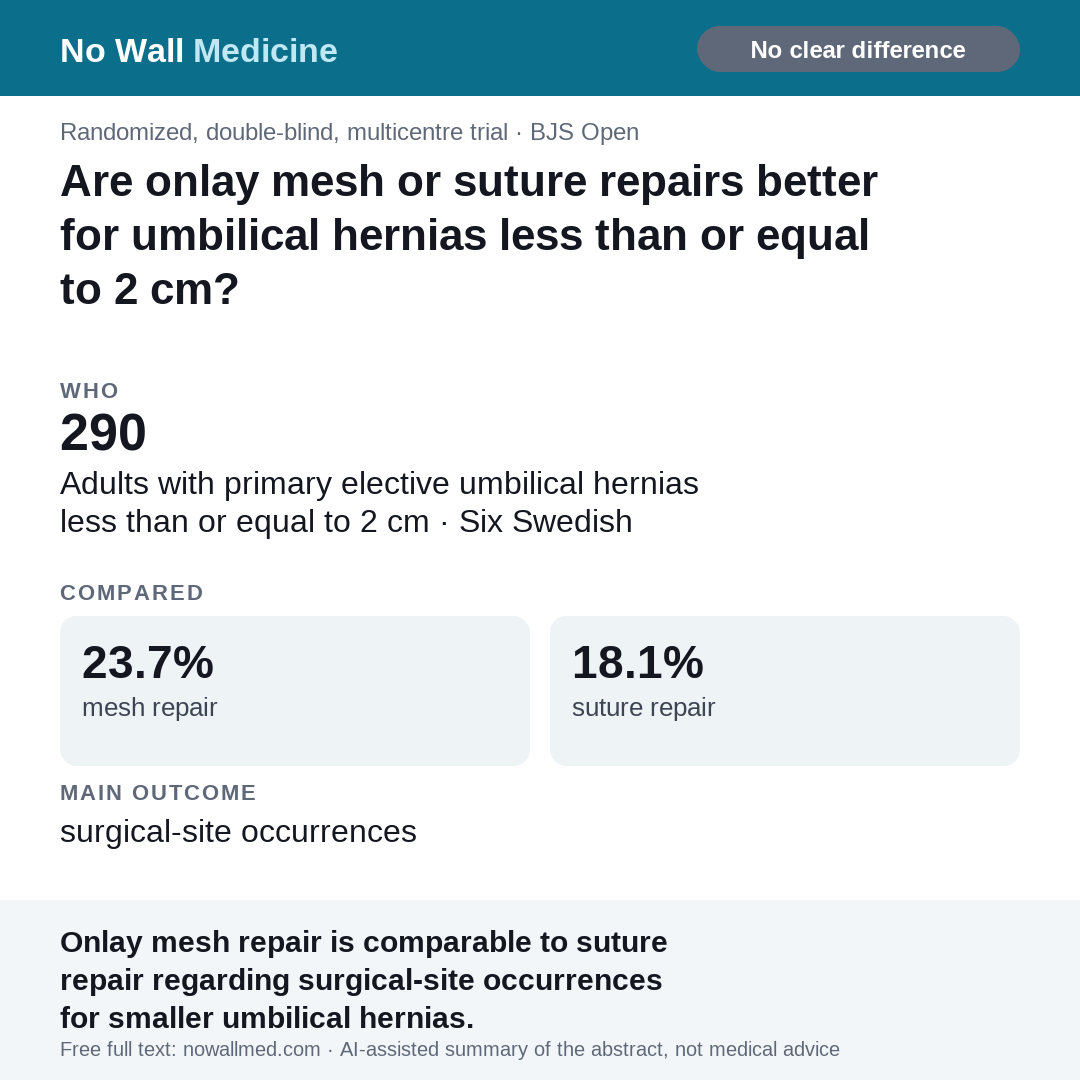
Onlay mesh versus suture repair for smaller umbilical hernias in adults-early results from SUMMER trial: randomized clinical trial
Randomized, double-blind, multicentre trialNo clear difference
Are onlay mesh or suture repairs better for umbilical hernias less than or equal to 2 cm?
Who
290
Adults with primary elective umbilical hernias less than or equal to 2 cm · Six Swedish surgical units
Compared
23.7%mesh repair
18.1%suture repair
Main outcome
surgical-site occurrences
Result: odds ratio 1.39 (95% c.i. 0.78 to 2.51)
Bottom line: Onlay mesh repair is comparable to suture repair regarding surgical-site occurrences for smaller umbilical hernias.
Limitation: early results from the trial
BJS Open · 2025-03-05Download image
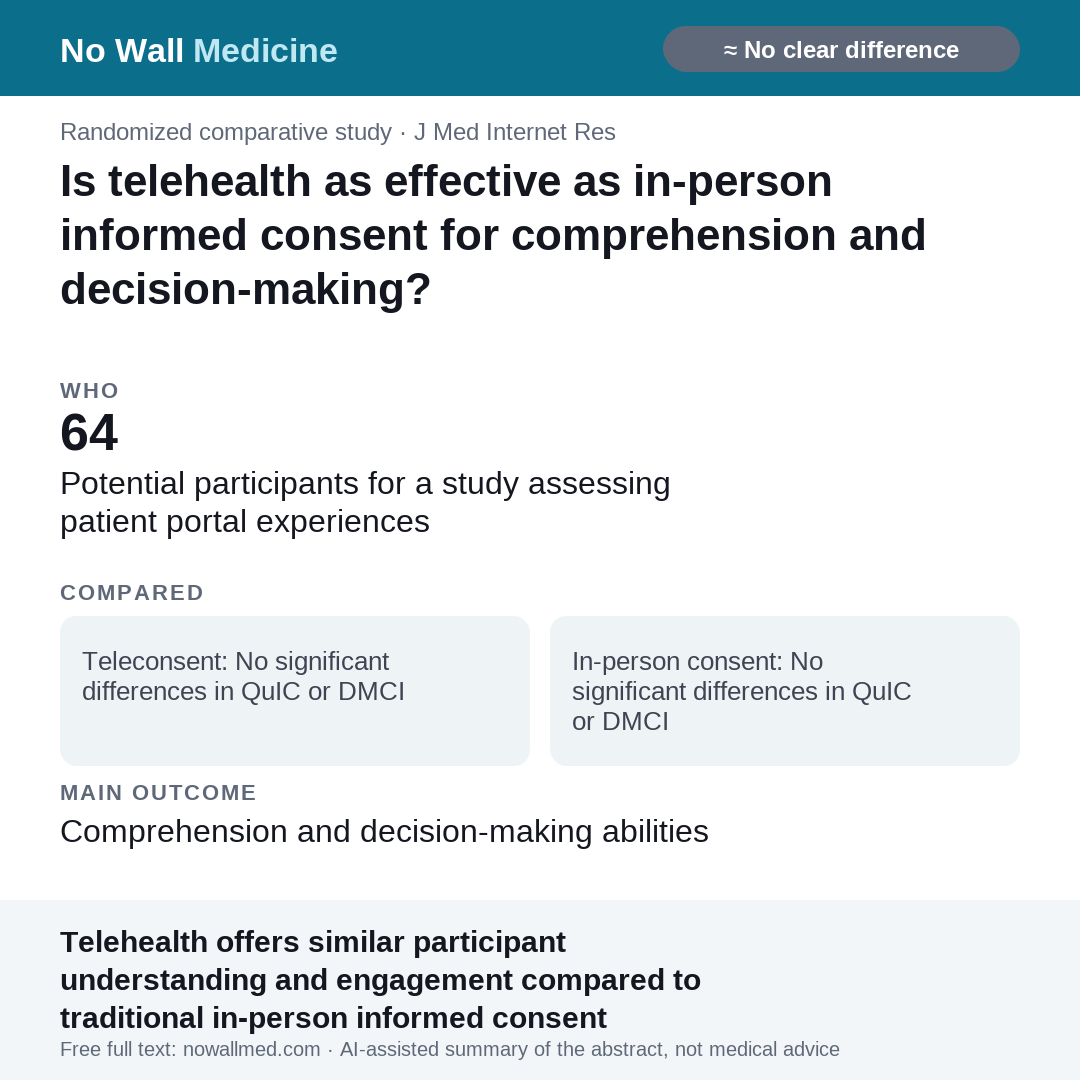
Effectiveness of Telehealth Versus In-Person Informed Consent: Randomized Study of Comprehension and Decision-Making
Randomized comparative studyNo clear difference
Is telehealth as effective as in-person informed consent for comprehension and decision-making?
Who
64
Potential participants for a study assessing patient portal experiences
Compared
Teleconsent: No significant differences in QuIC or DMCI
In-person consent: No significant differences in QuIC or DMCI
Main outcome
Comprehension and decision-making abilities
Bottom line: Telehealth offers similar participant understanding and engagement compared to traditional in-person informed consent processes.
J Med Internet Res · 2025-03-05Download image
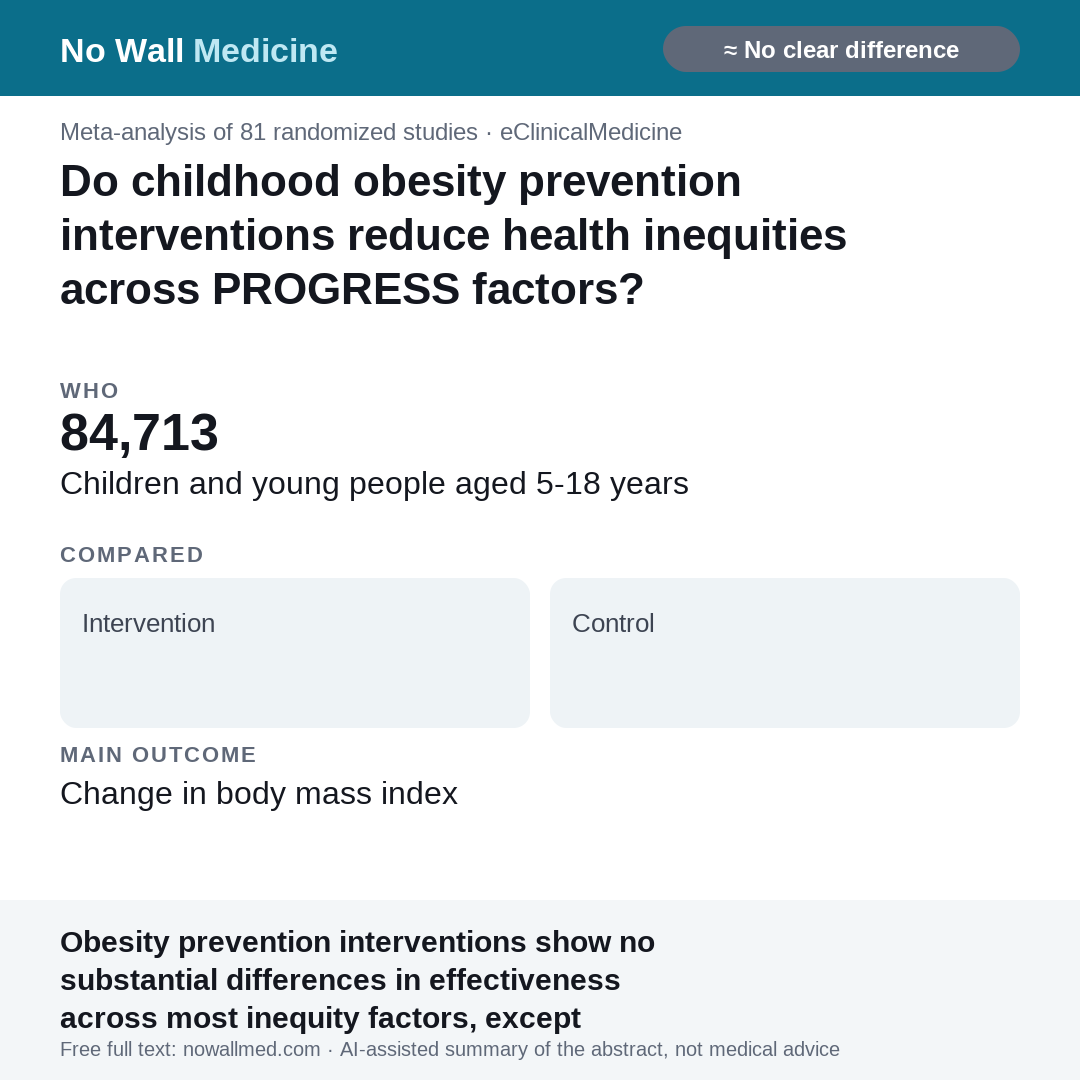
Do the effects of interventions aimed at the prevention of childhood obesity reduce inequities? A re-analysis of randomized trial data from two Cochrane reviews
Meta-analysis of 81 randomized trialsNo clear difference
Do childhood obesity prevention interventions reduce health inequities across PROGRESS factors?
Who
84,713
Children and young people aged 5-18 years
Compared
Intervention
Control
Main outcome
Change in body mass index
Bottom line: Obesity prevention interventions show no substantial differences in effectiveness across most inequity factors, except potentially working better in boys aged 5-11.
Limitation: More data are needed through subgroup analyses on PROGRESS factors.
Funded by: National Institute for Health and Care Research
eClinicalMedicine · 2025-03-04Download image
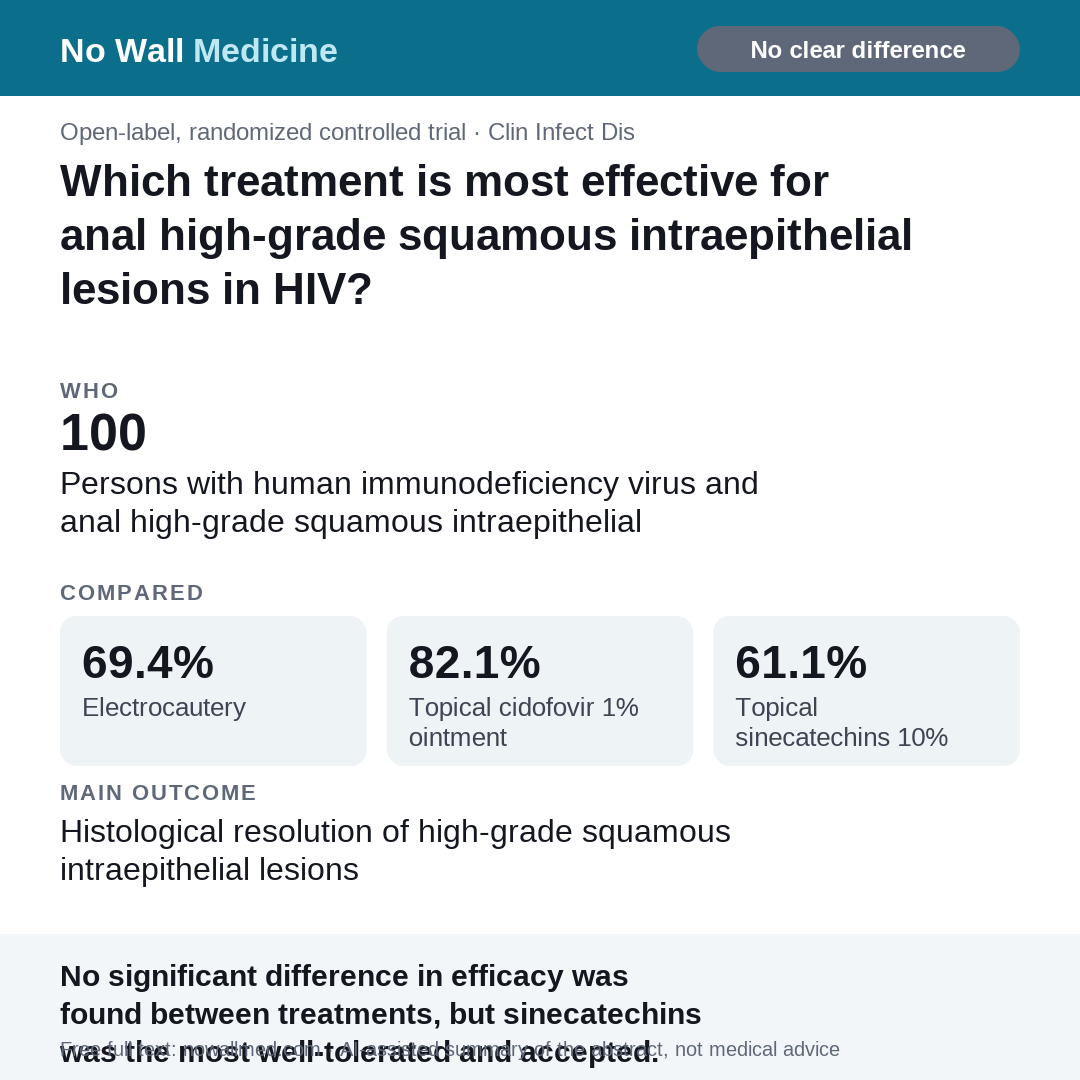
Effectiveness of Electrocautery, Topical Cidofovir, and Topical Sinecatechins for the Treatment of Anal High-Grade Squamous Intraepithelial Lesions in Persons With HIV: An Open-Label, Randomized Controlled Trial
Open-label, randomized controlled trialNo clear difference
Which treatment is most effective for anal high-grade squamous intraepithelial lesions in HIV?
Who
100
Persons with human immunodeficiency virus and anal high-grade squamous intraepithelial lesions · Hospital Vall d'Hebron (Spain)
Compared
69.4%Electrocautery (95% CI: 54.4%-84.5%)
82.1%Topical cidofovir 1% ointment (95% CI: 67.9%-96.3%)
61.1%Topical sinecatechins 10% (95% CI: 45.2%-77%)
Main outcome
Histological resolution of high-grade squamous intraepithelial lesions
Bottom line: No significant difference in efficacy was found between treatments, but sinecatechins was the most well-tolerated and accepted.
Clin Infect Dis · 2025-03-04Download image
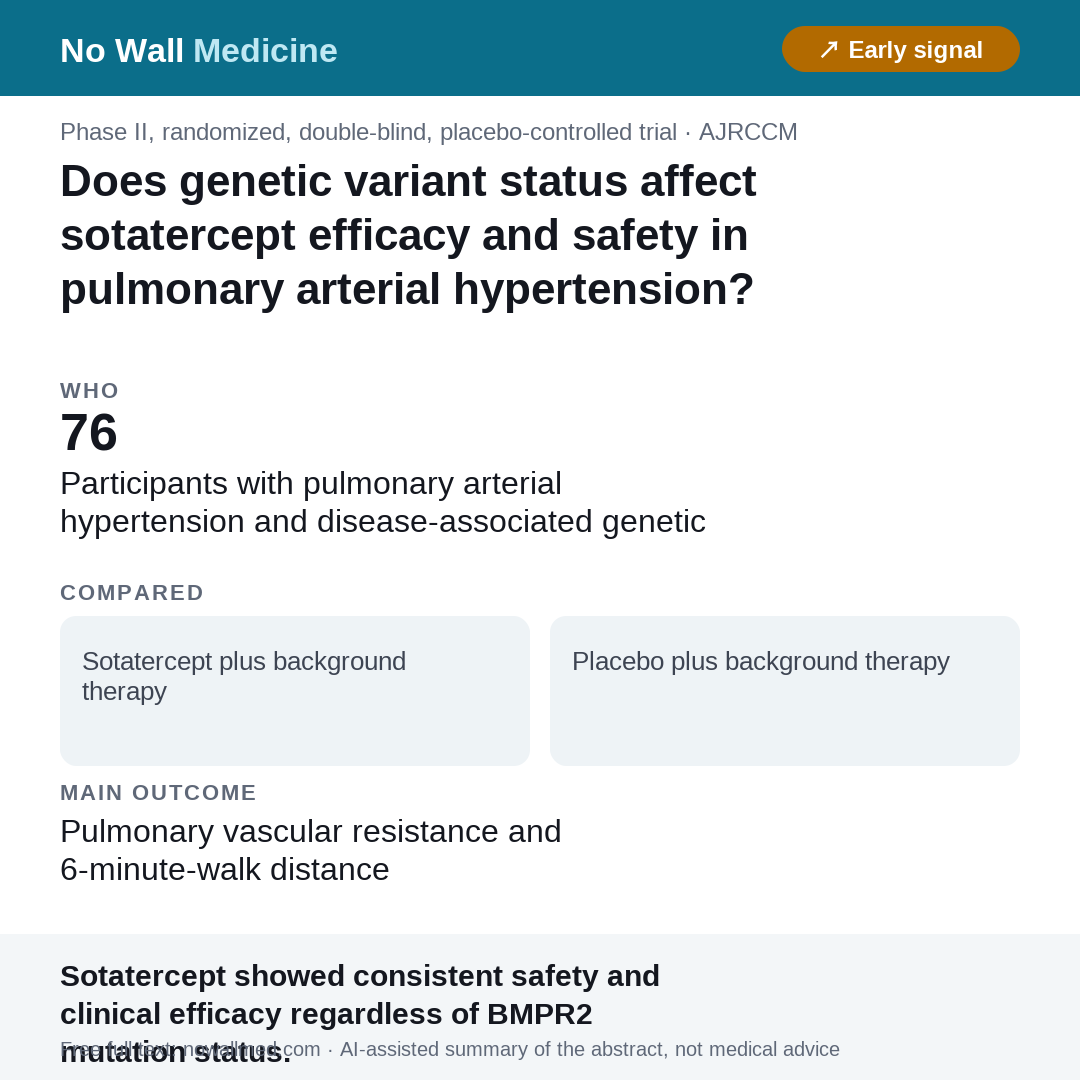
Consistent Safety and Efficacy of Sotatercept for Pulmonary Arterial Hypertension in BMPR2 Mutation Carriers and Noncarriers: A Planned Analysis of a Phase II, Double-Blind, Placebo-controlled Clinical Trial (PULSAR)
Phase II, randomized, double-blind, placebo-controlled trialBenefit found
Does genetic variant status affect sotatercept efficacy and safety in pulmonary arterial hypertension?
Who
76
Participants with pulmonary arterial hypertension and disease-associated genetic variants
Compared
Sotatercept plus background therapy
Placebo plus background therapy
Main outcome
Pulmonary vascular resistance and 6-minute-walk distance
Bottom line: Sotatercept showed consistent safety and clinical efficacy regardless of BMPR2 mutation status.
AJRCCM · 2025-03-04Download image
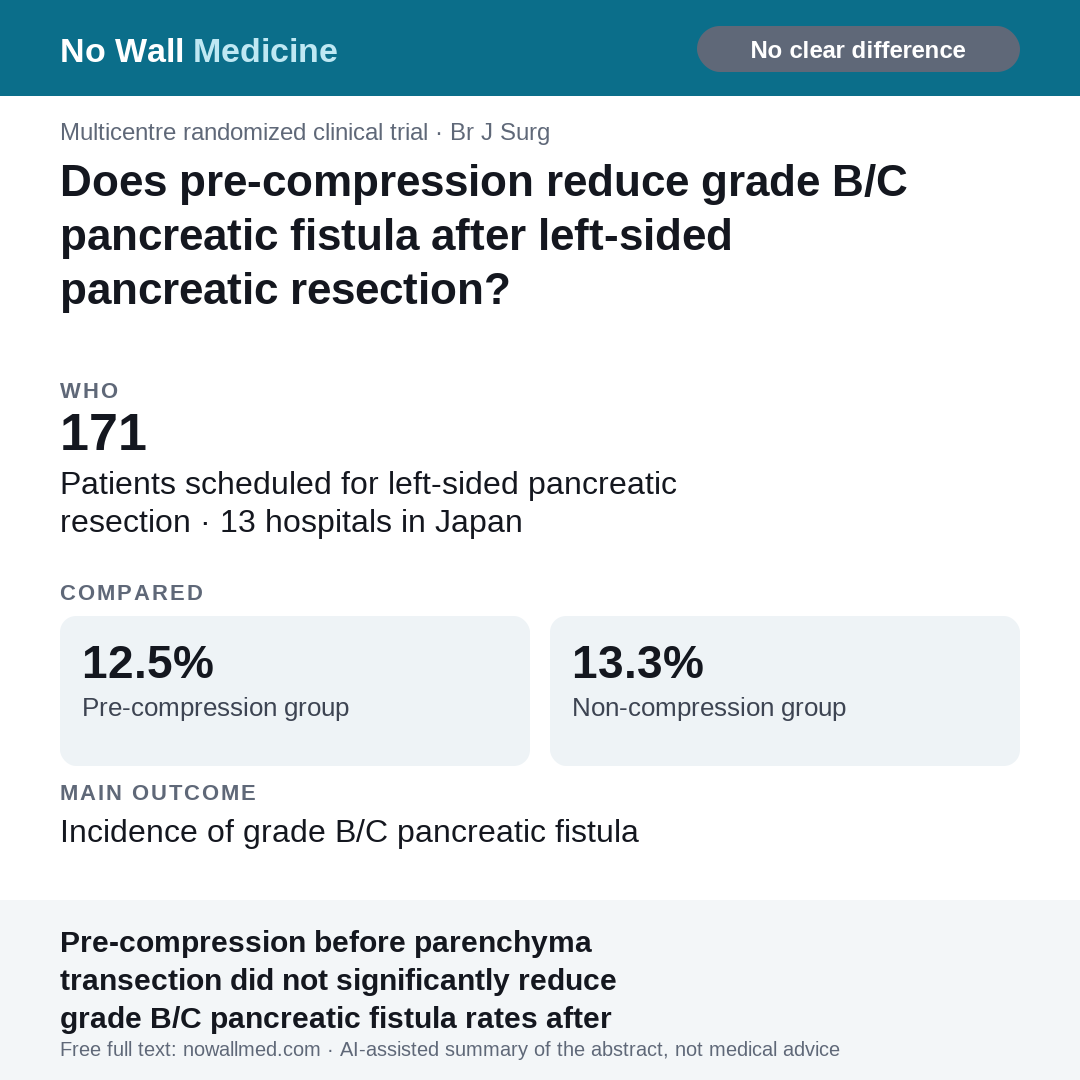
Impact of pre-compression versus non-compression before parenchyma transection in left-sided pancreatic resection on the rate of clinically relevant pancreatic fistula: multicentre randomized clinical trial
Multicentre randomized clinical trialNo clear difference
Does pre-compression reduce grade B/C pancreatic fistula after left-sided pancreatic resection?
Who
171
Patients scheduled for left-sided pancreatic resection · 13 hospitals in Japan
Compared
12.5%Pre-compression group (11/88)
13.3%Non-compression group (11/83)
Main outcome
Incidence of grade B/C pancreatic fistula
Result: odds ratio 0.94 (95% c.i. 0.38 to 2.31)
Bottom line: Pre-compression before parenchyma transection did not significantly reduce grade B/C pancreatic fistula rates after left-sided pancreatic resection.
Br J Surg · 2025-03-04Download image
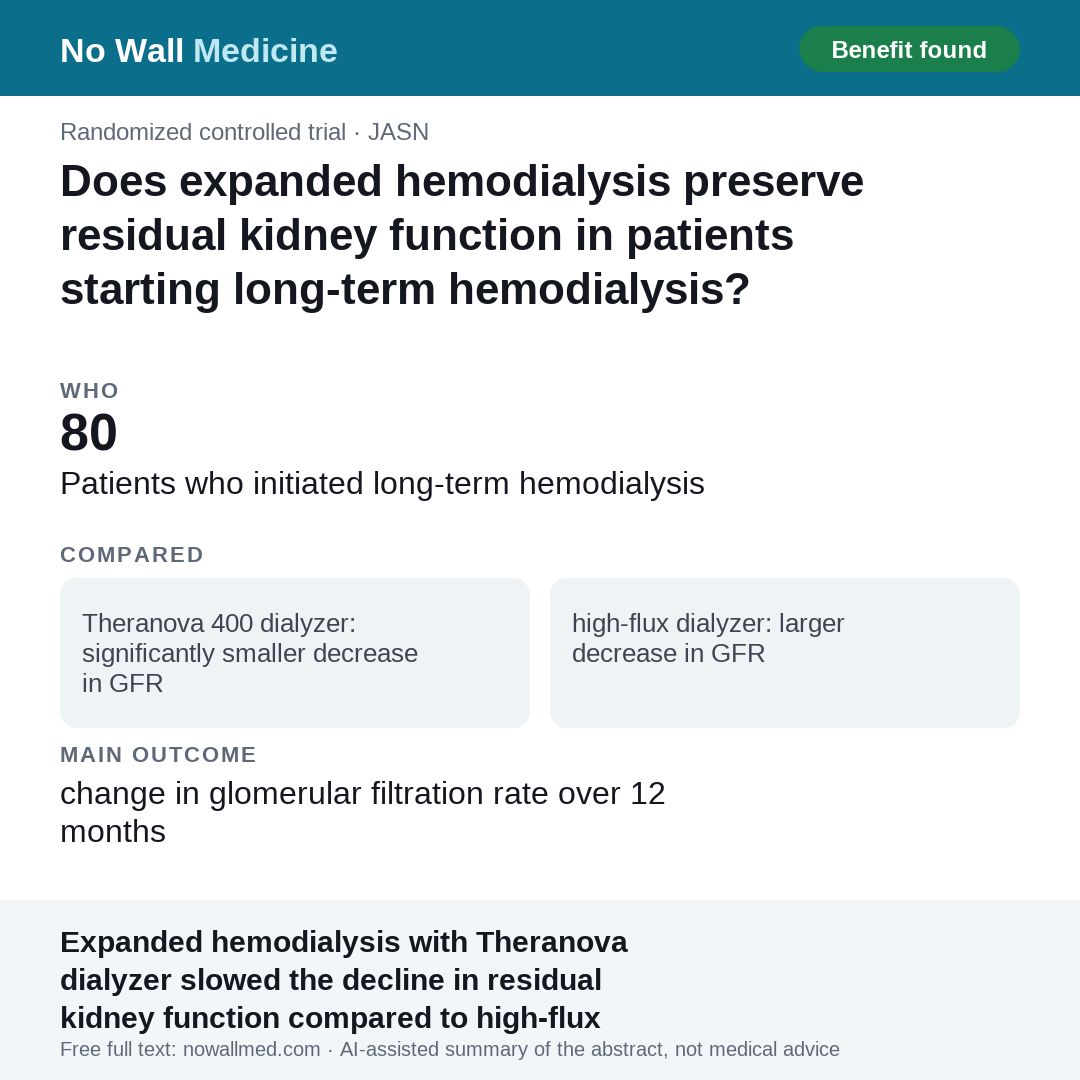
Expanded Hemodialysis with Theranova Dialyzer and Residual Kidney Function in Patients Starting Long-Term Hemodialysis: A Randomized Controlled Trial
Randomized controlled trialBenefit found
Does expanded hemodialysis preserve residual kidney function in patients starting long-term hemodialysis?
Who
80
Patients who initiated long-term hemodialysis
Compared
Theranova 400 dialyzer: significantly smaller decrease in GFR
high-flux dialyzer: larger decrease in GFR
Main outcome
change in glomerular filtration rate over 12 months
Result: least squares mean difference of change −1.4 (95% confidence interval −2.4 to −0.5) ml/min per 1.73 m2
Bottom line: Expanded hemodialysis with Theranova dialyzer slowed the decline in residual kidney function compared to high-flux dialyzers.
JASN · 2025-03-04Download image
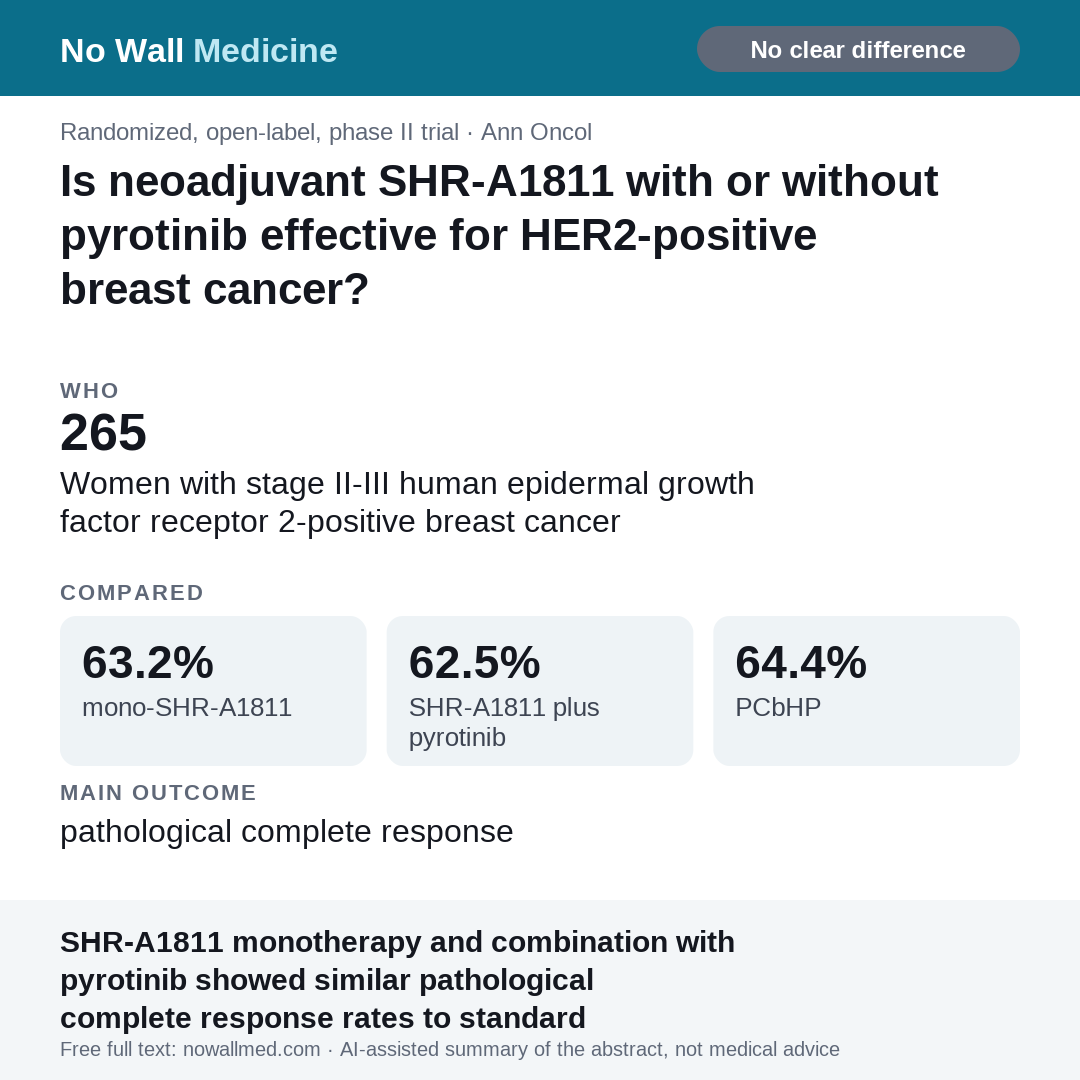
Efficacy and safety of neoadjuvant SHR-A1811 with or without pyrotinib in women with locally advanced or early HER2-positive breast cancer: a randomized, open-label, phase II trial
Randomized, open-label, phase II trialNo clear difference
Is neoadjuvant SHR-A1811 with or without pyrotinib effective for HER2-positive breast cancer?
Who
265
Women with stage II-III human epidermal growth factor receptor 2-positive breast cancer
Compared
63.2%mono-SHR-A1811
62.5%SHR-A1811 plus pyrotinib
64.4%PCbHP
Main outcome
pathological complete response
Bottom line: SHR-A1811 monotherapy and combination with pyrotinib showed similar pathological complete response rates to standard chemotherapy regimens.
Ann Oncol · 2025-03-04Download image
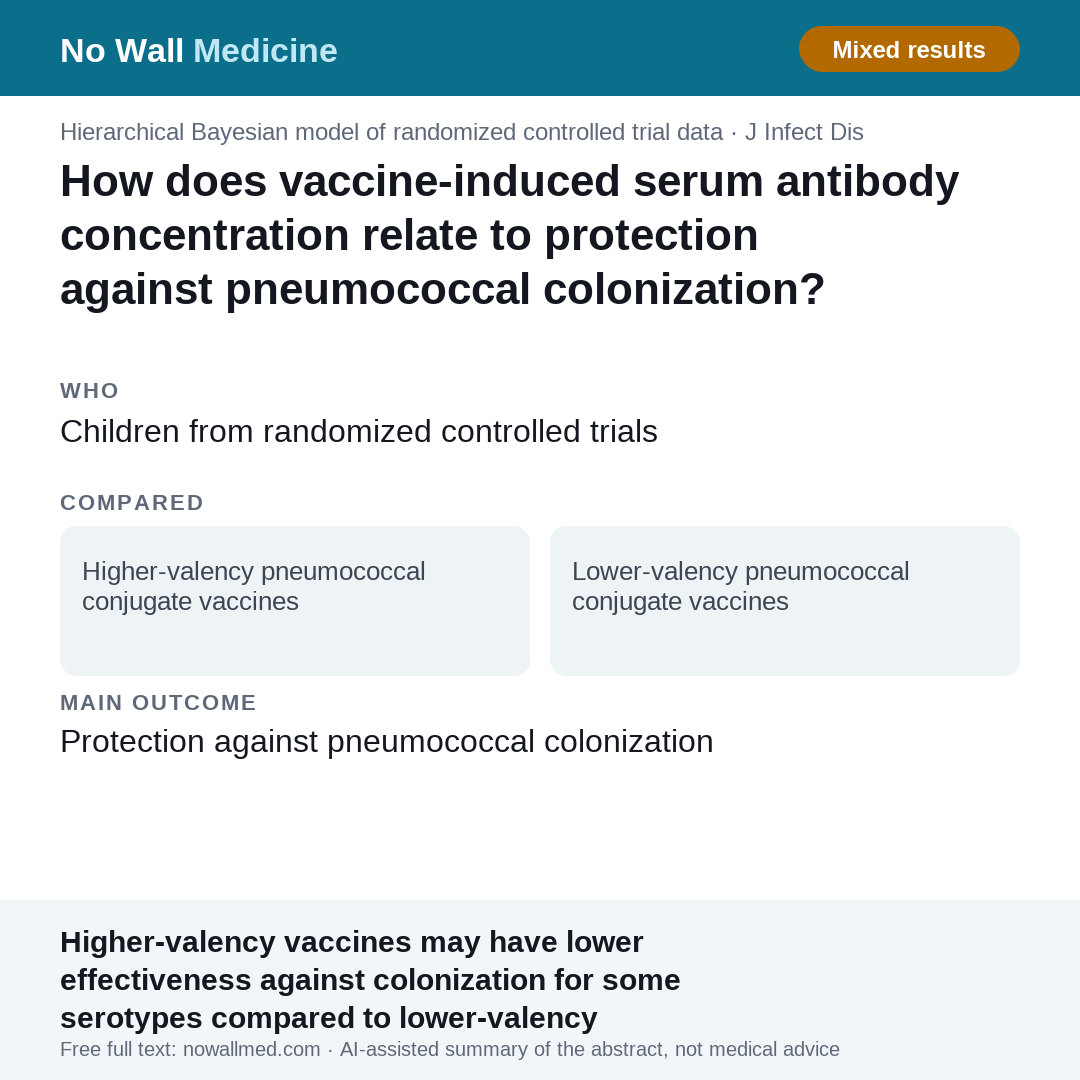
Estimating the Serotype-Specific Association Between the Concentration of Vaccine-Induced Serum Antibodies and Protection Against Pneumococcal Colonization
Hierarchical Bayesian model of randomized controlled trial dataMixed results
How does vaccine-induced serum antibody concentration relate to protection against pneumococcal colonization?
Who
Children from randomized controlled trials
Compared
Higher-valency pneumococcal conjugate vaccines
Lower-valency pneumococcal conjugate vaccines
Main outcome
Protection against pneumococcal colonization
Bottom line: Higher-valency vaccines may have lower effectiveness against colonization for some serotypes compared to lower-valency vaccines.
J Infect Dis · 2025-03-04Download image
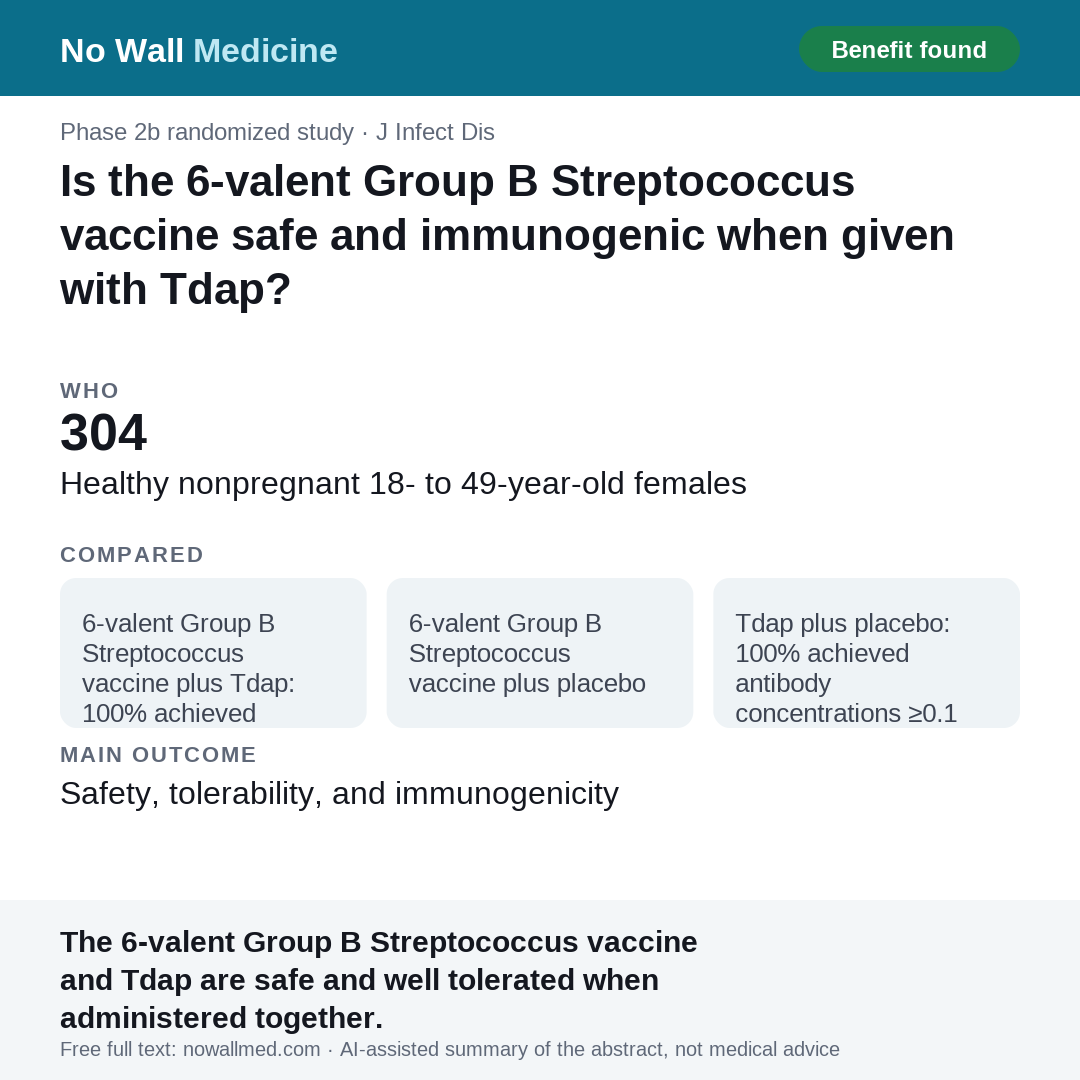
A Phase 2b Trial Evaluating the Safety, Tolerability, and Immunogenicity of a 6-Valent Group B Streptococcus Vaccine Administered Concomitantly With Tetanus, Diphtheria, and Acellular Pertussis Vaccine in Healthy Nonpregnant Female Individuals
Phase 2b randomized studyBenefit found
Is the 6-valent Group B Streptococcus vaccine safe and immunogenic when given with Tdap?
Who
304
Healthy nonpregnant 18- to 49-year-old females
Compared
6-valent Group B Streptococcus vaccine plus Tdap: 100% achieved antibody concentrations ≥0.1 IU/mL for tetanus and diphtheria
6-valent Group B Streptococcus vaccine plus placebo
Tdap plus placebo: 100% achieved antibody concentrations ≥0.1 IU/mL for tetanus and diphtheria
Main outcome
Safety, tolerability, and immunogenicity
Bottom line: The 6-valent Group B Streptococcus vaccine and Tdap are safe and well tolerated when administered together.
J Infect Dis · 2025-03-04Download image
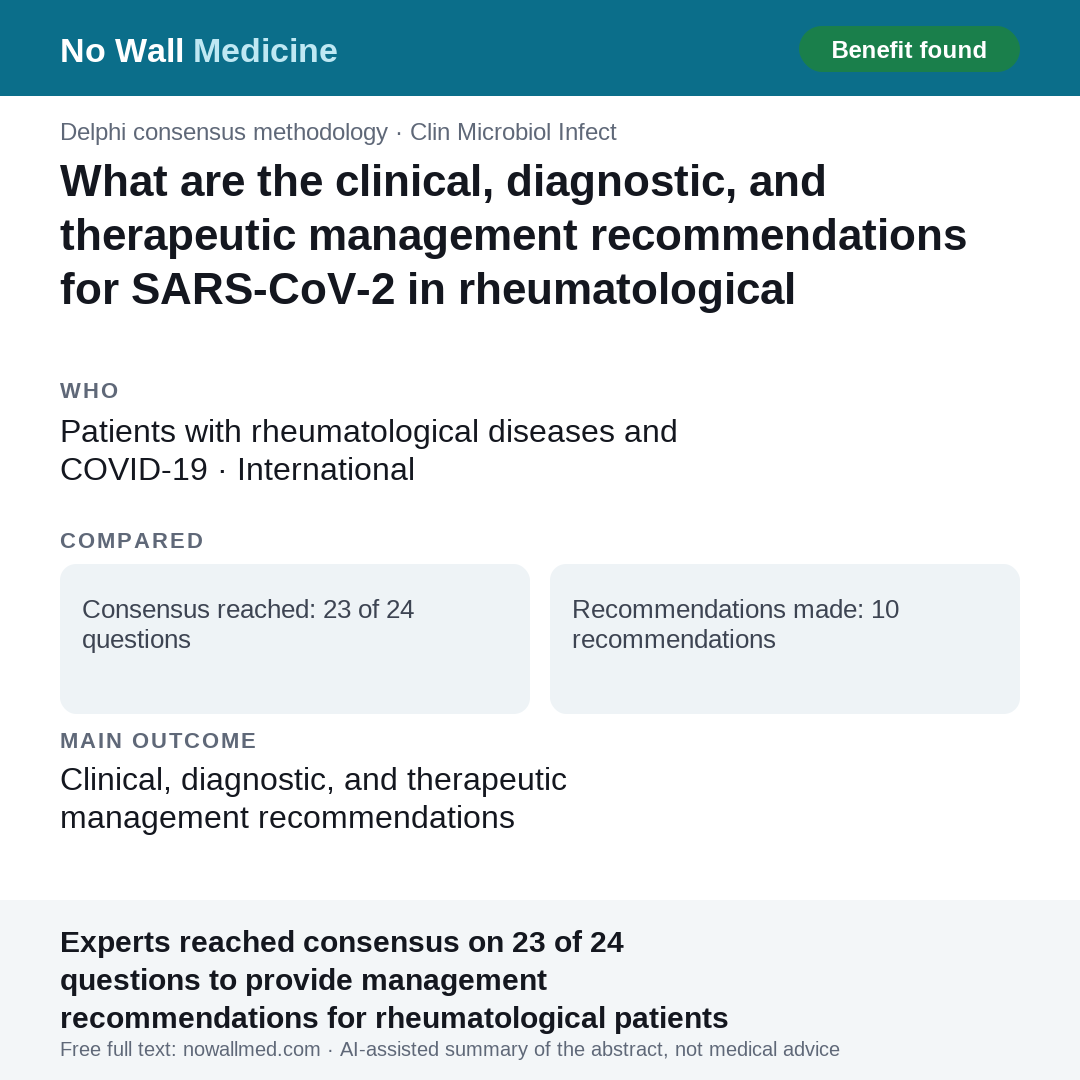
ORCHESTRA Delphi consensus: diagnostic and therapeutic management of SARS-CoV-2 infection in patients with rheumatological diseases
Delphi consensus methodologyBenefit found
What are the clinical, diagnostic, and therapeutic management recommendations for SARS-CoV-2 in rheumatological patients?
Who
Patients with rheumatological diseases and COVID-19 · International
Compared
Consensus reached: 23 of 24 questions
Recommendations made: 10 recommendations
Main outcome
Clinical, diagnostic, and therapeutic management recommendations
Bottom line: Experts reached consensus on 23 of 24 questions to provide management recommendations for rheumatological patients with COVID-19.
Clin Microbiol Infect · 2025-03-04Download image