Visual abstracts
New randomized trials and meta-analyses from leading journals at a glance: who was studied, what was compared, and what was found. Every paper is free to read in full.
All specialtiesCardiology 4877Oncology 4138Gastroenterology & Hepatology 1942Infectious Disease 3837Neurology 1905Psychiatry & Mental Health 2273Pulmonology 2143Critical Care 1365Endocrinology & Diabetes 2580Pediatrics 2980Surgery 2559Orthopedics & Sports Medicine 931Neurosurgery 537Cardiothoracic & Vascular Surgery 674Plastic & Reconstructive Surgery 591Nephrology 1133Rheumatology 823Hematology 1109Dermatology 621Ophthalmology 543Obstetrics & Gynecology 1686Public & Global Health 1058Radiology & Imaging 648Anesthesiology 986Urology 764ENT (Otolaryngology) 503Emergency Medicine 511Allergy & Immunology 313Geriatrics 981Family Medicine & Primary Care 562Medical Genetics & Genomics 676Pathology & Laboratory Medicine 159Physical Medicine & Rehabilitation 757Palliative Care 444Nutrition 1588Digital Health & AI 2201General Medicine 321
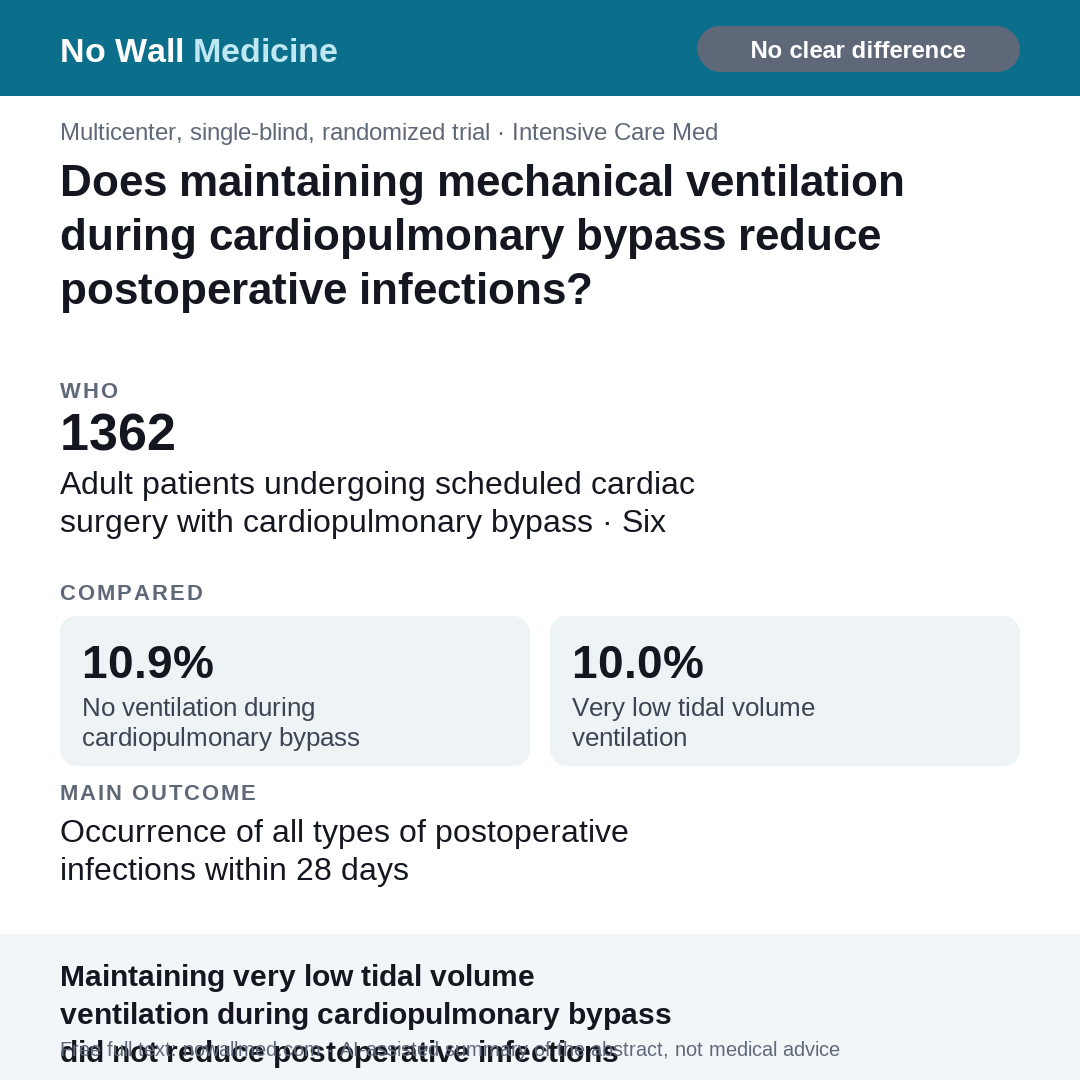
Maintaining ventilation with very low tidal volume and positive-end expiratory pressure versus no ventilation during cardiopulmonary bypass for cardiac surgery in adults: a randomized clinical trial
Multicenter, single-blind, randomized trialNo clear difference
Does maintaining mechanical ventilation during cardiopulmonary bypass reduce postoperative infections?
Who
1362
Adult patients undergoing scheduled cardiac surgery with cardiopulmonary bypass · Six hospitals in France
Compared
10.9%No ventilation during cardiopulmonary bypass (74/680)
10.0%Very low tidal volume ventilation (68/682)
Main outcome
Occurrence of all types of postoperative infections within 28 days
Result: relative risk 0.92 (95% CI 0.67-1.25)
Bottom line: Maintaining very low tidal volume ventilation during cardiopulmonary bypass did not reduce postoperative infections compared to stopping ventilation.
Intensive Care Med · 2025-05-05Download image
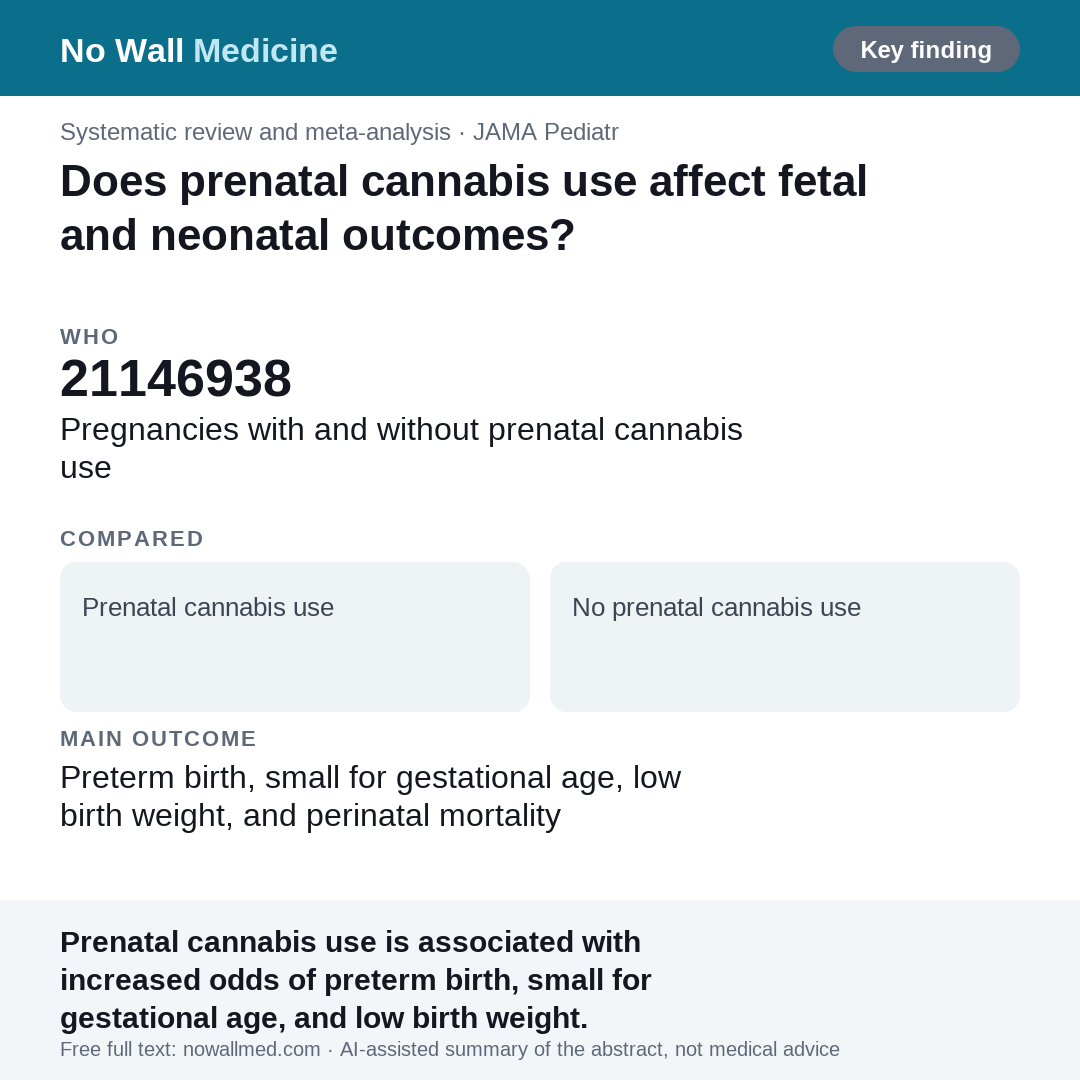
Prenatal Cannabis Use and Neonatal Outcomes: A Systematic Review and Meta-Analysis
Systematic review and meta-analysisHarm found
Does prenatal cannabis use affect fetal and neonatal outcomes?
Who
21146938
Pregnancies with and without prenatal cannabis use
Compared
Prenatal cannabis use
No prenatal cannabis use
Main outcome
Preterm birth, small for gestational age, low birth weight, and perinatal mortality
Result: low birth weight odds ratio 1.75 (95% CI, 1.41-2.18)
Bottom line: Prenatal cannabis use is associated with increased odds of preterm birth, small for gestational age, and low birth weight.
JAMA Pediatr · 2025-05-05Download image
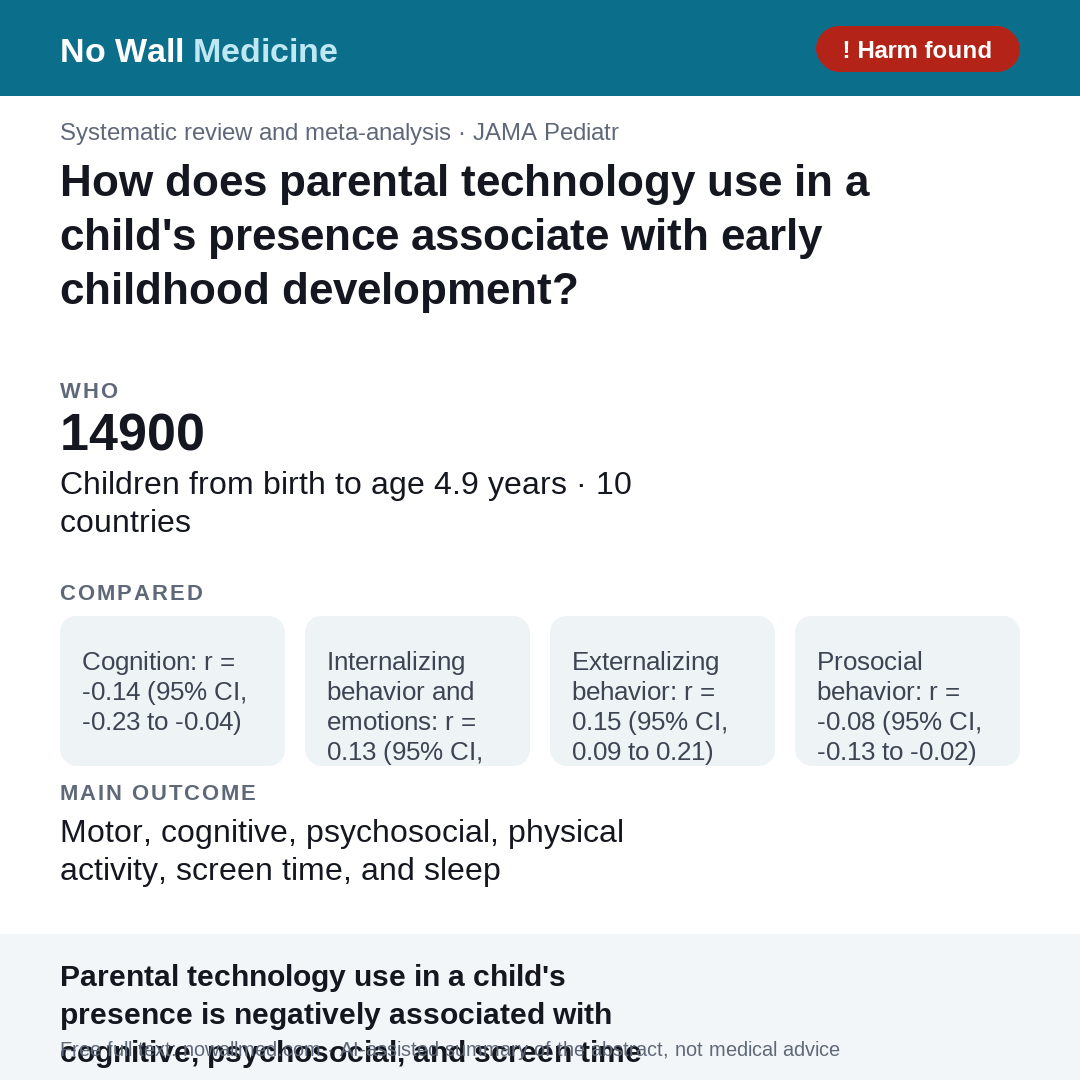
Parental Technology Use in a Child's Presence and Health and Development in the Early Years: A Systematic Review and Meta-Analysis
Systematic review and meta-analysisHarm found
How does parental technology use in a child's presence associate with early childhood development?
Who
14900
Children from birth to age 4.9 years · 10 countries
Compared
Cognition: r = -0.14 (95% CI, -0.23 to -0.04)
Internalizing behavior and emotions: r = 0.13 (95% CI, 0.08 to 0.19)
Externalizing behavior: r = 0.15 (95% CI, 0.09 to 0.21)
Prosocial behavior: r = -0.08 (95% CI, -0.13 to -0.02)
Main outcome
Motor, cognitive, psychosocial, physical activity, screen time, and sleep
Bottom line: Parental technology use in a child's presence is negatively associated with cognitive, psychosocial, and screen time outcomes.
Limitation: No study examined motor development, physical activity, or sleep.
JAMA Pediatr · 2025-05-05Download image
Genome-wide meta-analysis of heavy menstrual bleeding reveals 36 risk loci
Genome-wide meta-analysisBenefit found
What are the genetic risk loci associated with heavy menstrual bleeding?
Who
Women of reproductive age with heavy menstrual bleeding · 5 biobanks from several ancestries
Compared
Heavy menstrual bleeding cases: 84 633
Controls: 598 195
Main outcome
Genetic association with heavy menstrual bleeding
Bottom line: The study identified 36 genetic signals, including 33 novel loci, associated with heavy menstrual bleeding.
Blood · 2025-05-05Download image

Frequency and timing of complications within the first postpartum year in the United States and Canada: a systematic review and meta-analysis
Systematic review and meta-analysisMixed results
What are the frequency and timing of postpartum complications within the first year?
Who
246,521,464
Adults in the United States and Canada · United States and Canada
Compared
Anxiety: 1380 (845-2174) per 10,000
Depression: 1008 (749-1343) per 10,000
Hypertension: 890 (345-2109) per 10,000
Obsessive-compulsive disorder: 886 (135-4089) per 10,000
Main outcome
Frequency and timing of 41 complications and mortality
Bottom line: Anxiety, depression, hypertension, obsessive-compulsive disorder, and hemorrhage were the most frequent postpartum complications reported.
AJOG · 2025-05-05Download image

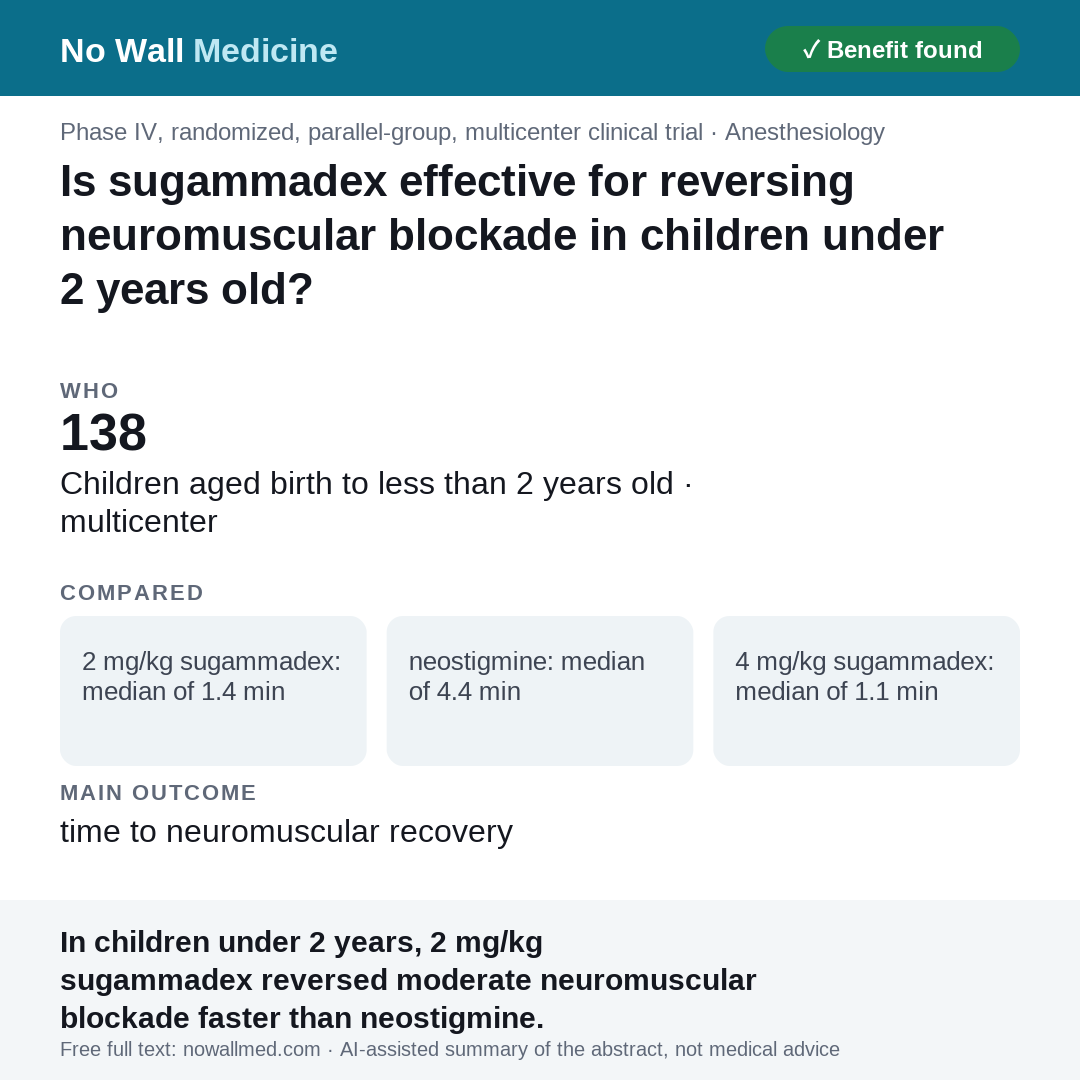
Sugammadex for Reversal of Neuromuscular Blockade in Neonates and Infants Less than 2 Years Old: Results from a Phase IV Randomized Clinical Trial
Phase IV, randomized, parallel-group, multicenter clinical trialBenefit found
Is sugammadex effective for reversing neuromuscular blockade in children under 2 years old?
Who
138
Children aged birth to less than 2 years old · multicenter
Compared
2 mg/kg sugammadex: median of 1.4 min
neostigmine: median of 4.4 min
4 mg/kg sugammadex: median of 1.1 min
Main outcome
time to neuromuscular recovery
Result: hazard ratio 2.40 (95% CI 1.37 to 4.18)
Bottom line: In children under 2 years, 2 mg/kg sugammadex reversed moderate neuromuscular blockade faster than neostigmine.
Anesthesiology · 2025-05-05Download image
Tirzepatide 10 and 15 mg versus semaglutide 2.4 mg in people with obesity or overweight with type 2 diabetes: An indirect treatment comparison
Indirect treatment comparisonBenefit found
How do tirzepatide 10 and 15 mg compare to semaglutide 2.4 mg for weight and HbA1c?
Who
People with obesity or overweight and type 2 diabetes
Compared
Tirzepatide 10 mg: mean difference 2.57% weight reduction
Tirzepatide 15 mg: mean difference 4.79% weight reduction
Semaglutide 2.4 mg
Main outcome
Mean percent change in weight and glycated haemoglobin
Result: odds ratio 15 mg: 1.76, 95% CI 1.04-2.97
Bottom line: Tirzepatide 10 and 15 mg were associated with greater weight and glycated haemoglobin reductions than semaglutide 2.4 mg.
Diabetes Obes Metab · 2025-05-05Download image

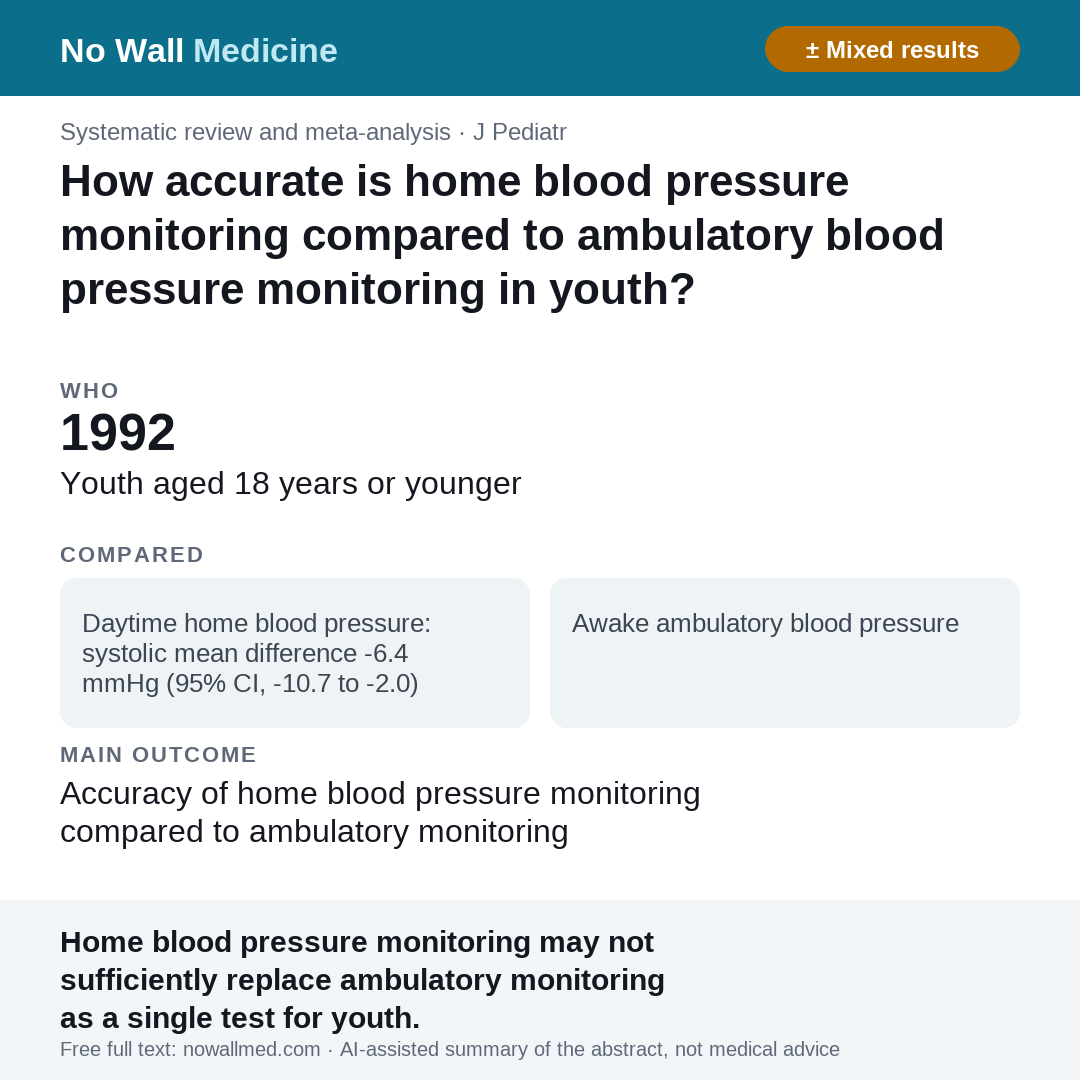
Accuracy of Home Blood Pressure Monitoring in Youth: A Systematic Review and Meta-Analysis
Systematic review and meta-analysisMixed results
How accurate is home blood pressure monitoring compared to ambulatory blood pressure monitoring in youth?
Who
1992
Youth aged 18 years or younger
Compared
Daytime home blood pressure: systolic mean difference -6.4 mmHg (95% CI, -10.7 to -2.0)
Awake ambulatory blood pressure
Main outcome
Accuracy of home blood pressure monitoring compared to ambulatory monitoring
Result: systolic MD, -6.4 mmHg [95% CI, -10.7 to -2.0]
Bottom line: Home blood pressure monitoring may not sufficiently replace ambulatory monitoring as a single test for youth.
Limitation: Different hypertension thresholds and home blood pressure monitoring protocols.
J Pediatr · 2025-05-05Download image
Human and non-human primate female in vitro gametogenesis toward meiotic entry: a systematic review
Systematic reviewUnclear result
What is the progress of meiotic entry in human and non-human primate in vitro gametogenesis?
Who
Human and non-human primate female germ cells
Compared
Human and non-human primate
Mice: complete oogenesis has been successfully achieved
Main outcome
Meiotic entry from pluripotent stem cells or fetal germ cells
Bottom line: Meiotic entry is a key milestone, but extending mouse success to primates remains a major hurdle.
Fertil Steril · 2025-05-05Download image

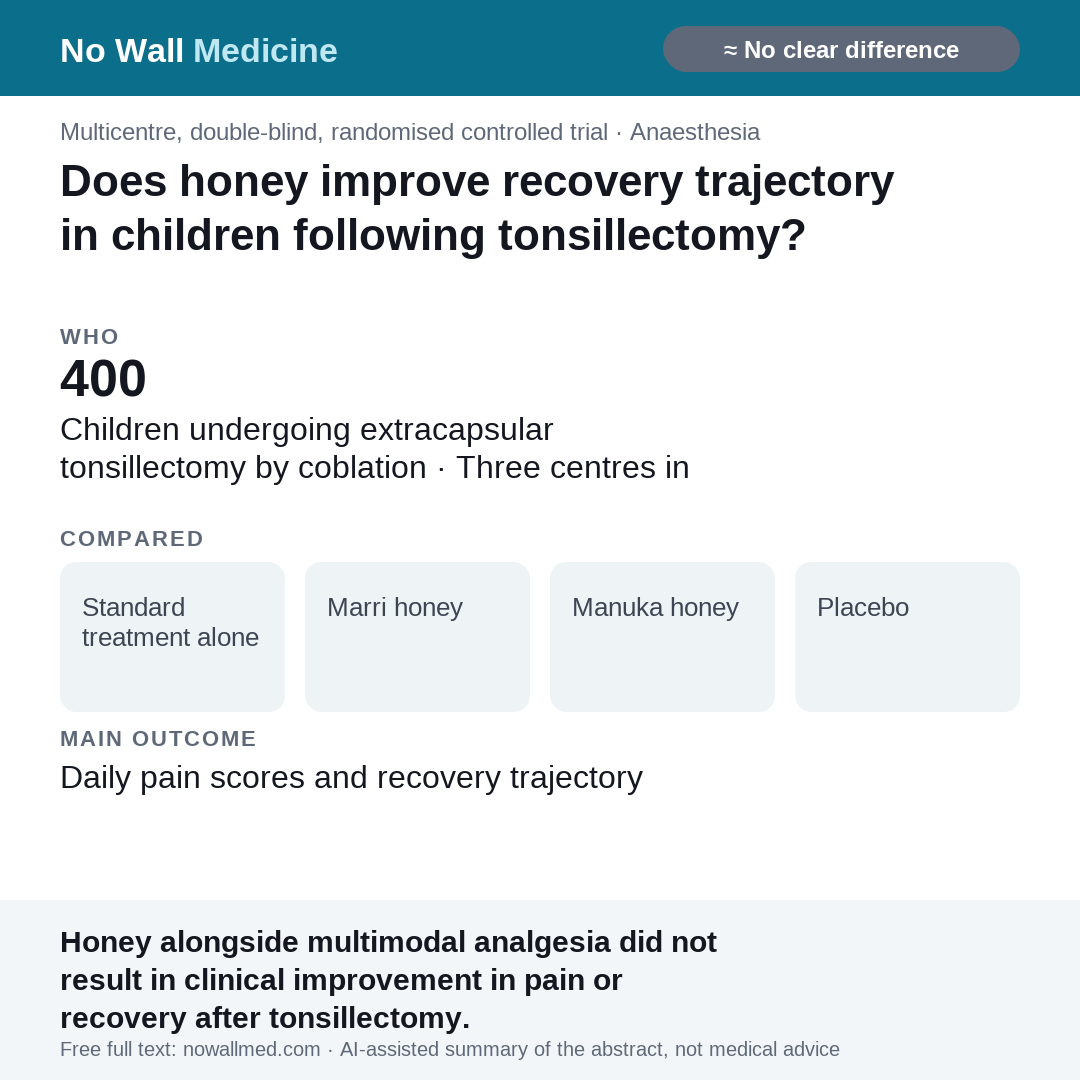
Impact of honey on post-tonsillectomy pain in children (BEE PAIN FREE Trial): a multicentre, double-blind, randomised controlled trial
Multicentre, double-blind, randomised controlled trialNo clear difference
Does honey improve recovery trajectory in children following tonsillectomy?
Who
400
Children undergoing extracapsular tonsillectomy by coblation · Three centres in Western Australia
Compared
Standard treatment alone
Marri honey
Manuka honey
Placebo
Main outcome
Daily pain scores and recovery trajectory
Bottom line: Honey alongside multimodal analgesia did not result in clinical improvement in pain or recovery after tonsillectomy.
Anaesthesia · 2025-05-05Download image
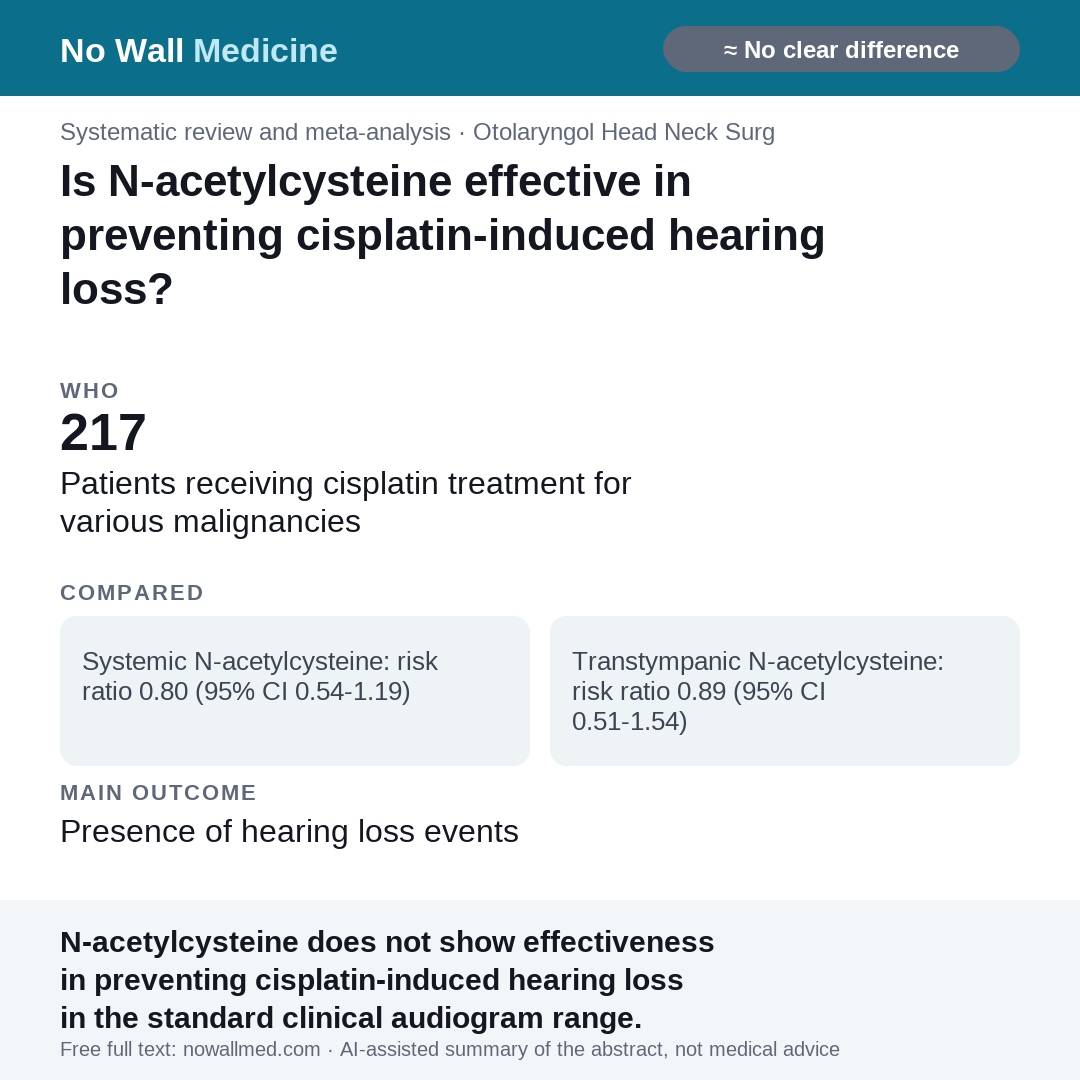
N-acetylcysteine for the Prevention of Cisplatin-Induced Hearing Loss: A Systematic Review and Meta-analysis
Systematic review and meta-analysisNo clear difference
Is N-acetylcysteine effective in preventing cisplatin-induced hearing loss?
Who
217
Patients receiving cisplatin treatment for various malignancies
Compared
Systemic N-acetylcysteine: risk ratio 0.80 (95% CI 0.54-1.19)
Transtympanic N-acetylcysteine: risk ratio 0.89 (95% CI 0.51-1.54)
Main outcome
Presence of hearing loss events
Result: risk ratio 0.80 (95% CI 0.54-1.19)
Bottom line: N-acetylcysteine does not show effectiveness in preventing cisplatin-induced hearing loss in the standard clinical audiogram range.
Limitation: Further studies with larger samples are needed to confirm findings.
Otolaryngol Head Neck Surg · 2025-05-05Download image
Management of Calvarial Osteoradionecrosis After Treatment of Cutaneous Malignancy: A Systematic Review
Systematic reviewMixed results
What are the characteristics and management outcomes of calvarial osteoradionecrosis after cutaneous malignancy treatment?
Who
42
Patients with calvarial osteoradionecrosis following cutaneous malignancy treatment
Compared
Wound care and antibiotics: demonstrated a spectrum of success rates
Surgically managed: 90% healed
Main outcome
Management success rates of calvarial osteoradionecrosis
Bottom line: Surgical management showed 90% healing, but overall evidence quality is poor and definitions remain inconsistent.
Limitation: Relatively poor data quality and no consensus on a definition of calvarial osteoradionecrosis.
Otolaryngol Head Neck Surg · 2025-05-05Download image

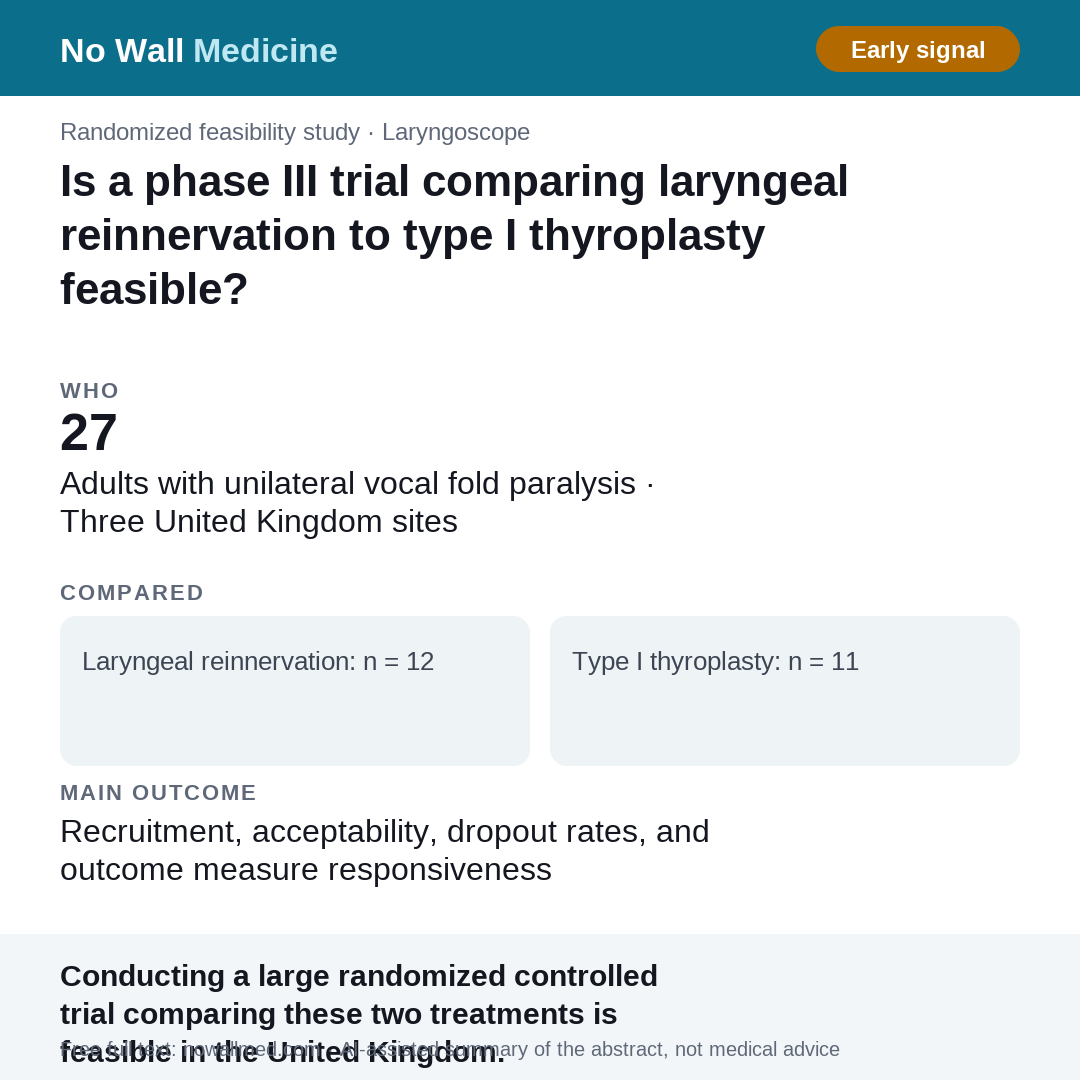
Laryngeal Reinnervation vs Type I Thyroplasty in Unilateral Vocal Fold Paralysis (VOCALIST): A Randomized Feasibility Study
Randomized feasibility studyBenefit found
Is a phase III trial comparing laryngeal reinnervation to type I thyroplasty feasible?
Who
27
Adults with unilateral vocal fold paralysis · Three United Kingdom sites
Compared
Laryngeal reinnervation: n = 12
Type I thyroplasty: n = 11
Main outcome
Recruitment, acceptability, dropout rates, and outcome measure responsiveness
Bottom line: Conducting a large randomized controlled trial comparing these two treatments is feasible in the United Kingdom.
Laryngoscope · 2025-05-05Download image
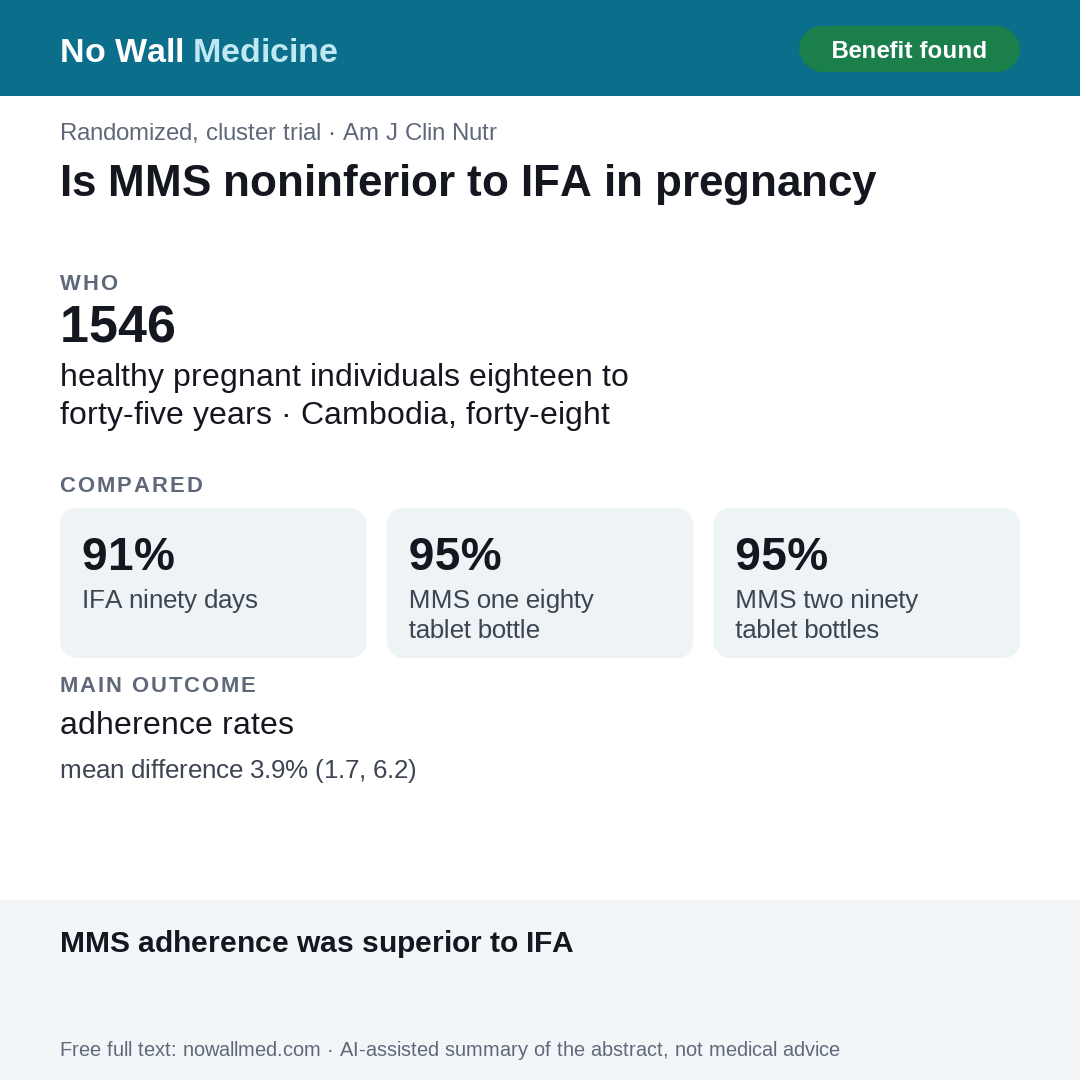
Assessing the adherence and acceptability to iron and folic acid compared with multiple micronutrient supplements during pregnancy: a cluster-randomized noninferiority trial in Cambodia
Randomized, cluster trialBenefit found
Is MMS noninferior to IFA in pregnancy
Who
1546
healthy pregnant individuals eighteen to forty-five years · Cambodia, forty-eight health centers
Compared
91%IFA ninety days
95%MMS one eighty tablet bottle
95%MMS two ninety tablet bottles
Main outcome
adherence rates
Result: mean difference 3.9% (1.7, 6.2)
Bottom line: MMS adherence was superior to IFA
Am J Clin Nutr · 2025-05-05Download image
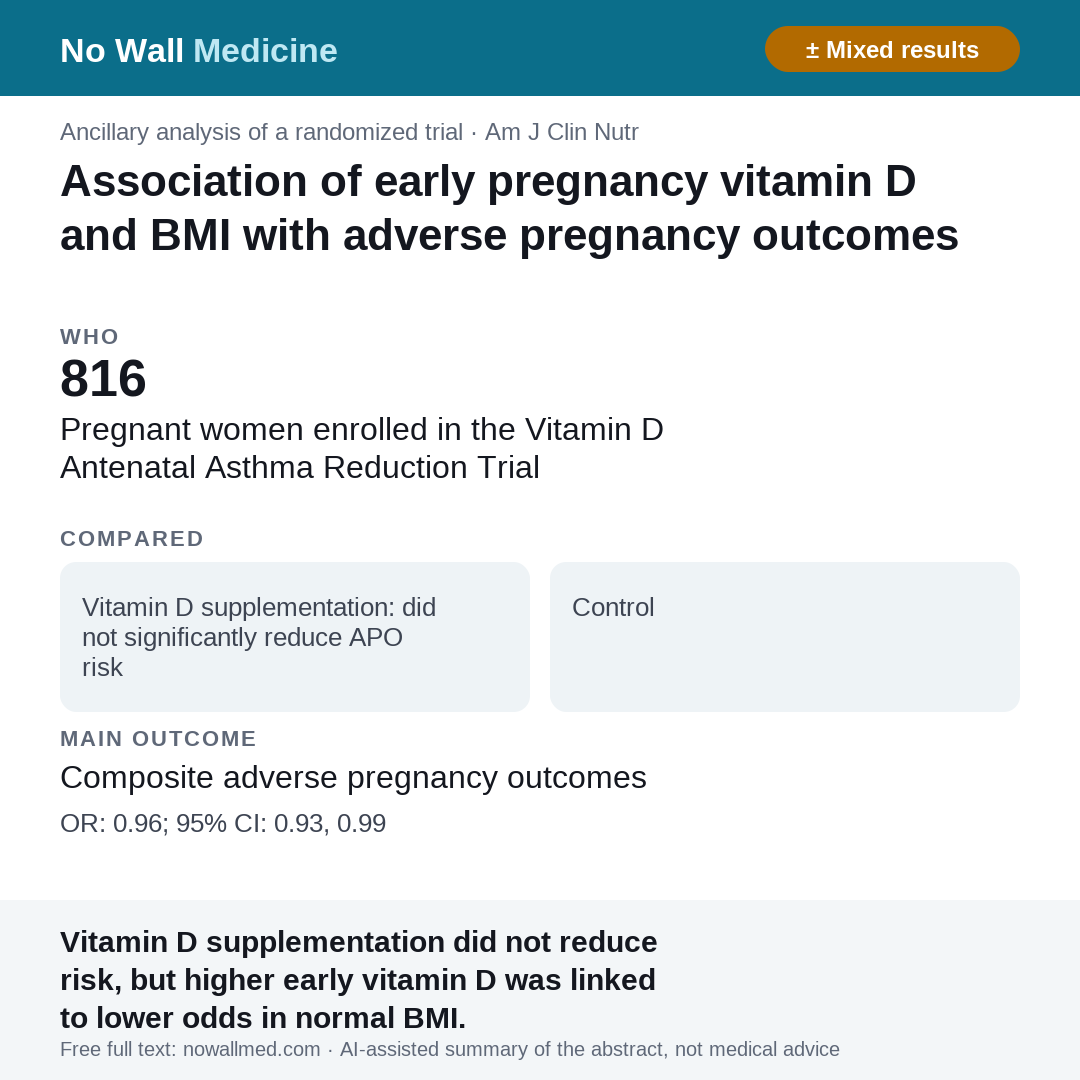
The association of early pregnancy vitamin D and BMI status with composite adverse pregnancy outcomes: an ancillary analysis of the Vitamin D Antenatal Asthma Reduction Trial
Ancillary analysis of a randomized trialMixed results
Does early pregnancy vitamin D and BMI status associate with composite adverse pregnancy outcomes?
Who
816
Participants in the Vitamin D Antenatal Asthma Reduction Trial
Compared
BMI < 25: OR: 0.96 (95% CI: 0.93, 0.99)
BMI ≥ 25 kg/m2: OR: 1.00 (95% CI: 0.98, 1.02)
Main outcome
composite adverse pregnancy outcomes
Result: OR: 0.96 (95% CI: 0.93, 0.99) for BMI < 25
Bottom line: Higher early pregnancy vitamin D concentrations were associated with lower adverse pregnancy outcome odds in participants with BMI < 25.
Am J Clin Nutr · 2025-05-05Download image
Artificial Intelligence in the Management of Malnutrition in Cancer Patients: A Systematic Review
Systematic reviewBenefit found
What is the role of artificial intelligence in managing malnutrition in cancer patients?
Who
52,228
Cancer patients
Compared
Artificial intelligence models: area under the curve >0.80
Conventional screening tools
Main outcome
Malnutrition detection, body composition, and clinical outcomes
Bottom line: Artificial intelligence shows high predictive accuracy and potential to optimize malnutrition screening and personalized nutritional interventions in oncology.
Adv Nutr · 2025-05-05Download image

Nurse-Delivered Telehealth in Home-Based Palliative Care: Integrative Systematic Review
Integrative systematic reviewUnclear result
What are the roles, facilitators, and barriers to nurse-delivered telehealth in home-based palliative care?
Who
Patients and families in home-based palliative care · Not specified
Compared
Facilitators
Barriers
Main outcome
Nurses' roles and multilevel implementation facilitators and barriers
Bottom line: Nurses play diverse roles in telehealth, facing barriers like reimbursement issues and facilitators like patient engagement.
J Med Internet Res · 2025-05-05Download image

Electronic Implementation of Patient-Reported Outcome Measures in Primary Health Care: Mixed Methods Systematic Review
Mixed methods systematic reviewMixed results
What is the implementation and effectiveness of electronic patient-reported outcome measures in primary health care?
Who
22
Adults with chronic diseases in primary health care settings · United States and Canada
Compared
45%Studies reporting improvements
55%Studies reporting no significant change
Main outcome
Patient health outcomes, provider workflow, and implementation factors
Bottom line: Electronic patient-reported outcome measures show mixed effectiveness in improving health outcomes and self-management in primary health care.
Limitation: Long-term cost-effectiveness and sustainability remain uncertain.
J Med Internet Res · 2025-05-05Download image

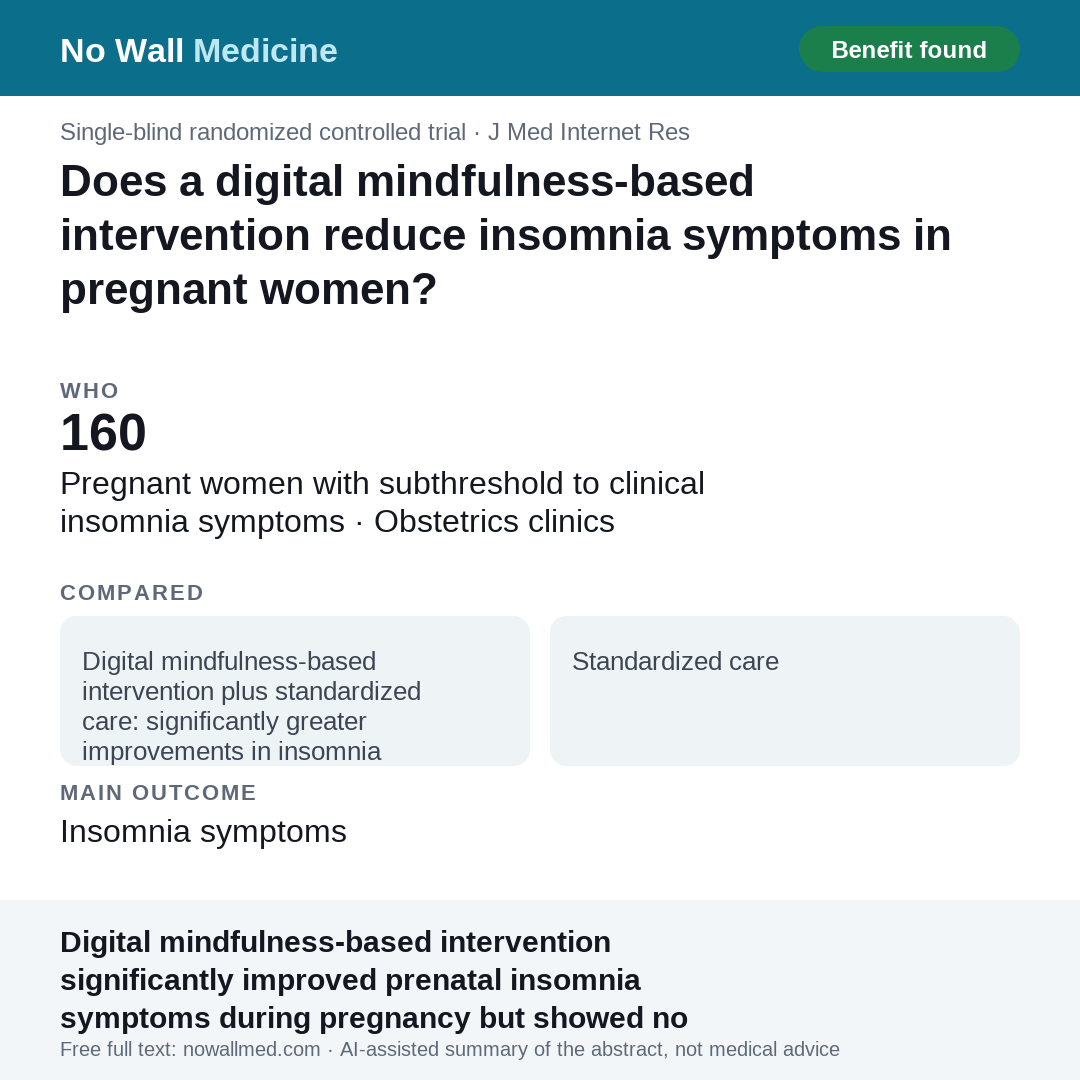
Effectiveness and Mechanisms of a Digital Mindfulness-Based Intervention for Subthreshold to Clinical Insomnia Symptoms in Pregnant Women: Randomized Controlled Trial
Single-blind randomized controlled trialBenefit found
Does a digital mindfulness-based intervention reduce insomnia symptoms in pregnant women?
Who
160
Pregnant women with subthreshold to clinical insomnia symptoms · Obstetrics clinics
Compared
Digital mindfulness-based intervention plus standardized care: significantly greater improvements in insomnia symptoms
Standardized care
Main outcome
Insomnia symptoms
Result: mean between-group difference -2.02, 95% CI -3.42 to -0.62
Bottom line: Digital mindfulness-based intervention significantly improved prenatal insomnia symptoms during pregnancy but showed no beneficial effect postpartum.
J Med Internet Res · 2025-05-05Download image
The Application Status of Radiomics-Based Machine Learning in Intrahepatic Cholangiocarcinoma: Systematic Review and Meta-Analysis
Systematic review and meta-analysisBenefit found
What is the application value of radiomics-based machine learning in intrahepatic cholangiocarcinoma?
Who
12,903
Patients with intrahepatic cholangiocarcinoma
Compared
Clinical features only: C-index 0.762 (95% CI 0.728-0.796)
Radiomics-based machine learning: C-index 0.853 (95% CI 0.824-0.882)
Radiomics and clinical features: C-index 0.912 (95% CI 0.889-0.935)
Main outcome
Accuracy in detecting intrahepatic cholangiocarcinoma
Result: C-index 0.912 (95% CI 0.889-0.935) for radiomics and clinical features
Bottom line: Radiomics-based machine learning demonstrates excellent accuracy in the clinical diagnosis of intrahepatic cholangiocarcinoma.
Limitation: Challenges include data heterogeneity, interpretability, segmentation, and imaging parameter variations.
J Med Internet Res · 2025-05-05Download image