Visual abstracts
New randomized trials and meta-analyses from leading journals at a glance: who was studied, what was compared, and what was found. Every paper is free to read in full.
All specialtiesCardiology 4763Oncology 4042Gastroenterology & Hepatology 1902Infectious Disease 3756Neurology 1872Psychiatry & Mental Health 2214Pulmonology 2042Critical Care 1319Endocrinology & Diabetes 2544Pediatrics 2889Surgery 2479Orthopedics & Sports Medicine 917Neurosurgery 525Cardiothoracic & Vascular Surgery 656Plastic & Reconstructive Surgery 574Nephrology 1107Rheumatology 810Hematology 1090Dermatology 611Ophthalmology 532Obstetrics & Gynecology 1645Public & Global Health 1037Radiology & Imaging 617Anesthesiology 957Urology 745ENT (Otolaryngology) 494Emergency Medicine 481Allergy & Immunology 309Geriatrics 972Family Medicine & Primary Care 533Medical Genetics & Genomics 659Pathology & Laboratory Medicine 156Physical Medicine & Rehabilitation 734Palliative Care 421Nutrition 1560Digital Health & AI 2133General Medicine 318
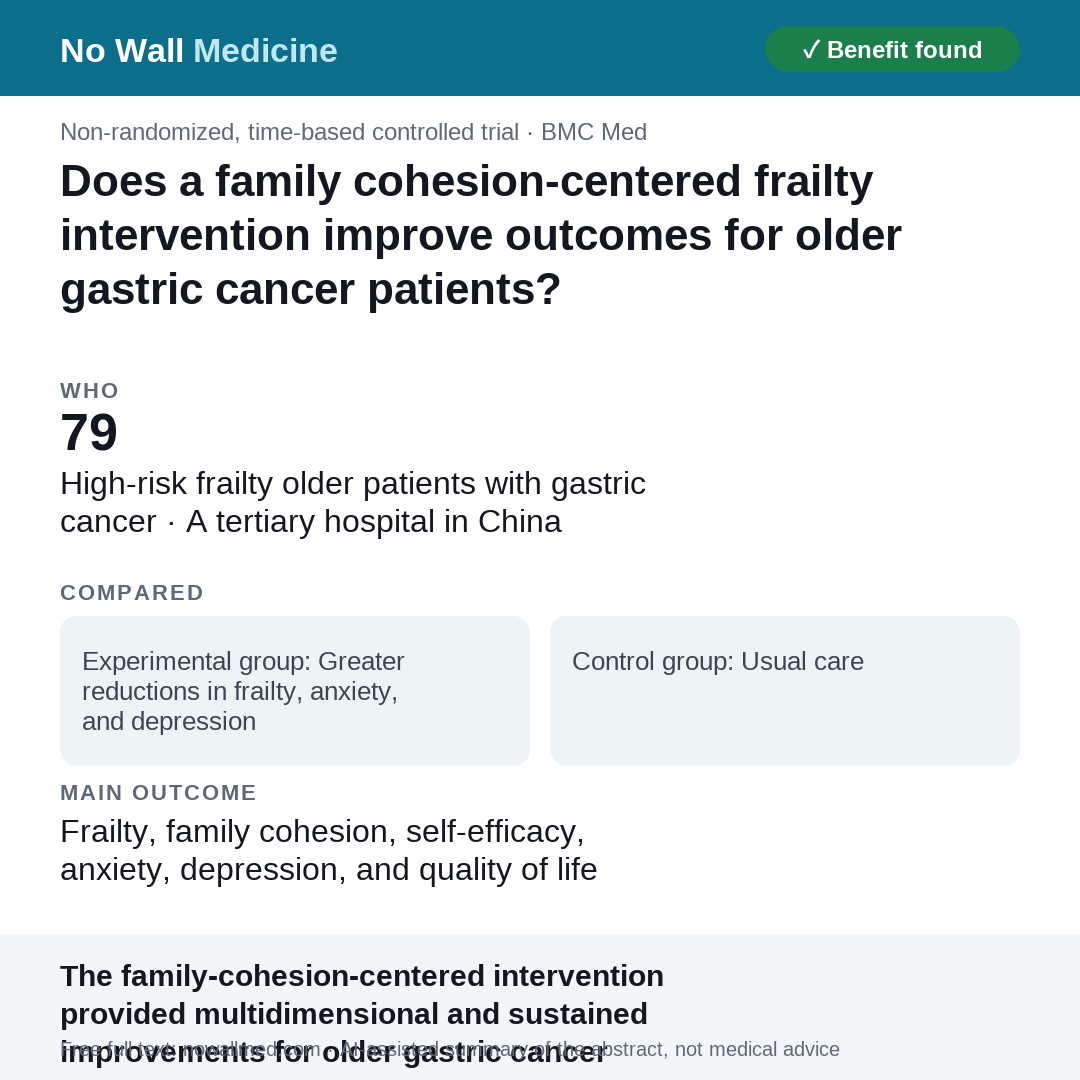
Impact of the family cohesion-centered frailty intervention on older gastric cancer patients: a non-randomized controlled trial
Non-randomized, time-based controlled trialBenefit found
Does a family cohesion-centered frailty intervention improve outcomes for older gastric cancer patients?
Who
79
High-risk frailty older patients with gastric cancer · A tertiary hospital in China
Compared
Experimental group: Greater reductions in frailty, anxiety, and depression
Control group: Usual care
Main outcome
Frailty, family cohesion, self-efficacy, anxiety, depression, and quality of life
Bottom line: The family-cohesion-centered intervention provided multidimensional and sustained improvements for older gastric cancer patients at high risk of frailty.
Limitation: Non-randomized, time-based controlled design may introduce potential biases from secular trends or contamination.
BMC Med · 2026-03-27Download image
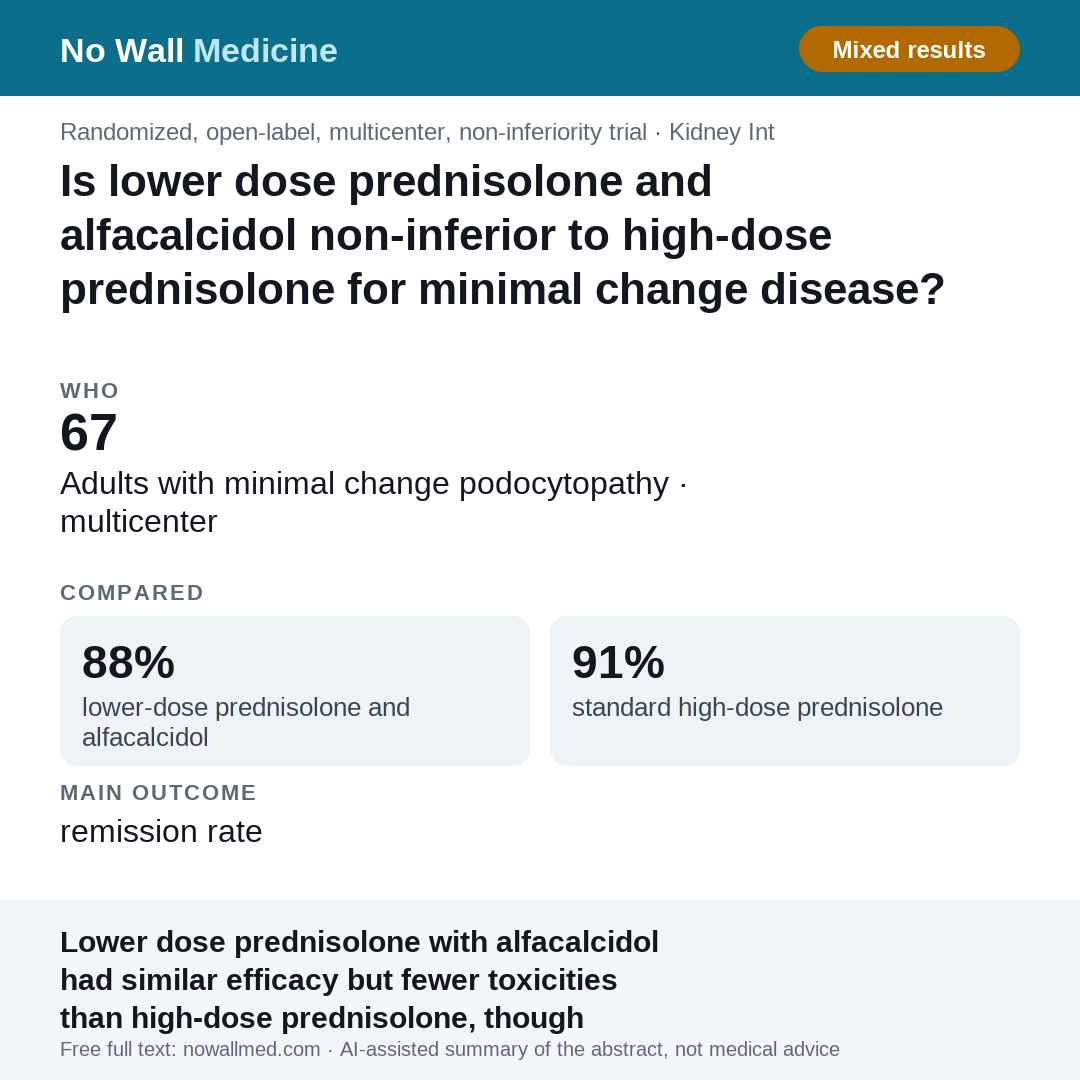
A randomized controlled non-inferiority trial examined lower dose prednisolone and activated vitamin D in adult minimal change podocytopathy
Randomized, open-label, multicenter, non-inferiority trialMixed results
Is lower dose prednisolone and alfacalcidol non-inferior to high-dose prednisolone for minimal change disease?
Who
67
Adults with minimal change podocytopathy · multicenter
Compared
88%lower-dose prednisolone and alfacalcidol (95% confidence interval: 74-96)
91%standard high-dose prednisolone (78-98)
Main outcome
remission rate
Bottom line: Lower dose prednisolone with alfacalcidol had similar efficacy but fewer toxicities than high-dose prednisolone, though non-inferiority was not established.
Kidney Int · 2026-03-27Download image
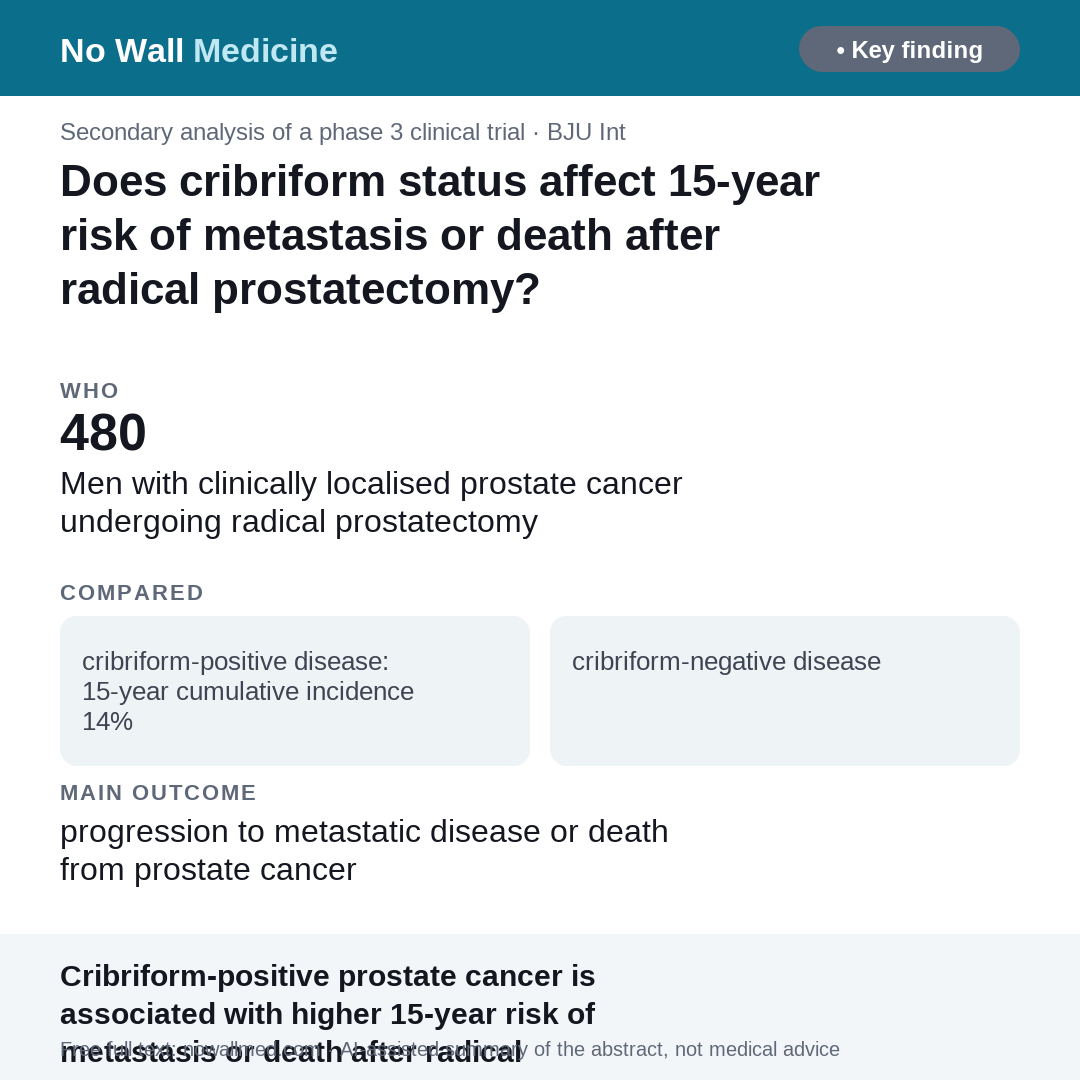
Long-term outcomes of cribriform-positive and cribriform-negative prostate cancer treated with radical prostatectomy in the ProtecT trial
Secondary analysis of a phase 3 clinical trialKey finding
Does cribriform status affect 15-year risk of metastasis or death after radical prostatectomy?
Who
480
Men with clinically localised prostate cancer undergoing radical prostatectomy
Compared
cribriform-positive disease: 15-year cumulative incidence 14%
cribriform-negative disease
Main outcome
progression to metastatic disease or death from prostate cancer
Bottom line: Cribriform-positive prostate cancer is associated with higher 15-year risk of metastasis or death after radical prostatectomy.
BJU Int · 2026-03-27Download image
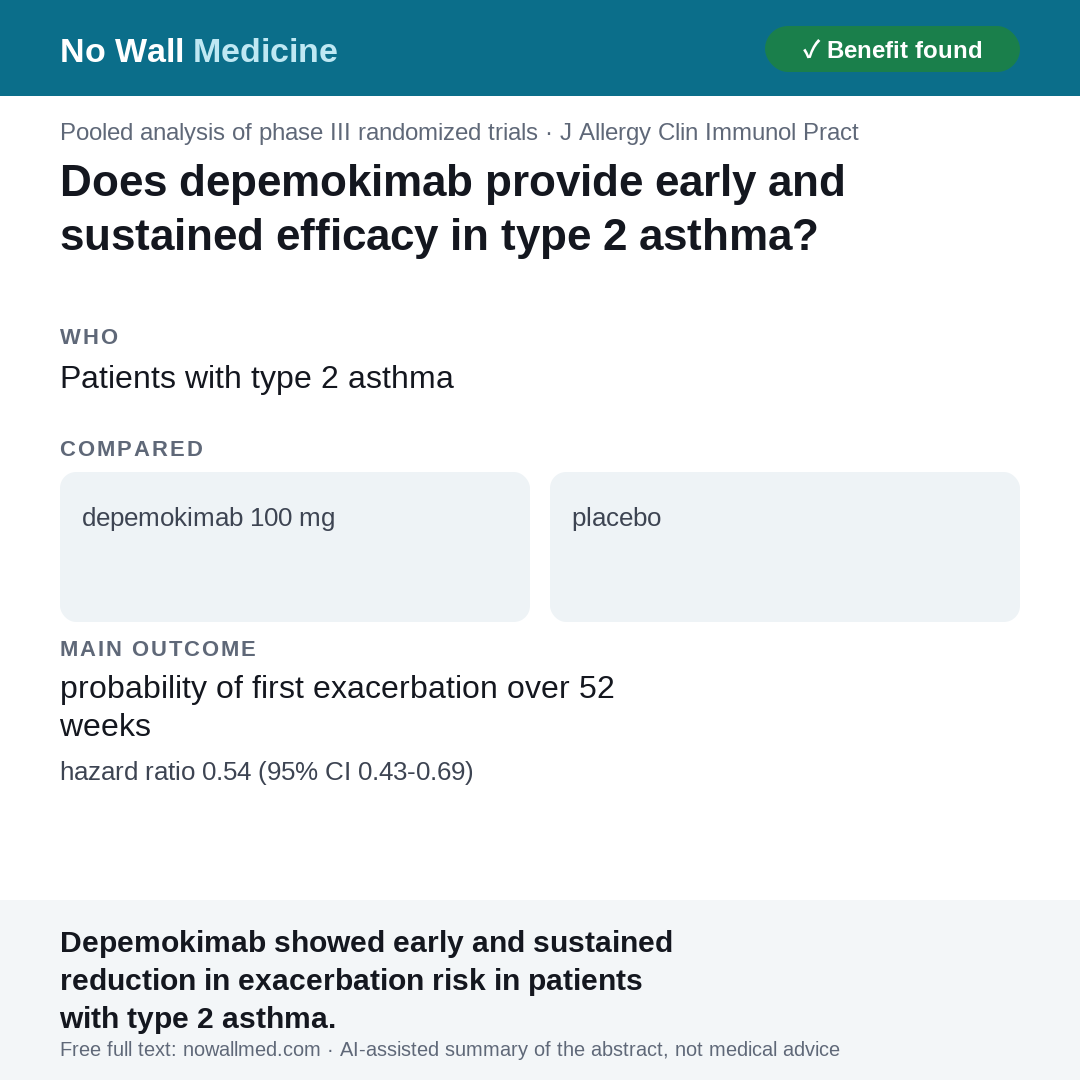
Early and Sustained Efficacy of Depemokimab in Type 2 Asthma: A Pooled Analysis of the SWIFT-1/-2 Studies
Pooled analysis of phase III randomized trialsBenefit found
Does depemokimab provide early and sustained efficacy in type 2 asthma?
Who
Patients with type 2 asthma
Compared
depemokimab 100 mg
placebo
Main outcome
probability of first exacerbation over 52 weeks
Result: hazard ratio 0.54 (95% CI 0.43-0.69)
Bottom line: Depemokimab showed early and sustained reduction in exacerbation risk in patients with type 2 asthma.
J Allergy Clin Immunol Pract · 2026-03-27Download image
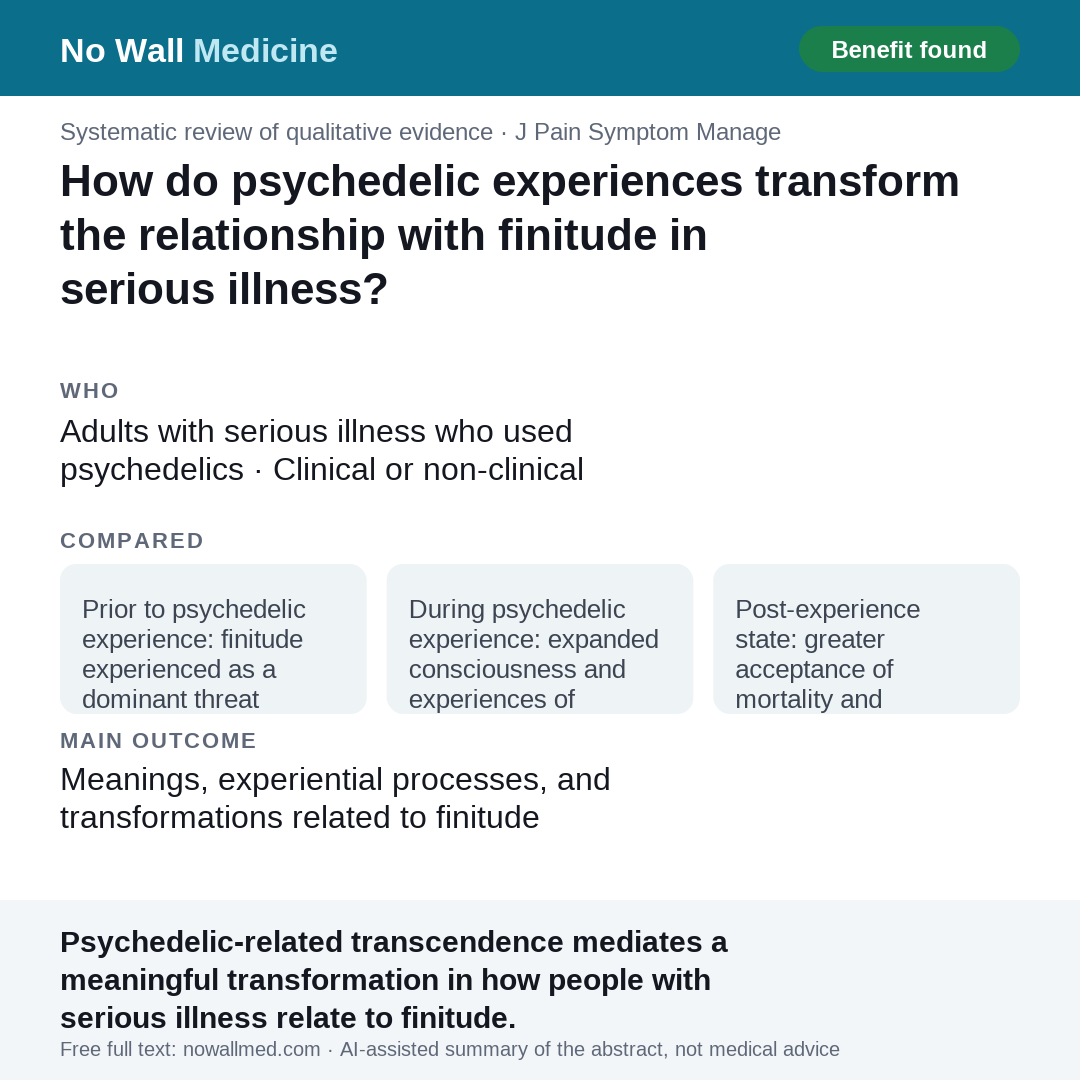
Psychedelic Experiences and Finitude in Serious Illness: A Qualitative Synthesis
Systematic review of qualitative evidenceBenefit found
How do psychedelic experiences transform the relationship with finitude in serious illness?
Who
Adults with serious illness who used psychedelics · Clinical or non-clinical contexts
Compared
Prior to psychedelic experience: finitude experienced as a dominant threat
During psychedelic experience: expanded consciousness and experiences of transcendence
Post-experience state: greater acceptance of mortality and reduced death anxiety
Main outcome
Meanings, experiential processes, and transformations related to finitude
Bottom line: Psychedelic-related transcendence mediates a meaningful transformation in how people with serious illness relate to finitude.
J Pain Symptom Manage · 2026-03-27Download image
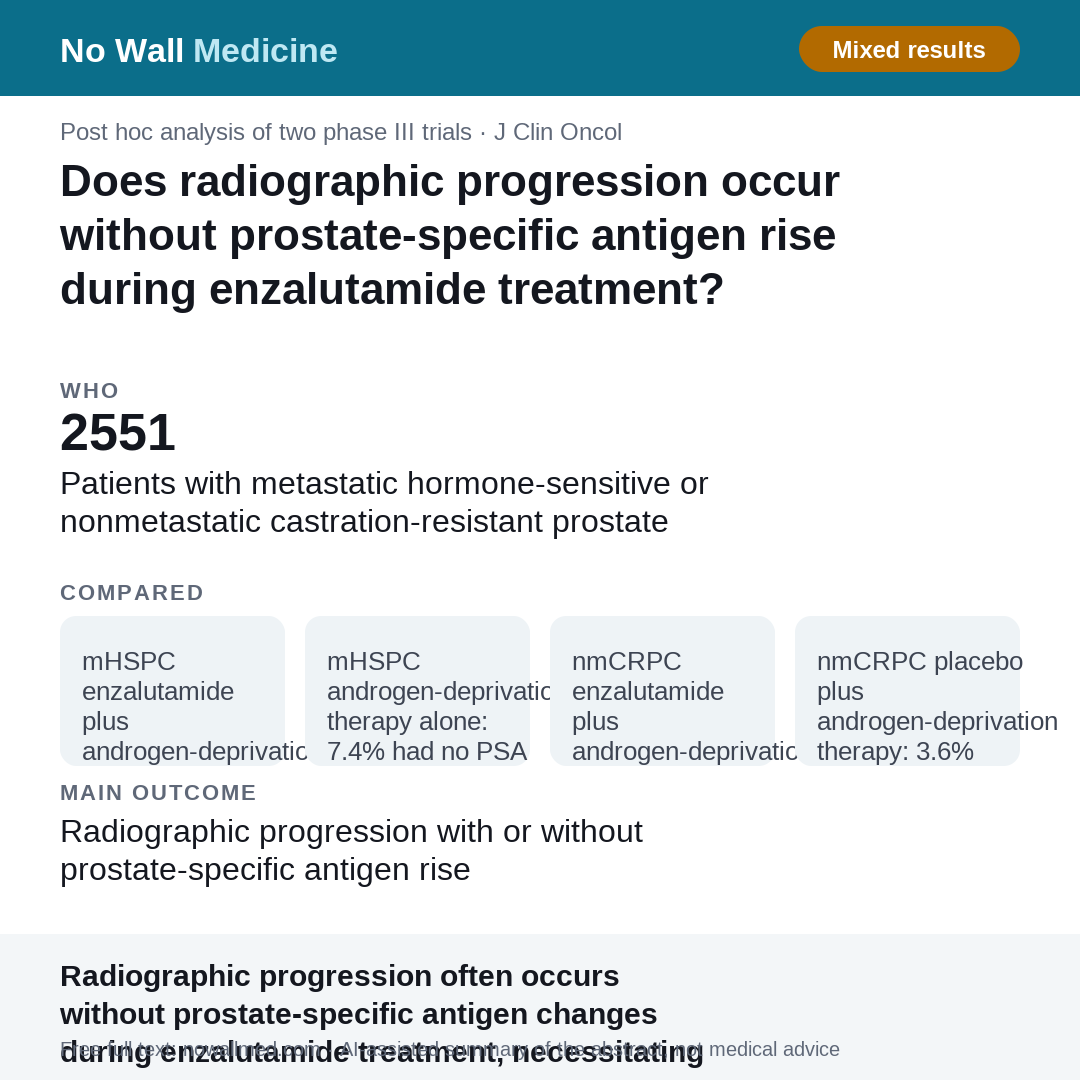
Radiographic Progression With and Without Prostate-Specific Antigen Rise in Patients With Advanced Prostate Cancer Treated With Enzalutamide
Post hoc analysis of two phase III trialsMixed results
Does radiographic progression occur without prostate-specific antigen rise during enzalutamide treatment?
Who
2551
Patients with metastatic hormone-sensitive or nonmetastatic castration-resistant prostate cancer
Compared
mHSPC enzalutamide plus androgen-deprivation therapy: 25.3% had no PSA rise at radiographic progression
mHSPC androgen-deprivation therapy alone: 7.4% had no PSA rise at radiographic progression
nmCRPC enzalutamide plus androgen-deprivation therapy: 21.9% had no PSA rise at radiographic progression
nmCRPC placebo plus androgen-deprivation therapy: 3.6% had no PSA rise at radiographic progression
Main outcome
Radiographic progression with or without prostate-specific antigen rise
Bottom line: Radiographic progression often occurs without prostate-specific antigen changes during enzalutamide treatment, necessitating periodic imaging surveillance.
Limitation: Liver metastases were higher in enzalutamide-treated patients with radiographic progression, although sample size was small.
J Clin Oncol · 2026-03-27Download image
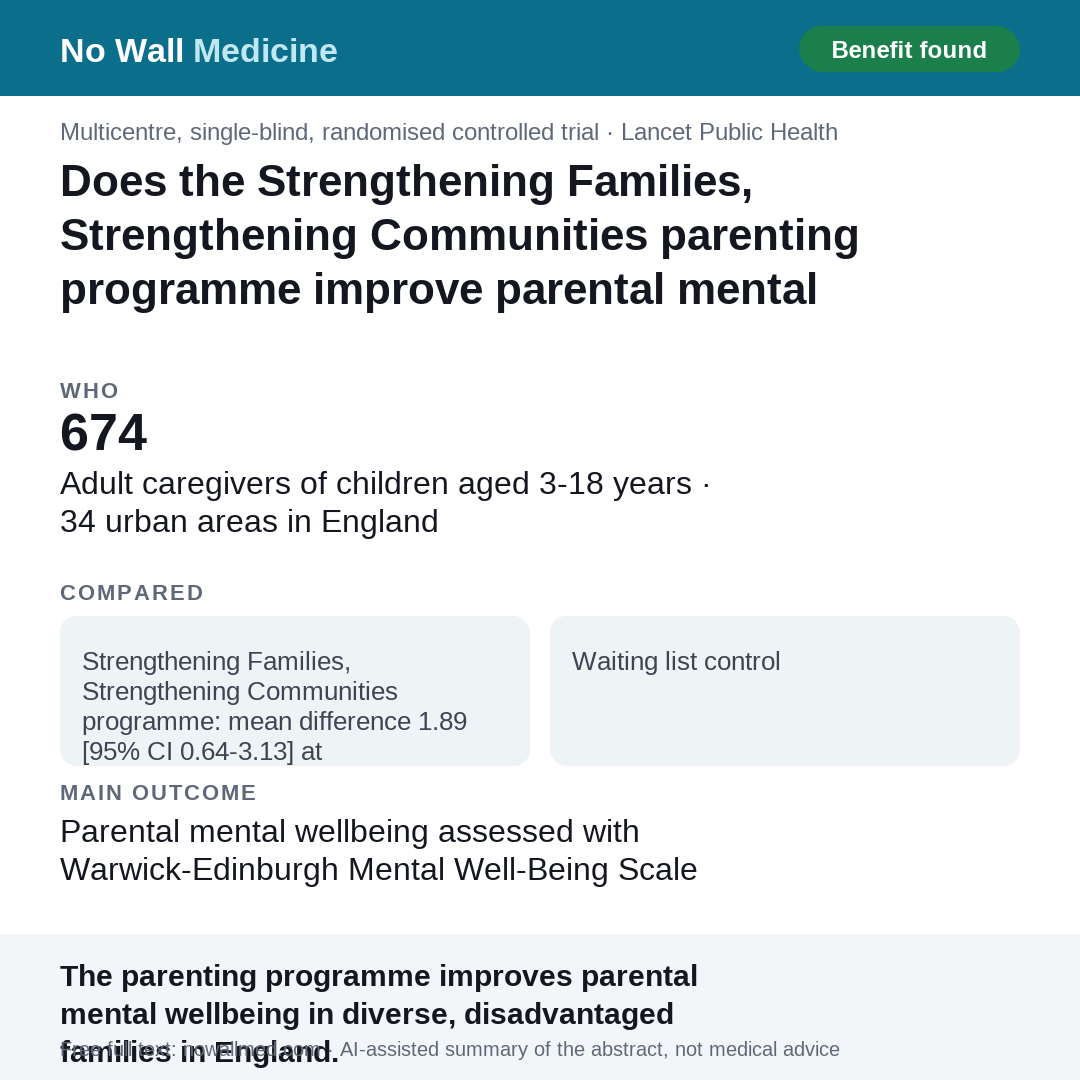
Effectiveness and cost-effectiveness of a parenting programme to improve family wellbeing in England (TOGETHER): a multicentre, single-blind, randomised controlled trial
Multicentre, single-blind, randomised controlled trialBenefit found
Does the Strengthening Families, Strengthening Communities parenting programme improve parental mental wellbeing?
Who
674
Adult caregivers of children aged 3-18 years · 34 urban areas in England
Compared
Strengthening Families, Strengthening Communities programme: mean difference 1.89 [95% CI 0.64-3.13] at post-intervention
Waiting list control
Main outcome
Parental mental wellbeing assessed with Warwick-Edinburgh Mental Well-Being Scale
Result: mean difference 1.66 [95% CI 0.30-3.02] at 6-month follow-up
Bottom line: The parenting programme improves parental mental wellbeing in diverse, disadvantaged families in England.
Funded by: UK National Institute for Health and Care Research
Lancet Public Health · 2026-03-27Download image
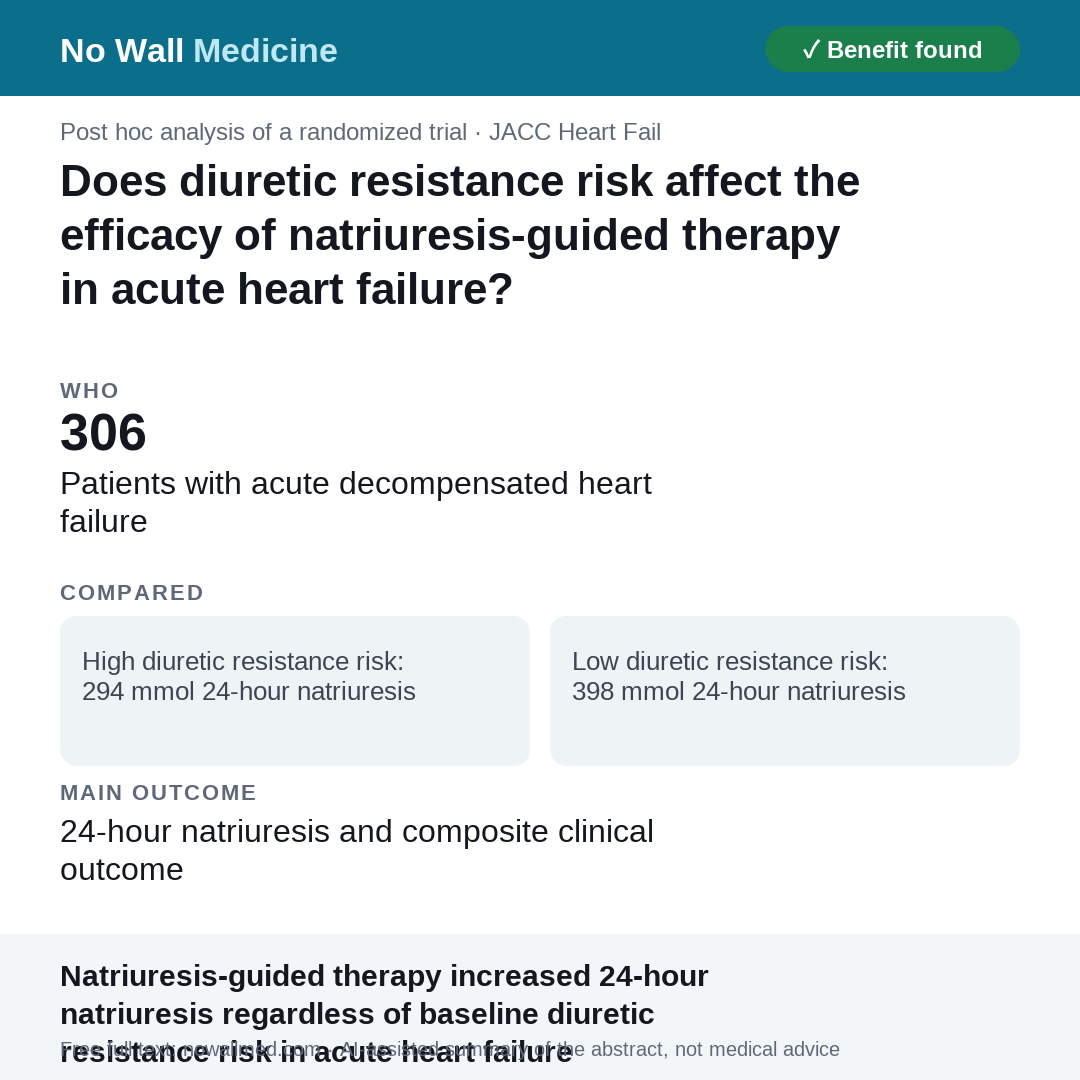
Diuretic Resistance Risk and the Efficacy of Natriuresis-Guided Diuretic Therapy in Acute Heart Failure: Post Hoc Analysis From the PUSH-AHF Trial
Post hoc analysis of a randomized trialBenefit found
Does diuretic resistance risk affect the efficacy of natriuresis-guided therapy in acute heart failure?
Who
306
Patients with acute decompensated heart failure
Compared
High diuretic resistance risk: 294 mmol 24-hour natriuresis
Low diuretic resistance risk: 398 mmol 24-hour natriuresis
Main outcome
24-hour natriuresis and composite clinical outcome
Result: hazard ratio 3.51 (95% CI 2.33-5.30)
Bottom line: Natriuresis-guided therapy increased 24-hour natriuresis regardless of baseline diuretic resistance risk in acute heart failure patients.
Limitation: This is a post hoc analysis of the PUSH-AHF trial.
JACC Heart Fail · 2026-03-27Download image
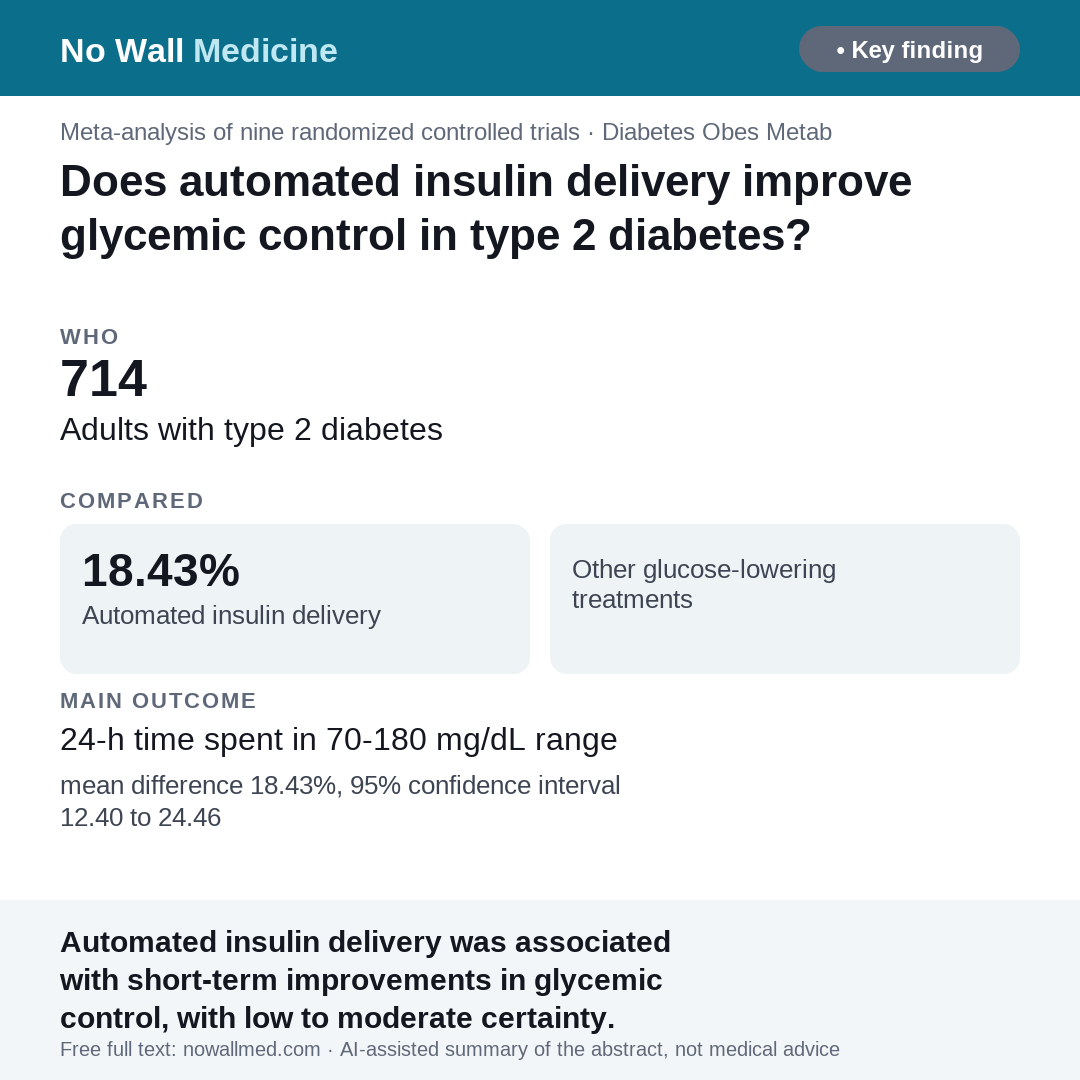
Efficacy and Safety of Automated Insulin Delivery in People With Type 2 Diabetes: A Systematic Review and Meta-Analysis
Meta-analysis of nine randomized controlled trialsKey finding
Does automated insulin delivery improve glycemic control in type 2 diabetes?
Who
714
Adults with type 2 diabetes
Compared
18.43%Automated insulin delivery (95% CI 12.40 to 24.46)
Other glucose-lowering treatments
Main outcome
24-h time spent in 70-180 mg/dL range
Result: mean difference 18.43%, 95% confidence interval 12.40 to 24.46
Bottom line: Automated insulin delivery was associated with short-term improvements in glycemic control, with low to moderate certainty.
Limitation: Limited number of studies and small cohorts
Diabetes Obes Metab · 2026-03-27Download image
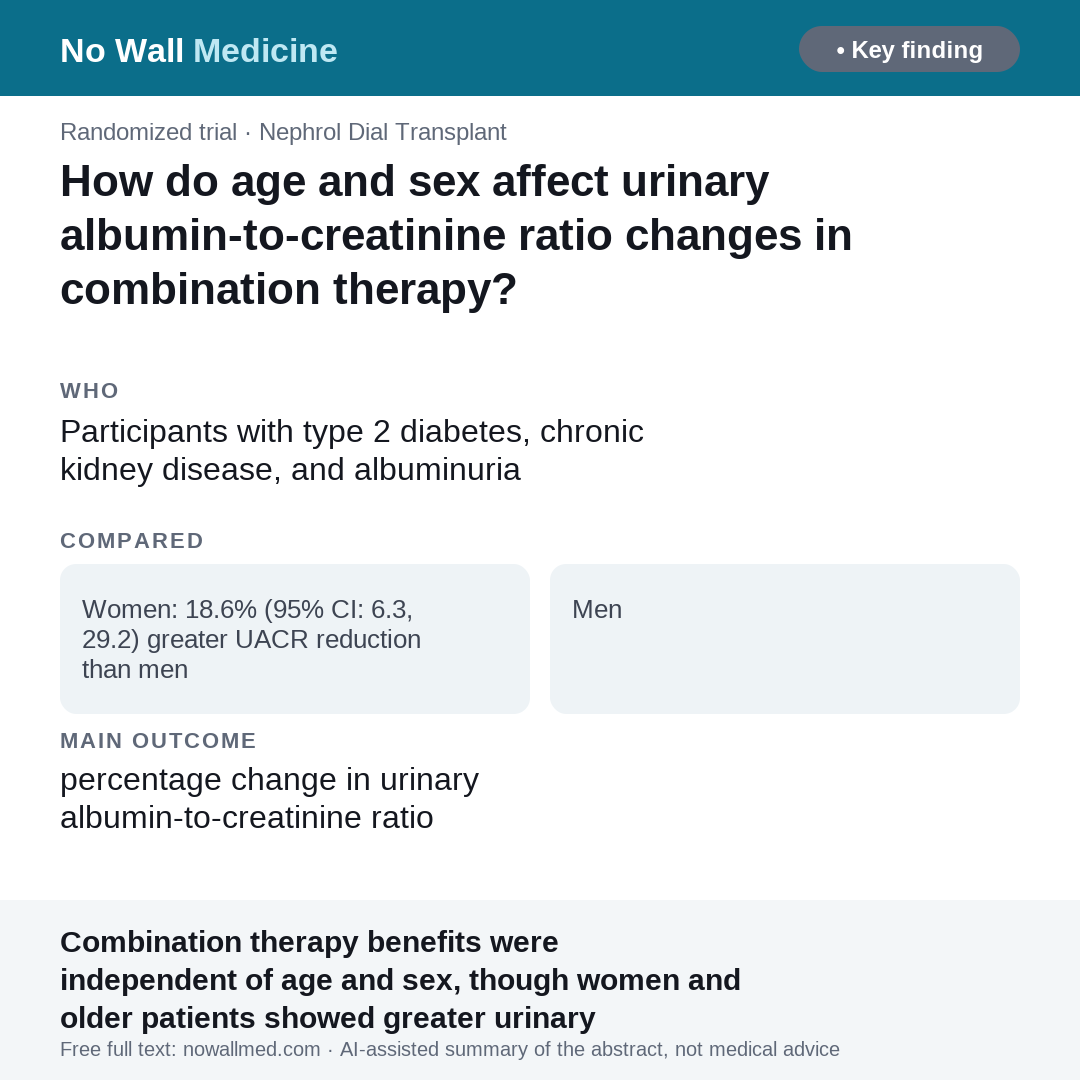
Sexual dimorphism and age effects in CKD and type 2 diabetes in the CONFIDENCE trial
Randomized trialKey finding
How do age and sex affect urinary albumin-to-creatinine ratio changes in combination therapy?
Who
Participants with type 2 diabetes, chronic kidney disease, and albuminuria
Compared
Women: 18.6% (95% CI: 6.3, 29.2) greater UACR reduction than men
Men
Main outcome
percentage change in urinary albumin-to-creatinine ratio
Result: -10.2% (95% CI: -15.5, -4.6) incremental change per 10-year age increase
Bottom line: Combination therapy benefits were independent of age and sex, though women and older patients showed greater urinary albumin-to-creatinine ratio reduction.
Nephrol Dial Transplant · 2026-03-27Download image
Diagnostic accuracy of PSMA-targeted radioguided surgery in prostate cancer at multiple anatomical levels: a systematic review and meta-analysis
Systematic review and meta-analysisKey finding
What is the diagnostic accuracy of prostate-specific membrane antigen-targeted radioguided surgery in prostate cancer?
Who
Patients with prostate cancer
Compared
Prostate-specific membrane antigen-targeted radioguided surgery: sensitivity 90–97% and specificity 90–99%
Preoperative imaging: log diagnostic odds ratio 2.99
Main outcome
Diagnostic performance at patient, lesion, region, and lymph node levels
Result: log diagnostic odds ratio 5.77 vs. 2.99 (p < 0.0001)
Bottom line: Prostate-specific membrane antigen-targeted radioguided surgery shows robust diagnostic accuracy and outperforms preoperative imaging in prostate cancer.
Eur J Nucl Med Mol Imaging · 2026-03-27Download image

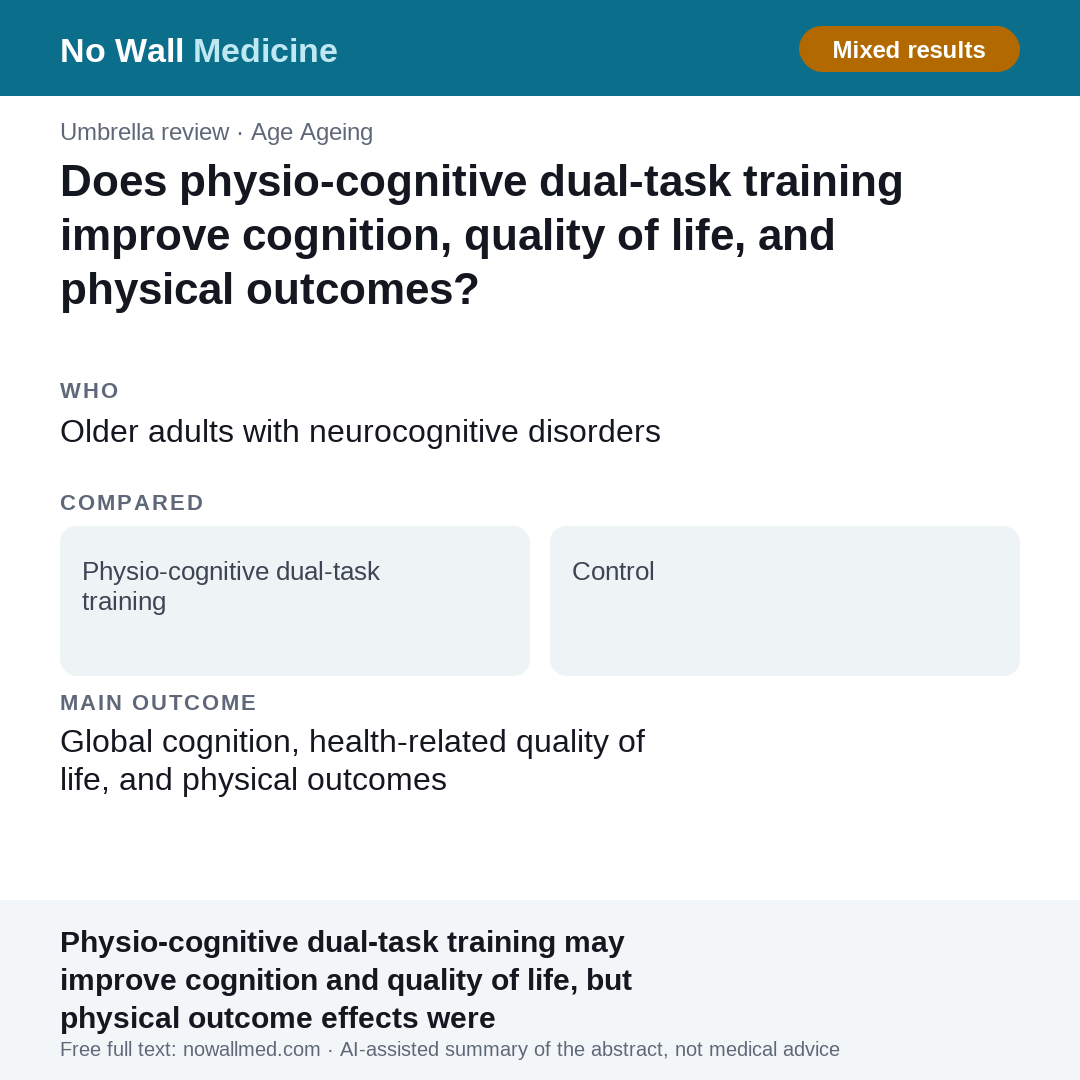
Effectiveness of physio-cognitive dual-task training on improving global cognition, health-related quality of life, and physical outcomes among older adults with neurocognitive disorders: an umbrella review
Umbrella reviewMixed results
Does physio-cognitive dual-task training improve cognition, quality of life, and physical outcomes?
Who
Older adults with neurocognitive disorders
Compared
Physio-cognitive dual-task training
Control
Main outcome
Global cognition, health-related quality of life, and physical outcomes
Bottom line: Physio-cognitive dual-task training may improve cognition and quality of life, but physical outcome effects were non-significant.
Limitation: Most reviews were low or critically low quality and evidence certainty was low.
Age Ageing · 2026-03-27Download image
Nasal Aesthetic Preferences Across Populations: A Systematic Review of Cultural, Ethnic, and Generational Trends
Systematic reviewMixed results
What are the nasal aesthetic preferences across different cultures, ethnicities, and generations?
Who
25,382
Adult populations aged 18 years or older · Multiple databases including PubMed, Embase, Web of Science, and PsycINFO
Compared
North American Caucasians: slight dorsal scoop with mild underprojection
East Asian and Middle Eastern groups: straight dorsum with more obtuse nasolabial angles
Millennials and Generation Z: longer, straighter noses with augmented radix and reduced rotation
Main outcome
Nasal aesthetic preferences and regional variations
Bottom line: Nasal aesthetic preferences vary by culture and generation, requiring a personalized and culturally sensitive approach to rhinoplasty.
Limitation: Notable contradictions and the underrepresentation of Black populations were highlighted.
Aesthet Surg J · 2026-03-27Download image

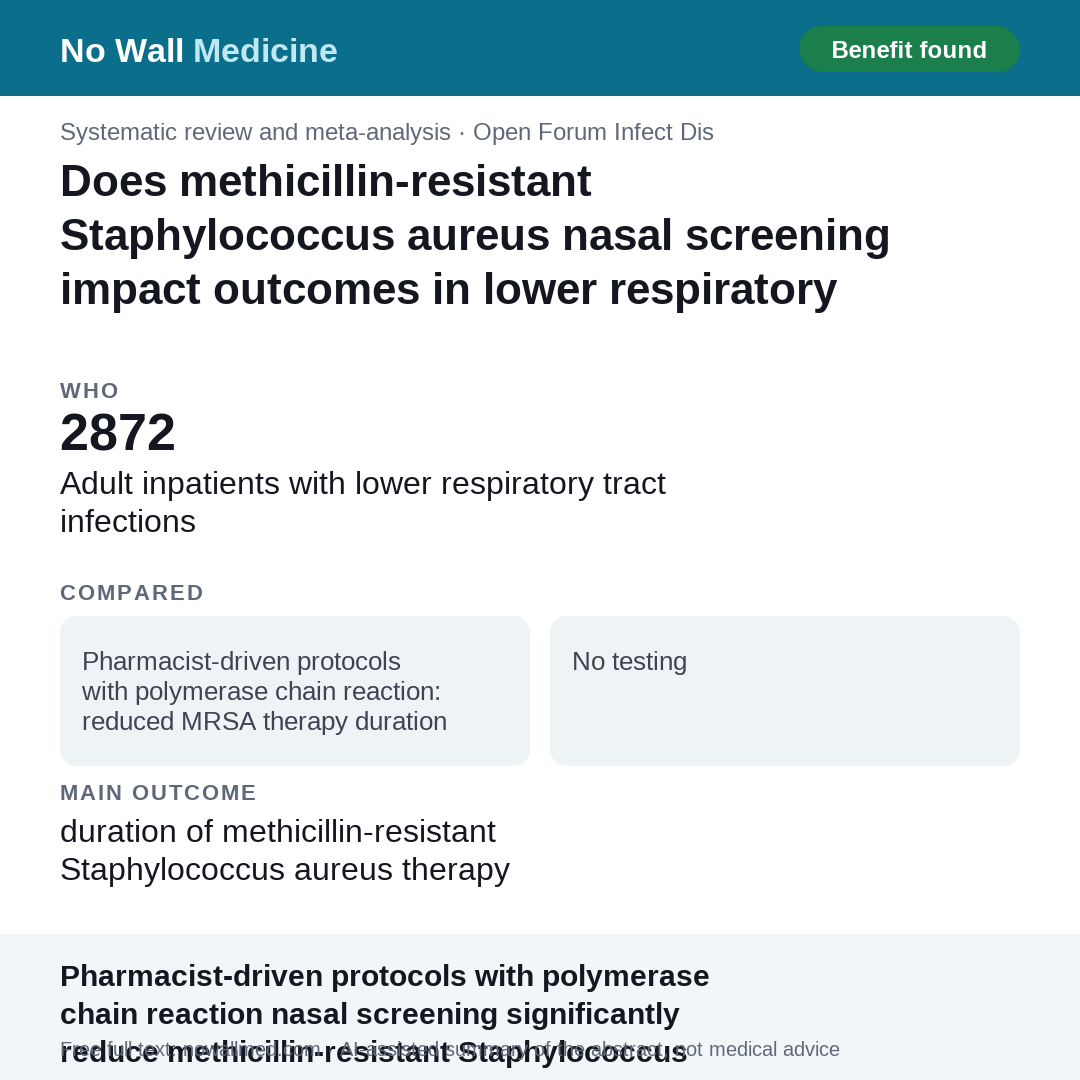
Impact of Methicillin-Resistant Staphylococcus aureus Nasal Screening in Lower Respiratory Tract Infections: A Systematic Review Incorporating Network and Bayesian Meta-Analyses
Systematic review and meta-analysisBenefit found
Does methicillin-resistant Staphylococcus aureus nasal screening impact outcomes in lower respiratory tract infections?
Who
2872
Adult inpatients with lower respiratory tract infections
Compared
Pharmacist-driven protocols with polymerase chain reaction: reduced MRSA therapy duration
No testing
Main outcome
duration of methicillin-resistant Staphylococcus aureus therapy
Result: mean difference -1.34 days (95% CI -1.59 to -1.08)
Bottom line: Pharmacist-driven protocols with polymerase chain reaction nasal screening significantly reduce methicillin-resistant Staphylococcus aureus therapy duration and improve clinical outcomes.
Open Forum Infect Dis · 2026-03-27Download image
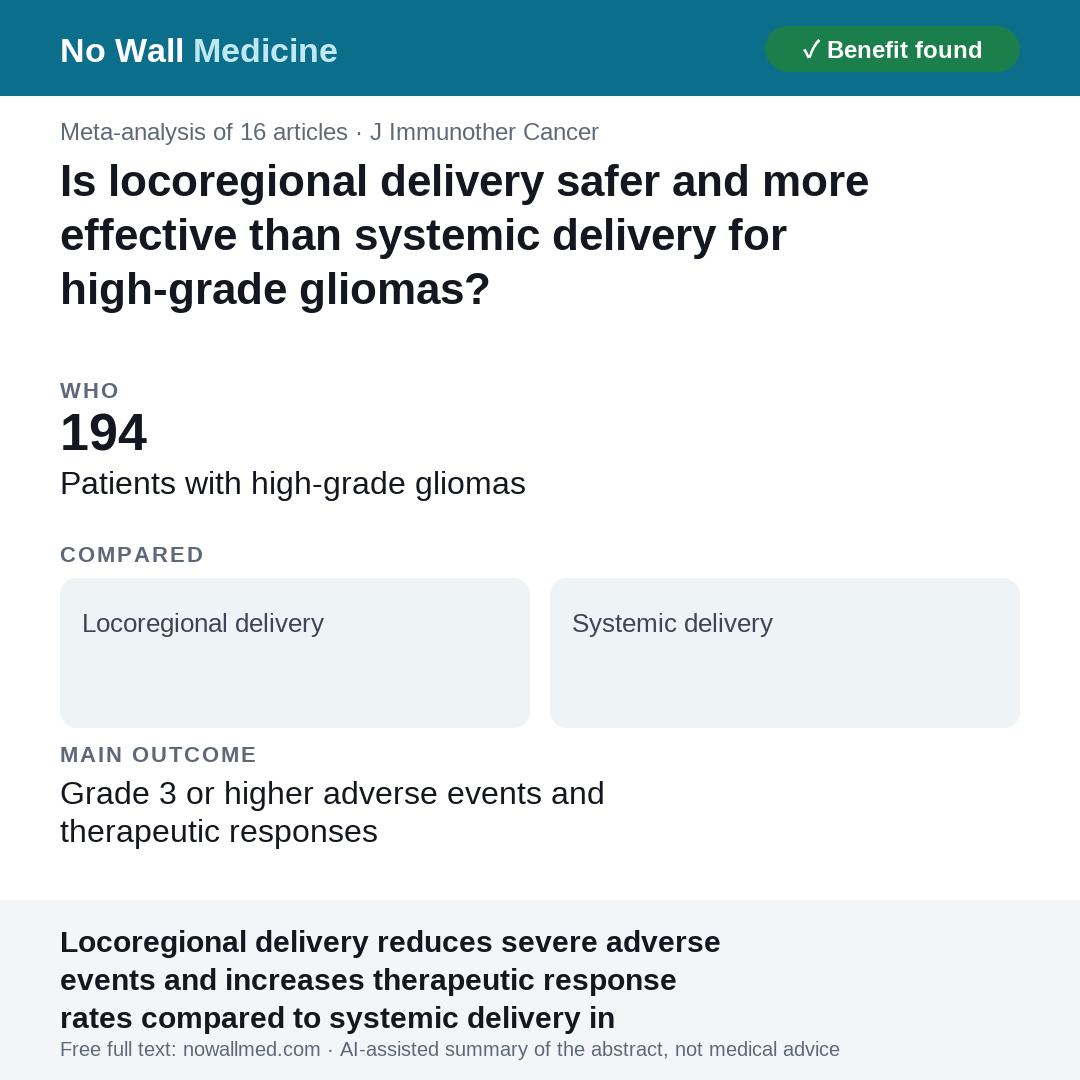
Locoregional delivery of CAR T cells in high-grade gliomas: a systematic analysis of safety, efficacy, and emerging biomarkers of response
Meta-analysis of 16 articlesBenefit found
Is locoregional delivery safer and more effective than systemic delivery for high-grade gliomas?
Who
194
Patients with high-grade gliomas
Compared
Locoregional delivery
Systemic delivery
Main outcome
Grade 3 or higher adverse events and therapeutic responses
Result: RR 0.39 (95% CI 0.30 to 0.52) for adverse events; RR 3.79 (95% CI 1.23 to 11.70) for responses
Bottom line: Locoregional delivery reduces severe adverse events and increases therapeutic response rates compared to systemic delivery in high-grade gliomas.
J Immunother Cancer · 2026-03-27Download image
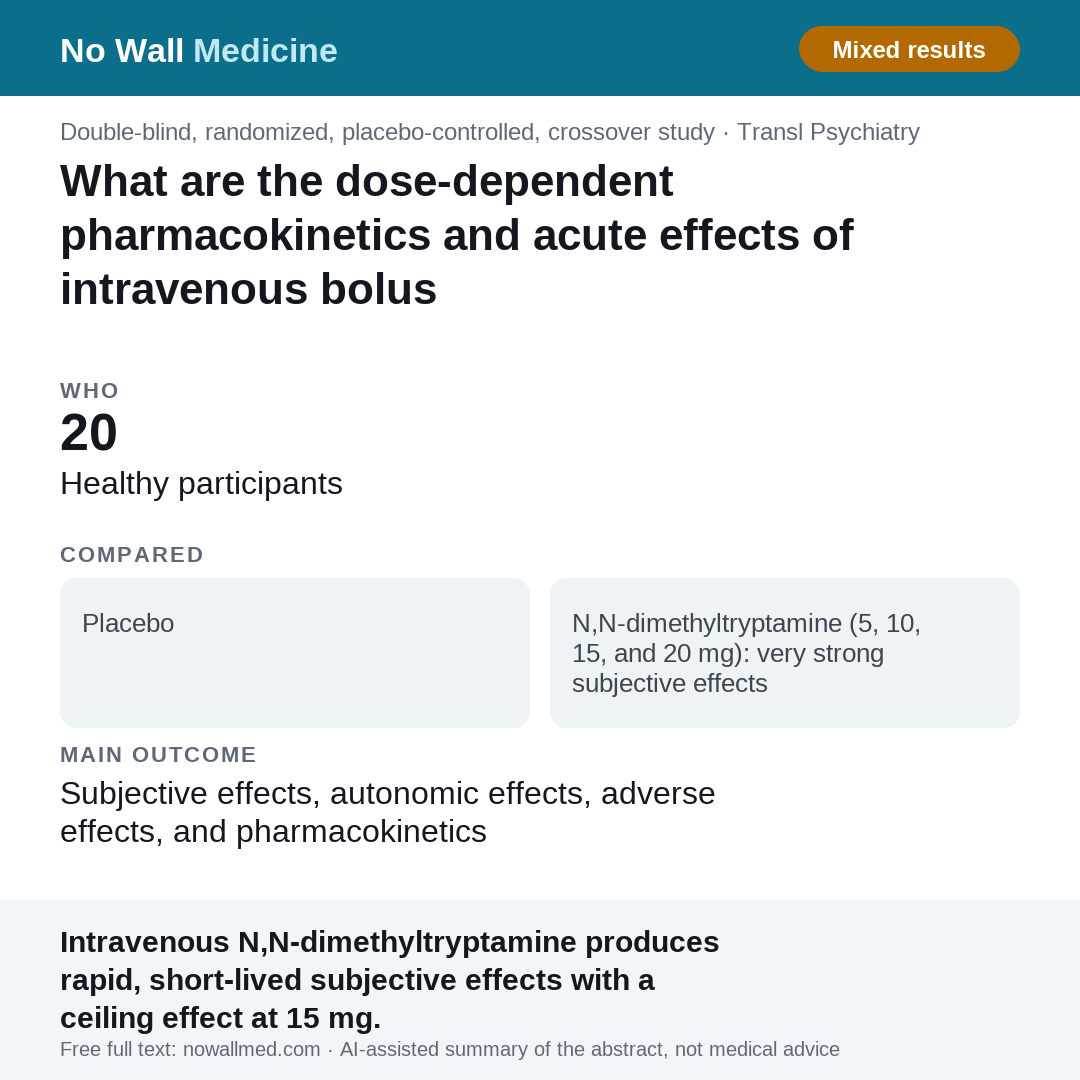
Dose-dependent pharmacokinetics and acute effects of intravenous bolus N,N-dimethyltryptamine: double-blind, randomized versus open-label dose-escalation administration study in healthy participants
Double-blind, randomized, placebo-controlled, crossover studyMixed results
What are the dose-dependent pharmacokinetics and acute effects of intravenous bolus N,N-dimethyltryptamine?
Who
20
Healthy participants
Compared
Placebo
N,N-dimethyltryptamine (5, 10, 15, and 20 mg): very strong subjective effects
Main outcome
Subjective effects, autonomic effects, adverse effects, and pharmacokinetics
Bottom line: Intravenous N,N-dimethyltryptamine produces rapid, short-lived subjective effects with a ceiling effect at 15 mg.
Limitation: Tolerability and intensity were impacted by blinding and expectancy.
Transl Psychiatry · 2026-03-27Download image
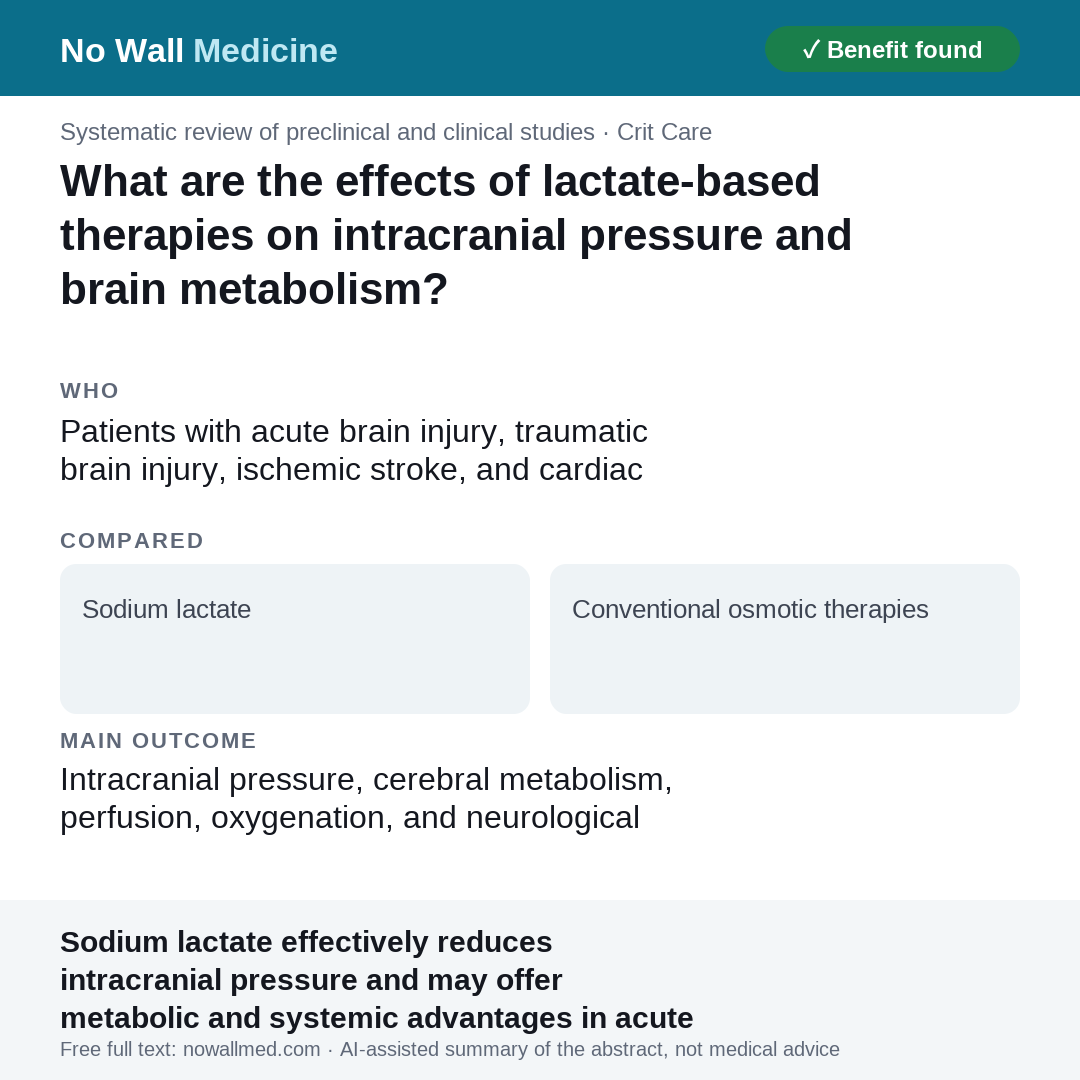
Effects of lactate-based therapies on intracranial pressure and brain metabolism of patients with acute brain injury: a systematic review
Systematic review of preclinical and clinical studiesBenefit found
What are the effects of lactate-based therapies on intracranial pressure and brain metabolism?
Who
Patients with acute brain injury, traumatic brain injury, ischemic stroke, and cardiac arrest
Compared
Sodium lactate
Conventional osmotic therapies
Main outcome
Intracranial pressure, cerebral metabolism, perfusion, oxygenation, and neurological outcomes
Bottom line: Sodium lactate effectively reduces intracranial pressure and may offer metabolic and systemic advantages in acute brain injury.
Limitation: Metabolic benefits were inconsistent and functional outcome data were limited.
Crit Care · 2026-03-27Download image
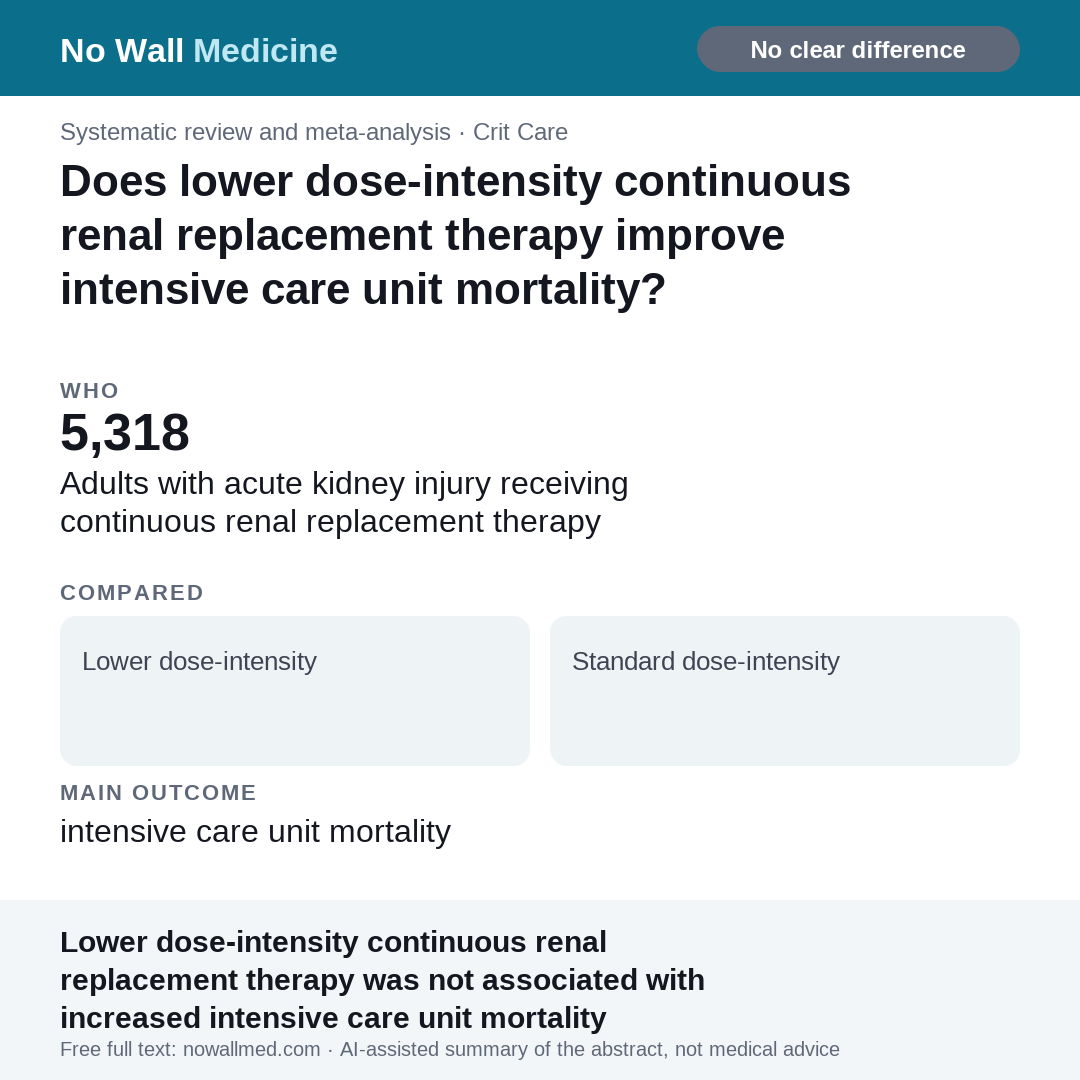
Lower versus standard dose-intensity continuous renal replacement therapy: a systematic review and meta-analysis
Systematic review and meta-analysisNo clear difference
Does lower dose-intensity continuous renal replacement therapy improve intensive care unit mortality?
Who
5,318
Adults with acute kidney injury receiving continuous renal replacement therapy
Compared
Lower dose-intensity
Standard dose-intensity
Main outcome
intensive care unit mortality
Result: OR 0.77 (95% CI 0.60–0.98)
Bottom line: Lower dose-intensity continuous renal replacement therapy was not associated with increased intensive care unit mortality among critically ill adults.
Limitation: Most cohort studies had serious risk of bias and certainty of evidence was very low.
Crit Care · 2026-03-27Download image
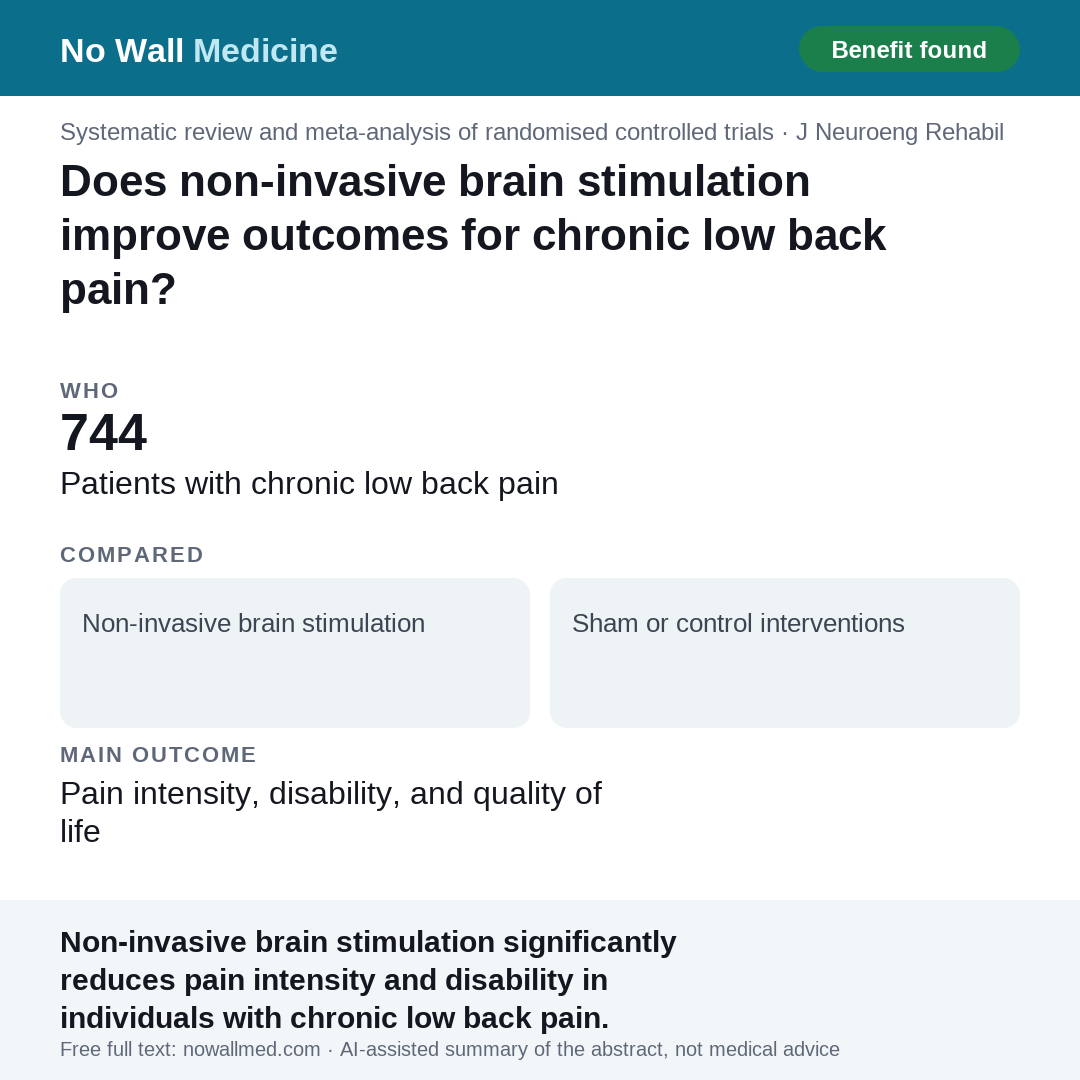
Efficacy and safety of non-invasive brain stimulation for chronic low back pain: a systematic review and meta-analysis of randomised controlled trials
Systematic review and meta-analysis of randomised controlled trialsBenefit found
Does non-invasive brain stimulation improve outcomes for chronic low back pain?
Who
744
Patients with chronic low back pain
Compared
Non-invasive brain stimulation
Sham or control interventions
Main outcome
Pain intensity, disability, and quality of life
Result: standardised mean difference -0.85 (-1.21, -0.49) for pain intensity
Bottom line: Non-invasive brain stimulation significantly reduces pain intensity and disability in individuals with chronic low back pain.
Limitation: Very low to moderate evidence quality
J Neuroeng Rehabil · 2026-03-27Download image
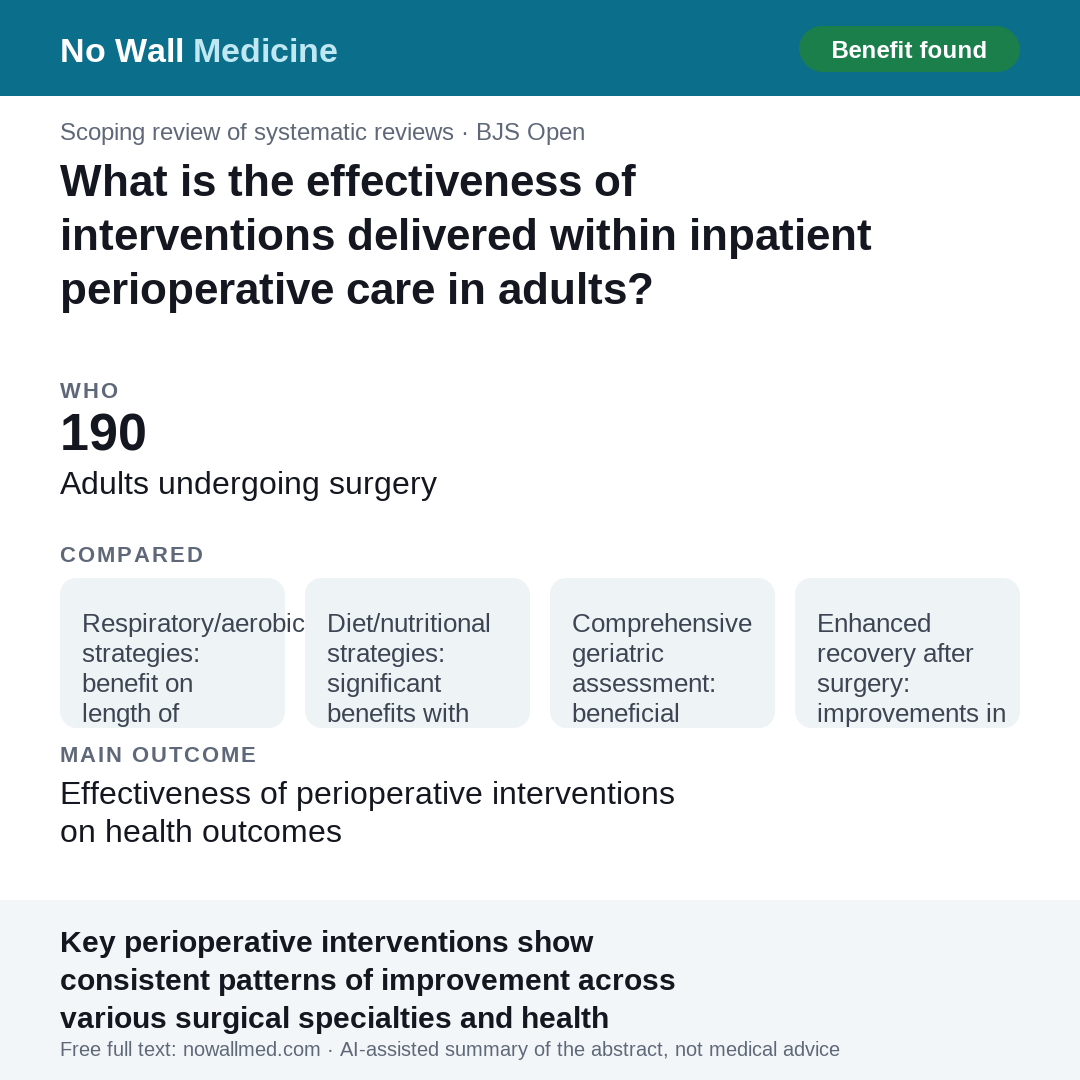
Effectiveness of interventions delivered within inpatient perioperative care in adults undergoing surgery: scoping review of systematic reviews
Scoping review of systematic reviewsBenefit found
What is the effectiveness of interventions delivered within inpatient perioperative care in adults?
Who
190
Adults undergoing surgery
Compared
Respiratory/aerobic strategies: benefit on length of hospital stay, postoperative complications, and 6-minute walk test
Diet/nutritional strategies: significant benefits with regard to length of hospital stay, postoperative complications, and surgical site infections
Comprehensive geriatric assessment: beneficial effect on mortality, length of hospital stay, and activities of daily living
Enhanced recovery after surgery: improvements in length of hospital stay, postoperative complications, and morbidity
Main outcome
Effectiveness of perioperative interventions on health outcomes
Bottom line: Key perioperative interventions show consistent patterns of improvement across various surgical specialties and health outcomes.
BJS Open · 2026-03-27Download image