Visual abstracts
New randomized trials and meta-analyses from leading journals at a glance: who was studied, what was compared, and what was found. Every paper is free to read in full.
All specialtiesCardiology 4877Oncology 4138Gastroenterology & Hepatology 1942Infectious Disease 3837Neurology 1905Psychiatry & Mental Health 2273Pulmonology 2143Critical Care 1365Endocrinology & Diabetes 2580Pediatrics 2980Surgery 2559Orthopedics & Sports Medicine 931Neurosurgery 537Cardiothoracic & Vascular Surgery 674Plastic & Reconstructive Surgery 591Nephrology 1133Rheumatology 823Hematology 1109Dermatology 621Ophthalmology 543Obstetrics & Gynecology 1686Public & Global Health 1058Radiology & Imaging 648Anesthesiology 986Urology 764ENT (Otolaryngology) 503Emergency Medicine 511Allergy & Immunology 313Geriatrics 981Family Medicine & Primary Care 562Medical Genetics & Genomics 676Pathology & Laboratory Medicine 159Physical Medicine & Rehabilitation 757Palliative Care 444Nutrition 1588Digital Health & AI 2201General Medicine 321
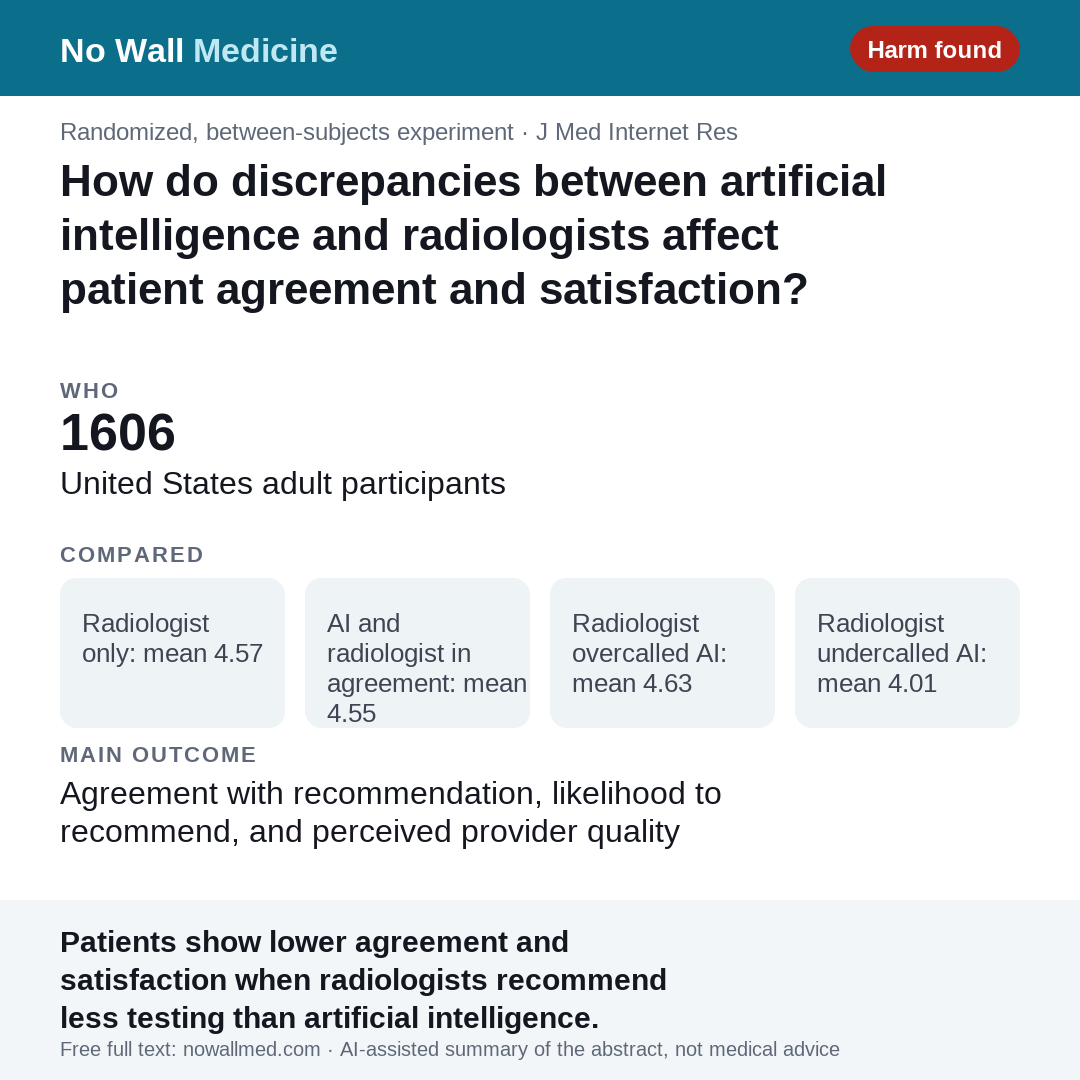
Patient Reactions to Artificial Intelligence-Clinician Discrepancies: Web-Based Randomized Experiment
Randomized, between-subjects experimentHarm found
How do discrepancies between artificial intelligence and radiologists affect patient agreement and satisfaction?
Who
1606
United States adult participants
Compared
Radiologist only: mean 4.57
AI and radiologist in agreement: mean 4.55
Radiologist overcalled AI: mean 4.63
Radiologist undercalled AI: mean 4.01
Main outcome
Agreement with recommendation, likelihood to recommend, and perceived provider quality
Bottom line: Patients show lower agreement and satisfaction when radiologists recommend less testing than artificial intelligence.
Limitation: The study used a simulated scenario where participants assumed the role of patients.
J Med Internet Res · 2025-05-22Download image
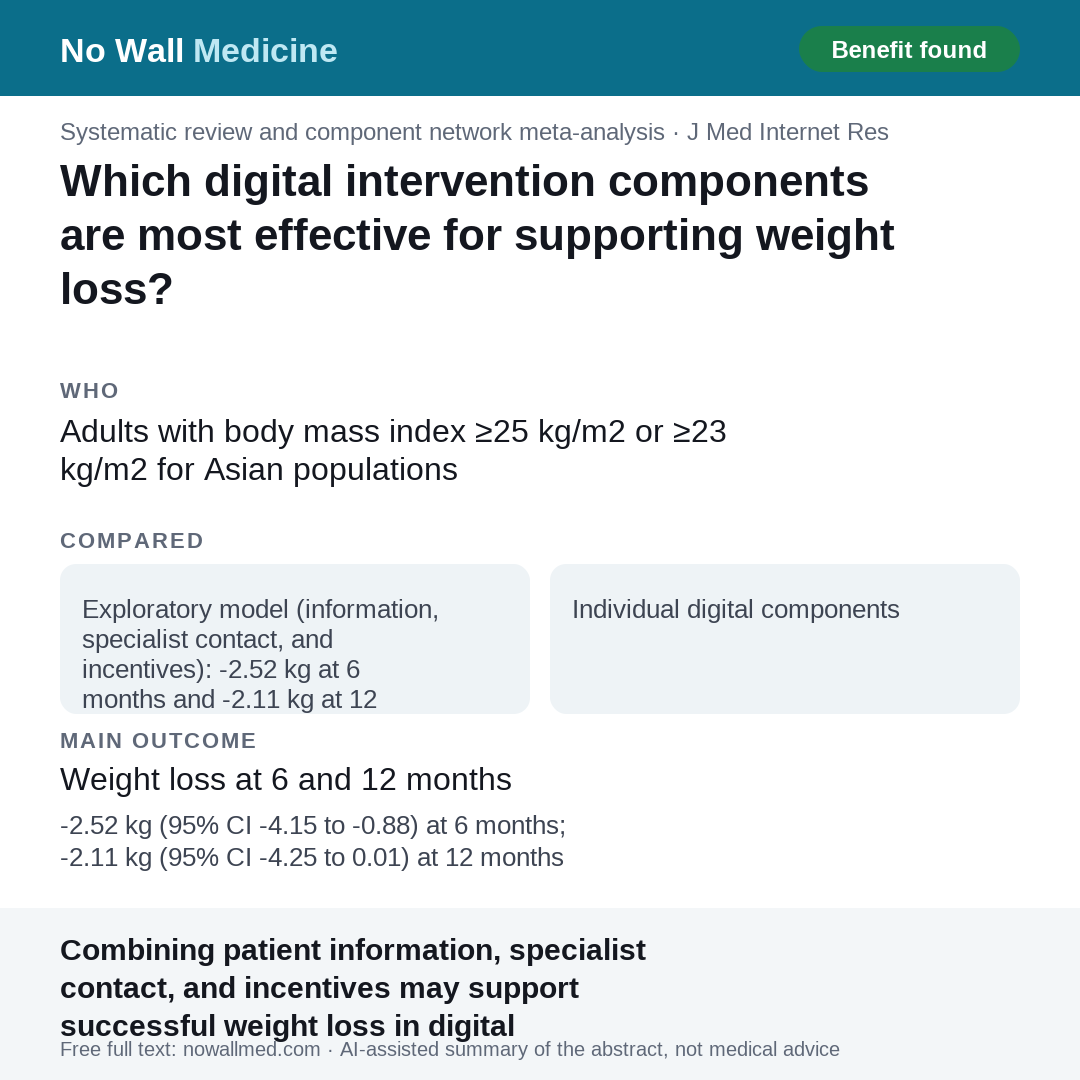
Evaluation of the Aspects of Digital Interventions That Successfully Support Weight Loss: Systematic Review With Component Network Meta-Analysis
Systematic review and component network meta-analysisBenefit found
Which digital intervention components are most effective for supporting weight loss?
Who
Adults with body mass index ≥25 kg/m2 or ≥23 kg/m2 for Asian populations
Compared
Exploratory model (information, specialist contact, and incentives): -2.52 kg at 6 months and -2.11 kg at 12 months
Individual digital components
Main outcome
Weight loss at 6 and 12 months
Result: -2.52 kg (95% CI -4.15 to -0.88) at 6 months; -2.11 kg (95% CI -4.25 to 0.01) at 12 months
Bottom line: Combining patient information, specialist contact, and incentives may support successful weight loss in digital interventions.
Limitation: No trial arms used this specific combination of components.
J Med Internet Res · 2025-05-22Download image
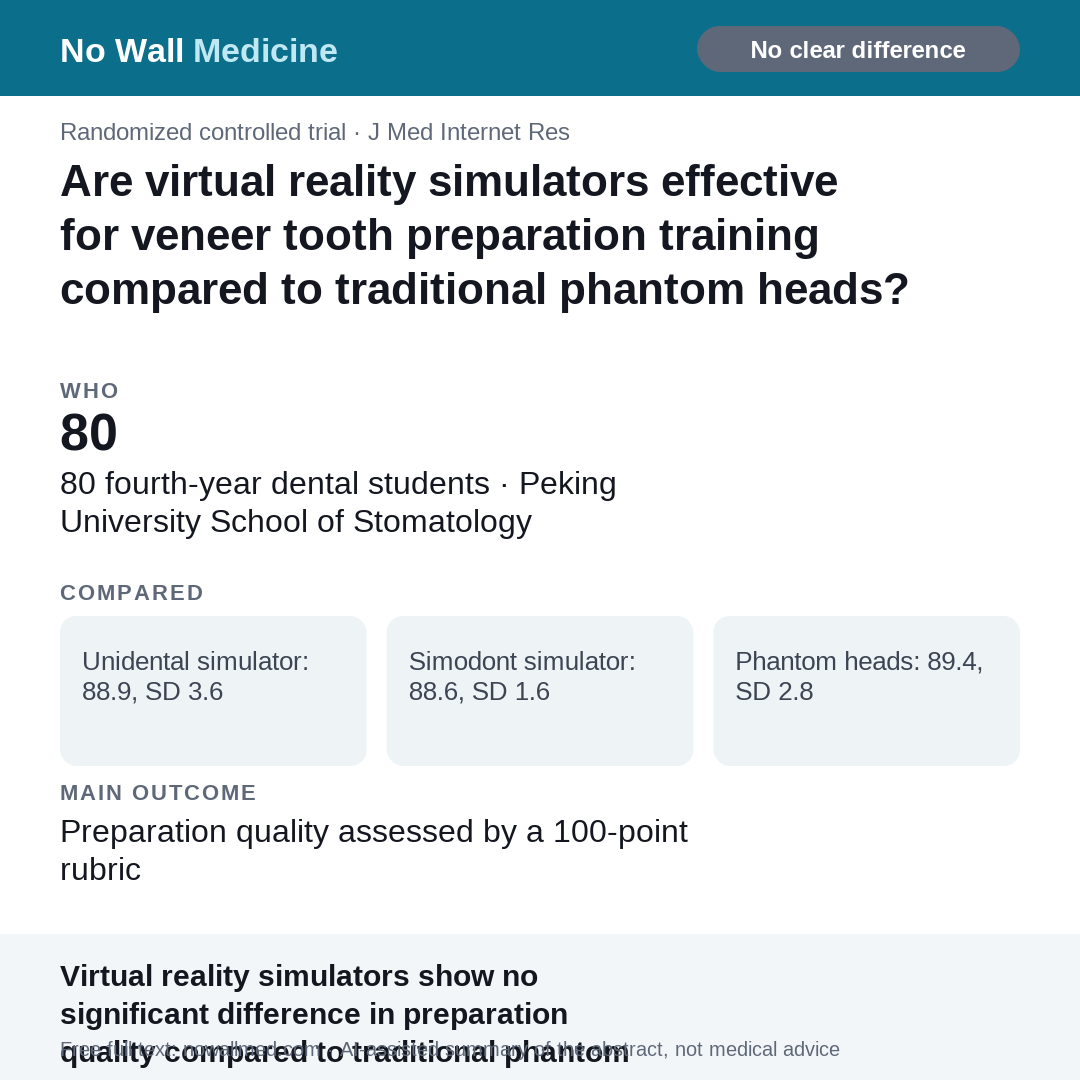
Effectiveness and Methodologies of Virtual Reality Dental Simulators for Veneer Tooth Preparation Training: Randomized Controlled Trial
Randomized controlled trialNo clear difference
Are virtual reality simulators effective for veneer tooth preparation training compared to traditional phantom heads?
Who
80
80 fourth-year dental students · Peking University School of Stomatology
Compared
Unidental simulator: 88.9, SD 3.6
Simodont simulator: 88.6, SD 1.6
Phantom heads: 89.4, SD 2.8
Main outcome
Preparation quality assessed by a 100-point rubric
Bottom line: Virtual reality simulators show no significant difference in preparation quality compared to traditional phantom heads for veneer training.
Limitation: Formal equivalence testing was not performed.
J Med Internet Res · 2025-05-22Download image
Meta-aggregation of facilitators and barriers to home-based palliative care
Meta-aggregation of qualitative researchUnclear result
What are the facilitators and barriers to home-based palliative care?
Who
334
Participants in qualitative studies regarding home-based palliative care · Multiple databases including PubMed and Cochrane Library
Compared
Facilitators: family support, collaboration within interdisciplinary teams, and community resource availability
Barriers: healthcare policies, cultural and social influences, lack of knowledge and attitudes, and insufficient resources
Main outcome
Facilitators and barriers to home-based palliative care
Bottom line: Implementation of home-based palliative care is supported by family and teams but hindered by policy, culture, and resource gaps.
BMC Palliat Care · 2025-05-22Download image

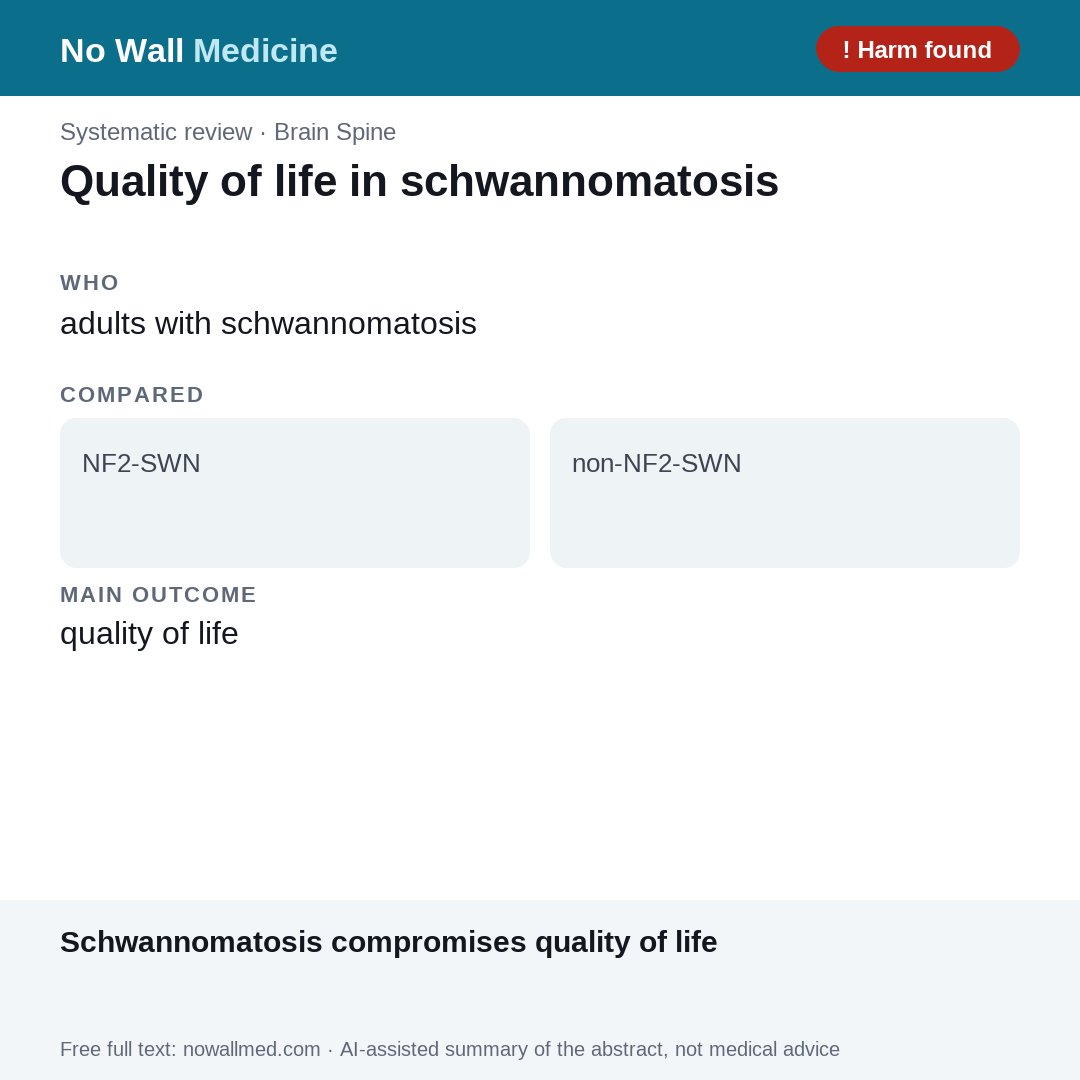
Quality of life assessment in schwannomatosis - A systematic review
Systematic reviewHarm found
Quality of life in schwannomatosis
Who
adults with schwannomatosis
Compared
NF2-SWN
non-NF2-SWN
Main outcome
quality of life
Bottom line: Schwannomatosis compromises quality of life
Brain Spine · 2025-05-22Download image
Comparison of supplemental breast cancer imaging techniques-interim results from the BRAID randomised controlled trial
Randomized controlled trialMixed results
Which supplemental imaging technique is most beneficial for women with dense breasts?
Who
9361
Women aged 50-70 years with dense breasts and negative mammograms · United Kingdom, ten breast screening sites
Compared
Abbreviated MRI: 17·4 (95% CI 12·2-23·9, n=37) per 1000 examinations
Automated whole breast ultrasound: 4·2 (1·9-8·0, n=9) per 1000 examinations
Contrast-enhanced mammography: 19·2 (13·7-26·1, n=39) per 1000 examinations
Standard of care
Main outcome
Cancer detection rate
Bottom line: Abbreviated MRI and contrast-enhanced mammography detected more invasive cancers than automated whole breast ultrasound.
Funded by: Cancer Research UK, GE Healthcare, and Bayer Healthcare
Lancet · 2025-05-21Download image

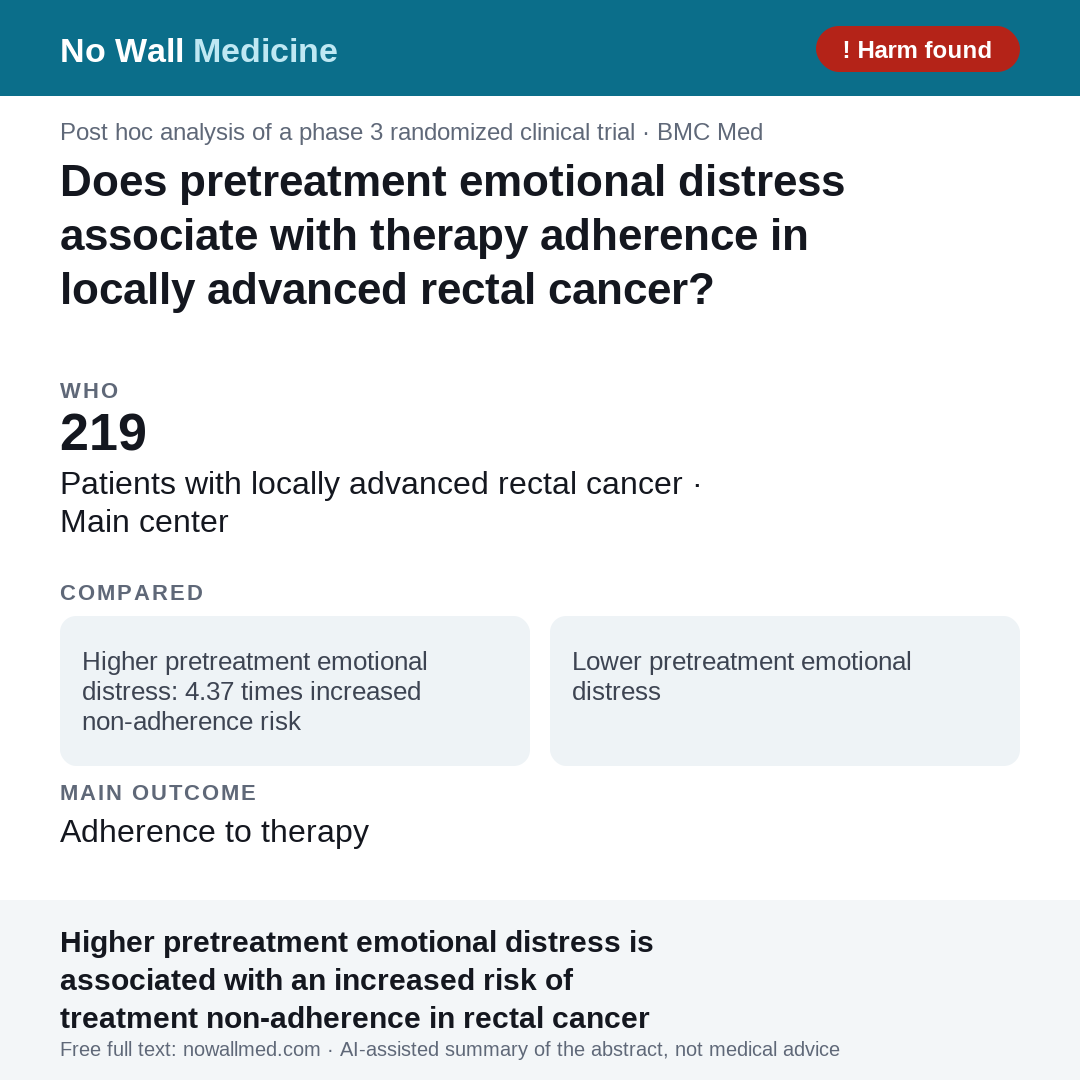
Associations of pretreatment emotional distress with adherence to therapy for patients with locally advanced rectal cancer: a post hoc analysis of the Chinese FOWARC phase 3 randomized clinical trial
Post hoc analysis of a phase 3 randomized clinical trialHarm found
Does pretreatment emotional distress associate with therapy adherence in locally advanced rectal cancer?
Who
219
Patients with locally advanced rectal cancer · Main center
Compared
Higher pretreatment emotional distress: 4.37 times increased non-adherence risk
Lower pretreatment emotional distress
Main outcome
Adherence to therapy
Result: OR: 4.37, 95% CI: 1.92-9.96
Bottom line: Higher pretreatment emotional distress is associated with an increased risk of treatment non-adherence in rectal cancer patients.
BMC Med · 2025-05-21Download image
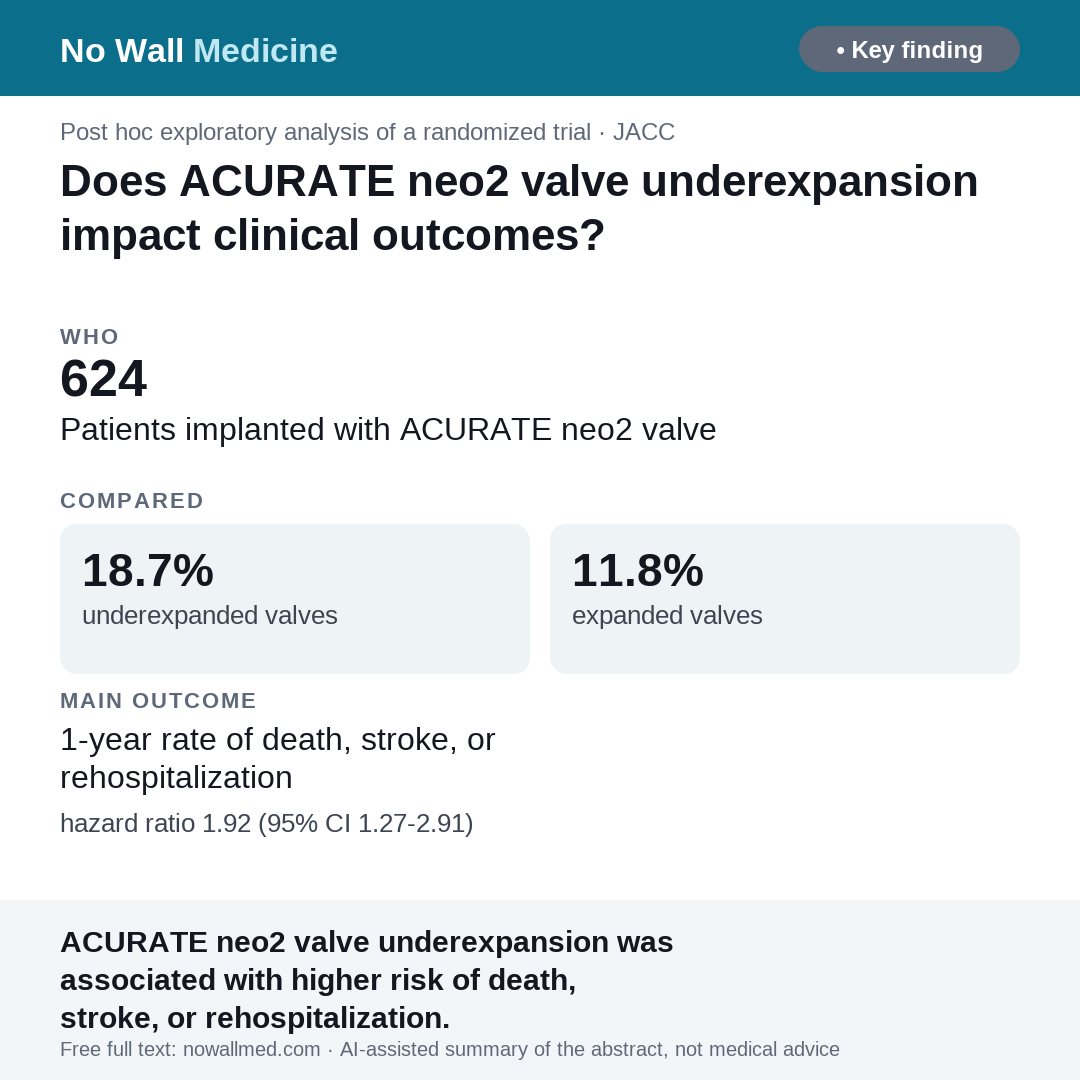
Valve Underexpansion and Clinical Outcomes With ACURATE neo2: Findings From the ACURATE IDE Trial
Post hoc exploratory analysis of a randomized trialHarm found
Does ACURATE neo2 valve underexpansion impact clinical outcomes?
Who
624
Patients implanted with ACURATE neo2 valve
Compared
18.7%underexpanded valves
11.8%expanded valves
Main outcome
1-year rate of death, stroke, or rehospitalization
Result: hazard ratio 1.92 (95% CI 1.27-2.91)
Bottom line: ACURATE neo2 valve underexpansion was associated with higher risk of death, stroke, or rehospitalization.
JACC · 2025-05-21Download image
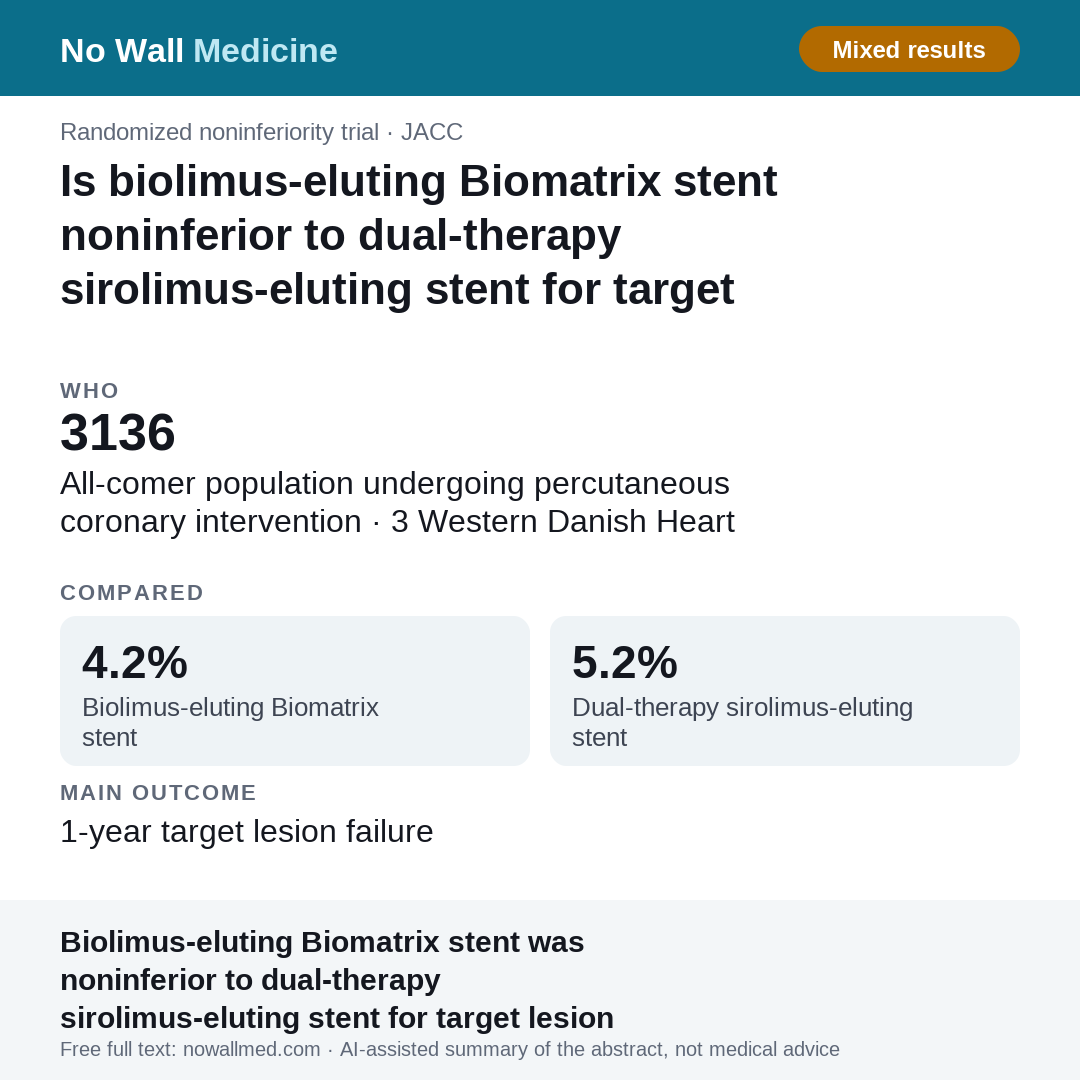
Biolimus-Eluting Biomatrix Stent vs a Dual-Therapy Sirolimus-Eluting Stent in PCI: The SORT OUT XI Randomized Trial
Randomized noninferiority trialMixed results
Is biolimus-eluting Biomatrix stent noninferior to dual-therapy sirolimus-eluting stent for target lesion failure?
Who
3136
All-comer population undergoing percutaneous coronary intervention · 3 Western Danish Heart centers
Compared
4.2%Biolimus-eluting Biomatrix stent
5.2%Dual-therapy sirolimus-eluting stent
Main outcome
1-year target lesion failure
Result: risk difference: -1.07% (upper limit of 1-sided 90% CI: 0.21%)
Bottom line: Biolimus-eluting Biomatrix stent was noninferior to dual-therapy sirolimus-eluting stent for target lesion failure but increased definite stent thrombosis.
JACC · 2025-05-21Download image
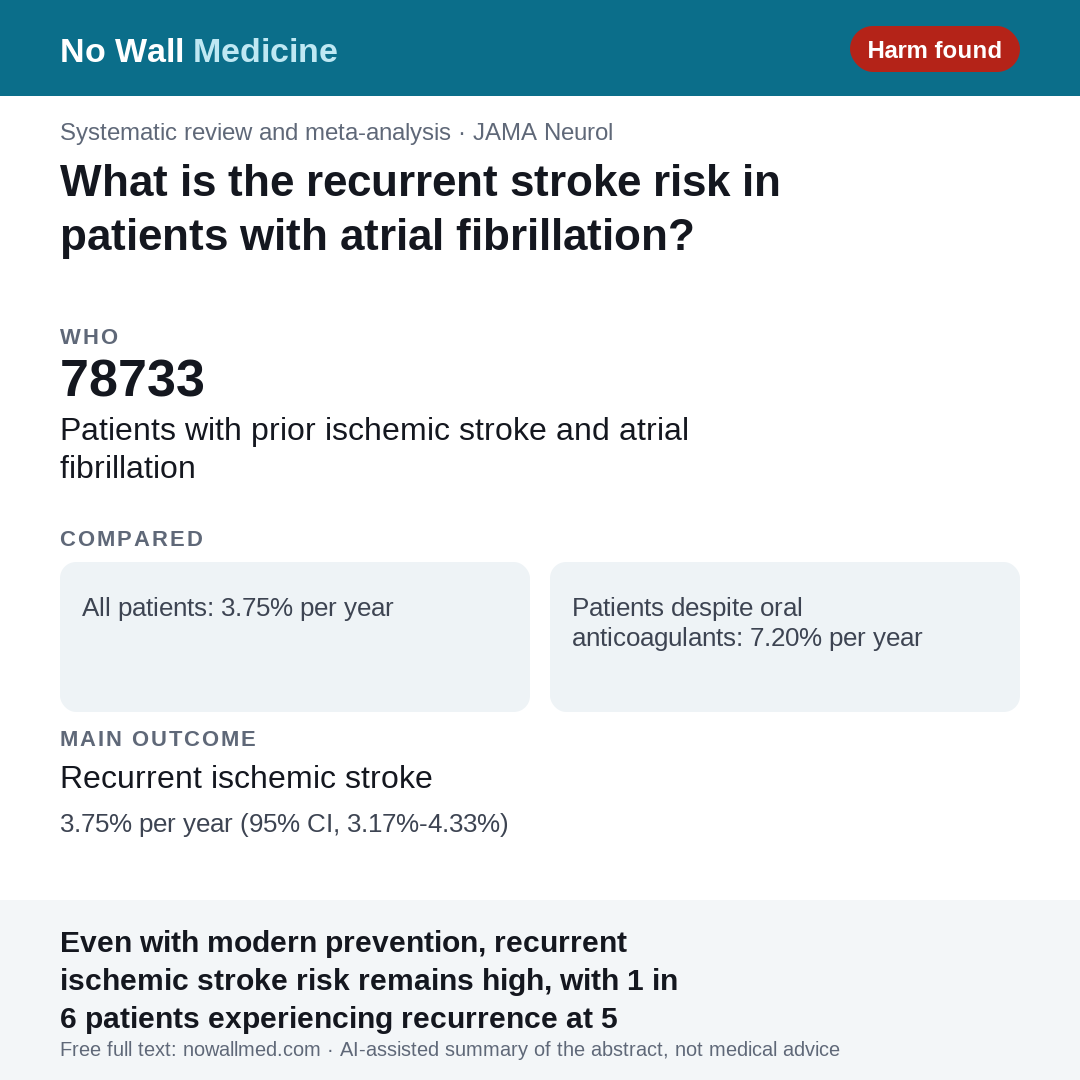
Residual Risk of Recurrent Stroke Despite Anticoagulation in Patients With Atrial Fibrillation: A Systematic Review and Meta-Analysis
Systematic review and meta-analysisHarm found
What is the recurrent stroke risk in patients with atrial fibrillation?
Who
78733
Patients with prior ischemic stroke and atrial fibrillation
Compared
All patients: 3.75% per year
Patients despite oral anticoagulants: 7.20% per year
Main outcome
Recurrent ischemic stroke
Result: 3.75% per year (95% CI, 3.17%-4.33%)
Bottom line: Even with modern prevention, recurrent ischemic stroke risk remains high, with 1 in 6 patients experiencing recurrence at 5 years.
JAMA Neurol · 2025-05-21Download image
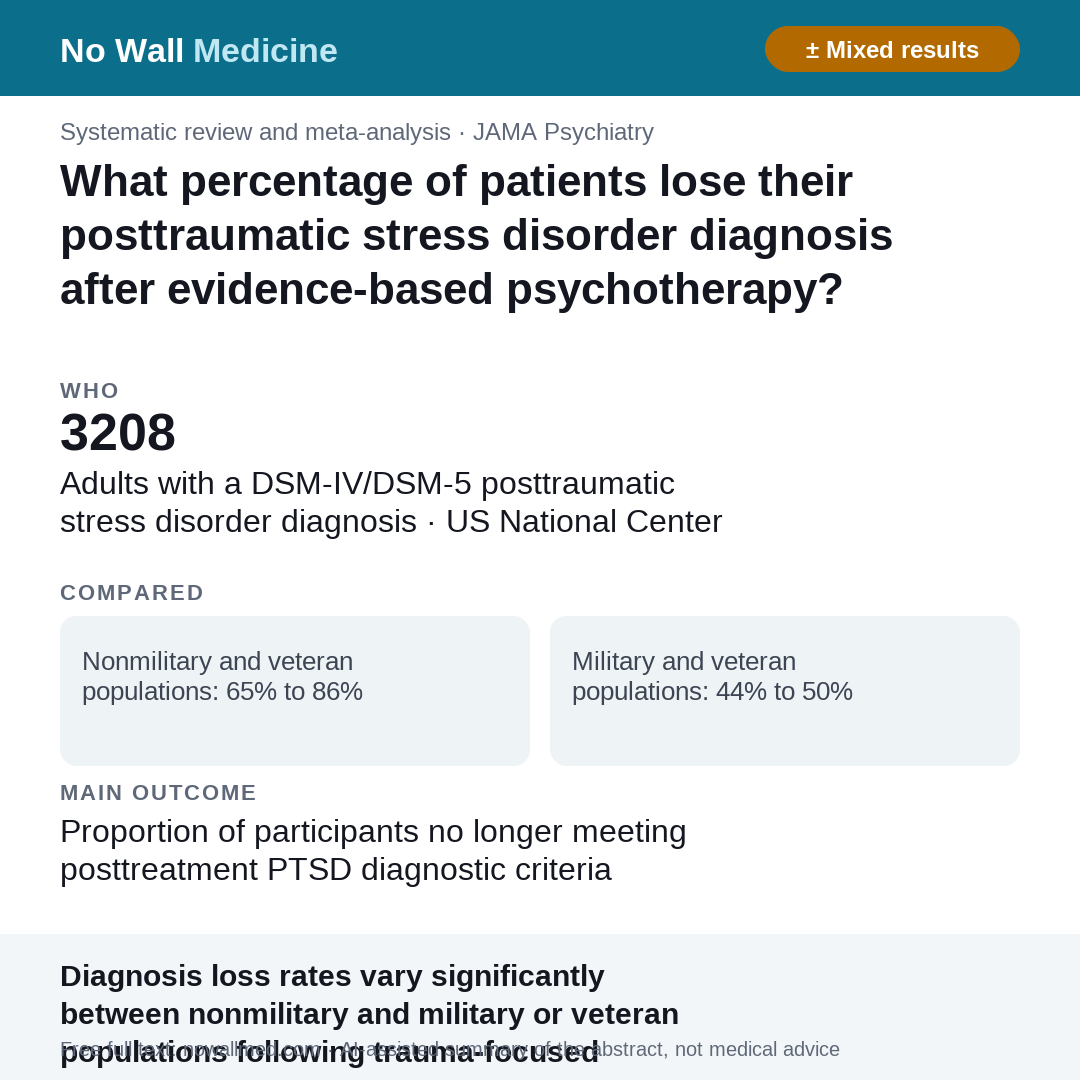
Loss of PTSD Diagnosis in Response to Evidence-Based Treatments: A Systematic Review and Meta-Analysis
Systematic review and meta-analysisMixed results
What percentage of patients lose their posttraumatic stress disorder diagnosis after evidence-based psychotherapy?
Who
3208
Adults with a DSM-IV/DSM-5 posttraumatic stress disorder diagnosis · US National Center for PTSD repository
Compared
Nonmilitary and veteran populations: 65% to 86%
Military and veteran populations: 44% to 50%
Main outcome
Proportion of participants no longer meeting posttreatment PTSD diagnostic criteria
Bottom line: Diagnosis loss rates vary significantly between nonmilitary and military or veteran populations following trauma-focused psychotherapy.
Limitation: Substantial heterogeneity was noted in eye movement desensitization and reprocessing analyses.
JAMA Psychiatry · 2025-05-21Download image
Hemodynamic Impact of Cipepofol vs Propofol During Anesthesia Induction in Patients With Severe Aortic Stenosis: A Randomized Clinical Trial
Randomized clinical trialBenefit found
Does cipepofol outperform propofol in maintaining hemodynamic stability during anesthesia induction in patients with severe aortic stenosis?
Who
122
Patients with severe aortic stenosis scheduled for transcatheter aortic valve replacement · Single-center hospital in China
Compared
Cipepofol: -8505.0 mm Hg·s [-12 402.8 to -5130.0]
Propofol: -13 189.0 mm Hg·s [-17 006.7 to -7593.3]
Main outcome
Area under the curve of mean arterial pressure difference from baseline
Bottom line: Cipepofol provided superior hemodynamic stability and lower hypotension incidence compared to propofol in patients with severe aortic stenosis.
JAMA Surg · 2025-05-21Download image

Evidence-based Integration of Environmental Sustainability into Clinical Guidelines for Operating Rooms: A Systematic Review
Systematic reviewUnclear result
Can sustainability be integrated into OR guidelines
Who
42
operating rooms
Compared
sustainability integrated
not integrated
Main outcome
environmental impact
Bottom line: Sustainability can be integrated into OR guidelines
Limitation: low quality of evidence
Ann Surg · 2025-05-21Download image
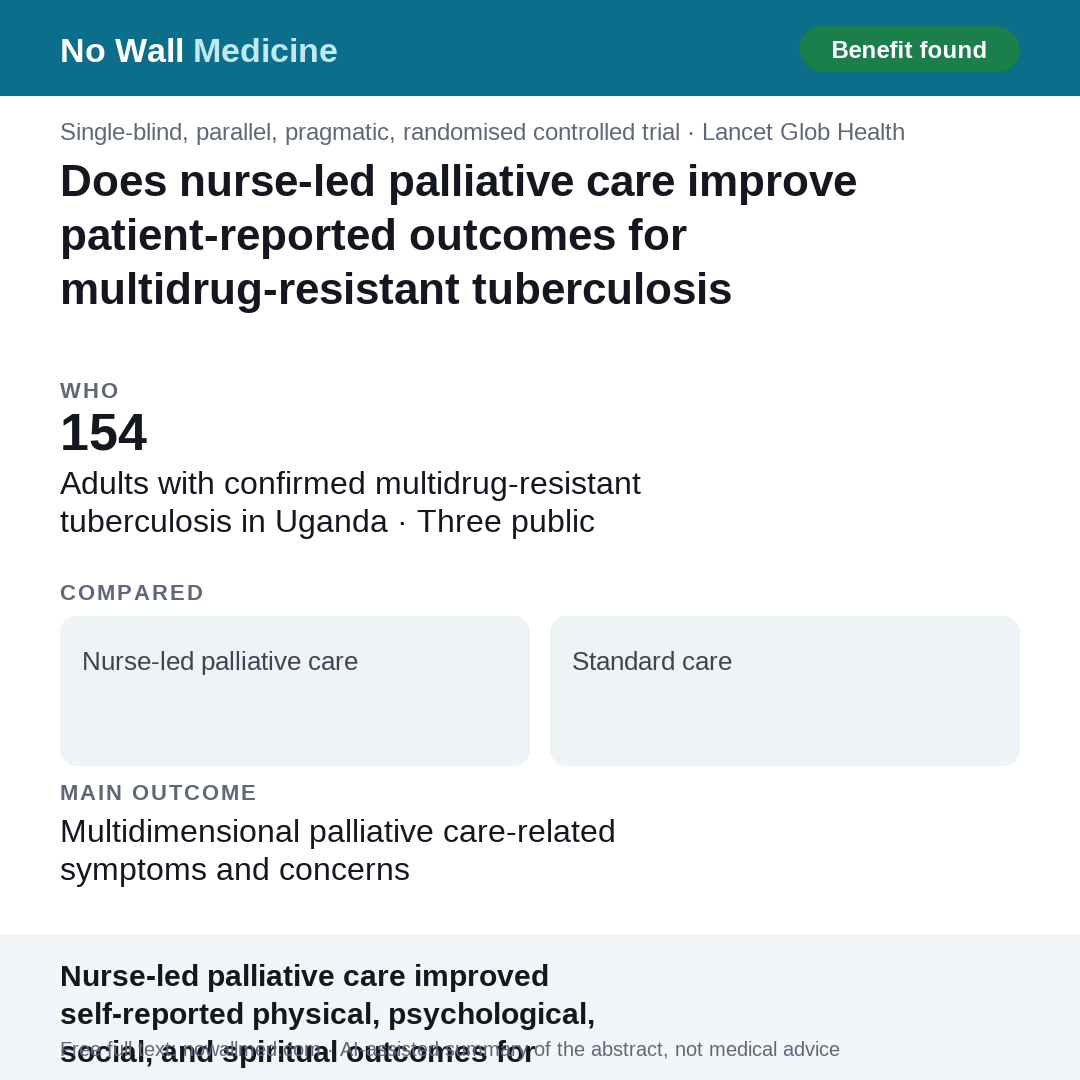
Nurse-led palliative care for multidrug-resistant tuberculosis: a parallel, single-blind, pragmatic, randomised controlled trial in Uganda
Single-blind, parallel, pragmatic, randomised controlled trialBenefit found
Does nurse-led palliative care improve patient-reported outcomes for multidrug-resistant tuberculosis patients?
Who
154
Adults with confirmed multidrug-resistant tuberculosis in Uganda · Three public hospitals in Uganda
Compared
Nurse-led palliative care
Standard care
Main outcome
Multidimensional palliative care-related symptoms and concerns
Result: 5·12 scale-points (95% CI 2·89-7·21)
Bottom line: Nurse-led palliative care improved self-reported physical, psychological, social, and spiritual outcomes for multidrug-resistant tuberculosis patients.
Funded by: Open Society Foundations
Lancet Glob Health · 2025-05-21Download image
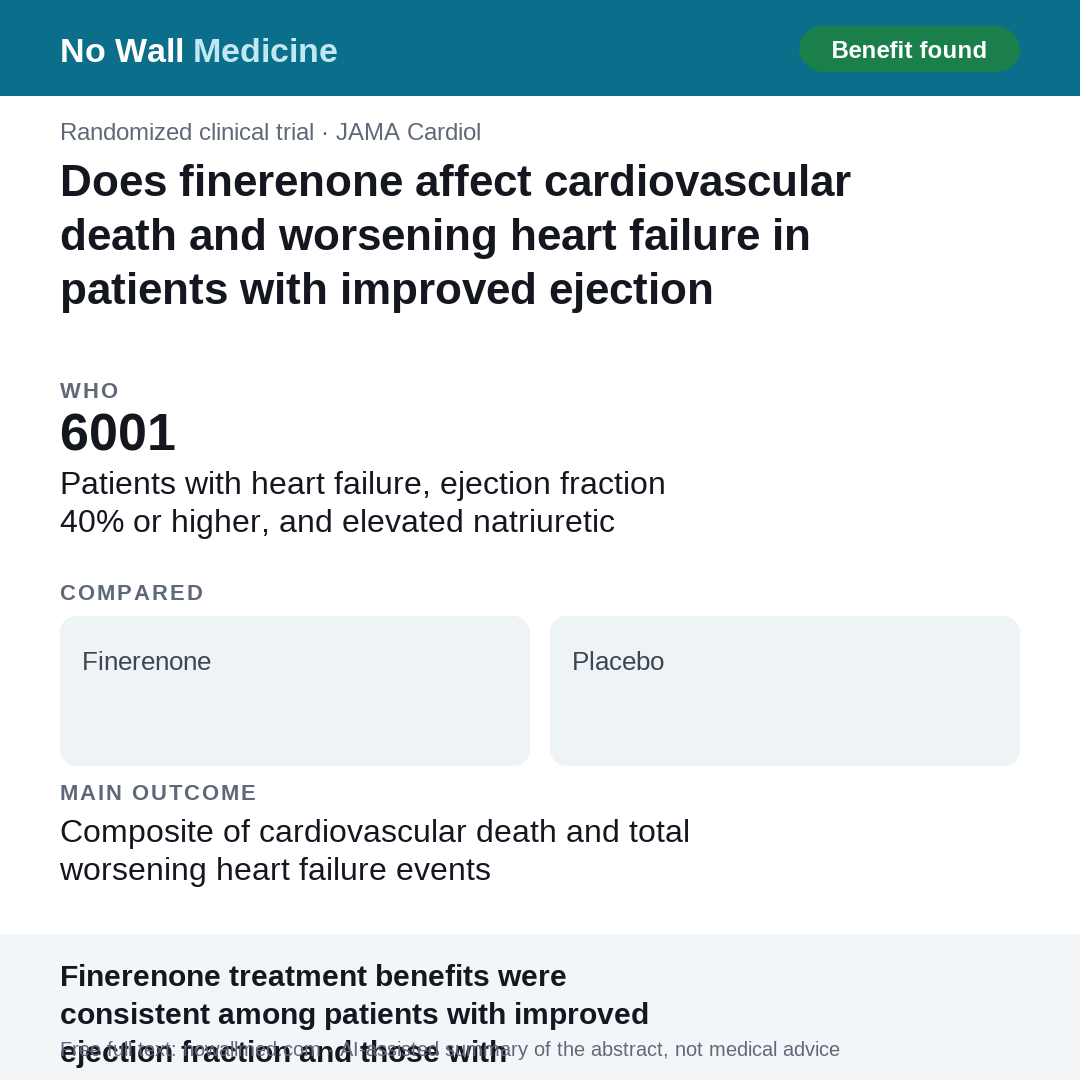
Finerenone in Heart Failure With Improved Ejection Fraction: The FINEARTS-HF Randomized Clinical Trial
Randomized clinical trialBenefit found
Does finerenone affect cardiovascular death and worsening heart failure in patients with improved ejection fraction?
Who
6001
Patients with heart failure, ejection fraction 40% or higher, and elevated natriuretic peptide
Compared
Finerenone
Placebo
Main outcome
Composite of cardiovascular death and total worsening heart failure events
Bottom line: Finerenone treatment benefits were consistent among patients with improved ejection fraction and those with consistently preserved ejection fraction.
JAMA Cardiol · 2025-05-21Download image
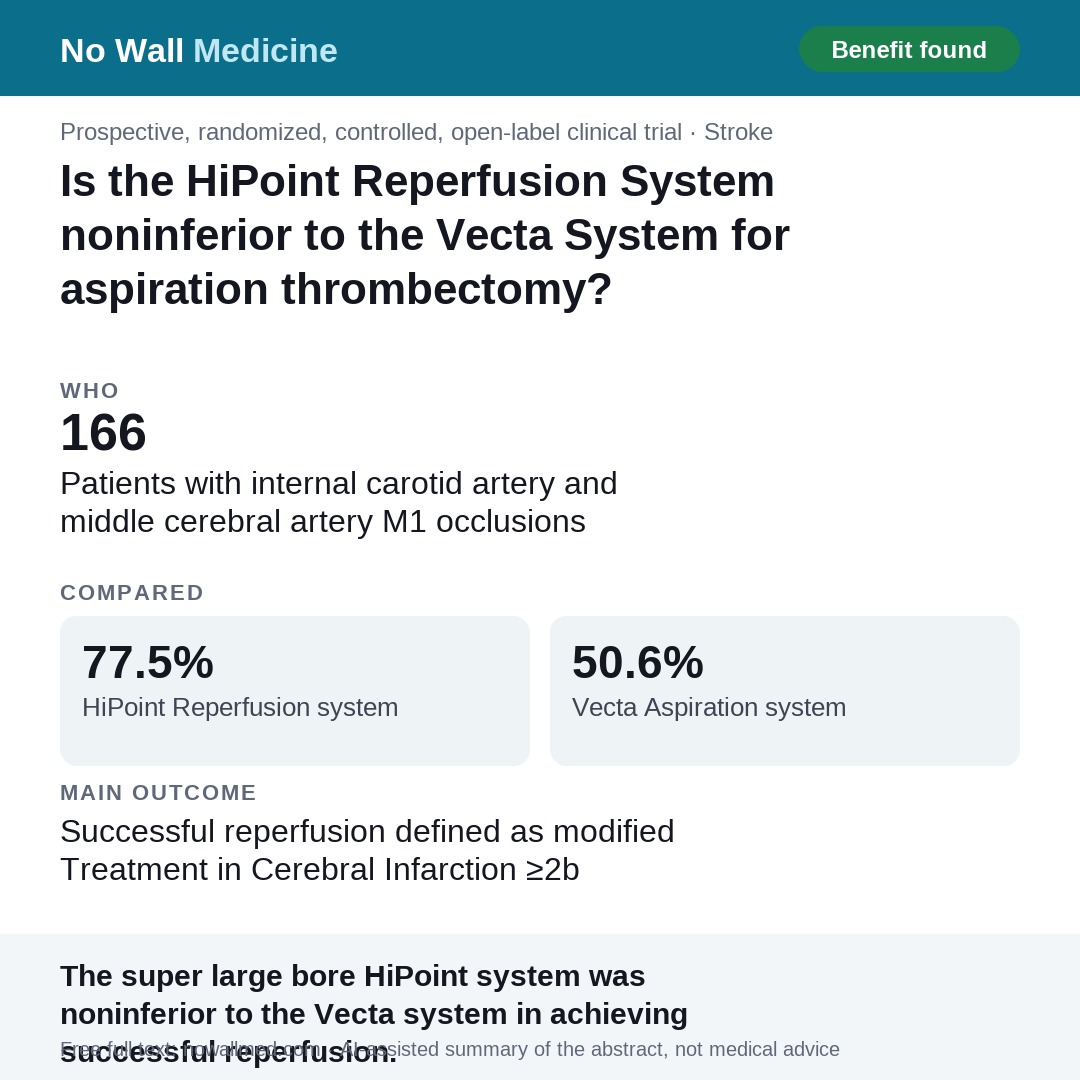
SUMMIT MAX: A Randomized Trial of the Super Large Bore HiPoint Reperfusion System Versus Vecta System for Aspiration Thrombectomy
Prospective, randomized, controlled, open-label clinical trialBenefit found
Is the HiPoint Reperfusion System noninferior to the Vecta System for aspiration thrombectomy?
Who
166
Patients with internal carotid artery and middle cerebral artery M1 occlusions
Compared
77.5%HiPoint Reperfusion system (69/89)
50.6%Vecta Aspiration system (39/77)
Main outcome
Successful reperfusion defined as modified Treatment in Cerebral Infarction ≥2b
Result: P<0.0001 for noninferiority
Bottom line: The super large bore HiPoint system was noninferior to the Vecta system in achieving successful reperfusion.
Stroke · 2025-05-21Download image
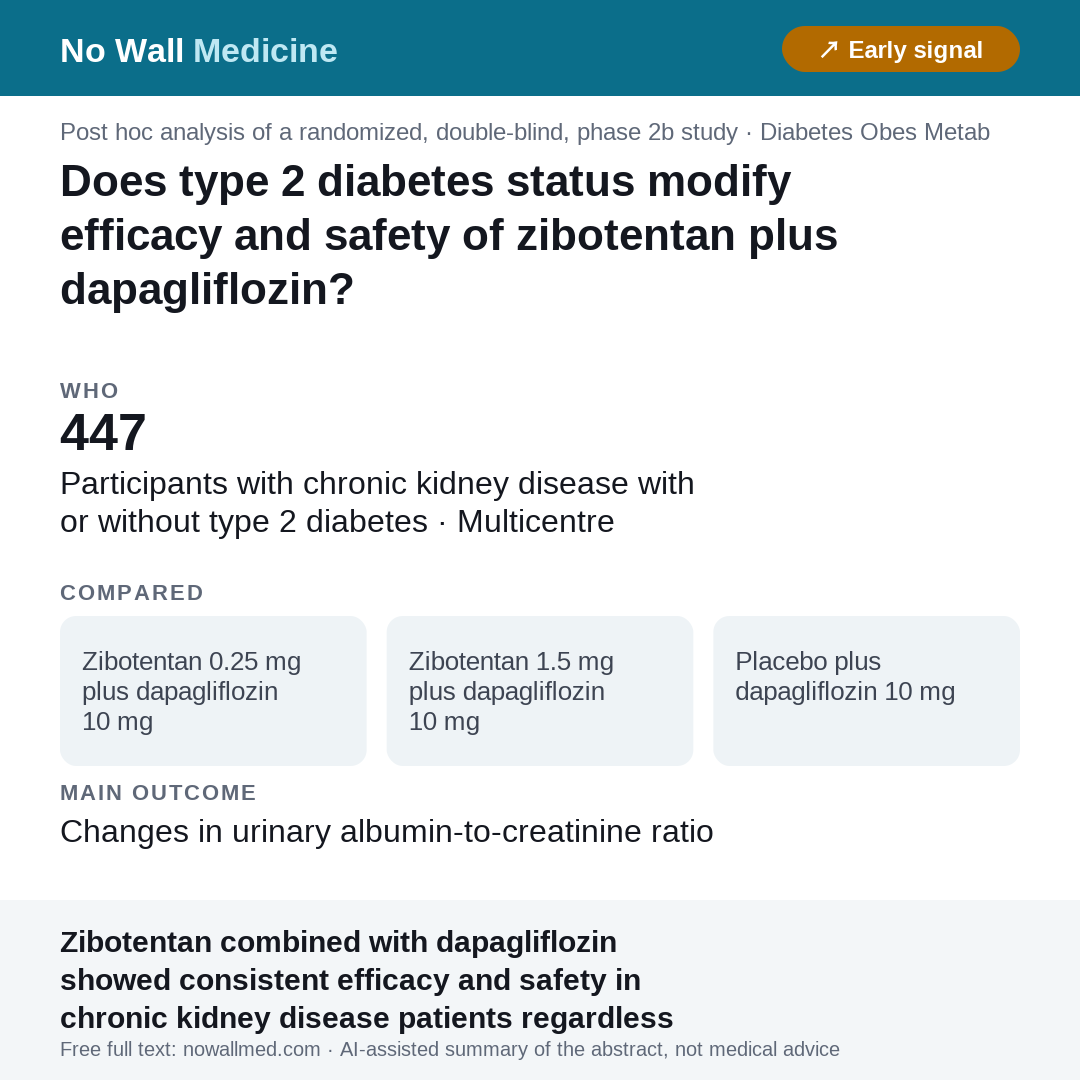
Effects of combined treatment with zibotentan and dapagliflozin compared to dapagliflozin alone in patients with diabetic and non-diabetic chronic kidney disease
Post hoc analysis of a randomized, double-blind, phase 2b studyBenefit found
Does type 2 diabetes status modify efficacy and safety of zibotentan plus dapagliflozin?
Who
447
Participants with chronic kidney disease with or without type 2 diabetes · Multicentre
Compared
Zibotentan 0.25 mg plus dapagliflozin 10 mg
Zibotentan 1.5 mg plus dapagliflozin 10 mg
Placebo plus dapagliflozin 10 mg
Main outcome
Changes in urinary albumin-to-creatinine ratio
Bottom line: Zibotentan combined with dapagliflozin showed consistent efficacy and safety in chronic kidney disease patients regardless of diabetes status.
Diabetes Obes Metab · 2025-05-21Download image
Meta-analysis revealed HLA susceptibility markers in ANCA-associated vasculitis and its clinical subtypes
Meta-analysisBenefit found
What are the HLA susceptibility markers for ANCA-associated vasculitis and its clinical subtypes?
Who
Patients with ANCA-associated vasculitis and its clinical subtypes
Compared
HLA alleles: 30 significant associations identified
Control
Main outcome
Association between HLA alleles and ANCA-associated vasculitis susceptibility
Result: meta-odds ratio 3.92 (3.27-4.69) for rs9277554-C
Bottom line: Multiple HLA-DRB1 and HLA-DPB1 alleles are significantly associated with predisposition or protection against ANCA-associated vasculitis and its subtypes.
Rheumatology · 2025-05-21Download image

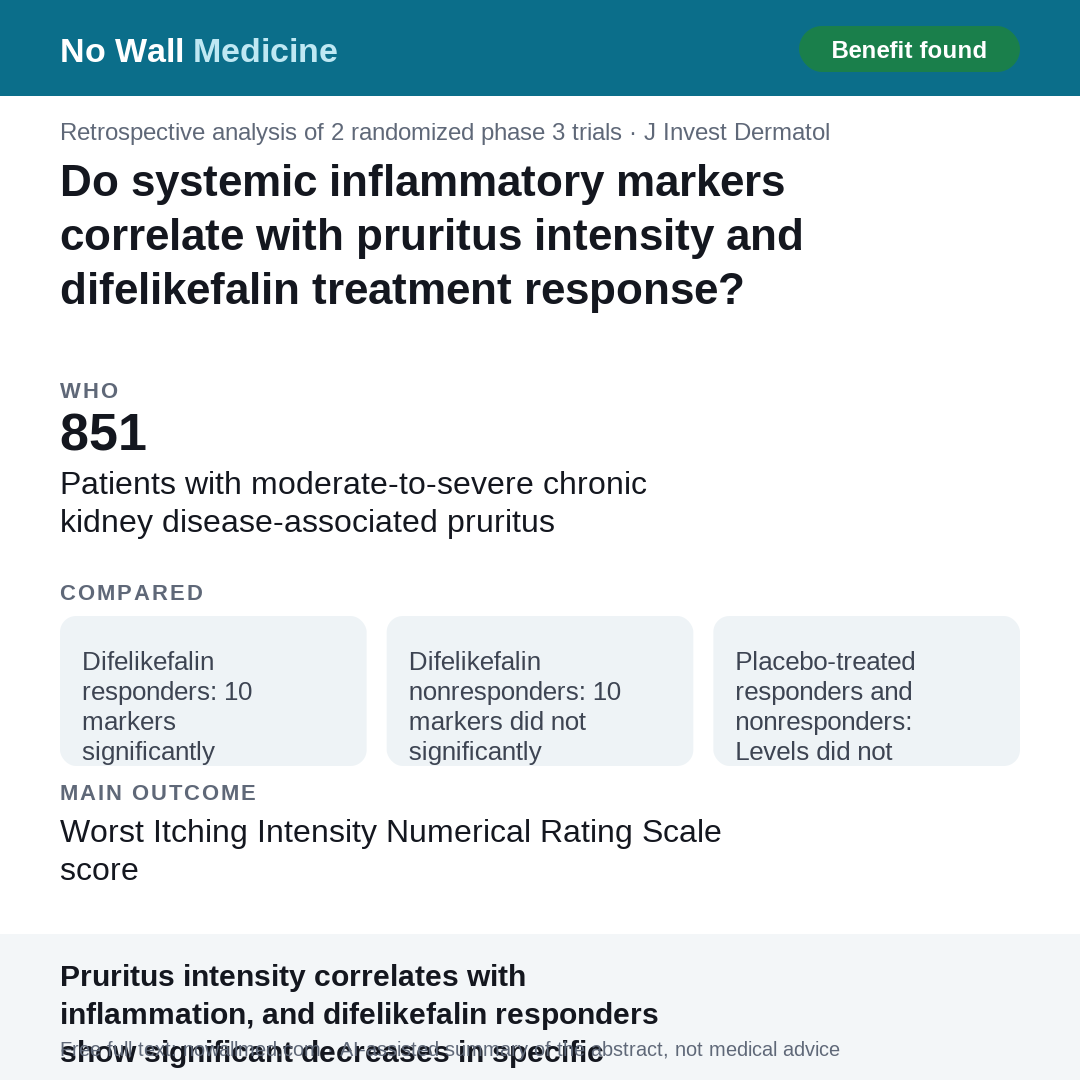
Systemic Inflammatory Markers Correlate with Chronic Kidney Disease-Associated Pruritus and Response to Treatment
Retrospective analysis of 2 randomized phase 3 trialsBenefit found
Do systemic inflammatory markers correlate with pruritus intensity and difelikefalin treatment response?
Who
851
Patients with moderate-to-severe chronic kidney disease-associated pruritus
Compared
Difelikefalin responders: 10 markers significantly decreased from baseline
Difelikefalin nonresponders: 10 markers did not significantly decrease
Placebo-treated responders and nonresponders: Levels did not differ
Main outcome
Worst Itching Intensity Numerical Rating Scale score
Bottom line: Pruritus intensity correlates with inflammation, and difelikefalin responders show significant decreases in specific inflammatory markers.
J Invest Dermatol · 2025-05-21Download image
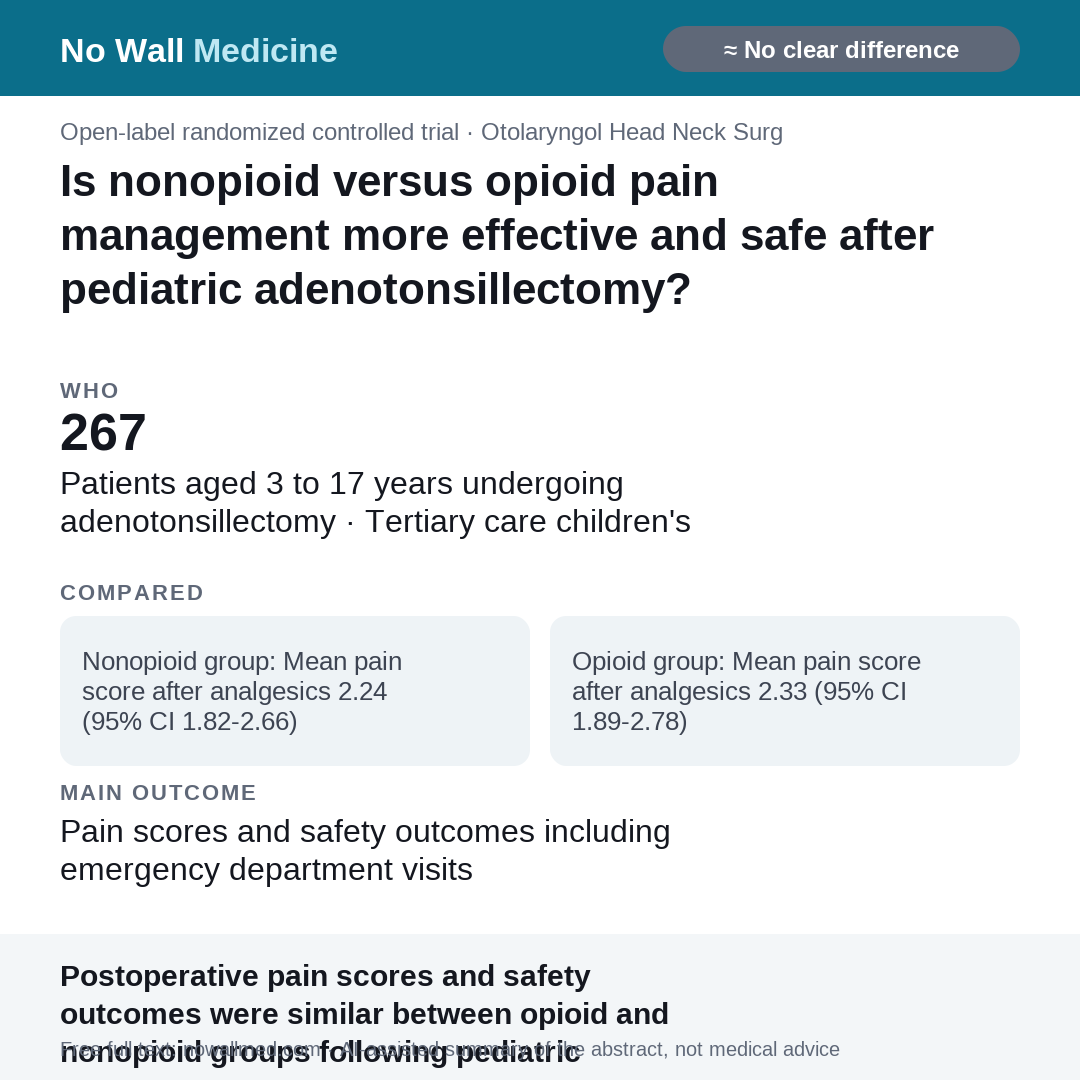
Opioid Analgesia Following Pediatric Adenotonsillectomy: A Randomized Clinical Trial
Open-label randomized controlled trialNo clear difference
Is nonopioid versus opioid pain management more effective and safe after pediatric adenotonsillectomy?
Who
267
Patients aged 3 to 17 years undergoing adenotonsillectomy · Tertiary care children's hospital
Compared
Nonopioid group: Mean pain score after analgesics 2.24 (95% CI 1.82-2.66)
Opioid group: Mean pain score after analgesics 2.33 (95% CI 1.89-2.78)
Main outcome
Pain scores and safety outcomes including emergency department visits
Bottom line: Postoperative pain scores and safety outcomes were similar between opioid and nonopioid groups following pediatric adenotonsillectomy.
Limitation: Only 144 of 267 patients completed the postoperative pain diary.
Otolaryngol Head Neck Surg · 2025-05-21Download image