Visual abstracts
New randomized trials and meta-analyses from leading journals at a glance: who was studied, what was compared, and what was found. Every paper is free to read in full.
All specialtiesCardiology 857Oncology 770Gastroenterology & Hepatology 311Infectious Disease 626Neurology 354Psychiatry & Mental Health 430Pulmonology 370Critical Care 260Endocrinology & Diabetes 484Pediatrics 542Surgery 351Orthopedics & Sports Medicine 166Neurosurgery 115Cardiothoracic & Vascular Surgery 87Plastic & Reconstructive Surgery 144Nephrology 197Rheumatology 108Hematology 183Dermatology 82Ophthalmology 97Obstetrics & Gynecology 266Public & Global Health 168Radiology & Imaging 105Anesthesiology 130Urology 162ENT (Otolaryngology) 115Emergency Medicine 103Allergy & Immunology 58Geriatrics 160Family Medicine & Primary Care 111Medical Genetics & Genomics 91Pathology & Laboratory Medicine 27Physical Medicine & Rehabilitation 149Palliative Care 81Nutrition 223Digital Health & AI 462General Medicine 101
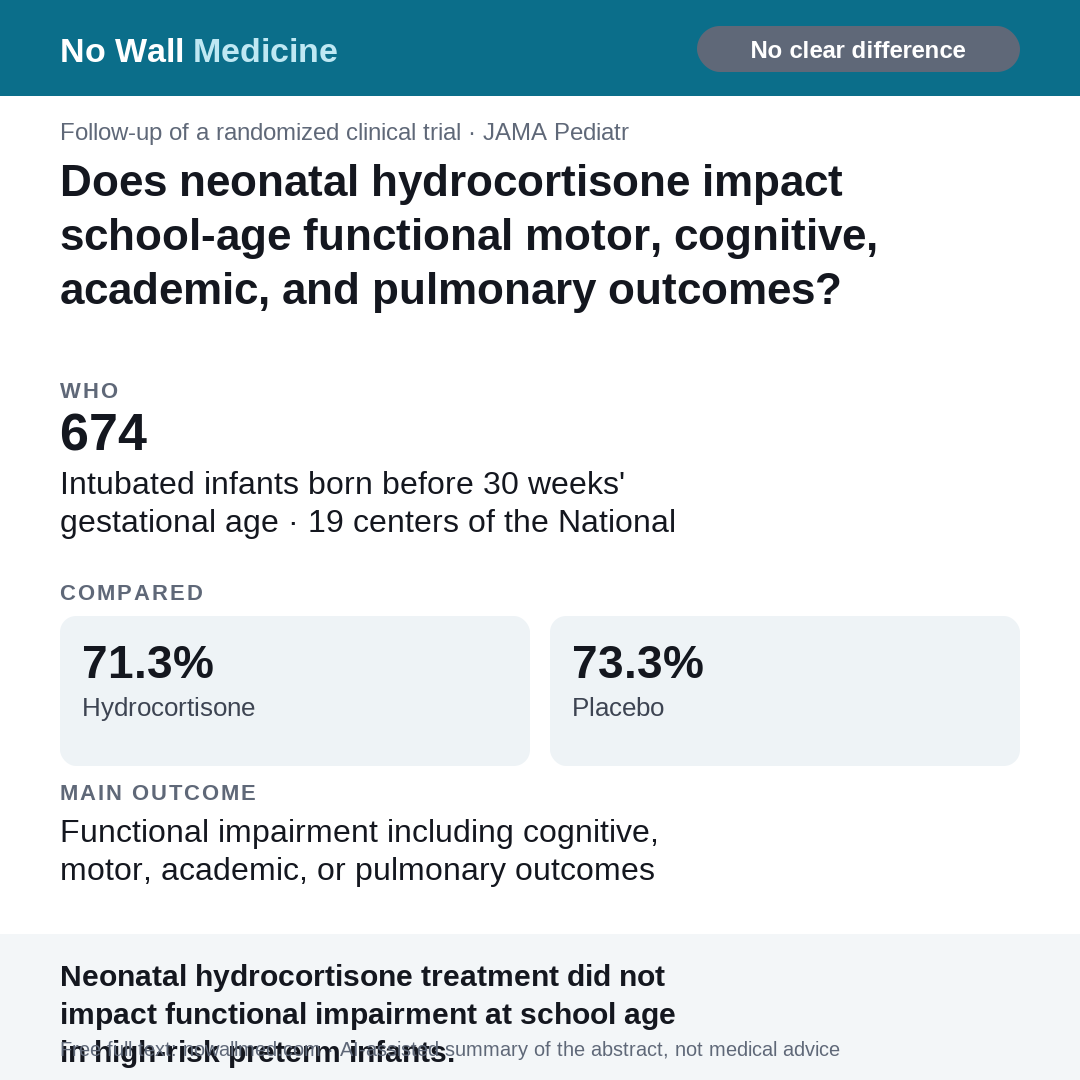
Hydrocortisone in Preterm Infants and School-Age Functional Outcomes: Follow-Up of a Randomized Clinical Trial
Follow-up of a randomized clinical trialNo clear difference
Does neonatal hydrocortisone impact school-age functional motor, cognitive, academic, and pulmonary outcomes?
Who
674
Intubated infants born before 30 weeks' gestational age · 19 centers of the National Institute of Child Health and Human Development
Compared
71.3%Hydrocortisone
73.3%Placebo
Main outcome
Functional impairment including cognitive, motor, academic, or pulmonary outcomes
Result: adjusted relative risk 0.99 (95% CI 0.89-1.10)
Bottom line: Neonatal hydrocortisone treatment did not impact functional impairment at school age in high-risk preterm infants.
JAMA Pediatr · 2025-12-08Download image
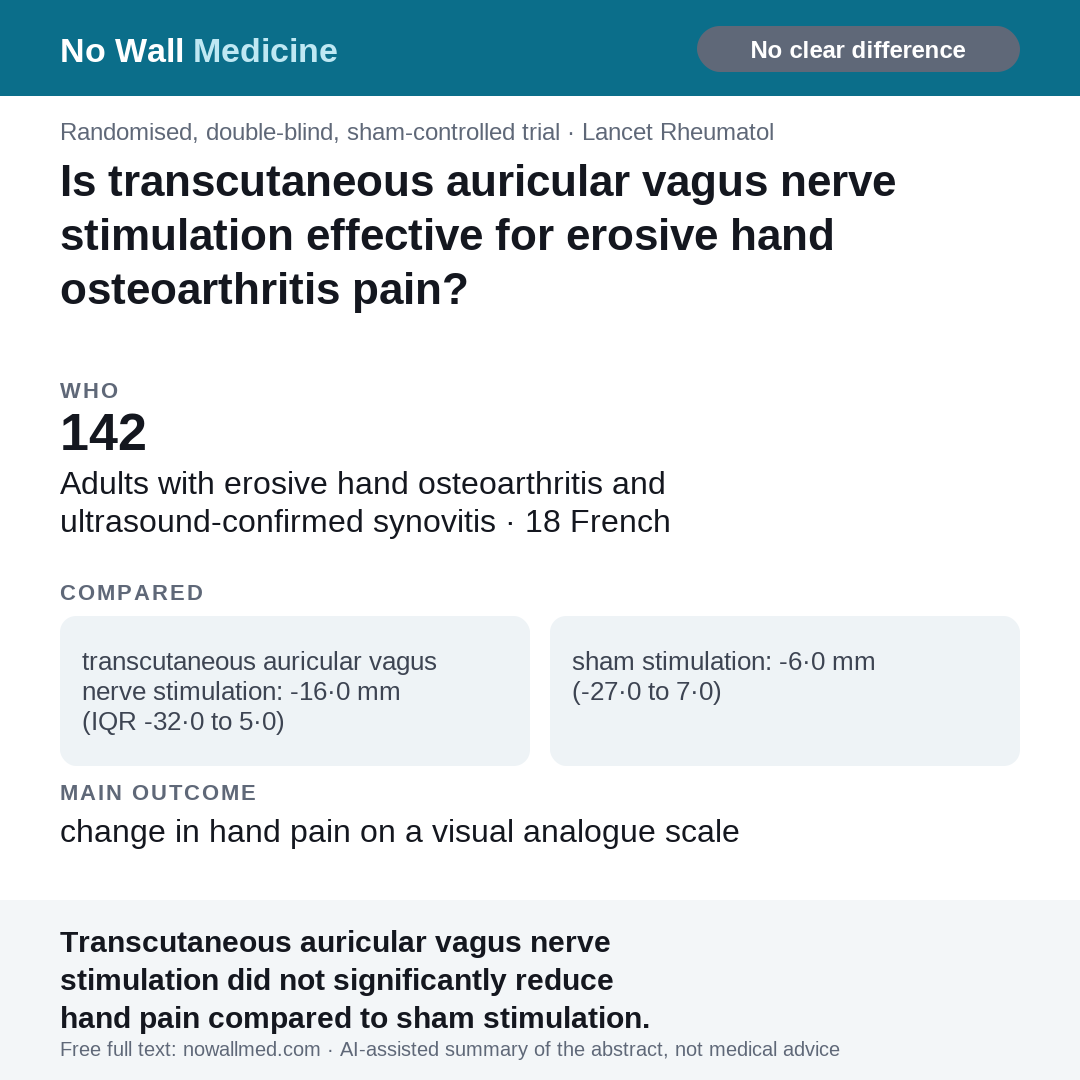
Transcutaneous auricular vagus nerve stimulation versus sham stimulation in patients with erosive hand osteoarthritis (ESTIVAL): a randomised, multicentre, double-blind, sham-controlled trial
Randomised, double-blind, sham-controlled trialNo clear difference
Is transcutaneous auricular vagus nerve stimulation effective for erosive hand osteoarthritis pain?
Who
142
Adults with erosive hand osteoarthritis and ultrasound-confirmed synovitis · 18 French hospital centres
Compared
transcutaneous auricular vagus nerve stimulation: -16·0 mm (IQR -32·0 to 5·0)
sham stimulation: -6·0 mm (-27·0 to 7·0)
Main outcome
change in hand pain on a visual analogue scale
Result: adjusted between-group difference of -10·0 mm (95% CI -23·0 to 2·0)
Bottom line: Transcutaneous auricular vagus nerve stimulation did not significantly reduce hand pain compared to sham stimulation.
Funded by: French Ministry of Health
Lancet Rheumatol · 2025-12-08Download image
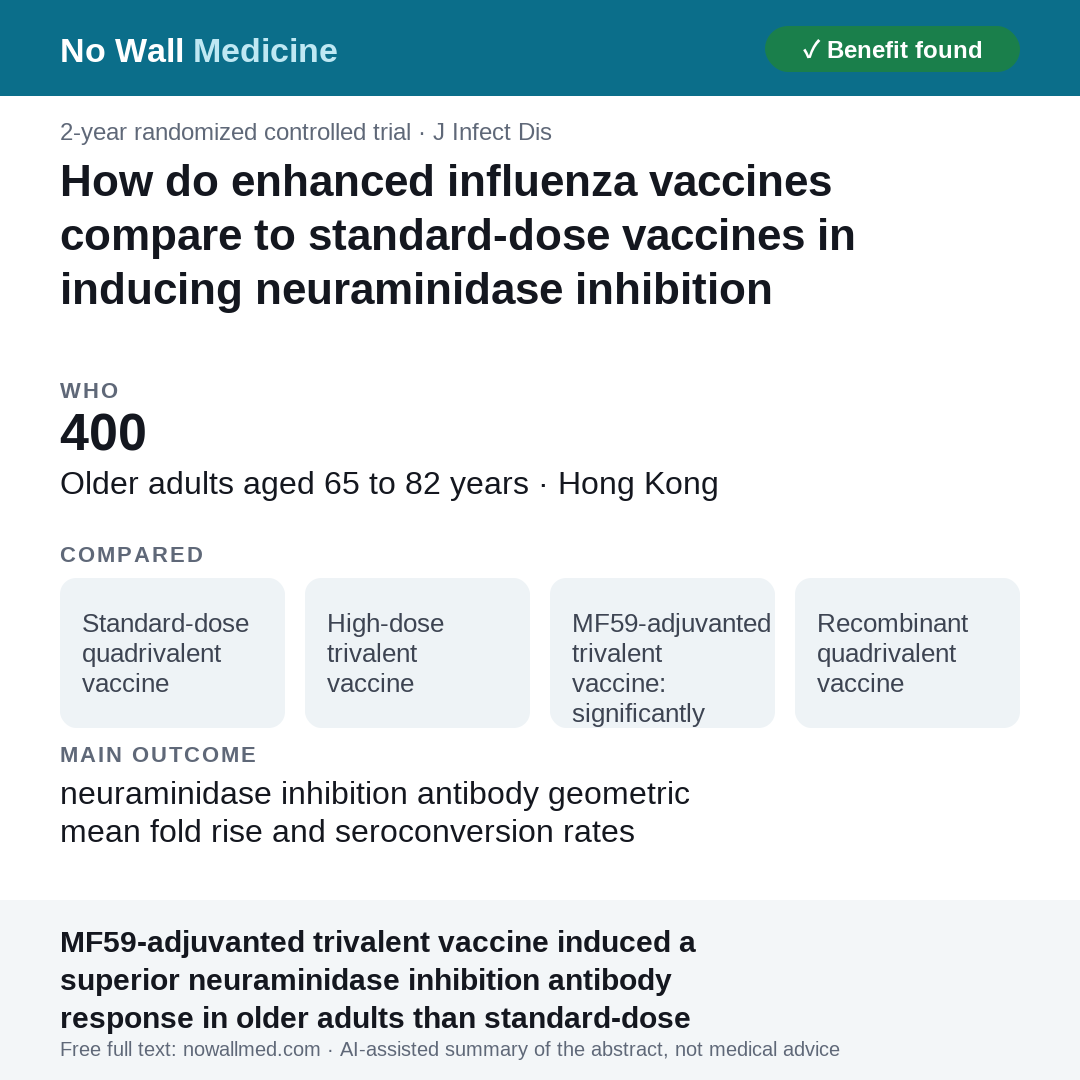
Antineuraminidase Antibody Responses in Older Adults After Consecutive Vaccinations With Enhanced Influenza Vaccines: A Randomized Controlled Trial
2-year randomized controlled trialBenefit found
How do enhanced influenza vaccines compare to standard-dose vaccines in inducing neuraminidase inhibition antibodies?
Who
400
Older adults aged 65 to 82 years · Hong Kong
Compared
Standard-dose quadrivalent vaccine
High-dose trivalent vaccine
MF59-adjuvanted trivalent vaccine: significantly higher GMFR and seroconversion rates
Recombinant quadrivalent vaccine
Main outcome
neuraminidase inhibition antibody geometric mean fold rise and seroconversion rates
Bottom line: MF59-adjuvanted trivalent vaccine induced a superior neuraminidase inhibition antibody response in older adults than standard-dose quadrivalent vaccine.
J Infect Dis · 2025-12-08Download image
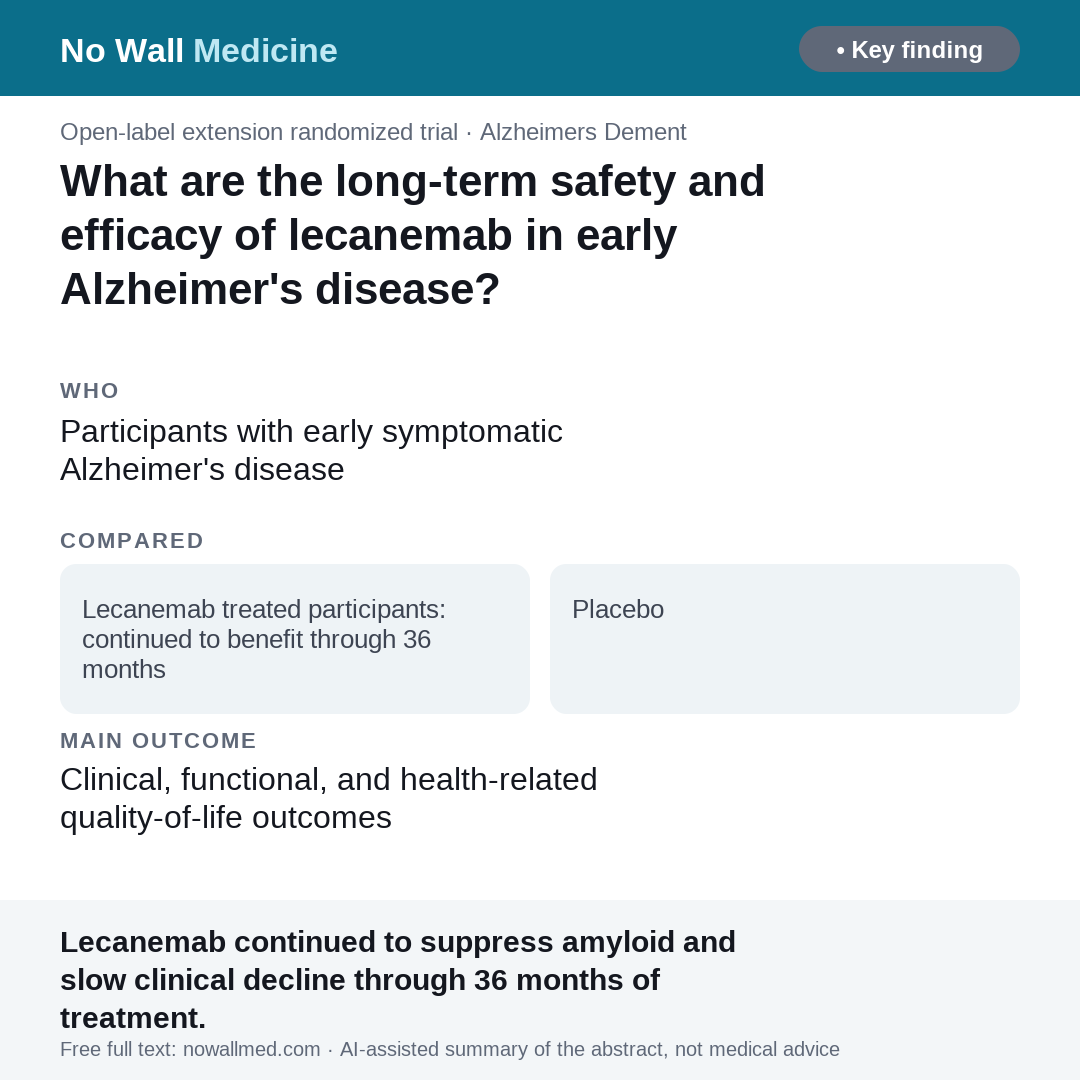
Long-term safety and efficacy of lecanemab in early Alzheimer's disease: Results from the clarity AD open-label extension study
Open-label extension randomized trialBenefit found
What are the long-term safety and efficacy of lecanemab in early Alzheimer's disease?
Who
Participants with early symptomatic Alzheimer's disease
Compared
Lecanemab treated participants: continued to benefit through 36 months
Placebo
Main outcome
Clinical, functional, and health-related quality-of-life outcomes
Bottom line: Lecanemab continued to suppress amyloid and slow clinical decline through 36 months of treatment.
Alzheimers Dement · 2025-12-08Download image
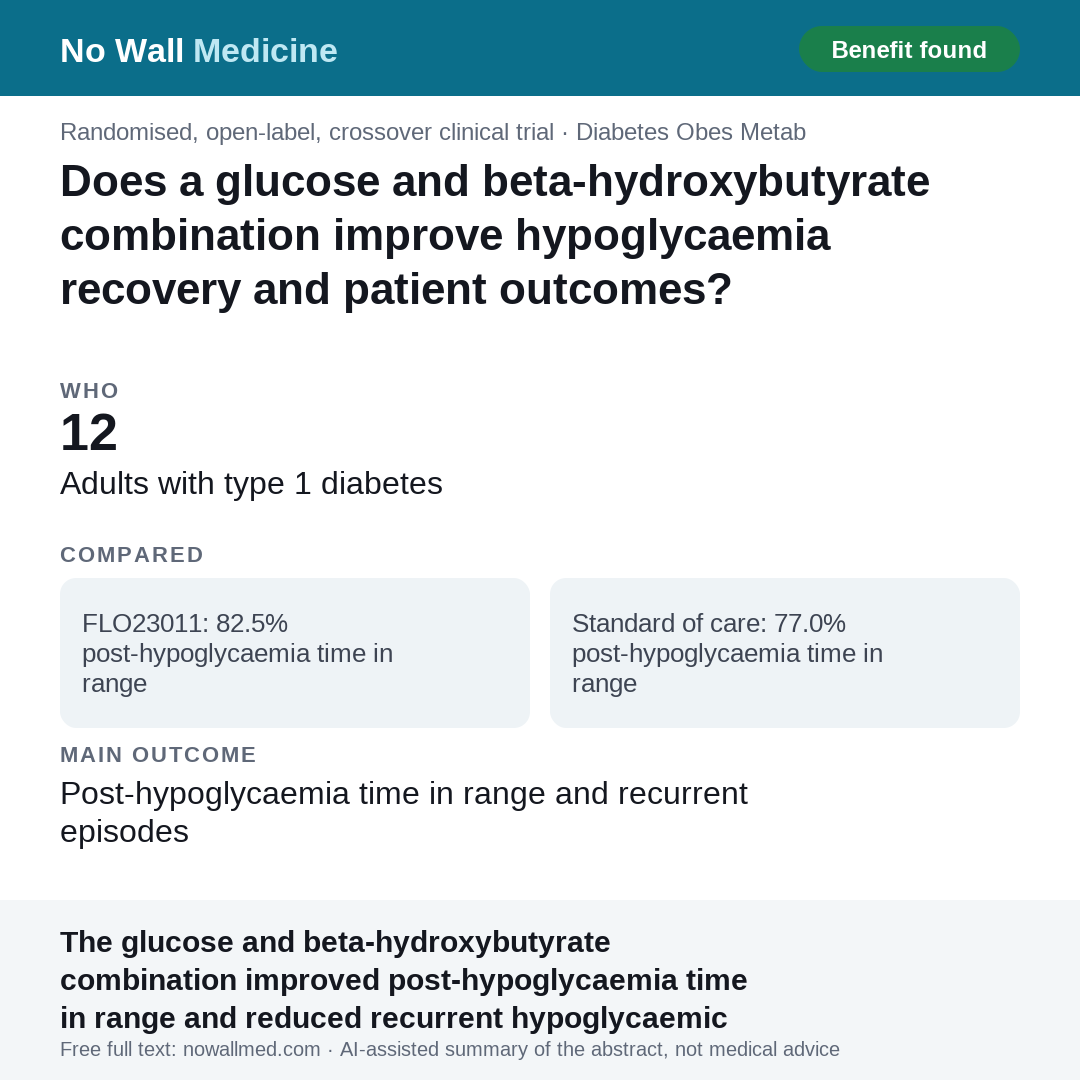
A novel glucose beta-hydroxybutyrate combination improves hypoglycaemia recovery and patient-reported outcomes in type 1 diabetes
Randomised, open-label, crossover clinical trialBenefit found
Does a glucose and beta-hydroxybutyrate combination improve hypoglycaemia recovery and patient outcomes?
Who
12
Adults with type 1 diabetes
Compared
FLO23011: 82.5% post-hypoglycaemia time in range
Standard of care: 77.0% post-hypoglycaemia time in range
Main outcome
Post-hypoglycaemia time in range and recurrent episodes
Bottom line: The glucose and beta-hydroxybutyrate combination improved post-hypoglycaemia time in range and reduced recurrent hypoglycaemic episodes.
Diabetes Obes Metab · 2025-12-08Download image
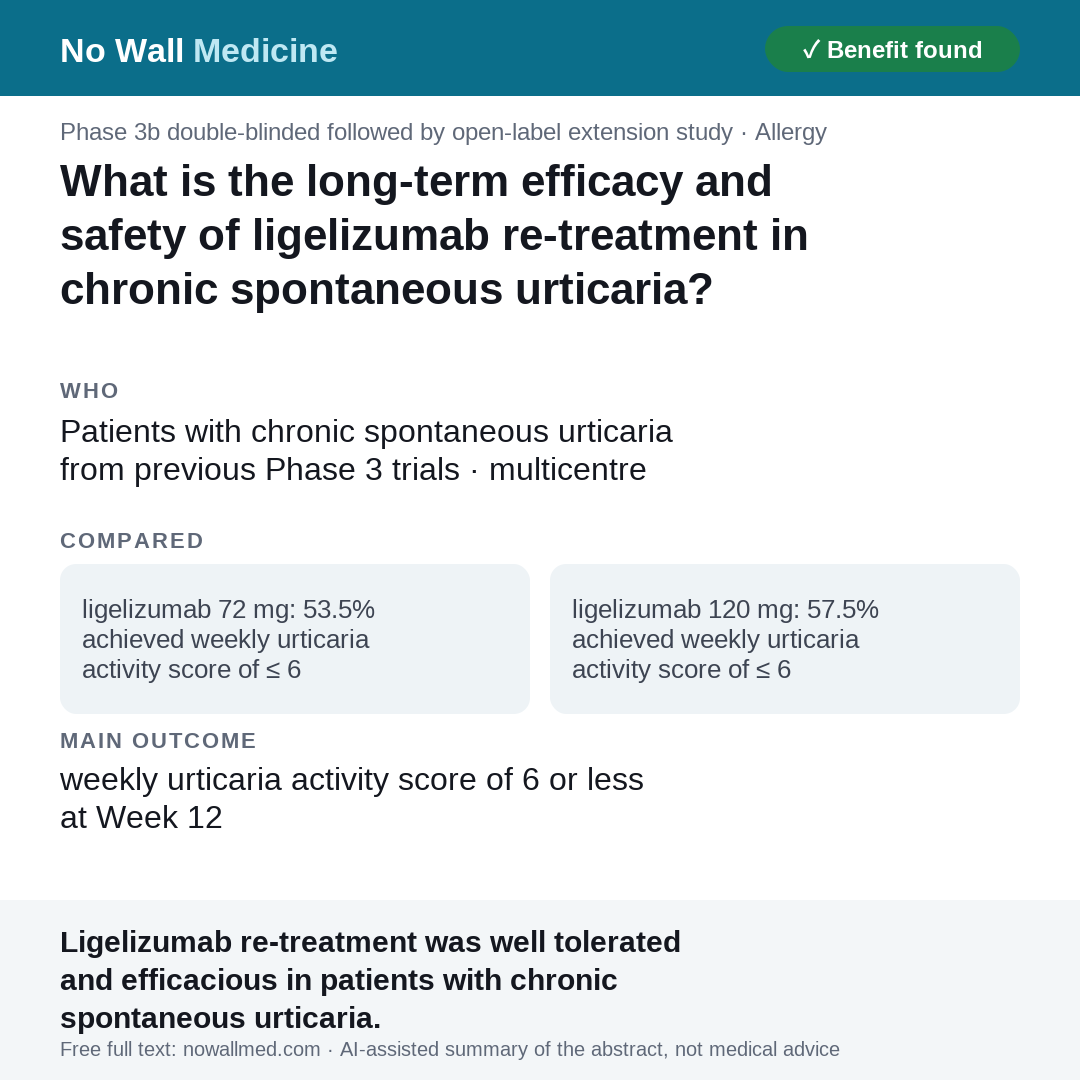
Long-Term Efficacy and Safety of Ligelizumab as Re-Treatment in Patients With Chronic Spontaneous Urticaria
Phase 3b double-blinded followed by open-label extension studyBenefit found
What is the long-term efficacy and safety of ligelizumab re-treatment in chronic spontaneous urticaria?
Who
Patients with chronic spontaneous urticaria from previous Phase 3 trials · multicentre
Compared
ligelizumab 72 mg: 53.5% achieved weekly urticaria activity score of ≤ 6
ligelizumab 120 mg: 57.5% achieved weekly urticaria activity score of ≤ 6
Main outcome
weekly urticaria activity score of 6 or less at Week 12
Bottom line: Ligelizumab re-treatment was well tolerated and efficacious in patients with chronic spontaneous urticaria.
Allergy · 2025-12-08Download image
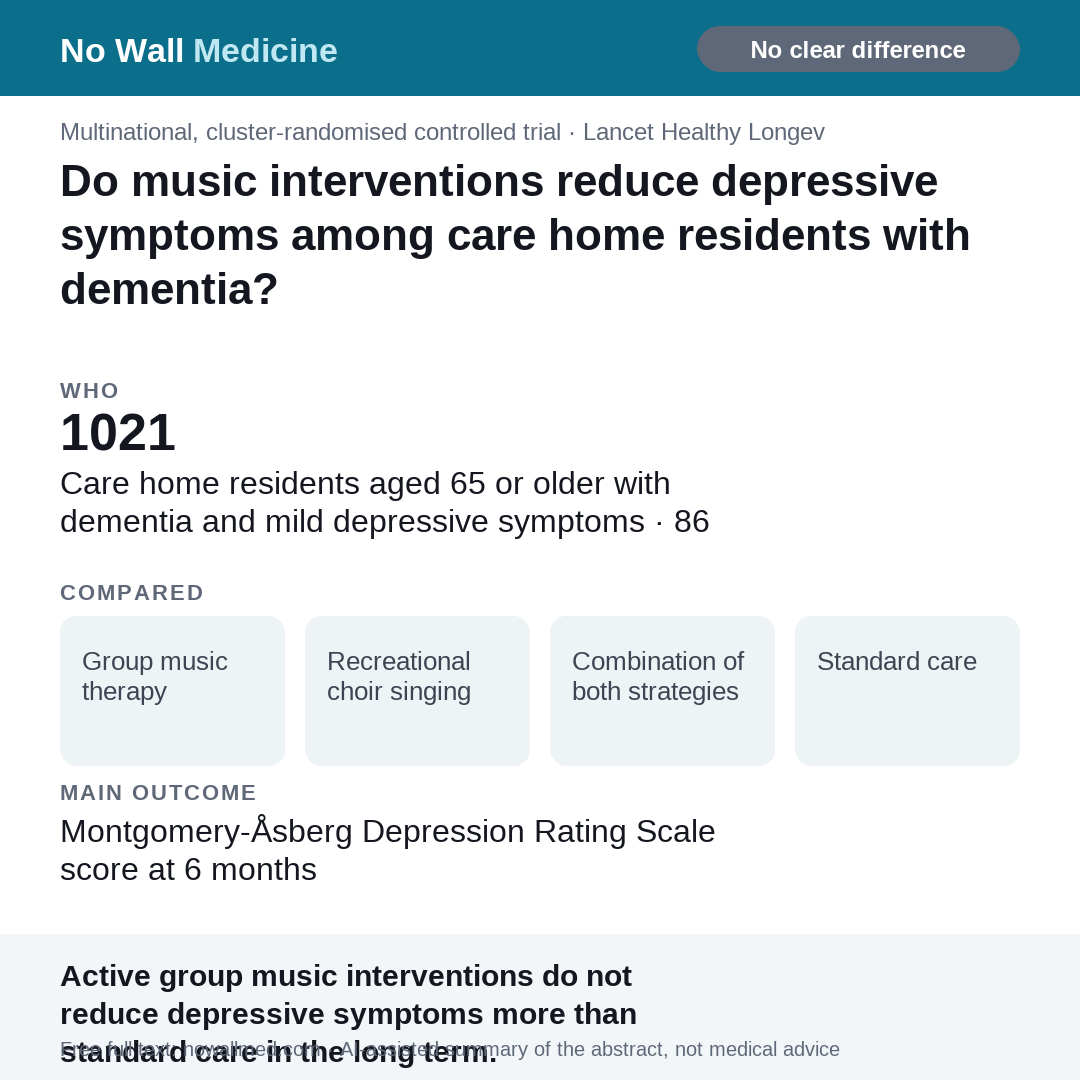
Clinical effectiveness of music interventions for dementia and depression in older people (MIDDEL): a multinational, cluster-randomised controlled trial
Multinational, cluster-randomised controlled trialNo clear difference
Do music interventions reduce depressive symptoms among care home residents with dementia?
Who
1021
Care home residents aged 65 or older with dementia and mild depressive symptoms · 86 care home units in six countries
Compared
Group music therapy
Recreational choir singing
Combination of both strategies
Standard care
Main outcome
Montgomery-Åsberg Depression Rating Scale score at 6 months
Result: no significant effect on MADRS scores
Bottom line: Active group music interventions do not reduce depressive symptoms more than standard care in the long term.
Lancet Healthy Longev · 2025-12-08Download image
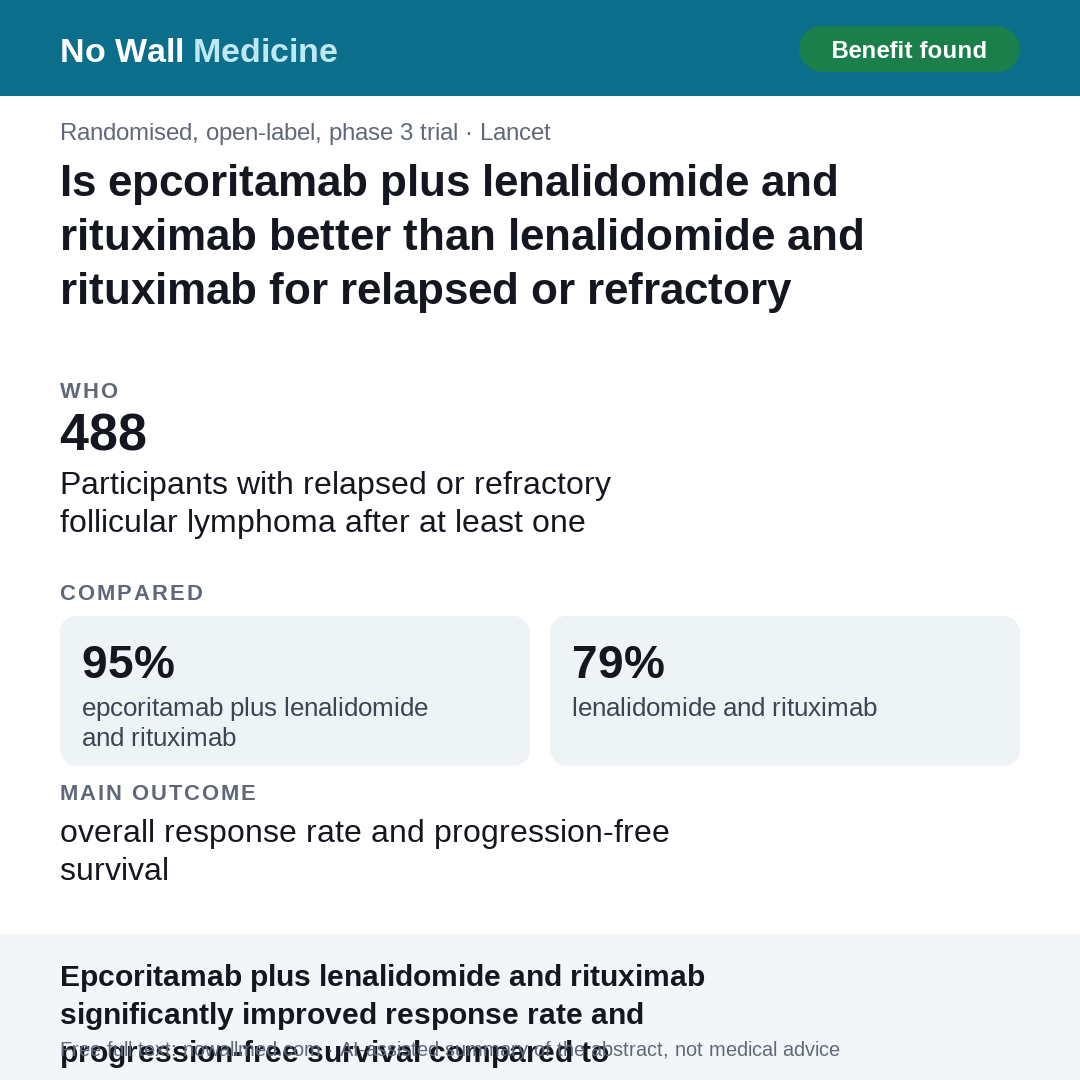
Epcoritamab, lenalidomide, and rituximab versus lenalidomide and rituximab for relapsed or refractory follicular lymphoma (EPCORE FL-1): a global, open-label, randomised, phase 3 trial
Randomised, open-label, phase 3 trialBenefit found
Is epcoritamab plus lenalidomide and rituximab better than lenalidomide and rituximab for relapsed or refractory follicular lymphoma?
Who
488
Participants with relapsed or refractory follicular lymphoma after at least one chemoimmunotherapy · 189 centres in 30 countries
Compared
95%epcoritamab plus lenalidomide and rituximab (95% CI 92-97)
79%lenalidomide and rituximab (74-84)
Main outcome
overall response rate and progression-free survival
Result: hazard ratio 0·21 (95% CI 0·14-0·31)
Bottom line: Epcoritamab plus lenalidomide and rituximab significantly improved response rate and progression-free survival compared to lenalidomide and rituximab.
Funded by: AbbVie and Genmab
Lancet · 2025-12-07Download image
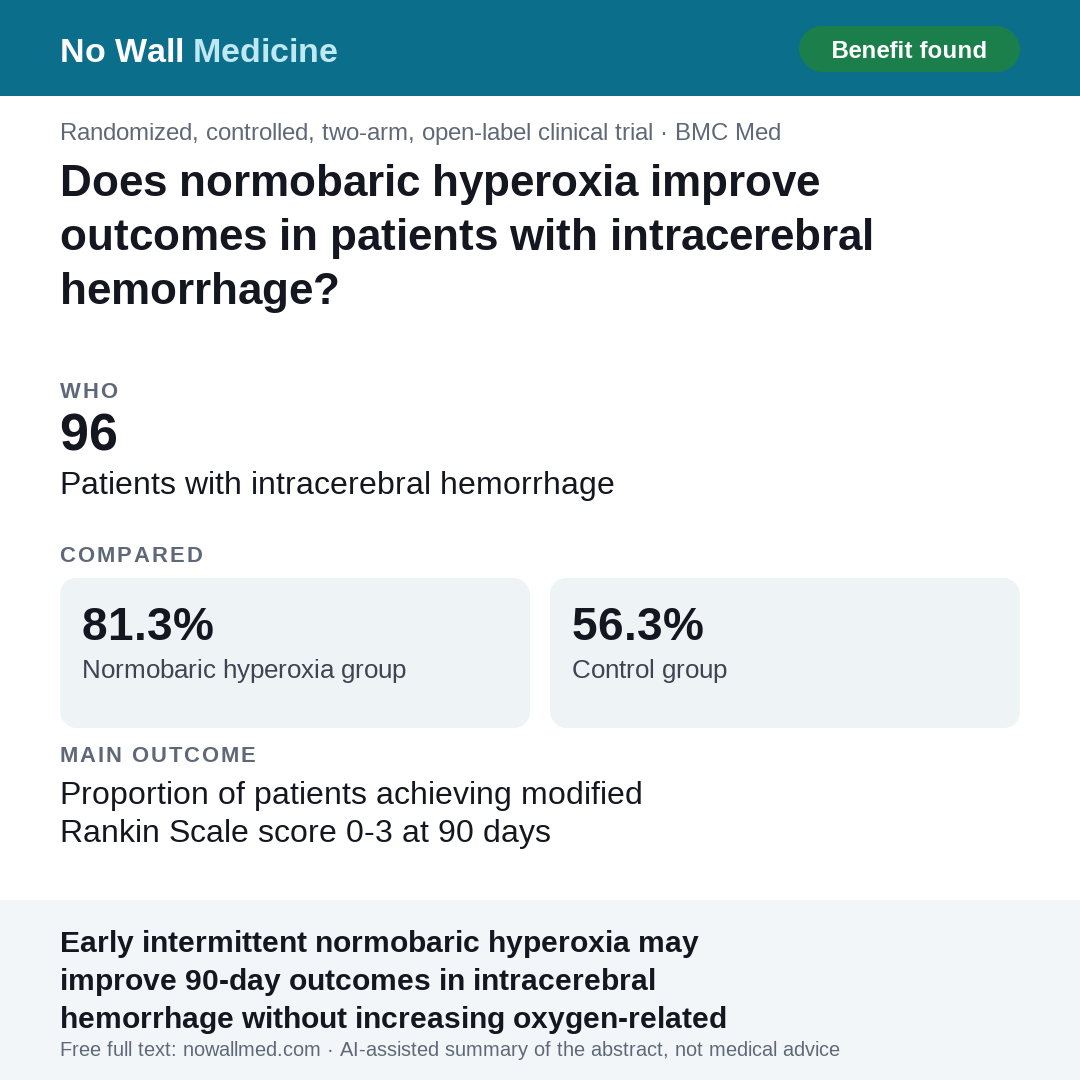
Normobaric hyperoxia for intracerebral hemorrhage: a randomized clinical trial
Randomized, controlled, two-arm, open-label clinical trialBenefit found
Does normobaric hyperoxia improve outcomes in patients with intracerebral hemorrhage?
Who
96
Patients with intracerebral hemorrhage
Compared
81.3%Normobaric hyperoxia group
56.3%Control group
Main outcome
Proportion of patients achieving modified Rankin Scale score 0-3 at 90 days
Result: adjusted risk ratio 1.39 (95% CI 1.06 to 1.82)
Bottom line: Early intermittent normobaric hyperoxia may improve 90-day outcomes in intracerebral hemorrhage without increasing oxygen-related complications.
BMC Med · 2025-12-07Download image
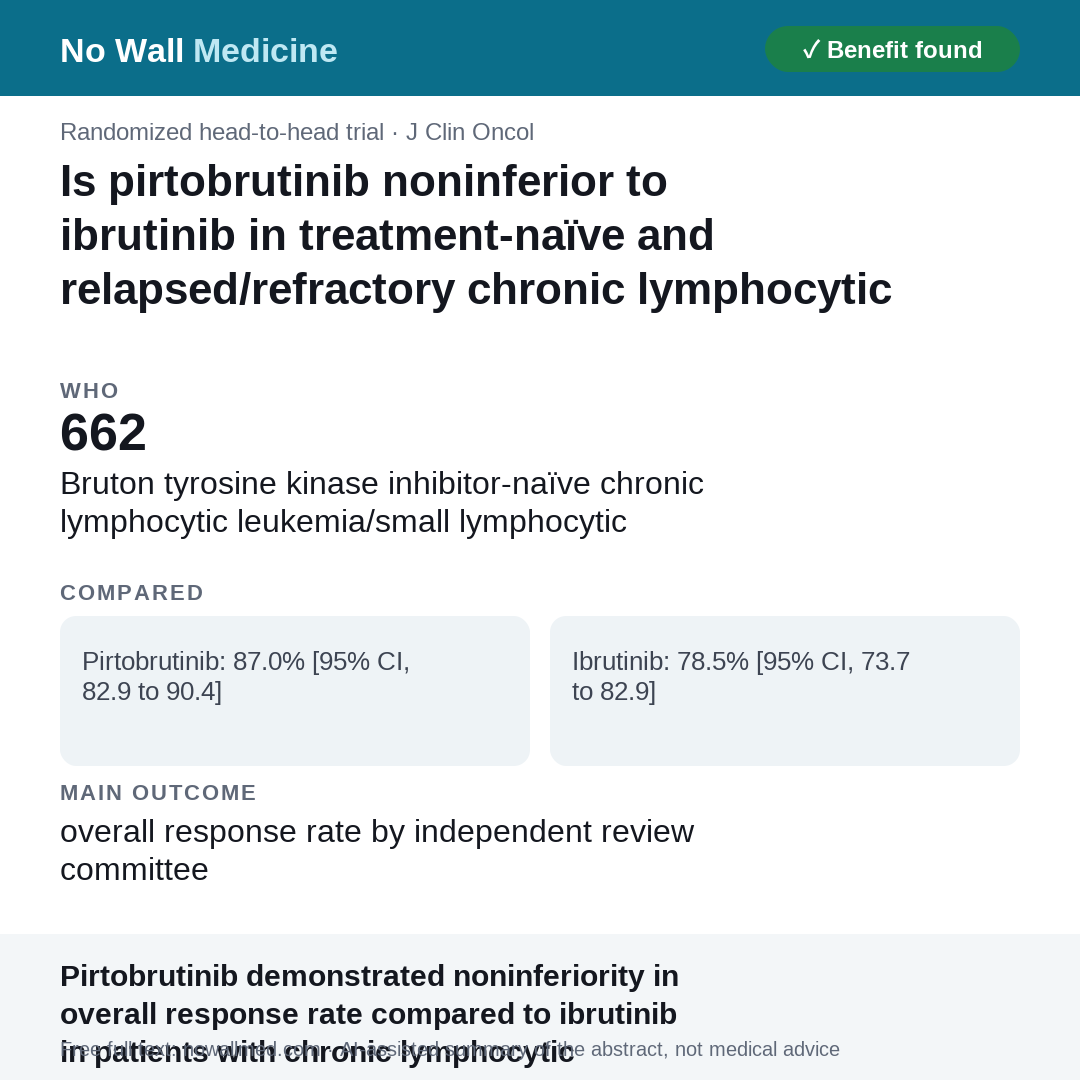
Pirtobrutinib Versus Ibrutinib in Treatment-Naïve and Relapsed/Refractory Chronic Lymphocytic Leukemia/Small Lymphocytic Lymphoma
Randomized head-to-head trialBenefit found
Is pirtobrutinib noninferior to ibrutinib in treatment-naïve and relapsed/refractory chronic lymphocytic leukemia/small lymphocytic lymphoma?
Who
662
Bruton tyrosine kinase inhibitor-naïve chronic lymphocytic leukemia/small lymphocytic lymphoma patients
Compared
Pirtobrutinib: 87.0% [95% CI, 82.9 to 90.4]
Ibrutinib: 78.5% [95% CI, 73.7 to 82.9]
Main outcome
overall response rate by independent review committee
Result: ORR ratio = 1.11 [95% CI, 1.03 to 1.19]
Bottom line: Pirtobrutinib demonstrated noninferiority in overall response rate compared to ibrutinib in patients with chronic lymphocytic leukemia/small lymphocytic lymphoma.
J Clin Oncol · 2025-12-07Download image
Multicentre controlled open randomised clinical trial to assess efficacy and safety of an anti-tuberculosis drug combination based on optimised-dose rifampicin, optimised-dose moxifloxacin and optimised-dose linezolid for TB: the RML-TB trial protocol
Phase IIb, randomised, non-inferiority, controlled, open-label, multicentre trialUnclear result
Is an optimised-dose rifampicin, moxifloxacin, and linezolid regimen non-inferior to standard treatment?
Who
120
Adults with smear-positive, drug-susceptible pulmonary tuberculosis · 13 tuberculosis units in Spain
Compared
Experimental regimen
Standard fixed-dose combination regimen
Main outcome
Proportion of patients with negative culture at 8 weeks
Bottom line: This protocol describes a trial to assess a shorter, optimised-dose drug combination for drug-susceptible tuberculosis.
BMJ Open Respir Res · 2025-12-07Download image
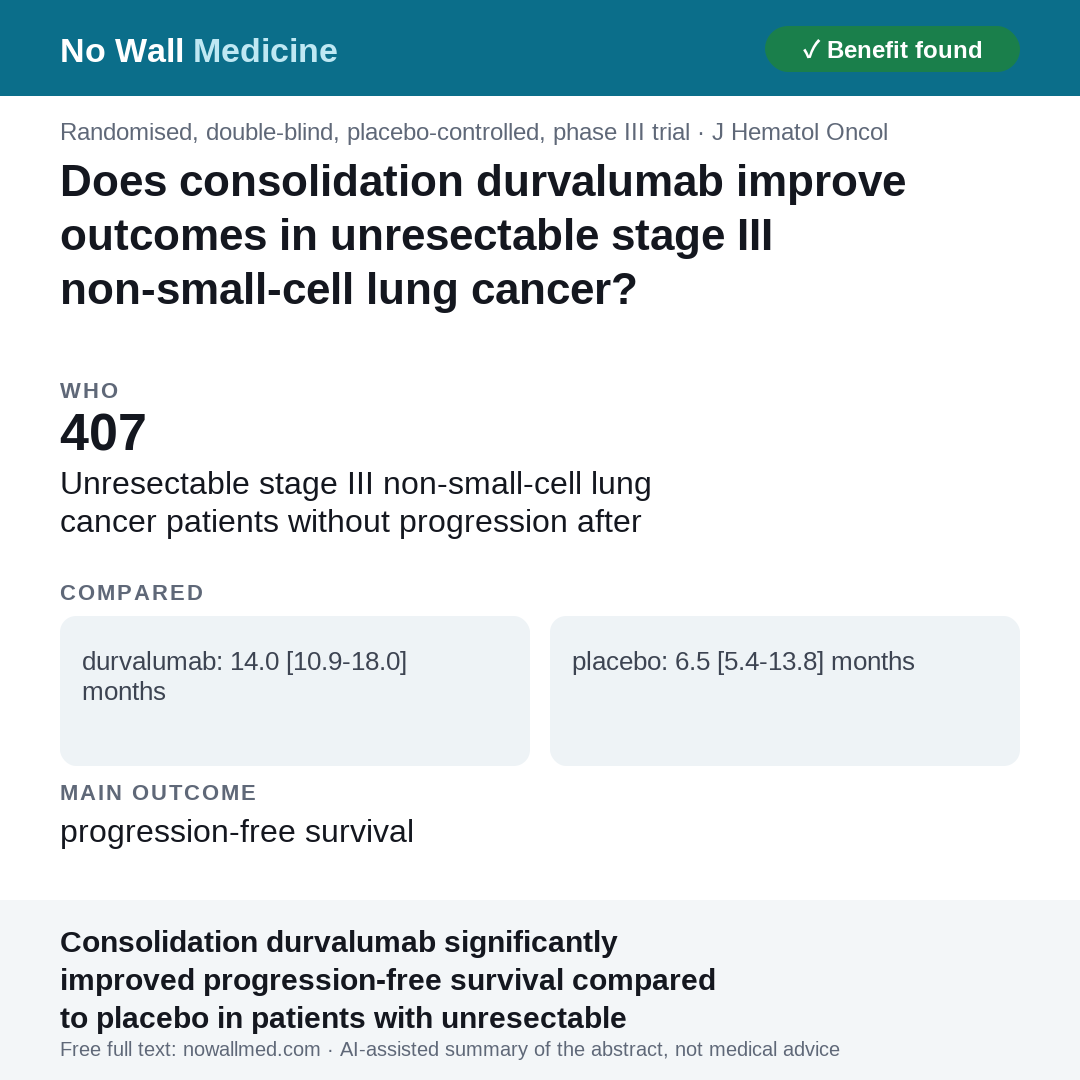
PACIFIC-5: a phase III clinical trial of consolidation durvalumab in patients with unresectable stage III NSCLC and no progression after concurrent or sequential chemoradiotherapy
Randomised, double-blind, placebo-controlled, phase III trialBenefit found
Does consolidation durvalumab improve outcomes in unresectable stage III non-small-cell lung cancer?
Who
407
Unresectable stage III non-small-cell lung cancer patients without progression after chemoradiotherapy
Compared
durvalumab: 14.0 [10.9-18.0] months
placebo: 6.5 [5.4-13.8] months
Main outcome
progression-free survival
Result: hazard ratio 0.75 (95% CI 0.58 to 0.99)
Bottom line: Consolidation durvalumab significantly improved progression-free survival compared to placebo in patients with unresectable stage III non-small-cell lung cancer.
Limitation: Follow-up for overall survival is ongoing.
J Hematol Oncol · 2025-12-07Download image
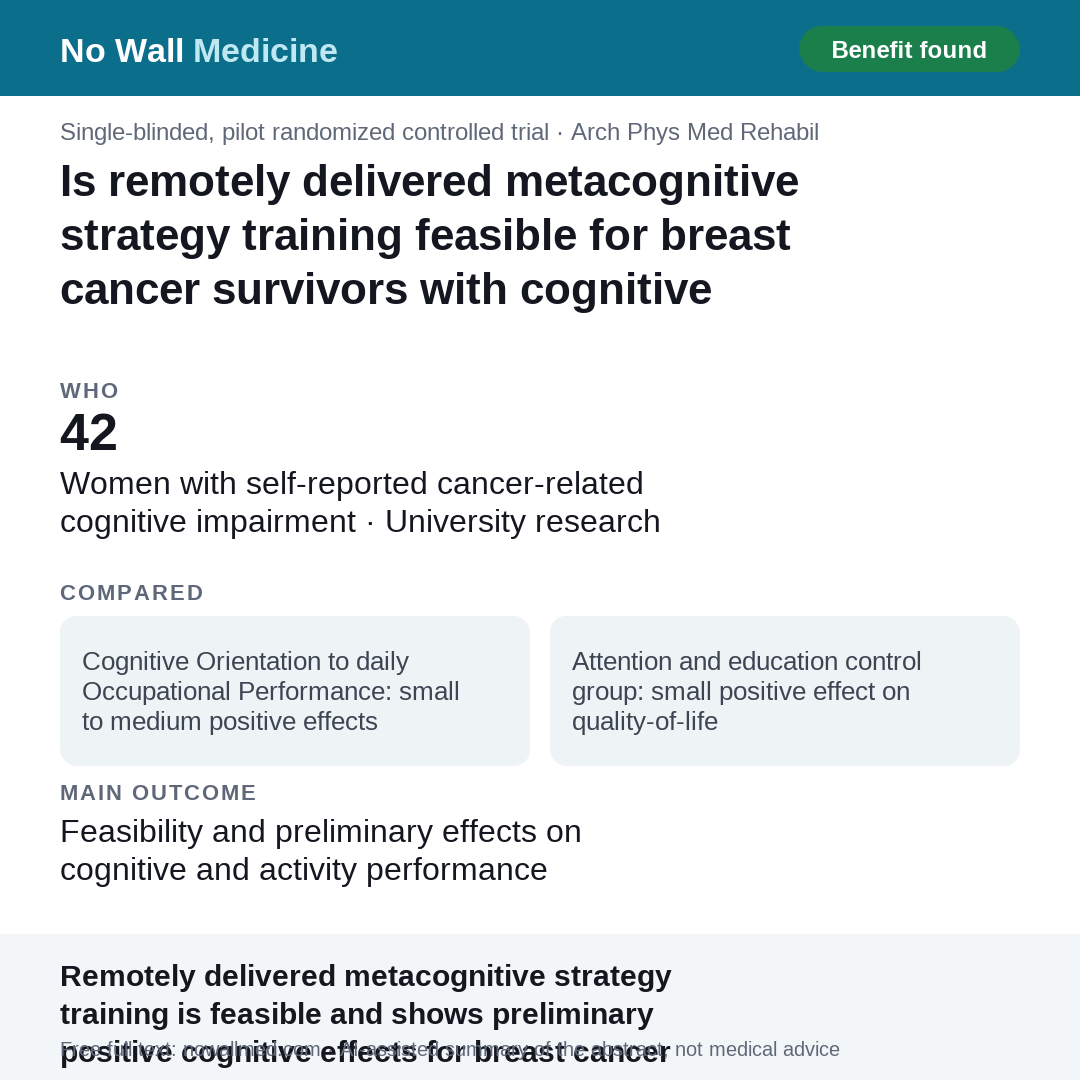
Feasibility Testing of Remotely Delivered Metacognitive Strategy Training in Cancer-Related Cognitive Impairment
Single-blinded, pilot randomized controlled trialBenefit found
Is remotely delivered metacognitive strategy training feasible for breast cancer survivors with cognitive impairment?
Who
42
Women with self-reported cancer-related cognitive impairment · University research laboratory and community
Compared
Cognitive Orientation to daily Occupational Performance: small to medium positive effects
Attention and education control group: small positive effect on quality-of-life
Main outcome
Feasibility and preliminary effects on cognitive and activity performance
Bottom line: Remotely delivered metacognitive strategy training is feasible and shows preliminary positive cognitive effects for breast cancer survivors.
Arch Phys Med Rehabil · 2025-12-06Download image
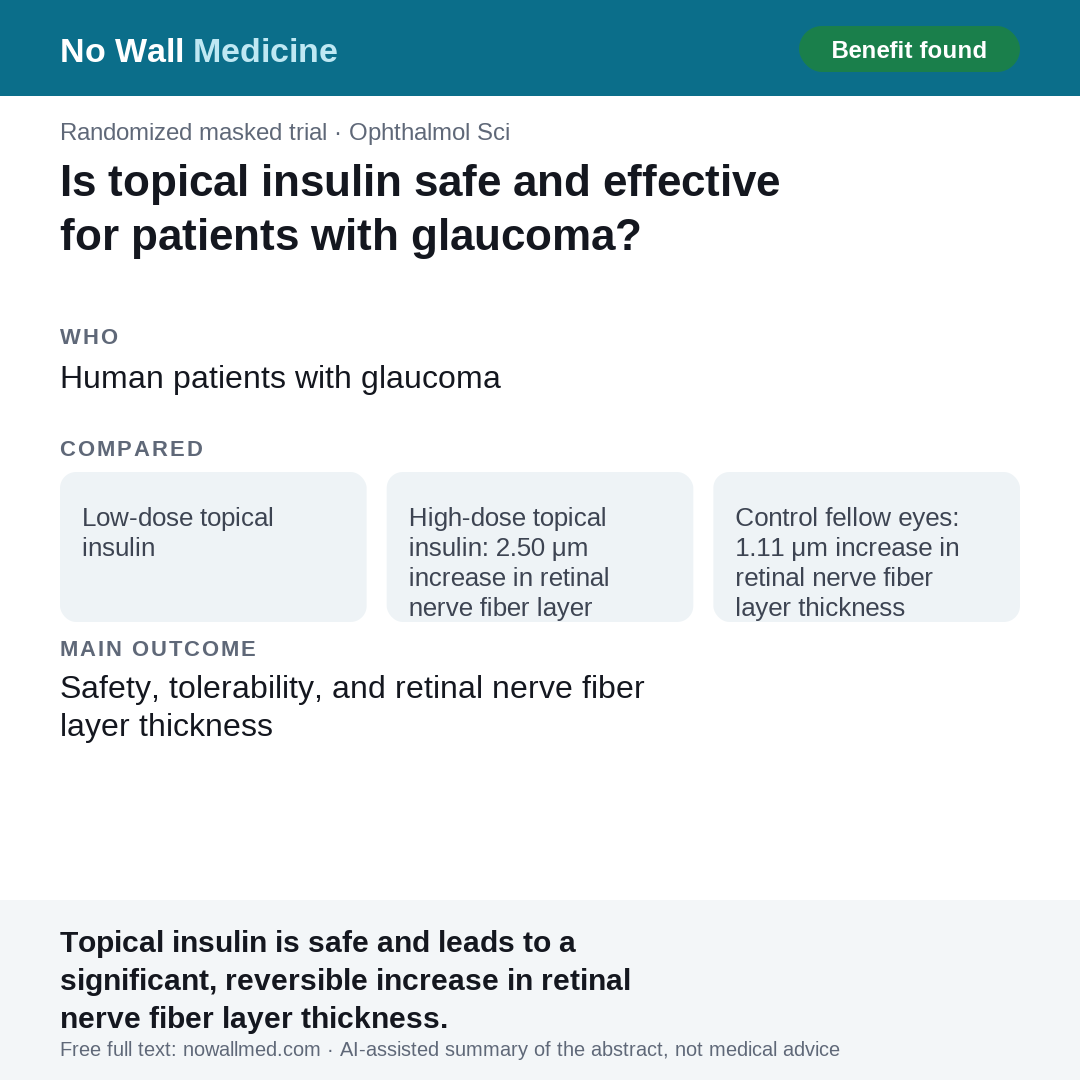
A Phase I Randomized Trial of Topical Insulin for Glaucoma: Safety and Efficacy Outcomes
Randomized masked trialBenefit found
Is topical insulin safe and effective for patients with glaucoma?
Who
Human patients with glaucoma
Compared
Low-dose topical insulin
High-dose topical insulin: 2.50 μm increase in retinal nerve fiber layer thickness
Control fellow eyes: 1.11 μm increase in retinal nerve fiber layer thickness
Main outcome
Safety, tolerability, and retinal nerve fiber layer thickness
Bottom line: Topical insulin is safe and leads to a significant, reversible increase in retinal nerve fiber layer thickness.
Ophthalmol Sci · 2025-12-06Download image
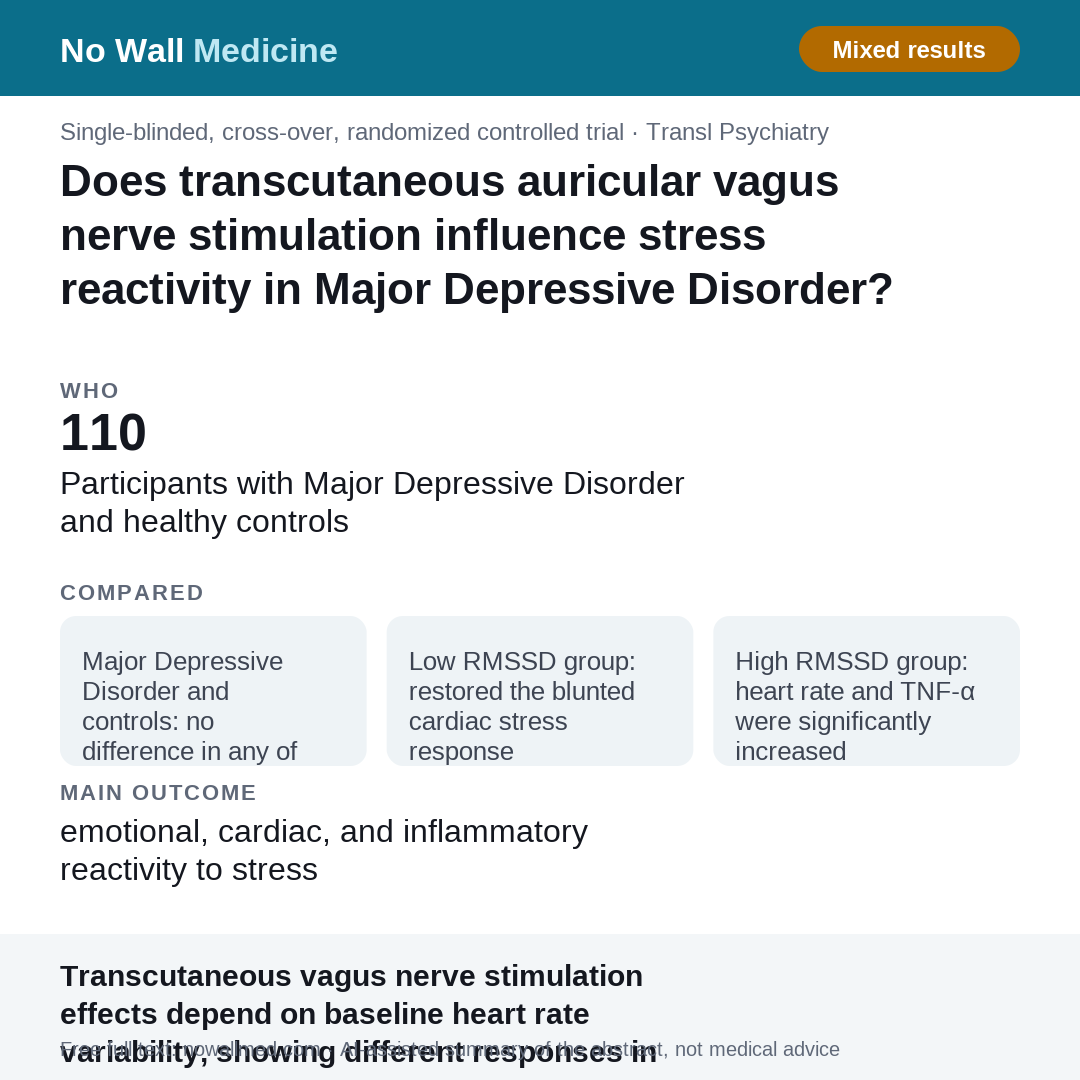
The heart knows best: baseline heart rate variability as guide to transcutaneous auricular vagus nerve stimulation in depression
Single-blinded, cross-over, randomized controlled trialMixed results
Does transcutaneous auricular vagus nerve stimulation influence stress reactivity in Major Depressive Disorder?
Who
110
Participants with Major Depressive Disorder and healthy controls
Compared
Major Depressive Disorder and controls: no difference in any of the outcomes
Low RMSSD group: restored the blunted cardiac stress response
High RMSSD group: heart rate and TNF-α were significantly increased
Main outcome
emotional, cardiac, and inflammatory reactivity to stress
Bottom line: Transcutaneous vagus nerve stimulation effects depend on baseline heart rate variability, showing different responses in low versus high RMSSD groups.
Transl Psychiatry · 2025-12-06Download image
Inhibition of IL-33 in Diabetic Kidney Disease: A Randomized, Placebo-Controlled Phase 2b Trial
Randomized, double-blind, placebo-controlled trialNo clear difference
Does tozorakimab inhibition of IL-33 reduce urinary albumin-creatinine ratio in diabetic kidney disease?
Who
558
Adults with type 2 diabetes and chronic kidney disease
Compared
Tozorakimab: -23% to -25%
-22%Placebo
Main outcome
Urinary albumin-creatinine ratio change from baseline to day 169
Bottom line: Tozorakimab effectively inhibited IL-33 signaling but did not reduce urinary albumin-creatinine ratio compared to placebo.
JASN · 2025-12-05Download image
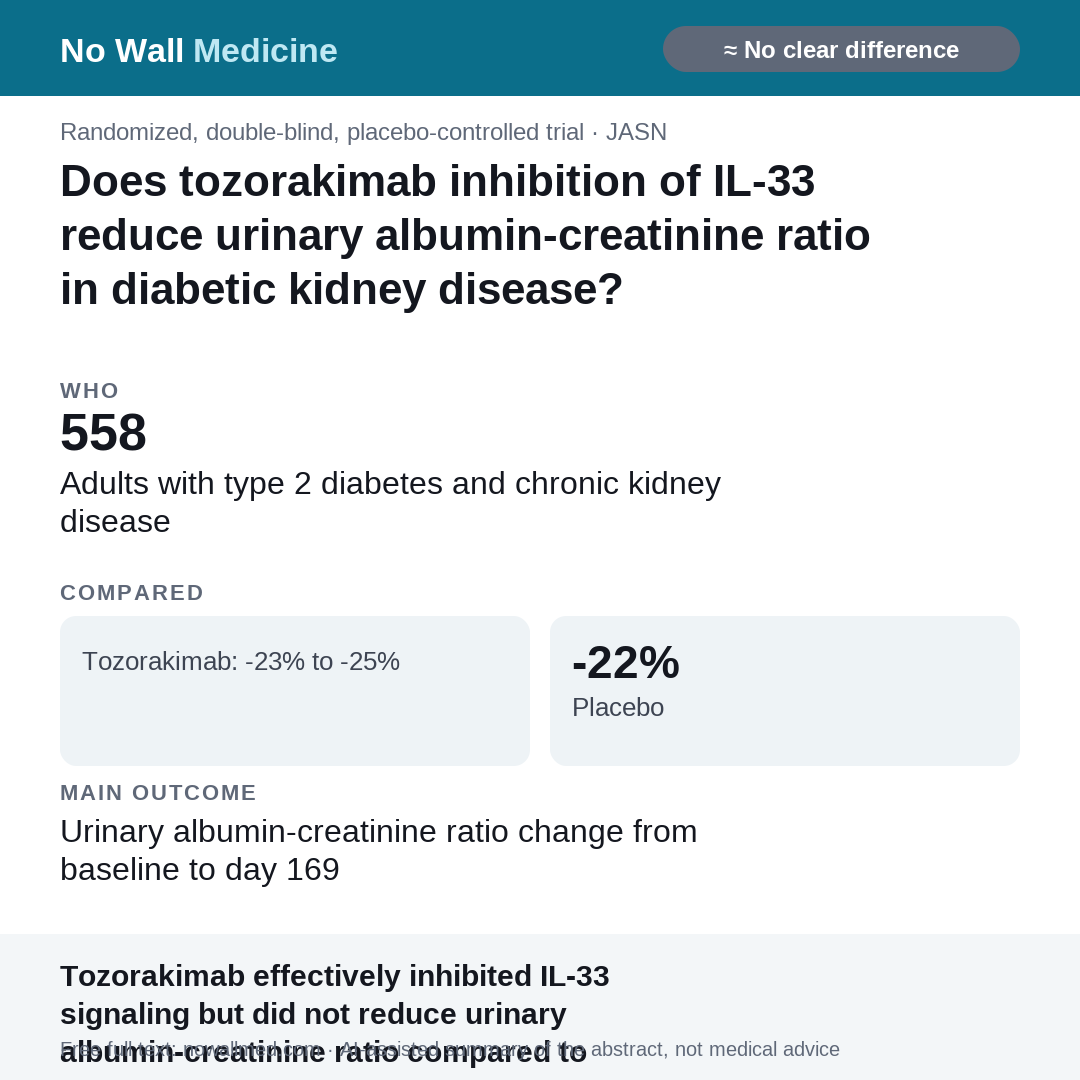
Efficacy and safety of intravenous tranexamic acid in elective abdominoplasty: A randomized, triple-blinded, placebo-controlled clinical trial
Randomized, triple-blinded, placebo-controlled trialNo clear difference
Does intravenous tranexamic acid reduce blood loss in elective abdominoplasty?
Who
60
60 ASA I-II patients undergoing abdominoplasty
Compared
Tranexamic acid: 130.1 ± 57.7 mL intraoperative blood loss
Placebo: 127.3 ± 64.9 mL intraoperative blood loss
Main outcome
Total blood loss within 24 hours
Bottom line: A single dose of tranexamic acid did not significantly reduce perioperative blood loss in abdominoplasty.
J Plast Reconstr Aesthet Surg · 2025-12-05Download image
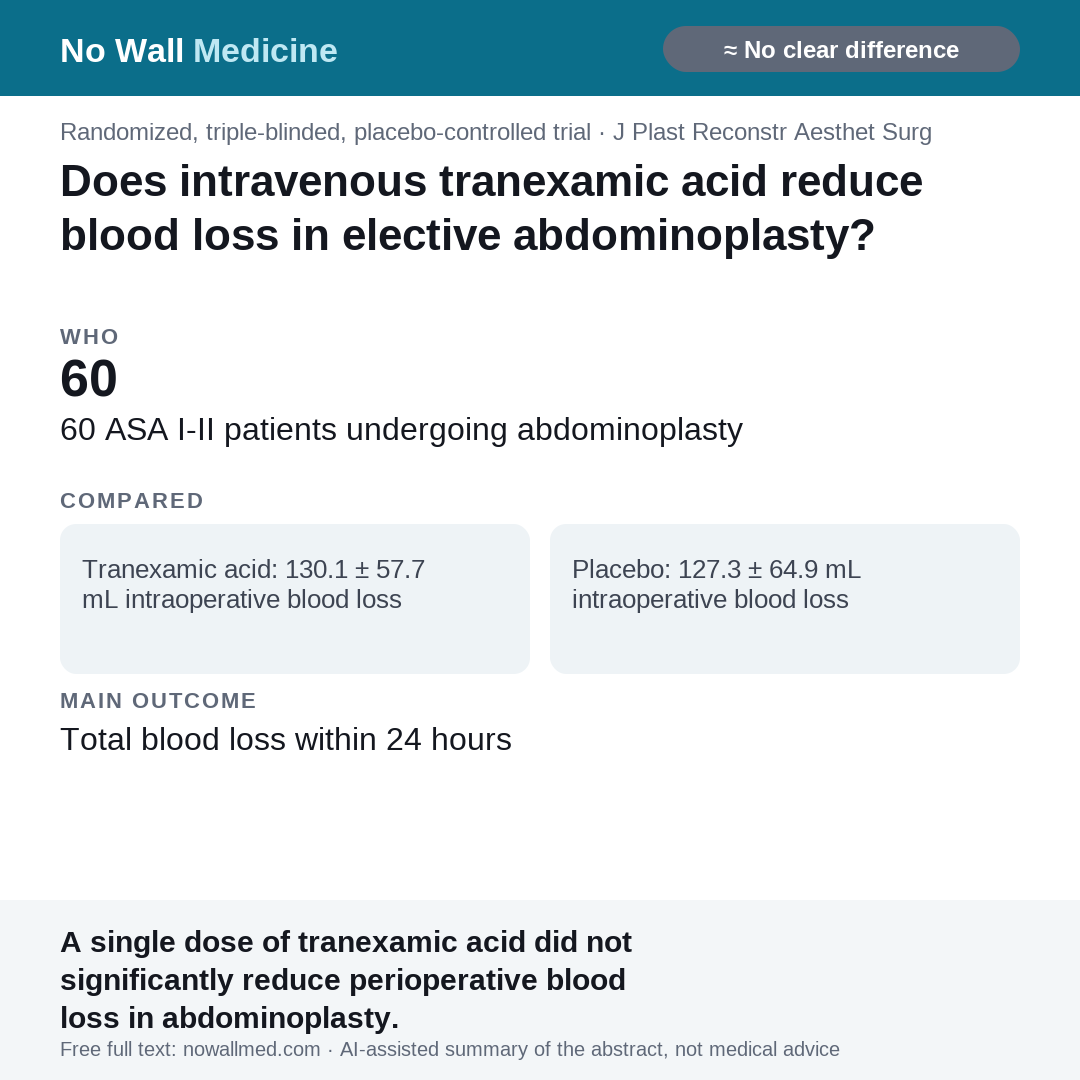
Self-management of vaginal pessaries for pelvic organ prolapse: multi-method process evaluation, linked to the TOPSY randomised controlled trial
Multi-method process evaluation embedded within a randomised controlled trialMixed results
How do self-management and clinic-based care compare for vaginal pessary use?
Who
Women treated with vaginal pessary for pelvic organ prolapse · 21 United Kingdom secondary care centres
Compared
Self-management
Clinic-based care
Main outcome
Acceptability, effectiveness, fidelity to delivery, and adherence
Bottom line: Self-management was acceptable, but adherence and confidence levels differed between self-management and clinic-based care groups.
BMC Med · 2025-12-05Download image
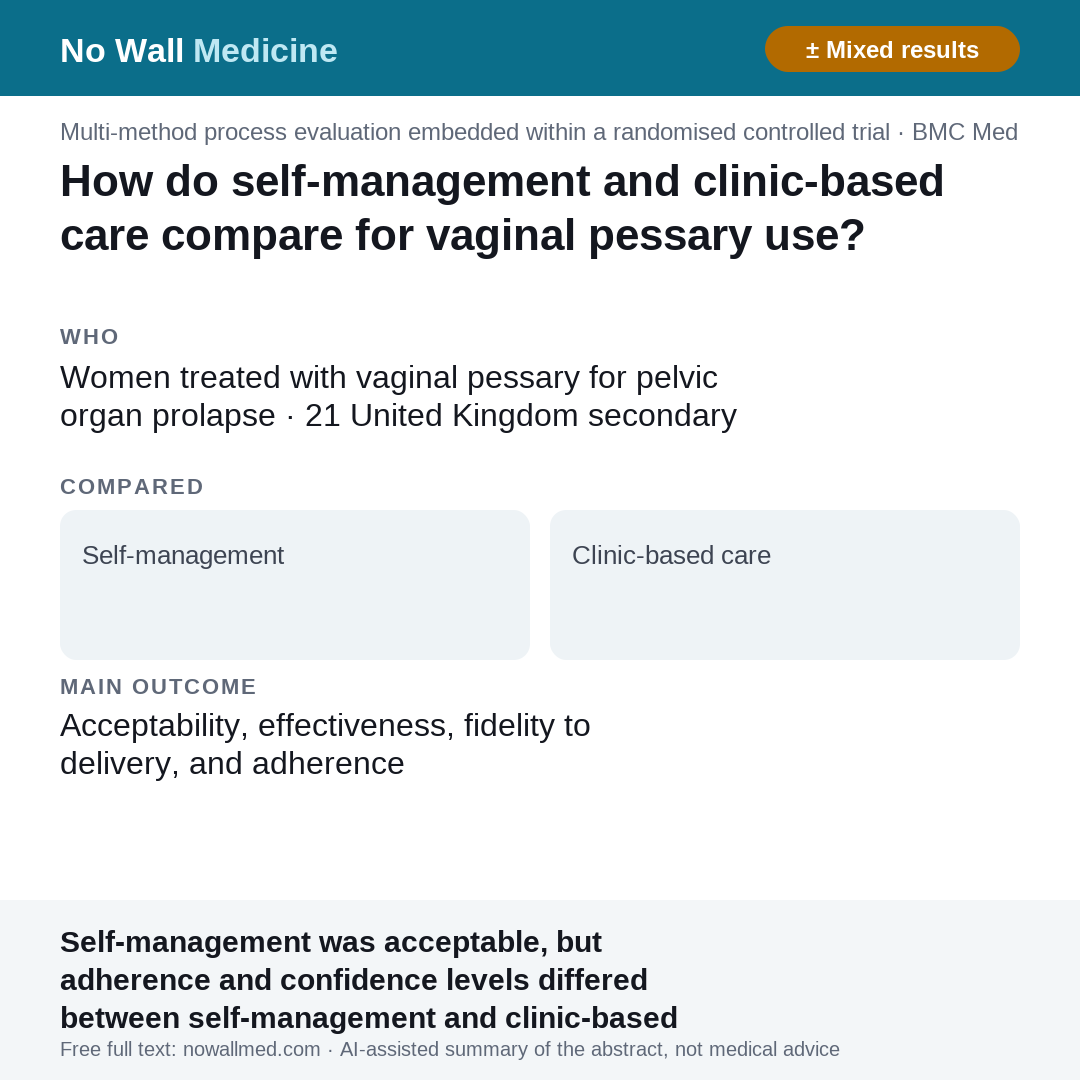
Early time to relapse as a survival prognosticator in nodal mature T-cell lymphomas: results from the PETAL consortium
Observational and randomized validation studyHarm found
Does early time to relapse impact overall survival in nodal mature T-cell lymphomas?
Who
452
Patients with nodal mature T-cell lymphomas with frontline complete response · multinational cohorts
Compared
Time to relapse ≤12 months
Without time to relapse ≤12 months
Main outcome
overall survival
Result: hazard ratio 2.14 (95% CI 1.58-2.90)
Bottom line: Relapse within 12 months is a significant prognostic factor for worse overall survival in nodal mature T-cell lymphomas.
Blood · 2025-12-05Download image
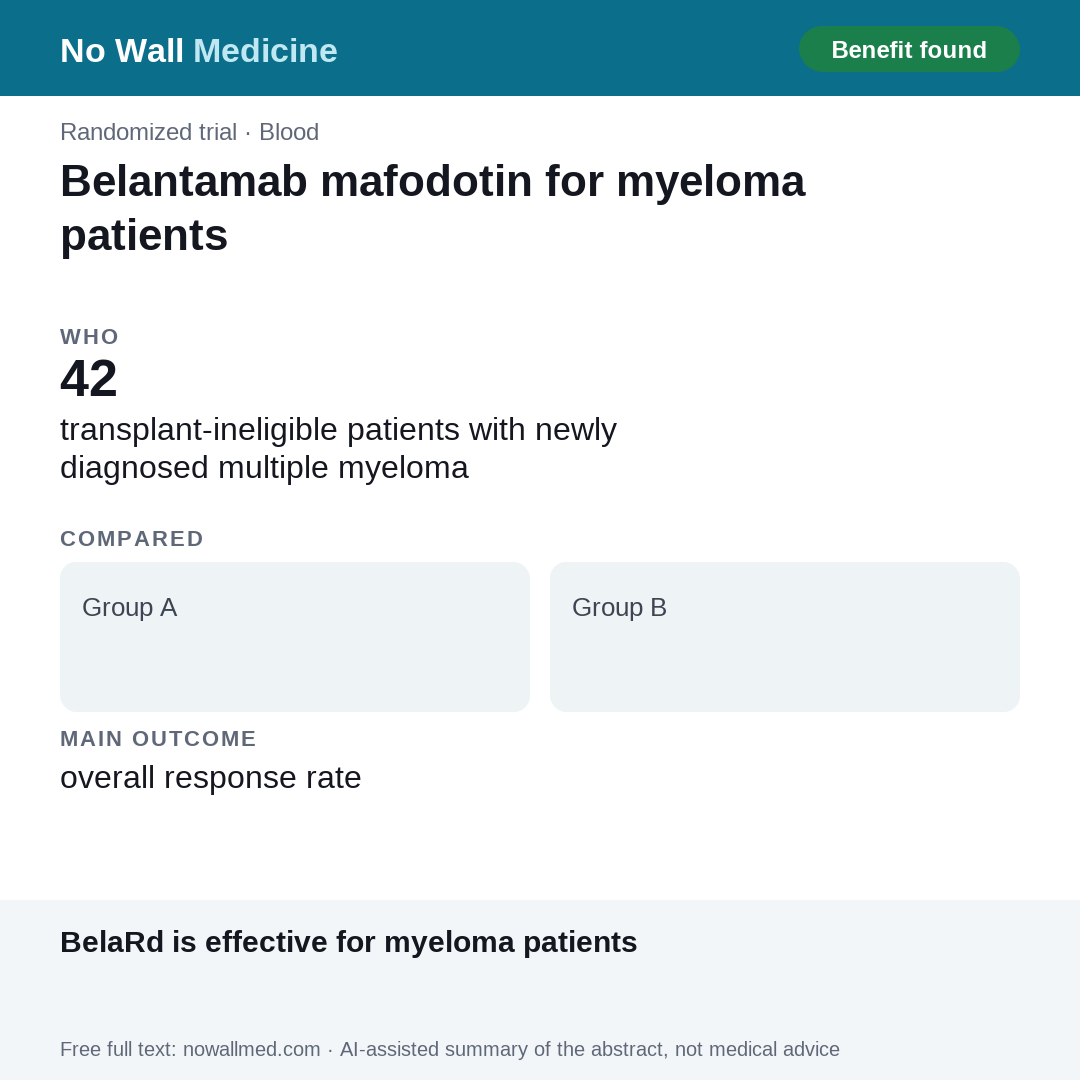
Belantamab mafodotin, lenalidomide, and dexamethasone for intermediate-fit and frail patients with newly diagnosed myeloma
Randomized trialBenefit found
Belantamab mafodotin for myeloma patients
Who
42
transplant-ineligible patients with newly diagnosed multiple myeloma
Compared
Group A
Group B
Main outcome
overall response rate
Bottom line: BelaRd is effective for myeloma patients
Blood · 2025-12-05Download image