Visual abstracts
New randomized trials and meta-analyses from leading journals at a glance: who was studied, what was compared, and what was found. Every paper is free to read in full.
All specialtiesCardiology 4763Oncology 4043Gastroenterology & Hepatology 1903Infectious Disease 3756Neurology 1872Psychiatry & Mental Health 2216Pulmonology 2044Critical Care 1319Endocrinology & Diabetes 2544Pediatrics 2889Surgery 2480Orthopedics & Sports Medicine 917Neurosurgery 525Cardiothoracic & Vascular Surgery 656Plastic & Reconstructive Surgery 574Nephrology 1107Rheumatology 810Hematology 1090Dermatology 611Ophthalmology 532Obstetrics & Gynecology 1645Public & Global Health 1037Radiology & Imaging 619Anesthesiology 958Urology 745ENT (Otolaryngology) 494Emergency Medicine 481Allergy & Immunology 309Geriatrics 972Family Medicine & Primary Care 534Medical Genetics & Genomics 659Pathology & Laboratory Medicine 156Physical Medicine & Rehabilitation 734Palliative Care 421Nutrition 1560Digital Health & AI 2137General Medicine 318
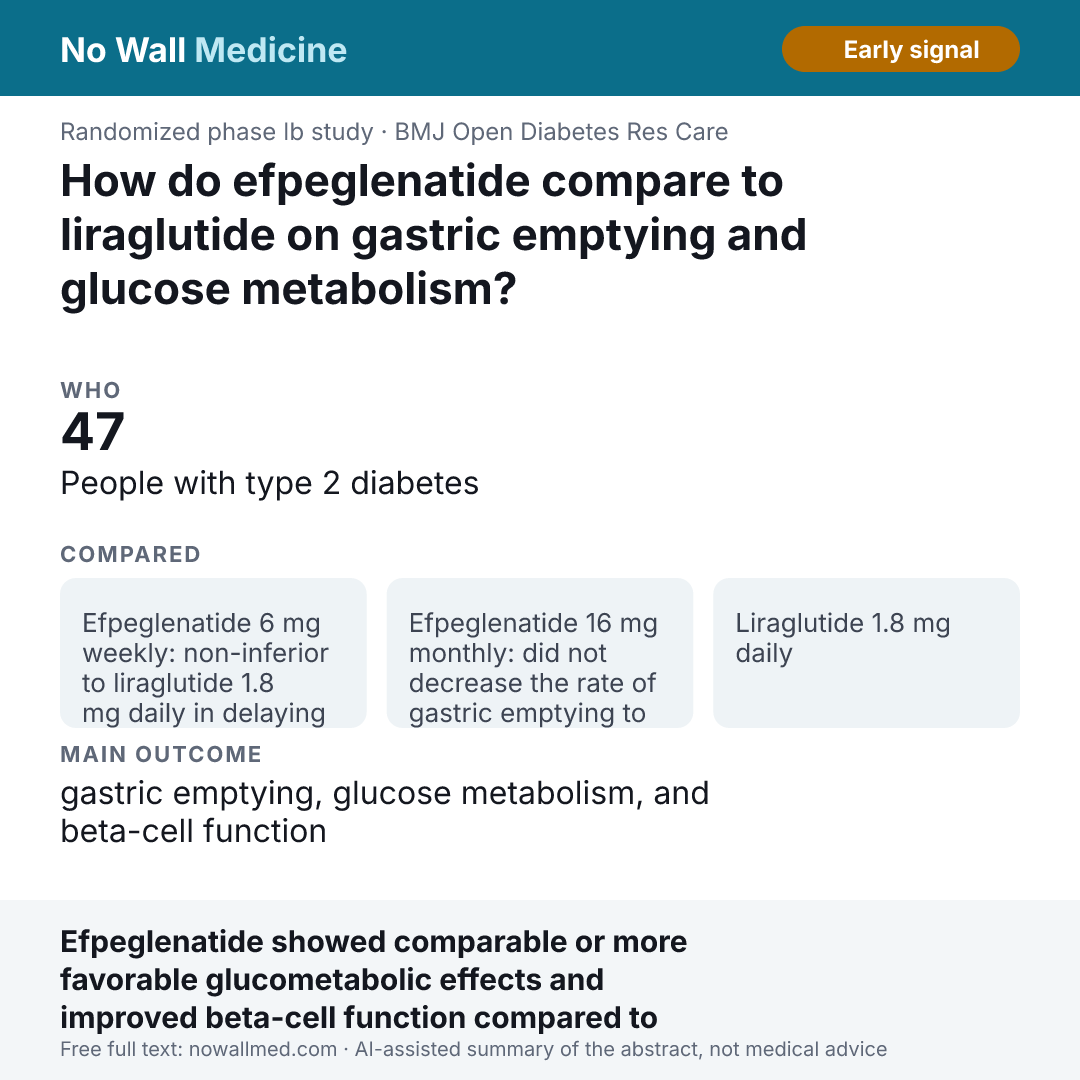
Effects of efpeglenatide versus liraglutide on gastric emptying, glucose metabolism and beta-cell function in people with type 2 diabetes: an exploratory, randomized phase Ib study
Randomized phase Ib studyEarly signal
How do efpeglenatide compare to liraglutide on gastric emptying and glucose metabolism?
Who
47
People with type 2 diabetes
Compared
Efpeglenatide 6 mg weekly: non-inferior to liraglutide 1.8 mg daily in delaying gastric emptying
Efpeglenatide 16 mg monthly: did not decrease the rate of gastric emptying to as great an extent as liraglutide
Liraglutide 1.8 mg daily
Main outcome
gastric emptying, glucose metabolism, and beta-cell function
Bottom line: Efpeglenatide showed comparable or more favorable glucometabolic effects and improved beta-cell function compared to liraglutide.
BMJ Open Diabetes Res Care · 2021-06-26 · Save PNG
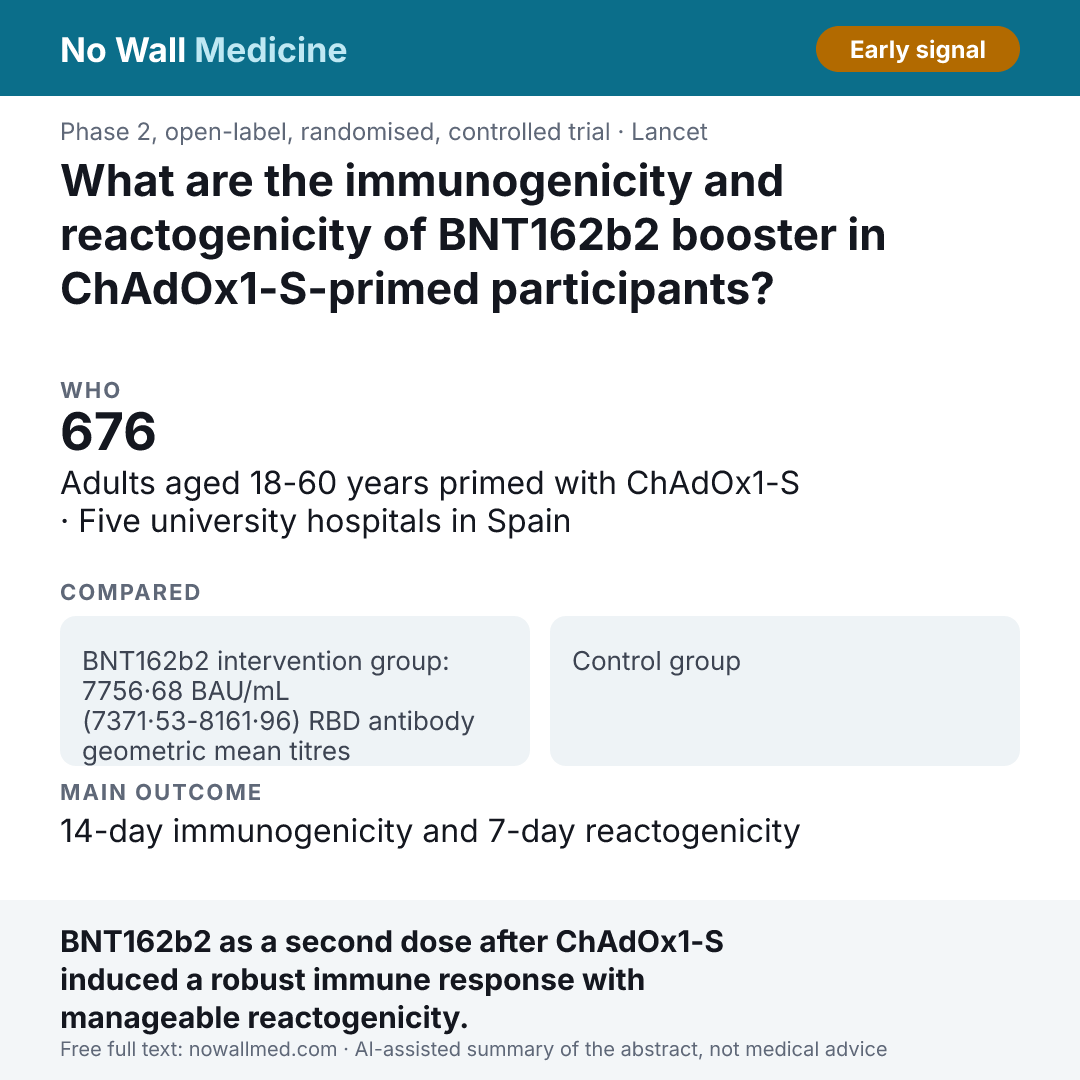
Immunogenicity and reactogenicity of BNT162b2 booster in ChAdOx1-S-primed participants (CombiVacS): a multicentre, open-label, randomised, controlled, phase 2 trial
Phase 2, open-label, randomised, controlled trialEarly signal
What are the immunogenicity and reactogenicity of BNT162b2 booster in ChAdOx1-S-primed participants?
Who
676
Adults aged 18-60 years primed with ChAdOx1-S · Five university hospitals in Spain
Compared
BNT162b2 intervention group: 7756·68 BAU/mL (7371·53-8161·96) RBD antibody geometric mean titres
Control group
Main outcome
14-day immunogenicity and 7-day reactogenicity
Result: interventional:control ratio 77·69 (95% CI 59·57-101·32) for RBD protein
Bottom line: BNT162b2 as a second dose after ChAdOx1-S induced a robust immune response with manageable reactogenicity.
Funded by: Instituto de Salud Carlos III
Lancet · 2021-06-25 · Save PNG
Oral MucoRice-CTB vaccine for safety and microbiota-dependent immunogenicity in humans: a phase 1 randomised trial
Double-blind, randomised, placebo-controlled, phase 1 trialEarly signal
Is the oral MucoRice-CTB vaccine safe and immunogenic in healthy adult men?
Who
60
Healthy adult men aged 20-40 years · One centre in Tokyo, Japan
Compared
MucoRice-CTB (1 g, 3 g, or 6 g): 28 (93%) had at least one adverse event
Placebo (1 g, 3 g, or 6 g): 30 (100%) had at least one adverse event
Main outcome
Safety, tolerability, and serum CTB-specific IgG and IgA antibody concentrations
Bottom line: MucoRice-CTB was safe and increased serum CTB-specific IgG and IgA antibodies in a dose-dependent manner.
Lancet Microbe · 2021-06-25 · Save PNG

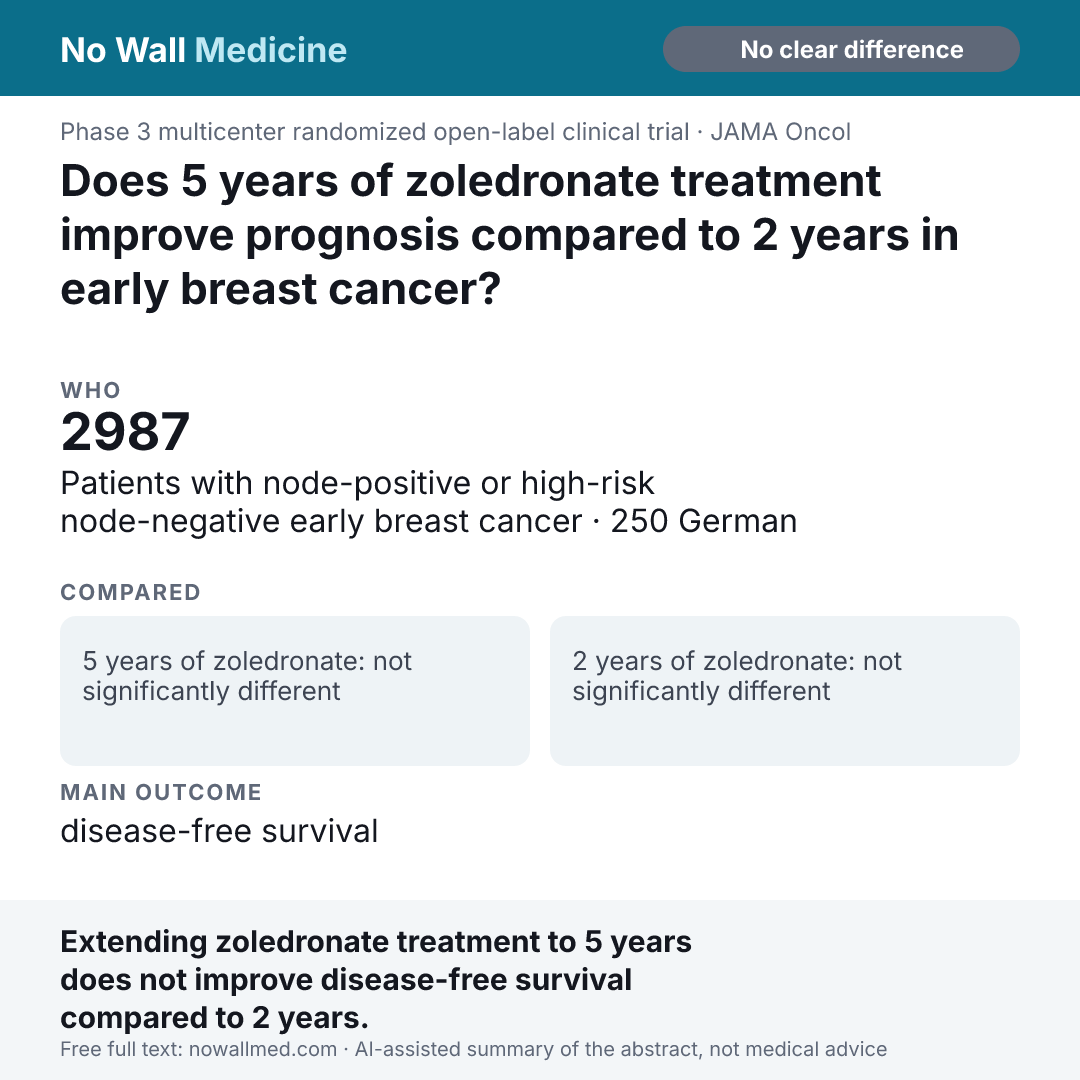
Prognosis of Patients With Early Breast Cancer Receiving 5 Years vs 2 Years of Adjuvant Bisphosphonate Treatment: A Phase 3 Randomized Clinical Trial
Phase 3 multicenter randomized open-label clinical trialNo clear difference
Does 5 years of zoledronate treatment improve prognosis compared to 2 years in early breast cancer?
Who
2987
Patients with node-positive or high-risk node-negative early breast cancer · 250 German study centers
Compared
5 years of zoledronate: not significantly different
2 years of zoledronate: not significantly different
Main outcome
disease-free survival
Result: hazard ratio 0.97 (95% CI, 0.75-1.25)
Bottom line: Extending zoledronate treatment to 5 years does not improve disease-free survival compared to 2 years.
JAMA Oncol · 2021-06-25 · Save PNG
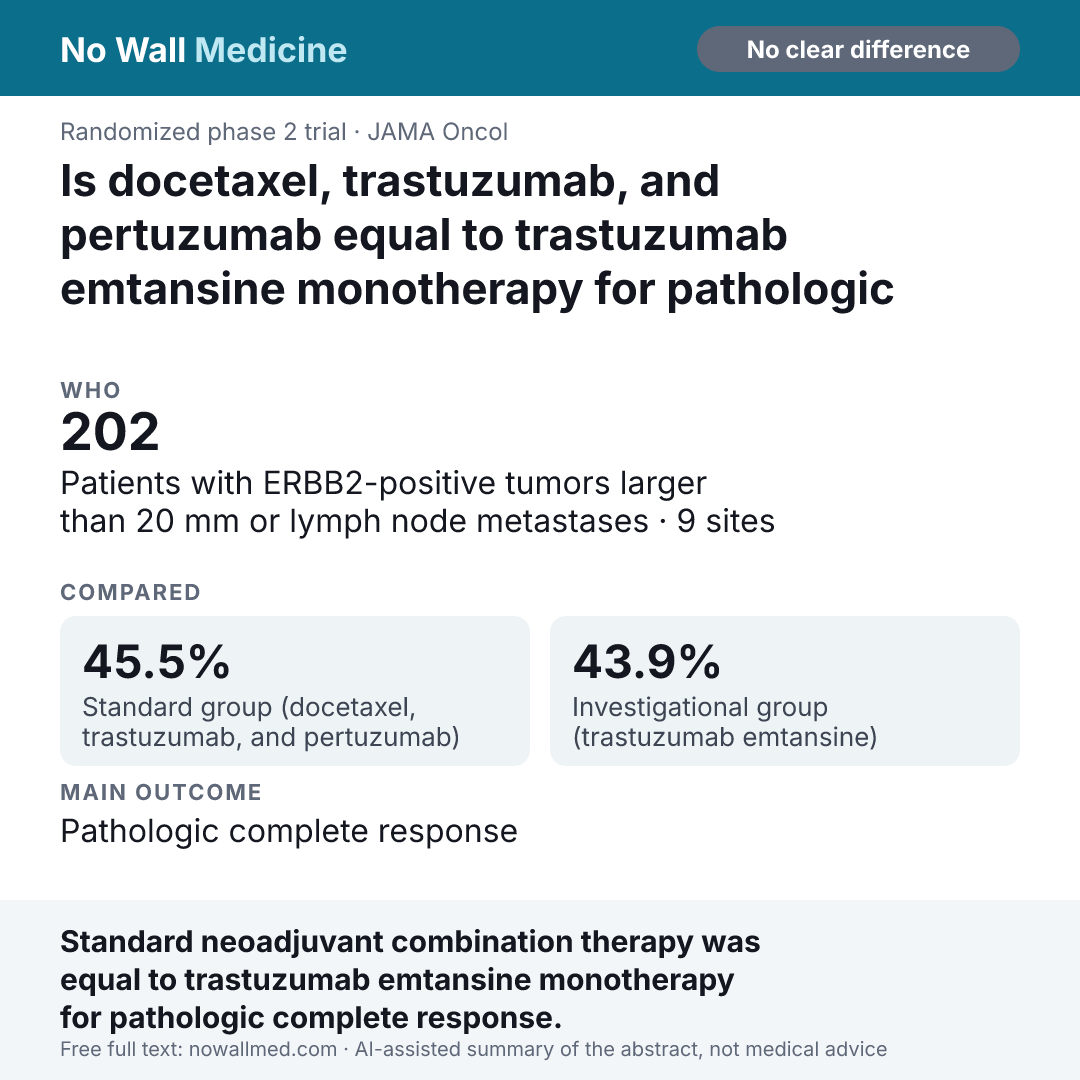
Neoadjuvant Trastuzumab, Pertuzumab, and Docetaxel vs Trastuzumab Emtansine in Patients With ERBB2-Positive Breast Cancer: A Phase 2 Randomized Clinical Trial
Randomized phase 2 trialNo clear difference
Is docetaxel, trastuzumab, and pertuzumab equal to trastuzumab emtansine monotherapy for pathologic complete response?
Who
202
Patients with ERBB2-positive tumors larger than 20 mm or lymph node metastases · 9 sites in Sweden
Compared
45.5%Standard group (docetaxel, trastuzumab, and pertuzumab) (45/99)
43.9%Investigational group (trastuzumab emtansine) (43/98)
Main outcome
Pathologic complete response
Bottom line: Standard neoadjuvant combination therapy was equal to trastuzumab emtansine monotherapy for pathologic complete response.
JAMA Oncol · 2021-06-25 · Save PNG
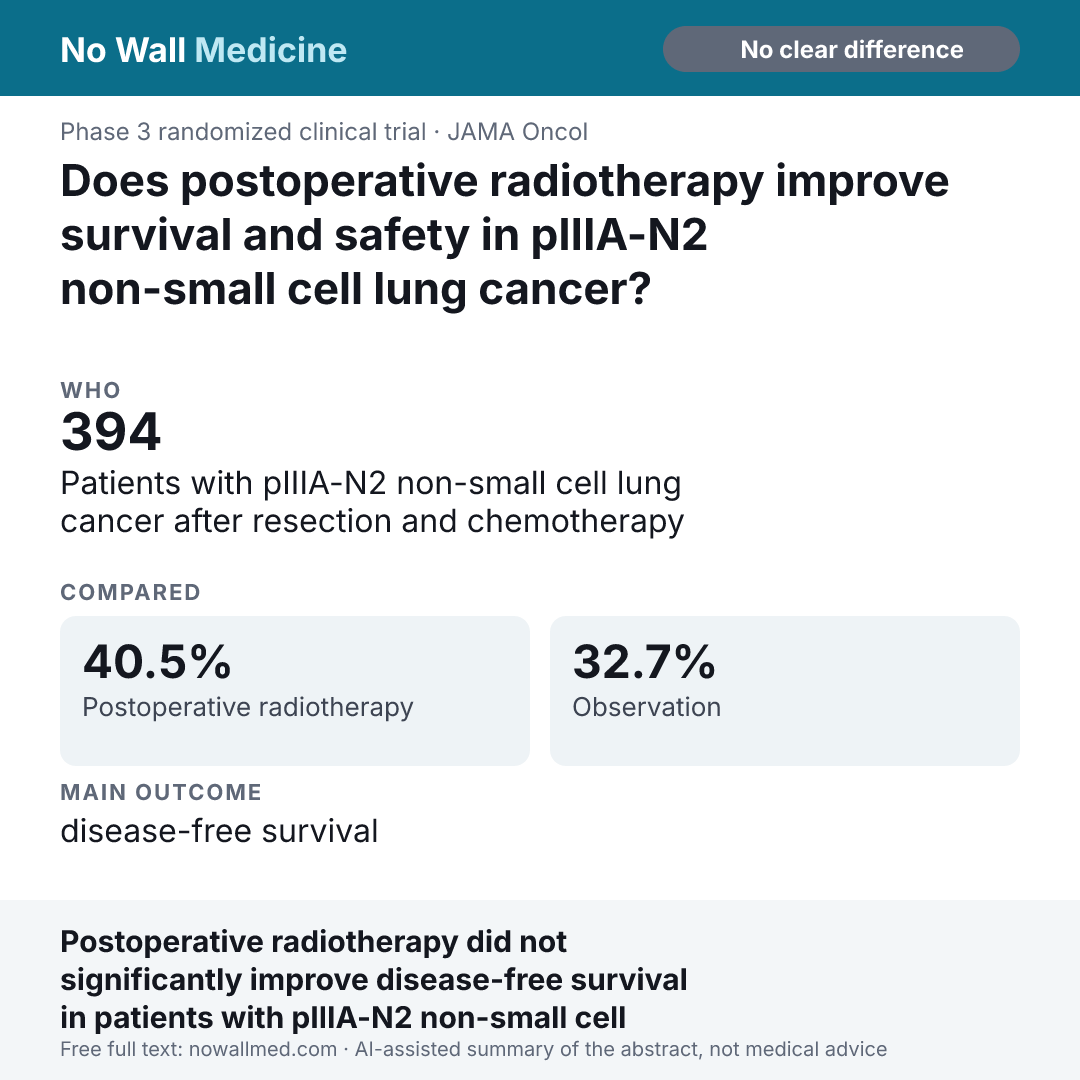
Effect of Postoperative Radiotherapy for Patients With pIIIA-N2 Non-Small Cell Lung Cancer After Complete Resection and Adjuvant Chemotherapy: The Phase 3 PORT-C Randomized Clinical Trial
Phase 3 randomized clinical trialNo clear difference
Does postoperative radiotherapy improve survival and safety in pIIIA-N2 non-small cell lung cancer?
Who
394
Patients with pIIIA-N2 non-small cell lung cancer after resection and chemotherapy
Compared
40.5%Postoperative radiotherapy
32.7%Observation
Main outcome
disease-free survival
Result: hazard ratio 0.84 (95% CI, 0.65-1.09)
Bottom line: Postoperative radiotherapy did not significantly improve disease-free survival in patients with pIIIA-N2 non-small cell lung cancer.
JAMA Oncol · 2021-06-25 · Save PNG
Iron preparations for women of reproductive age with iron deficiency anaemia in pregnancy (FRIDA): a systematic review and network meta-analysis
Systematic review and network meta-analysisBenefit found
What are the effectiveness and safety of iron preparations for iron deficiency anaemia in pregnancy?
Who
9145
Pregnant women with iron deficiency anaemia
Compared
Intravenous iron sucrose: mean difference 7·17 g/L (95% CI 2·62-11·73)
Oral ferrous sulfate
Main outcome
Change in haemoglobin concentration at 4 weeks from baseline
Result: mean difference 7·17 g/L (95% CI 2·62-11·73)
Bottom line: Intravenous iron sucrose and ferric carboxymaltose are more effective than oral ferrous sulfate for treating iron deficiency anaemia in pregnancy.
Limitation: Many trials in the network meta-analysis for haemoglobin had high or medium global risk of bias.
Lancet Haematol · 2021-06-25 · Save PNG

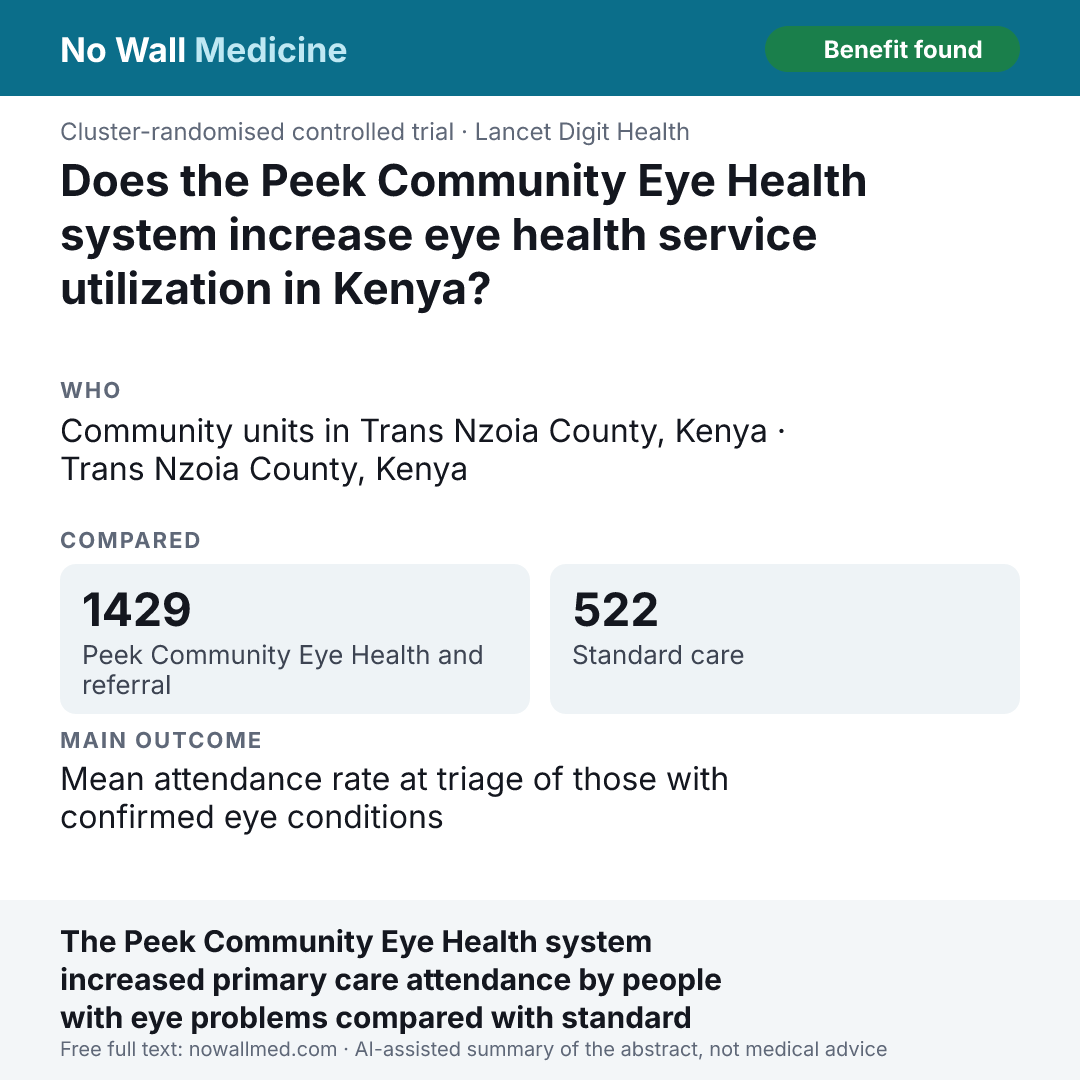
Effectiveness of an mHealth system on access to eye health services in Kenya: a cluster-randomised controlled trial
Cluster-randomised controlled trialBenefit found
Does the Peek Community Eye Health system increase eye health service utilization in Kenya?
Who
Community units in Trans Nzoia County, Kenya · Trans Nzoia County, Kenya
Compared
1429Peek Community Eye Health and referral (92% CI 1228-1629)
522Standard care (418-625)
Main outcome
Mean attendance rate at triage of those with confirmed eye conditions
Result: rate difference 906 per 10 000 [95% CI 689-1124; p<0·0001]
Bottom line: The Peek Community Eye Health system increased primary care attendance by people with eye problems compared with standard approaches.
Funded by: Queen Elizabeth Diamond Jubilee Trust and Wellcome Trust
Lancet Digit Health · 2021-06-25 · Save PNG
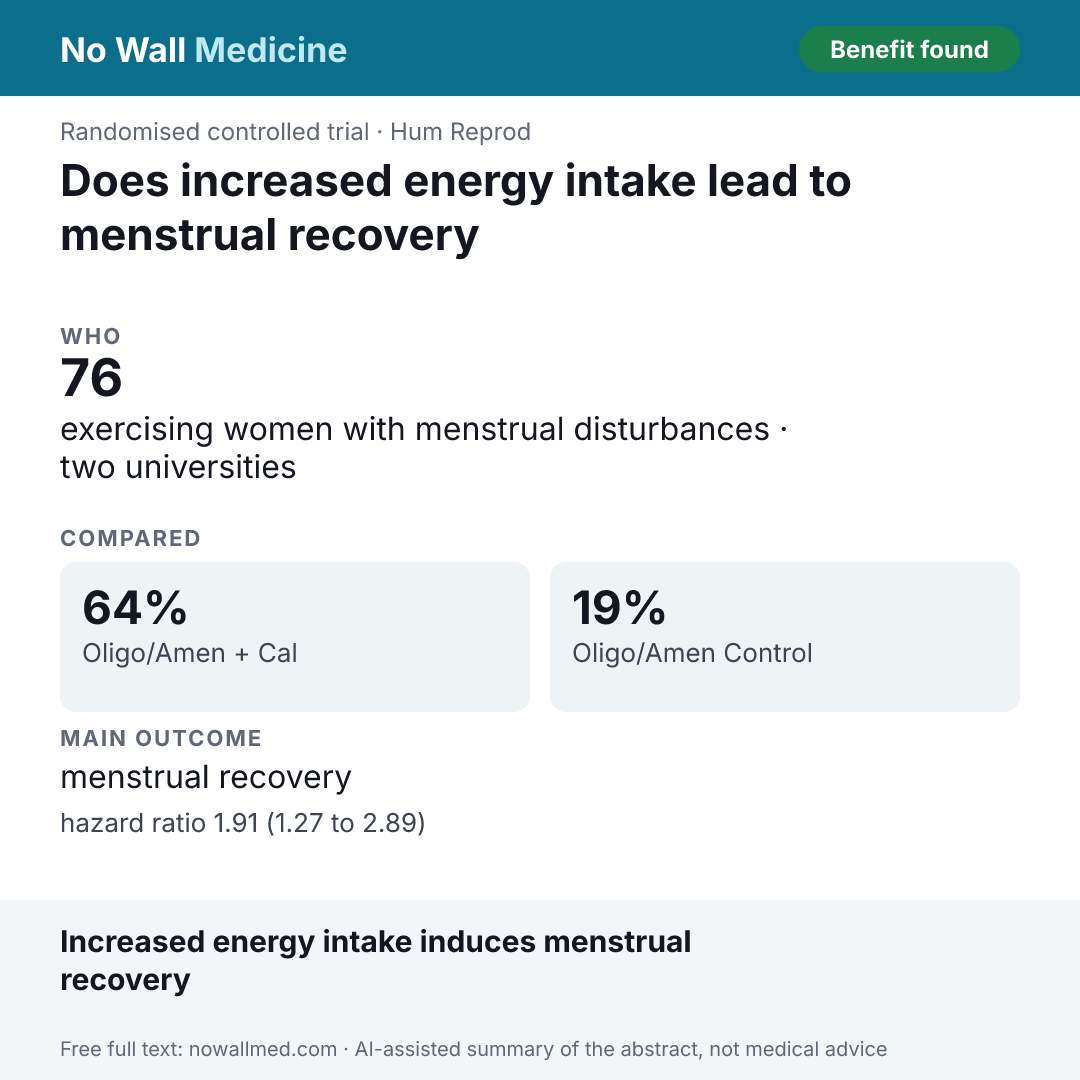
Randomised controlled trial of the effects of increased energy intake on menstrual recovery in exercising women with menstrual disturbances: the 'REFUEL' study
Randomised controlled trialBenefit found
Does increased energy intake lead to menstrual recovery
Who
76
exercising women with menstrual disturbances · two universities
Compared
64%Oligo/Amen + Cal
19%Oligo/Amen Control
Main outcome
menstrual recovery
Result: hazard ratio 1.91 (1.27 to 2.89)
Bottom line: Increased energy intake induces menstrual recovery
Limitation: greater than expected dropout rate
Funded by: U.S. Department of Defense
Hum Reprod · 2021-06-25 · Save PNG
Mucolipidosis type II and type III: a systematic review of 843 published cases
Systematic reviewUnclear result
What is the natural history of Mucolipidosis type II and type III?
Who
843
Patients with Mucolipidosis type II and type III
Compared
Mucolipidosis type II: Median survival: 5.0
Mucolipidosis type III: Median survival: 62.0 years
Main outcome
Survival, symptom onset, presenting symptoms, diagnosis, and pathogenic variants
Bottom line: Mucolipidosis type II has a median survival of 5.0 years, while type III has a median survival of 62.0 years.
Genet Med · 2021-06-25 · Save PNG

Vitamin D Receptor Gene Polymorphisms and Risk of Alzheimer Disease and Mild Cognitive Impairment: A Systematic Review and Meta-Analysis
Systematic review and meta-analysisMixed results
Do vitamin D receptor gene polymorphisms associate with Alzheimer disease and mild cognitive impairment?
Who
3573
Patients with mild cognitive impairment or Alzheimer disease and matched controls
Compared
BsmI polymorphism (allelic model): OR: 1.77; 95% CI: 1.24, 2.54
TaqI polymorphism (dominant model): OR: 1.44; 95% CI: 1.17, 1.79
Main outcome
Risk of mild cognitive impairment and Alzheimer disease
Bottom line: Vitamin D receptor polymorphisms may predict mild cognitive impairment and Alzheimer disease, though population discrepancies exist.
Limitation: More research is needed considering gene-gene interactions, gene-environment interactions, and other confounding factors.
Adv Nutr · 2021-06-25 · Save PNG

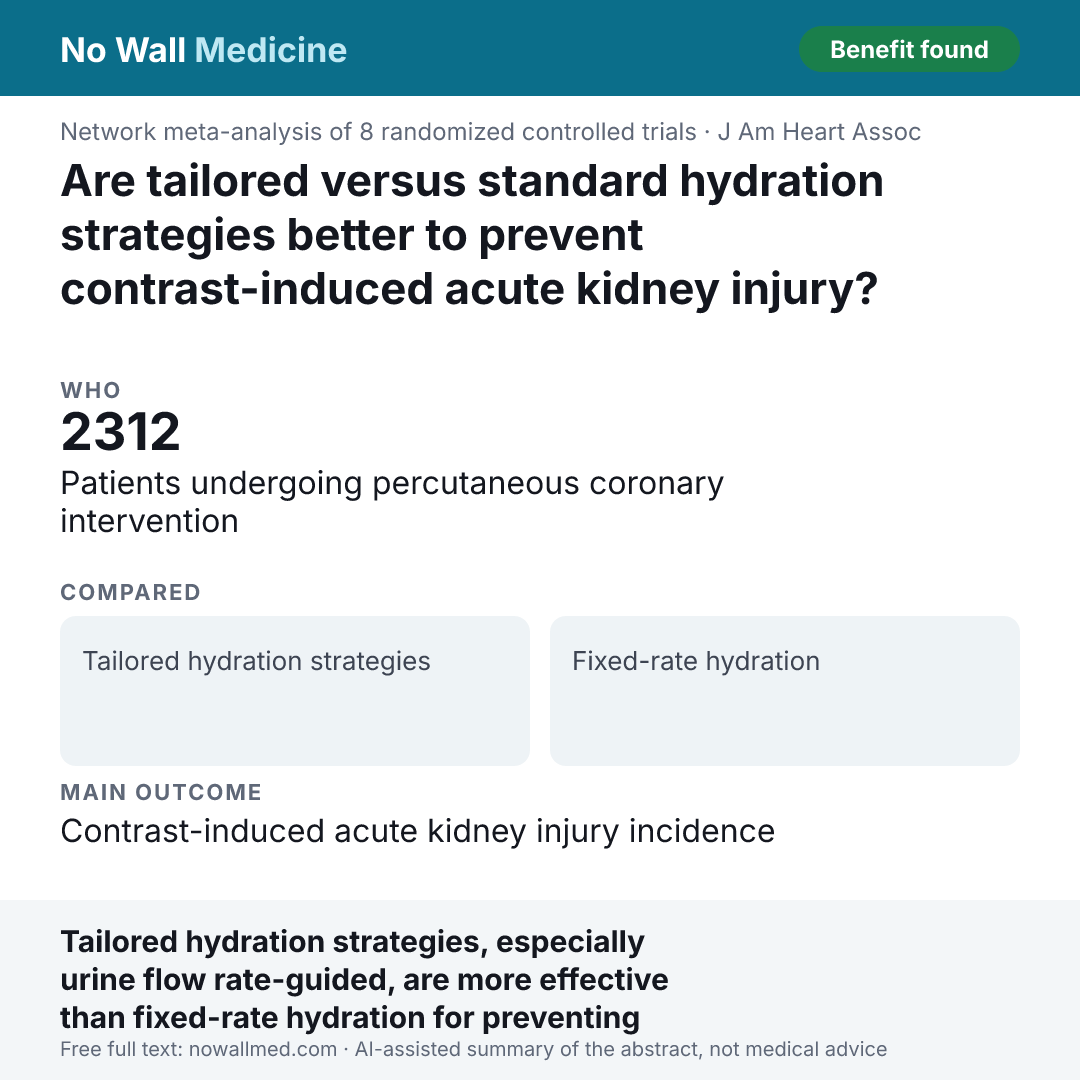
Tailored Versus Standard Hydration to Prevent Acute Kidney Injury After Percutaneous Coronary Intervention: Network Meta-Analysis
Network meta-analysis of 8 randomized controlled trialsBenefit found
Are tailored versus standard hydration strategies better to prevent contrast-induced acute kidney injury?
Who
2312
Patients undergoing percutaneous coronary intervention
Compared
Tailored hydration strategies
Fixed-rate hydration
Main outcome
Contrast-induced acute kidney injury incidence
Result: urine flow rate-guided odds ratio 0.32 (95% CI 0.19-0.54)
Bottom line: Tailored hydration strategies, especially urine flow rate-guided, are more effective than fixed-rate hydration for preventing contrast-induced acute kidney injury.
J Am Heart Assoc · 2021-06-25 · Save PNG
Safety and Efficacy of Leadless Pacemakers: A Systematic Review and Meta-Analysis
Systematic review and meta-analysisBenefit found
What are the safety and efficacy of leadless pacemakers implanted in the right ventricle?
Who
Patients receiving Nanostim or Micra leadless pacemakers
Compared
Micra leadless pacemaker: 3.30% complications at 1 year
Transvenous pacemakers: 7.43% complications at 1 year
Main outcome
Major complications and acceptable pacing capture threshold
Result: odds ratio 0.49 (95% CI 0.34-0.70)
Bottom line: Micra leadless pacemakers show low complication risks and good electrical performance compared to transvenous pacemakers.
J Am Heart Assoc · 2021-06-25 · Save PNG

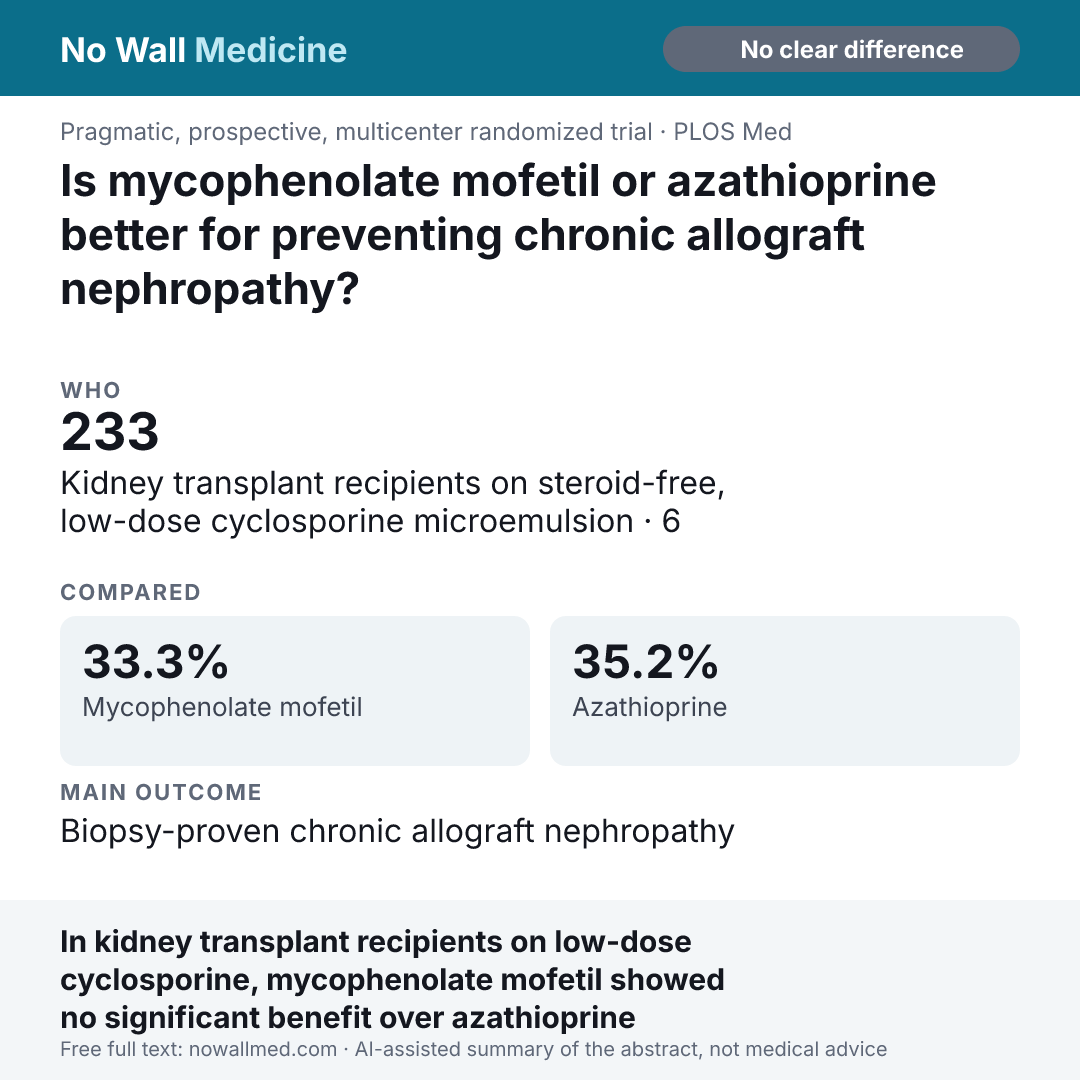
Interventions to prevent and treat sarcopenia in a surgical population: a systematic review and meta-analysis
Systematic review and meta-analysis of randomized controlled trialsBenefit, low certainty
Do interventions reduce sarcopenia in patients undergoing surgery?
Who
3402
Patients undergoing surgery
Compared
Exercise interventions
Controls
Main outcome
Sarcopenia reduction including muscle mass, strength, and gait speed
Result: standardized mean differences (95% confidence intervals)
Bottom line: Exercise interventions appear beneficial in reducing the impact of sarcopenia in surgical populations.
Limitation: High risk of incomplete outcome and attrition bias reduces certainty of evidence.
BJS Open · 2021-06-25 · Save PNG
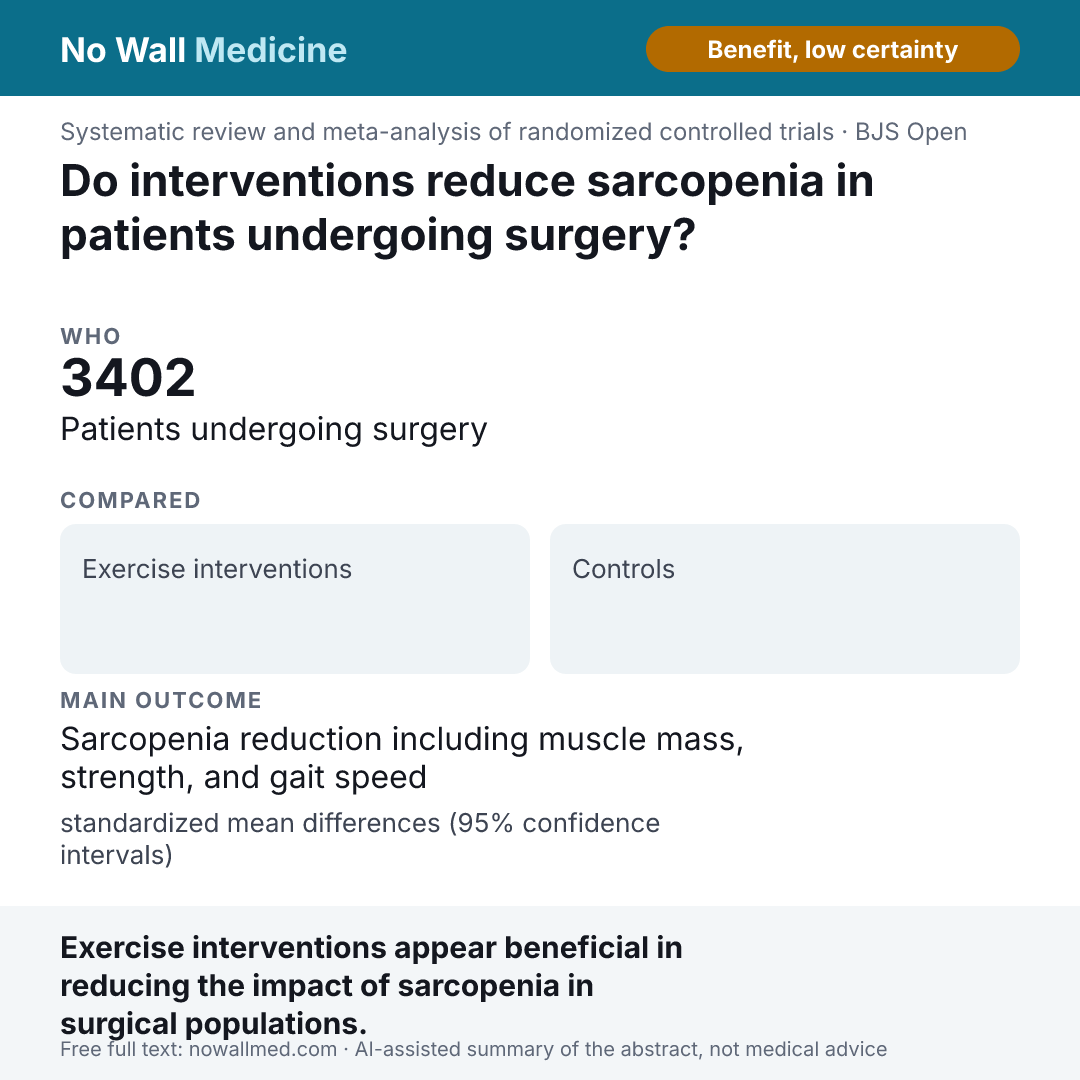
Mycophenolate mofetil versus azathioprine in kidney transplant recipients on steroid-free, low-dose cyclosporine immunosuppression (ATHENA): A pragmatic randomized trial
Pragmatic, prospective, multicenter randomized trialNo clear difference
Is mycophenolate mofetil or azathioprine better for preventing chronic allograft nephropathy?
Who
233
Kidney transplant recipients on steroid-free, low-dose cyclosporine microemulsion · 6 Italian transplant centers
Compared
33.3%Mycophenolate mofetil
35.2%Azathioprine
Main outcome
Biopsy-proven chronic allograft nephropathy
Result: hazard ratio 1.147 (95% CI 0.691 to 1.904)
Bottom line: In kidney transplant recipients on low-dose cyclosporine, mycophenolate mofetil showed no significant benefit over azathioprine regarding chronic allograft nephropathy.
Limitation: Small sample size and unblinded design
PLOS Med · 2021-06-24 · Save PNG
Safety and efficacy of ALRV5XR in women with androgenetic alopecia or telogen effluvium: A randomised, double-blinded, placebo-controlled clinical trial
Randomised, double-blind, placebo-controlled trialBenefit found
Is ALRV5XR safe and effective for terminal hair regrowth in women with alopecia?
Who
46
Women 18-65 years with androgenetic alopecia or telogen effluvium · USA community clinic
Compared
ALRV5XR: 66.7% responded by regrowing 40 terminal hairs per cm2 or more
placebo
Main outcome
absolute and per cent changes in terminal hair density
Result: odds ratio 2.7
Bottom line: ALRV5XR significantly increased terminal hair regrowth in women without reported adverse events.
eClinicalMedicine · 2021-06-24 · Save PNG

Functional Connectivity in Antipsychotic-Treated and Antipsychotic-Naive Patients With First-Episode Psychosis and Low Risk of Self-harm or Aggression: A Secondary Analysis of a Randomized Clinical Trial
Randomized clinical trialMixed results
Antipsychotic effect on brain connectivity
Who
59
First-episode psychosis patients
Compared
Antipsychotic
Placebo
Main outcome
Functional connectivity
Bottom line: Antipsychotics change brain connectivity differently
JAMA Psychiatry · 2021-06-24 · Save PNG

Risk Prediction Model of 90-Day Mortality After Esophagectomy for Cancer
Retrospective diagnostic/prognostic studyKey finding
Can a risk prediction model accurately predict 90-day mortality after esophagectomy for cancer?
Who
8403
Patients with esophageal cancer undergoing esophagectomy · 39 institutions in 19 countries
Compared
1.8%Very low risk
3.0%Low risk
5.8%Medium risk
8.9%High risk
Main outcome
All-cause postoperative 90-day mortality
Result: area under the receiver operating characteristic curve 0.64 (95% CI, 0.60-0.69)
Bottom line: A prognostic score based on ten variables allows stratification of individual patient risk for 90-day mortality after esophagectomy.
JAMA Surg · 2021-06-24 · Save PNG

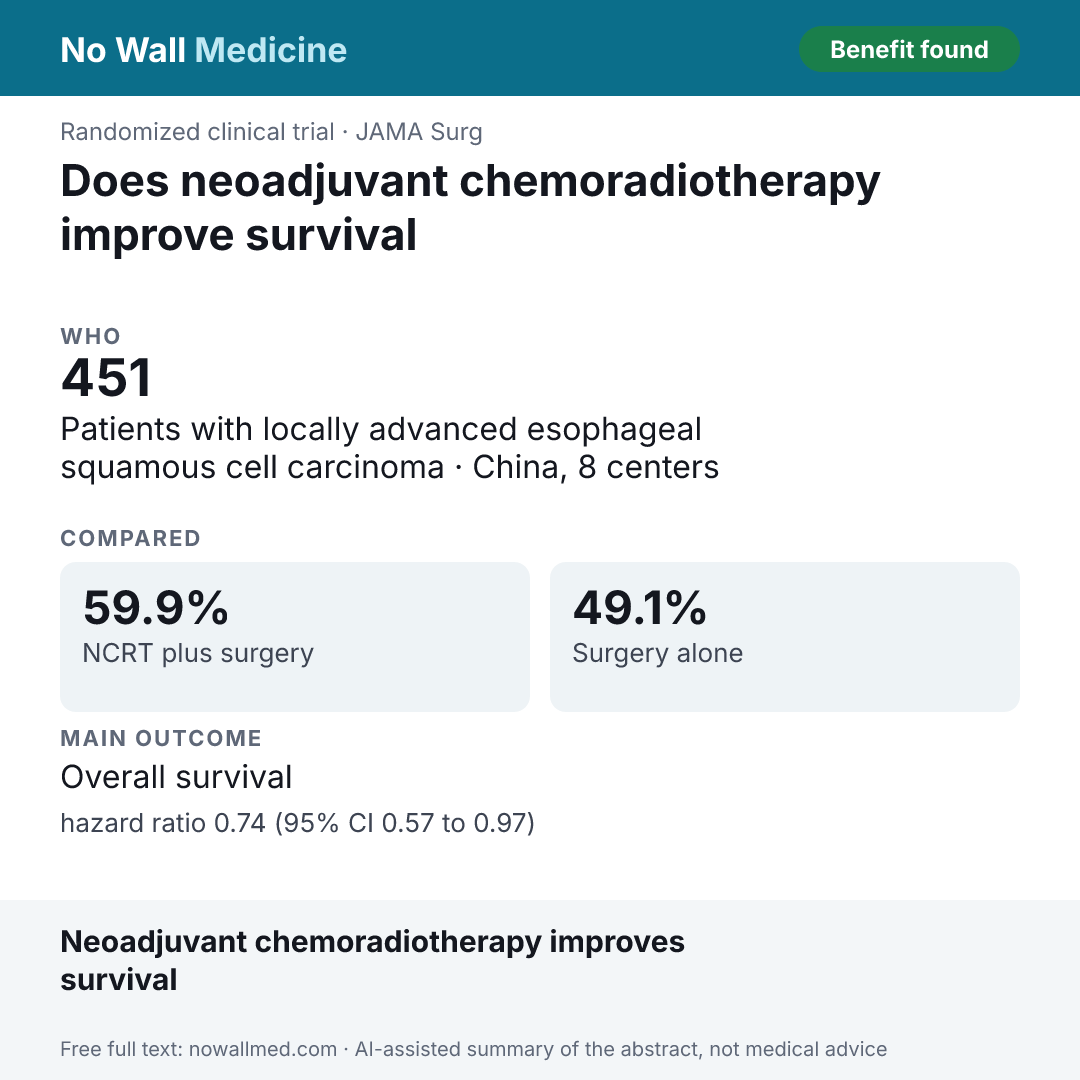
Long-term Efficacy of Neoadjuvant Chemoradiotherapy Plus Surgery for the Treatment of Locally Advanced Esophageal Squamous Cell Carcinoma: The NEOCRTEC5010 Randomized Clinical Trial
Randomized clinical trialBenefit found
Does neoadjuvant chemoradiotherapy improve survival
Who
451
Patients with locally advanced esophageal squamous cell carcinoma · China, 8 centers
Compared
59.9%NCRT plus surgery (95% CI 52.9%-66.1%)
49.1%Surgery alone (95% CI 42.3%-55.6%)
Main outcome
Overall survival
Result: hazard ratio 0.74 (95% CI 0.57 to 0.97)
Bottom line: Neoadjuvant chemoradiotherapy improves survival
JAMA Surg · 2021-06-24 · Save PNG
Circulating MicroRNAs, the Next-Generation Serum Biomarkers in Testicular Germ Cell Tumours: A Systematic Review
Systematic reviewBenefit found
Can circulating microRNAs serve as biomarkers for testicular germ cell tumours?
Who
Adults with testicular germ cell tumours
Compared
miR-371a-3p: sensitivity of 89-96%, and specificity of >90%
Classic serum tumour markers
Main outcome
Clinical utility in diagnosis and various clinical scenarios
Bottom line: MicroRNA-371a-3p shows high sensitivity and specificity, potentially surpassing classic serum tumour markers for managing testicular germ cell tumours.
Eur Urol · 2021-06-24 · Save PNG