Visual abstracts
New randomized trials and meta-analyses from leading journals at a glance: who was studied, what was compared, and what was found. Every paper is free to read in full.
All specialtiesCardiology 4763Oncology 4043Gastroenterology & Hepatology 1903Infectious Disease 3756Neurology 1872Psychiatry & Mental Health 2216Pulmonology 2044Critical Care 1319Endocrinology & Diabetes 2544Pediatrics 2889Surgery 2480Orthopedics & Sports Medicine 917Neurosurgery 525Cardiothoracic & Vascular Surgery 656Plastic & Reconstructive Surgery 574Nephrology 1107Rheumatology 810Hematology 1090Dermatology 611Ophthalmology 532Obstetrics & Gynecology 1645Public & Global Health 1037Radiology & Imaging 619Anesthesiology 958Urology 745ENT (Otolaryngology) 494Emergency Medicine 481Allergy & Immunology 309Geriatrics 972Family Medicine & Primary Care 534Medical Genetics & Genomics 659Pathology & Laboratory Medicine 156Physical Medicine & Rehabilitation 734Palliative Care 421Nutrition 1560Digital Health & AI 2137General Medicine 318
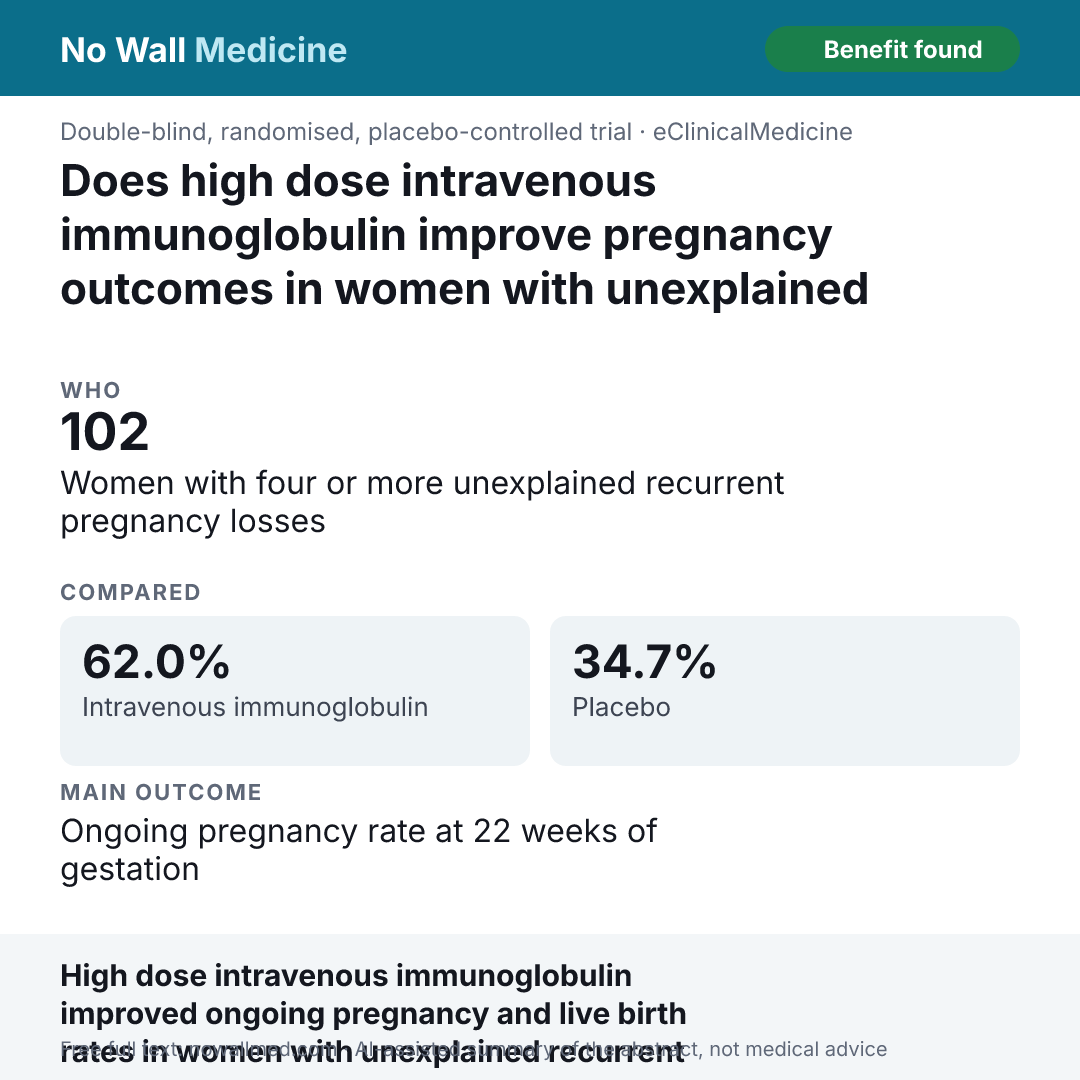
Intravenous immunoglobulin treatment in women with four or more recurrent pregnancy losses: A double-blind, randomised, placebo-controlled trial
Double-blind, randomised, placebo-controlled trialBenefit found
Does high dose intravenous immunoglobulin improve pregnancy outcomes in women with unexplained recurrent pregnancy loss?
Who
102
Women with four or more unexplained recurrent pregnancy losses
Compared
62.0%Intravenous immunoglobulin
34.7%Placebo
Main outcome
Ongoing pregnancy rate at 22 weeks of gestation
Result: odds ratio 3.07, 95% CI 1.35-6.97
Bottom line: High dose intravenous immunoglobulin improved ongoing pregnancy and live birth rates in women with unexplained recurrent pregnancy loss.
Funded by: Japan Blood Products Organization
eClinicalMedicine · 2022-06-29 · Save PNG
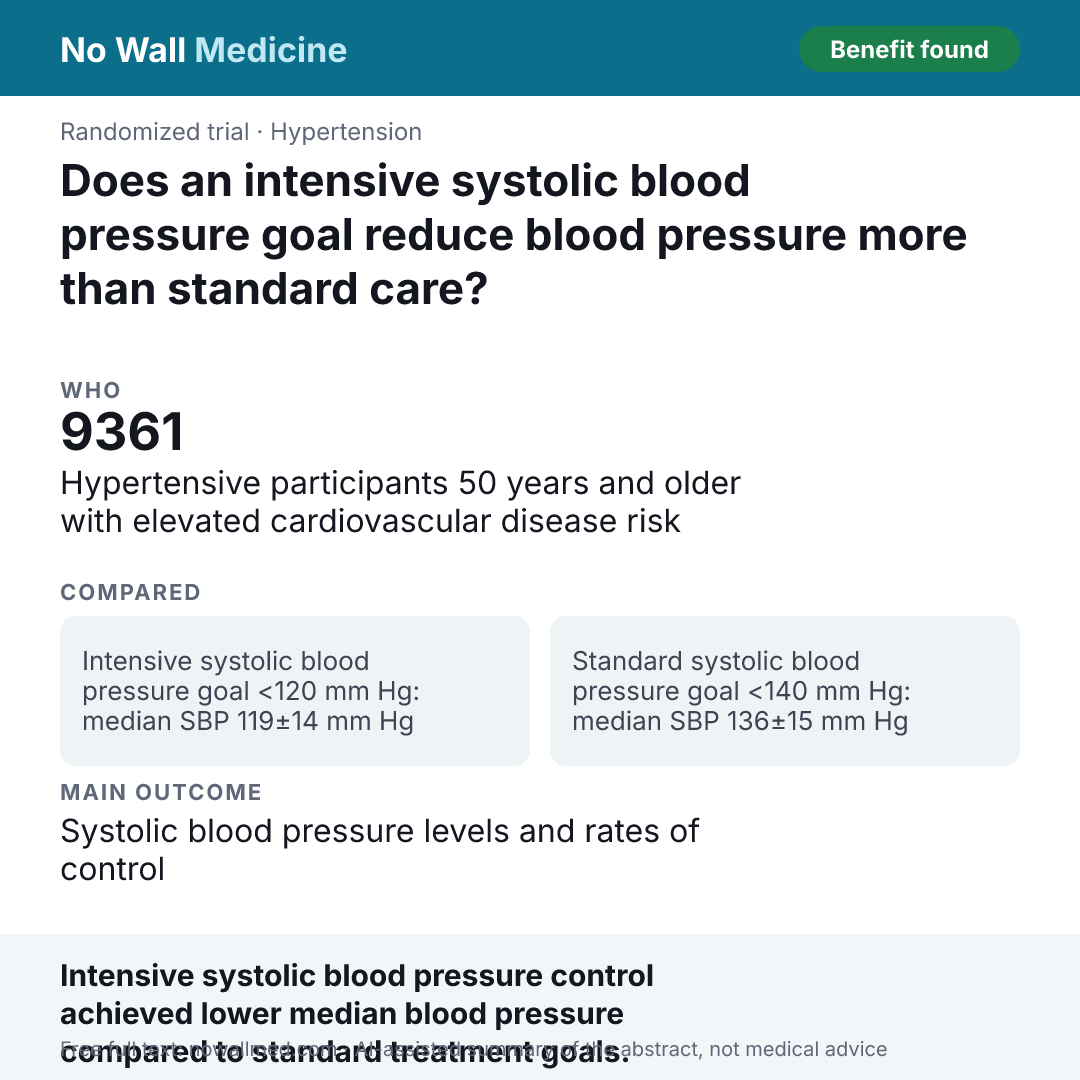
Blood Pressure Intervention and Control in SPRINT
Randomized trialBenefit found
Does an intensive systolic blood pressure goal reduce blood pressure more than standard care?
Who
9361
Hypertensive participants 50 years and older with elevated cardiovascular disease risk
Compared
Intensive systolic blood pressure goal <120 mm Hg: median SBP 119±14 mm Hg
Standard systolic blood pressure goal <140 mm Hg: median SBP 136±15 mm Hg
Main outcome
Systolic blood pressure levels and rates of control
Bottom line: Intensive systolic blood pressure control achieved lower median blood pressure compared to standard treatment goals.
Hypertension · 2022-06-29 · Save PNG
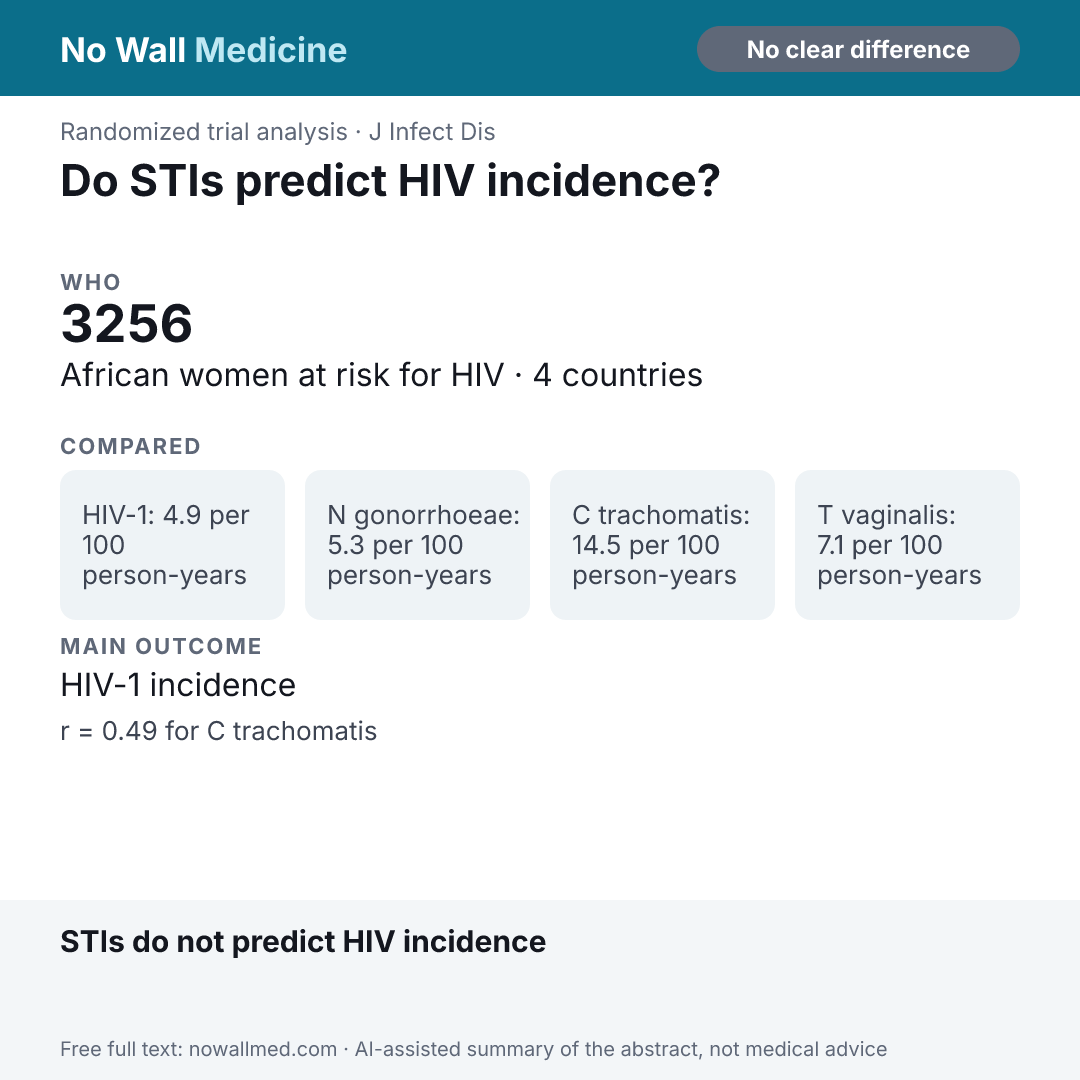
Population-Level Correlation Between Incidence of Curable Sexually Transmitted Infections and Human Immunodeficiency Virus (HIV)-1 Among African Women Participating in HIV-1 Pre-Exposure Prophylaxis Trials
Randomized trial analysisNo clear difference
Do STIs predict HIV incidence?
Who
3256
African women at risk for HIV · 4 countries
Compared
HIV-1: 4.9 per 100 person-years
N gonorrhoeae: 5.3 per 100 person-years
C trachomatis: 14.5 per 100 person-years
T vaginalis: 7.1 per 100 person-years
Main outcome
HIV-1 incidence
Result: r = 0.49 for C trachomatis
Bottom line: STIs do not predict HIV incidence
J Infect Dis · 2022-06-29 · Save PNG
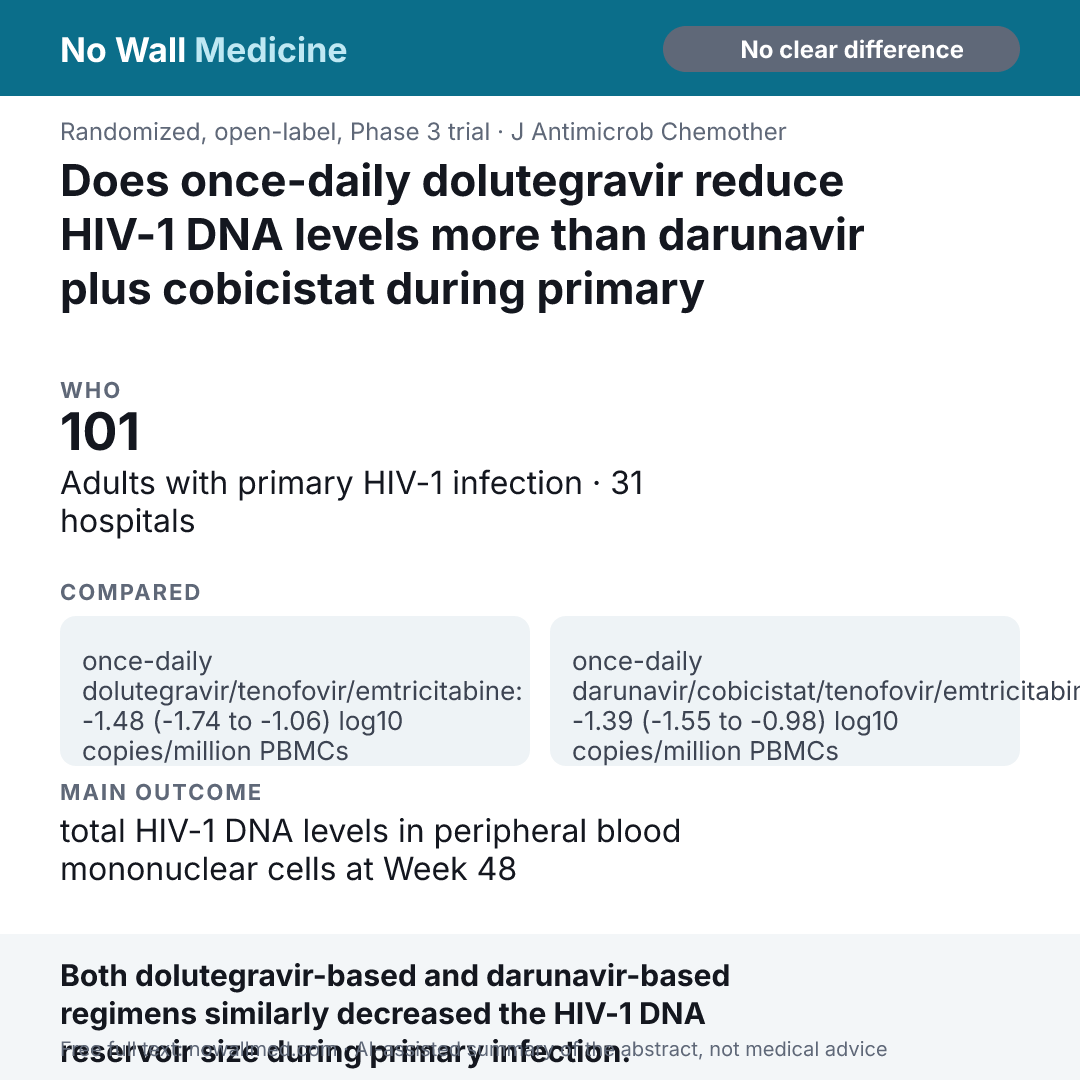
Once-daily dolutegravir versus darunavir plus cobicistat in adults at the time of primary HIV-1 infection: the OPTIPRIM2-ANRS 169 randomized, open-label, Phase 3 trial
Randomized, open-label, Phase 3 trialNo clear difference
Does once-daily dolutegravir reduce HIV-1 DNA levels more than darunavir plus cobicistat during primary infection?
Who
101
Adults with primary HIV-1 infection · 31 hospitals
Compared
once-daily dolutegravir/tenofovir/emtricitabine: -1.48 (-1.74 to -1.06) log10 copies/million PBMCs
once-daily darunavir/cobicistat/tenofovir/emtricitabine: -1.39 (-1.55 to -0.98) log10 copies/million PBMCs
Main outcome
total HIV-1 DNA levels in peripheral blood mononuclear cells at Week 48
Bottom line: Both dolutegravir-based and darunavir-based regimens similarly decreased the HIV-1 DNA reservoir size during primary infection.
J Antimicrob Chemother · 2022-06-29 · Save PNG
Long-Term Follow-Up on Morbidity Among Women With a History of Gestational Diabetes Mellitus: A Systematic Review
Systematic reviewMixed results
What are the long-term morbidity and mortality risks for women with gestational diabetes mellitus?
Who
Women with a history of gestational diabetes mellitus
Compared
Gestational diabetes mellitus
No gestational diabetes mellitus
Main outcome
Morbidity other than type 2 diabetes and cardiovascular disease
Bottom line: Gestational diabetes mellitus shows strongest evidence for kidney disease association, but results for other morbidities remain inconsistent.
Limitation: Many studies used self-reported diagnoses and there is a lack of comprehensive long-term health outcome data.
J Clin Endocrinol Metab · 2022-06-29 · Save PNG

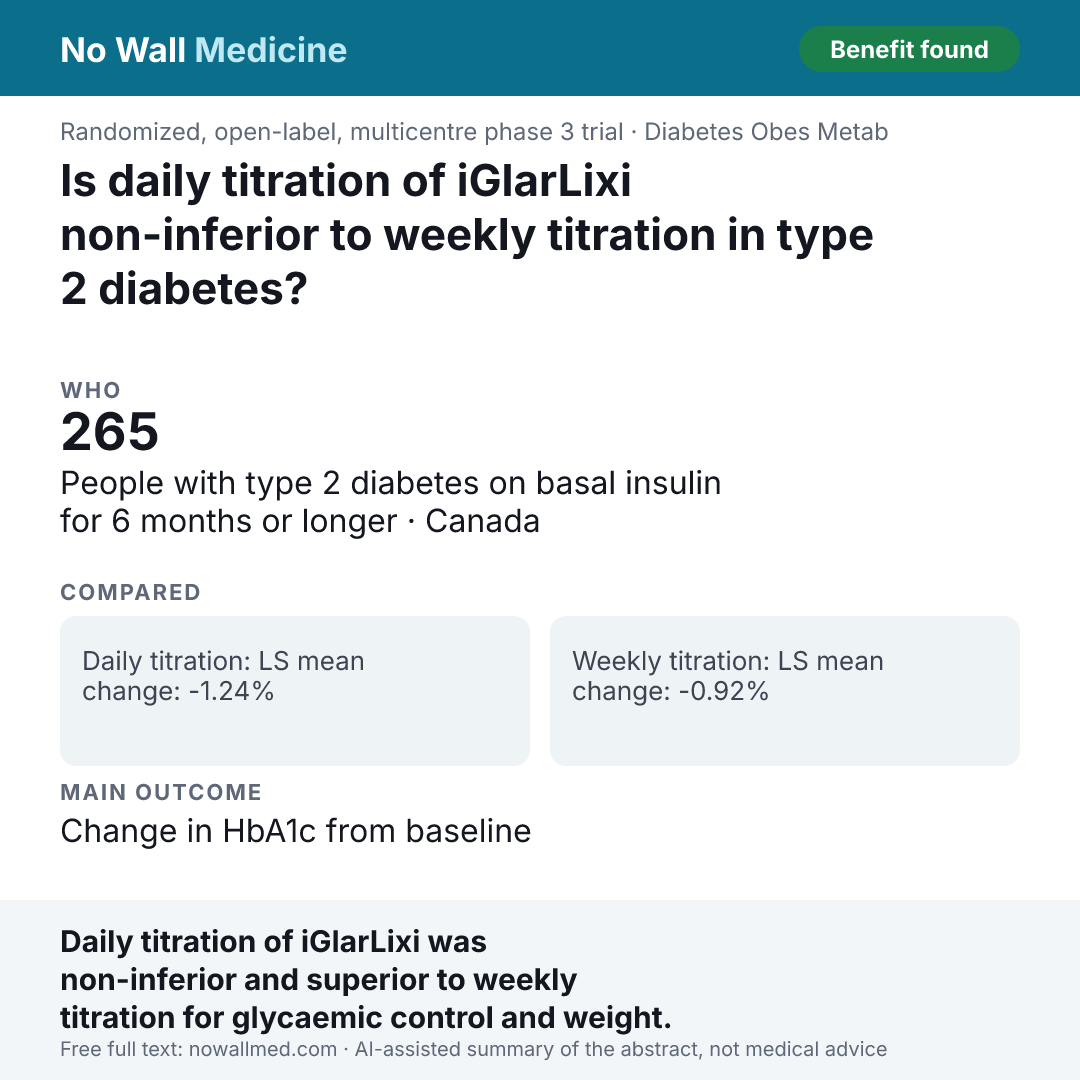
Comparing a daily versus weekly titration algorithm in people with type 2 diabetes switching from basal insulin to iGlarLixi in the LixiLan ONE CAN randomized trial
Randomized, open-label, multicentre phase 3 trialBenefit found
Is daily titration of iGlarLixi non-inferior to weekly titration in type 2 diabetes?
Who
265
People with type 2 diabetes on basal insulin for 6 months or longer · Canada
Compared
Daily titration: LS mean change: -1.24%
Weekly titration: LS mean change: -0.92%
Main outcome
Change in HbA1c from baseline
Result: LS mean difference: 0.32%; 95% CI [0.07, 0.57]
Bottom line: Daily titration of iGlarLixi was non-inferior and superior to weekly titration for glycaemic control and weight.
Diabetes Obes Metab · 2022-06-29 · Save PNG
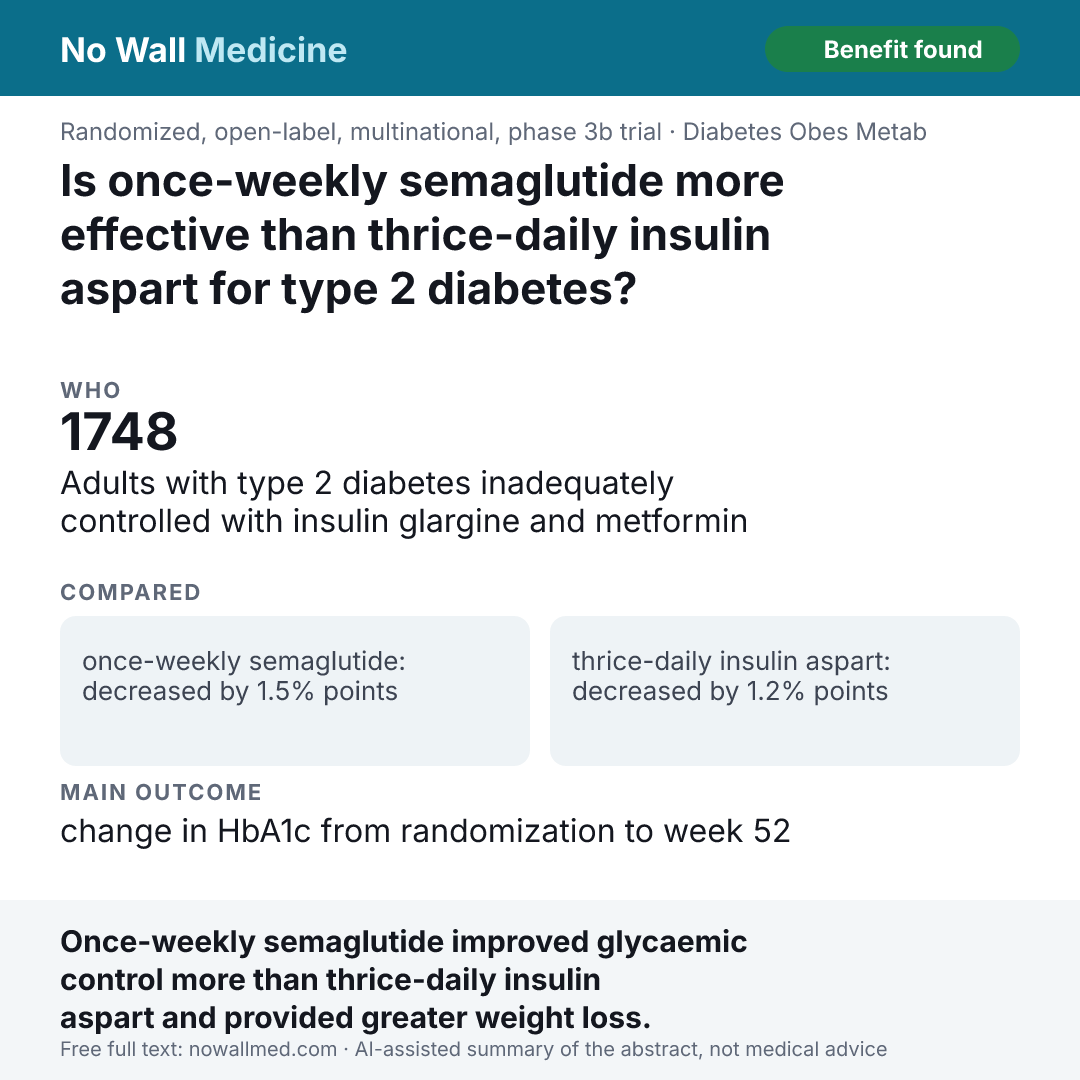
Effect of once-weekly semaglutide versus thrice-daily insulin aspart, both as add-on to metformin and optimized insulin glargine treatment in participants with type 2 diabetes (SUSTAIN 11): A randomized, open-label, multinational, phase 3b trial
Randomized, open-label, multinational, phase 3b trialBenefit found
Is once-weekly semaglutide more effective than thrice-daily insulin aspart for type 2 diabetes?
Who
1748
Adults with type 2 diabetes inadequately controlled with insulin glargine and metformin · multinational
Compared
once-weekly semaglutide: decreased by 1.5% points
thrice-daily insulin aspart: decreased by 1.2% points
Main outcome
change in HbA1c from randomization to week 52
Result: estimated treatment difference -0.29% points (95% CI -0.38; -0.20)
Bottom line: Once-weekly semaglutide improved glycaemic control more than thrice-daily insulin aspart and provided greater weight loss.
Diabetes Obes Metab · 2022-06-29 · Save PNG
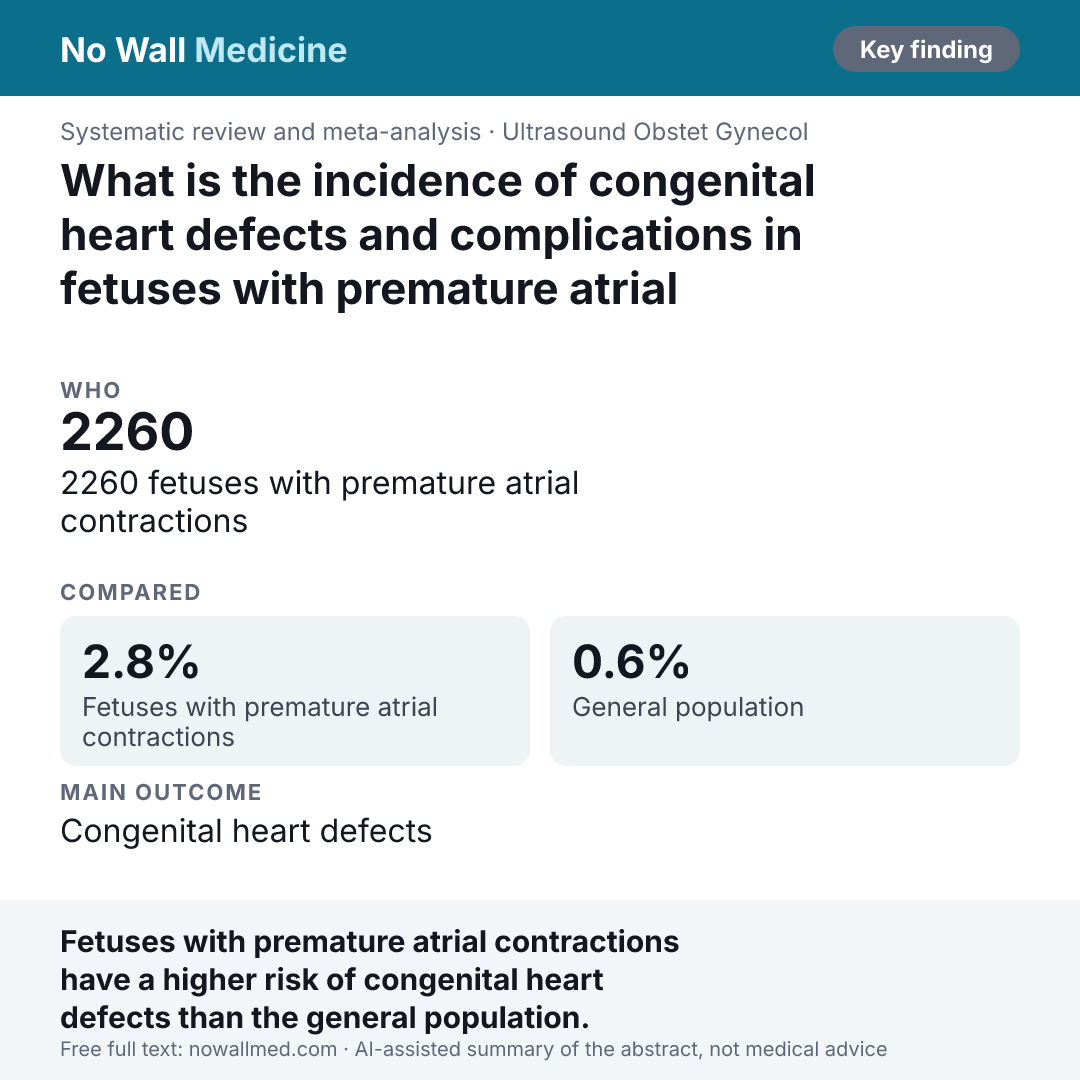
Implications of fetal premature atrial contractions: systematic review
Systematic review and meta-analysisKey finding
What is the incidence of congenital heart defects and complications in fetuses with premature atrial contractions?
Who
2260
2260 fetuses with premature atrial contractions
Compared
2.8%Fetuses with premature atrial contractions (95% CI, 1.5-4.1%)
0.6%General population
Main outcome
Congenital heart defects
Result: 2.8% (95% CI, 1.5-4.1%)
Bottom line: Fetuses with premature atrial contractions have a higher risk of congenital heart defects than the general population.
Ultrasound Obstet Gynecol · 2022-06-29 · Save PNG
Rehabilitation after anterior cruciate ligament and meniscal injuries: a best-evidence synthesis of systematic reviews for the OPTIKNEE consensus
Overview of systematic reviewsMixed results
What are the effective rehabilitation interventions following anterior cruciate ligament and meniscal injuries?
Who
Young adults with anterior cruciate ligament and/or meniscal tears
Compared
Neuromuscular electrical stimulation: improve quadriceps strength
Open versus closed kinetic chain exercises: similarly effective for quadriceps strength and self-reported function
Home-based versus in-person rehabilitation: similarly effective for quadriceps and hamstring strength and self-reported function
Postoperative knee bracing: ineffective for physical function and laxity
Main outcome
symptomatic, functional, clinical, psychosocial, quality of life and reinjury outcomes
Bottom line: Evidence for rehabilitation after anterior cruciate ligament or meniscal tear is generally low, though some interventions improve quadriceps strength.
Br J Sports Med · 2022-06-29 · Save PNG

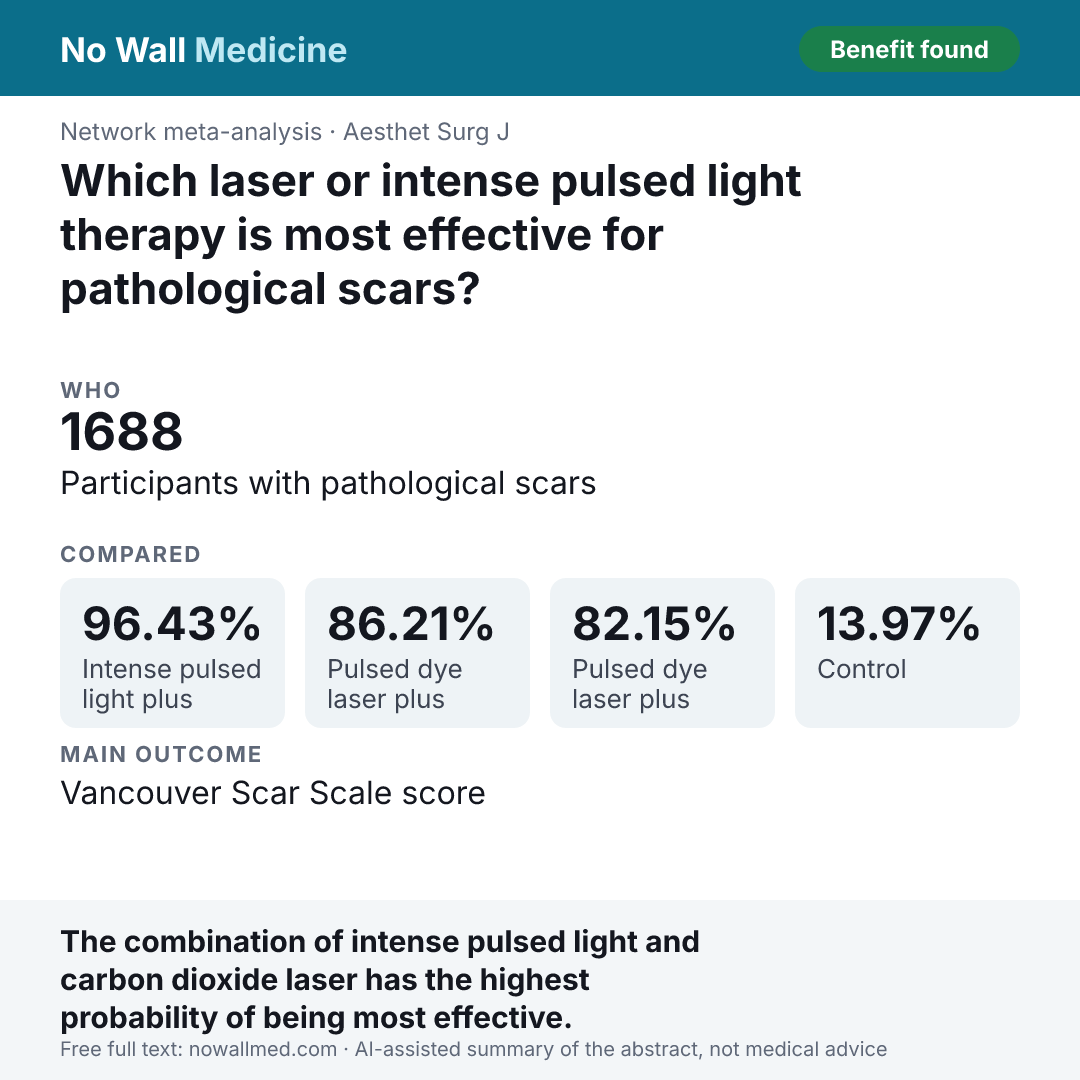
Lasers and Intense Pulsed Light for the Treatment of Pathological Scars: A Network Meta-Analysis
Network meta-analysisBenefit found
Which laser or intense pulsed light therapy is most effective for pathological scars?
Who
1688
Participants with pathological scars
Compared
96.43%Intense pulsed light plus carbon dioxide laser
86.21%Pulsed dye laser plus 1064-nm Nd:YAG laser
82.15%Pulsed dye laser plus carbon dioxide laser
13.97%Control
Main outcome
Vancouver Scar Scale score
Bottom line: The combination of intense pulsed light and carbon dioxide laser has the highest probability of being most effective.
Limitation: Relatively few evaluation indicators were included in the study.
Aesthet Surg J · 2022-06-29 · Save PNG
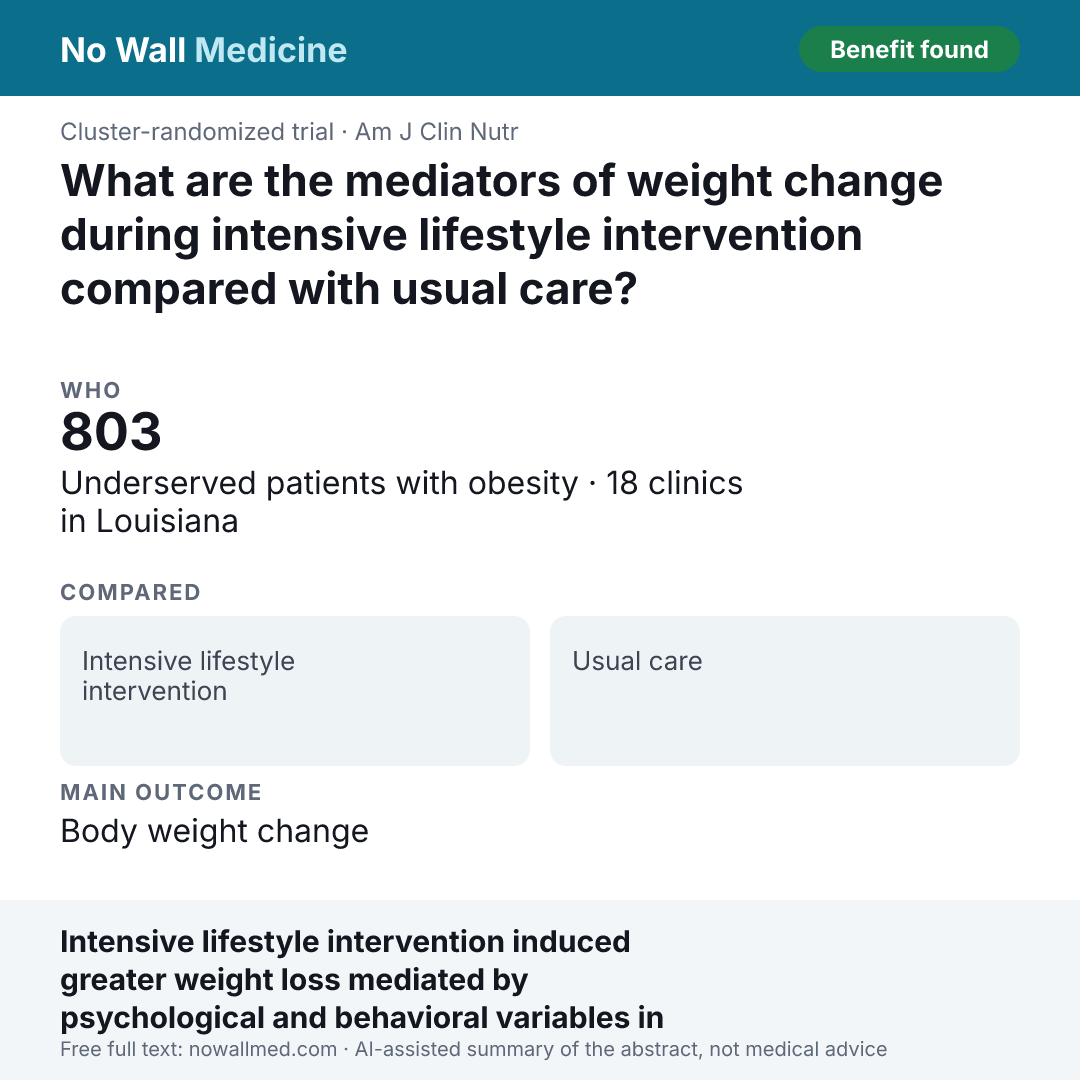
Mediators of weight change in underserved patients with obesity: exploratory analyses from the Promoting Successful Weight Loss in Primary Care in Louisiana (PROPEL) cluster-randomized trial
Cluster-randomized trialBenefit found
What are the mediators of weight change during intensive lifestyle intervention compared with usual care?
Who
803
Underserved patients with obesity · 18 clinics in Louisiana
Compared
Intensive lifestyle intervention
Usual care
Main outcome
Body weight change
Result: between-group difference: -7.19 kg; 95% CI: -8.43, -6.07 kg
Bottom line: Intensive lifestyle intervention induced greater weight loss mediated by psychological and behavioral variables in underserved patients with obesity.
Am J Clin Nutr · 2022-06-29 · Save PNG
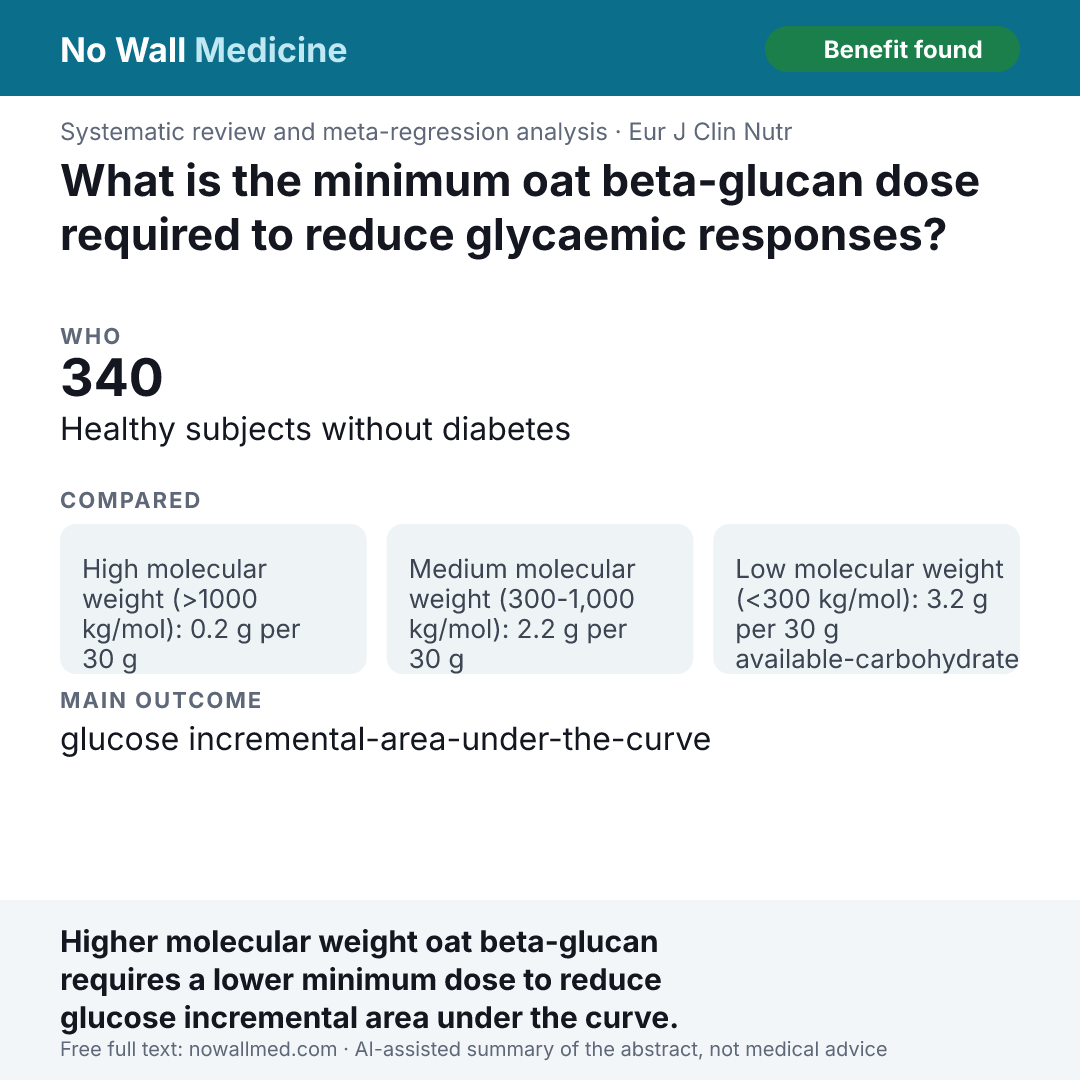
The importance of molecular weight in determining the minimum dose of oat β-glucan required to reduce the glycaemic response in healthy subjects without diabetes: a systematic review and meta-regression analysis
Systematic review and meta-regression analysisBenefit found
What is the minimum oat beta-glucan dose required to reduce glycaemic responses?
Who
340
Healthy subjects without diabetes
Compared
High molecular weight (>1000 kg/mol): 0.2 g per 30 g available-carbohydrate
Medium molecular weight (300-1,000 kg/mol): 2.2 g per 30 g available-carbohydrate
Low molecular weight (<300 kg/mol): 3.2 g per 30 g available-carbohydrate
Main outcome
glucose incremental-area-under-the-curve
Bottom line: Higher molecular weight oat beta-glucan requires a lower minimum dose to reduce glucose incremental area under the curve.
Limitation: Insufficient data were available to assess minimum dose for insulin.
Eur J Clin Nutr · 2022-06-29 · Save PNG
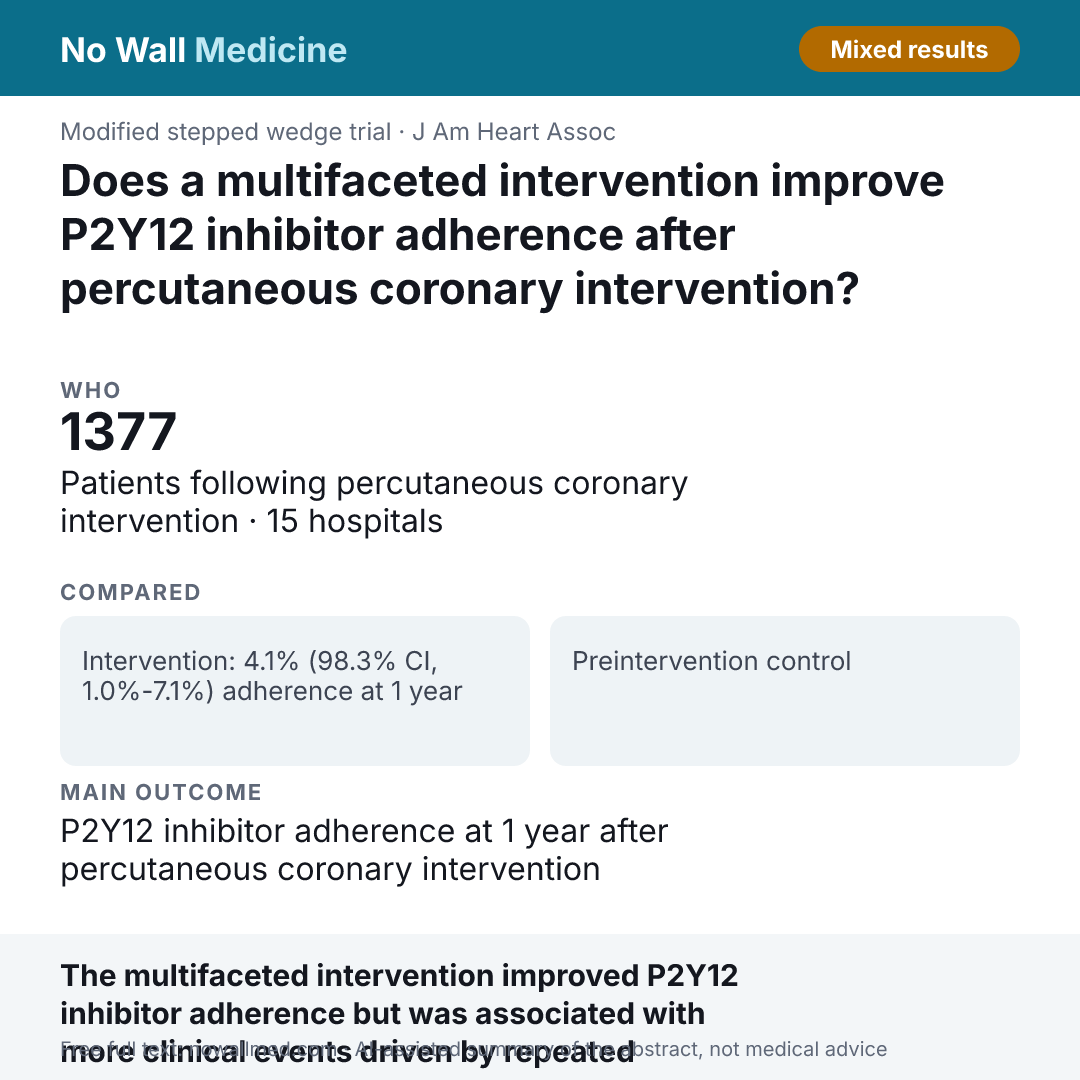
Multifaceted Intervention to Improve P2Y12 Inhibitor Adherence After Percutaneous Coronary Intervention: A Stepped Wedge Trial
Modified stepped wedge trialMixed results
Does a multifaceted intervention improve P2Y12 inhibitor adherence after percutaneous coronary intervention?
Who
1377
Patients following percutaneous coronary intervention · 15 hospitals
Compared
Intervention: 4.1% (98.3% CI, 1.0%-7.1%) adherence at 1 year
Preintervention control
Main outcome
P2Y12 inhibitor adherence at 1 year after percutaneous coronary intervention
Result: 4.1% (98.3% CI, 1.0%-7.1%)
Bottom line: The multifaceted intervention improved P2Y12 inhibitor adherence but was associated with more clinical events driven by repeated percutaneous coronary intervention.
Limitation: The intervention was difficult to implement.
J Am Heart Assoc · 2022-06-29 · Save PNG
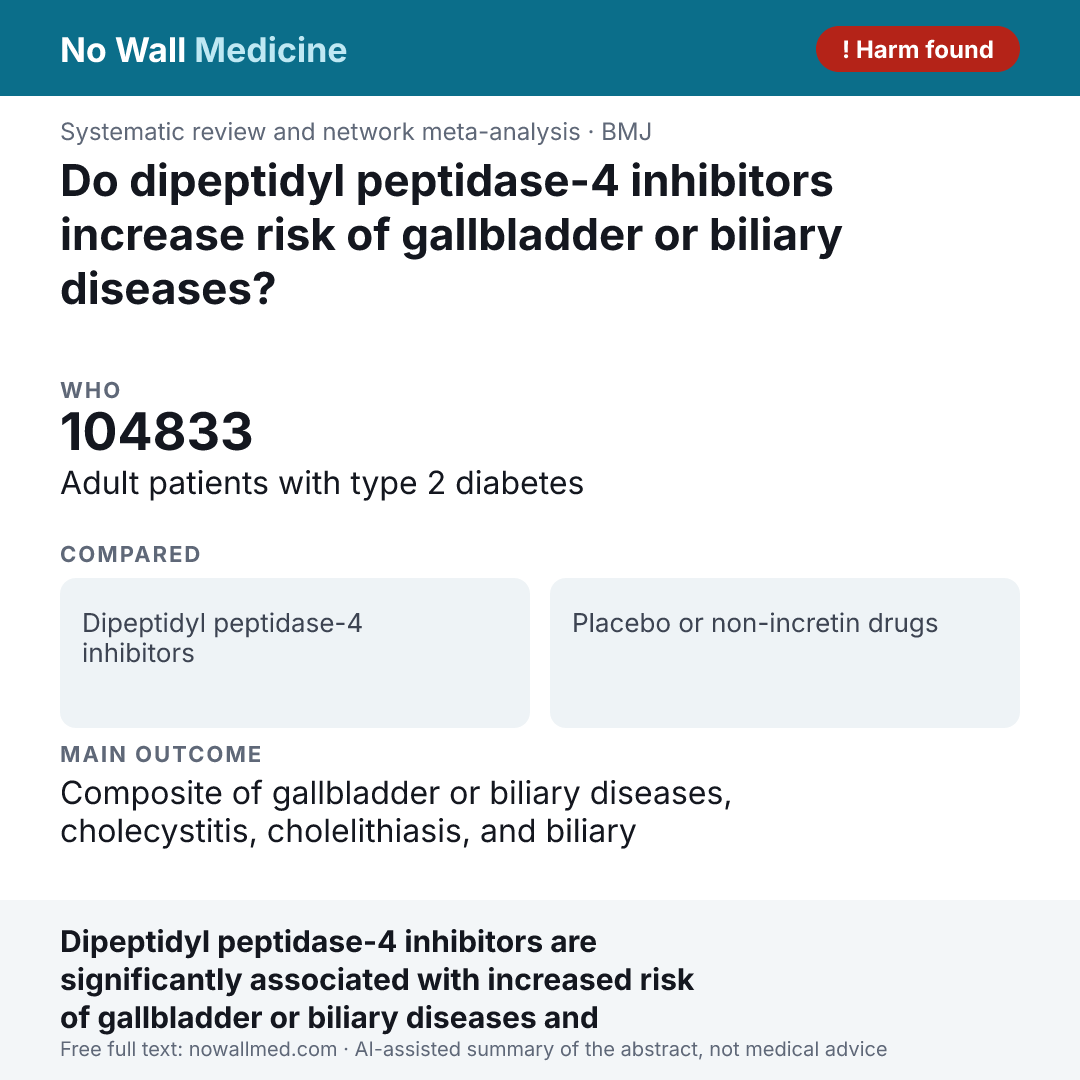
Dipeptidyl peptidase-4 inhibitors and gallbladder or biliary disease in type 2 diabetes: systematic review and pairwise and network meta-analysis of randomised controlled trials
Systematic review and network meta-analysisHarm found
Do dipeptidyl peptidase-4 inhibitors increase risk of gallbladder or biliary diseases?
Who
104833
Adult patients with type 2 diabetes
Compared
Dipeptidyl peptidase-4 inhibitors
Placebo or non-incretin drugs
Main outcome
Composite of gallbladder or biliary diseases, cholecystitis, cholelithiasis, and biliary diseases
Result: odds ratio 1.22 (95%confidence interval 1.04 to 1.43)
Bottom line: Dipeptidyl peptidase-4 inhibitors are significantly associated with increased risk of gallbladder or biliary diseases and cholecystitis.
BMJ · 2022-06-28 · Save PNG
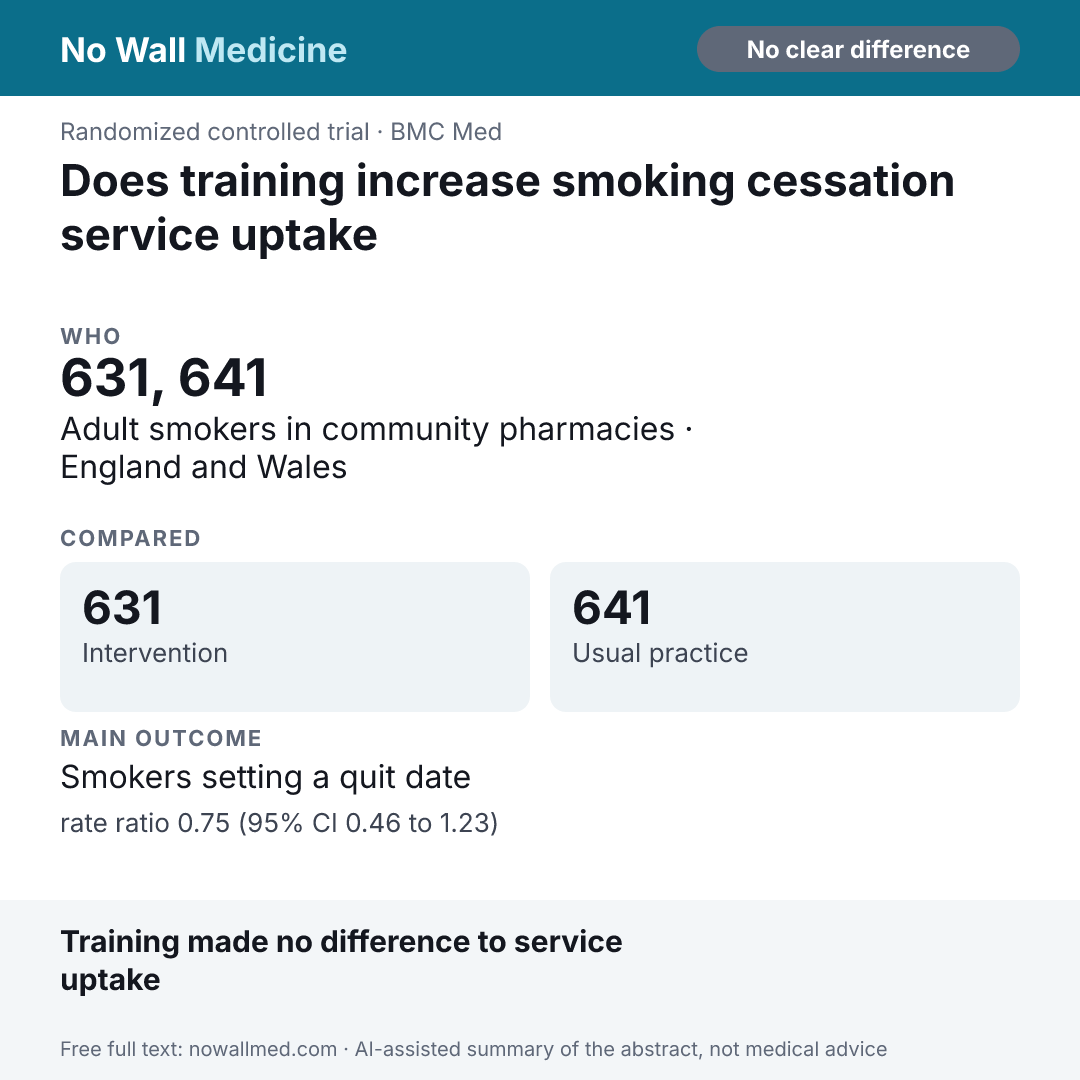
STOP- a training intervention to optimise treatment for smoking cessation in community pharmacies: cluster randomised controlled trial
Randomized controlled trialNo clear difference
Does training increase smoking cessation service uptake
Who
631, 641
Adult smokers in community pharmacies · England and Wales
Compared
631Intervention
641Usual practice
Main outcome
Smokers setting a quit date
Result: rate ratio 0.75 (95% CI 0.46 to 1.23)
Bottom line: Training made no difference to service uptake
Limitation: 53% did not complete follow-up
BMC Med · 2022-06-28 · Save PNG
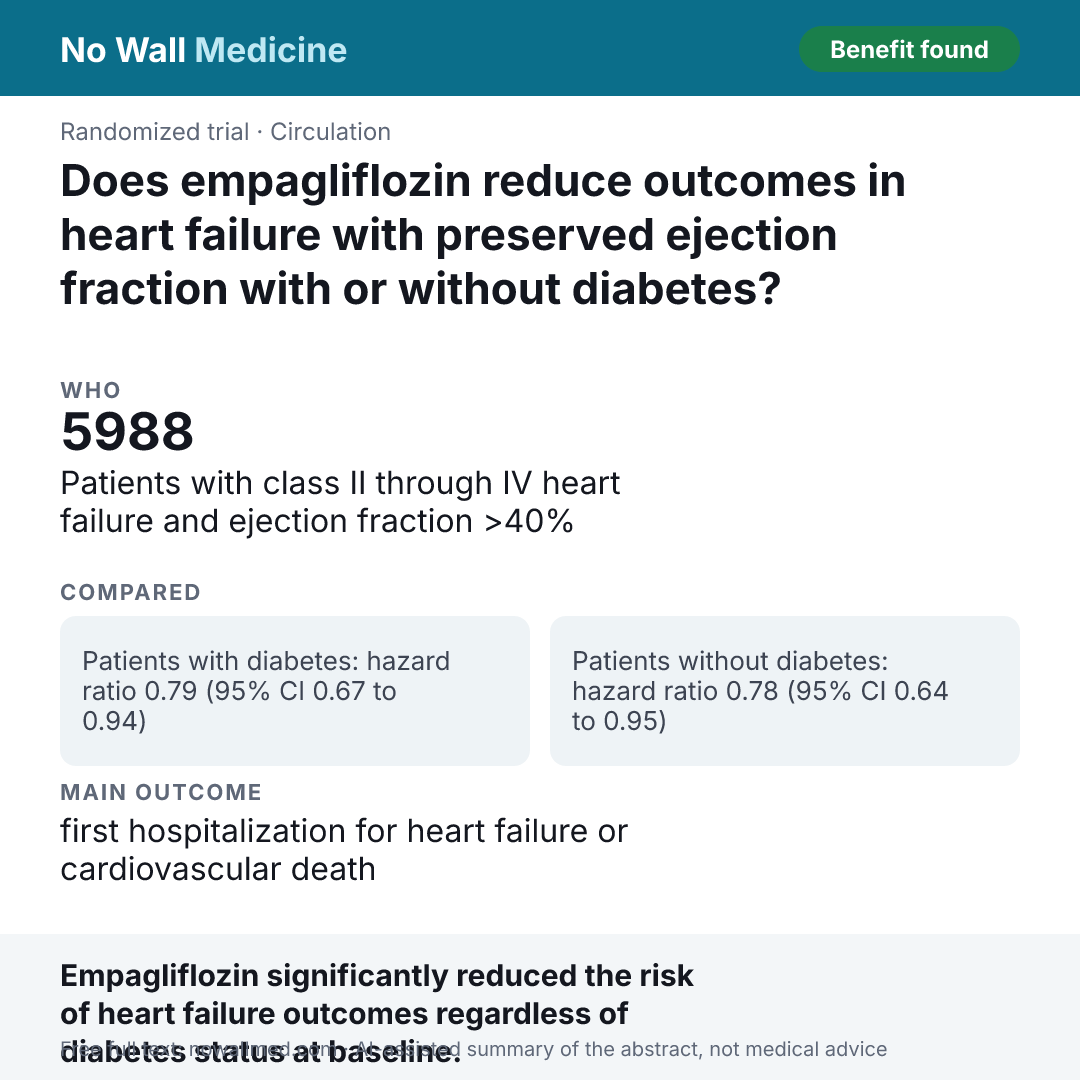
Empagliflozin for Heart Failure With Preserved Left Ventricular Ejection Fraction With and Without Diabetes
Randomized trialBenefit found
Does empagliflozin reduce outcomes in heart failure with preserved ejection fraction with or without diabetes?
Who
5988
Patients with class II through IV heart failure and ejection fraction >40%
Compared
Patients with diabetes: hazard ratio 0.79 (95% CI 0.67 to 0.94)
Patients without diabetes: hazard ratio 0.78 (95% CI 0.64 to 0.95)
Main outcome
first hospitalization for heart failure or cardiovascular death
Result: hazard ratio 0.79 (95% CI 0.67 to 0.94) for diabetes vs 0.78 (95% CI 0.64 to 0.95) without diabetes
Bottom line: Empagliflozin significantly reduced the risk of heart failure outcomes regardless of diabetes status at baseline.
Circulation · 2022-06-28 · Save PNG
Cognitive Behavioral Therapy for Veterans With Comorbid Posttraumatic Headache and Posttraumatic Stress Disorder Symptoms: A Randomized Clinical Trial
Single-site, 3-parallel group, randomized clinical trialMixed results
Do cognitive behavioral therapies improve headache disability and PTSD symptoms in veterans?
Who
193
Post-9/11 US combat veterans with comorbid posttraumatic headache and PTSD symptoms · Multiple trauma centers
Compared
Cognitive behavioral therapy for headache: HIT-6: -3.4 points; PCL-5: -6.5 points
Cognitive processing therapy for PTSD: HIT-6: -1.4 points; PCL-5: -8.9 points
Treatment per usual
Main outcome
Headache-related disability and PTSD symptom severity
Bottom line: Cognitive behavioral therapy for headache improved headache disability and PTSD symptoms, while cognitive processing therapy improved PTSD symptoms only.
JAMA Neurol · 2022-06-28 · Save PNG

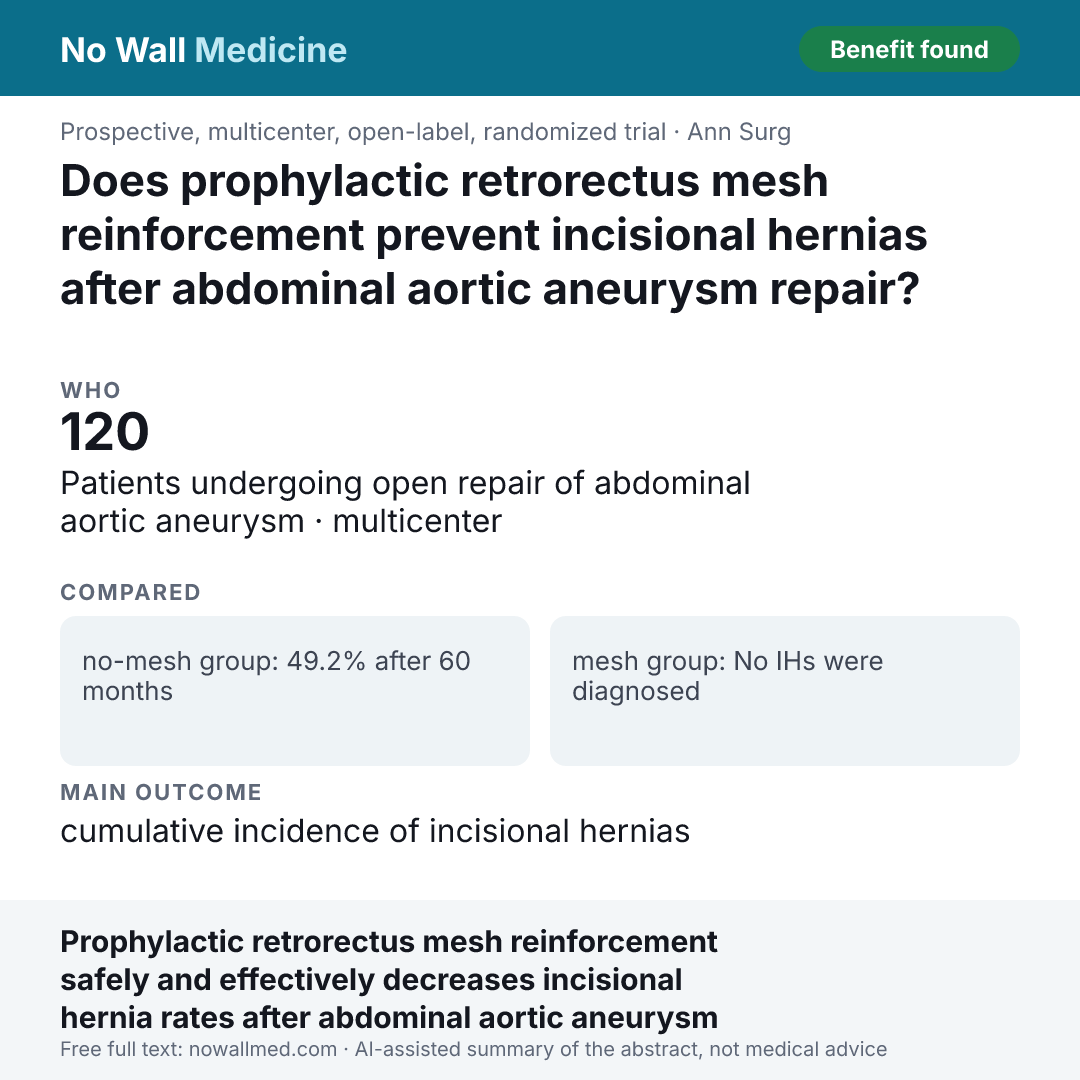
Prevention of Incisional Hernias by Prophylactic Mesh-augmented Reinforcement of Midline Laparotomies for Abdominal Aortic Aneurysm Treatment: Five-year Follow-up of a Randomized Controlled Trial
Prospective, multicenter, open-label, randomized trialBenefit found
Does prophylactic retrorectus mesh reinforcement prevent incisional hernias after abdominal aortic aneurysm repair?
Who
120
Patients undergoing open repair of abdominal aortic aneurysm · multicenter
Compared
no-mesh group: 49.2% after 60 months
mesh group: No IHs were diagnosed
Main outcome
cumulative incidence of incisional hernias
Bottom line: Prophylactic retrorectus mesh reinforcement safely and effectively decreases incisional hernia rates after abdominal aortic aneurysm repair.
Ann Surg · 2022-06-28 · Save PNG
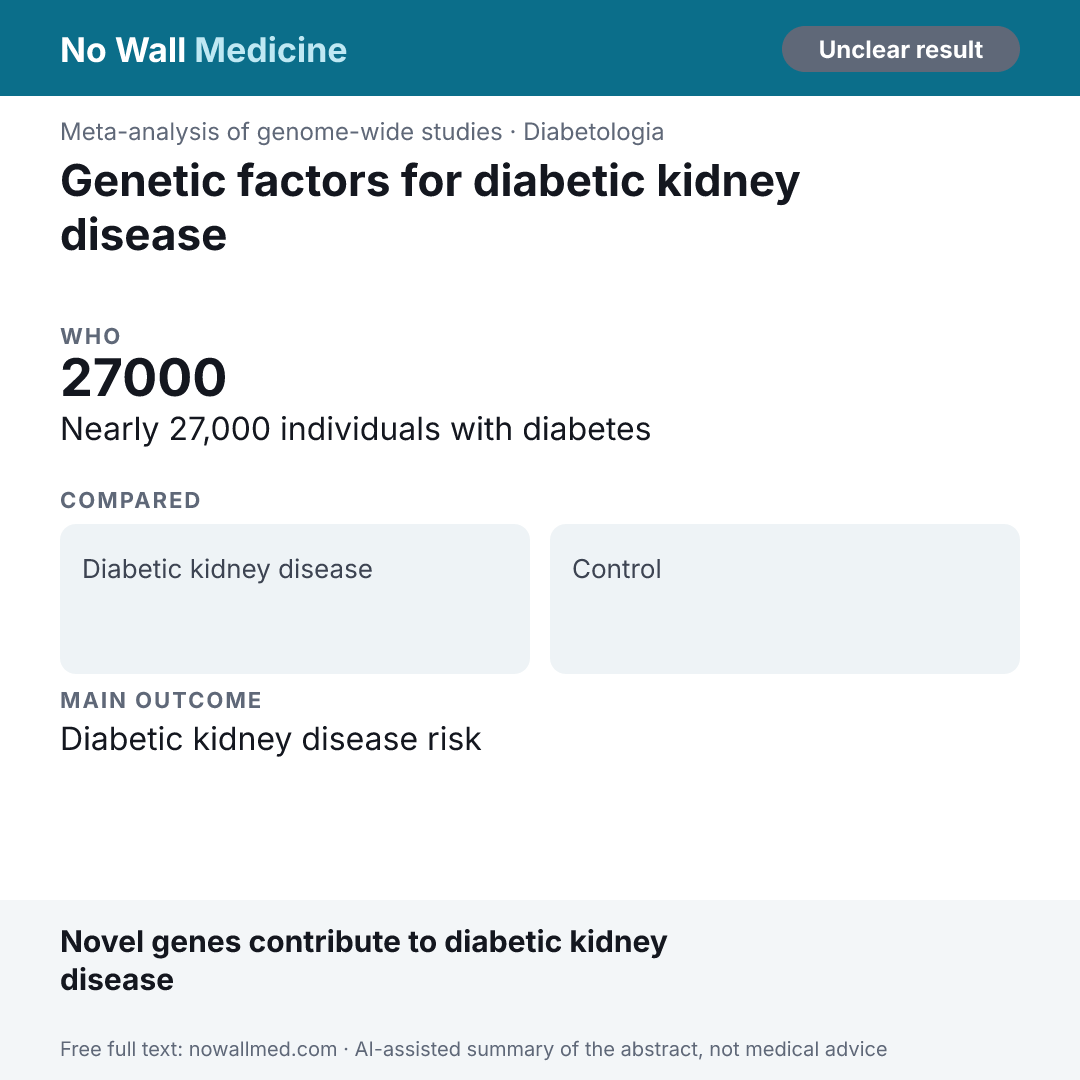
Genome-wide meta-analysis and omics integration identifies novel genes associated with diabetic kidney disease
Meta-analysis of genome-wide studiesUnclear result
Genetic factors for diabetic kidney disease
Who
27000
Nearly 27,000 individuals with diabetes
Compared
Diabetic kidney disease
Control
Main outcome
Diabetic kidney disease risk
Bottom line: Novel genes contribute to diabetic kidney disease
Diabetologia · 2022-06-28 · Save PNG
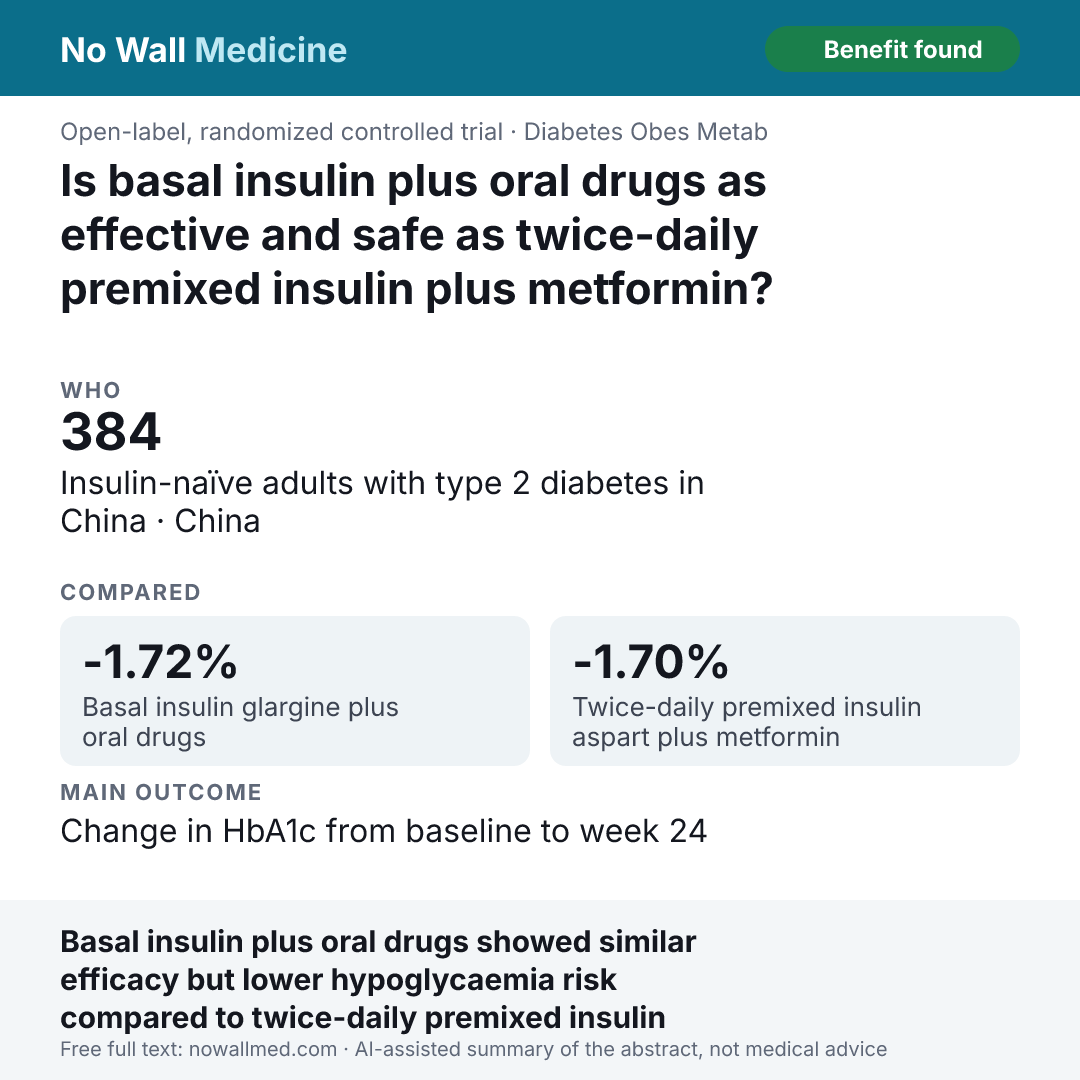
Efficacy and safety of a basal insulin + 2-3 oral antihyperglycaemic drugs regimen versus a twice-daily premixed insulin + metformin regimen after short-term intensive insulin therapy in individuals with type 2 diabetes: The multicentre, open-label, randomized controlled BEYOND-V trial
Open-label, randomized controlled trialBenefit found
Is basal insulin plus oral drugs as effective and safe as twice-daily premixed insulin plus metformin?
Who
384
Insulin-naïve adults with type 2 diabetes in China · China
Compared
-1.72%Basal insulin glargine plus oral drugs
-1.70%Twice-daily premixed insulin aspart plus metformin
Main outcome
Change in HbA1c from baseline to week 24
Result: estimated difference -0.01% (95% CI -0.20%, 0.17%)
Bottom line: Basal insulin plus oral drugs showed similar efficacy but lower hypoglycaemia risk compared to twice-daily premixed insulin plus metformin.
Diabetes Obes Metab · 2022-06-28 · Save PNG