Visual abstracts
New randomized trials and meta-analyses from leading journals at a glance: who was studied, what was compared, and what was found. Every paper is free to read in full.
All specialtiesCardiology 4763Oncology 4043Gastroenterology & Hepatology 1903Infectious Disease 3756Neurology 1872Psychiatry & Mental Health 2216Pulmonology 2044Critical Care 1319Endocrinology & Diabetes 2544Pediatrics 2889Surgery 2480Orthopedics & Sports Medicine 917Neurosurgery 525Cardiothoracic & Vascular Surgery 656Plastic & Reconstructive Surgery 574Nephrology 1107Rheumatology 810Hematology 1090Dermatology 611Ophthalmology 532Obstetrics & Gynecology 1645Public & Global Health 1037Radiology & Imaging 619Anesthesiology 958Urology 745ENT (Otolaryngology) 494Emergency Medicine 481Allergy & Immunology 309Geriatrics 972Family Medicine & Primary Care 534Medical Genetics & Genomics 659Pathology & Laboratory Medicine 156Physical Medicine & Rehabilitation 734Palliative Care 421Nutrition 1560Digital Health & AI 2137General Medicine 318
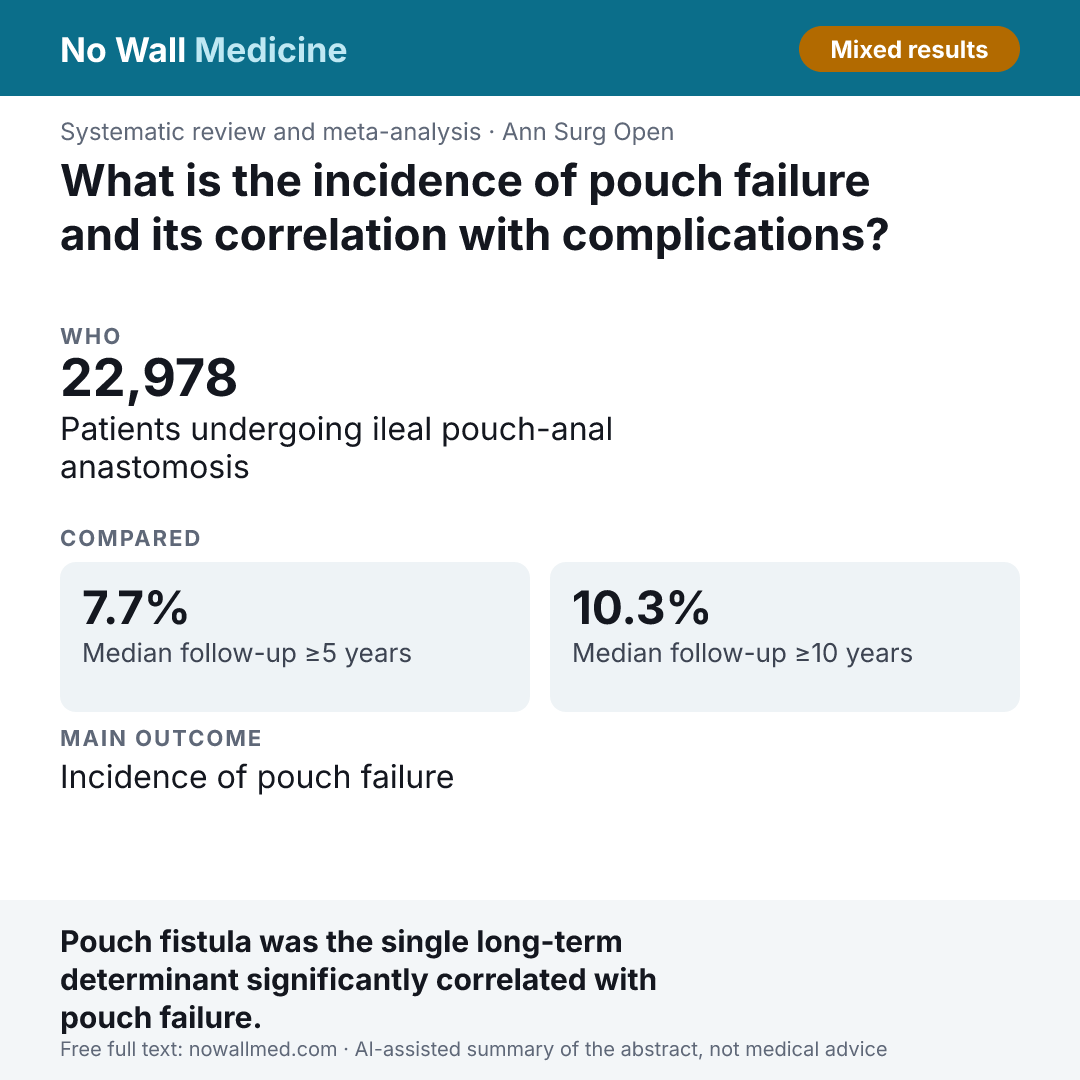
Ileal Pouch-anal Anastomosis Complications and Pouch Failure: A systematic review and meta-analysis
Systematic review and meta-analysisMixed results
What is the incidence of pouch failure and its correlation with complications?
Who
22,978
Patients undergoing ileal pouch-anal anastomosis
Compared
7.7%Median follow-up ≥5 years (95% confidence intervals: 5.56-10.59)
10.3%Median follow-up ≥10 years (95% confidence intervals: 7.24-14.30)
Main outcome
Incidence of pouch failure
Bottom line: Pouch fistula was the single long-term determinant significantly correlated with pouch failure.
Ann Surg Open · 2021-06-21 · Save PNG
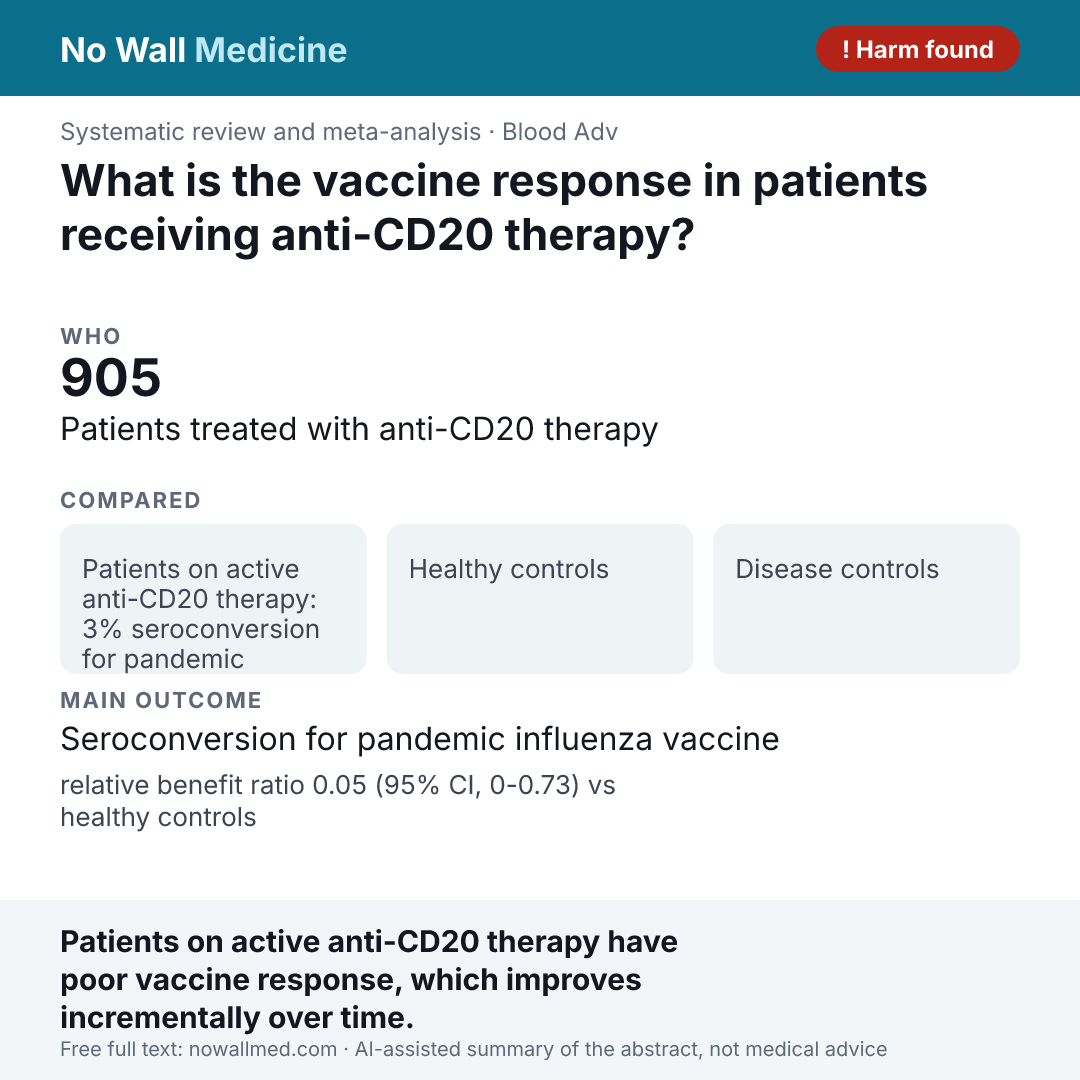
Vaccine response following anti-CD20 therapy: a systematic review and meta-analysis of 905 patients
Systematic review and meta-analysisHarm found
What is the vaccine response in patients receiving anti-CD20 therapy?
Who
905
Patients treated with anti-CD20 therapy
Compared
Patients on active anti-CD20 therapy: 3% seroconversion for pandemic influenza vaccine
Healthy controls
Disease controls
Main outcome
Seroconversion for pandemic influenza vaccine
Result: relative benefit ratio 0.05 (95% CI, 0-0.73) vs healthy controls
Bottom line: Patients on active anti-CD20 therapy have poor vaccine response, which improves incrementally over time.
Blood Adv · 2021-06-21 · Save PNG
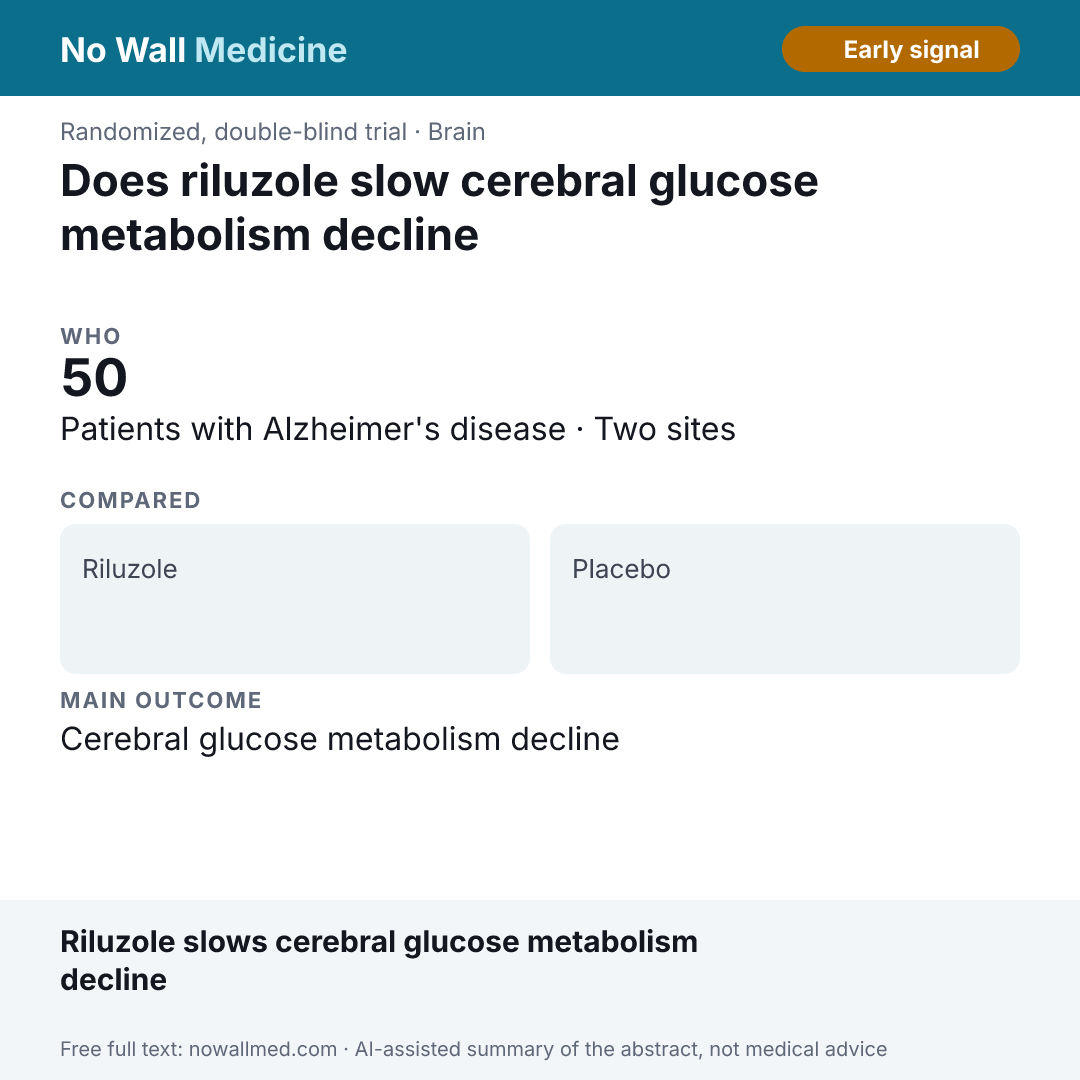
Riluzole, a glutamate modulator, slows cerebral glucose metabolism decline in patients with Alzheimer's disease
Randomized, double-blind trialEarly signal
Does riluzole slow cerebral glucose metabolism decline
Who
50
Patients with Alzheimer's disease · Two sites
Compared
Riluzole
Placebo
Main outcome
Cerebral glucose metabolism decline
Bottom line: Riluzole slows cerebral glucose metabolism decline
Brain · 2021-06-20 · Save PNG
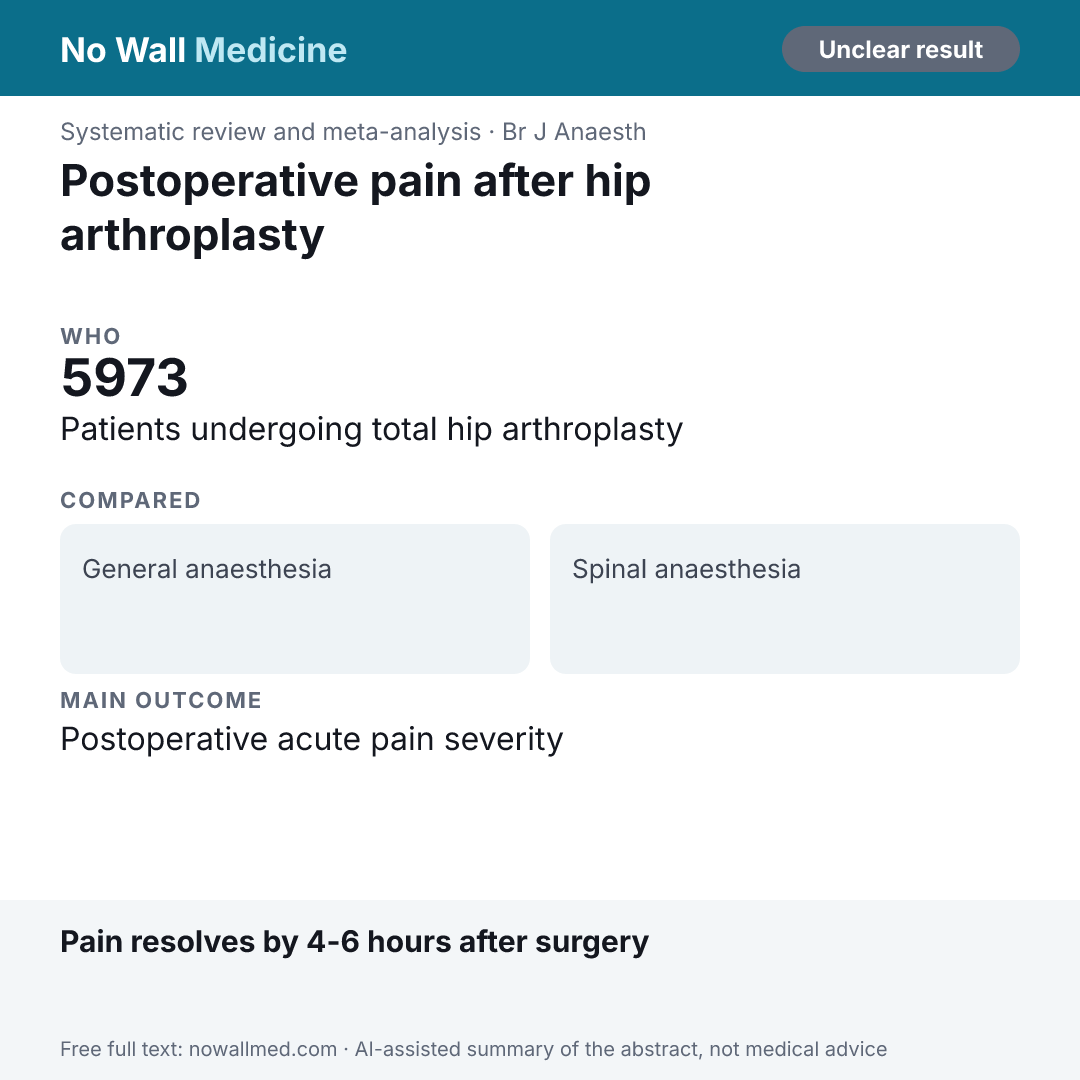
Procedure-specific acute pain trajectory after elective total hip arthroplasty: systematic review and data synthesis
Systematic review and meta-analysisUnclear result
Postoperative pain after hip arthroplasty
Who
5973
Patients undergoing total hip arthroplasty
Compared
General anaesthesia
Spinal anaesthesia
Main outcome
Postoperative acute pain severity
Bottom line: Pain resolves by 4-6 hours after surgery
Limitation: Chronic pain patients often excluded
Br J Anaesth · 2021-06-20 · Save PNG
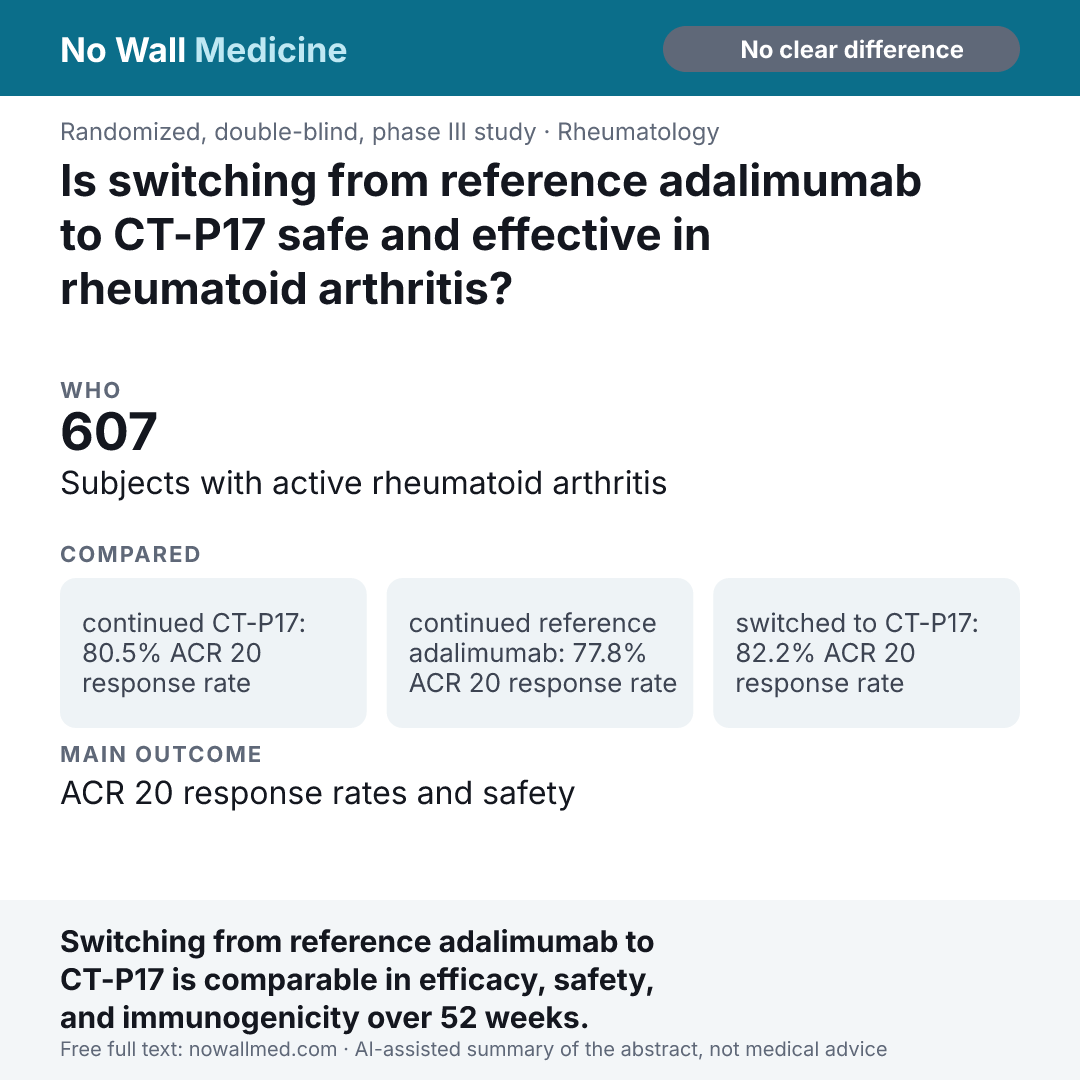
Efficacy and safety of switching from reference adalimumab to CT-P17 (100 mg/ml): 52-week randomized, double-blind study in rheumatoid arthritis
Randomized, double-blind, phase III studyNo clear difference
Is switching from reference adalimumab to CT-P17 safe and effective in rheumatoid arthritis?
Who
607
Subjects with active rheumatoid arthritis
Compared
continued CT-P17: 80.5% ACR 20 response rate
continued reference adalimumab: 77.8% ACR 20 response rate
switched to CT-P17: 82.2% ACR 20 response rate
Main outcome
ACR 20 response rates and safety
Bottom line: Switching from reference adalimumab to CT-P17 is comparable in efficacy, safety, and immunogenicity over 52 weeks.
Rheumatology · 2021-06-19 · Save PNG
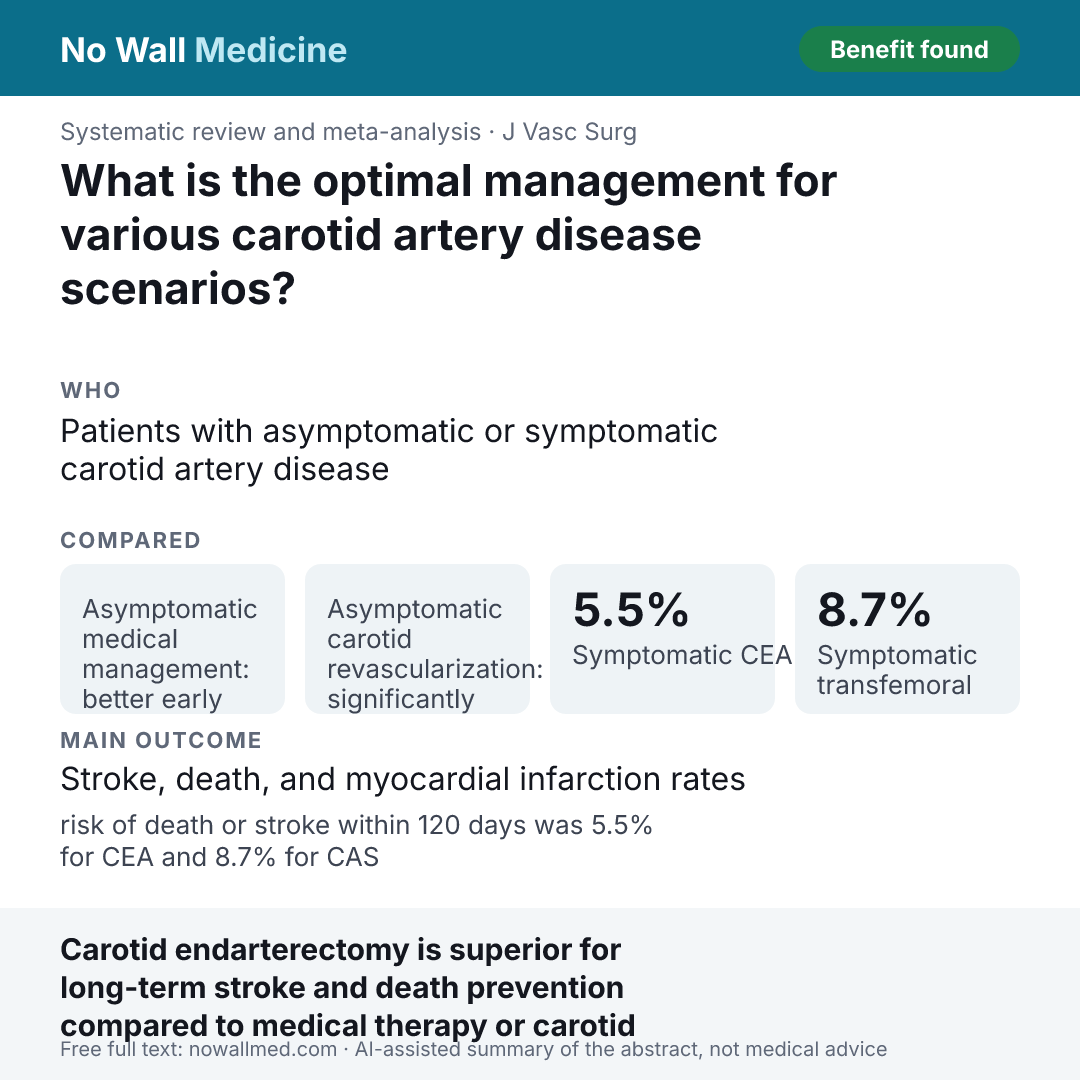
A systematic review supporting the Society for Vascular Surgery Guidelines on the management of carotid artery disease
Systematic review and meta-analysisBenefit found
What is the optimal management for various carotid artery disease scenarios?
Who
Patients with asymptomatic or symptomatic carotid artery disease
Compared
Asymptomatic medical management: better early outcome during the first 30 days
Asymptomatic carotid revascularization: significantly lower long-term rate of stroke/death at 5 years
5.5%Symptomatic CEA
8.7%Symptomatic transfemoral CAS
Main outcome
Stroke, death, and myocardial infarction rates
Result: risk of death or stroke within 120 days was 5.5% for CEA and 8.7% for CAS
Bottom line: Carotid endarterectomy is superior for long-term stroke and death prevention compared to medical therapy or carotid artery stenting.
Limitation: Evidence on the timing of interventions in patients with combined carotid and coronary disease was sparse and imprecise.
J Vasc Surg · 2021-06-19 · Save PNG
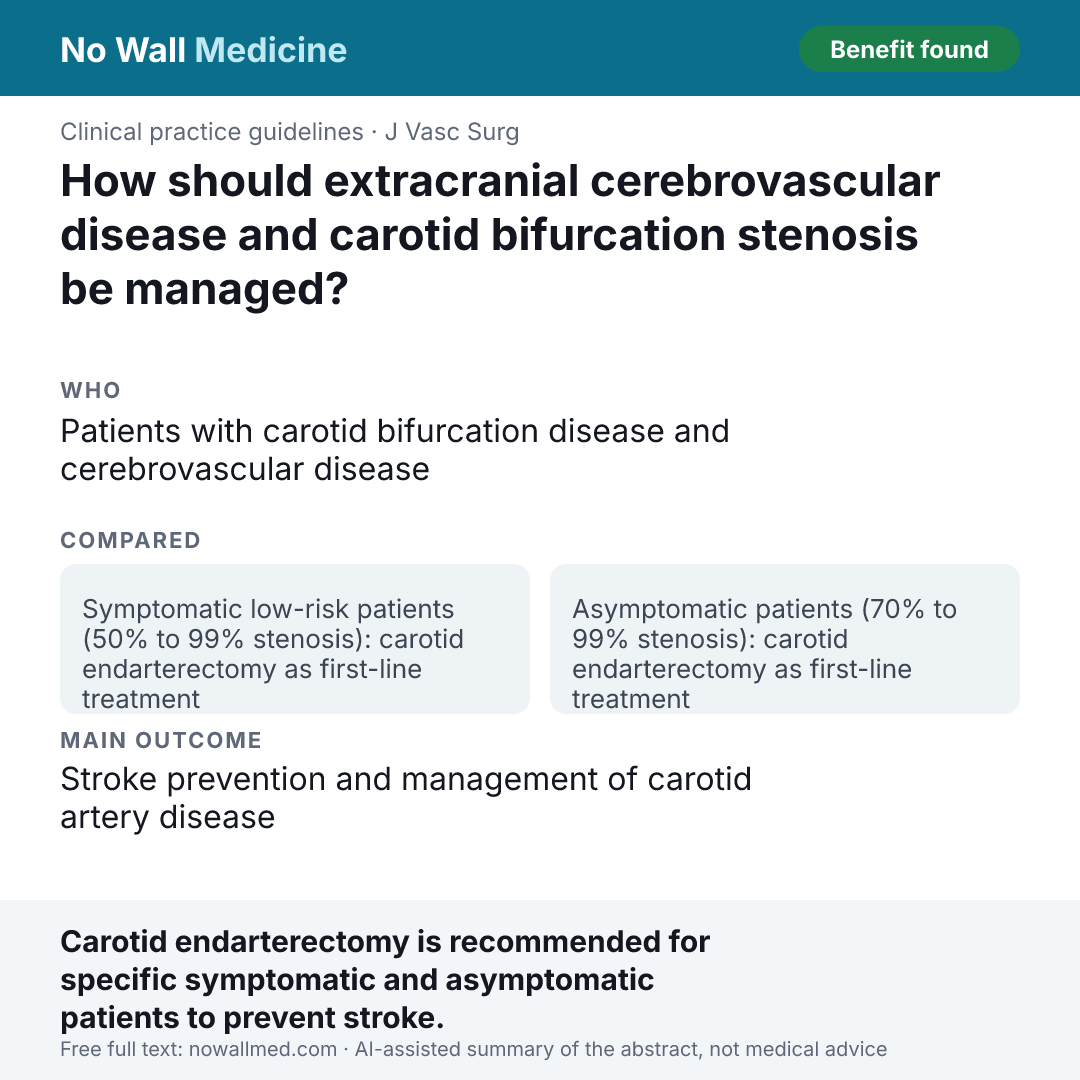
Society for Vascular Surgery clinical practice guidelines for management of extracranial cerebrovascular disease
Clinical practice guidelinesBenefit found
How should extracranial cerebrovascular disease and carotid bifurcation stenosis be managed?
Who
Patients with carotid bifurcation disease and cerebrovascular disease
Compared
Symptomatic low-risk patients (50% to 99% stenosis): carotid endarterectomy as first-line treatment
Asymptomatic patients (70% to 99% stenosis): carotid endarterectomy as first-line treatment
Main outcome
Stroke prevention and management of carotid artery disease
Bottom line: Carotid endarterectomy is recommended for specific symptomatic and asymptomatic patients to prevent stroke.
J Vasc Surg · 2021-06-19 · Save PNG
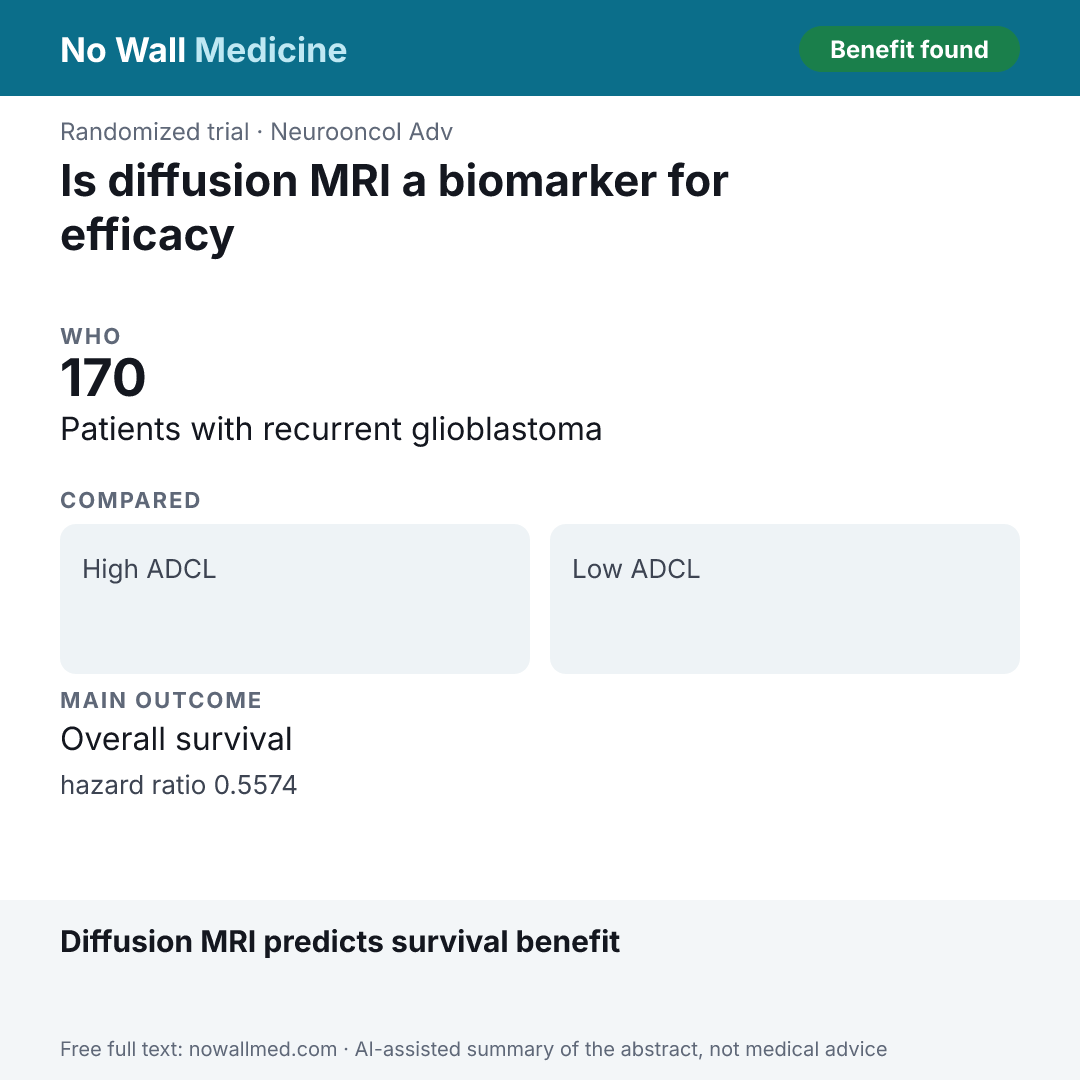
Validation of diffusion MRI as a biomarker for efficacy using randomized phase III trial of bevacizumab with or without VB-111 in recurrent glioblastoma
Randomized trialBenefit found
Is diffusion MRI a biomarker for efficacy
Who
170
Patients with recurrent glioblastoma
Compared
High ADCL
Low ADCL
Main outcome
Overall survival
Result: hazard ratio 0.5574
Bottom line: Diffusion MRI predicts survival benefit
Neurooncol Adv · 2021-06-19 · Save PNG
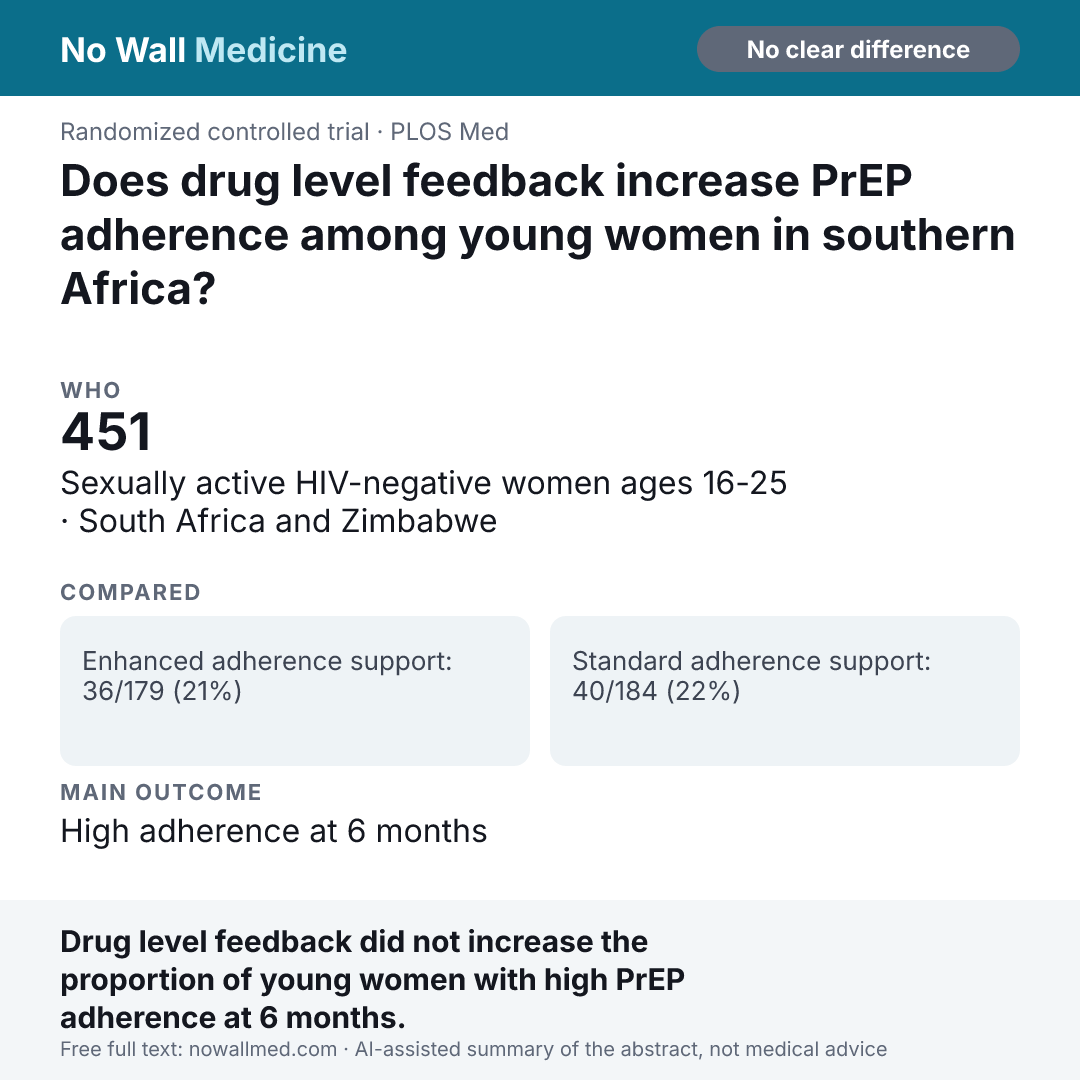
PrEP uptake, persistence, adherence, and effect of retrospective drug level feedback on PrEP adherence among young women in southern Africa: Results from HPTN 082, a randomized controlled trial
Randomized controlled trialNo clear difference
Does drug level feedback increase PrEP adherence among young women in southern Africa?
Who
451
Sexually active HIV-negative women ages 16-25 · South Africa and Zimbabwe
Compared
Enhanced adherence support: 36/179 (21%)
Standard adherence support: 40/184 (22%)
Main outcome
High adherence at 6 months
Result: adjusted odds ratio 0.92 (95% CI 0.55 to 1.34)
Bottom line: Drug level feedback did not increase the proportion of young women with high PrEP adherence at 6 months.
Limitation: The study had limited power to detect a modest effect of drug level feedback.
PLOS Med · 2021-06-18 · Save PNG
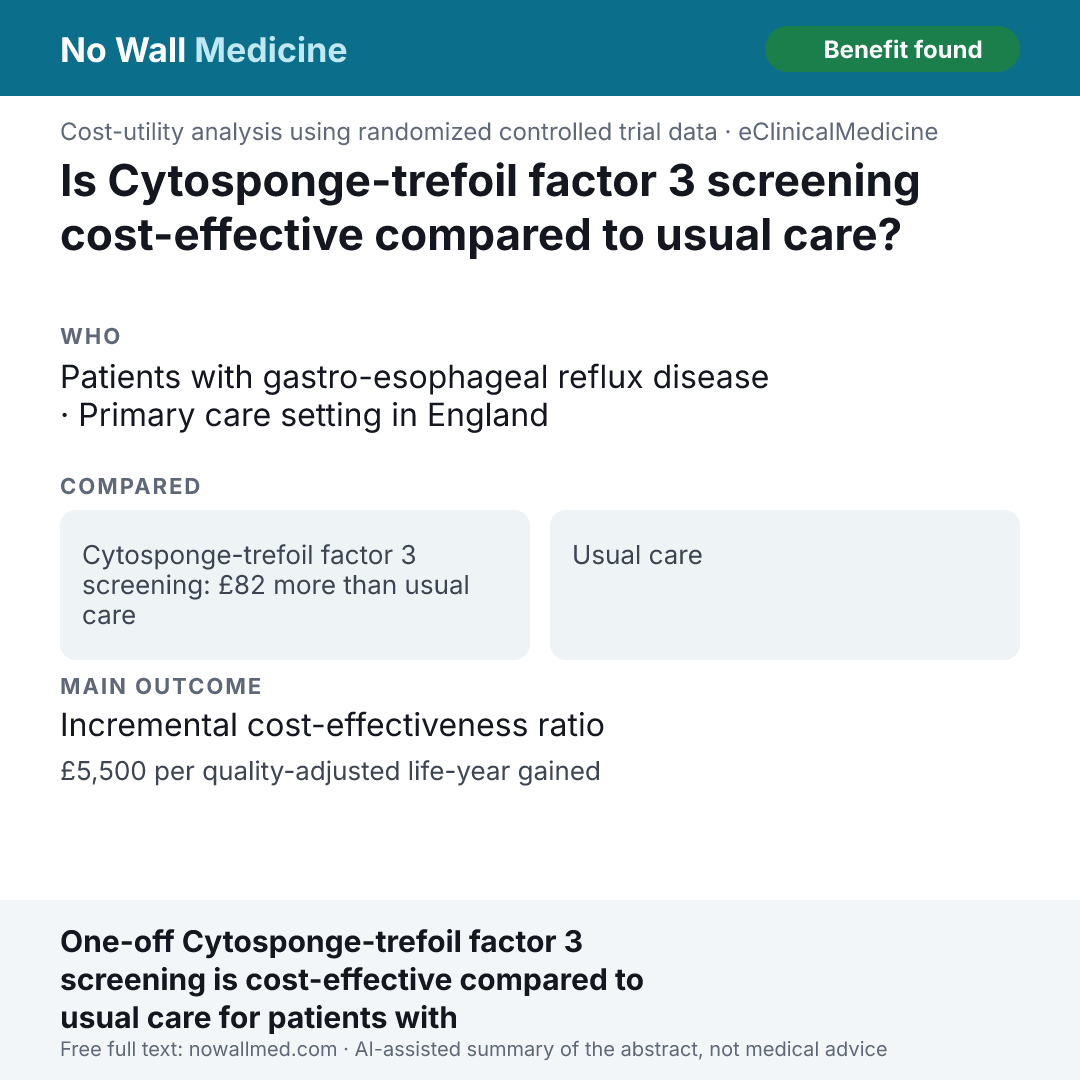
Economic evaluation of Cytosponge®-trefoil factor 3 for Barrett esophagus: A cost-utility analysis of randomised controlled trial data
Cost-utility analysis using randomized controlled trial dataBenefit found
Is Cytosponge-trefoil factor 3 screening cost-effective compared to usual care?
Who
Patients with gastro-esophageal reflux disease · Primary care setting in England
Compared
Cytosponge-trefoil factor 3 screening: £82 more than usual care
Usual care
Main outcome
Incremental cost-effectiveness ratio
Result: £5,500 per quality-adjusted life-year gained
Bottom line: One-off Cytosponge-trefoil factor 3 screening is cost-effective compared to usual care for patients with gastro-esophageal reflux disease.
Limitation: Relatively low uptake and an older population in this trial setting.
eClinicalMedicine · 2021-06-18 · Save PNG
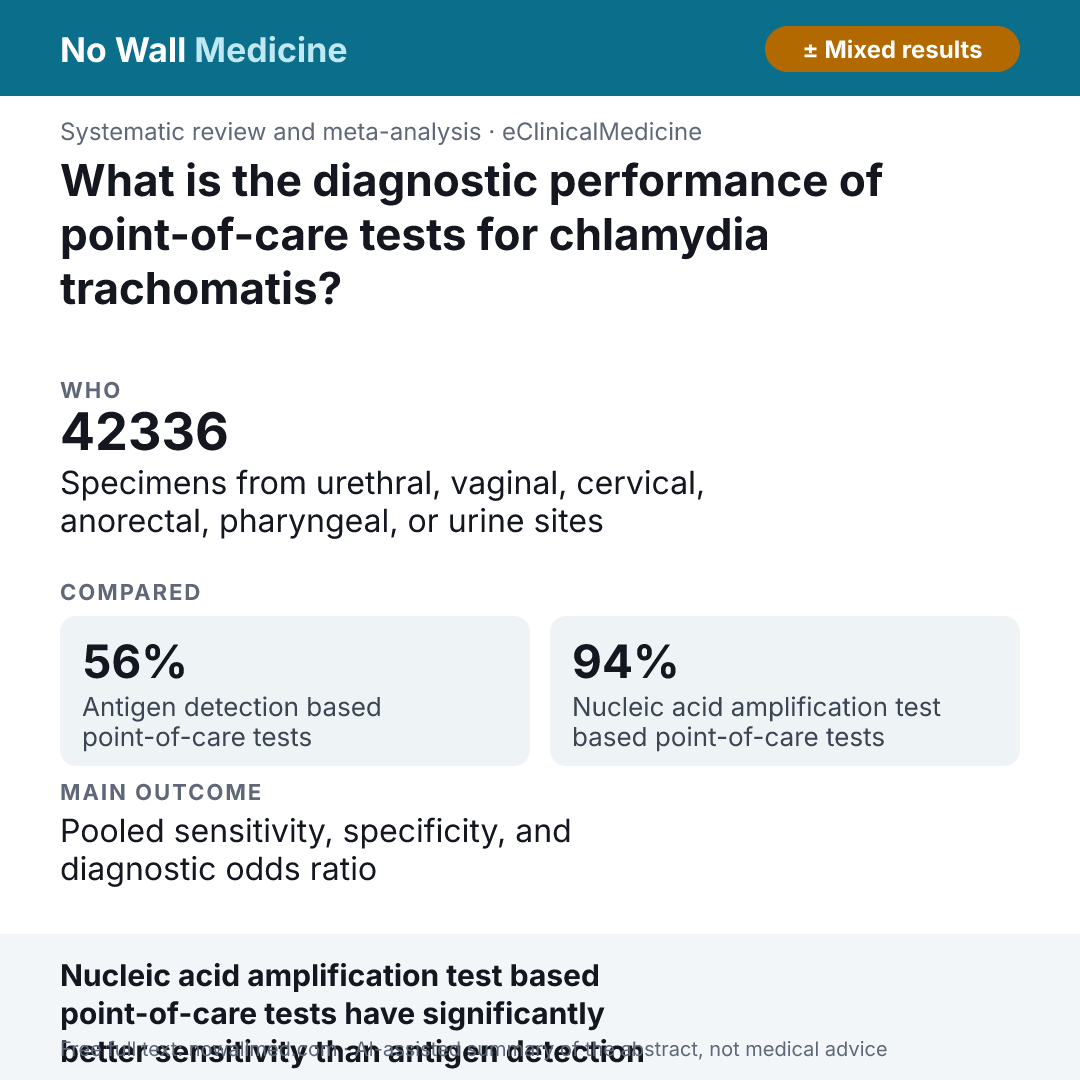
Performance of point-of-care tests for the detection of chlamydia trachomatis infections: A systematic review and meta-analysis
Systematic review and meta-analysisMixed results
What is the diagnostic performance of point-of-care tests for chlamydia trachomatis?
Who
42336
Specimens from urethral, vaginal, cervical, anorectal, pharyngeal, or urine sites
Compared
56%Antigen detection based point-of-care tests (95% CI 45%-67%)
94%Nucleic acid amplification test based point-of-care tests (95% CI 91%-96%)
Main outcome
Pooled sensitivity, specificity, and diagnostic odds ratio
Result: sensitivity 56% (95% CI 45%-67%) vs 94% (95% CI 91%-96%)
Bottom line: Nucleic acid amplification test based point-of-care tests have significantly better sensitivity than antigen detection based tests for chlamydia.
eClinicalMedicine · 2021-06-18 · Save PNG
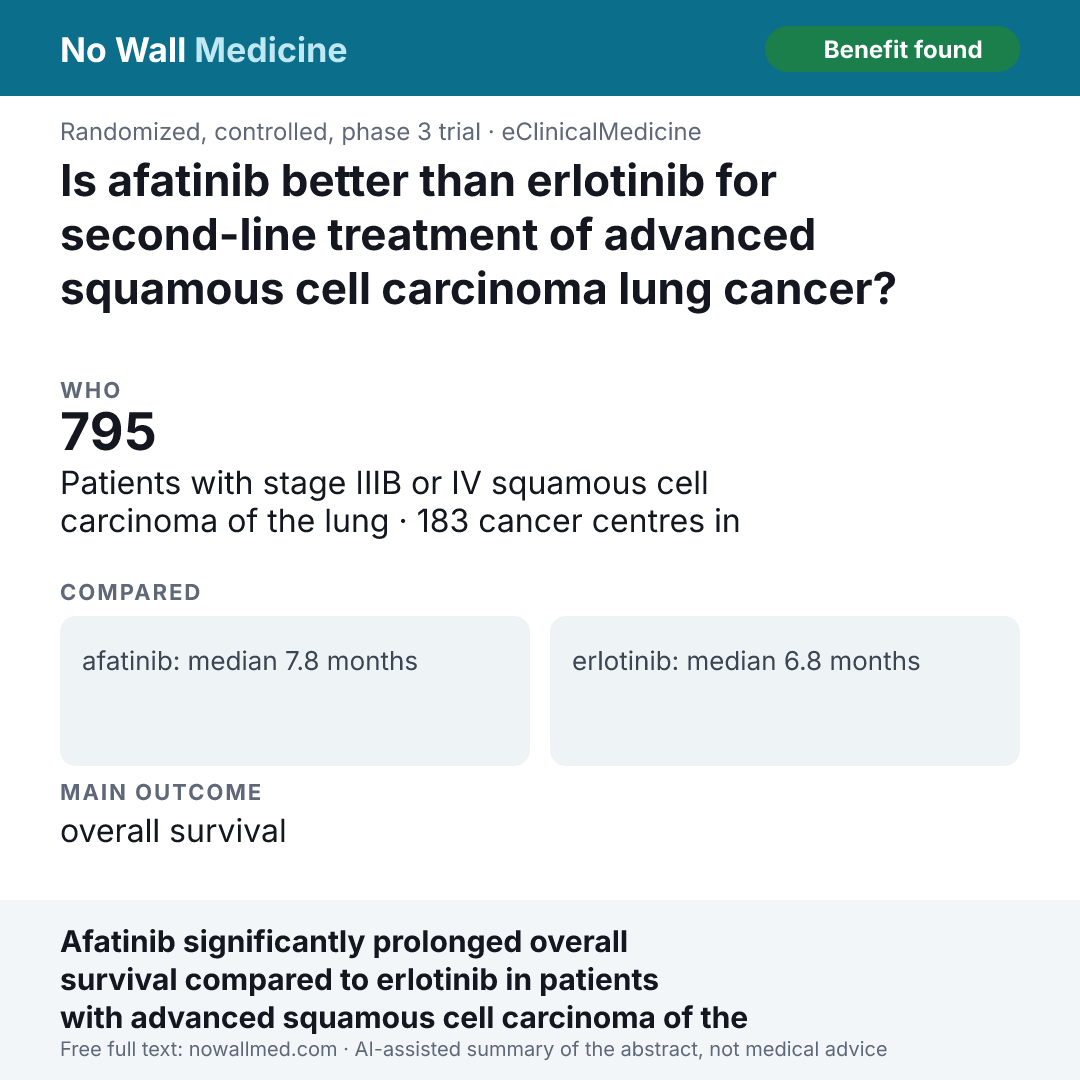
Afatinib versus erlotinib as second-line treatment of patients with advanced squamous cell carcinoma of the lung: Final analysis of the randomised phase 3 LUX-Lung 8 trial
Randomized, controlled, phase 3 trialBenefit found
Is afatinib better than erlotinib for second-line treatment of advanced squamous cell carcinoma lung cancer?
Who
795
Patients with stage IIIB or IV squamous cell carcinoma of the lung · 183 cancer centres in 23 countries
Compared
afatinib: median 7.8 months
erlotinib: median 6.8 months
Main outcome
overall survival
Result: hazard ratio 0.84 (95% CI 0.73-0.97)
Bottom line: Afatinib significantly prolonged overall survival compared to erlotinib in patients with advanced squamous cell carcinoma of the lung.
eClinicalMedicine · 2021-06-18 · Save PNG
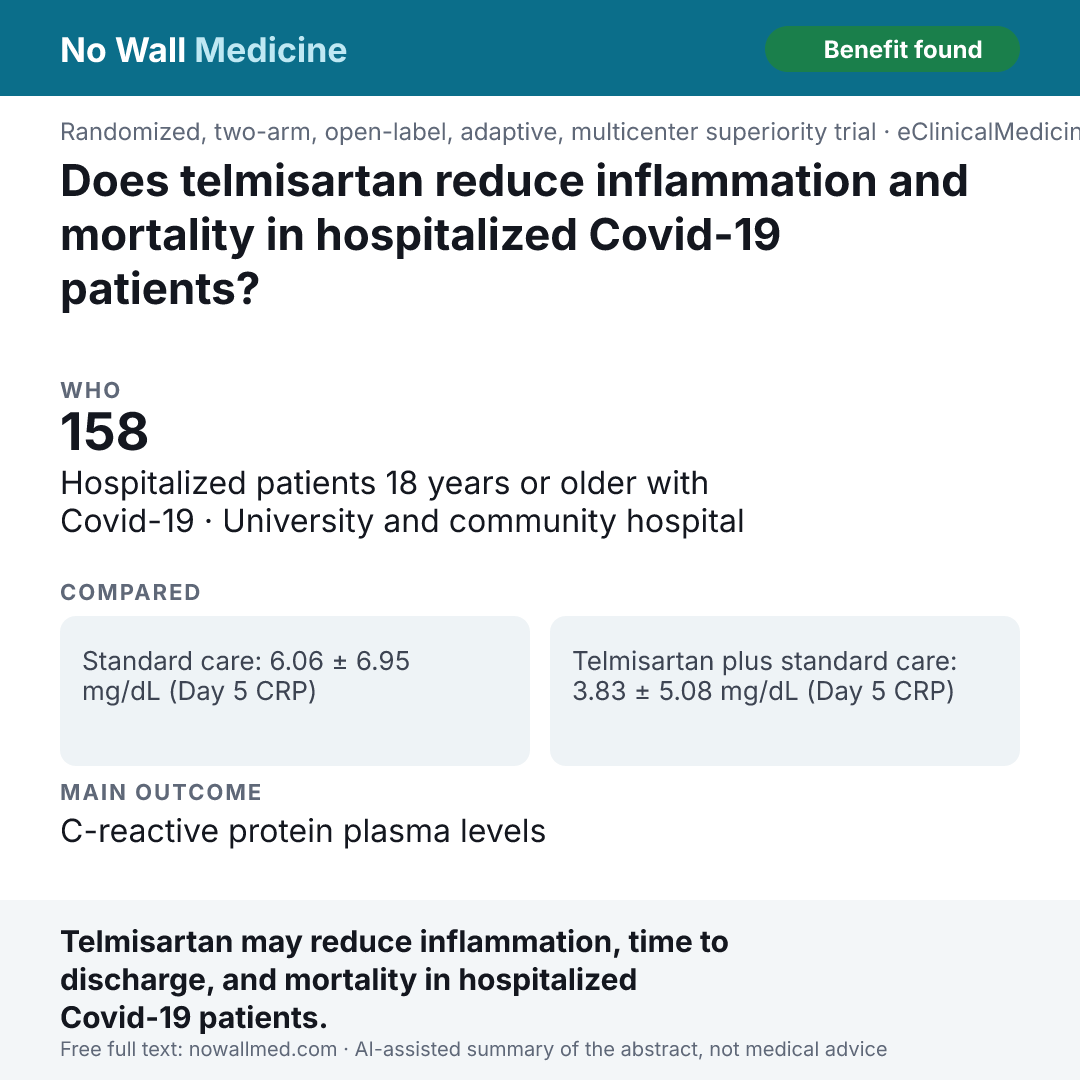
Telmisartan for treatment of Covid-19 patients: An open multicenter randomized clinical trial
Randomized, two-arm, open-label, adaptive, multicenter superiority trialBenefit found
Does telmisartan reduce inflammation and mortality in hospitalized Covid-19 patients?
Who
158
Hospitalized patients 18 years or older with Covid-19 · University and community hospital in Buenos Aires, Argentina
Compared
Standard care: 6.06 ± 6.95 mg/dL (Day 5 CRP)
Telmisartan plus standard care: 3.83 ± 5.08 mg/dL (Day 5 CRP)
Main outcome
C-reactive protein plasma levels
Bottom line: Telmisartan may reduce inflammation, time to discharge, and mortality in hospitalized Covid-19 patients.
eClinicalMedicine · 2021-06-18 · Save PNG
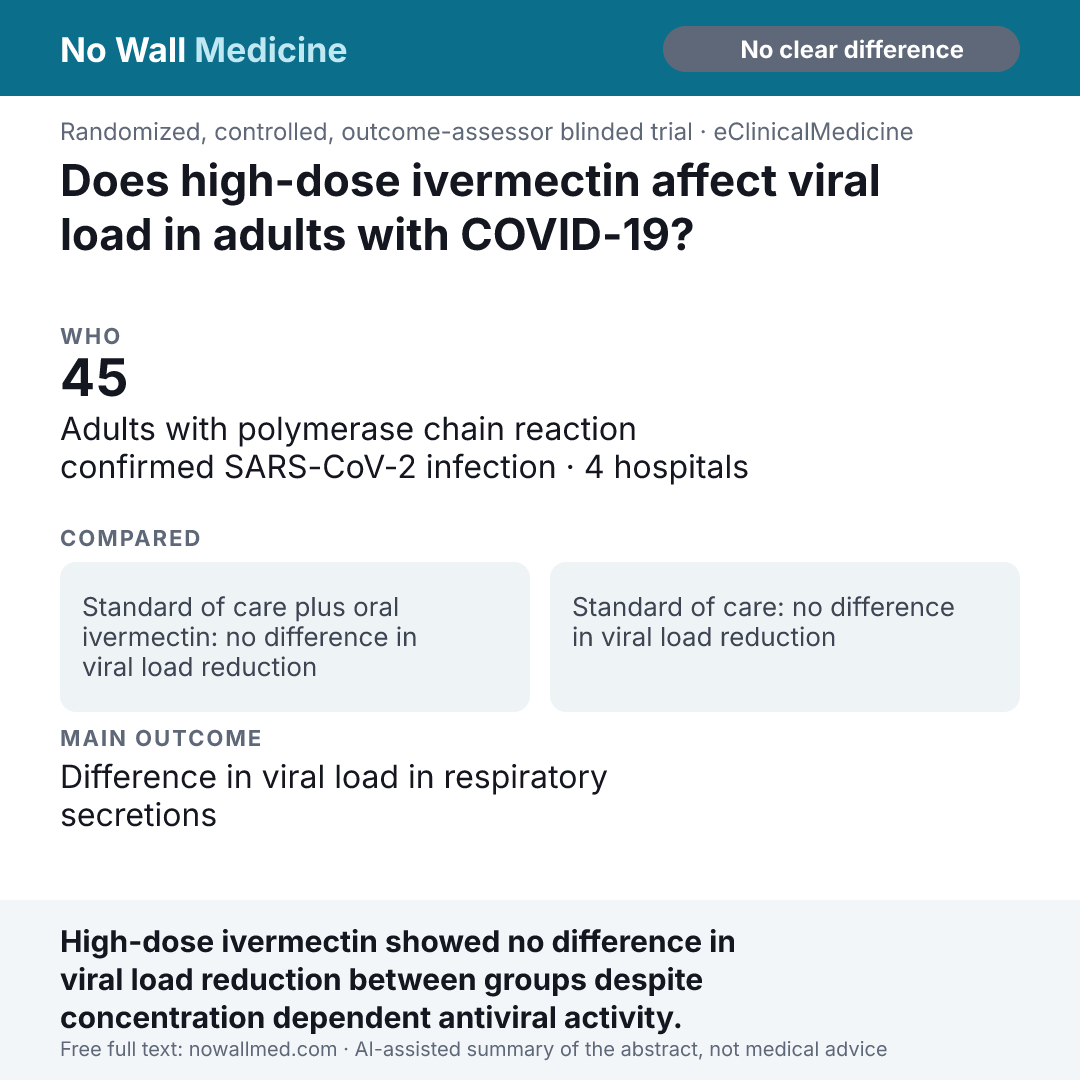
Antiviral effect of high-dose ivermectin in adults with COVID-19: A proof-of-concept randomized trial
Randomized, controlled, outcome-assessor blinded trialNo clear difference
Does high-dose ivermectin affect viral load in adults with COVID-19?
Who
45
Adults with polymerase chain reaction confirmed SARS-CoV-2 infection · 4 hospitals in Argentina
Compared
Standard of care plus oral ivermectin: no difference in viral load reduction
Standard of care: no difference in viral load reduction
Main outcome
Difference in viral load in respiratory secretions
Bottom line: High-dose ivermectin showed no difference in viral load reduction between groups despite concentration dependent antiviral activity.
Limitation: Large trials with clinical endpoints are necessary to determine clinical utility.
Funded by: Agencia Nacional de Promoción de la Investigación and Laboratorio ELEA/Phoenix
eClinicalMedicine · 2021-06-18 · Save PNG
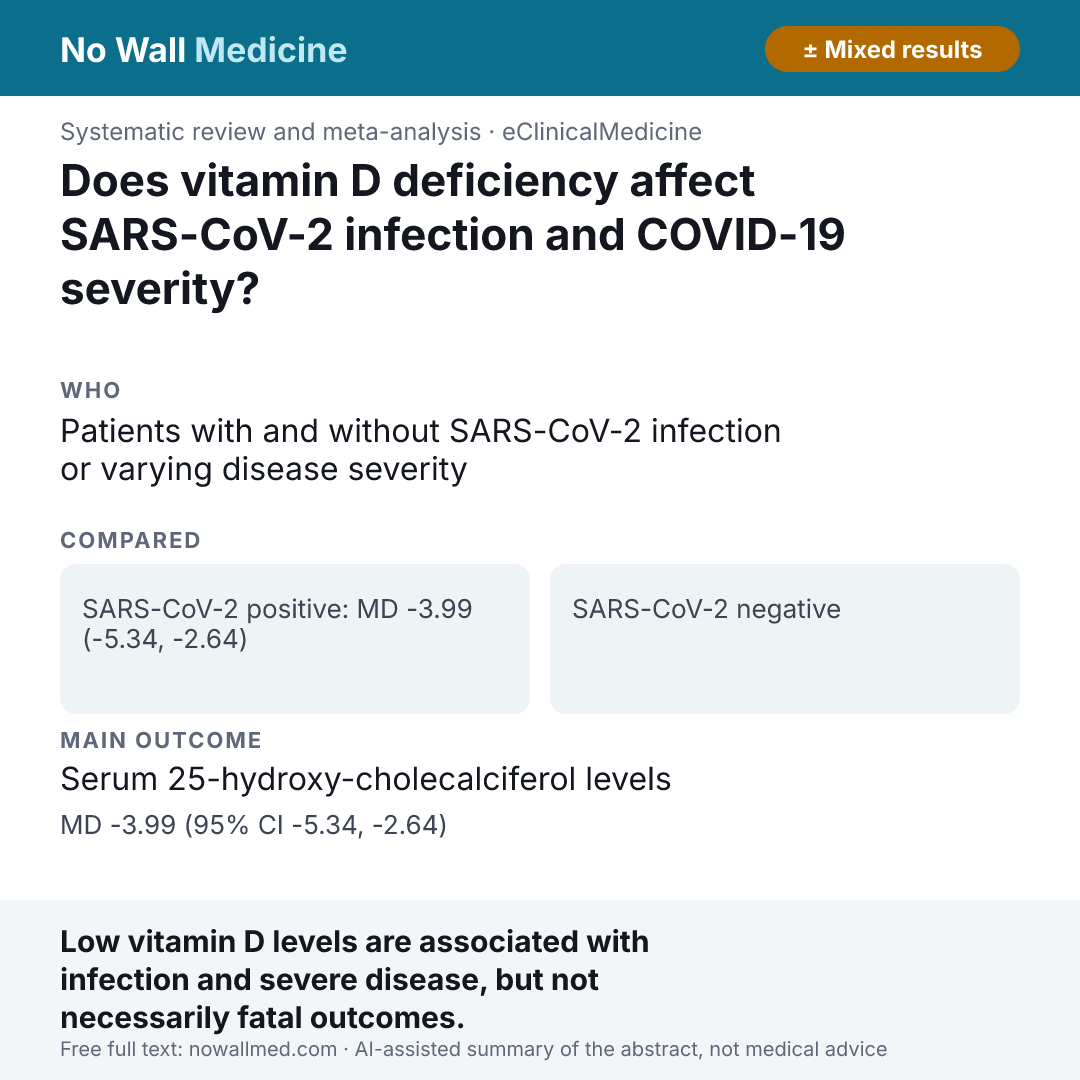
Influence of 25-hydroxy-cholecalciferol levels on SARS-CoV-2 infection and COVID-19 severity: A systematic review and meta-analysis
Systematic review and meta-analysisMixed results
Does vitamin D deficiency affect SARS-CoV-2 infection and COVID-19 severity?
Who
Patients with and without SARS-CoV-2 infection or varying disease severity
Compared
SARS-CoV-2 positive: MD -3.99 (-5.34, -2.64)
SARS-CoV-2 negative
Main outcome
Serum 25-hydroxy-cholecalciferol levels
Result: MD -3.99 (95% CI -5.34, -2.64)
Bottom line: Low vitamin D levels are associated with infection and severe disease, but not necessarily fatal outcomes.
Limitation: Observational nature does not allow establishing a cause-effect relationship and large heterogeneity exists.
eClinicalMedicine · 2021-06-18 · Save PNG
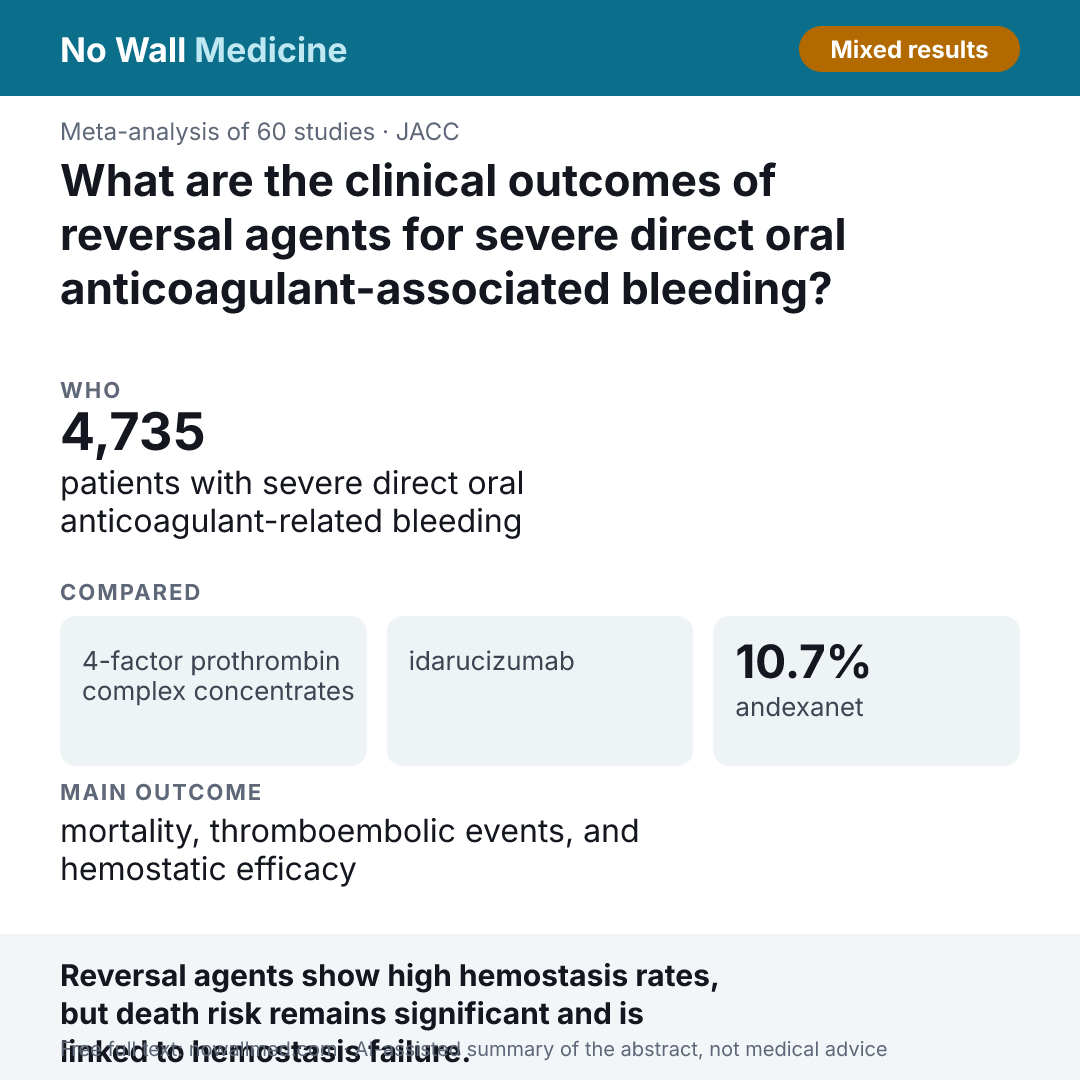
Meta-Analysis of Reversal Agents for Severe Bleeding Associated With Direct Oral Anticoagulants
Meta-analysis of 60 studiesMixed results
What are the clinical outcomes of reversal agents for severe direct oral anticoagulant-associated bleeding?
Who
4,735
patients with severe direct oral anticoagulant-related bleeding
Compared
4-factor prothrombin complex concentrates
idarucizumab
10.7%andexanet (95% CI 6.5% to 15.7%)
Main outcome
mortality, thromboembolic events, and hemostatic efficacy
Result: relative risk 3.63 (95% CI 2.56 to 5.16)
Bottom line: Reversal agents show high hemostasis rates, but death risk remains significant and is linked to hemostasis failure.
JACC · 2021-06-18 · Save PNG
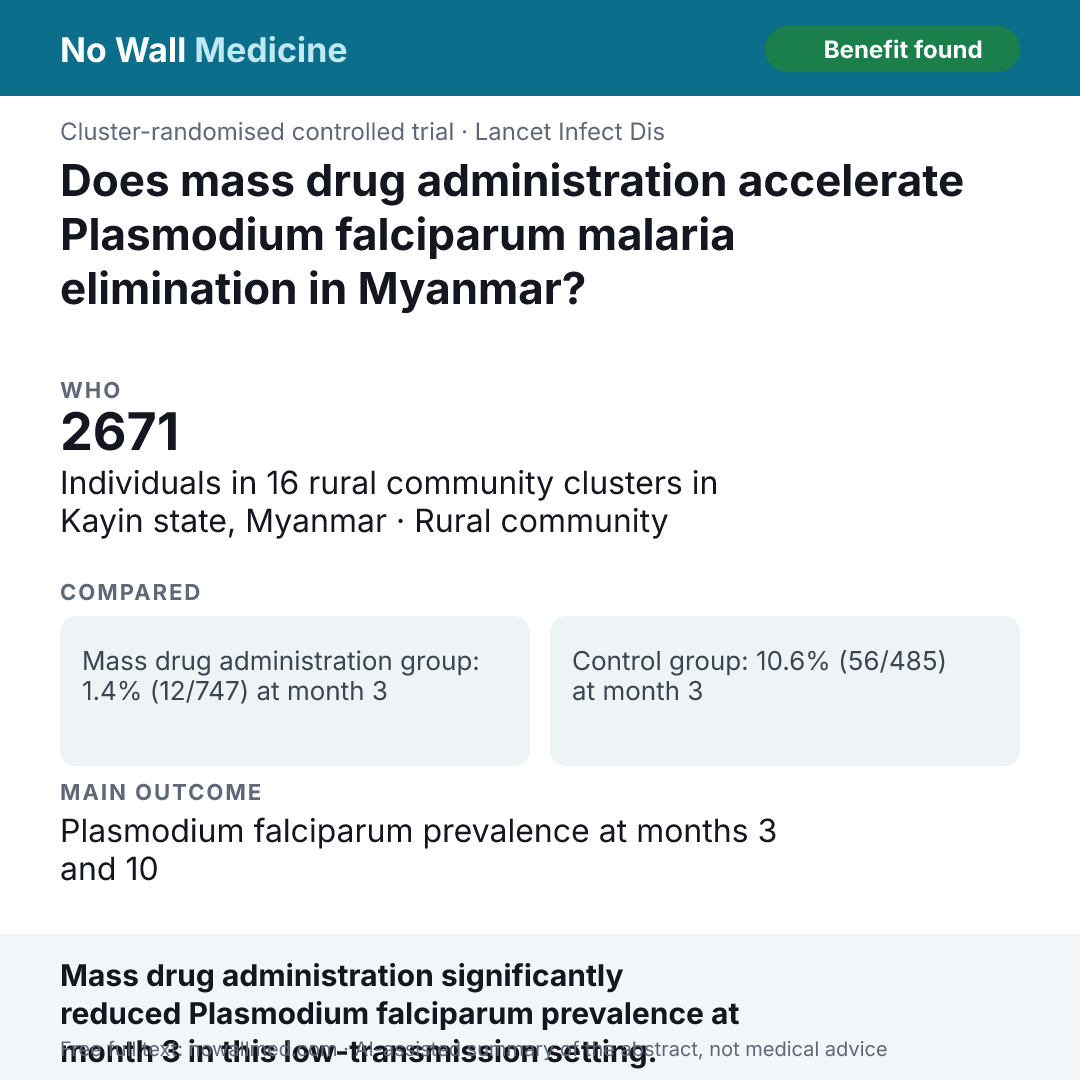
Mass drug administration for the acceleration of malaria elimination in a region of Myanmar with artemisinin-resistant falciparum malaria: a cluster-randomised trial
Cluster-randomised controlled trialBenefit found
Does mass drug administration accelerate Plasmodium falciparum malaria elimination in Myanmar?
Who
2671
Individuals in 16 rural community clusters in Kayin state, Myanmar · Rural community clusters in southeast Myanmar
Compared
Mass drug administration group: 1.4% (12/747) at month 3
Control group: 10.6% (56/485) at month 3
Main outcome
Plasmodium falciparum prevalence at months 3 and 10
Result: weighted mean absolute difference -10·6% (95% CI -15·1 to -6·1) at month 3
Bottom line: Mass drug administration significantly reduced Plasmodium falciparum prevalence at month 3 in this low-transmission setting.
Funded by: The Global Fund to Fight AIDS, Tuberculosis and Malaria
Lancet Infect Dis · 2021-06-18 · Save PNG
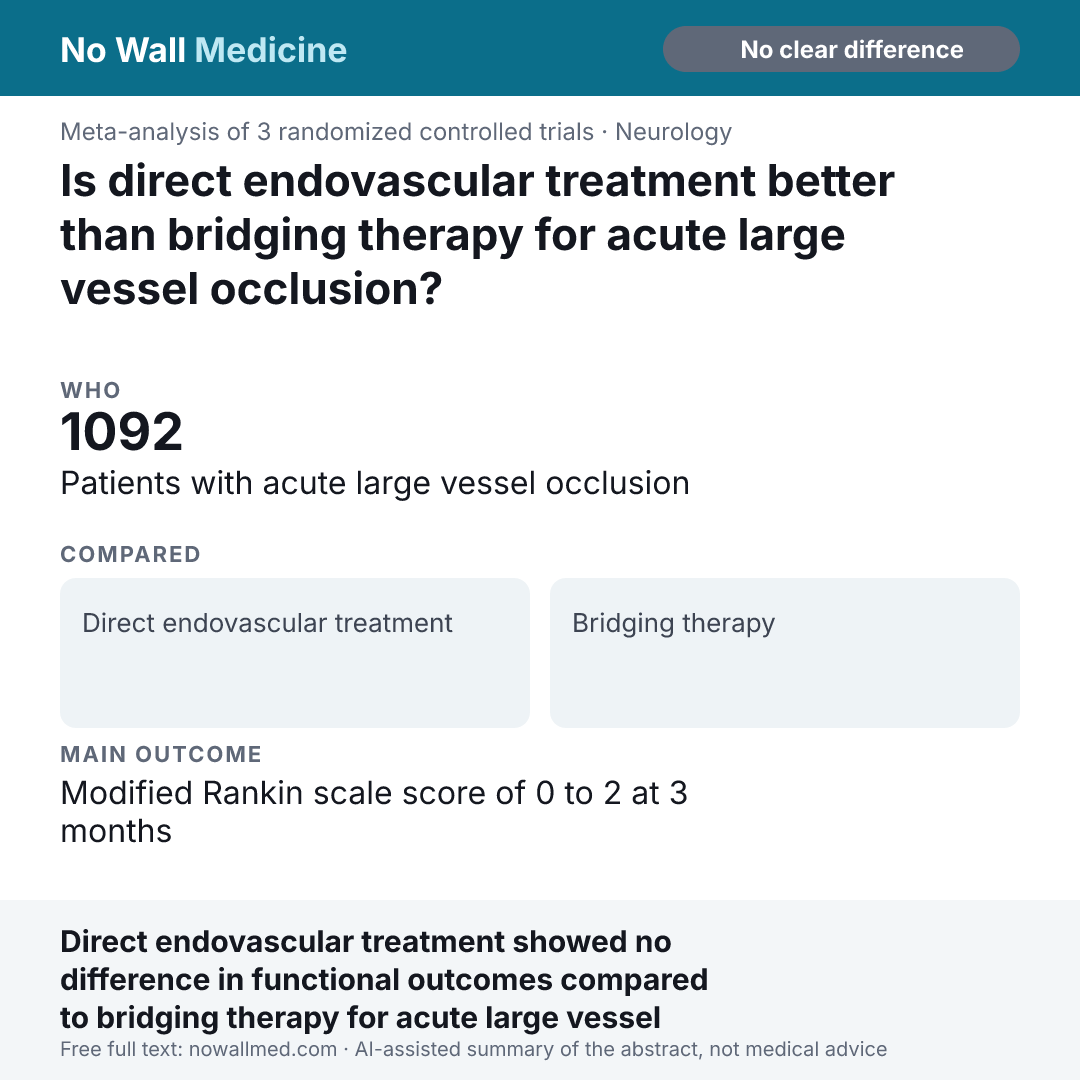
Utility of Intravenous Alteplase Prior to Endovascular Stroke Treatment: A Systematic Review and Meta-analysis of RCTs
Meta-analysis of 3 randomized controlled trialsNo clear difference
Is direct endovascular treatment better than bridging therapy for acute large vessel occlusion?
Who
1092
Patients with acute large vessel occlusion
Compared
Direct endovascular treatment
Bridging therapy
Main outcome
Modified Rankin scale score of 0 to 2 at 3 months
Result: OR 1.08, 95% CI 0.85-1.38
Bottom line: Direct endovascular treatment showed no difference in functional outcomes compared to bridging therapy for acute large vessel occlusion.
Neurology · 2021-06-18 · Save PNG
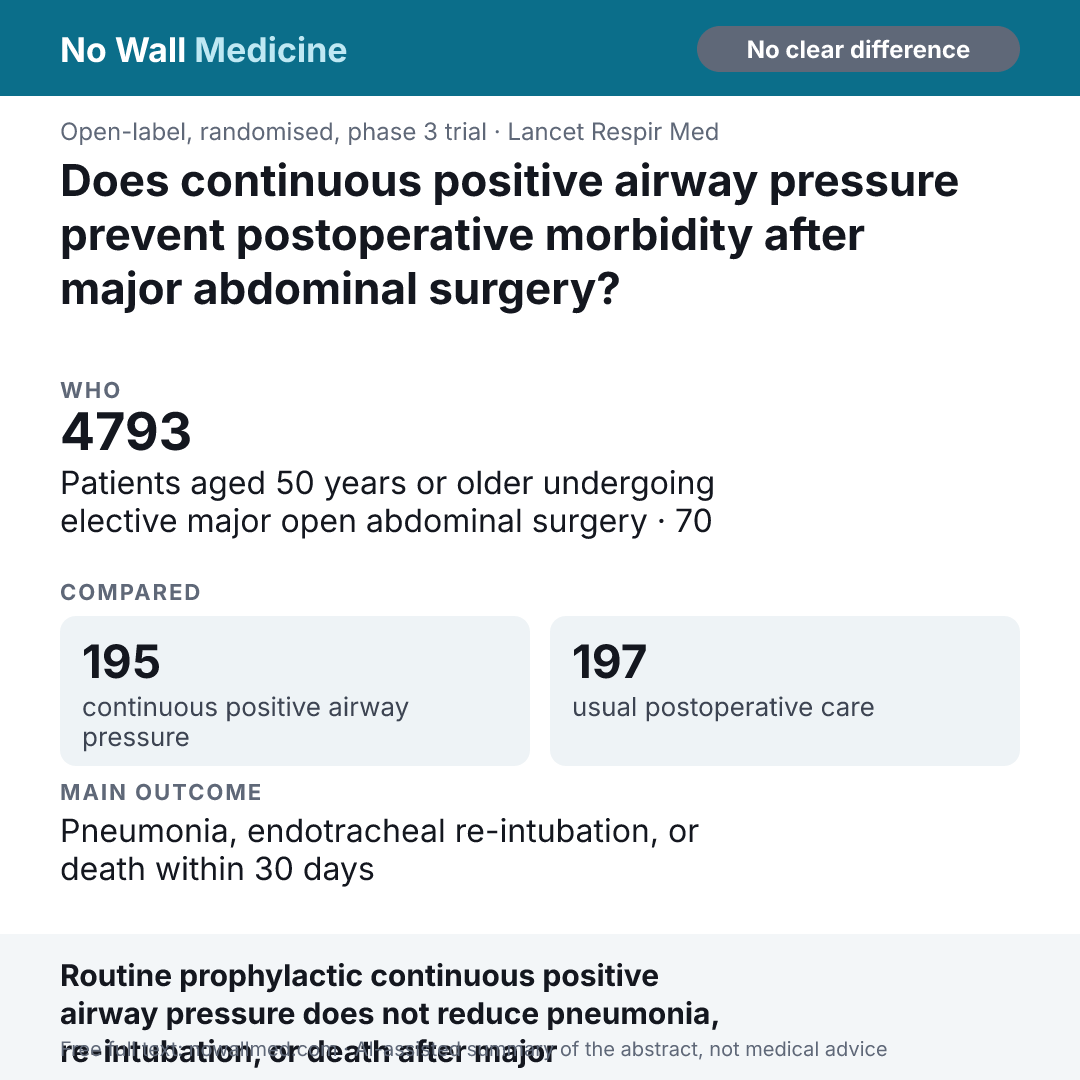
Postoperative continuous positive airway pressure to prevent pneumonia, re-intubation, and death after major abdominal surgery (PRISM): a multicentre, open-label, randomised, phase 3 trial
Open-label, randomised, phase 3 trialNo clear difference
Does continuous positive airway pressure prevent postoperative morbidity after major abdominal surgery?
Who
4793
Patients aged 50 years or older undergoing elective major open abdominal surgery · 70 hospitals across six countries
Compared
195continuous positive airway pressure (8·1%)
197usual postoperative care (8·2%)
Main outcome
Pneumonia, endotracheal re-intubation, or death within 30 days
Result: adjusted odds ratio 1·01 (95% CI 0·81-1·24)
Bottom line: Routine prophylactic continuous positive airway pressure does not reduce pneumonia, re-intubation, or death after major abdominal surgery.
Lancet Respir Med · 2021-06-18 · Save PNG
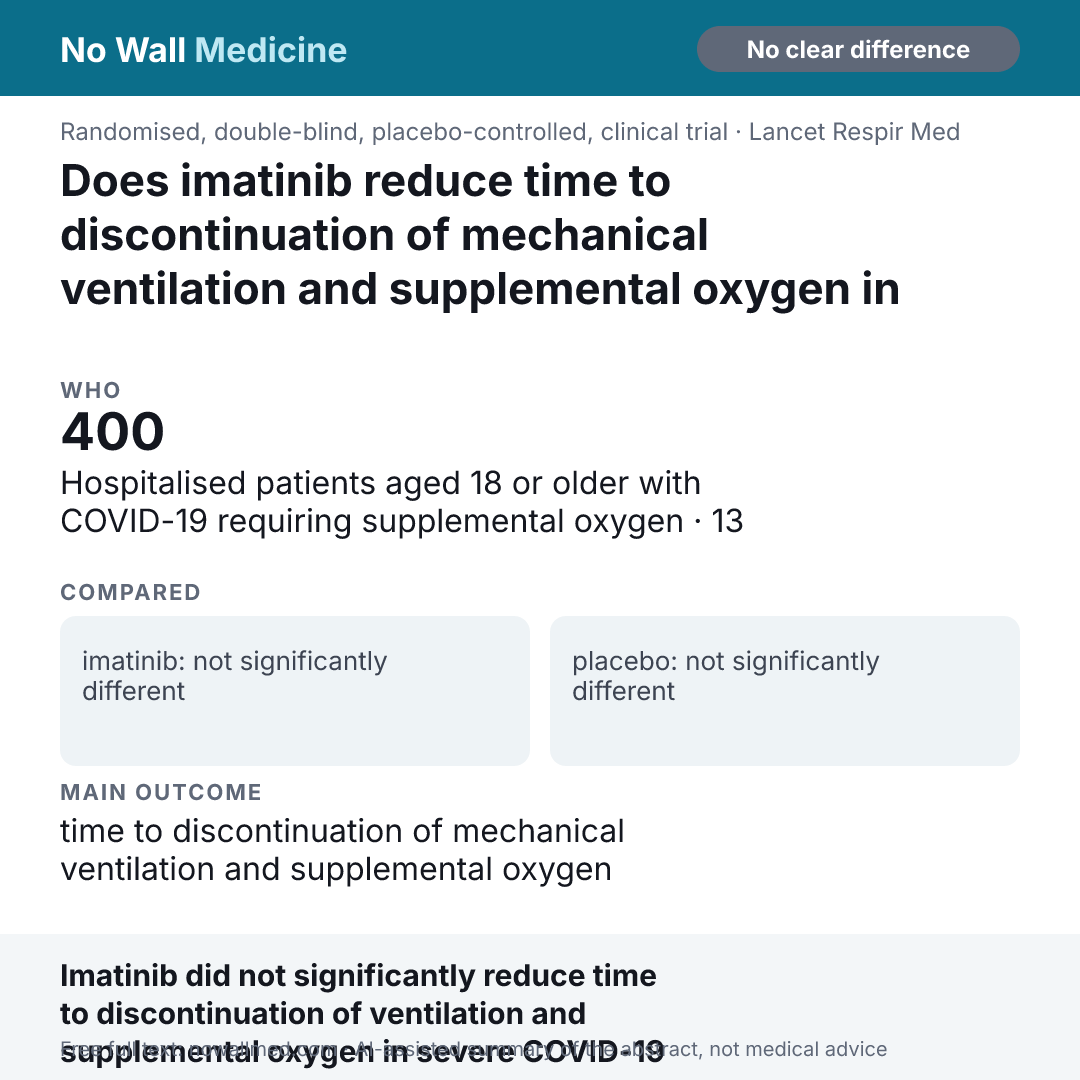
Imatinib in patients with severe COVID-19: a randomised, double-blind, placebo-controlled, clinical trial
Randomised, double-blind, placebo-controlled, clinical trialNo clear difference
Does imatinib reduce time to discontinuation of mechanical ventilation and supplemental oxygen in severe COVID-19?
Who
400
Hospitalised patients aged 18 or older with COVID-19 requiring supplemental oxygen · 13 teaching hospitals in the Netherlands
Compared
imatinib: not significantly different
placebo: not significantly different
Main outcome
time to discontinuation of mechanical ventilation and supplemental oxygen
Result: unadjusted hazard ratio 0·95 (95% CI 0·76-1·20)
Bottom line: Imatinib did not significantly reduce time to discontinuation of ventilation and supplemental oxygen in severe COVID-19 patients.
Funded by: Amsterdam Medical Center Foundation, ZonMW, and European Union Innovative Medicines Initiative 2
Lancet Respir Med · 2021-06-18 · Save PNG