Visual abstracts
New randomized trials and meta-analyses from leading journals at a glance: who was studied, what was compared, and what was found. Every paper is free to read in full.
All specialtiesCardiology 4877Oncology 4138Gastroenterology & Hepatology 1942Infectious Disease 3837Neurology 1905Psychiatry & Mental Health 2273Pulmonology 2143Critical Care 1365Endocrinology & Diabetes 2580Pediatrics 2980Surgery 2559Orthopedics & Sports Medicine 931Neurosurgery 537Cardiothoracic & Vascular Surgery 674Plastic & Reconstructive Surgery 591Nephrology 1133Rheumatology 823Hematology 1109Dermatology 621Ophthalmology 543Obstetrics & Gynecology 1686Public & Global Health 1058Radiology & Imaging 648Anesthesiology 986Urology 764ENT (Otolaryngology) 503Emergency Medicine 511Allergy & Immunology 313Geriatrics 981Family Medicine & Primary Care 562Medical Genetics & Genomics 676Pathology & Laboratory Medicine 159Physical Medicine & Rehabilitation 757Palliative Care 444Nutrition 1588Digital Health & AI 2201General Medicine 321
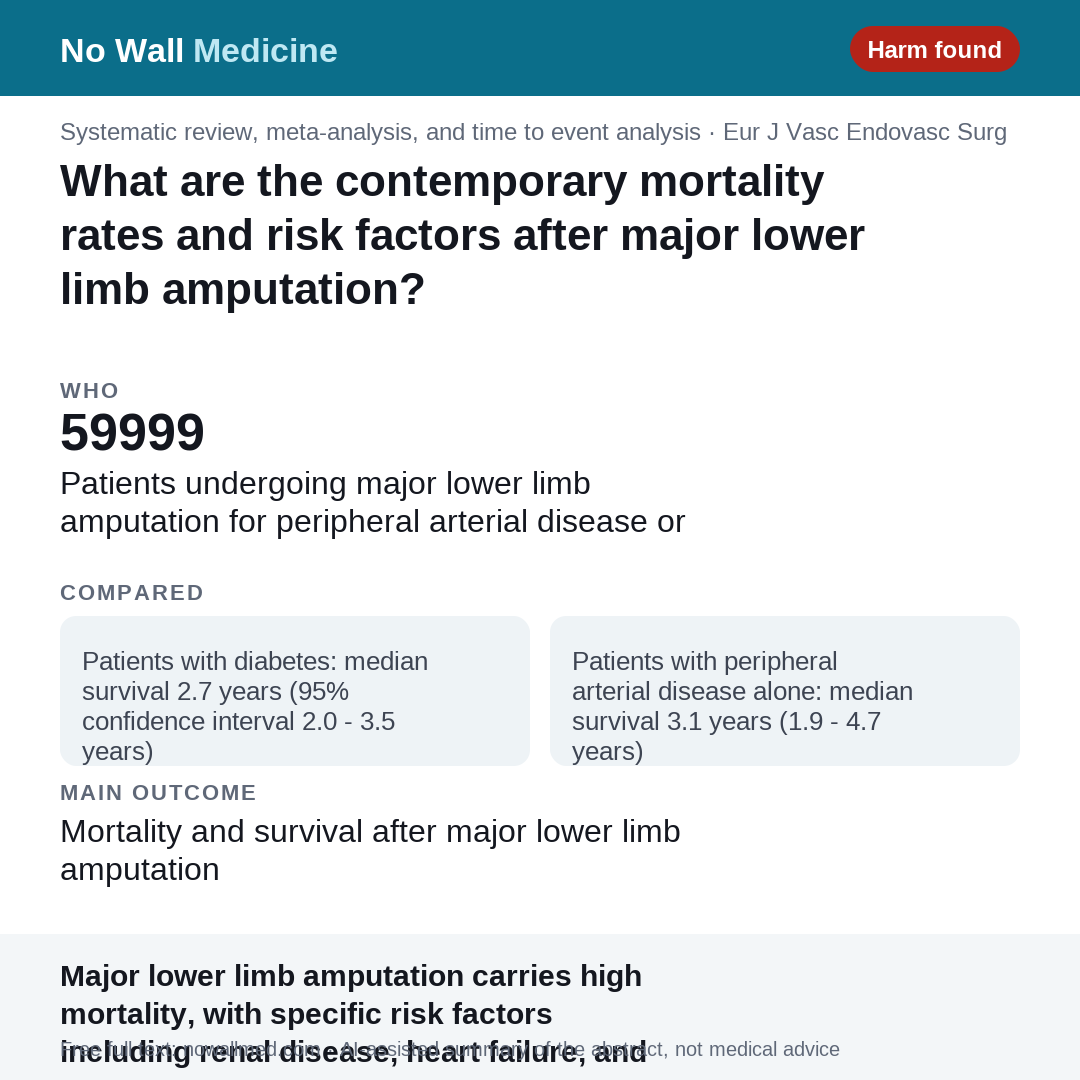
Editor's Choice - Systematic Review, Meta-analysis, and Time to Event Analysis of Contemporary Mortality after Major Lower Limb Amputation for Peripheral Arterial Disease or Diabetes Mellitus
Systematic review, meta-analysis, and time to event analysisHarm found
What are the contemporary mortality rates and risk factors after major lower limb amputation?
Who
59999
Patients undergoing major lower limb amputation for peripheral arterial disease or diabetes mellitus
Compared
Patients with diabetes: median survival 2.7 years (95% confidence interval 2.0 - 3.5 years)
Patients with peripheral arterial disease alone: median survival 3.1 years (1.9 - 4.7 years)
Main outcome
Mortality and survival after major lower limb amputation
Bottom line: Major lower limb amputation carries high mortality, with specific risk factors including renal disease, heart failure, and frailty.
Limitation: Subgroup analyses were of very low to moderate Grading of Recommendations Assessment, Development, and Evaluation certainty.
Eur J Vasc Endovasc Surg · 2025-12-01Download image
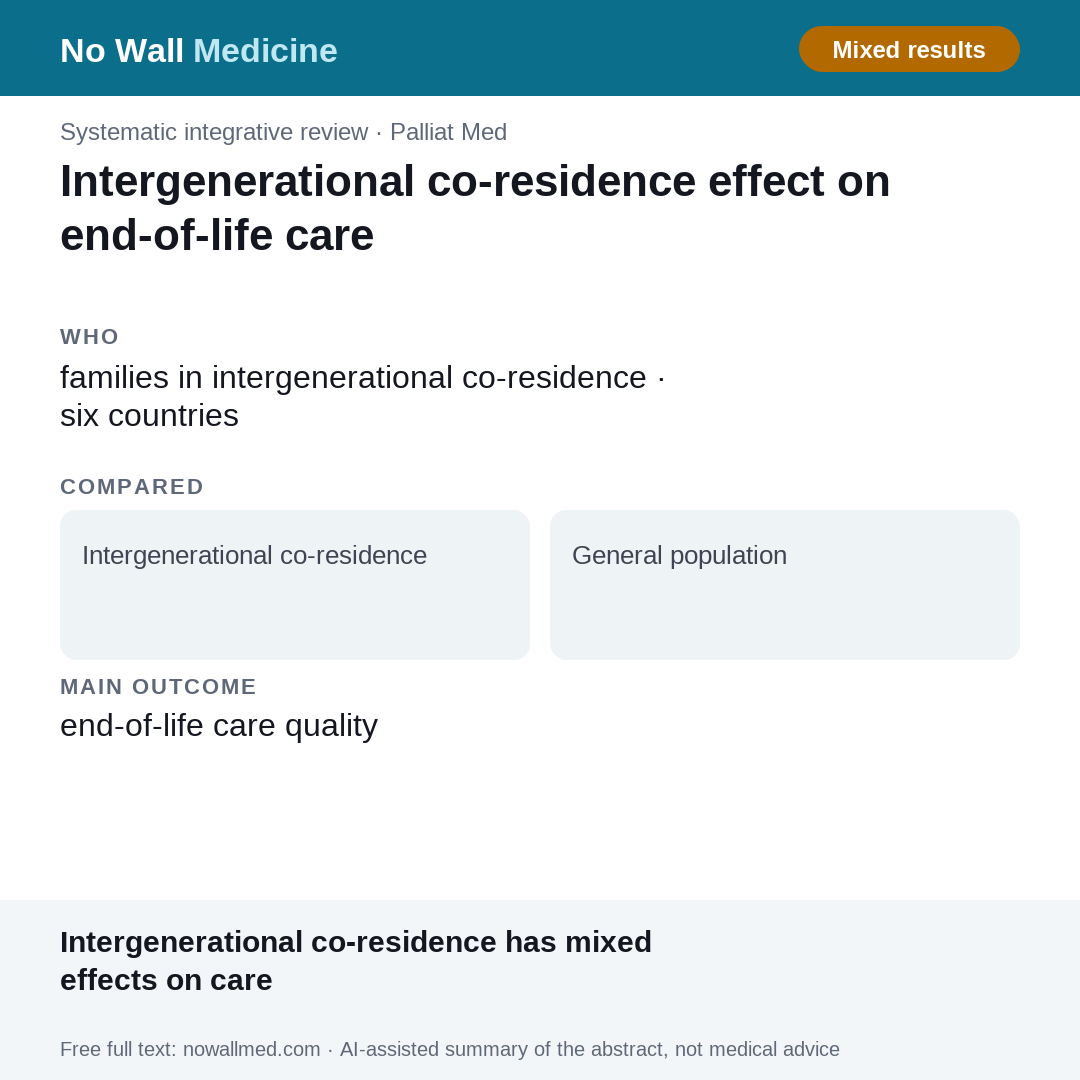
'Saying goodbye'. . . A systematic integrative review of palliative caregiving in intergenerational living contexts
Systematic integrative reviewMixed results
Intergenerational co-residence effect on end-of-life care
Who
families in intergenerational co-residence · six countries
Compared
Intergenerational co-residence
General population
Main outcome
end-of-life care quality
Bottom line: Intergenerational co-residence has mixed effects on care
Palliat Med · 2025-12-01Download image
Diagnostic digital phenotyping in schizophrenia-spectrum disorders: a systematic review
Systematic reviewBenefit found
What is the diagnostic and predictive utility of digital phenotyping in schizophrenia-spectrum disorders?
Who
6294
Individuals with schizophrenia-spectrum disorders and controls
Compared
Schizophrenia-spectrum disorders: Hedges' g ≈ 1.20 for cognitive performance
Controls
Main outcome
Diagnostic and predictive utility of digital phenotyping
Result: Hedges' g ≈ 1.20 for cognitive performance
Bottom line: Digital phenotyping shows potential for differentiating schizophrenia-spectrum disorders, especially through cognitive performance measures.
Limitation: High heterogeneity and lack of methodological standardization in relapse prediction models.
NPJ Digit Med · 2025-12-01Download image

Knowledge-Practice Performance Gap in Clinical Large Language Models: Systematic Review of 39 Benchmarks
Systematic reviewHarm found
What is the performance gap between knowledge-based and practice-based medical large language model benchmarks?
Who
39
39 medical large language model benchmarks
Compared
Knowledge-based benchmarks: 84%-90%
Practice-based benchmarks: 45%-69%
Main outcome
Performance accuracy across different evaluation paradigms
Bottom line: High knowledge-based examination scores do not translate to clinical competence, showing a significant performance gap in practice-based assessments.
Limitation: 26% of benchmarks had insufficient methodological reporting for complete evaluation.
J Med Internet Res · 2025-12-01Download image

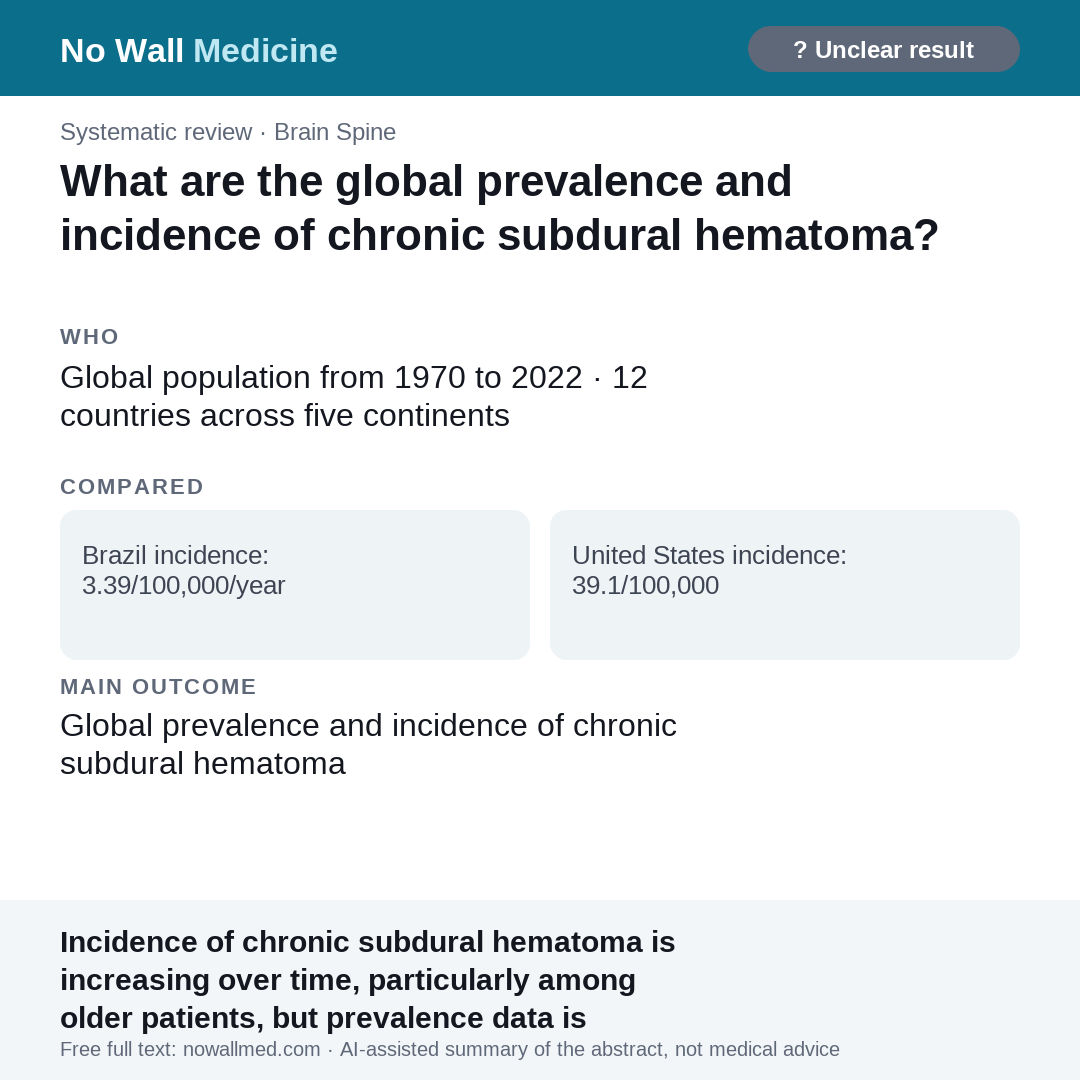
Global prevalence and incidence of chronic subdural hematoma: A systematic review
Systematic reviewUnclear result
What are the global prevalence and incidence of chronic subdural hematoma?
Who
Global population from 1970 to 2022 · 12 countries across five continents
Compared
Brazil incidence: 3.39/100,000/year
United States incidence: 39.1/100,000
Main outcome
Global prevalence and incidence of chronic subdural hematoma
Bottom line: Incidence of chronic subdural hematoma is increasing over time, particularly among older patients, but prevalence data is unavailable.
Limitation: Epidemiological data remain sparse with medium to low level of evidence and regional methodological differences.
Brain Spine · 2025-12-01Download image
Systematic Review: Efficacy, Safety and Metabolic Outcomes of GLP-1 Receptor Agonists in Inflammatory Bowel Disease
Systematic reviewBenefit found
What are the efficacy, safety, and metabolic outcomes of GLP-1 receptor agonists in inflammatory bowel disease?
Who
Adults with inflammatory bowel disease
Compared
GLP-1 receptor agonist users: significant reductions in body weight, BMI, or percent weight loss
GLP-1 receptor agonist users: not associated with increased inflammatory bowel disease exacerbations
Main outcome
weight-related, metabolic, inflammatory bowel disease-specific, and safety outcomes
Bottom line: Glucagon-like peptide-1 receptor agonists may improve weight, metabolic, and disease-related outcomes in inflammatory bowel disease patients.
Limitation: Most included studies were retrospective cohort studies and prospective studies are required.
Aliment Pharmacol Ther · 2025-11-30Download image

Nitrous oxide for the treatment of depression: a systematic review and meta-analysis
Systematic review and meta-analysisBenefit found
Is nitrous oxide effective for the treatment of depression?
Who
247
Participants with depressive disorders
Compared
50% nitrous oxide single session: MD -2.74 at 2 h
Comparator
Main outcome
Change in depressive symptoms
Result: MD -2.74 (95% CI -4.72 to -0.76) at 2 h
Bottom line: Nitrous oxide demonstrates rapid, reproducible antidepressant effects in early-phase trials, though long-term sustainability is unknown.
eBioMedicine · 2025-11-30Download image
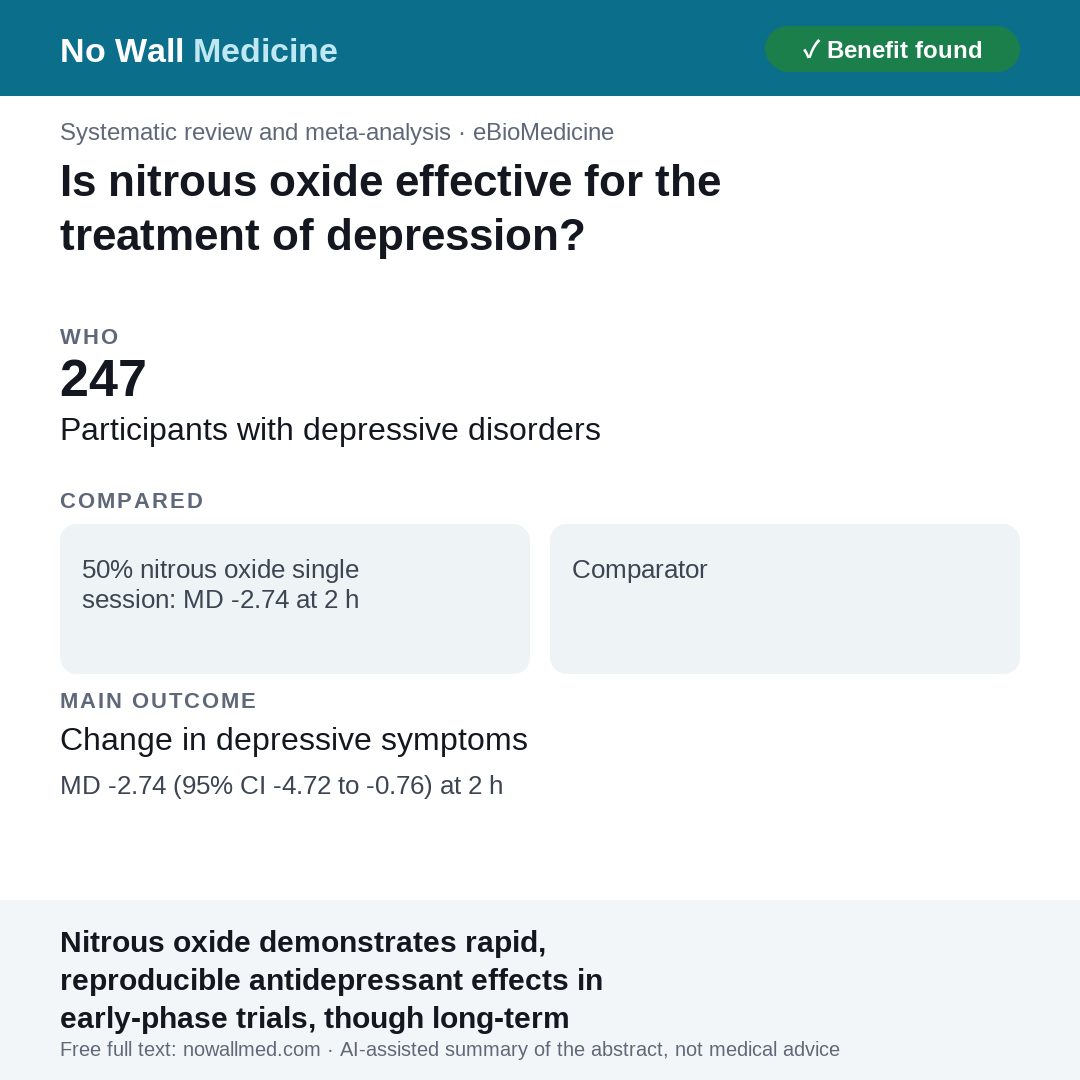
Effectiveness of strategies for implementing guideline-concordant care in low back pain: a systematic review and meta-analysis of randomised controlled trials
Systematic review and meta-analysis of randomized controlled trialsMixed results
Are implementation strategies effective for promoting guideline-concordant care in low back pain?
Who
34890
34,890 patients with low back pain
Compared
Implementation strategies
No implementation
Main outcome
Rate of patients receiving guideline-concordant care
Result: OR 1.21 (95% CI 1.05-1.40) for reducing analgesic use
Bottom line: Implementation strategies probably reduced analgesic use but had little to no effect on imaging or education/advice rates.
Limitation: Results for education/advice are unstable and may change with future research.
eClinicalMedicine · 2025-11-29Download image
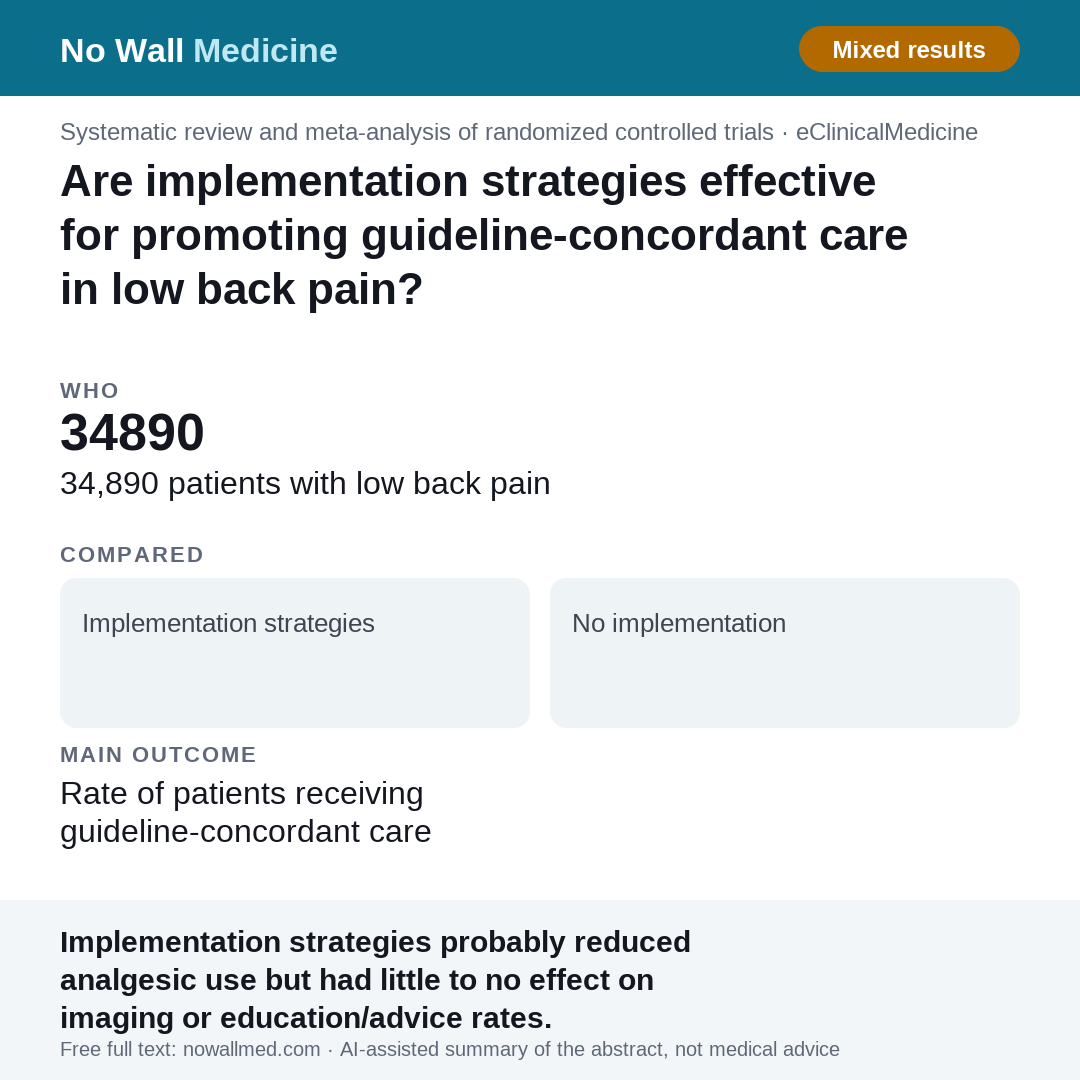
Predictive accuracy of surgeon gestalt for adverse postoperative outcomes: systematic review
Systematic reviewMixed results
How accurate is surgeon gestalt for predicting adverse postoperative outcomes?
Who
33657
Patients undergoing surgical procedures
Compared
Surgeon gestalt
Scoring tools
Main outcome
Predictive accuracy for mortality and morbidity
Bottom line: Surgeon gestalt predicts mortality well but often overestimates risk, while scoring tools generally outperform gestalt alone.
Br J Surg · 2025-11-29Download image

Factors associated with interstitial lung disease among patients with idiopathic inflammatory myopathies
Meta-analysis of transethnic associations and machine learningMixed results
What factors are associated with interstitial lung disease in idiopathic inflammatory myopathies?
Who
450
Adult and juvenile patients with idiopathic inflammatory myopathies · National Institutes of Health
Compared
Risk autoantibodies: increased odds of interstitial lung disease by up to 20-fold
Protective autoantibodies: decreased odds of interstitial lung disease by up to 40%
Main outcome
Predictors of interstitial lung disease
Bottom line: Autoantibodies are the strongest predictive or protective factors for interstitial lung disease in these patients.
Rheumatology · 2025-11-29Download image
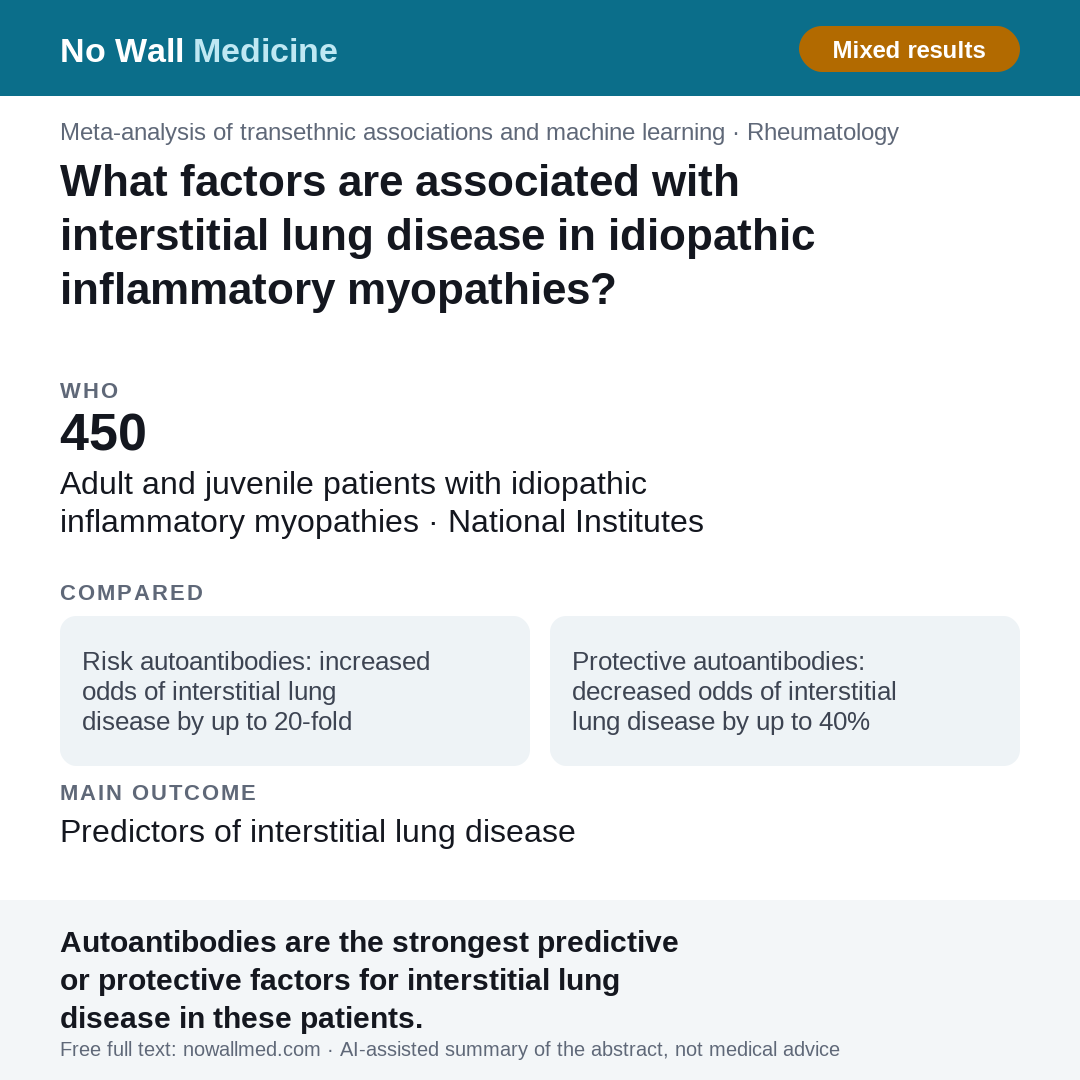
Outcomes after TIPS in patients with cirrhosis and sarcopenia: A systematic review and meta-analysis
Systematic review and meta-analysisMixed results
What are the outcomes of TIPS in patients with cirrhosis and sarcopenia?
Who
Adults with cirrhosis and sarcopenia
Compared
Patients with sarcopenia: 43% (95% CI 26-61%) overt hepatic encephalopathy
Patients without sarcopenia: 12% (95% CI 7-20%) overt hepatic encephalopathy
Main outcome
Overt hepatic encephalopathy and mortality after TIPS
Result: odds ratio 3.40 (95% CI 1.85-6.25)
Bottom line: TIPS may improve sarcopenia, but sarcopenia increases overt hepatic encephalopathy risk while mortality effects remain uncertain.
Limitation: Study heterogeneity and the retrospective nature of the included data.
JHEP Rep · 2025-11-29Download image

Valvular Heart Disease Interventional Trials From 2000 to 2024: A Systematic Review
Systematic reviewMixed results
What are the temporal trends in valvular heart disease interventional trial characteristics and demographics?
Who
87,412
Participants in valvular heart disease interventional trials · PubMed indexed trials
Compared
44.9%Overall female representation
58.9%Mitral trials female enrollment
59%Tricuspid trials female enrollment
Main outcome
Trial characteristics and demographic representation trends
Bottom line: Valvular heart disease trials increased in scale and age, but persistent sex disparities remain in many interventions.
JACC Adv · 2025-11-29Download image

Contemporary in vivo rodent electroconvulsive therapy (ECT) models in translational depression research: a systematic review
Systematic reviewBenefit found
What are the biobehavioral effects of electroconvulsive stimulation in chronic stress-based depression models?
Who
48
Mice and rats in chronic stress-based depression models
Compared
Electroconvulsive stimulation: antidepressive effects on anhedonia (14.5), locomotion (6.0), despair (4.5), and anxiety (2.0)
Control: memory impairments (0.1)
Main outcome
Anhedonia-related behaviors, locomotion, despair, anxiety, and memory
Bottom line: Electroconvulsive stimulation shows antidepressive effects on anhedonia, locomotion, despair, and anxiety, but may cause memory impairments.
Limitation: Considerable risk of bias due to unreported missing data and blinding.
Transl Psychiatry · 2025-11-29Download image
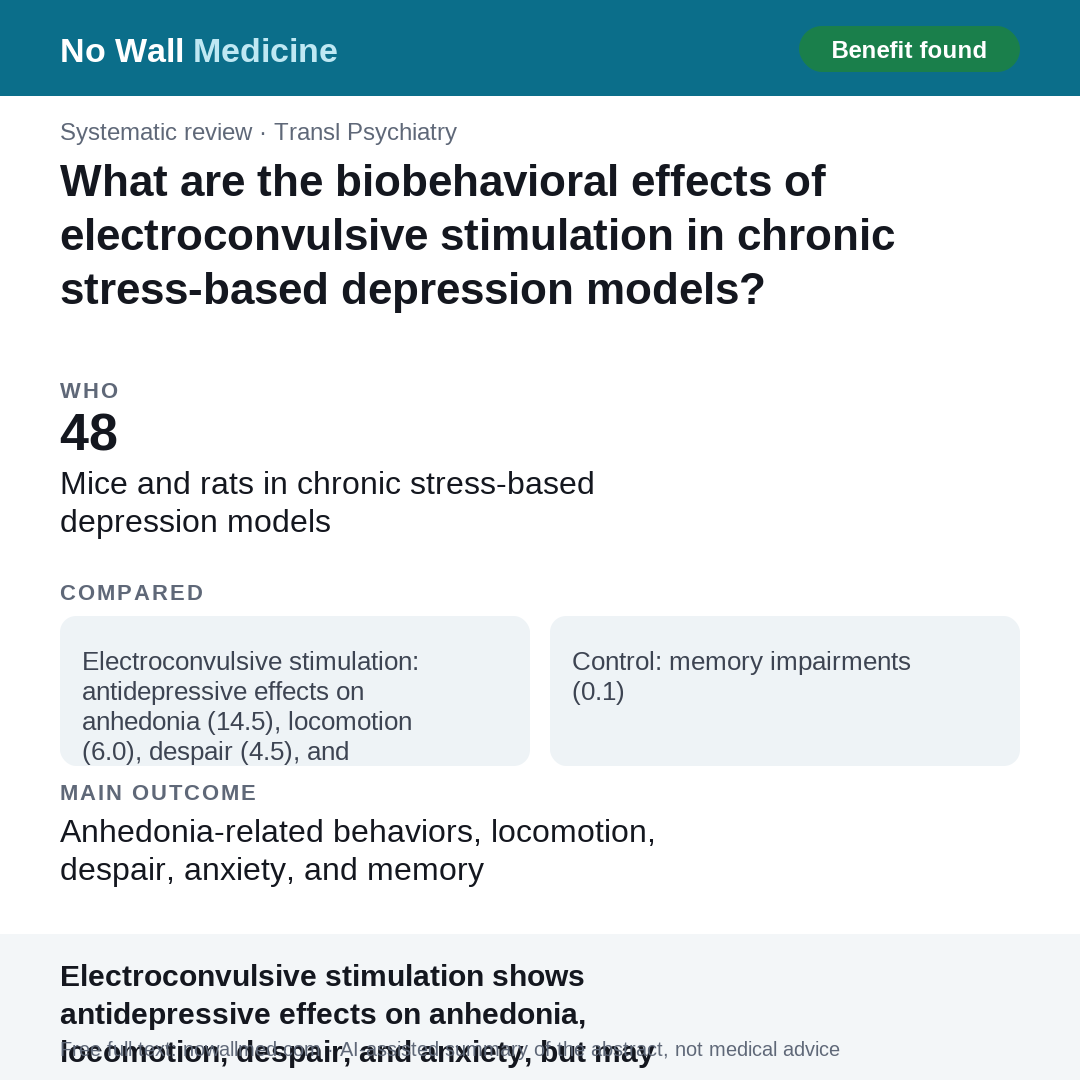
Colorectal polyp distribution in relation to age: meta-analysis
Meta-analysis of 12 studiesBenefit found
How is colorectal polyp distribution related to age?
Who
Patients with adenomatous, advanced adenomatous polyps, or sessile serrated lesions
Compared
Younger people (< 50 years): 75.9% had left-sided polyps
Older group: 61.9% had left-sided polyps
Main outcome
Distribution of polyps in the left and right colon
Result: mean difference 0.06 (95% c.i. 0.03 to 0.09)
Bottom line: Patients under 50 years have a greater tendency towards left-sided polyps compared to older individuals.
BJS Open · 2025-11-29Download image

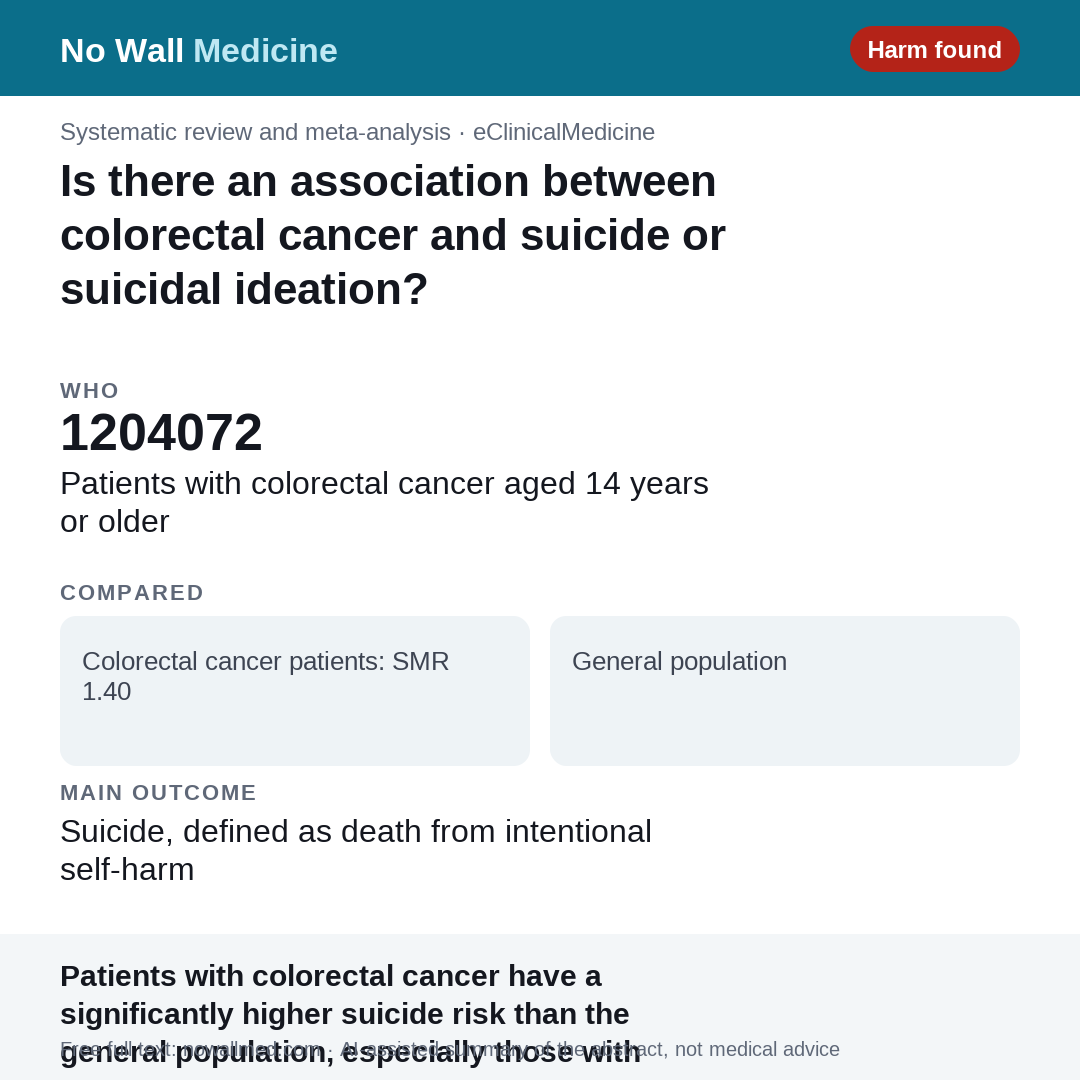
Suicide mortality and suicidal ideation among patients with colorectal cancer: a systematic review and meta-analysis
Systematic review and meta-analysisHarm found
Is there an association between colorectal cancer and suicide or suicidal ideation?
Who
1204072
Patients with colorectal cancer aged 14 years or older
Compared
Colorectal cancer patients: SMR 1.40
General population
Main outcome
Suicide, defined as death from intentional self-harm
Result: standardised mortality ratio 1.40 (95% CI 1.33-1.49)
Bottom line: Patients with colorectal cancer have a significantly higher suicide risk than the general population, especially those with metastatic disease.
Limitation: Evidence from low- and middle-income countries is scarce and younger populations might be underrepresented.
eClinicalMedicine · 2025-11-28Download image
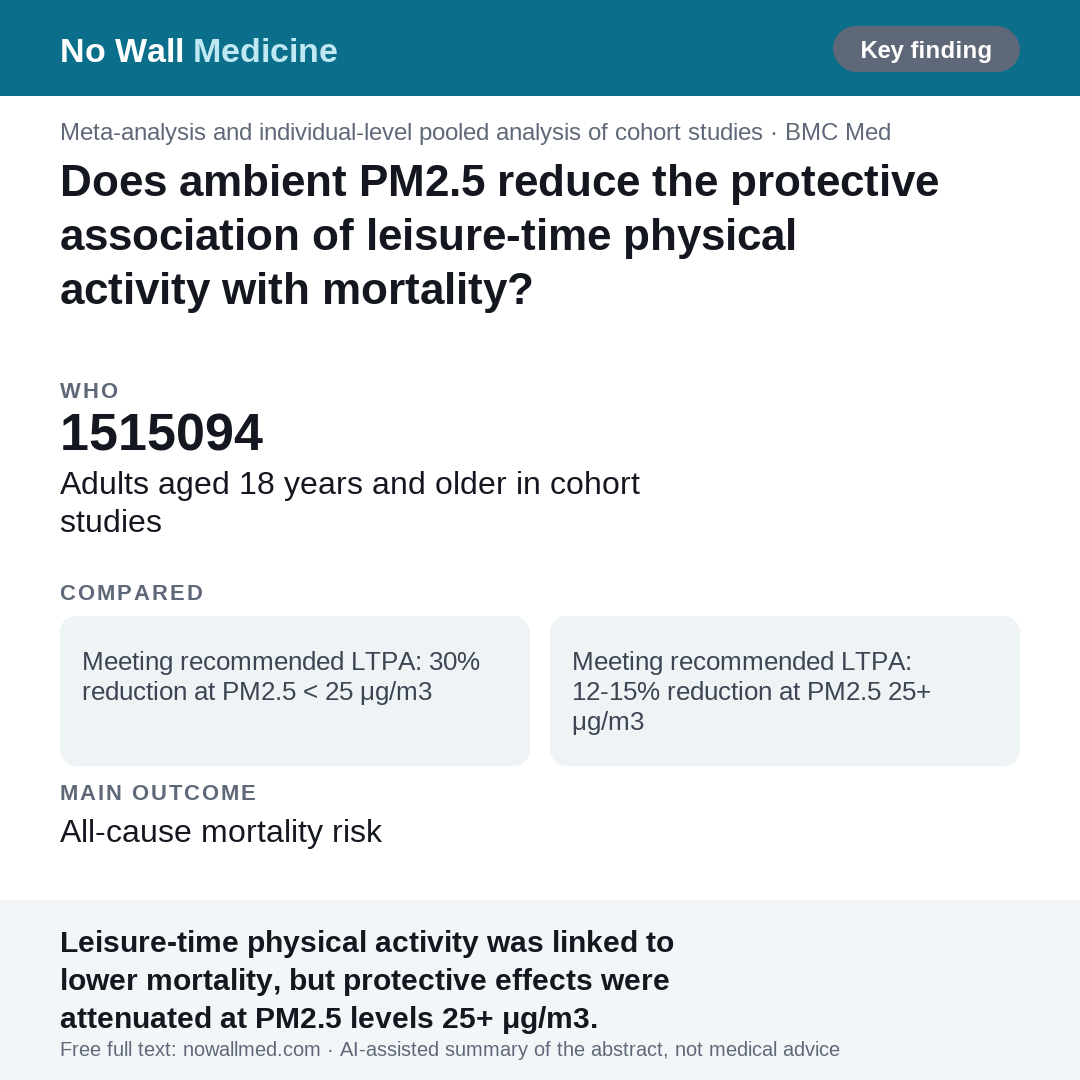
Does ambient PM2.5 reduce the protective association of leisure-time physical activity with mortality? A systematic review, meta-analysis, and individual-level pooled analysis of cohort studies involving 1.5 million adults
Systematic review, meta-analysis, and individual-level pooled analysisMixed results
Does fine particulate matter reduce the protective association of physical activity with mortality?
Who
1515094
Adults aged 18 years or older
Compared
Recommended physical activity at PM2.5 < 25 μg/m3: 30% reduction in all-cause mortality risk
Recommended physical activity at PM2.5 25+ μg/m3: 12-15% reduction in all-cause mortality risk
Main outcome
All-cause, cardiovascular, and cancer mortality
Bottom line: Physical activity reduces mortality risk, but these protective benefits are attenuated at fine particulate matter levels above 25 μg/m3.
BMC Med · 2025-11-28Download image
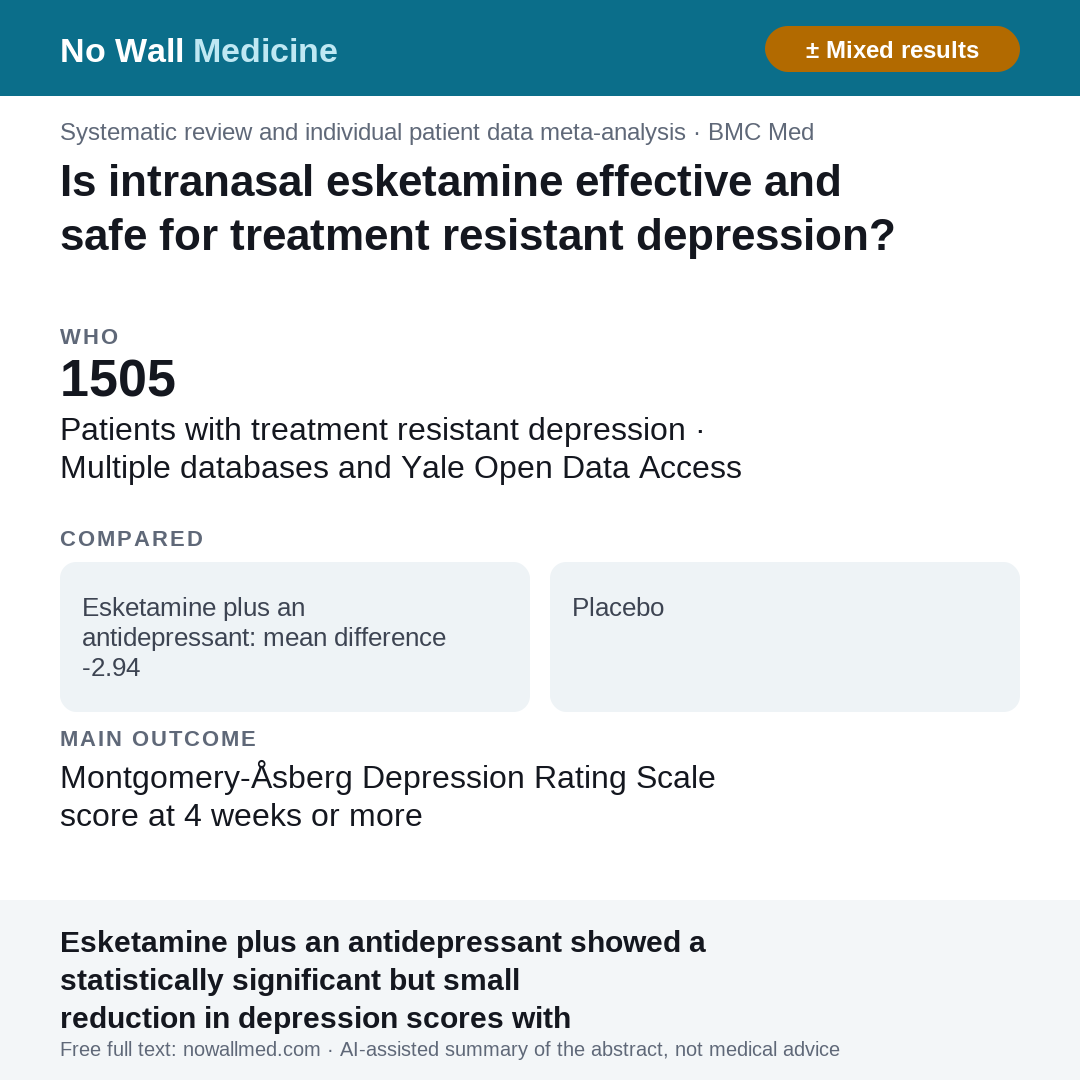
Efficacy and safety of esketamine for "treatment resistant depression": registered report for a systematic review with an individual patient data meta-analysis of randomized, double-blind, placebo-controlled trials
Systematic review and individual patient data meta-analysisMixed results
Is intranasal esketamine effective and safe for treatment resistant depression?
Who
1505
Patients with treatment resistant depression · Multiple databases and Yale Open Data Access Project
Compared
Esketamine plus an antidepressant: mean difference -2.94
Placebo
Main outcome
Montgomery-Åsberg Depression Rating Scale score at 4 weeks or more
Result: mean difference -2.94 (95% CI -5.39 to -0.48)
Bottom line: Esketamine plus an antidepressant showed a statistically significant but small reduction in depression scores with increased adverse events.
Limitation: FDA concerns about one centre could not be addressed due to data privacy restrictions.
BMC Med · 2025-11-28Download image
Neurocognitive outcomes in patients with brain metastases: a systematic review
Systematic review of clinical trialsMixed results
What are the neurocognitive outcomes in patients with brain metastases receiving radiotherapy with or without systemic therapies?
Who
6617
Patients with brain metastases
Compared
Advanced radiotherapy techniques: reduced cognitive decline and improved quality of life
Whole-brain radiotherapy
Combined-modality therapy: no signal for increased toxicity
Main outcome
Neurocognitive outcomes
Bottom line: Advanced radiotherapy techniques reduce cognitive decline, but more research is needed on combined-modality therapy toxicity.
Limitation: Evaluable trials for combined-modality therapy were few in number.
Lancet Oncol · 2025-11-28Download image

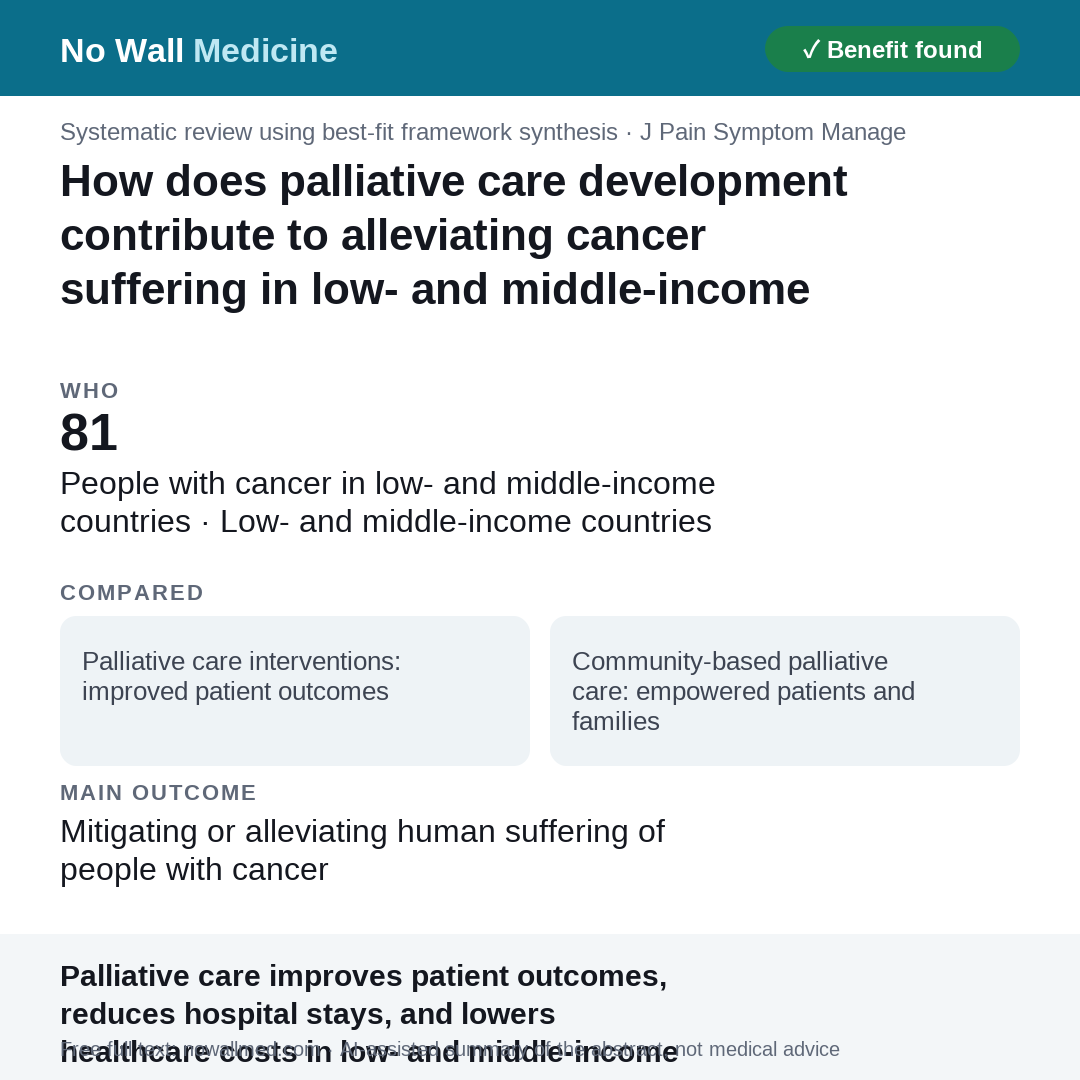
Palliative Care in Low and Middle-Income Countries to Reduce Cancer Suffering: A Systematic Review
Systematic review using best-fit framework synthesisBenefit found
How does palliative care development contribute to alleviating cancer suffering in low- and middle-income countries?
Who
81
People with cancer in low- and middle-income countries · Low- and middle-income countries
Compared
Palliative care interventions: improved patient outcomes
Community-based palliative care: empowered patients and families
Main outcome
Mitigating or alleviating human suffering of people with cancer
Bottom line: Palliative care improves patient outcomes, reduces hospital stays, and lowers healthcare costs in low- and middle-income countries.
Limitation: Evidence linking development to international indicators of palliative care progress is insufficient.
Funded by: End-of-Life Care in India Task Force
J Pain Symptom Manage · 2025-11-28Download image
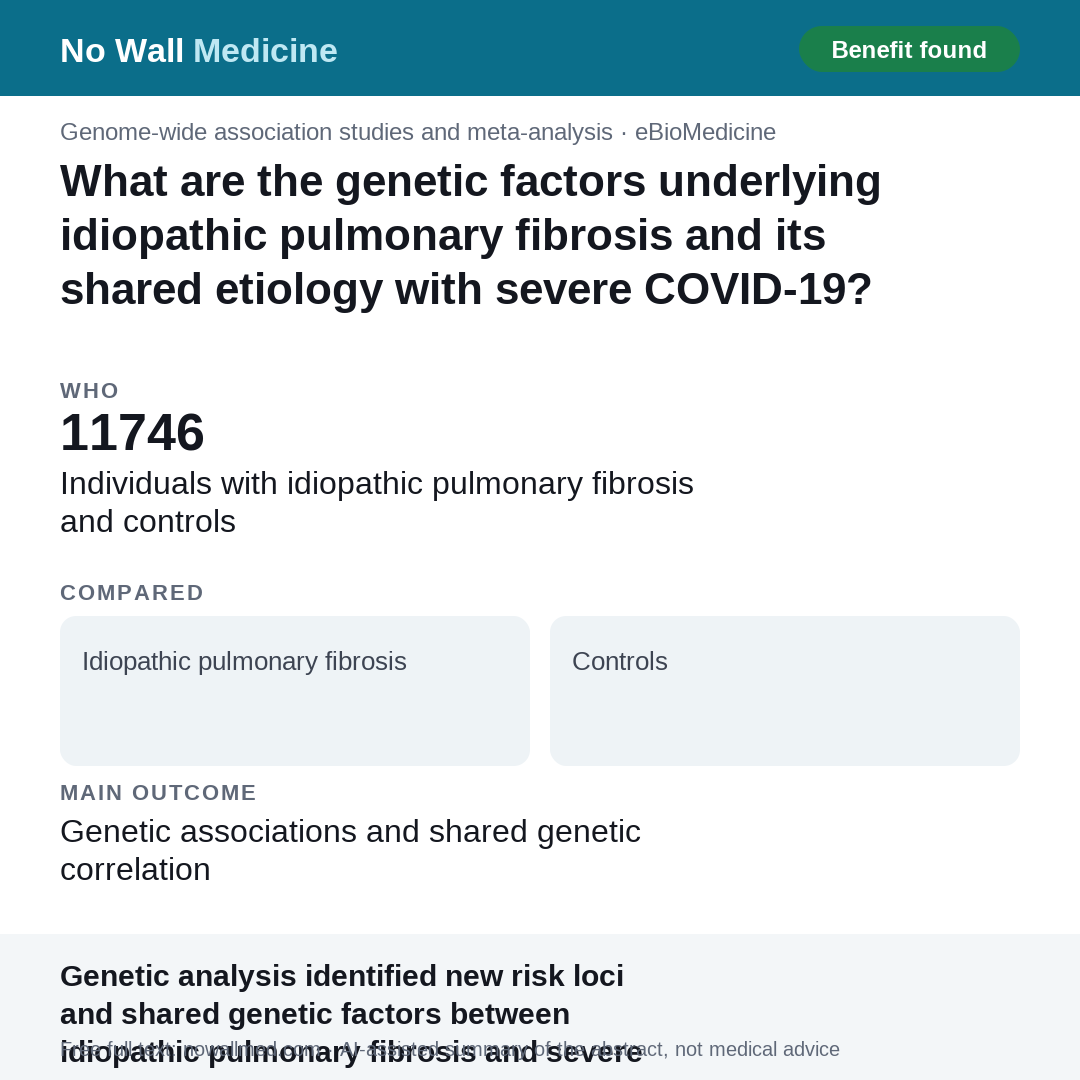
Common and rare variant analyses reveal genetic factors underlying idiopathic pulmonary fibrosis and its shared aetiology with severe COVID-19
Genome-wide association studies and meta-analysisBenefit found
What are the genetic factors underlying idiopathic pulmonary fibrosis and its shared etiology with severe COVID-19?
Who
11746
Individuals with idiopathic pulmonary fibrosis and controls
Compared
Idiopathic pulmonary fibrosis
Controls
Main outcome
Genetic associations and shared genetic correlation
Result: genetic correlation rg [95% CI] = 0.39 [0.25, 0.53]
Bottom line: Genetic analysis identified new risk loci and shared genetic factors between idiopathic pulmonary fibrosis and severe COVID-19.
eBioMedicine · 2025-11-28Download image