Visual abstracts
New randomized trials and meta-analyses from leading journals at a glance: who was studied, what was compared, and what was found. Every paper is free to read in full.
All specialtiesCardiology 4763Oncology 4043Gastroenterology & Hepatology 1903Infectious Disease 3756Neurology 1872Psychiatry & Mental Health 2216Pulmonology 2044Critical Care 1319Endocrinology & Diabetes 2544Pediatrics 2889Surgery 2480Orthopedics & Sports Medicine 917Neurosurgery 525Cardiothoracic & Vascular Surgery 656Plastic & Reconstructive Surgery 574Nephrology 1107Rheumatology 810Hematology 1090Dermatology 611Ophthalmology 532Obstetrics & Gynecology 1645Public & Global Health 1037Radiology & Imaging 619Anesthesiology 958Urology 745ENT (Otolaryngology) 494Emergency Medicine 481Allergy & Immunology 309Geriatrics 972Family Medicine & Primary Care 534Medical Genetics & Genomics 659Pathology & Laboratory Medicine 156Physical Medicine & Rehabilitation 734Palliative Care 421Nutrition 1560Digital Health & AI 2137General Medicine 318
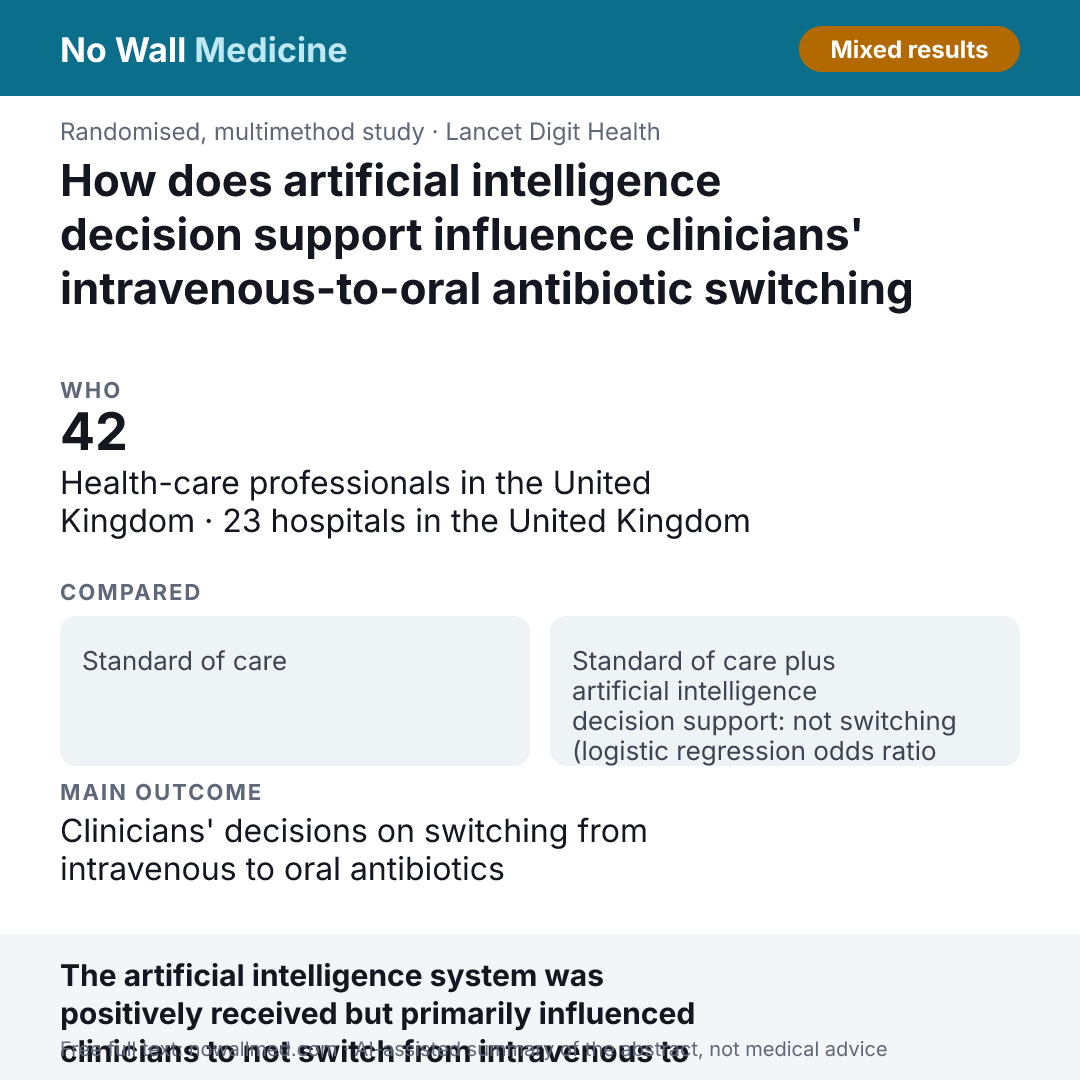
The impact of artificial intelligence-driven decision support on uncertain antimicrobial prescribing: a randomised, multimethod study
Randomised, multimethod studyMixed results
How does artificial intelligence decision support influence clinicians' intravenous-to-oral antibiotic switching decisions?
Who
42
Health-care professionals in the United Kingdom · 23 hospitals in the United Kingdom
Compared
Standard of care
Standard of care plus artificial intelligence decision support: not switching (logistic regression odds ratio 0·13 [95% CI 0·03-0·50])
Main outcome
Clinicians' decisions on switching from intravenous to oral antibiotics
Result: odds ratio 0·13 (95% CI 0·03-0·50)
Bottom line: The artificial intelligence system was positively received but primarily influenced clinicians to not switch from intravenous to oral antibiotics.
Limitation: Further prospective research is needed to gather safety and benefit data.
Funded by: UK Research and Innovation; National Institute for Health and Care Research
Lancet Digit Health · 2025-12-09 · Save PNG
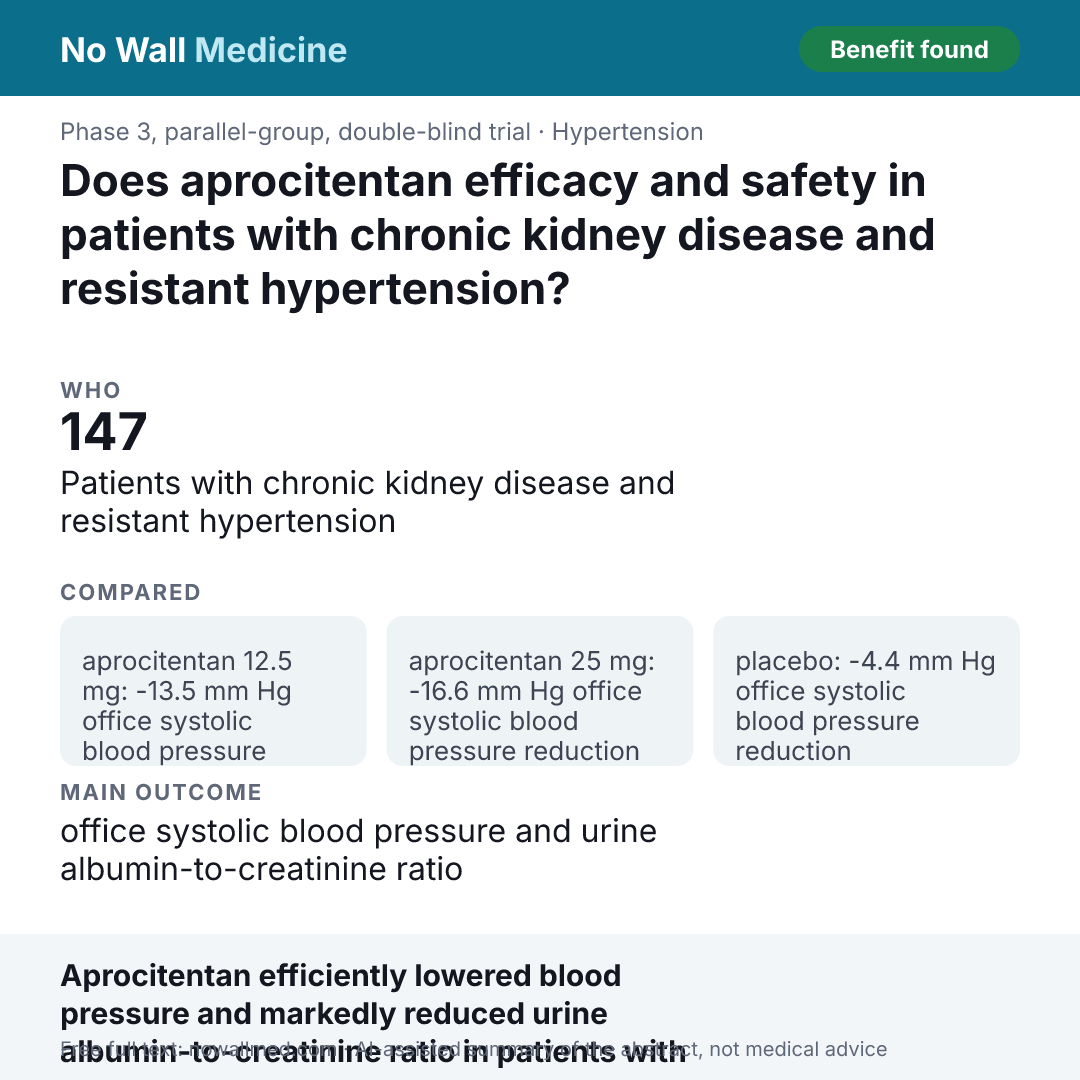
Aprocitentan in Patients With Chronic Kidney Disease and Resistant Hypertension
Phase 3, parallel-group, double-blind trialBenefit found
Does aprocitentan efficacy and safety in patients with chronic kidney disease and resistant hypertension?
Who
147
Patients with chronic kidney disease and resistant hypertension
Compared
aprocitentan 12.5 mg: -13.5 mm Hg office systolic blood pressure reduction
aprocitentan 25 mg: -16.6 mm Hg office systolic blood pressure reduction
placebo: -4.4 mm Hg office systolic blood pressure reduction
Main outcome
office systolic blood pressure and urine albumin-to-creatinine ratio
Bottom line: Aprocitentan efficiently lowered blood pressure and markedly reduced urine albumin-to-creatinine ratio in patients with chronic kidney disease.
Limitation: This was a post hoc analysis of the PRECISION study.
Hypertension · 2025-12-09 · Save PNG
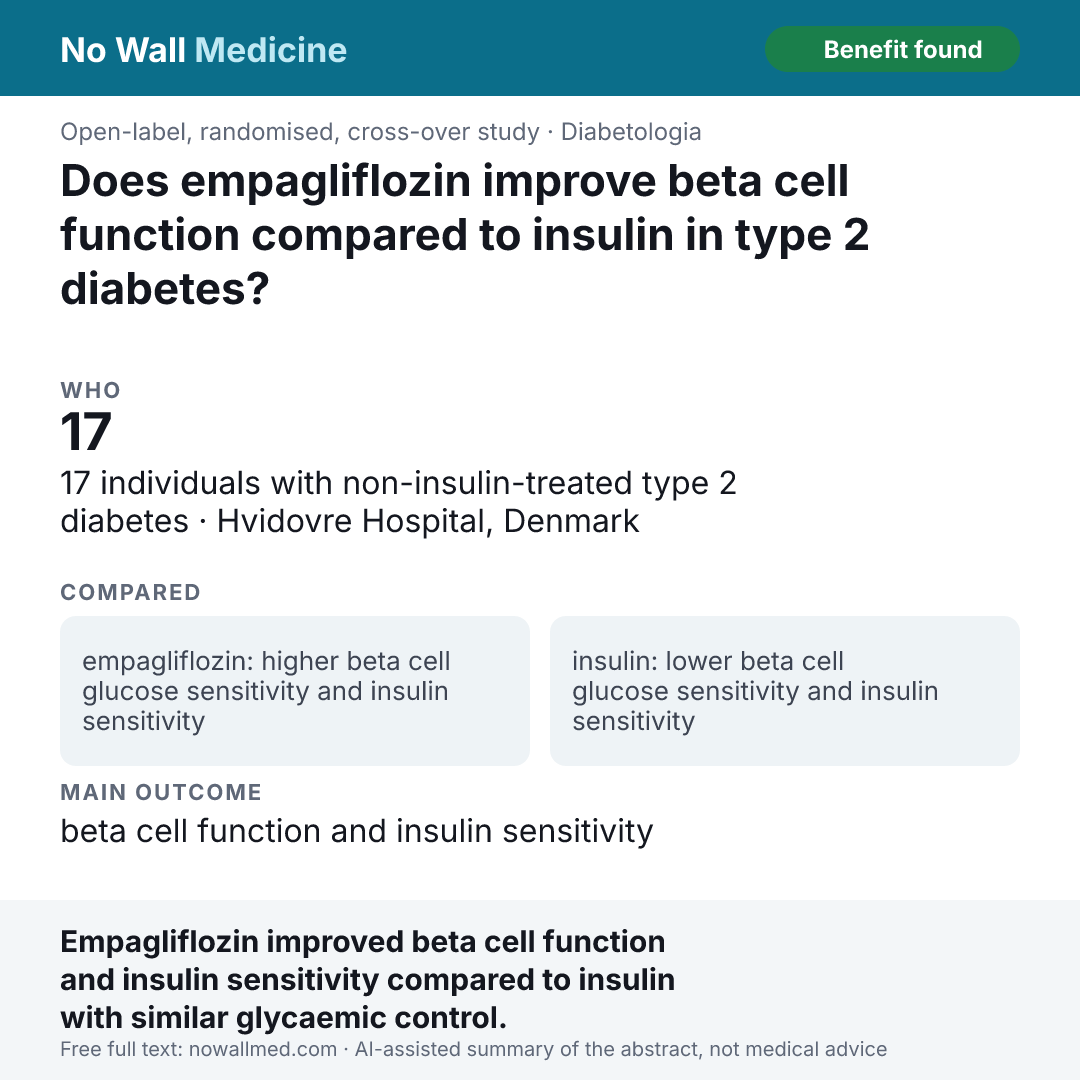
Empagliflozin improves beta cell function independently of relief of glucotoxicity in patients with type 2 diabetes: results from a randomised cross-over study with insulin as comparator
Open-label, randomised, cross-over studyBenefit found
Does empagliflozin improve beta cell function compared to insulin in type 2 diabetes?
Who
17
17 individuals with non-insulin-treated type 2 diabetes · Hvidovre Hospital, Denmark
Compared
empagliflozin: higher beta cell glucose sensitivity and insulin sensitivity
insulin: lower beta cell glucose sensitivity and insulin sensitivity
Main outcome
beta cell function and insulin sensitivity
Bottom line: Empagliflozin improved beta cell function and insulin sensitivity compared to insulin with similar glycaemic control.
Funded by: Boehringer Ingelheim and Grosserer L.F. Foghts Fond
Diabetologia · 2025-12-09 · Save PNG
Intravenous Tranexamic Acid Reduces Perioperative Blood Loss in Reduction Mammoplasty With Immediate Implant-Based Reconstruction: A Randomized, Triple-Blinded, Placebo-Controlled Trial
Randomized, triple-blinded, placebo-controlled trialBenefit found
Does intravenous tranexamic acid reduce perioperative blood loss in reduction mammoplasty with immediate reconstruction?
Who
60
60 women undergoing bilateral reduction mammoplasty with immediate implant-based reconstruction
Compared
Tranexamic acid: 221.1 ± 72.4 mL
Placebo: 298.1 ± 90.6 mL
Main outcome
total blood loss within 24 hours
Result: mean difference -77.0 mL (95% CI, -122.4 to -31.6)
Bottom line: A single pre-incision dose of intravenous tranexamic acid safely reduces perioperative bleeding and fibrinolytic activity.
Aesthet Surg J · 2025-12-09 · Save PNG
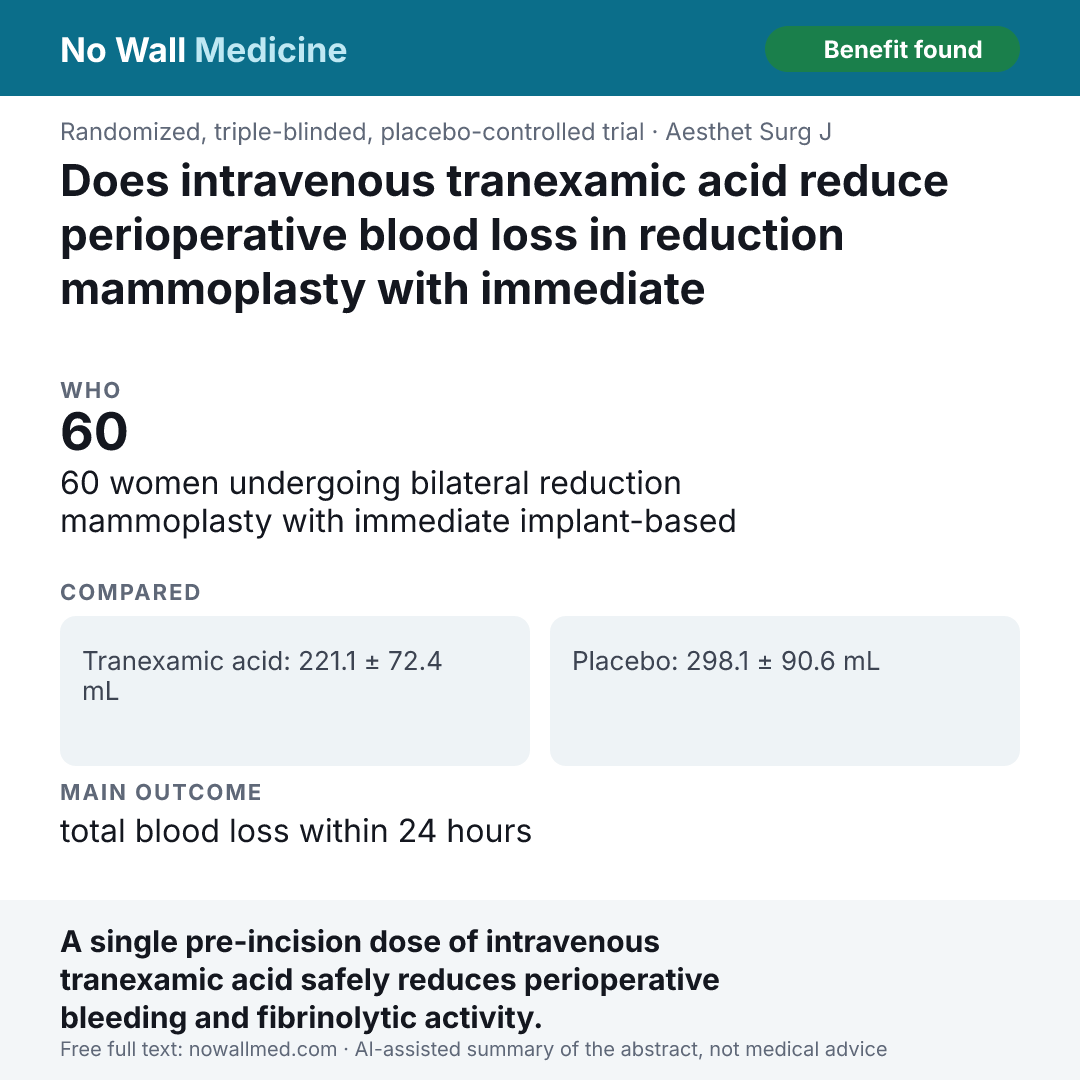
Adding Acupuncture to Touch/Relaxation for Pain in Wartime: A Randomized Controlled Trial
Randomized, controlled, pragmatic studyNo clear difference
Does adding acupuncture to relaxation improve pain and autonomic response in cancer patients?
Who
125
Patients with cancer living in war zones · Northern Israel
Compared
Manual-relaxation with acupuncture: decreased LN Power Total (P = 0.006)
Manual-relaxation without acupuncture: greater improvement on ESAS pain (P = 0.039)
Main outcome
Pain scores and autonomic response
Bottom line: Integrative oncology treatments reduced pain, but adding acupuncture provided no additive effect for pain relief.
J Pain Symptom Manage · 2025-12-09 · Save PNG
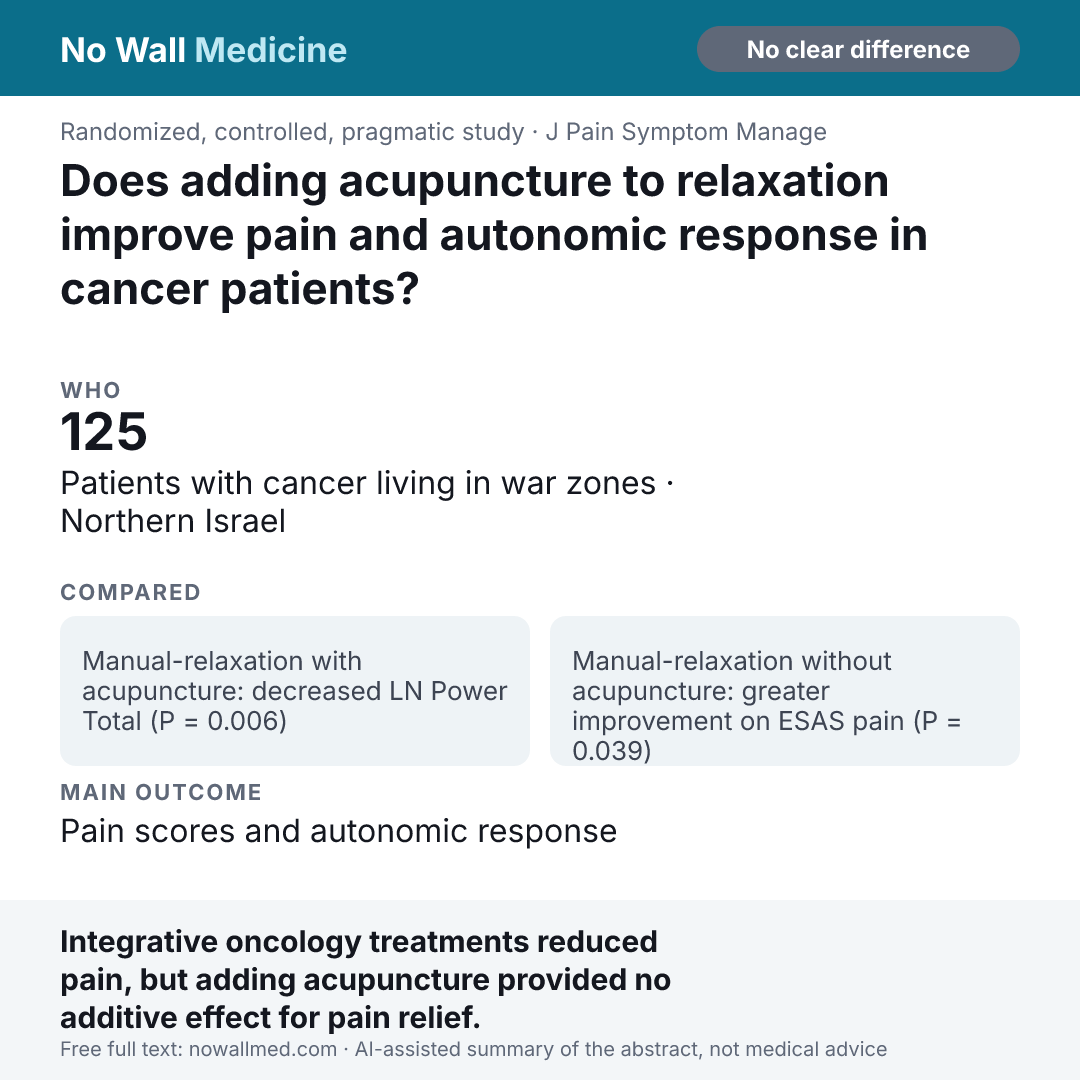
Evaluating the efficacy of the WHO QualityRights e-training in promoting the rights of persons with mental health conditions and psychosocial disabilities: a cluster randomised controlled trial in Ghana
Cluster randomised controlled trialBenefit found
Does WHO QualityRights e-training improve rights knowledge and attitudes of mental health professionals?
Who
252
Mental health professionals in psychiatric hospitals · Three psychiatric hospitals in Ghana
Compared
WHO QualityRights e-training: mean difference: 4.61 [95% CI 3.49 to 5.72] for knowledge
COVID-19 e-training
Main outcome
Knowledge and attitudes regarding rights of persons with mental health conditions
Result: mean difference 4.61 (95% CI 3.49 to 5.72) for knowledge
Bottom line: WHO QualityRights e-training effectively improves mental health professionals' knowledge, attitudes, and reduces use of coercion and substitute decision-making.
BMJ Glob Health · 2025-12-09 · Save PNG
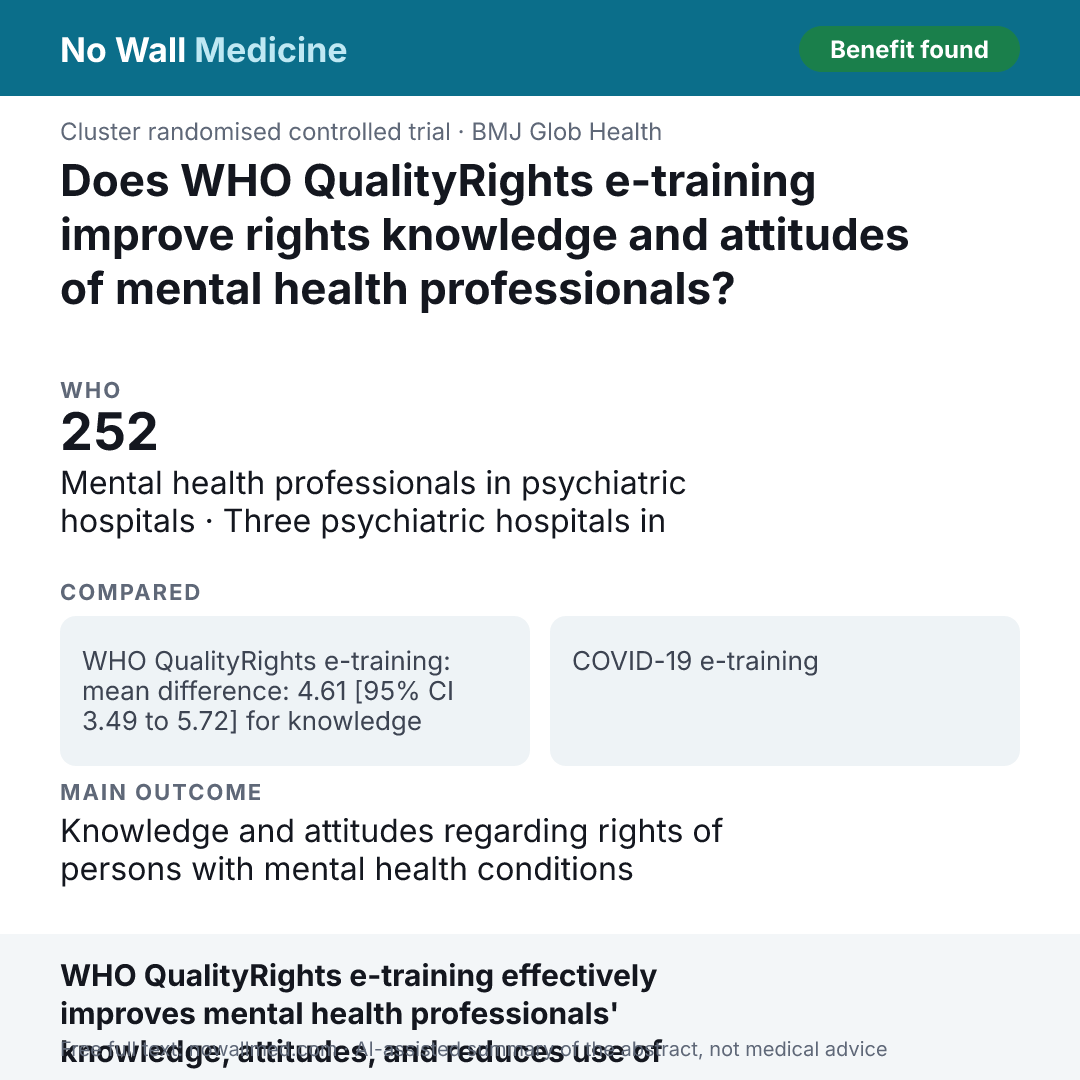
Precision Immunotherapy to Improve Sepsis Outcomes: The ImmunoSep Randomized Clinical Trial
Randomized, double-blind, placebo-controlled clinical trialBenefit found
Does precision immunotherapy improve organ dysfunction by day 9 in sepsis patients?
Who
276
Patients with sepsis and macrophage activation-like syndrome or sepsis-induced immunoparalysis · 6 countries
Compared
35.1%precision immunotherapy (46/131)
17.9%placebo (26/145)
Main outcome
decrease of at least 1.4 points in mean Sequential Organ Failure Assessment score
Result: difference, 17.2% (95% CI, 6.8% to 27.2%)
Bottom line: Precision immunotherapy improved organ dysfunction by day 9 compared to placebo in patients with sepsis.
JAMA · 2025-12-08 · Save PNG
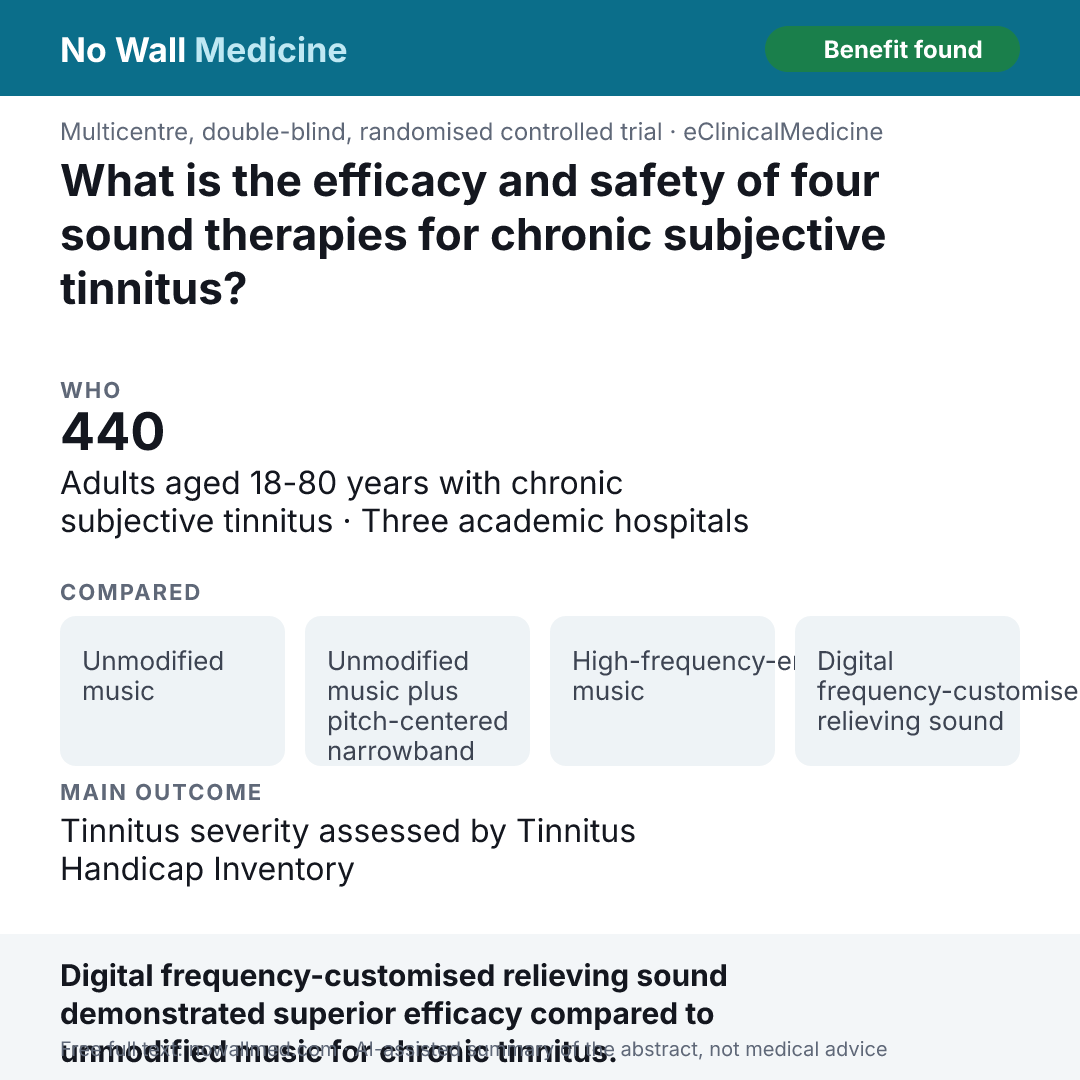
Efficacy and safety of a modified sound therapy for patients with subjective tinnitus (MOST): a multicentre, double-blind, randomised controlled trial
Multicentre, double-blind, randomised controlled trialBenefit found
What is the efficacy and safety of four sound therapies for chronic subjective tinnitus?
Who
440
Adults aged 18-80 years with chronic subjective tinnitus · Three academic hospitals in China
Compared
Unmodified music
Unmodified music plus pitch-centered narrowband noise
High-frequency-enhanced music
Digital frequency-customised relieving sound
Main outcome
Tinnitus severity assessed by Tinnitus Handicap Inventory
Result: parameter estimate -4·37, 95% CI -6·25 to -2·48
Bottom line: Digital frequency-customised relieving sound demonstrated superior efficacy compared to unmodified music for chronic tinnitus.
Limitation: Absence of a blank control arm and objective adherence monitoring.
eClinicalMedicine · 2025-12-08 · Save PNG
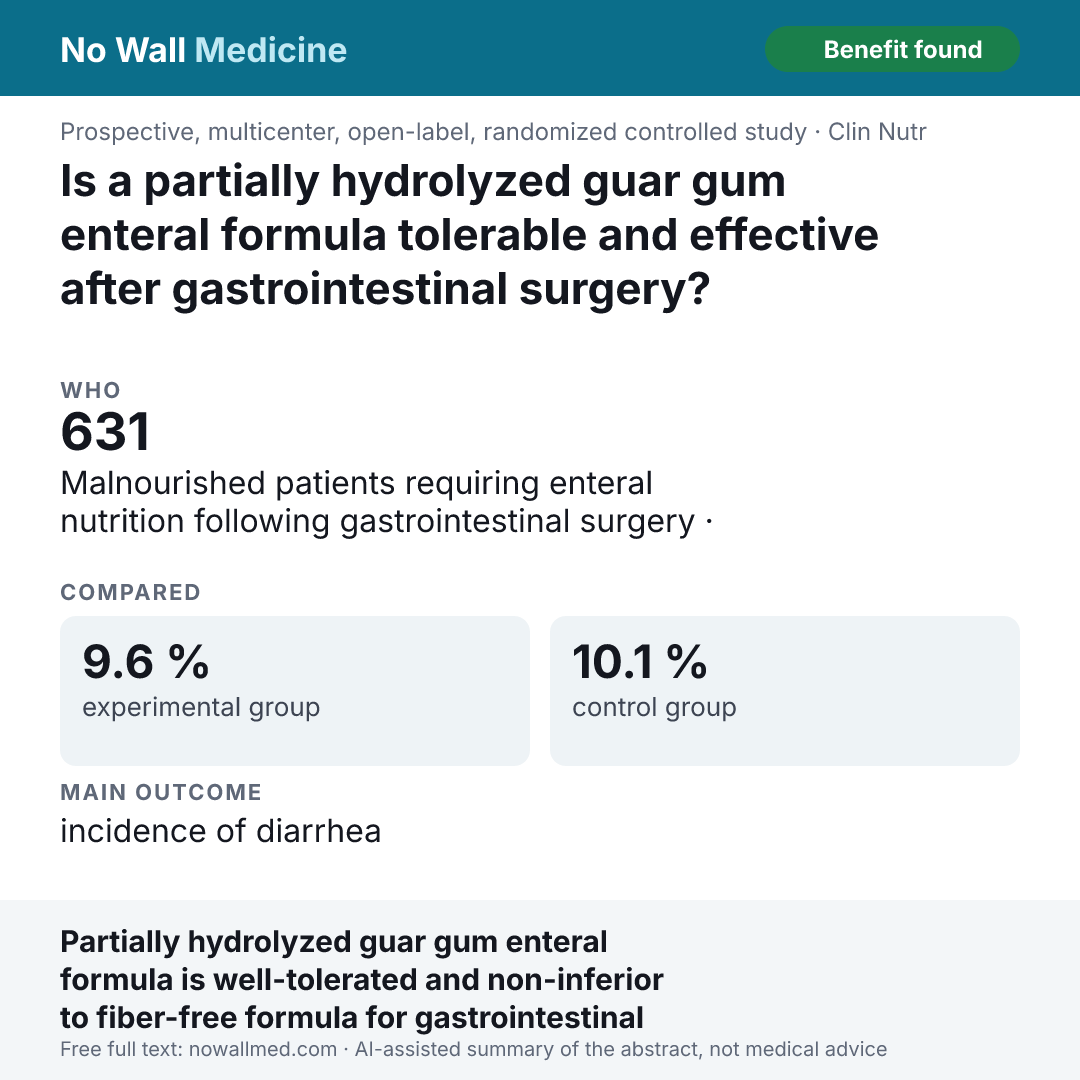
Tolerability and efficacy of an enteral formula containing partially hydrolyzed guar gum in patients following gastrointestinal surgery: A prospective, multicenter, open-label, randomized controlled study
Prospective, multicenter, open-label, randomized controlled studyBenefit found
Is a partially hydrolyzed guar gum enteral formula tolerable and effective after gastrointestinal surgery?
Who
631
Malnourished patients requiring enteral nutrition following gastrointestinal surgery · China
Compared
9.6 %experimental group (95 % confidence interval [CI]: 6.3 to 12.8)
10.1 %control group (95 % CI: 6.8 to 13.4)
Main outcome
incidence of diarrhea
Result: absolute difference of -0.5 (95 % CI: -5.1 to 4.2)
Bottom line: Partially hydrolyzed guar gum enteral formula is well-tolerated and non-inferior to fiber-free formula for gastrointestinal surgery patients.
Clin Nutr · 2025-12-08 · Save PNG
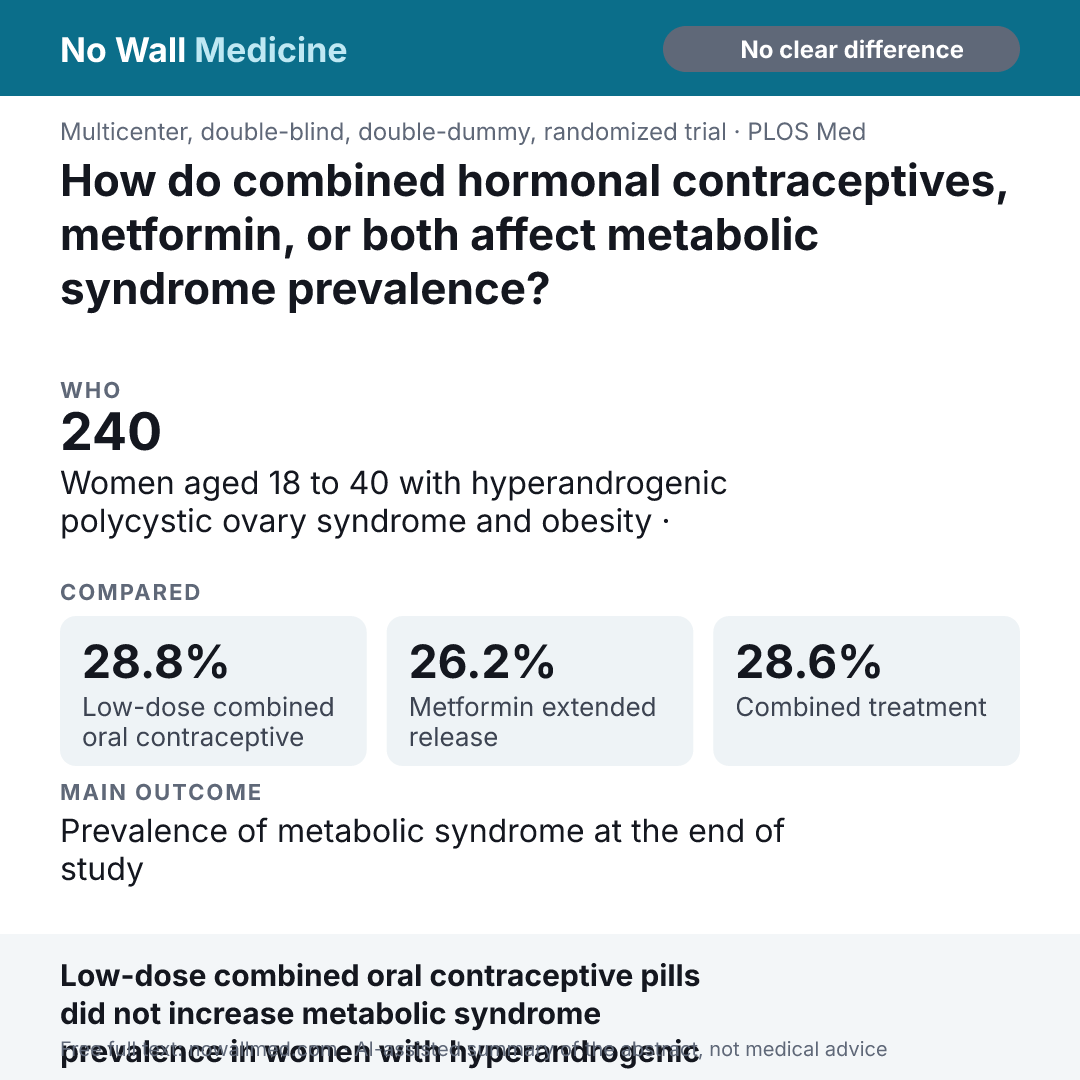
Impact of combined hormonal contraceptives and metformin on metabolic syndrome in women with hyperandrogenic polycystic ovary syndrome and obesity: The COMET-PCOS randomized clinical trial
Multicenter, double-blind, double-dummy, randomized trialNo clear difference
How do combined hormonal contraceptives, metformin, or both affect metabolic syndrome prevalence?
Who
240
Women aged 18 to 40 with hyperandrogenic polycystic ovary syndrome and obesity · Multicenter
Compared
28.8%Low-dose combined oral contraceptive pills (17/59)
26.2%Metformin extended release (17/65)
28.6%Combined treatment (17/59)
Main outcome
Prevalence of metabolic syndrome at the end of study
Result: adjusted p = 0.26
Bottom line: Low-dose combined oral contraceptive pills did not increase metabolic syndrome prevalence in women with hyperandrogenic polycystic ovary syndrome and obesity.
Limitation: Potential lack of power to detect differences in secondary outcomes.
PLOS Med · 2025-12-08 · Save PNG
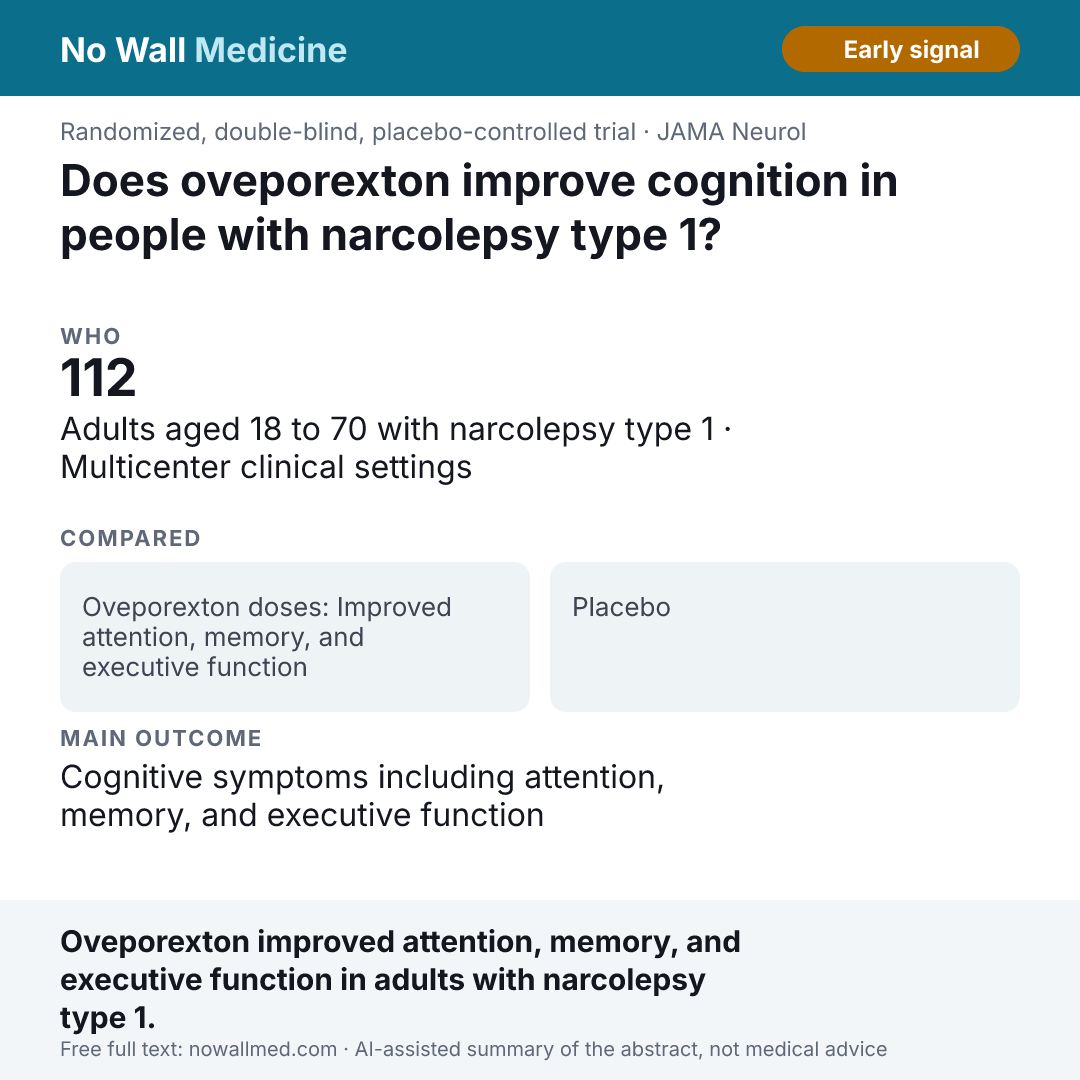
Effects of Oveporexton, an Orexin Receptor 2-Selective Agonist, on Cognition in Narcolepsy Type 1: A Secondary Analysis of a Randomized Clinical Trial
Randomized, double-blind, placebo-controlled trialEarly signal
Does oveporexton improve cognition in people with narcolepsy type 1?
Who
112
Adults aged 18 to 70 with narcolepsy type 1 · Multicenter clinical settings
Compared
Oveporexton doses: Improved attention, memory, and executive function
Placebo
Main outcome
Cognitive symptoms including attention, memory, and executive function
Bottom line: Oveporexton improved attention, memory, and executive function in adults with narcolepsy type 1.
JAMA Neurol · 2025-12-08 · Save PNG
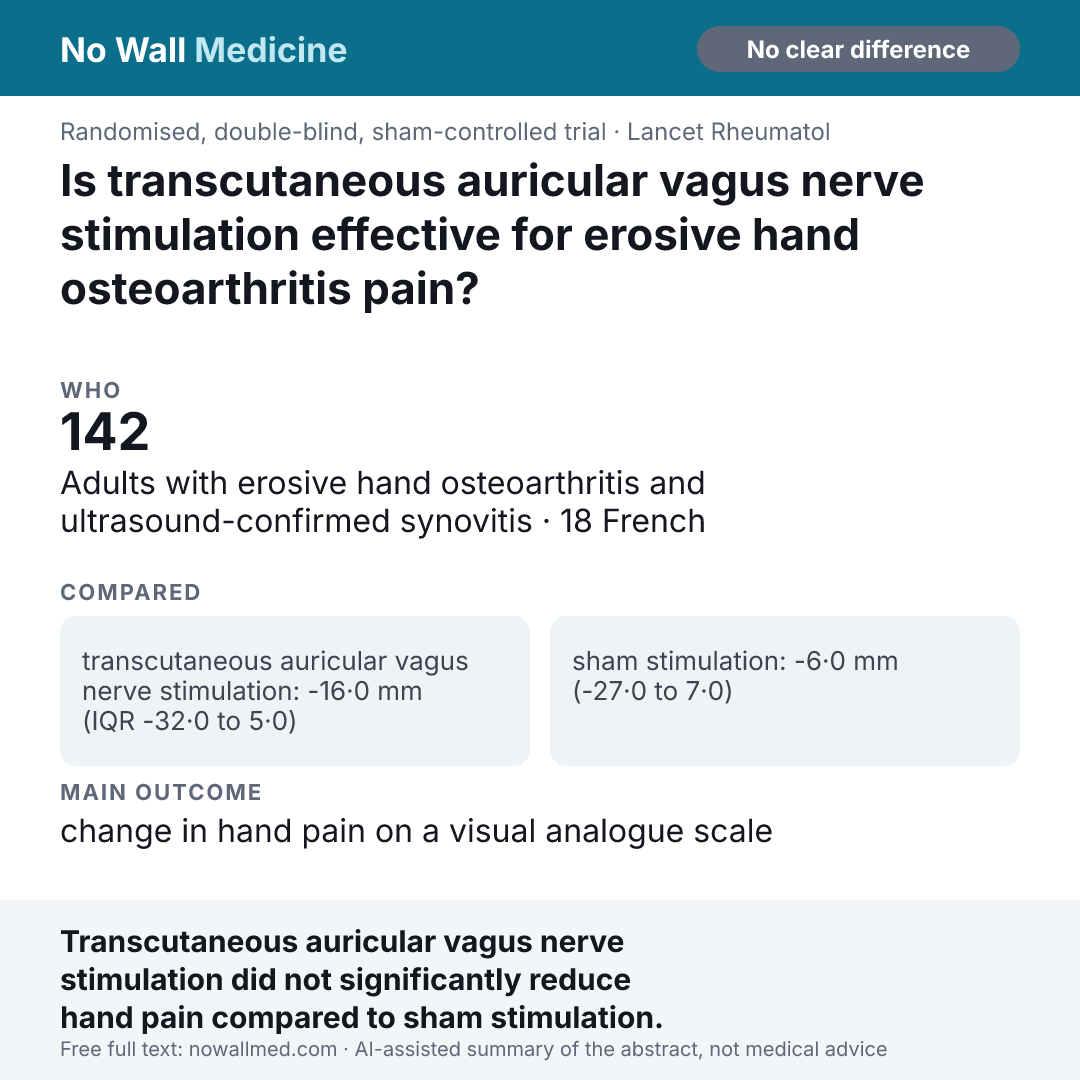
Transcutaneous auricular vagus nerve stimulation versus sham stimulation in patients with erosive hand osteoarthritis (ESTIVAL): a randomised, multicentre, double-blind, sham-controlled trial
Randomised, double-blind, sham-controlled trialNo clear difference
Is transcutaneous auricular vagus nerve stimulation effective for erosive hand osteoarthritis pain?
Who
142
Adults with erosive hand osteoarthritis and ultrasound-confirmed synovitis · 18 French hospital centres
Compared
transcutaneous auricular vagus nerve stimulation: -16·0 mm (IQR -32·0 to 5·0)
sham stimulation: -6·0 mm (-27·0 to 7·0)
Main outcome
change in hand pain on a visual analogue scale
Result: adjusted between-group difference of -10·0 mm (95% CI -23·0 to 2·0)
Bottom line: Transcutaneous auricular vagus nerve stimulation did not significantly reduce hand pain compared to sham stimulation.
Funded by: French Ministry of Health
Lancet Rheumatol · 2025-12-08 · Save PNG
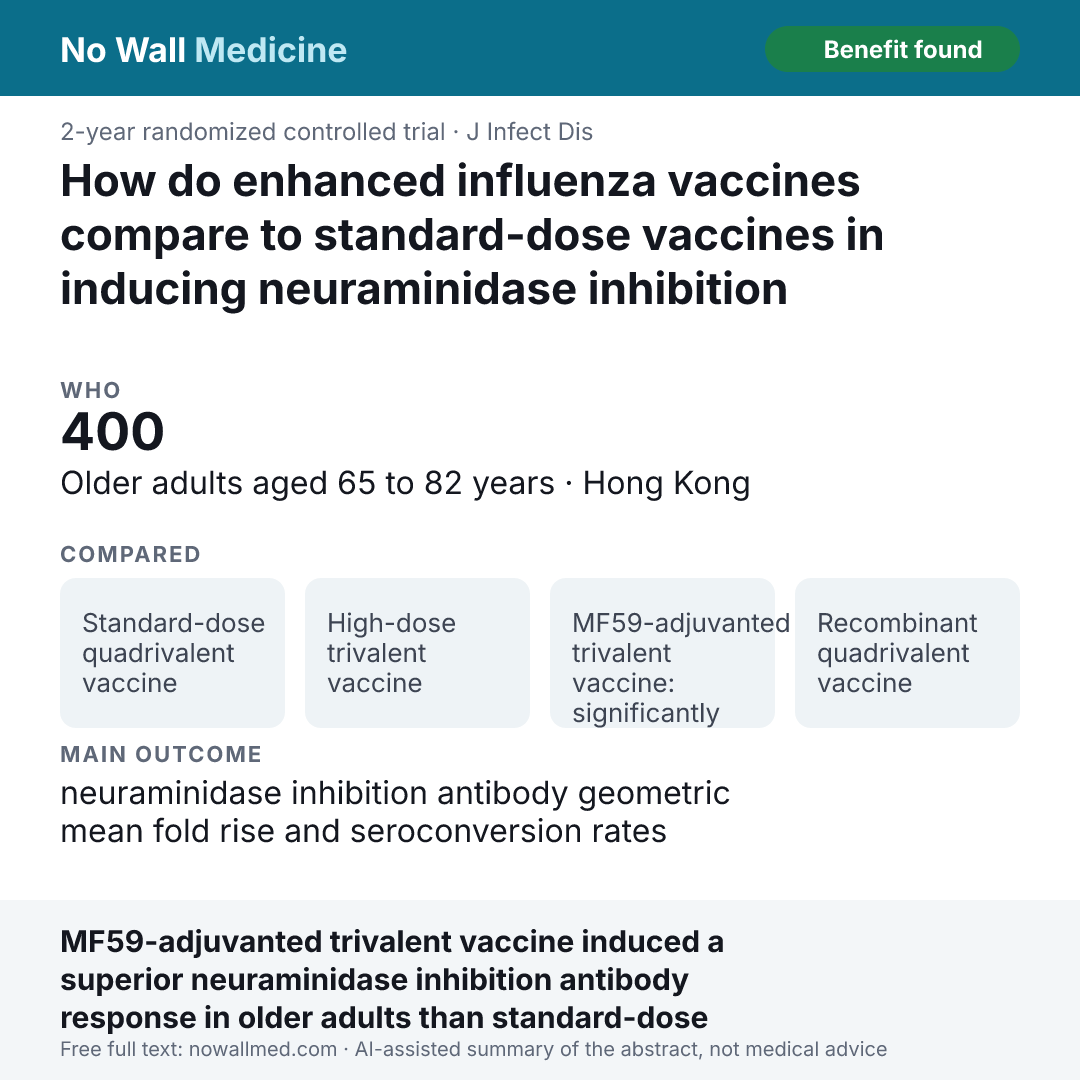
Antineuraminidase Antibody Responses in Older Adults After Consecutive Vaccinations With Enhanced Influenza Vaccines: A Randomized Controlled Trial
2-year randomized controlled trialBenefit found
How do enhanced influenza vaccines compare to standard-dose vaccines in inducing neuraminidase inhibition antibodies?
Who
400
Older adults aged 65 to 82 years · Hong Kong
Compared
Standard-dose quadrivalent vaccine
High-dose trivalent vaccine
MF59-adjuvanted trivalent vaccine: significantly higher GMFR and seroconversion rates
Recombinant quadrivalent vaccine
Main outcome
neuraminidase inhibition antibody geometric mean fold rise and seroconversion rates
Bottom line: MF59-adjuvanted trivalent vaccine induced a superior neuraminidase inhibition antibody response in older adults than standard-dose quadrivalent vaccine.
J Infect Dis · 2025-12-08 · Save PNG
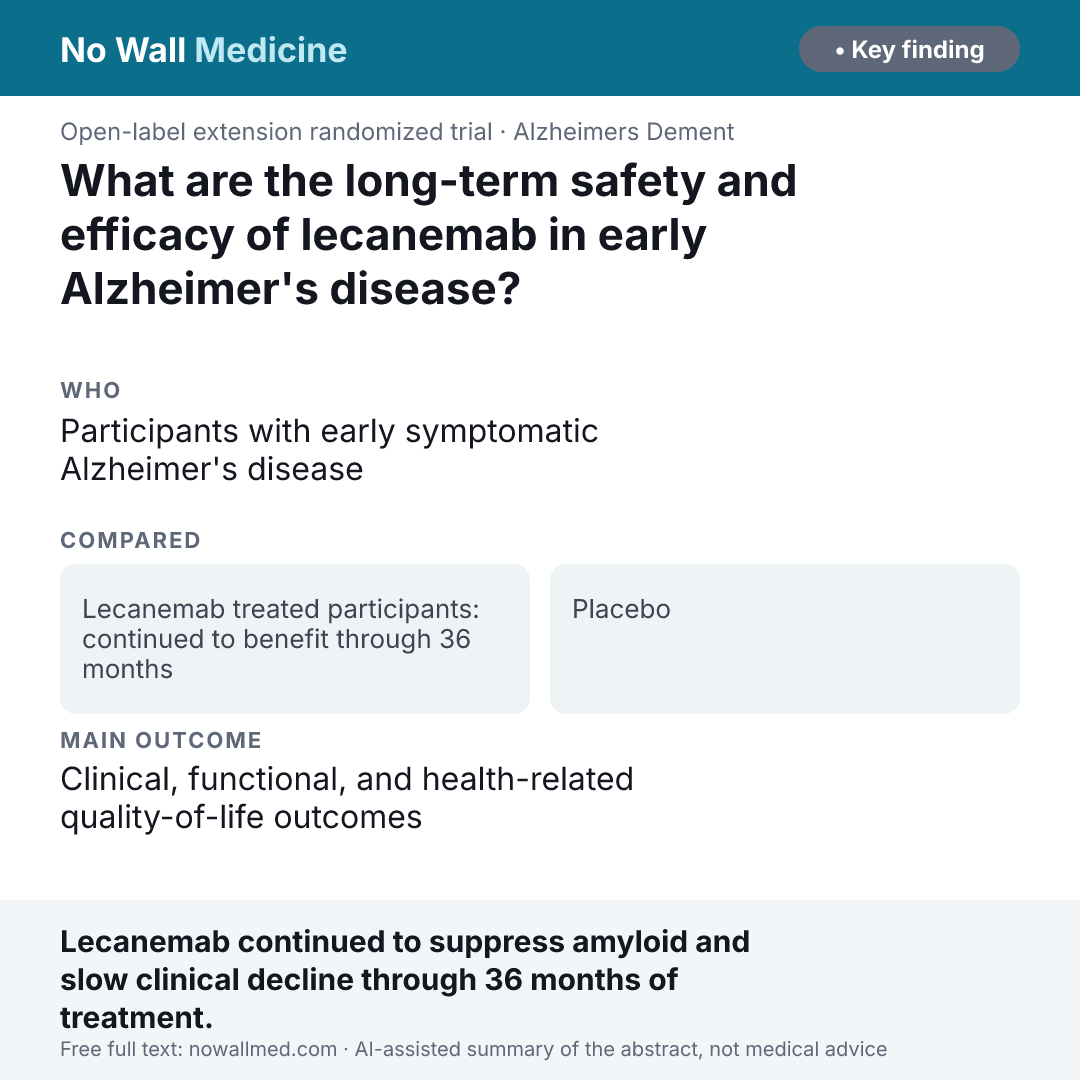
Long-term safety and efficacy of lecanemab in early Alzheimer's disease: Results from the clarity AD open-label extension study
Open-label extension randomized trialKey finding
What are the long-term safety and efficacy of lecanemab in early Alzheimer's disease?
Who
Participants with early symptomatic Alzheimer's disease
Compared
Lecanemab treated participants: continued to benefit through 36 months
Placebo
Main outcome
Clinical, functional, and health-related quality-of-life outcomes
Bottom line: Lecanemab continued to suppress amyloid and slow clinical decline through 36 months of treatment.
Alzheimers Dement · 2025-12-08 · Save PNG
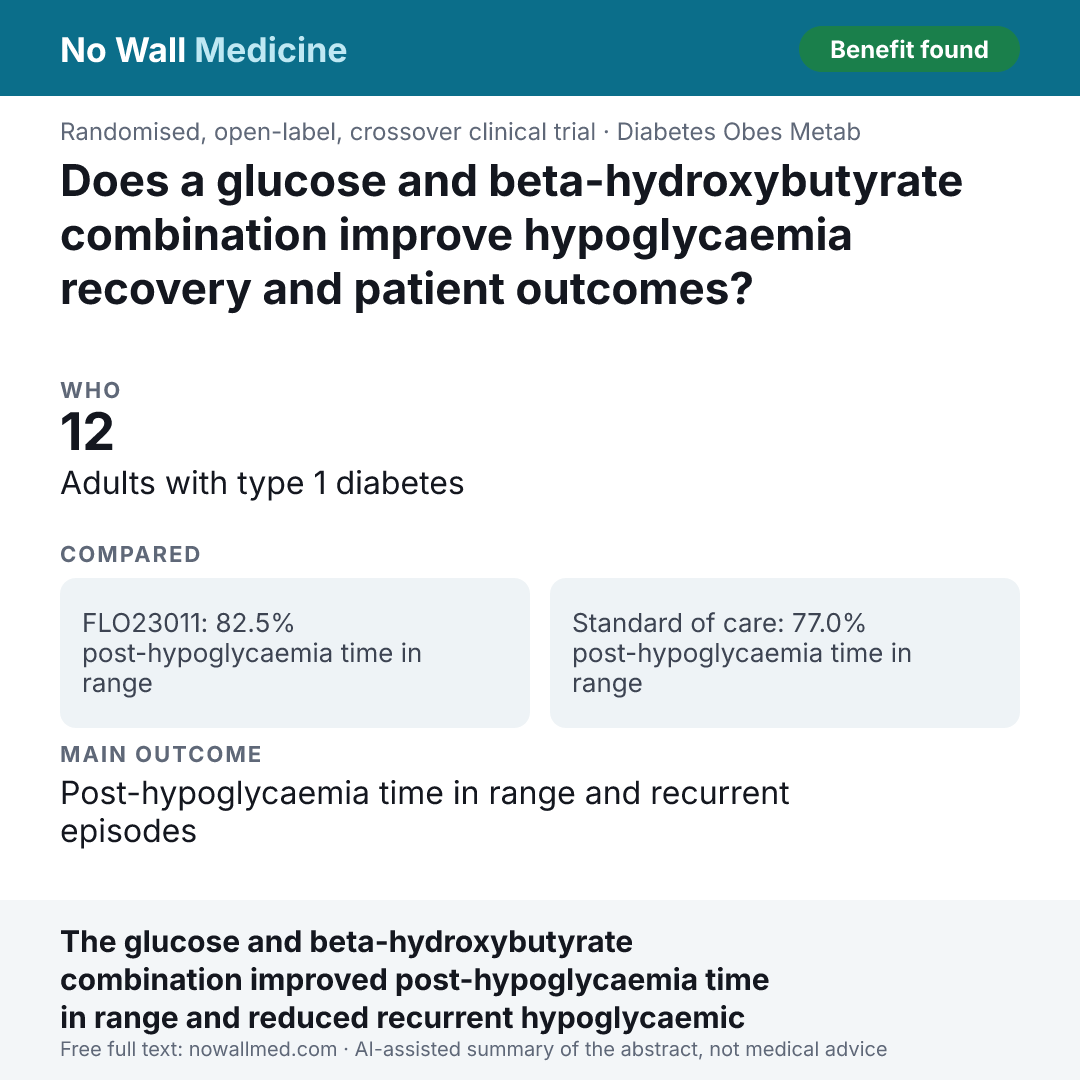
A novel glucose beta-hydroxybutyrate combination improves hypoglycaemia recovery and patient-reported outcomes in type 1 diabetes
Randomised, open-label, crossover clinical trialBenefit found
Does a glucose and beta-hydroxybutyrate combination improve hypoglycaemia recovery and patient outcomes?
Who
12
Adults with type 1 diabetes
Compared
FLO23011: 82.5% post-hypoglycaemia time in range
Standard of care: 77.0% post-hypoglycaemia time in range
Main outcome
Post-hypoglycaemia time in range and recurrent episodes
Bottom line: The glucose and beta-hydroxybutyrate combination improved post-hypoglycaemia time in range and reduced recurrent hypoglycaemic episodes.
Diabetes Obes Metab · 2025-12-08 · Save PNG
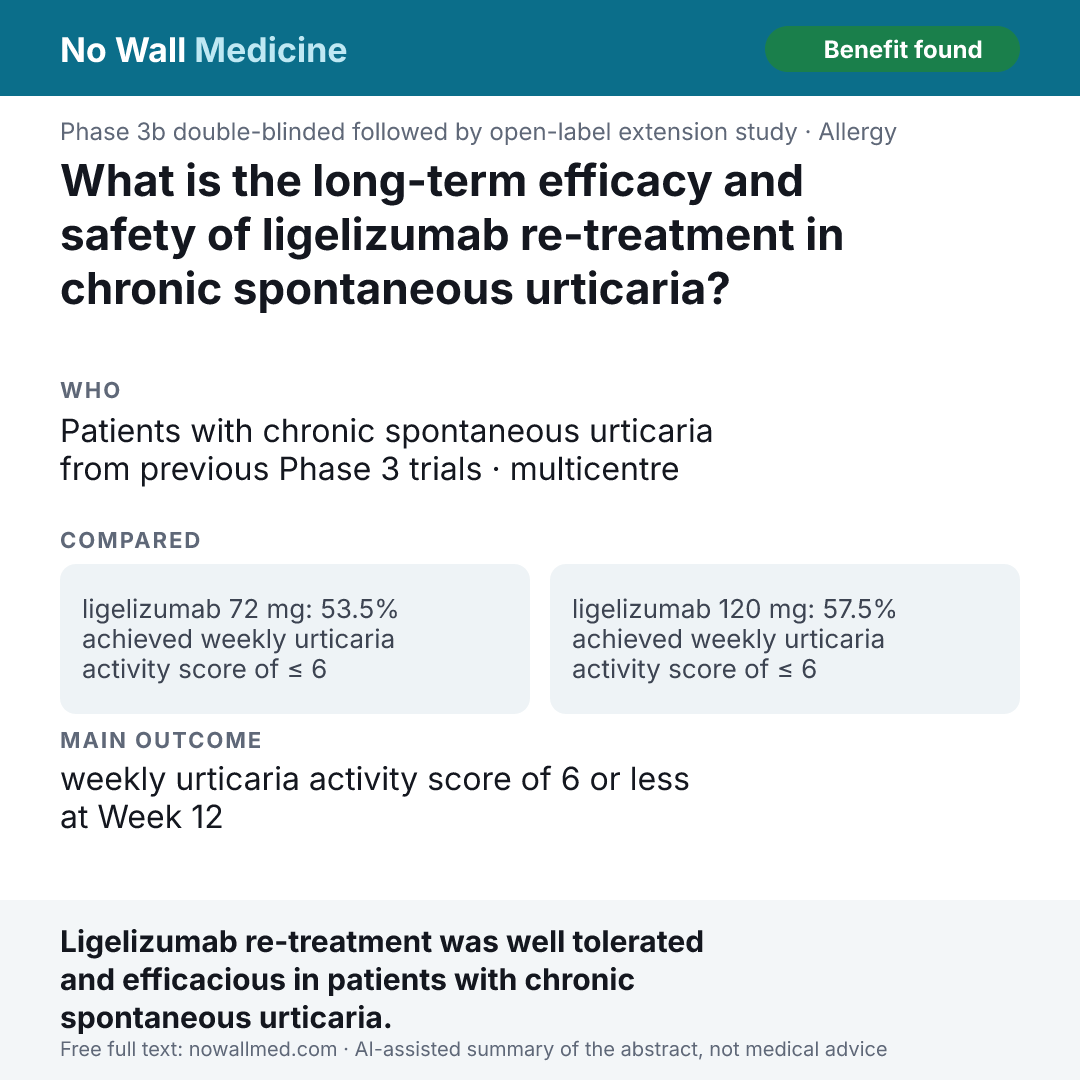
Long-Term Efficacy and Safety of Ligelizumab as Re-Treatment in Patients With Chronic Spontaneous Urticaria
Phase 3b double-blinded followed by open-label extension studyBenefit found
What is the long-term efficacy and safety of ligelizumab re-treatment in chronic spontaneous urticaria?
Who
Patients with chronic spontaneous urticaria from previous Phase 3 trials · multicentre
Compared
ligelizumab 72 mg: 53.5% achieved weekly urticaria activity score of ≤ 6
ligelizumab 120 mg: 57.5% achieved weekly urticaria activity score of ≤ 6
Main outcome
weekly urticaria activity score of 6 or less at Week 12
Bottom line: Ligelizumab re-treatment was well tolerated and efficacious in patients with chronic spontaneous urticaria.
Allergy · 2025-12-08 · Save PNG
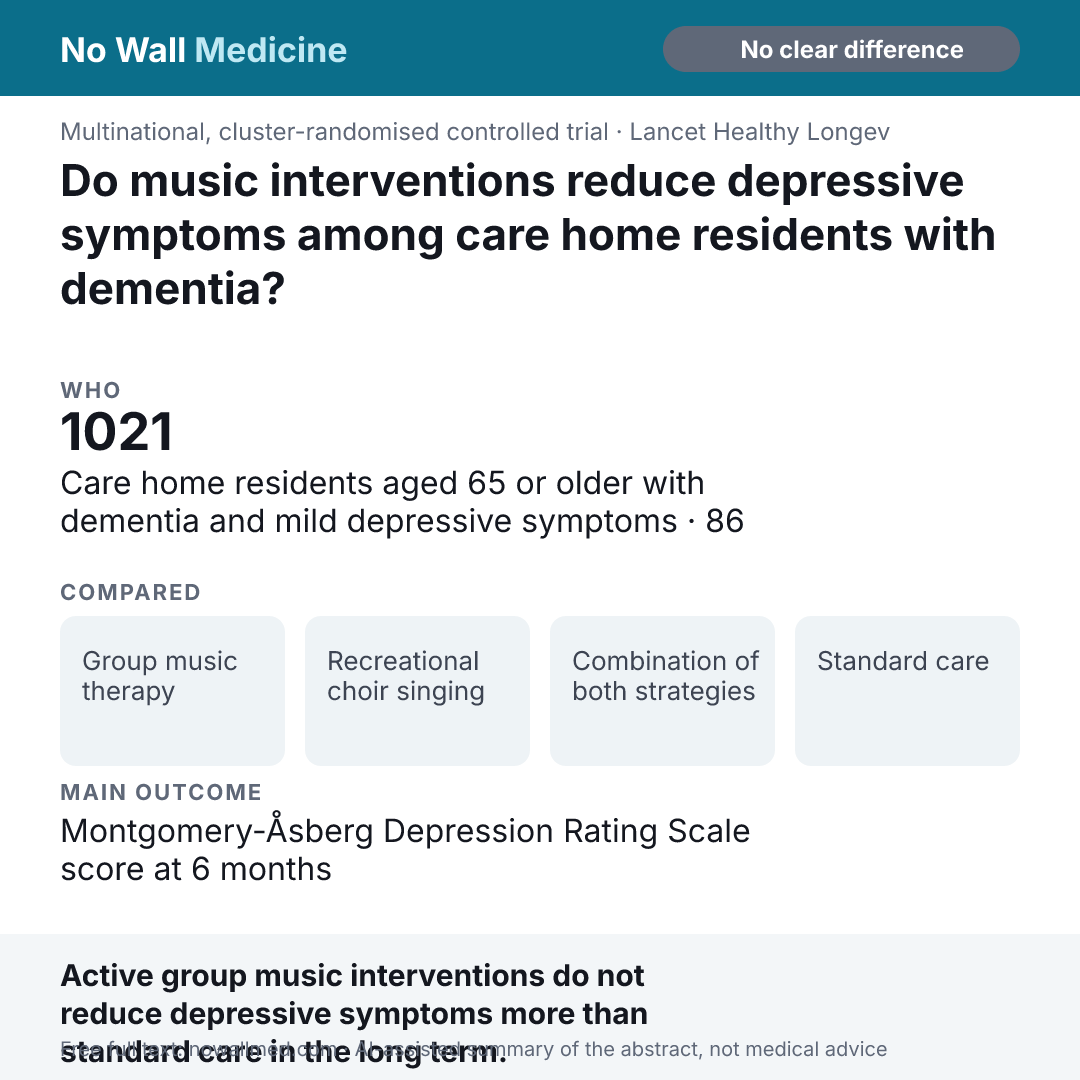
Clinical effectiveness of music interventions for dementia and depression in older people (MIDDEL): a multinational, cluster-randomised controlled trial
Multinational, cluster-randomised controlled trialNo clear difference
Do music interventions reduce depressive symptoms among care home residents with dementia?
Who
1021
Care home residents aged 65 or older with dementia and mild depressive symptoms · 86 care home units in six countries
Compared
Group music therapy
Recreational choir singing
Combination of both strategies
Standard care
Main outcome
Montgomery-Åsberg Depression Rating Scale score at 6 months
Result: no significant effect on MADRS scores
Bottom line: Active group music interventions do not reduce depressive symptoms more than standard care in the long term.
Lancet Healthy Longev · 2025-12-08 · Save PNG
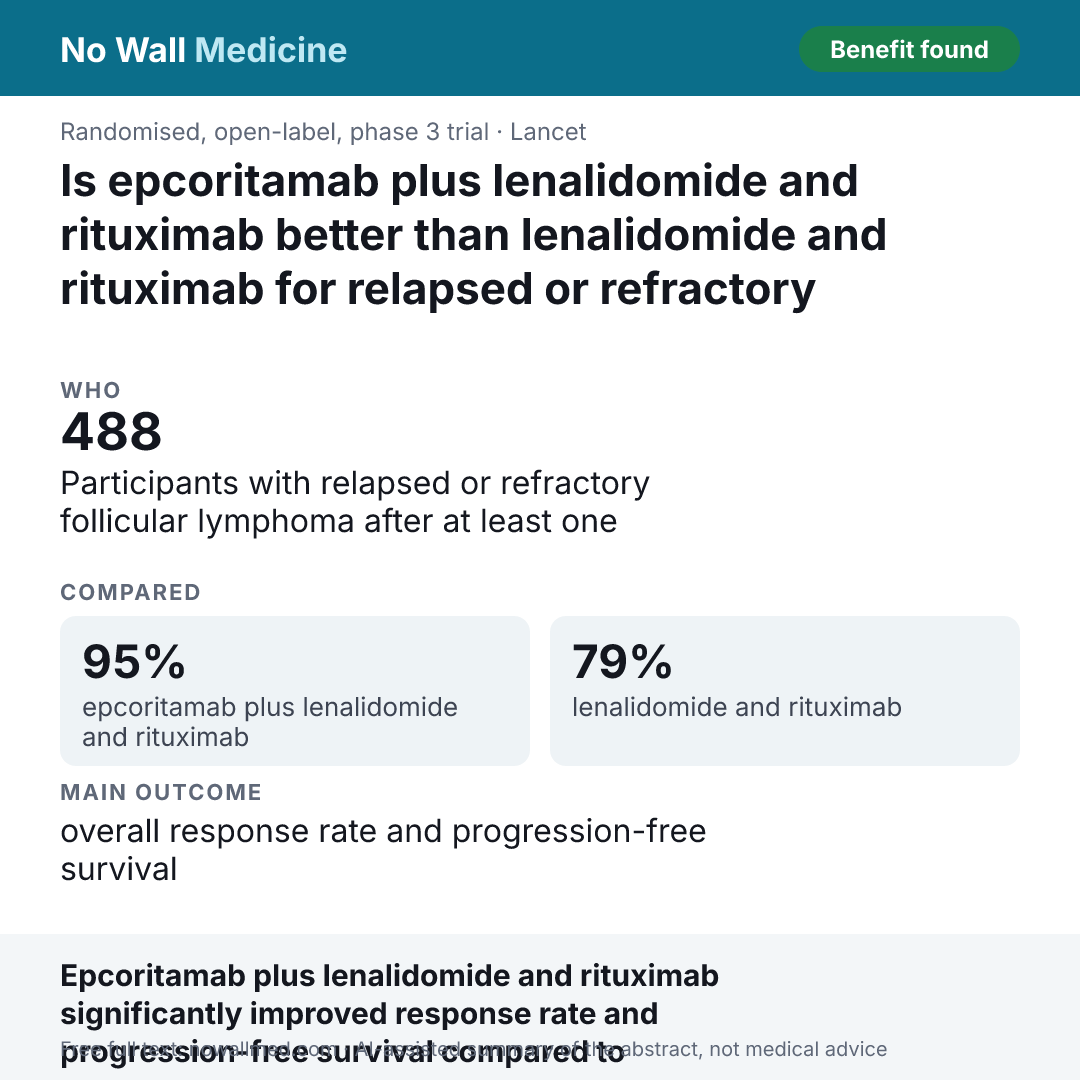
Epcoritamab, lenalidomide, and rituximab versus lenalidomide and rituximab for relapsed or refractory follicular lymphoma (EPCORE FL-1): a global, open-label, randomised, phase 3 trial
Randomised, open-label, phase 3 trialBenefit found
Is epcoritamab plus lenalidomide and rituximab better than lenalidomide and rituximab for relapsed or refractory follicular lymphoma?
Who
488
Participants with relapsed or refractory follicular lymphoma after at least one chemoimmunotherapy · 189 centres in 30 countries
Compared
95%epcoritamab plus lenalidomide and rituximab (95% CI 92-97)
79%lenalidomide and rituximab (74-84)
Main outcome
overall response rate and progression-free survival
Result: hazard ratio 0·21 (95% CI 0·14-0·31)
Bottom line: Epcoritamab plus lenalidomide and rituximab significantly improved response rate and progression-free survival compared to lenalidomide and rituximab.
Funded by: AbbVie and Genmab
Lancet · 2025-12-07 · Save PNG
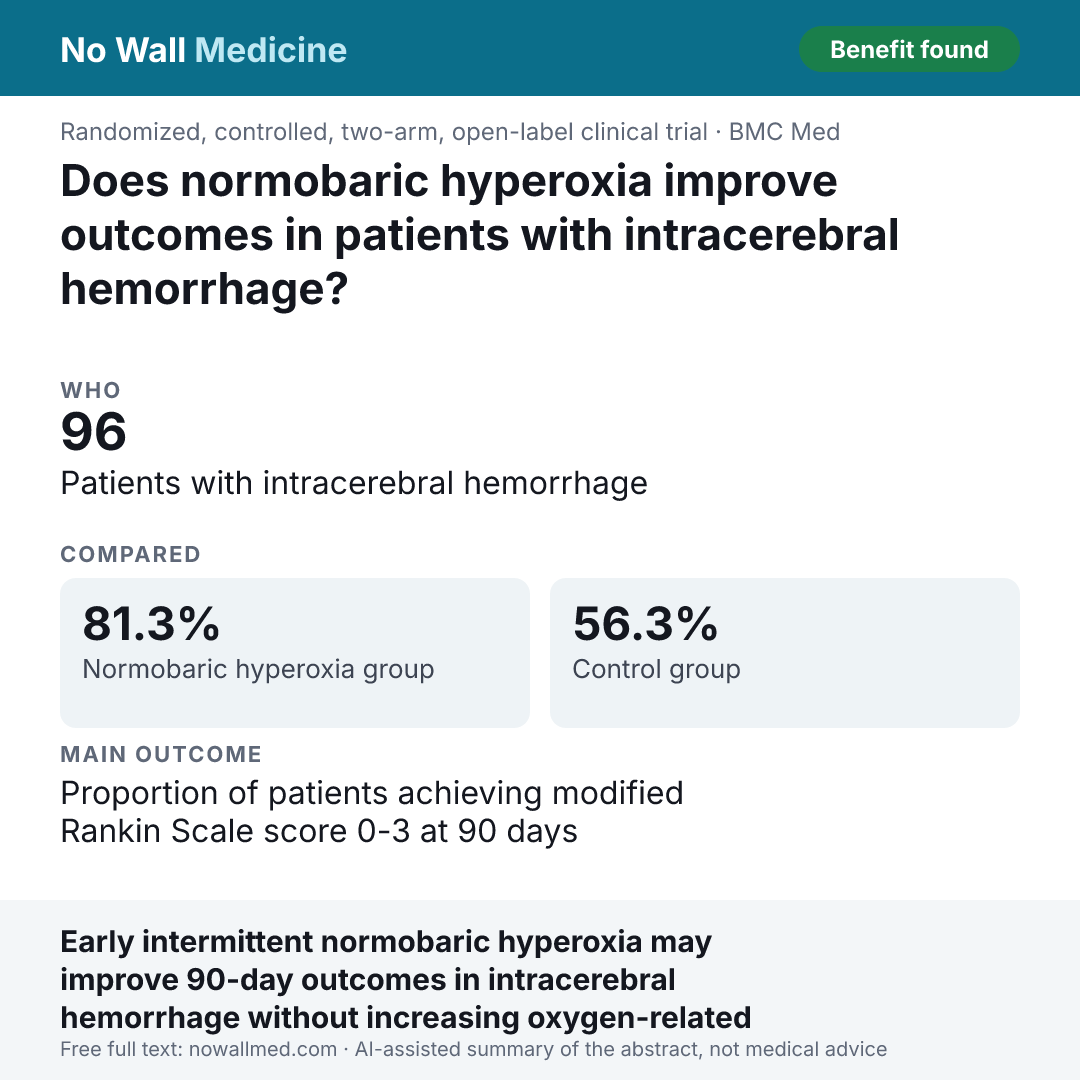
Normobaric hyperoxia for intracerebral hemorrhage: a randomized clinical trial
Randomized, controlled, two-arm, open-label clinical trialBenefit found
Does normobaric hyperoxia improve outcomes in patients with intracerebral hemorrhage?
Who
96
Patients with intracerebral hemorrhage
Compared
81.3%Normobaric hyperoxia group
56.3%Control group
Main outcome
Proportion of patients achieving modified Rankin Scale score 0-3 at 90 days
Result: adjusted risk ratio 1.39 (95% CI 1.06 to 1.82)
Bottom line: Early intermittent normobaric hyperoxia may improve 90-day outcomes in intracerebral hemorrhage without increasing oxygen-related complications.
BMC Med · 2025-12-07 · Save PNG
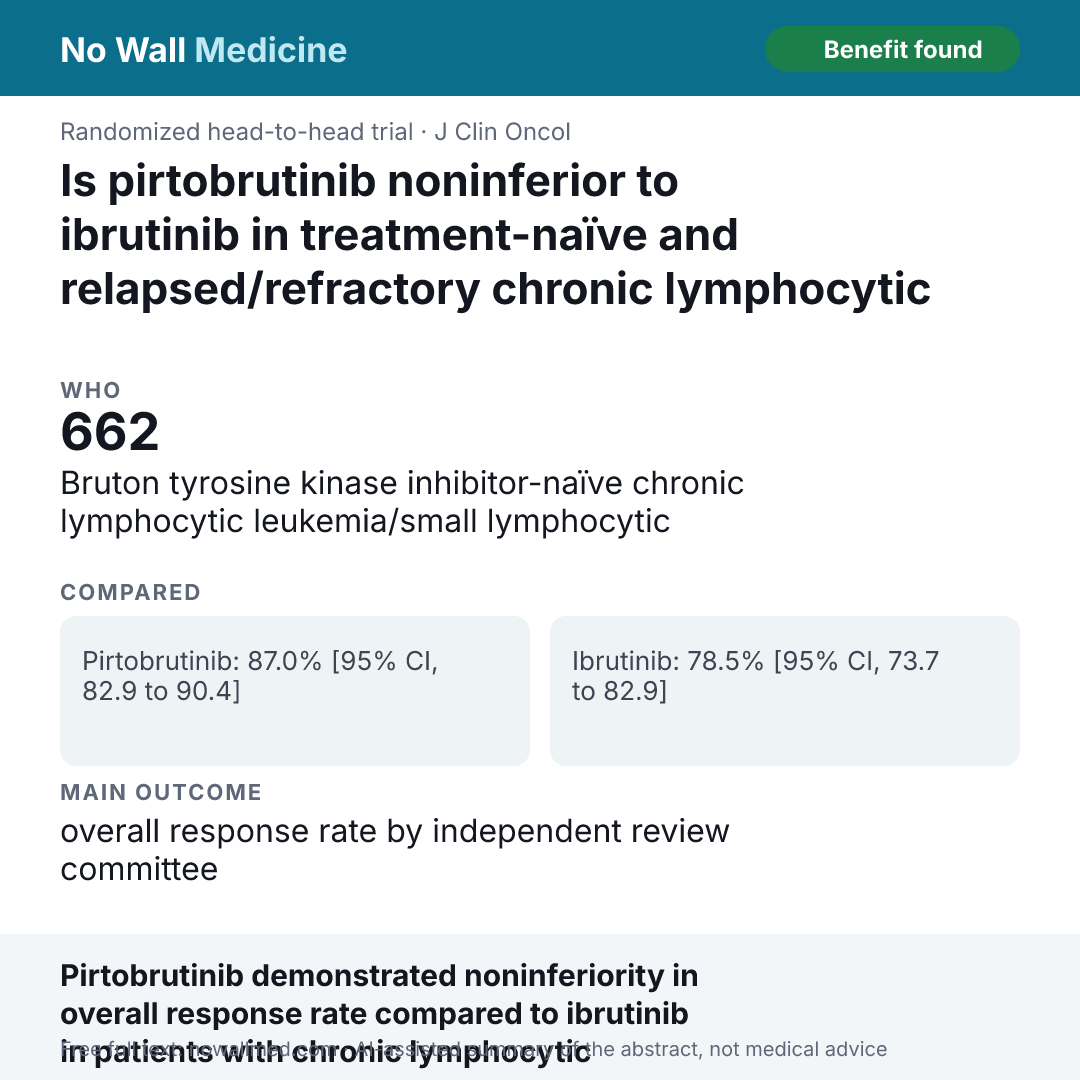
Pirtobrutinib Versus Ibrutinib in Treatment-Naïve and Relapsed/Refractory Chronic Lymphocytic Leukemia/Small Lymphocytic Lymphoma
Randomized head-to-head trialBenefit found
Is pirtobrutinib noninferior to ibrutinib in treatment-naïve and relapsed/refractory chronic lymphocytic leukemia/small lymphocytic lymphoma?
Who
662
Bruton tyrosine kinase inhibitor-naïve chronic lymphocytic leukemia/small lymphocytic lymphoma patients
Compared
Pirtobrutinib: 87.0% [95% CI, 82.9 to 90.4]
Ibrutinib: 78.5% [95% CI, 73.7 to 82.9]
Main outcome
overall response rate by independent review committee
Result: ORR ratio = 1.11 [95% CI, 1.03 to 1.19]
Bottom line: Pirtobrutinib demonstrated noninferiority in overall response rate compared to ibrutinib in patients with chronic lymphocytic leukemia/small lymphocytic lymphoma.
J Clin Oncol · 2025-12-07 · Save PNG