Visual abstracts
New randomized trials and meta-analyses from leading journals at a glance: who was studied, what was compared, and what was found. Every paper is free to read in full.
All specialtiesCardiology 851Oncology 770Gastroenterology & Hepatology 309Infectious Disease 626Neurology 354Psychiatry & Mental Health 430Pulmonology 369Critical Care 256Endocrinology & Diabetes 484Pediatrics 542Surgery 343Orthopedics & Sports Medicine 165Neurosurgery 107Cardiothoracic & Vascular Surgery 87Plastic & Reconstructive Surgery 140Nephrology 197Rheumatology 108Hematology 182Dermatology 81Ophthalmology 97Obstetrics & Gynecology 264Public & Global Health 168Radiology & Imaging 101Anesthesiology 125Urology 162ENT (Otolaryngology) 110Emergency Medicine 93Allergy & Immunology 58Geriatrics 160Family Medicine & Primary Care 111Medical Genetics & Genomics 91Pathology & Laboratory Medicine 27Physical Medicine & Rehabilitation 148Palliative Care 81Nutrition 223Digital Health & AI 462General Medicine 101
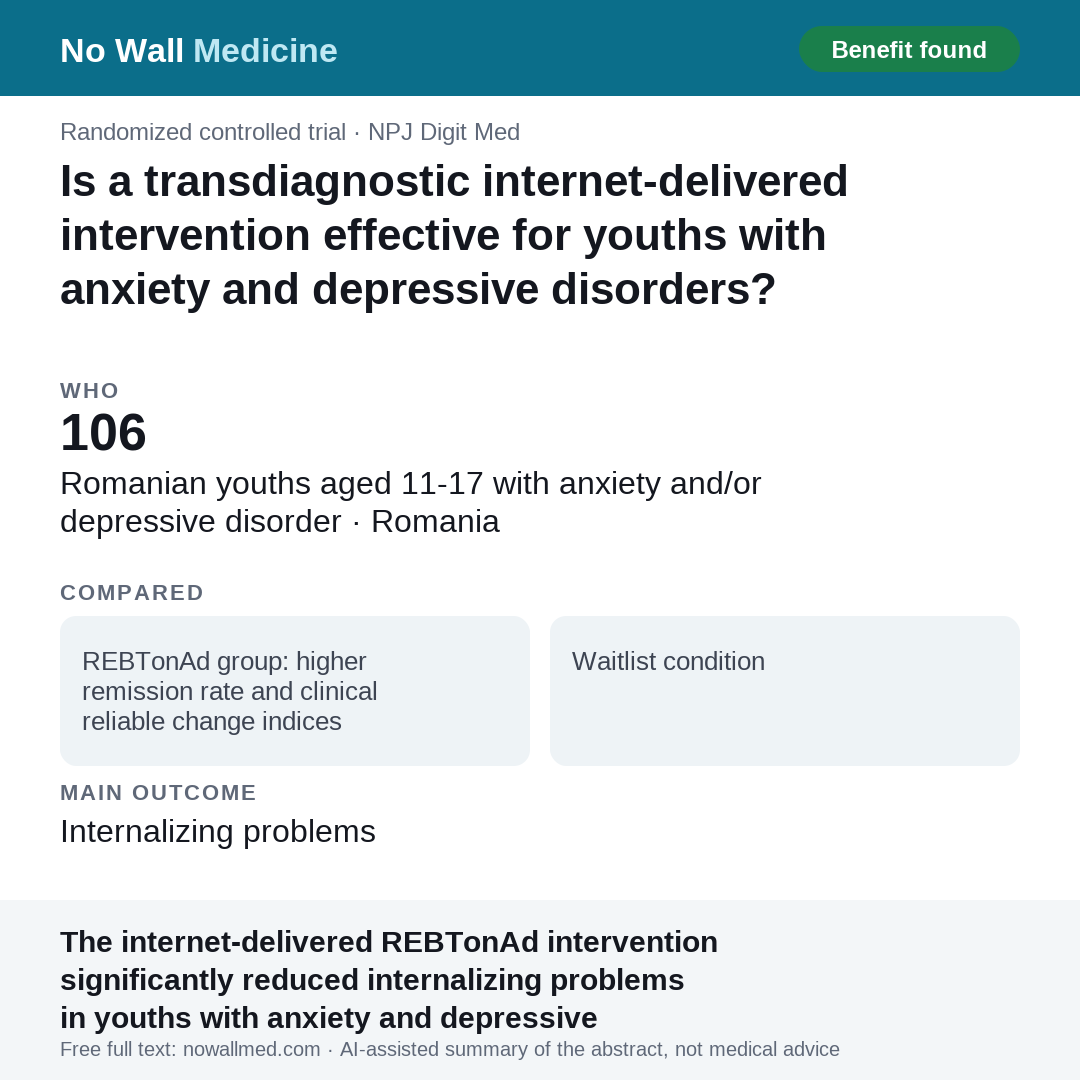
Transdiagnostic Internet-delivered intervention for children and adolescents with anxiety and depressive disorders: a randomized controlled trial
Randomized controlled trialBenefit found
Is a transdiagnostic internet-delivered intervention effective for youths with anxiety and depressive disorders?
Who
106
Romanian youths aged 11-17 with anxiety and/or depressive disorder · Romania
Compared
REBTonAd group: higher remission rate and clinical reliable change indices
Waitlist condition
Main outcome
Internalizing problems
Result: standardized mean difference -0.60 (95% CI -0.96 to -0.25)
Bottom line: The internet-delivered REBTonAd intervention significantly reduced internalizing problems in youths with anxiety and depressive disorders.
NPJ Digit Med · 2026-01-16Download image
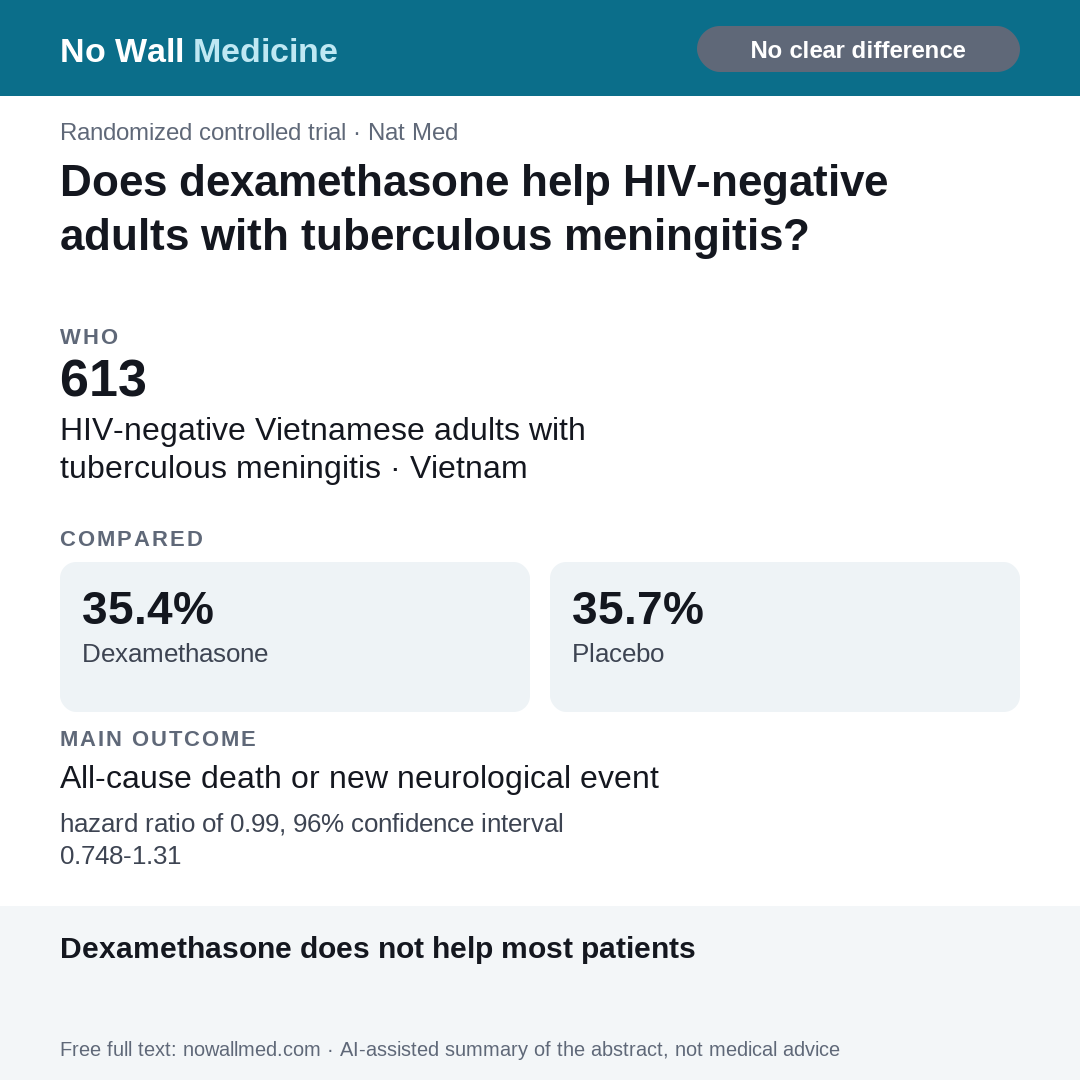
Genotype-stratified adjunctive dexamethasone for tuberculous meningitis in HIV-negative adults: a randomized controlled phase 3 trial
Randomized controlled trialNo clear difference
Does dexamethasone help HIV-negative adults with tuberculous meningitis?
Who
613
HIV-negative Vietnamese adults with tuberculous meningitis · Vietnam
Compared
35.4%Dexamethasone (108/305)
35.7%Placebo (110/308)
Main outcome
All-cause death or new neurological event
Result: hazard ratio of 0.99, 96% confidence interval 0.748-1.31
Bottom line: Dexamethasone does not help most patients
Nat Med · 2026-01-15Download image
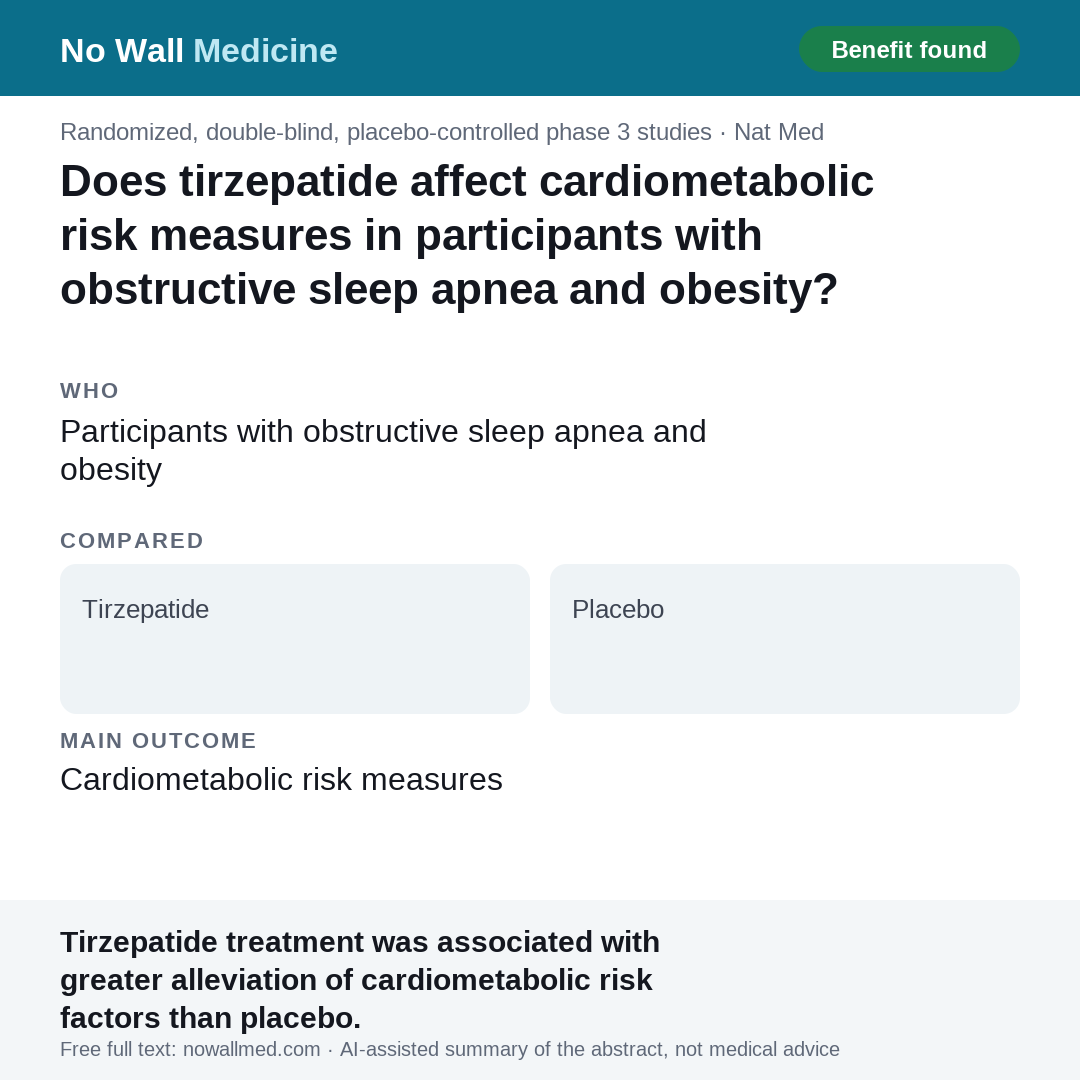
Tirzepatide on obstructive sleep apnea-related cardiometabolic risk: secondary outcomes of the SURMOUNT-OSA randomized trial
Randomized, double-blind, placebo-controlled phase 3 studiesBenefit found
Does tirzepatide affect cardiometabolic risk measures in participants with obstructive sleep apnea and obesity?
Who
Participants with obstructive sleep apnea and obesity
Compared
Tirzepatide
Placebo
Main outcome
Cardiometabolic risk measures
Bottom line: Tirzepatide treatment was associated with greater alleviation of cardiometabolic risk factors than placebo.
Nat Med · 2026-01-15Download image
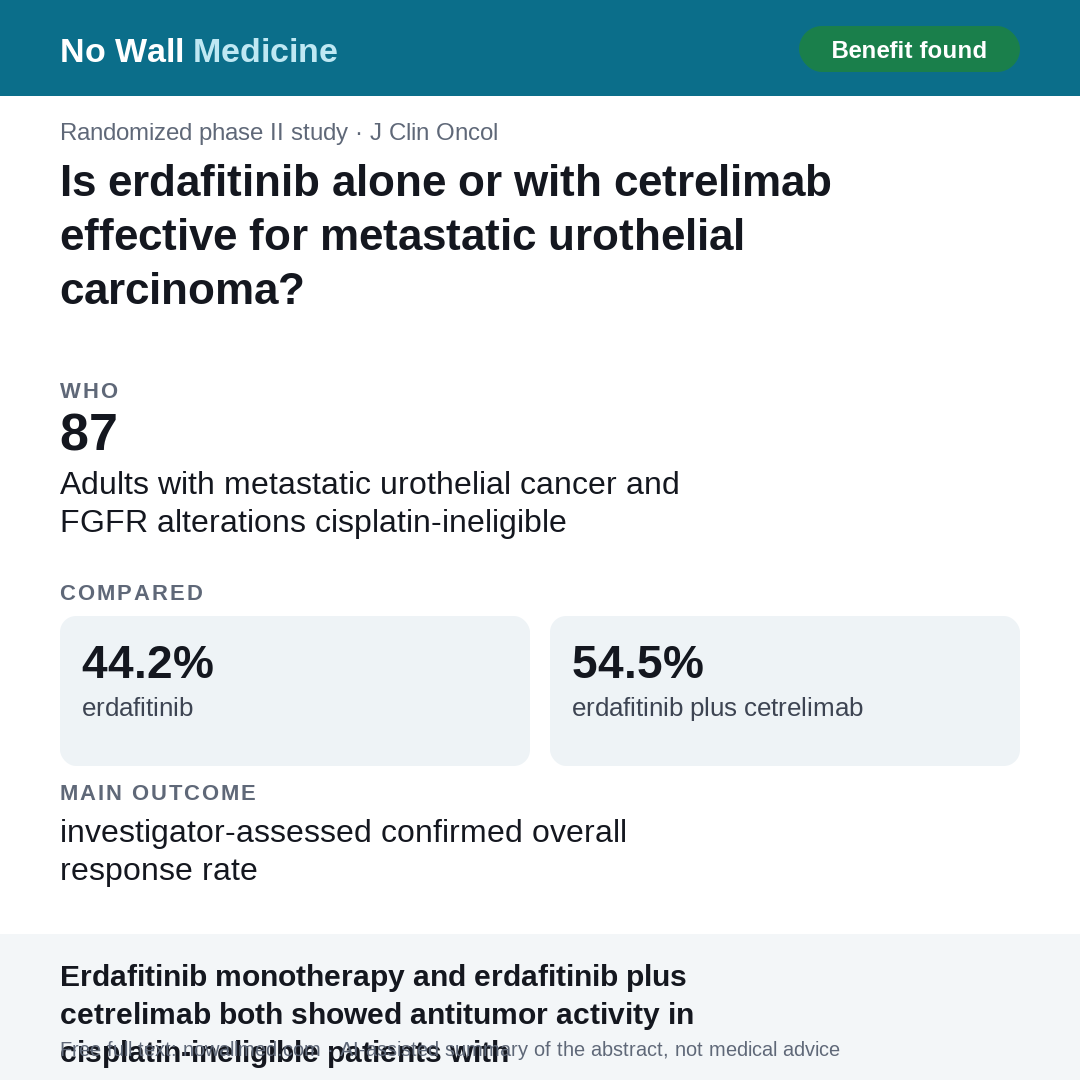
Erdafitinib or Erdafitinib Plus Cetrelimab for Patients With Metastatic Urothelial Carcinoma and FGFR Alterations: Final Results From the Phase II NORSE Study
Randomized phase II studyBenefit found
Is erdafitinib alone or with cetrelimab effective for metastatic urothelial carcinoma?
Who
87
Adults with metastatic urothelial cancer and FGFR alterations cisplatin-ineligible
Compared
44.2%erdafitinib (95% CI, 29.1 to 60.1)
54.5%erdafitinib plus cetrelimab (95% CI, 38.8 to 69.6)
Main outcome
investigator-assessed confirmed overall response rate
Bottom line: Erdafitinib monotherapy and erdafitinib plus cetrelimab both showed antitumor activity in cisplatin-ineligible patients with metastatic urothelial cancer.
Limitation: No statistical hypotheses were tested
J Clin Oncol · 2026-01-15Download image
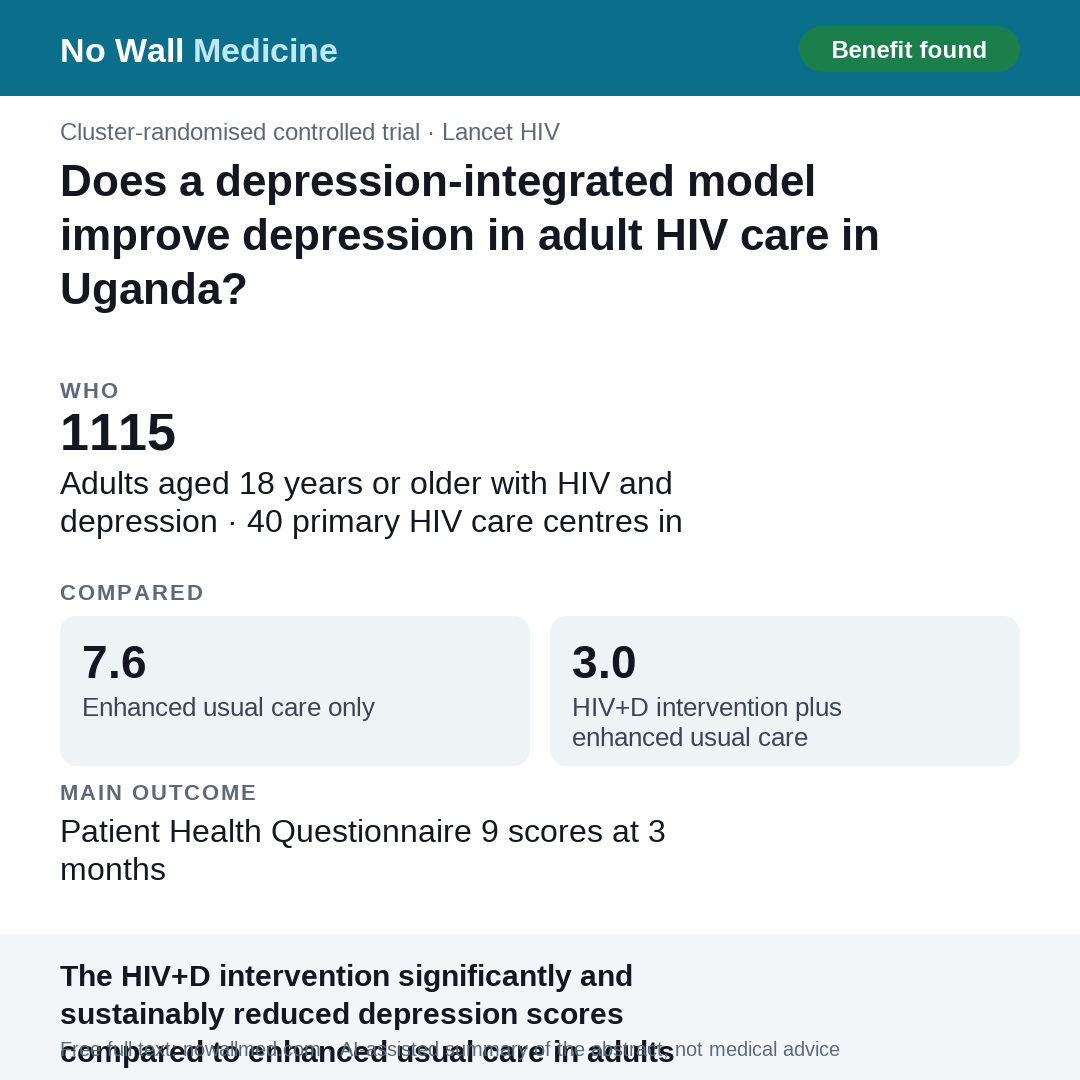
Assessing the effectiveness of a depression-integrated model in adult HIV care in Uganda (the HIV+D trial): a cluster-randomised controlled trial
Cluster-randomised controlled trialBenefit found
Does a depression-integrated model improve depression in adult HIV care in Uganda?
Who
1115
Adults aged 18 years or older with HIV and depression · 40 primary HIV care centres in three districts in Uganda
Compared
7.6Enhanced usual care only (SD 4.2)
3.0HIV+D intervention plus enhanced usual care (SD 3.2)
Main outcome
Patient Health Questionnaire 9 scores at 3 months
Result: adjusted mean difference 4.4; 95% CI 3.4-5.5
Bottom line: The HIV+D intervention significantly and sustainably reduced depression scores compared to enhanced usual care in adults with HIV.
Funded by: Wellcome Trust
Lancet HIV · 2026-01-15Download image
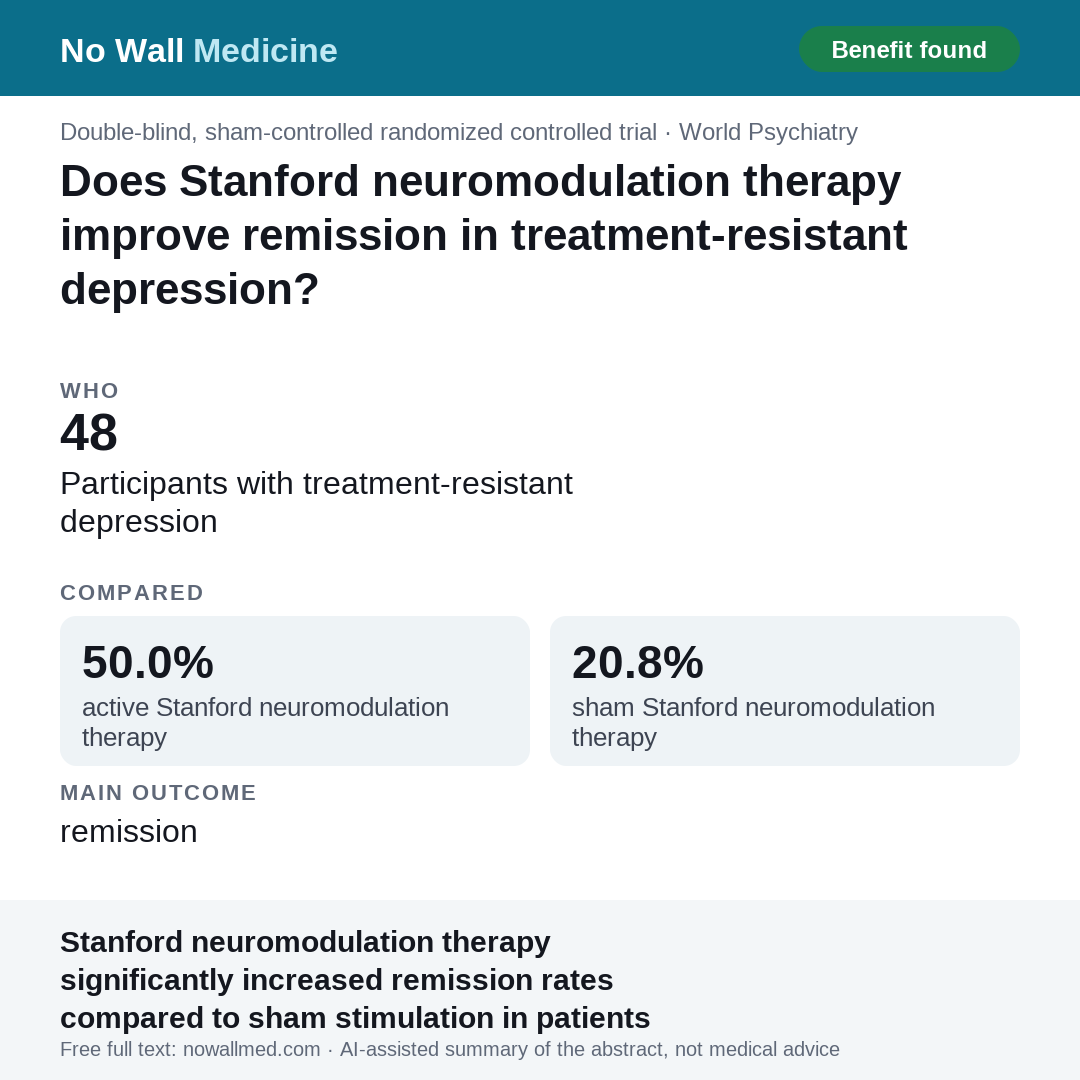
Stanford neuromodulation therapy for treatment-resistant depression: a randomized controlled trial confirming efficacy, and an EEG study providing insight into mechanism of action and a potentially predictive biomarker of efficacy
Double-blind, sham-controlled randomized controlled trialBenefit found
Does Stanford neuromodulation therapy improve remission in treatment-resistant depression?
Who
48
Participants with treatment-resistant depression
Compared
50.0%active Stanford neuromodulation therapy
20.8%sham Stanford neuromodulation therapy
Main outcome
remission
Bottom line: Stanford neuromodulation therapy significantly increased remission rates compared to sham stimulation in patients with treatment-resistant depression.
World Psychiatry · 2026-01-15Download image
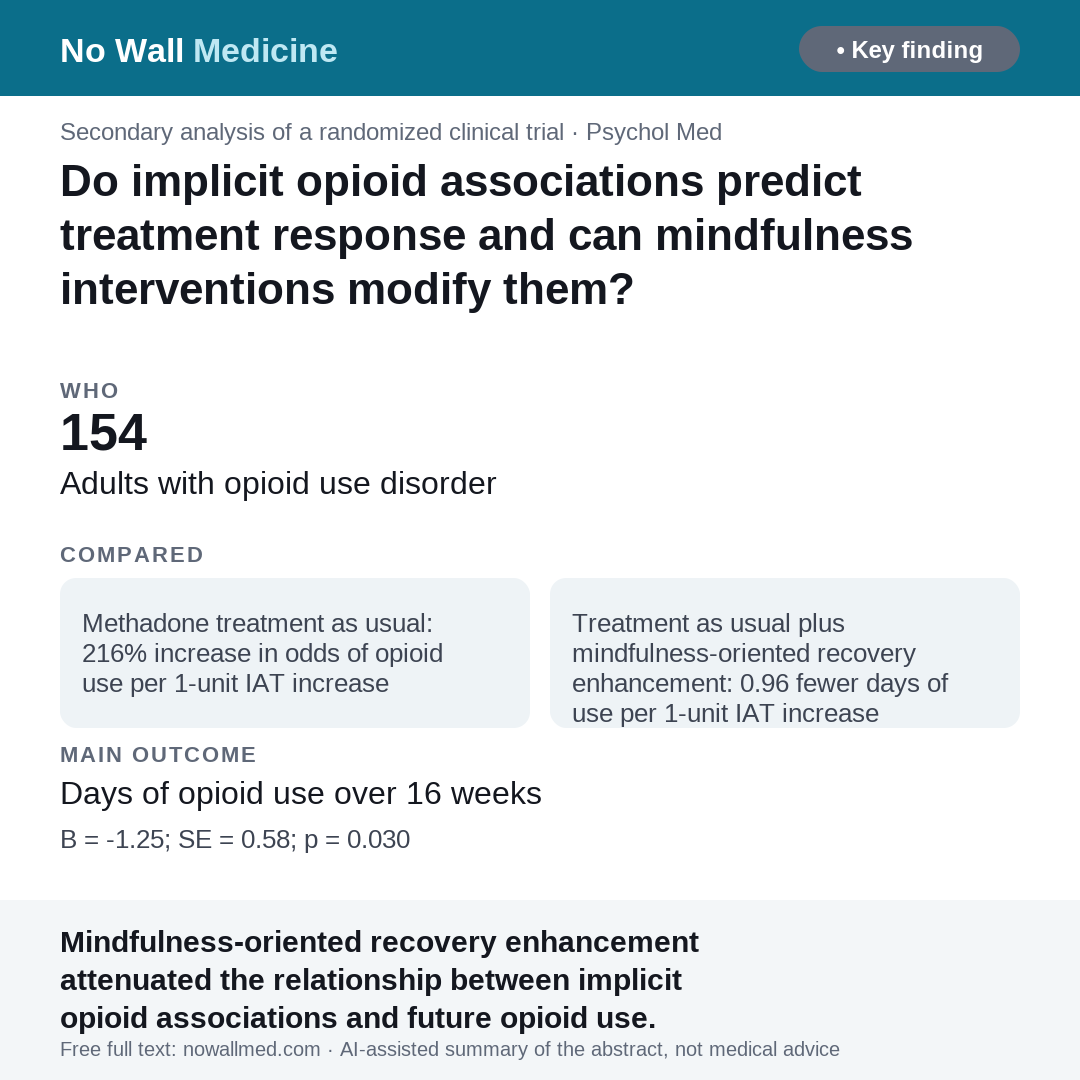
Implicit opioid associations in OUD treatment: prediction of treatment response and moderation by mindfulness-oriented recovery enhancement
Secondary analysis of a randomized clinical trialBenefit found
Do implicit opioid associations predict treatment response and can mindfulness interventions modify them?
Who
154
Adults with opioid use disorder
Compared
Methadone treatment as usual: 216% increase in odds of opioid use per 1-unit IAT increase
Treatment as usual plus mindfulness-oriented recovery enhancement: 0.96 fewer days of use per 1-unit IAT increase
Main outcome
Days of opioid use over 16 weeks
Result: B = -1.25; SE = 0.58; p = 0.030
Bottom line: Mindfulness-oriented recovery enhancement attenuated the relationship between implicit opioid associations and future opioid use.
Psychol Med · 2026-01-15Download image
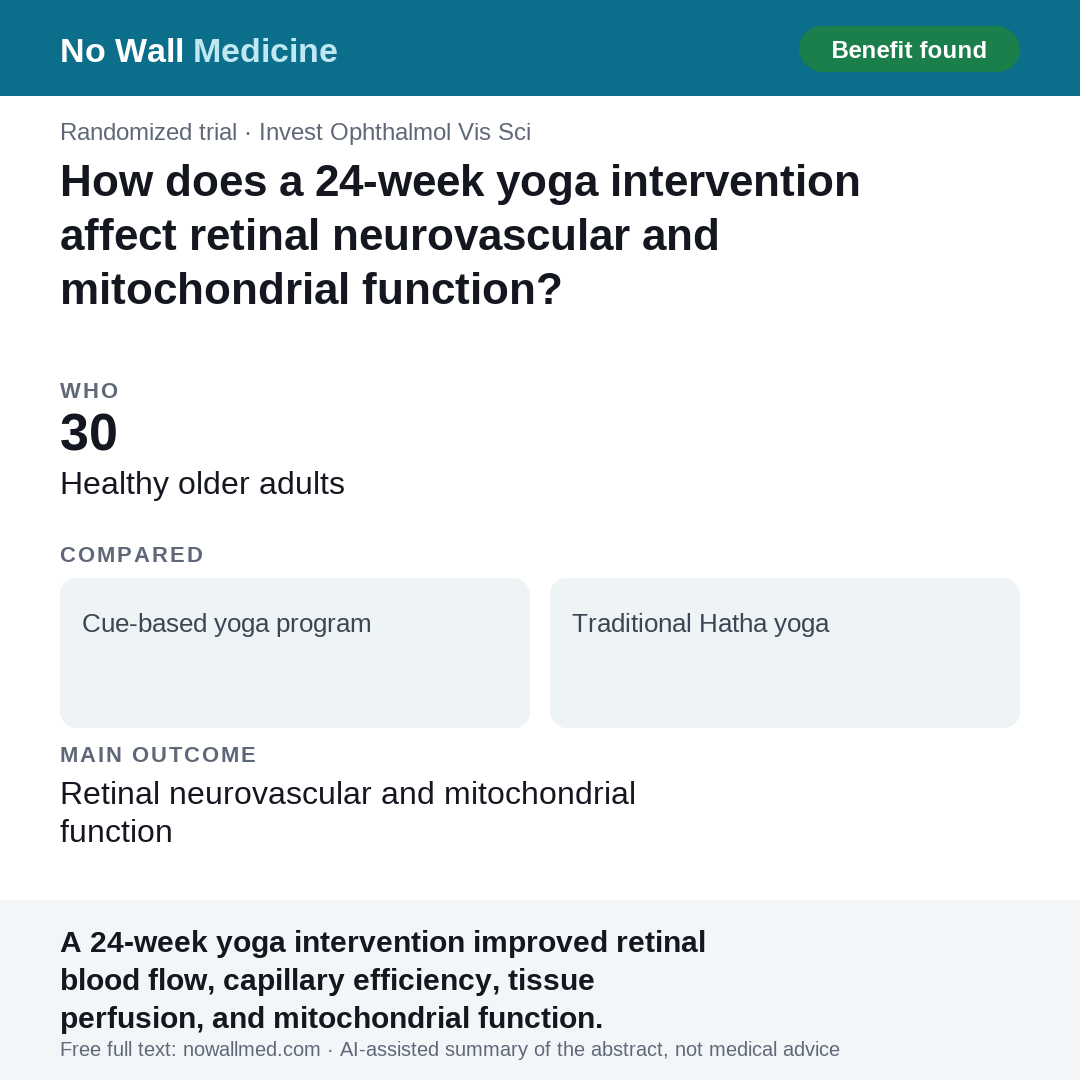
Retinal Neurovascular and Mitochondrial Function Signatures in Response to a 24-Week Yoga Intervention in Healthy Adults
Randomized trialBenefit found
How does a 24-week yoga intervention affect retinal neurovascular and mitochondrial function?
Who
30
Healthy older adults
Compared
Cue-based yoga program
Traditional Hatha yoga
Main outcome
Retinal neurovascular and mitochondrial function
Bottom line: A 24-week yoga intervention improved retinal blood flow, capillary efficiency, tissue perfusion, and mitochondrial function.
Invest Ophthalmol Vis Sci · 2026-01-15Download image
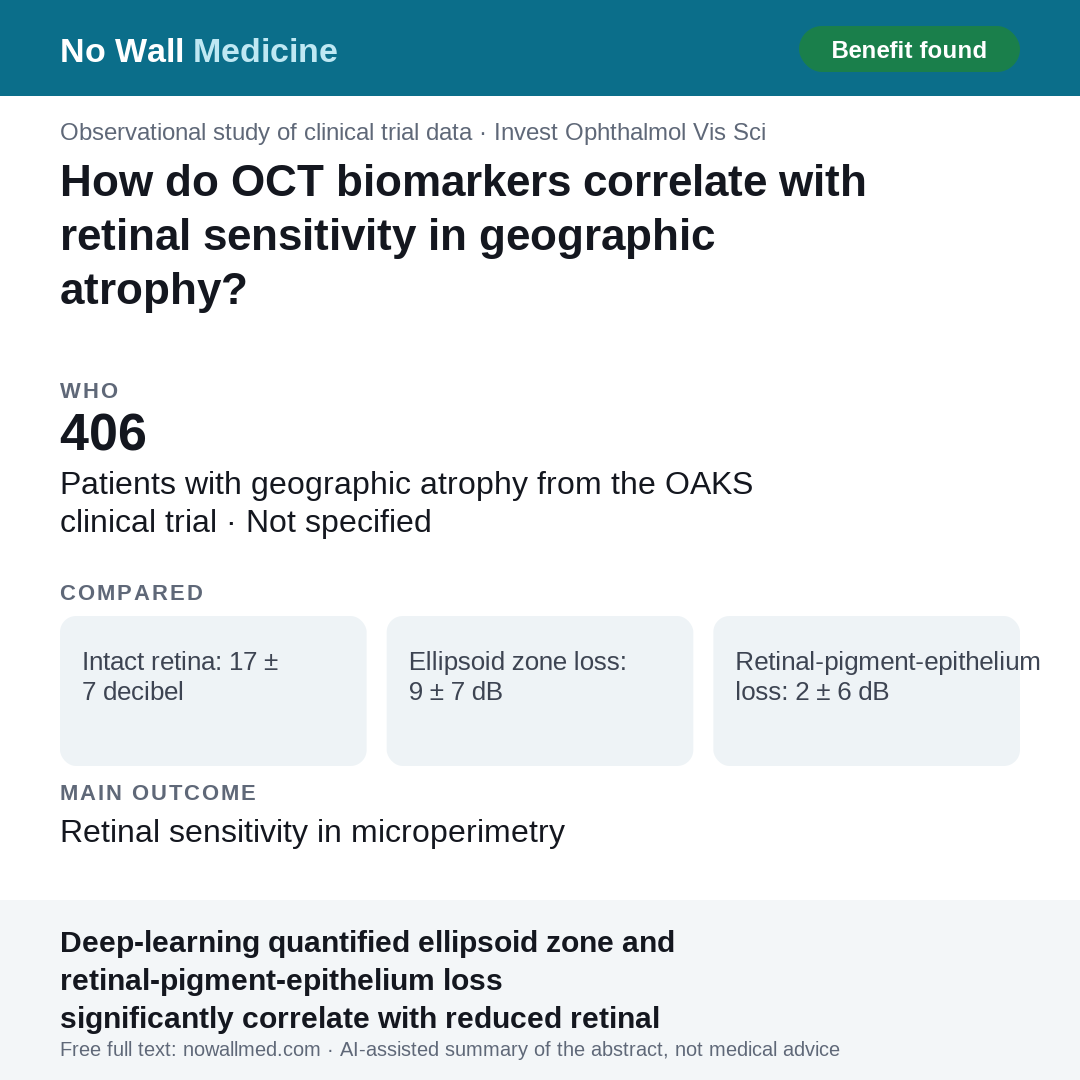
Exploring Trial Endpoints in Geographic Atrophy Based on Localized Functional Changes in Microperimetry and AI-Quantified OCT Biomarkers
Observational study of clinical trial dataBenefit found
How do OCT biomarkers correlate with retinal sensitivity in geographic atrophy?
Who
406
Patients with geographic atrophy from the OAKS clinical trial · Not specified
Compared
Intact retina: 17 ± 7 decibel
Ellipsoid zone loss: 9 ± 7 dB
Retinal-pigment-epithelium loss: 2 ± 6 dB
Main outcome
Retinal sensitivity in microperimetry
Result: RPE loss decreased retinal sensitivity by -14 dB (95% CI -15 to -14)
Bottom line: Deep-learning quantified ellipsoid zone and retinal-pigment-epithelium loss significantly correlate with reduced retinal sensitivity.
Invest Ophthalmol Vis Sci · 2026-01-15Download image
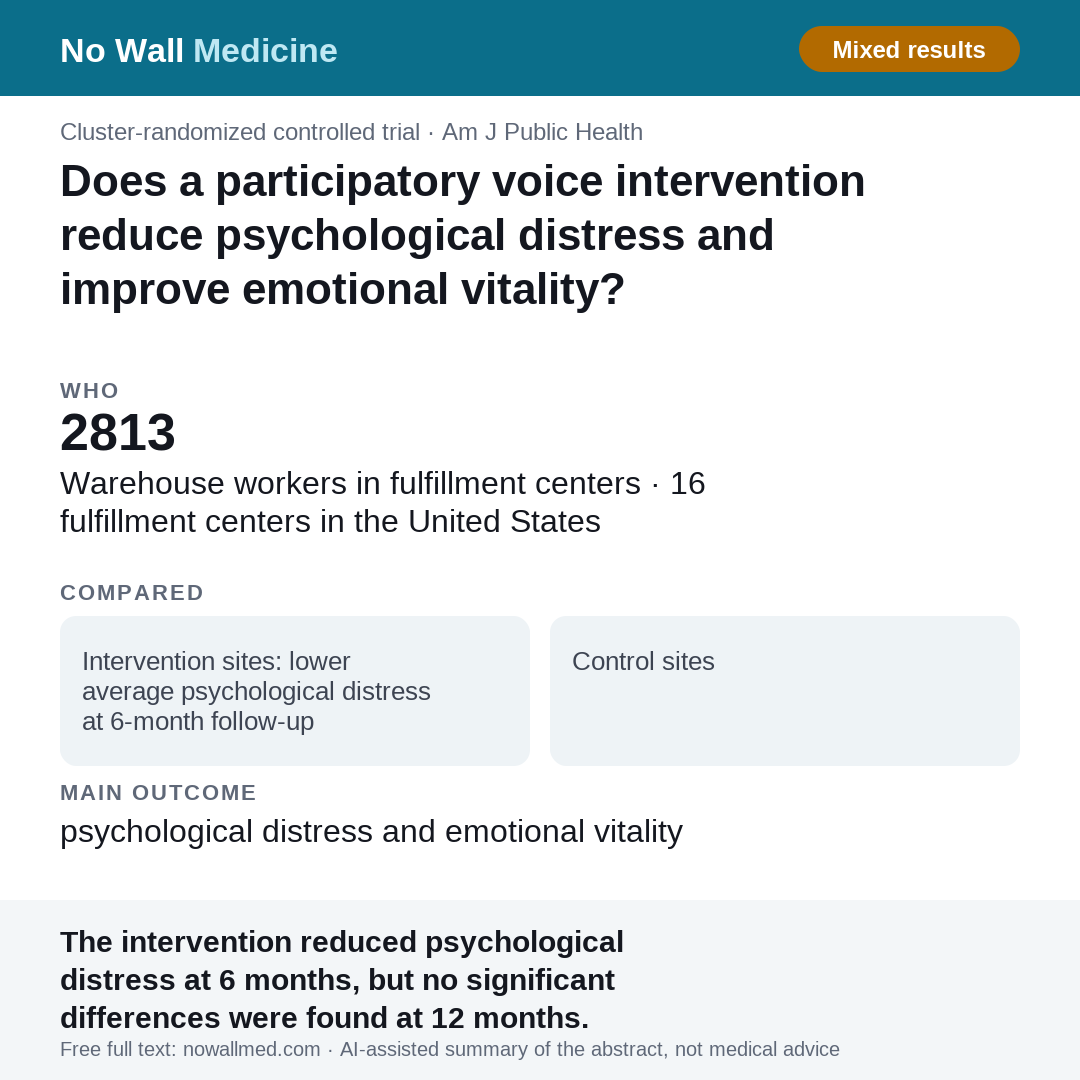
Effectiveness of a Participatory Voice Intervention on Psychological Well-Being Among Warehouse Workers: Results From the Fulfillment Center Intervention Study, United States, 2021‒2023
Cluster-randomized controlled trialMixed results
Does a participatory voice intervention reduce psychological distress and improve emotional vitality?
Who
2813
Warehouse workers in fulfillment centers · 16 fulfillment centers in the United States
Compared
Intervention sites: lower average psychological distress at 6-month follow-up
Control sites
Main outcome
psychological distress and emotional vitality
Bottom line: The intervention reduced psychological distress at 6 months, but no significant differences were found at 12 months.
Am J Public Health · 2026-01-15Download image
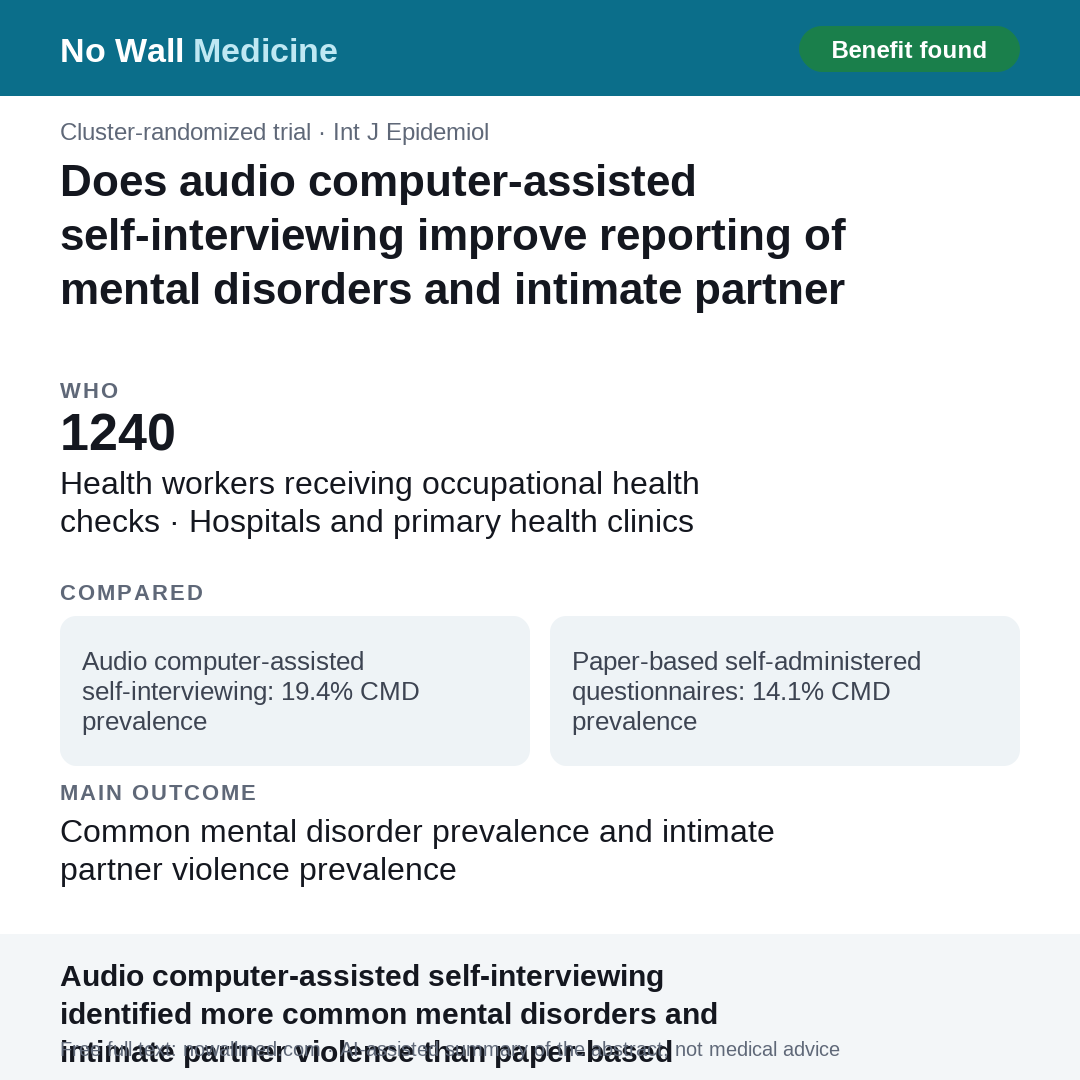
Effect of data-collection method on reporting of common mental disorder symptoms and intimate partner violence in Zimbabwe: a cluster-randomized trial
Cluster-randomized trialBenefit found
Does audio computer-assisted self-interviewing improve reporting of mental disorders and intimate partner violence?
Who
1240
Health workers receiving occupational health checks · Hospitals and primary health clinics in Zimbabwe
Compared
Audio computer-assisted self-interviewing: 19.4% CMD prevalence
Paper-based self-administered questionnaires: 14.1% CMD prevalence
Main outcome
Common mental disorder prevalence and intimate partner violence prevalence
Result: adjusted risk ratio 1.37 (95% CI 0.99, 1.89) for CMD; adjusted risk ratio 1.81 (95% CI 1.40, 2.35) for IPV
Bottom line: Audio computer-assisted self-interviewing identified more common mental disorders and intimate partner violence than paper-based questionnaires.
Int J Epidemiol · 2026-01-15Download image
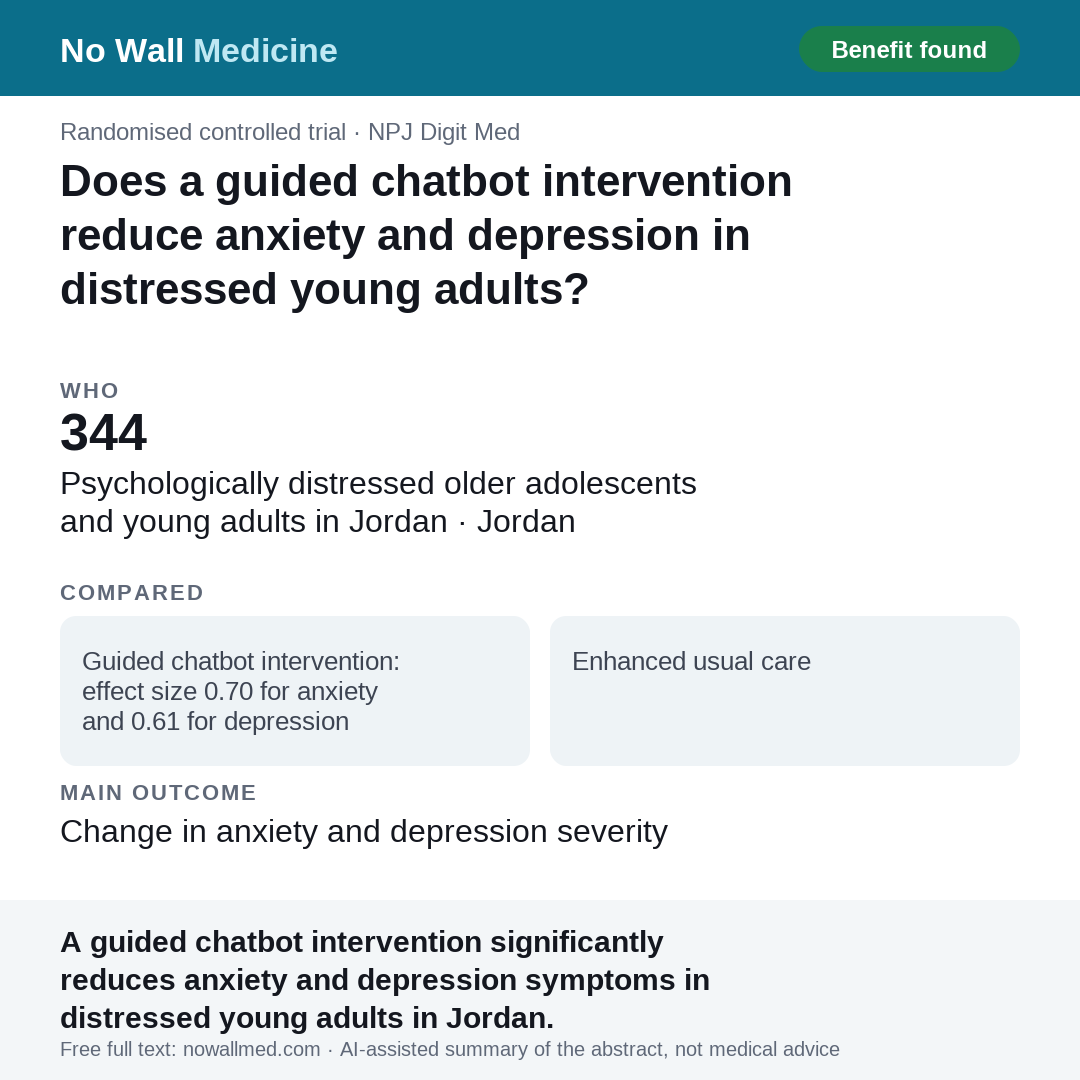
A guided chatbot-based psychological intervention for psychologically distressed older adolescents and young adults: a randomised clinical trial in Jordan
Randomised controlled trialBenefit found
Does a guided chatbot intervention reduce anxiety and depression in distressed young adults?
Who
344
Psychologically distressed older adolescents and young adults in Jordan · Jordan
Compared
Guided chatbot intervention: effect size 0.70 for anxiety and 0.61 for depression
Enhanced usual care
Main outcome
Change in anxiety and depression severity
Bottom line: A guided chatbot intervention significantly reduces anxiety and depression symptoms in distressed young adults in Jordan.
NPJ Digit Med · 2026-01-15Download image
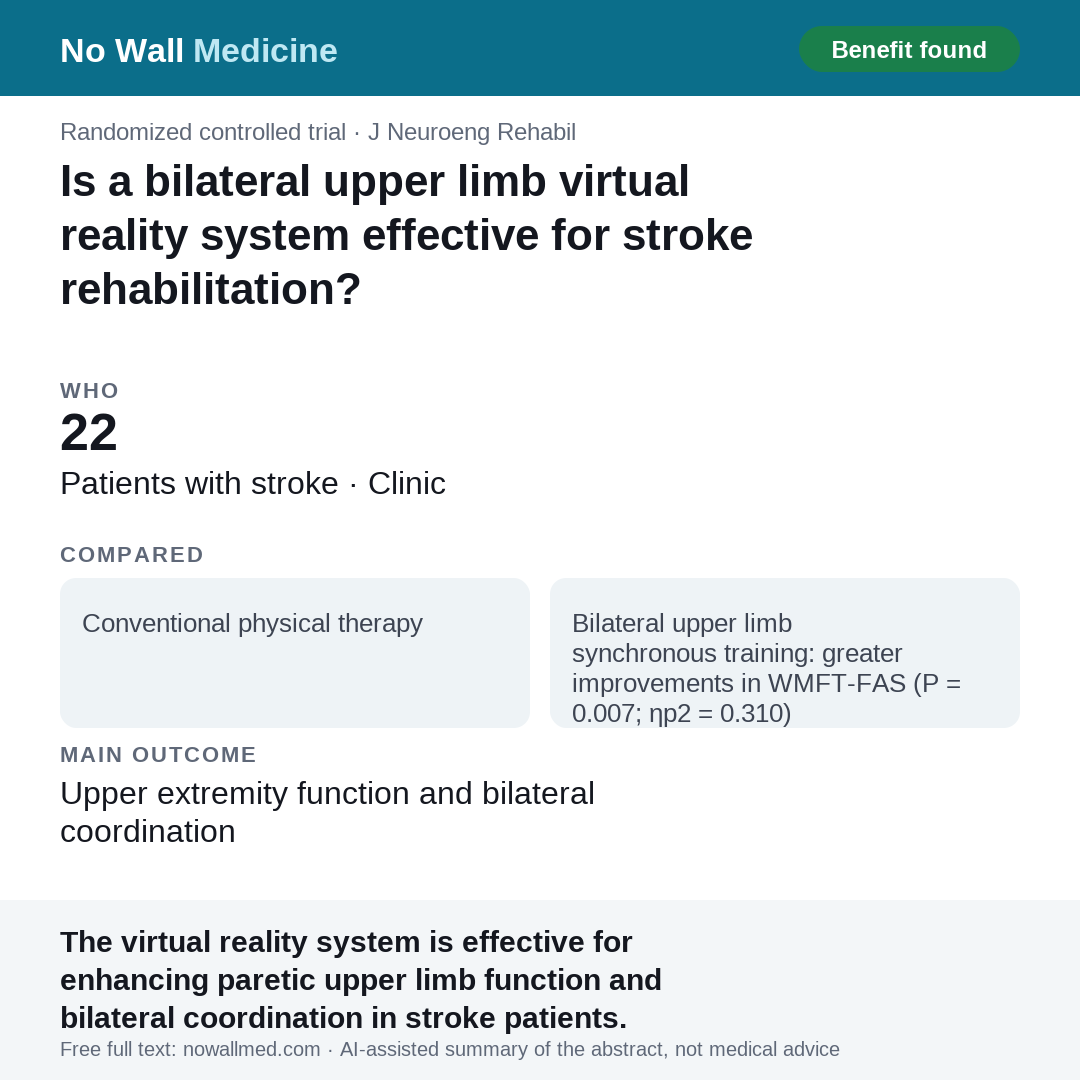
A bilateral upper limb interactive game-based virtual reality rehabilitation system for stroke patients: a usability and clinical study
Randomized controlled trialBenefit found
Is a bilateral upper limb virtual reality system effective for stroke rehabilitation?
Who
22
Patients with stroke · Clinic
Compared
Conventional physical therapy
Bilateral upper limb synchronous training: greater improvements in WMFT-FAS (P = 0.007; ηp2 = 0.310)
Main outcome
Upper extremity function and bilateral coordination
Bottom line: The virtual reality system is effective for enhancing paretic upper limb function and bilateral coordination in stroke patients.
J Neuroeng Rehabil · 2026-01-15Download image
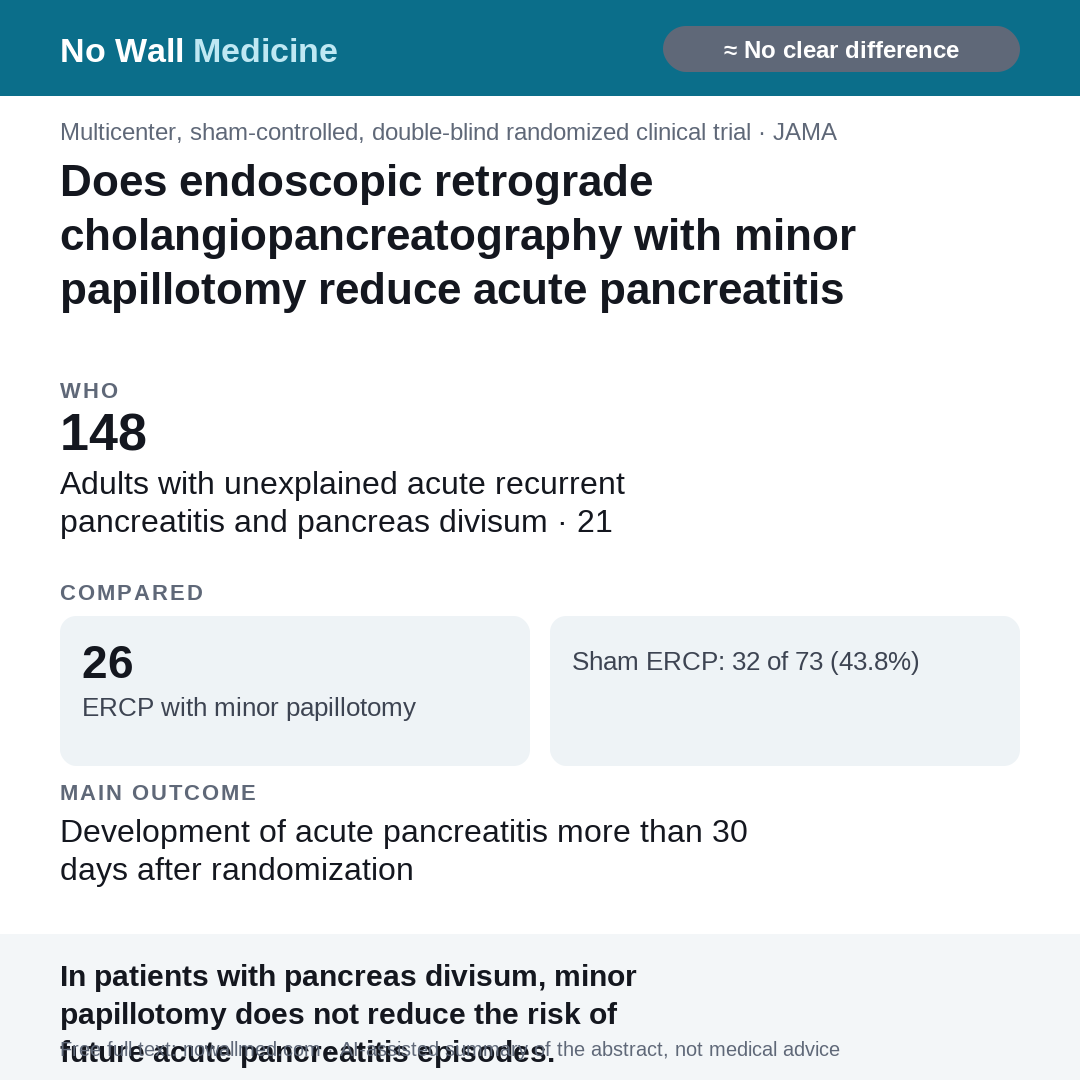
Minor Papillotomy for Treatment of Idiopathic Acute Pancreatitis With Pancreas Divisum: A Randomized Clinical Trial
Multicenter, sham-controlled, double-blind randomized clinical trialNo clear difference
Does endoscopic retrograde cholangiopancreatography with minor papillotomy reduce acute pancreatitis risk in pancreas divisum?
Who
148
Adults with unexplained acute recurrent pancreatitis and pancreas divisum · 21 referral centers in the US and Canada
Compared
26ERCP with minor papillotomy (34.7%)
Sham ERCP: 32 of 73 (43.8%)
Main outcome
Development of acute pancreatitis more than 30 days after randomization
Result: adjusted hazard ratio 0.83 (95% CI 0.49 to 1.41)
Bottom line: In patients with pancreas divisum, minor papillotomy does not reduce the risk of future acute pancreatitis episodes.
JAMA · 2026-01-14Download image
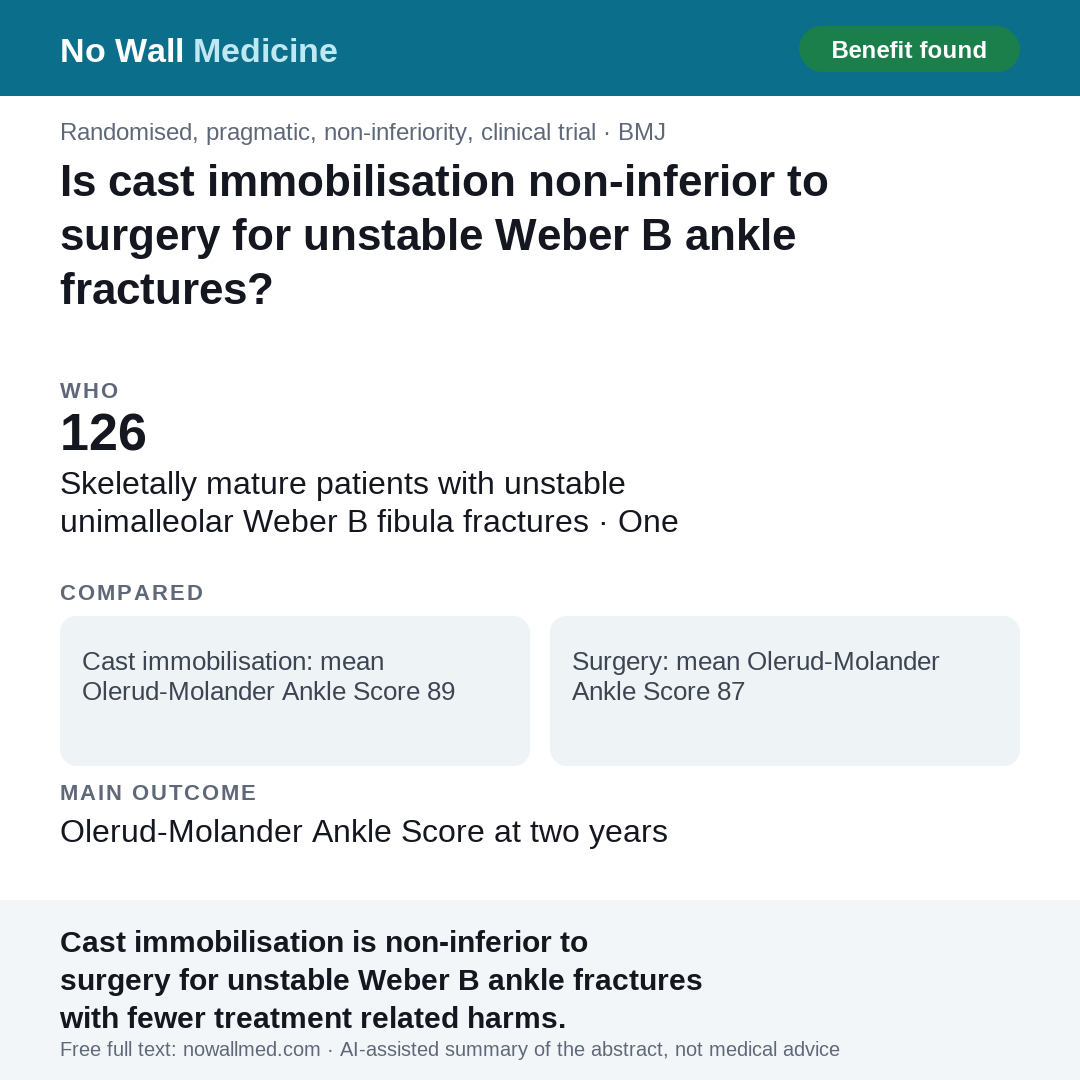
Cast immobilisation versus surgery for unstable lateral malleolus fractures (SUPER-FIN): randomised non-inferiority clinical trial
Randomised, pragmatic, non-inferiority, clinical trialBenefit found
Is cast immobilisation non-inferior to surgery for unstable Weber B ankle fractures?
Who
126
Skeletally mature patients with unstable unimalleolar Weber B fibula fractures · One specialist university hospital trauma centre in Finland
Compared
Cast immobilisation: mean Olerud-Molander Ankle Score 89
Surgery: mean Olerud-Molander Ankle Score 87
Main outcome
Olerud-Molander Ankle Score at two years
Result: between group mean difference 1.3 (95% confidence interval -4.8 to 7.3)
Bottom line: Cast immobilisation is non-inferior to surgery for unstable Weber B ankle fractures with fewer treatment related harms.
BMJ · 2026-01-14Download image
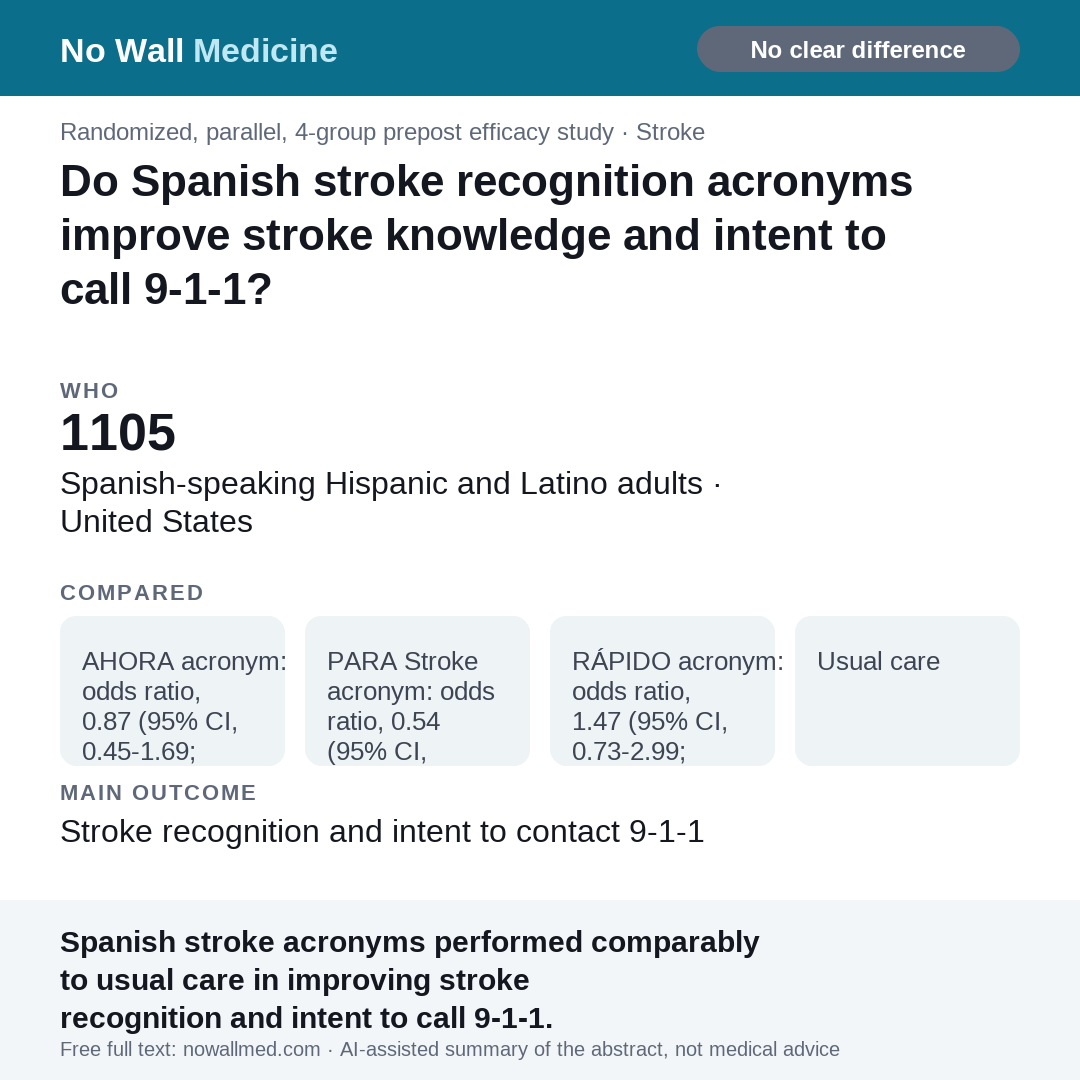
Stroke Recognition Tools for Spanish-Speaking Consumers: A Nationwide Study
Randomized, parallel, 4-group prepost efficacy studyNo clear difference
Do Spanish stroke recognition acronyms improve stroke knowledge and intent to call 9-1-1?
Who
1105
Spanish-speaking Hispanic and Latino adults · United States
Compared
AHORA acronym: odds ratio, 0.87 (95% CI, 0.45-1.69; P=0.69)
PARA Stroke acronym: odds ratio, 0.54 (95% CI, 0.28-1.00; P=0.05)
RÁPIDO acronym: odds ratio, 1.47 (95% CI, 0.73-2.99; P=0.28)
Usual care
Main outcome
Stroke recognition and intent to contact 9-1-1
Bottom line: Spanish stroke acronyms performed comparably to usual care in improving stroke recognition and intent to call 9-1-1.
Stroke · 2026-01-14Download image
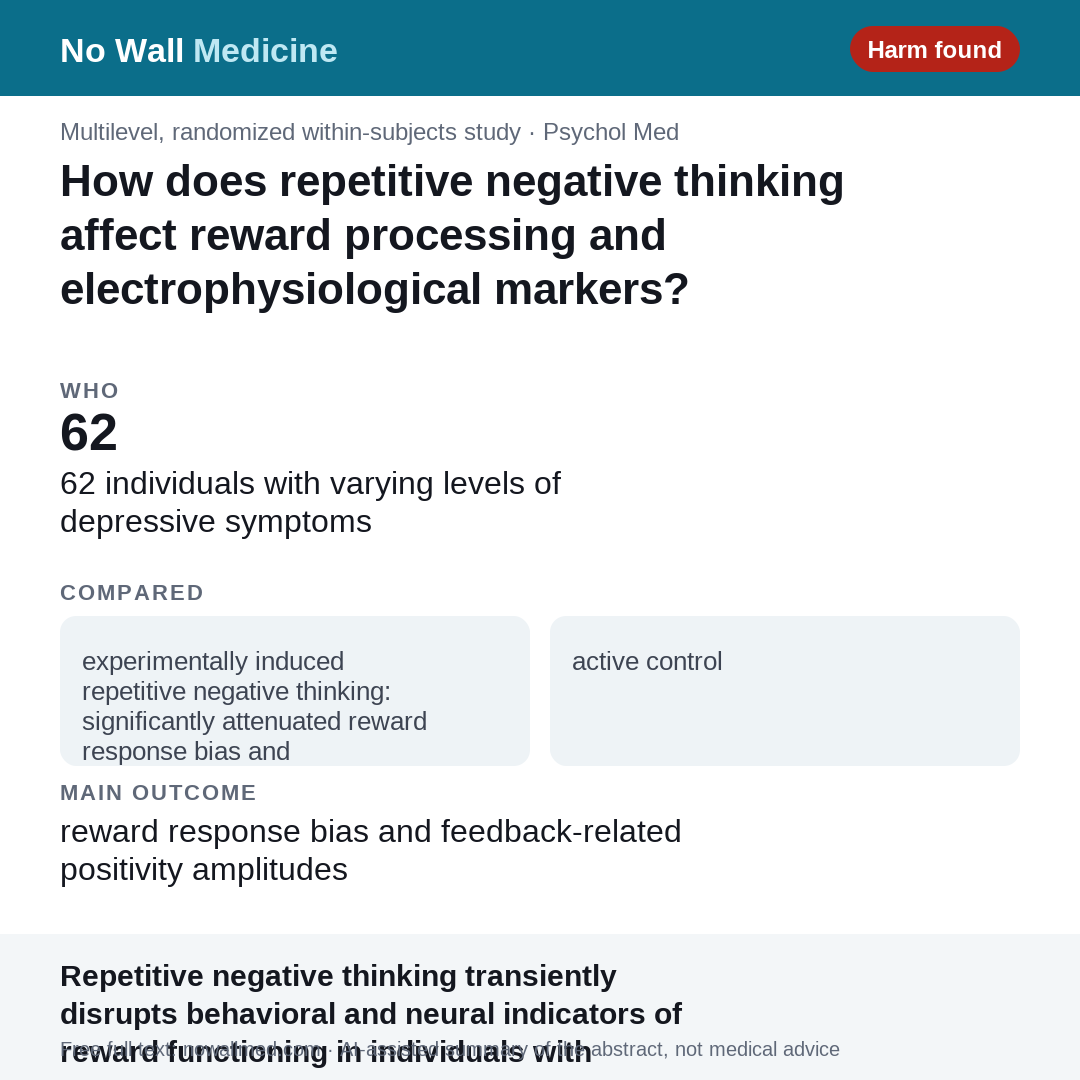
Behavioral and electrophysiological evidence of reward processing deficits in repetitive negative thinking: Implications for depression
Multilevel, randomized within-subjects studyHarm found
How does repetitive negative thinking affect reward processing and electrophysiological markers?
Who
62
62 individuals with varying levels of depressive symptoms
Compared
experimentally induced repetitive negative thinking: significantly attenuated reward response bias and feedback-related positivity amplitudes
active control
Main outcome
reward response bias and feedback-related positivity amplitudes
Bottom line: Repetitive negative thinking transiently disrupts behavioral and neural indicators of reward functioning in individuals with depressive symptoms.
Psychol Med · 2026-01-14Download image
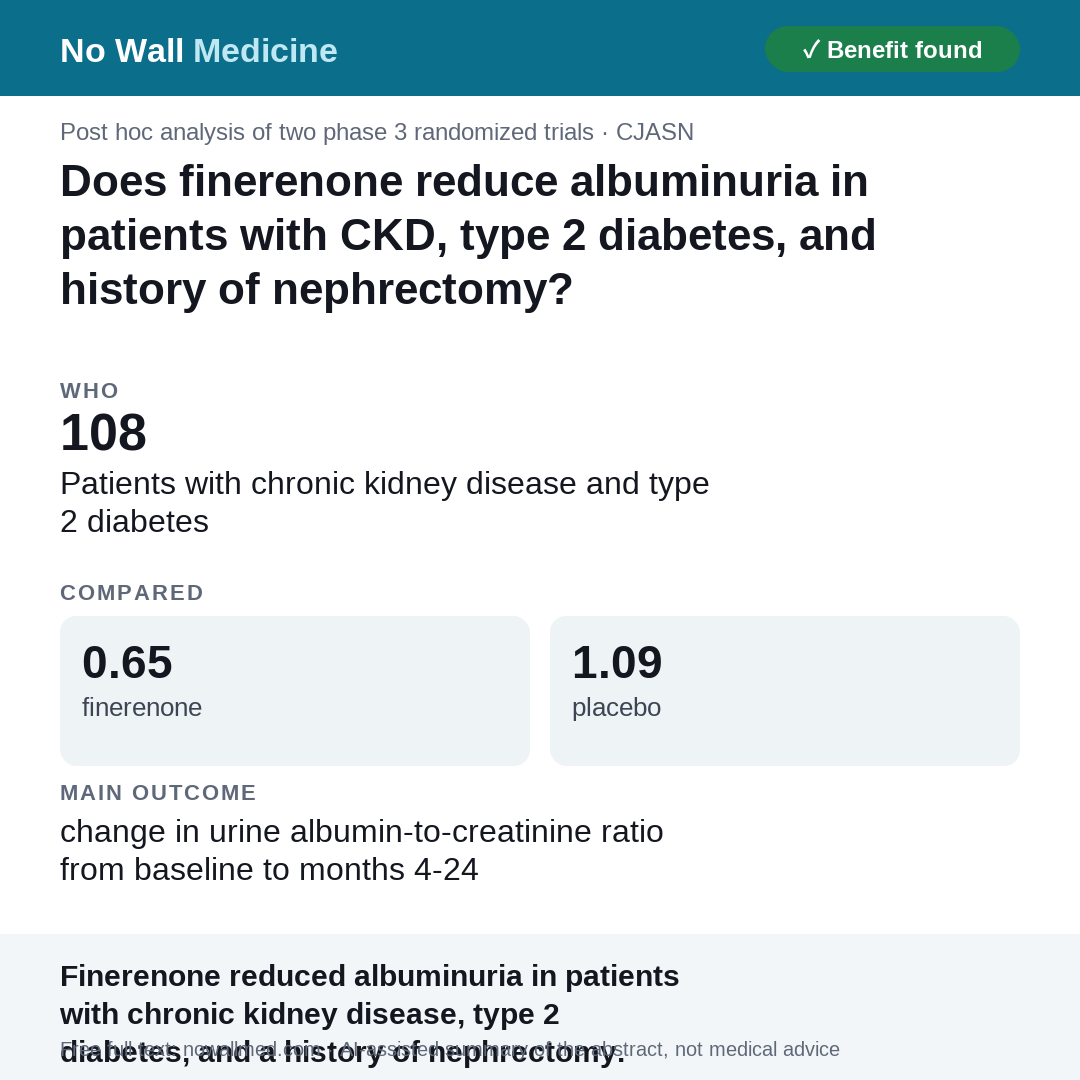
Finerenone in People with CKD, Type 2 Diabetes, and History of Nephrectomy
Post hoc analysis of two phase 3 randomized trialsBenefit found
Does finerenone reduce albuminuria in patients with CKD, type 2 diabetes, and history of nephrectomy?
Who
108
Patients with chronic kidney disease and type 2 diabetes
Compared
0.65finerenone
1.09placebo
Main outcome
change in urine albumin-to-creatinine ratio from baseline to months 4-24
Result: least-squares mean treatment ratio 0.60 (95% CI 0.48 to 0.76)
Bottom line: Finerenone reduced albuminuria in patients with chronic kidney disease, type 2 diabetes, and a history of nephrectomy.
CJASN · 2026-01-14Download image
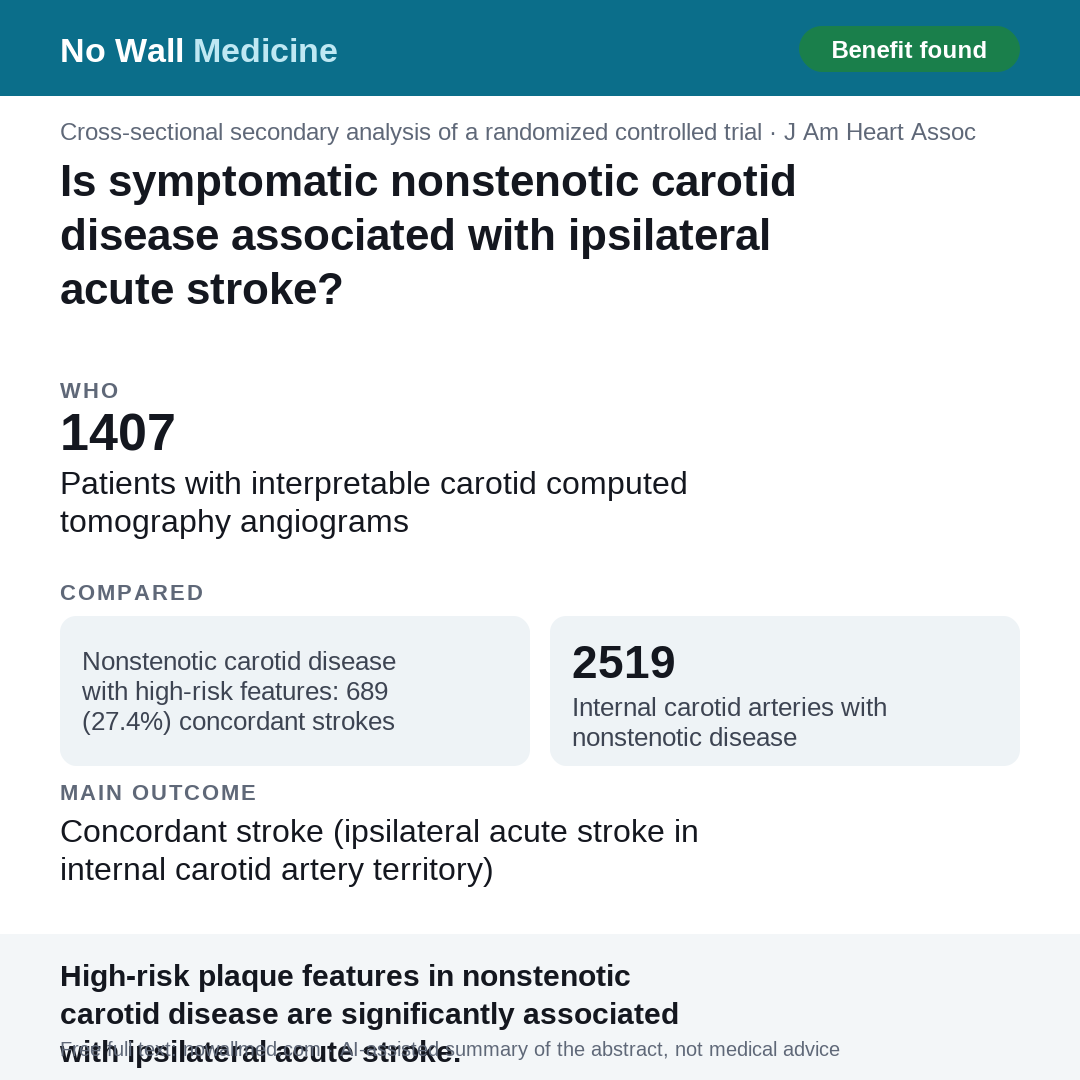
Association Between Ipsilateral Stroke and Nonstenotic (<50%) Carotid Disease: Secondary Analysis From the AcT Trial
Cross-sectional secondary analysis of a randomized controlled trialBenefit found
Is symptomatic nonstenotic carotid disease associated with ipsilateral acute stroke?
Who
1407
Patients with interpretable carotid computed tomography angiograms
Compared
Nonstenotic carotid disease with high-risk features: 689 (27.4%) concordant strokes
2519Internal carotid arteries with nonstenotic disease (89.5%)
Main outcome
Concordant stroke (ipsilateral acute stroke in internal carotid artery territory)
Bottom line: High-risk plaque features in nonstenotic carotid disease are significantly associated with ipsilateral acute stroke.
J Am Heart Assoc · 2026-01-14Download image
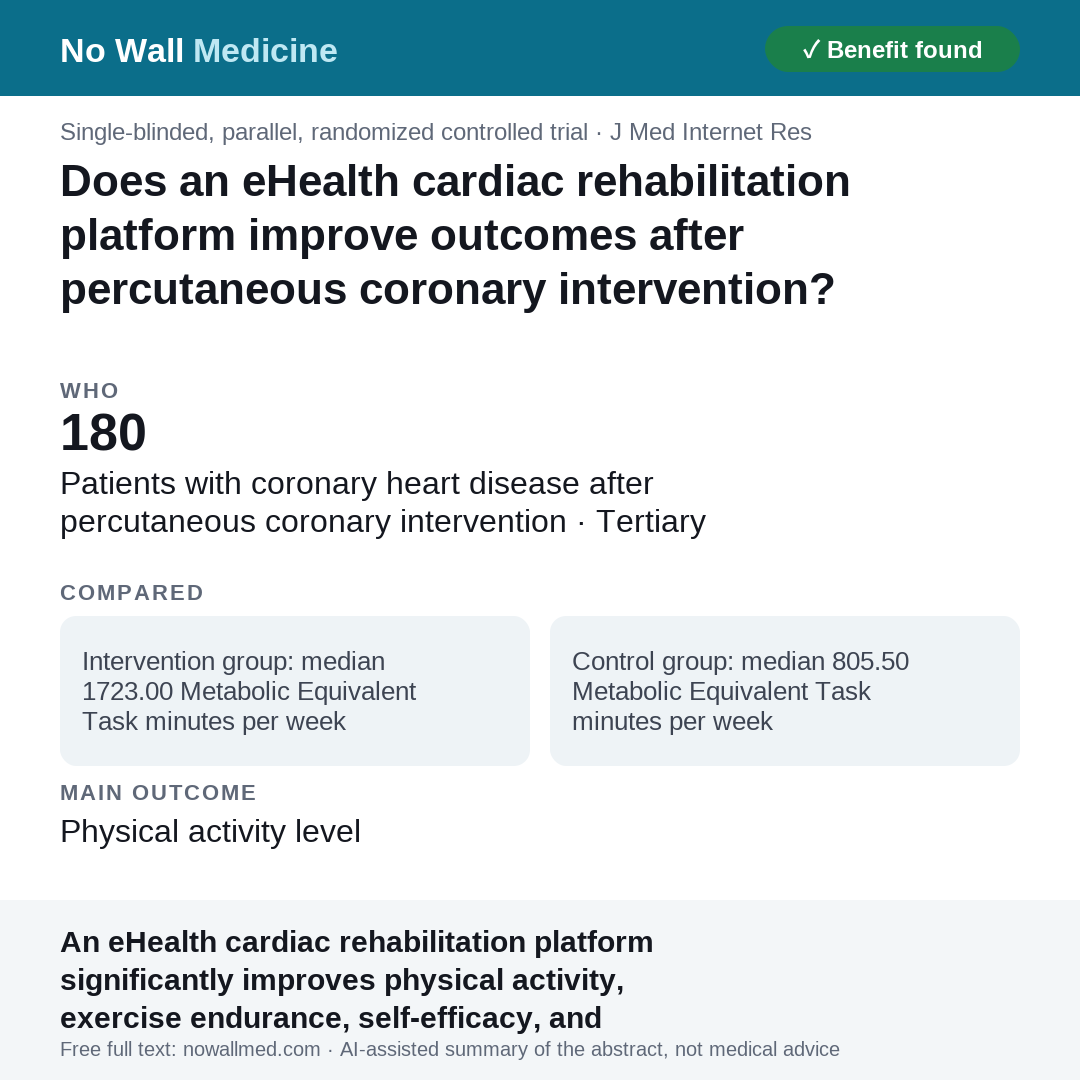
Effects of an eHealth Cardiac Exercise Rehabilitation Platform for Patients After Percutaneous Coronary Intervention Based on the Persuasive Systems Design Model: Randomized Controlled Trial
Single-blinded, parallel, randomized controlled trialBenefit found
Does an eHealth cardiac rehabilitation platform improve outcomes after percutaneous coronary intervention?
Who
180
Patients with coronary heart disease after percutaneous coronary intervention · Tertiary hospital in Hangzhou, China
Compared
Intervention group: median 1723.00 Metabolic Equivalent Task minutes per week
Control group: median 805.50 Metabolic Equivalent Task minutes per week
Main outcome
Physical activity level
Result: β coefficient=937.29, 95% CI 867.61-1006.97
Bottom line: An eHealth cardiac rehabilitation platform significantly improves physical activity, exercise endurance, self-efficacy, and quality of life.
J Med Internet Res · 2026-01-14Download image